Category Archives: Natural History

Spring arrives in Gunnersbury Triangle!

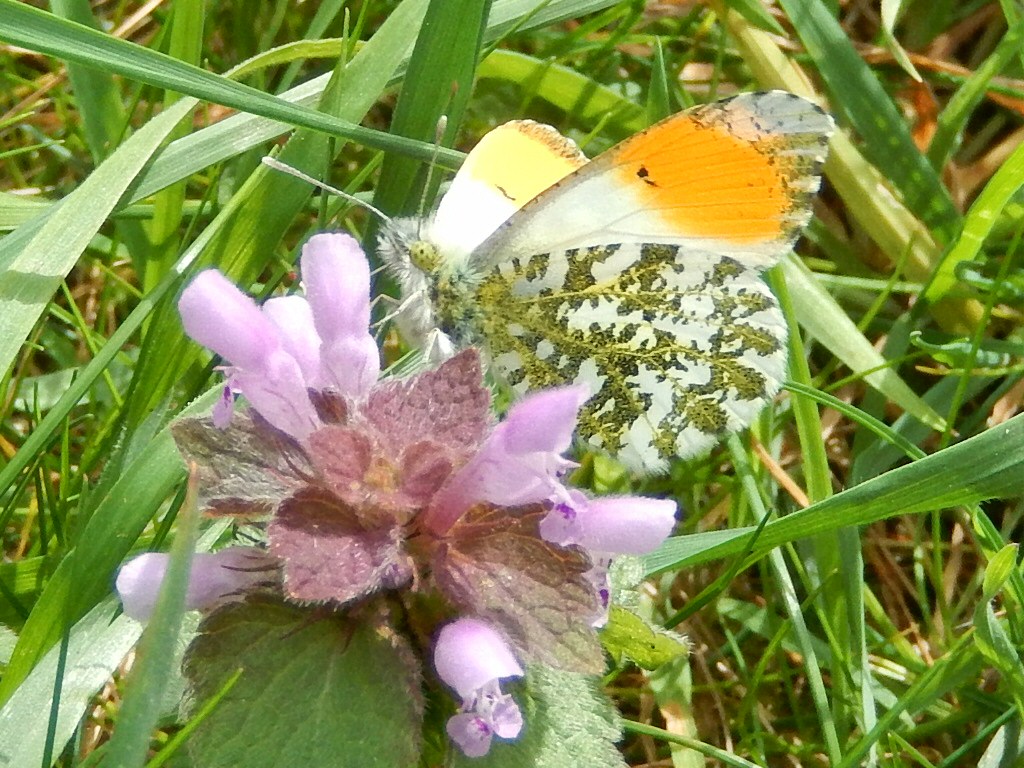
The first Orange Tip of the year

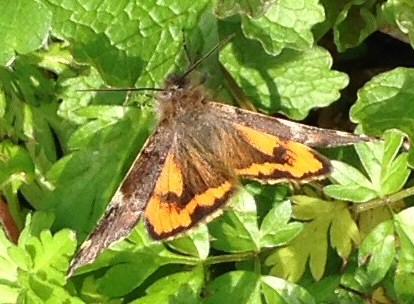
Spring has arrived, with Orange Tip, Brimstone, Holly Blue, Comma, and Small White butterflies all flying today.
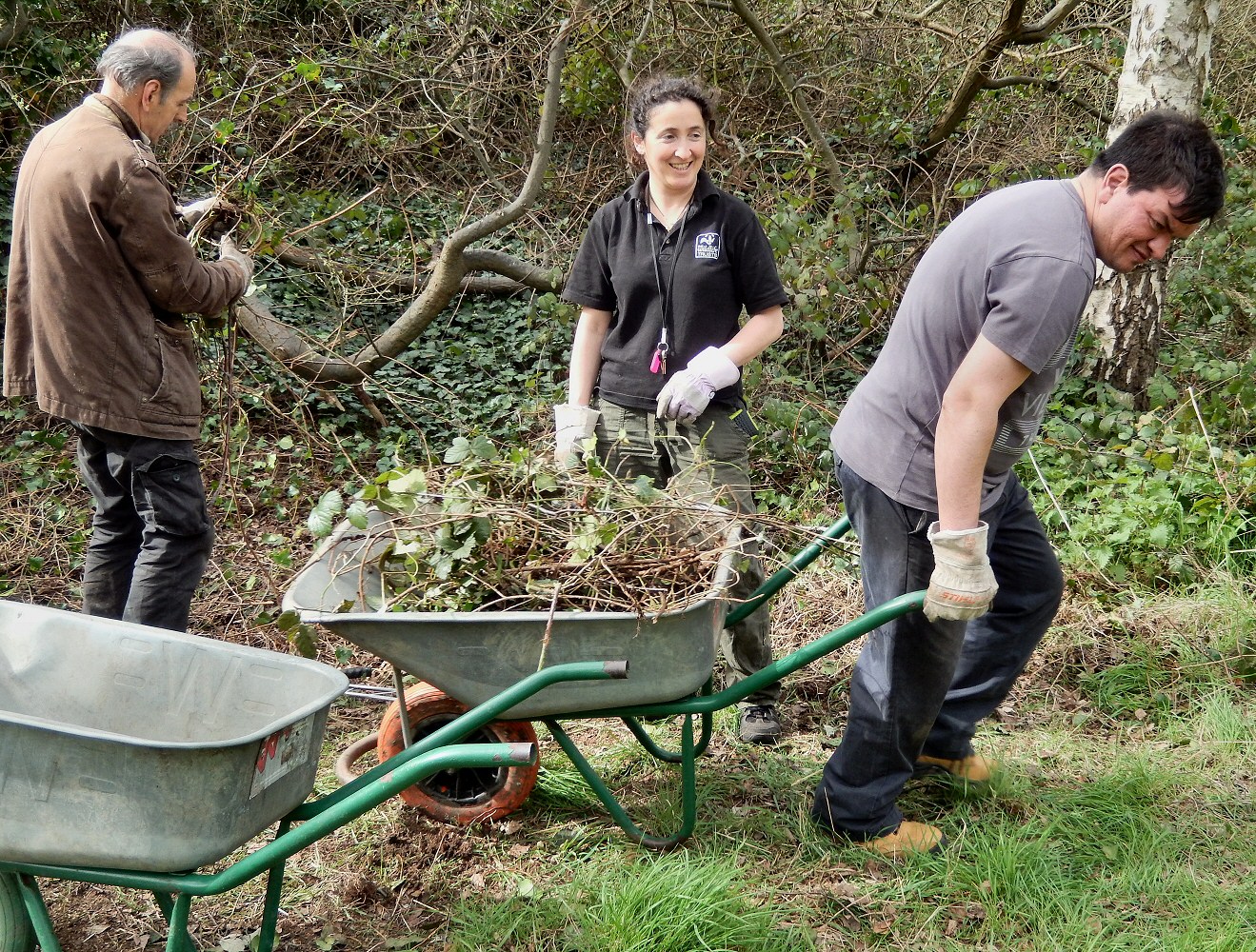
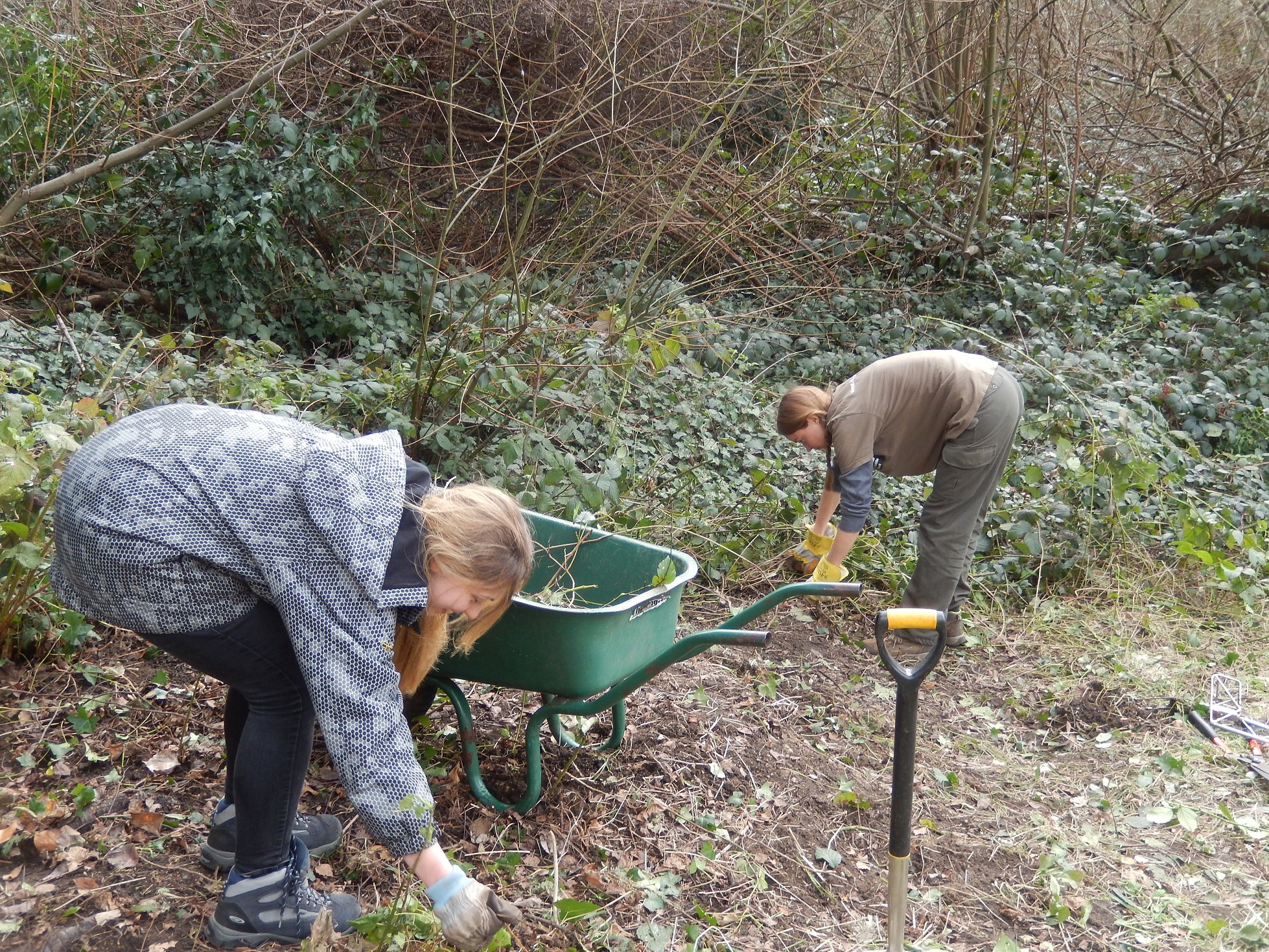
Jake, Netty, and Charlie doing the last of the wintertime bramble clearing

We’re racing to finish clearing the brambles along the edge of the old railway track where we hope to have some neutral or even acid grassland on the railway shingle. Time is against us now, as the warm spring weather and gentle winds have brought the warblers in. Today the first Blackcaps of the year sang in the reserve, along with Chiffchaffs, Wrens, Robins, Dunnocks, Great Tits, and Blue Tits, not to mention the chattering Magpies.
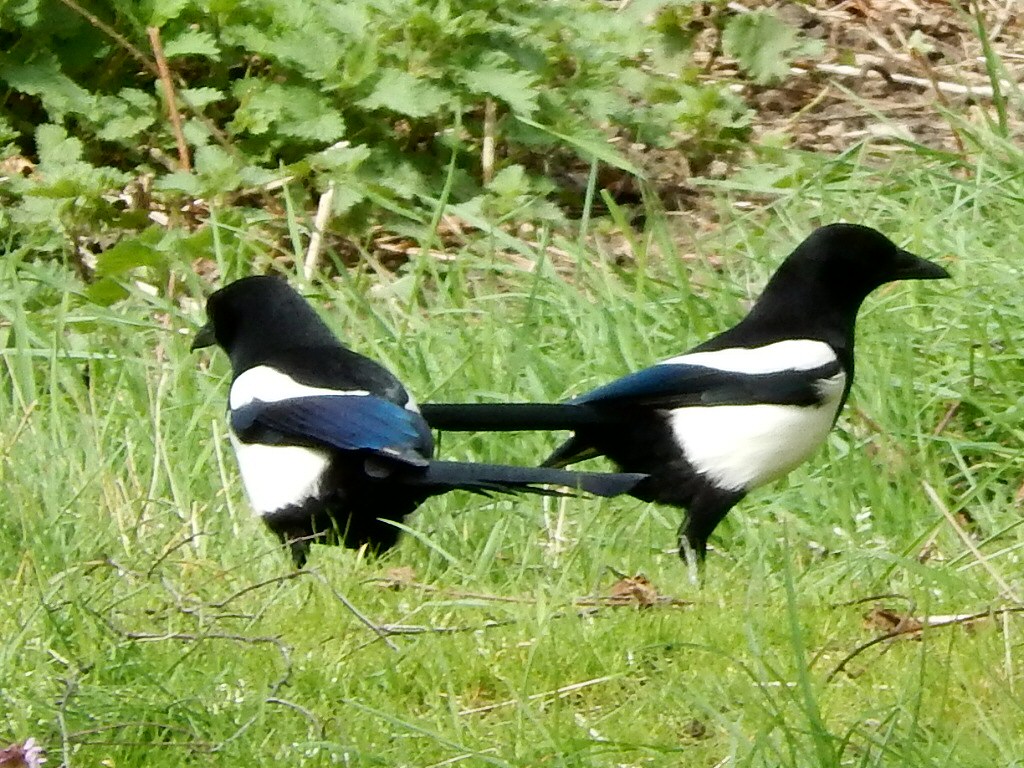
A pair of Magpies: “One for sorrow, Two for joy”, went the old rhyme

Among other animals celebrating the spring are the foxes, which have made many new holes and can often be seen about the reserve if you come along and sit quietly in the morning.
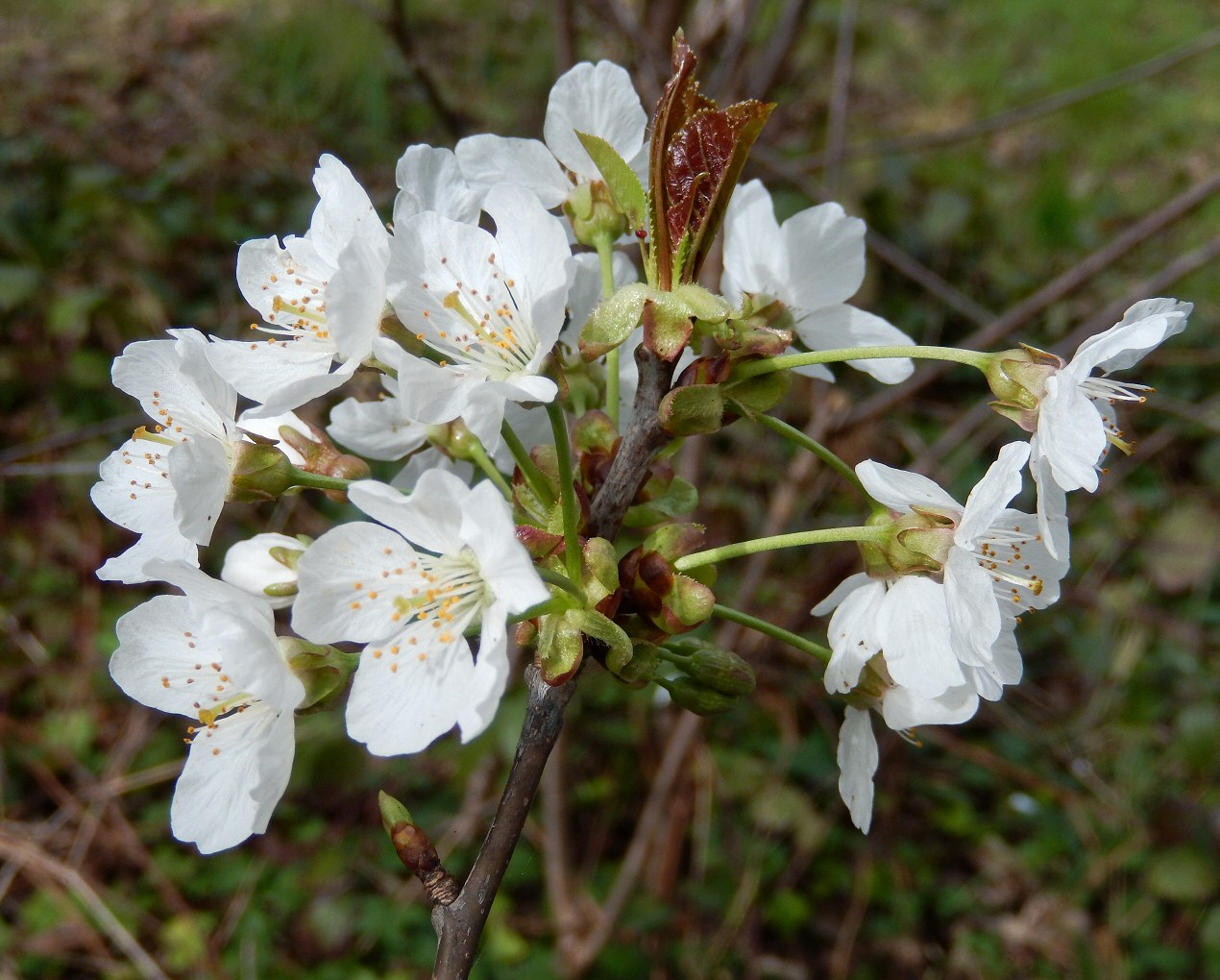
Wild Cherry in flower

The wild Cherries are in flower all around the reserve, and the Pussy Willow catkins are glowing golden in the sunshine.
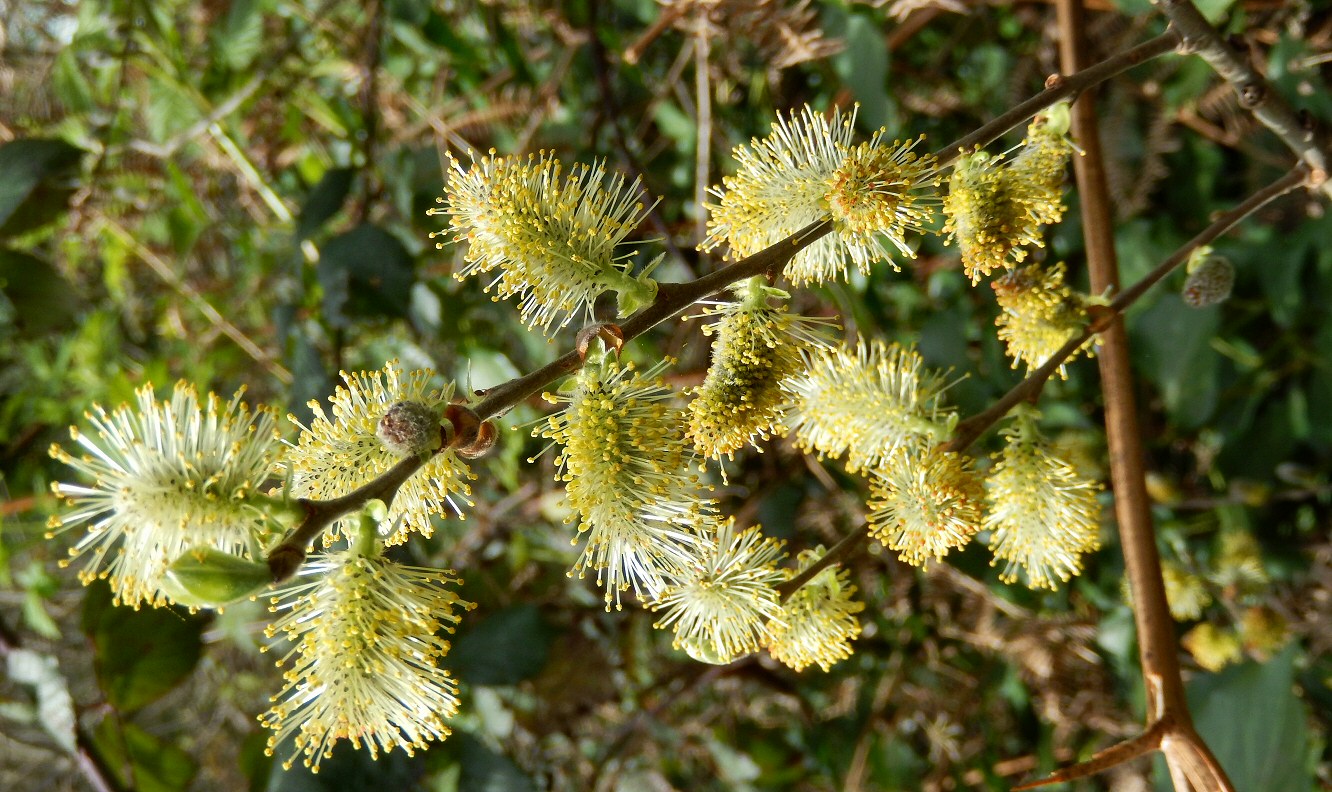
Pussy Willow catkins

Bufftail Bumblebee queens seem to be everywhere, it being hardly possible to reach down for a bramble or a twig without disturbing one.
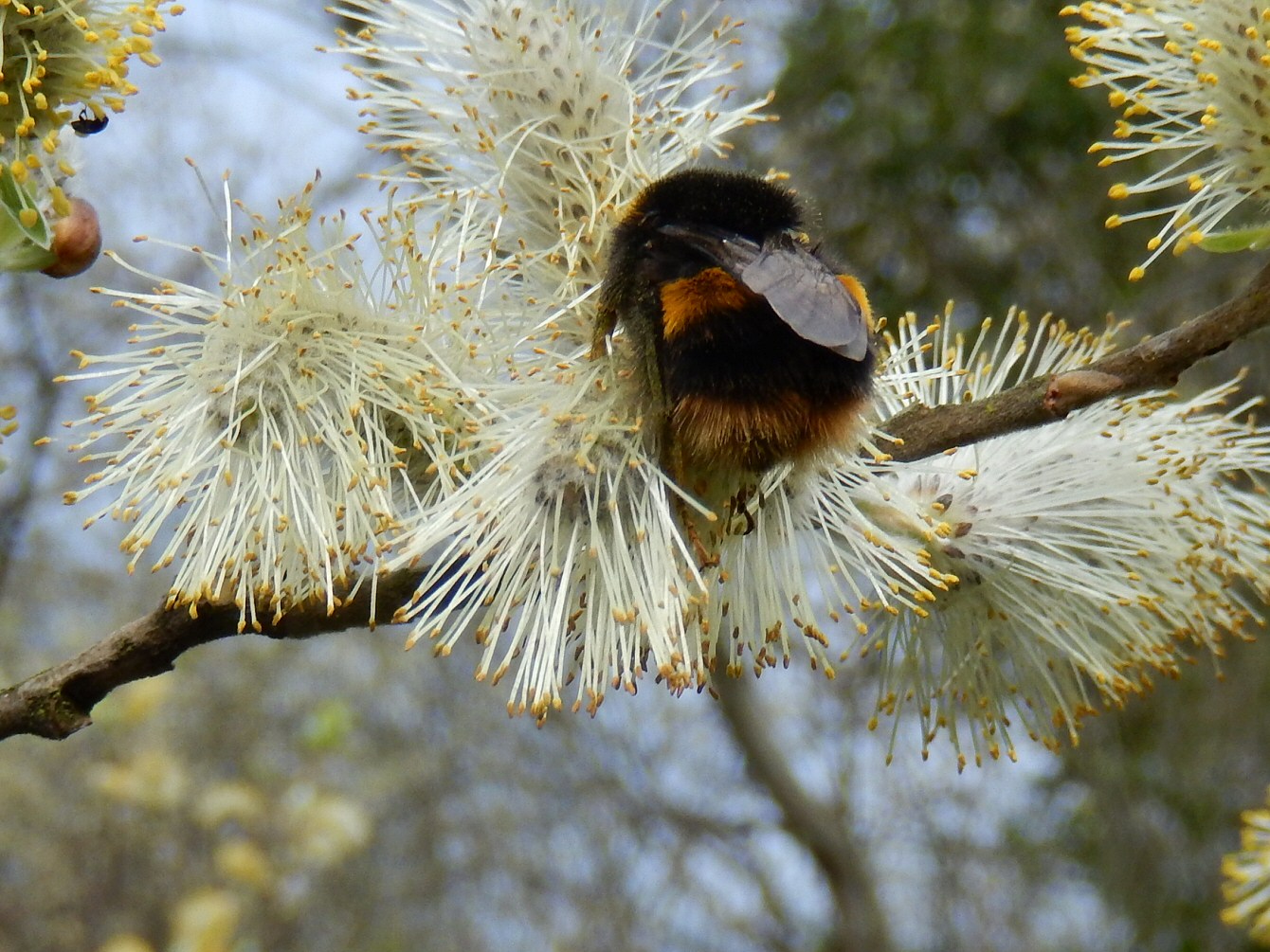
Bufftail Bumblebee

I was pleased to uncover two fine Birch saplings, just coming into new leaf, that had been hidden under the brambles.
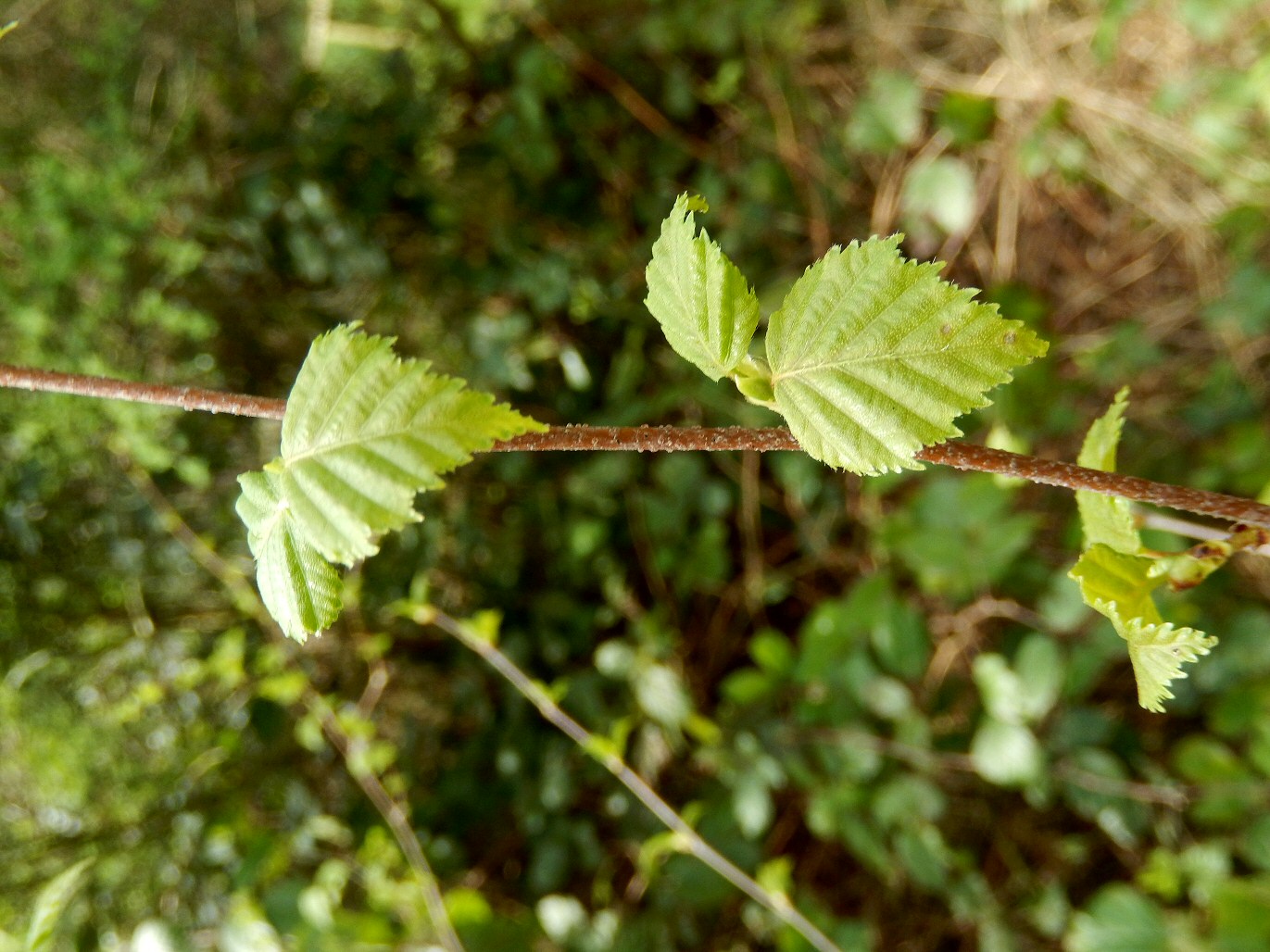
Birch sapling in new leaf

Patrick found a buried milk bottle. We wiped the earth off it and held it up to the light: it read “Golden Seal” in raised curly ‘handwriting’ lettering. The brand vanished in the mergers of the 1970s as dairies grew bigger, so the bottle must have lain undisturbed for perhaps half a century, from before the Triangle became a nature reserve.
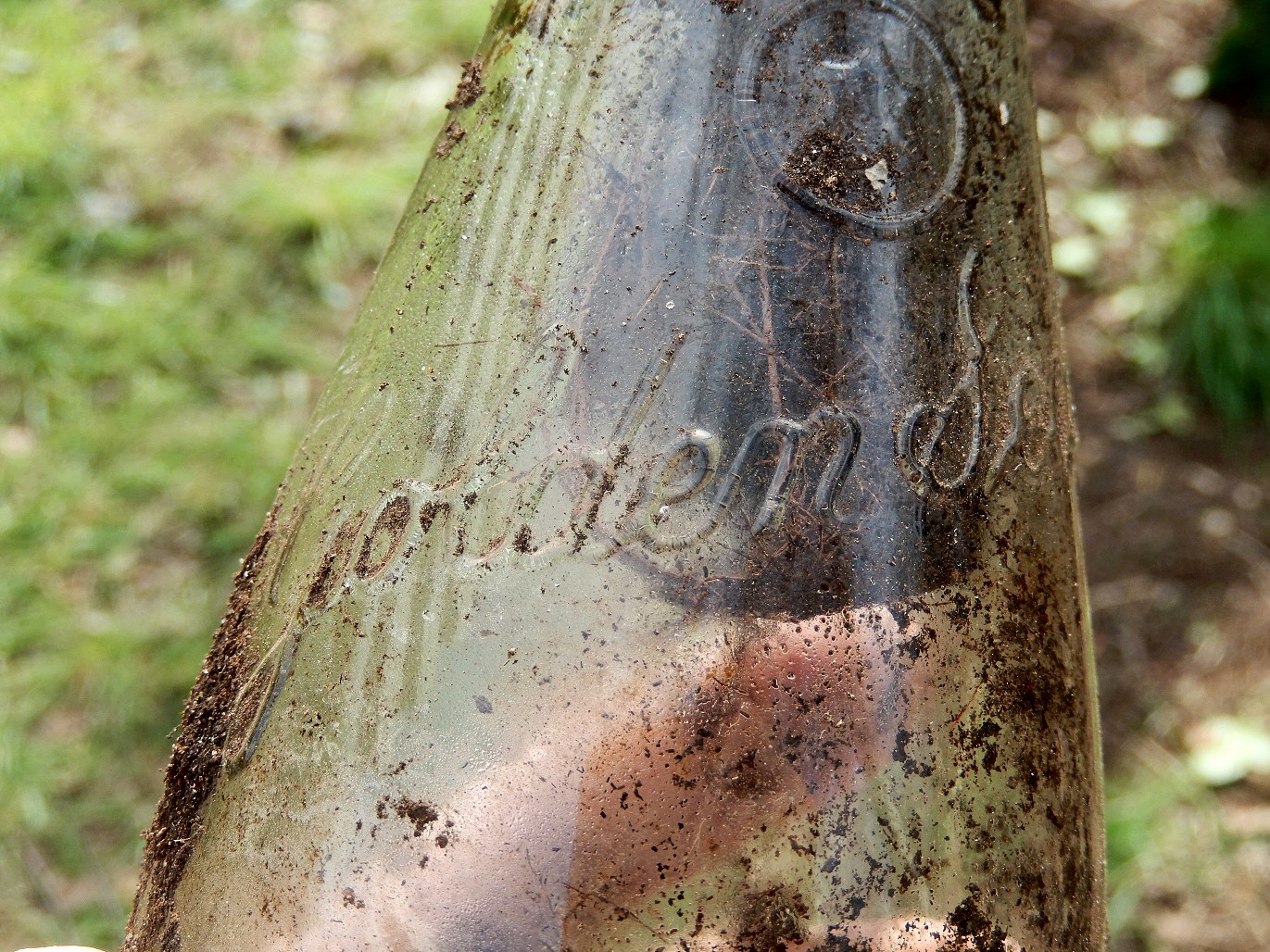
‘Golden Seal’ milk bottle from around the 1960s, a small piece of archaeology from before the Triangle became a reserve.

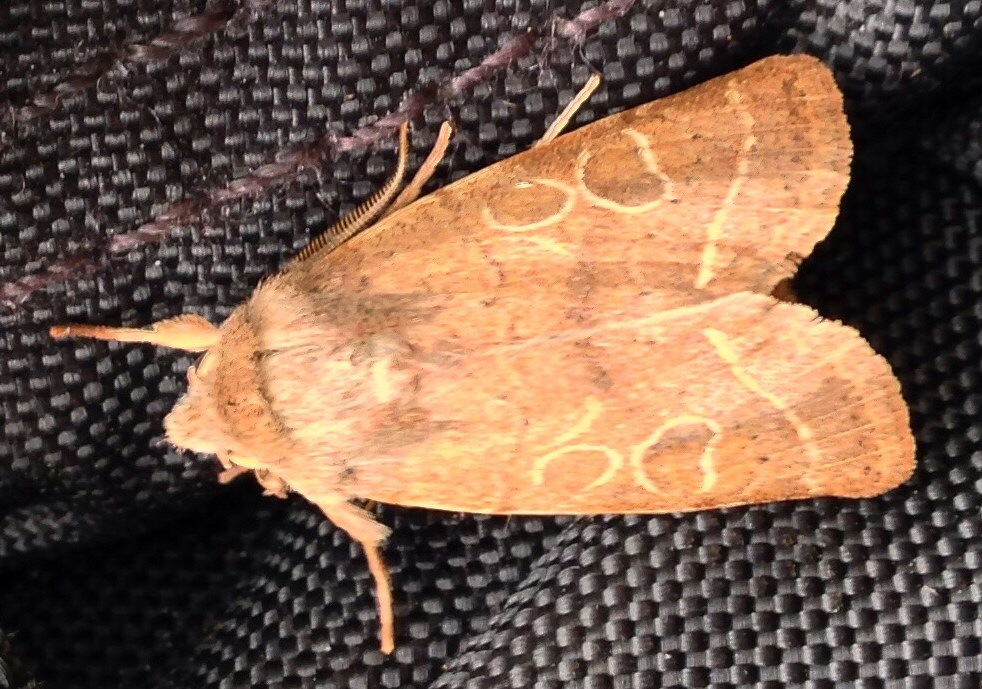
Day-flying Orange and Yellow Underwing Moths

Wendy and Katherine clearing bramble in the small meadow

Netty is away so Katherine led the group to, yes, clear some more brambles. We do occasionally do other things, actually. It was pleasantly warm with bursts of sunshine, and we dug out one champion bramble root after another. The ones down here are far more deeply-rooting than those on the bank, have few stems and basal shoots, smaller ‘briar’ root lumps, and much thicker stems. In short, they are the monsters of the bramble world, and sometimes seriously difficult to dig out. It’s easy to believe these are a different microspecies from those up on the bank: there are around 100 microspecies known in the Rubus fruticosus aggregate. It would be fascinating to hear about the genetics of our local bramble populations.

Katherine managed to photograph two Underwing moths:

Lesser Broad-Bordered Yellow Underwing (Noctua janthe). Photo: Katherine Poulton
Orange Underwing (Archiearis parthenias) Photo: Katherine Poulton

The two species both have brilliantly coloured underwings, concealed at rest under the cryptically coloured (well camouflaged) forewings, but revealing a flash of bright contrasting colours when they take flight. This is often enough to startle a predator, giving the moth a moment to escape. Curiously, these two species are in different families: Noctua janthe is a noctuid, while Archiearis parthenias is a geometrid. This implies that the trick of having a bold yellow/orange/red stripe contrasting with black has evolved separately at least twice among moths (the same sort of thing happens also in some grasshoppers), an instance of convergent evolution. In other words, if it works, invent it again. N. janthe is common everywhere, while A. parthenias specifically “flies in sunshine around tops of birch trees in spring before leaves develop” (writes Chris Manley in his marvellous British Moths and Butterflies), exactly the case here today. Dial up the right ecological conditions, and the species appear, often.

Toad Time

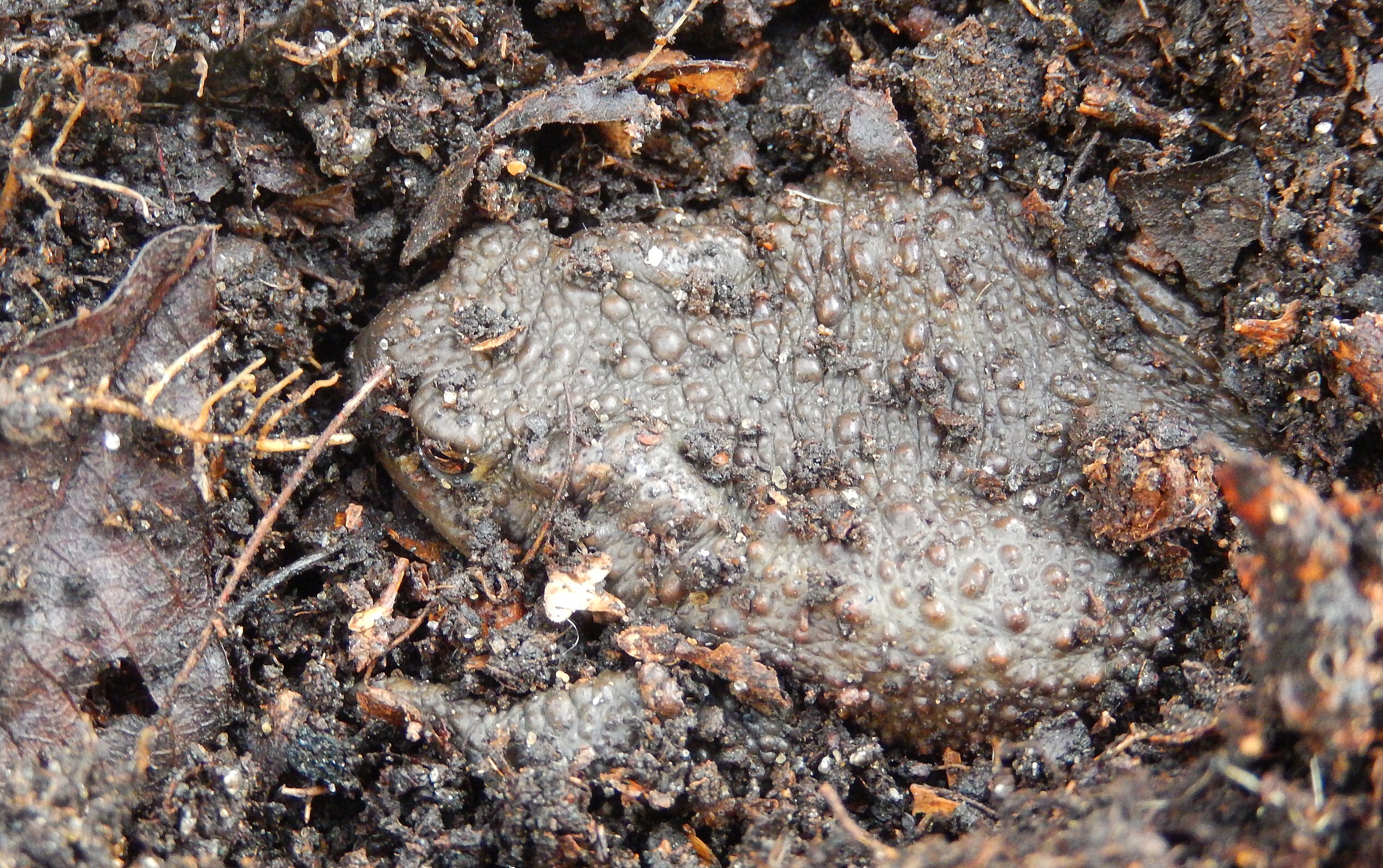
Toad found when clearing brambles and ivy
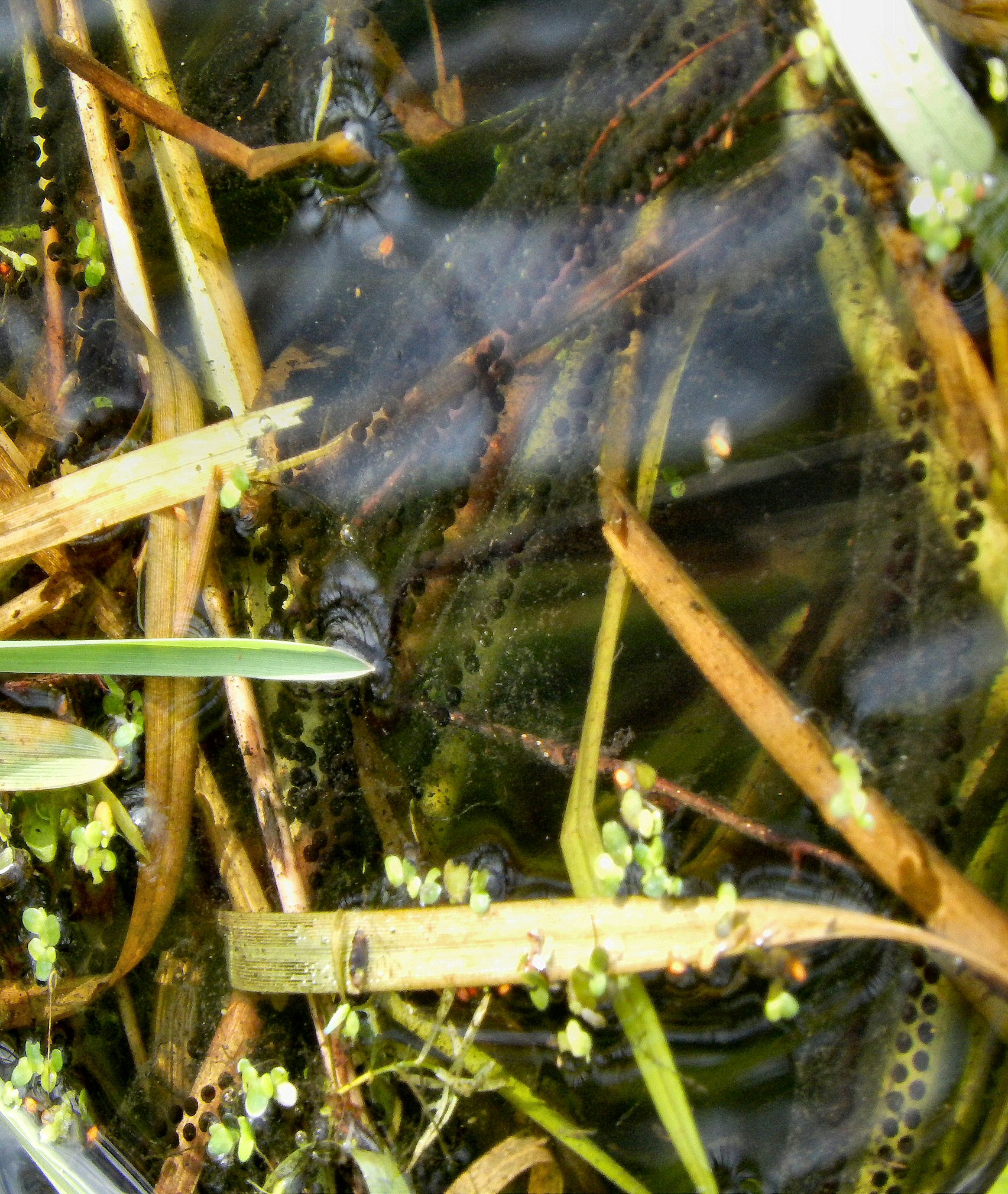
Strings of Toadspawn
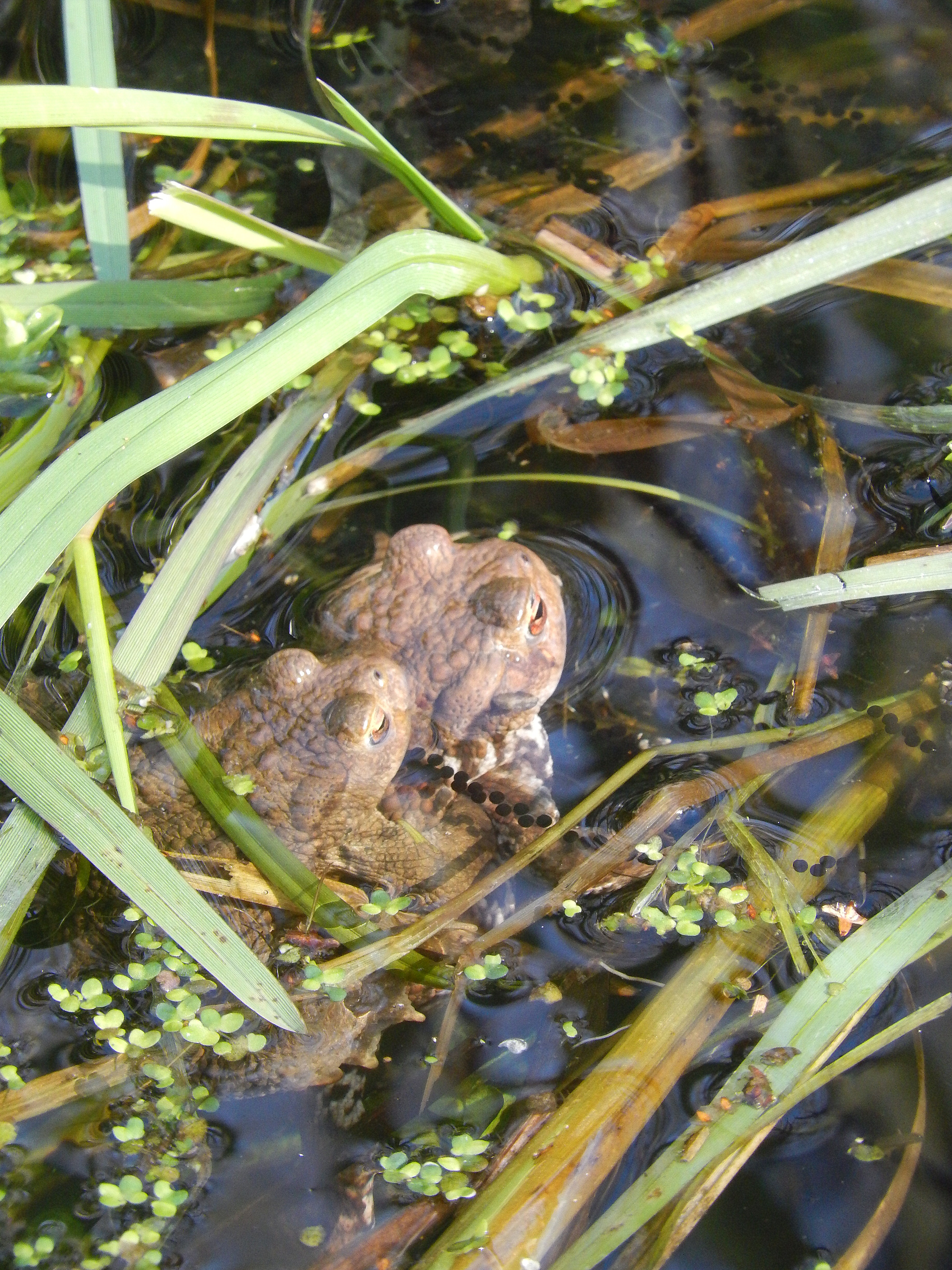
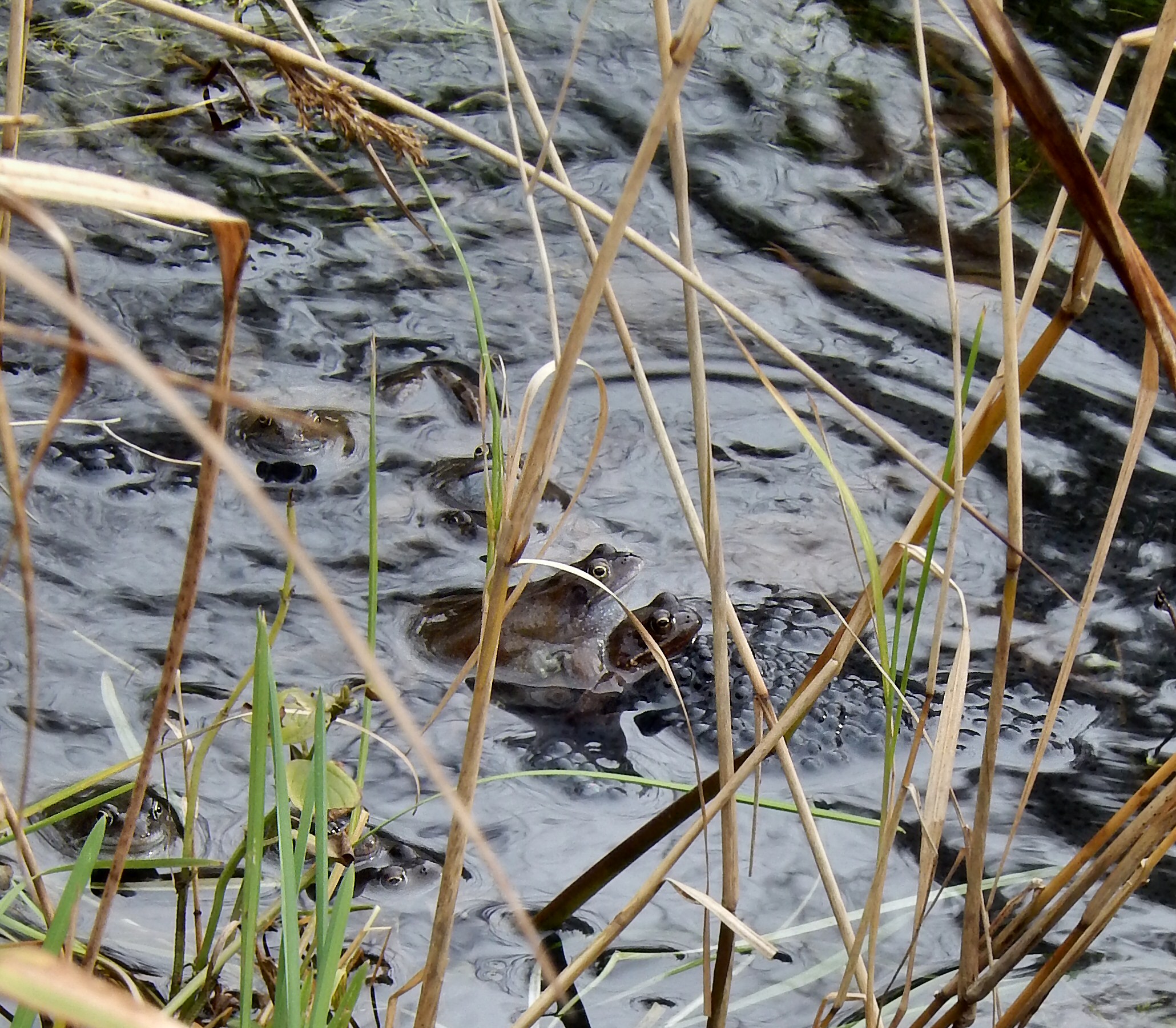
Toads in Amplexus with strings of toadspawn

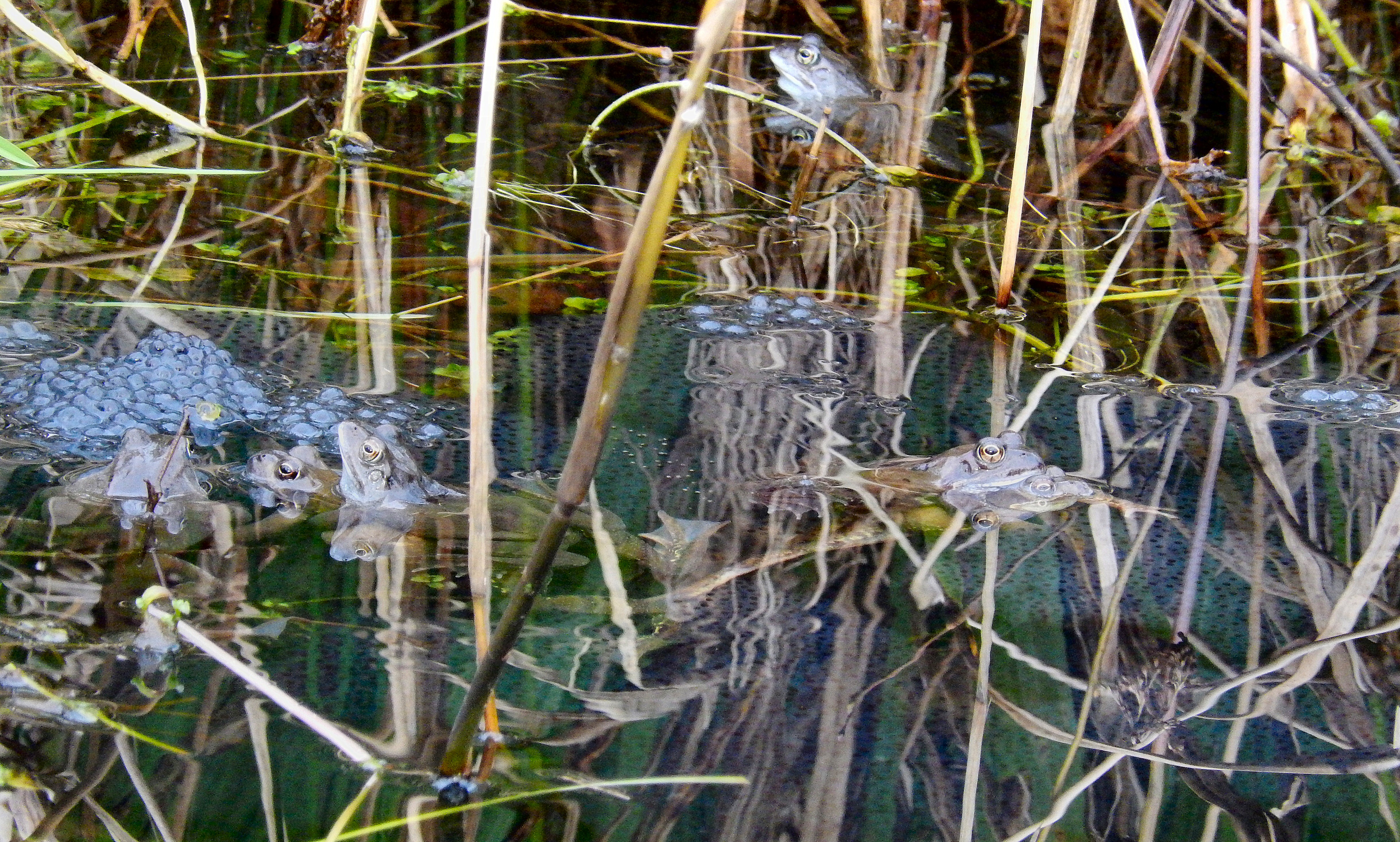
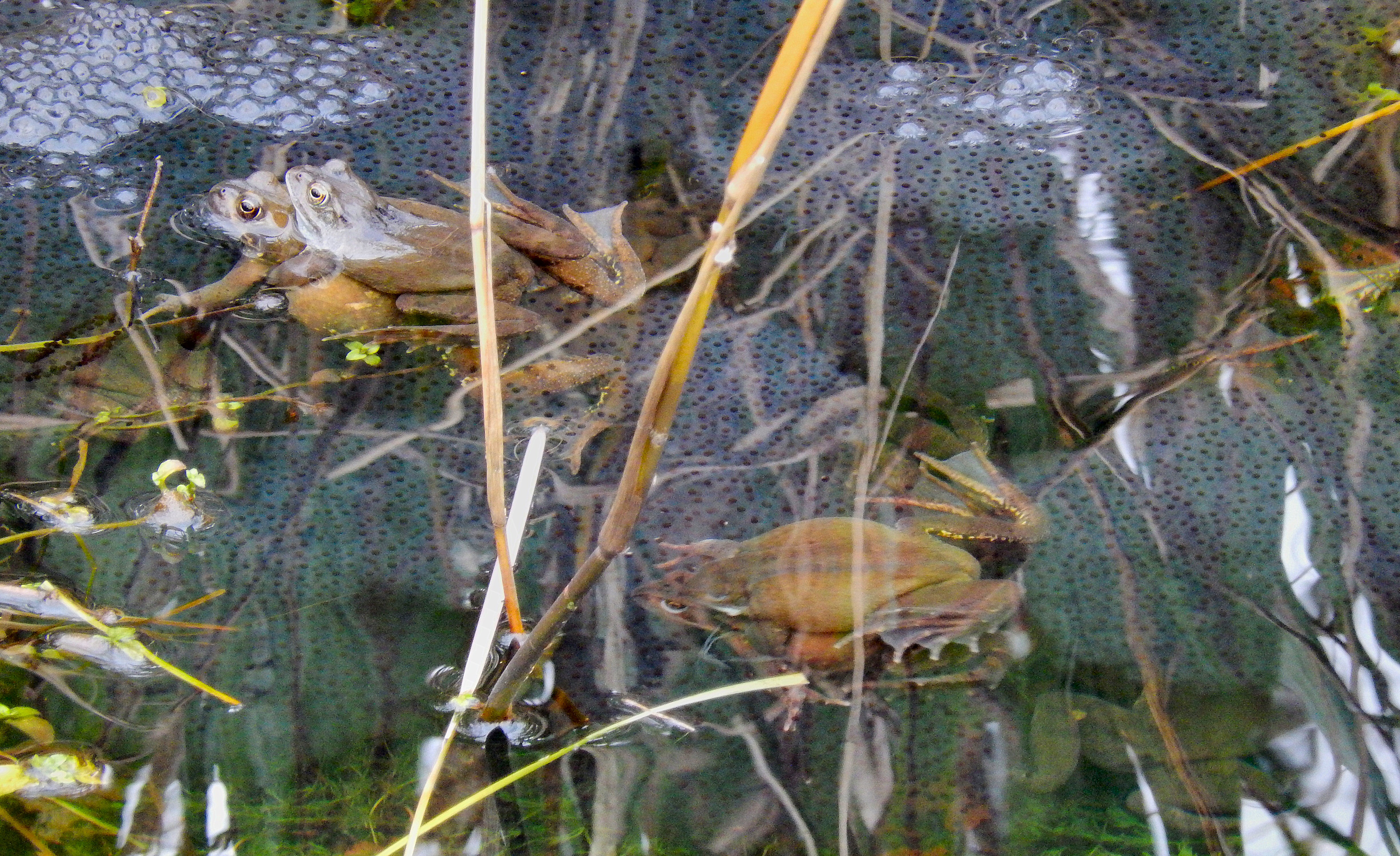
It was a good day for amphibians all round, as we also saw a pair of Smooth Newts in amplexus in the pond. I didn’t get a photo for the good reason that unlike the Common Frog, they remain elusive and well-camouflaged at the bottom of the pond. And the frogs were still going at it full throttle, with around 20 splashing about beside the island.

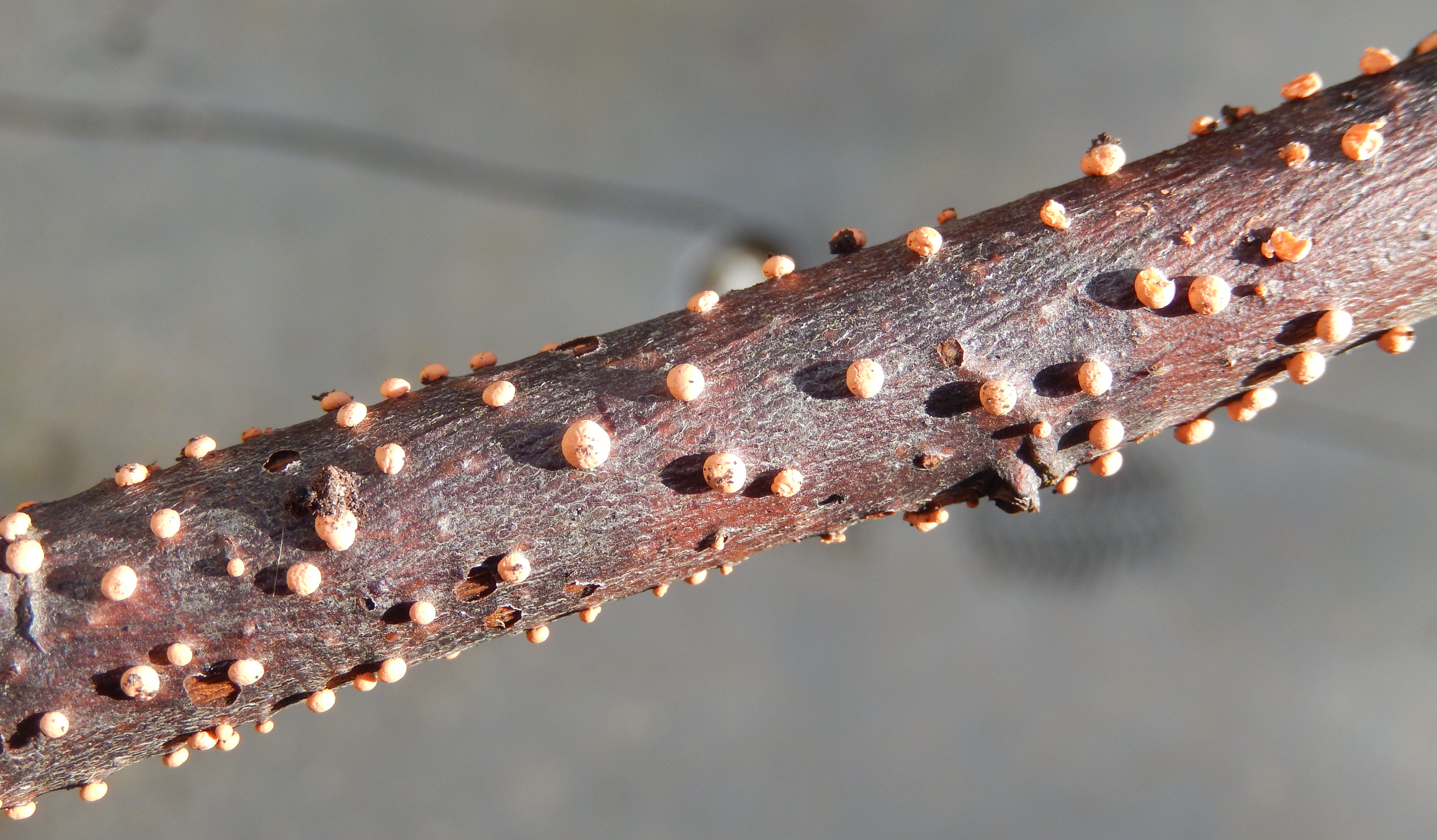
Nectria cinnabarina – a tiny fungus on wood

Nectria cinnabarina in garden

Storm Doris is blowing a gale today, but in between the showers and racing ragged clouds was a fine half-hour of warm sunshine, the daffodils glowing yellow. A cut twig caught my eye in the brilliant light, speckled with tiny spheres, the pinkish fruiting bodies of the Ascomycete Nectria cinnabarina, a small saprophytic fungus, also called Coral Spot.

Nature Red in Tooth and Claw

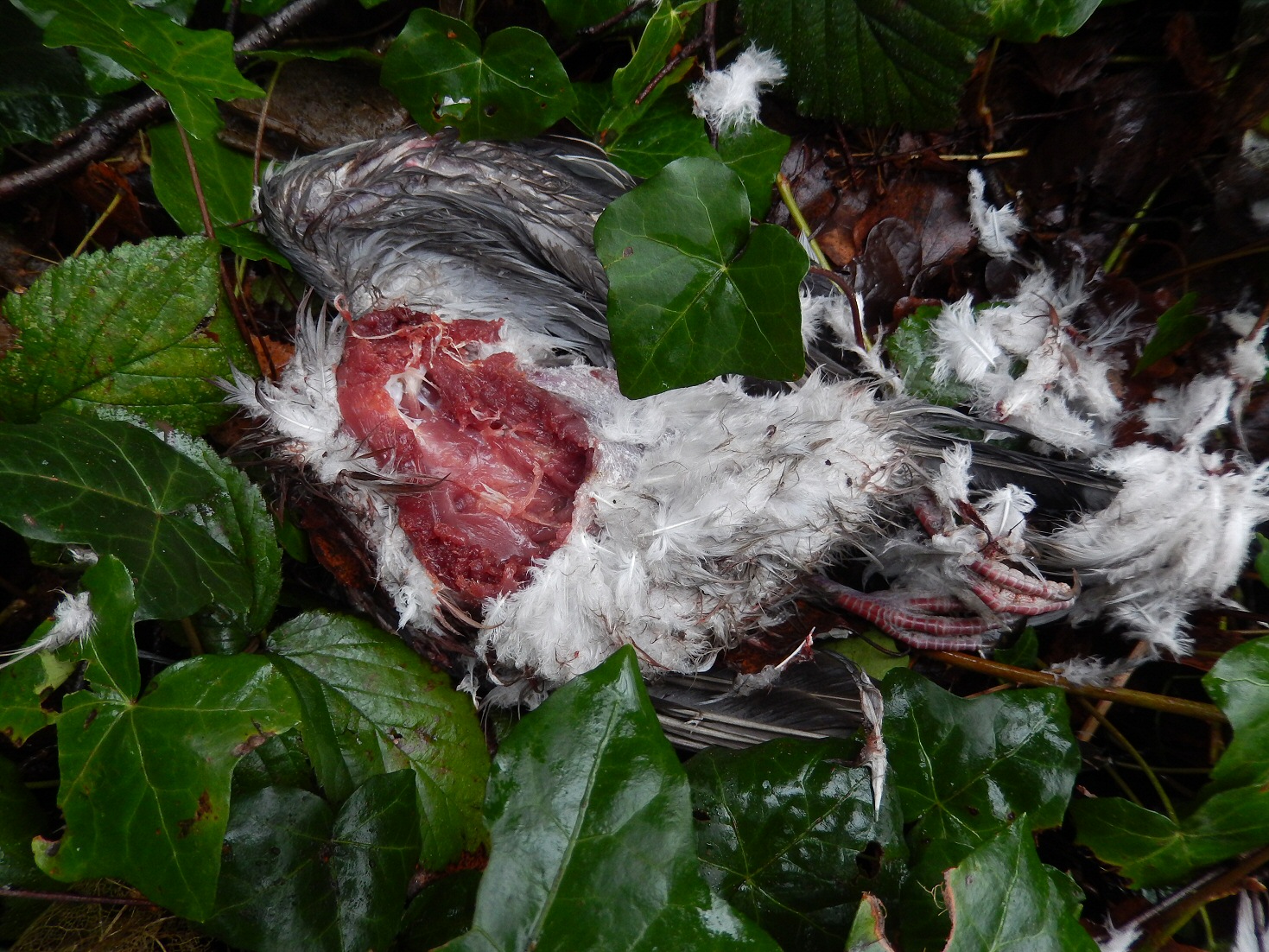
Pigeon killed and partly eaten by a Sparrowhawk

Many of the photos on this website show nature at its prettiest. Well, not today, but still surely of interest. Nature is in Alfred, Lord Tennyson’s phrase “red in tooth and claw”—or in this case in beak and claw: a Wood Pigeon killed, plucked and partly eaten by a Sparrowhawk. There were many plucked feathers all about, mainly to the right and bottom of the image, an instantly recognisable scene of predation and carnage. The Sparrowhawks nest at the other end of the reserve, and they kill a pigeon somewhere that we notice most weeks. Netty disturbed this one on her walk round this morning, and given the cold damp weather she was surely the first person into the reserve today. The sparrowhawk, definitely not very large and brownish, was either a male or a juvenile.

A touch of winter at Wraysbury

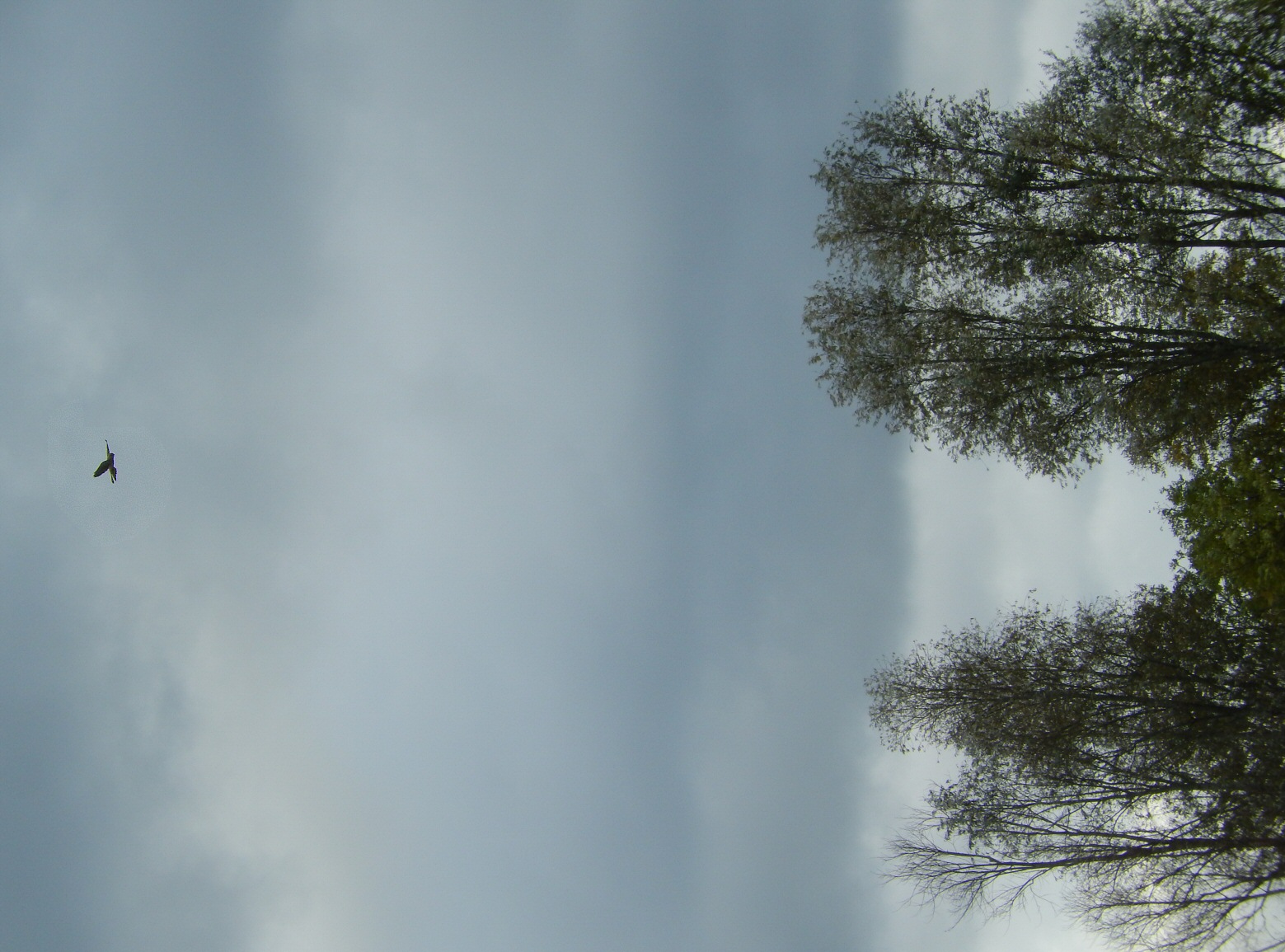
Kestrel hovering over Wraysbury
Kestrel hovering over Wraysbury, under a wintry sky

Winter showed her wizened hand today. The bright sunshine of the morning quickly gave way to cloud under a chilly northerly wind. Zipping up my coat, I wondered if I’d see anything worth remarking, and plodded up the path in the flat light. I looked left at the river Colne, and a plump Water Vole splash-dived among some juicy Iris leaves that I guess it had been cutting. Once a common enough sighting, it’s now something very special.

The main lake was almost devoid of birds, a distant swan, a few black-headed gulls and a coot or two more or less summing it up, a dull day (apart from the vole). I rounded a bend and came face to face with a very fresh-faced, brightly-coloured fox. It stared at me for a glorious second, then turned tail and fled. Given the long narrow neck of land between the river and the lake, it must have run quite a way to escape.

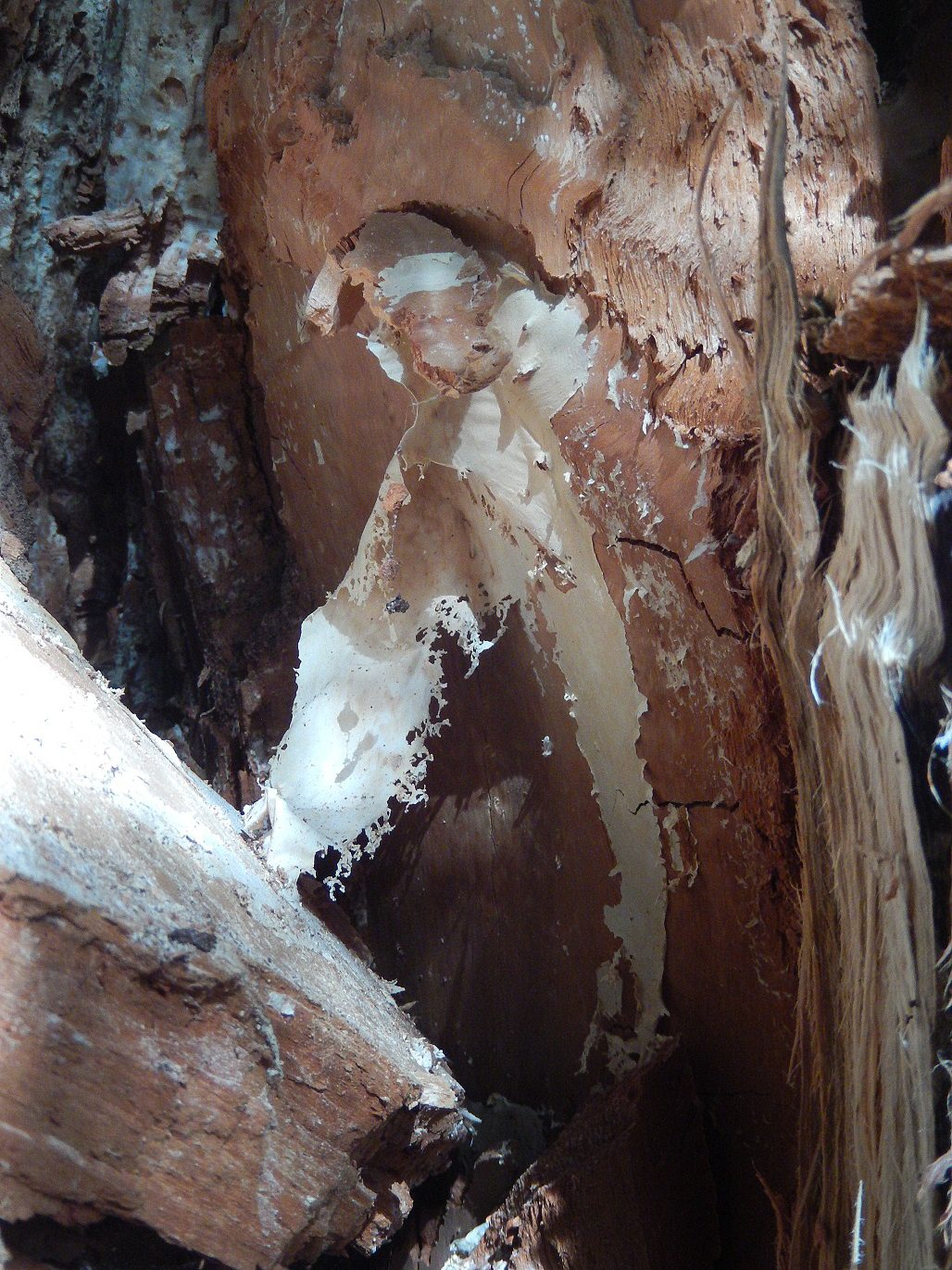
Fungal mycelium in newly-fallen Willow trunk

Not much further, a riverside willow had fallen on to an ancient hawthorn, forming a striking arch. The broken trunk was quite hollow, only a couple of inches of the newest wood remaining as a thin fragile tube. These large trees grow rapidly to a considerable size — and suddenly fall. The wood is soft, and it seems that saprophytic fungi (or perhaps parasitic) can speedily destroy it. This tree was layered with a dry papery sheet of whitish mycelium, presumably whatever species it was that rotted the trunk hollow.

A dark brown Buzzard, almost without markings, floated broad-winged just above the small lakeside trees, almost close enough to touch.

Beside me, the lake suddenly exploded into a mass of pattering feet on water, as a dozen Gadwall rushed to take off. Perhaps these newly-arrived birds are from the frozen north, unused to the slightest human disturbance.

The end of the lake held a score of Tufted Duck, their numbers too increasing rapidly now, again presumably from colder lands to the north or east.

At the steel bridge, a Bullfinch repeated its insistent call, Deu, Deu. And over the grassy meadow, a Kestrel floated silently, hovered, drifted effortlessly upwind to hover again.