Further to my Dolomites 2025 posting, here are some highlights of this year’s visit, focusing on species and themes I didn’t comment on then. All the images are mine except where indicated.
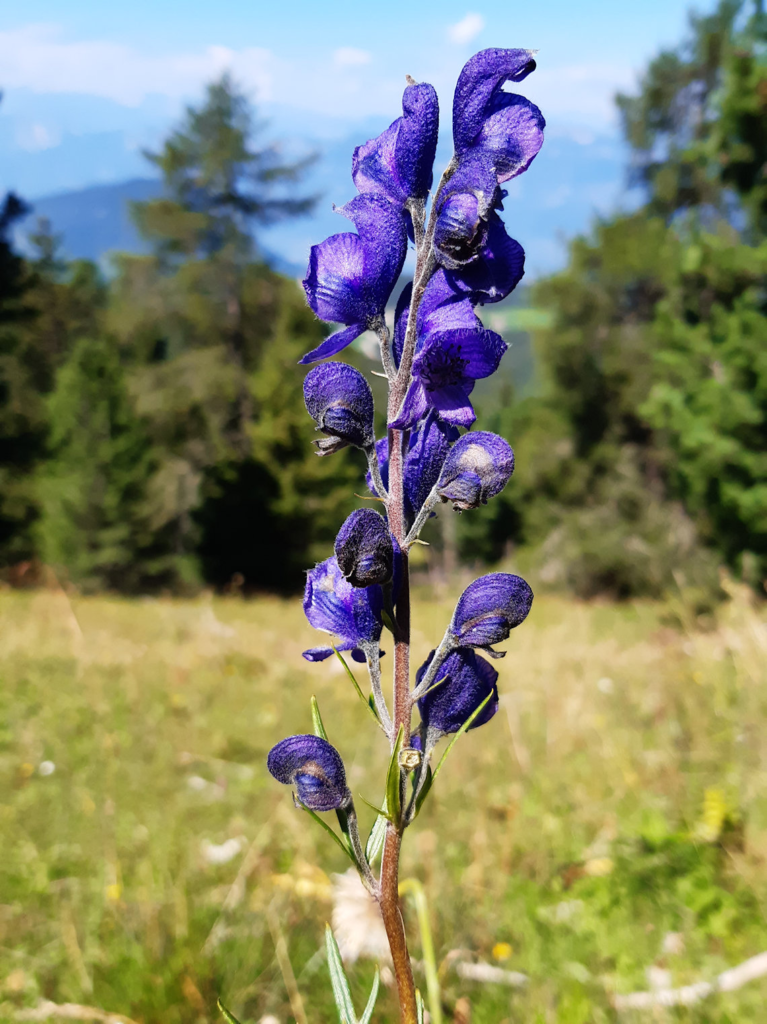
Monkshood (aka Wolfsbane), a beautiful but deadly poisonous plant, at 2000 metres
Since we went up to 2200 metres, we saw several species of flowers we had not come across before. (Right-click to view images in a separate tab if you want them larger.)
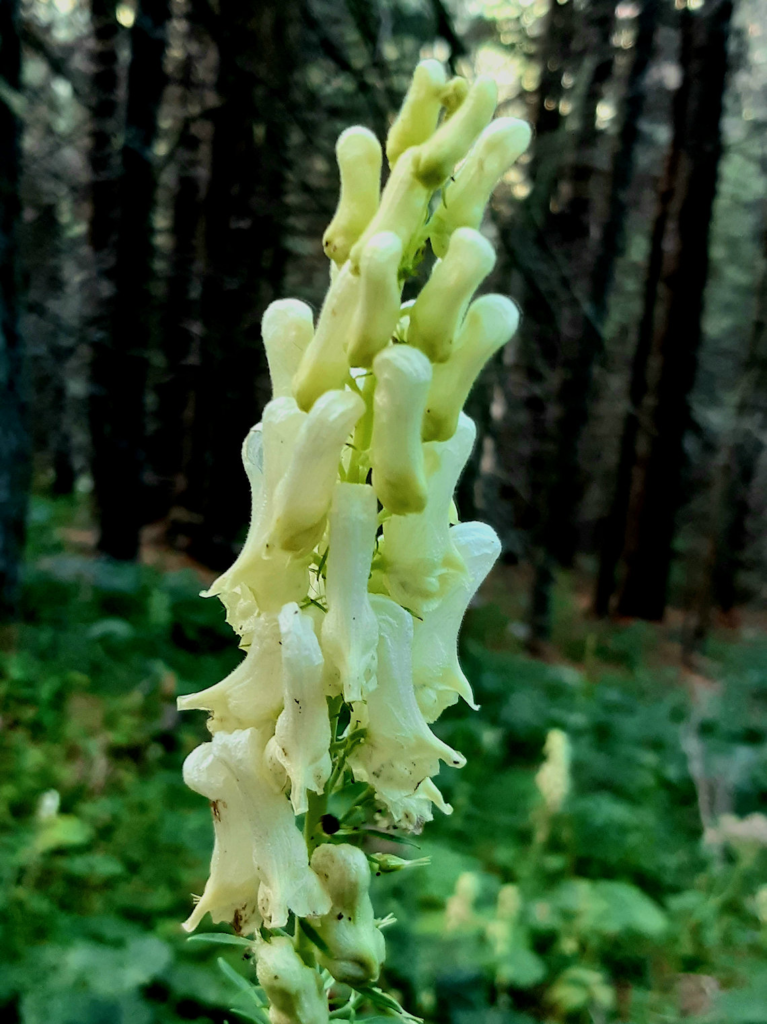
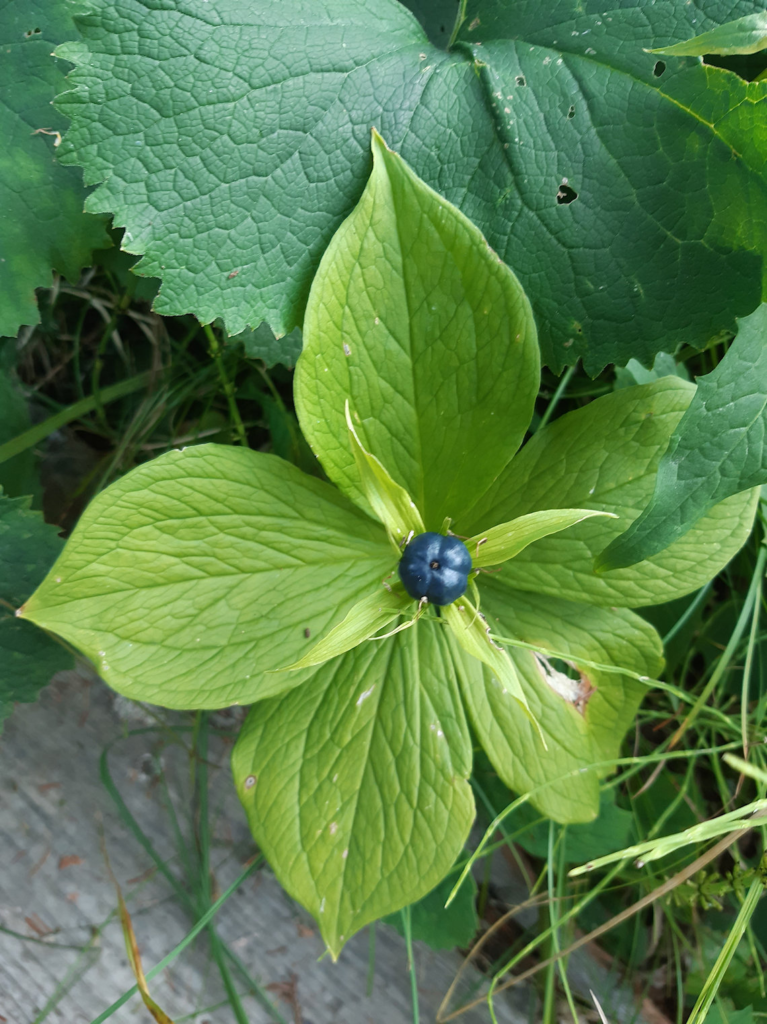
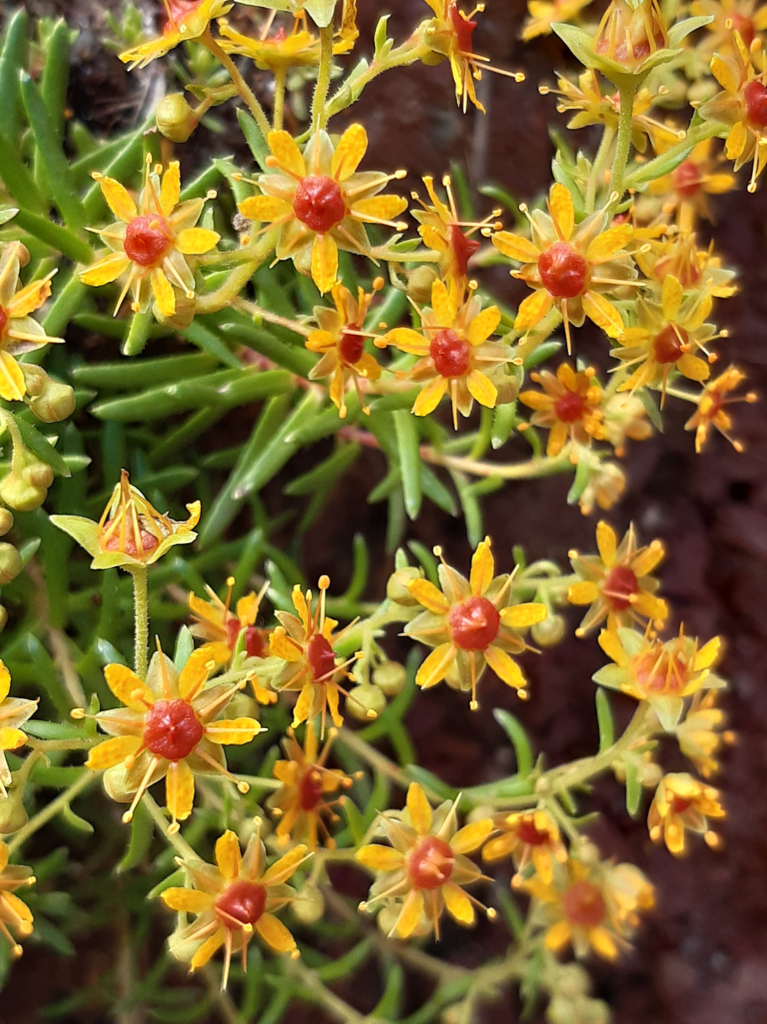
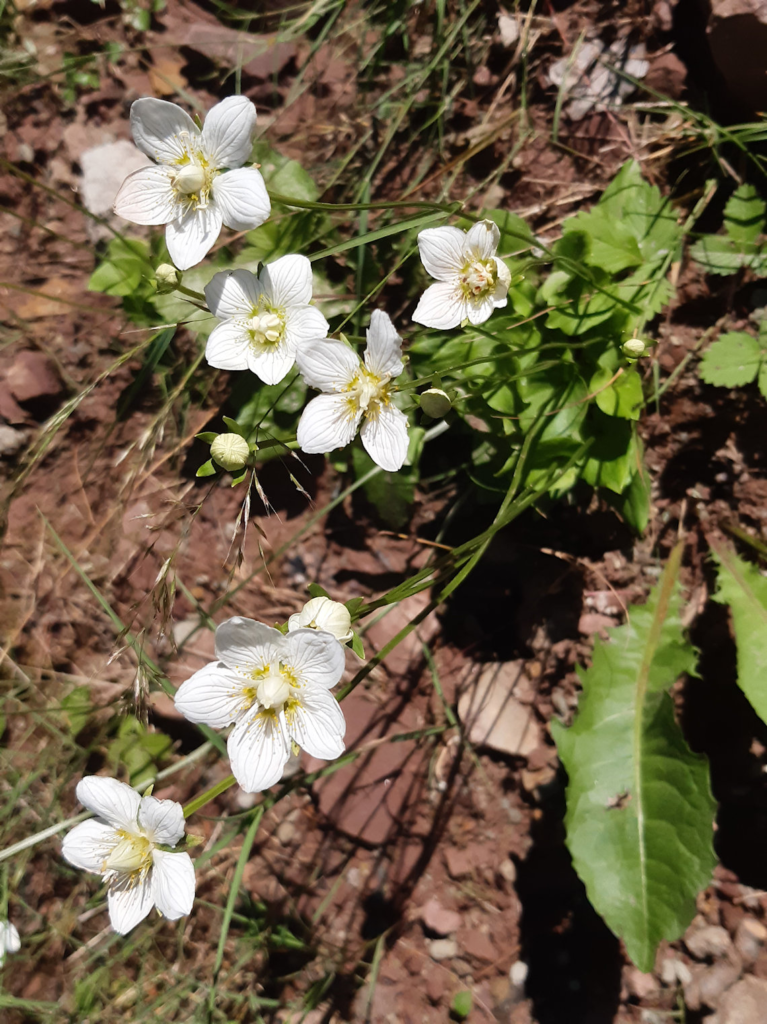
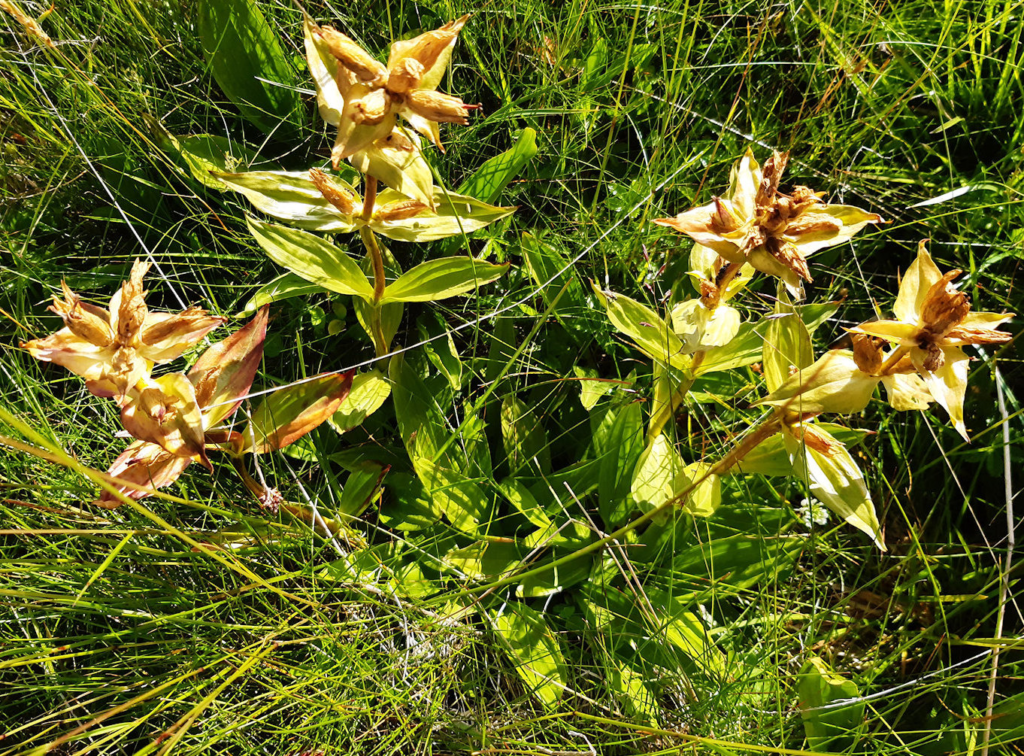
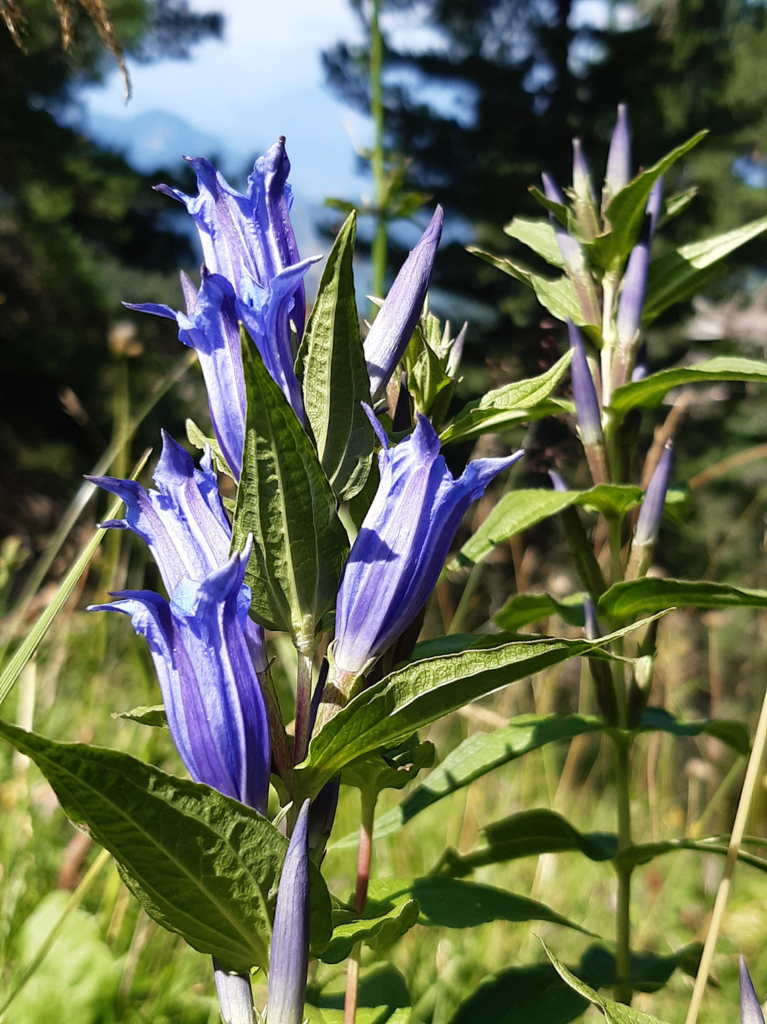
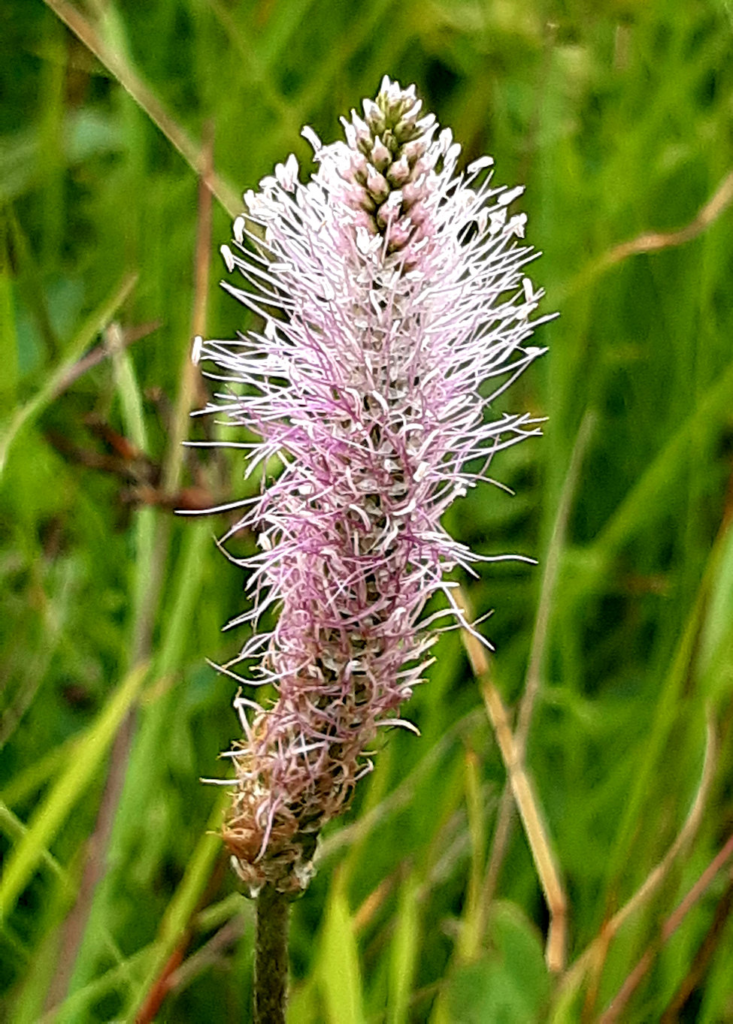
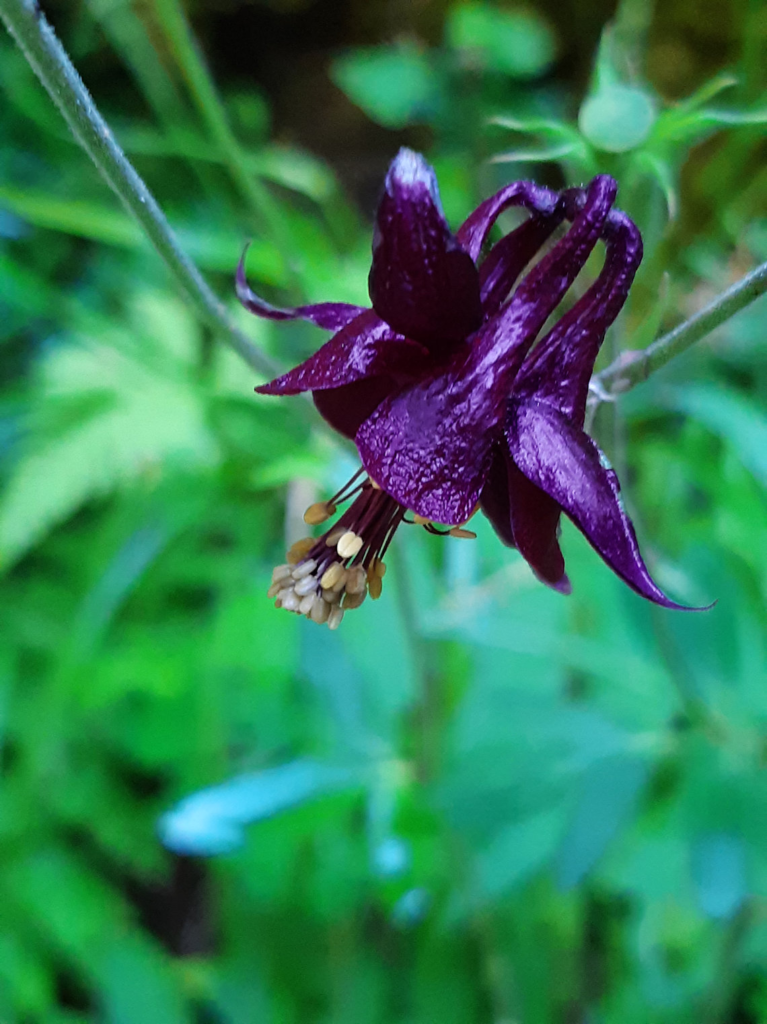
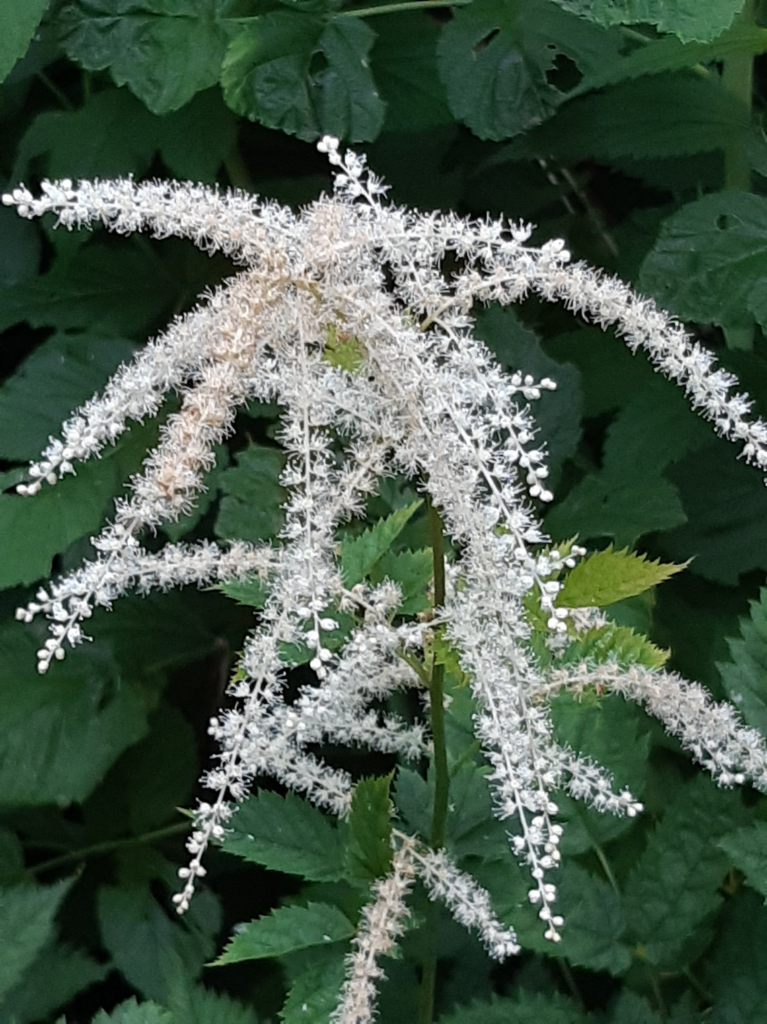
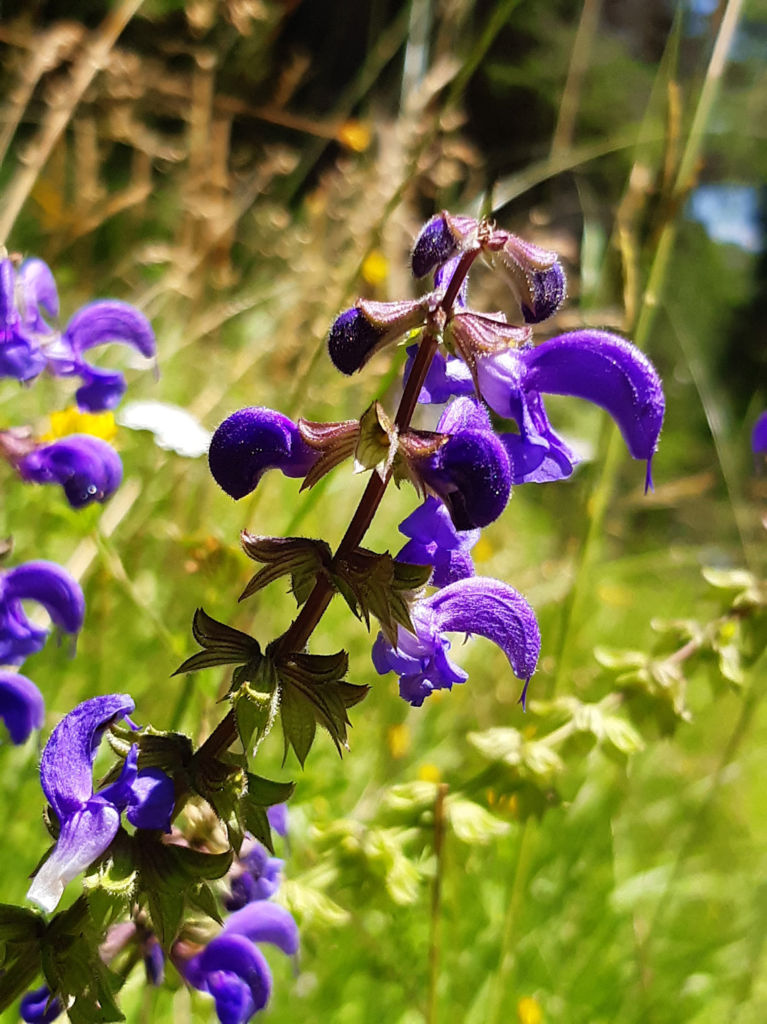
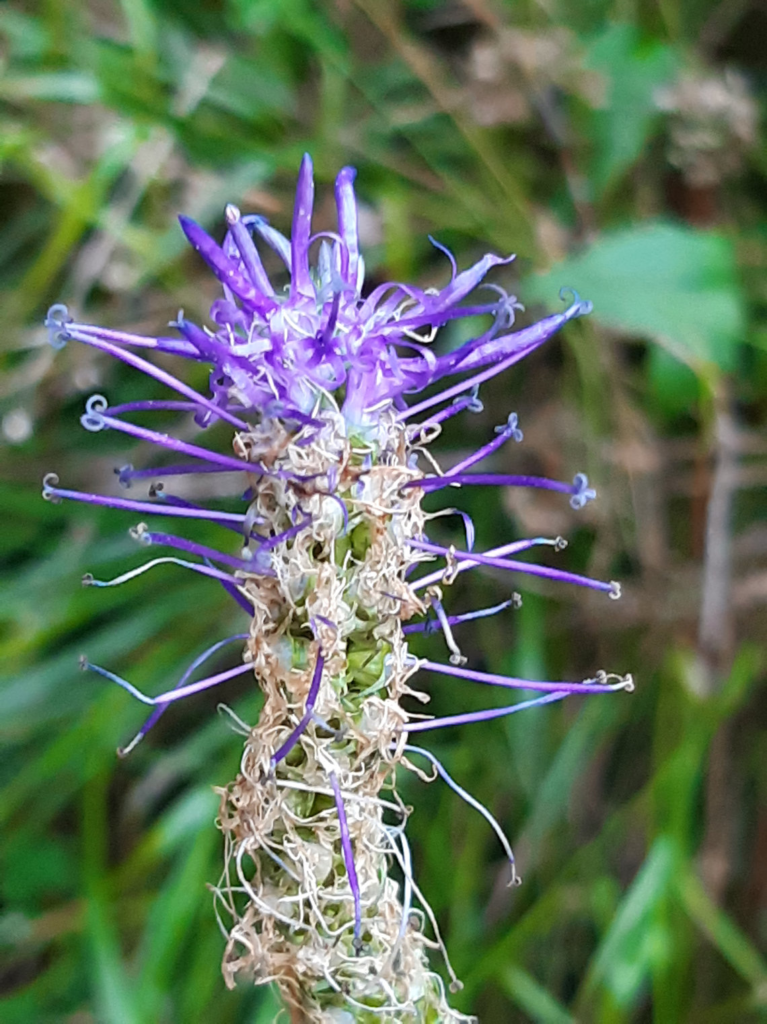
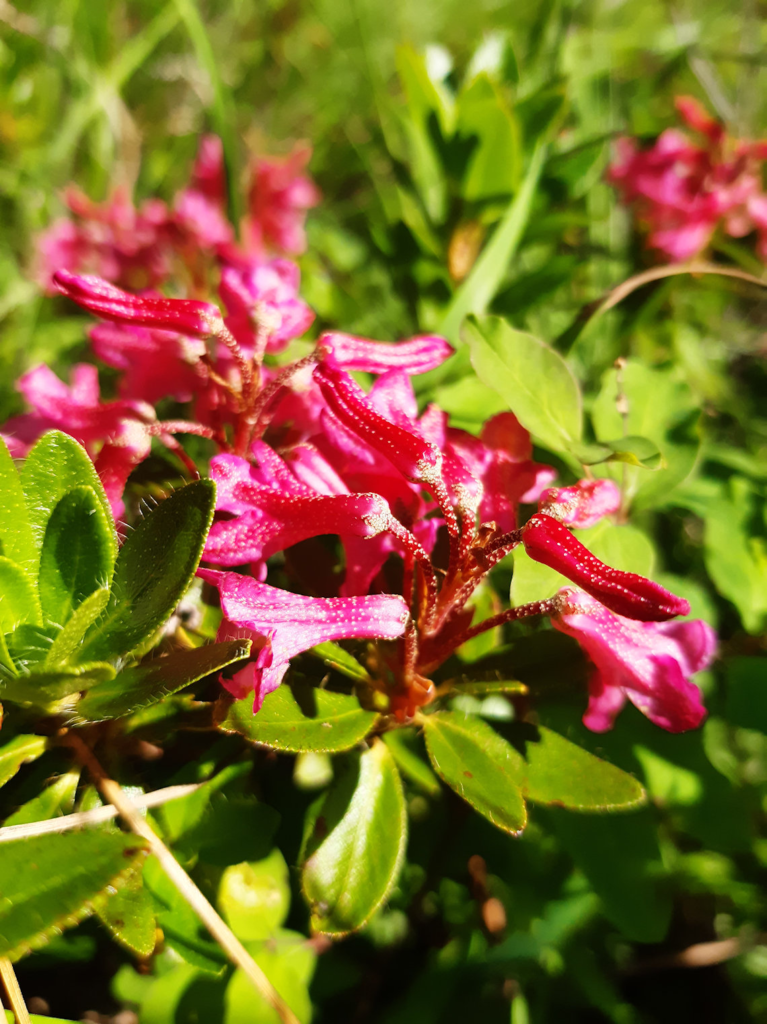
Yellow WolfsbaneHerb-Paris, a rare but distinctive plant of the high mountainsThe colourful symmetries of Yellow Mountain SaxifrageThe scarce and definitely montane Grass-of-Parnassus, divine at least in nameThe Spotted Gentian (yes! they’re not all purple!) coming into fruitThe glorious colour of the Willow Gentian, another scarce flower of the high mountainsThe Hoary Plantain, an elegant mountain member of a common genusThe striking wild Columbine (Aquilegia), mountain cousin of the garden plantsThe extraordinary and beautiful Goat’s Beard, Aruncus vulgarisClary Sage (Salvia), the attractive wild cousin of the garden herbBetony-Leaved Rampion, like a space invader in the plant worldThe Hairy Alpenrose, a high-altitude native member of the Rhododendron tribe
Time for a lichen or two!
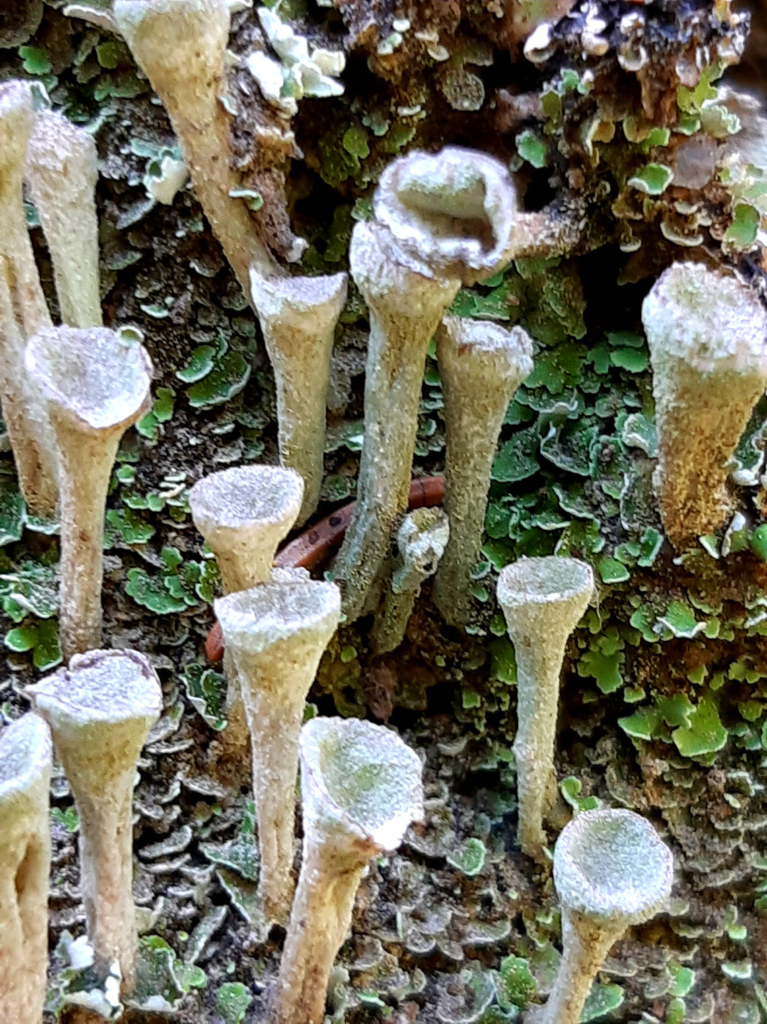
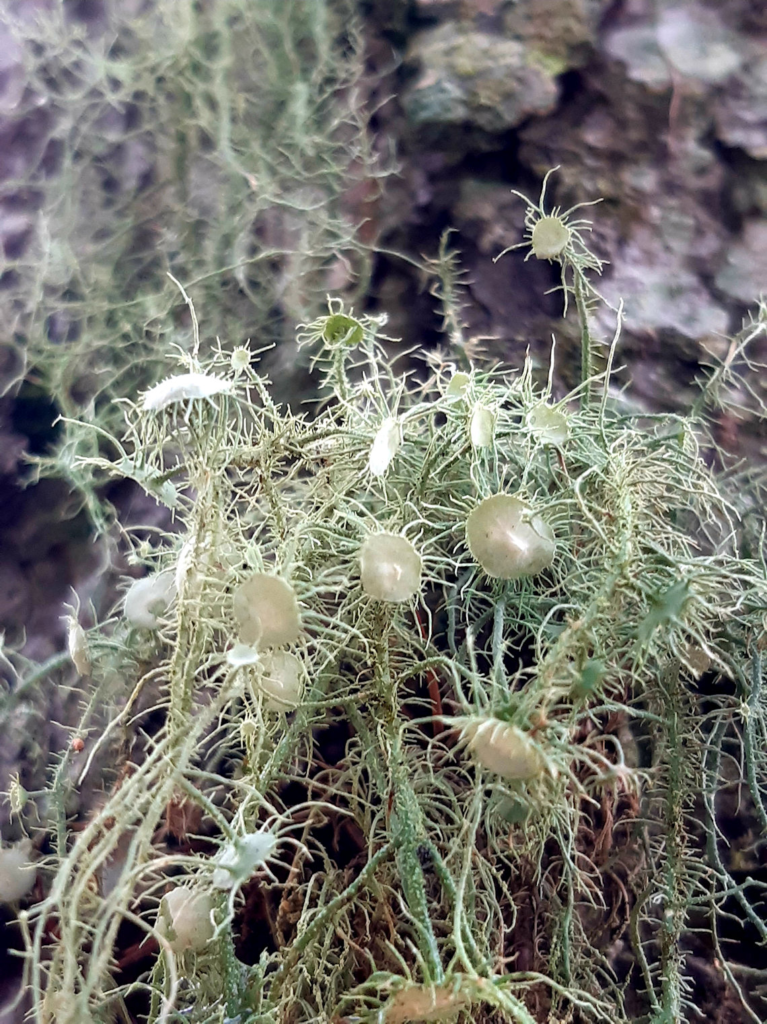
The graceful champagne flutes of the Cup Lichen, Cladonia cf fimbriataOne of the most attractive of all lichens, Usnea florida, the flowery beard lichen
And now for a few bugs!
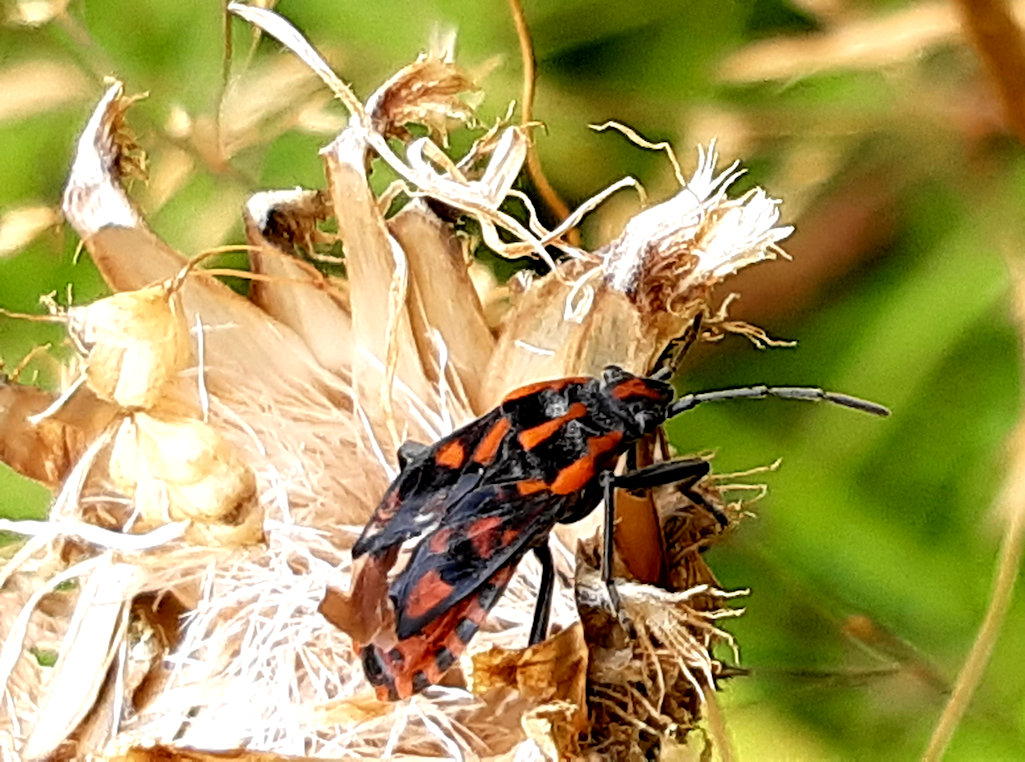
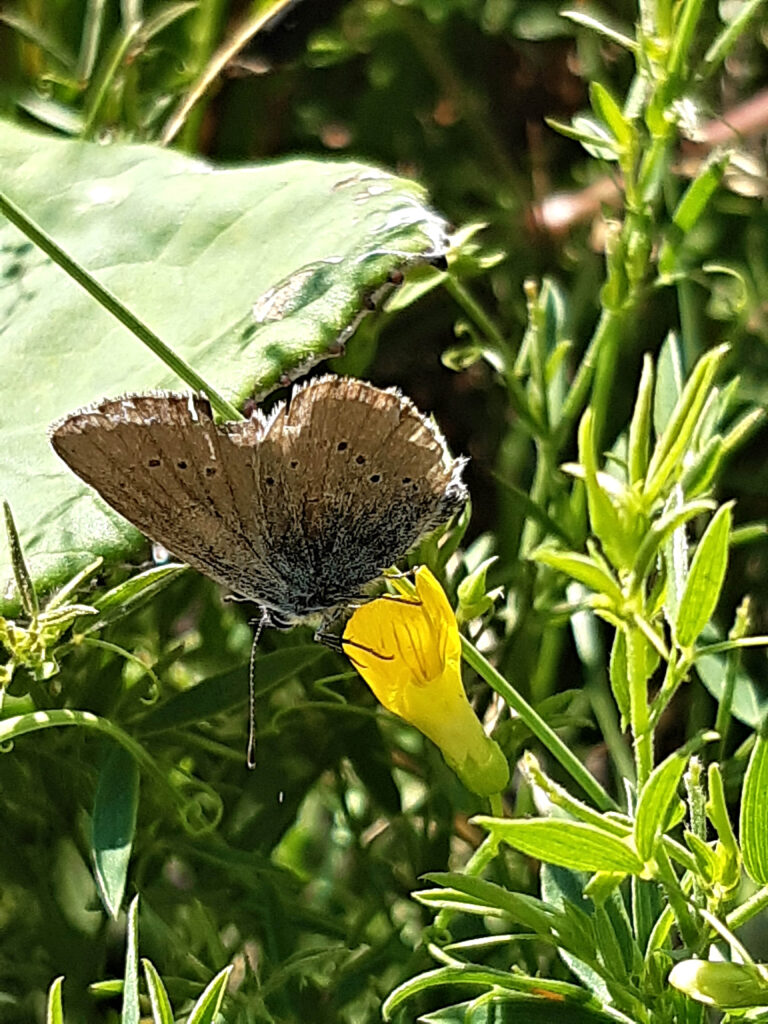
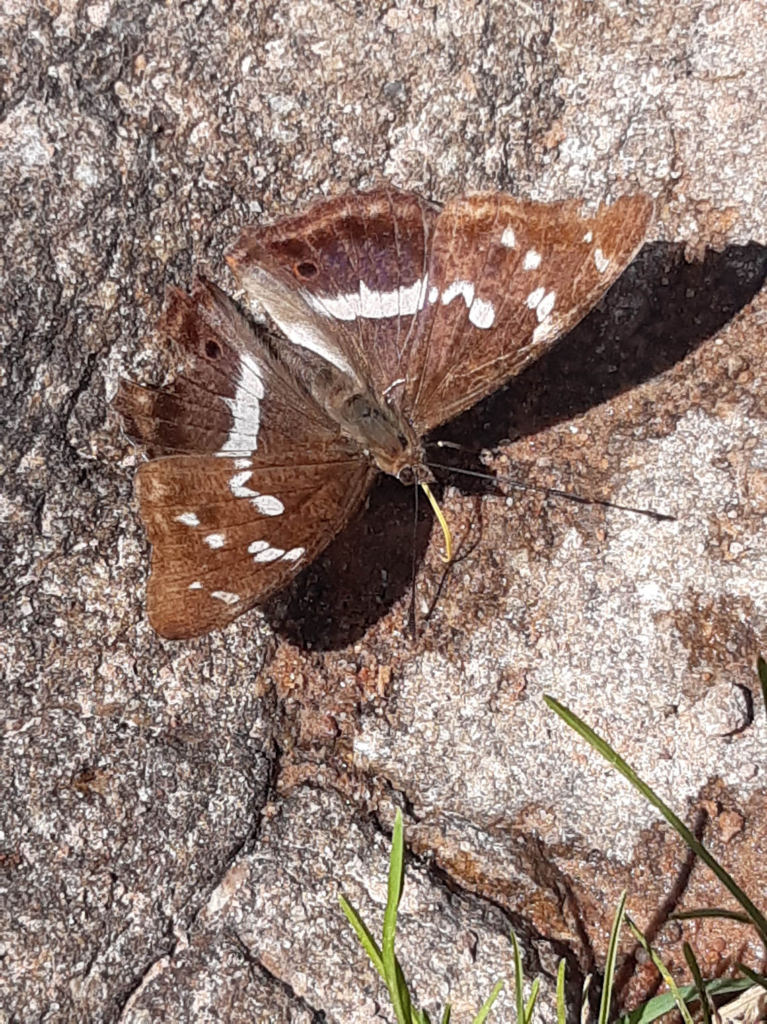
The bright warning coloration of the Mediterranean Milkweed Bug says “Don’t try eating me, I’m poisonous”.Female Mazarine Blue, extinct in BritainPurple Emperor
The Purple Emperor spends most of its time high in the treetops, but in hot weather (like the current heat dome covering most of Europe including Britain) comes down to wet rocks (here, beside a delightfully cold and refreshing mountain stream, which I visited for much the same reasons as the butterfly) to drink the mineral-rich water. You can see its long proboscis extended for drinking. The wings have a purple sheen, created by microscopic structures which interfere with light, when the light is in just the right direction; they are pigmented brown.
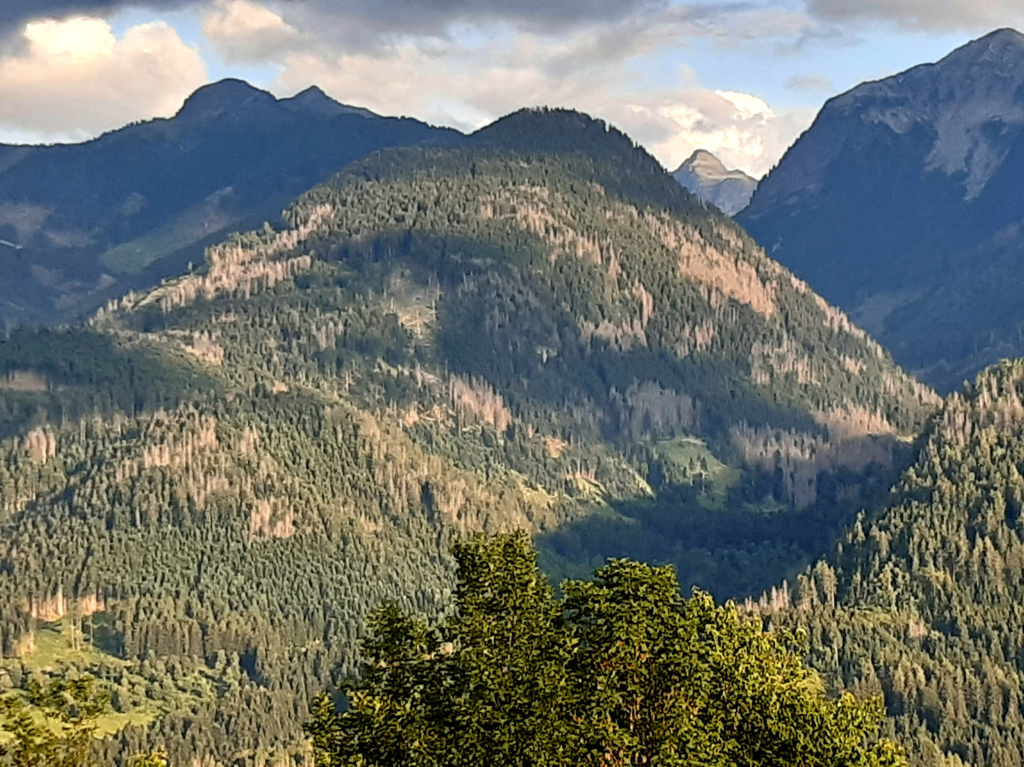
On the subject of increasing heat, this photograph of a mountain forest tells a sobering story. Dead Spruce trees are dotted about the slopes. They were killed by the European Spruce Bark Beetle, Ips typographus. As its name suggests, it mainly affects Spruce but can harm other conifers.
Ips typographus. Photo from Wikimedia Commons by Gilles San Martin. CC-by-SA 2.0
The female lays her eggs under the bark of the tree. The larvae make galleries there, which can be extensive enough to girdle and kill the tree.
Ips typographus’s galleries just under the bark of a spruce tree. Photo from Wikimedia Commons by Tonu Pani, CC-by-SA 3.0 unported.
Growth of the beetles is slowed or halted by hard winters, and they used to have just one brood per year. With global warming, Europe’s winters are becoming milder, and the beetles often survive the winter. In addition, they now have up to 3 broods per year; damage to forests has greatly increased.
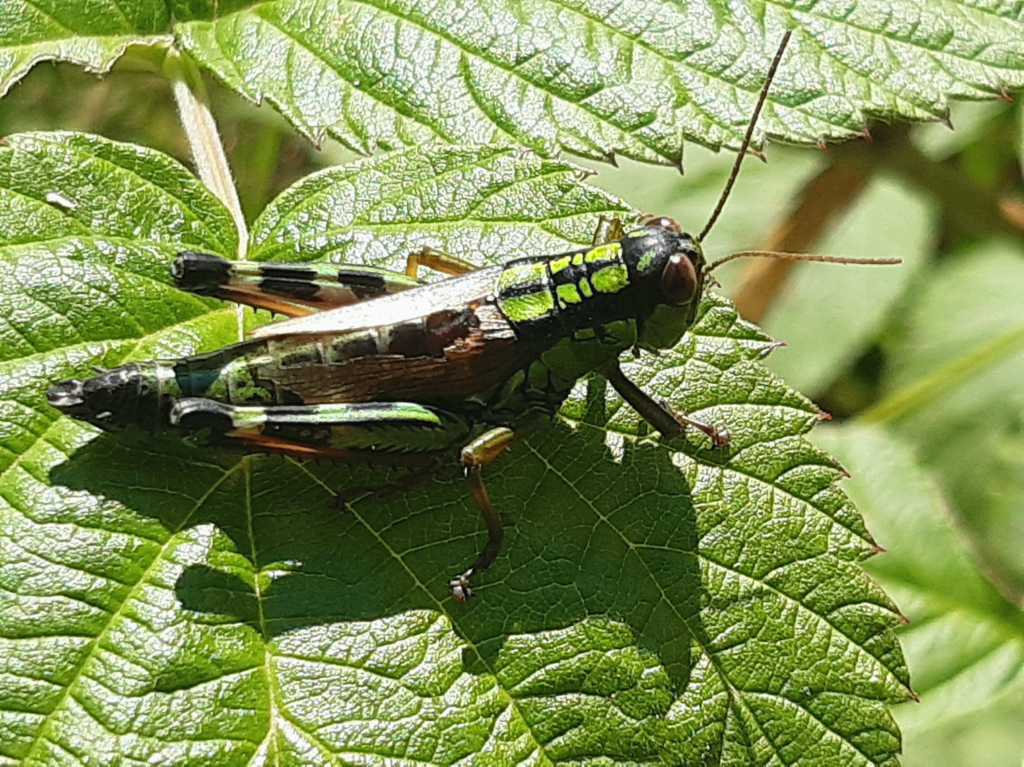
Green Mountain Grasshopper
The star of the show? The celebratory summer-lover, the Green Mountain Grasshopper. It was a joy when one landed on my shirt and stayed to pose for the photographers.
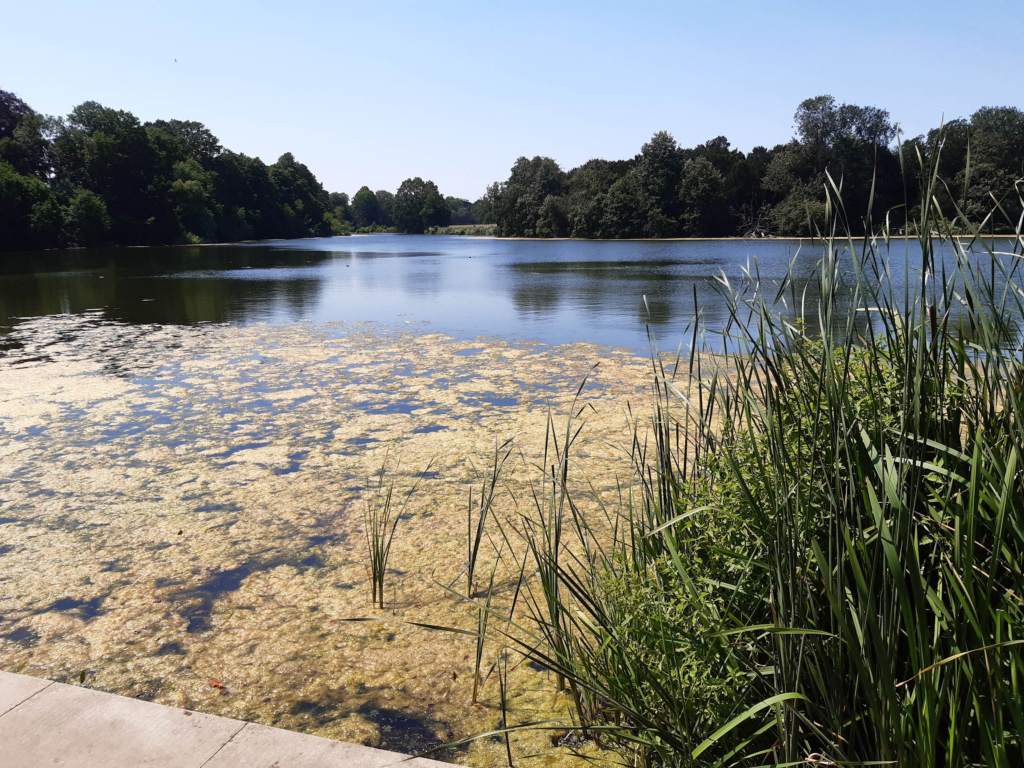
A handsome landscaped lake, forested banks, open water, marginal vegetation … and a mass of algae indicating eutrophication (and a heatwave)
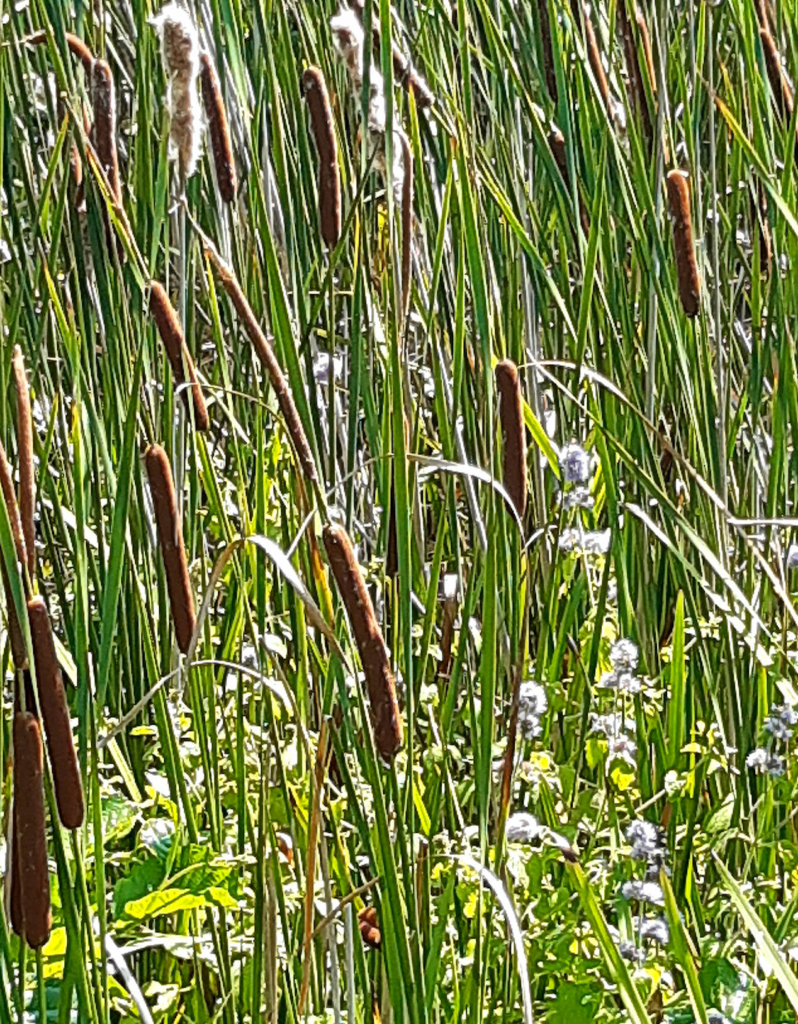
Reed Mace and Water Mint beside the lake
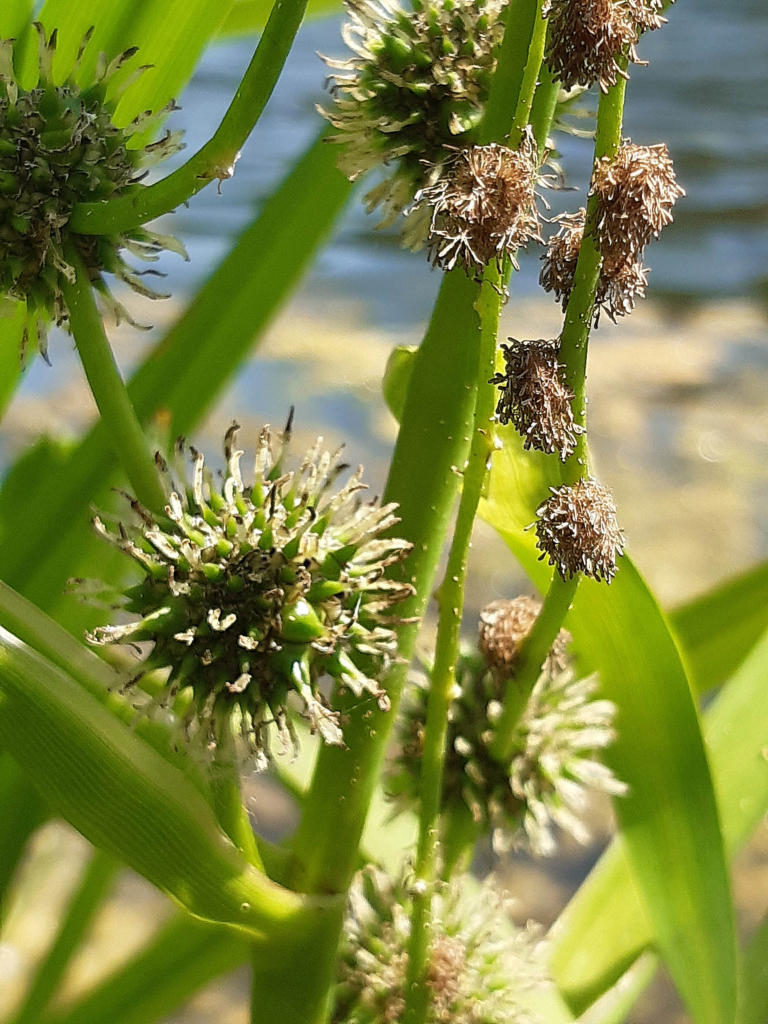
Branched Bur-Reed beside the lake
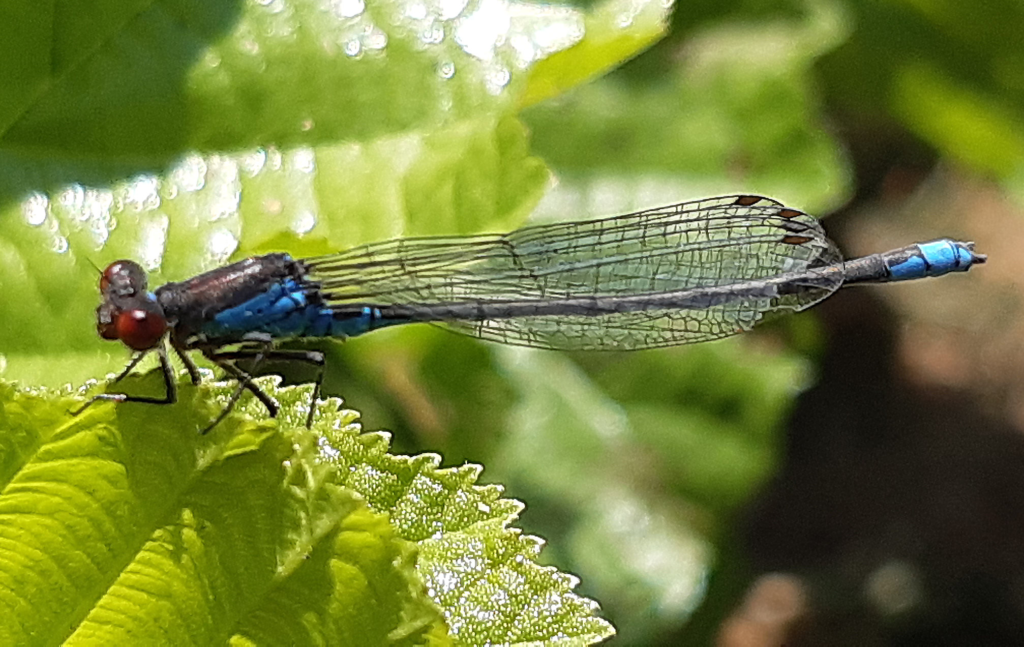
Small Red-eyed Damselfly; many Black-Tailed Skimmers raced above the water and around the marginal vegetation, with a few Emperor Dragonflies and some blue damselflies (Common Blue or Azure).
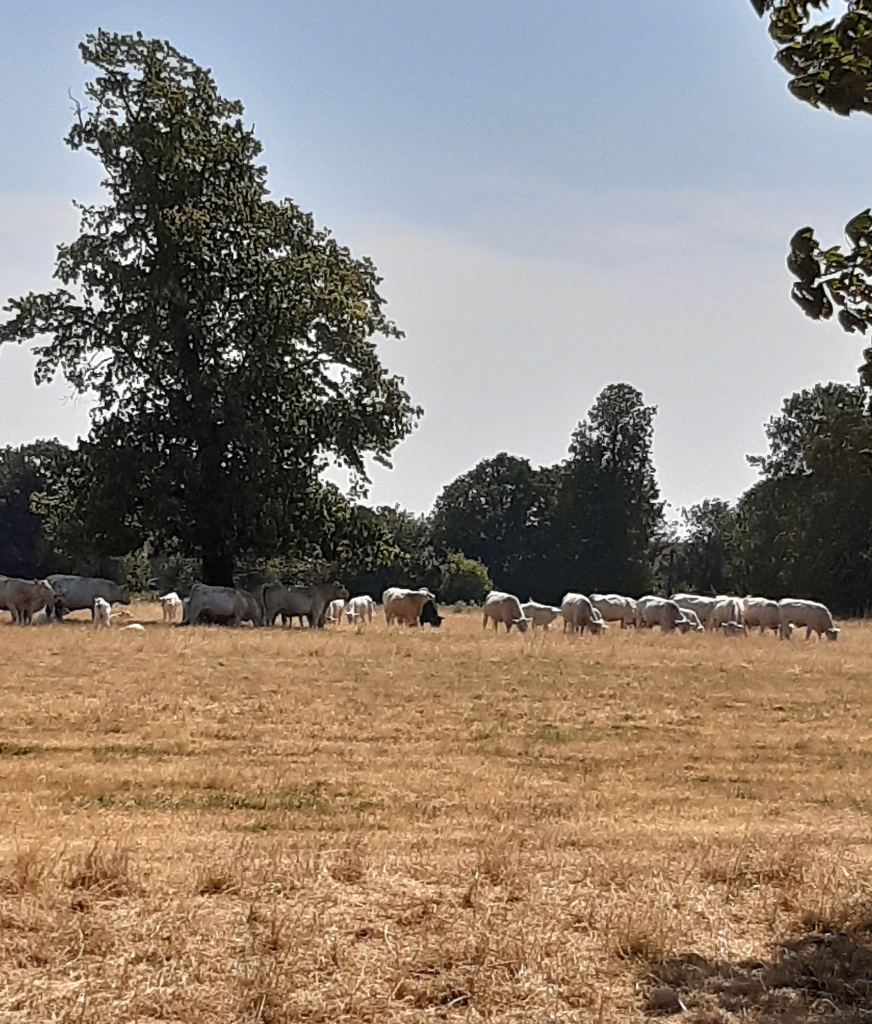
Cattle grazing on the dry grass of the pleasantly English parkland landscape, in a prolonged heatwave. (At the end of the month, the Met Office reported that July 2026 had been the driest month they had ever recorded, since 1836 when records began.)
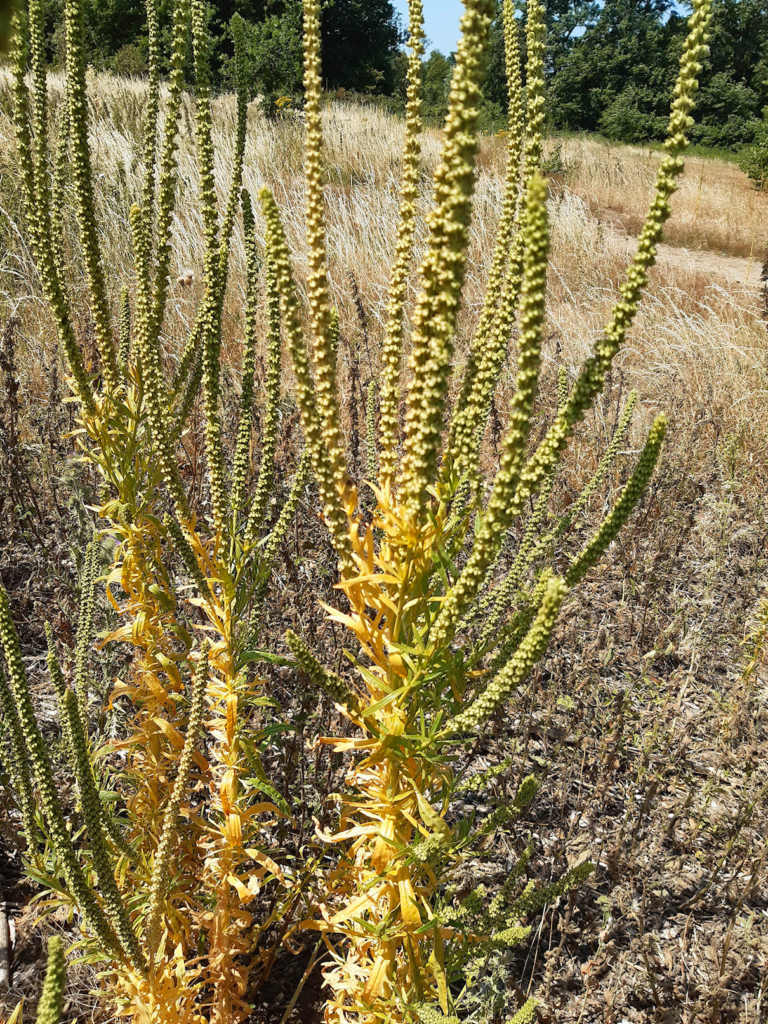
Weld (Reseda luteola), a tall handsome forb even when past flowering.
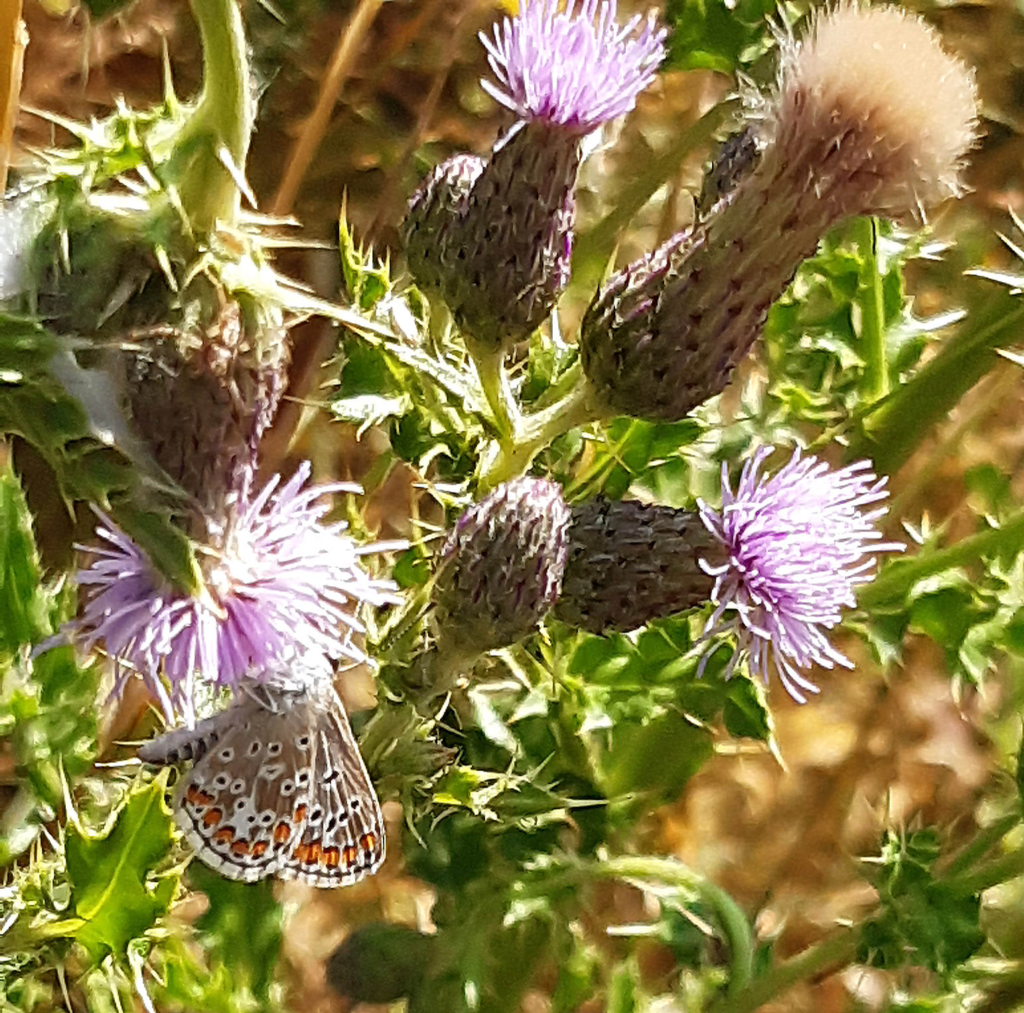
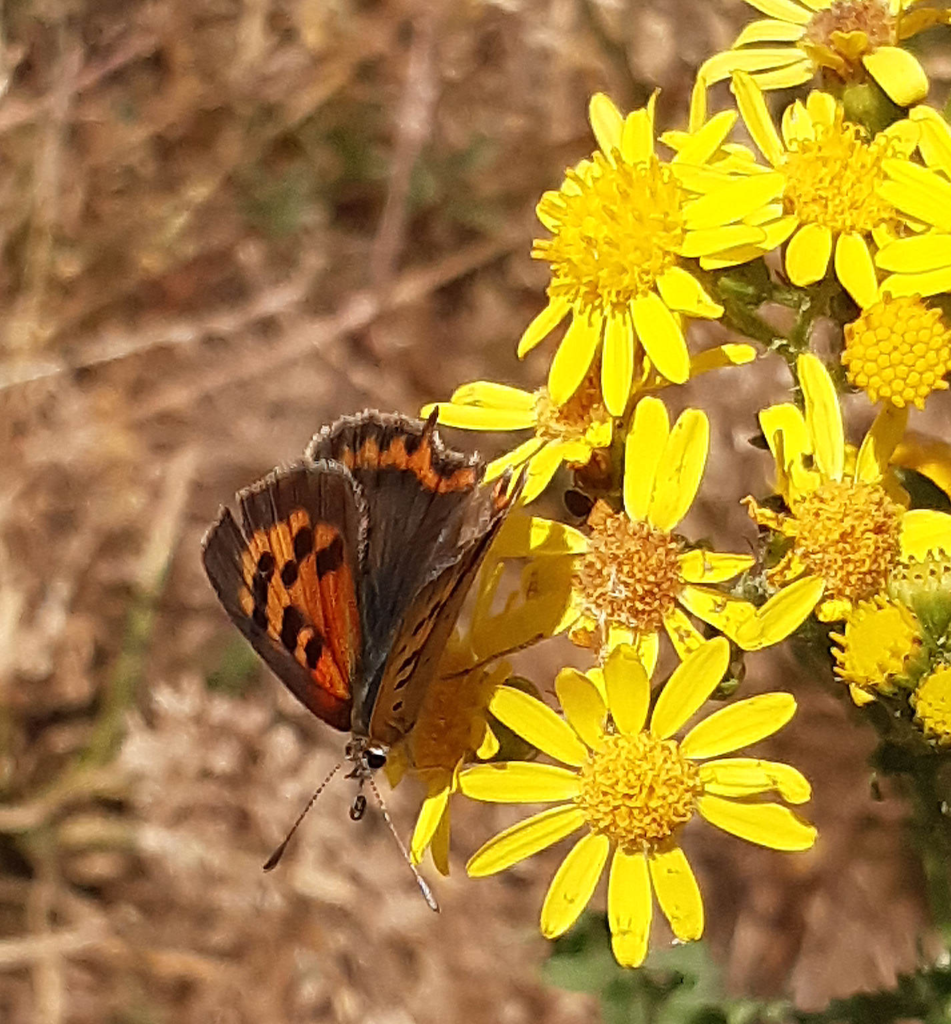
Female Common Blue butterfly on Creeping Thistle
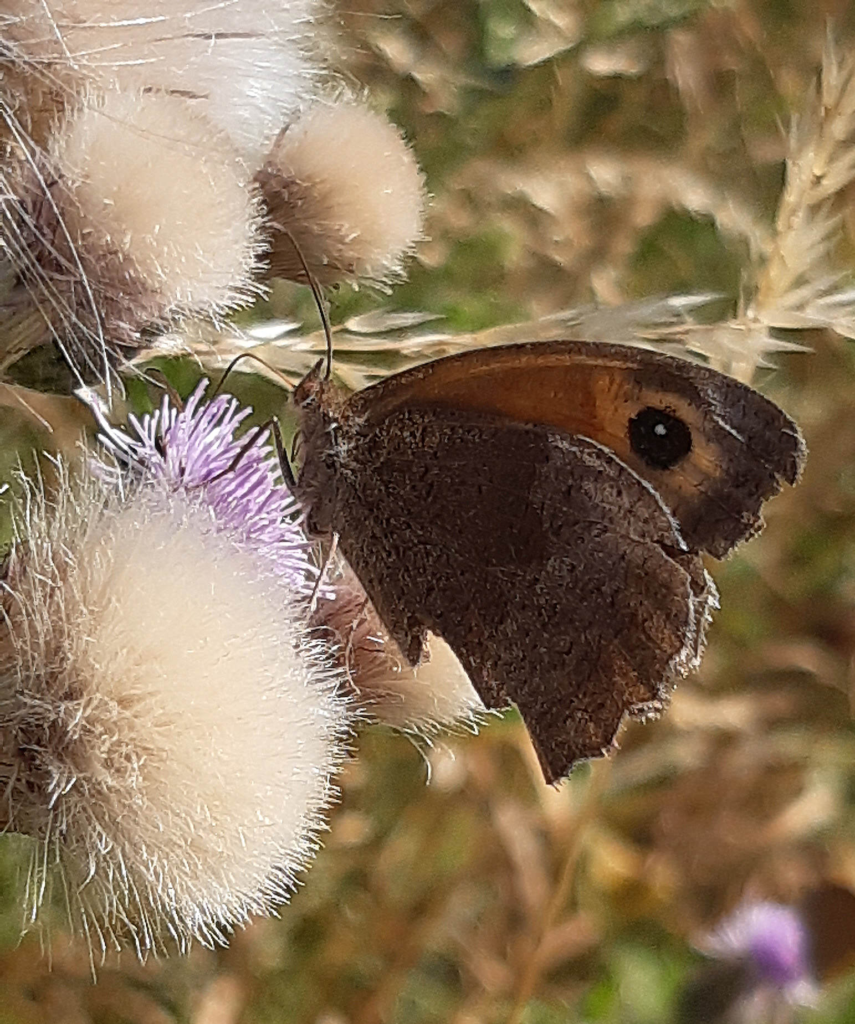
Meadow Brown, once so common I wouldn’t have thought to photograph it: now declining across Britain, but happily still thriving here at Osterley. Also around the meadow flowers were plenty of Gatekeepers.
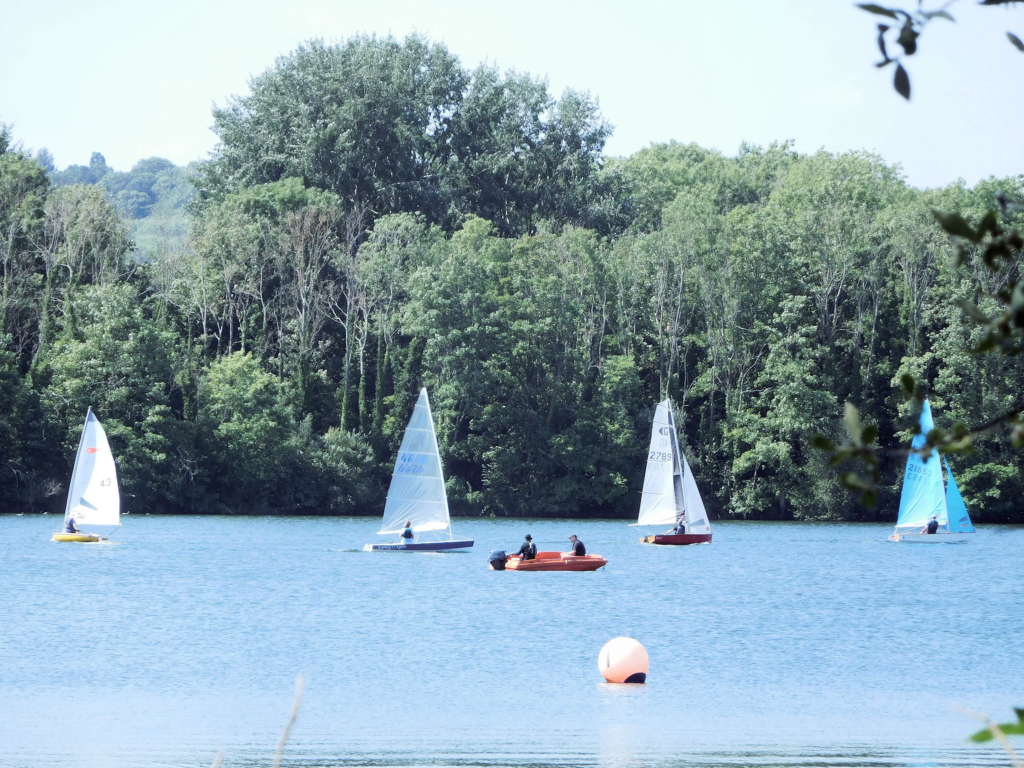
Wraysbury Lakes is an area of former gravel pits and secondary woodland where the Colne Brook flows across the Thames floodplain. One of the lakes is used for sailing; some are reservoirs. The land has a pleasantly reclaimed and scruffy feeling to it; a patch is a solar farm; another area is used for grazing ponies; and another is delightfully “weedy” with many colourful flowers of waste ground, and their pollinators.
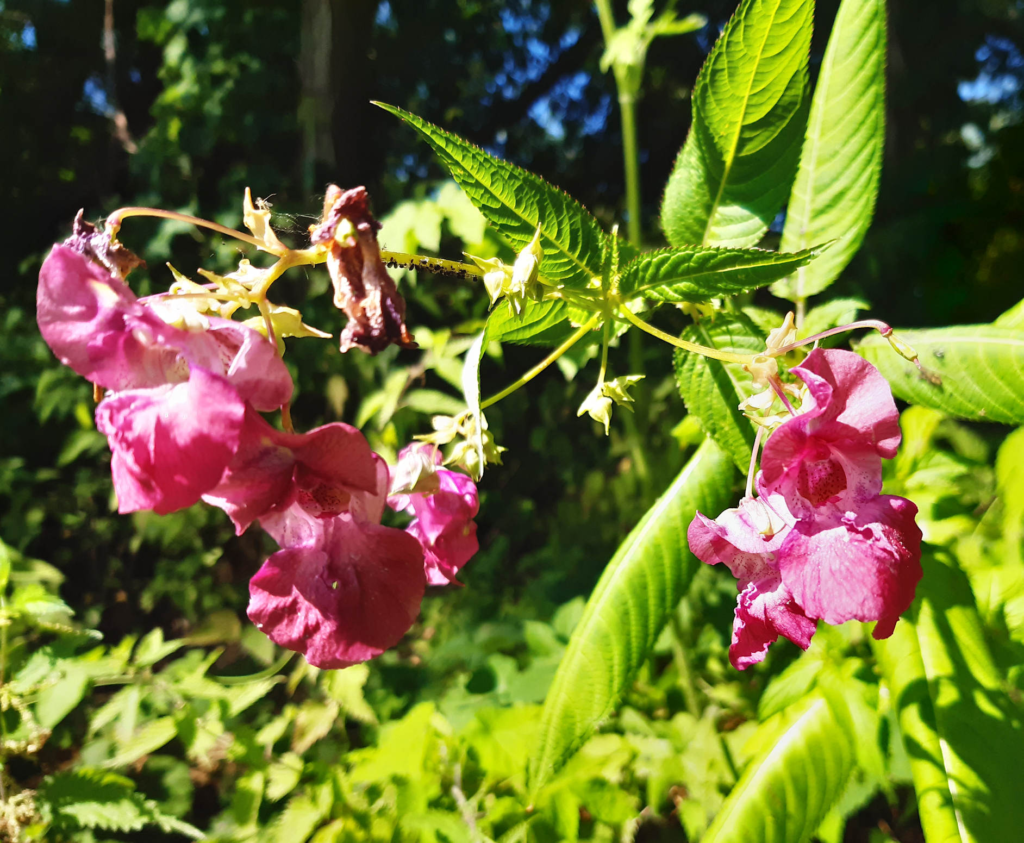
Himalayan Balsam grows beside the Colne Brook here and there, but has not become seriously invasive.
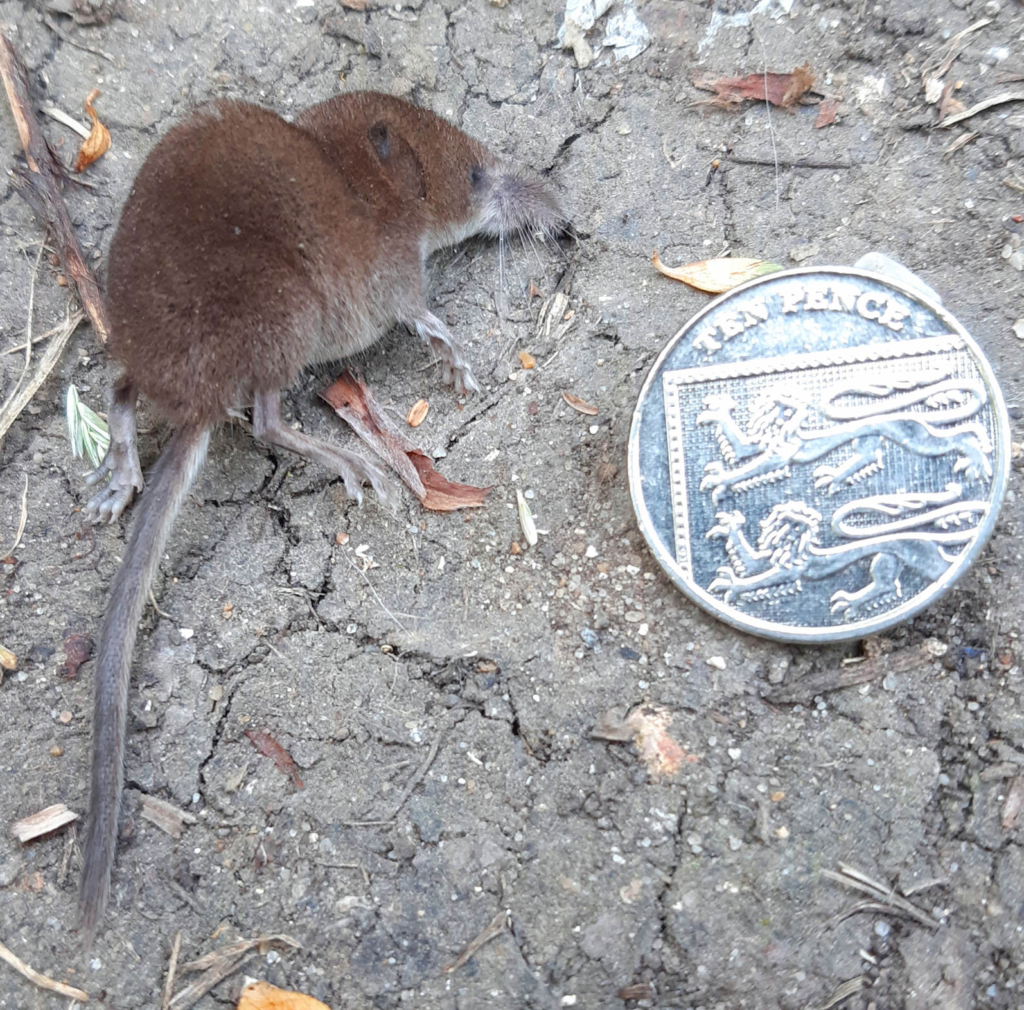
A Water Shrew, if the silvery hairs along tail and feet are anything to go by. Given its small size this must be a young one. The species is known in the area.
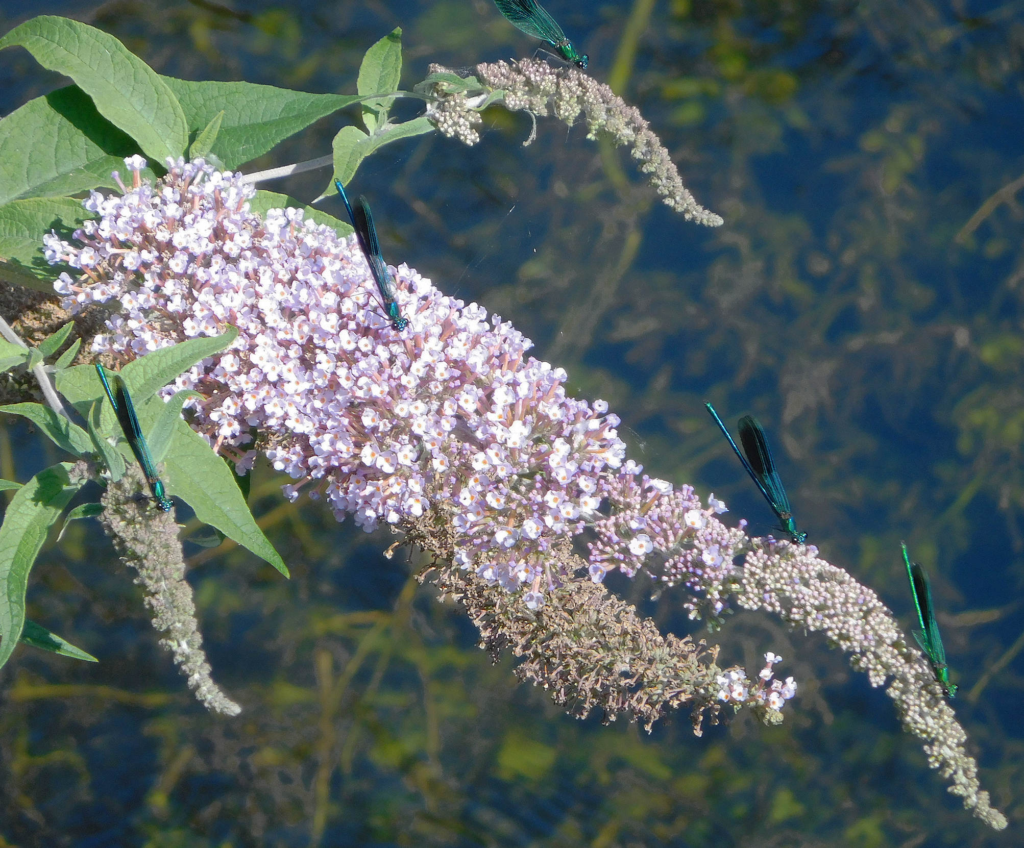
This Buddleia near the road bridge over the Colne Brook has attracted both male (blue) and female (green) Banded Demoiselles, an interesting sight having both together.
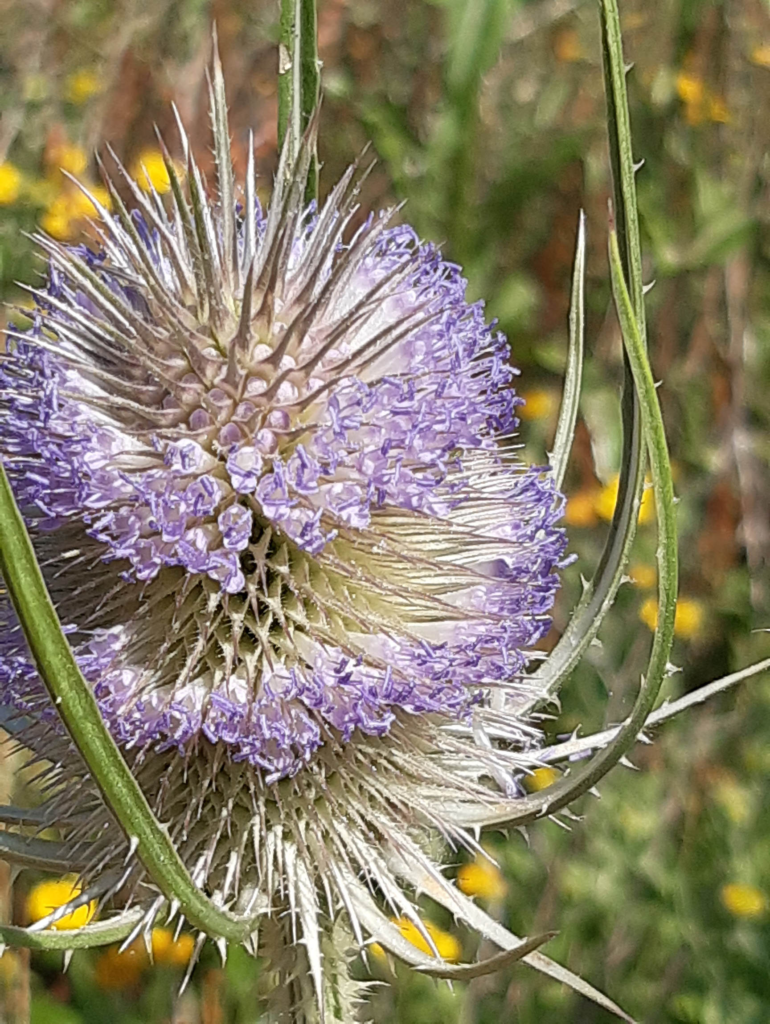
Out in the sunshine in the wasteland area are many tall flowering forbs, including Teasel …
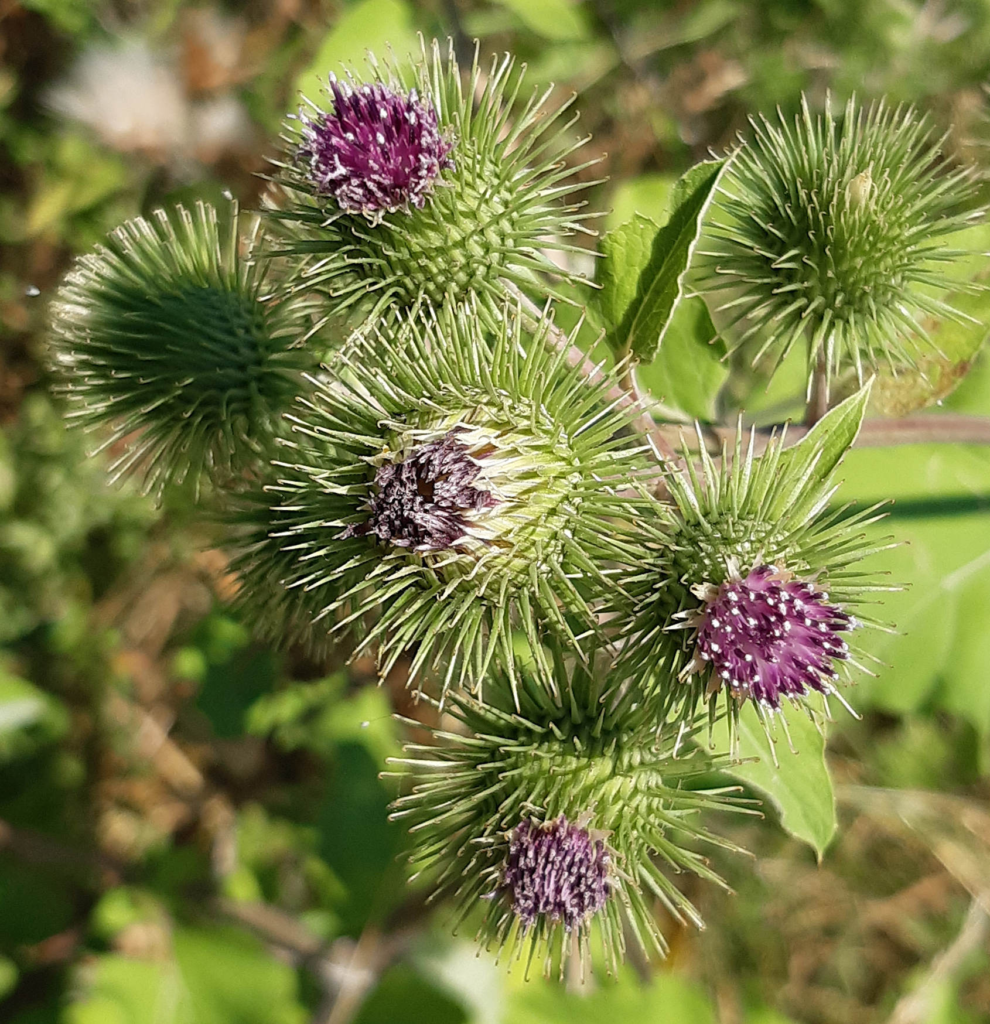
Burdock …
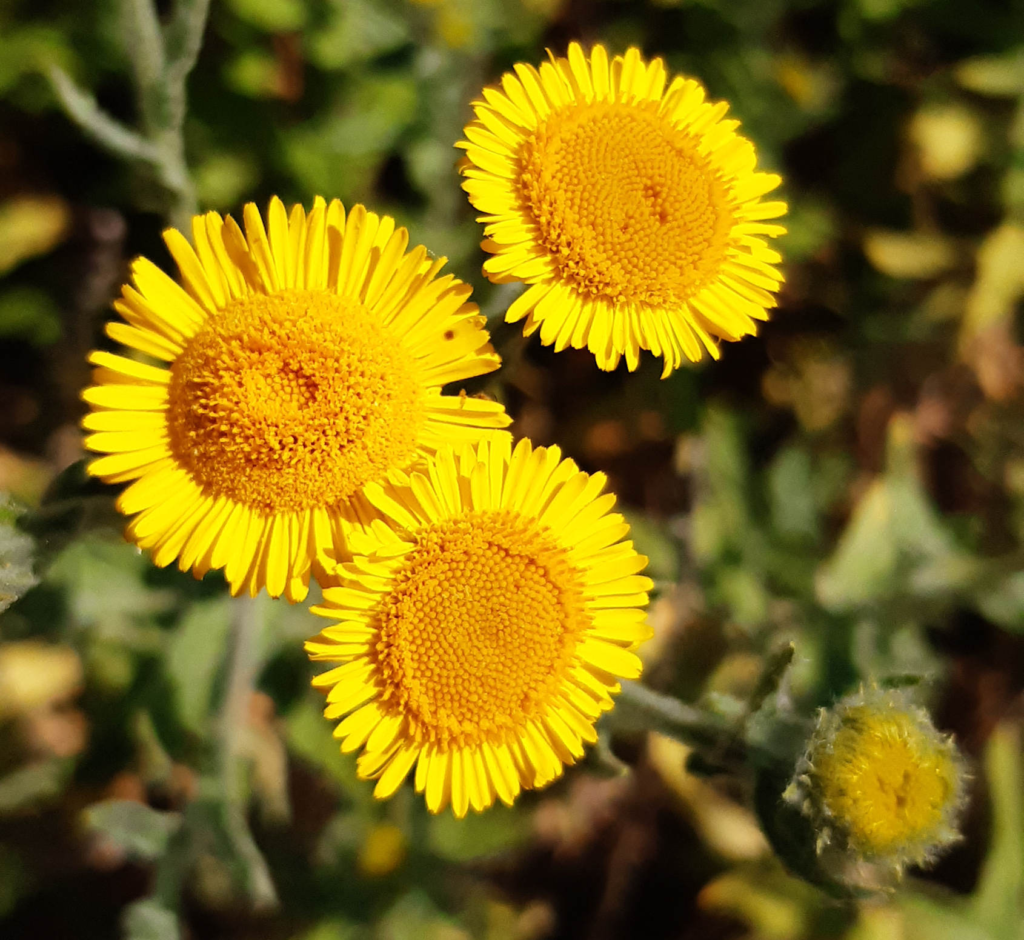
Fleabane …
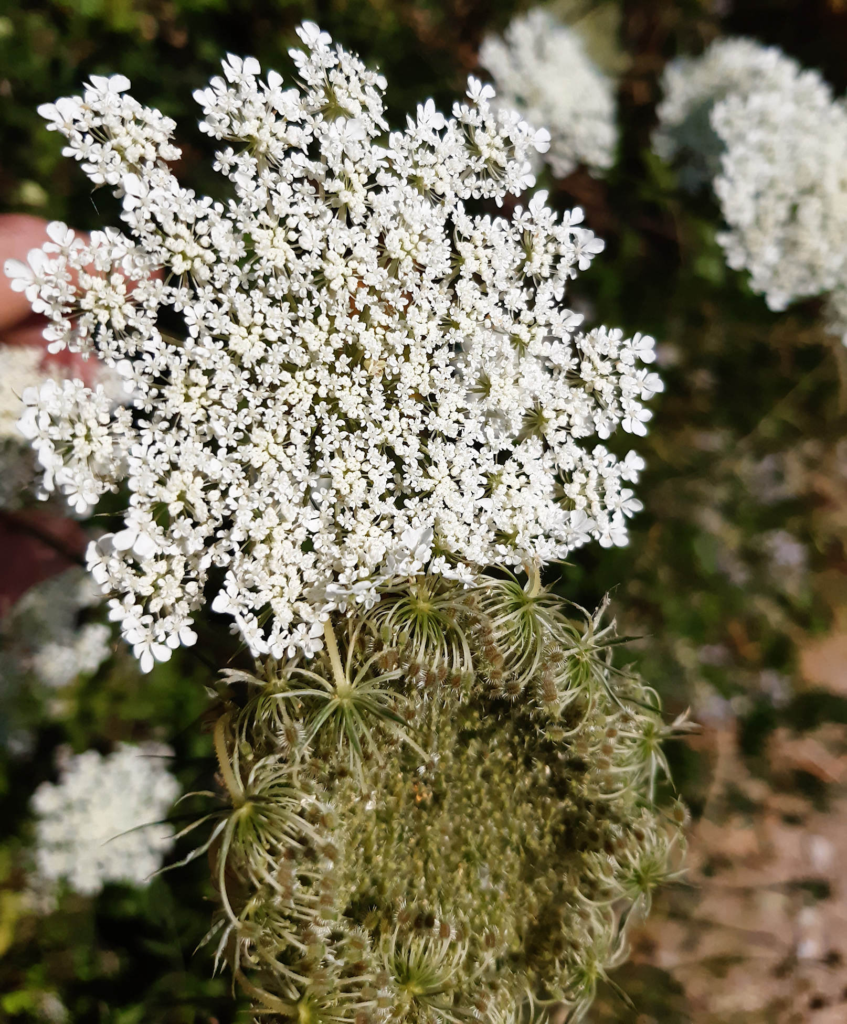
… and Wild Carrot.
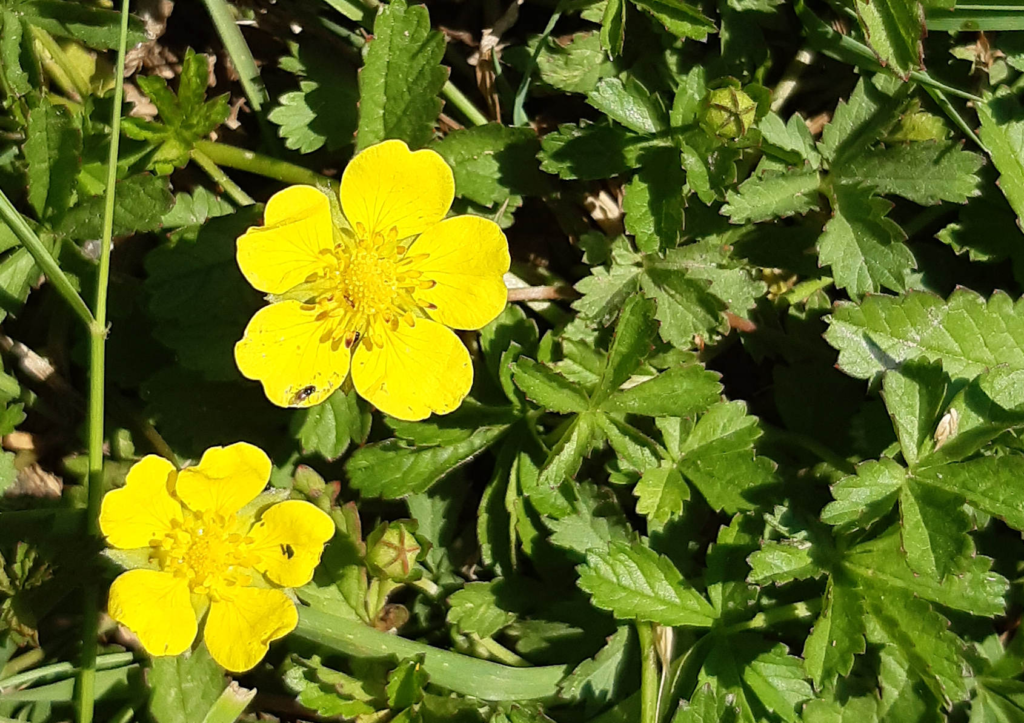
Beside the paths you can find lawns of Creeping Cinquefoil.
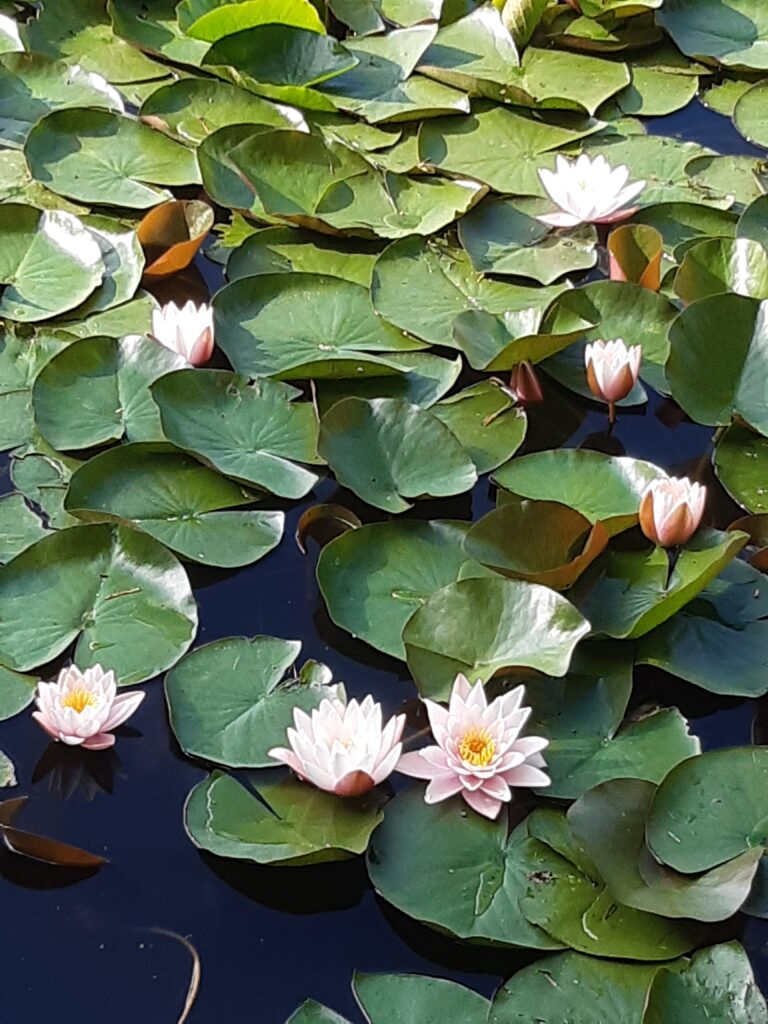
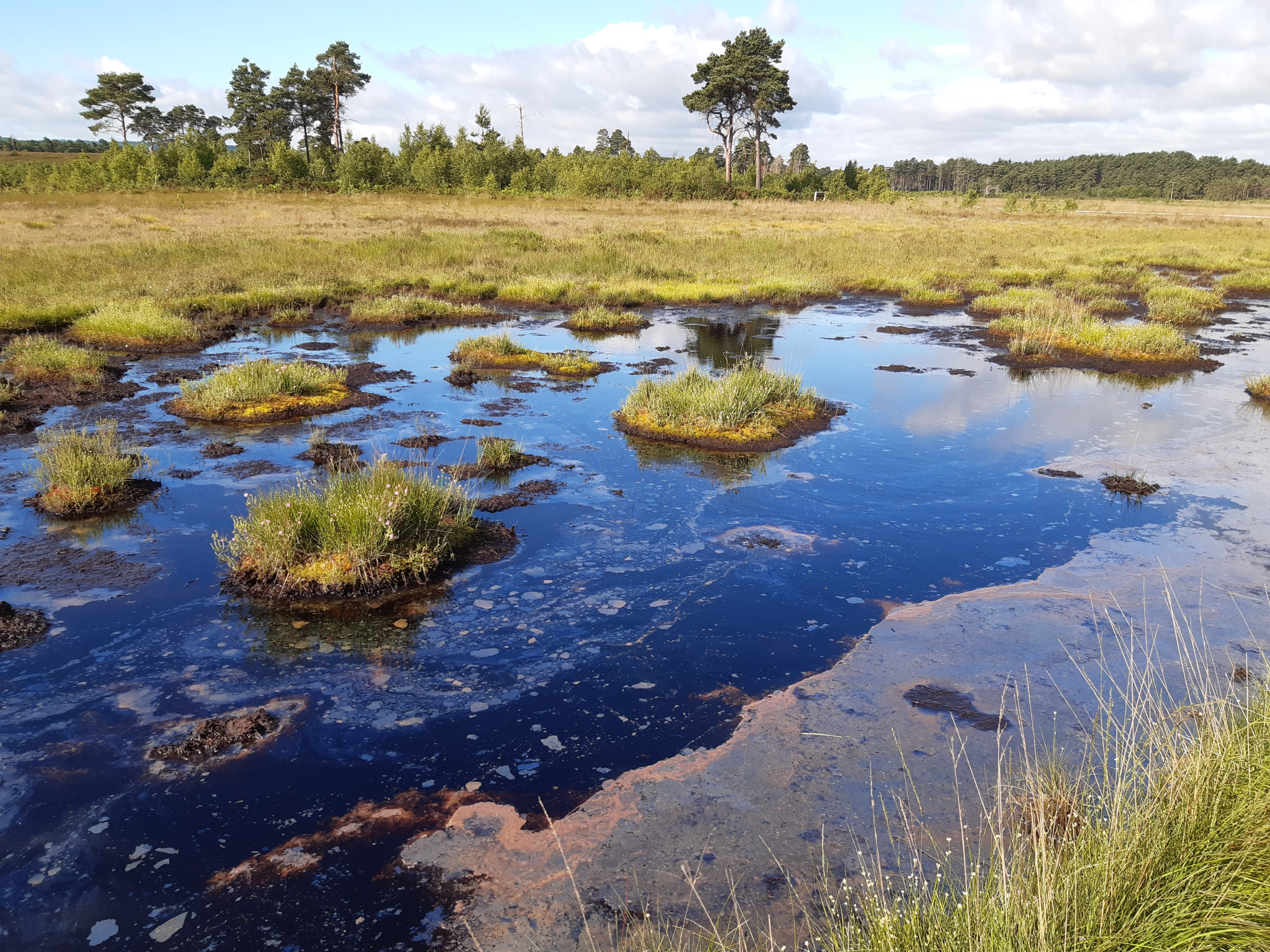
(28 June) Thursley Common is special, from the moment of arriving at Moat Pond with its sparkling white Water-lilies.
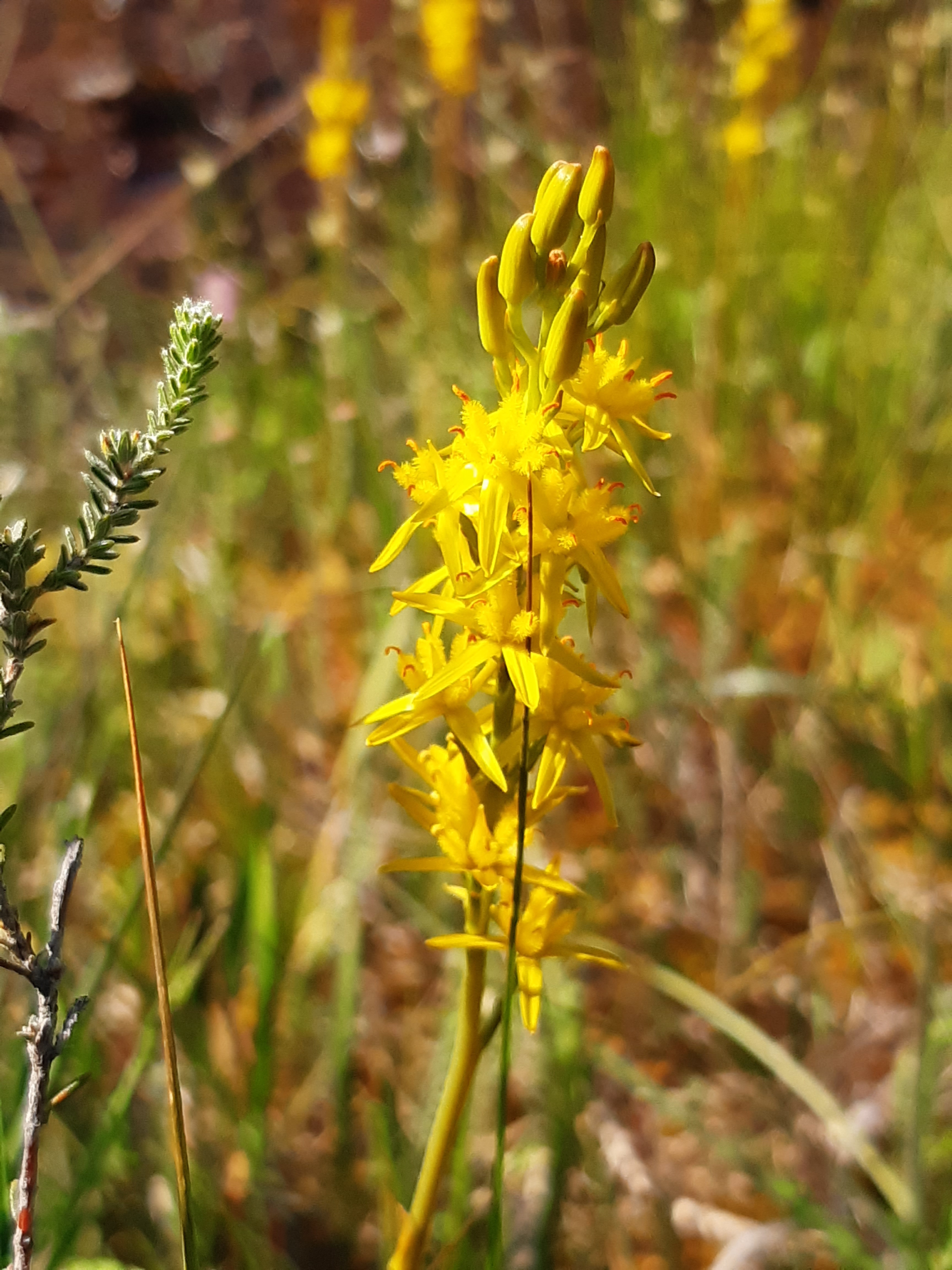
The flat boggy area is full of rare and exotic-seeming plants, like the beautiful Bog Asphodel that demands a wet acidic soil, growing lotus-like from the black mud.
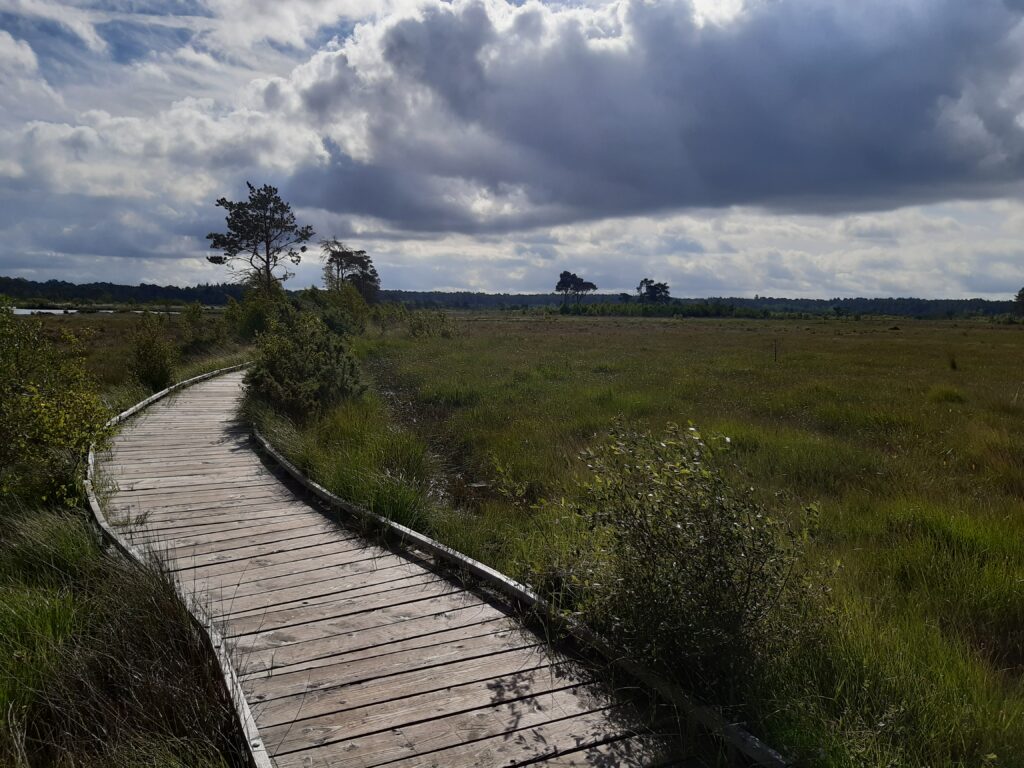
The common is a wide area of forest, bog, and little hills covered in heathland with boardwalks across the bog and dry sandy paths across the heath.
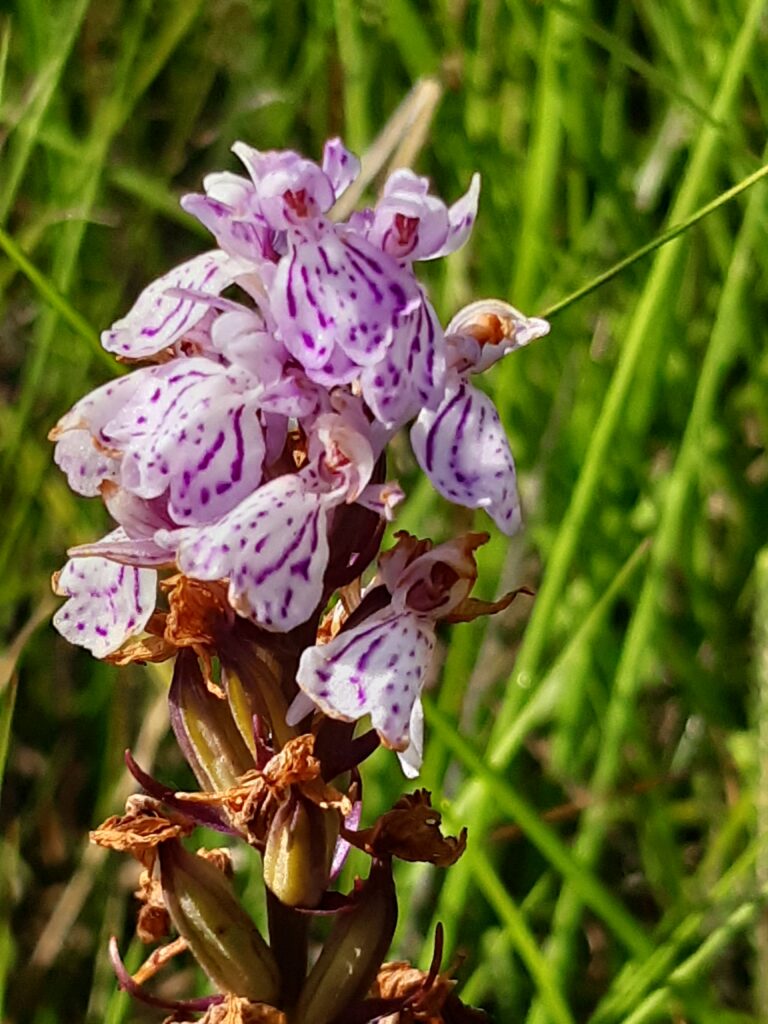
Among the delights of Thursley is the glorious Marsh Orchid.
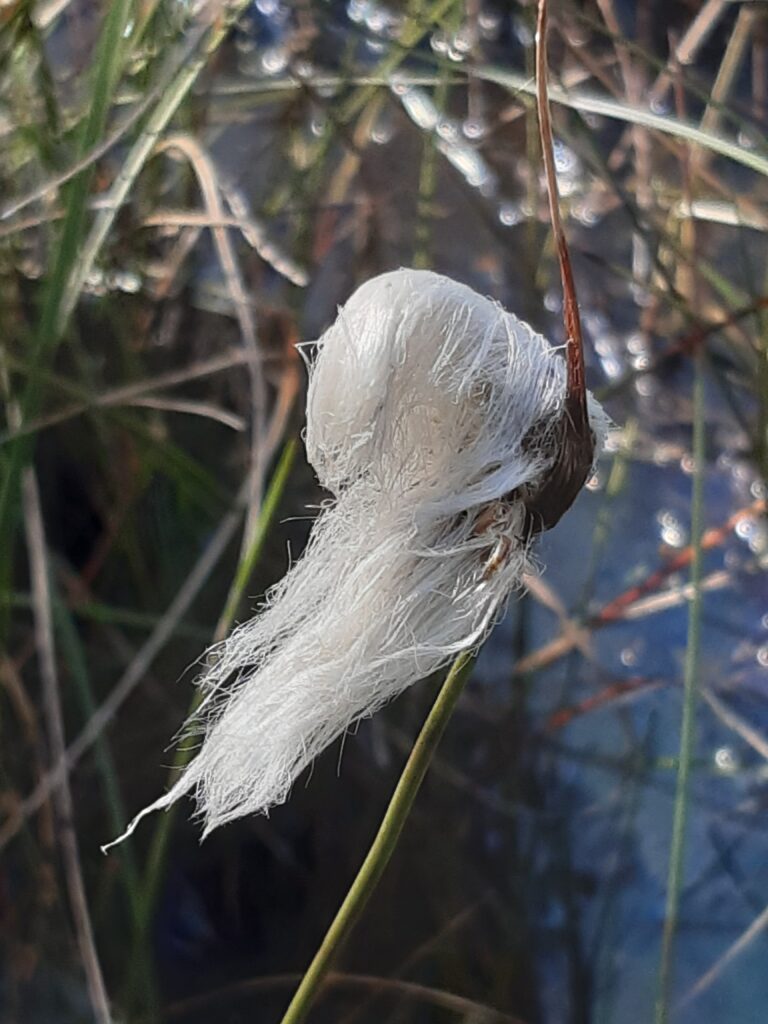
Molinia, the bog cotton, is a plant totally characteristic of wild (Northern) moorland. It’s marvellous to see it down here in the South of England.
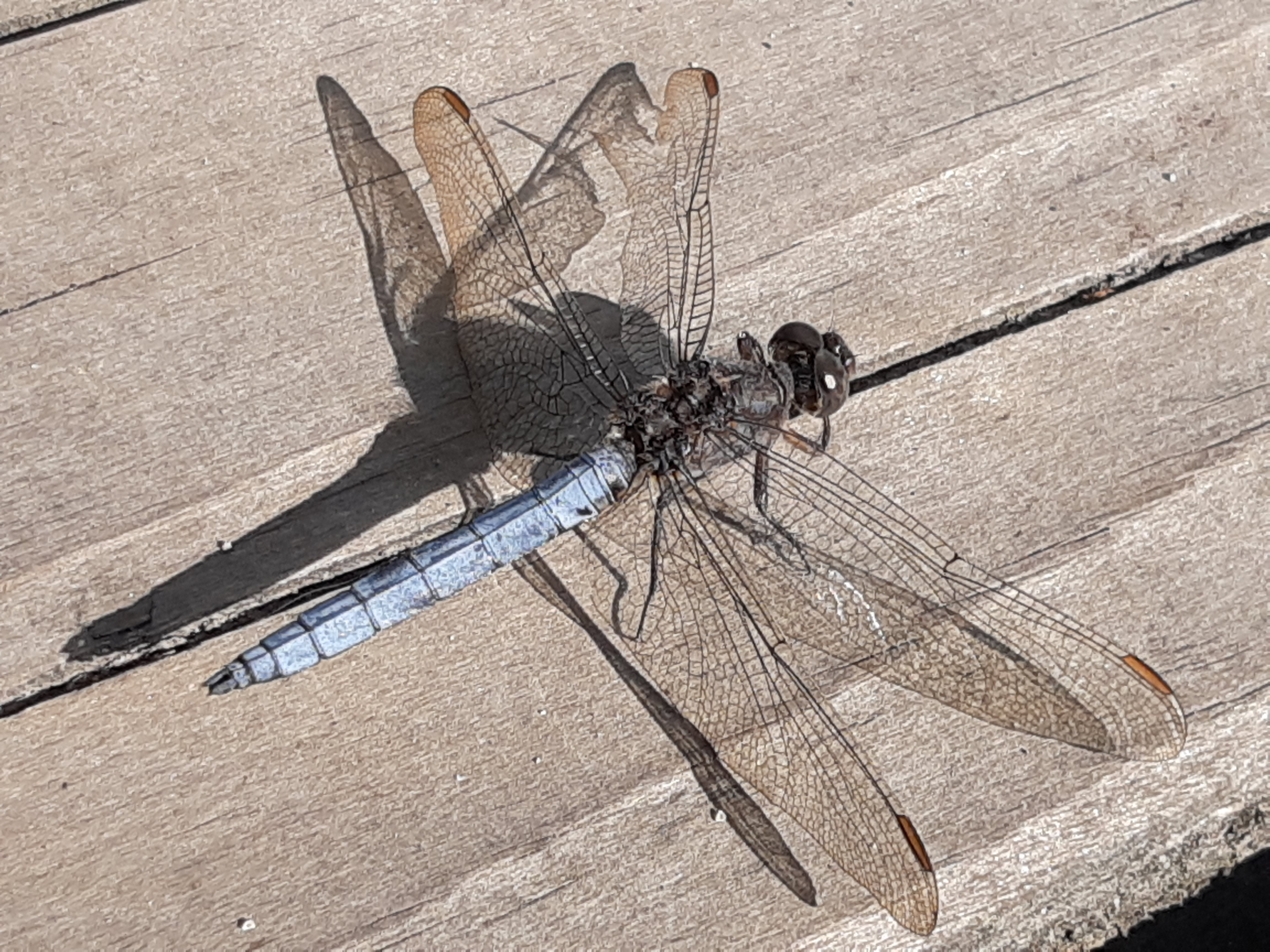
The bog pools are the home of dragonflies like the Black Darter, which can be seen only in this sort of habitat.
Other species like this Keeled Skimmer can be found in lowland streams as well as around bog pools.
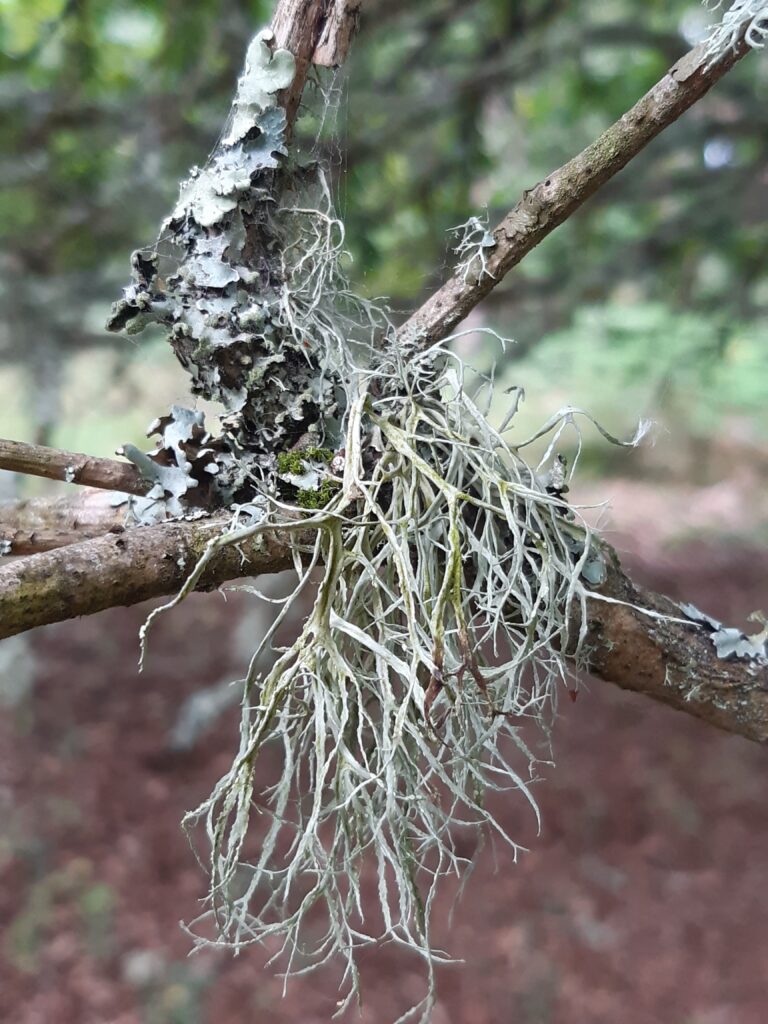
In the forested areas, handsome lichens like these long branching strands of Ramalina indicate the purity of the air. Leafy Parmelia-type lichens are growing in the background.
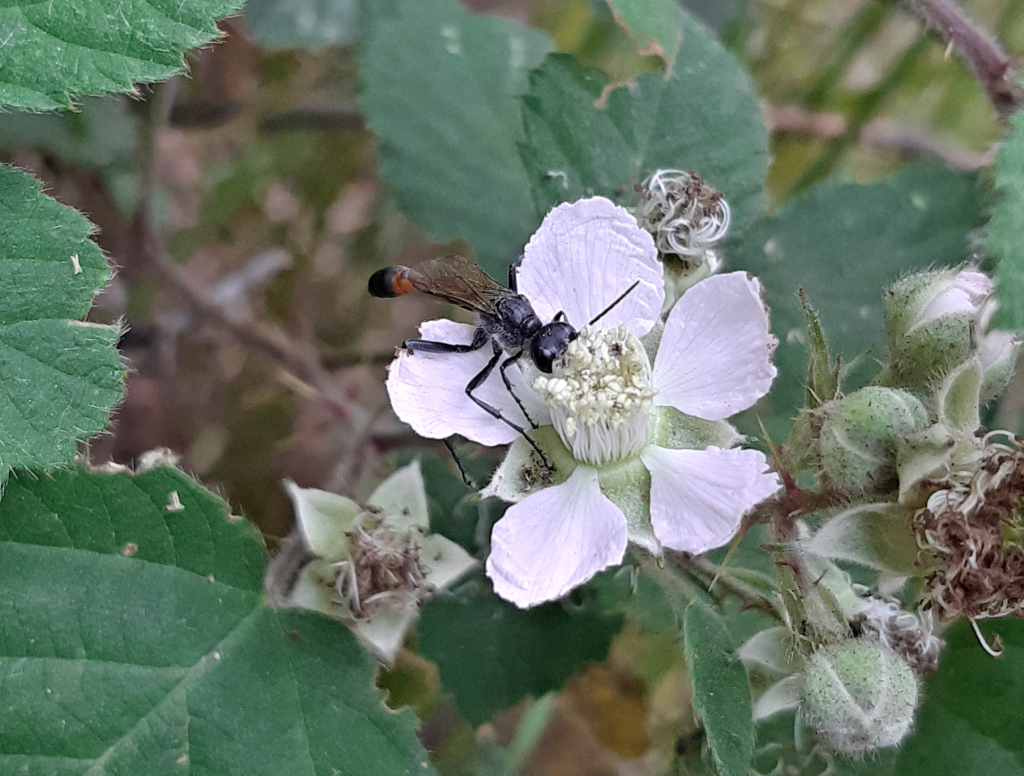
A large and handsome parasitic wasp takes nectar from a bramble flower.
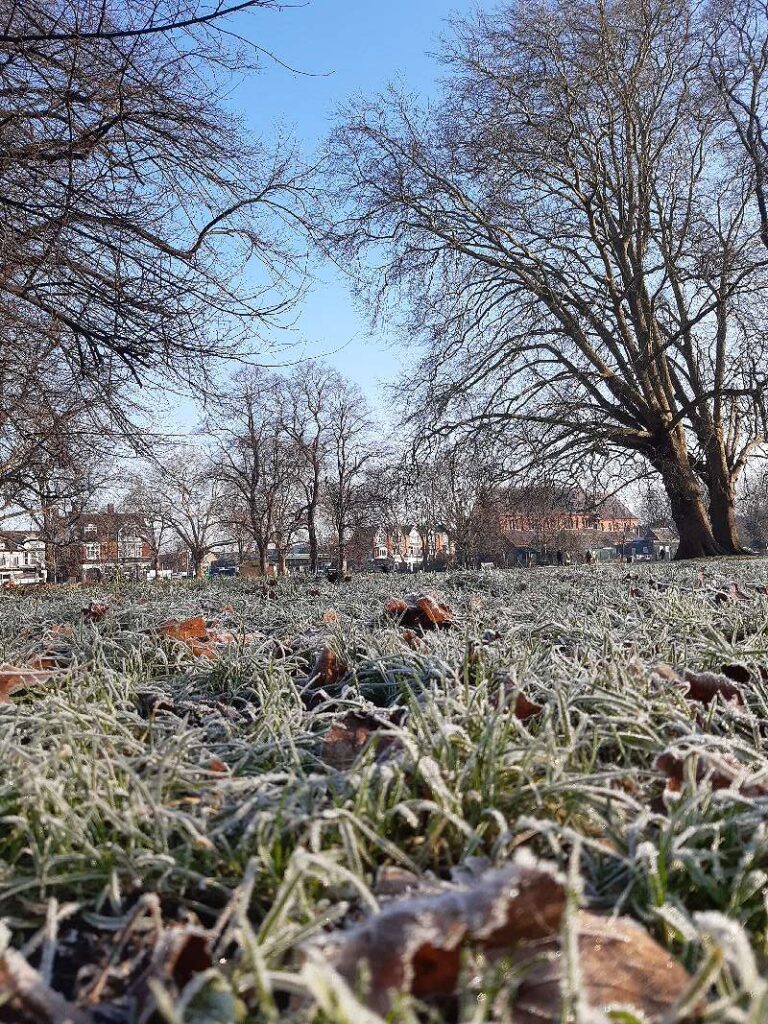
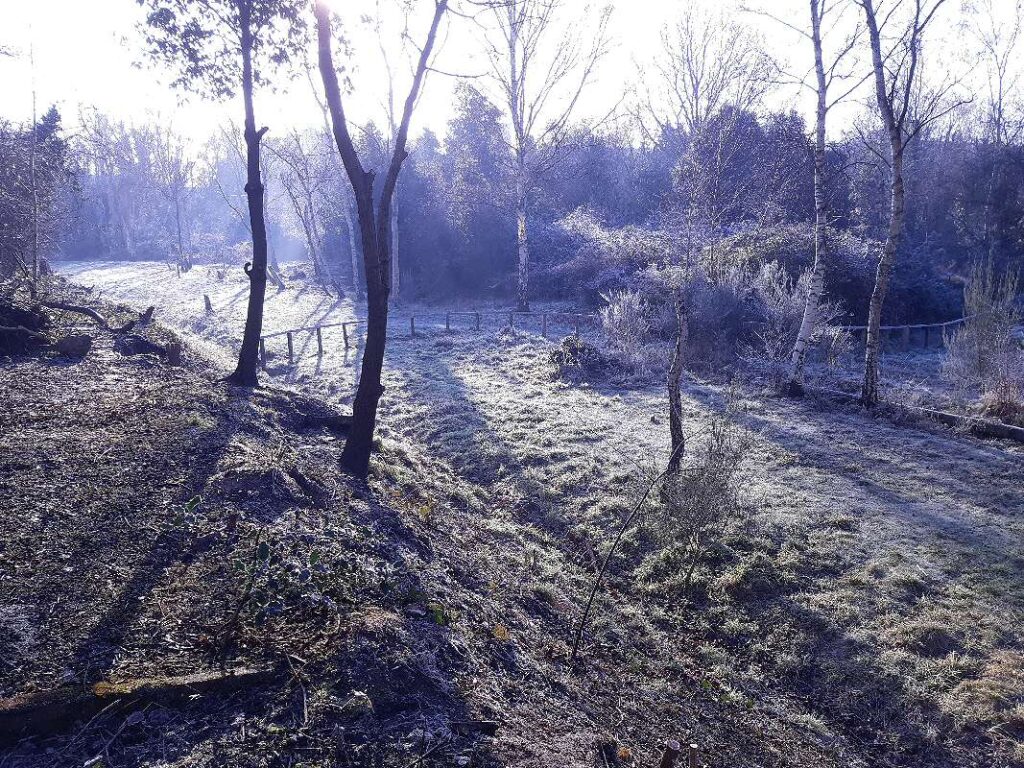
Frost on Acton Green Common after an unusually cold night down here in the south of England: -4CFrost picking out the former railway track of the Acton Curve in Gunnersbury Triangle local nature reserve
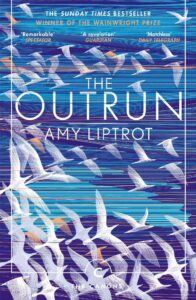
The Outrun: A Memoir, by Amy Liptrot. Canongate Books, 2016. ISBN 978-1-78211-549-6
Amy Liptrot goes to live in London to escape the cramped life as a teenager on Orkney, a group of windswept islands off the north of Scotland. Her father was sectioned under the mental health act the day she left. At least she was free of the constant pressure from her happy-clappy Christian mother. In London, she parties, she drinks, she smokes, she takes drugs, she has sex. Is she happy? No. She drinks more and more, she loses one job, then another, then her boyfriend and her flat.
Something needs to be done. She’s not sure if she can stick with Alcoholics Anonymous’s talk of God, is that her mother all over again, but she tries it anyway and goes sober, along with the drug addicts and no-hopers:
“I had never injected drugs, been a prostitute, smoked crack in front of my baby, spent eight years in a Russian prison, mugged an old man in the park, or been through six detoxes and four rehabs, painfully relapsing each time. My family still spoke to me, and I had not turned yellow.”
She goes back to Orkney, still sober. A woman tells her she’s washed up: painful because not entirely untrue: but she’s on the mend. Her father’s farm had a small neat area of little fields near the farmhouse, and a big wild area where the sheep could graze, the outrun. Perhaps Amy had been away on her own outrun for those ten troubled years in London.
She stays with her mother for a bit in Orkney’s little capital town, Kirkwall. It rains for 54 days in a row in the winter; then at last some “dreamy sunsets reflected on calm sea”. She goes back to the farm and spends days building drystone dykes, thick heavy double-walls of stone. She rebuilds herself at the same time…
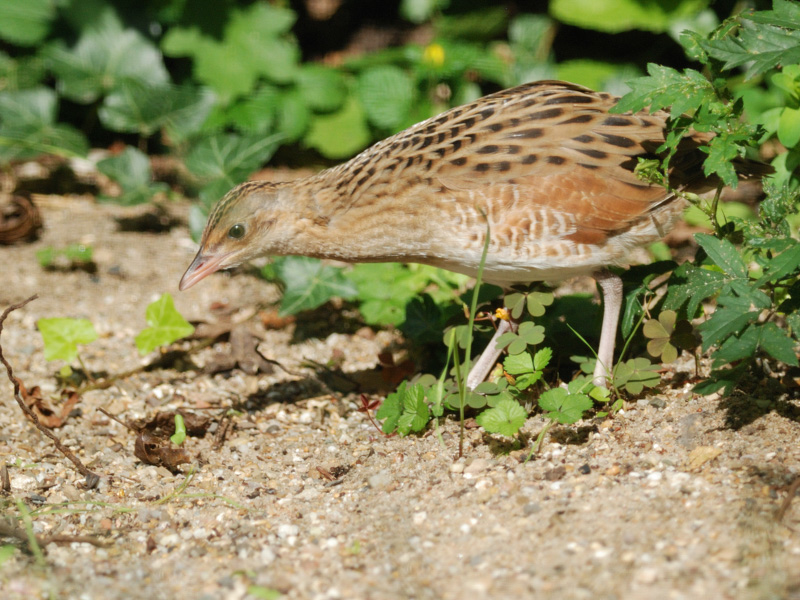
Greatly daring, and knowing nothing about ornithology, she applies to the RSPB to spend the summer mapping the distribution of all the breeding Corncrakes on the Orkney Islands. She gets the job. She spends the summer staying up all night, driving about and stopping the car to listen for the extraordinary “crex crex” croaking noise that gives the bird its Latin name.
Corncrake, Crex crex
She maps 31 of the elusive birds dotted about: one island has exactly one male bird. She sees a Corncrake exactly once in the entire period. Once, she arrives at a stone circle at dawn: nobody is about. She takes off her clothes and runs around it.
She discovers that the RSBP’s house on the island of Papa Westray is used to warden the bird reserve there only in summer. She asks if she can stay there in the winter. It’s not insulated, normally left empty then. She gets it: the rent is very low: “I decide that I will spend my time in the kitchen with the fire, leaving the rest of the house to the cold.” It’d be a perfect place to drink… nobody would know… but she stays sober. “There are no flatmates or close neighbours to hear me crying at night.” She recollects in tranquillity how she was sexually assaulted in London: she fought the man off, he was imprisoned; and how she crashed her car and was banned for drunk driving. She notices each day the
“moment, looking back, facing into the northerly wind … when my heart soars. I see starlings flocking, hundreds of individual birds forming and re-forming shapes in liquid geometry, outwitting predators and following each other to find a place to roost for the night. The wind blows me from behind so strongly I’m running and laughing.”
Her nephew was born soon after she went sober. “He will never see me drunk.”
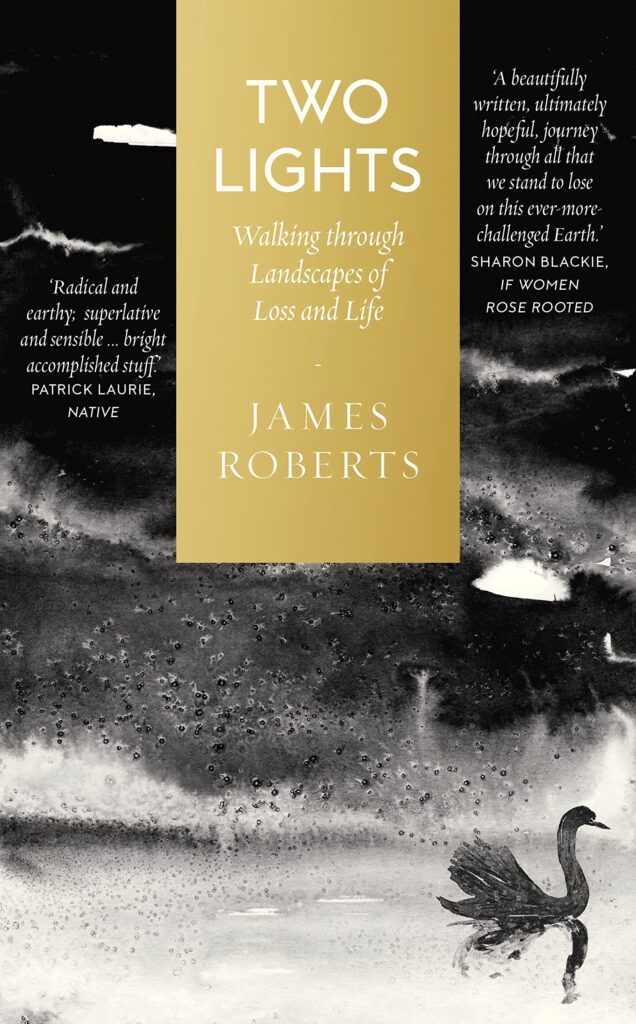
Two Lights: Walking through Landscapes of Loss and Life. September Publishing, 2023. ISBN 978-1-9128-3617-8
You and I have read plenty of nature books that wax lyrical about the beauty of the liminal, the unfathomable gritty reality of walking along a muddy track on the outside of town between the sewage treatment plant, the football stadium, and the business park, and suddenly being transfixed etc etc by the unearthly and astonishingly loud song (for such a tiny bird) of the wren, rising etc etc above the mundane roar of the traffic and the air conditioning fans to transport the lonely naturalist into the unparalleled ecstasy of the mundane.
Fortunately, Two Lights is nothing like that.
James Roberts is an artist as well as a poet. He is lucky enough to live in the quiet countryside of the Welsh Borders: and to enjoy some of the country’s darkest skies, so that he can see thousands of stars, the milky way and comets. And he writes about it simply and beautifully. But no, he does more. He lets his imagination, his atlas of the world, the journeys he made when he was young, what he has read, his father’s decline and death from Parkinson’s, his wife’s journey through breast cancer and radiotherapy, history, the loss of wild places everywhere, take him to different places, and express what everyone is feeling in these crazy times, love and loss and desperation and, yes, beauty despite it all.
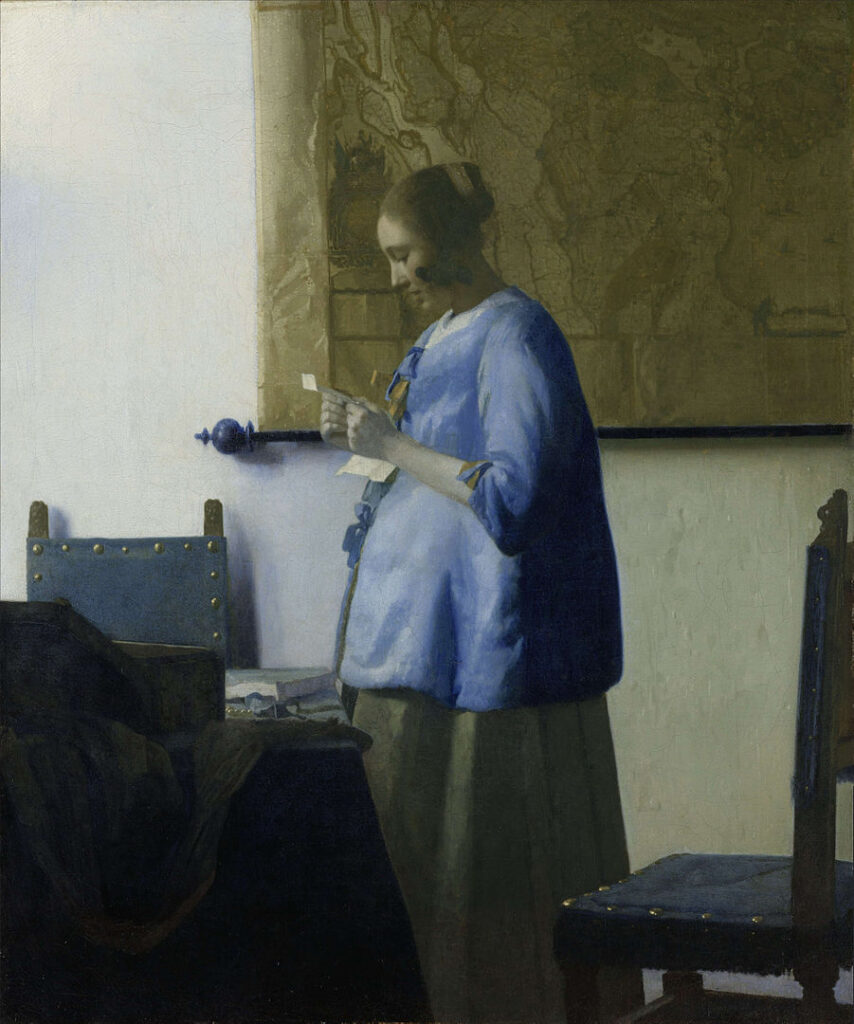
Roberts is an experienced artist, with the gift to describe his subject plainly without either getting excessively technical, or talking down to his readers: “Most artists are obsessed with space. Positive space is the area of a picture which contains the subject, the details, the face or figure in a portrait, the arranged objects in a still life, the trees and rocks in a landscape. Negative space is the area of the picture which surrounds the subject.”
Johannes Vermeer: Woman in Blue Reading a Letter. 1662 or 1663
He goes at once to the heart of the matter: “I’ve spent hours staring at Vermeer’s Woman in Blue Reading a Letter, wondering how he managed to achieve the milky light in the room, the sense of silence, the open-mouthed expression on the pregnant woman’s face and the depths behind it.”
I don’t know about you, but I immediately downloaded an image of the painting – the book’s illustrations are all of Roberts’s own work – and spent several minutes with my new-found knowledge of positive and negative space, wondering how Vermeer had done it all so seamlessly, as if it was easy. Then I wondered how Roberts had written about it all so seamlessly, as if it was easy.
Two Lights begins with a chapter on the dawn, and ends with one on dusk, presumably the two lights of the title. Roberts says he is attracted to these times, these transitional lights, when forms appear or dissolve, when shapes shift, when negative space appears positive or vice versa, when birds sing, when what seems solid and permanent is revealed as constantly changing.
The book’s subtitle, Walking through Landscapes of Loss and Life, speaks of its themes: personal connection to a landscape and its wildlife, to all of nature; and within that, a connection between personal loss and the silent, invisible shockwave of human impact on all of nature, from the paleolithic to the present.
You might think that with global warming, deforestation, overfishing, soil erosion, draining of wetlands, damming of rivers, pesticides, pollution, growth of cities, nights so bright with streetlights that citydwellers never see more than half-a-dozen stars, nights without nightingales, corn without cornflowers, meadows without meadowsweet, hedges without “immemorial elms”, roadsides without primroses, garden Buddleia bushes without butterflies, the extinction of species… that we would need no reminding that we have lost something.
But Roberts is right, we’ve forgotten. Our leaders think of wars and armies, of immigrants and policies, of votes and elections, ignoring what is happening to the world all around them: like officers fighting on the bridge of a sinking ship.
He’s also right that lecturing doesn’t work. Perhaps the oblique, feather-light, razor-sharp insight of an artist and poet may do better.
Roberts walks the bare hills and valleys of Wales, recalling “the forest of my imagination … hiding beneath my feet, in these hills, waiting to regrow.” The trees were cleared thousands of years ago, the first people of Britain burning gaps in the forest to make way for their fields. Now:
“News bulletins have been covering fires in Greece and Italy, and also those in California … on the map, the brightest areas are in Africa. The whole of the Congo seems to be burning, Central and East Africa lit up, Zambia, Angola, Tanzania, Kenya. There are fires in places where it is now winter, in Australia, New Zealand, Patagonia. Even in the cold and wet north, in Siberia, Iceland and Northern Canada, there are blazes seemingly everywhere.”
Of course, in Britain, there’s not much forest left to burn, its 13% coverage the lowest in Europe, its nearly-extinguished wildlife among the most impoverished in the world.
Roberts dreams of the Great Bear Rainforest of the Canadian Pacific Northwest, of its rivers so thick with salmon that they seem to overlap like fish-scales, of its bears fishing in the rich waters, their salmon-enriched scat fertilizing the forested hills for miles around, wild with wolves. The bears and the wolves are gone from Britain now, along with most of the trees and nearly all the salmon:
“This was part of the great border forest, home to the last wolves in England and Wales. There are few stories of them, though they were still here when some of the old oaks which stand in the fields were saplings.”
His wife recovers; Roberts’s depression doesn’t go away. He reflects on a saying of the psychologist James Hillman, that depression is sometimes a right response to a damaged environment; you may feel like that because that’s how things are, “a sign you’re still sane”.
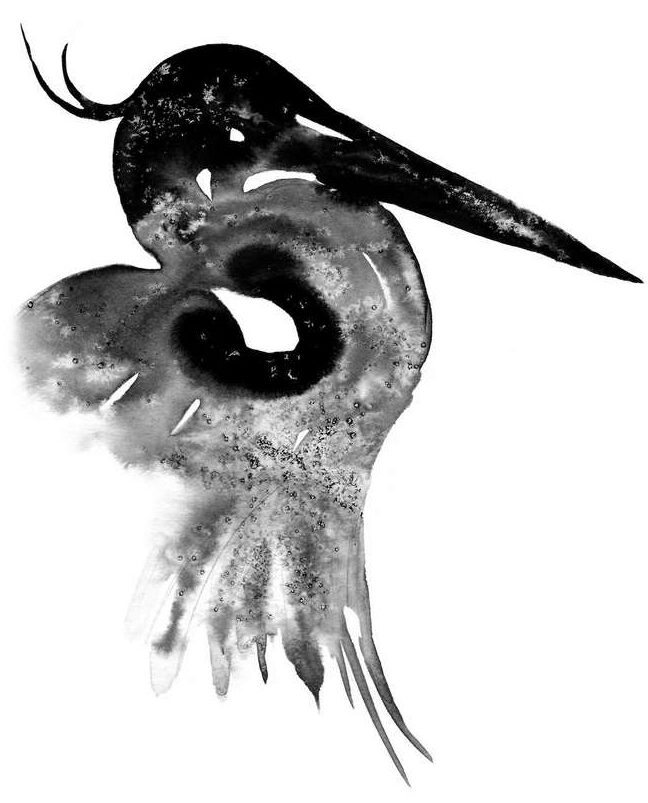
Heron by James Roberts
The text is interspersed, accompanied and enriched, by full-page prints of Roberts’s evocative ink paintings. He uses ink, water, and salt which creates dark specks with paler surroundings, random but orderly, wild but controlled, like an ecstatic dancer following the choreographer’s steps but connecting with the hearts of the audience.
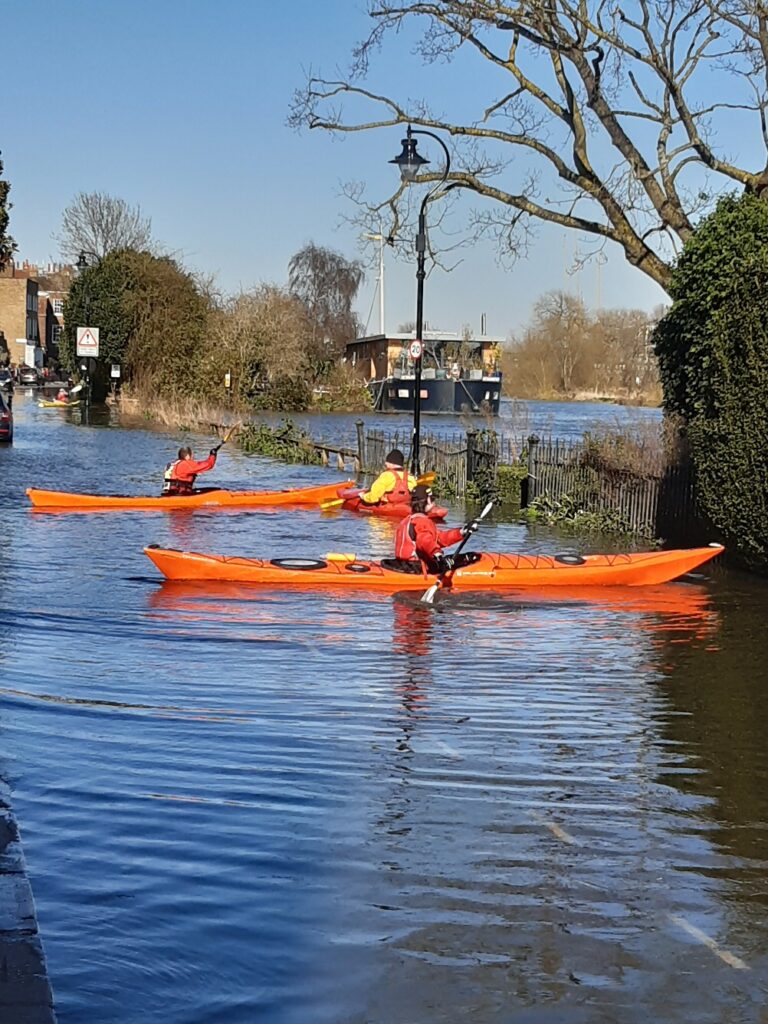
A party of fully-equipped kayakers in Chiswick Mall. Note the dashed white line up the middle of the road, and the parked cars! In the background is the River Thames, a Houseboat, and Chiswick Eyot, a nature reserve in the river.
Chiswick Mall, like Strand-on-the-Green, is a low-lying riverside street here in Chiswick. At High Water on a Spring Tide, the streets regularly flood, but not always as much as this … and in 20 years, I never saw kayakers here before! So I was delighted to get this shot.
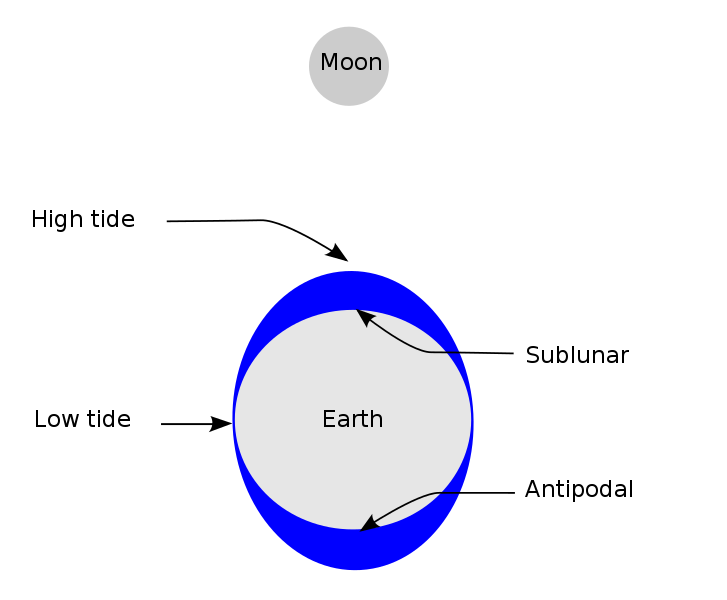
Diagram by Jhbdel on Wikimedia Commons under CC-by-SA 3.0 license
For landlubbers who’re a bit rusty on what a Spring Tide is, the tides follow the moon’s 28-and-a-half day cycle from Full Moon (opposite the sun) via half-moon (right angles to the sun) and New Moon (roughly in line with the sun, when eclipses sometimes occur). There is a high tide roughly twice a day (and a low tide twice also); every Full Moon, High Tide (High Water) is especially high, as the pulls from the moon and the sun on the oceans have maximum collaborative effect then.
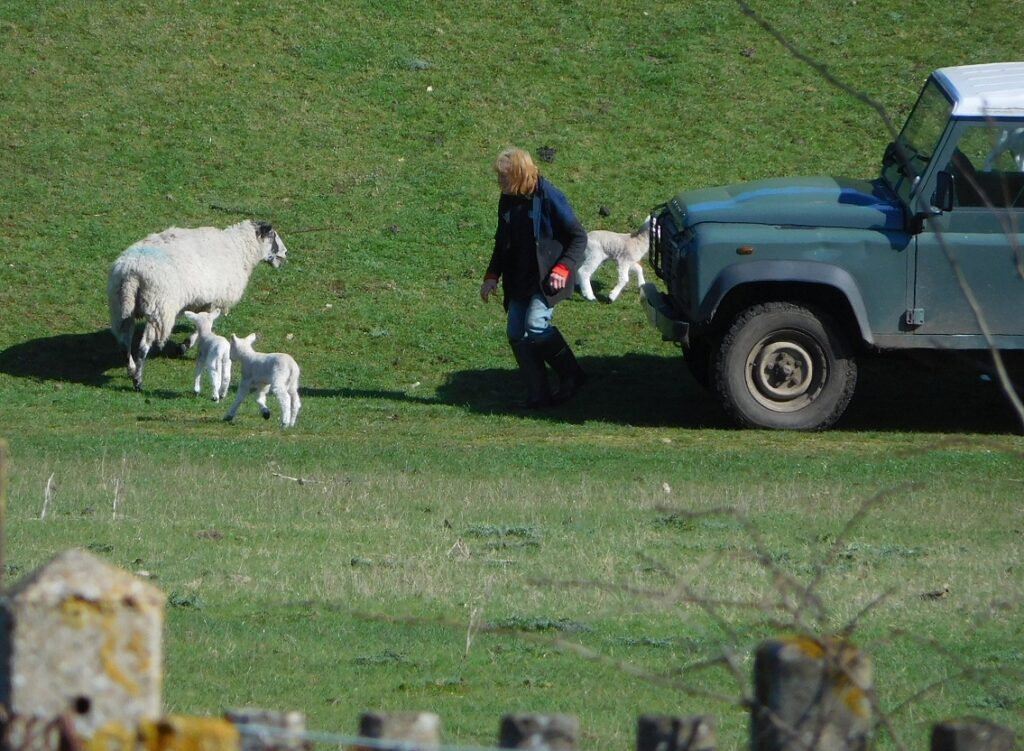
Yes, a shepherd in London. Mid-March is lambing time, and she was out with her Land-Rover on the wide grassy banks of the reservoirs at Wraysbury, just beyond the end of the runways at Heathrow, checking that the new lambs were healthy. The ewe looks as though she’d like a rest, unsurprisingly. The grassy banks are quite steep, and mowing them would be costly and dangerous; how enlightened of Thames Water to use sheep instead. Genuinely “green”.
Also on the walk, several Brimstone butterflies, and a couple of Peacock butterflies (presumably overwintered in a hollow tree or some such place). Near the sheep were two Buzzards and a Red Kite, on the lookout for some carrion, I won’t mention what they were hoping to find. Also about was an early Chiffchaff singing its simple song (its name, over and over), a Cetti’s Warbler, and a Song Thrush. And a flock of Goldfinches finishing up the last of last year’s seeds in a big patch of thistles, burdocks, and teasels.
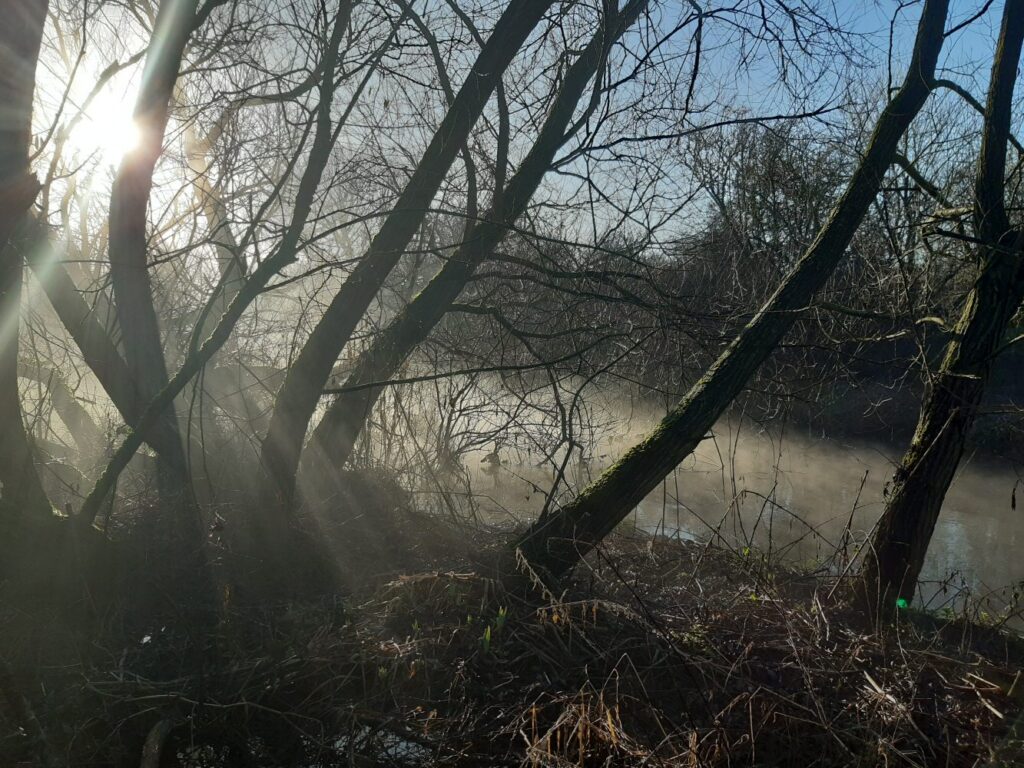
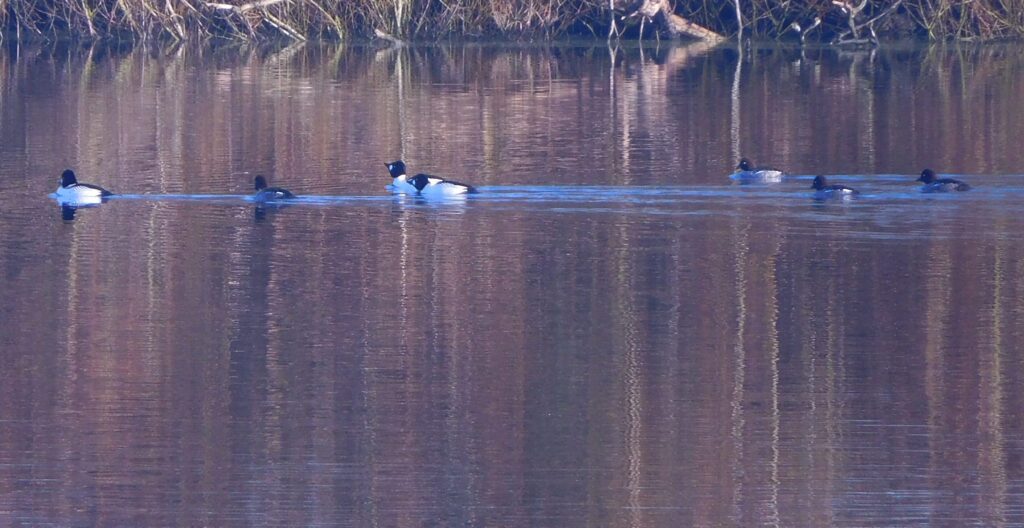
Morning sun through the mist over the Colne BrookGoldeneyes, winter ducks here, down from the far north where they breed. The two black-and-white males in the centre are bobbing their heads (and throwing them over their backs, not shown), a small echo of their courtship display.
Among the wonderful moments on this walk: a heron gave its cronking call and flapped slow over the water; a plane passed behind three cormorants drying their wings, perched on the branches of a dead tree; a group of goldeneyes panicked and pattered across the lake, gaining speed for takeoff, giving their high-pitched call, the waves sparkling in the slanting sunshine; a song thrush tentatively singing its repeated music; a solitary fieldfare.
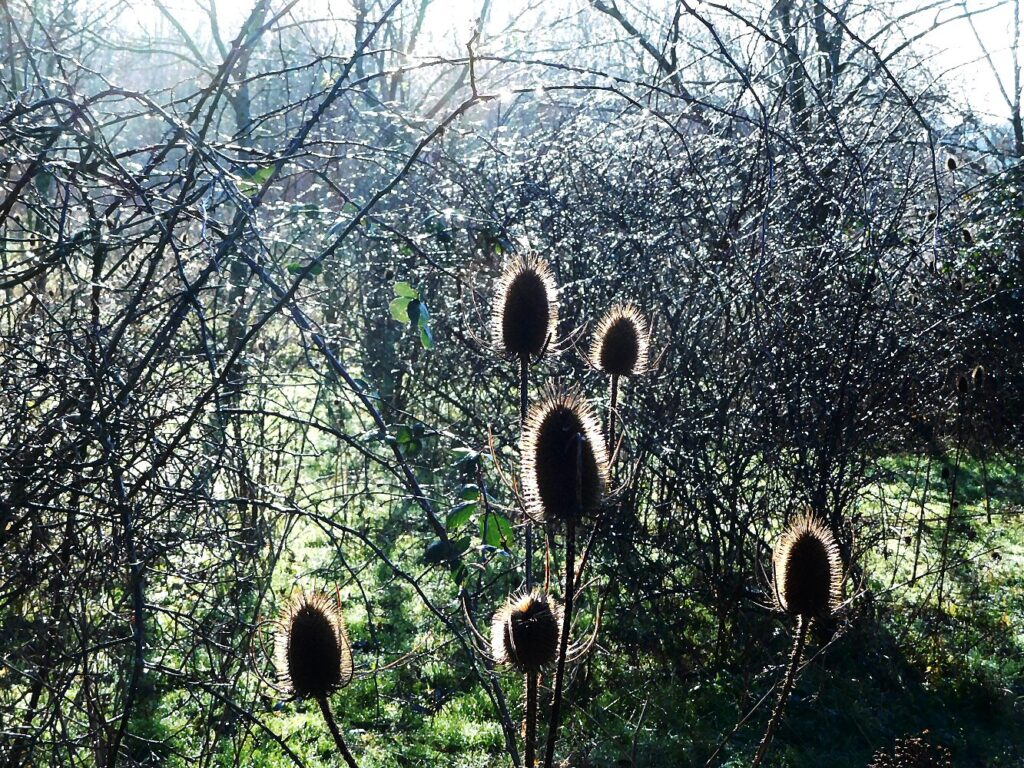
Teasels and wet thornbushes glistening in the low sun
The English seem unemotional … except for their passion for nature

.jpg)