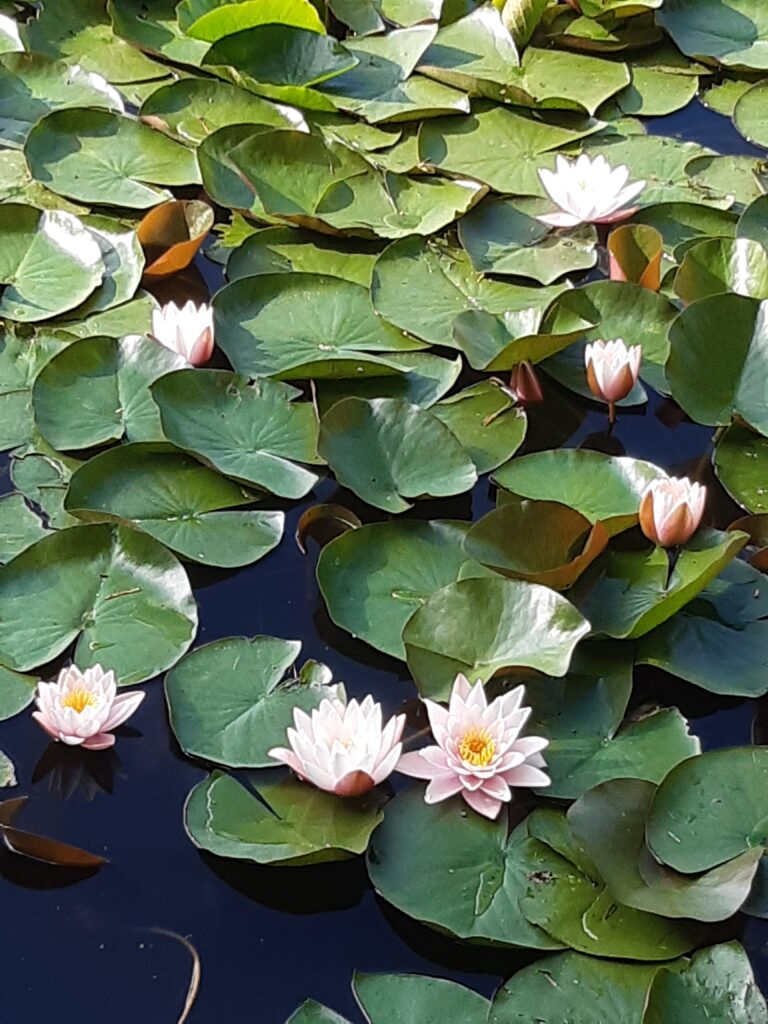
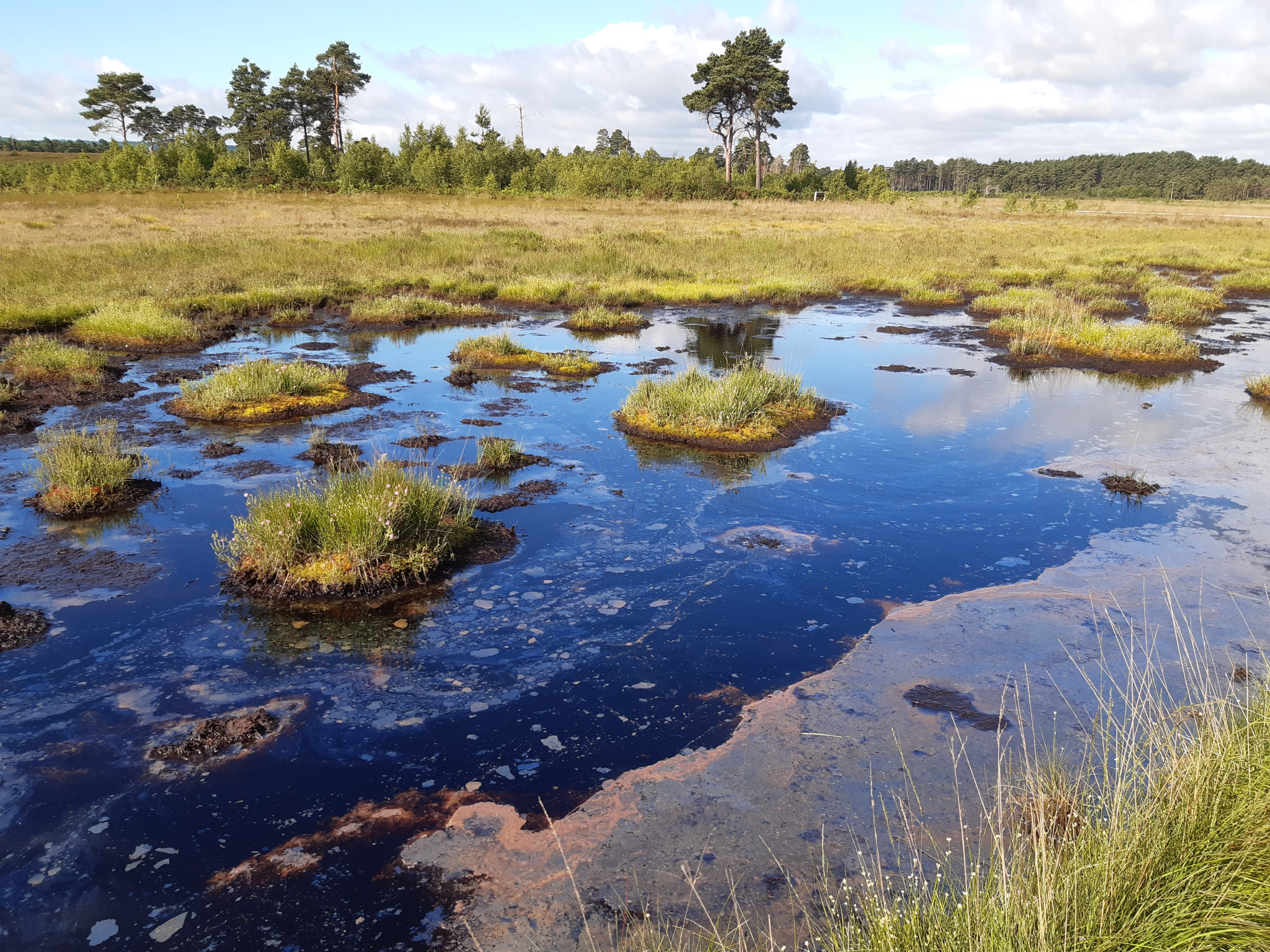
(28 June) Thursley Common is special, from the moment of arriving at Moat Pond with its sparkling white Water-lilies.
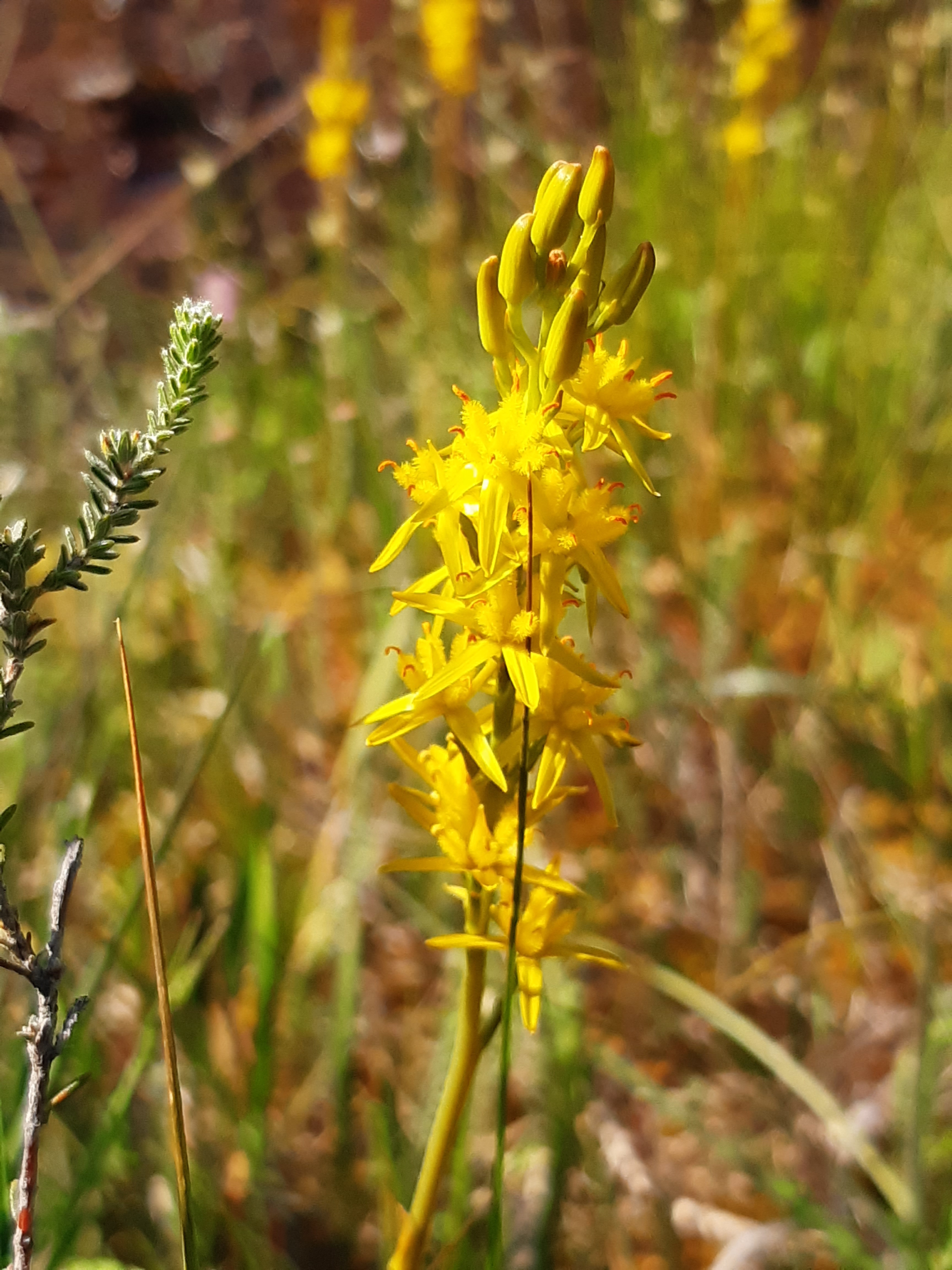
The flat boggy area is full of rare and exotic-seeming plants, like the beautiful Bog Asphodel that demands a wet acidic soil, growing lotus-like from the black mud.
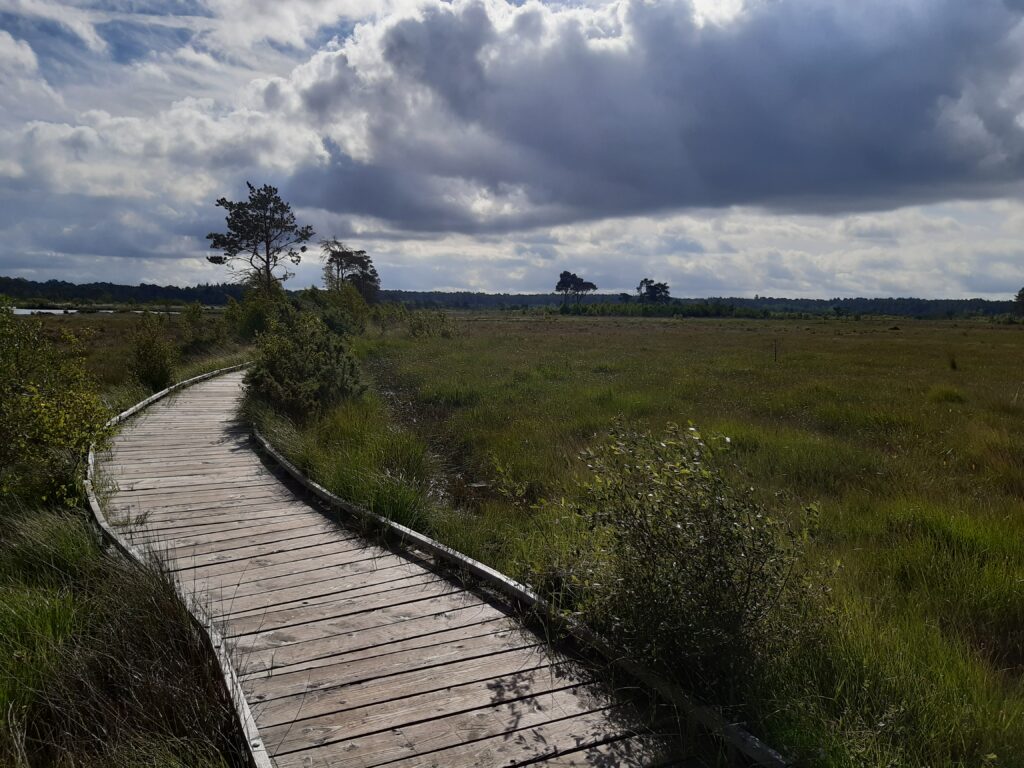
The common is a wide area of forest, bog, and little hills covered in heathland with boardwalks across the bog and dry sandy paths across the heath.
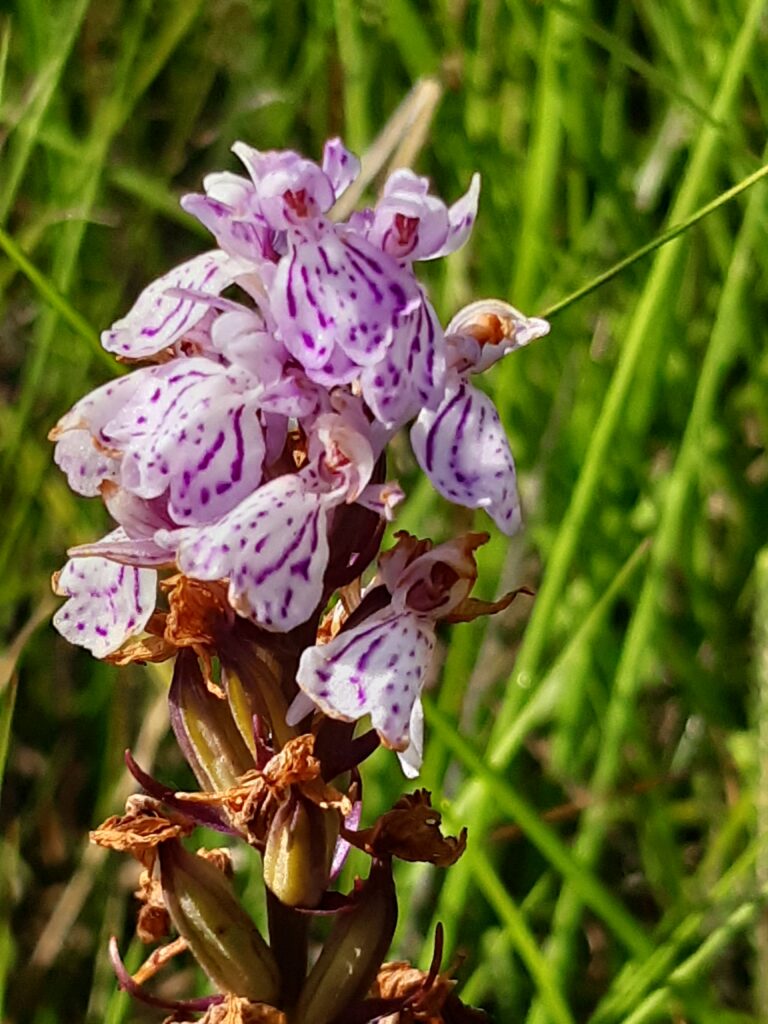
Among the delights of Thursley is the glorious Marsh Orchid.
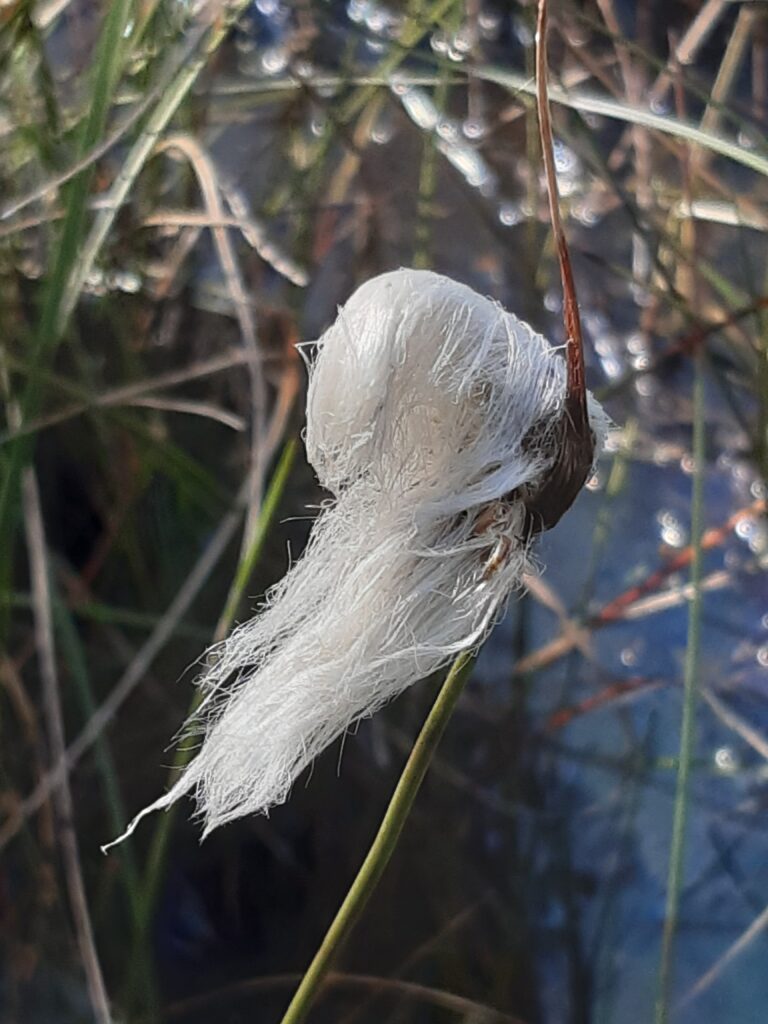
Molinia, the bog cotton, is a plant totally characteristic of wild (Northern) moorland. It’s marvellous to see it down here in the South of England.
The bog pools are the home of dragonflies like the Black Darter, which can be seen only in this sort of habitat.
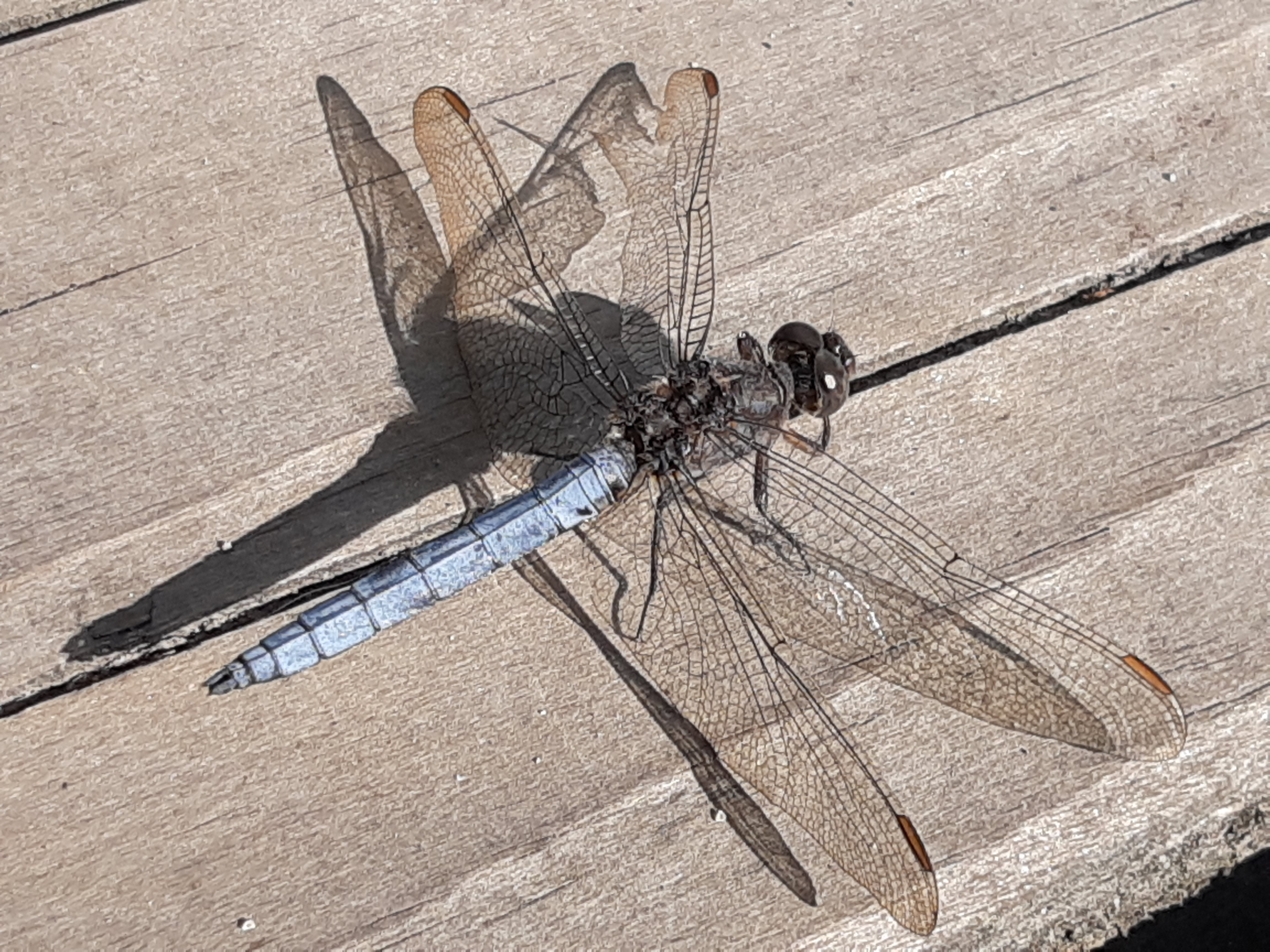
Other species like this Keeled Skimmer can be found in lowland streams as well as around bog pools.
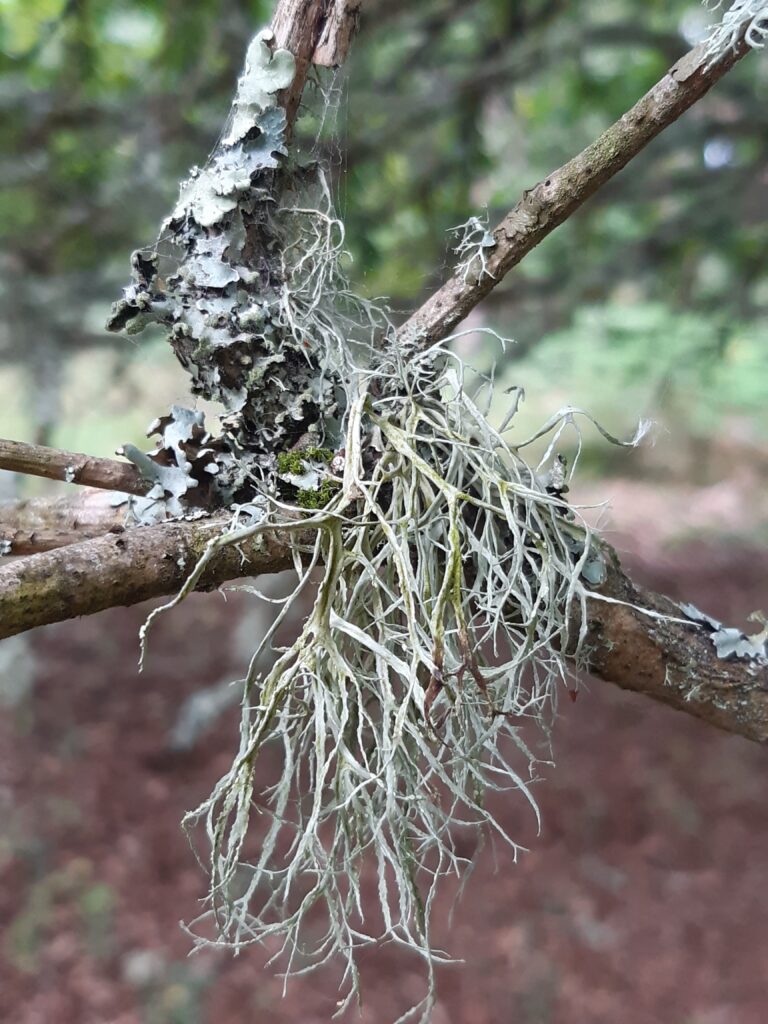
In the forested areas, handsome lichens like these long branching strands of Ramalina indicate the purity of the air. Leafy Parmelia-type lichens are growing in the background.
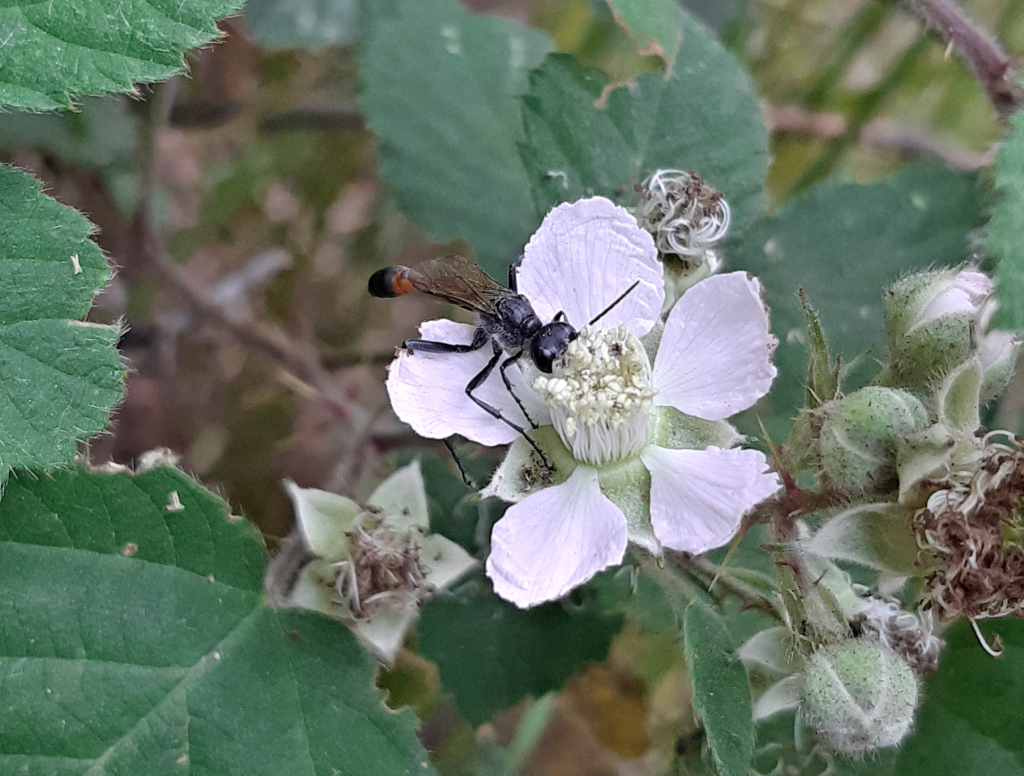
A large and handsome parasitic wasp takes nectar from a bramble flower.
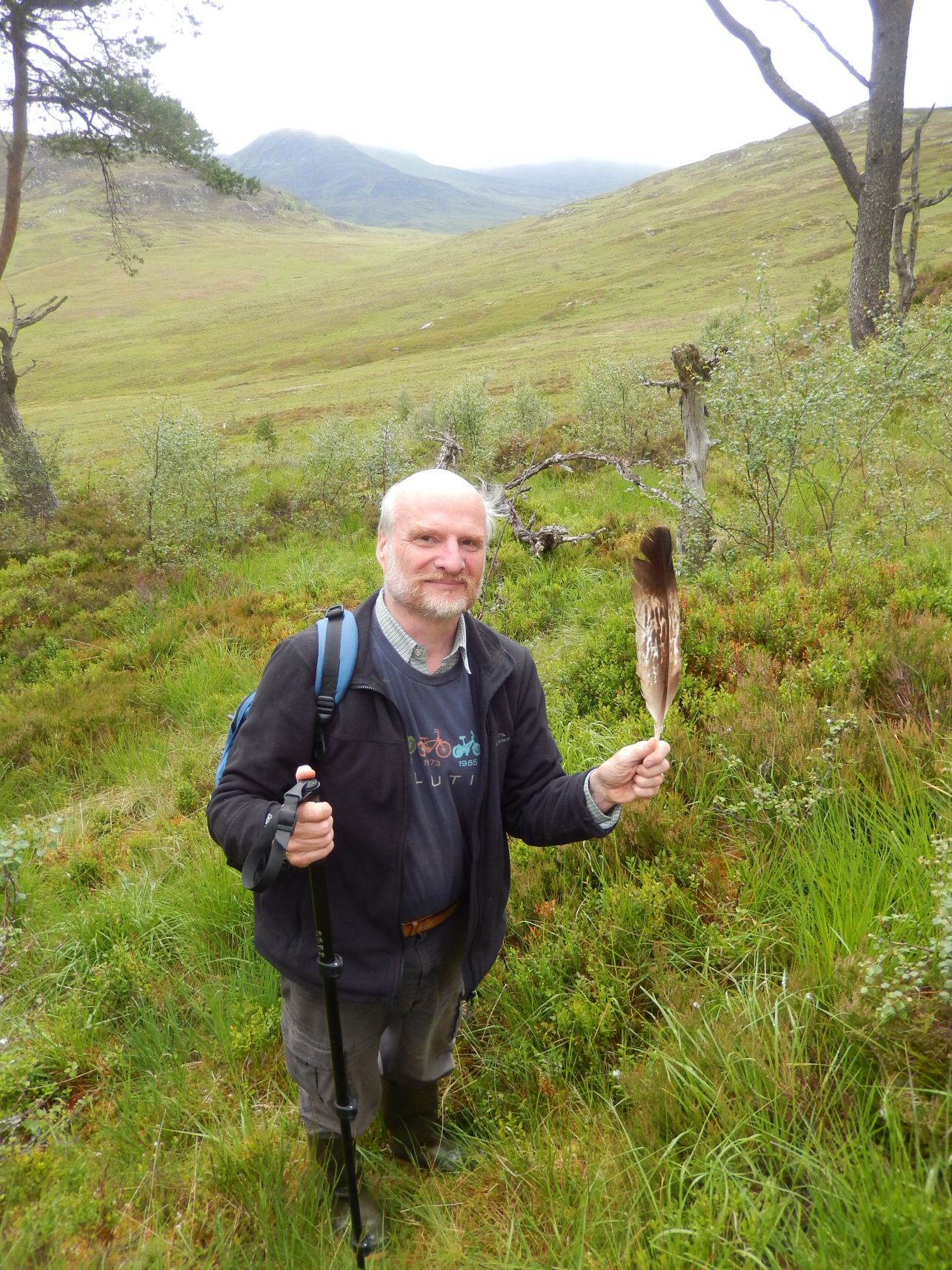
We walked up the hill through the birch woods, and across the heathery moor. On the drier, lower slopes, the heather was dotted with Eyebright, purple orchids and wild Thyme. Up above, on the flatter, wetter parts, bright yellow Bog Asphodel and the fluffy white tufts of Bog Cotton enlivened the landscape. We made not for the tops but for an ancient wood of thick pines, now widely spaced with thick soft moss and heather below them. The old Eagle’s nest is no more, the tip of the trunk that had supported it now snapped off in a storm, but Roy had seen an Eagle once or twice this year, still frequenting the area. We looked up at the trunks, two or three of them now forked at the top where side branches had taken over from a lost main shoot. At our feet was an Eagle’s quill, a flight primary feather, as long as my arm from elbow to knuckles, dark-tipped, mottled brown and white. I held it up for a photograph, put the camera away and shouldered my bag. Roy cried out and pointed: a Golden Eagle was lumbering into the air from a rock not 20 yards from us. It flapped away, turned and disappeared around the hill. Elated, I carried the feather home, not caring if I skidded on a wet slope. Down near the monument, the Bell Heather glowed in varied tones of purple: it gave off a delicate honey scent despite the lack of sunshine, and the bumble bees made the most of the bounty.
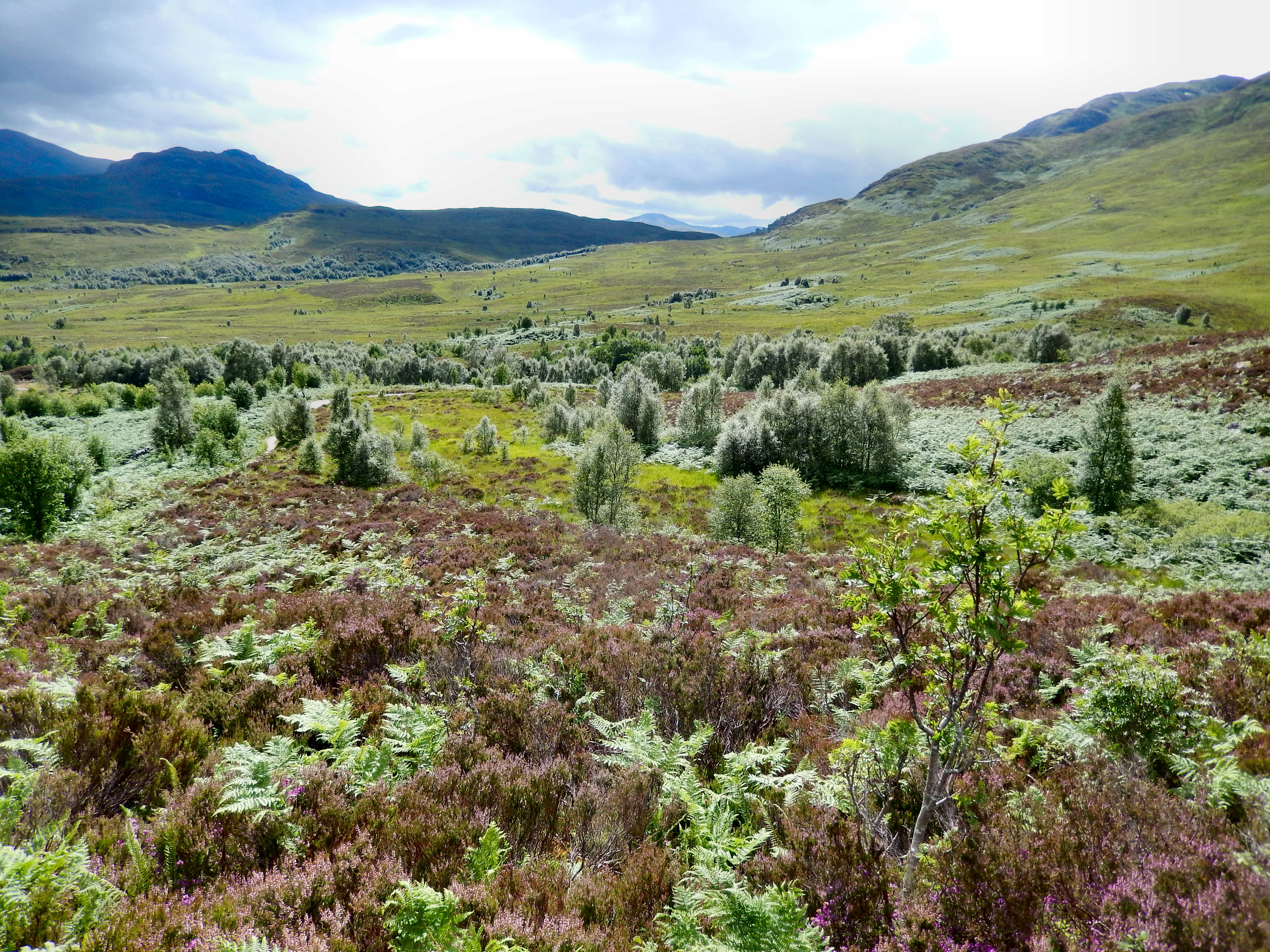
After a morning sheltering inside from the pouring rain, it cleared and I drove down to Creag Meagaidh, the enormous national nature reserve that fills a watershed from Loch Laggan up to the named mountain. The sun shone nearly all the time despite billows of cloud to the south. The hills were blue, setting off the shining grey-green of the birches, the russet of the heather – the Ling just coming into bloom now – and the bright yellow-green of the mossy grass.
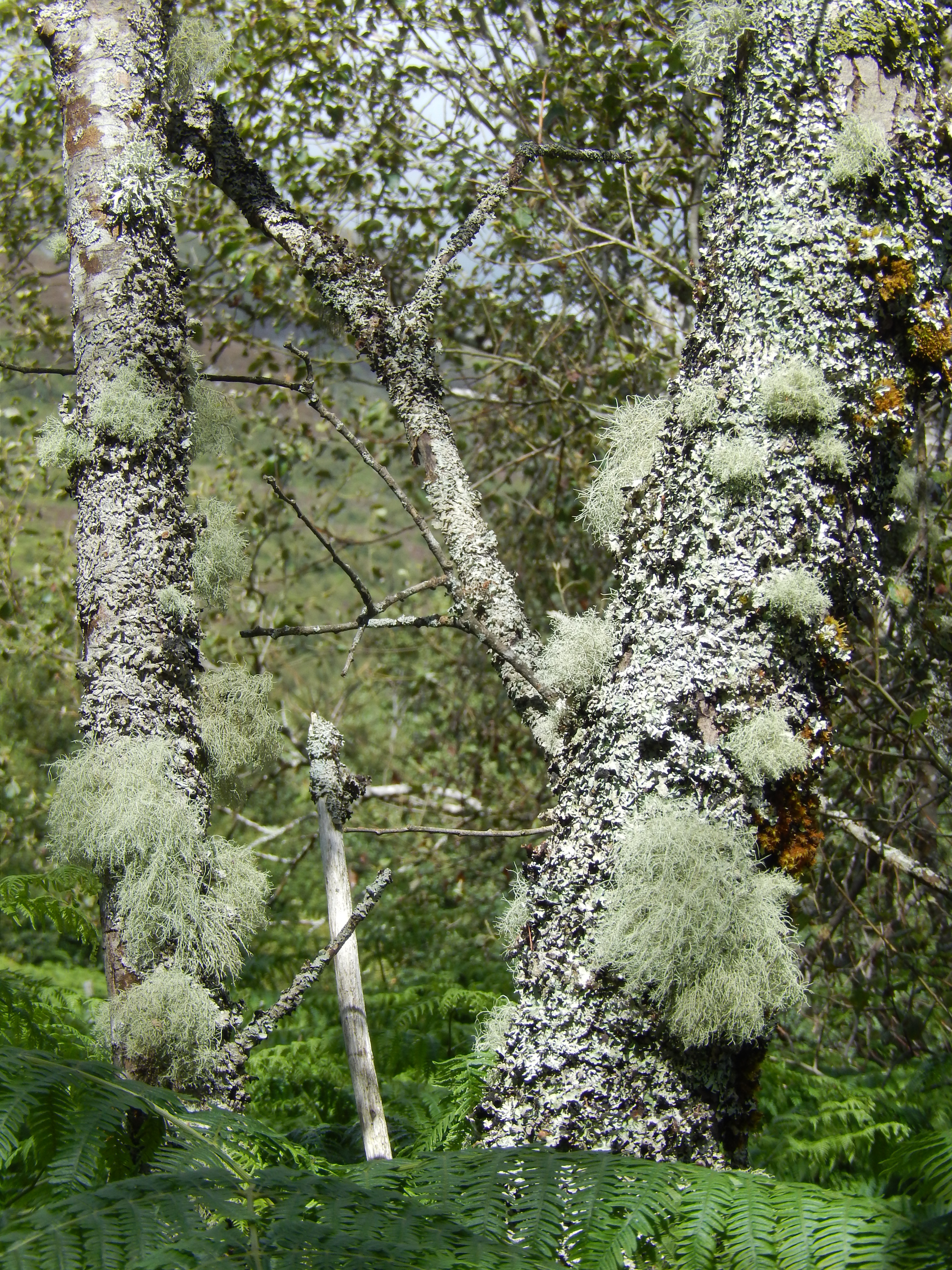
Trailing Beards of Lichen, mostly Usnea with some Ramalina; the flatter leafy lichens are species of Parmelia
The Downy Birch is a stockier tree than the Silver Birch, tough enough to survive mountain winters, and home to a rich variety of lichens including Usnea beard lichens, bristly Ramalina, dark stringy Alectoria jubata (now renamedBryoria fremontii), and various leafy Parmelia species that yield orange dyes used in Harris Tweed.
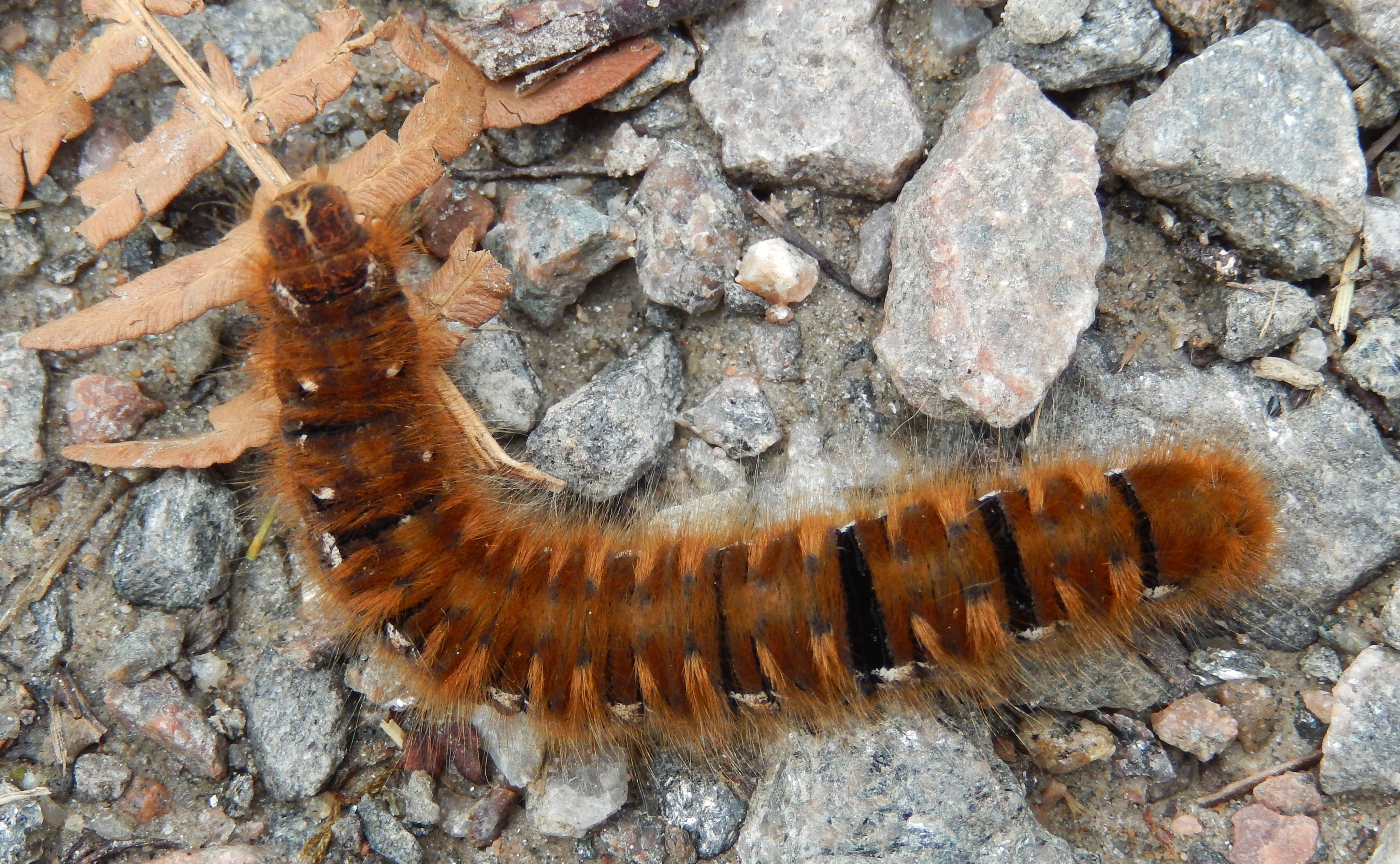
Caterpillar of Northern Eggar Moth
Large handsome caterpillars of the Northern Eggar Moth, the Scottish form of the Oak Eggar (Lasiocampa quercus), up to 3 inches (75 mm) long and nothing to do with oak trees, wriggled across the path, their rufous hairs warning off predators. They feed on Heather and Bilberry.
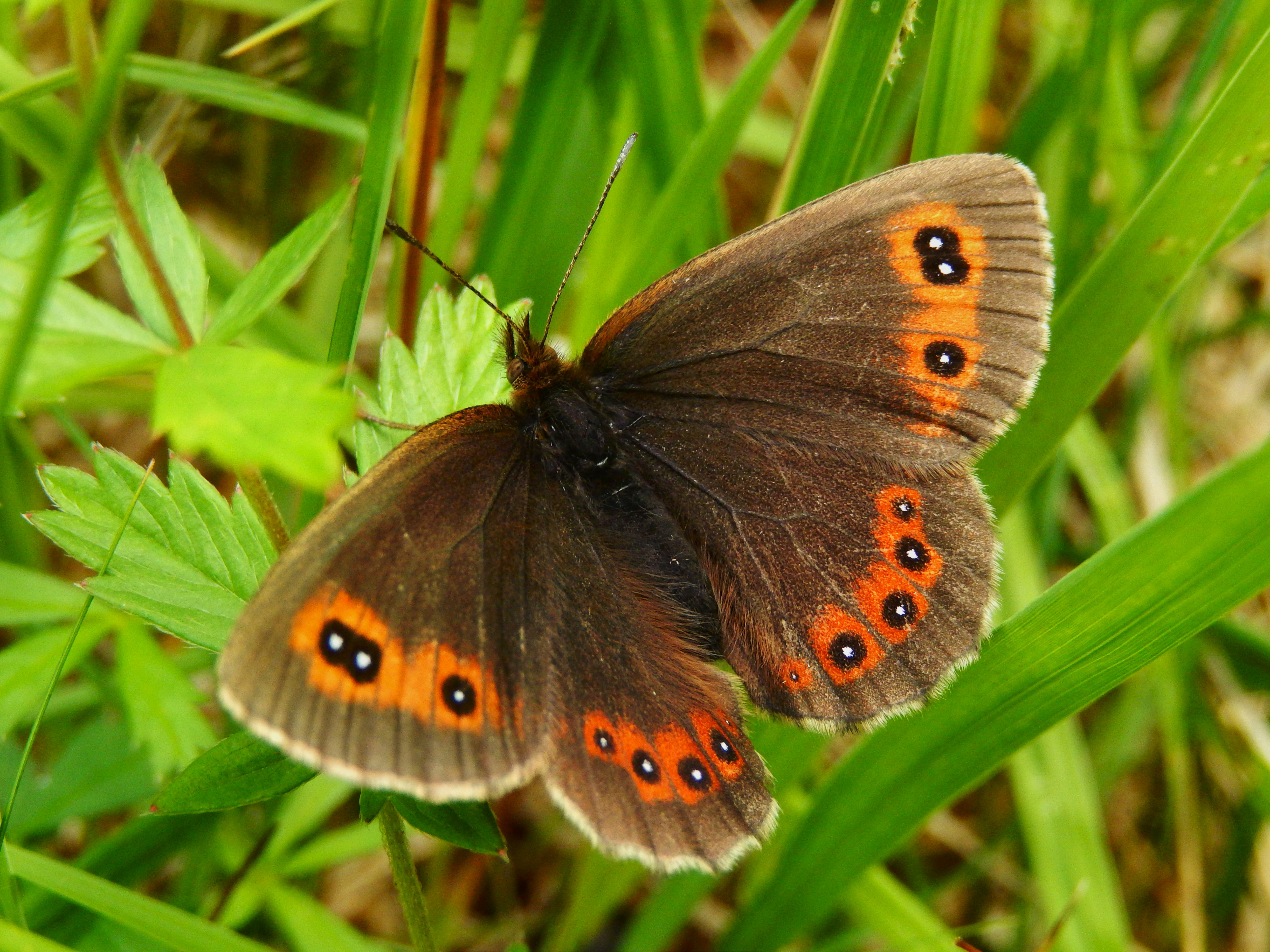
Scotch Argus
In every patch of damp grassland, Scotch Argus butterflies skittered, looking very dark in flight. They are hard to approach as they constantly chase each other off from their territories, but eventually I found one that stayed settled long enough to creep up to. Close up, the upper side is a rich brown, with red patches around the wing edges dotted with black circles that have white centres.
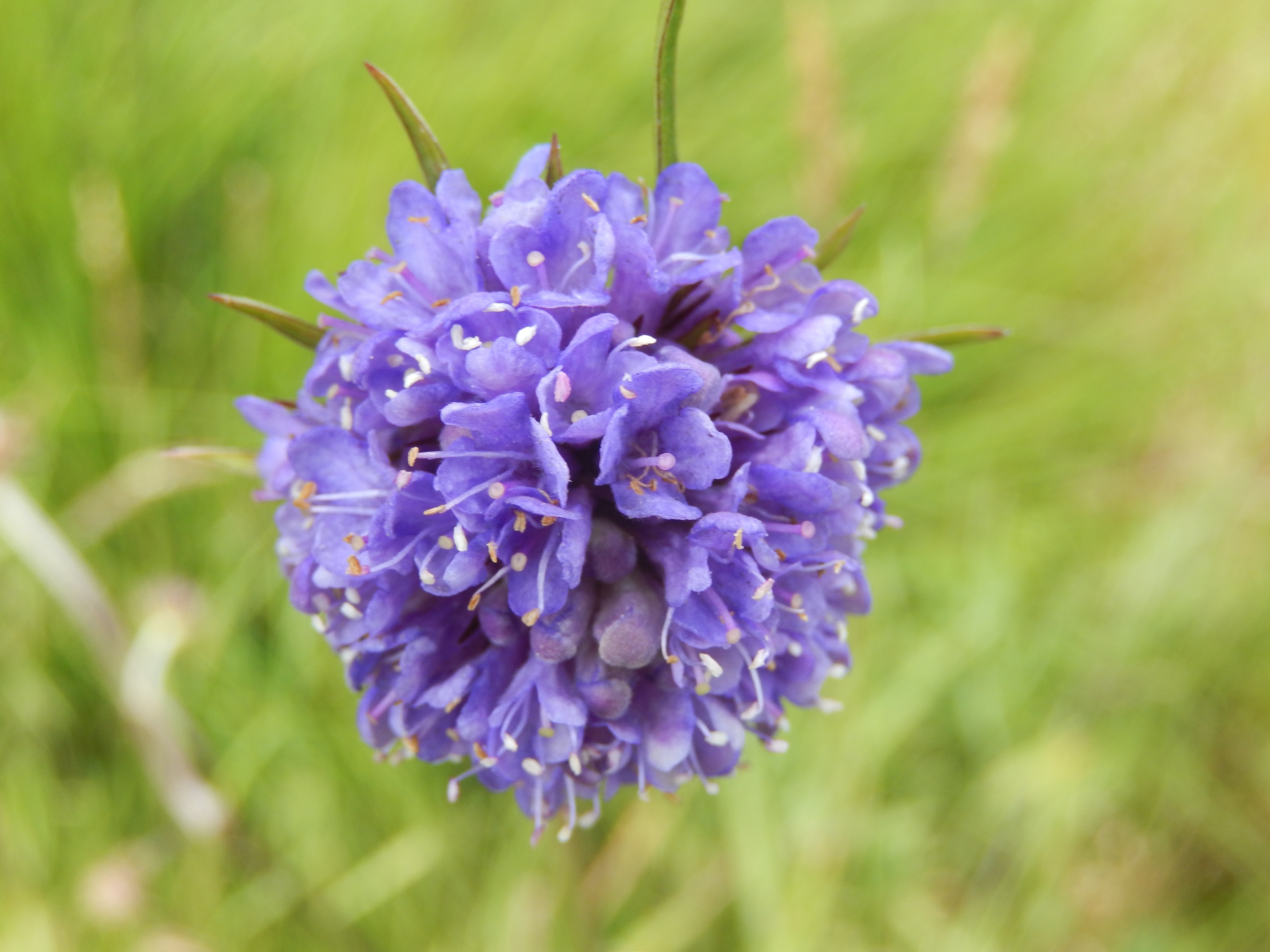
Devilsbit Scabious
A few bumblebees, some of unfamiliar species, visited the Devilsbit Scabious (Scabiosa succisa) briefly. Large Syrphid hoverflies basked on the paths.
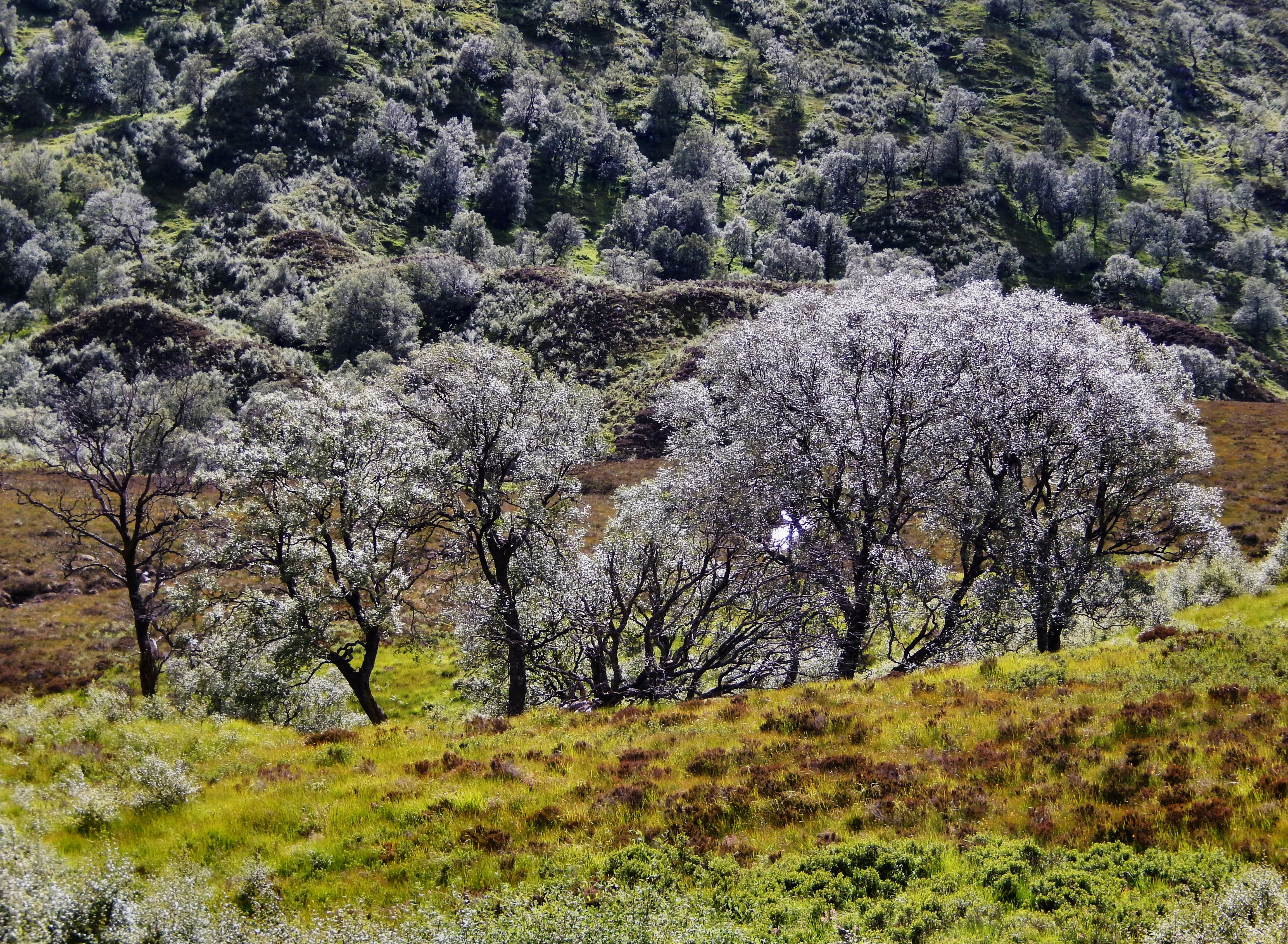
Glittering Downy Birches
Further up the valley, a fine group of birches actually glittered in the bright sunlight, the water of the stream shining silver behind them.
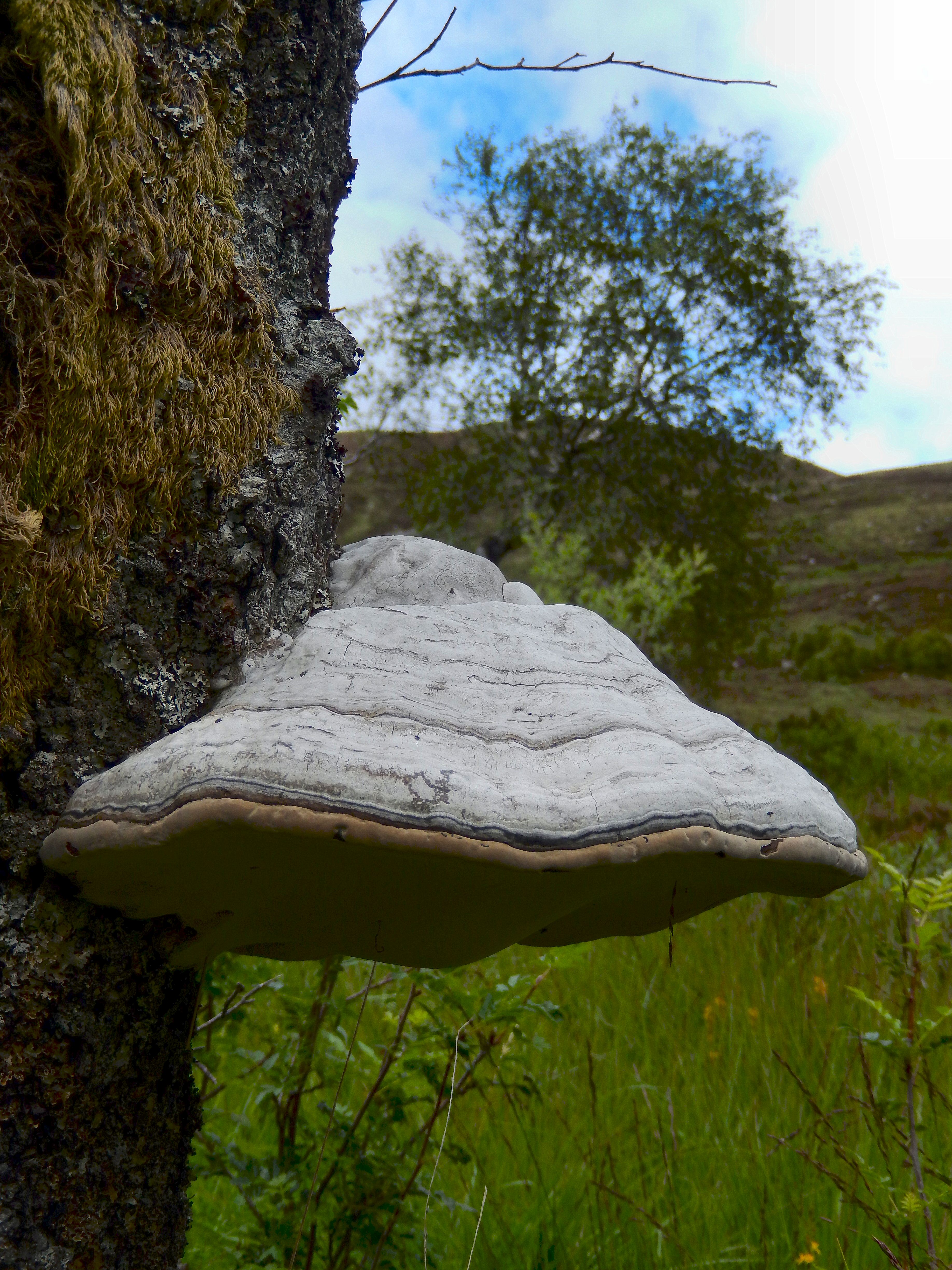
Birch Bracket Polypore
A dead birch, stark against the sky, supported stout Birch Bracket polypores, handsomely whitish-grey above, yellow ochre below.
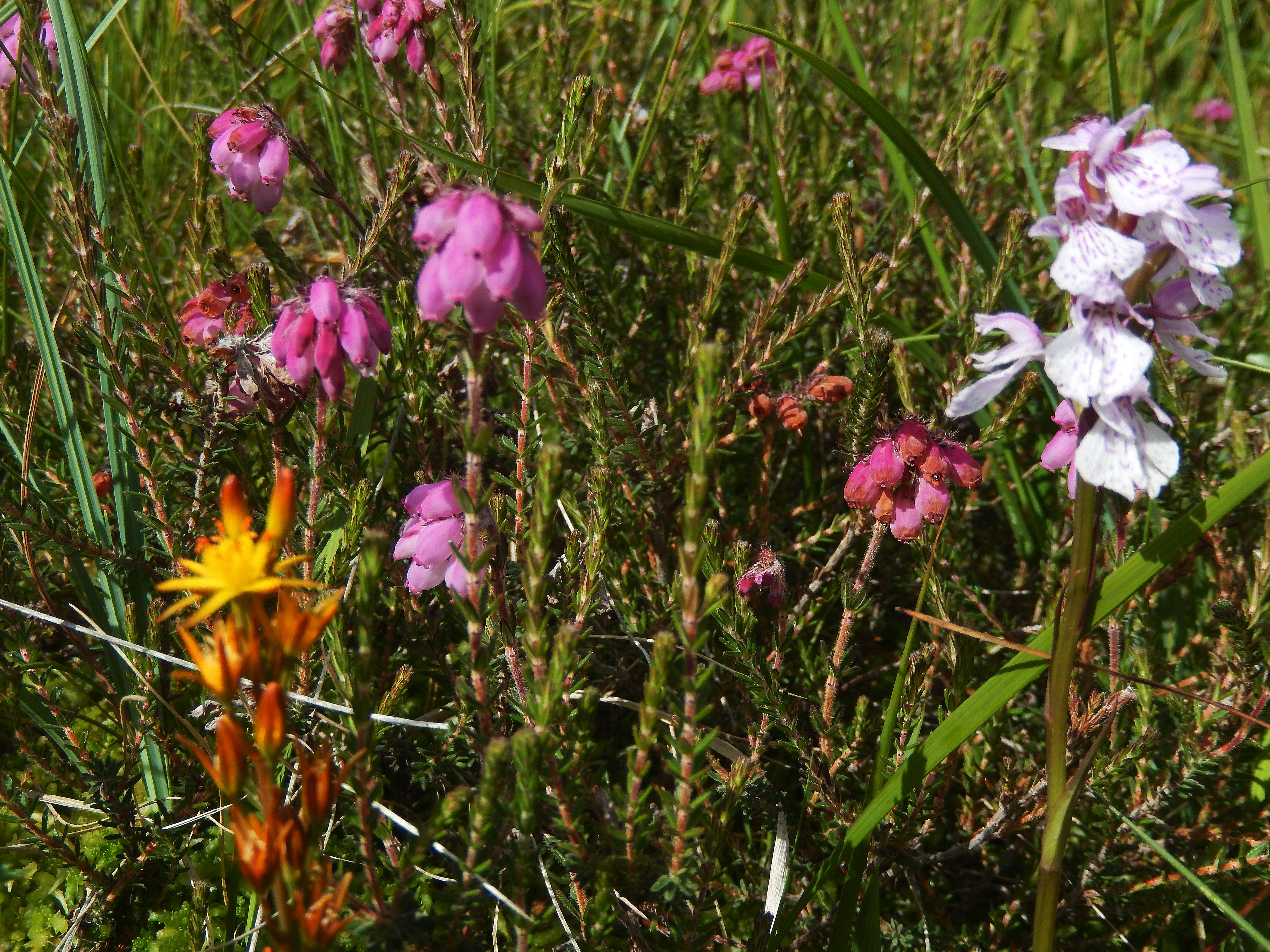
Bog Asphodel Bell Heather Marsh Orchid
In the boggier patches, Bog Asphodel and Marsh Orchid flowered among the Bell Heather.
Rock Bog Heather Birch Mountain Tundra
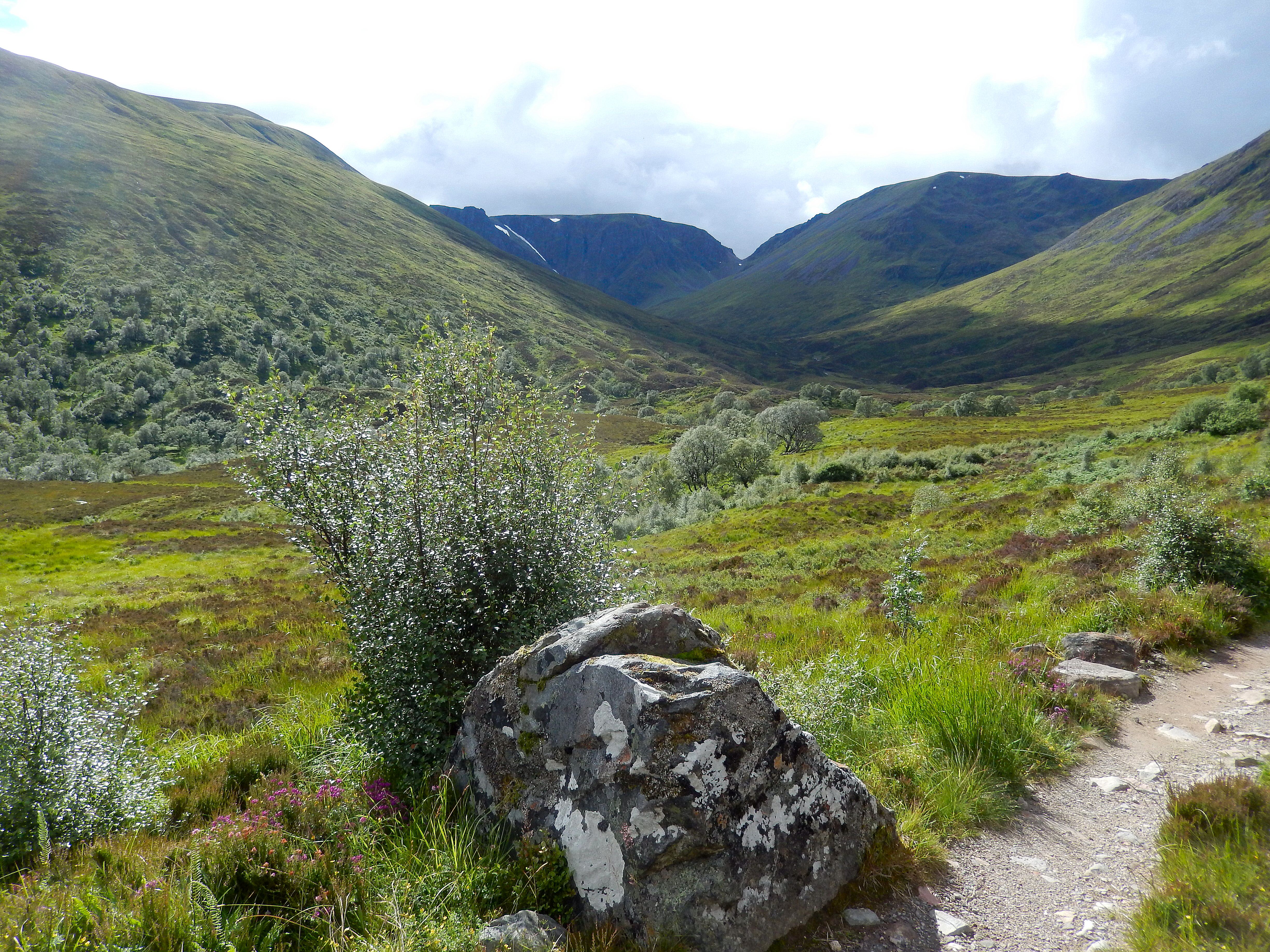
I turned the corner of the valley to see snow still lying in the deep, north-facing gullies on Creag Meagaidh, and the striking notch of the col that gives access to the mountain ridge.
The English seem unemotional … except for their passion for nature