Category Archives: Environment

Irreversible Retreat: The Glaciers of West Antarctica

NASA has just announced the findings of a study of the enormous glaciers of West Antarctica. The immense ice sheet slopes down, basically smoothly, into the sea, drained by the Pine Island, Thwaites, Smith, Haynes, Pope and Kohler Glaciers. Pine Island Glacier alone stretches over an area of 160,000 square kilometres. All of them are thinning quickly, by up to a metre a year, and moving fast. Their bed is rather smooth: there is nothing to stop them continuing to thin until they collapse. When they do, the sea level all round the world will rise by 1.2 metres — four feet: enough to overwhelm many existing coastal cities. Worse, there are other glaciers which may do the same, adding more metres of sea level rise. The scientists state unequivocally that this is now irreversible, past the point of no return, a runaway process. There’s no diplomatic hedging and statistical mumbling: the analysis of forty years of data is about as conclusive as science can get. The line where the Pine Island Glacier meets the sea and starts to float has retreated, not a little bit here and there but tens of kilometres, as the sea melts the front of the ice, and the rest of it thins and accelerates. It’s certainly going to collapse, probably in the next few centuries.

This blog is intended to celebrate nature, to delight in its beauty and endless variety: the Web equivalent of going for a fine airy walk in the hills, a stroll by the river with binoculars and notebook, an hour in a flowery meadow stalking butterflies with a macro lens. Fun, flowers and fabulous insects, in a word.

But while celebrating nature, it is impossible not to notice that something is going terribly wrong in this Garden of Eden. Forests are being cut down. Whole populations of fish are being scooped from the sea: one of the greatest of all of them, the Atlantic Cod of the Newfoundland Grand Banks, has completely collapsed and despite years of waiting with fishing abandoned, has not begun to recover. Maybe it never will. Meanwhile, the world is unquestionably warming, on the most spectacular scale imaginable. The Sahara and other deserts are growing. On all the world’s mountains (how much evidence can anyone need?), glaciers are retreating, at a speed that nobody could imagine even 30 years ago. The Arctic Ocean is opening up to shipping and mining: how much pollution and destruction will that cause? Even the fabled Northwest Passage may be open to ships, speeding trade —every cloud has a silver lining.

I said it was impossible not to notice all this. Unless you’re in denial, of course. Humans have an extraordinary capacity for denialism, if that’s a word. Men can carry on as their marriages, careers, companies, societies collapse all around them. Dictators, for instance, can bring their countries to utter ruin and bankruptcy, with bombed-out cities, millions of refugees, starving women and children, the lives of whole populations blighted, entire economies destroyed, beautiful centuries-old monuments sacred and secular smashed to dust. It all counts for nothing as long as the big man is safe in the bunker below the presidential palace, ignorant of everything, his henchmen loyal, his money hidden away.

Many plain facts about nature are denied in the face of overwhelming evidence. Rising CO2 in the atmosphere. Global warming. Climate change. Overfishing. Sea level rise. Ocean acidification. Loss of rainforests. Extinction. These things are all connected? You don’t say.

The lights in the control room are all flashing red. The klaxon is sounding. Alarms are queued on the console screens. The operators sit back quietly, chatting amongst themselves, sip drinks, flip through magazines, laugh, occasionally silence an alarm, talk about promotion opportunities, make lewd remarks about the pretty girl in Catering. They couldn’t care less. The lights always flash. It’s nice when you can turn the klaxon off. Stupid programmers. Inspectors, always complaining. Everything’s fine. Outside, fuel is spilling from a storage tank. The site’s fire service has been stood down. There’s only one fire tender, and it’s old. It will only take a spark now, it’s only a matter of time.


The Ghettoisation of Nature

I suppose you are familiar with the ghettoisation of Britain’s towns and cities. To take a few rather random examples, Bath, Bradford-on-Avon, Edinburgh, Marlborough and Oxford are seen as ‘nice’ (terrible word),  become populated with the middle class, Waitrose, estate agents and boutique shops, and suffer enormous rises in house prices, while nearby places are seen as less desirable, acquire sink housing estates, crime, and scruffy concrete jungles where once there were perfectly decent town centres. Areas of London do the same, but in a more rapidly shifting way, as the sheer pressure of population, and the desperate shortage of housing, forces people into scruffier areas which thus become ‘gentrified’ (though hardly by landed gentry, actually).

Perhaps the ghettoisation of nature is a little less familiar. As a boy, I was allowed out to go and do as I pleased in between meals (ah, those happy days when we didn’t know about paedophile celebrities: mind you, nobody is actually suggesting they stalked the countryside attacking random children, they had more subtle means of approach. But I digress).  We used to go down the stream and build dams — the farmer never seemed to mind, and I guess our small engineering works of sticks, mud and stones never lasted long. It was tremendous fun watching the water well up, and exciting to run for more materials as the level rose and the water found new places to escape; I don’t think we ever tried to construct an intentional spillway anywhere. Or we wandered out in autumn to gather blackberries, returning with heavy plastic bags full of the squashy fruit, demanding blackberry-and-apple pie for supper like latter-day Peter Rabbit siblings. We scarcely remarked on the Yellowhammers in every hedge, Song Thrushes in the woods, Lapwings, Skylarks and Grey Partridges in the open fields: they were just there. There were Spotted Flycatchers, Swifts and House Martins nesting in the village, too; we noticed these last as the upstairs windows couldn’t be opened for months to avoid breaking their nests.

Leaving aside whether parents will allow children to go out unsupervised nowadays — kids have to learn to take care of themselves eventually, and the sooner they learn to be sensible, the better, specially if they have fun and play adventurously at the same time, a visit to the countryside today will, on average, involve less than half as many farmland birds as in 1970, and far fewer than that in the case of Lapwings, Skylarks and Grey Partridges. The countryside has emptied of birds — and of bumblebees and primroses and much else.

Instead, if you want to see Nature (the capital letter is intentional) you go to an official Nature Reserve. If you want to see a traditional village you study the web or the official Heritage handbook, fuel the car, pack a picnic, and travel to the official Heritage site, or rather to the official Heritage car-park complete with high-visibility-jacketed attendants and ticket machines, and walk down the officially landscaped path (keep off the official bit of woodland with bulbs underfoot to the officially declared bit of Heritage. It looks pretty attractive, but for the hordes of amateur photographers taking pictures of hordes of amateur photographers, ice-cream lickers, picnickers, dog-walkers, beer-swillers and motorcycle enthusiasts (why do oily chains, throbbing Harley-Davidsons and polished chrome go with pretty places? Answers on a postcard, please) in every street.

The official Nature Reserve also has a car park, which is at least generally free, at least to members. There is a big official sign with a colourful map, sometimes painted with happy butterflies, frogs, foxes and woodpeckers — the more conspicuously coloured species seem to be favoured in this form of natural selection, perhaps aposematism has something to do with it. There are quite often free maps and nature trails, even colouring sheets and clipboards for crayon-carrying children. Sometimes the trees and flowers are officially labelled as well, complete with Heritage notes about what Comfrey used to be grown for in the days when real people lived in the countryside (it was to help healing of bones, if you’re curious), or what Hazel coppicing was and why it was practised (tufts of small straight flexible wands, cut and used to make hurdles to fence in animals temporarily, and so on).

All of this effort is quite admirable in its way: relaxation, getting out of the house for the day, being together as a family, learning a little history, a little about nature.  But what has been lost in the process is more striking: freedom, simple personal discovery and exploration (think blackberry-picking, dam-building, just coming across birds singing and bees buzzing). Don’t get me wrong, given the lack of nature in ordinary farmland there is a pressing need to rescue at least some areas of habitat; and given people’s cramped urban lives, it’s right they have some attractive places to visit. All the same, Nature, like Heritage, is being ghettoised. The process has not yet run to completion in Britain — there are still magnificent areas of mountain, moorland and coast where you can wander free of twee signs and uniformed attendants — but the paraphernalia are spreading: you can find them on Access Land in Northumberland, for instance.

As Joni Mitchell sang long ago, “Take all the trees / Put ’em in a tree museum. Charge all the people / A dollar and a half just to see ’em. Don’t it always seem to go / But you don’t know what you got till it’s gone. / They paved paradise, put up a parking lot.”

 

An Innate Need to be in Contact with Nature

An Innate Need to be in Contact with Nature

Without wishing to question the wisdom of the Ancient Greeks, with their six kinds of love, I do think they missed out one of the most crucial varieties. And that is love for the natural world, for the wilds from which we sprung and of which we are still — though we may fight against the idea — a part.

I am drawn to the concept of ‘biophilia’, the idea that we have an innate need to be in contact with nature. It strikes me that the word could be used to express the seventh variety of love. Clearly we need those other varieties — erotic love, the love of friends, playful love, pragmatic love, self-love and universal love. But I believe we also need love of nature.

—Hugh Warwick, The Beauty in the Beast: Britain’s Favourite Creatures and the People Who Love Them.  Simon & Schuster, 2012. page 305.

Buy it from Amazon.com
Buy it from Amazon.co.uk

Star Species of a Seven-Warbler Walk was … Skylark

I did wonder, before I began writing a nature journal here, whether half the entries wouldn’t be ‘nothing much to report today’. Well, so far I haven’t been there.

I went down to Wraysbury again in the hope of finding the Lesser Whitethroat. I arrived rather early, driving out of town only to see a gigantic queue of cars crawling in the other way, trying vainly to beat the Tube strike. No-one was about as I wrapped up in an extra pullover and listened intently to the morning chorus.

My day was already made when I actually SAW a Cetti’s Warbler – for about a second, before the rich brown bird with the rounded tail dived for cover. A Cormorant flapped heavily, taking off from the lake like a lumbering military transport, showing glossy blue-black plumage like a giant crow, circling three times to gain height. Two pairs of Gadwall (only one pair last time) swam shyly near the far side of the lake; Green Woodpeckers laughed their loud ringing call.

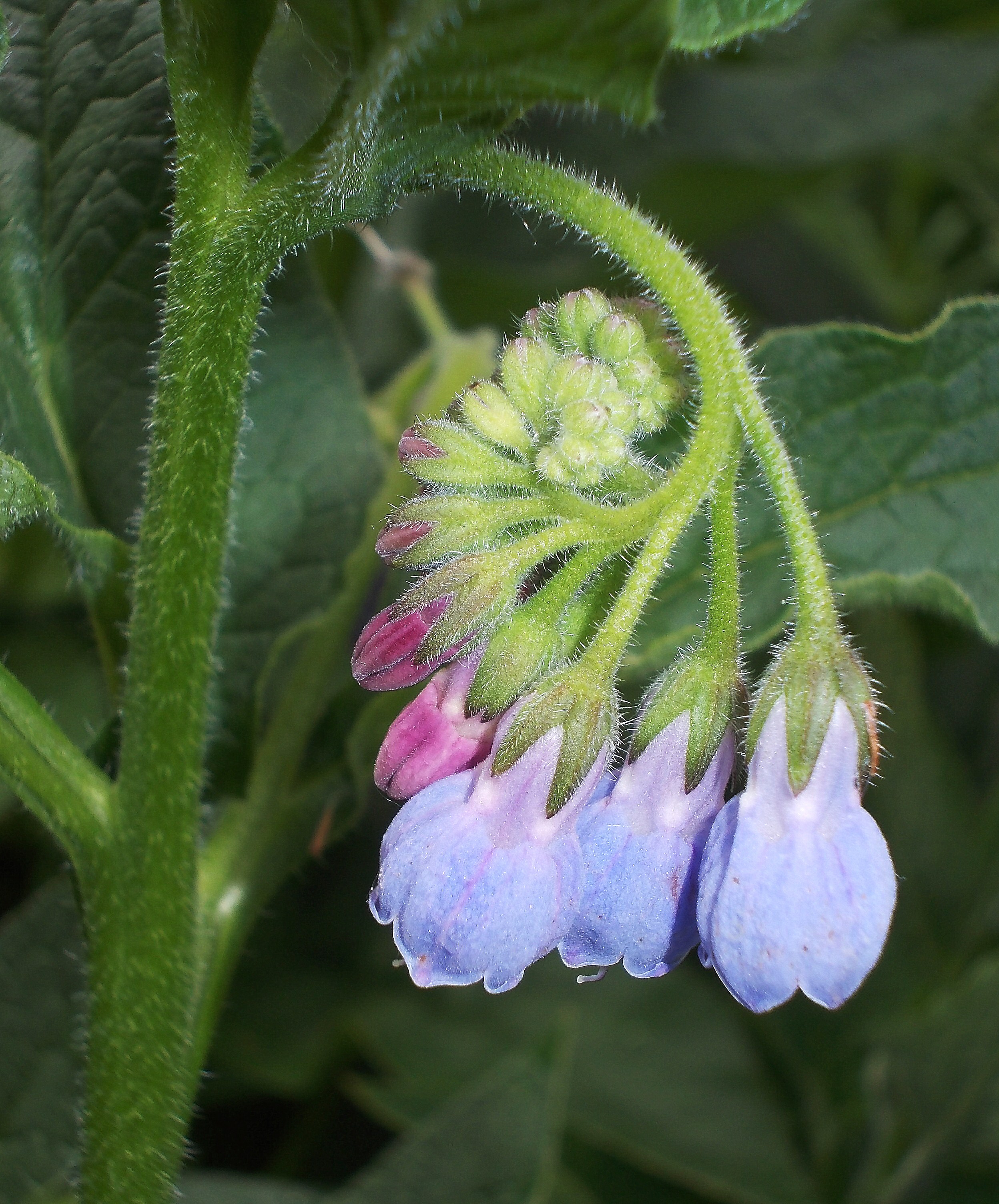
Comfrey flowerhead just starting

Blackcaps were singing all over; Song Thrushes too, at least three of them; a considerable flock of Long-Tailed Tits made their extraordinary “Tsrrrrrp” noise (try it); Chiffchaffs spoke their name, and (Common) Whitethroats sang their rasping songs or chattered from inside their thornbushes. Great clumps of Comfrey, the medicinal herb used in mediaeval times to knit bones, have suddenly sprung up with their dark, foxglove-like leaves and clusters of flowers in a range of anthocyanin colours – reds and violets.

There were more Willow Warblers and Garden Warblers, too, making them easier to find; more must be arriving each day now.

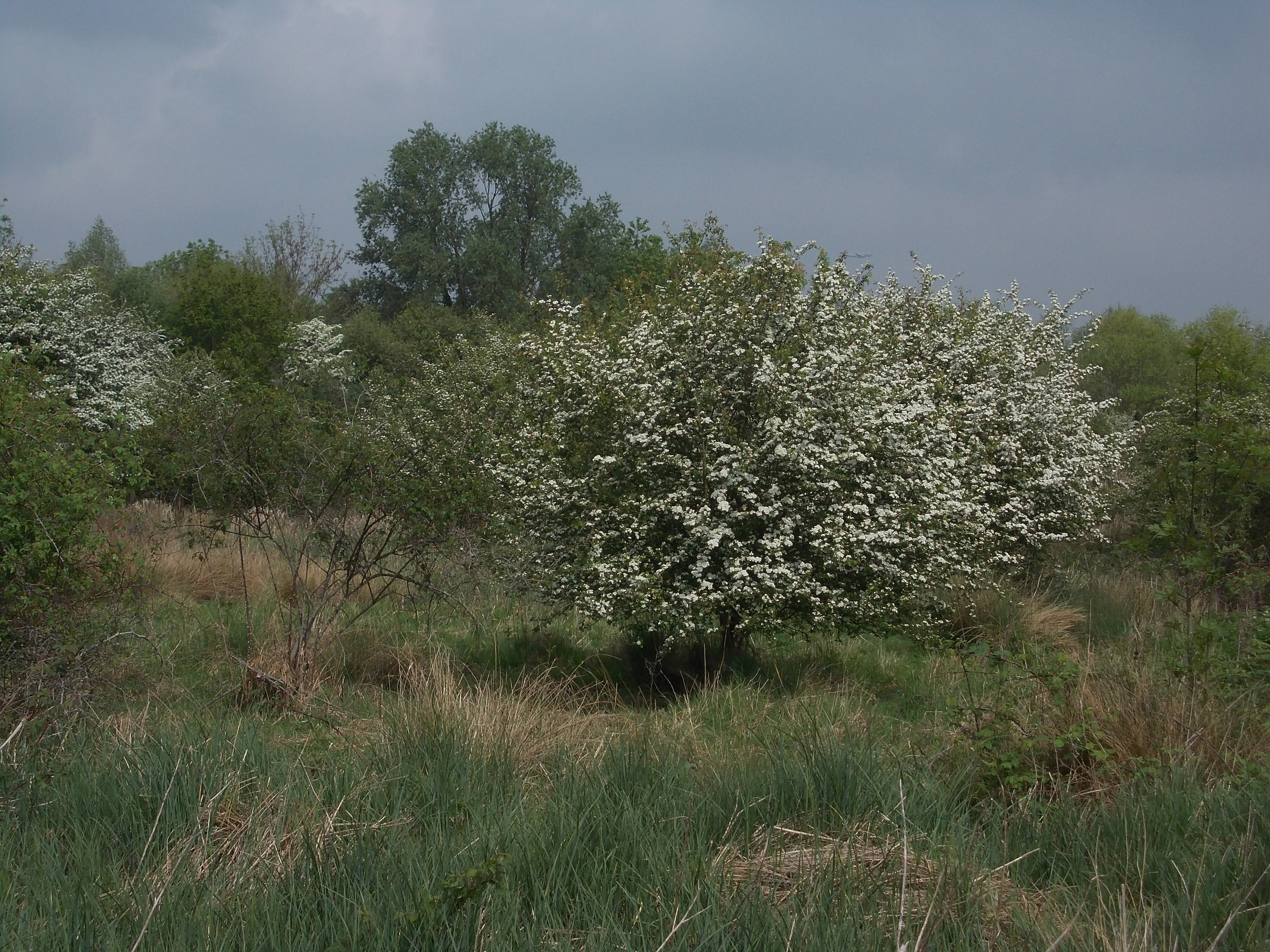
Whitethroat habitat
Whitethroat habitat: Hawthorn bushes in damp open scrubland

I made my way over the bridge and out into the dry scrubland. Whitethroats were all around now, singing competitively; a few Blackcaps joined in. Then, yes, I heard the simple, flat trill of a Lesser Whitethroat. I sat down and listened, heard it a few more times to make sure: it was a Seven Warbler Walk, I think actually my first, at least when I’ve taken the trouble to count them and write them down. I took a swig of water; an Orange Tip and a Brimstone butterfly flickered past.

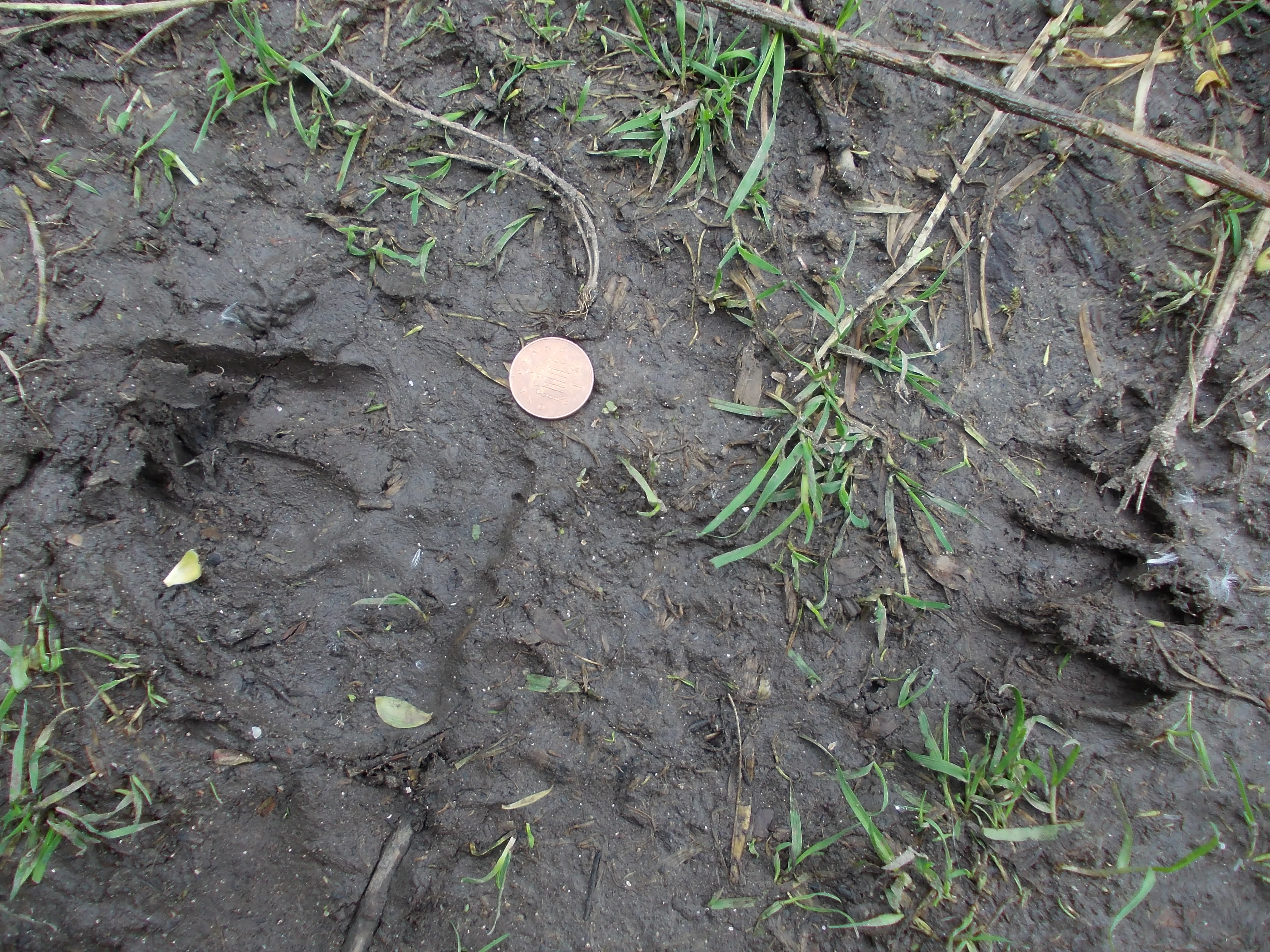
DSCN0214 Roe Deer slots (with penny for scale)
Roe Deer slots (with penny for scale)

Looking about the bushes carefully, I noticed a trail of Roe Deer prints, medium and small. Their numbers have been increasing steadily, certainly since 2007, and they are close to becoming a nuisance. About 350,000 are culled each year; another 74,000 or so are killed on the roads, without limiting their growth. Clearly we need some predators, though what our farmers would say to having Lynx back, let alone Wolverines, is easy to imagine.  Where they are most numerous, woodland shrub vegetation and bird numbers are suffering.

On the way out, some Goldfinches sang near the road, and a Swallow flew overhead by the river Colne. I felt I’d had a good day, and braced myself for a tricky drive home. On a whim, I went via the airport road. It’s a bit slow but not uninteresting, and there’s a nice tunnel. Waiting at one of the sets of lights, I opened the window, and at once heard a Skylark singing its rippling song. I looked up, and there it was for a moment, a little flickering dark shape against the bright sky, pouring out its aerial music. The lights changed, and a jet growled in to land, the air whistling over its fully-extended flaps.

Fancy, a Skylark at Heathrow, seen and heard from a car, the highlight of a seven-warbler walk, Lesser Whitethroat and all.


Of Wild Pigs and Stained Glass, yes it’s the Forest of Dean

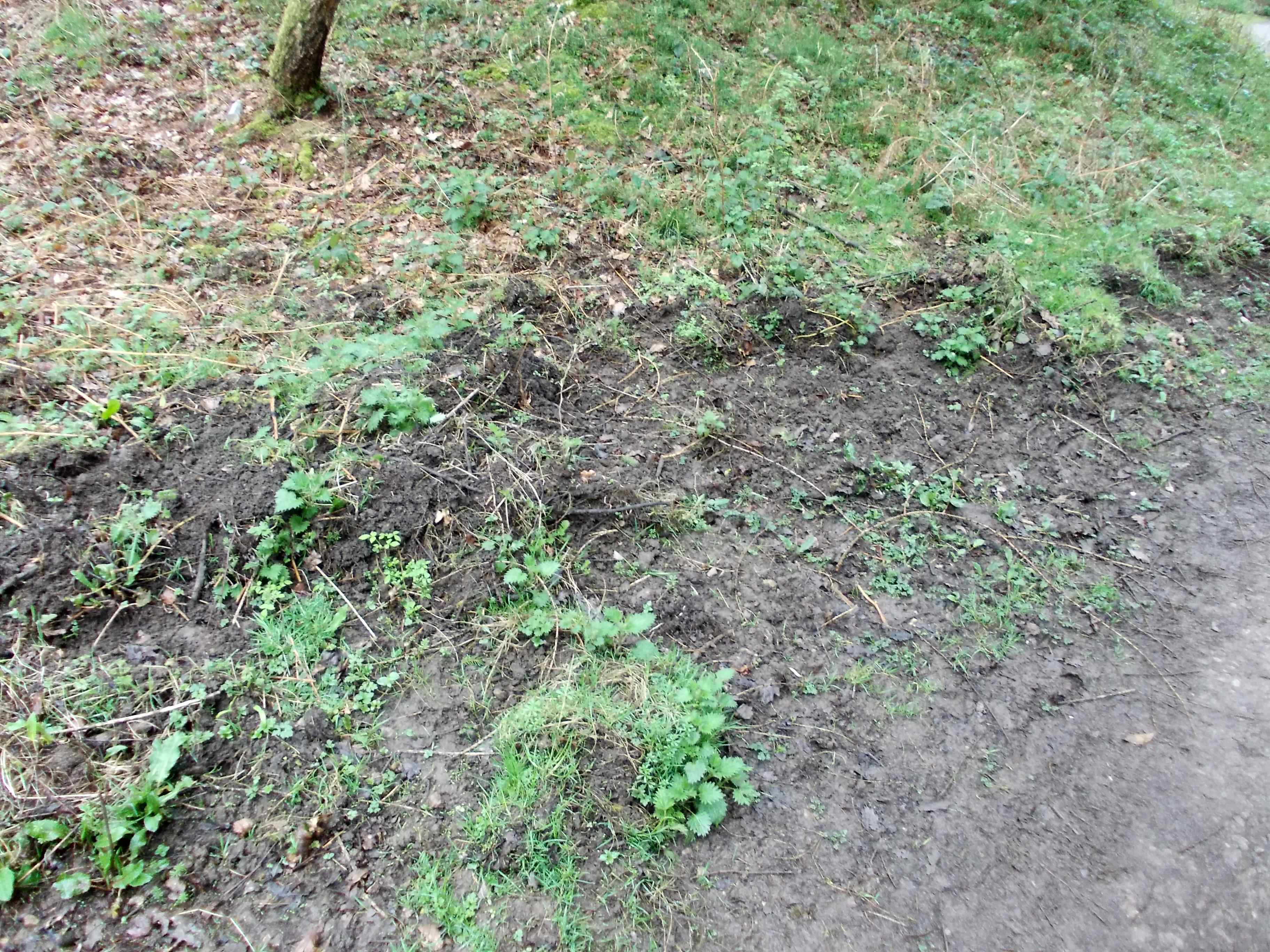
Wild Boar diggings in Forest of Dean

It’s one thing to be used to seeing signs of wild boar in France, quite another to realize these fine animals have returned without any bureaucracy about release licences and experimental sites and suchlike. Whatever happened, whether they just escaped or were released by animal rights protesters or some other story, they are now out in the wild, and exuberantly breeding.

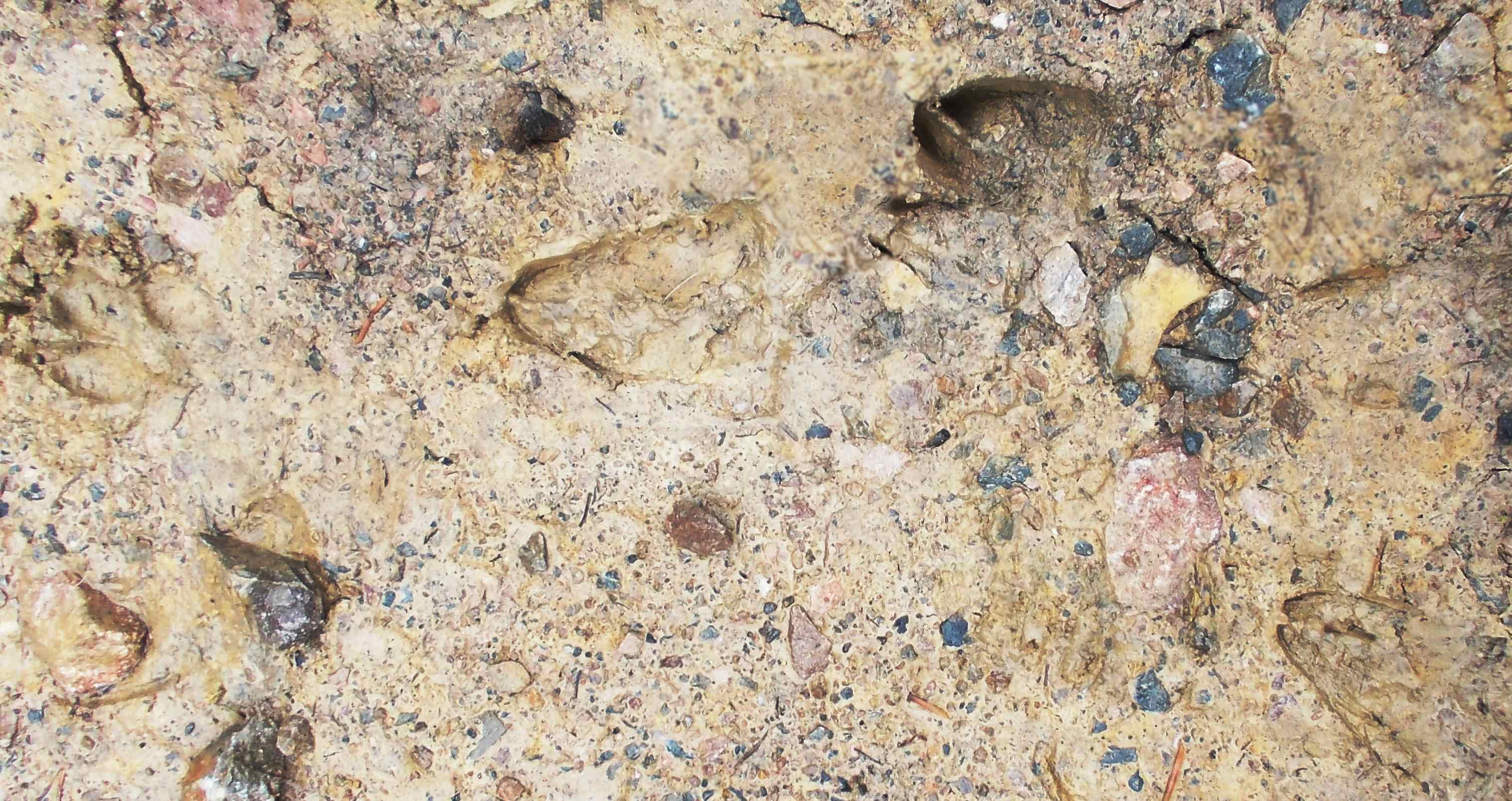
Wild Boar Prints of Different Sizes

The many diggings beside the trails in the Forest of Dean show the presence of numerous family groups, while the splayed prints of different sizes leave no doubt about the families of pigs with all ages represented.

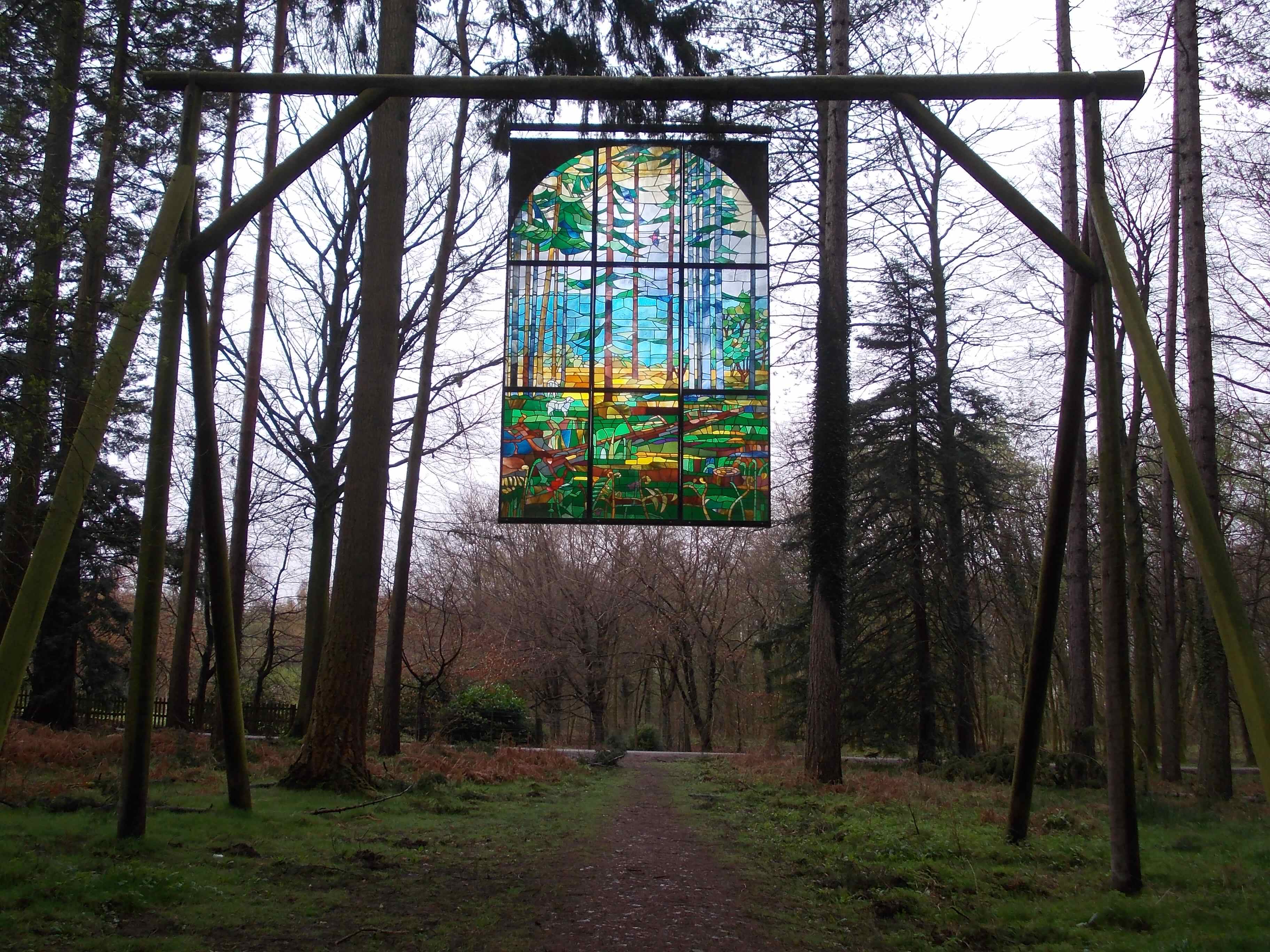
Stained Glass Window in the Forest: Sculpture Trail

Casting pearls before swine … or at least, dangling stained glass over them. The forest is enlivened with a wide range of sculptures in the now very well established trail. The famous giant chair is becoming a bit wonky, and has been repaired with cement. The magnificent stained glass window adds glowing colour whatever the weather.

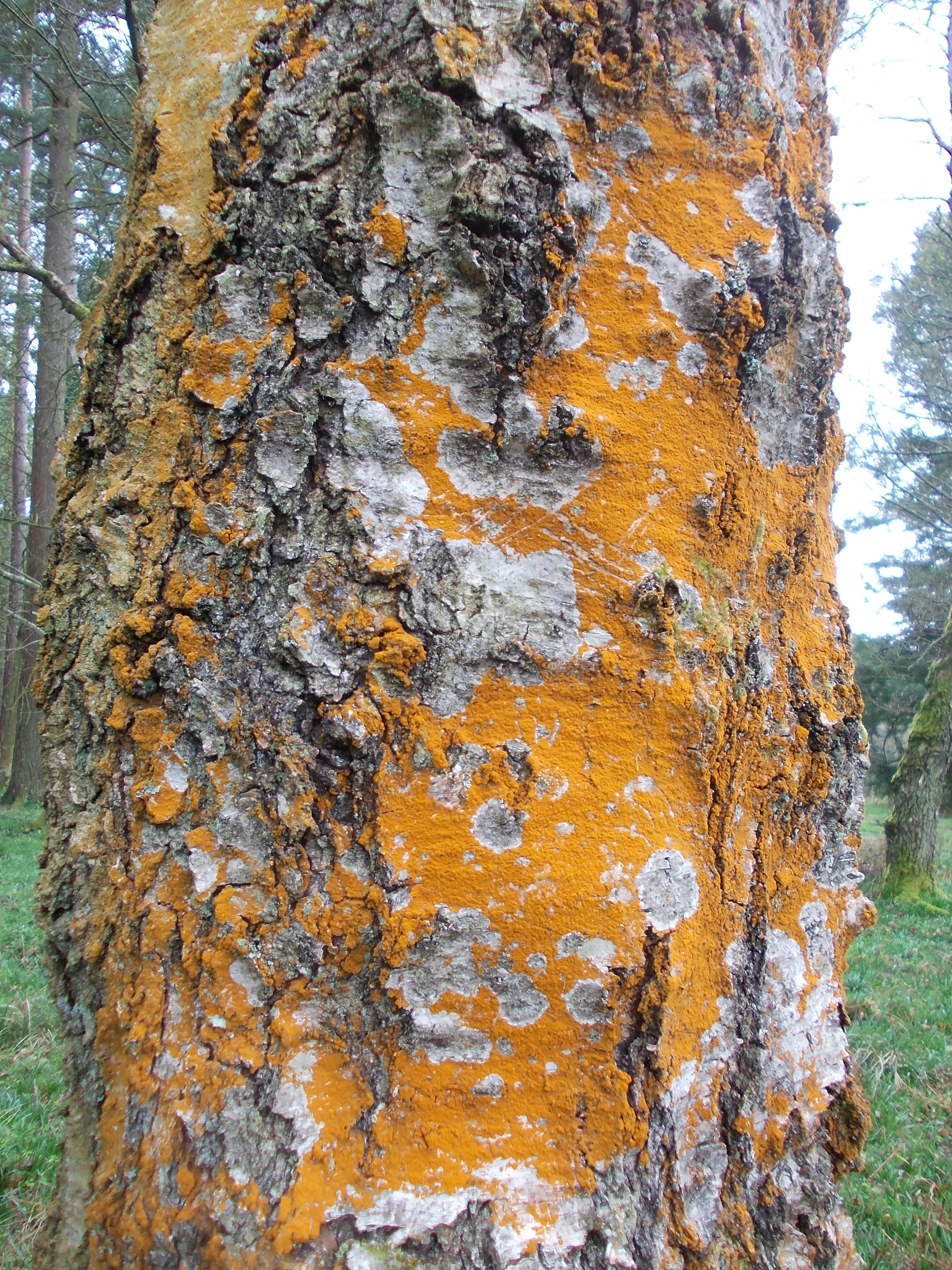
Orange and White Lichens on Birch in Forest of Dean

A lone birch in a clearing shines out with brilliant orange and white patches. The orange is not the common orange lichen (Xanthoria) which shows a leafy thallus: the orange patches here seem to consist almost wholly of fruiting bodies which are not circular apothecia with clear rims, but fuzzy tufts, presumably of spores.  And the white circular patches are also lichens, not just areas of bare bark: their fruiting bodies show up dark within the white circles.

Desert Dust in Britain … all the way from the Sahara

Desert Dust on Car
Desert Dust on Car

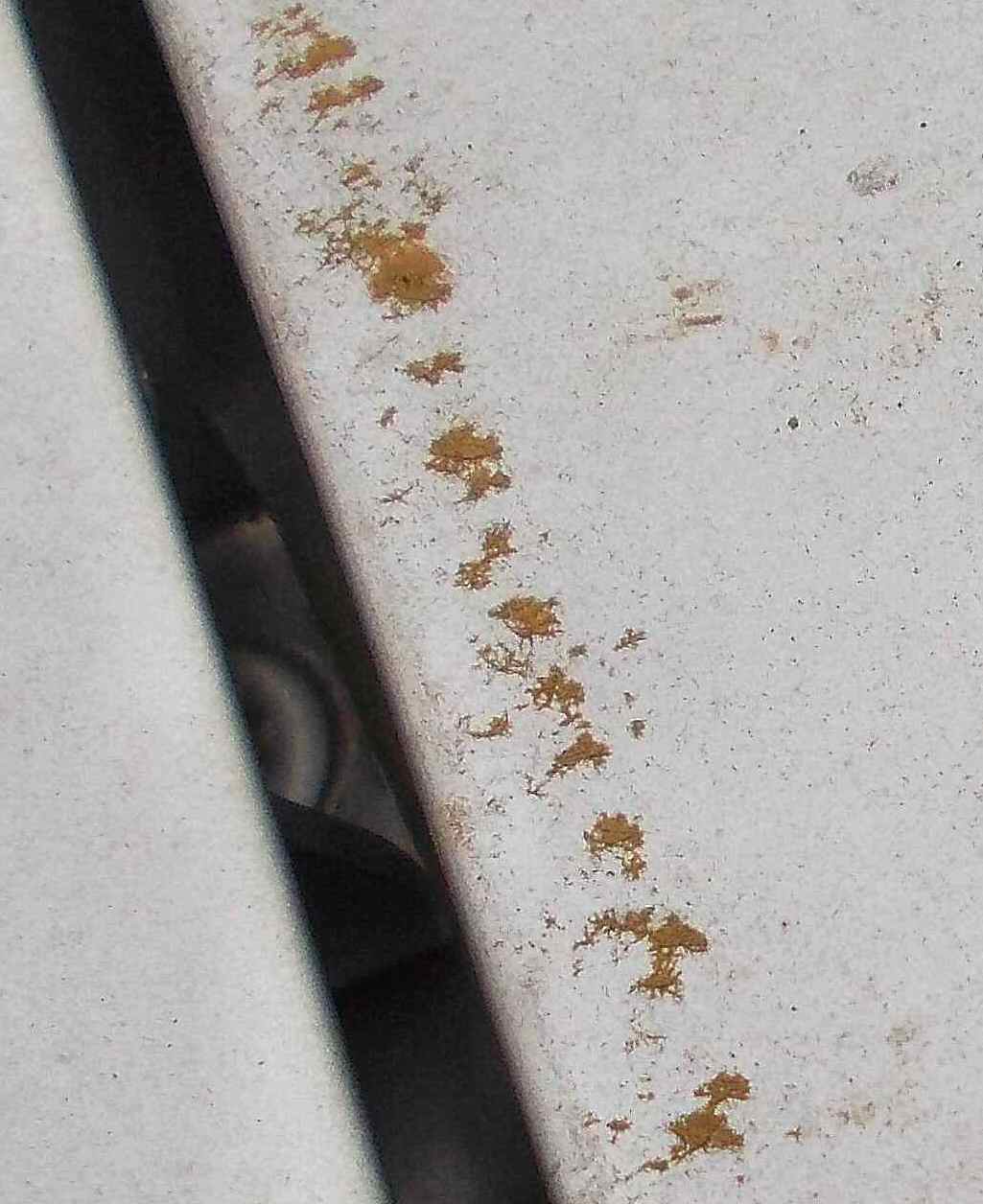
Yesterday the BBC explained that a high pressure zone over eastern Europe was bringing polluted air in on a southeast wind, picking up what smells like a sharp and acrid sulphurous dusty mess from the Ruhr. The same wind picked up desert dust from the Sahara and carried it straight across Europe. The dust has arrived with the dew and has formed a sandy smudge all over everybody’s car: it’s most obvious where the wetting has collected it towards edges of roof panels, as in the photo. Today the forecast is for very poor air quality, at warning levels 8 or 9 (out of 10 for worst possible), making life uncomfortable for asthma sufferers. The map shows it stretching from the tip of Kent in the southeast all across England to Dorset in the west, the Wash in the northeast and the North Wales coast in the northwest. Levels are ‘Very High’ along the south coast and up to Cardiff, and in a patch in the midlands.