Category Archives: Natural History

Vole Patrol 10: Gutteridge Wood Voles!

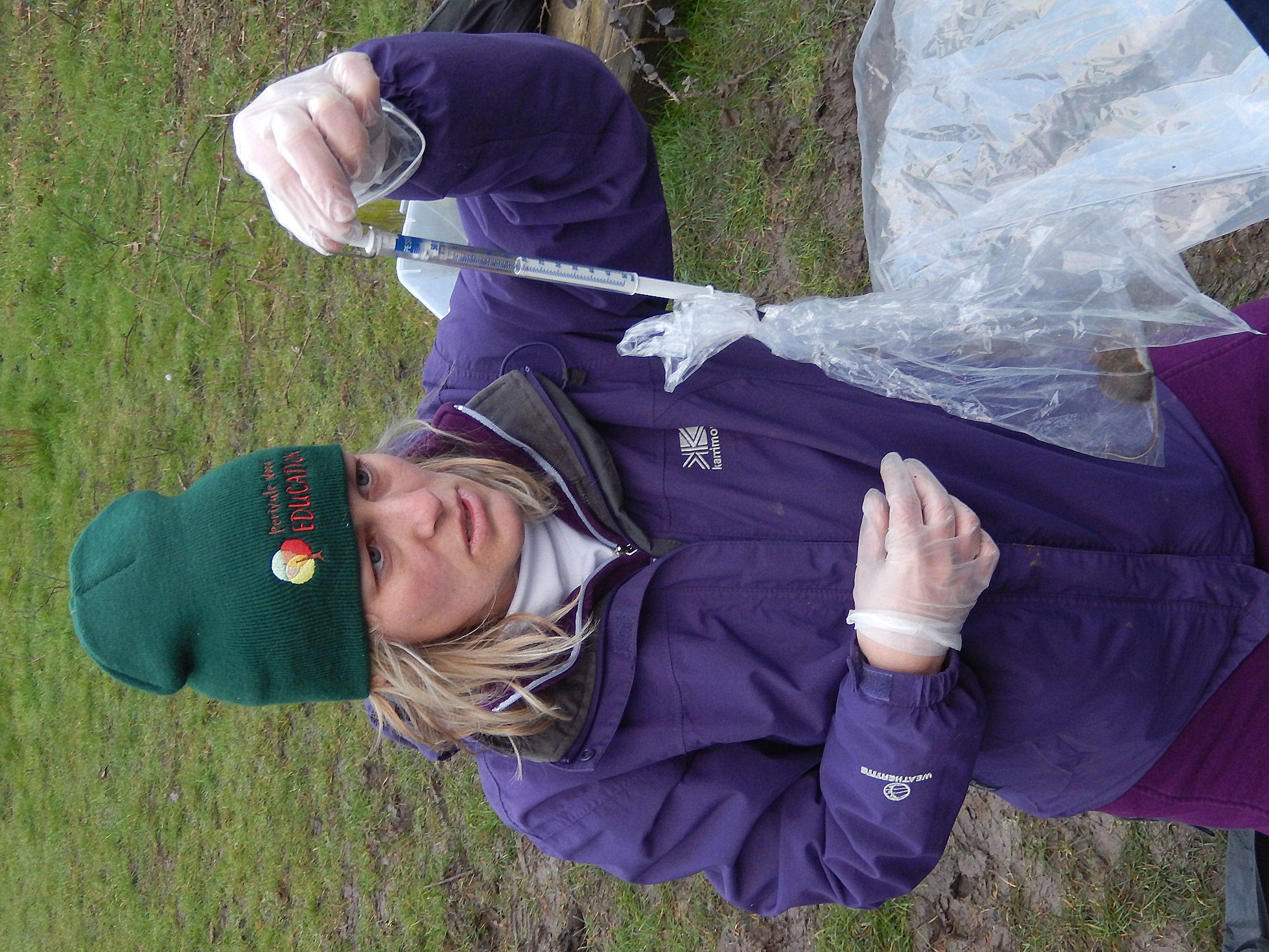
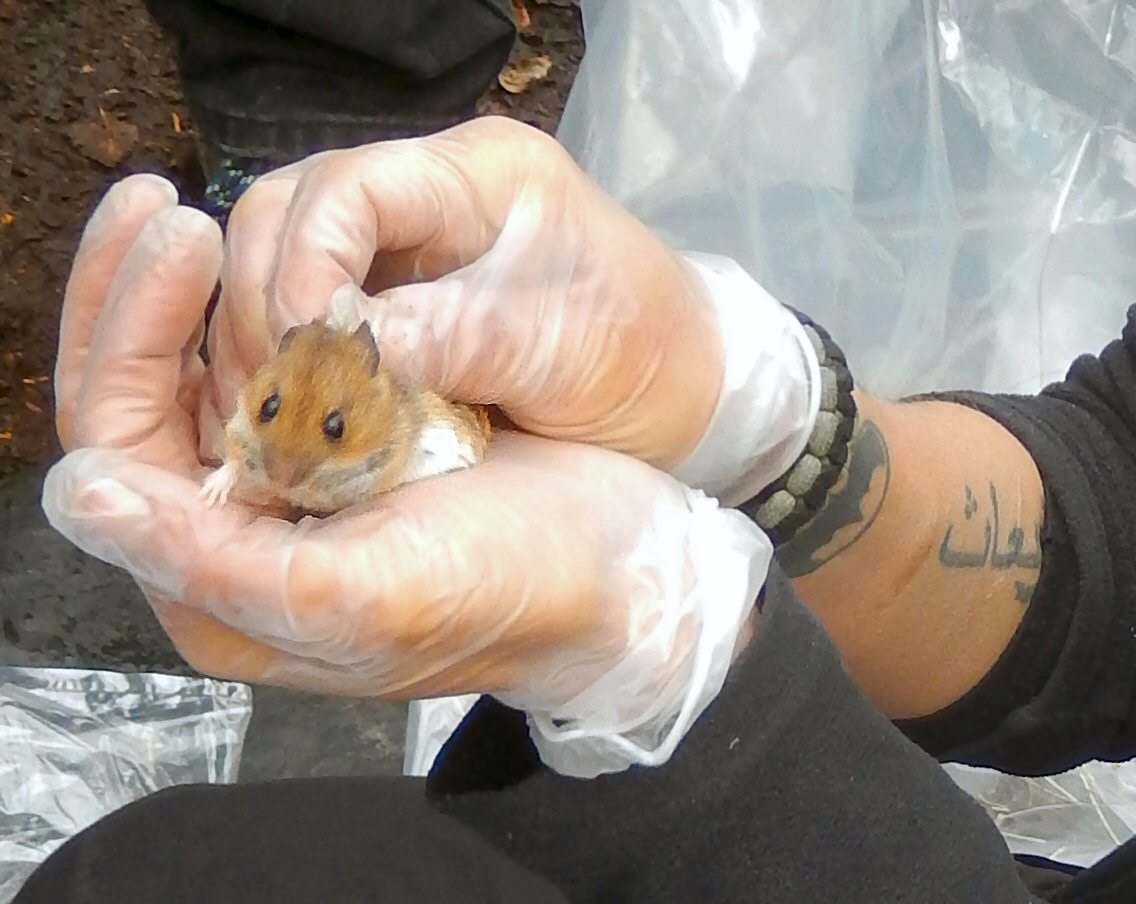
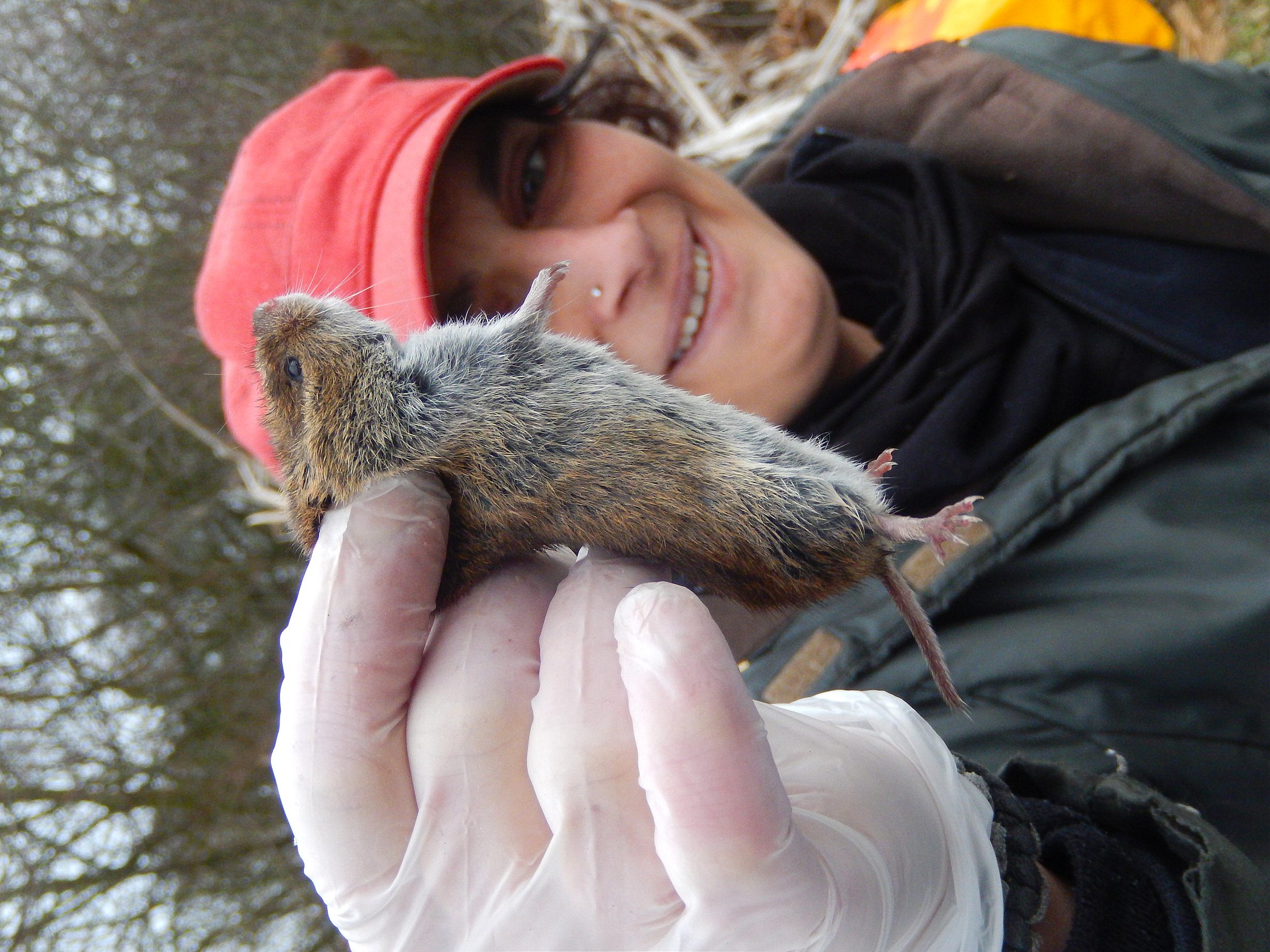
Huma happy with first Field Vole in hand

Yes, luck was with the Vole Patrol today. We caught two species of Vole as well as the inevitable Woodmice.

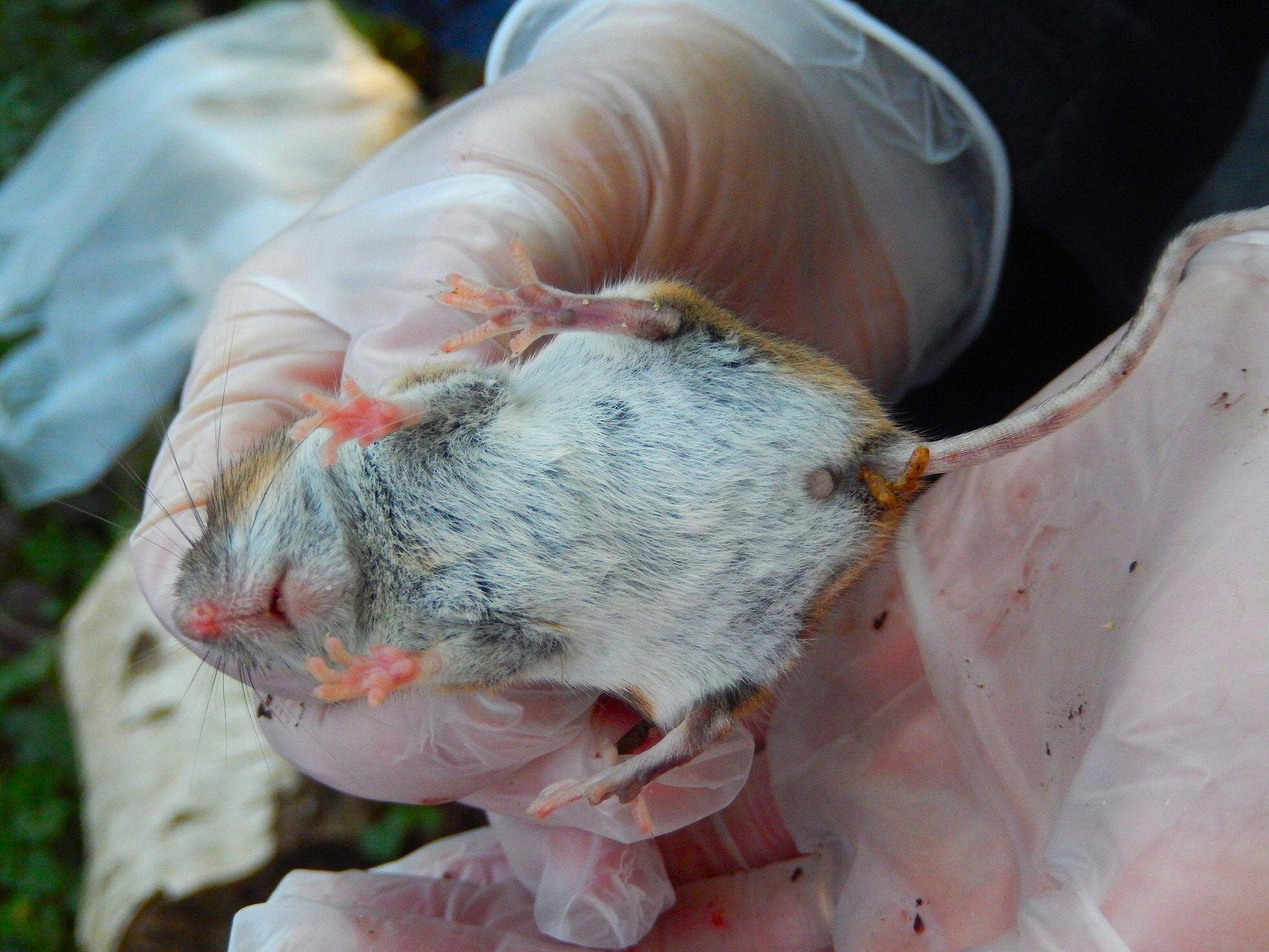
The Field Vole is, as you can see, grey-brown above, and is softly countershaded  a la Abbott Thayer (who thought all animals were camouflaged in this way, even flamingoes, but I digress) from top to bottom with no sudden dividing line between dark and light. It’s diurnal and (therefore) has small eyes. And it has a notably short tail, 30% of its head/body length.
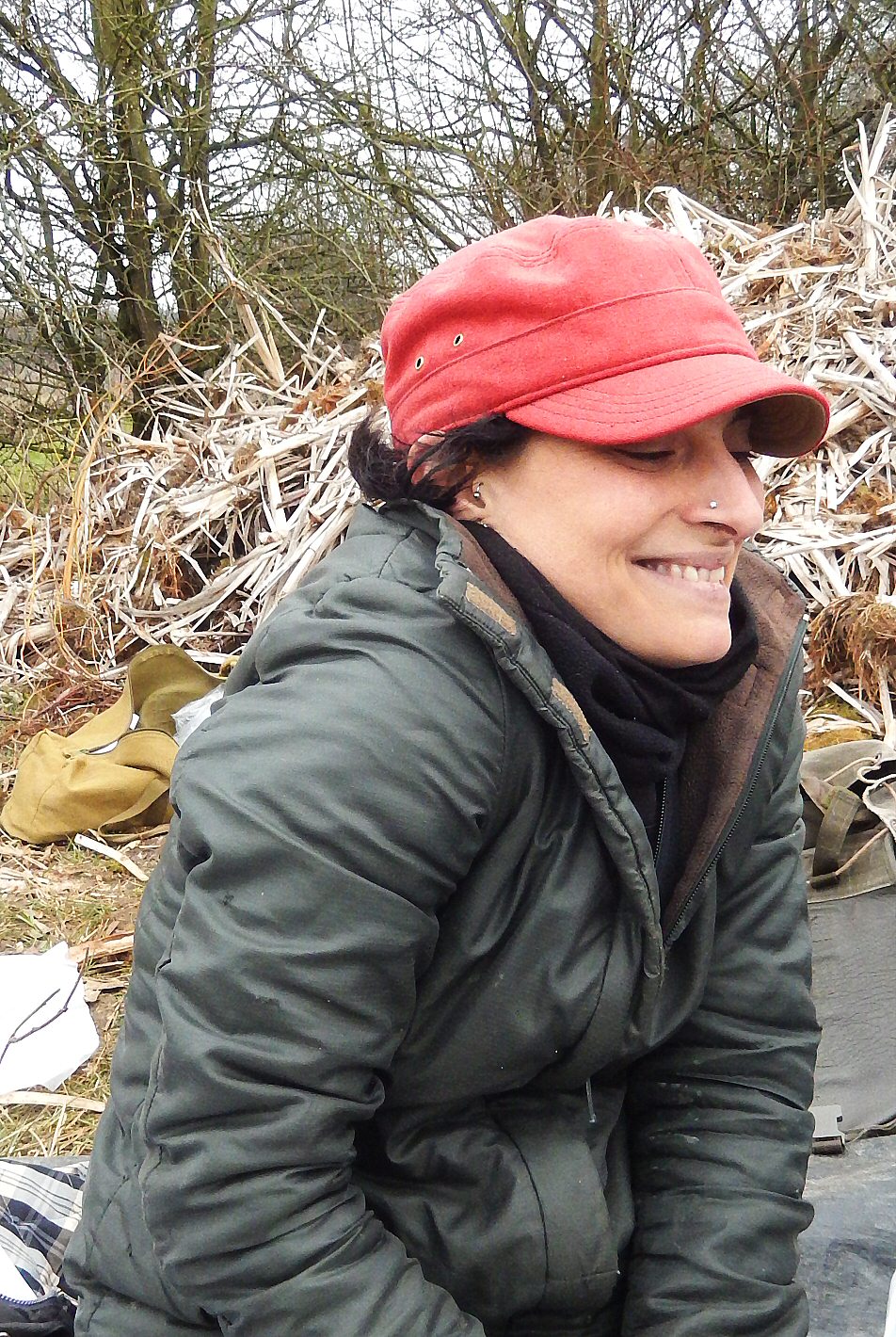
Huma very happy after Field Vole

Huma, despite days with almost no sleep, looked and sounded delighted we’d caught this species.

We had turned up in the still-sleeping suburb of Hillingdon before 6am. The journey in was strangely easy on the empty roads, a fox running across in front of me in Acton with a jaunty air.
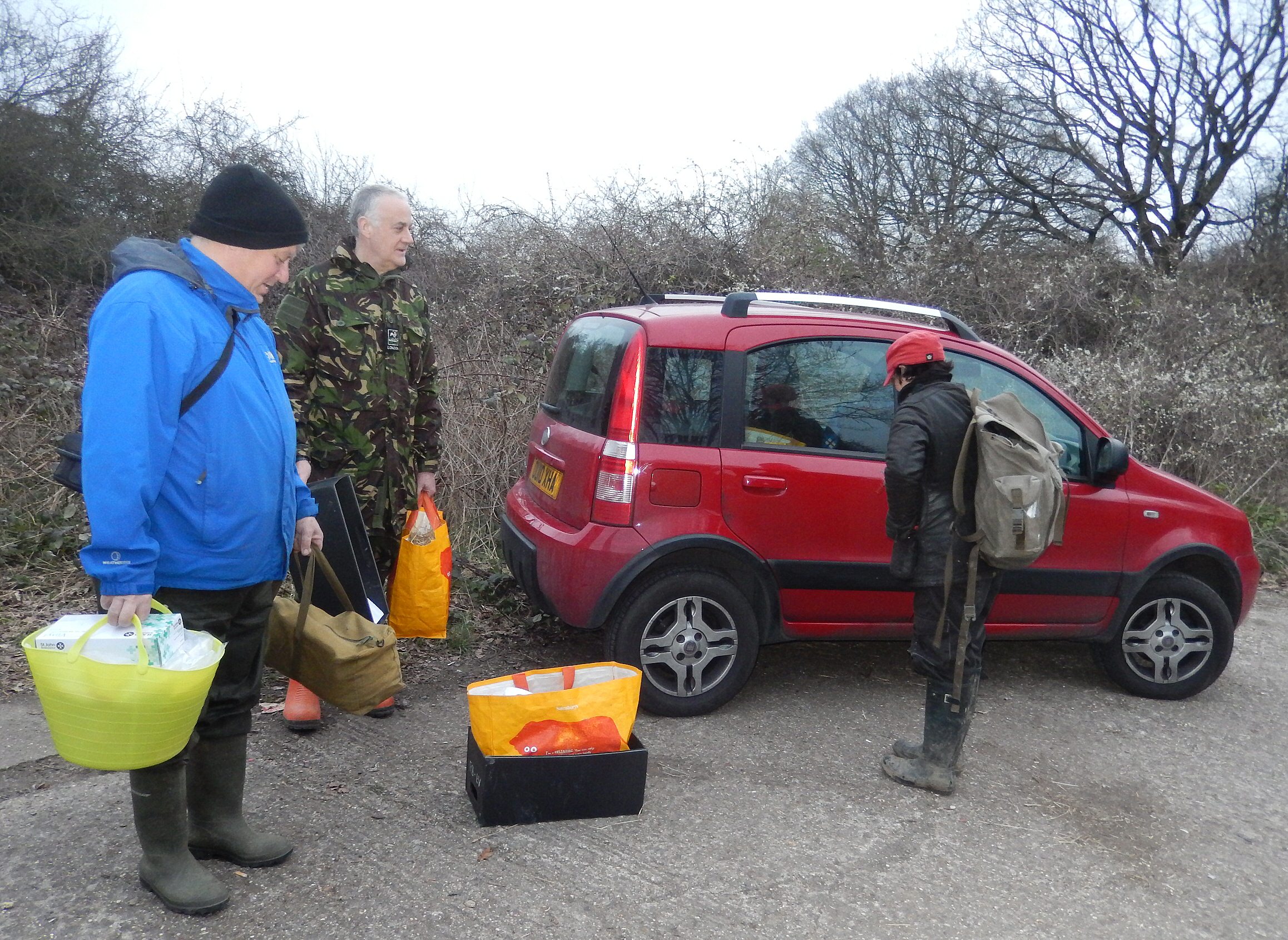
Vole Patrol arriving Gutteridge Wood 6am


It was at once obvious on arriving that Gutteridge Wood, made a nature reserve by the Greater London Council in its closing days, was something different — an ancient woodland with fine Oaks as “standards” in between coppice stools of Hazel (cut on a regular cycle, so many shoots come up as useful poles from each stump), with Yew and Holly here and there, and English Bluebells and Woodrush as ground cover.
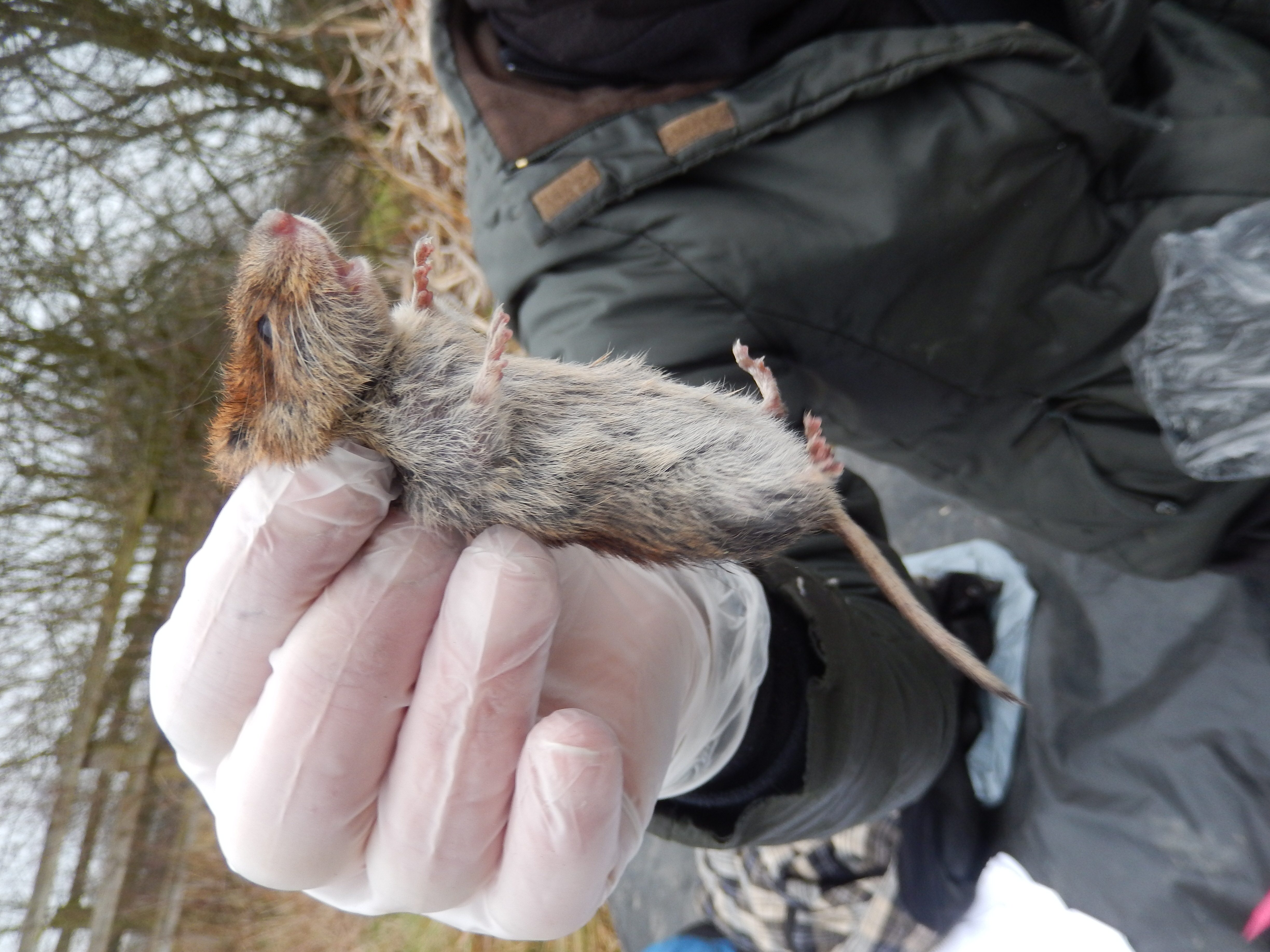
Gutteridge Wood Bank Vole

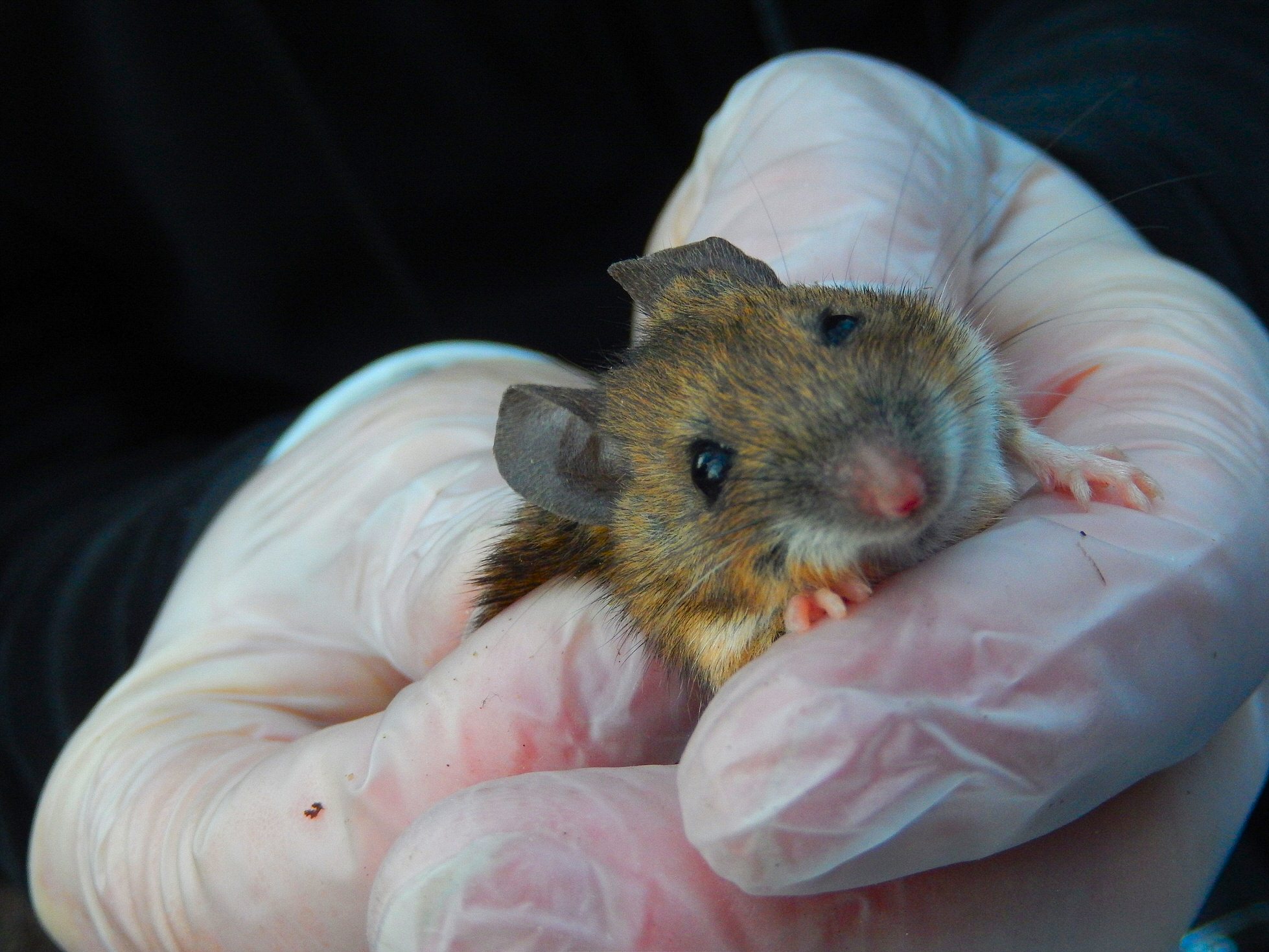
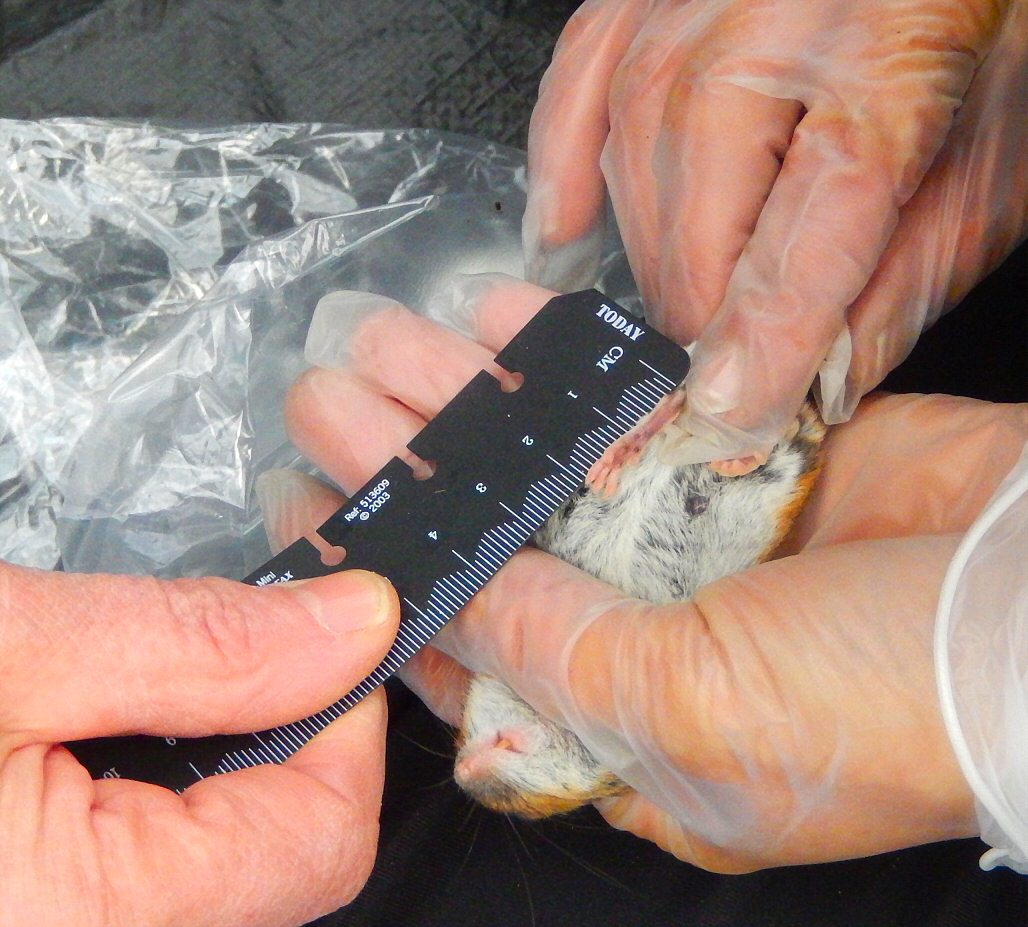
The team found a Bank Vole in one of the Meadow traps. It is a nocturnal mammal, unlike the Field Vole, and accordingly has big eyes (for seeing in the dark). It has a longer tail, 50% of its head/body length (try measuring it!), is appreciably redder than the Field Vole, and is more sharply white below.

While people were out picking up traps in the wood, a Woodcock flew right overhead, just above the bare treetops. Its enormously long beak and plump gamebird body were unmistakable, which was just as well because I haven’t seen one flying for many years now: a fine sight. Greater Spotted Woodpeckers drummed loudly; a Green Woodpecker gave its cheerful loud call. I guess you could easily guess what habitat I was in just from the names of those three species!
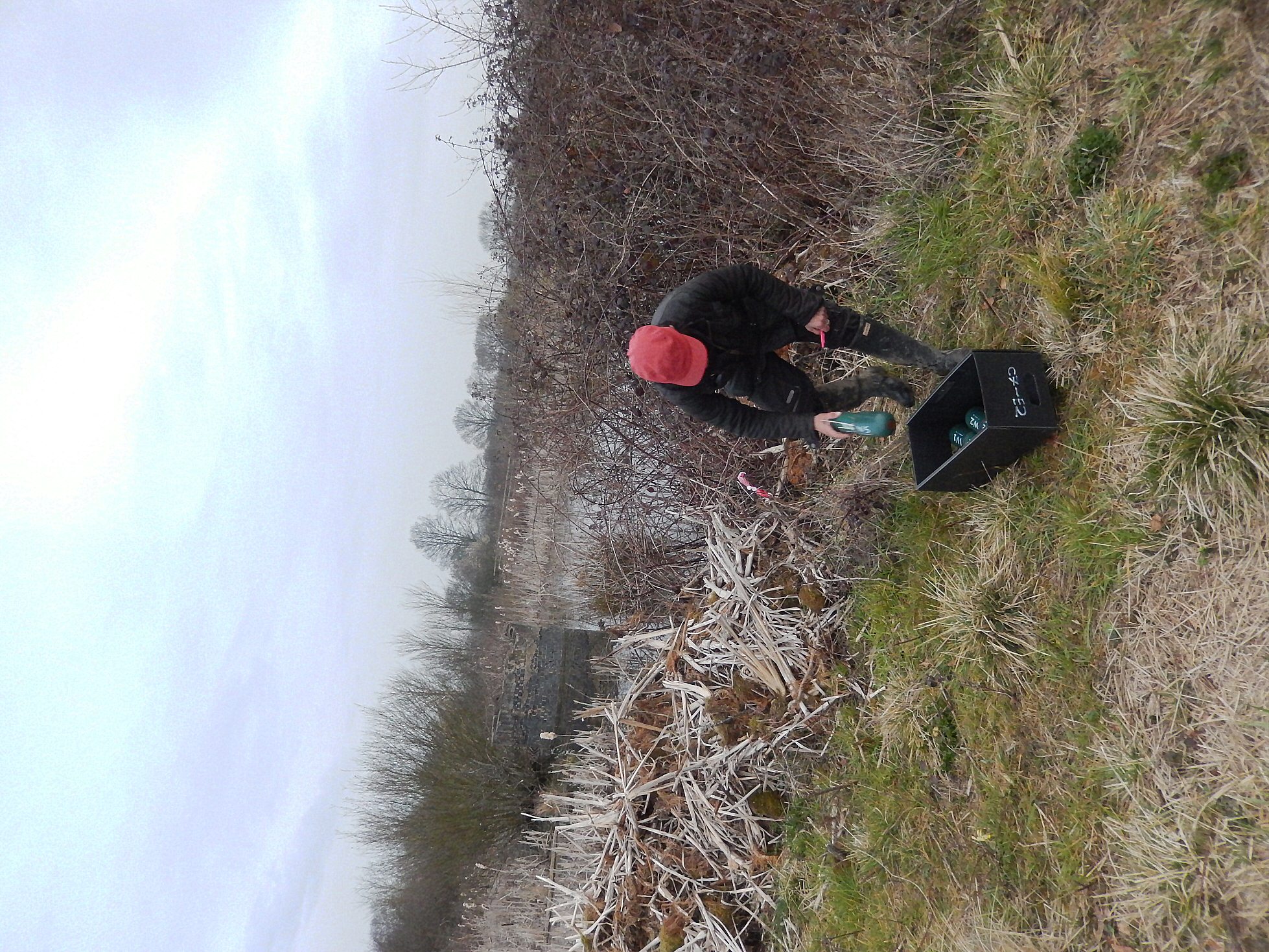
Gutteridge Wood Huma picking up trap by pond
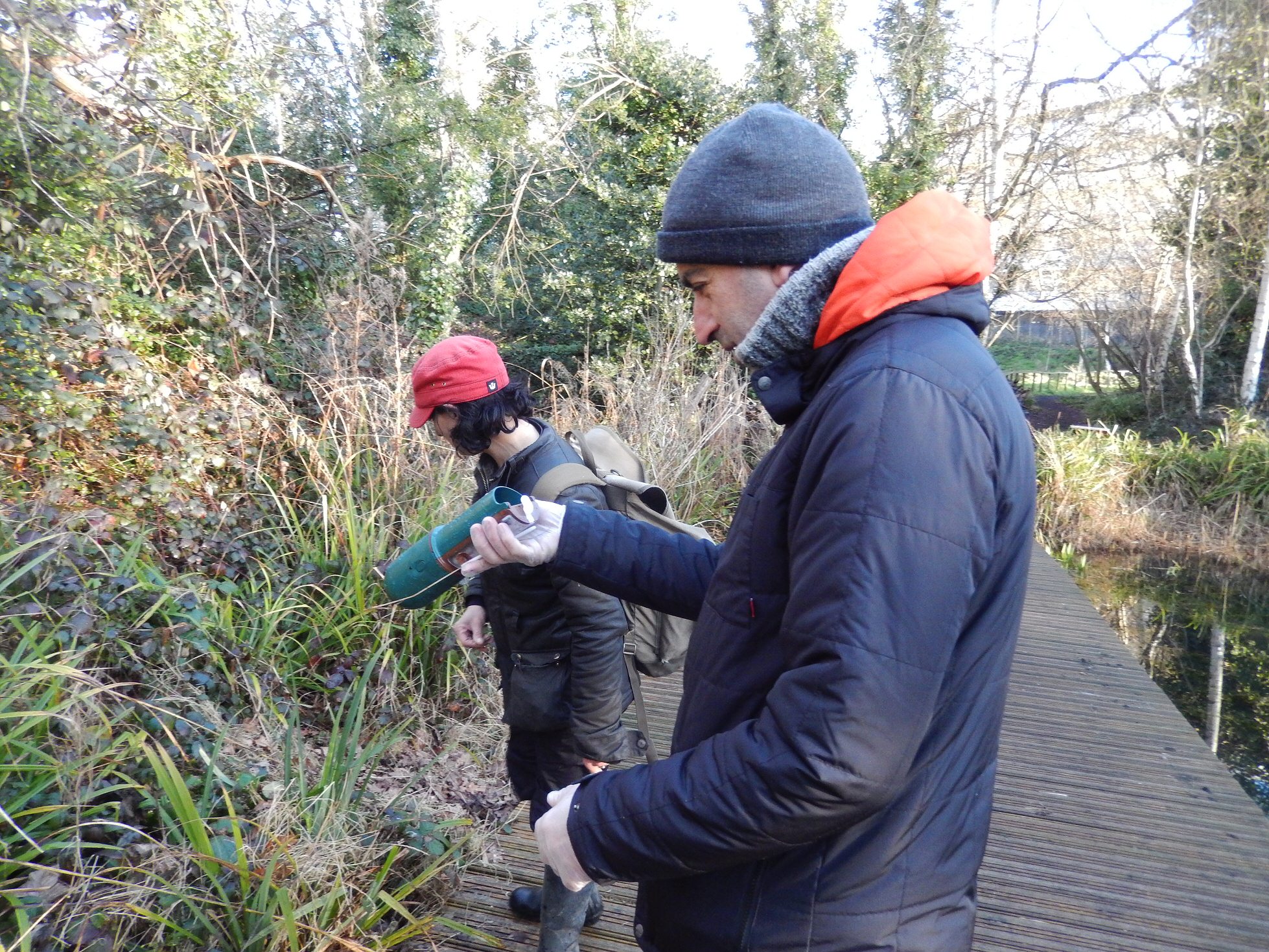
Huma picking up a trap by the pond

The meadow and pond area was once a sewage works; if you peer closely at the pond in the photograph here, you’ll see behind the Reed Mace a circular brick structure left over from those days. It looks very much part of the waterscape today.

The Vole Patrol puts traps beside water, as here, along meadow edges (as above, for the voles), in a grid in the woods, and a few feet off the ground in the trees, to sample the small mammals in the different habitats on each reserve. Unsurprisingly, but very pleasingly, the ancient woodland of Gutteridge has given us good numbers of Woodmice, Shrews and Voles. It will be a pleasure to come back and listen to the Warblers in April or May, and to enjoy the Bluebell woods in the sunshine.
Vole Patrol 9: Perivale Wood (Selborne Society)

Spring in the Air! Volunteering and Prototyping at Gunnersbury Triangle

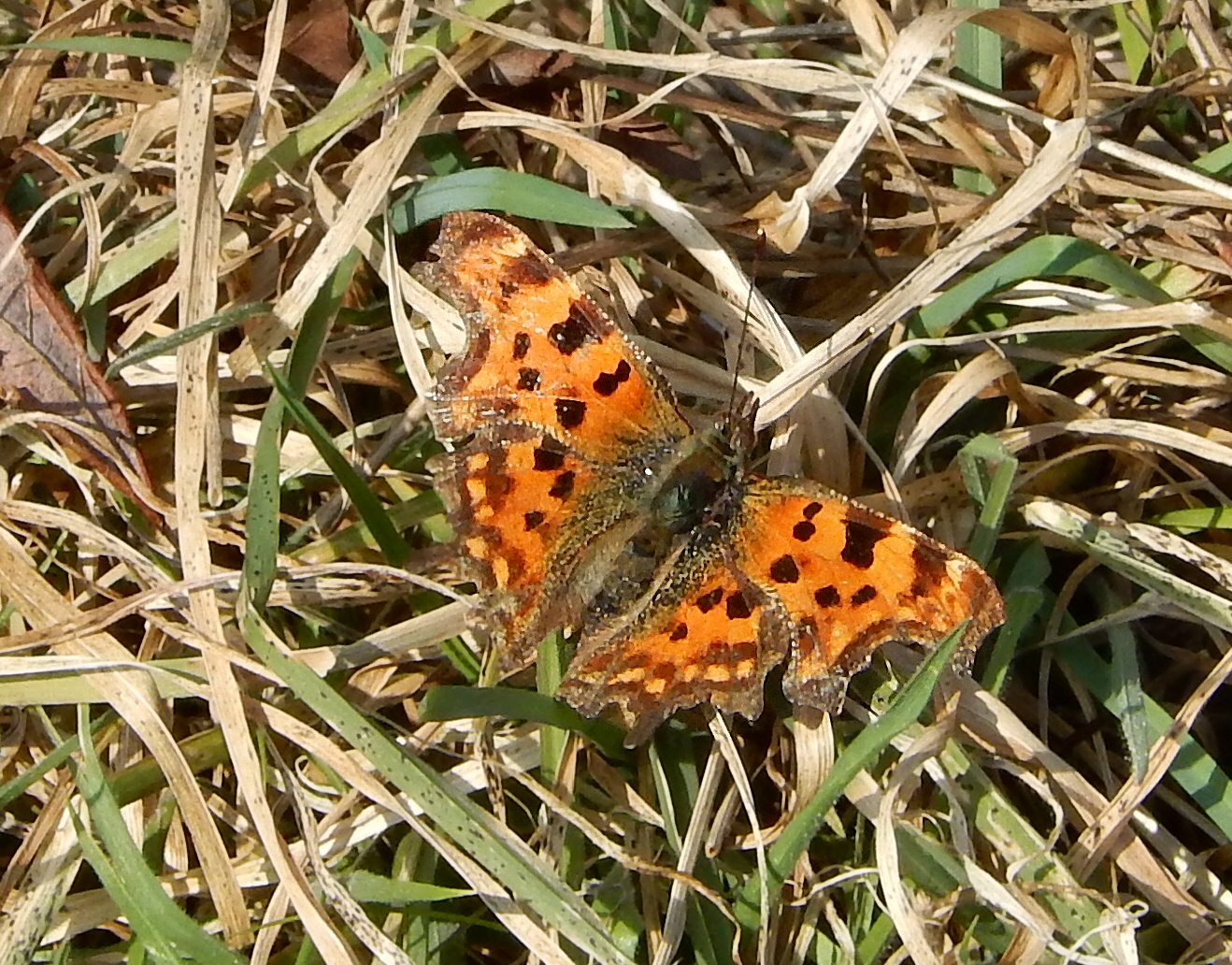
First Comma of the year!

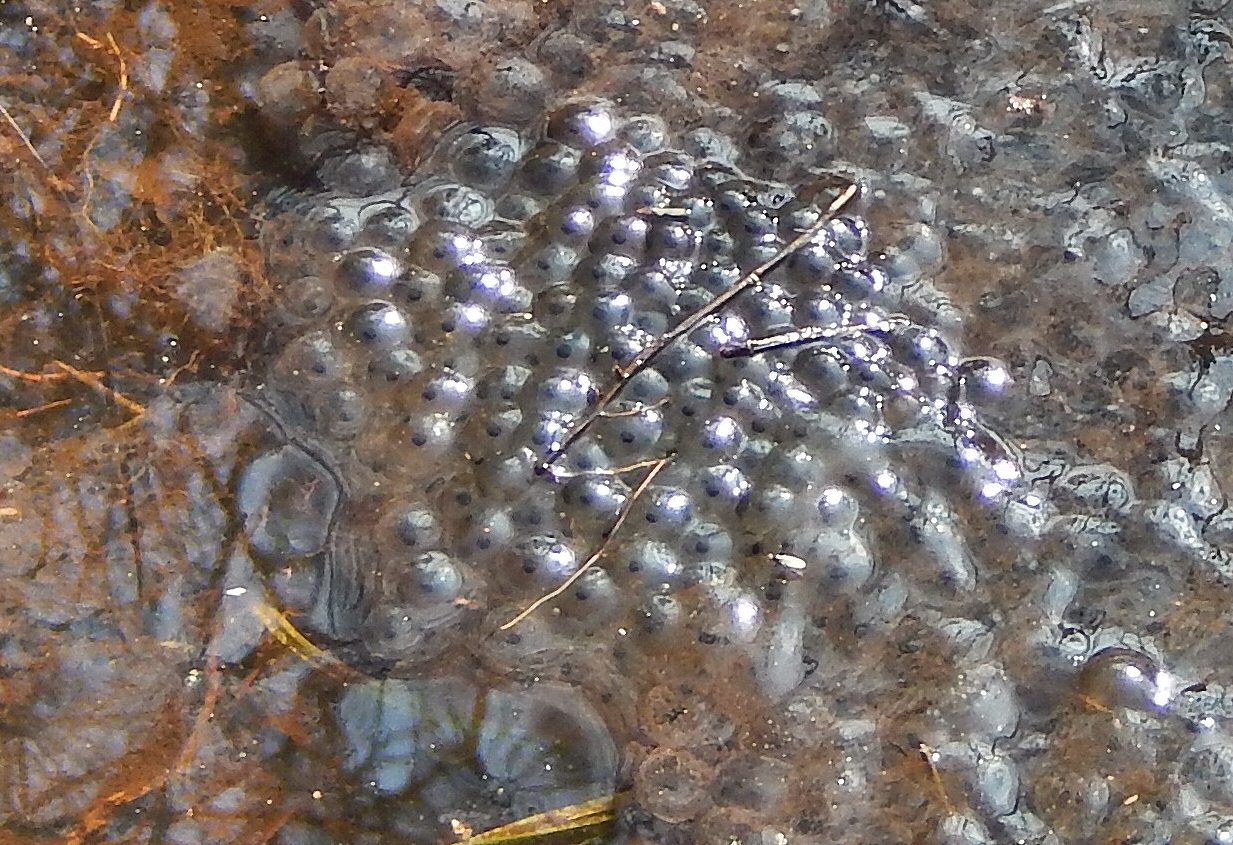
Well, it only takes one still, warm sunny day and suddenly it’s SPRING! Sure enough, the frogs had gone crazy down the mangrove swamp, there was a great heap of spawn in the shallow water, and some excited children (and mothers). A pair of Comma butterflies wheeled and scurried about the sky in a long, intense dogfight, their whirling wings making it clear these were rival males of an orange species, if nothing else!

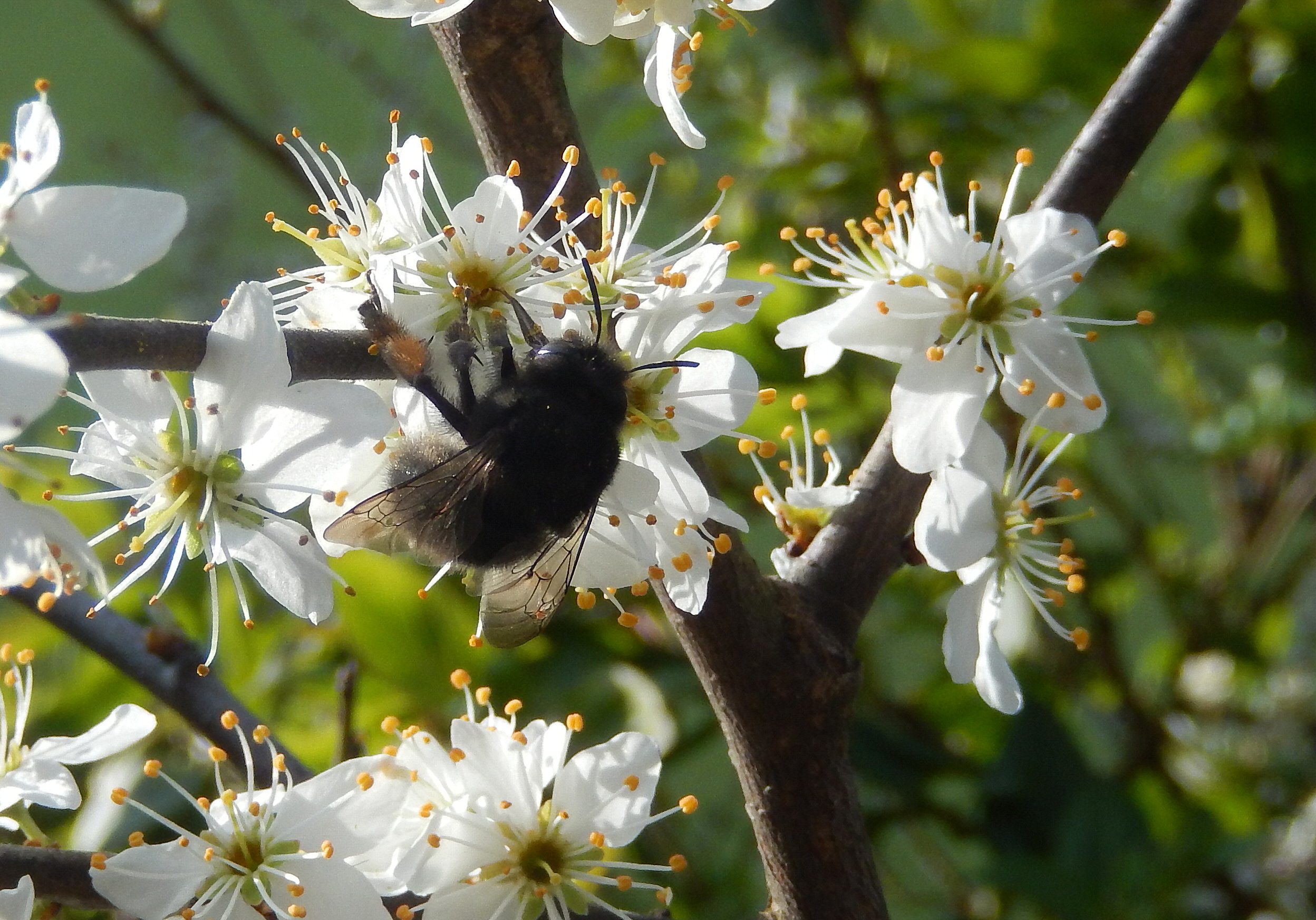
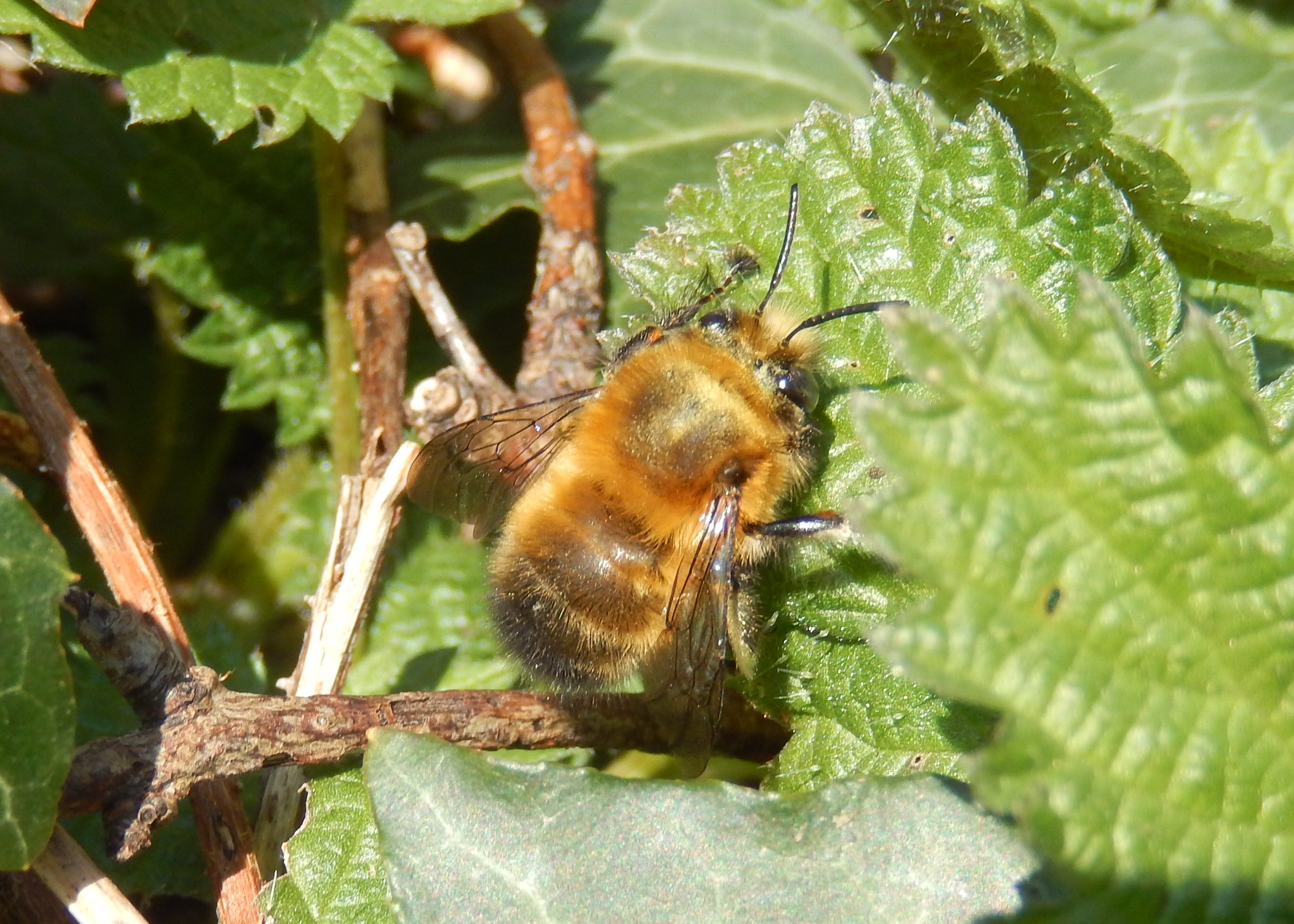
Hairy-Footed Flower Bee (Anthophora plumipes) male

Mike expertly identified the Hairy-Footed Flower Bees around the Alkanets: they came out to warm up in the sun in some numbers. They have never been recorded before here, though we have surely had plenty of them, unrecognized.

Frogspawn in Mangrove Swamp
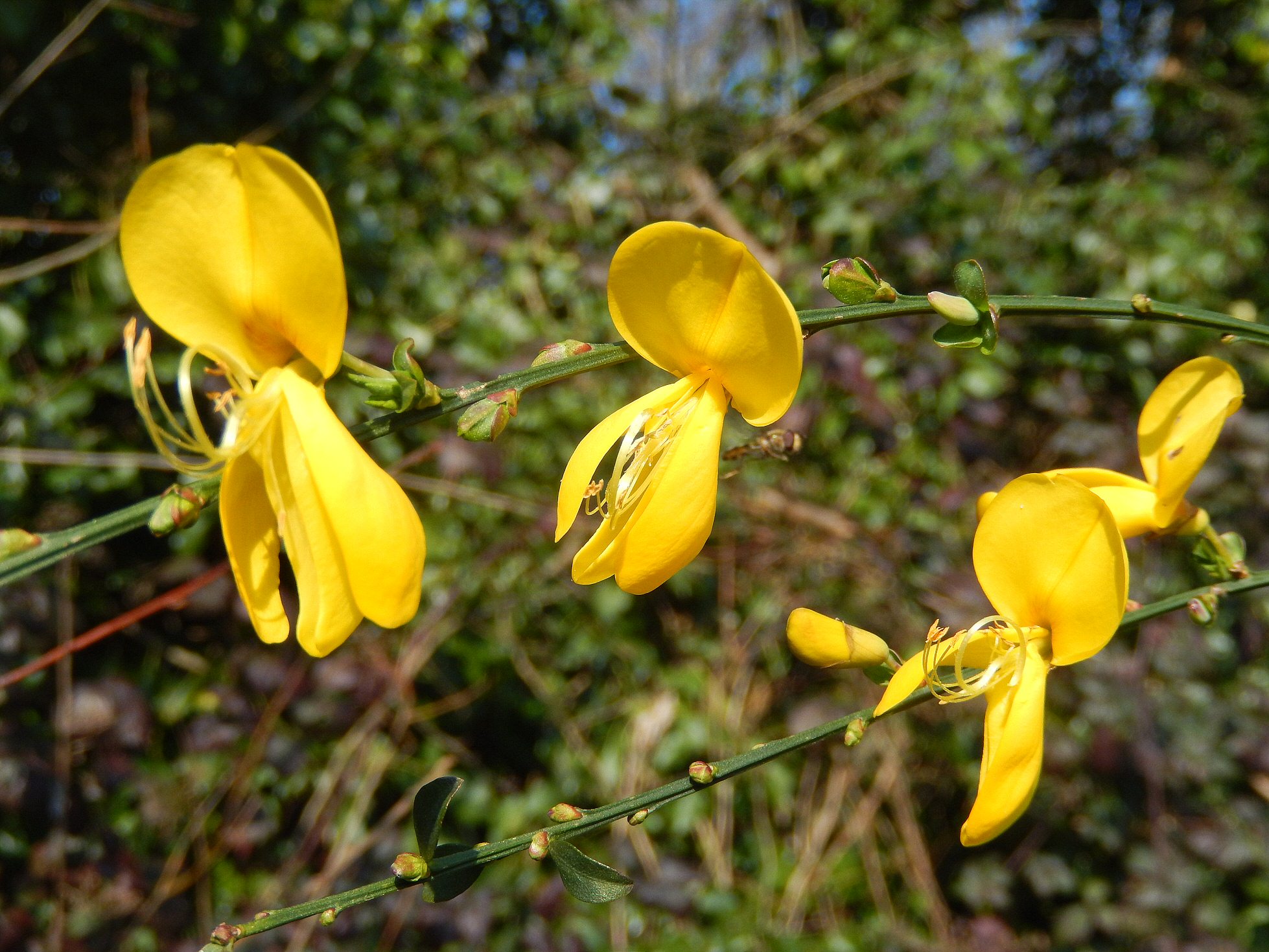
Spring! Broom in bloom

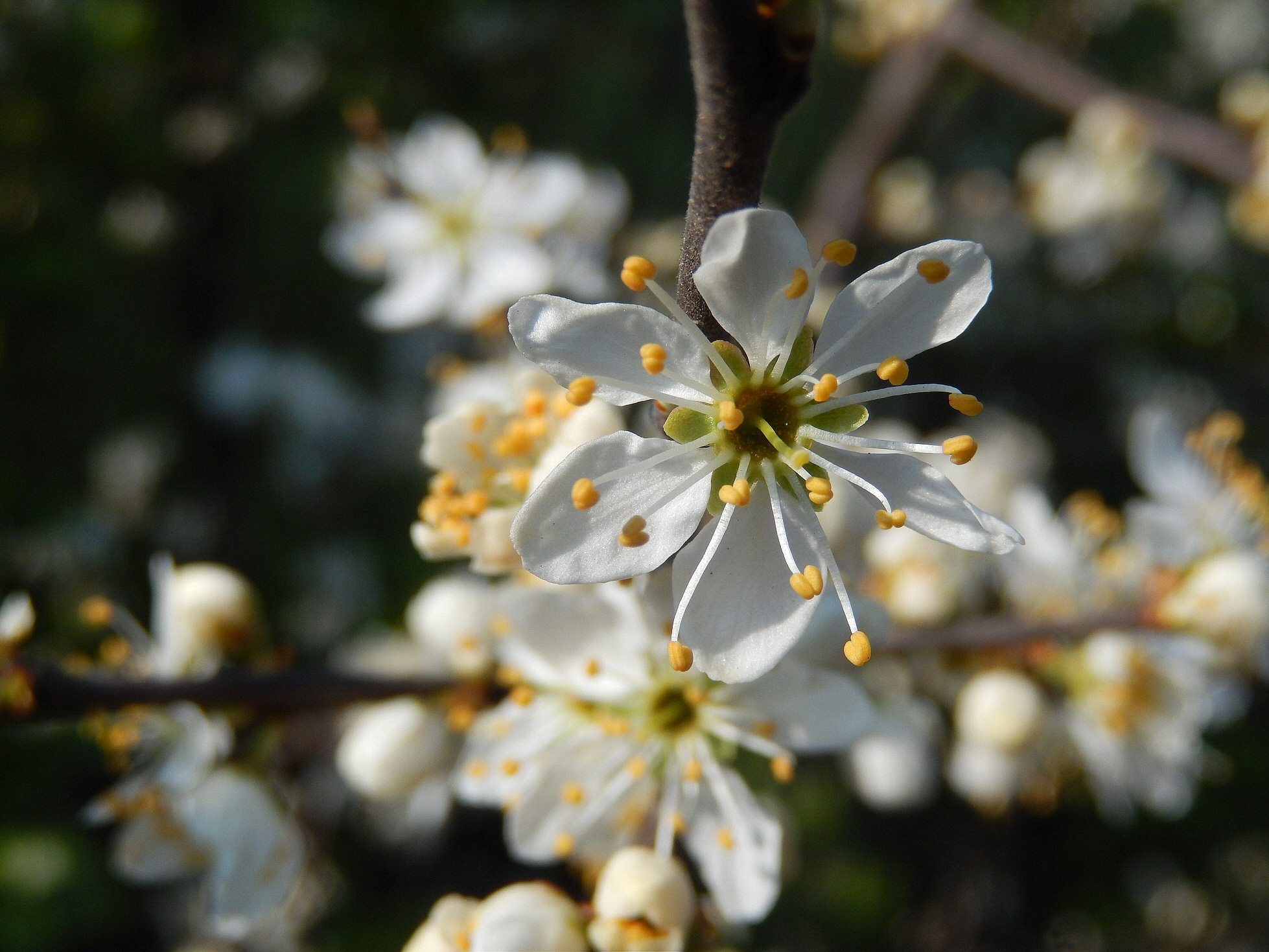
The brilliant yellow of the Broom, and the foamy white of the Blackthorn flowers, announced that spring had sprung in a Botanical way, too.

Blackthorn in Bloom
Blackthorn in Bloom
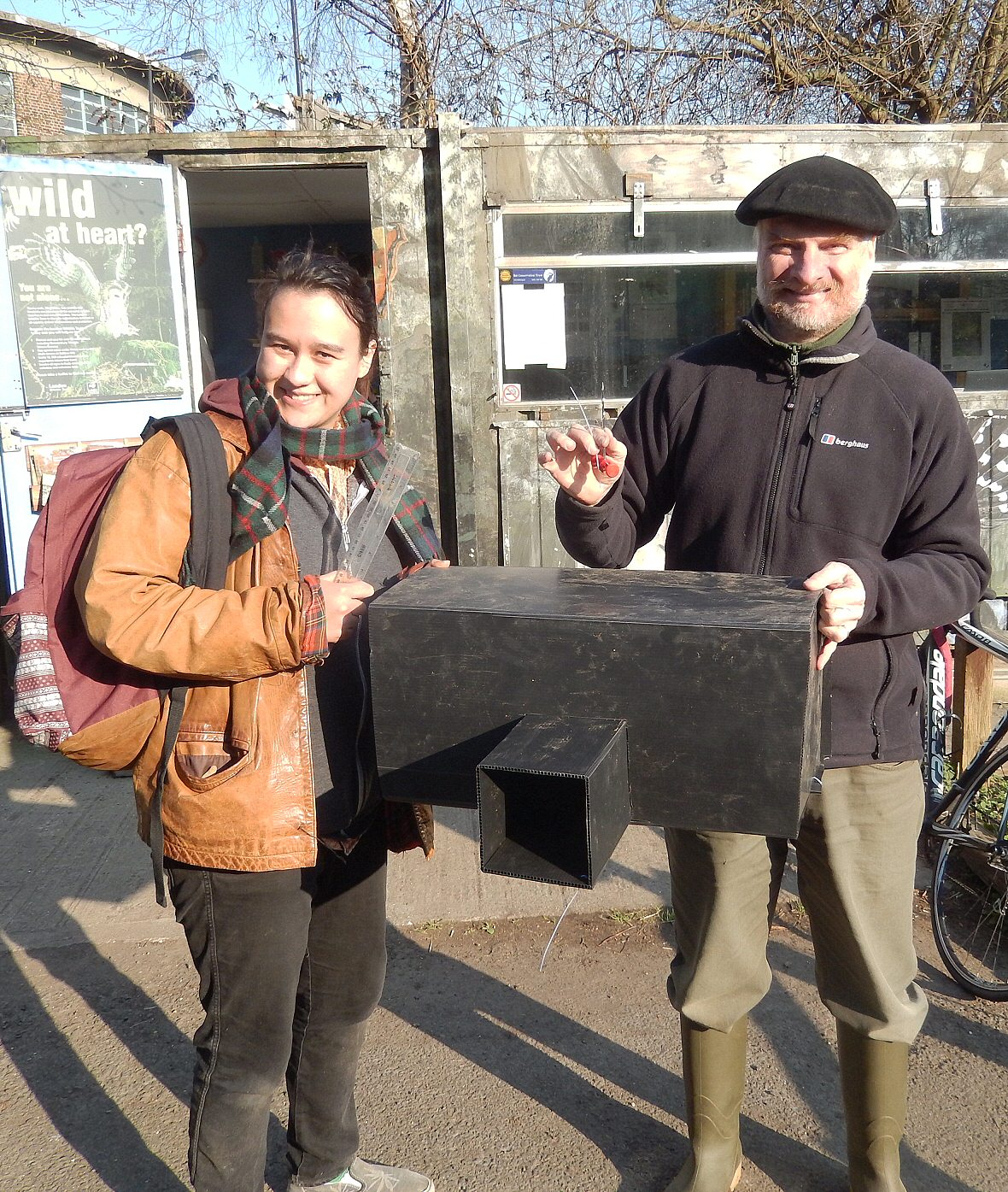
The completed Hedgehog House prototype

The team spent the afternoon designing and making a prototype Hedgehog house out of Correx sheets left over from the Vole Patrol. We worked out a way to make a house from just two sheets, 54 x 120 cm each: basically one big tube folded 4 times to give 4 sides and an overlap flap, and two half as wide, one for the entrance tube, one for the two ends (joined along the ceiling with flaps on each end of the floor). We fixed it together with just 5 cable ties ingeniously stitched through bradawl holes. A challenge was to get the last stitch in, as the box was then fully closed! The trick was to take out the entrance tube and put a hand inside: the cable tie had to be poked out through a hole that of course we could only see from the outside! The result looks enormous and luxurious, so being Londoners of course we made a lot of jokes about Hammersmith Hedgehog Penthouses and luxury granite kitchens, etc etc. Anyway, we hope the hedgehogs will like them.

Vole Patrol 9: Perivale Wood

Vole Patrol, Perivale Wood, dawn

The first cycle of trapping at Gunnersbury Triangle has been completed, and the action has moved on to Perivale Wood. This beautiful reserve is owned by the Selborne Society, the oldest nature conservation society in the world, founded in 1885 and thus a few years older than the RSPB.

Despite its name, Perivale Wood includes pasture (for horses), damp scrub, secondary wood on disturbed land, some hedges (we saw one newly “laid”, the trunks almost cut through and fastened at an angle with beautifully-woven withies), three ponds and two streams.

This, of course, enables London Wildlife Trust‘s Vole Patrol, by agreement with the Selborne Society, to search for small mammals in woodland, by water, and in meadow.

Walking in, we heard a Song Thrush, and much calling and drumming of Greater Spotted Woodpecker and Green Woodpecker. From the bare Oak trees of the photo above, I briefly heard an early burst of song from a Chiffchaff, my first of the year.

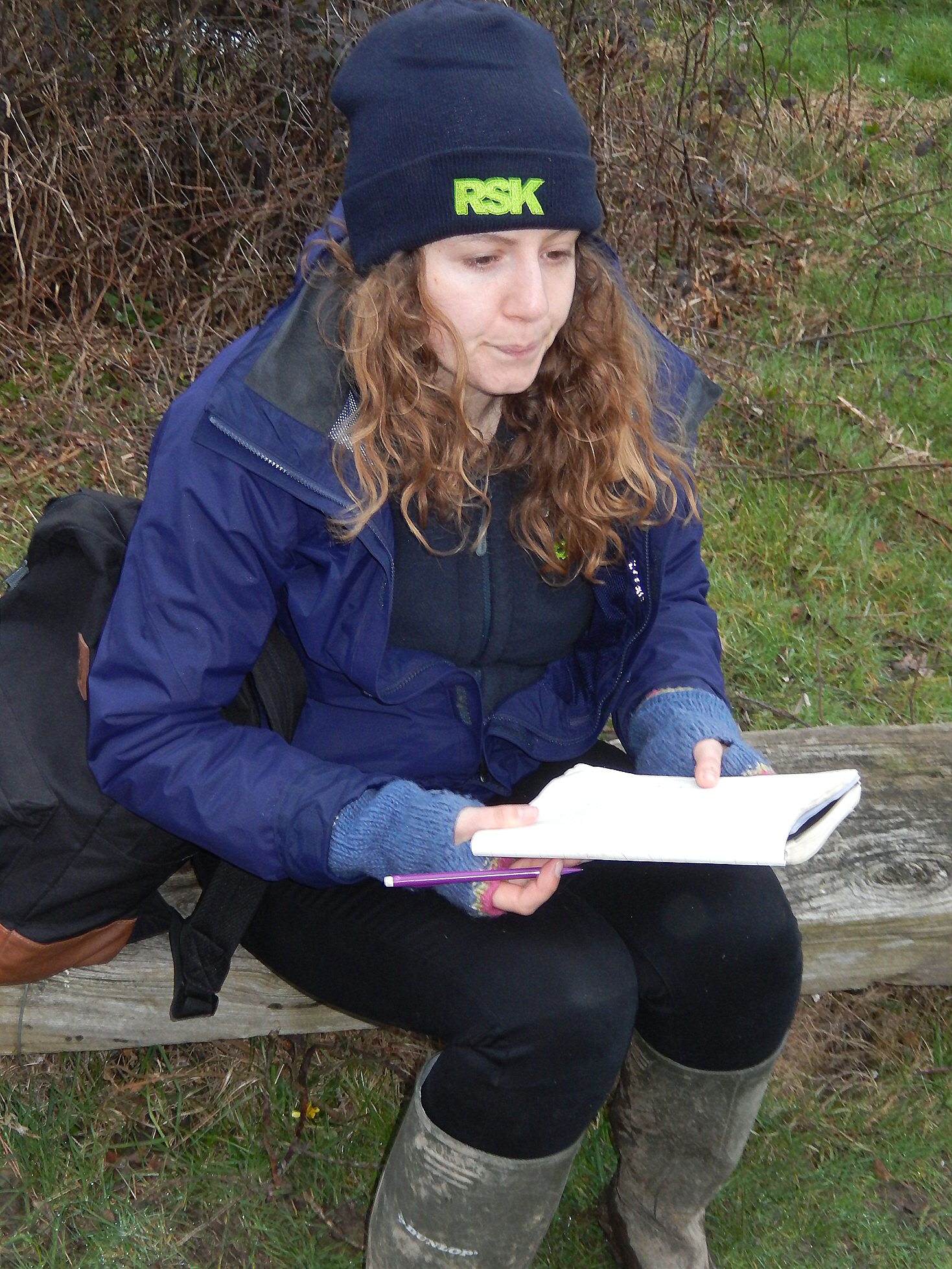
Lindsey scribing the data

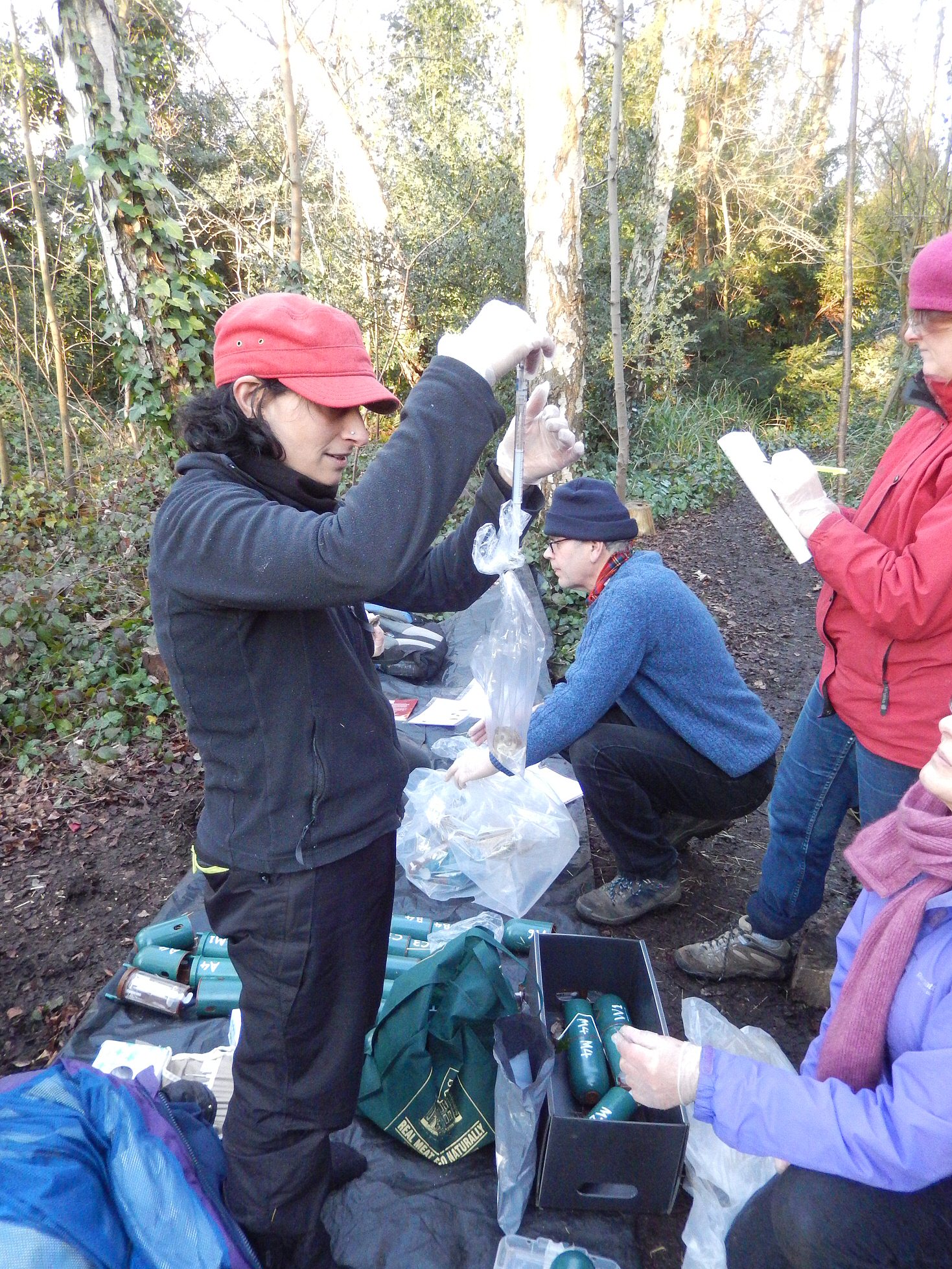
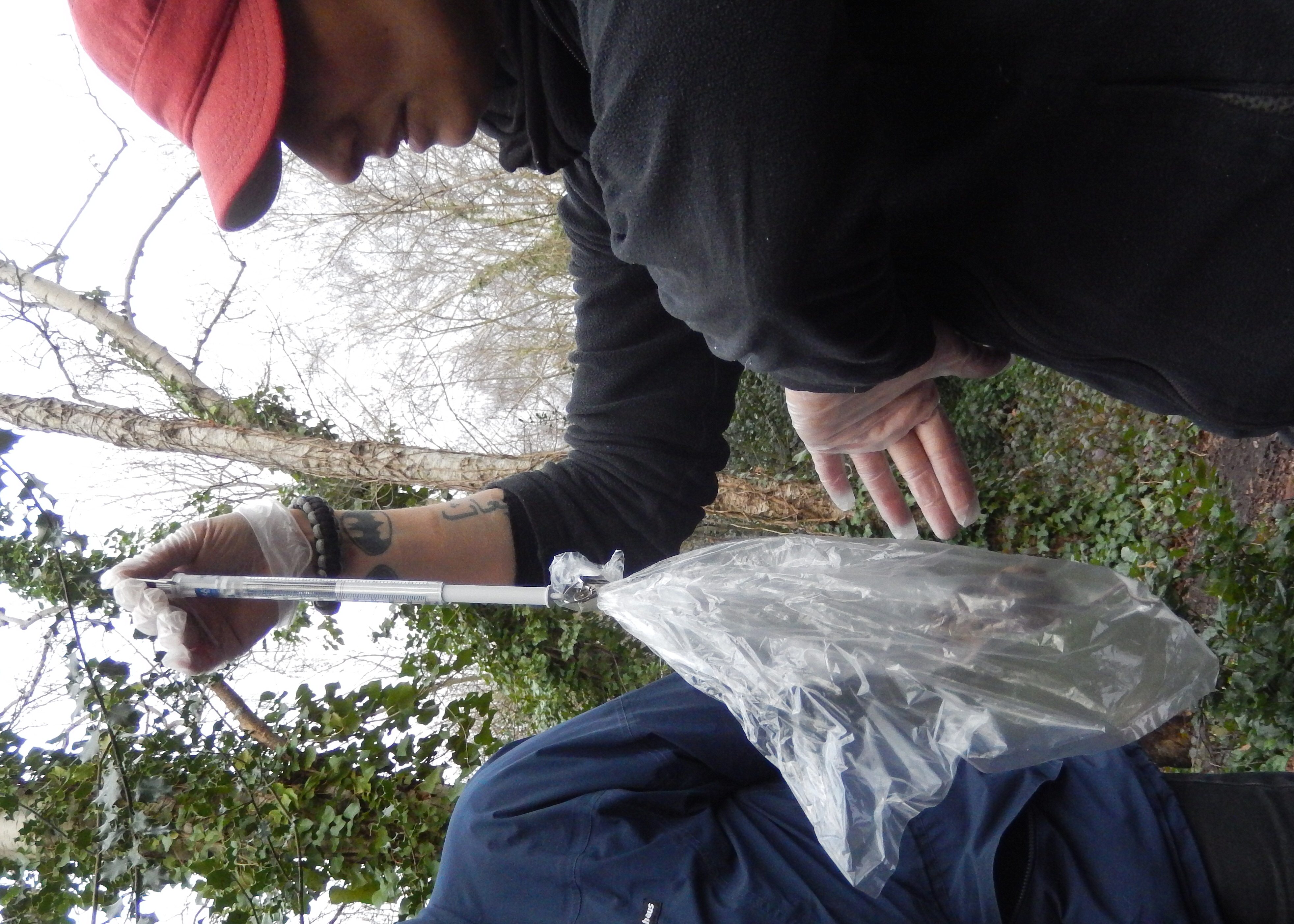
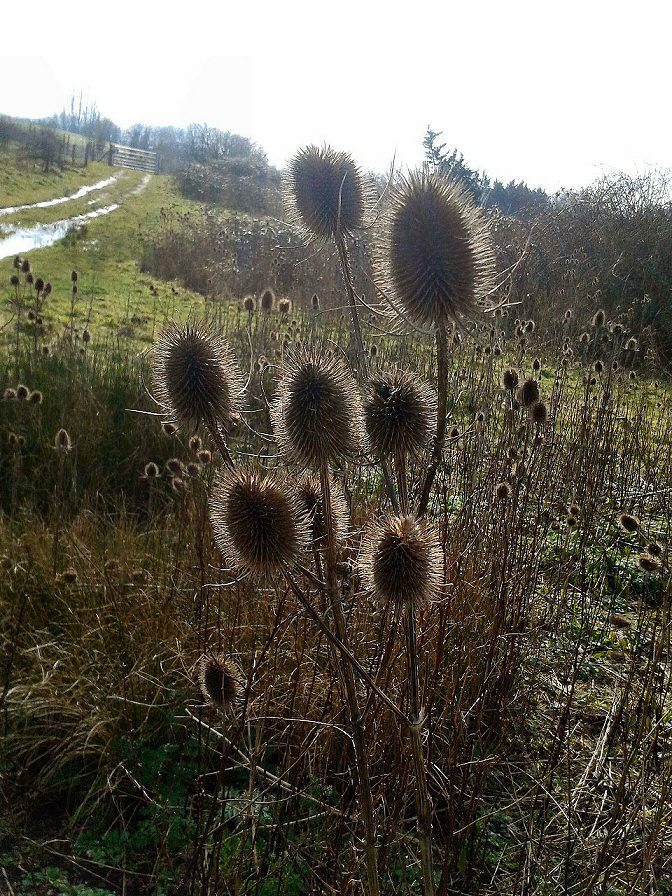
We met some new Vole Patrollers, including Lindsey, seen here acting as “scribe” for the all-important data, and Nicola, seen here weighing a Wood Mouse.
Nicola weighing a woodmouse
Nicola weighing a Wood Mouse

The team quickly sorted itself out, everyone sharing the necessary roles – fetching traps, opening them, weighing, measuring, sexing and coding the mice, recording the data, returning the mice to their exact locations, baiting the traps, and returning them to their locations. It’s not really complicated, but there is enough to do, and with over 30 traps in the different habitats around the reserve, each task has to be done many times.

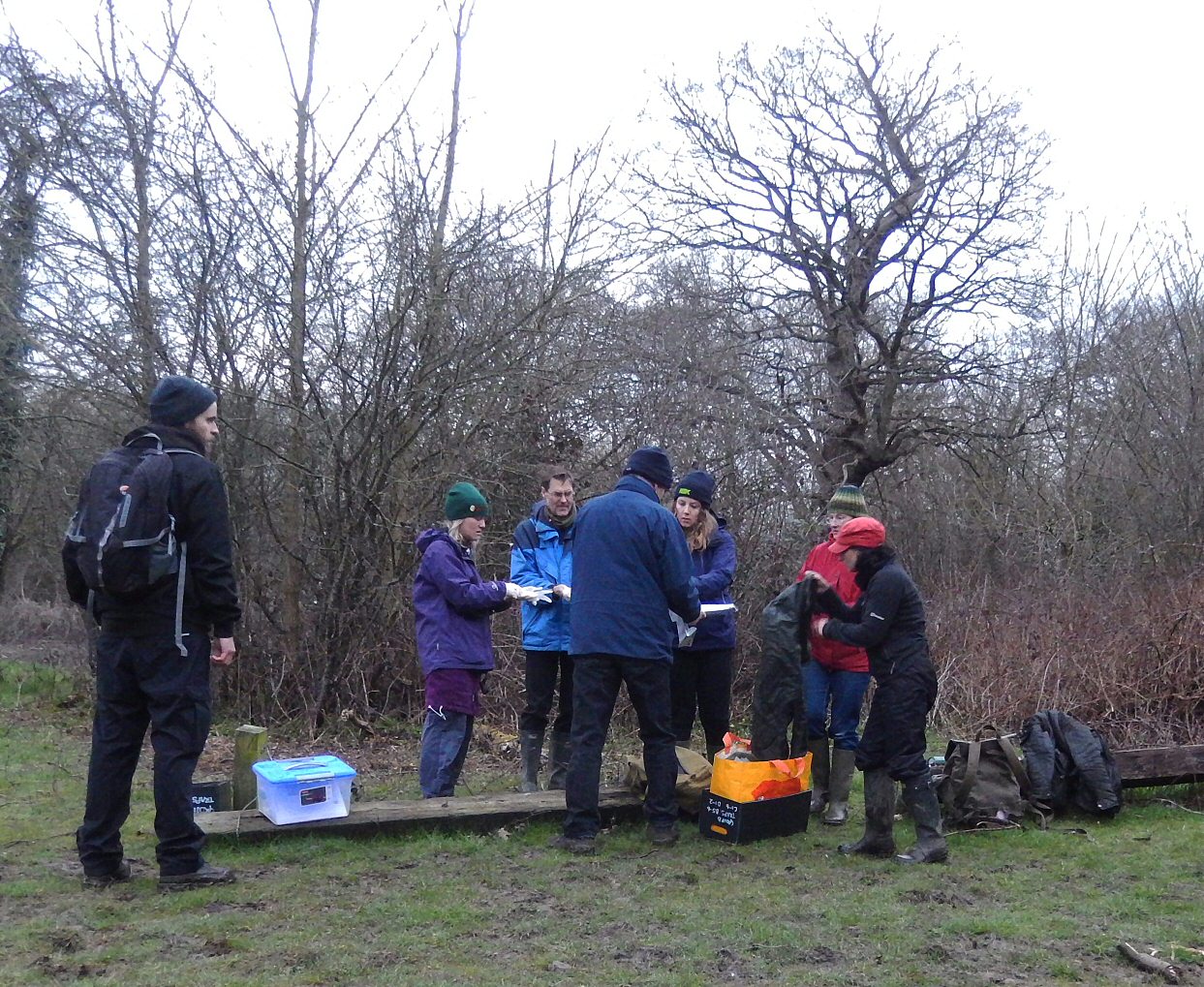
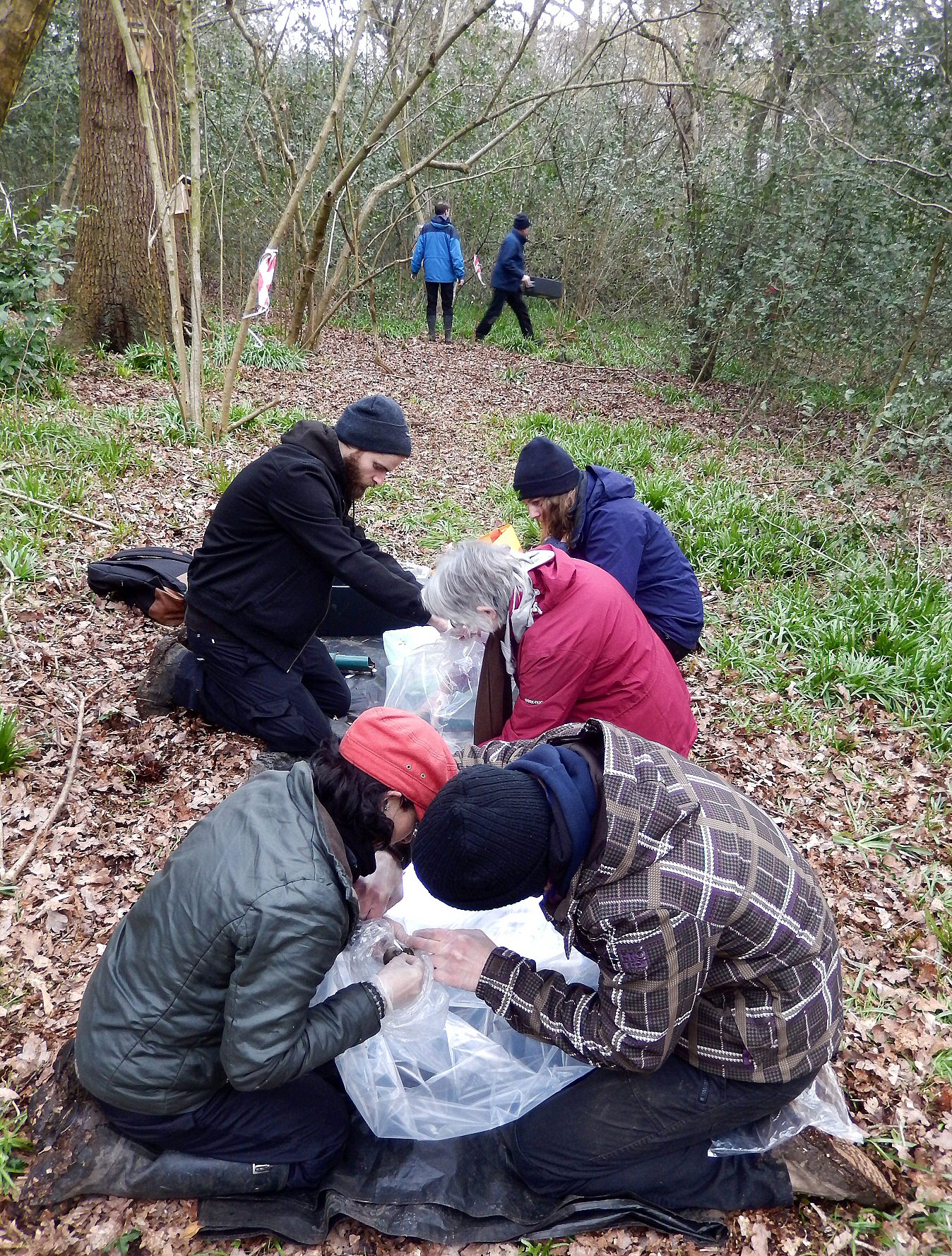
Vole Patrol in Perivale Wood
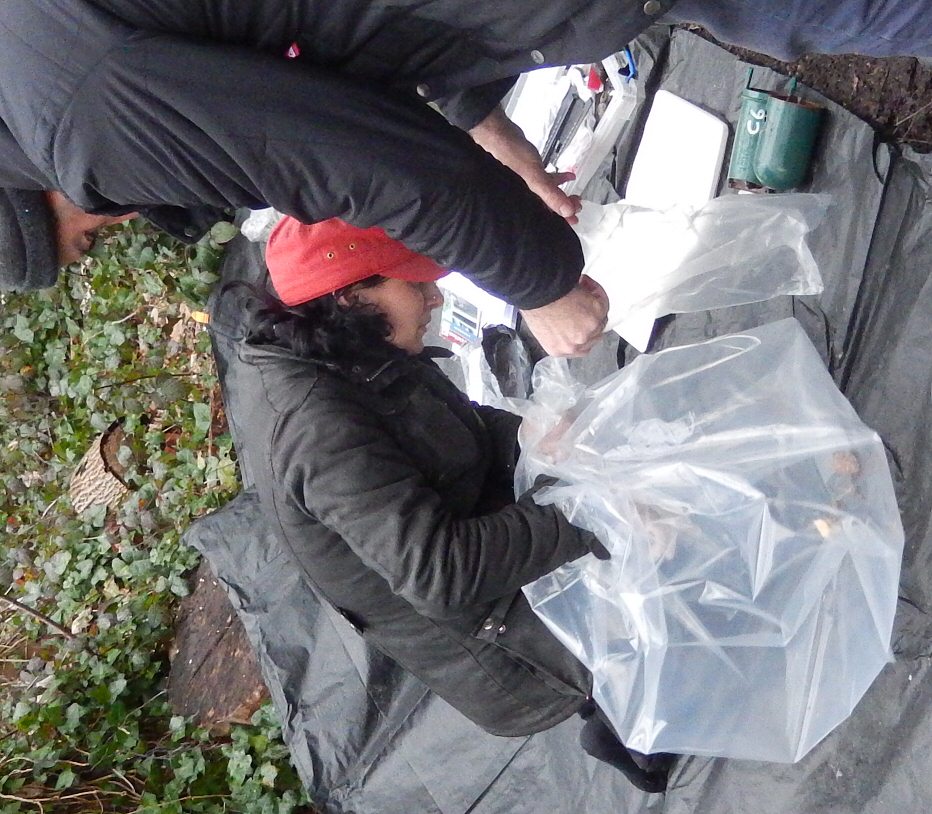
Vole Patrol in Perivale Wood. In the distance, team members are fetching traps. In the centre, a trap is being opened inside the large bag,for the catch to be weighed and measured. In the foreground, a mammal is being coded before release. And behind the camera, a team member is recording events!

Wraysbury in the Mist, and Leafy Lichens

Willow Reflections in the Mist

Well, after 7 Vole Patrol postings, and some very cold, wet and early mornings, I felt like enjoying a nature walk in the sunshine, away from Woodmice. But as I left town I found myself in fog, not too thick to be sure, but fog nonetheless.

I was rewarded, however, with the lovely sight of the willows along the lake seeming to float, isolated in the smooth sea of soft gray.

As the mist slowly lifted, a pair of Goosanders and a pair of Goldeneye (the male displaying, the female in tow a yard behind) could be seen through the mirk.

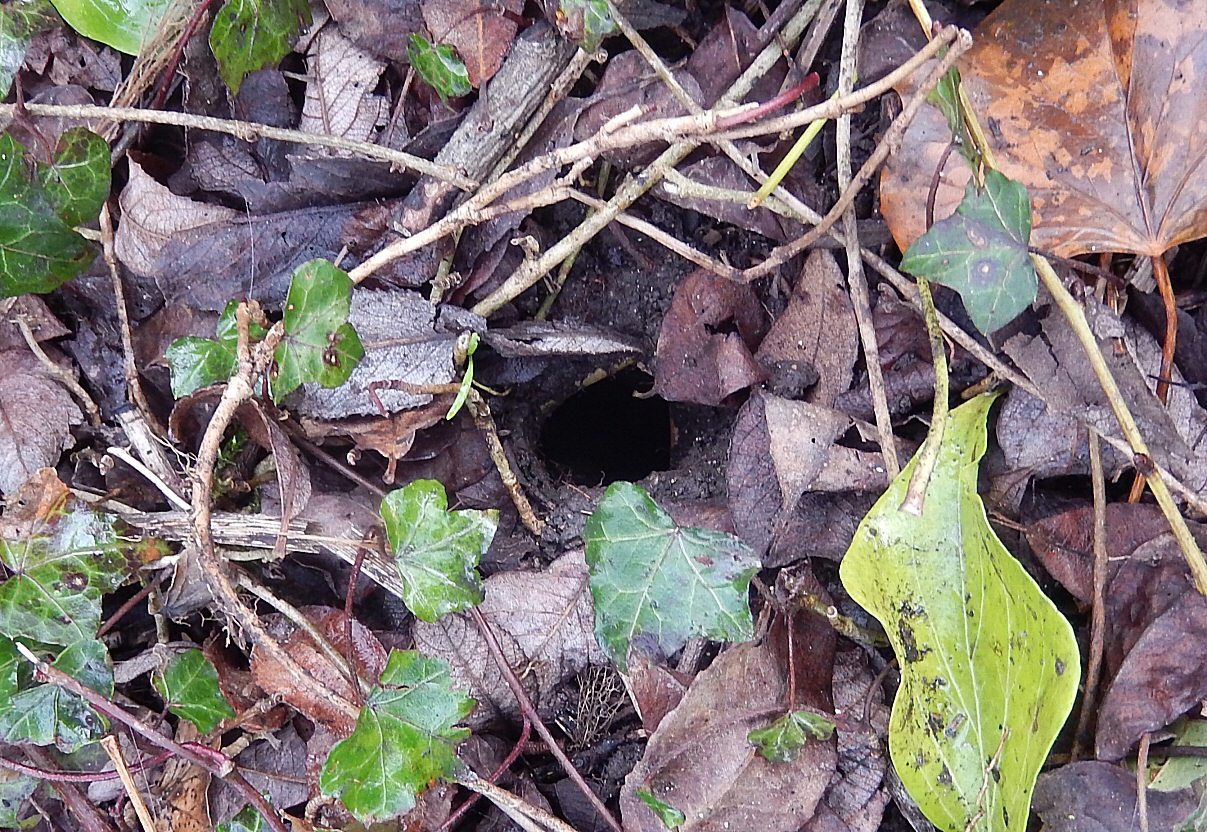
I couldn’t get away from the mammals, either. I was pleased to see not just the usual Muntjac prints along the path, but Roe Deer too.  A little way further, and there was a Wood Mouse hopping in a relaxed way across the path, before diving down its hole.

Woodmouse hole
It went thattaway: Wood Mouse hole

Among the birds calling were Green Woodpecker (finely), Great Tit, Song Thrush, Cetti’s Warbler. A Heron and a Parakeet flew overhead. Wood Pigeons and Carrion Crows watched warily.

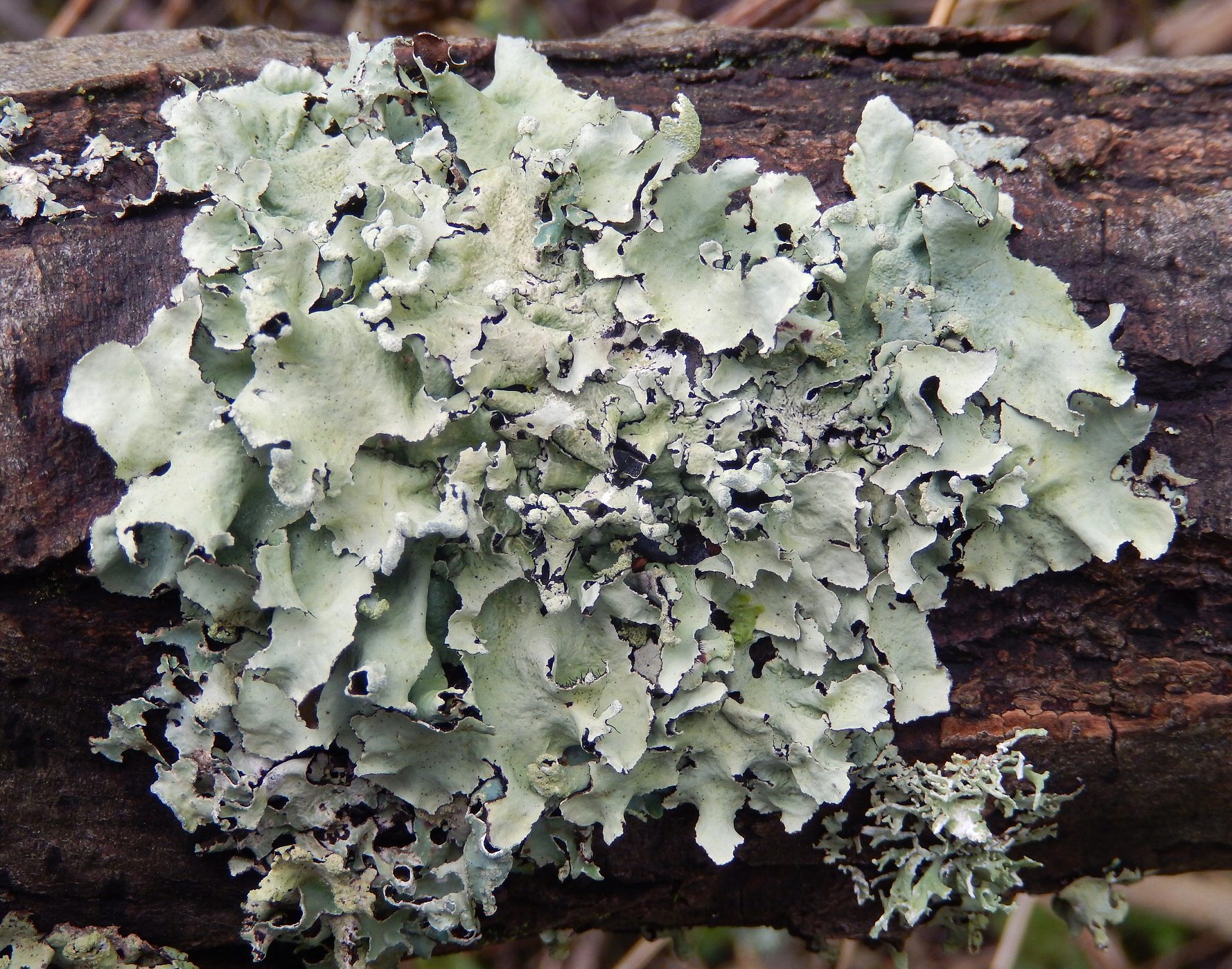
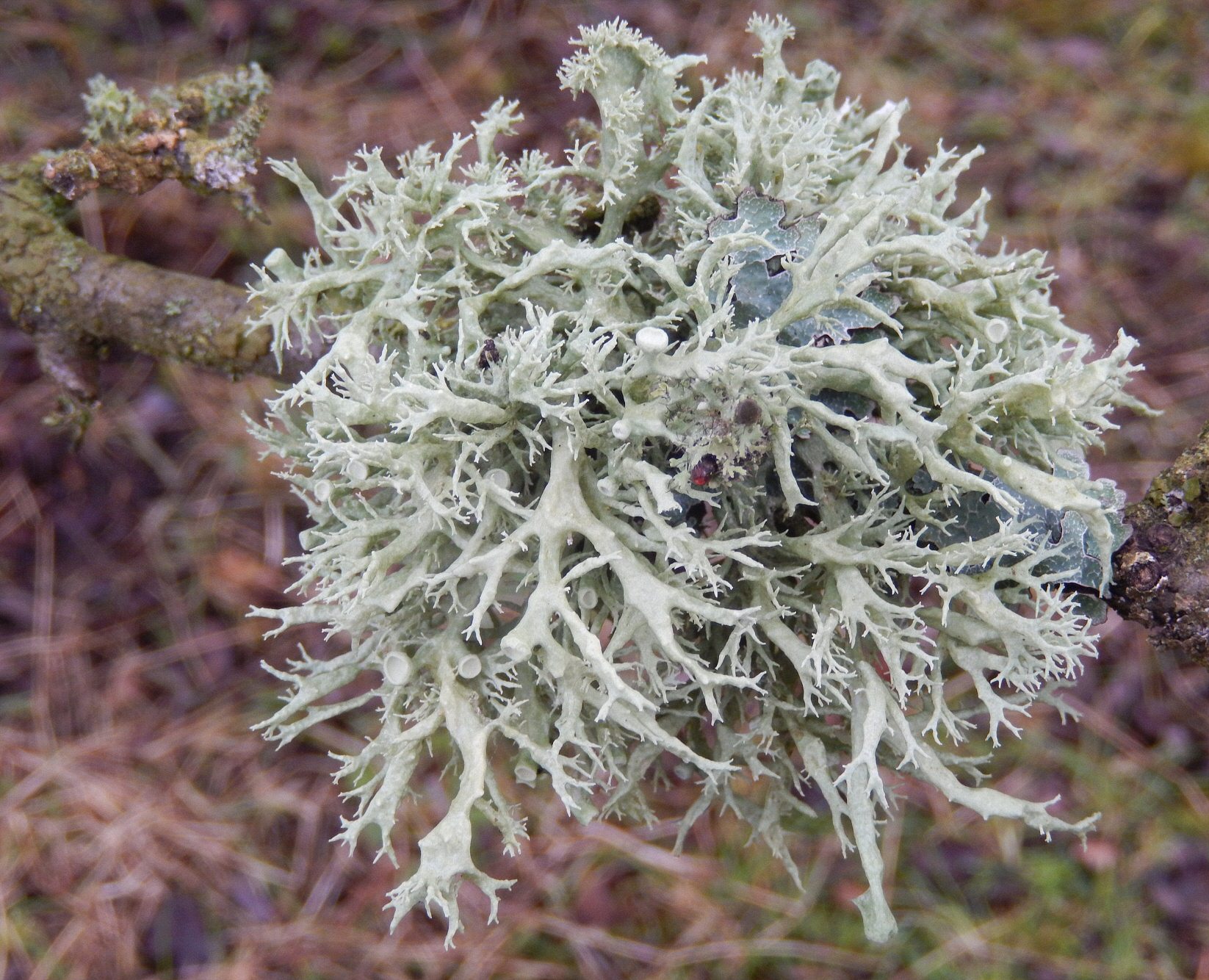
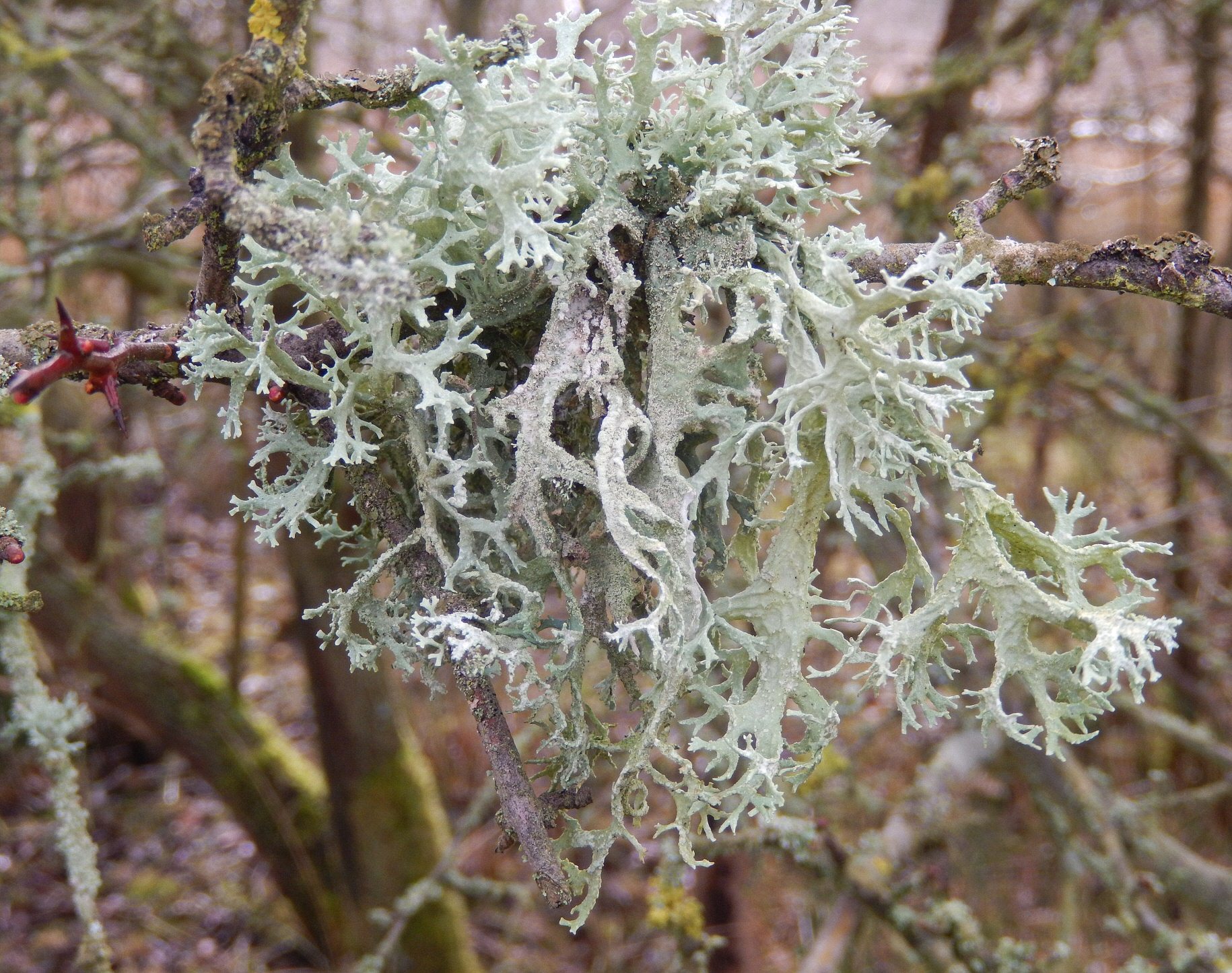
The damp air had another good effect: the lichens looked wonderful, and even the bristly Ramalina were soft.

Parmelia caperata
Parmelia caperata
Ramalina colony
Ramalina colony, generally hard, and the same both sides
Evernia prunastri colony, always soft, and white below
Evernia prunastri colony, always soft, and different below

It was nice to see the lichens flourishing so close to London (and Heathrow): these little fungus/alga plants are very sensitive to pollution, and when I was a boy they were almost impossible to find anywhere near a city, so conservation stories can be happy.

Vole Patrol 8: Capture-Recapture

My wife looked at me with a mixture of surprise and concern as I made for the door without breakfast. At least have a coffee, she said. I poured a cup of the hot steaming milk and espresso, and drank it alla Milanese, standing up, rapidly, with a minuscule bite to eat, before rushing off to work. Though in my case it was not so much with immaculate suit and the slenderest of briefcases, as with gumboots and mountain waterproofs from top to toe.

The traps had been out overnight, not so cold now but definitely wet. I went off to pick up a row of traps: all six had been triggered, and they felt heavy, as if mammals were within.

Back at the analysis point, Huma and Ollie had set up a Base Camp that Bear Grylls would have been proud of — a neat tarpaulin arrayed with all the equipment, underneath a canopy stretched on baletwine between four trees. The rain dripped gently down, and the area around the tarpaulin turned steadily into mud.

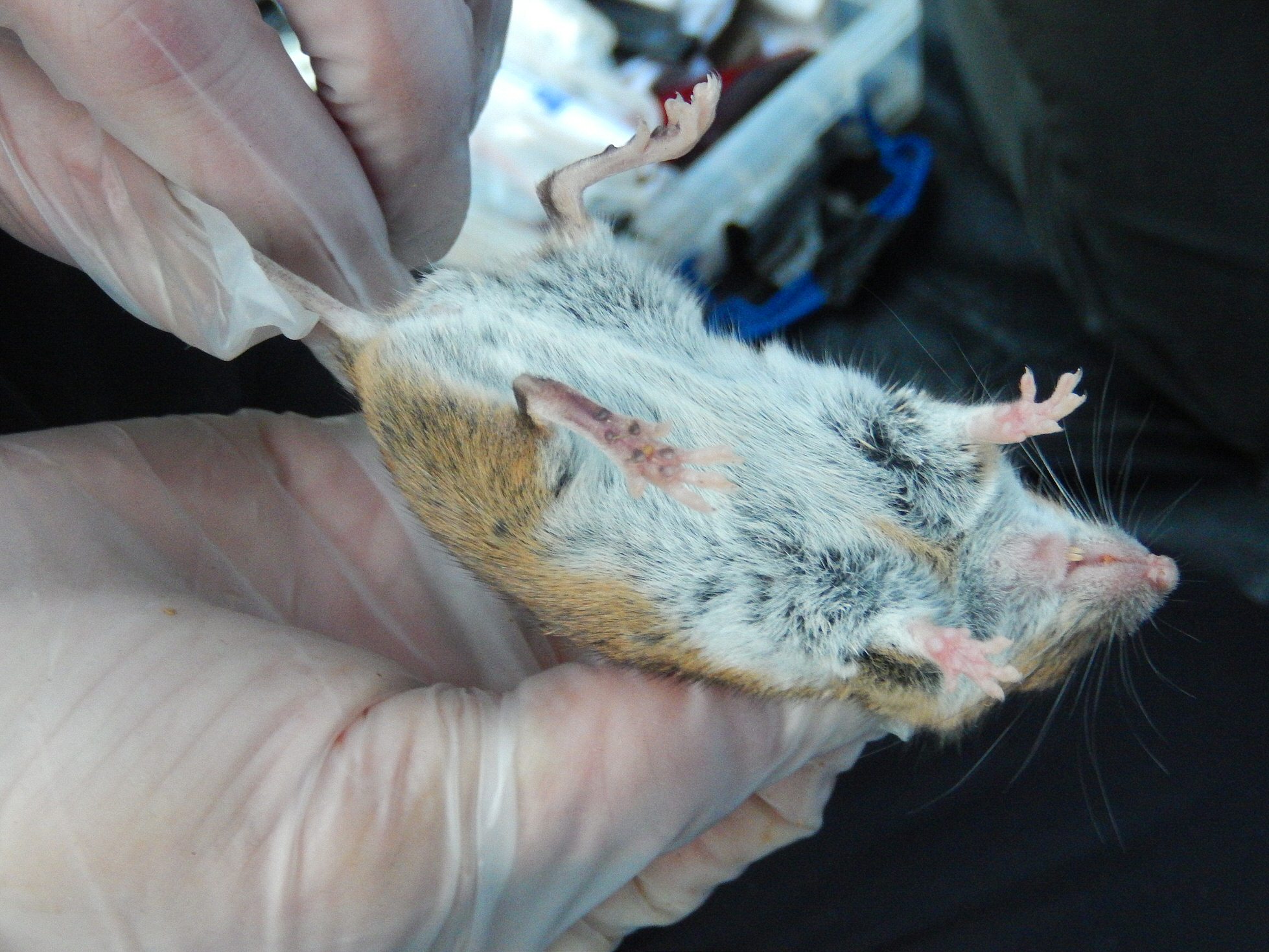
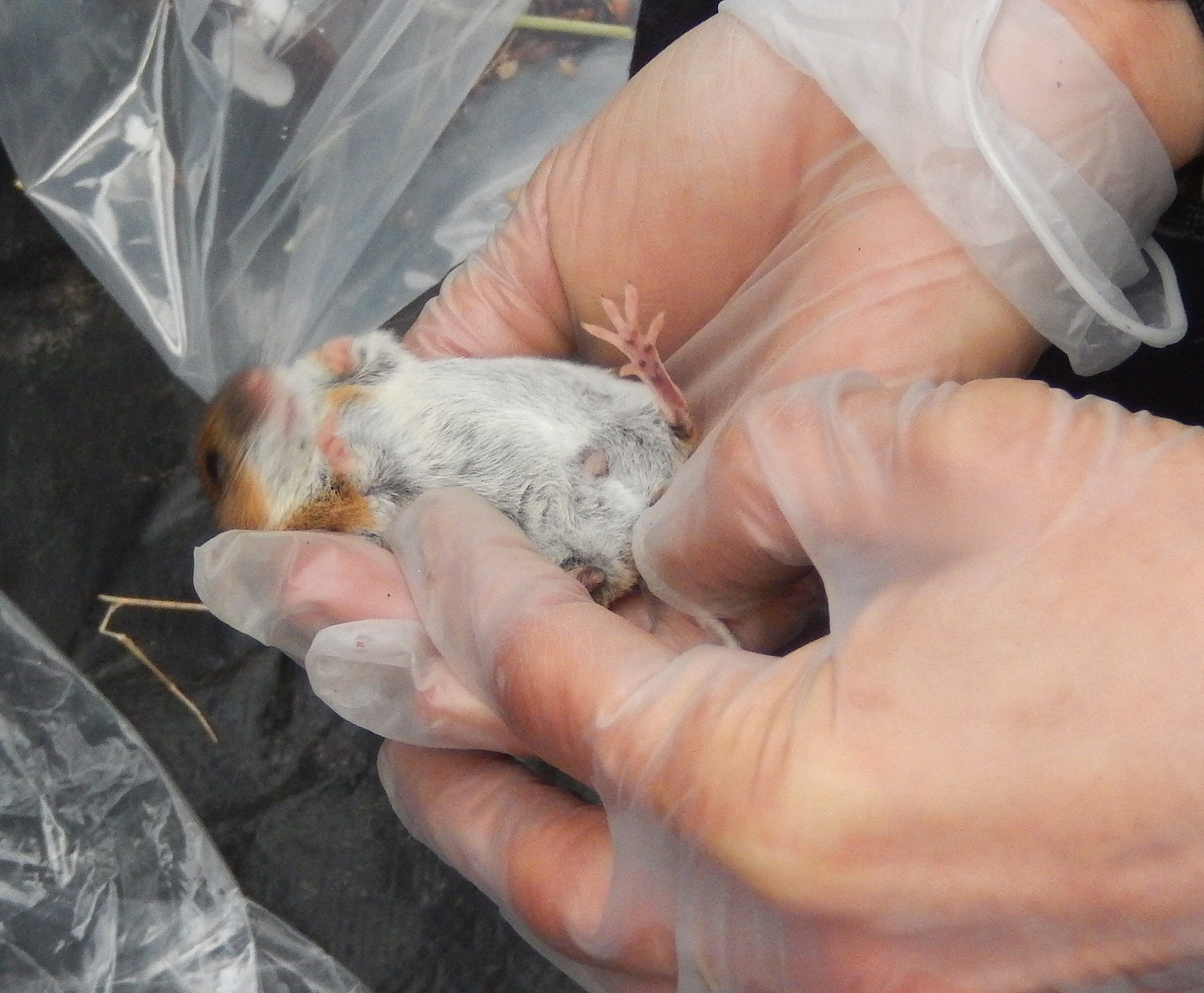
We opened the traps one by one, gently picked up the Woodmice, identified them by the code marks clipped into their back fur, and weighed them. Identification is not as easy as it might sound, as mice wriggle, and the marks are not necessarily exactly where they ought to be. We’re also reusing the same codes for males and females, so we have to sex the mice. At least the males are generally larger, wrigglier and heavier, so a guess is likely to be right, but weights overlap and the external signs are not very different, mainly just a larger distance between the two openings in the males, unless the testes are big enough to give telltale bulges at the base of the tail.

Out of 20 mice caught, same as yesterday, 19 were recaptures, giving a population estimate in the trapping areas of about 21 mice by the Lincoln-Petersen capture-recapture method.

Of course there are plenty of reasons why the estimate might be wrong, not least that the animals which have been caught learn that the traps are warm, dry, safe, and full of nutritious food. They may, in short, have become trap-happy, getting themselves recaptured as soon as possible!

All the same, the high rate of recapture does suggest that the population is fairly static in the area, and not terribly large.

We have only caught Woodmice in the traps here. It remains possible there are Field Voles in the meadows, but we have few meadow traps, and only near the edges: and if there were voles here, their population would be low after the winter, so we’d not expect to catch many.

Vole Patrol 7: Massive Morning Catch!

Vole Patrol coding measuring recording
Vole Patrol  hard at work! Coding (clipping fur patches), measuring, recording

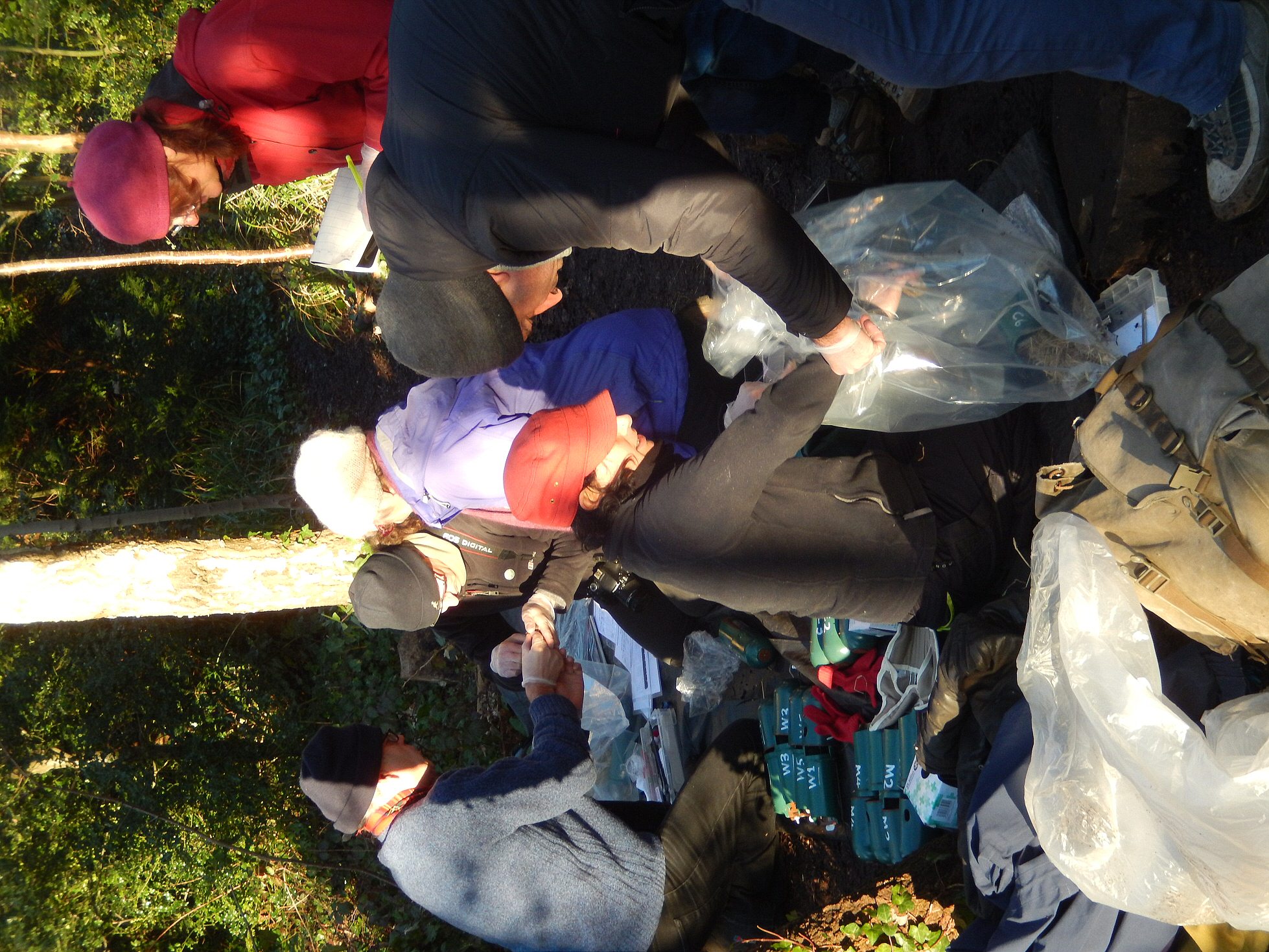
I’m so cold! My feet are frozen! said Huma. It was indeed a chilly bright winter’s morning. We were grateful when the sun came up and warmed the glade where Vole Patrol had set up its measuring station, with tarpaulin, big sacks for opening traps, small bags for weighing and measuring, all the traps in order, scissors to code the animals’ backs, rulers, scales, fresh hay and three types of bait.

Mouse from M3 - hold still now
Mouse from M3 – hold still now

Unlike the meagre daytime catch of yesterday afternoon, 20 of the traps contained mice.

I had a go at measuring and coding; then Huma put a mouse back in the big sack, as if just out of an opened trap, and under her watchful eye I caught it gently by its scruff, transferred it to a small bag, and weighed it. I’m a mammal wrangler! The main difficulty, apart from their remarkable ability to escape, is that they hunch up, making straight-line measurements rather tricky.

Mouse from M2
Mouse from M2 – a female

Only one other trap had been triggered, so the false alarm rate was well down now: resetting the sensitivity of all the traps had been more than justified.

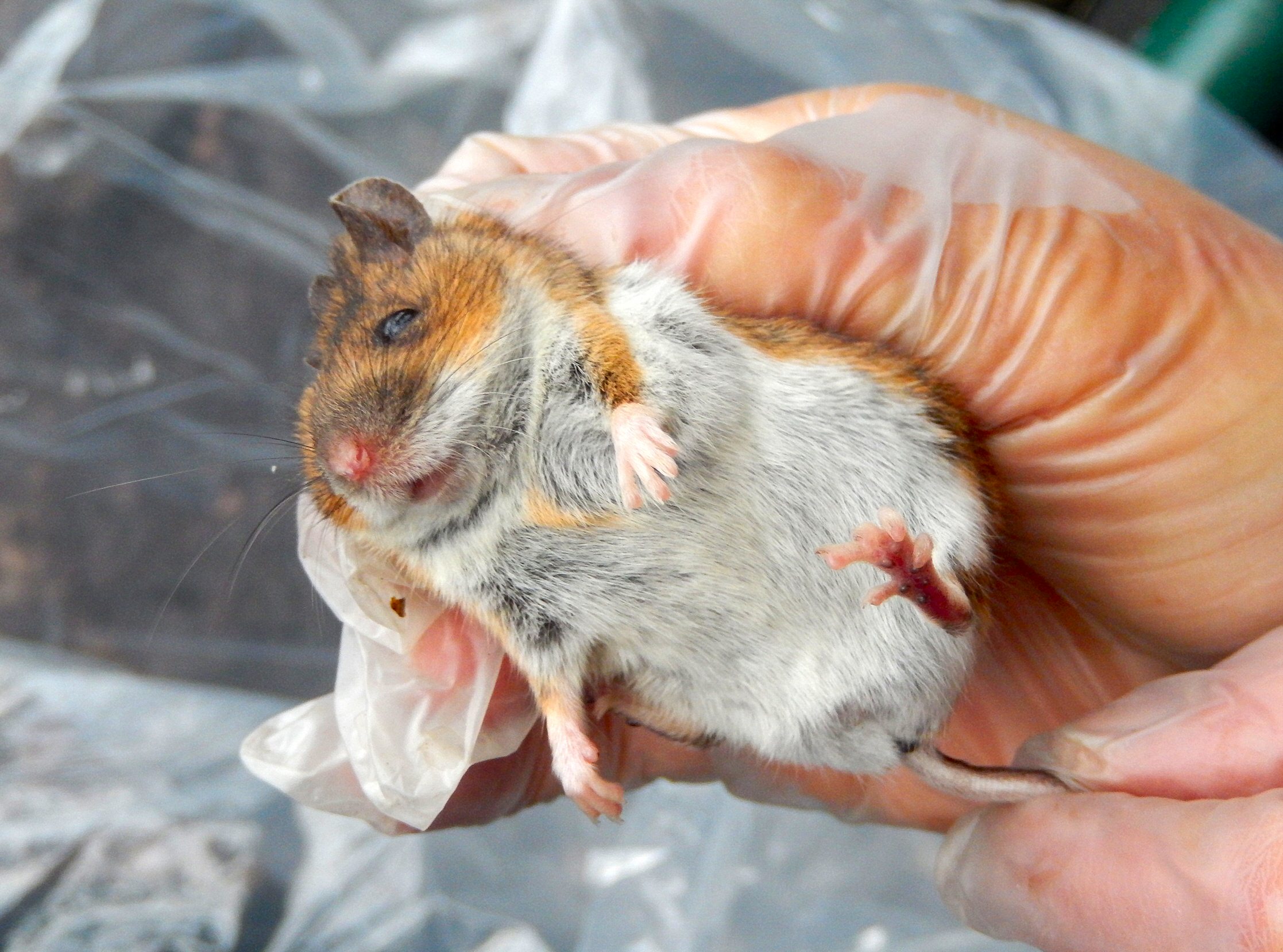
Wood Mice have big round ears

We were soon very busy: bringing in the full traps; opening them, catching the mice, coding their back fur, measuring, weighing, carrying them back to where they came from and releasing them.

Measuring and recording the weight

Tony the ecologist, who helped with the trapping today, said he’d expected Wood Mice rather than voles. Voles cannot easily make their way along railway embankments as they’re predated by Foxes and Badgers, which freely use railway  “corridors”. Small isolated populations can easily die out, which is probably what happened here.

Vole Patrol 6: First Catch

Woodmouse in hand
Wood Mouse in hand

We approached the now armed and possibly triggered traps with some excitement. Of the six traps in “our” row C, four had been triggered. We picked them up, locked the other two so we wouldn’t catch any more mice while we were analysing the catch, and brought the four traps to Huma.

She opened trap C6 inside a large bag. A Wood Mouse shot out into the bag. I got a very blurry picture of a shadow behind the plastic.

Opening the first trap C6

Huma reached for the Wood Mouse. It bounced speedily up her arm, through the gap at the top of the bag, and hopped away over the tarpaulin. None of our other traps had anything in them. I must have looked disappointed as Huma told me there would be more.

Luckily there was: one of the meadow traps had caught a fine large male Wood Mouse.

It's a Boy
It’s a Boy
Wood Mouse has a yellow patch on chest

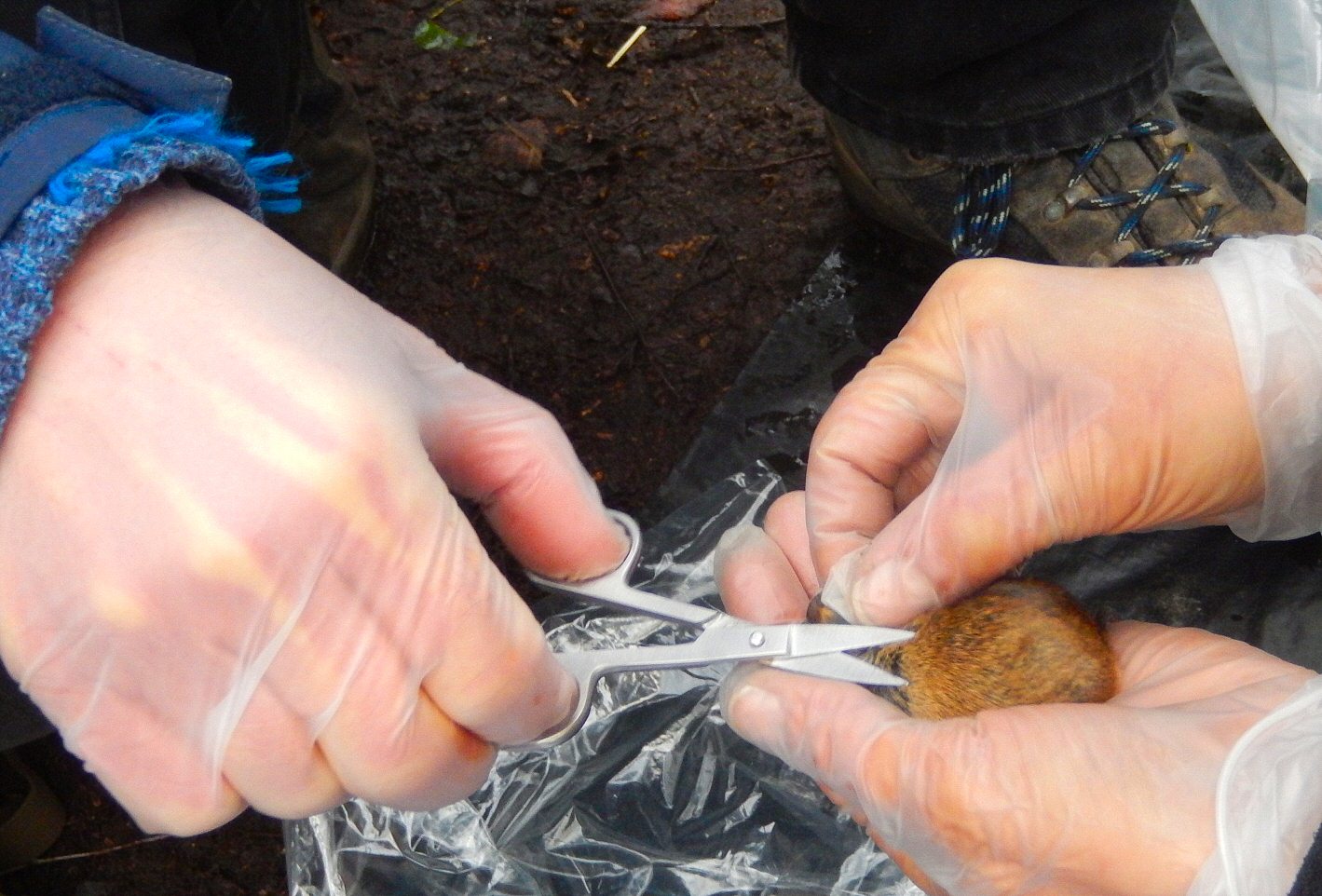
We sexed, coded (A = clipped patch on left shoulder), measured body length and hind foot, and weighed the mouse. It wriggled quite hard and almost escaped, but Huma was quicker.

Mouse A's fur is clipped on left shoulder
Mouse A’s fur is clipped on left shoulder
Measuring the hind foot
Weighing
Weighing

Then we took the mouse, still in its bag, back where it came from and let it go. Likely it will feast on the plentiful bait in the warm dry trap again.

Out of 32 traps, 8 had triggered and 2 had mice in them, much too high a false alarm rate, so Huma reset their sensitivity for tomorrow morning.

Vole Patrol 4: Baiting not Trapping

See: Vole Patrol 3: Baiting Traps

At quarter to seven this morning we wrapped up well against the cold, on a beautiful clear day, the crescent moon glowing in the southeastern sky, and gathered at the hut. After a welcome cup of tea, we picked up haversacks full of boxes of bait balls, a little bag of apple slices and another of maggots, and a rubbish sack. We trooped off down the reserve to inspect the traps arrayed around the wood, meadow, and pond.

Was there a mammal in here? Inspecting one of the Waterside traps

A Song Thrush sang loudly and beautifully from the Willow Carr thicket.

Bait Taken from Meadow Trap

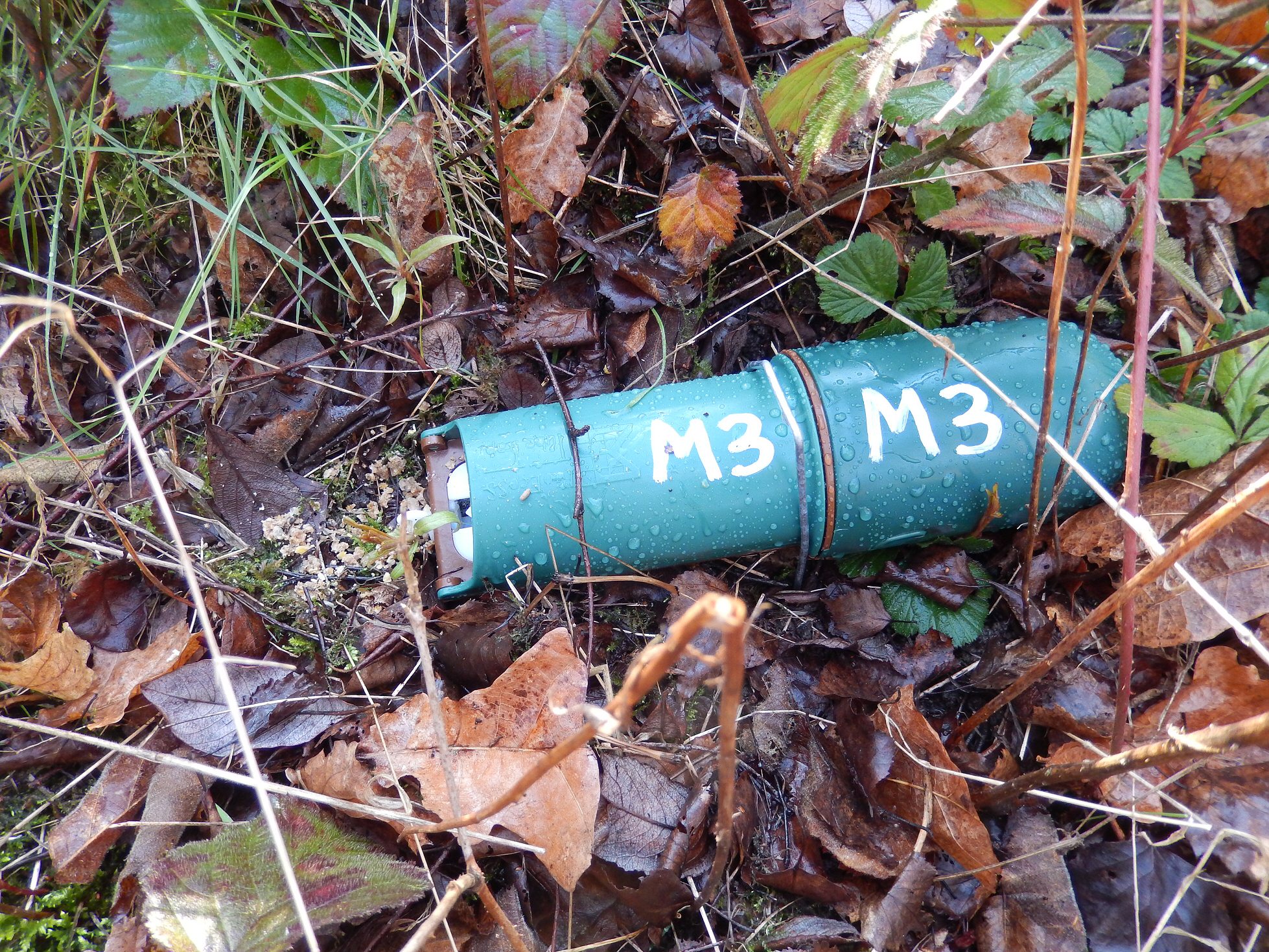
In the anthill meadow, trap M3 showed unmistakable signs of a mammal visit spilling from the entrance.

Did we catch something by mistake?

Another of the meadow traps caused a flurry of excitement. The trapdoor was up! Had we somehow caught a mammal, despite checking that all the trapdoors were locked down? Huma carefully opened the trap in a large plastic bag to prevent escape. There was nothing inside. Probably the trap had been left with the door closed.

Making Bait Balls
Making Bait Balls

Back in the hut, still with surgical gloves on, we mixed up more bait and rolled it into balls. The little boxes that protect the bait balls in the haversacks are on the table.


Winter Sun at Wraysbury: Teasels, Linnets, Bullfinches

Teasels in Winter Sun

It was cold out today, and I was glad of fleece, warm coat, woolly hat and gloves — not to mention gumboots through the clogging mud, the worst I’ve seen in many walks at Wraysbury Lakes.

But when the sun came out, it was beautiful, and I hope I’ve captured a little of that wintry beauty for you (and some of the puddled paths) with this photo of last year’s dried-out Teasels.

Just as I was about to take the photo, a flash of white from two largish finches caught my eye, and I grabbed my binoculars. Luckily, they landed in a bare thornbush, and showed themselves to be a male and a female Bullfinch, their black caps, red chests and white rumps splendidly visible as they sat a while, occasionally leaning right forwards to peck at the buds. They flew off to another bush, giving me the best views I think I ever had of the male/female differences at rest and in flight. The male really did glow red.

Up on the horse hill, a flock of some 50 Goldfinches flickered overhead. A Green Woodpecker called in the distance, as did two Mistle Thrushes, their loud, monotonous, ringing cries carrying across the wet ground. A solitary Redwing was all that was left of the winter flocks. Two streaky brown Linnets flew across.

A cormorant flapped heavily overhead, quite goose-like in front view but obvious enough in outline as it went by. Down at the nearly birdless lake, 5 Goldeneye  brightened up the view, with a few distant Shoveler.