Category Archives: Natural History

Of Hoverflies and Bush Crickets

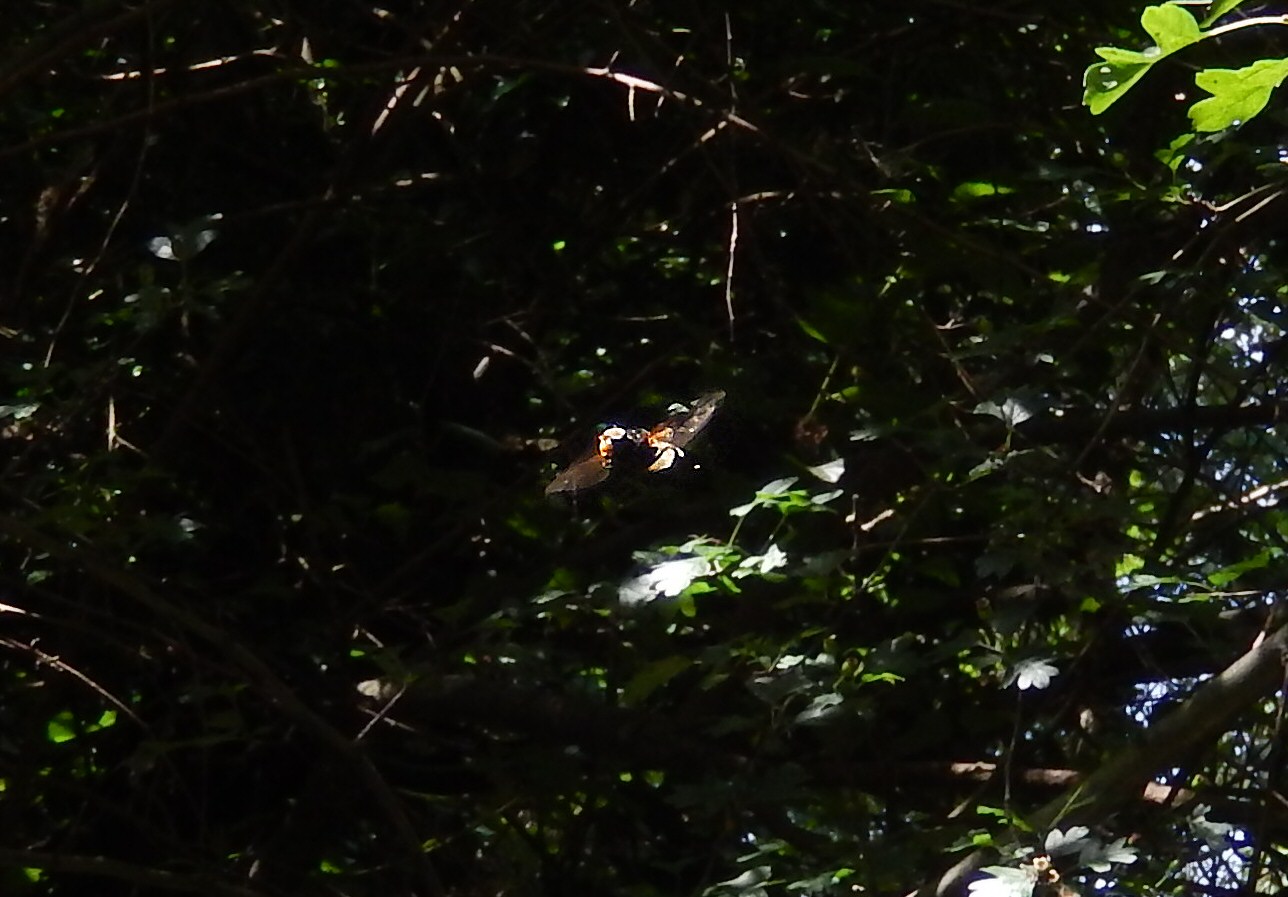
Large hoverfly in dark woodland space

An English Summer is, as the saying goes, three fine days and a thunderstorm. Or, going out with sunhat, suncream, sunglasses… and a pullover and raincoat, just in case. Today it started out cold with a chill north-north-easterly wind, but quietened down and became rather too hot to work comfortably.

A tree had fallen across the glade in the Gunnersbury Triangle where the beekeeper is going to station one of her hives. I soon threw off my pullover, and my rainproof jacket never left my rucksack. The soft willow wood was no trouble to saw up, and I dragged the branches to the dead-hedge without much effort. A lot of small holm oak, an invasive alien species from the Mediterranean (think Ligurian coast) has sprung up from old stumps, so they joined the pile.  A Blackcap sang to me while I worked.

The butterfly transect revealed very little, though some Commas are encouragingly laying eggs. As for other insects, several species of hoverfly, from tiny and slender to large wasp mimics and a fine one largely black, perhaps a bee mimic, were active. They hover, perch and sunbathe, or dash and chase each other (specially the large black ones) aggressively. I had fun trying to photograph one actually in the air, you can see the atmospheric but not very useful result above. It does give something of an idea how much they whiz and dash about, hovering always on the qui vive.

Ragwort is getting more and more abundant on the reserve; today, Helen spotted some tiny (probably first instar) Cinnabar Moth caterpillars on one of the plants; an adult visited me while I worked.

The Peacock Butterfly caterpillars of last week seem all to have pupated in hiding somewhere; there are quite a few younger ones still on the stinging nettles, so there will be at least two lots of adults.
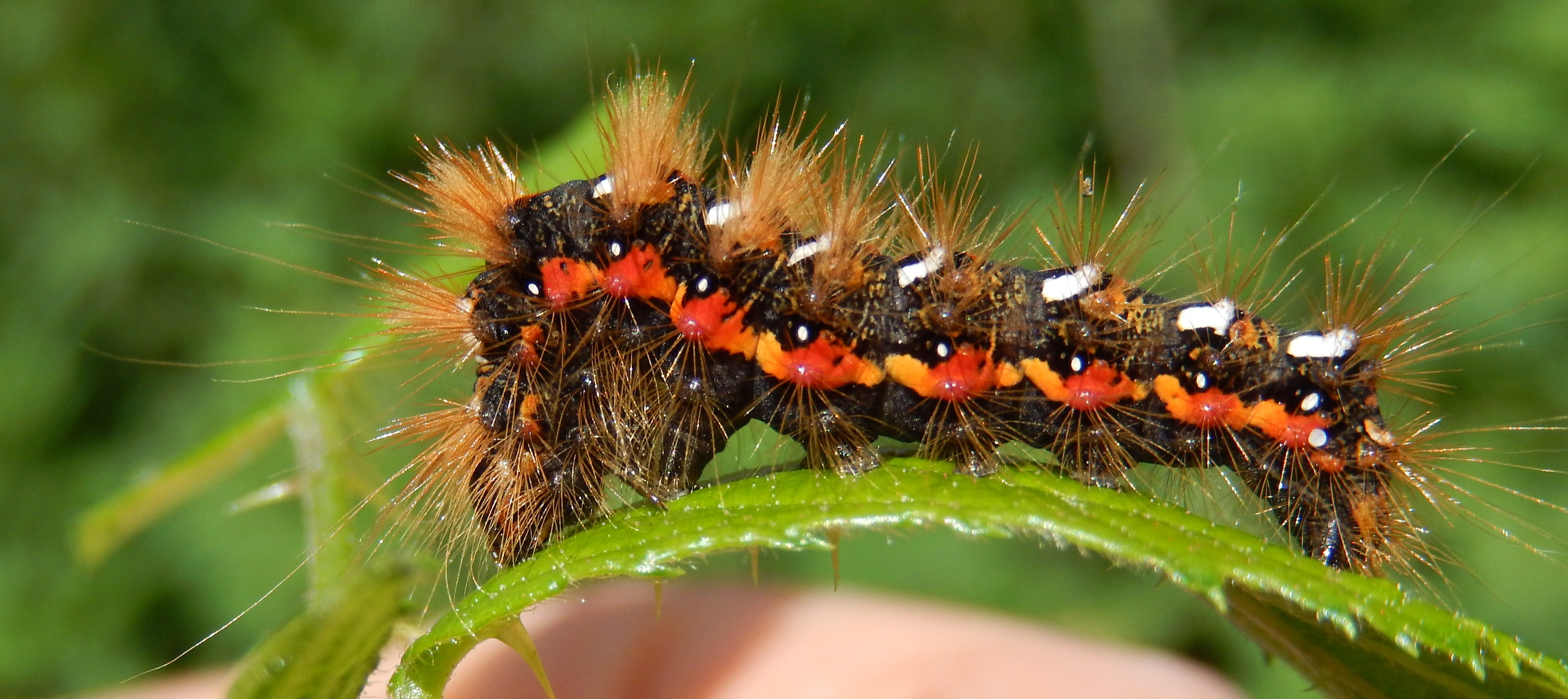
Knot Grass caterpillar on bramble

We found a Knot Grass moth caterpillar (a Noctuid moth) on a bramble. It is hairy and aposematic, with brown hair but without the four long brown ‘shaving brush’ tufts of the Vapourer moth caterpillar (a Lymantriid or Tussock moth), which we’ve also found here.

But perhaps the insect I was happiest to see was this young Bush Cricket, resting on a flower for no particular reason, and taking a risk as its fine spotted green camouflage was totally compromised by its white and yellow flowery background. It must be the first one I’ve seen this year.
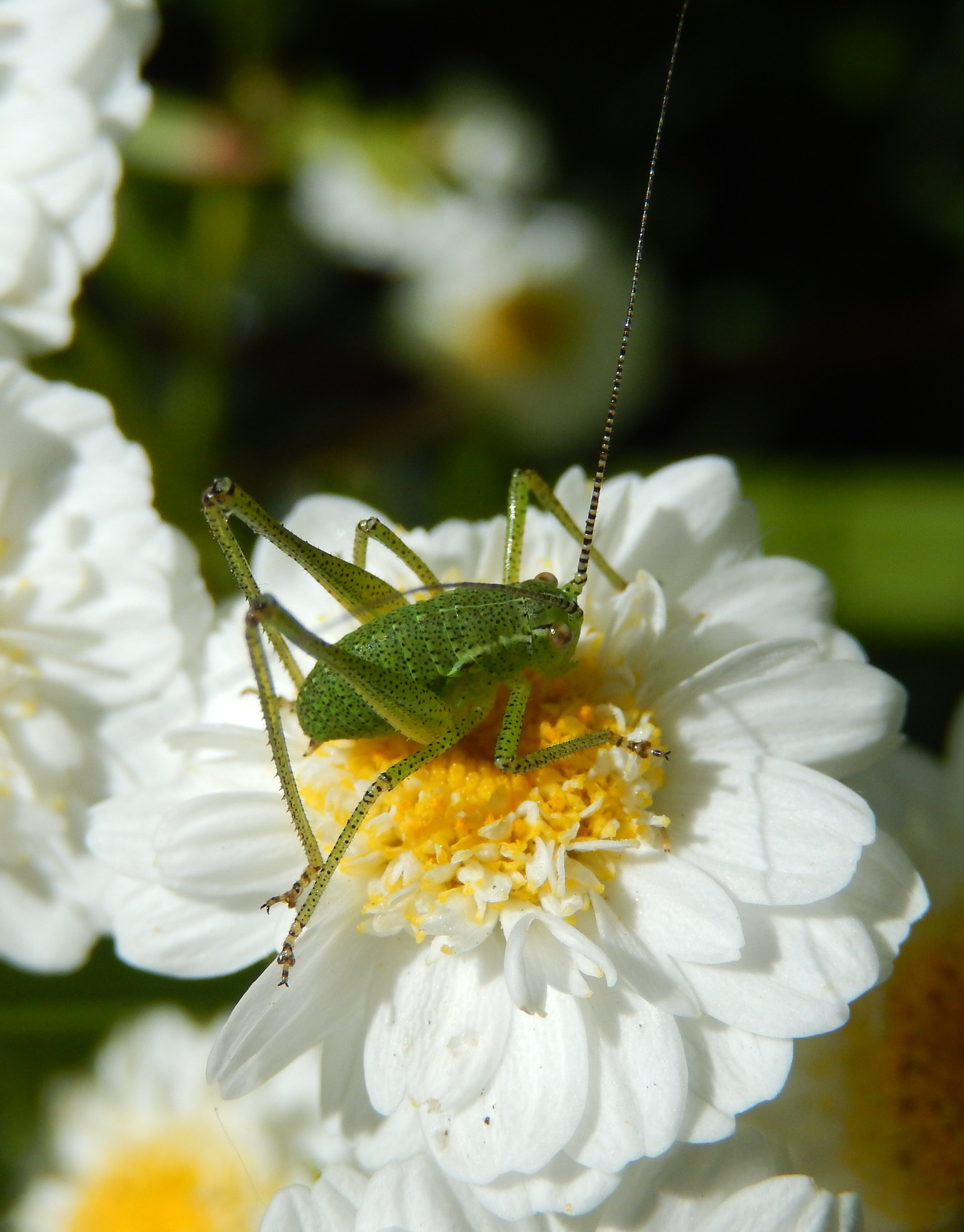
Young Bush Cricket
Young Bush Cricket

I have always loved natural patterns. The bark of this Aspen tree looks almost as if it encodes symbols in some cuneiform notation.
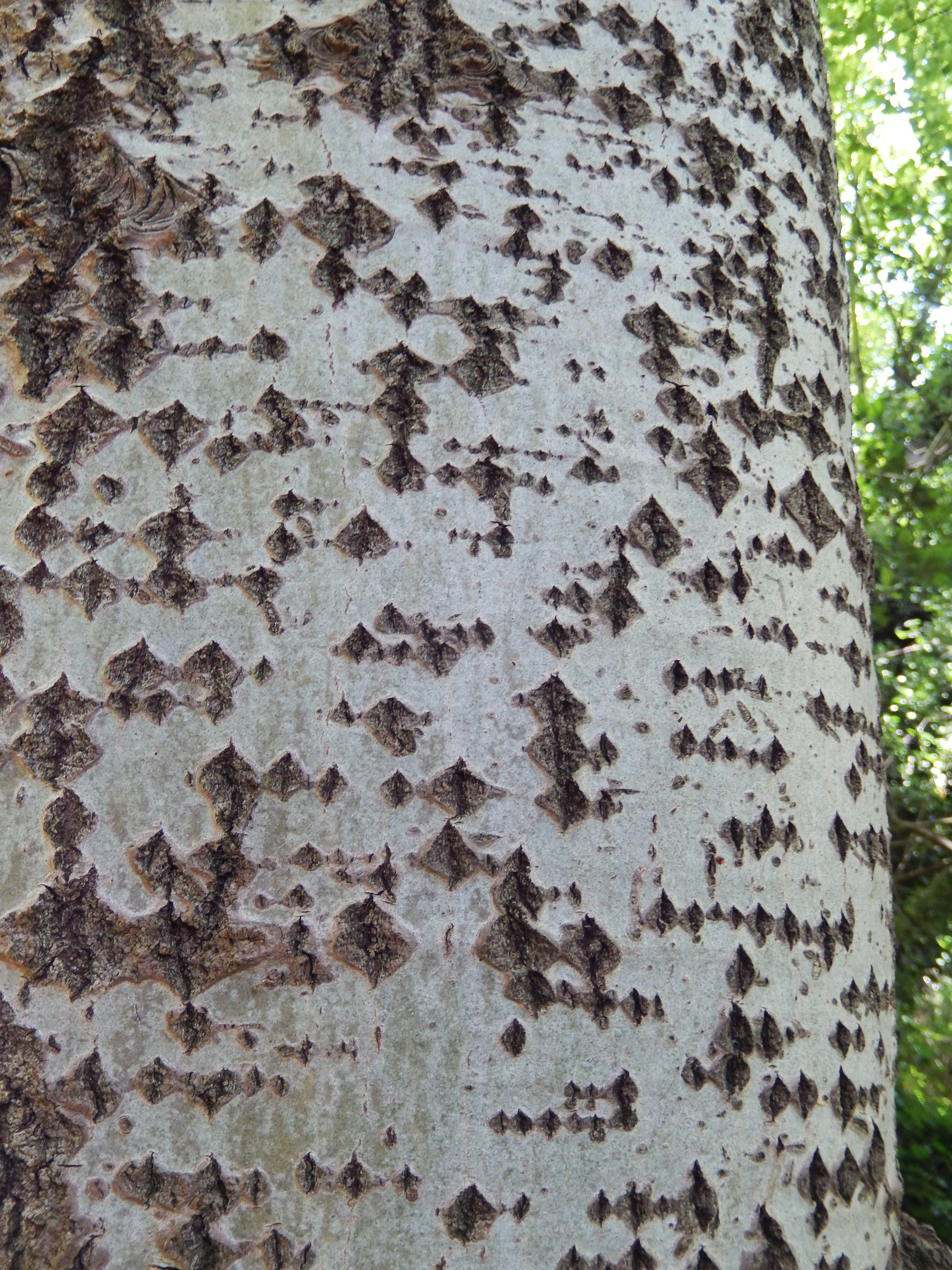
Natural Pattern: Aspen bark, almost seeming like a form of writing

Summer Bugs at Gunnersbury Triangle

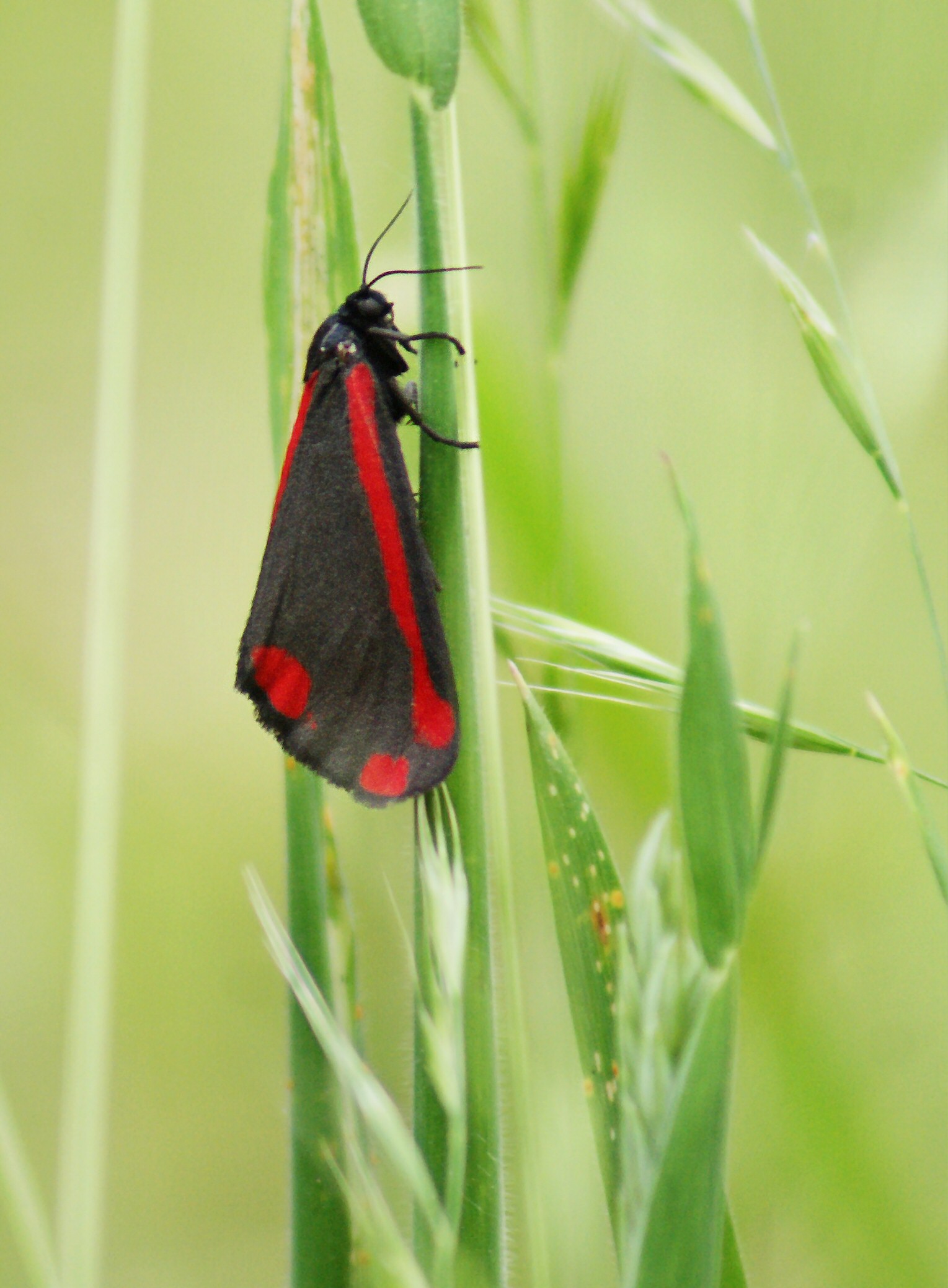
Cinnabar Moth on rusty False Oat Grass

Ragwort is at full height now and will soon be flowering. A few adult Cinnabar Moths are about; they will mate and lay eggs on the ragwort, which is in several places around the reserve, and then we will have the fine black-and-orange banded caterpillars in quantities, eating the Ragwort to pieces. They are poisonous with alkaloids taken up from the plant, so few predators eat them: an exception is the Cuckoo, which seems able to cope with the chemistry.

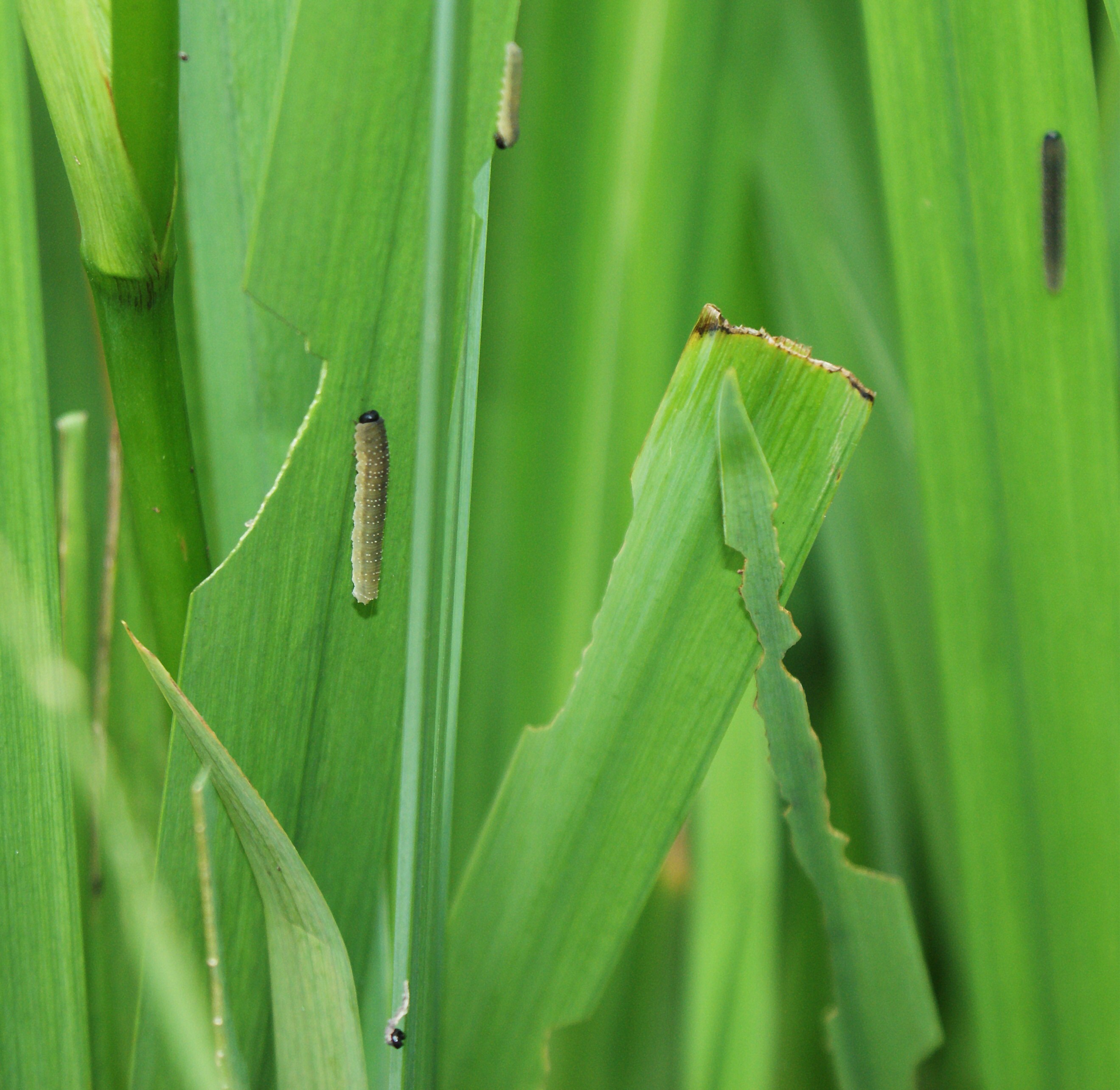
Iris Sawfly on Yellow Iris, with examples of how it damages leaves

Iris sawfly caterpillars are starting to chew inroads into the spearblades of the Yellow Iris; they are rather like moth caterpillars, but with rows of little dots on their backs and different numbers of prolegs.

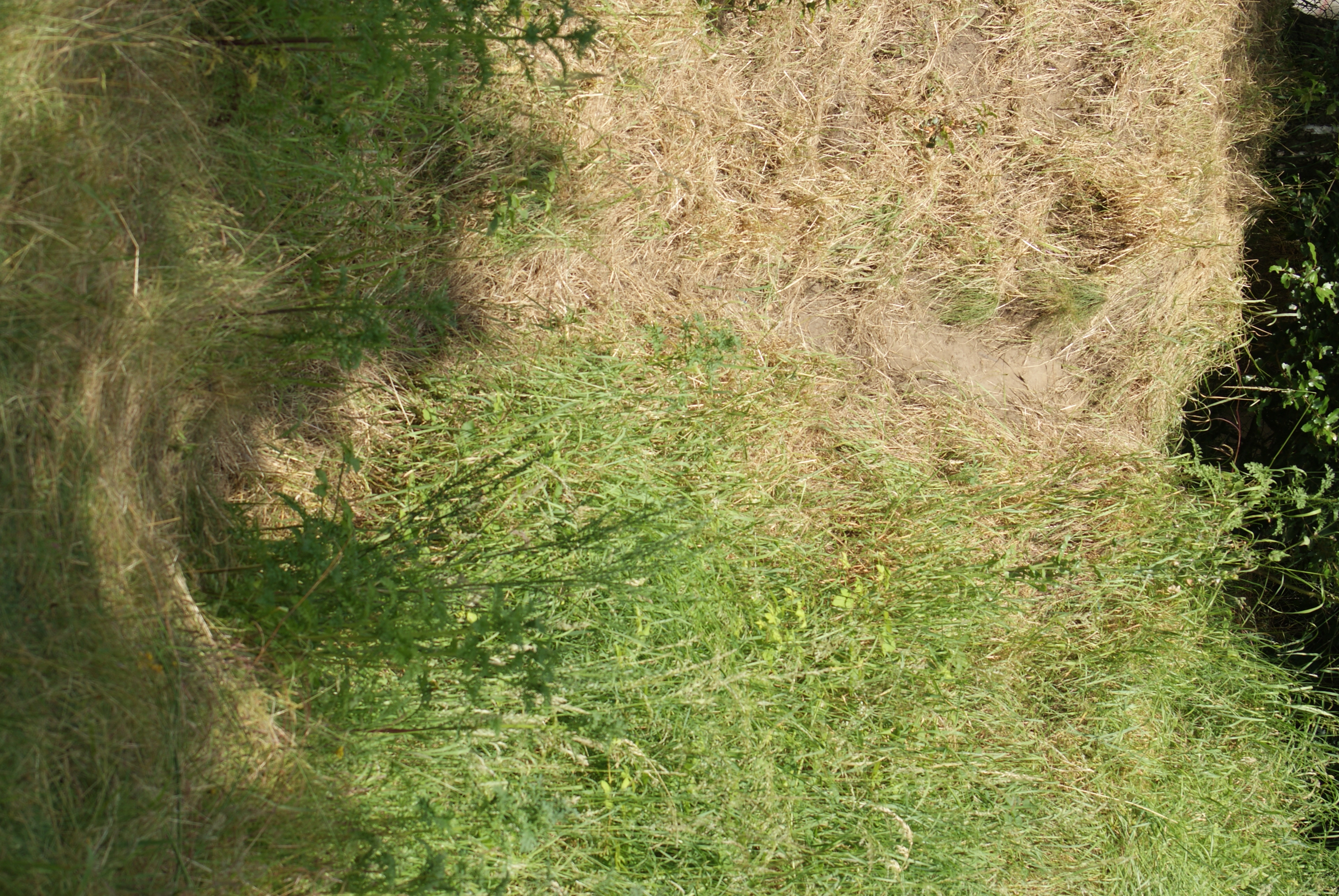
Fox run down grassy bank

It looks as if there are young foxes about; a very well-worn run goes straight up the grassy bank into the bushes, and the grass nearby is much trodden down.

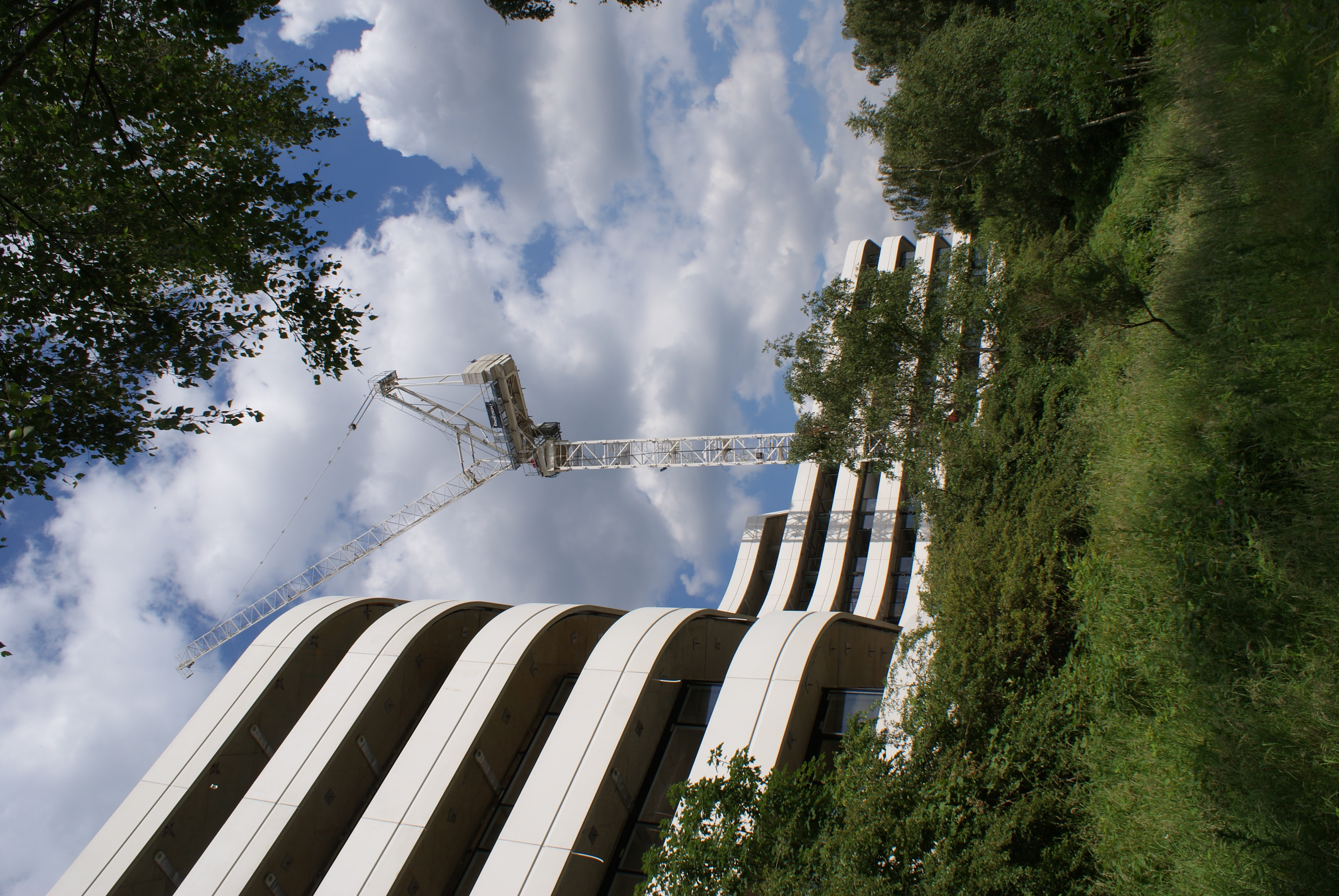
Neighbours
Neighbours

The new buildings towering over the reserve are approaching their final shape; it will be a relief when the roar of heavy engines and the squeal and clatter of caterpillar-tracked bulldozers subside into history. There was a horrible accident on the building site this week when something fell from a crane; three workers were injured, one seriously, and the air ambulance arrived, followed by the health and safety inspectors.


Orchids Surviving, Butterflies Vanishing in West Wiltshire

I had the good fortune to get down to West Wiltshire in hot if sometimes humid summer weather.

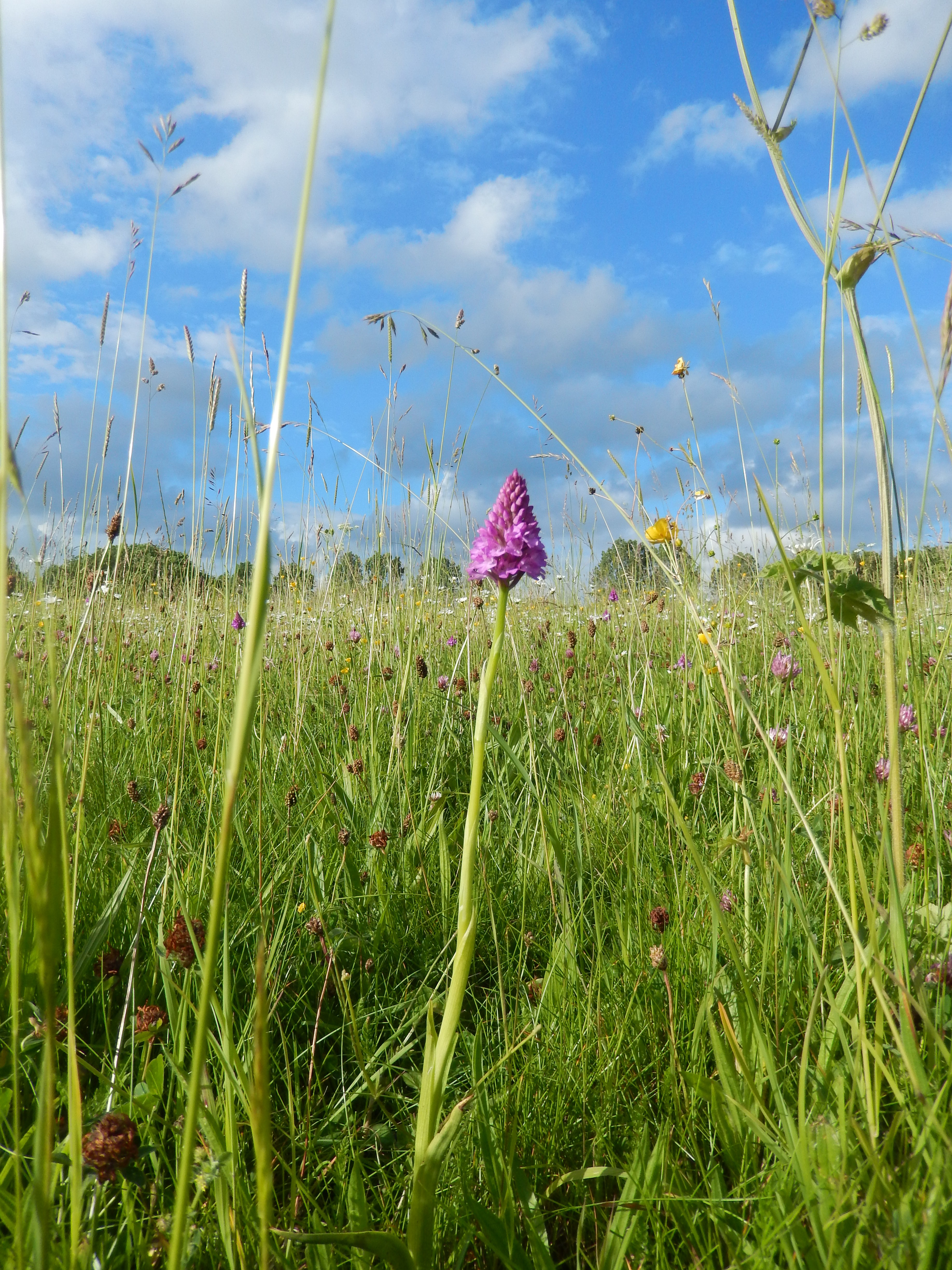
Pyramidal Orchid in Flowery Meadow

It was a pleasure to find the Pyramidal Orchid in a flowery meadow near a town: despite the dog-walkers, the increasingly uncommon flowers were clearly spreading from a small patch across the meadow, which is mown annually.

Less pleasantly, there were next to no insects pollinating the flowers: we saw one Small Tortoiseshell, a fly or two, and one (white/buff-tailed) bumblebee. It was a stark contrast to the masses of bees and beetles I’ve seen on the reserve in London. Of course, in London there is now very little use of pesticides, and basically none on an industrial scale.

This year (2014) does seem to be particularly poor for butterflies. It was an extremely warm winter and a very wet and windy spring, so I wonder if the result has not been a bad spring for insect pests … and perhaps, whether England’s farmers have not sprayed insecticide especially heavily? It’s a question that could clearly be answered by someone. If the answer is yes, then our ‘useful insects’ have suffered very heavily as a consequence.

The next day we went to Cley Hill, a western outlier of the Salisbury Plain chalk downs, sticking up above the plain below the chalk escarpment.

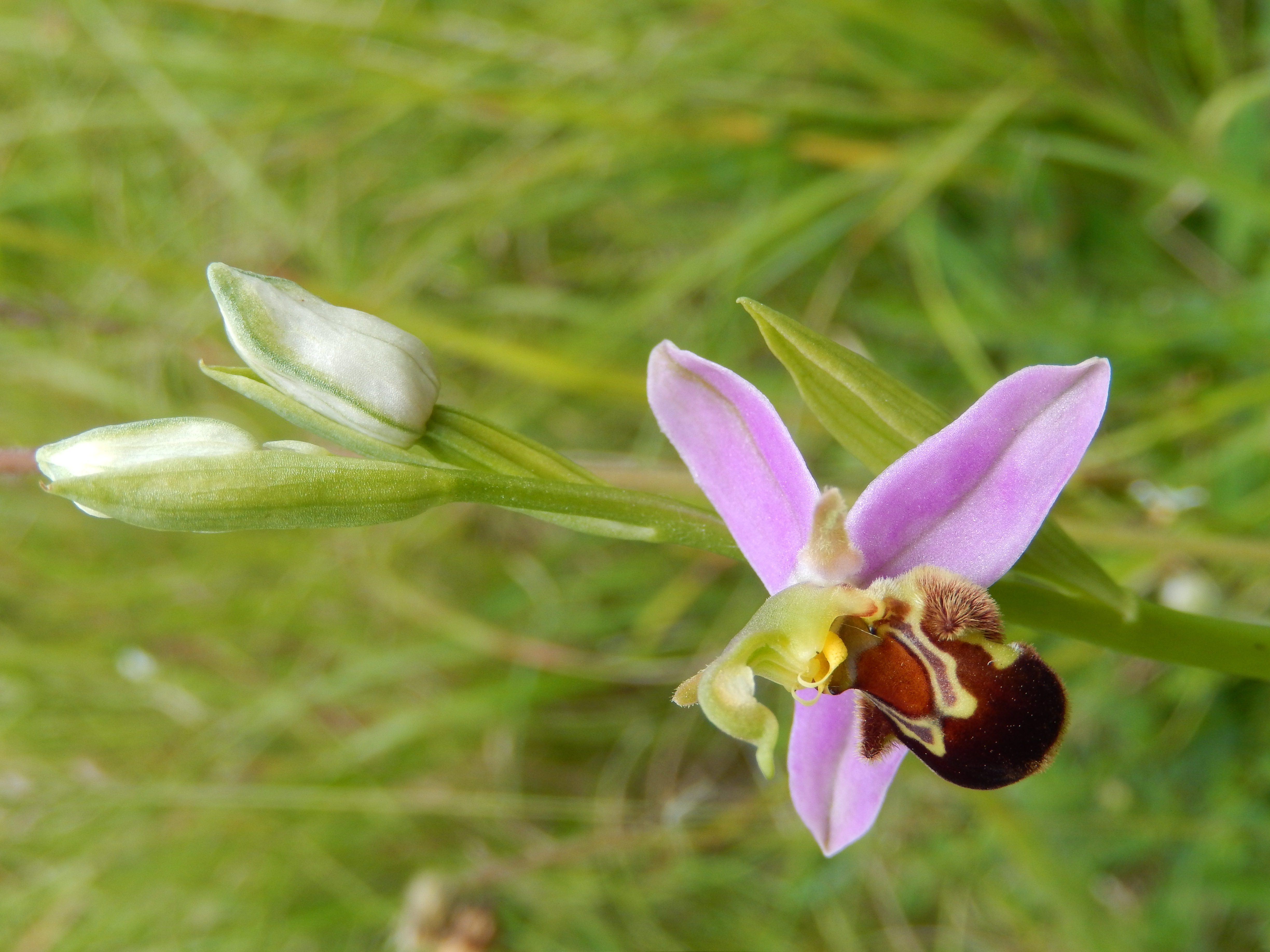
Bee Orchid
Bee Orchid

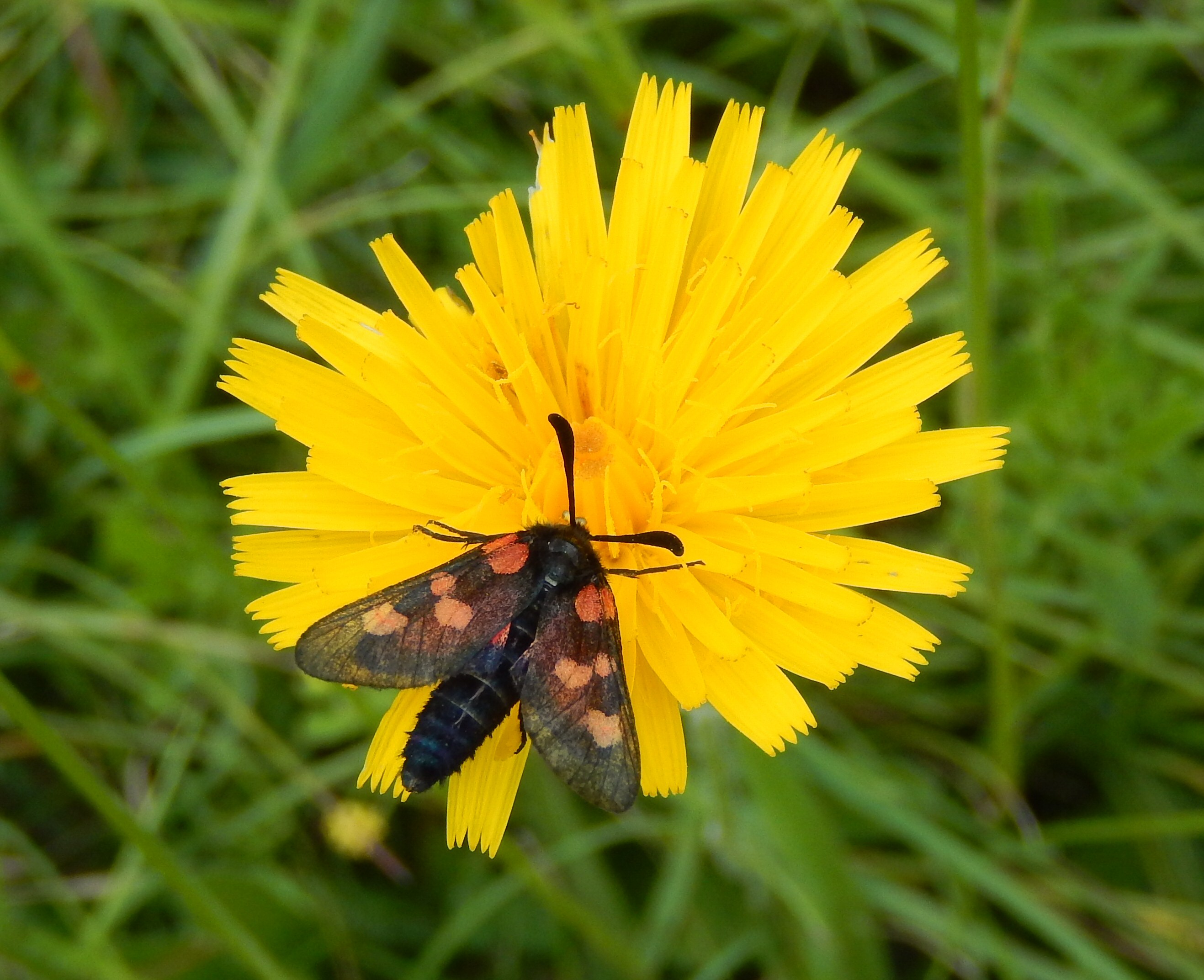
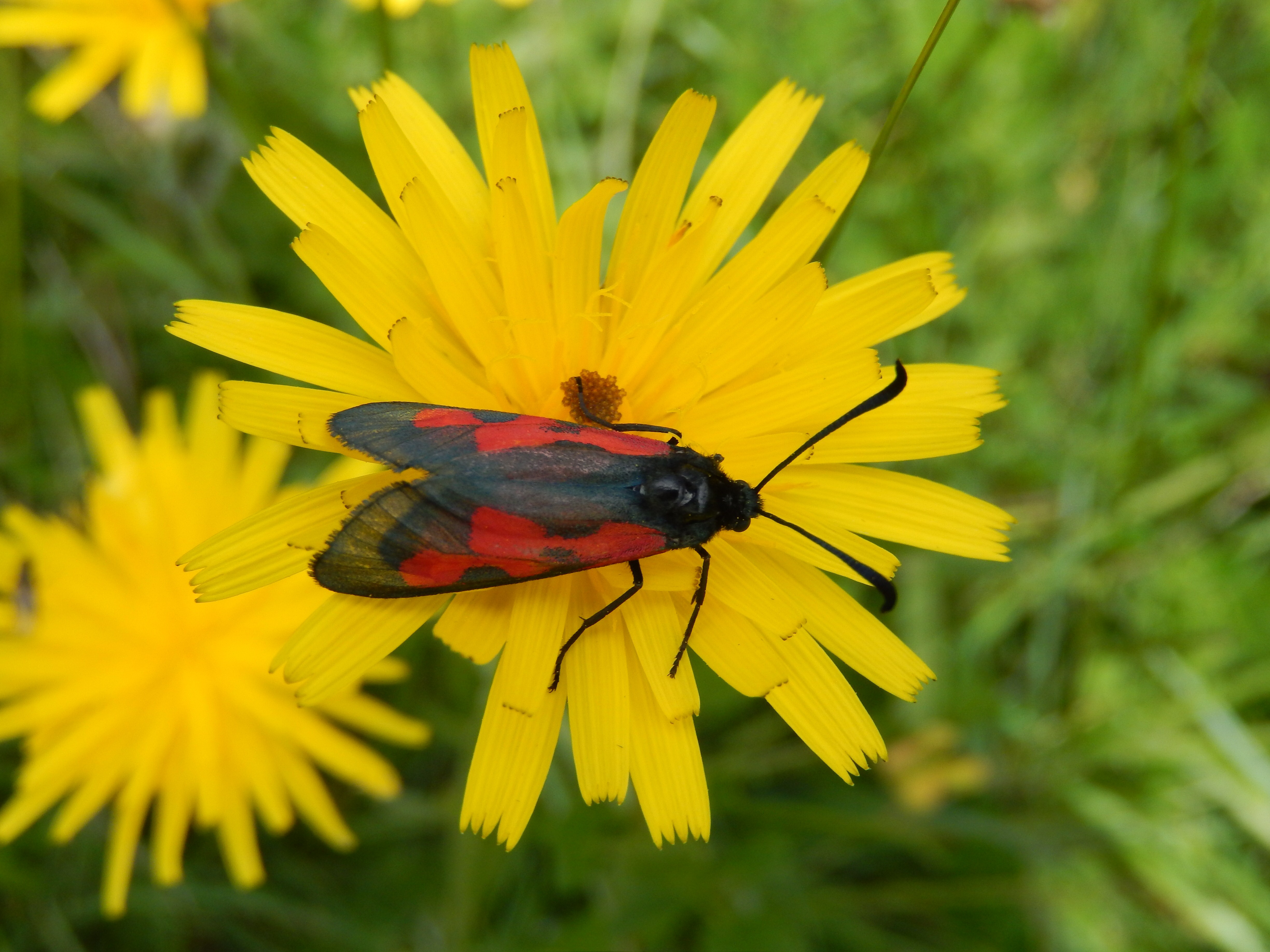
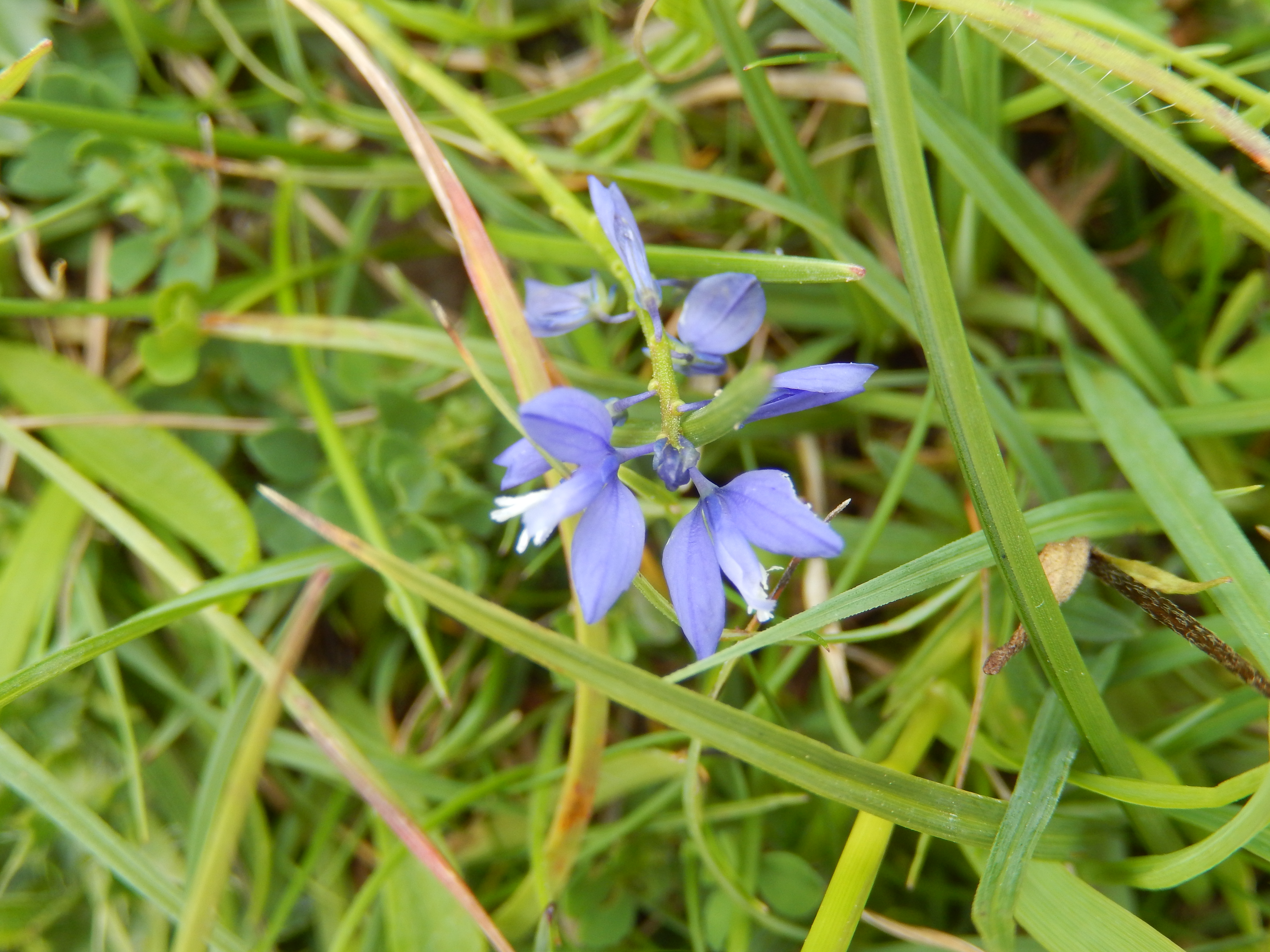
In the short grass, full of lovely flowers – Sainfoin, Milkwort, Horseshoe Vetch – were Bee Orchids, and happily both bumblebees in this special place protected by the National Trust and Burnet Moths – mostly Five-Spot Burnet, with some Transparent Burnet too, quite a treat.

Five-Spot Burnet Moth
Transparent Burnet Moth

On the top of the hill, above the Iron Age earthworks, we came across a group of about five Wall Brown butterflies, all very tatty and worn: perhaps they had been blown across the Channel from France on the warm southerly wind that is accompanying this anticyclone (centred to the east). Nearby were a few Brown Argus, small butterflies in the Blue family: not uncommon in France, far from common in England. Their coloration may seem odd for the Blue family, but females of quite a few species are brown, contrasting with their bright blue males, so the genes for ‘brown’ are clearly available: perhaps it takes just one or a few genetic switches to turn on brownness in both sexes rather than in just one.

In several places on the hill, often on bare chalk paths or short grass, we saw the glowing blue and purplish blue of Adonis Blue butterflies, with their chequered wing borders. So we saw some rather special butterflies, though with the definite feeling that they are only just hanging on in the area.

Milkwort, once a common plant in (cow) meadows

The hill is also host to Chalk Fragrant Orchid, Pyramidal Orchid, Spotted Orchid and more: it was lovely to see them all, though we were moved on swiftly by an anxious pair of Skylarks circling rather low overhead, trying to get back down to their nest, clearly not far from where we were sitting. All around in the thorn bushes were Tree Pipits, singing away, with some twittering Goldfinches and one Yellowhammer, my first of the year: yet another species that was once commonplace in every hedge.


Camouflage Talk, Camouflaged Cakes

Today I gave my ‘Camouflage without Spots’ talk at Gunnersbury Triangle nature reserve. It was very hot, and having helped the RSPB local group set up their stall at the Bedford Park Festival on the common, I cooled off and picked up the materials for the talk.

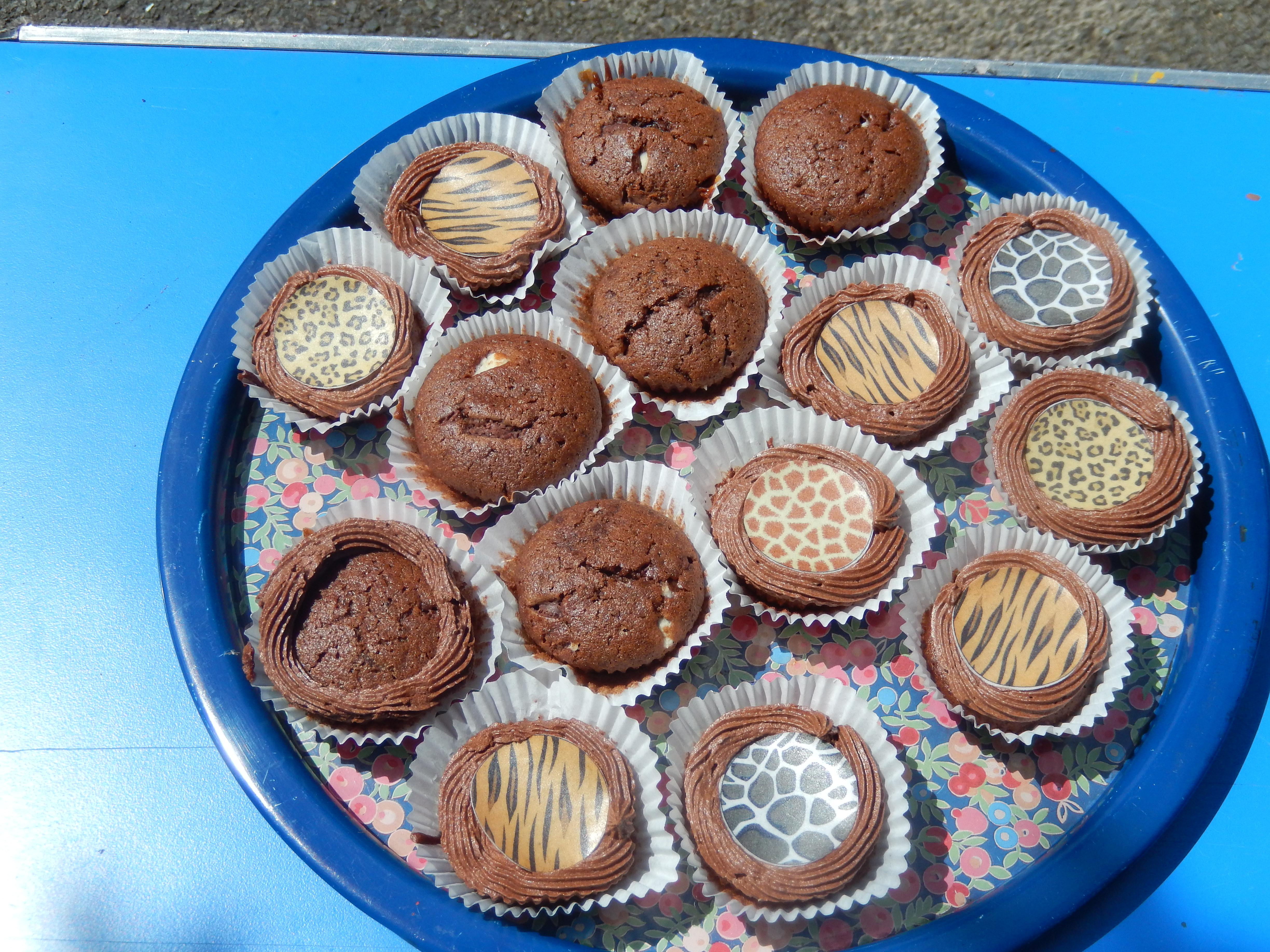
Amazing Camouflaged Cakes

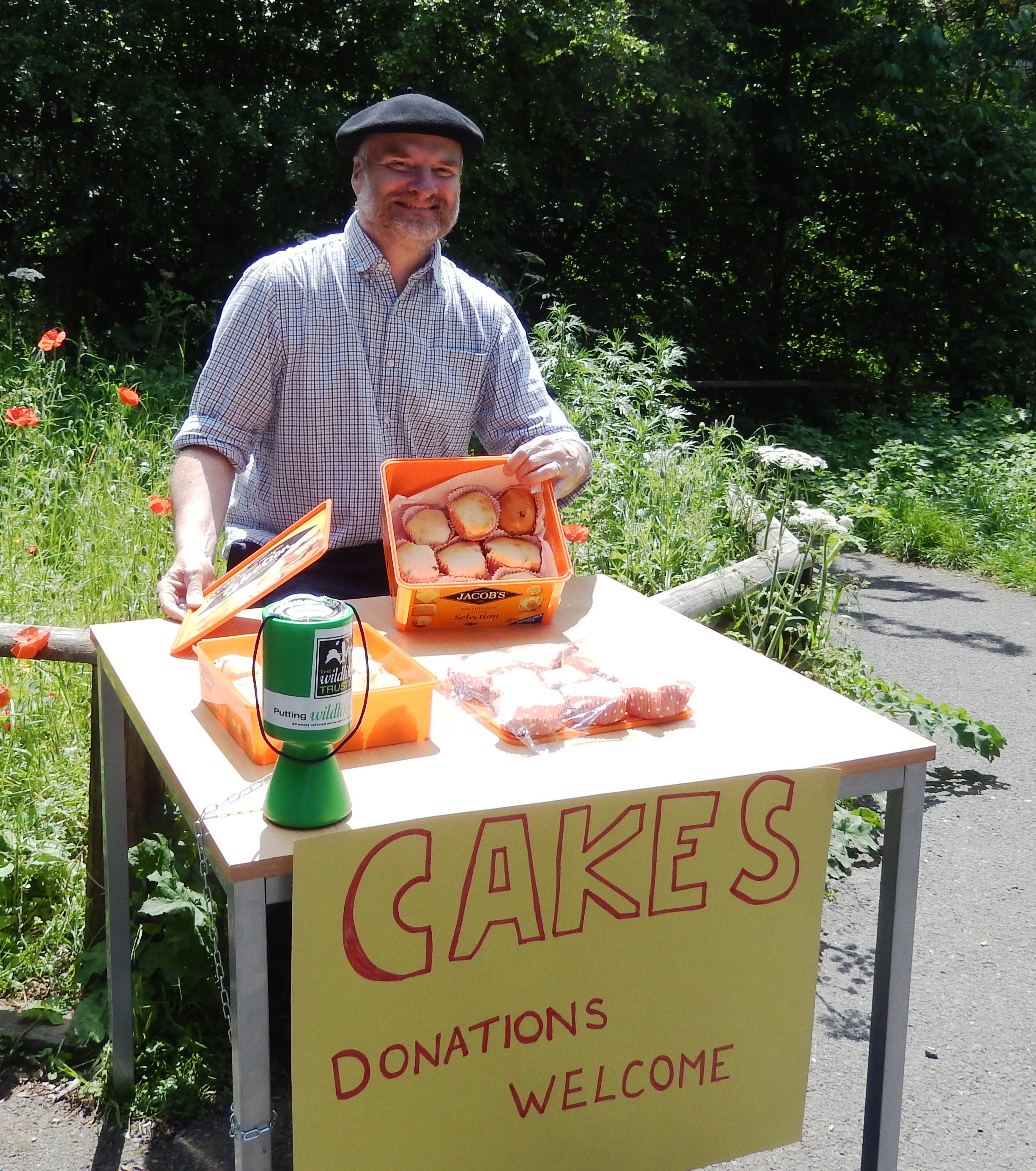
Helen had set out the tables and baked some amazing Camouflage Cakes – someone joked they couldn’t see them – and we all had lemonade in the heat.

2 legs good, 4 legs better
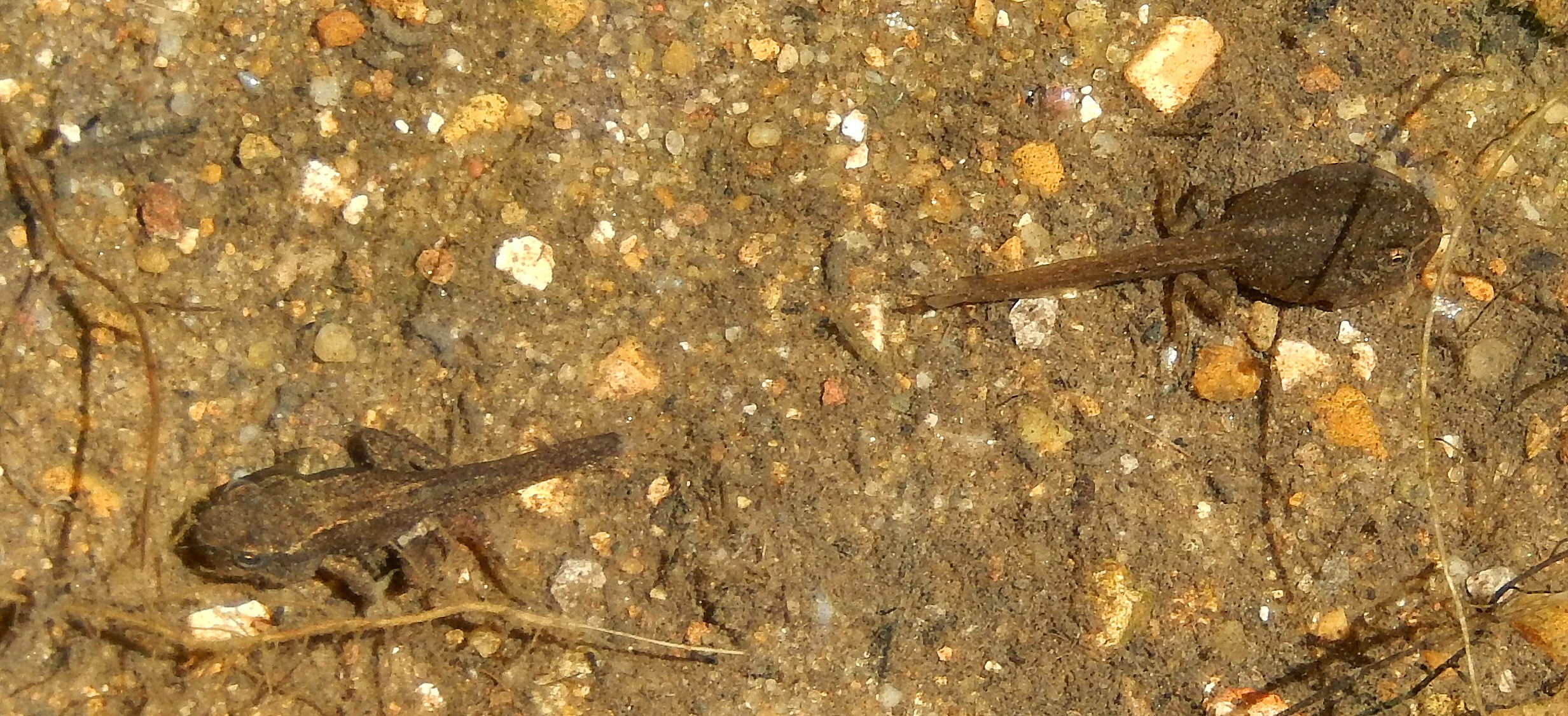
2 legs good, 4 legs better: Tadpole Metamorphosis before our eyes

Once I had run through the talk and arranged the talk table with books and materials, I had a quick walk around the reserve. The tadpoles are just at the moment of growing legs – some have none, some two, some four: it’s very beautiful and touching.

A keen entomologist came running, a Clouded Yellow presumably blown in on the warm southerly wind had breezed across the reserve in front of the hut! They are only occasional visitors here, common enough in France, but they hardly ever perch when the weather is warm.

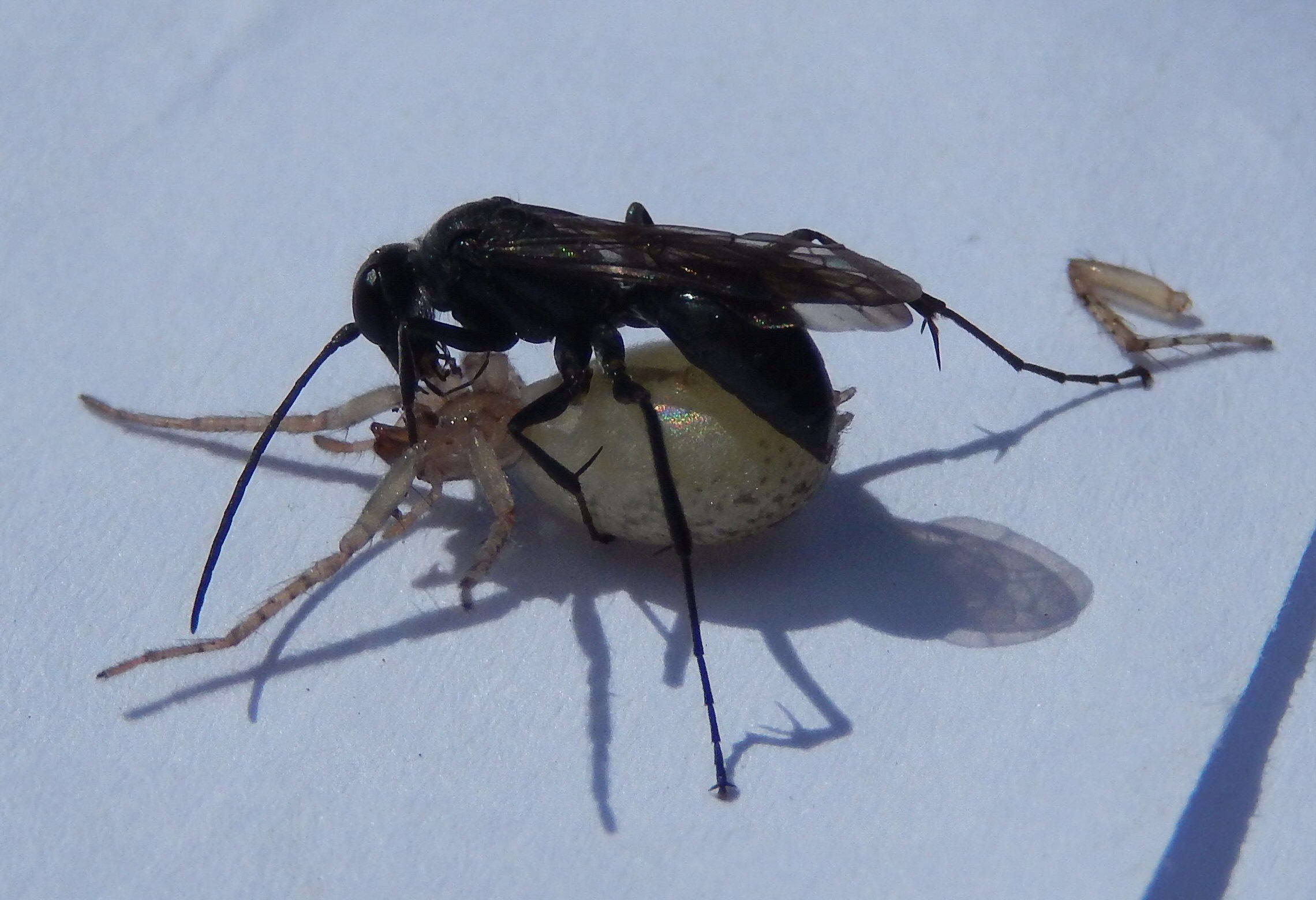
A Pompilid Spider-Hunting Wasp with prey ... on a sheet of paper in the hut
A Pompilid Spider-Hunting Wasp with prey … on a sheet of paper in the hut

A second entomological excitement: a Pompilid spider-hunting wasp was running rapidly about on some papers in the hut, dragging something white below her body. The photo shows what the naked eye could hardly perceive: she had a paralysed spider as big as herself in her jaws (a leg has broken off). She was presumably running about to find a suitable hole to bury the unlucky spider in, complete with one of her own eggs which will hatch and eat the spider as a supply of fresh, living food, enough to keep it going until it pupates.

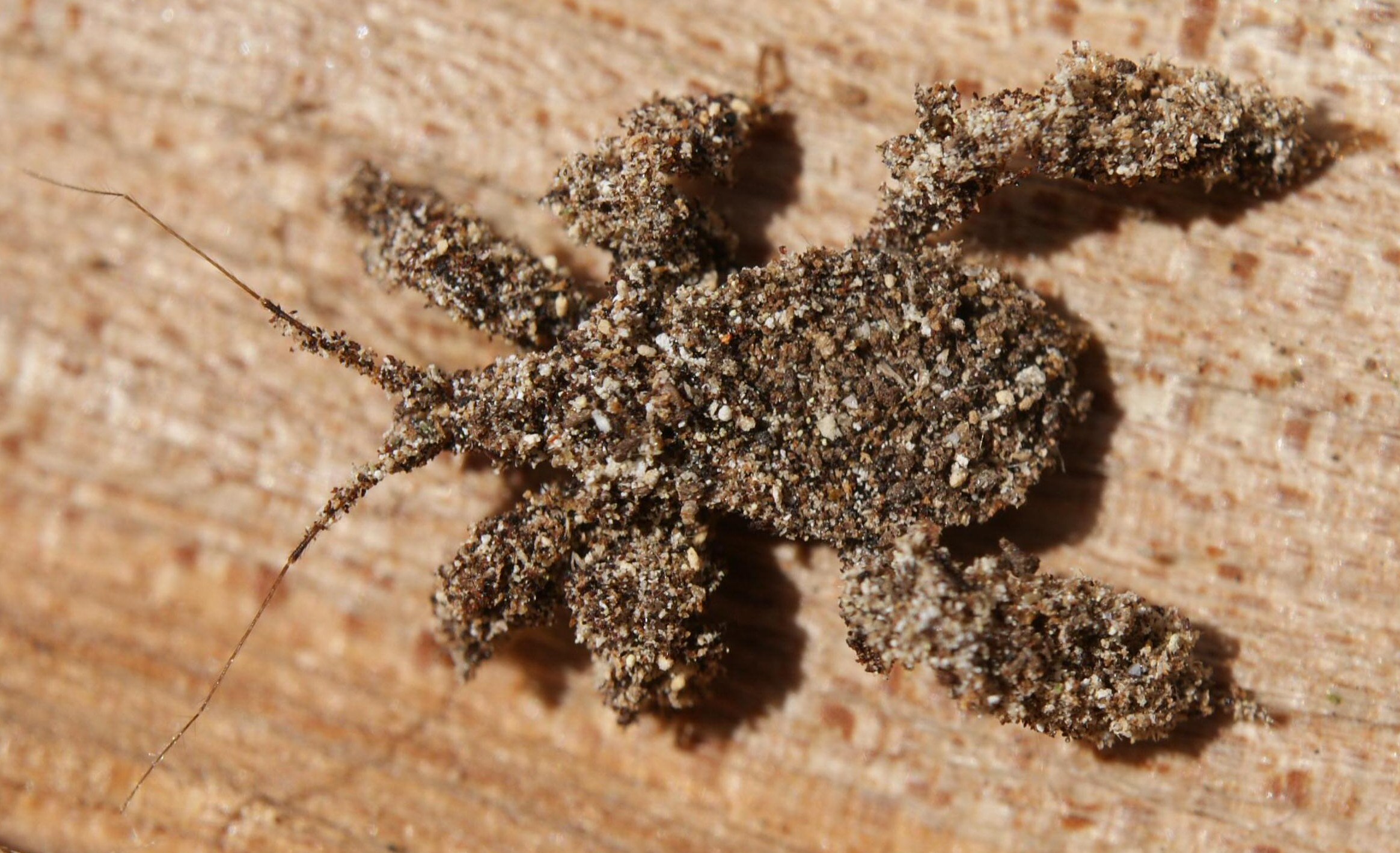
Masked Hunter Bug, camouflaged with sand grains

A surprisingly large audience congregated for the talk, which looked at tricks that animals use to conceal themselves, often in plain sight. I demonstrated using painted cylinders in the fortunately bright sunlight how countershading works and why it is necessary; and how some animals like skunks and honey badgers use it in reverse to make themselves as conspicuous as possible. We all marvelled together at the wonderful camouflage of the Masked Hunter Bug, the Flat-tail Horned Lizard, and perhaps best of all the Potoo, beloved of Hugh Cott, motionless with its astonishing disruptive markings in the fork of a tree. I risked bringing out my copy of Abbott Thayer’s Concealing-Coloration in the Animal Kingdom, complete with his fine but sadly misguided paintings of camouflaged Peacock, Roseate Spoonbills and Wood Duck. He was right about the principle of countershading, and the superb disruptive plumage of gamebirds, though.

Then we had more lemonade and ate the camouflaged cakes!

See also the blog article that trailed the talk.

Demoiselles and Warblers beautiful at Wraysbury Lakes

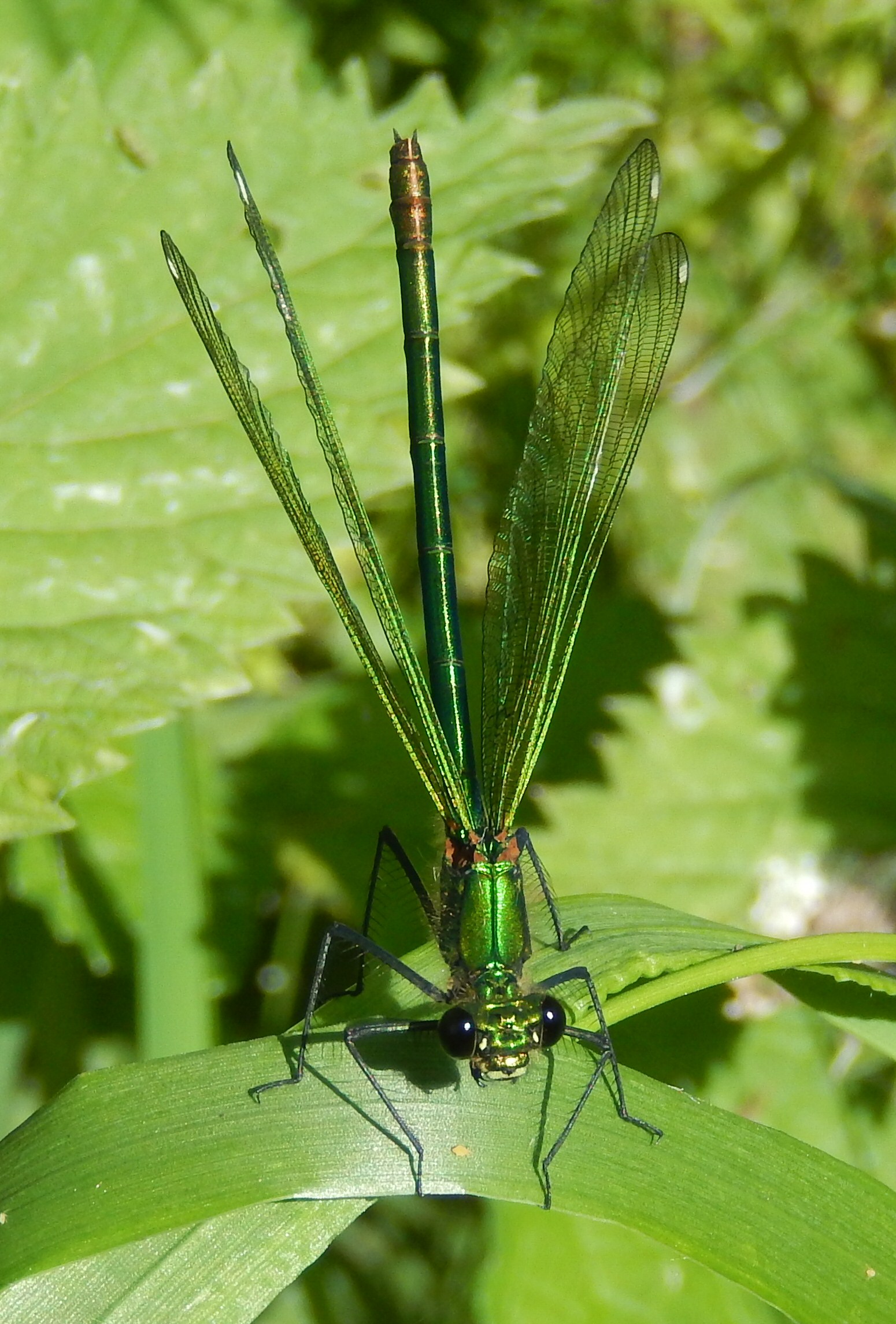
Banded Demoiselle Female with Half-Open Wings

I had a beautiful, peaceful, sunny summer walk down at Wraysbury Lakes. Away from the roar of the traffic and the enormous queues brought on by roadworks and summer weekend commuting, I was surrounded by fluttering, glittering, shimmering Banded Demoiselle males, and on the vegetation also the gloriously iridescent green females, their clear green wings like fine lace dress trimmings to accompany their dazzling emerald-jewelled and enamelled bodies.

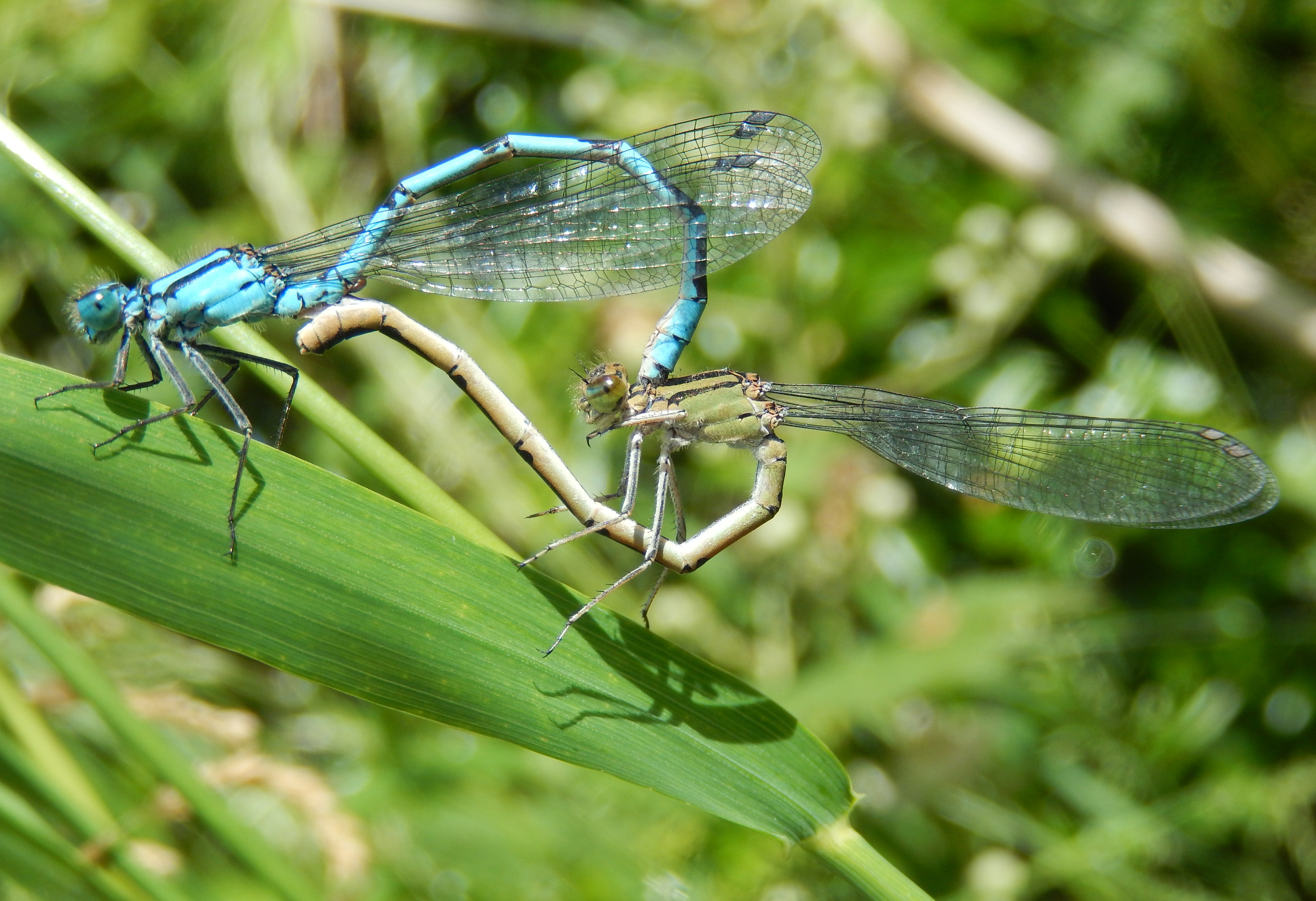
Common Blue damselfly pair in cop

As well, Common Blue damselflies basked in the sun; a few pairs in cop carried out their incredibly complicated sex act, all claspers (male tail to female neck, female tail to male belly with its spermatophore and secondary sexual organs, forming the startling ‘heart’ or ‘wheel’, in which the pair can, at a pinch, fly like synchronised swimmers.

At first I thought there were no warblers about, but gradually little bursts of song punctuated the afternoon, and by the end I had heard six warbler species, and good binocular views of three of them (Garden Warbler, Whitethroat and Willow Warbler).

There were some handsome Ichneumons about, but perhaps the insect I was most surprised to see was a Small Tortoiseshell butterfly. When I was a boy these were so common as to be unremarkable – as were House Sparrows, Starlings and Yellowhammers. It is almost a shock to discover that seeing just one is now a rare treat: more nostalgic than pleasurable, perhaps.  Much work needs to be done on landscape-scale and farmland conservation to bring back our common butterflies.


Flaming June

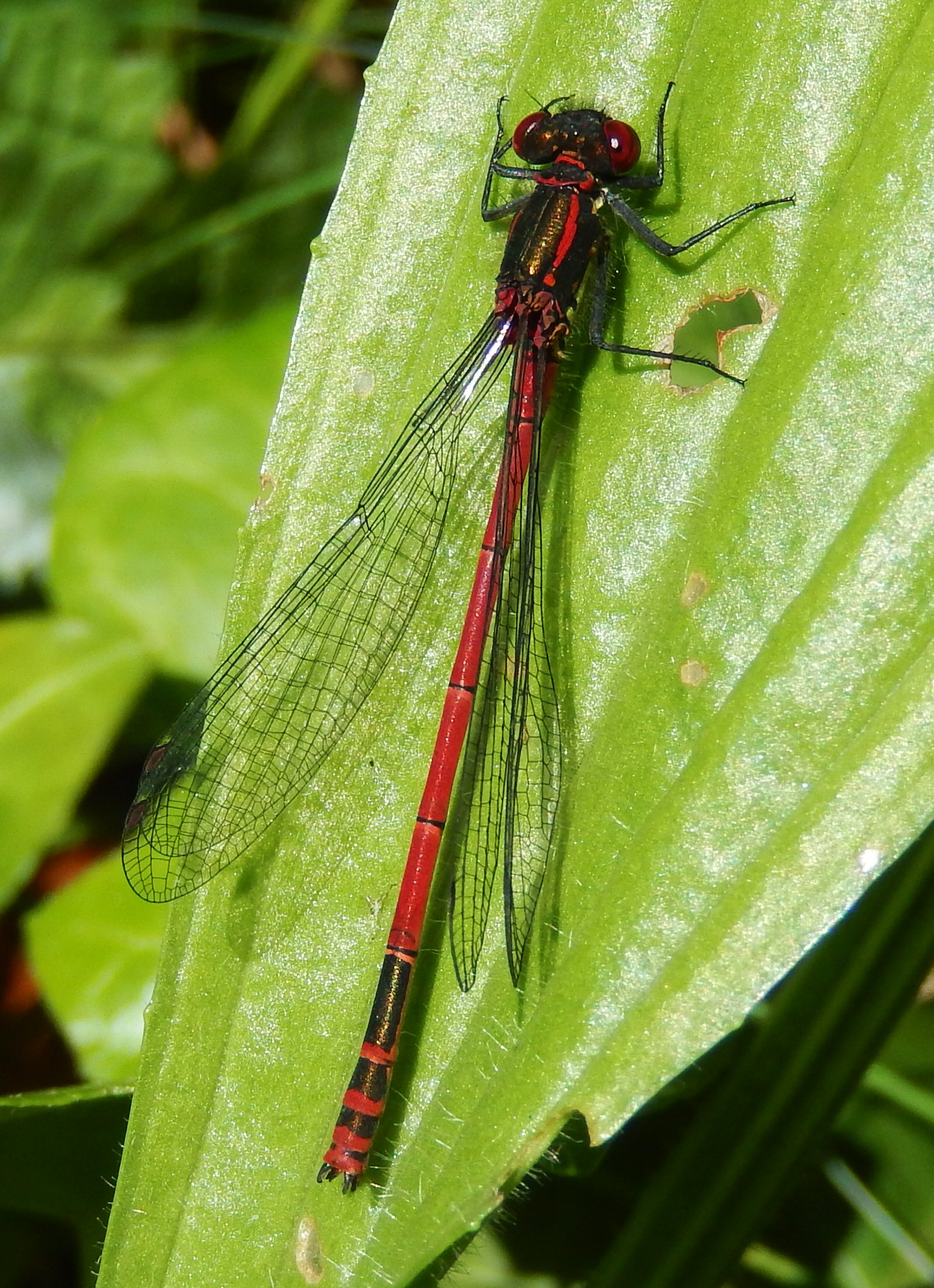
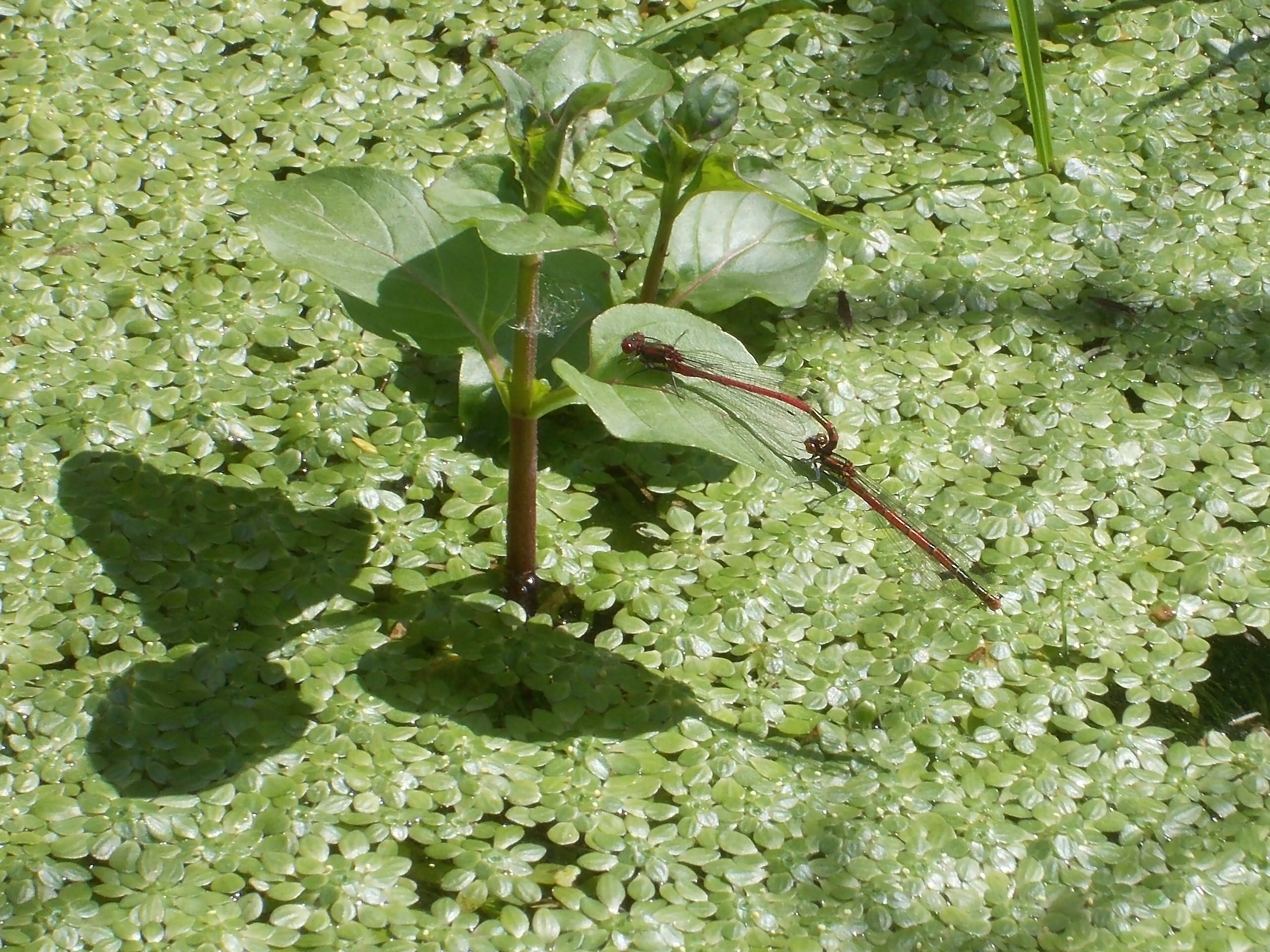
Large Red Damselfly
Large Red Damselfly

After all the rainy weather  (I even found a large toadstool – in June: The Blusher, Amanita rubescens), today was suddenly hot, at least it seemed so while digging brambles out of the ramp meadow, raking up the scythed Cow Parsley in the full sun, pitchforking it into a barrow and carting it off to a deadhedge. It was a satisfying conservation job, one of those where you can see what you have done, and it looks a lot better after than before. The area is supposed to be a meadow; we successfully suppressed the overgrowth of brambles two years ago, leading to a burst of rather nice Garlic Mustard and its attendant Orange Tip butterflies last year: and a second wave of Cow Parsley that must have seeded itself really well, because it suddenly covered the area this year. Now that it’s all cut, we may hope that grasses and smaller herbs may get going: some Ground Elder at least has begun the process.

In the pond and on the vegetation for a way around it, including atop the hump, Large Red Damselflies are soaking up the sunshine, and flying in cop, egglaying – the females dip the rear half of their very long abdomens in the water to reach an aquatic plant such as Myriophyllum on which they place the eggs.

The butterfly transect was again quiet, but graced by the first Cinnabar Moth of the year: there is a fair bit of Ragwort coming up, and this adult must be newly hatched out of a pupa, presumably at ground level or below as the plants are annual.

Sure enough, after I had finished the transect, the first Holly Blue butterfly of the year, beautifully fresh and new, skipped its bright quick flight just in front of the hut.

Grasses at Gunnersbury Triangle

With the light changing all the time in a showery airstream (and the Met. Office seemingly unable to get the forecast right for the last several days, wrong every time to my surprise), things looked hopeless for butterflies (just a Speckled Wood or two) and insects (a few leaf beetles, hoverflies and bees).

So we picked up a field guide and a couple of identification sheets, and went out to see what grasses we could find between three of us.

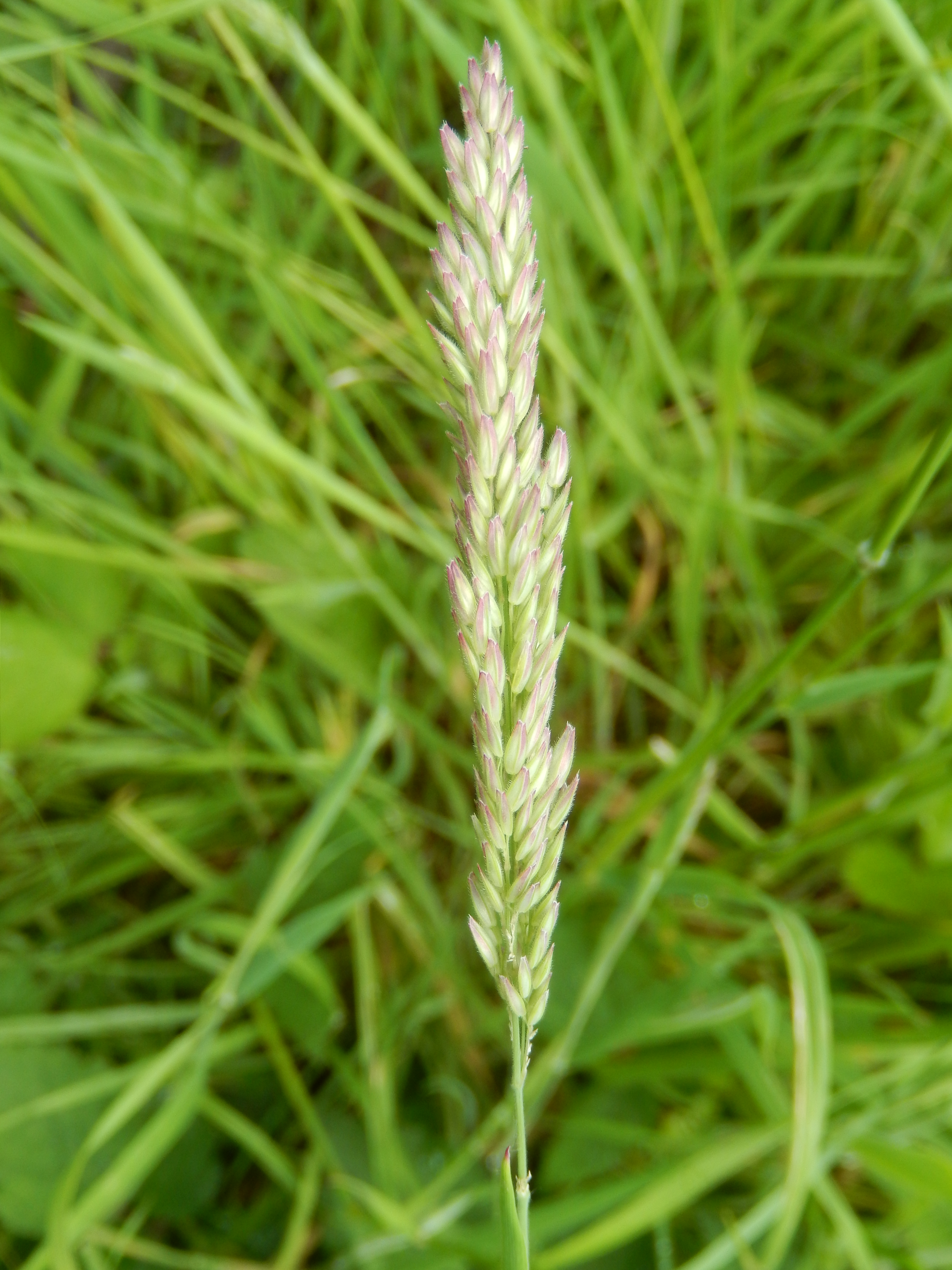
Perennial Ryegrass
Perennial Ryegrass

Ryegrass is a tough grass useful in lawns. Its neatly alternating spikelets make it easy to identify.

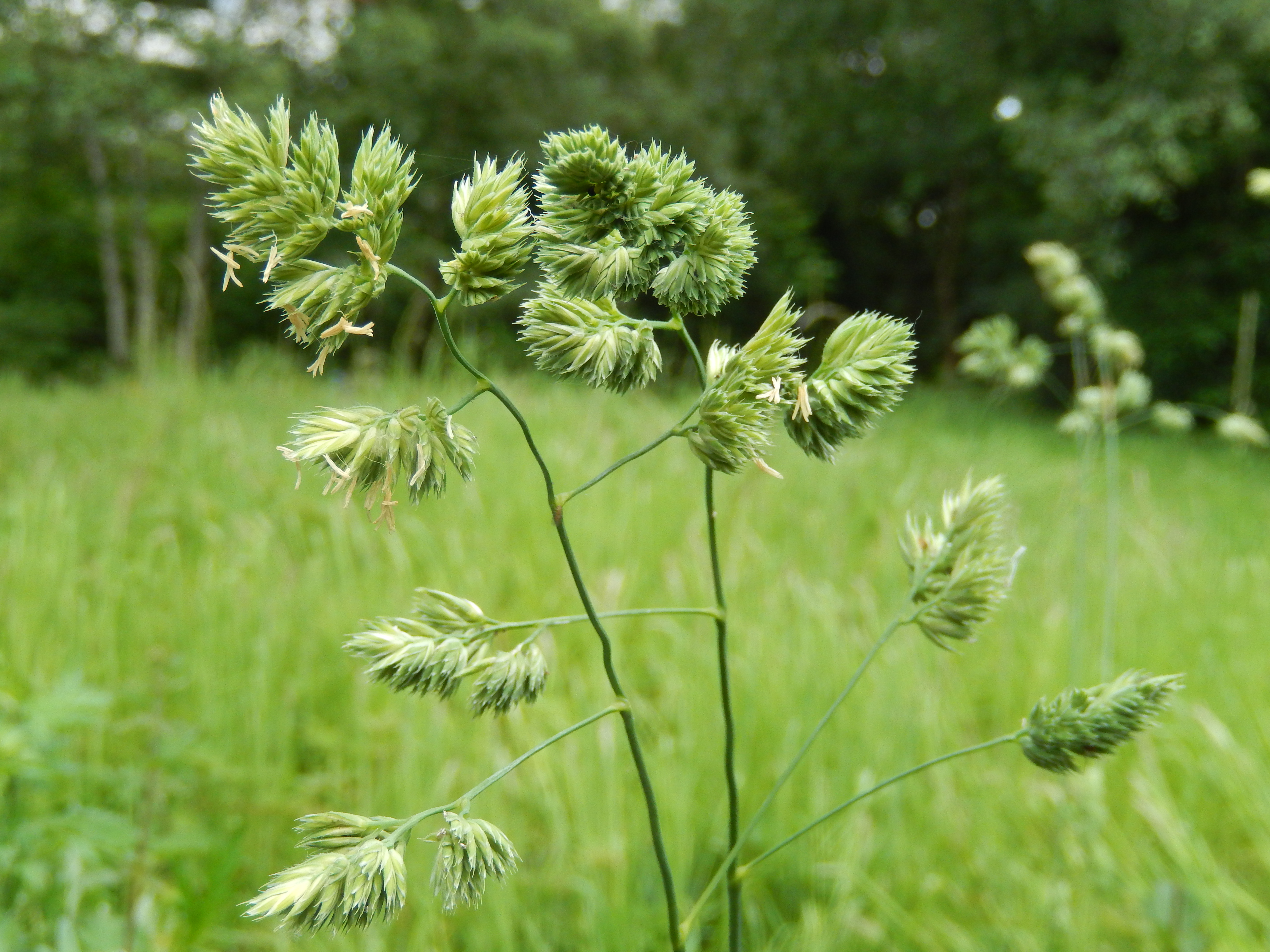
Cocksfoot grass
Cocksfoot grass

Cocksfoot is a taller grass with a head  that somewhat resembles the shape of a bird’s foot with its chunky branching spikelets to left, centre and right .

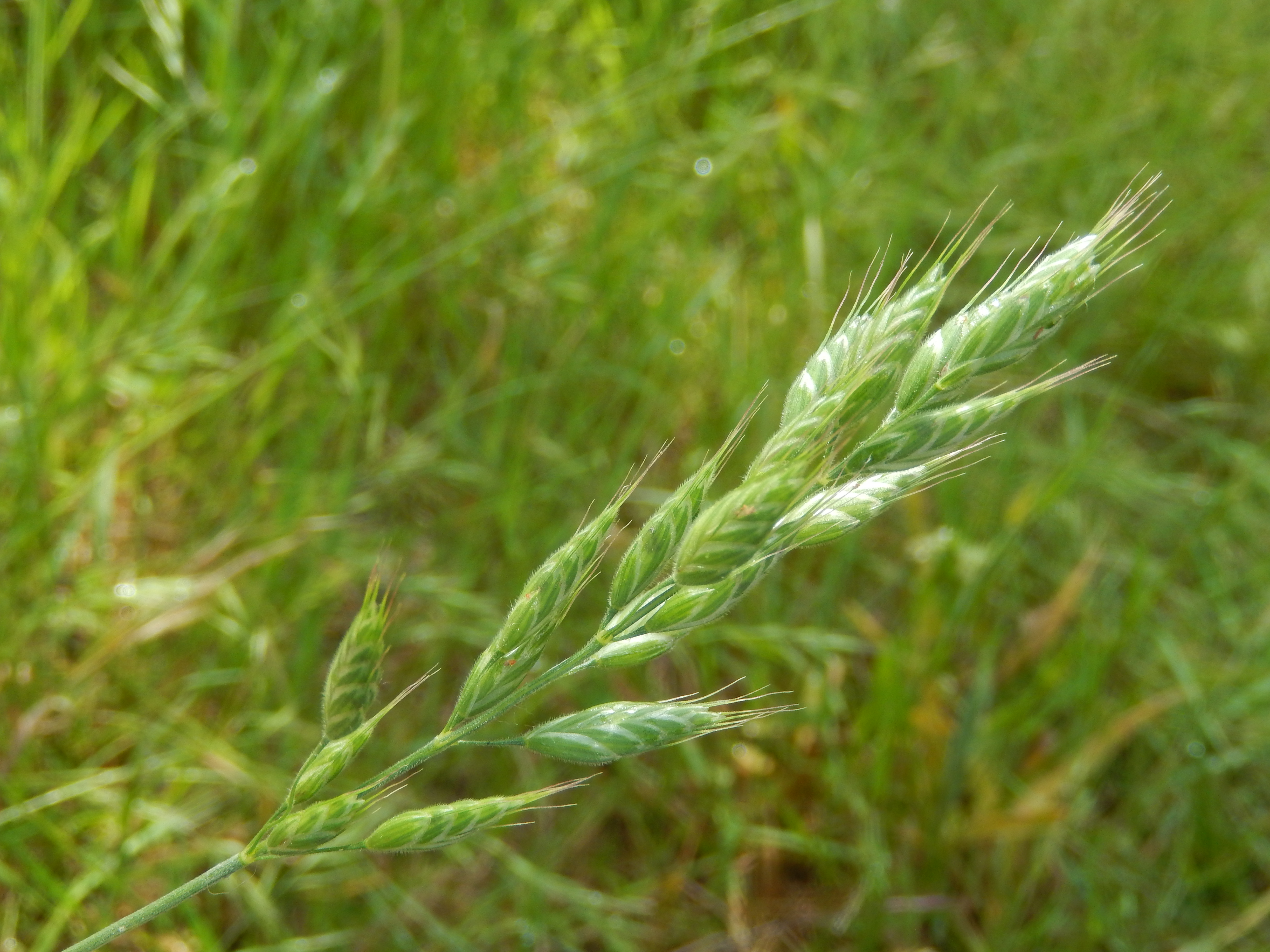
Soft Brome grass
Soft Brome grass

Soft Brome is as its name suggests soft to the touch; its spikelets like most Bromes are compactly plump and rounded, they form a pattern of green and white stripes, and they have awns (little barley-like spines). It’s quite distinctive once you’ve seen it.

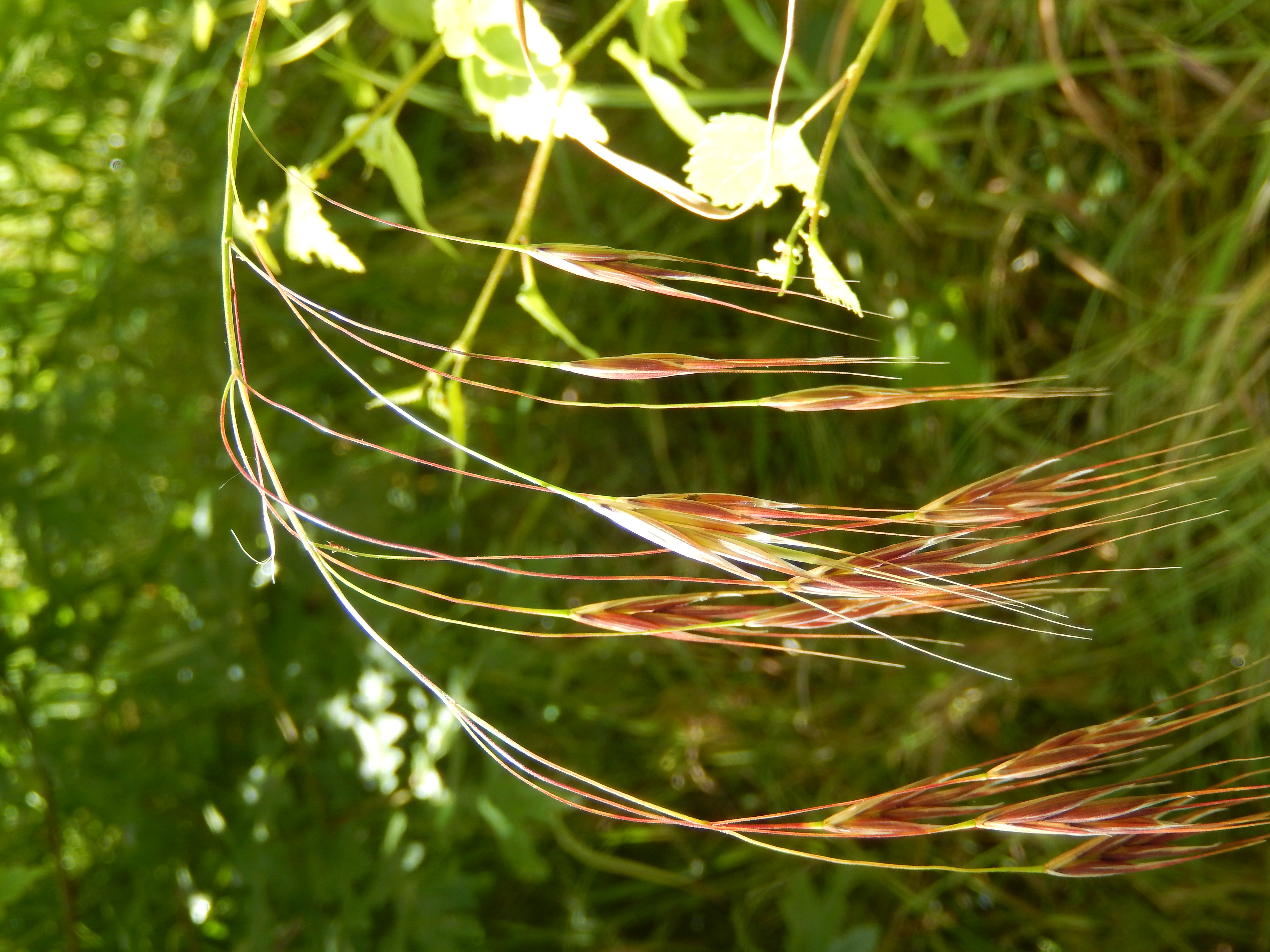
Barren Brome grass
Barren Brome grass

Barren Brome looks very different: perhaps its name comes from the way it appears to have nothing much in its seed-heads, which are thin, triangular and very spiky; the plant is altogether long and thin and dark purplish-brown.

Yorkshire Fog
Yorkshire Fog

Yorkshire Fog, a beautiful name for a lovely soft plant, is thick and tall with broad soft leaves and a remarkably thick, soft seedhead. It’s one of those plants you can recognise twenty yards off once you know it.

The reserve has some False Oat-grass which in theory we should be pulling out – it seem unlikely given the way it’s tightly integrated with the rest of the grasses and herbs, so it’s probably here to stay.

There seem to be several Fescue grasses in the thin strip of acid grassland along the line of the old railway – the clinker that the sleepers rested on consisted of chunky angular chips of hard acid rock from somewhere far from London. One is Sheep’s Fescue: there may be Red Fescue, and there is something that looks like one of the taller Fescues too.

Rough Meadowgrass
Rough Meadowgrass

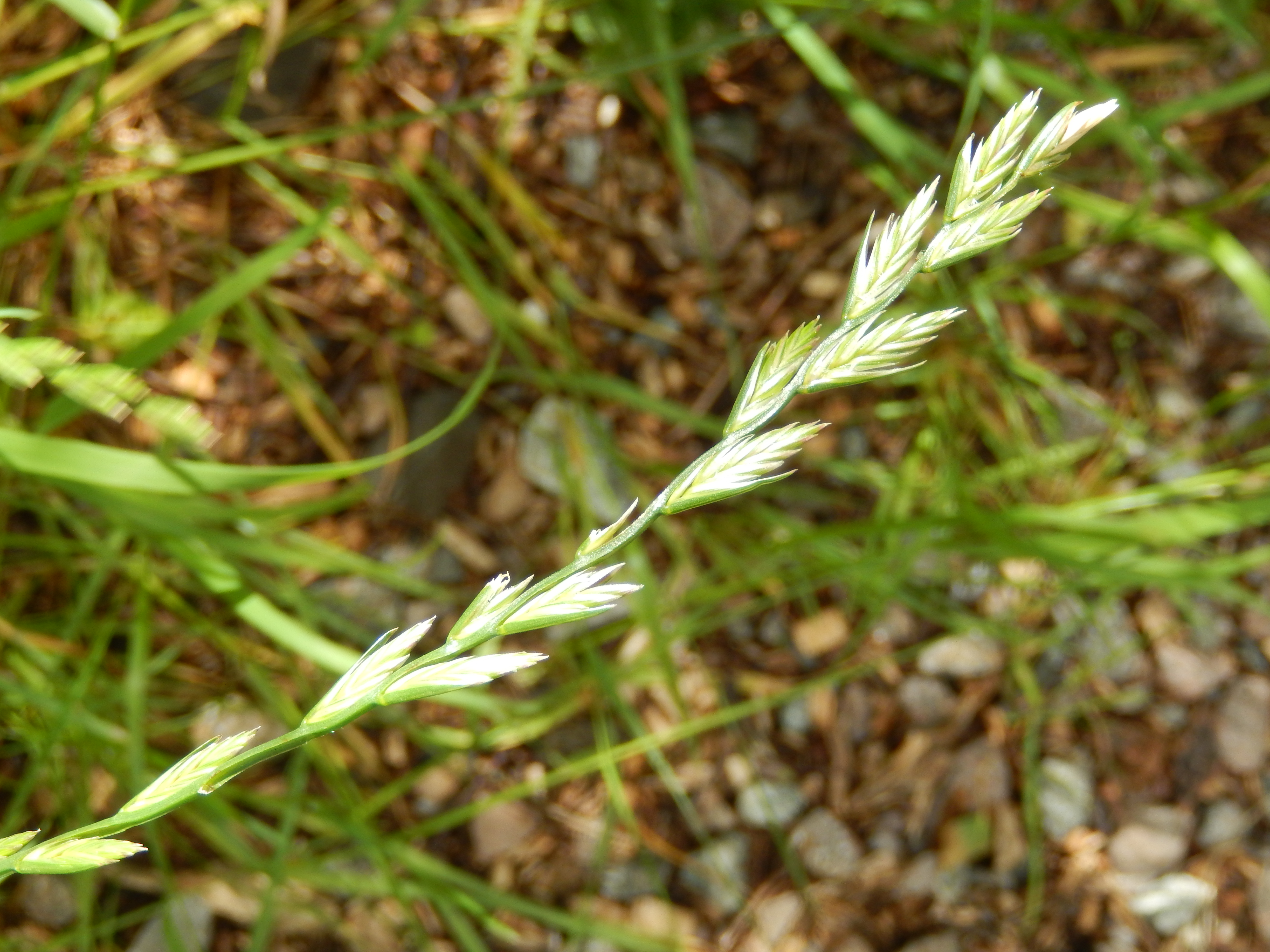
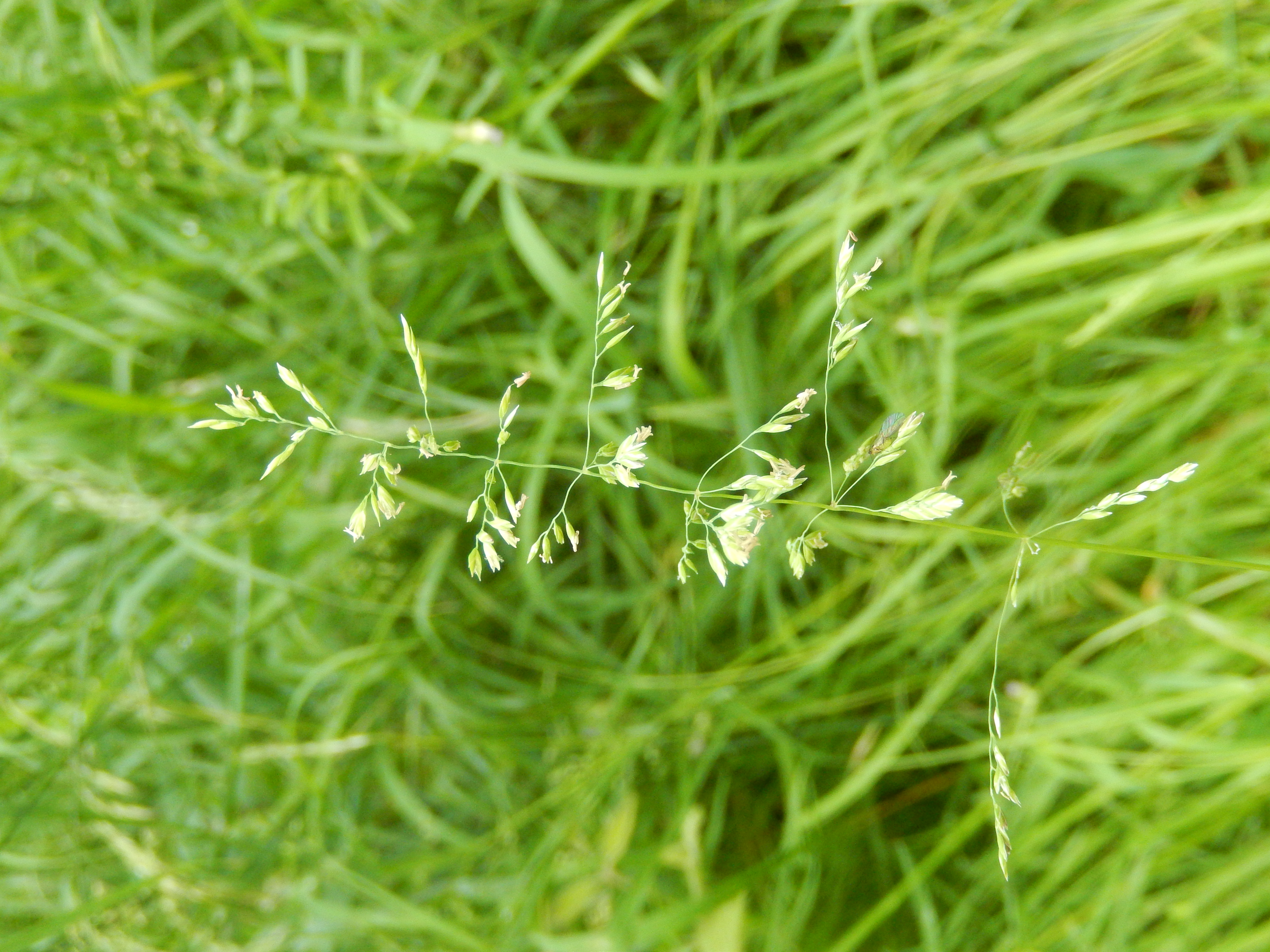
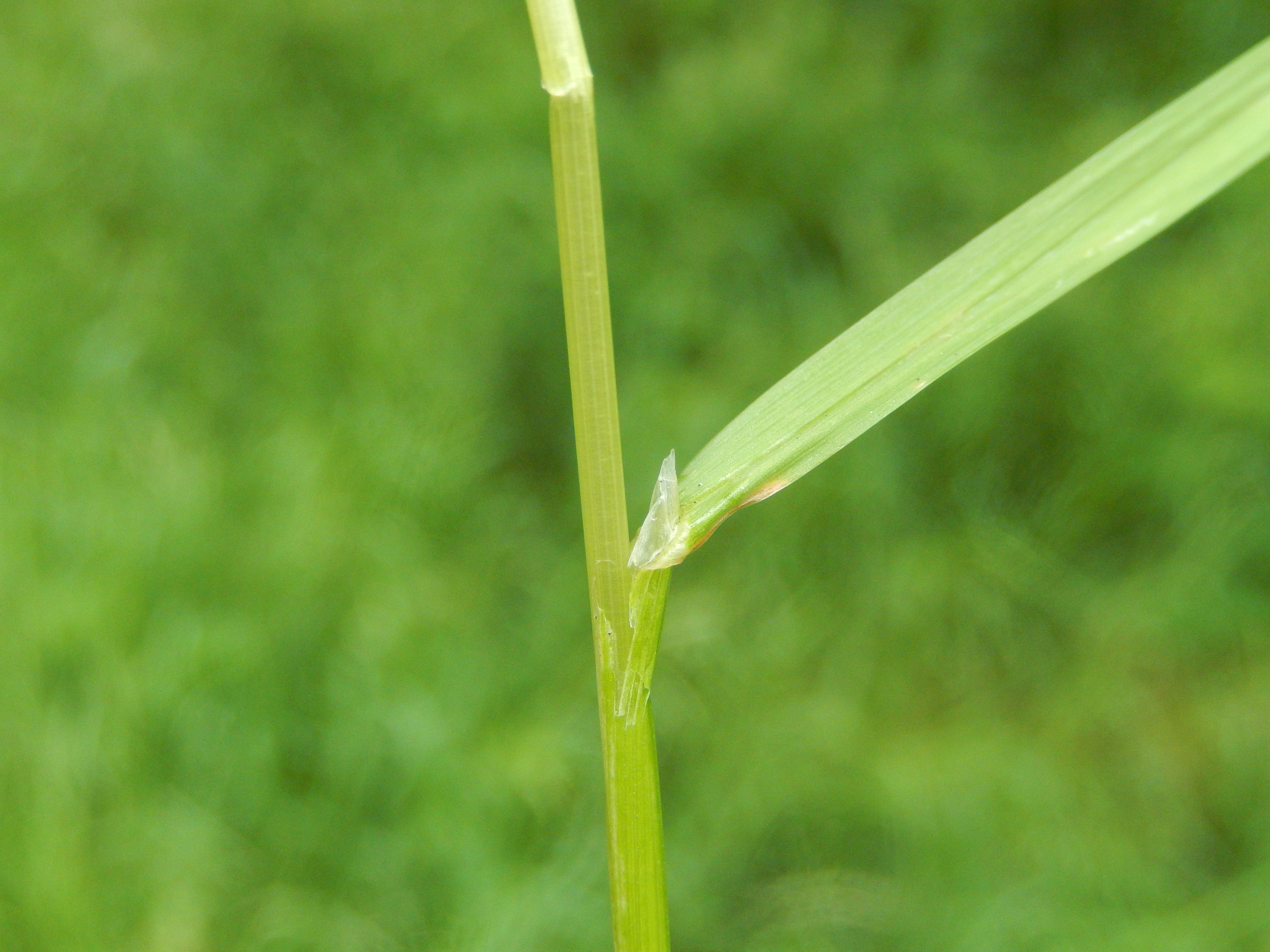
The Meadowgrasses have a typical light open panicle for their seedhead, giving a rather delicate appearance with their slim stems. I carefully checked which kind this one was; it has a pointed ligule where the leaf joins the stem, and is gently rough with little hairs, so it’s the Rough Meadowgrass.

Rough Meadowgrass
Rough Meadowgrass

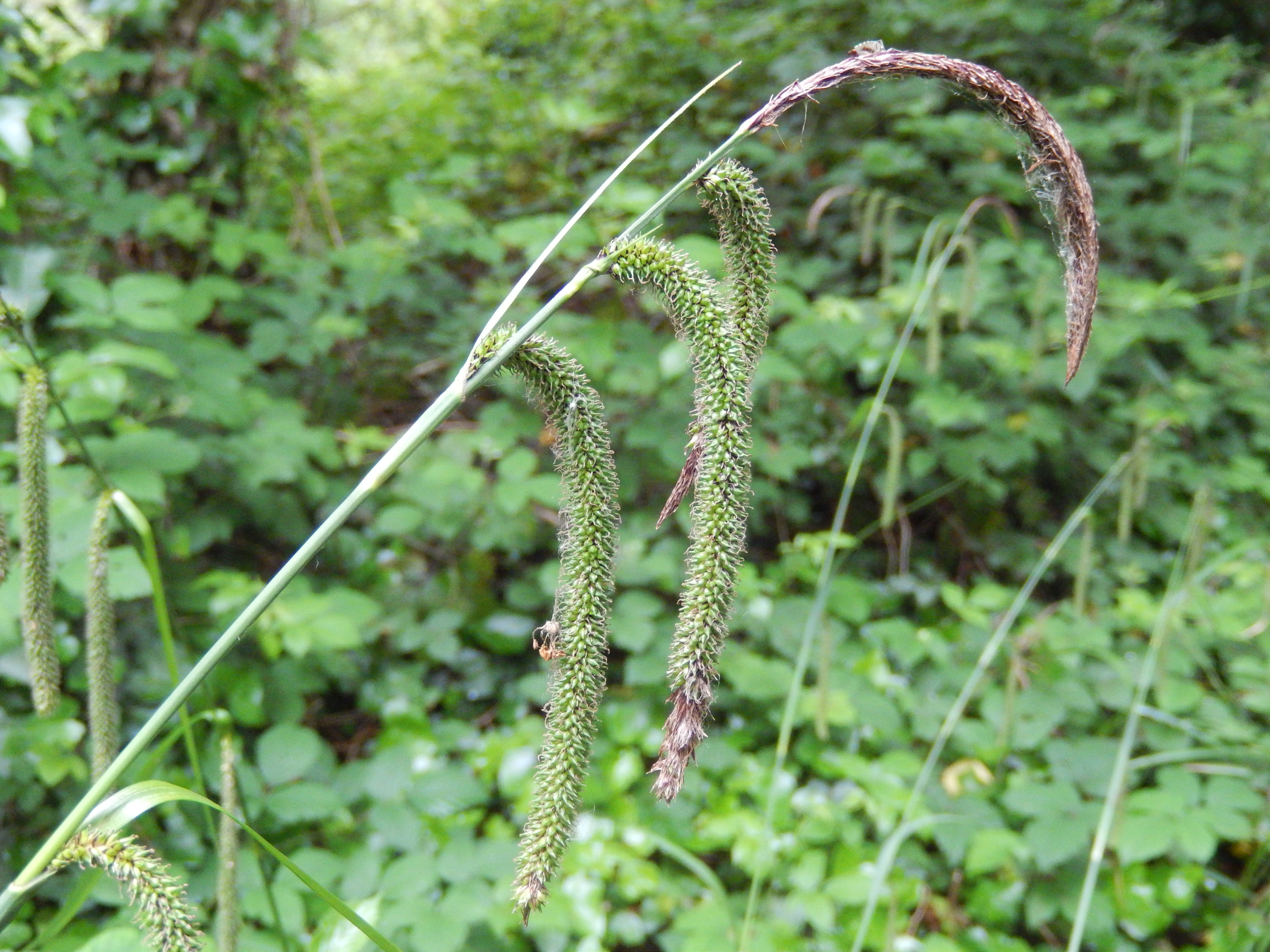
In the woods near the path there are tufts of a broad-leaved grass that tolerates shade: it’s the Wood Melick.  Finally, there’s one conspicuous grasslike plant that enjoys the wetter places here: the Pendulous Sedge. It’s a bit invasive but so handsome that I always admire it.

Pendulous Sedge
Pendulous Sedge


Bugs Day at Gunnersbury Triangle

Cake Stall
Cake Stall

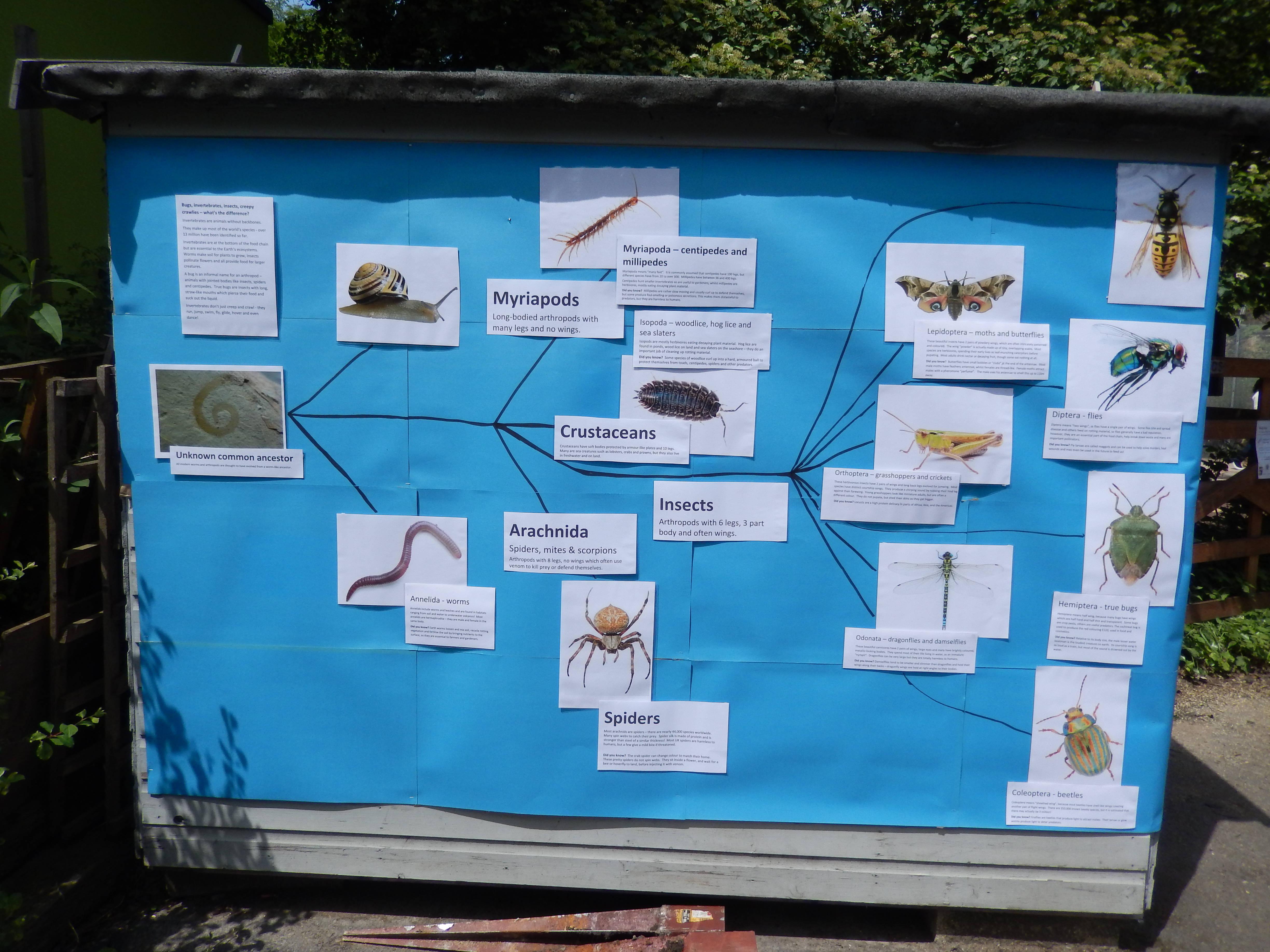
Saturday 31 May was Bugs Day at Gunnersbury Triangle. The team arrived early to set out home-made cakes, lemonade, a face-painting stall, tables for children to paint butterfly cut-outs, signs advertising the day, and a wall-sized display of the Tree of Life, or rather a Tree of Invertebrate Phylogeny.

Paint that Butterfly!

Throughout the day a succession of families with small children came and had fun decorating the butterflies.

Tool Shed as Tree of Life

The Tree of Life occupied a whole wall of the tool shed.

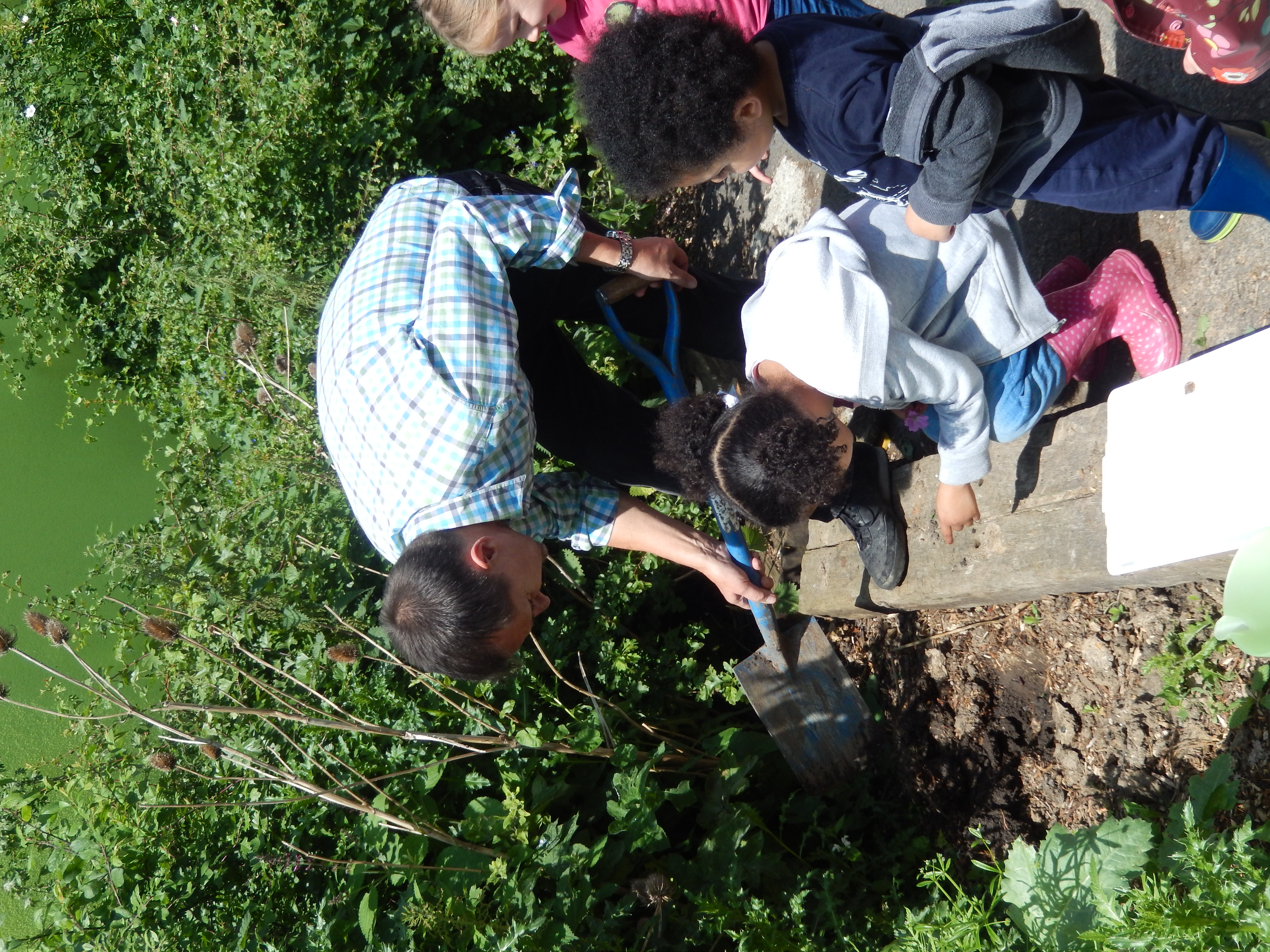
Worm survey
Worm survey

For the first time, we carried out a worm survey, organised nationally by Riverford organic farms (there’s a free identification guide to print out) – bizarrely, there is no map of the distribution of our native earthworms, so perhaps in a year or two there will be one now. We found no ordinary Lumbricus terrestris (Lob worms), the big ones that burrow deep under lawns (, maybe we needed to dig deeper), but good numbers of Black-headed worms (Aporrectodea longa, dark head, brown body, long and thin), a few smallish Green worms (Allolobophora chlorotica), and a Grey worm (Aporrectodea caliginosa, grey with a pink head and a pale saddle). It was surprising how many individual worms there were in a spadeful of earth, and the number of species. Darwin showed how important the earthworm was, but they seem to have been quite thoroughly neglected ever since.

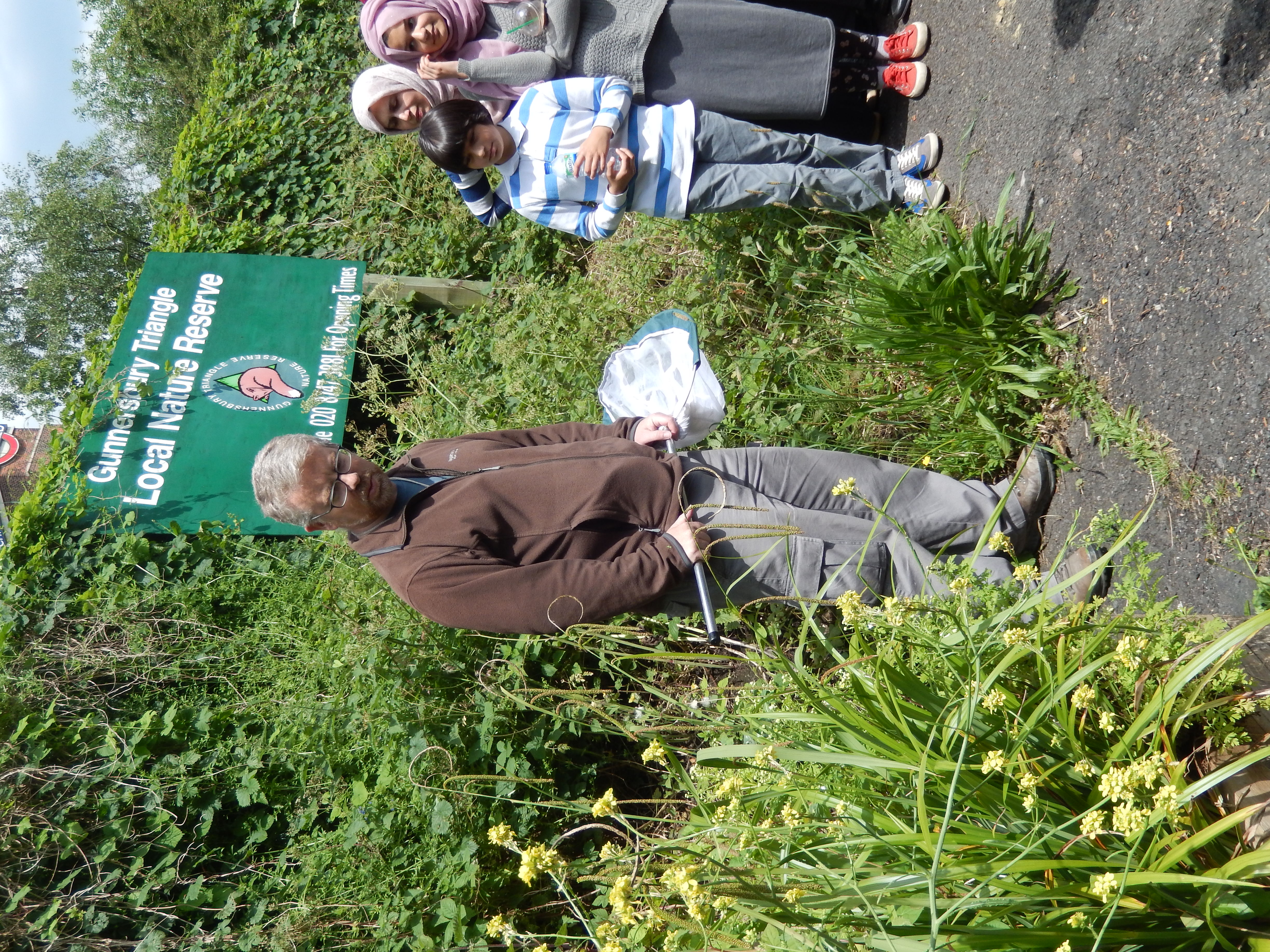
 Bug walk
Bug walk

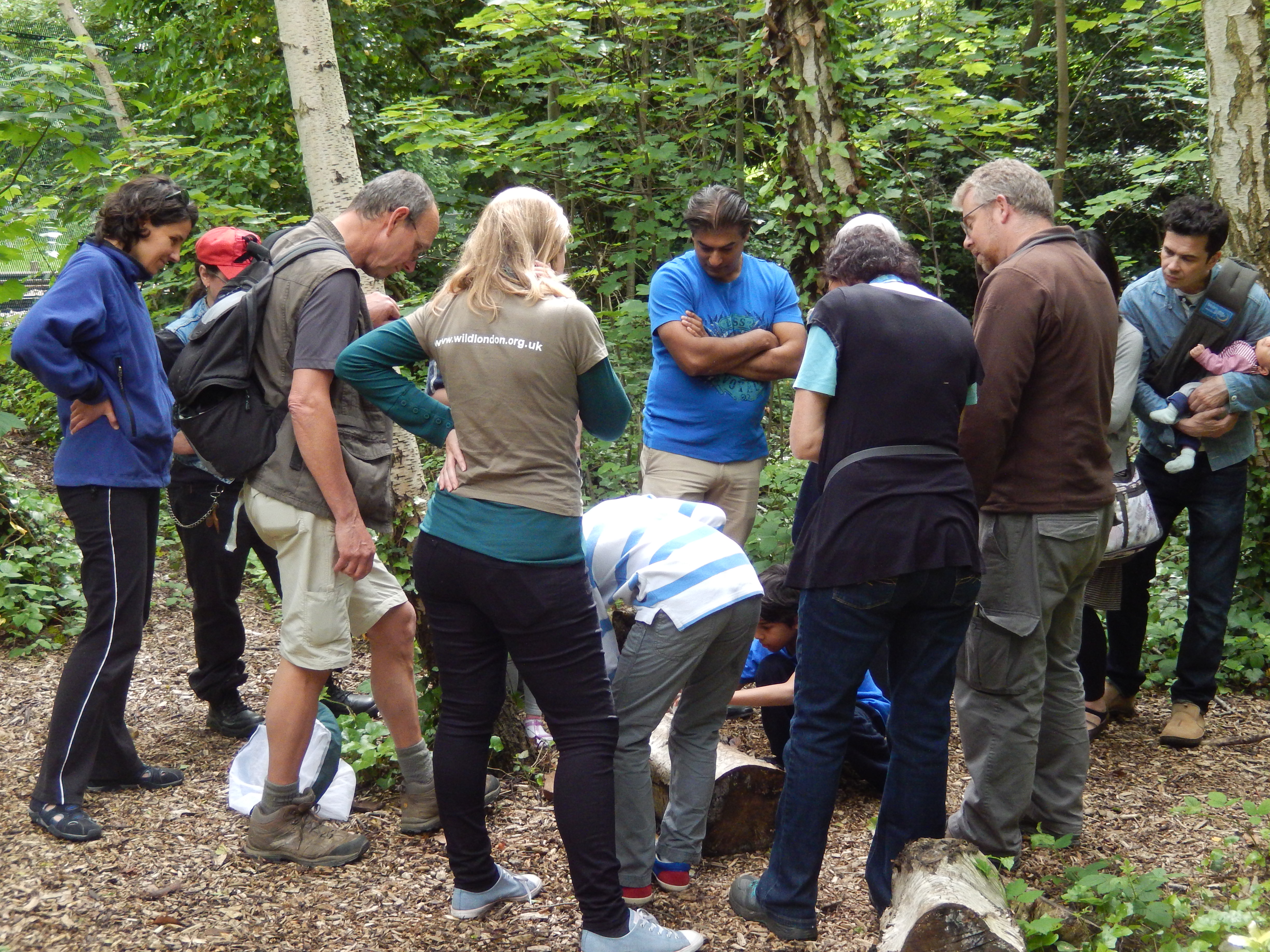
An entomologist from the Natural History Museum led a guided walk on the bugs to be found in the reserve.

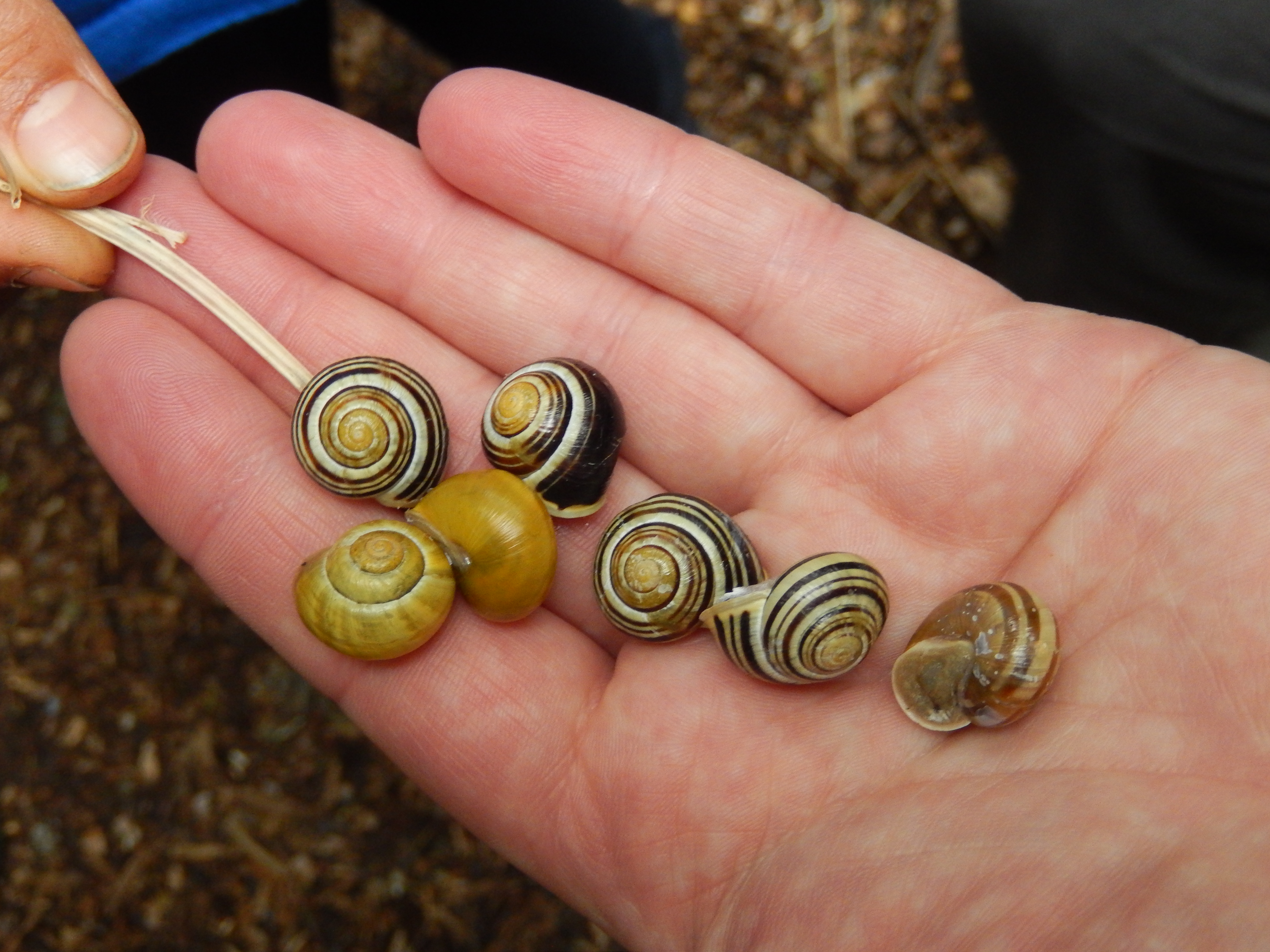
Polymorphism in White-Lipped Land Snail

We gingerly plucked banded land snails from some tall stinging nettles, finding a good range of colour varieties from clear yellow to heavily striped with dark brown and black.

Woodland bug hunt - slugs, centipedes
Woodland bug hunt – slugs, centipedes.

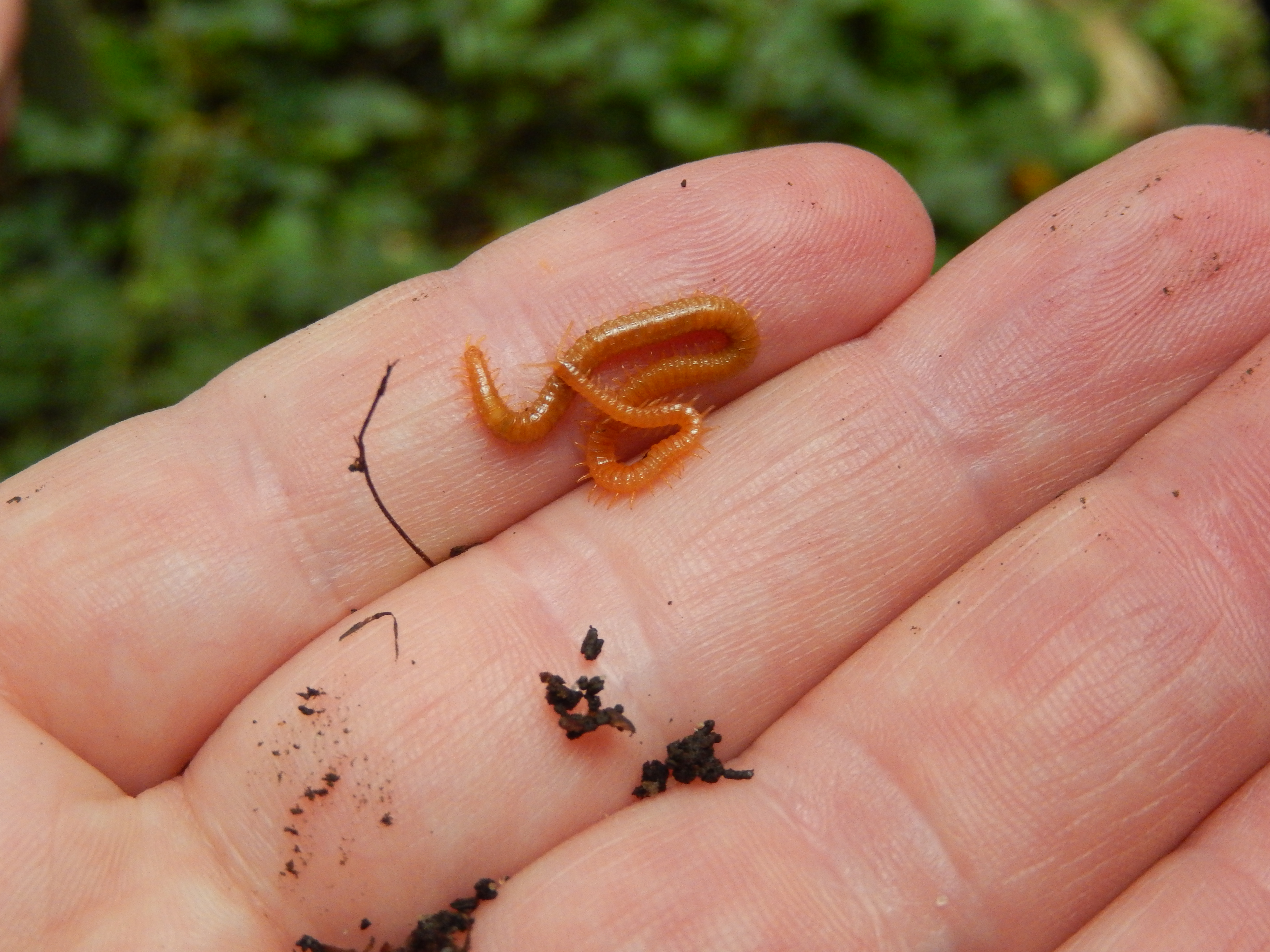
In the woodland, the entomologist boldly ventured outside his special area (Diptera) to familiarise visitors with the range of local slugs, centipedes, millipedes and woodlice: bugs in the very broad sense. We did have some true bugs too: shield bugs that give off a warning stink when held between finger and thumb.  And in between, ‘bugs’ often means insects in general.

Centipede
Centipede
 Large Sawfly (Symphyta, as no waist)
Large Sawfly (Symphyta, as no waist)

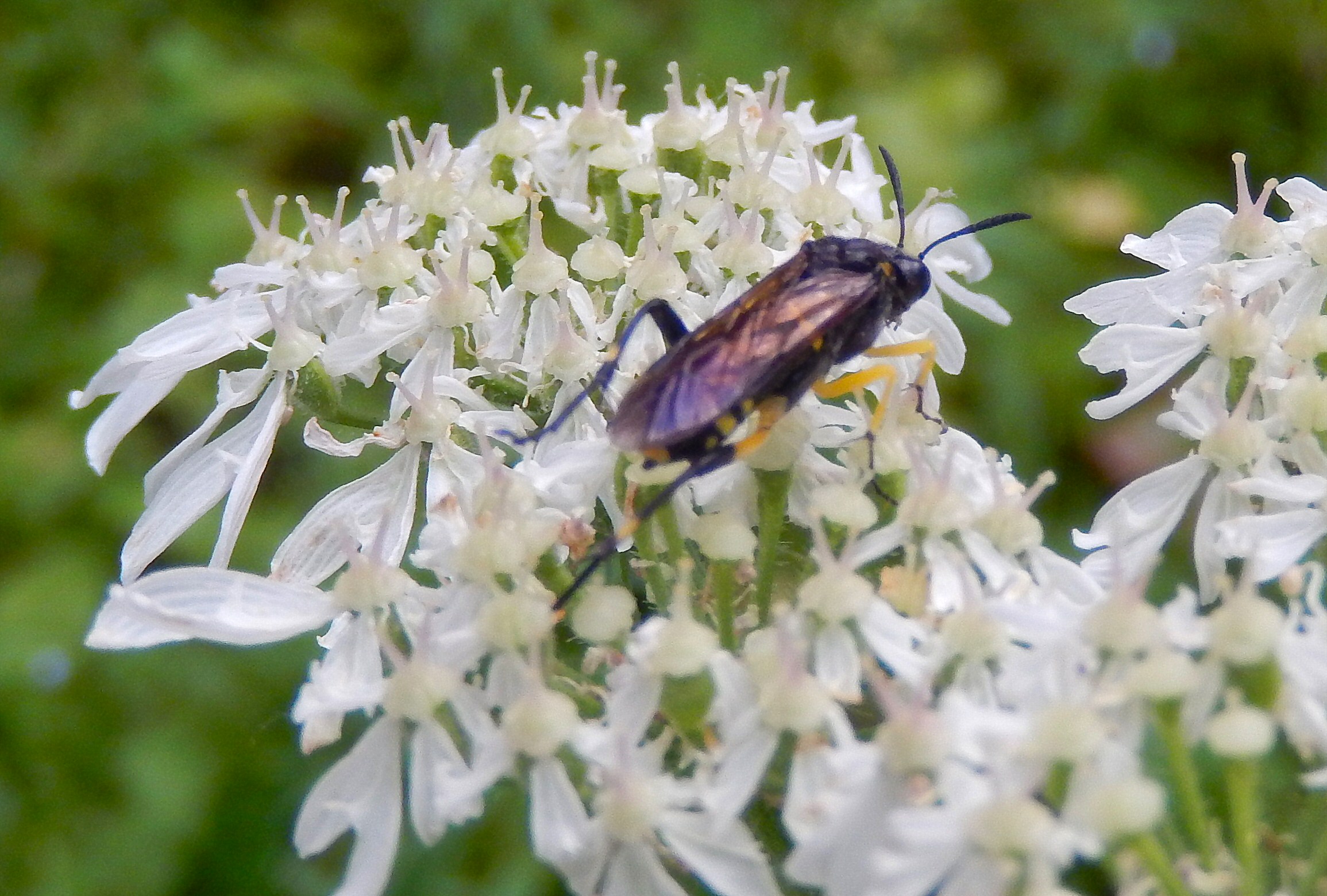
The sawflies and ichneumon flies are difficult for non-experts as there are hundreds of similar species and no popular books. However, the sawflies have thick cylindrical bodies, whereas the ichneumons, like the social wasps, have a very narrow ‘waist’. The Hogweed flowerheads (very large white umbels of dozens of small flowers) played host to plenty of good big sawflies with yellow legs and waspish black-and-yellow stripes.

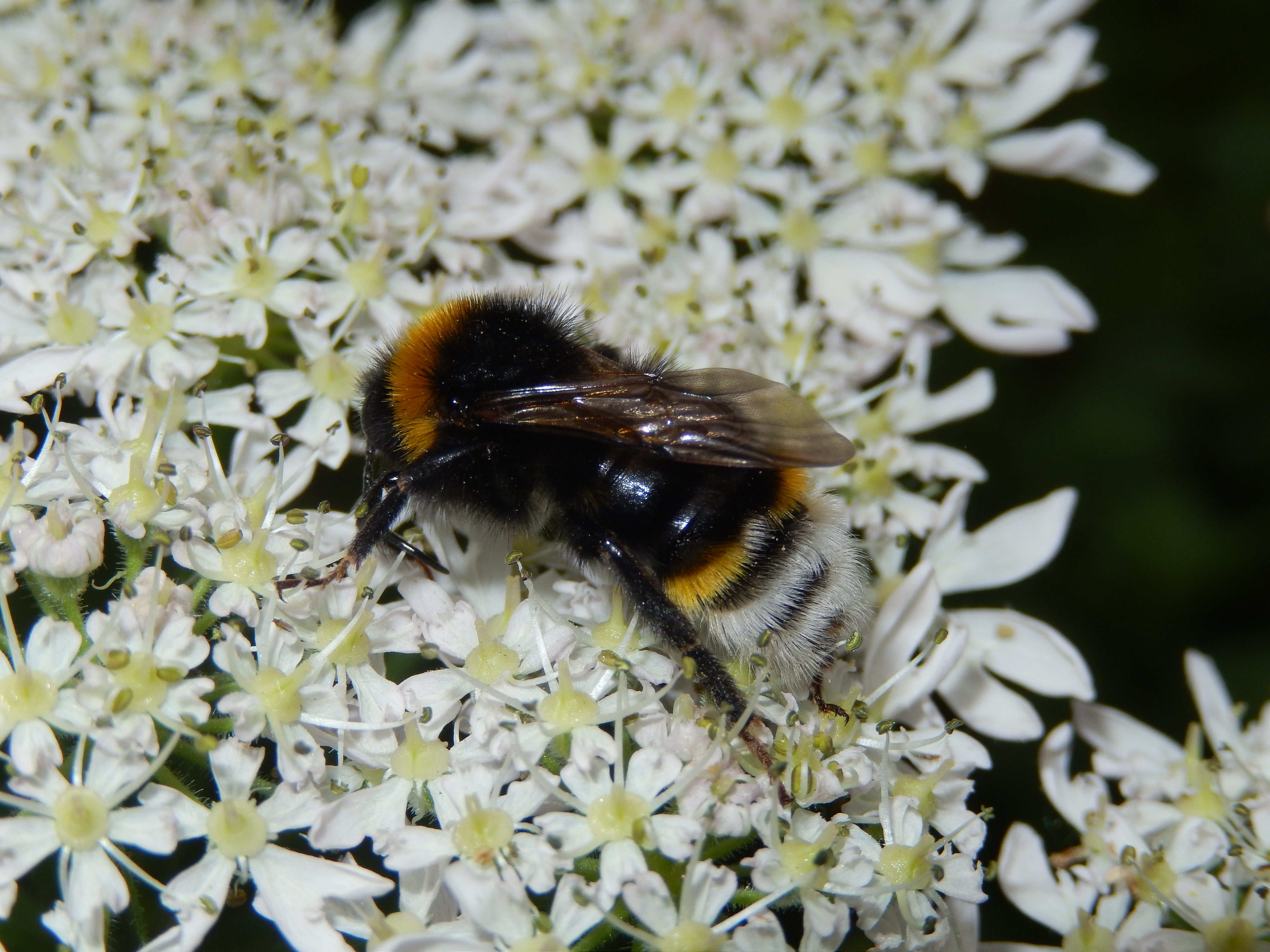
Nice side/tail view of Cuckoo Bee on Hogweed

A keen amateur entomologist (who recalled visiting the Triangle before it became a reserve 31 years ago) found this Cuckoo Bee. It parasitises and resembles ordinary bumblebees such as Bombus hortorum, but it never makes a nest or raises young. Instead, the females enter a bumblebee nest that already has a good number of worker bees, displace their queen, and lay their own eggs. Their brood is then brought up by the host workers. It’s a nasty way of life. The adults have a rather distinctive ‘tail’ with less ‘fur’ than usual.

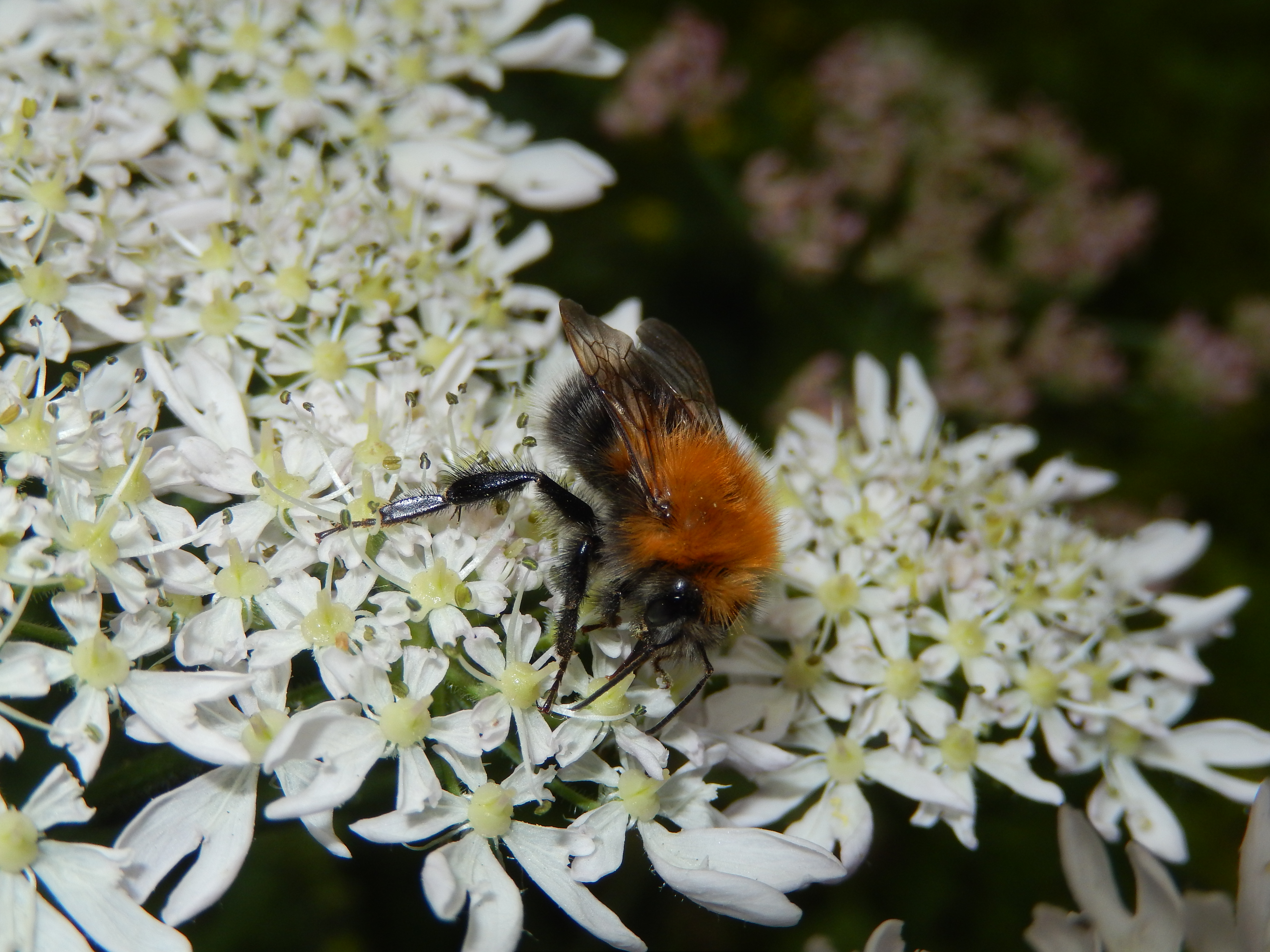
Tree Bumblebee
Tree Bumblebee, a rather recent immigrant from northern Europe, now common in the reserve

The Hogweed was also feeding plenty of Tree Bumblebees, a smallish species with a bright orange-brown furry thorax and a black abdomen tipped with white, so they are distinctive and easy to recognise. Only ten years ago or so they were unknown in England, but common just across the channel. They seem to have arrived all by themselves – bumblebee expert Dave Goulson (see Book Reviews) found them by chance in the New Forest – and now they are common here. Perhaps their northward spread is part of a global drift of species and habitats towards the poles as the climate warms.

Micro-moth Nemophora degeerella - longest antennae of any UK moth
Micro-moth Nemophora degeerella – longest antennae of any UK moth

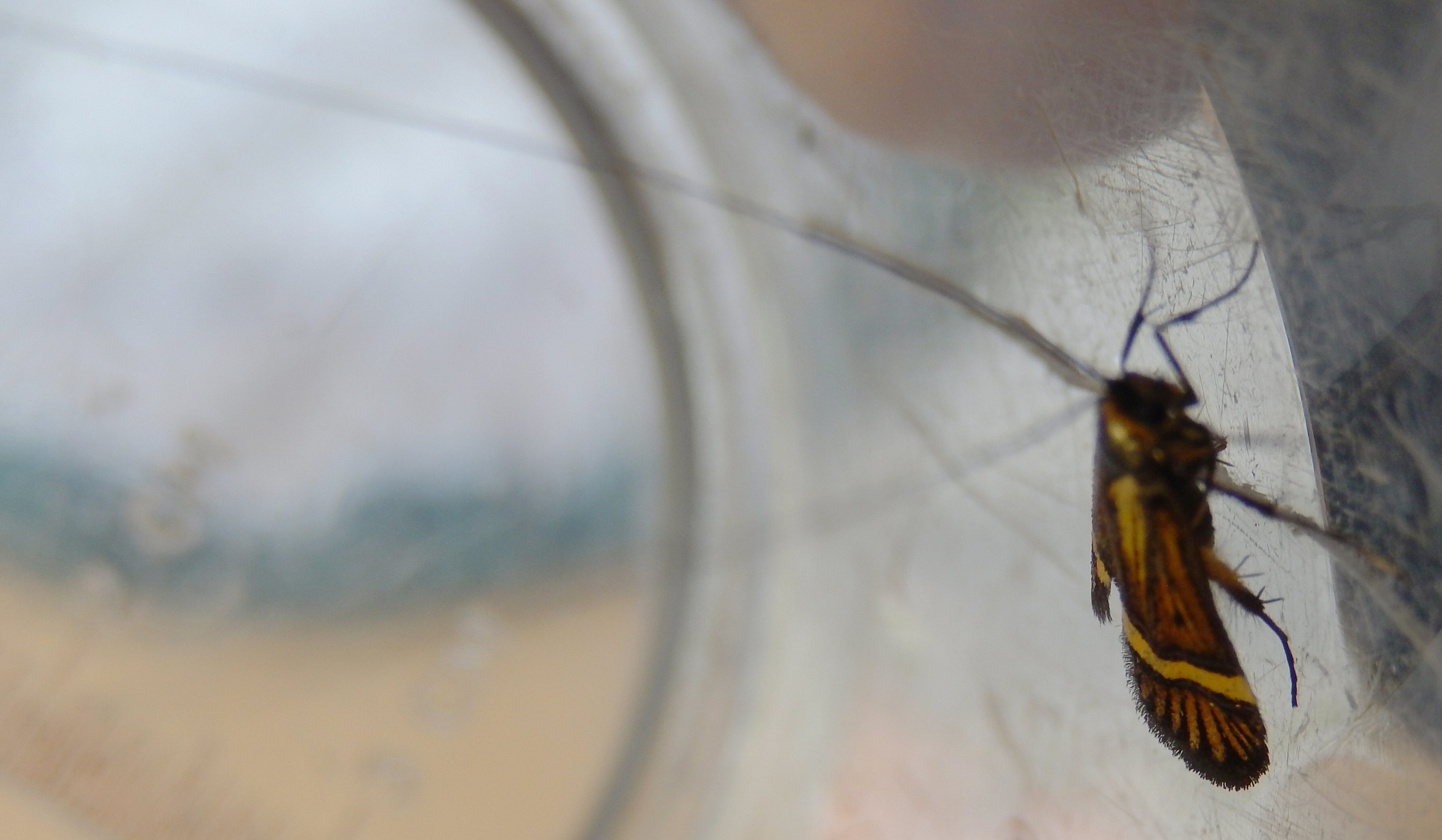
The entomologist found this beautiful micro-moth, giving the lie to any idea that they are all small and brown. Nemophora has a bold yellow-orange stripe across its forewings, making it instantly recognisable, but even more impressive are its antennae, which are over 4 times as long as its body (fw: 10mm): the longest antennae of any British moth. Quite a surprise.


More a Bug than a Butterfly Transect

I had a go at the ‘regular’ butterfly transect down at the reserve. It was warm and humid but overcast and it didn’t look promising. A large willow covered in Gypsy Moth caterpillars had been loosened by all the rain, and had fallen across the path. I lopped off the crown branches and carted them down to a dead hedge to fill in a gap someone had been climbing through.

The sun peeped out and the cloud cover reduced to maybe 60%, making it warm and pleasant. A single Small White appeared over the ramp and made it onto the transect. I wandered around the reserve, but there was nothing until I found a solitary Speckled Wood in the large meadow.

However, there was plenty to notice all around. The building site looks a lot better now the ‘Costa Concordia’ white horizontal balcony cladding on ‘Chiswick Point’ (well, it’s in Acton Green and on Bollo Lane, but I guess Bollo Block didn’t quite have the same cachet) has been completed: it will be nice when the noise of cranes and drilling stops.

Handsome iridescent green male Oedemera nobilis on Catsear

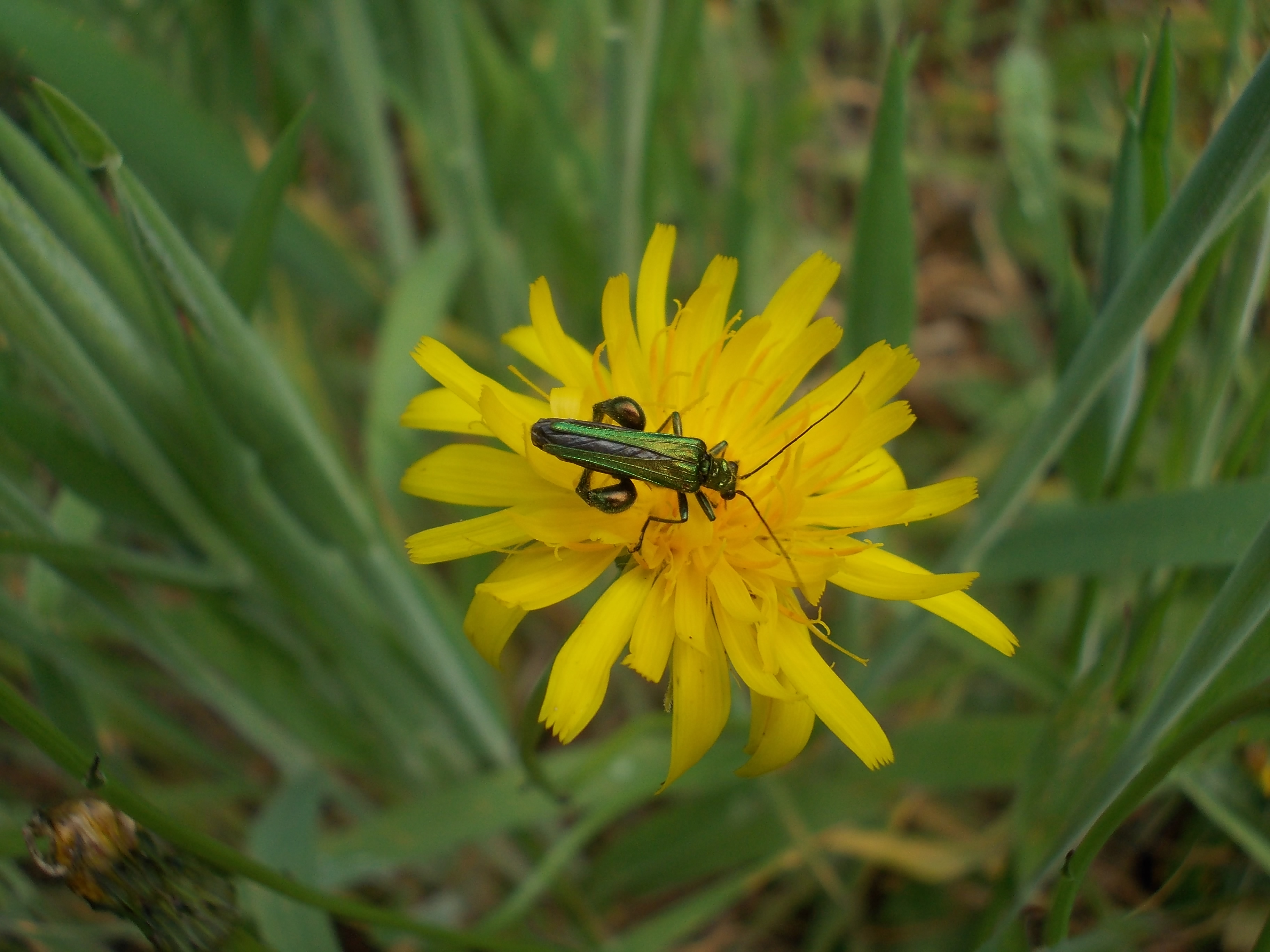
Many ichneumon flies were out on the Hogweed, some mating; almost every Catsear flowerhead had one or two handsomely iridescent green Oedemera nobilis, the “thick-kneed flower beetle” – only the males have the swollen hind femurs, but both sexes have a gap between the slender wing-cases. The males were of noticeably varying sizes, presumably the large ones having the best chances of mating.

Tent of Comma? caterpillars on Stinging Nettle
Tent of Peacock butterfly caterpillars on Stinging Nettle

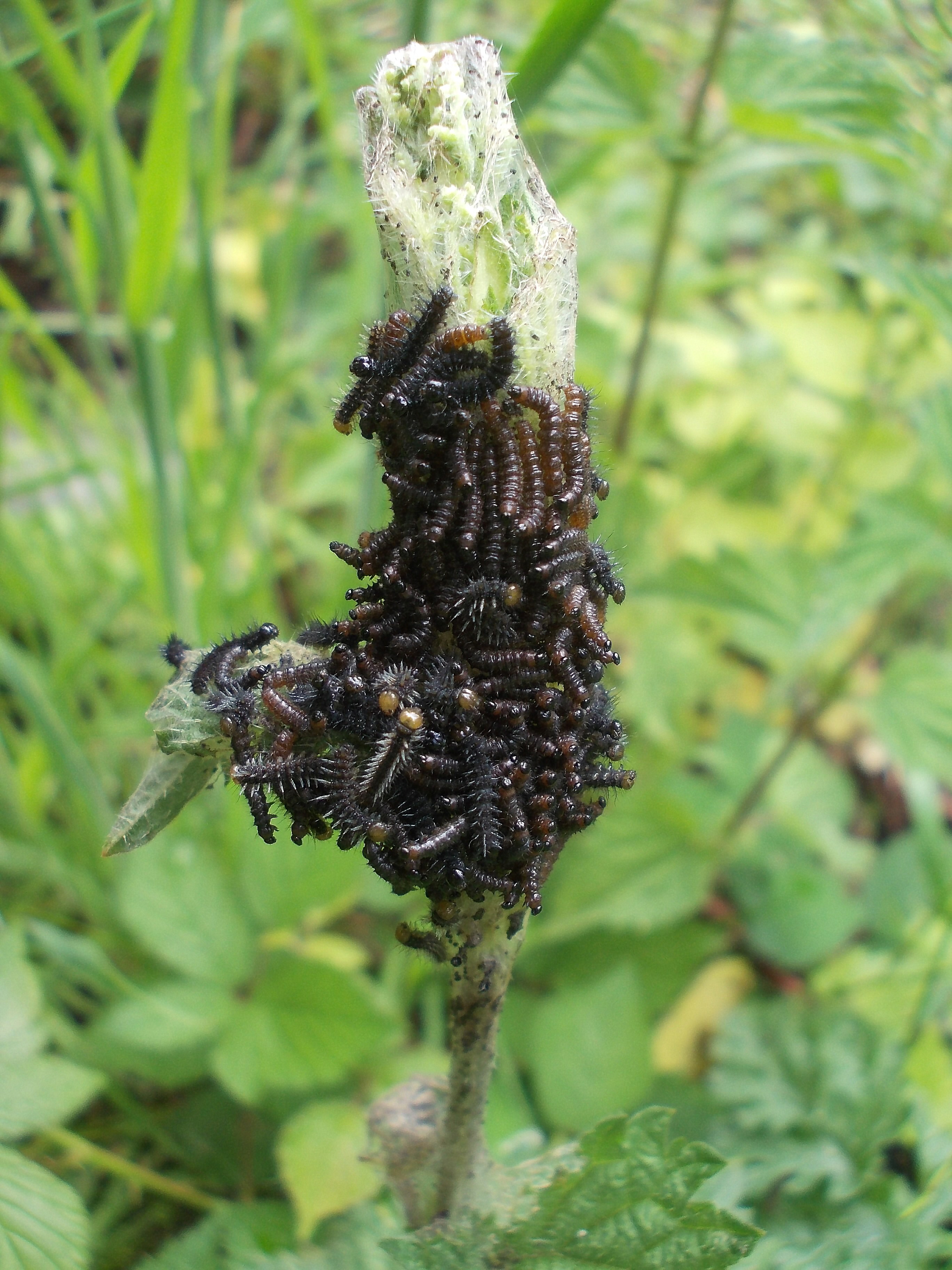
A fine bustling mass of hairy black early-instar caterpillars of the Peacock butterfly, wriggled on their silk tent atop a Stinging Nettle.

Laburnum leaf beetle larva doing an impressive amount of leaf damage

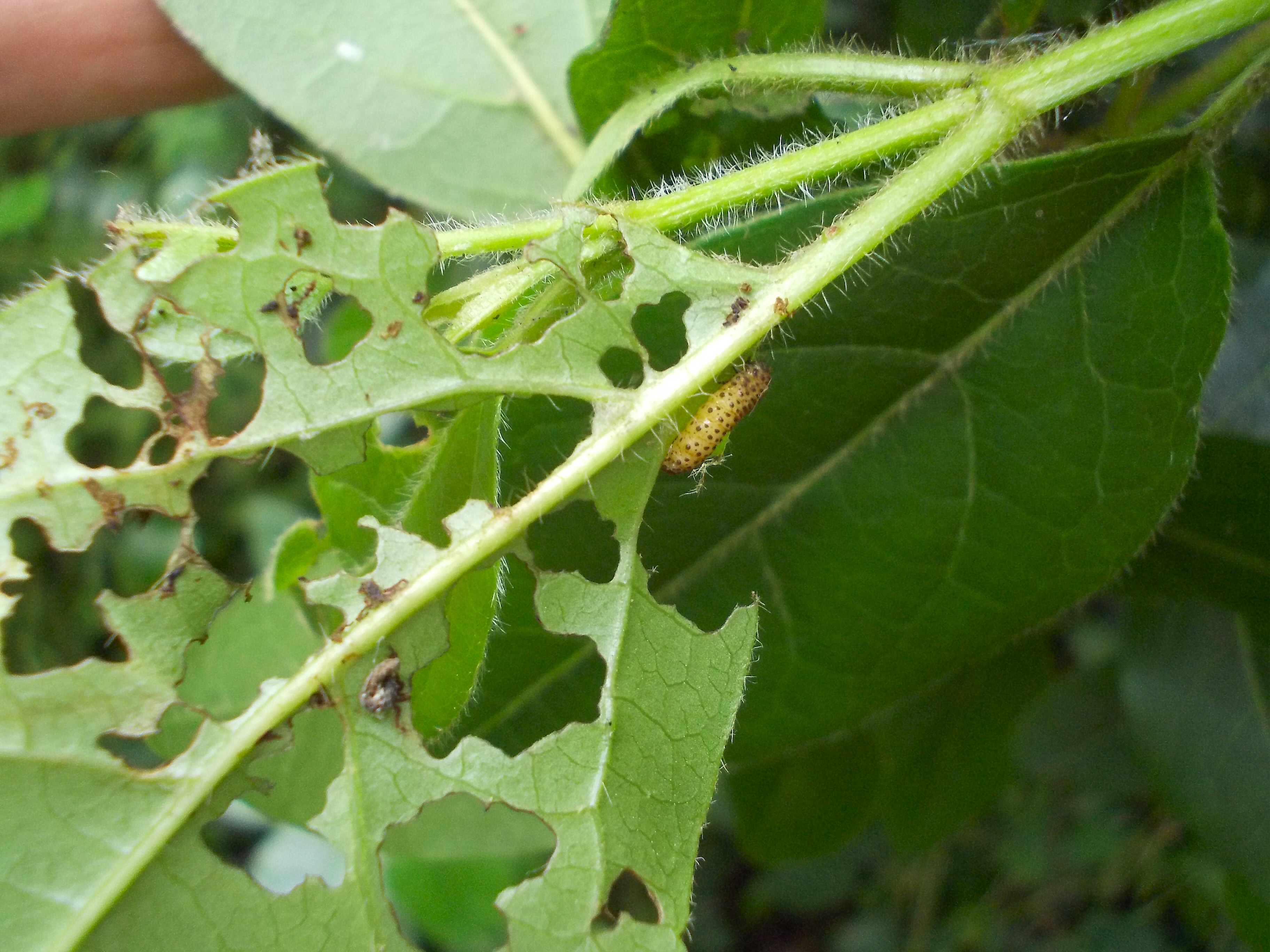
The Laburnum by the main path is being eaten full of holes, probably a good thing for a non-native shrub in the reserve, by spotted and striped larvae of the Laburnum Leaf Beetle. Never seen it before.

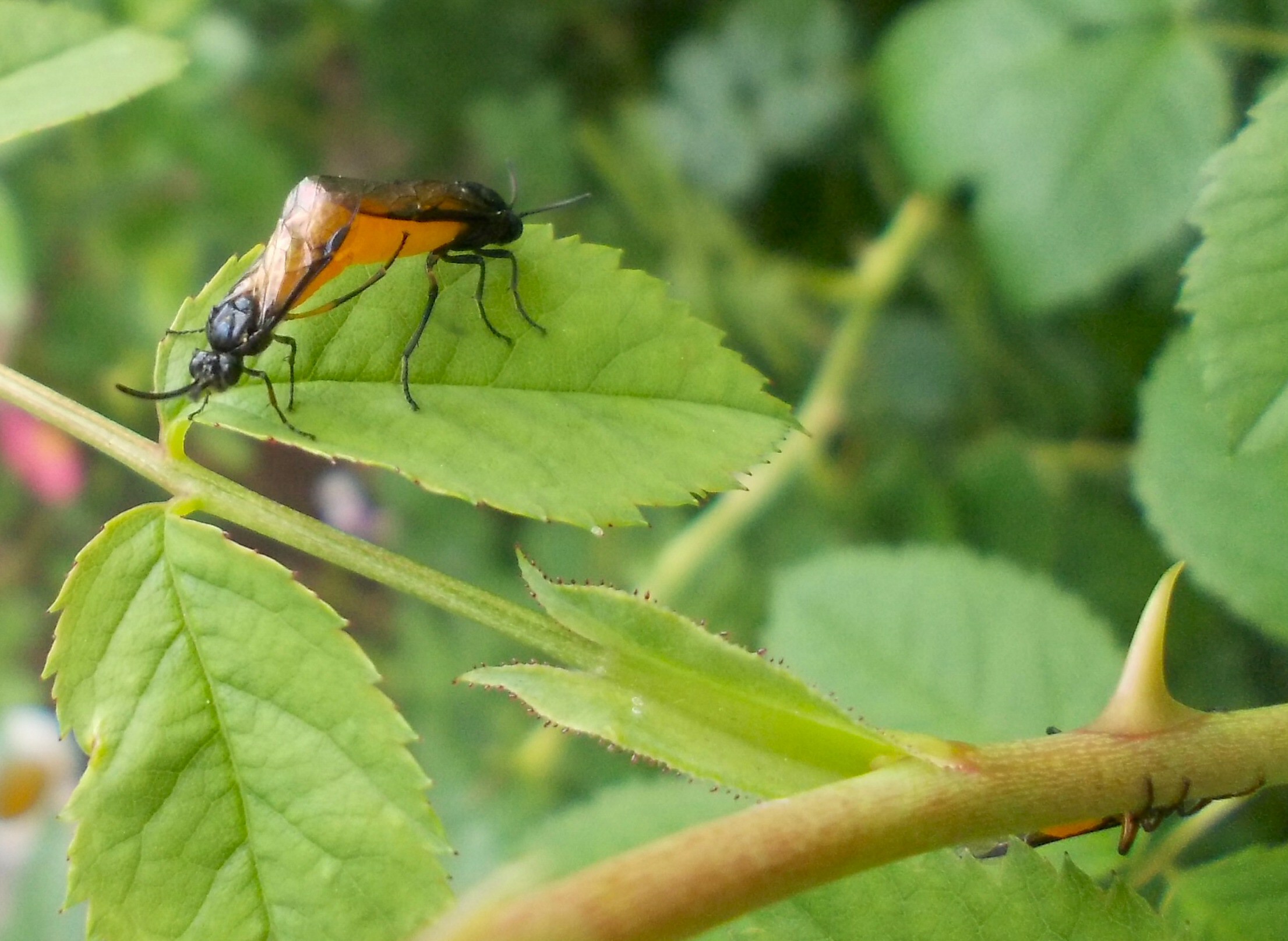
Mating Rose Sawflies

The wild rose in the car park hedge was host to a mating pair of Rose Sawfly, a serious pest for gardeners but an attractive insect with a bright yellow abdomen.

Large Red Damselflies in cop over a lot of healthy Starwort in the pond

As if all these treats weren’t enough, there were Large Red Damselflies mating and egg-laying on the pond, Common Blue Damselflies, lots of Hoverflies, Click Beetles (seemingly Athous haemorrhoidalis), large brown frog tadpoles and small black toadpoles, singing Blackcaps, a Song Thrush, a Jay, and plenty more. Maybe it’s not just Bugs Day on Saturday, but Bugs Week.


Swifts Screaming High Over the Cow Parsley at Gunnersbury Triangle

On a grey rainy day, I put on my waterproofs and go down to the Gunnersbury Triangle reserve. A newly-fledged Green Woodpecker flies off. The cow parsley has taken over the whole of the meadow by the approach ramp; last year there really wasn’t very much of it, but now the tall white umbels are quickly turning to seed-heads across the whole area: they need to be pulled up quickly before they ripen. They are accompanied by quite a lot of cleavers (sticky-grass), nettles, hogweed, even hops twining their tall fibrous way over the other plants. And a few brambles are coming up again: we had a blitz a year or two ago, pulling out most of them, and the meadow is much improved, but that hasn’t saved the rather nice garlic mustard (good for orange tip butterflies) from the cow parsley invasion.

I loosen one bunch of roots after another with a fork, and pull up the cow parsley roots – much like carrots, they’re in the same family. When the soil is shaken off they are a pale brown, some straight and carroty, some branched into five smaller swollen roots. When I have a big armful, I carry them down to the dead-hedge.

Digging again, a nettle manages to sting me lightly through the leather-and-cloth gardening gloves. I hear a screaming sound and look up: eleven swifts are wheeling together high overhead, the most I’ve seen over this part of town this year, indeed for many a long while. Sixty or more sometimes gather over the lakes at the London Wetland Centre, pausing to feed before moving on up north on their spring migration.
I gather another armful of cow parsley. The meadow is starting to look a little better. I pull a six-foot stick out of the herbage; half-a-dozen diversely coloured white-lipped land snails, some plain yellow, some striped with black, fall out on to the path. The polymorphism has been argued over by ecologists: it might be camouflage adapted to different backgrounds, some lighter, some darker; or more interestingly, it might be a way of defeating predators like Song Thrushes which could be searching for snails of a particular pattern, so if a bird had learnt that snails were striped and had that ‘search image’, that bird might not spot plain snails, perhaps.

It comes on to rain. I help out in the hut, making preparations for Bug Day when we hope the reserve will be buzzing with excited children and their parents. They will be welcomed by a smiling ‘GunnersBee’, who is a black-and-yellow cutout on a huge blue card with yellow cutout flowers. Even in the drizzle, several species of real bumblebees are busy gathering pollen and nectar.