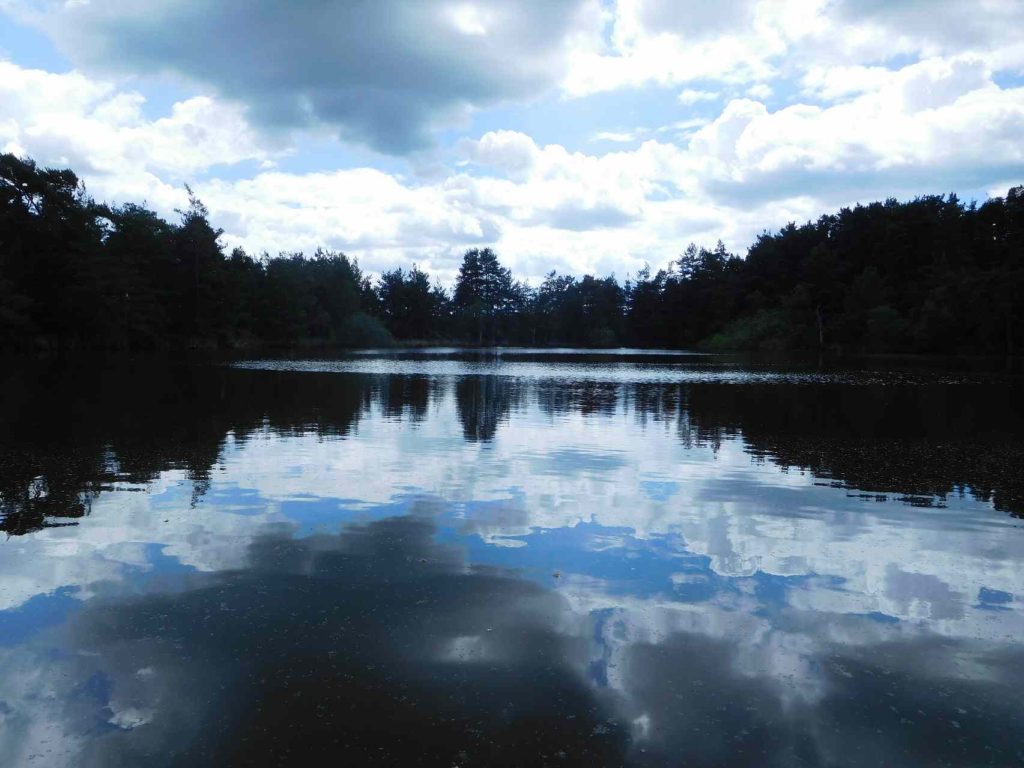

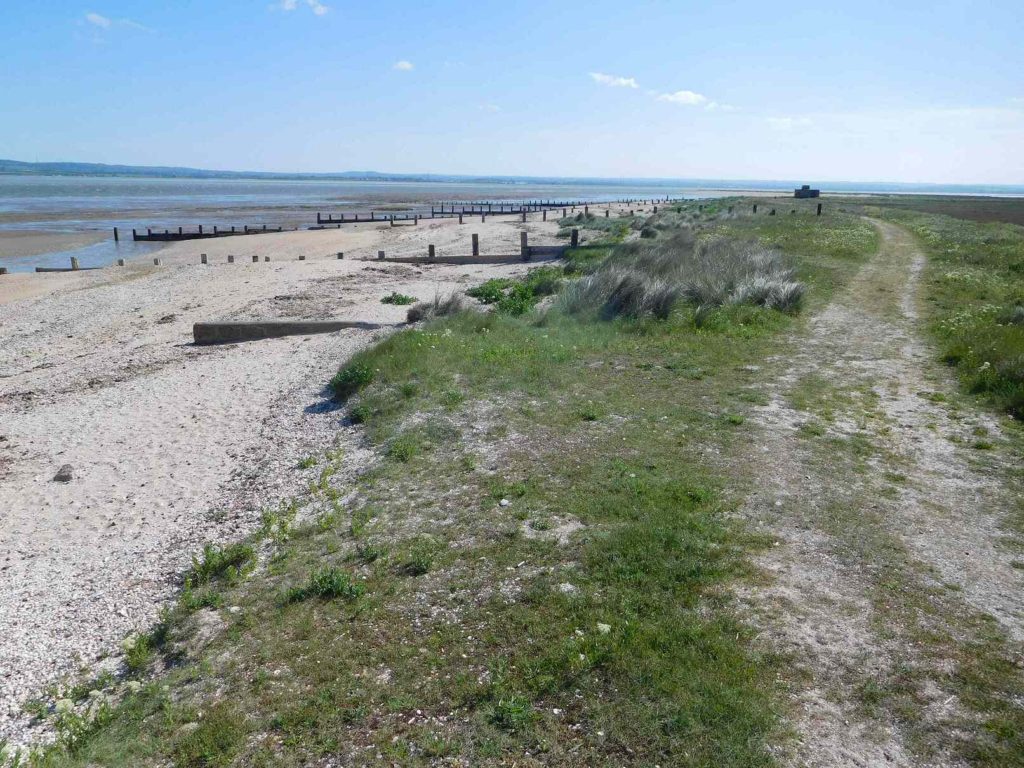
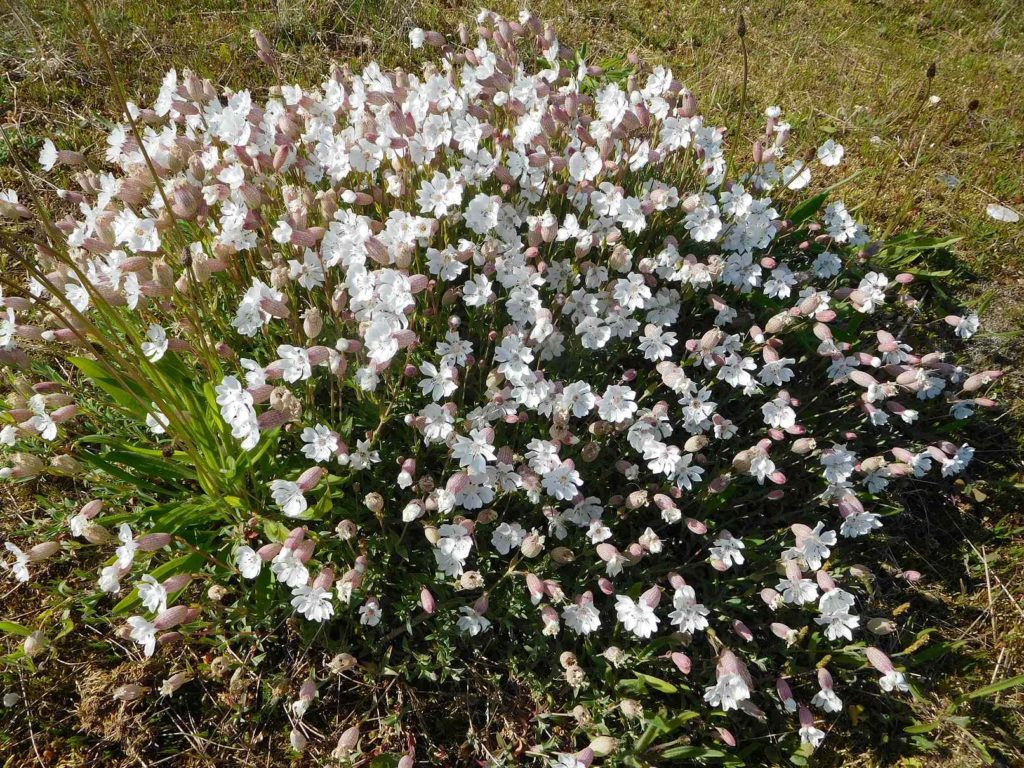
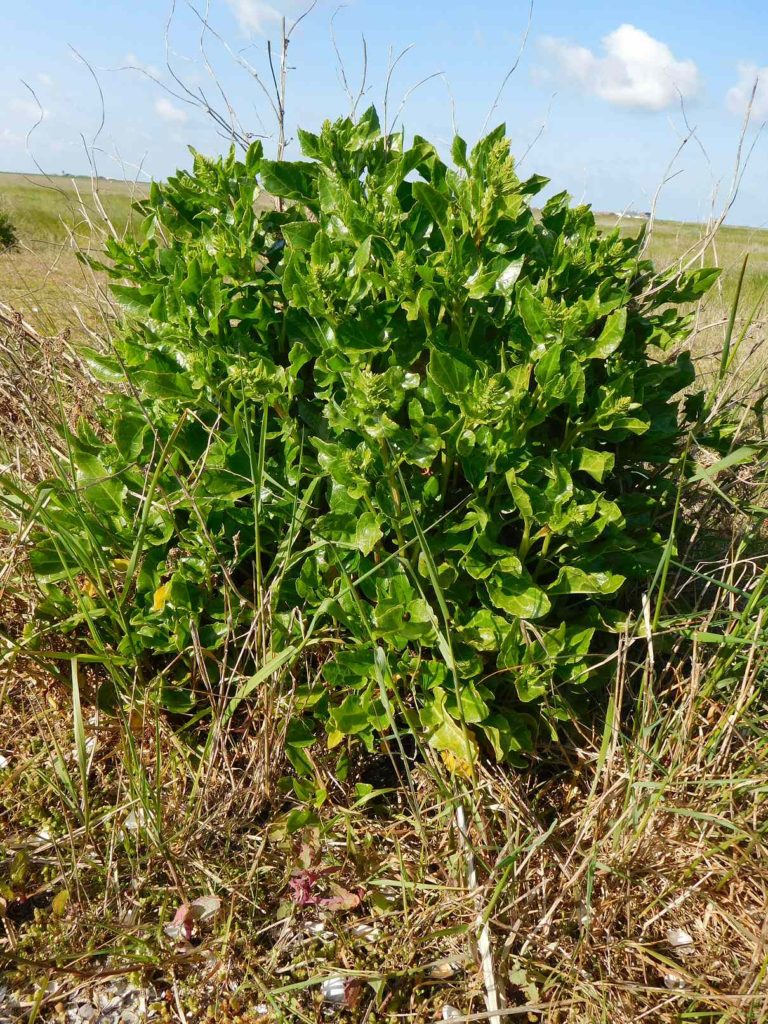
To reach Shellness one has to jolt very slowly along a long, straight, dusty, potholed track, minding out for one’s shock-absorbers. The reward is a magically quiet, spacious realm of … nothingness. Wide mudflats with occasional Shelducks. Wide horizons. Long empty shelly berms above empty windswept beaches. Sea kale. Sea lavender. Sea campion. Sea everything. The song of skylarks over the wind.
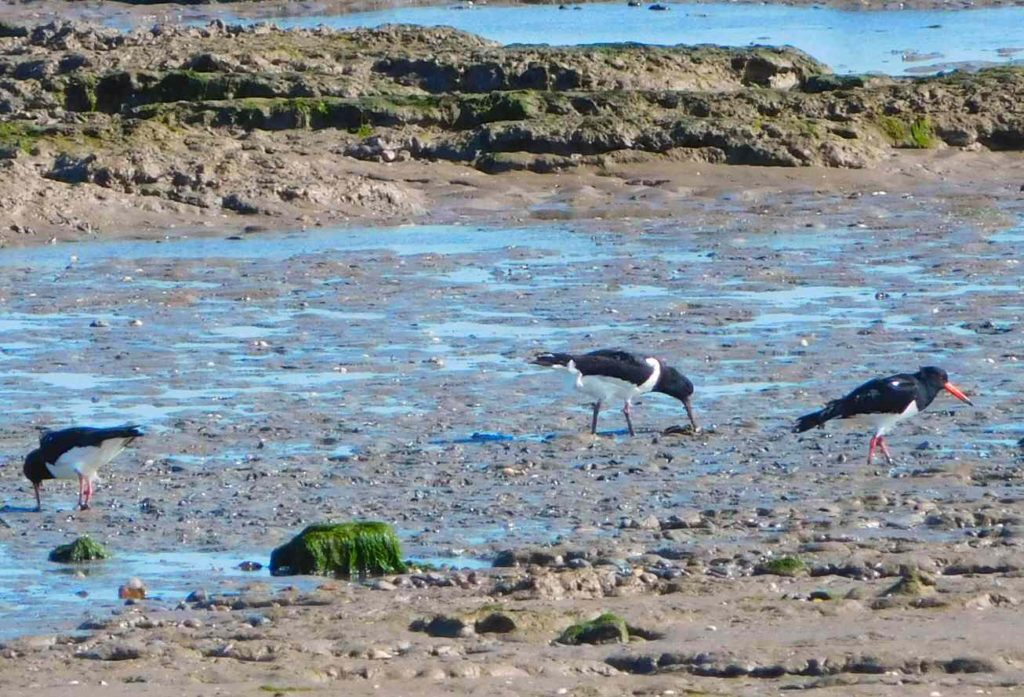
The cry of a Black-Tailed Godwit over the marsh draws my attention to an elegant medium-sized wader with its long straight bill and agile flight. On the groynes and mudflats are plenty of cheerful Oystercatchers, resting or foraging in little groups. A Little Egret flaps distinctively past.
Beside the path is a little beach, marked off with a sign, posts and a plastic rope for a “rare” colony of Little Terns. I scan it with binoculars, and am lucky enough to catch one in flight; it lands out on the mudflat, its long wings poking out past its tail, a slender sea-swallow.
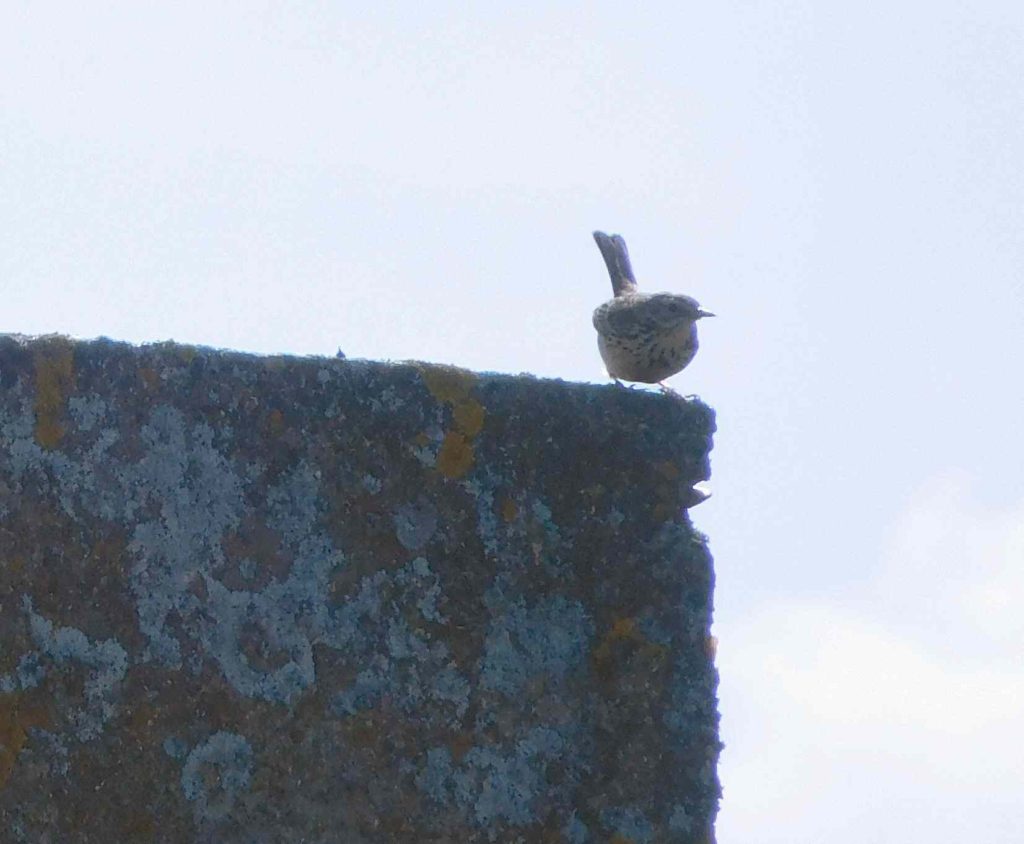
Even as I parked up, some chunky Corn Buntings flitted overhead giving their sharp calls. They were once common in farmland everywhere. A single Swallow flew past.
Along the mudflats occasional Ringed Plovers went their solitary ways. The telescope showed little groups of Shelducks in quite large numbers — perhaps I saw 50 all told. A few Black-Headed and Herring Gulls, and as always a few Starlings (convinced they were waders) visited the marsh. A sudden flock of a hundred Dunlins, wheeling and sweeping together, made me catch my breath, a glimpse of wild beauty.
Over the marsh, Skylarks kept lifting up for their song-flights, pouring out their astonishing, continuous, rich melody until they were almost invisibly high in the sky. It was impossible not to think of Shelley’s poem To a Skylark (“Hail to thee, blithe spirit, bird thou never wert …”), so marvellously immaterial did they seem in the wind and the bright sky.
At the little headland, bounded by a muddy, marshy creek, a Redshank flew up, piping.
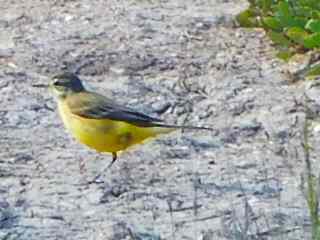
As I returned, a Yellow Wagtail, seemingly almost tame, walked unconcernedly along the path in front of me. I ate my picnic sitting below the dyke out of the wind, absorbing the space and sunshine, my heart full of birdsong.
After a long cold spell, it again felt like spring today, and despite the cloud I went to Wraysbury, thinking that it could be a good time for warblers.
I was greeted by a pair of Cormorants on a bleached branch beside the lake. And a moment later by the first of many Blackcaps. Warbler the first.
A little way along the path, a rapid and rich warble went on .. and on .. and on – aha! A Garden Warbler. (How to tell Garden from Blackcap? “Blackcap’s Brief.” Well, good enough for a first approximation.) Warbler the second.
I walked on a few paces, and glimpsed something small and brown in the willows. Binoculars showed an unmistakable Garden Warbler – Sylvia borin[g] – pretty much uniformly coloured, or rather, so beautifully countershaded that it looks flat in sunlight, quite the clever camouflage trick.
It started to sing – and was almost drowned out by the deafening repetitive din of a Cetti’s Warbler (roughly, Chwit-i-Pit-i-Pit! Chwit-i-Pit-i-Pit!), as usual without a glimpse of the songster. Warbler the third.
I then saw my first Banded Demoiselle, indeed my first flying damselfly or dragonfly, of the year. It’s always a lovely moment. A few bright yellow (male) Brimstone butterflies skittered about or sunbathed: perhaps the butter-coloured insect is the original “butter fly”, or perhaps the name refers to the fluttering flight of the whole group – it must make them very hard for predators like birds and dragonflies to catch them, and given how common it is to see a butterfly with holes pecked in its wings, it is easy to believe that anti-predator adaptations are highly advantageous.
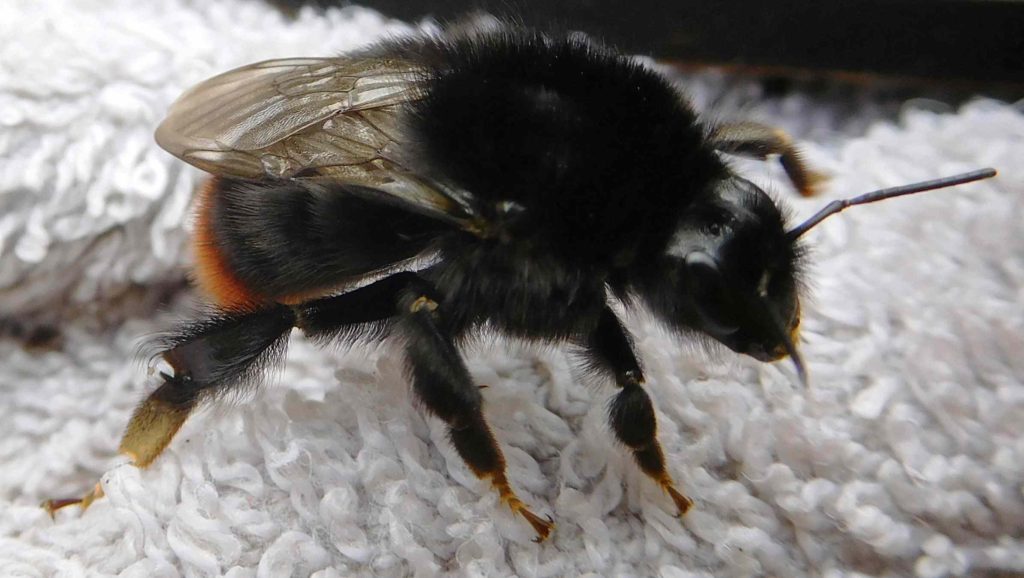
Other conspicuous insects were a lot of Sawflies, looking much like tiny red wasps with black-and-yellow striped tails, and numerous large Bumblebees enjoying the purple Comfrey which is abundant beside the river.
The droning chatter of a Reed Warbler came out of another Willow beside the lake: Warbler the fourth.
From across the river, just audible but quite definite, came the Chiff-Chaff-Chiff-Chaff-Chiff-Chaff song of .. you guessed it. Warbler the fifth.
Across the bridge and onto the flat scrub, and in almost the first bush was a Whitethroat singing its short simple scratchy ditty. (Presumably female Whitethroats find it enticing. Or other males find it repellent, one or the other. Maybe both, actually.) Warbler the sixth.
I reconnoitred the wood-and-scrubby area for possible Willow Warblers (they don’t inhabit willows any more than Willow Tits do), but they don’t seem to have arrived yet. Some Song Thrushes improvised their fine, repeated melodies of many different repeated phrases.
A six-warbler walk … one of the delights of May.
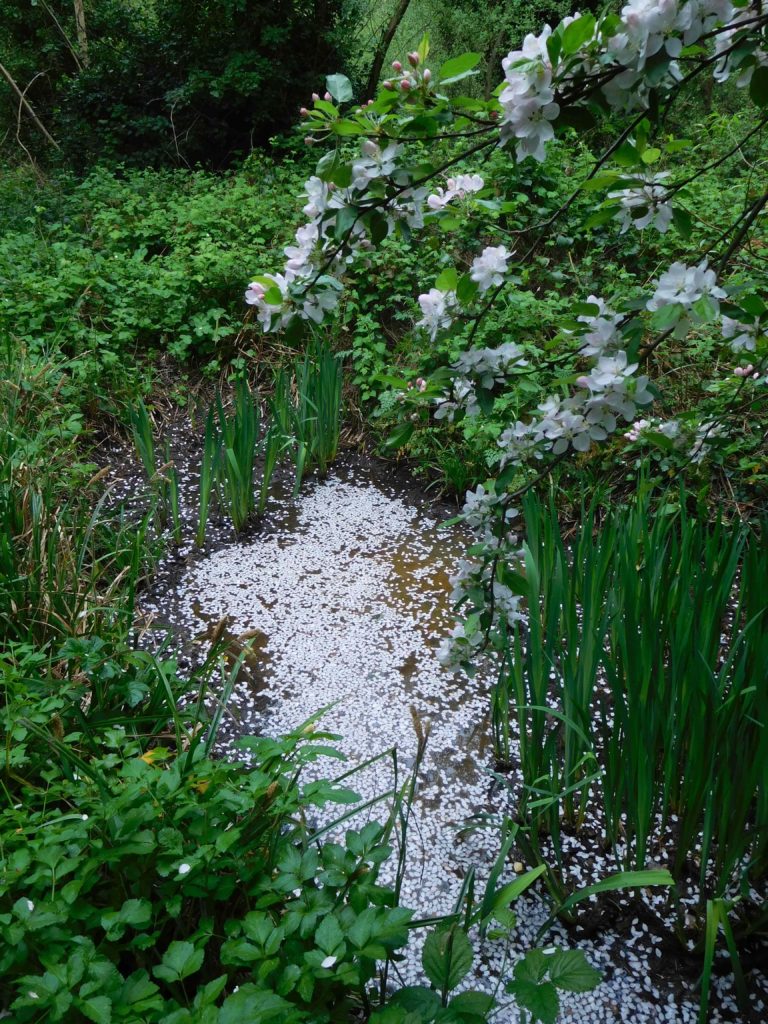
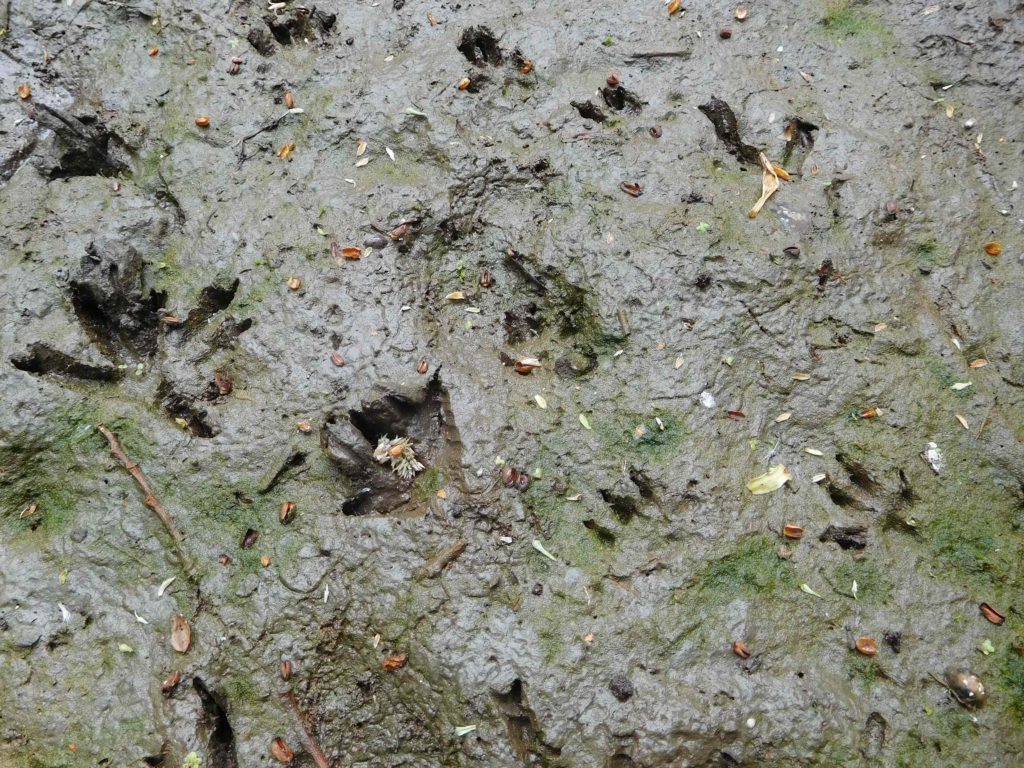
I’d hardly stepped onto the path before a pair of Peacock butterflies spiralled up in a territorial dispute – the little meadow was evidently prime habitat, and the males were fully charged up on this beautiful spring day.
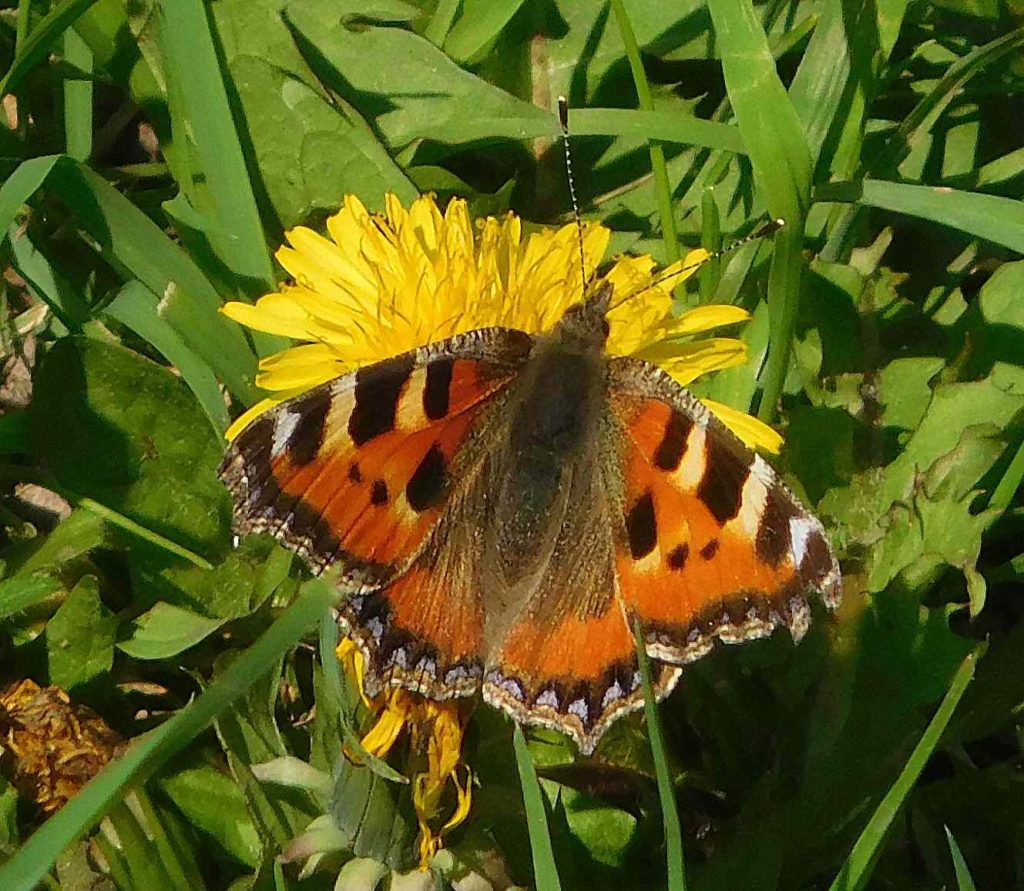
A bit further along, a Small Tortoiseshell was visiting some of the many Dandelions by the path. It’s certainly my first this year; and I can’t recall seeing one here at Wraysbury before. It was once a common butterfly but nowadays unkempt beds of Nettles are rare enough, and like all our showier butterflies, they’ve suffered from the changes to the countryside, including insecticide sprays.
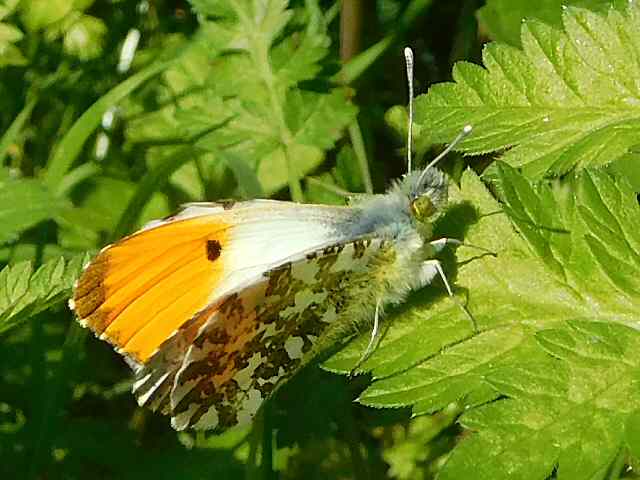
The next delight was the first Orange-Tip of the year. It’s a “White” butterfly but with beautiful coloration above and below: the underwing is remarkably well camouflaged.
In a woodland glade, two Commas tussled for the best display position.
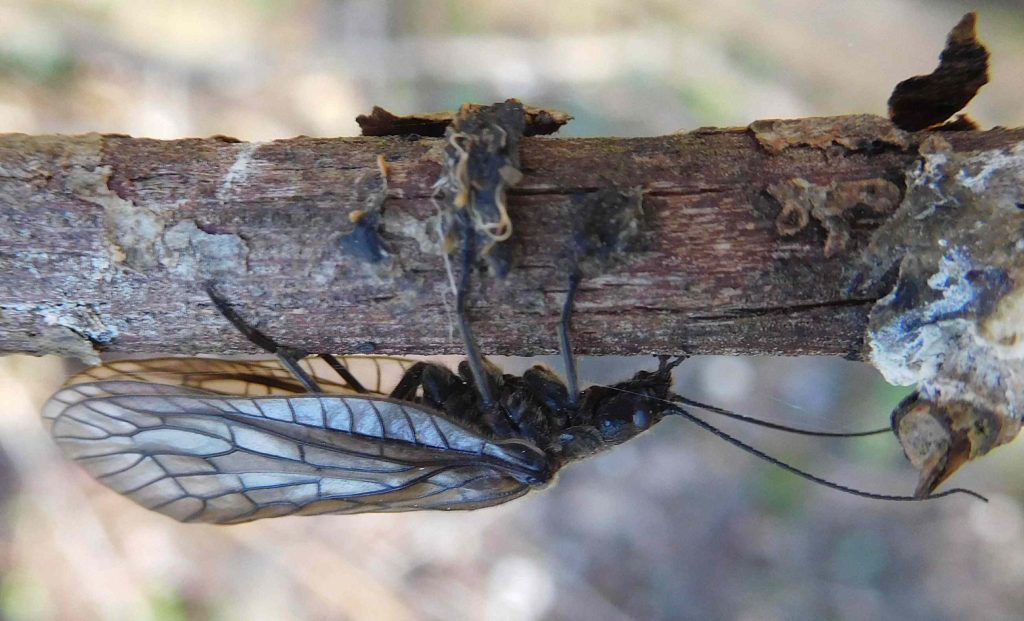
And near one of the lakes, an Alder-Fly clambered along a twig. The larvae are aquatic; on a good day in early summer, the air can be full of adult Alder-Flies.
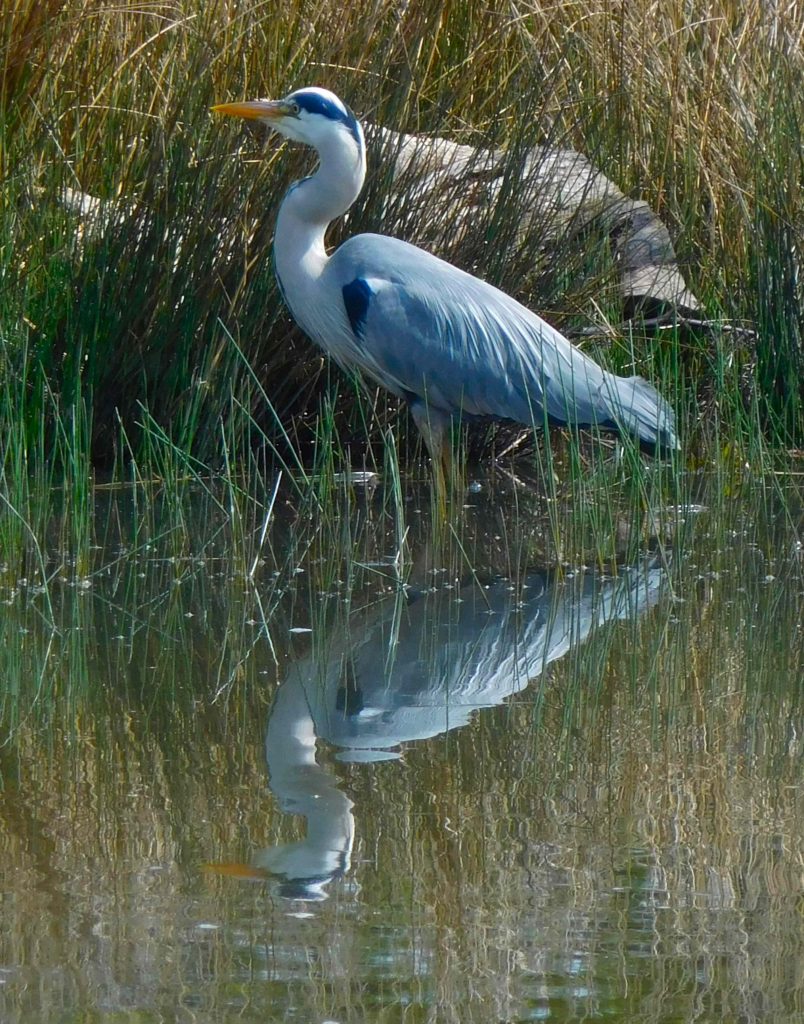
Birdsong was pretty much continuous, with Blackcaps, Chiffchaffs, Great Tits, Song Thrushes, Blackbirds, Green Woodpeckers, a Cetti’s Warbler and I think a Sedge Warbler too all contributing their songs. A Heron gave a harsh croak and some ungainly squawks. A Parakeet shrieked overhead. A Kestrel hunted silently. Spring has sprung in Wraysbury.
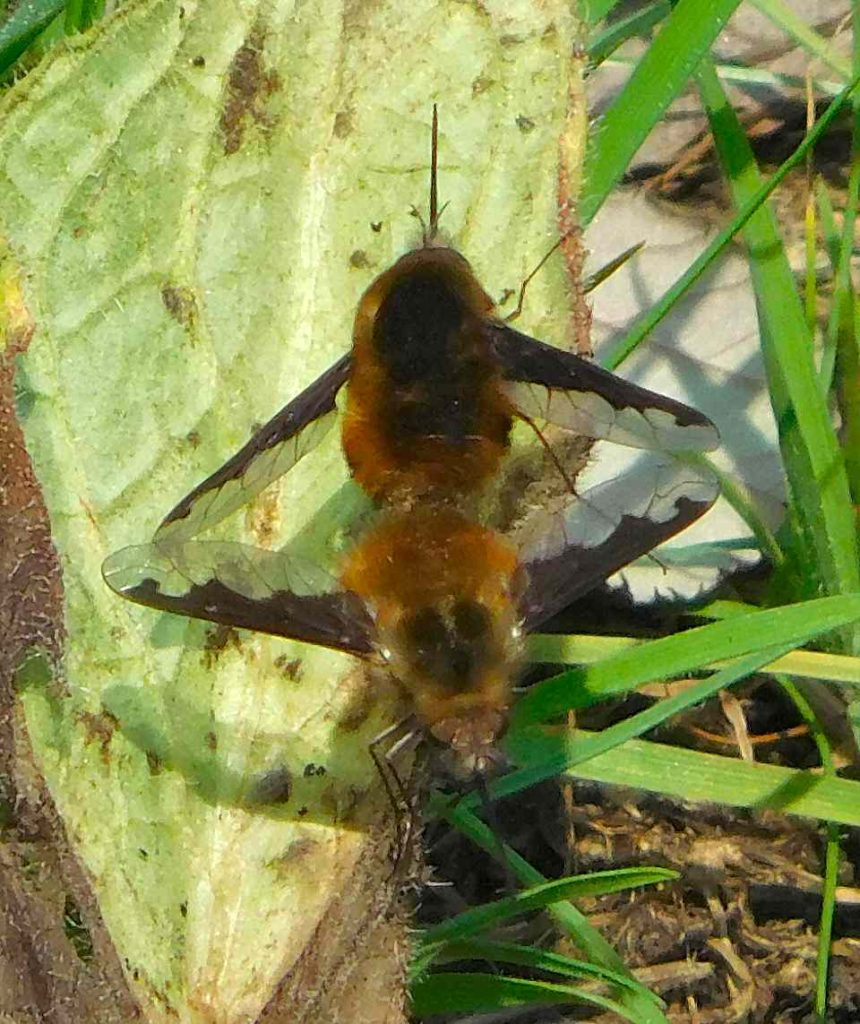
Several “firsts of the year” today: a Blackcap sang in the reserve; the first Speckled Wood butterfly, closely followed by a pair of males fighting in a clearing; the first Comma on the Picnic Meadow; and these splendid Bee-Flies with their handsomely pictured wings, demonstrating that they may be short, round, and furry, but they can fly while coupled tail-to-tail, not as elegantly as a wheel of Dragonflies maybe, but unquestionably able to get airborne, one of the two flying (of course) backwards.
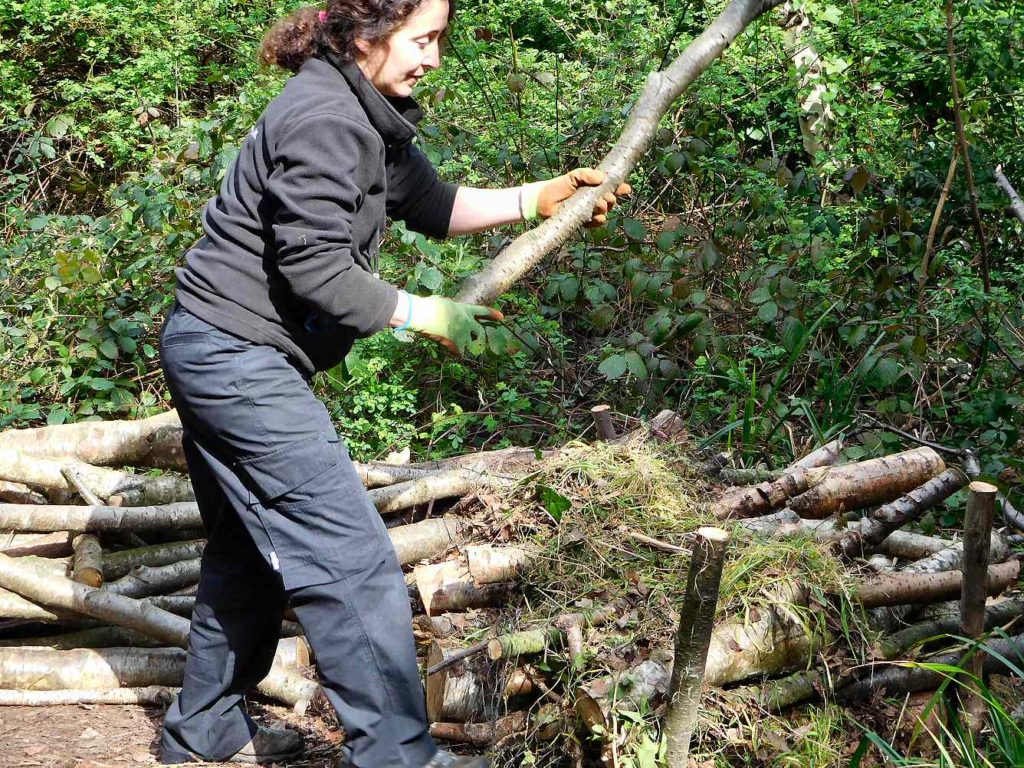
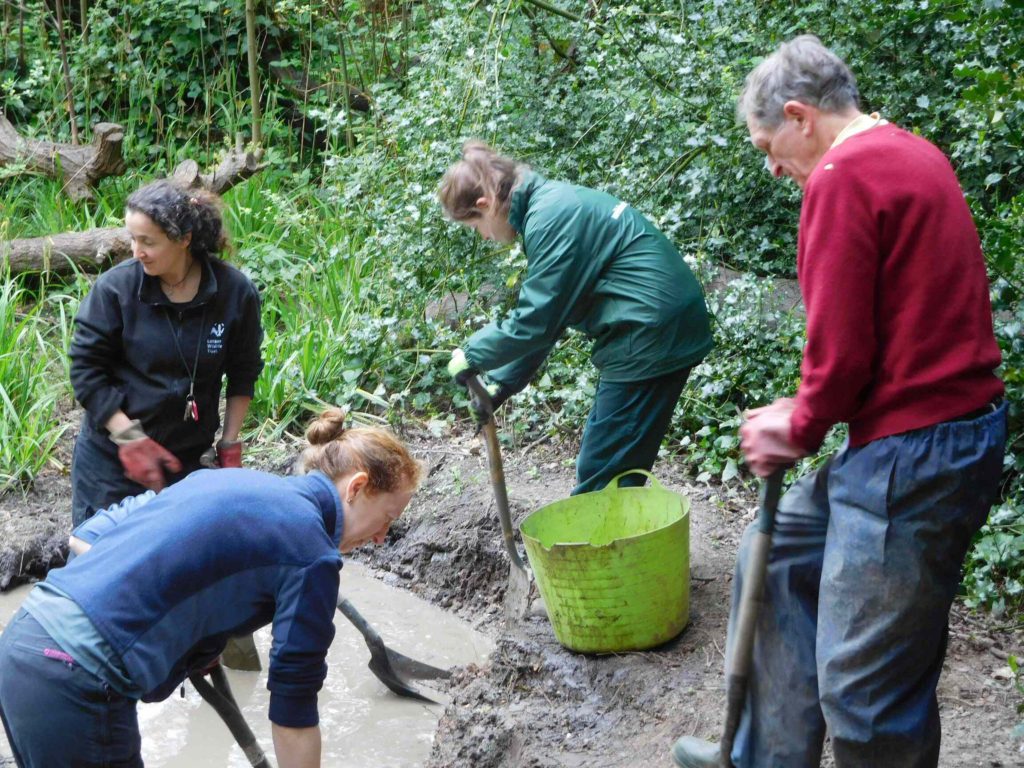
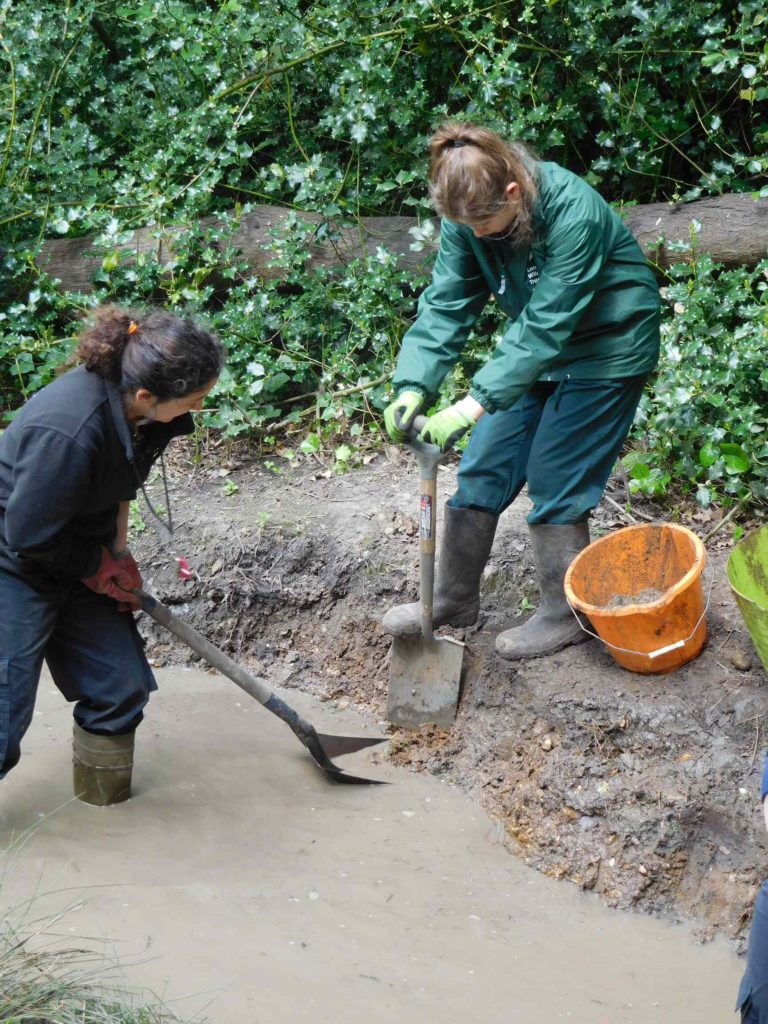
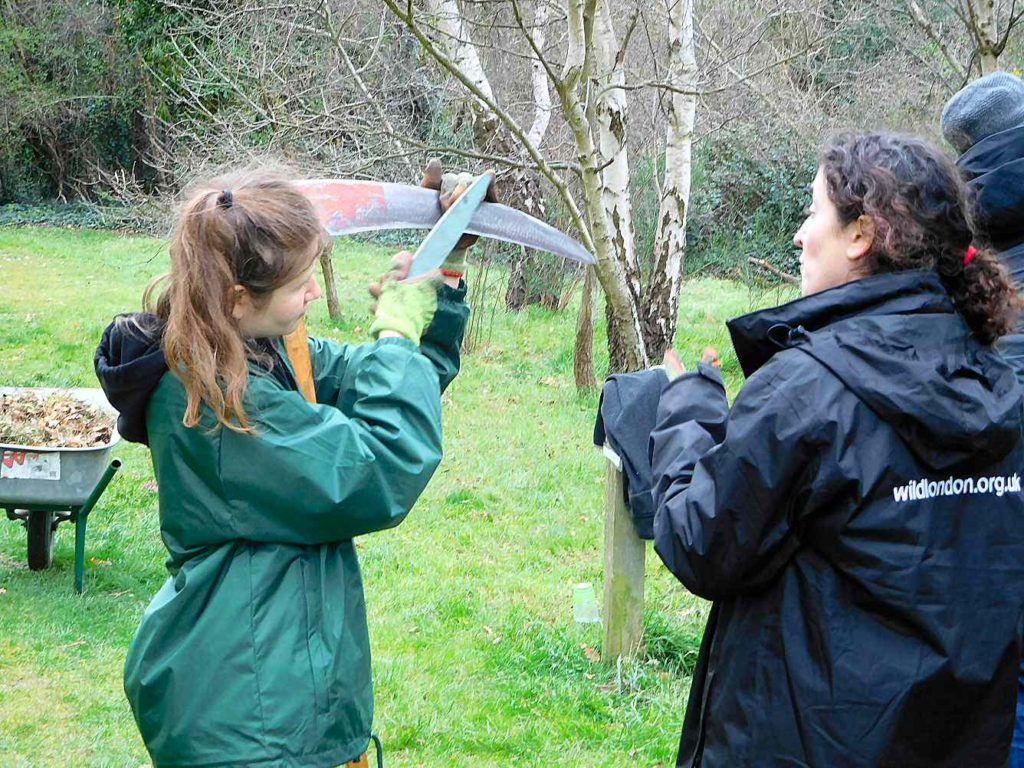
After building a habitat woodpile, we spent the day scything the meadow and raking up the clippings to deplete the mineral status little by little. It seems to be working nicely, as the range of insects and flowers is plainly increasing. Netty found some Vetch and Mouse-Ear; and there are attractive Red-Tailed Bumblebees to join the Buff-Tails and White-Tails that are emerging from their winter lairs.
The air was full of birdsong from Chiffchaffs, Blackbirds, Great Tits, Blue Tits, Goldfinches, Robins, Dunnocks and the newly-arrived Blackcap. A Sparrowhawk circled overhead. The cherries are all in flower. Spring has sprung.
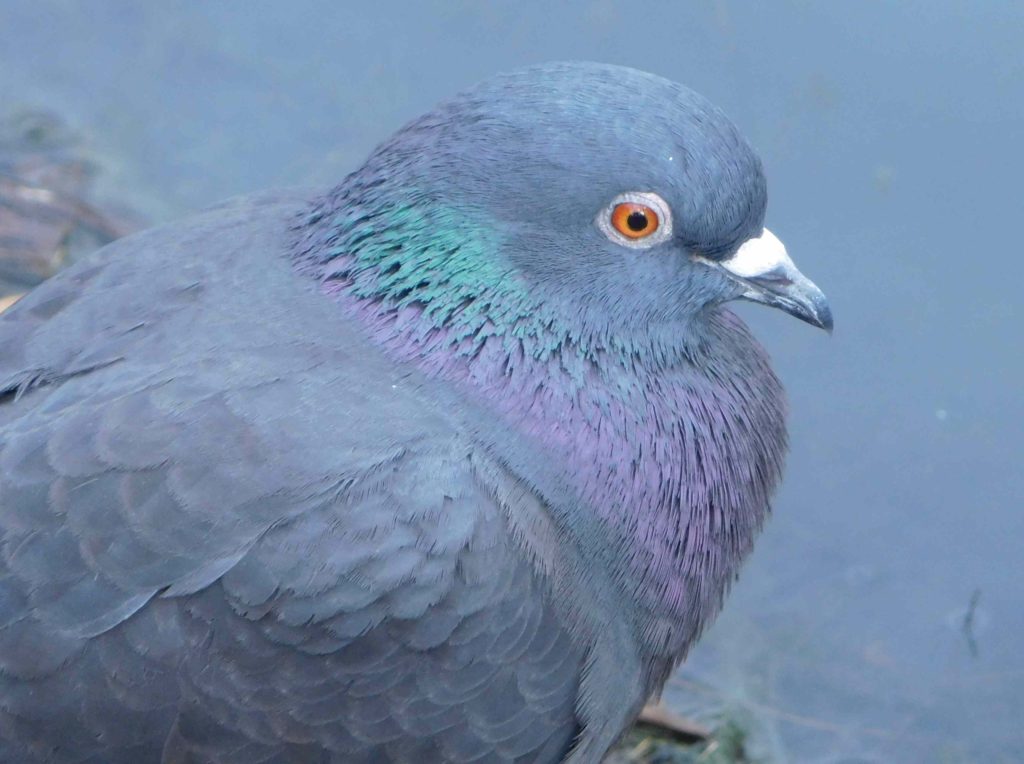
The first day of spring, and a Chiffchaff was singing down in the reserve. The hawthorn hedge, laid last year, is springing up into fresh green and thickening up nicely.