Category Archives: Love of Nature

Book Review: Wild, An Elemental Journey, by Jay Griffiths

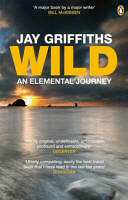
Wild, by Jay Griffiths
Wild: An Elemental Journey, by Jay Griffiths

Griffiths gave up her job and sold everything she had to go and spend seven years of her life travelling in the world’s wildest and loneliest places, and living with the rugged, capable and wonderful peoples who still know how to survive in the wild.

In the Amazon, she asks what is the worst thing that could happen to her.  La muerte, claro (Death, of course) is the blunt reply. It does not put her off.

Jay Griffiths
Jay Griffiths

The parts of Wild are Earth, Ice, Fire, Air, and Mind. Each one takes
fifty or eighty pages in the telling – and represents a year or more of
Griffiths’ life. It is an astonishing undertaking, indeed truly “elemental”.

Griffiths was a journalist, but in Wild she consciously chooses to abandon “the bounds of my tribe (physical bounds and intellectual bounds)”, preferring “the real outside”. Her descriptions are accurate, but intensely coloured by her experiences – alone on the ice or in the rain forest; in the company of the Inuit, the Aborigine, the Amazon tribes.

She is not afraid of ‘purple prose’ here and there, nor of admitting anger with white man’s racism – the despoliation of Australia, the scorn for “the idea of there being a famously large number of words for snow in Inuktitut”. For there really are many:

“When Igloolik residents were asked for [a] compilation of words for ice and snow, they provided a hundred or so.”

It really shouldn’t be a surprise – skiers know half-a-dozen words (powder, crust, firn or neve, ice, junk, sugar, slush, piste, drift, mogul …) and that is based on far less experience than the Inuit’s.

Pukakjiujaq is hard snow turning ever so slightly soft; the
best for igloo-building because it will heat faster.”

This is precise knowledge, both on the part of the vanishing Inuit hunters – nowadays they live in heated houses in towns, with freezers and televisions – and on Griffiths’: her journalist’s eye for attributable facts serves her well. Wild is a unique book: passionate, informed, deeply-researched, intellectual, scorched by the earth’s wildest places. It’s not easy to put down.

Buy it from Amazon.com (commission paid)
Buy it from Amazon.co.uk (commission paid)

Love of Nature is deep in England

Love of Nature is deep in England

The love of Nature is deep in England. And I think that what is behind this love is the instinct that Nature has a secret for us, and answers our questions. Take that foxglove over there… It stands singly where there had been such a wonderful display of bluebells that it then looked as if a section of the sky had been established upon earth… That foxglove with its series of petal-made thimbles held up for sale to the bees, puts me at ease upon the subject of — progress. It is quite obvious that the foxglove cannot be improved… The fact is we get perfection in this form and in that form… There is no point in our gazing raptly into the future for paradise if it is at our feet.

—John Stewart Collis, The Worm Forgives the Plough. Vintage, 2009. page 253.

Buy it from Amazon.com
Buy it from Amazon.co.uk

In the Garden of Eden

In the Garden of Eden

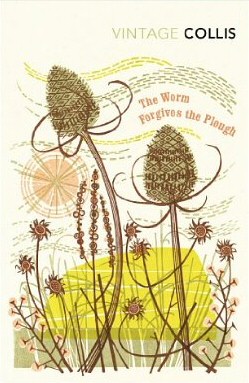
The Worm Forgives the Plough, by John Stewart Collis (Vintage Classics edition)

I turn off the road, enter the wood, and sit down under the tree. The sun gleams upon everything, there is glittering and shining everywhere. A green caterpillar is lowered down by an invisible thread in front of me, and as it swings about, the sun shines through its transparency… A bush over there is glittering with rain-drops, little white lanterns fastened to the lower side of twigs; but if I swing my head slightly to one side, some of those lights turn colour, becoming red and purple…

We have invented a word for it: beauty. I am surrounded here with law, order, and beauty, and am myself absolutely happy here… I begin to grasp the obvious fact that this place is — perfect. And suddenly I realize where I am! I am in the Garden of Eden.

—John Stewart Collis, The Worm Forgives the Plough. Vintage, 2009. pages 232-233.

Buy it from Amazon.com
Buy it from Amazon.co.uk

Yay! It’s Frog Day! Pond-dipping at Gunnersbury Triangle

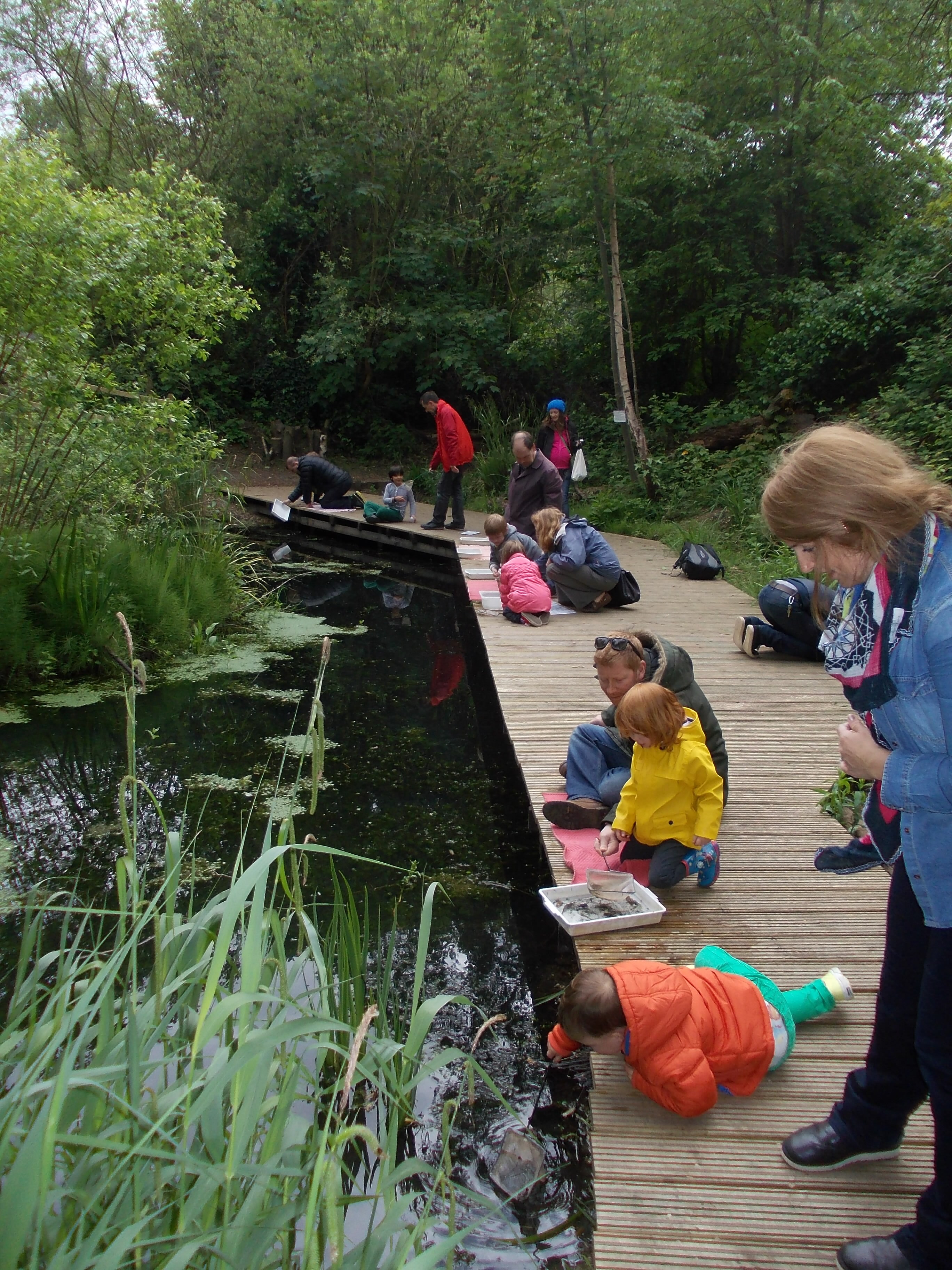
I try to get down to the pond on Frog Day because, whatever the weather, it’s always such fun looking into trays, seeing what people have caught, and helping people to get a rough idea of what sort of wildlife they are looking at. The parents too are frequently fired up with (especially boyish) enthusiasm. One dad turned out to be expert at catching newts; another family caught dozens of tadpoles (all still without legs).

Pond Dipping on Frog Day

People come and go; some are regulars, some are new, some were just passing by and are astonished to find a nature reserve here, let alone a pond and volunteers and free pond-dipping and wriggly wild animals.

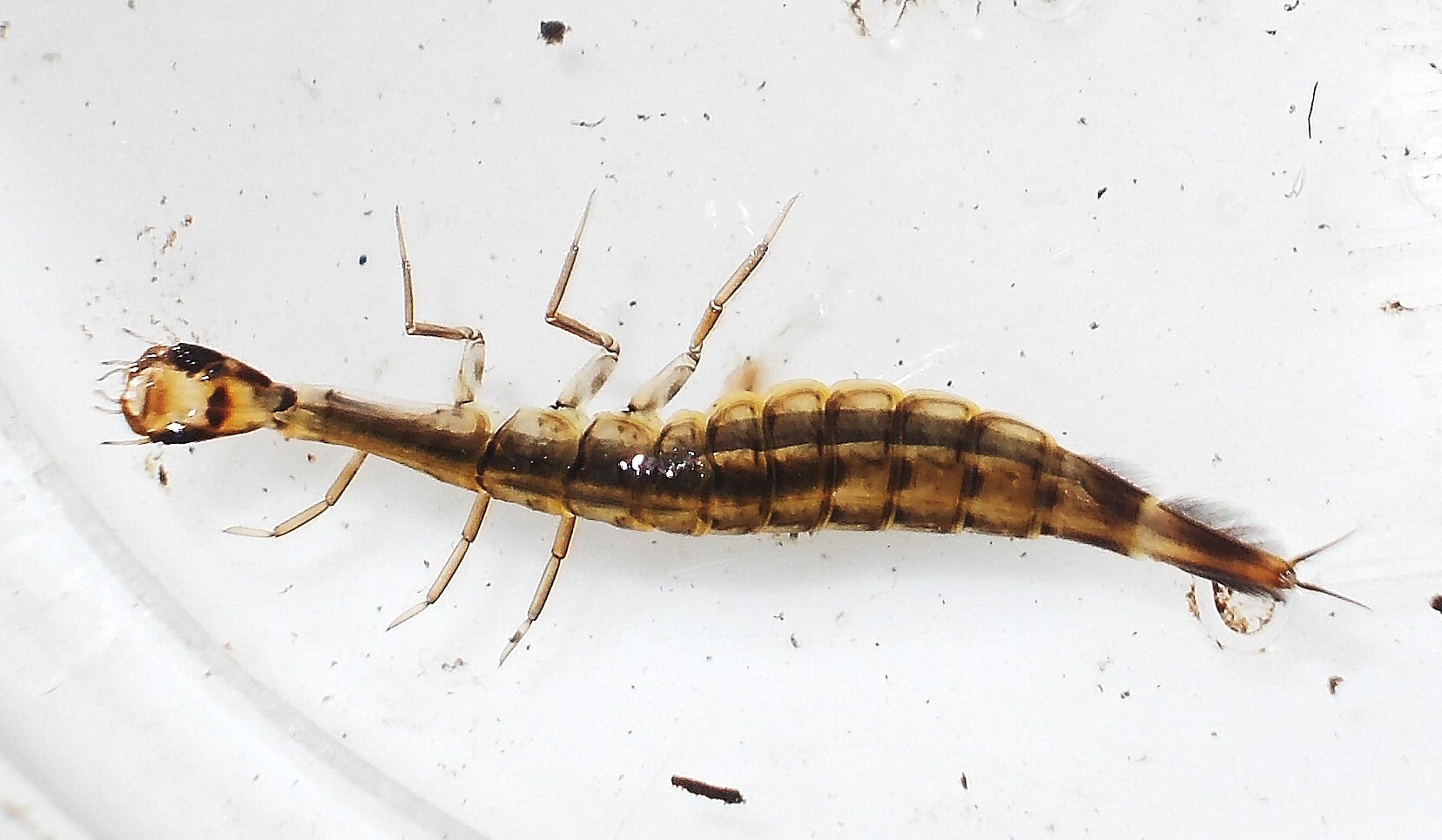
Beetle larva from the pond

And there definitely weren’t just the usual suspects in the water, either.

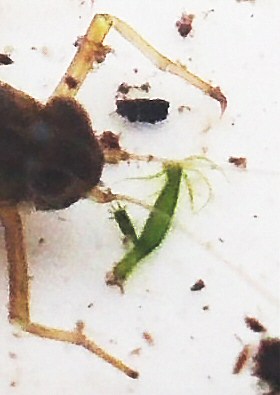
Budding Hydra, with head of a damselfly nymph
Budding Freshwater Hydra, with a nymph

This really was a surprise; a Hydra, not just bright green but actually budding. These tiny animals are coelenterates, like corals and jellyfish, with no proper gut running mouth-to-anus, but just a mouth surrounded by the tentacles, and a hollow bag of a body; anything undigested has to come out the way it went in. The animal is green with symbiotic algae, so it has quite a bit of plant about it, and when it isn’t in a white dish, it’s practically invisible.

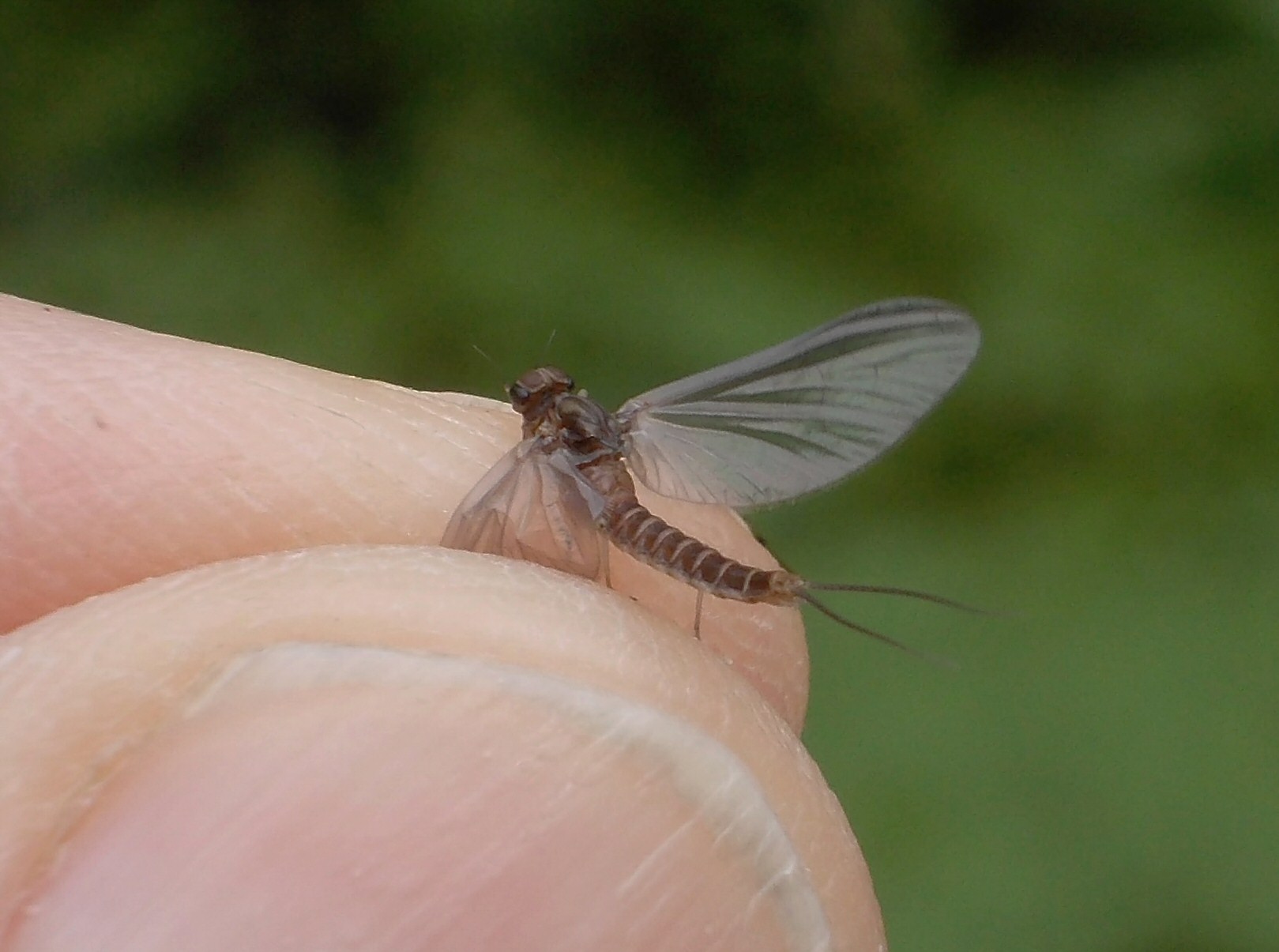
Stonefly
Stonefly

This little fly has two tails, and may well be a Stonefly; it is a lot smaller than the common Mayflies, which have three tails. It seems like a special animal today.

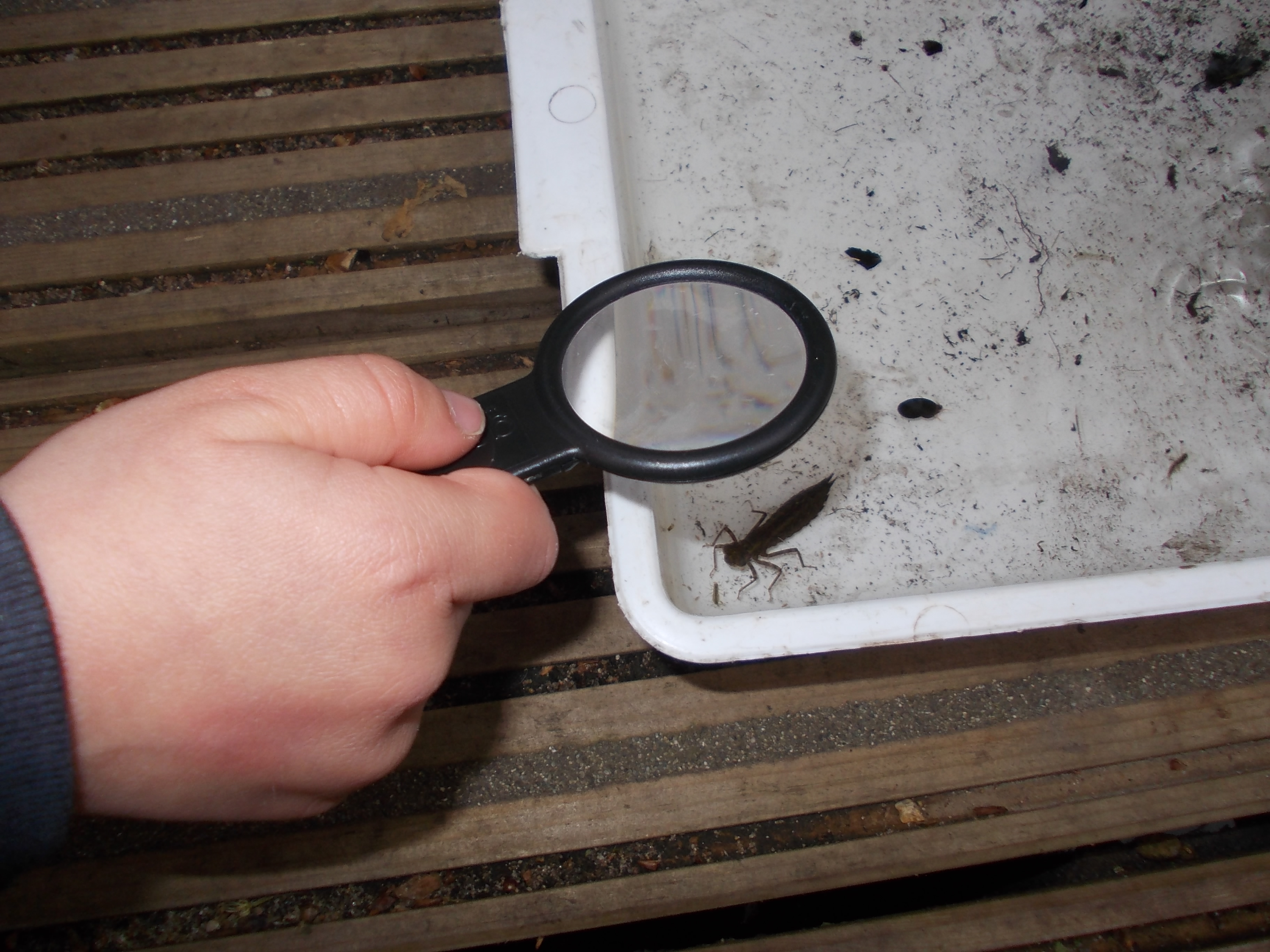
Looking at a Dragonfly Nymph

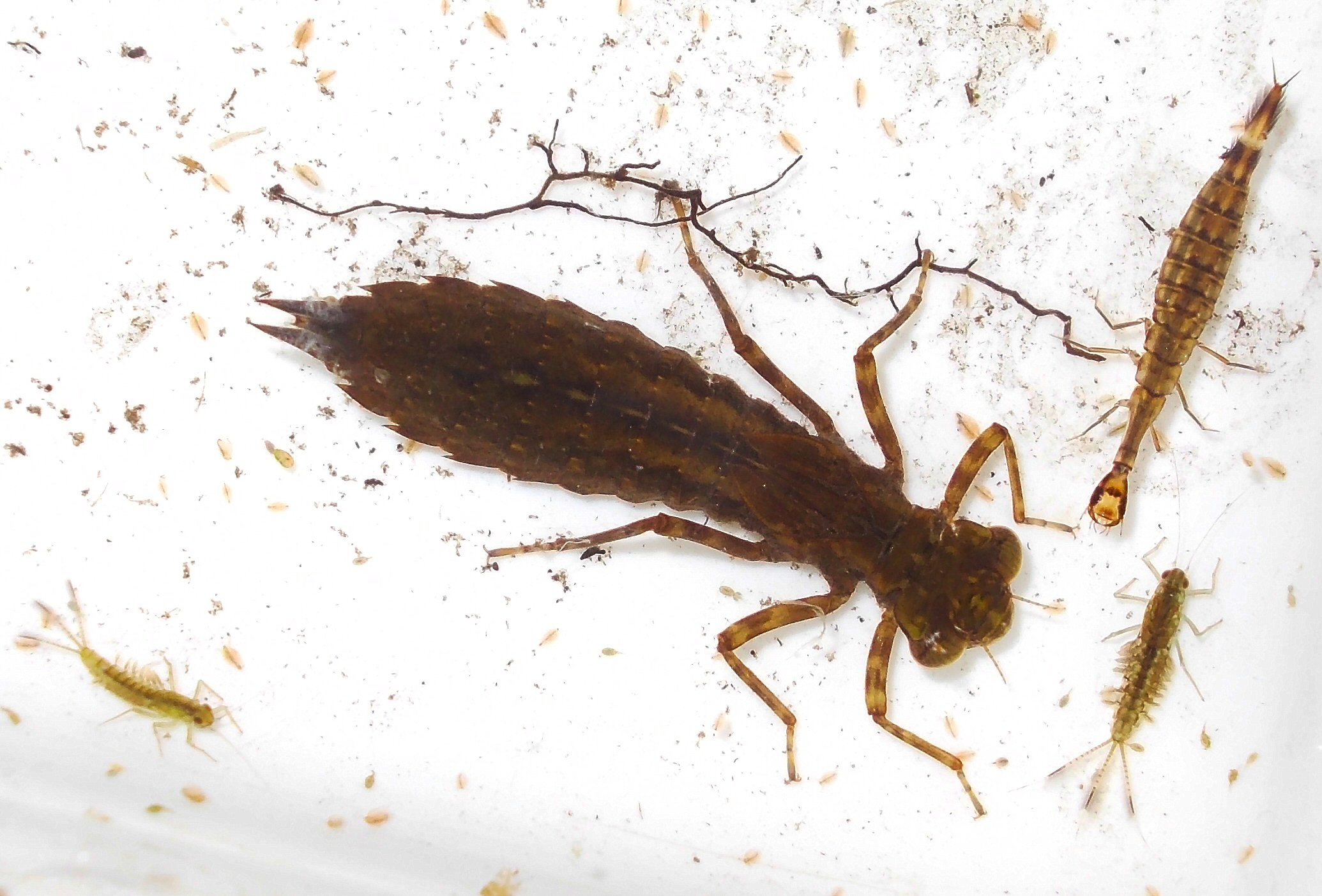
A fine Dragonfly nymph was captured in one dish; here it is, being examined closely by one youngster. I saw a Broad-Bodied Chaser near the pond some years ago, so it might be that species.

Nymphs and waterfleas

With their characteristic three tails, the Mayfly nymphs are distinctive. Here in one dish are some, along with what seems to be a long slim beetle nymph, and the Dragonfly nymph. There were quite a few Damselfly nymphs about too, some quite boldly green.

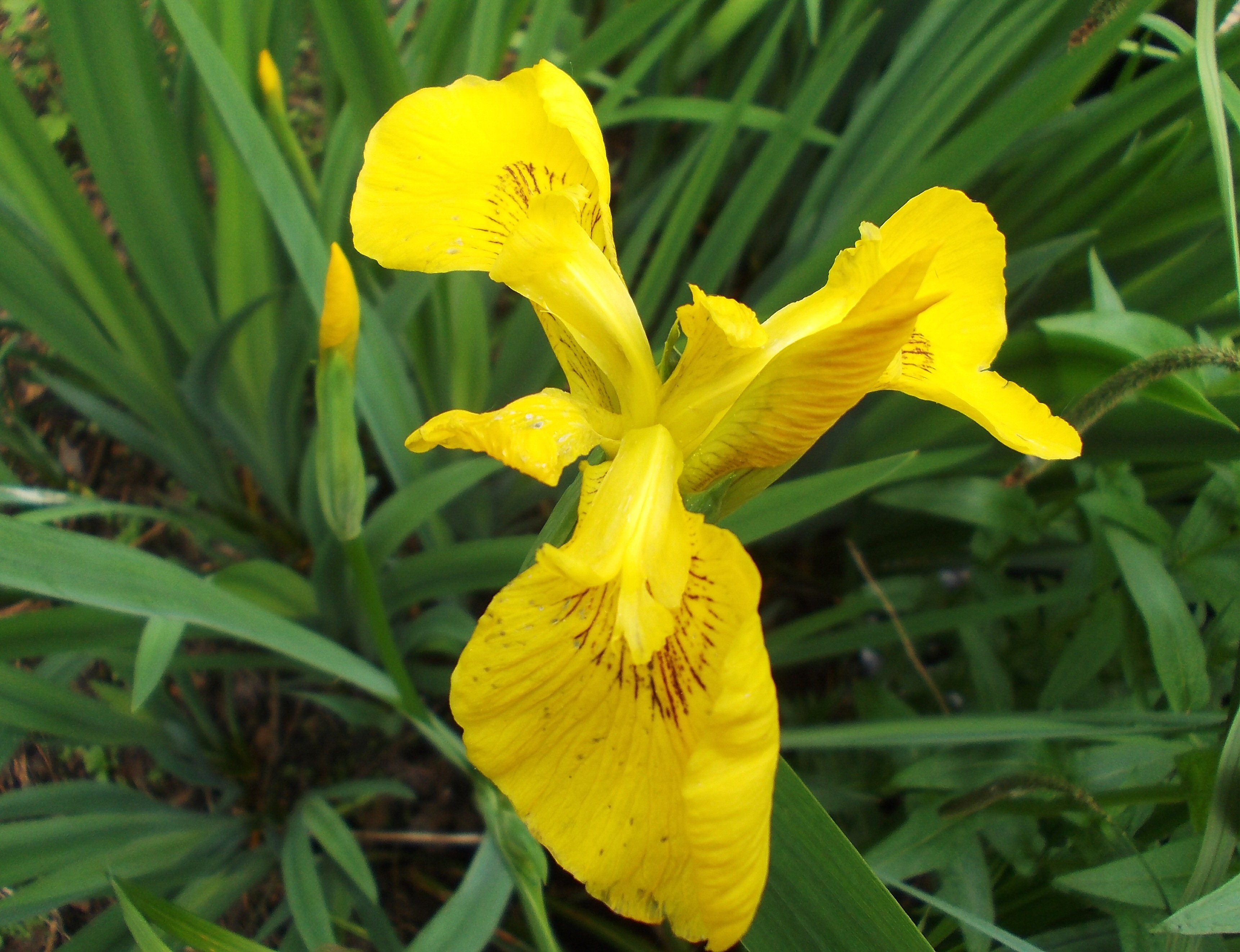
Yellow Iris or Flag
Yellow Iris or Flag

At four we packed up to go and have a well-deserved cup of tea. As I turned round, I realised the Yellow Irises the other side of the boardwalk were in full bloom.

An Innate Need to be in Contact with Nature

An Innate Need to be in Contact with Nature

Without wishing to question the wisdom of the Ancient Greeks, with their six kinds of love, I do think they missed out one of the most crucial varieties. And that is love for the natural world, for the wilds from which we sprung and of which we are still — though we may fight against the idea — a part.

I am drawn to the concept of ‘biophilia’, the idea that we have an innate need to be in contact with nature. It strikes me that the word could be used to express the seventh variety of love. Clearly we need those other varieties — erotic love, the love of friends, playful love, pragmatic love, self-love and universal love. But I believe we also need love of nature.

—Hugh Warwick, The Beauty in the Beast: Britain’s Favourite Creatures and the People Who Love Them.  Simon & Schuster, 2012. page 305.

Buy it from Amazon.com
Buy it from Amazon.co.uk