Science proceeds in slow steps, and things far more often become clear gradually than in dramatic Eureka! moments.
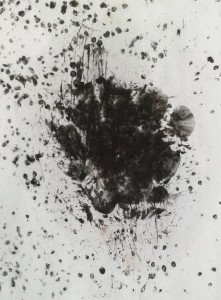
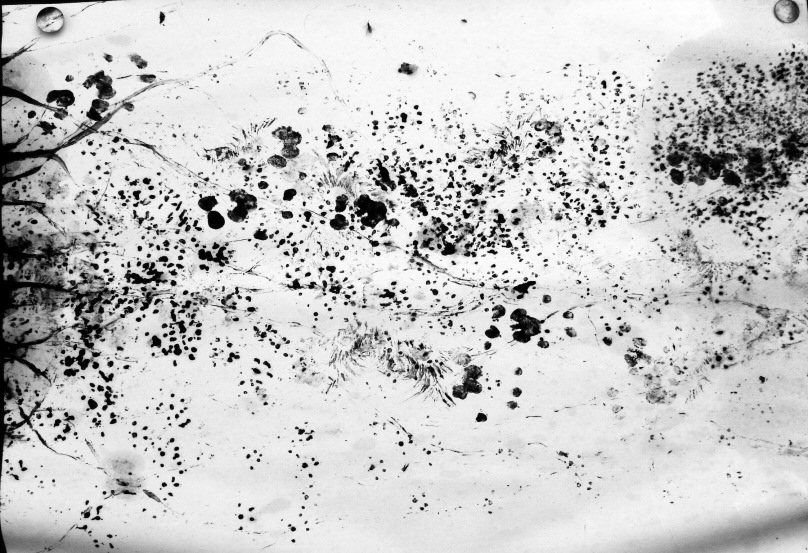
After “hours of fun” trying to decipher sheets of paper covered in a mass of footprints, we learnt that most of what we had seen were mouse/vole (indistinguishable as prints), squirrel, cat, and rat. Some of the West London survey sites in London Wildlife Trust’s Vole Patrol had evidence of other mammals, from camera trap shots of foxes and badgers to a fuzzy glimpse of an elusive otter.
Not a Yeti! Double prints of a cat giving a 5-toed look
Huma had been busy visiting all the sites, teaching volunteers, getting people to build mammal nestboxes (like birdboxes, but with the opening round the back!), and inspecting a lot of shrew tubes and sheets of paper covered in footprints.
The five-toed “Yeti” footprint turned out to be a cat (notice the streaks from its furry feet) which had placed one four-toed foot almost in the print of another, so there are two heels of the hand and the middle three toes double-printed. Of such are mysteries made.
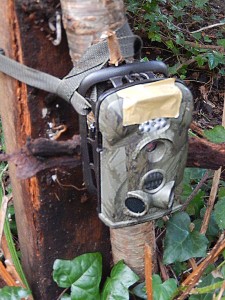
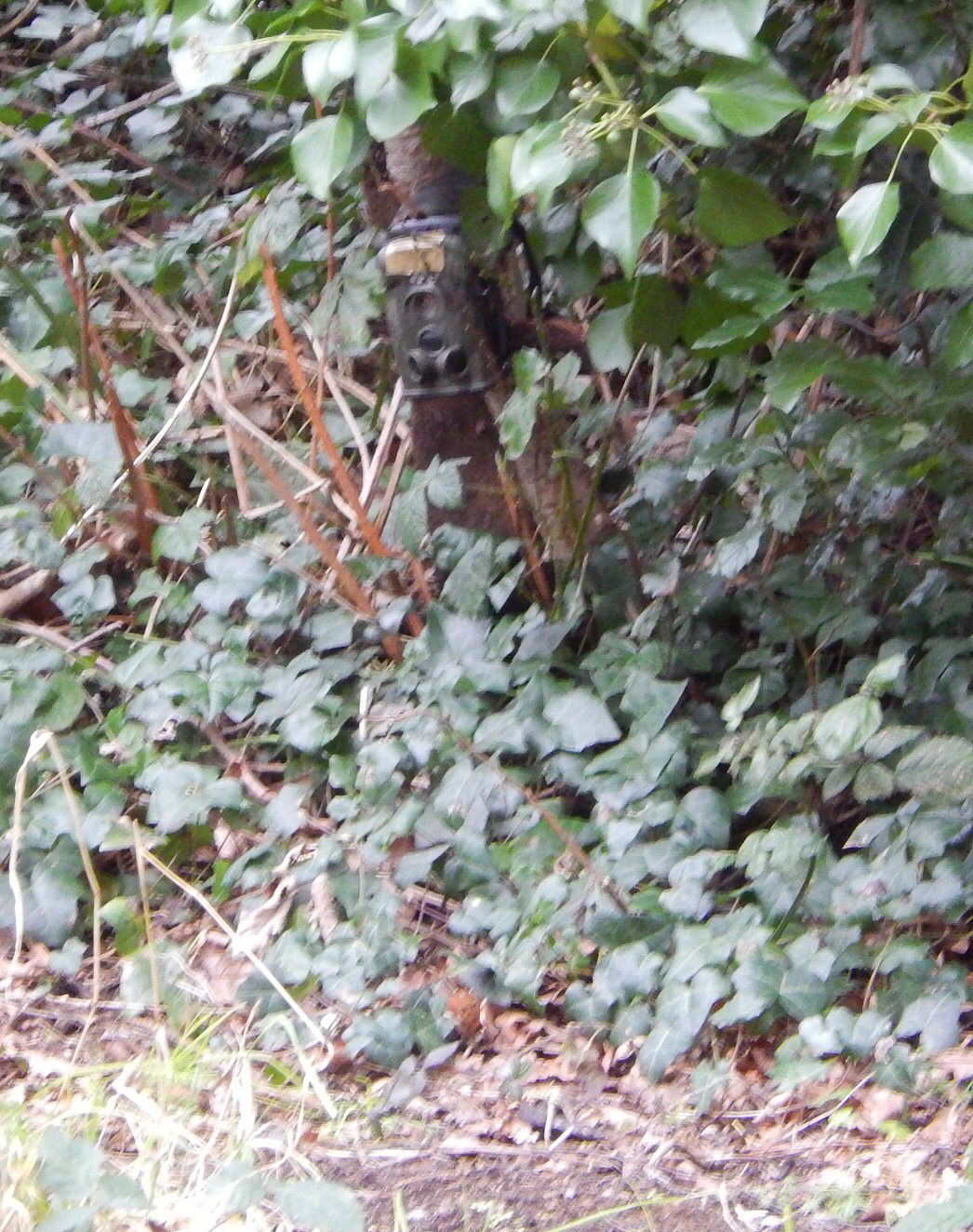
Camera trap in position
We all enjoyed looking at what the camera traps had caught. The video clips were much easier to interpret than the still images. Several small children had crept up to the cameras and spent a while peering into the lenses (What? Me? I’m on camera?). Two foxes cavorted with long bushy tails. A badger ambled past like a crotchety old gentlemen on the way to his club. Mice with big round ears, surely wood mice, bounced and scuttled in and out of the field of view: sometimes only the glint of their eyes revealed their presence, and sometimes even that was very small and only at the edge of the frame.
Then we cleared an easily-wiped formica-topped table for … shrew poo analysis. We had up to ten baited tubes from each site. With surgical gloves, dissecting probes, tweezers and hand lenses, we carefully emptied each tube into a Petri dish and looked for mammal pellets. Mice eat seeds and produce solid, compact pellets, round one end, pointed the other. Shrews eat insects and produce pellets of a similar shape, but made of non-stick fragments of insect cuticle, so their pellets tend to crumble. Many of the tubes contained nothing; one or two had been lost in the field; several contained mouse pellets, most likely wood mouse; a few seemed to contain shrew pellets. We dropped the pellets into sealable inch-long plastic tubes labelled with their site, the date, and the shrew tube number, and recorded what we had found in the logbook, to much cheerful banter.
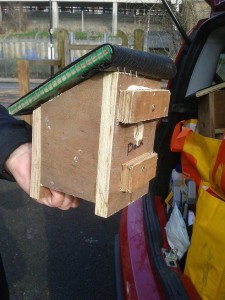
Mammal nestbox: Yes, the hole is meant to be on the back
It will become much easier to determine which wood contains which mammals when we start trapping in a fortnight’s time. Then we have to get up and be at the reserves by 6:30 in the morning for a two-hour stint, to be repeated in the afternoon. My family will be amazed if I manage any kind of early morning.
Here in town, the daffodils are in bloom, the bluebells are coming into fresh green leaf, and the temperature is 10 C, so it might almost be early spring. And this morning I heard the chi-chi-chi / zheeeee! of a singing male Greenfinch, getting into the spring courtship season. But some trees on the same common are full of twittering Redwings, winter visitors from the frozen North, a cheerful and bright winter sight.
Out in the countryside, it looks much more like Winter, the trees as bare as they ought to be in early February, the only flowers a few tufts of snowdrops near the pleasantly lichened reserve signboard at RSPB Otmoor. The reserve has grown steadily better from its early day, with more and more wet scrapes, pools, and reedbeds spanning something like a mile of Otmoor’s wide, flat expanse.
A Kestrel hovered overhead; Bramblings and Chaffinches lurked in the hedges; Redshank called in the distance. Red Kites drifted by over the trees. Seven Snipe jumped up, screeching, from wet grass and zigzagged to a muddy island. A Cetti’s Warbler sang from almost under our feet, invisible.
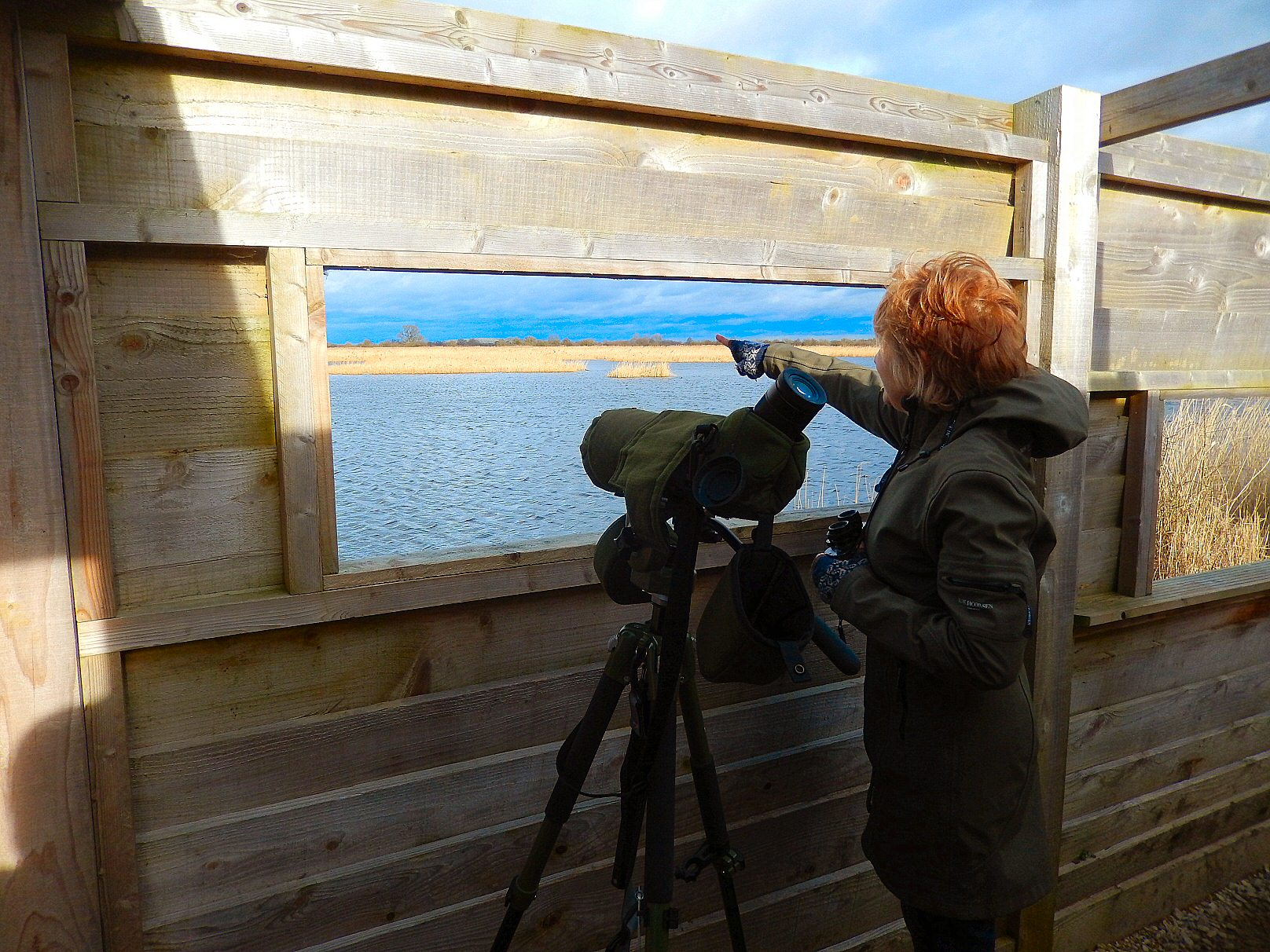
The luxurious hide revealed numbers of Wigeon, Shoveler, and Teal, and a flock of Linnets with a few Goldfinches feeding on the grass in full view. Yellowhammers, Reed Buntings and more Linnets sat in the bushes. The trees were full of twittering: I soaked up the soundscape with hands cupped to my ears.
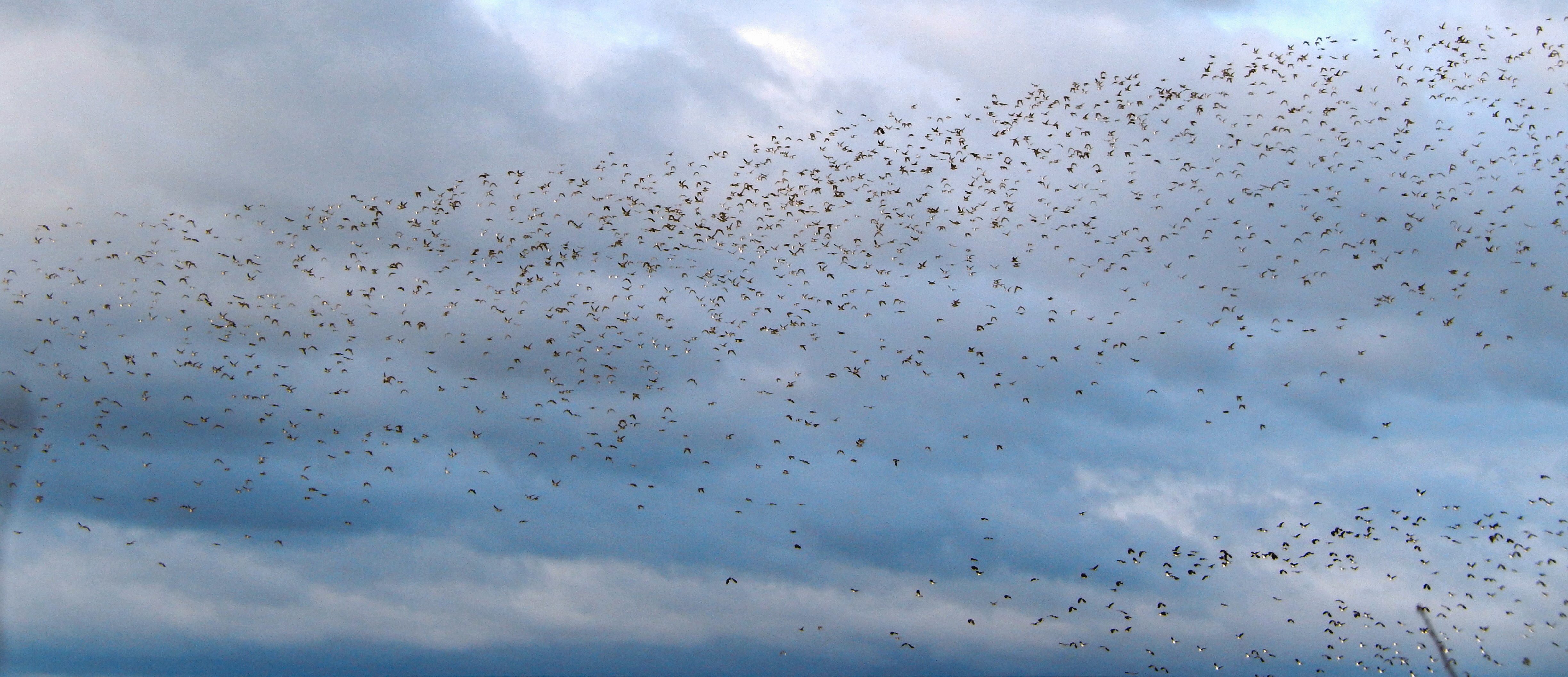
Thousands of Golden Plovers (and some Lapwings below)
When a Buzzard came over, some 3,000 Lapwings and a similar number of Golden Plover got up, all glinting gold as they turned together in the sunshine.
Golden Reedbeds from a hide with no roof
Over to the north, a Marsh Harrier dropped into the reeds, got up again and scoured the reedbed for signs of prey, its broad brown wings slightly raised, its broad tail quiet unlike that of the Red Kite that wheeled past it.
Huma Pearce, mammal expert, in Gunnersbury Triangle
The hut in the Gunnersbury Triangle Nature Reserve, which is managed by London Wildlife Trust, was buzzing with excitement. It was packed full of people on a bitterly cold winter’s day, everyone eager to find out how to map London’s mammals.
You might think that in a metropolis of some ten million people, pretty much everything would be known by now about the city’s wildlife.
But that’s not so. A quick look at the existing maps of some of our mammals – from field vole to otter – tells a simple story. Hardly anything has been published about what lives where in London.
The field is wide open for new discoveries, and those are what we hope to make in the next year as we track down those voles, and maybe some larger animals into the bargain.
London Wildlife Trust has secured £97,000 from the Heritage Lottery Fund to study the distribution and abundance of small mammals in 9 woodland sites in West London. Although the focus will be on small woodland mammals, Huma (the mammal expert employed to co-ordinate and deliver the surveys) also hopes that with the help of volunteers she will be able to collect mammal data from a range of sites of different sizes, scattered across the boroughs of Hounslow, Ealing, Hillingdon and Harrow.
On each of the 9 woodland sites, the project will need to find out which species are present, and to estimate their numbers. But small mammals are shy, inconspicuous and mainly active at night. Tracking them down isn’t easy.
So Huma is getting together and training a “Vole Patrol”, a small army of volunteers, keen to get down and dirty with wildlife. That means us! We need to know how to collect data on the mammals, without hurting them, or disturbing them more than absolutely necessary. That means training.
The first thing you might think of is live trapping, and we’ll do some. Huma showed us a Longworth trap, a light aluminium contraption made of two boxes that lock together. You put some food and bedding inside; a trapdoor falls when little feet venture inside.
But small animals particularly shrews need food all the time. You have to visit all your traps after six hours, to ensure that any animals captured are safe, and to identify the species before they are released. We’ll do some trapping later in the year.
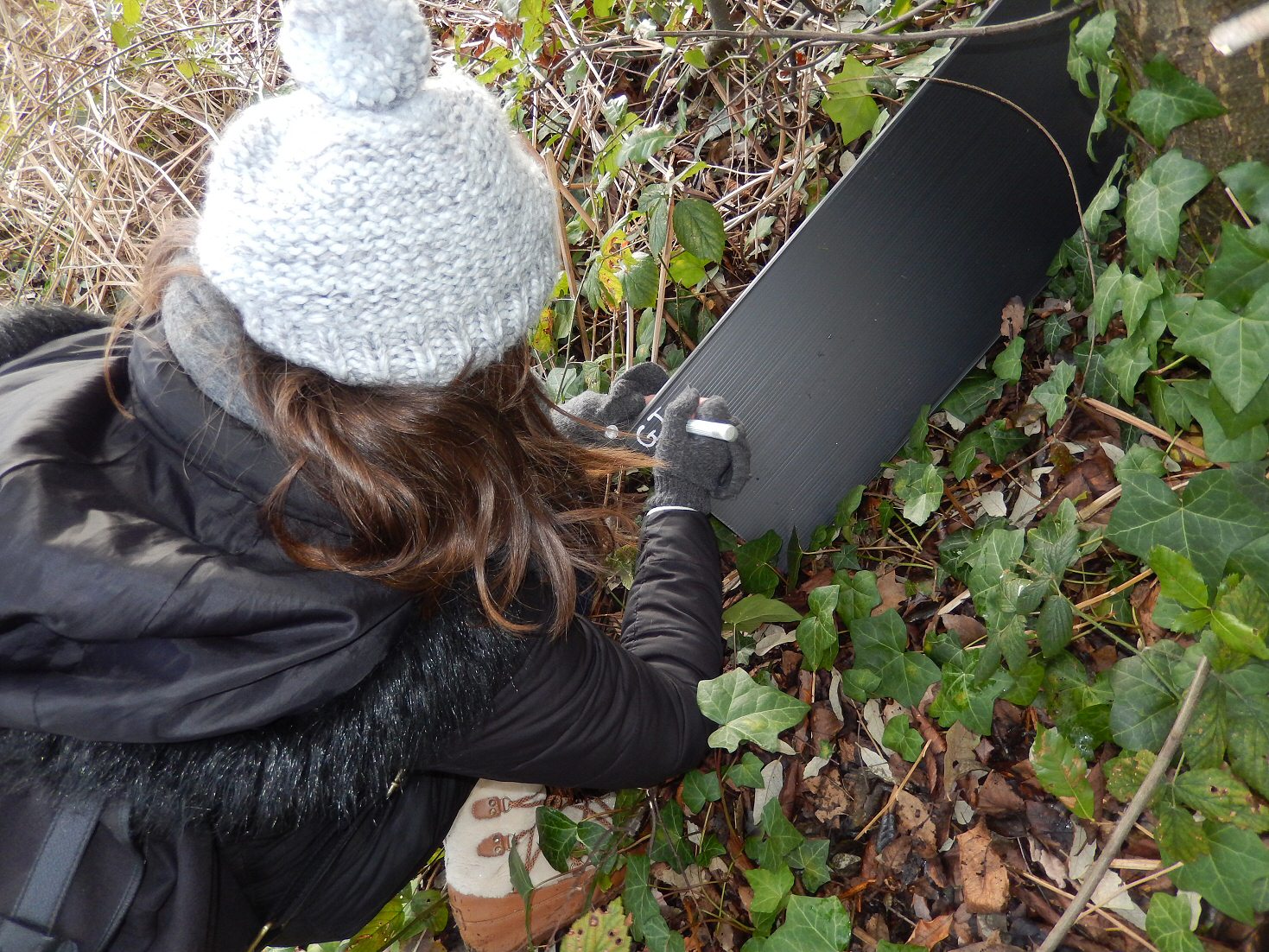
Numbering a hedgehog tunnel
We’re starting, instead, with some baited hedgehog tunnels. Hedgehogs are hibernating at this time of year, so we don’t expect them, but the design is proven, and good for a variety of small mammals too. We assemble them from Correx sheets, like cardboard only waterproof. We fold them into a triangular tube, with a fourth side as an overlap, which we stick down with Velcro. Another sheet of plastic slides inside as a tray.
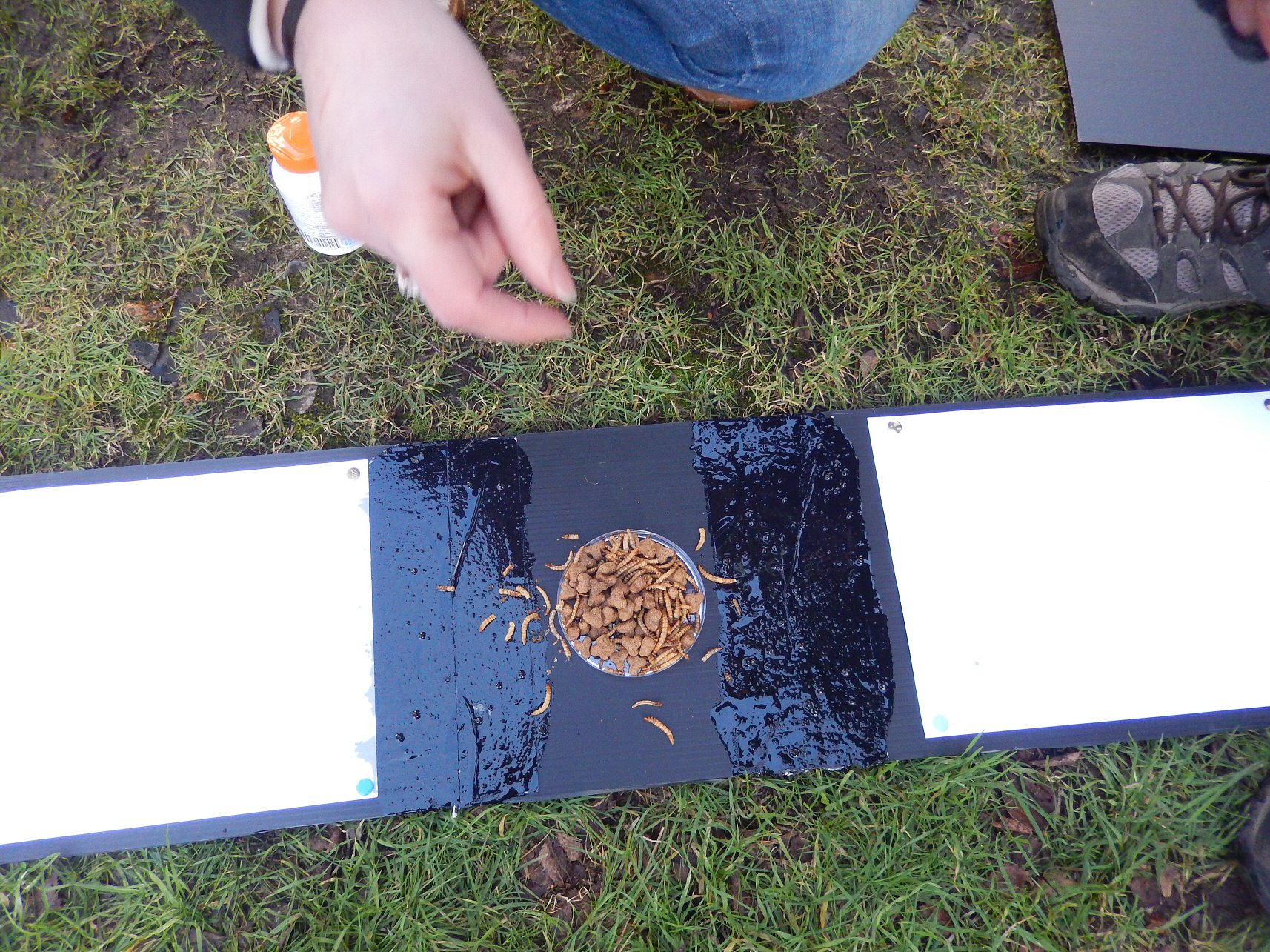
Clean paper, wet paint, food, paint, paper to slide into hedgehog tunnel
We stick a plastic dish in the middle, and fix masking tape both sides to hold some paint, which we mix up from non-toxic carbon powder and vegetable oil. At either end we pin down a sheet of paper. The dish is baited with special ‘Hog’ biscuits and dried mealworms: it almost looks appetising.
Hundreds of footprints!
We hide the hedgehog tunnels away from likely disturbance. The next day, sure enough, hundreds of footprints are spattered all over the sheets. The small ones are surely mice or voles; the larger ones not so easy to guess.
As well, there seem to be marks of tails dragged through the paint. We have to repeat the process every day for five days, with each tunnel.
Other volunteers will do the same in each of the other survey sites.
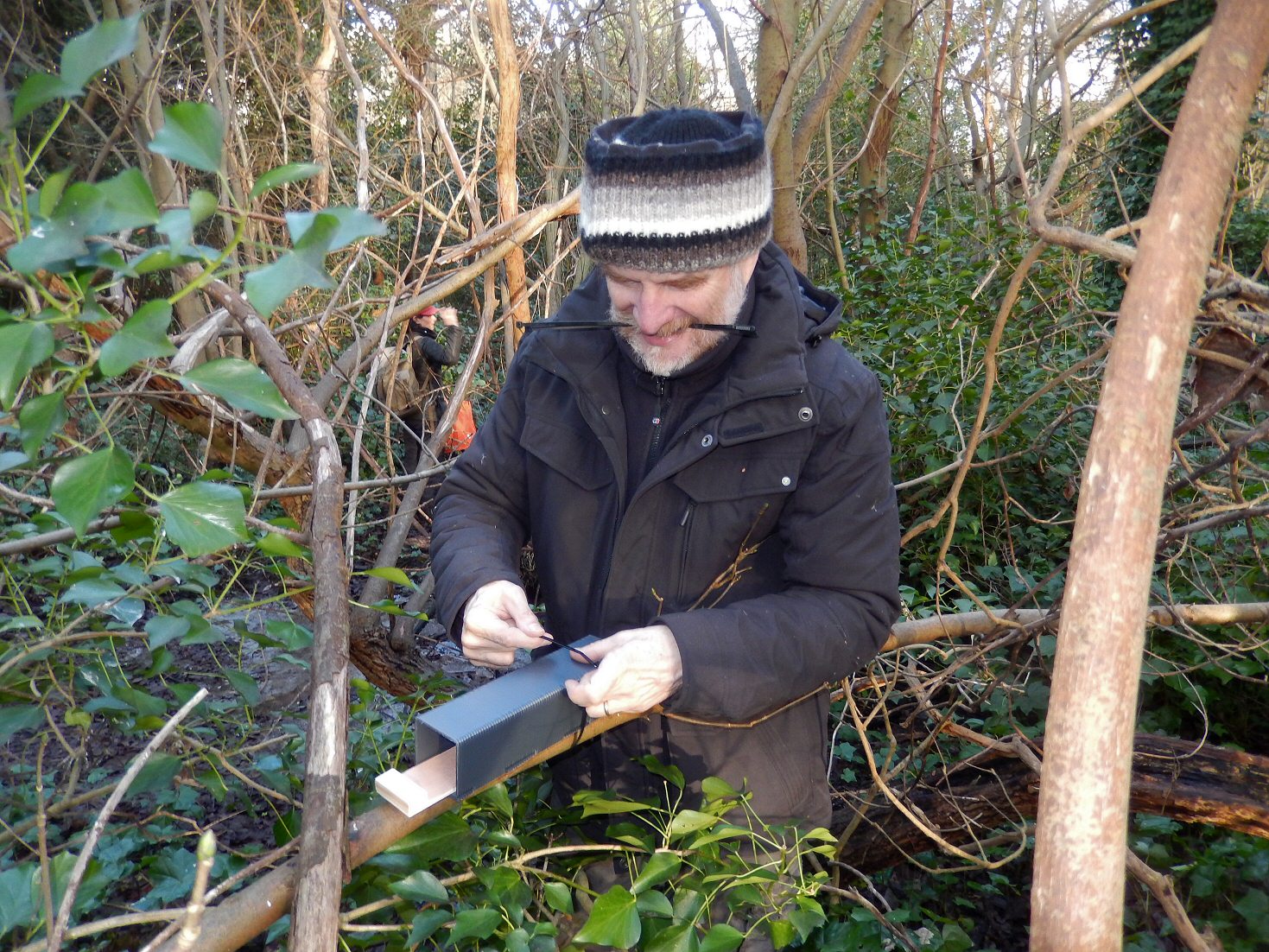
As well as the hedgehog tunnels, we take out a boxful of nest tubes. They’re made of yet more Correx sheet formed into square tubes, each with a simple wooden tray that slides in and out; the back is closed with a square of wood.
Fixing a nest tunnel into position
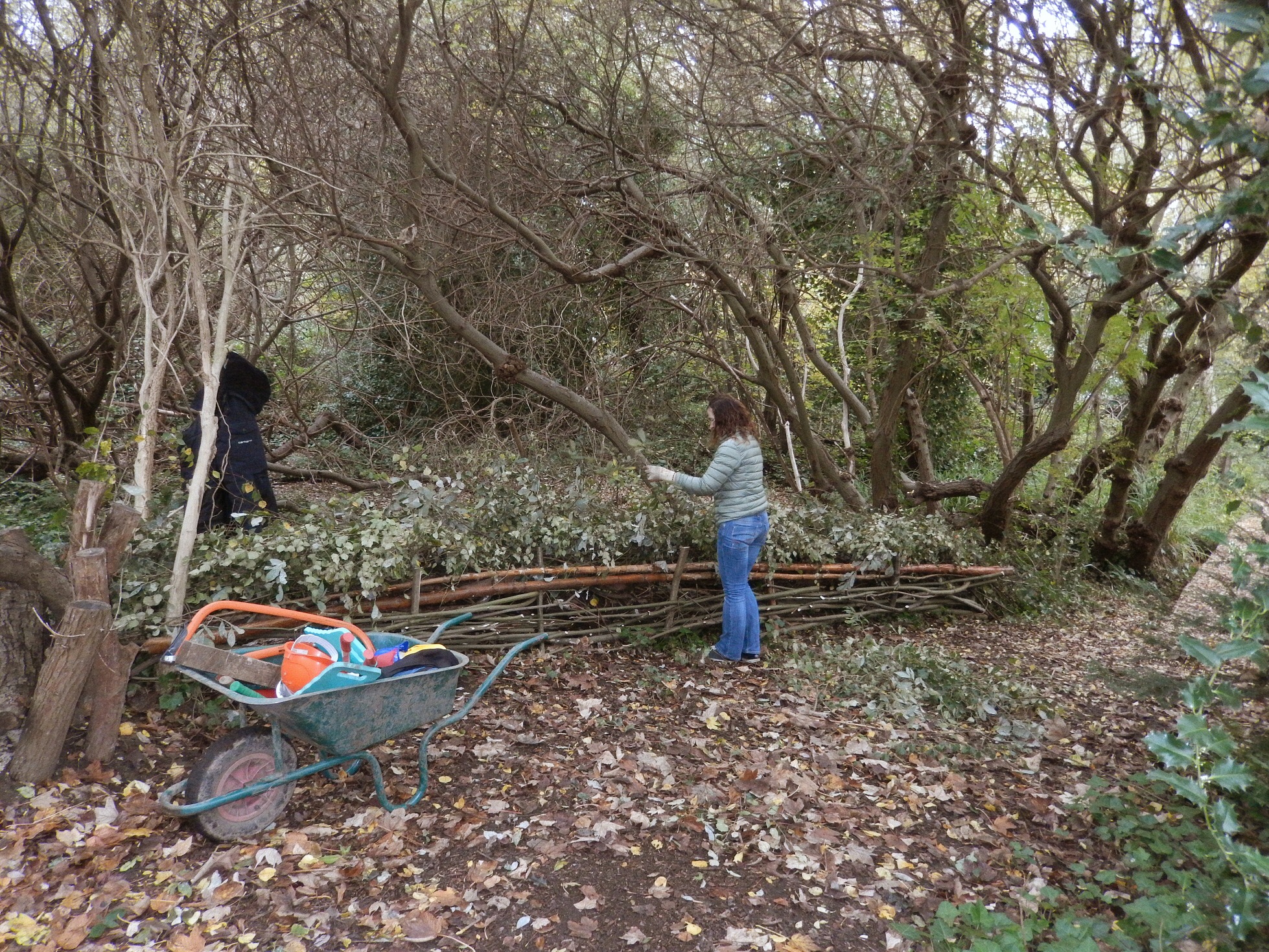
These were to be laid out in a rectangular grid. Easier said than done in a tangled, muddy wood! We push through the brambles, trying not to create more paths than we had to, looking for low branches out of sight of the paths, where we could tie on the nest tunnels. Then we recorded their positions with GPS. We’ll go back later in the year to see which of the boxes have been used.
We also put down some plastic tubes baited with mealworms, low down near a pond, for water shrews to visit, and perhaps to leave a few tokens (in other words, shrew poo) to indicate their visit. Species can be broadly identified from their droppings, but Huma is hoping that we might be able to get these, or little tufts of fur, analysed for DNA to prove which species was responsible.
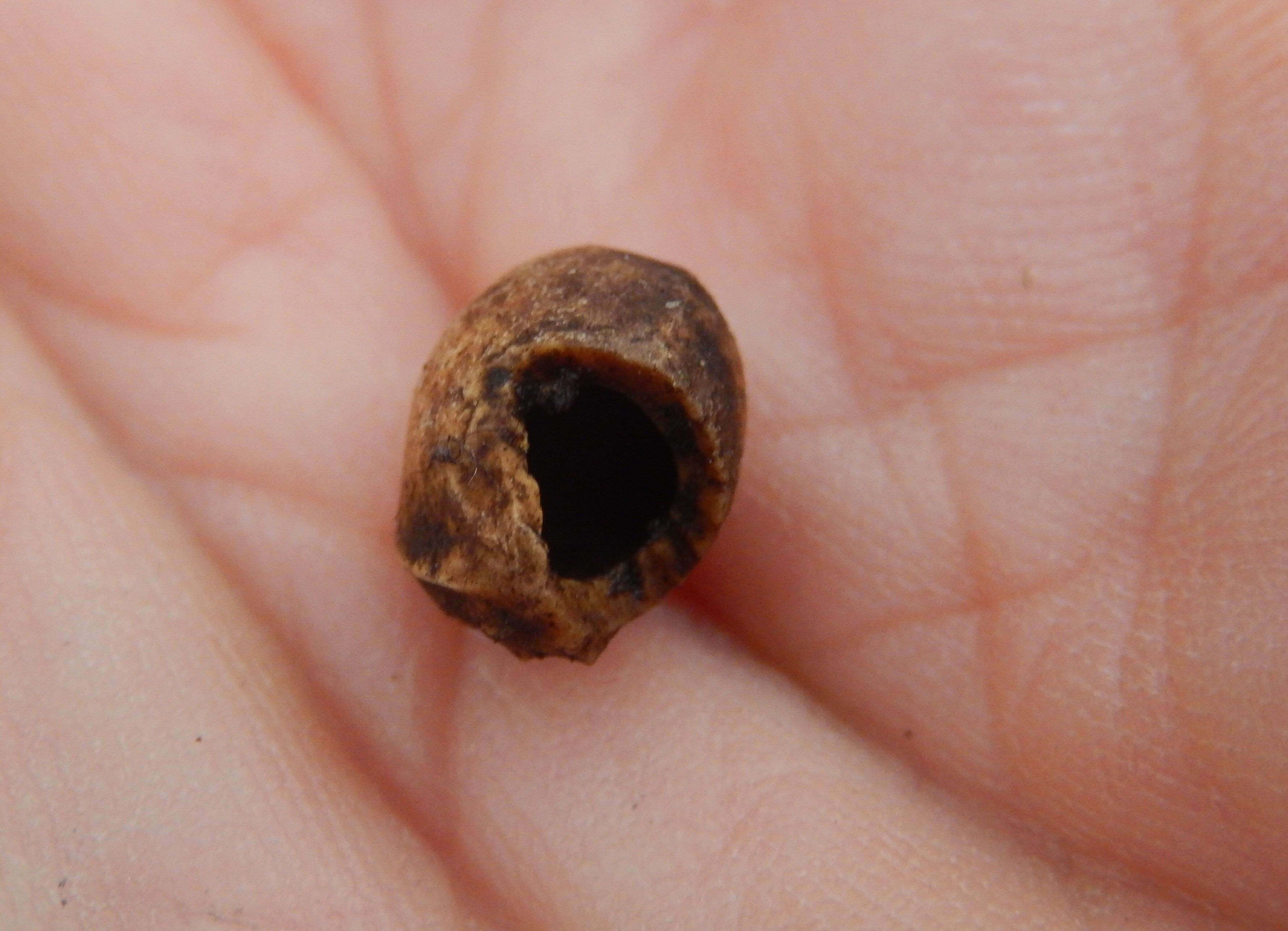
Cherry Stone opened by vole in Gunnersbury Triangle
We can find out about mammals in other ways too. Different animals open nuts and cherry stones in their own ways: squirrels snap them roughly in half; mice nibble a neat round hole; voles bite into the shell more irregularly. We found a cherry stone near the first hedgehog tunnel: a small mammal had gnawed an irregular hole with sharp tooth-marks along its edge.
A Camera Trap in position for any small mammals in the grass
A glimpse of small mammals can be gained with camera traps, as seen on TV nature documentaries. You tie them onto a tree, overlooking a likely mammal run, and with any luck you’ll see mice, or voles, or who knows, maybe a weasel or an otter. London’s mammals are about to become a lot more famous.
Huma is keen to involve as many people from the local community in the project. So, if you would like to volunteer on some mammal surveys, I suggest you contact her by email: hpearce@wildlondon.org.uk
After the bitter cold of the New Year, down to a surprising -12C in London, suddenly spring (as it were) is back in the air, and the Daffodils are resuming their progress towards full bloom in gardens and on roadsides.
The warmth and sunshine tempted me out to Wraysbury. With the heavy rain and perhaps also the rapid changes of temperature, a large Poplar had fallen across the river, forming a minor weir.
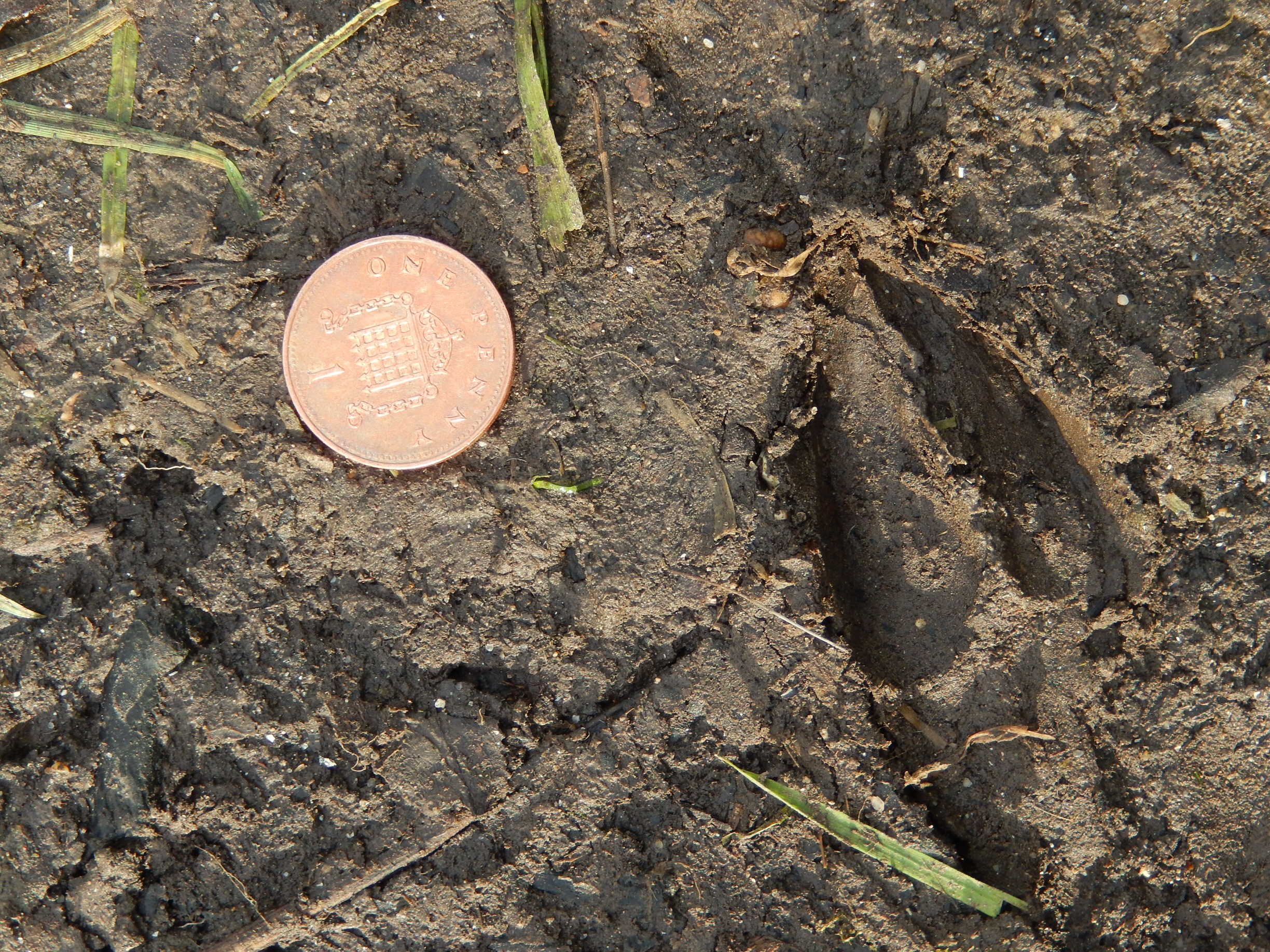
Muntjac print
On the path, a Muntjac deer had left its tiny prints in the soft mud. Unlike a lot of other mammals, at least this one is readily identifiable from its print, the two small sharp slots of its slim feet not mistakable for anything else.
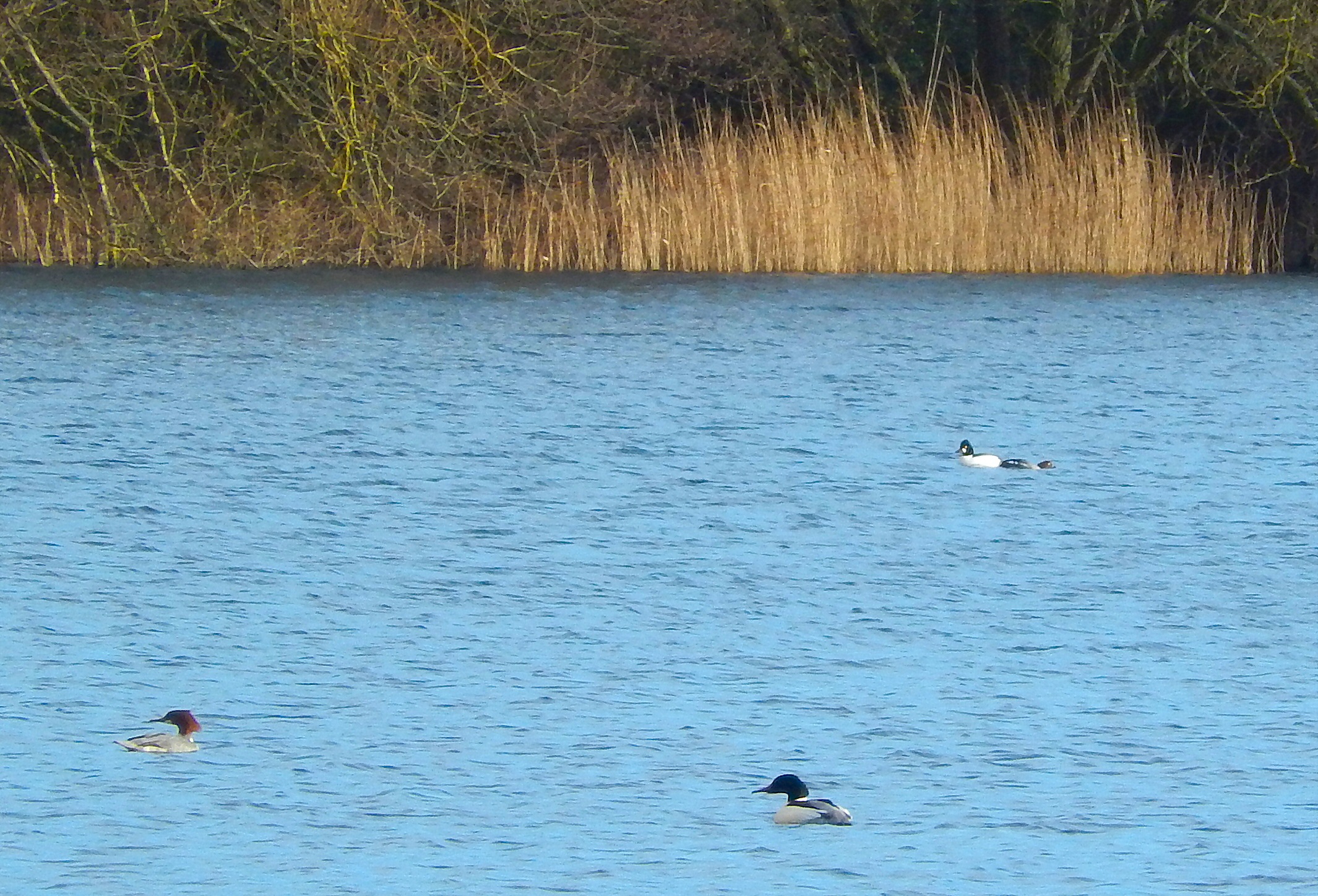
The lake, which had been full of birds as big as Swans last time I visited, was almost empty: a few Coots, some Great Crested Grebes, a Black-Headed Gull, a few roosting Cormorants, a few Tufted: and happily two of the area’s specialities, three pairs of Goosander, and nine Goldeneye (including three males).
A Kestrel hovered and dropped slowly after a small mammal in the long grass. A Redwing flickered away around a corner. A Song Thrush sang sweetly from a thicket. One or perhaps two Bullfinches gave their distinctive “Deu” call from the middle of a bush. Half-a-dozen Fieldfares chattered and skittered about from the top of one bare thornbush to another. A few Wood pigeons and Crows looked out warily.
One of the real difficulties in nature conservation is the basic fact that humans have short lives and shorter memories.
We instinctively assume that the way the countryside “should” look is … how it looked when we were young. Obviously, it had been that way since time immemorial, at least since the year 1 B.M. (where B.M. means “Before Me”). In Feral, George Monbiot calls this “Shifting Baseline Syndrome” – each new generation sets the baseline to the time of its own youth: we imagine our childhood landscape to have been just right, good, and natural.
Only it wasn’t. Our limited time horizon obscures the fact that the countryside has been changing continuously since Roman times, indeed since the Stone Age. Forests have been felled, making way for fields, towns, and roads. Already by 1000 AD, most of Britain’s forests had disappeared, and our larger forest animals like bear, wolf, lynx and wolverine were disappearing with them.
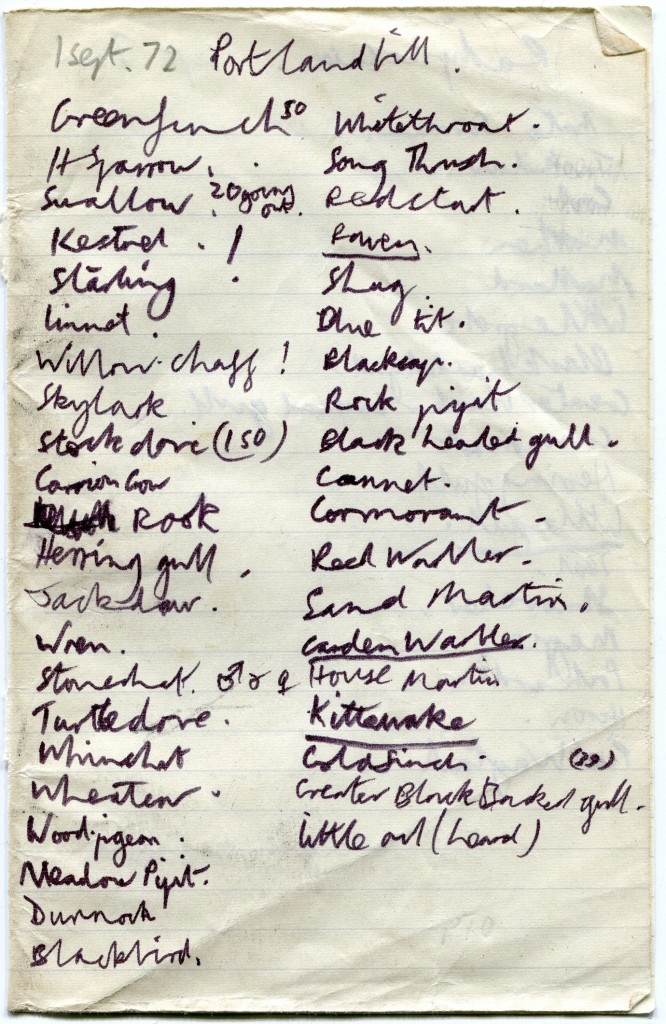
But even in a single lifetime, the loss of once-familiar species is shockingly evident. I had a small reminder when I found one of my birdwatching notebooks from my schooldays. We had been on a Natural History Society trip to Portland Bill, where we stayed in the old lighthouse, a bird observatory in a fine location for counting (and trapping and ringing) arriving and departing migrants. A group of us walked out in the bright sunshine on 1 September 1972, and I listed what we saw.
Portland Bill Bird List 1 Sept 1972
I was pleased to see a Raven, a Garden Warbler, and a Kittiwake, as I would be today, though all these species are doing well. I was reasonably pleased to hear a Little Owl, something that would now be rather special. I was quite unsurprised to see 20 House Sparrows, and I don’t seem to have found the Turtle Dove or the Redstart at all remarkable. Either of those would now be close to the highlight of the year: and the Song Thrush too, once a regular garden bird, has become really rather uncommon. Then there are the Skylark and Whinchat, which I gave no more notice to than the Linnet, Jackdaw and Stonechat; and the Sand Martin too is declining alarmingly. The 39 Goldfinches, on the other hand, were somewhat remarkable to me then, but I see nearly as many in flocks around the quieter streets in town. I didn’t think the presence of 5 warblers worth noting, though at least that isn’t too terribly difficult to achieve today – just a matter of going to a reasonably decent nature reserve, as there won’t be many species on farmland (you’re lucky to get Chiffchaff and Blackcap, really). The mixture of farmland species, birds of open moorland (Meadow Pipit, Wheatear), and coastal species (Shag, Kittiwake, Rock Pipit) is far more remarkable than I realised at the time, and is probably characteristic of those headlands where migrants congregate.
It would be interesting to repeat the walk early in September (or in the spring migration) and see what we’d see. I think there would be fewer species. And a lot fewer sparrows.
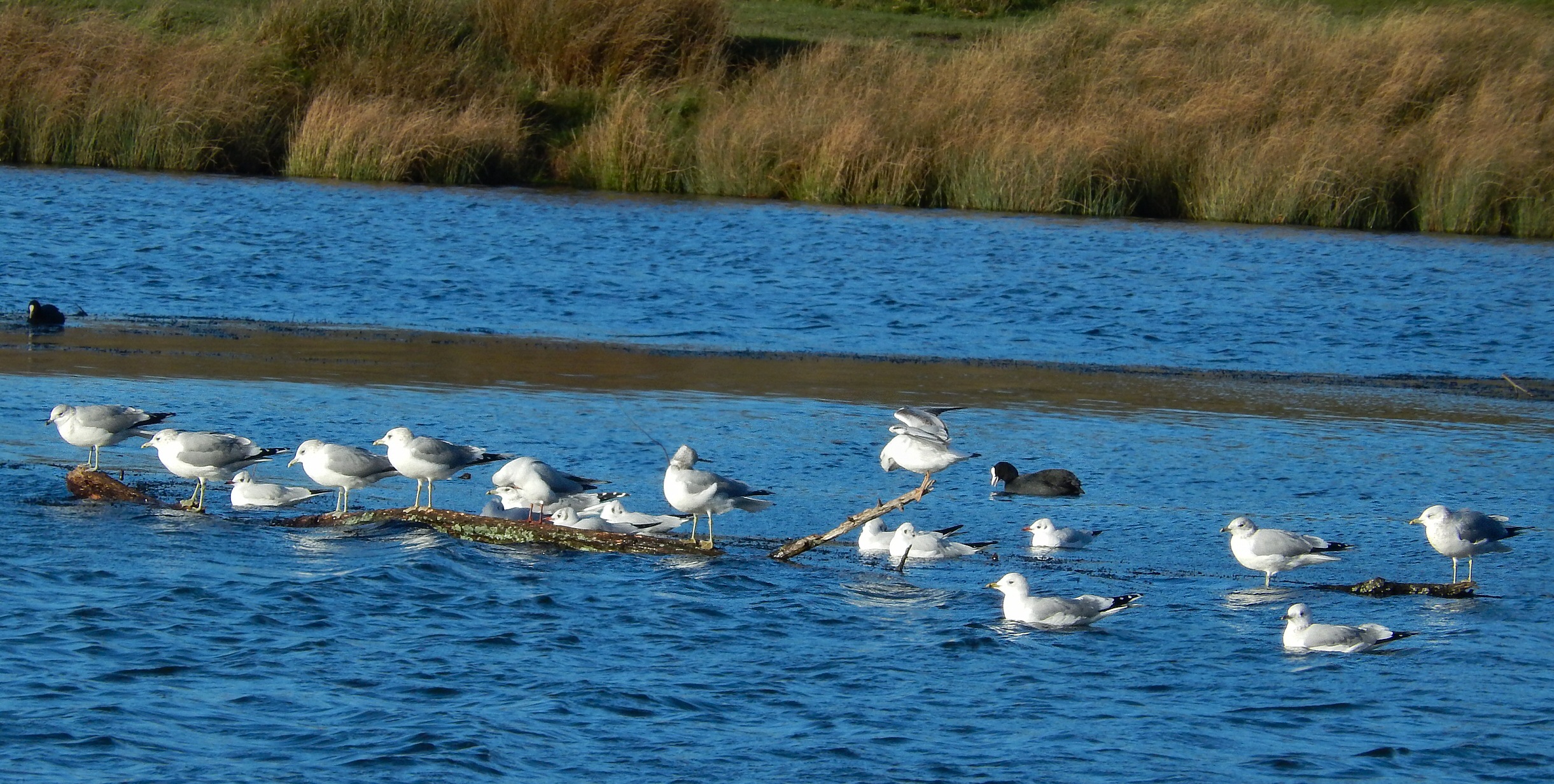
A fine cloudless day, with the jackdaws chasing about in the southwesterly breeze, the edge of Storm Eva that is blowing into the already flooded Northwest of Britain. A few winter ducks on the Pen Ponds – a Wigeon or two, a few dozen Gadwall – but the main surprise was the number of Common Gulls – at least thirty – in little flocks on both of the ponds. They can be seen here to have pale legs and ‘windows’ of white in their black wingtips, unlike the smaller Black-Headed gulls (there are one or two sitting in the water towards the left of the photo) which have very pale backs, no windows, and a black spot behind the eye (when they don’t have their chocolate-brown breeding hood, that is). Perhaps they have come down from the chilly North of Scandinavia to enjoy the very mild weather here.
The woods of Richmond Park were full of Jackdaws, constantly jostling for whatever position Jackdaws have in their noisy gangs. And the even noisier squawkings and screeches of the Ring-Necked Parakeets, of course, high in the trees or dashing about.
Out on the quieter grassland and bracken, now dry and brown, a Stonechat perched on a prominent lookout, its red breast, white collar and dark head distinctive.
A Kestrel drifted past, tail fanned, its handsome rufous back and dark wingtips characteristic; it turned and powered the other way, flew all across the open space over the anthilly grassland, and rose into a distant tree.
The upper Pen Pond had at least 6 Mandarin Ducks, the males ridiculously decorative, dressed like dandies and constantly showing off, alongside a few Pochard.
The lower Pen Pond had perhaps 30 Gadwall, a dozen Wigeon, a few Tufted Duck, and – best bird by far – a single Snipe that got up from the water’s edge near my feet, called ‘Creech’ once, and zigzagged rapidly off across the water, up and over the trees and the upper pond.
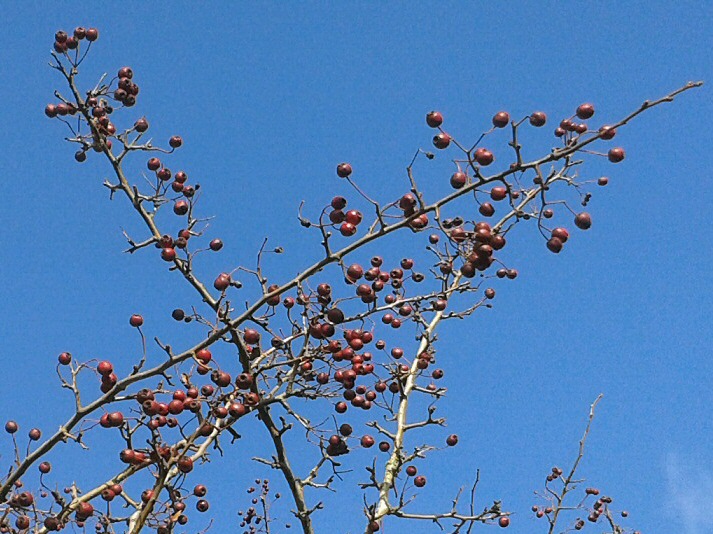
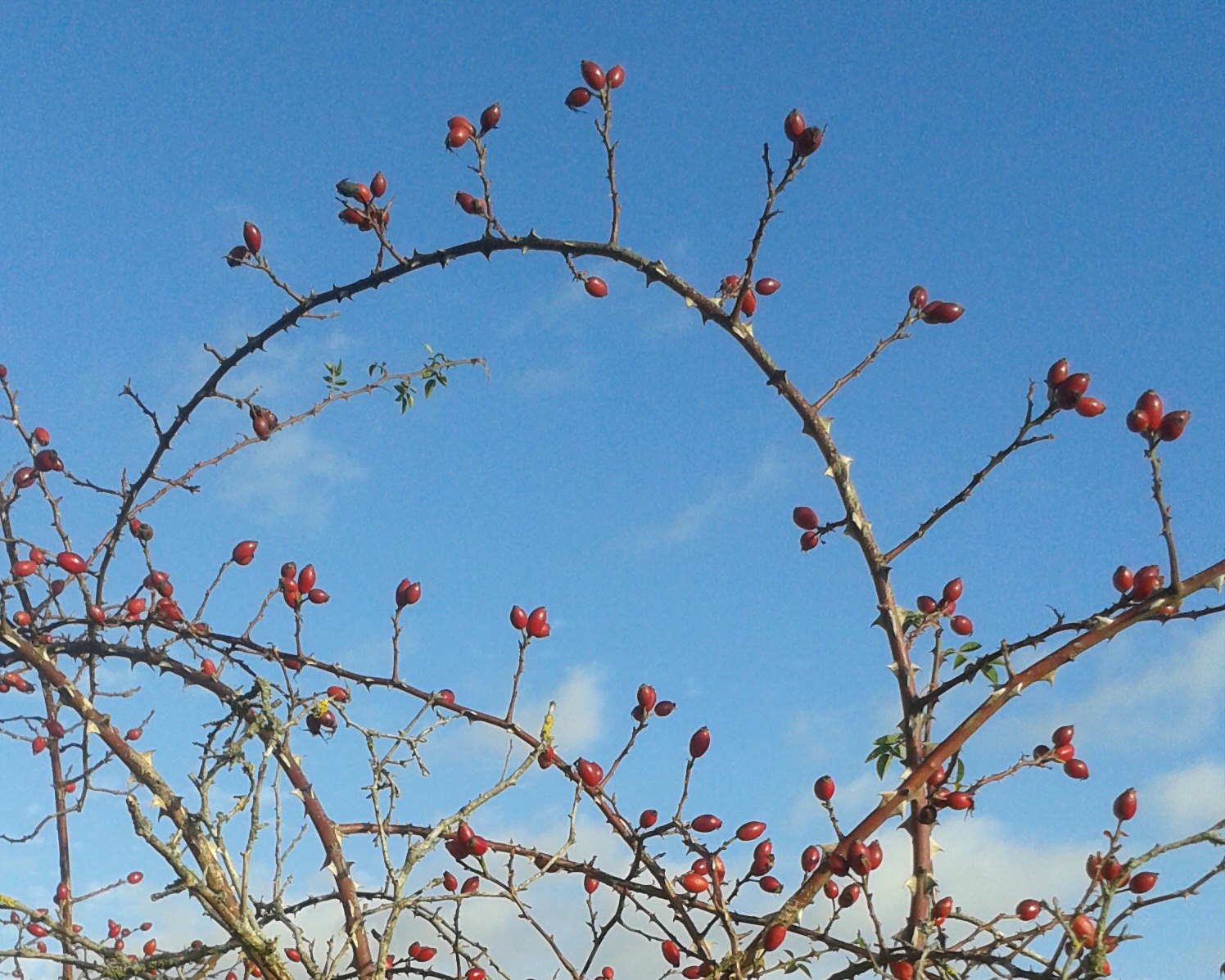
No wisecracks about Hips and Haws and keeping warm on chilly winter days! This morning it was actually more autumnal than wintery, with bright blue skies setting off the deeply red berries, the rosehips scarlet, the hawthorn berries crimson.
The birdlife however did give a hint of winter to come. The first half-dozen Redwings squawked softly and burst from the bushes in their peculiar way, twisting suddenly in flight to get out from between the branches, flapping noisily as they accelerate out of cover. A single big Mistle Thrush flew from higher up in a different tree.
A flock of Goldfinches, some Dunnocks, a Robin or two, a Blackbird, eight Magpies, a rapid Ring-Necked Parakeet, a Carrion Crow or two, and a few Black-Headed Gulls appeared here and there. A Sparrowhawk searched over the Poplar trees for unwary prey.
Down on the lake, too, the winter ducks are starting to arrive. There are good numbers of Gadwall (maybe 30) and Wigeon (50 or so) as well as Tufted (50) and Shoveler (100). A dozen Cormorants, a hundred Coots, a few Mallard, a couple of Mute Swans (where did they all go?), a few Canada Geese (ditto), and a solitary Great Crested Grebe made up the rest.
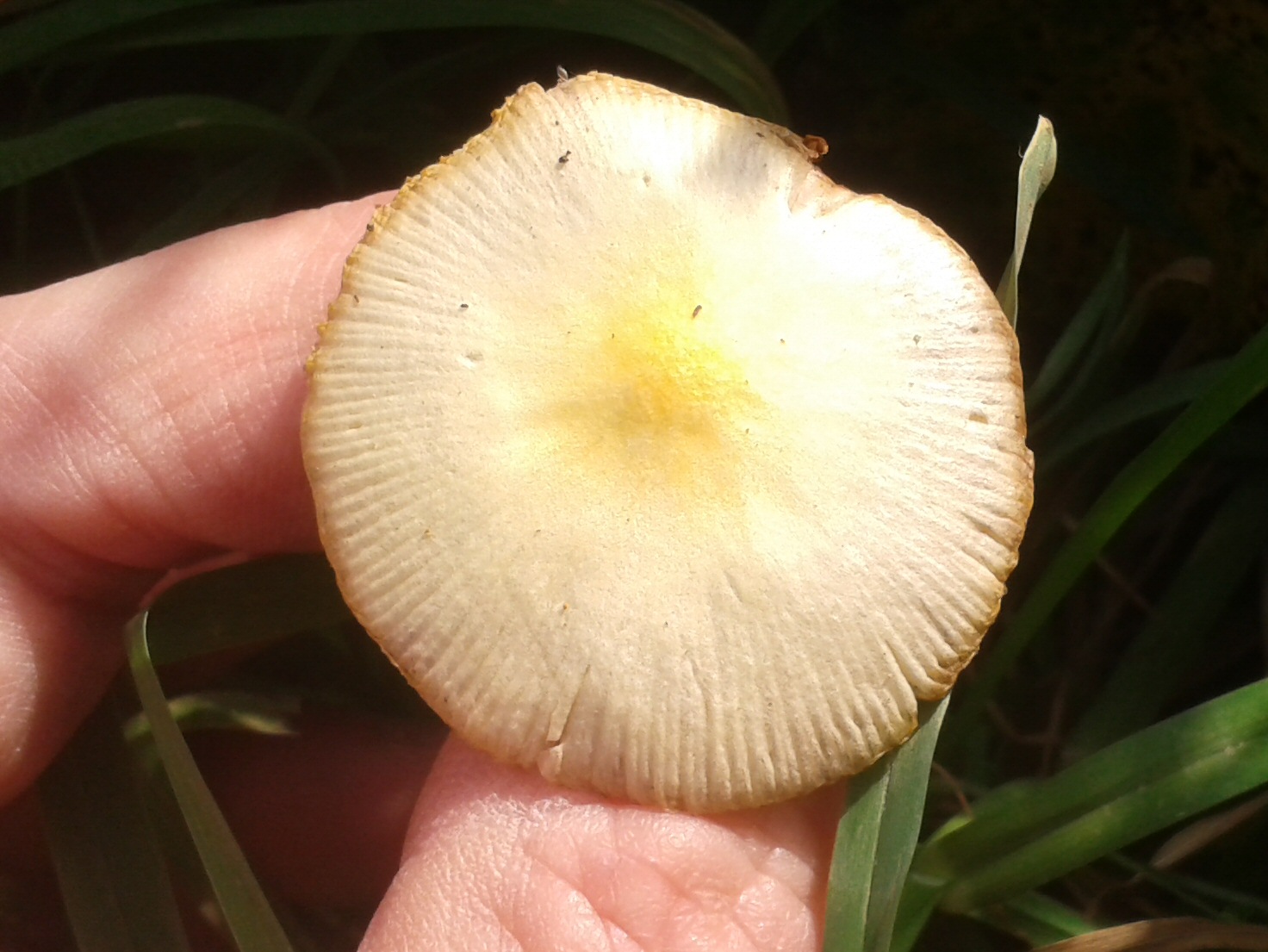
Yellow Inkcap Coprinus auricomus
As a final treat, there was a slender, delicate stalk of the Yellow Inkcap, Coprinus auricomus, in the grass.
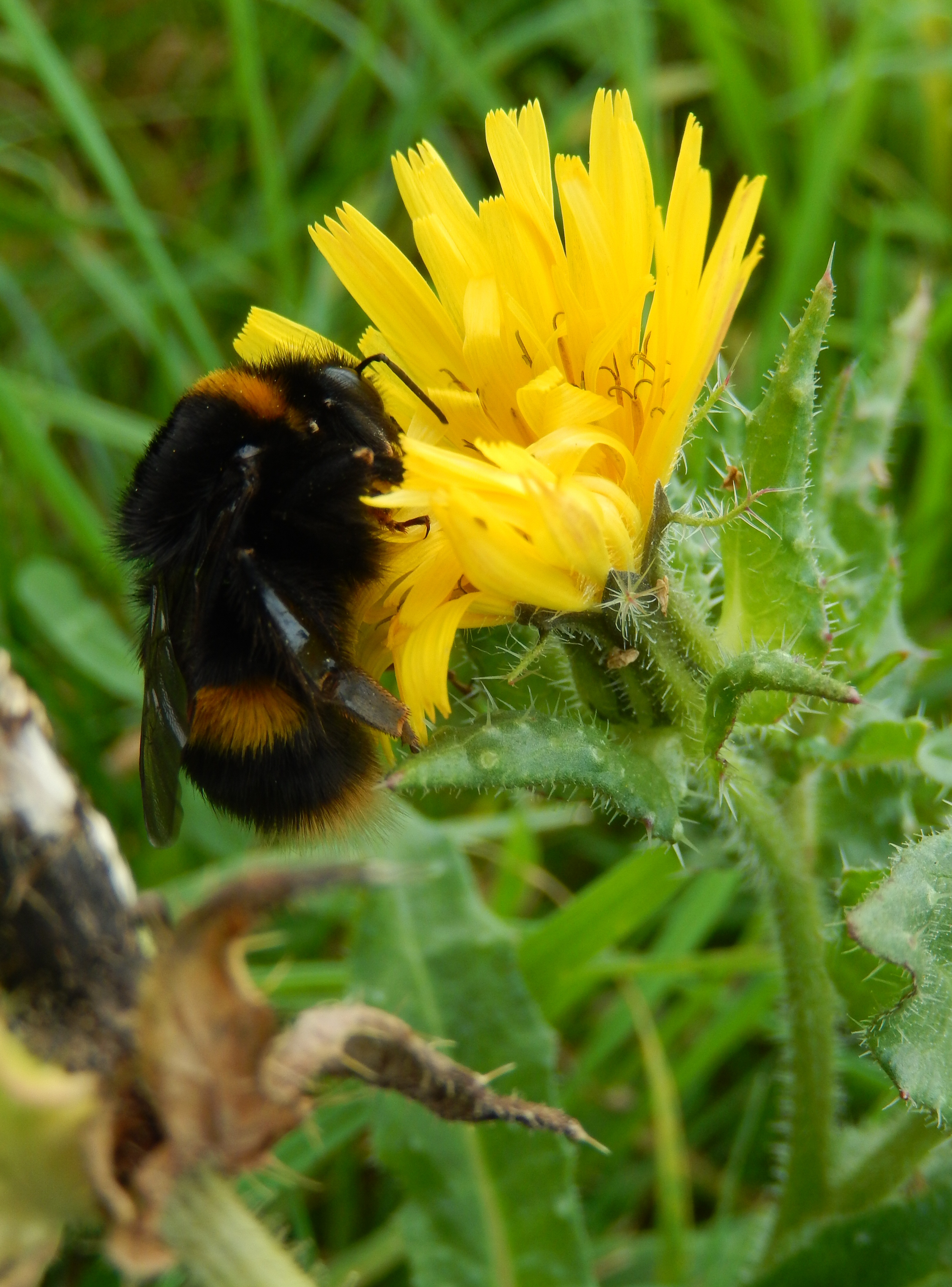
Drowsy Bufftail Bumblebee Queen on Perennial Sow-Thistle
A quiet walk today around Wraysbury lakes: no birds sang, but at least 55 Mute Swans, 110 Canada Geese and dozens of Wigeon sat out on the eutrophicated water amidst masses of weed that has been there for months. A few very shy Gadwall, and some distant Shovelers dabbled; hundreds of Coots and Tufted Duck swam about everywhere; a few Great Crested Grebe were dotted about, one quite close and not shy.
There were plenty of other interesting wildlife sights, though. A Kestrel rose from a tall willow, screaming its high bell-like call repeatedly. Long-tailed tits chased in and out of the hedge bushes. Best of all, three Partridges, I presume Frenchies, raced off from the horse meadow. They’re a welcome sight; whether they’ll now be resident or just winter visitors is an interesting question.
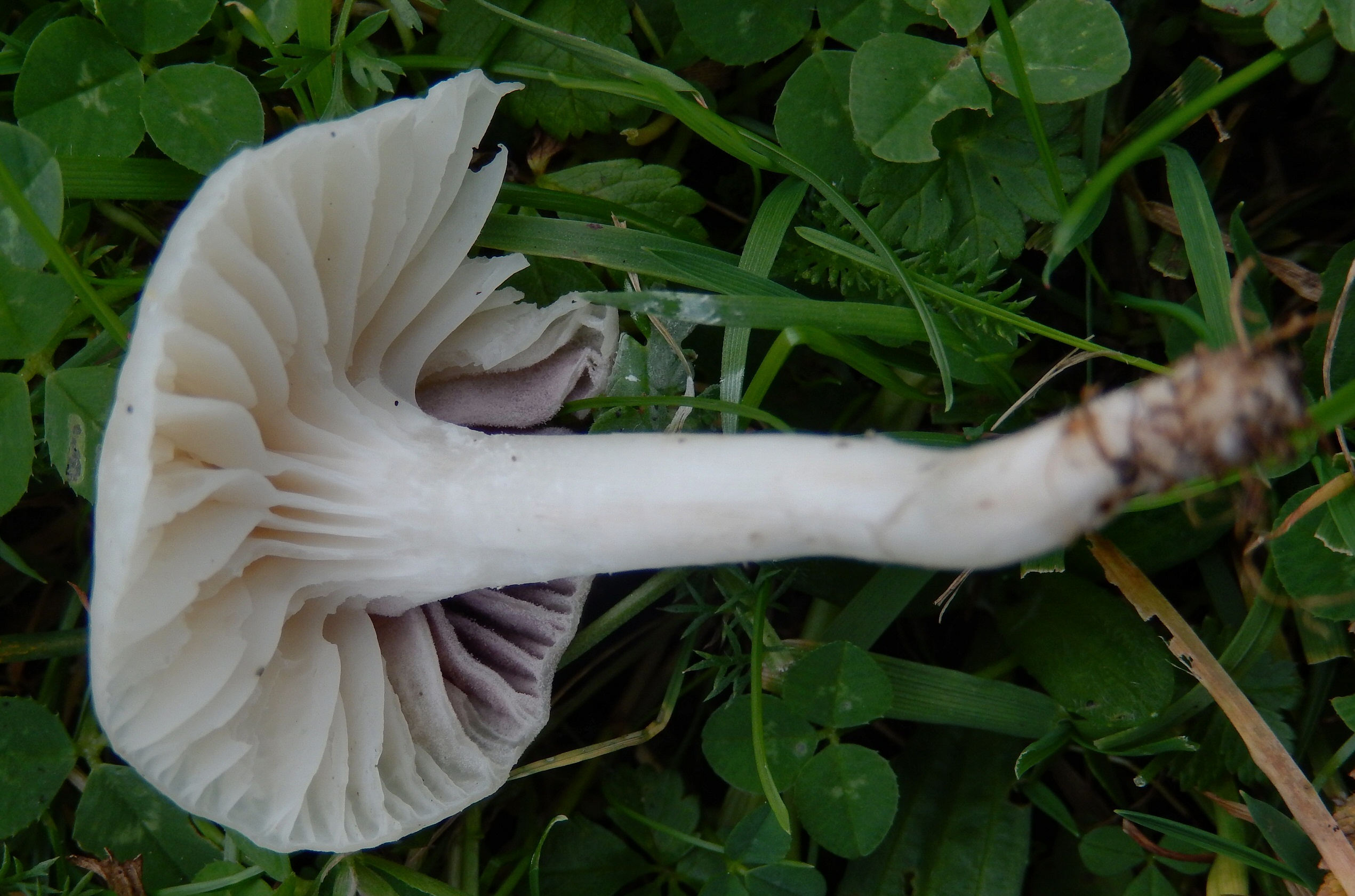
Snowy Waxcap Hygrocybe virginea
A single loose cluster of four or five Snowy Waxcaps grew in the short, clover-rich grass; the species is said to be edible and good.
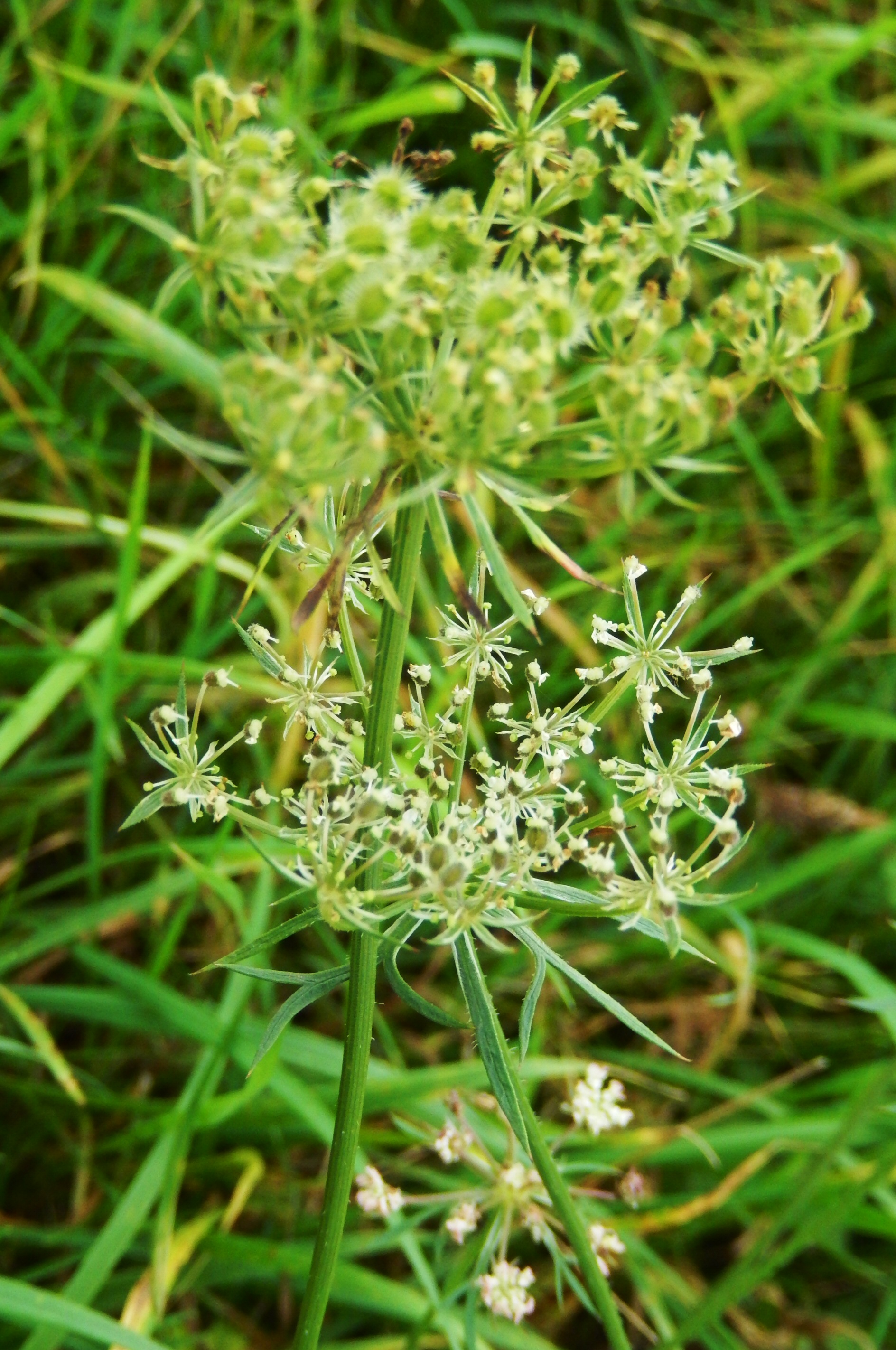
Pignut in flower in November
The meadow was longer than usual, rich in Yarrow, with quite a few stands of Pignut, both (remarkably) in flower in mid-November.
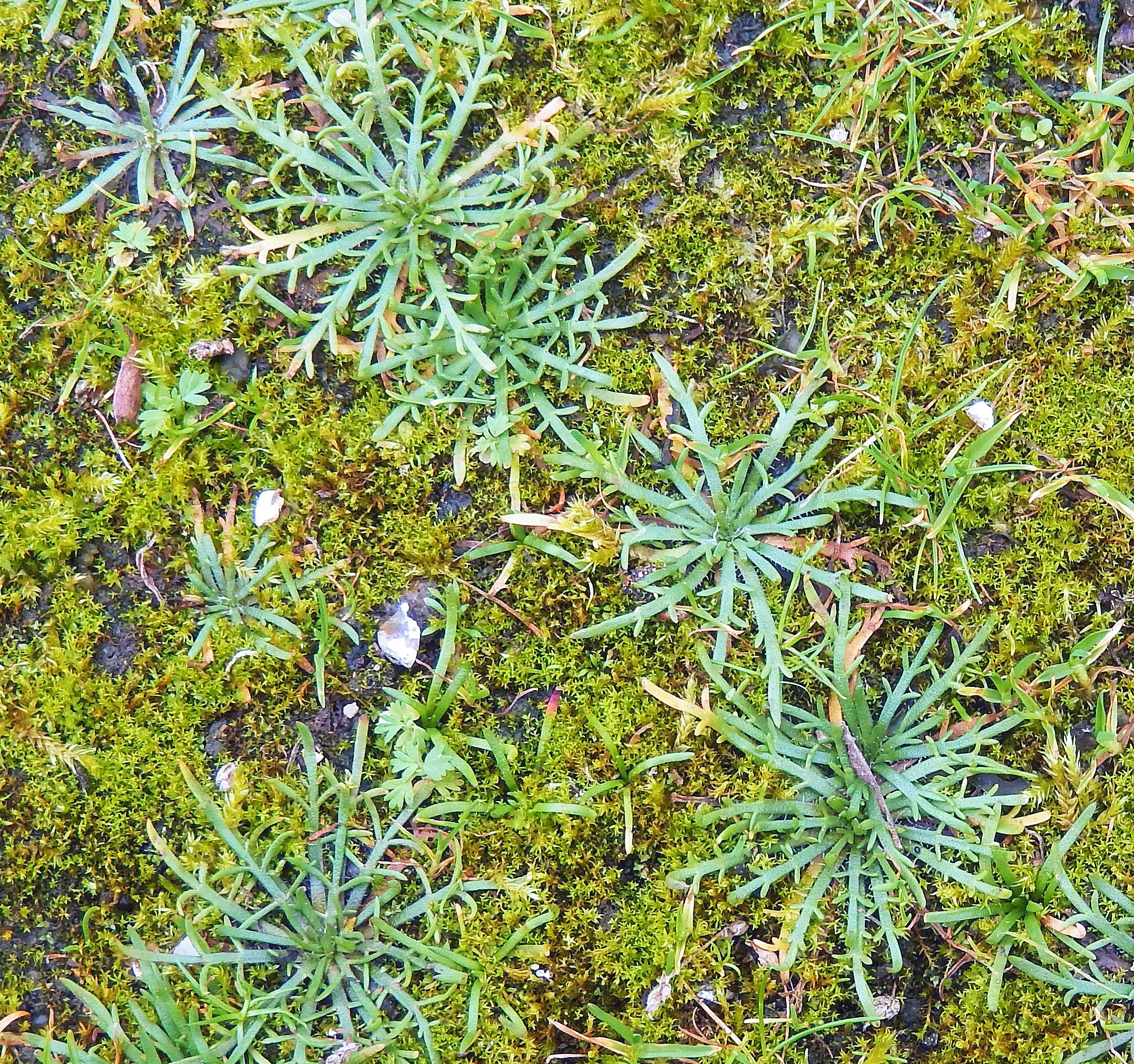
Plant stars in moss beside path
In the short mossy vegetation beside the path, these little blue-green plants formed elegant stars in the brighter, more yellow-green moss, a very delicate pattern.
The Crack Willow with its long leaves and incredibly delicate twigs (well named) was covered in small stinkbugs, like overgrown aphids, blackish and slow-moving but full of red ‘blood’, presumably enabling them to ignore most predators; I squashed half-a-dozen on my hand by accident while examining the leaves. The Sallow too was still in yellow autumnal leaf, but without evident resident herbivores.