Category Archives: Natural History

Dordogne – Parasitic Wasp, Fiery Clearwing (16 July 2014)

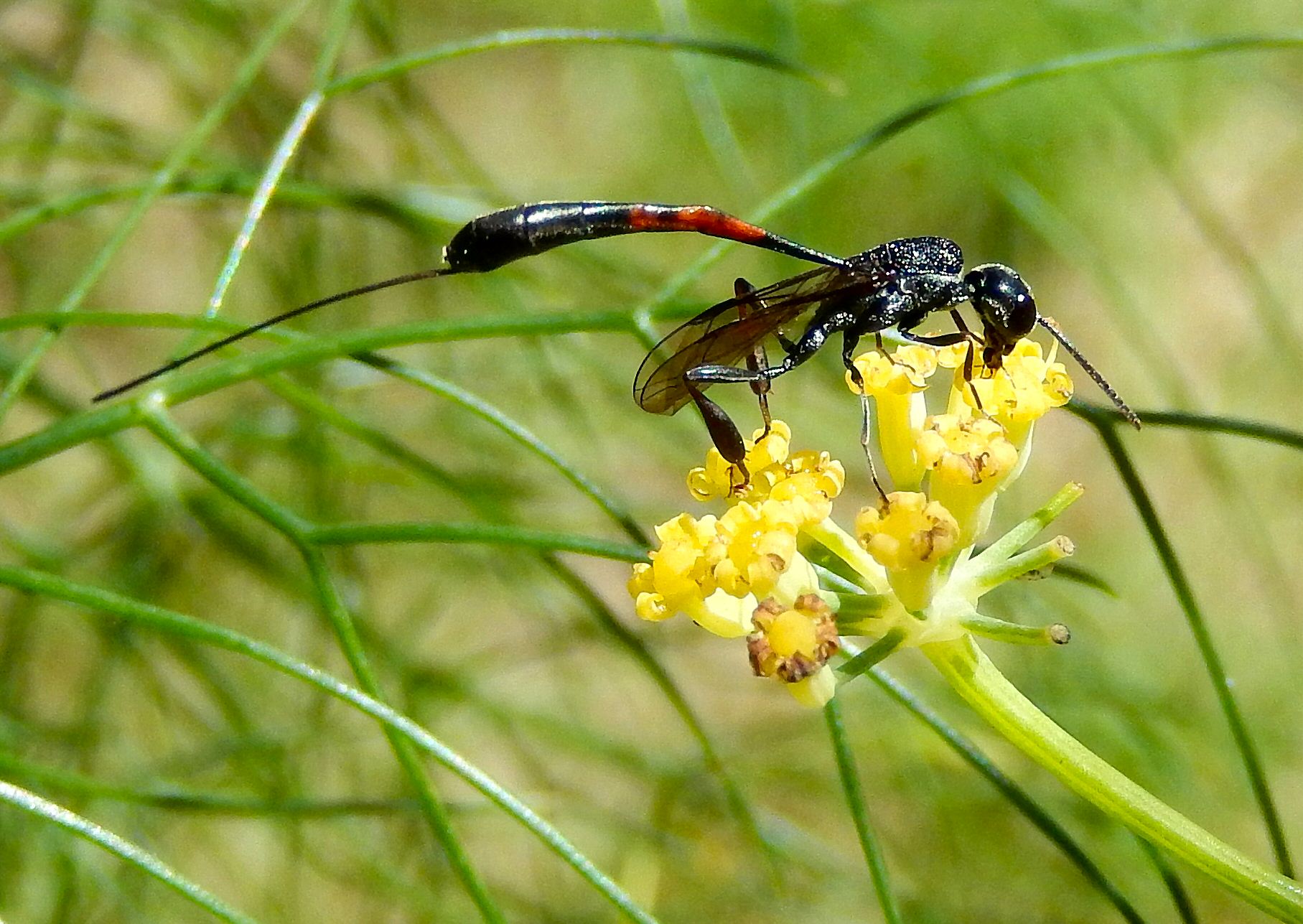
Parasitic Wasp on Fennel
Parasitic Wasp taking nectar from Fennel

When you see a parasitic wasp, she – it’s always a she, as the males lack the long ‘sting’, which is an ovipositor – is generally flying about searching for caterpillars or other insect larvae. She can detect them deep inside plant stems, drills down to them with her extraordinary sting, and lays one egg in the body of the luckless grub.
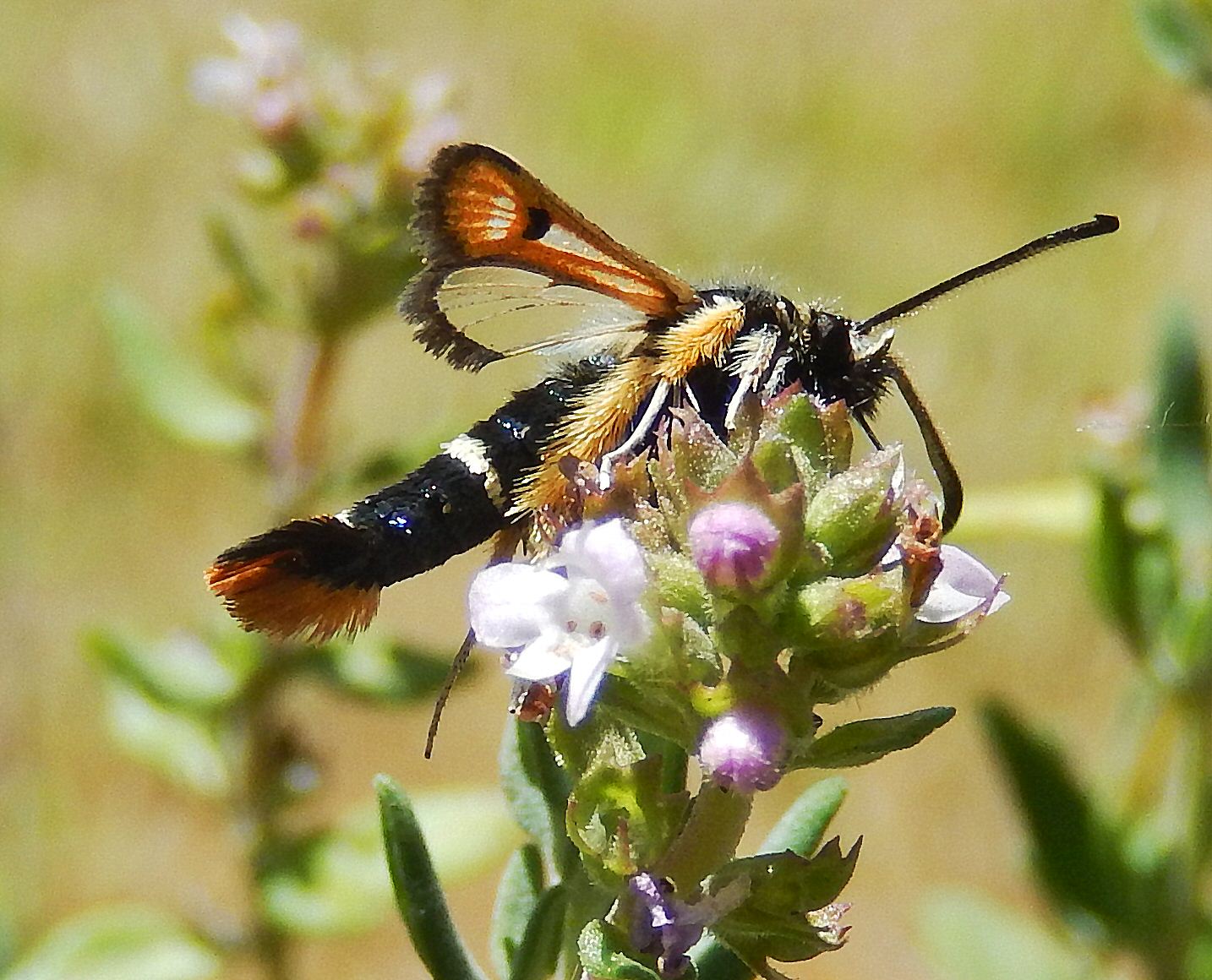
Fiery Clearwing moth
Another fantastic insect: Fiery Clearwing moth

Clearwing moth larvae just eat plants, including currants, but the adults are spectacular. The clear patches on the wings are where the wing scales are programmed to fall off, leaving a bare membrane. Happily the wings and tail are gloriously coloured.
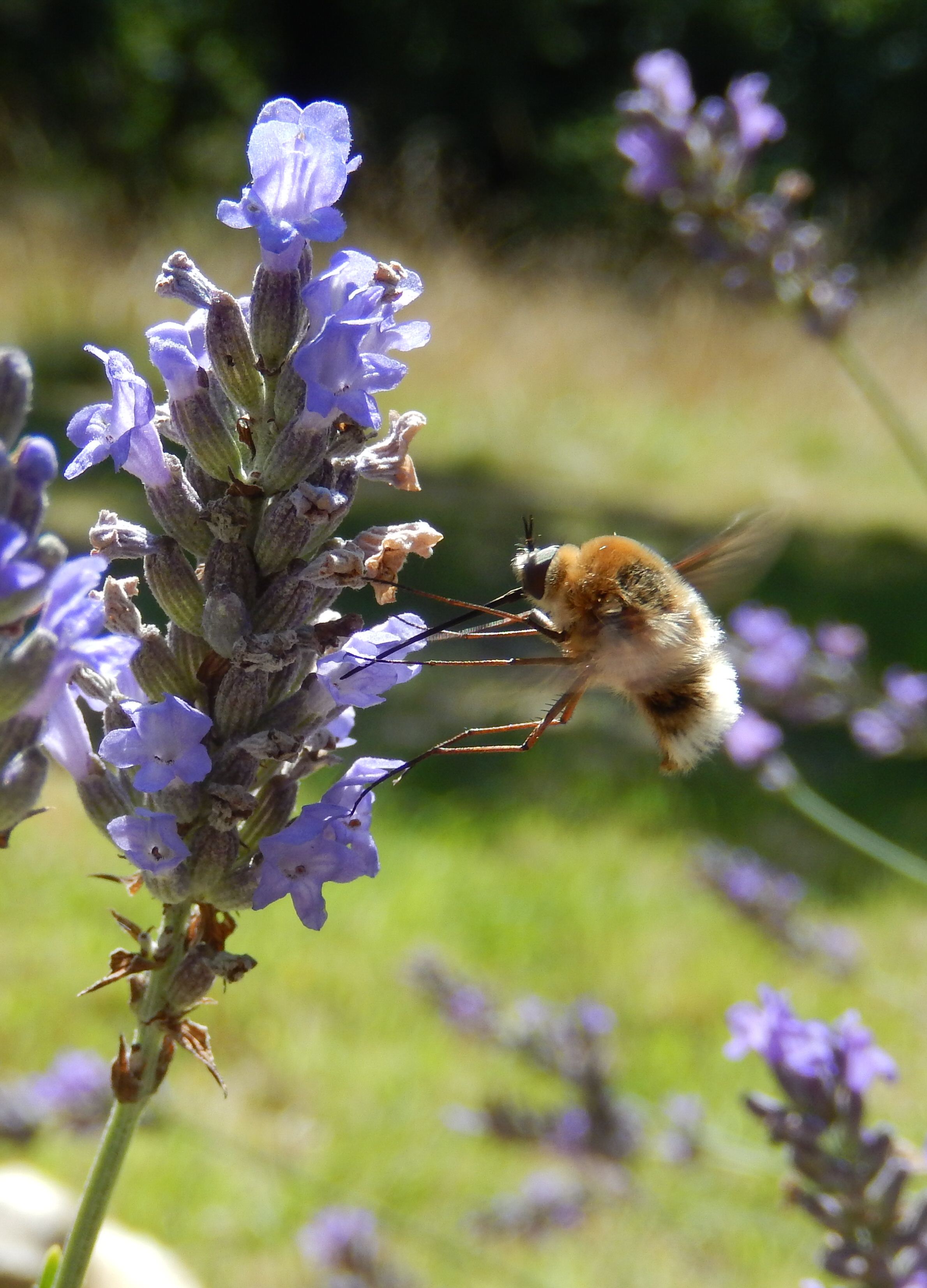
Bee-Fly half-hovering on Lavender

Proof that Bee-Flies cheat: those legs are resting on those flowers, however much those buzzing wings are hovering!

And to cap it all, a large, brilliant Green Lizard ran into the kitchen.

In the afternoon the temperature reached 31 degrees. We boldly went out onto the steep Chalk grassland hillside north of St Sulpice, where the Pyramidal and Chalk Fragrant Orchids flower in quantities in the springtime.
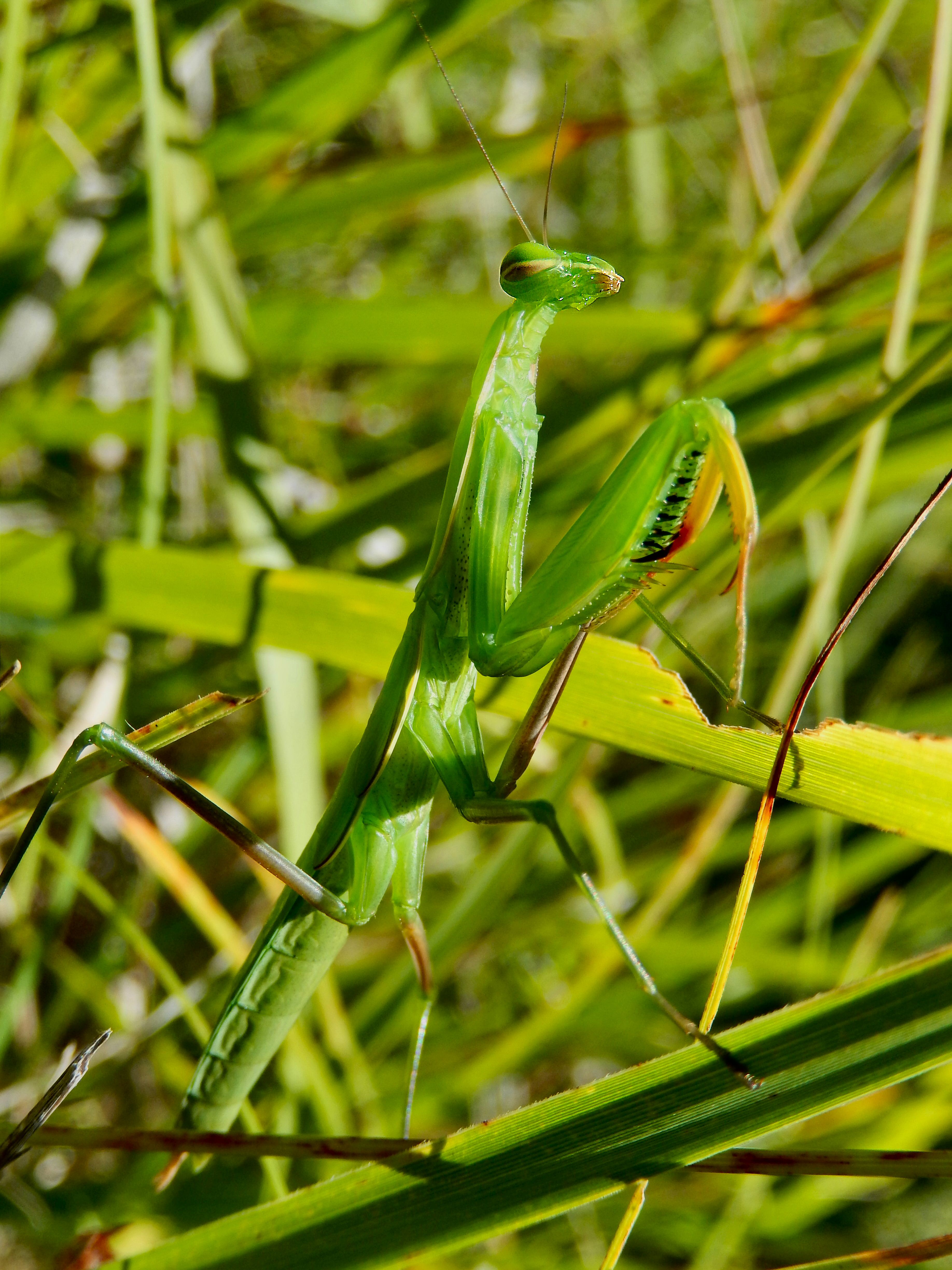
Praying Mantis on a steep chalk hillside

At least five Praying Mantises on the chalk grassland: they are widely distributed on flowery meadows (chalk or sandy clay doesn’t seem to matter) but appear never to be numerous, so this was a good haul.
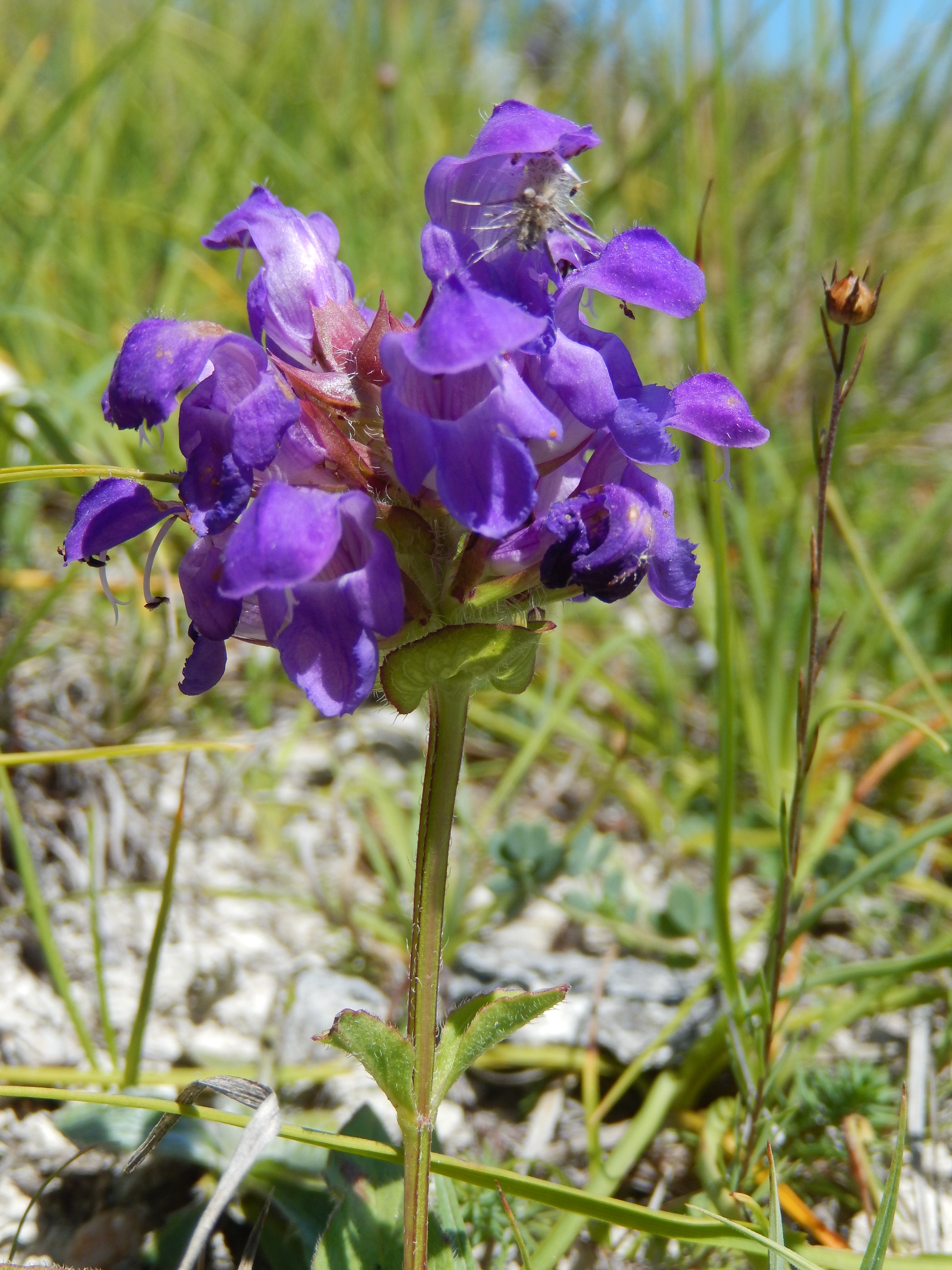
Attractive blue figwort on chalk
Attractive blue figwort (?) on chalk
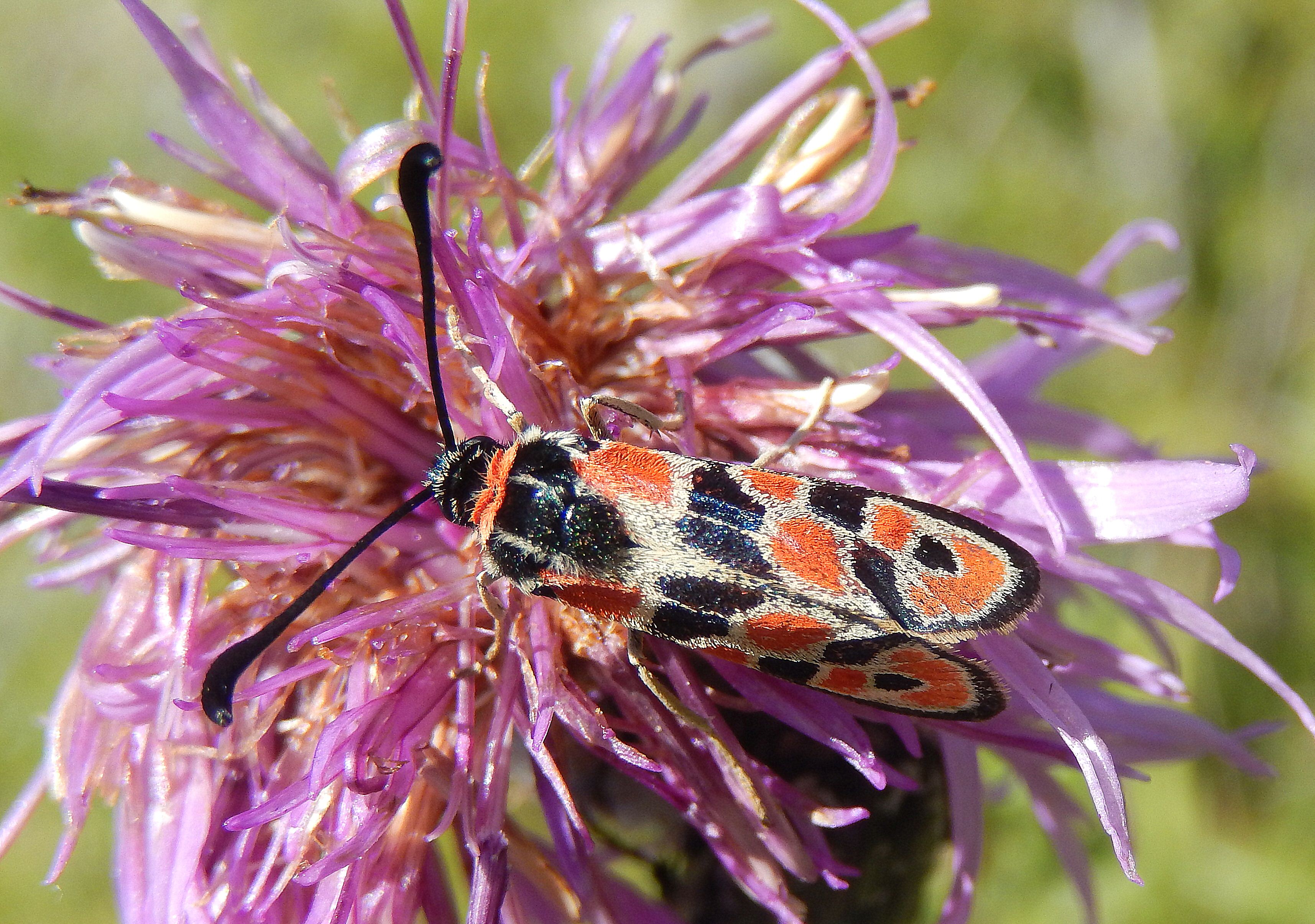
Zygaena fausta on knapweed
Zygaena fausta on Knapweed

Zygaena fausta, a boldly marked and presumably aposematic Burnet Moth without any English name that I know of (we could call it the Devil’s Burnet), on Knapweed.
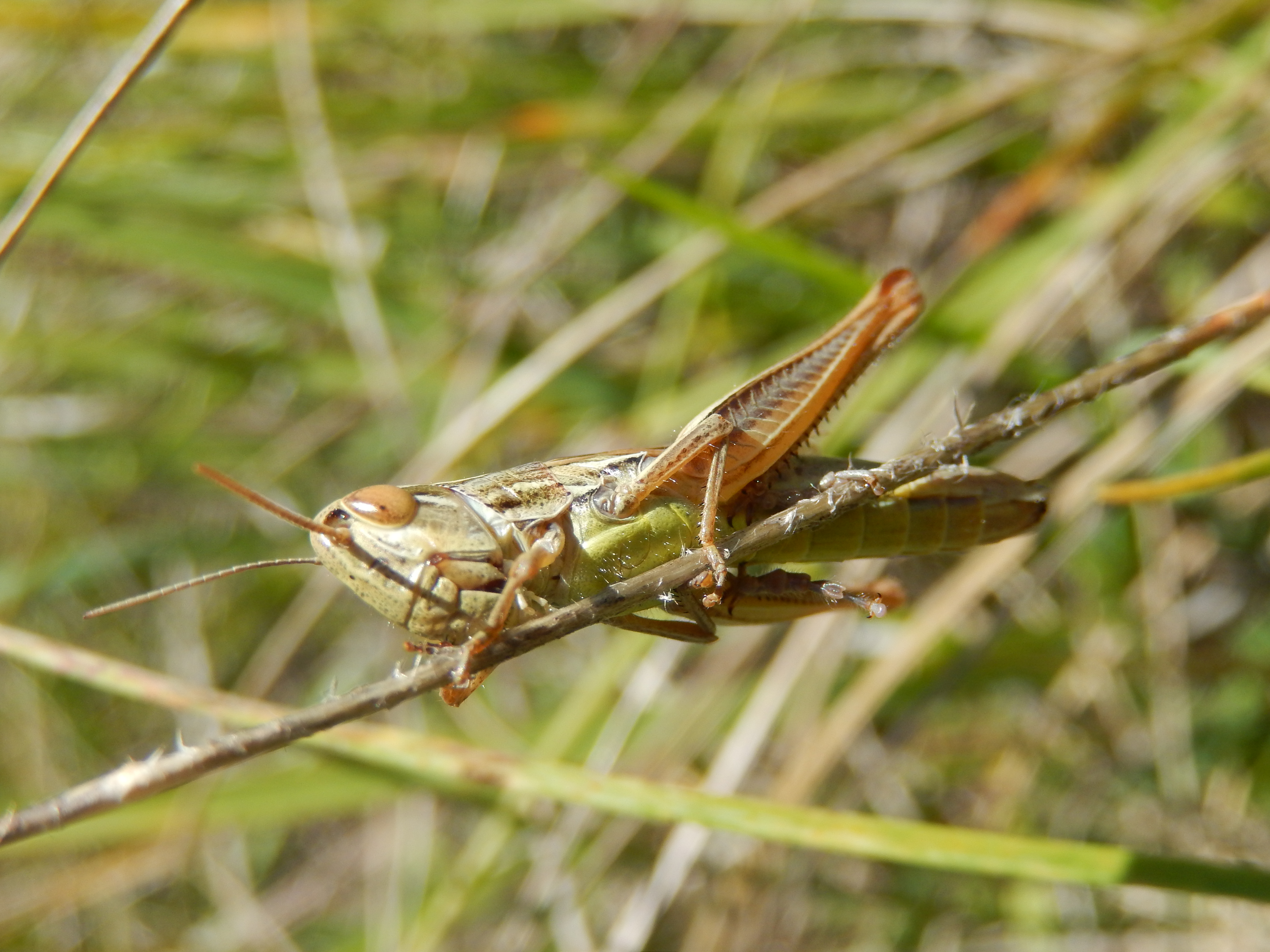
An obliging grasshopper

The sound of summer: a chorus of grasshoppers and crickets in the heat. This grasshopper was unusually large and obliging.
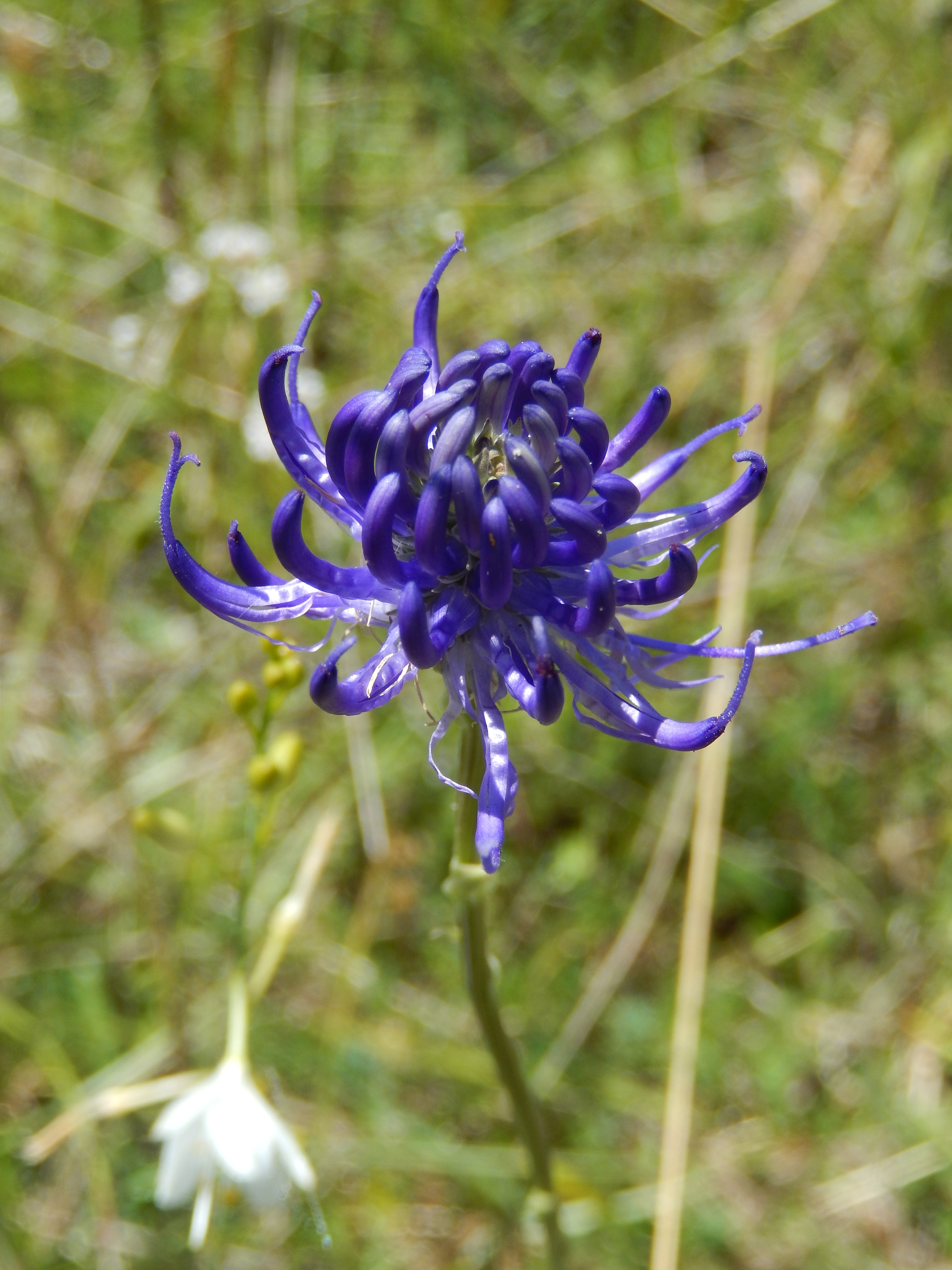
Handsome blue Scabious
Handsome deep blue Scabious
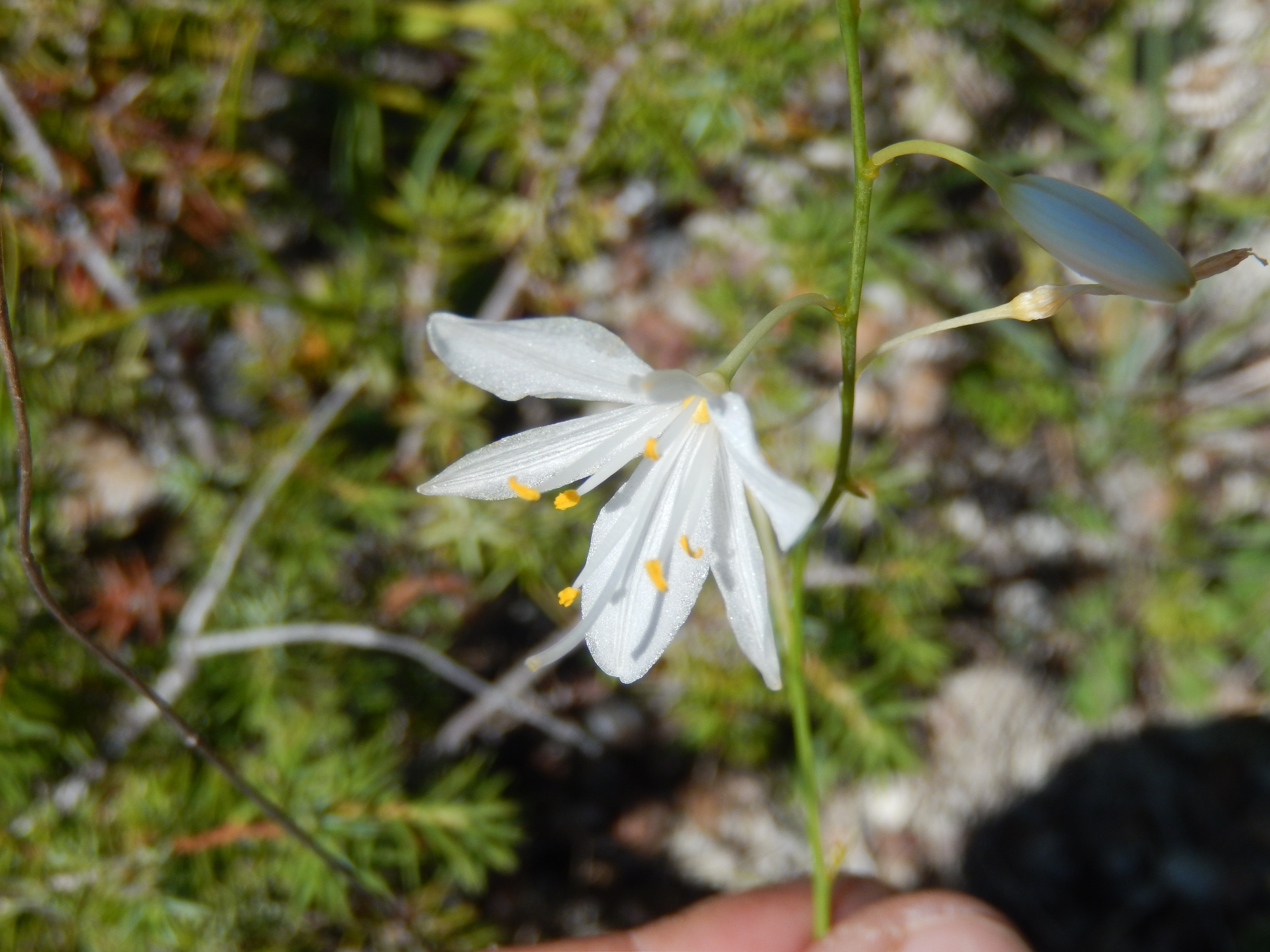
The chalk was thinly carpeted by this white starflower

The hillside was carpeted thinly and gracefully by these slender white flowers; behind it are Juniper bushes and loose Chalk scree, a scene repeated all across the hill, interspersed with bright flowers (Milkwort, Scabious, Knapweed, as well as Eryngo and various yellow composites) and the dried-out fruiting stalks of Orchids of different species.
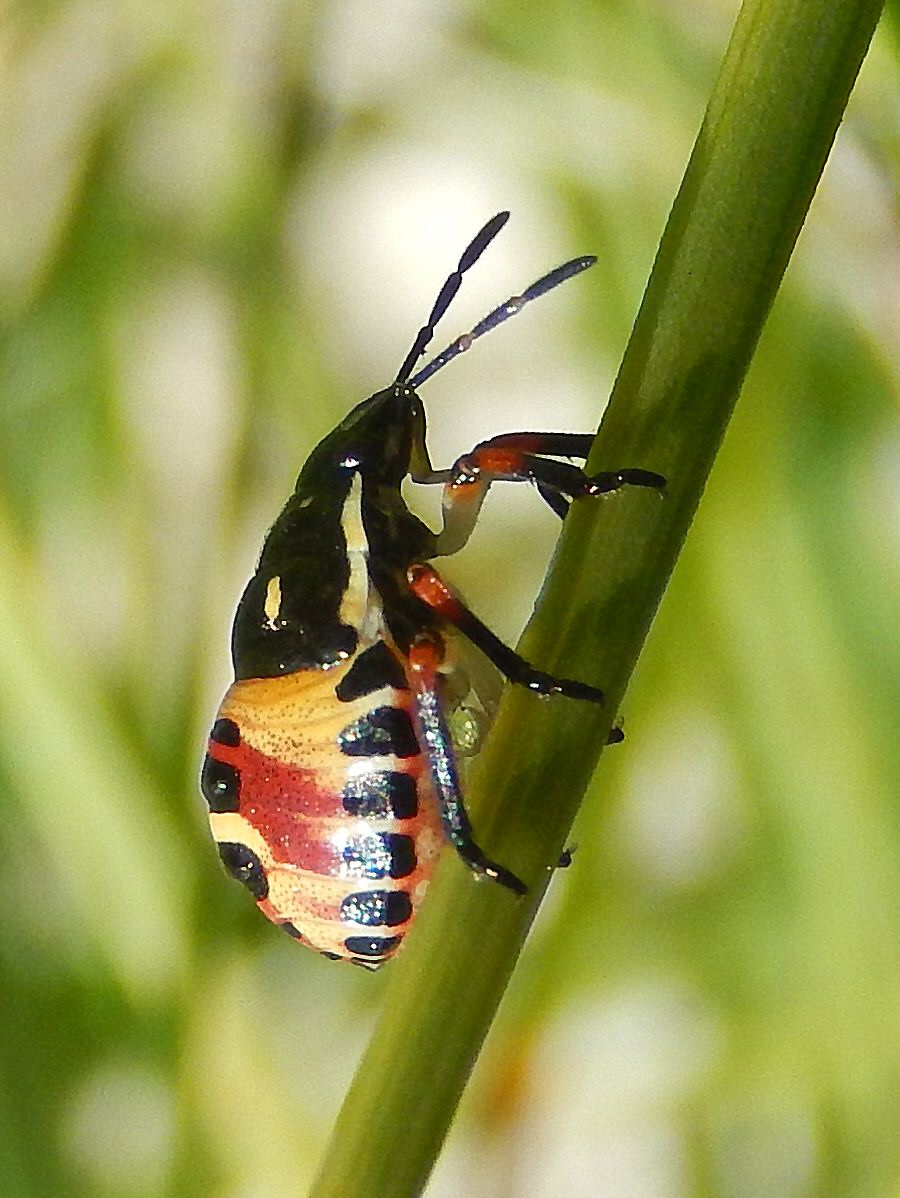
Brilliantly coloured bug

A brilliantly-coloured bug on a grass stem. Perhaps it is an early instar of the Sloe Bug, or a similar species.

At 11 pm, our headlights revealed a Roe hind and fawn on the grassy track. The hind looked at the car and decided reluctantly to move off to the right, into the long grass of the meadow. The fawn ran away down the track before branching off to the left, its usual haunt with the cover at woodland edge where it hides up during the day.
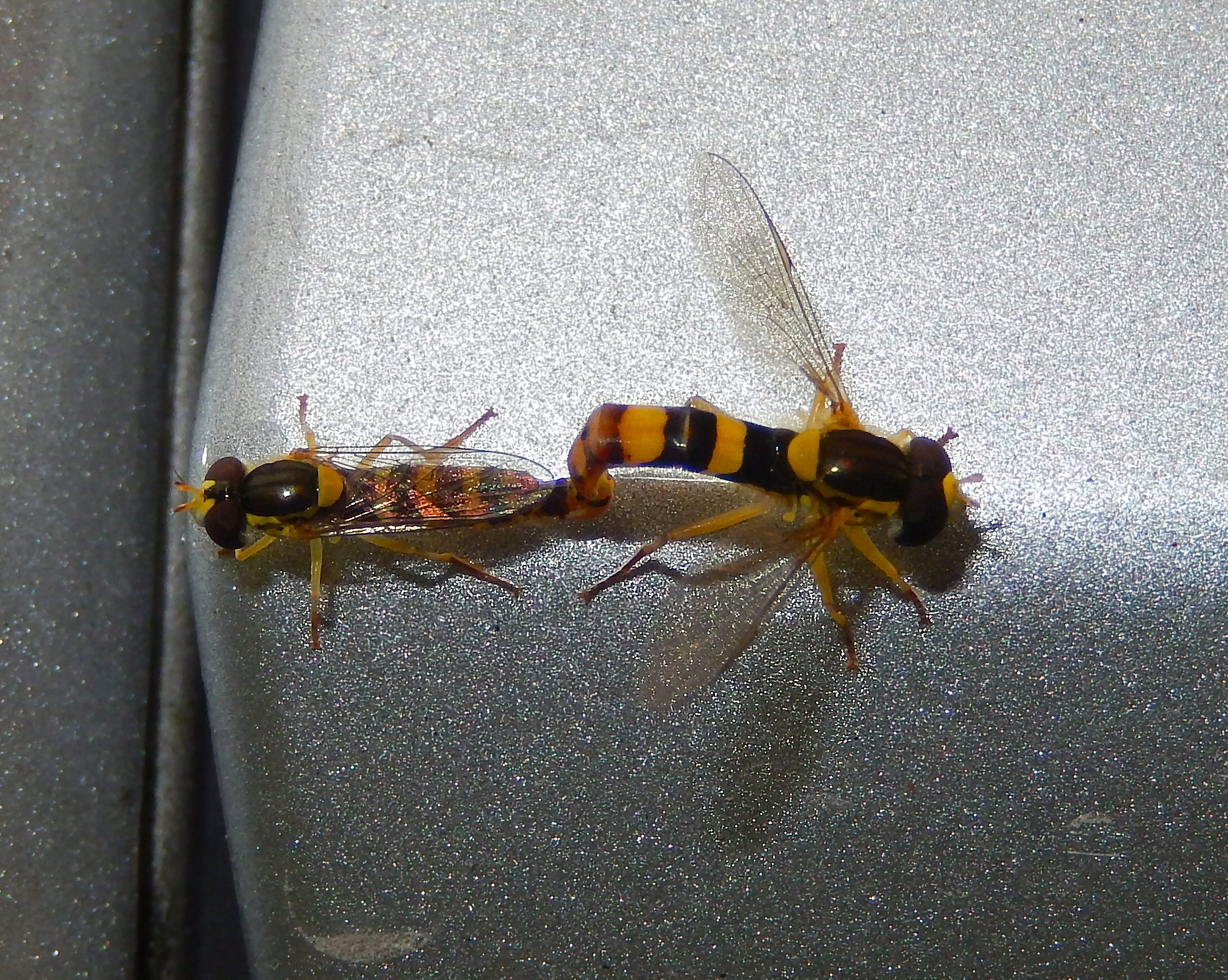
A pair of slim, brightly striped orange-yellow and black Hoverflies mating ... on a car door
A pair of slim, brightly striped orange-yellow and black Hoverflies with chocolate-brown eyes, mating … on a car door
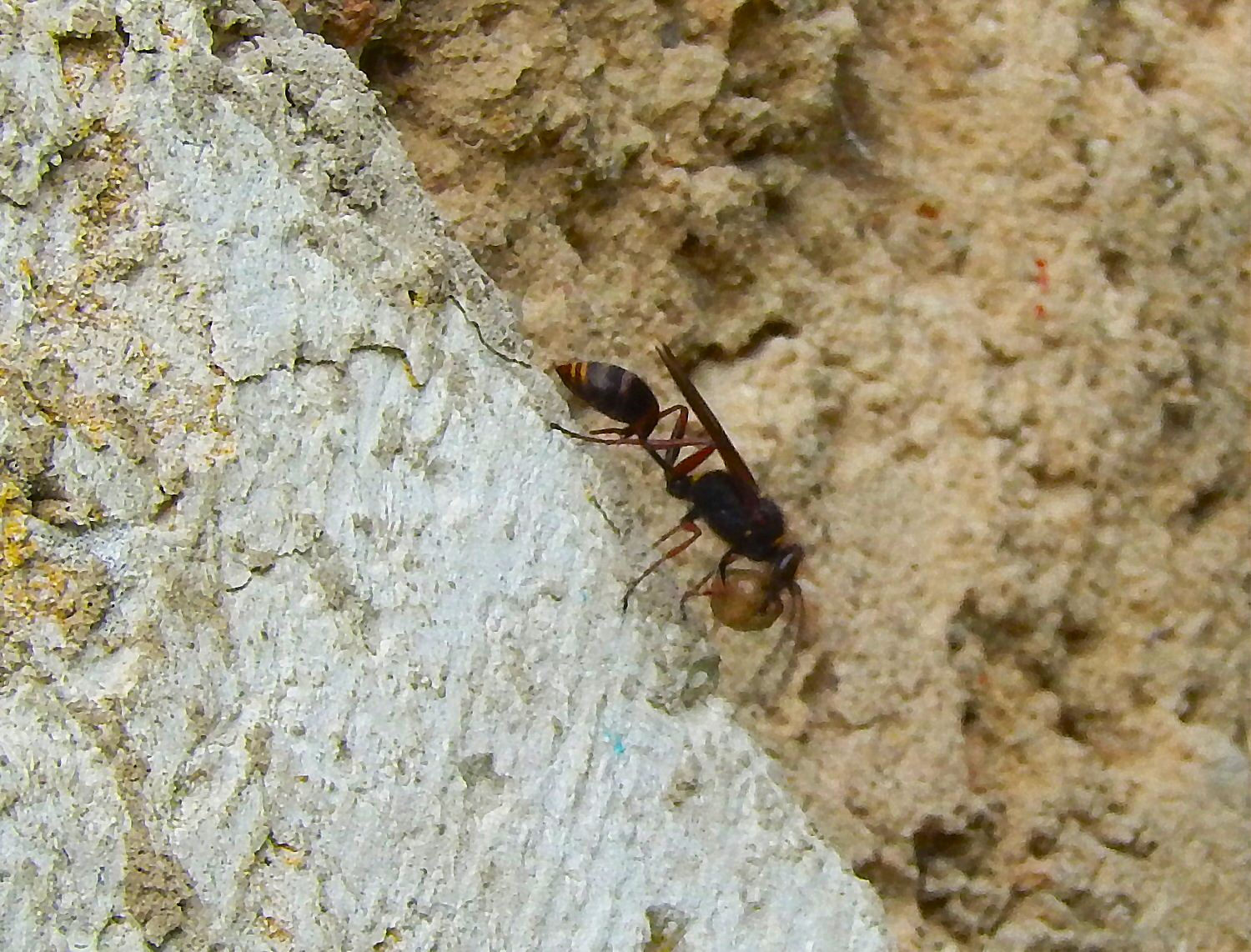
Mason Wasp carrying mud on house wall

This large, long-waisted and rather dark wasp is quite a shy visitor to the Fennel. She buzzes noisily into cracks in the wall, and just this once (hence the fuzzy photo) I caught her carrying a lump of mud to do her building, so I assume she’s a Mason Wasp, species not known to me (help welcomed). She is about 20 mm long and stocks her mud nests with luckless grubs to feed her own larvae.  There is a similar wasp of the same size and shape with yellow legs: not clear if this is a colour variant or another species.
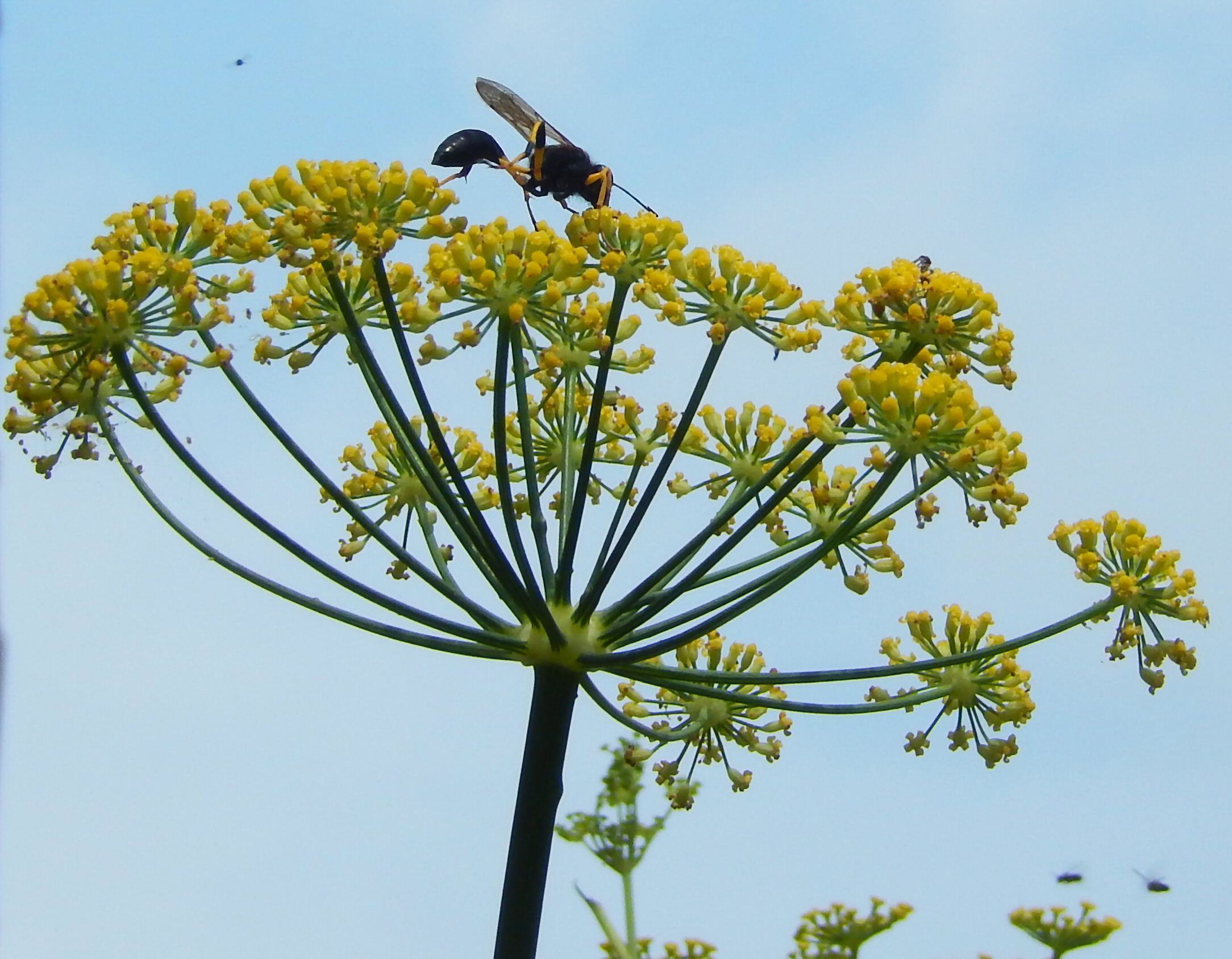
Mason Wasp A (yellow legs) on Fennel

Dordogne – Amanita mairei (15 July 2014)

In the moonlight, two Nightjars churr vigorously, competitively, their odd sewing-machine song continuing for minutes at a time, ending with a few chucks and wing-claps.

In the morning, a Golden Oriole squawks and mews strangely from the woods.

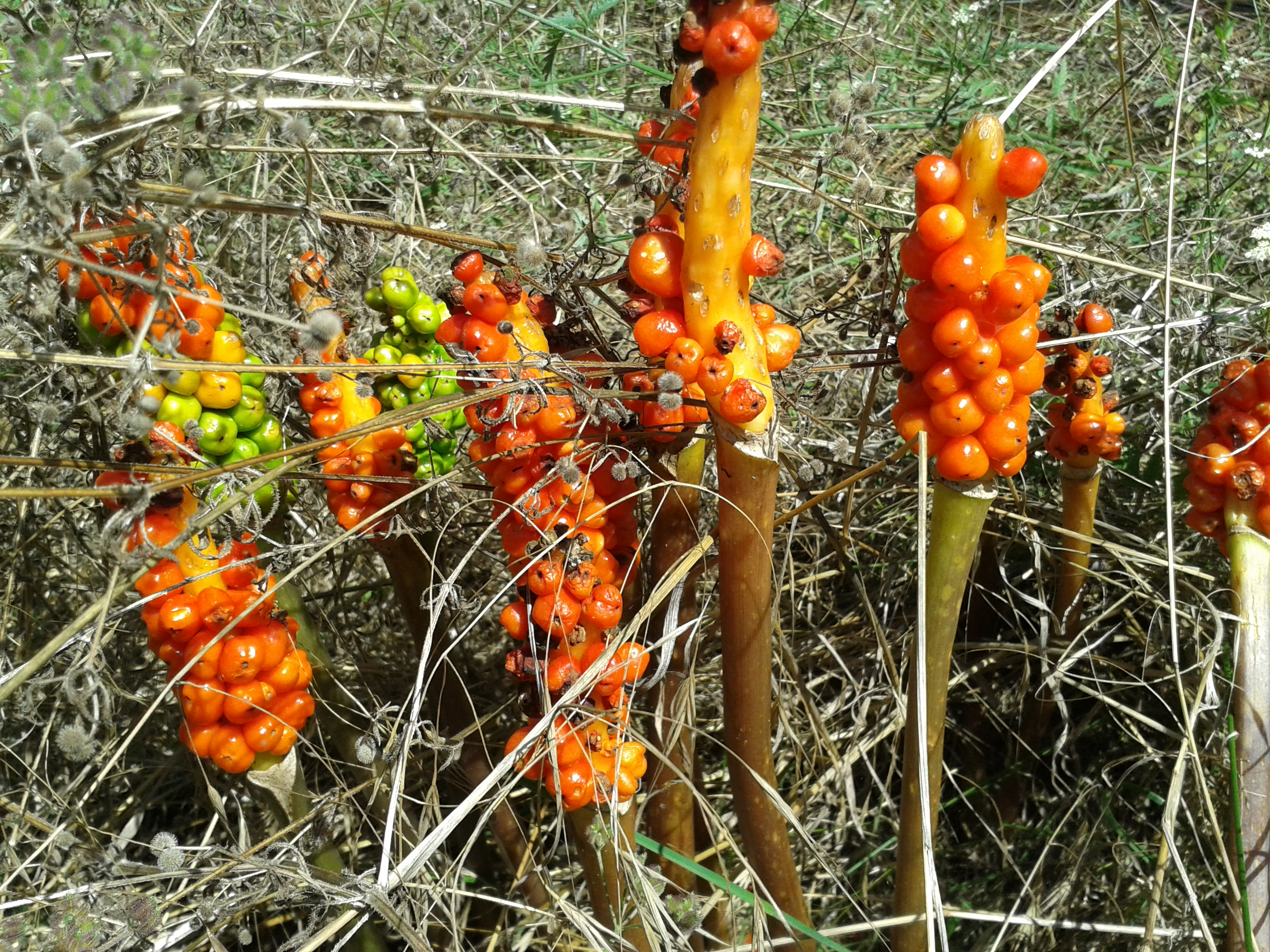
Lords and Ladies in fruit
Lords and Ladies (Wild Arum)  in fruit
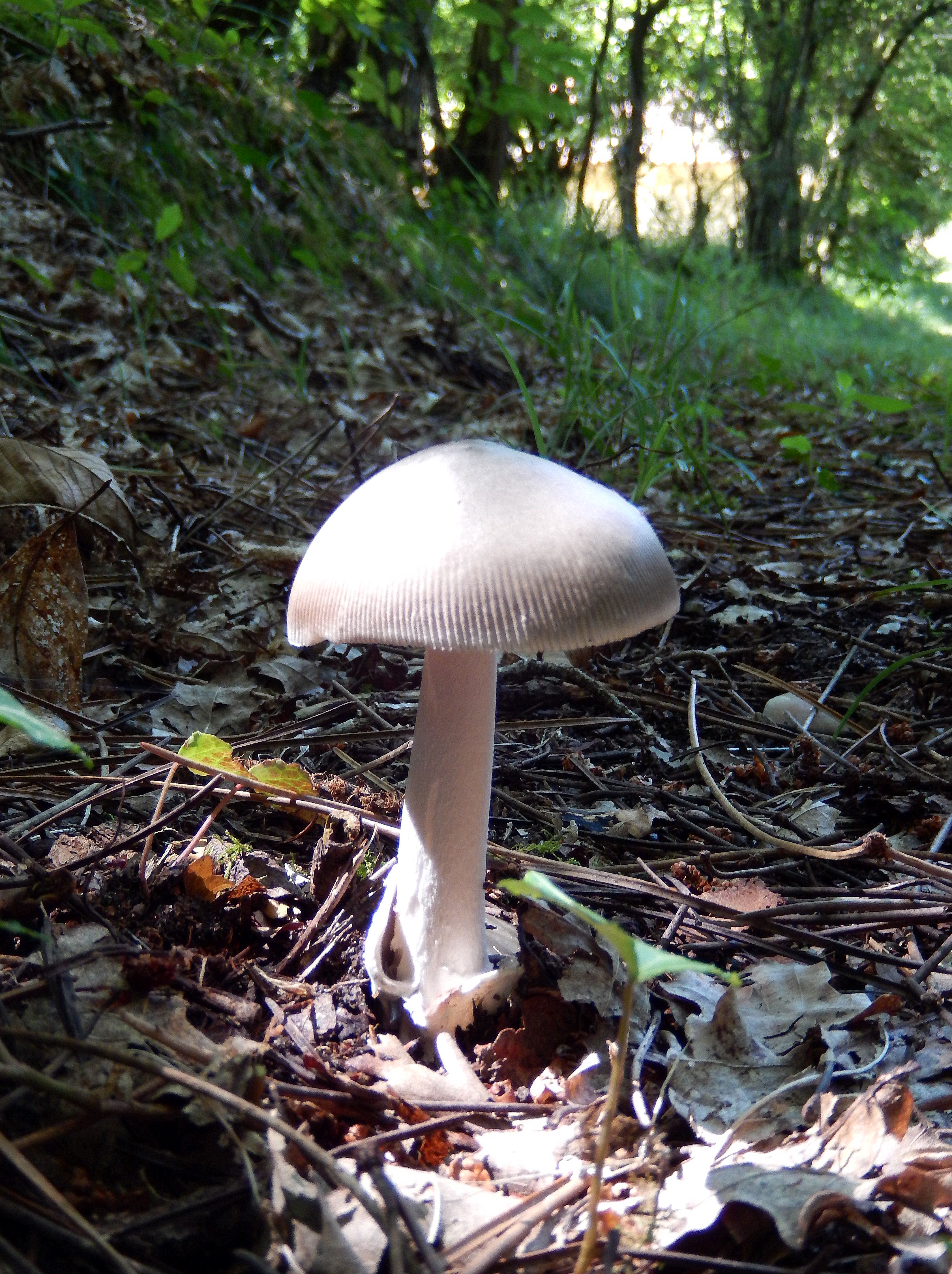
Amanita mairei
Amanita mairei

Amanita mairei is an unusual Amanitopsis (Grisette) section toadstool in the mainly poisonous Amanita genus. This one is found in mixed open woodland on sandy soil, exactly the case here, and a beautiful example of just how specialized our fungi are. How do 3,500 species of mushroom and toadstool share a continent? By specializing in different habitats, living with different plants. The volva, here partly eaten by slugs, is a whitish bag at the base, often buried in the soil. The stem is slightly fleecy, the cap convex and without an umbo, the little point often found in the middle.

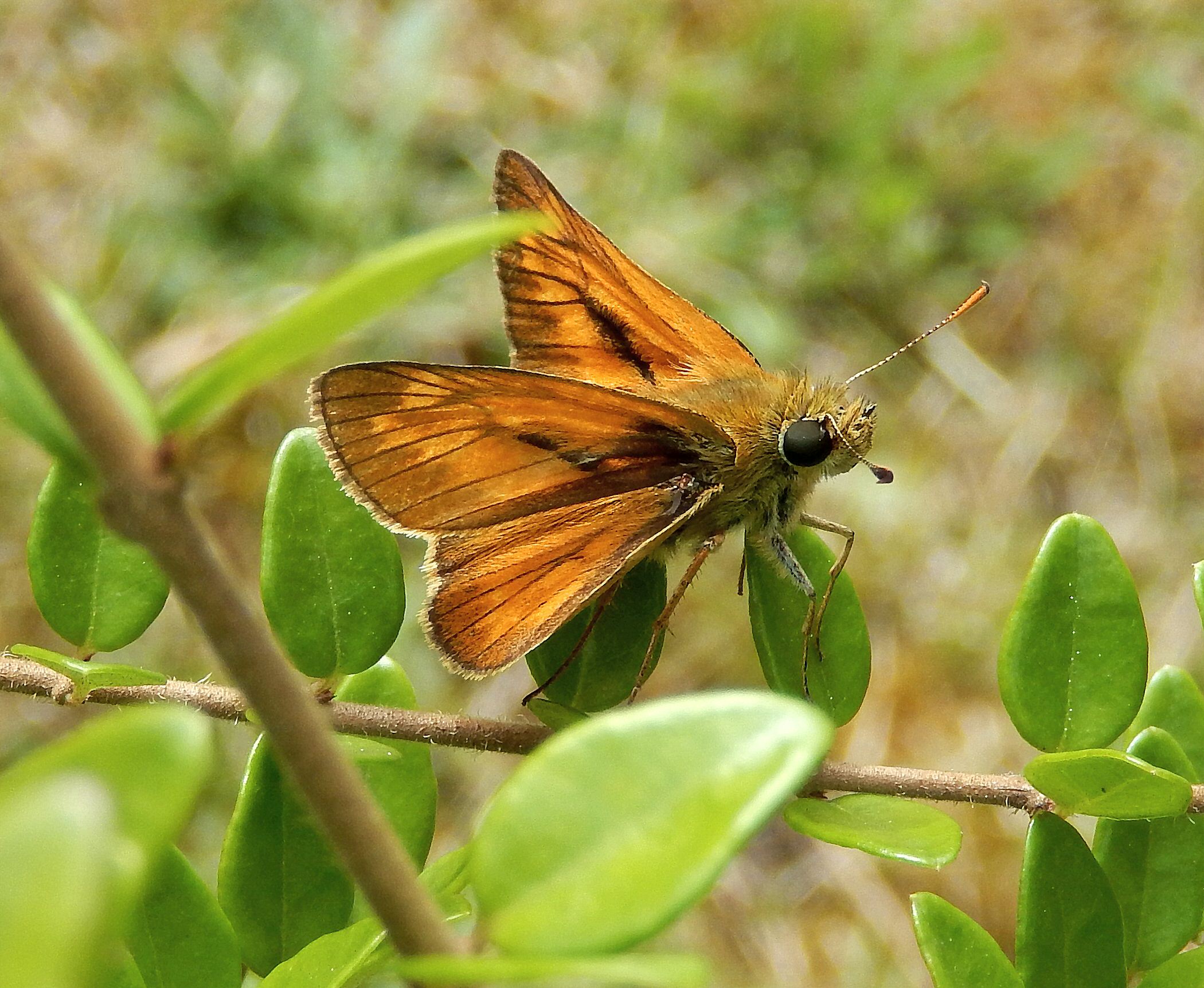
Large Skipper
Large Skipper

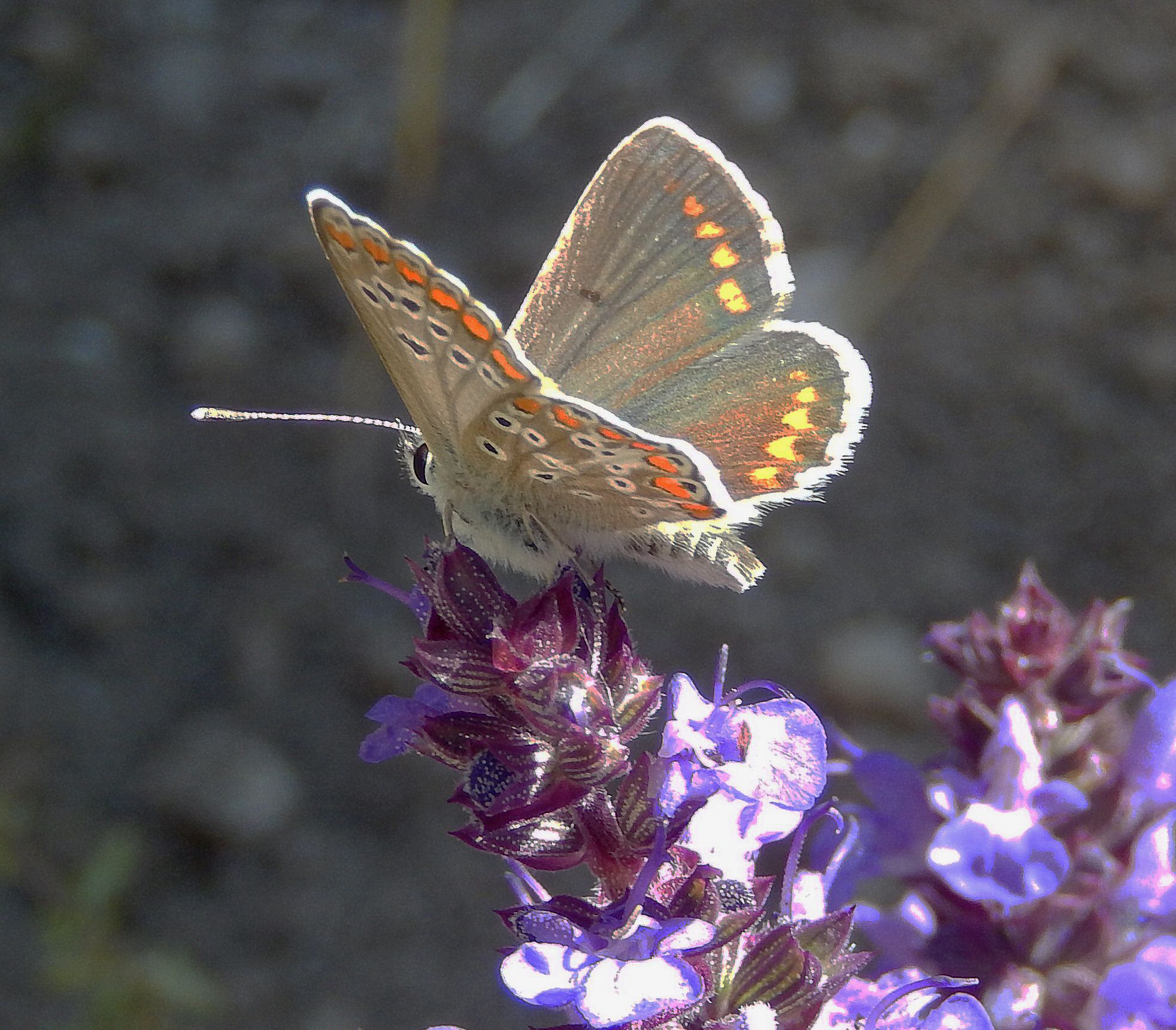
Under the hot sun, I plant some more lavender, and some ornamental Sage (Salvia superba) plants. They are soon visited by Large Skippers, bumblebees, a Hummingbird Hawkmoth.

Female Common Blue on ornamental Salvia

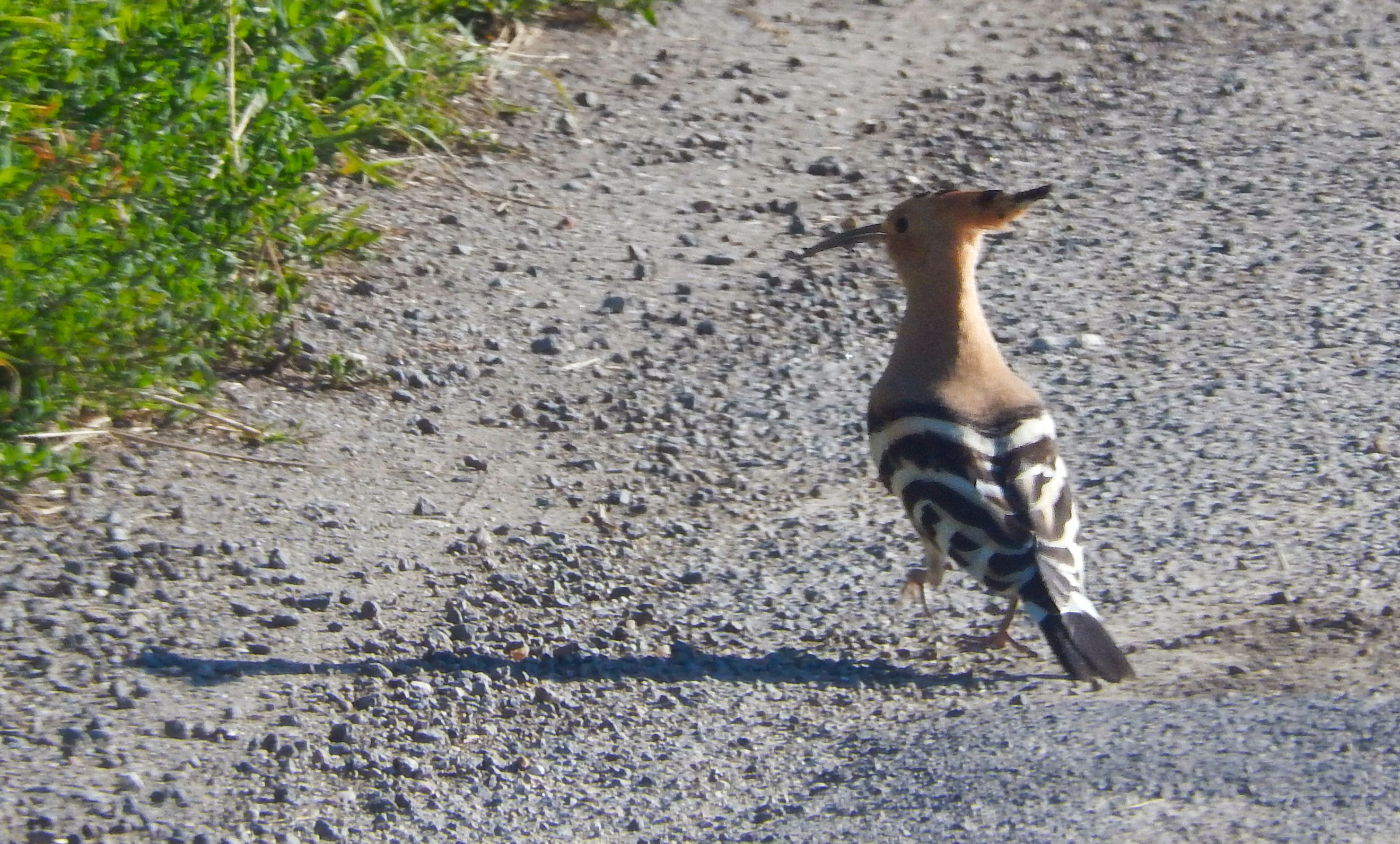
On the way home down a quiet country lane, we stopped the car for a Hoopoe. It wandered unconcernedly along the road for some minutes, eventually flapping away with its distinctive ‘butterfly’ flight to a telegraph wire. A Kestrel landed on the same telegraph wire nearby, then hovered over some long grass.

Hoopoe
Hoopoe

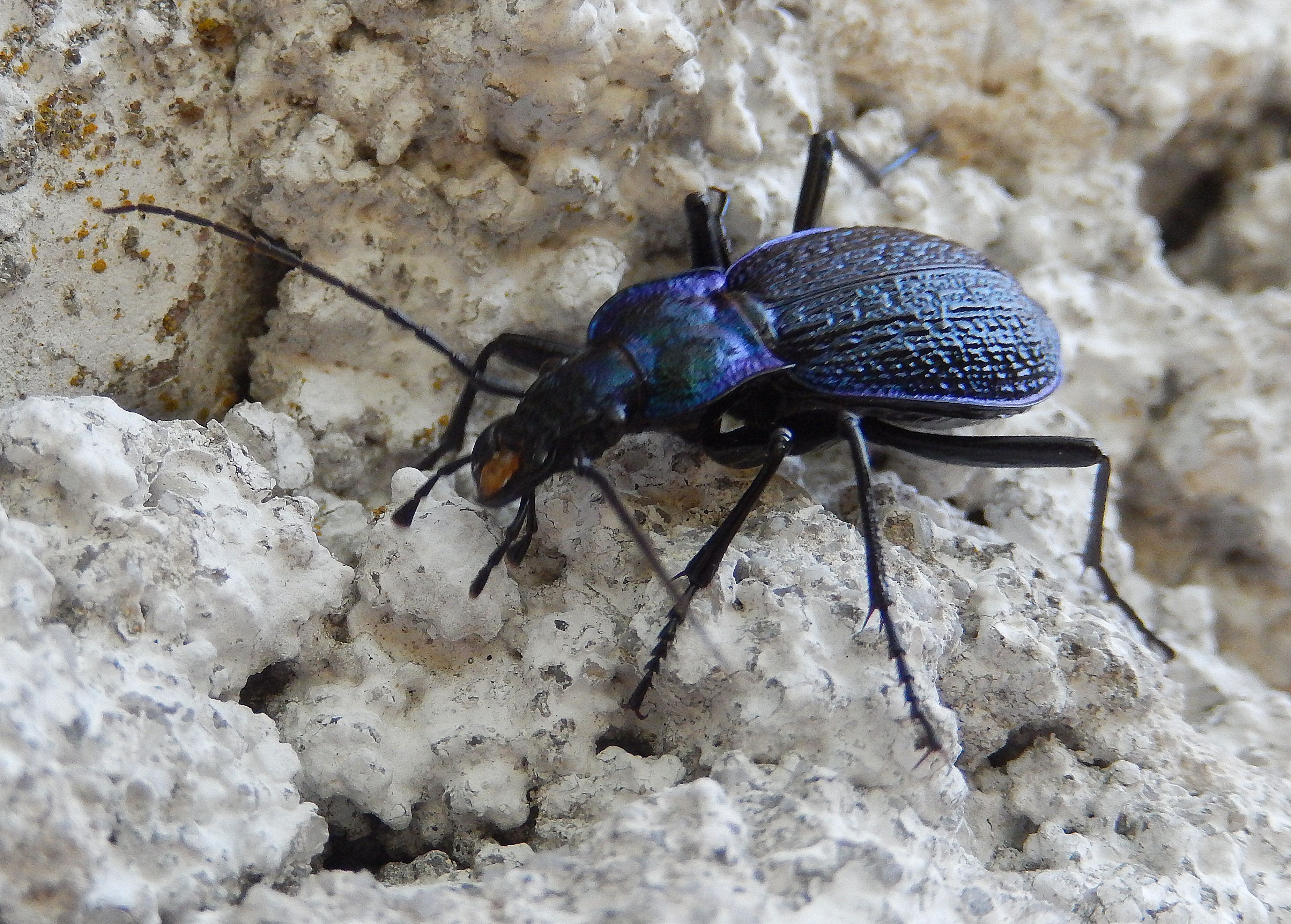
At 7pm, a very large Violet Ground Beetle, Carabus violaceus, about 30mm long, splendidly iridescent with a blue-black gloss, clambered up the wall of the house.

Violet Ground Beetle, 30 mm long

A Blackcap treated us to late-season bursts of musical song, brief but fluty. A Great Green Bush-Cricket fluttered a foot over the lawn, legs trailing like a wading bird’s, its four wings beating hard to keep its long body airborne. And a Wall Butterfly visited what I’ll have to call the Butterfly Flowerbed with its mix of flowering lavenders and thyme.

Dordogne – Passenger Moth, Tree Frog (14 July 2014)

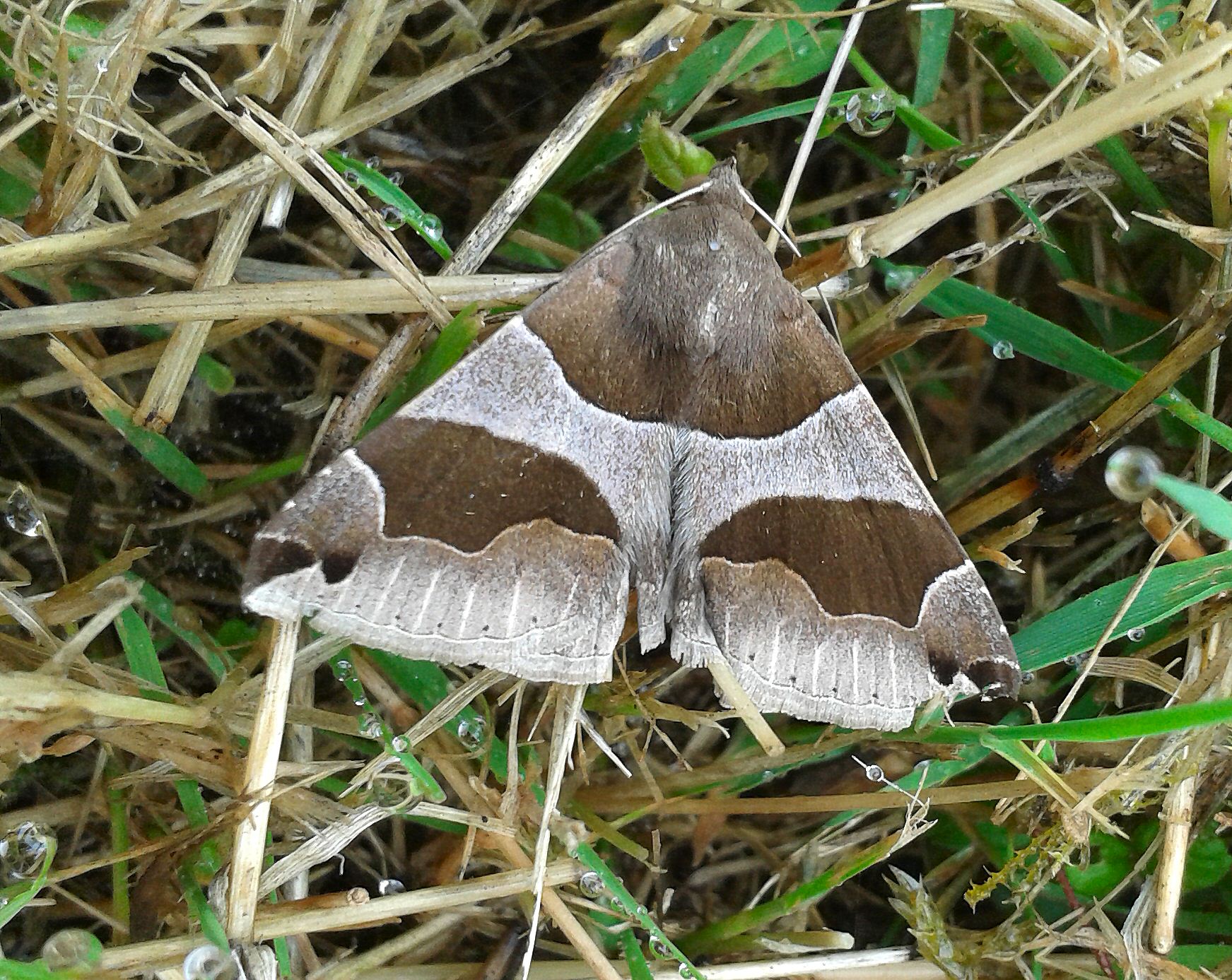
Passenger moth Dysgonia algira

I disturbed a Passenger Moth while digging. This Noctuid moth’s pattern is reminiscent of the Meal Moth, a micro. The weather is as cool as Scotland: 14 or 15 degrees, ideal for working. Tomorrow is predicted to get to 30 degrees, at last.

A large green European Tree-Frog was roosting high on a door.

A good-sized picture-winged fly with a yellow head landed on my arm, seemingly trying to bite.

Carnac (8 July 2014)

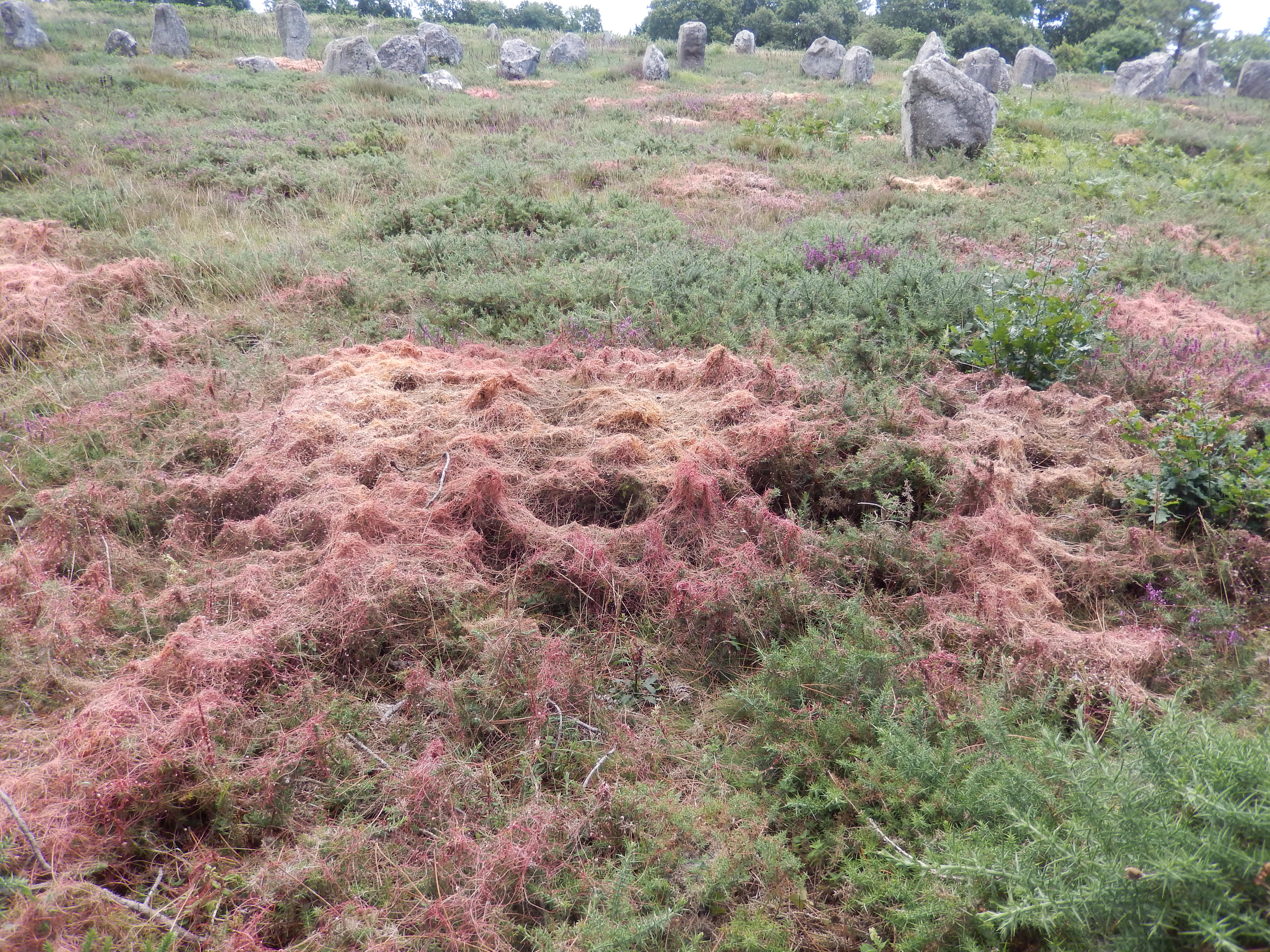
Mass of Dodder on Gorse at Carnac megalithic alignments, Brittany
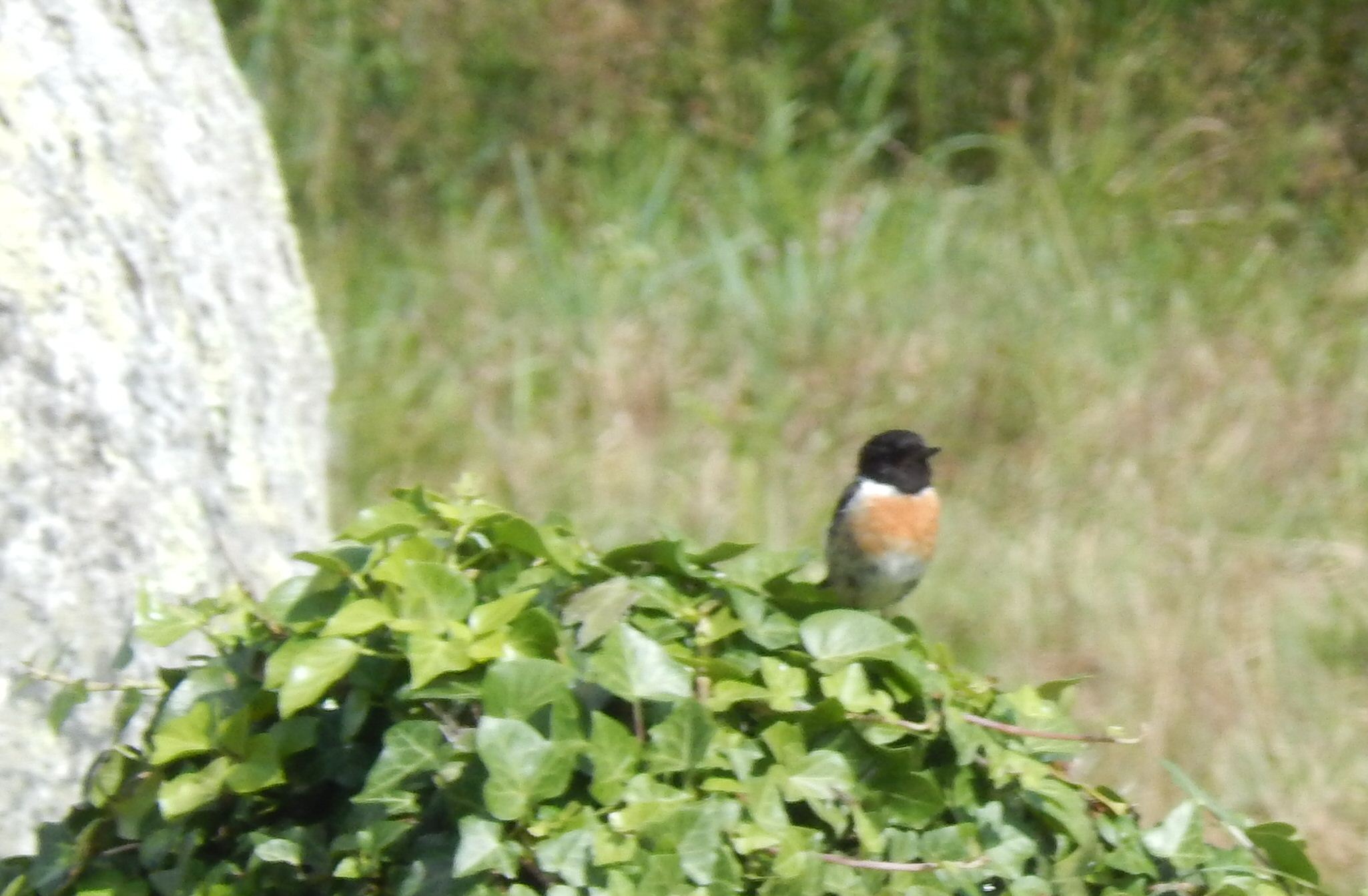
Stonechat hawking for flies from the great stones, to the song of Cirl Buntings
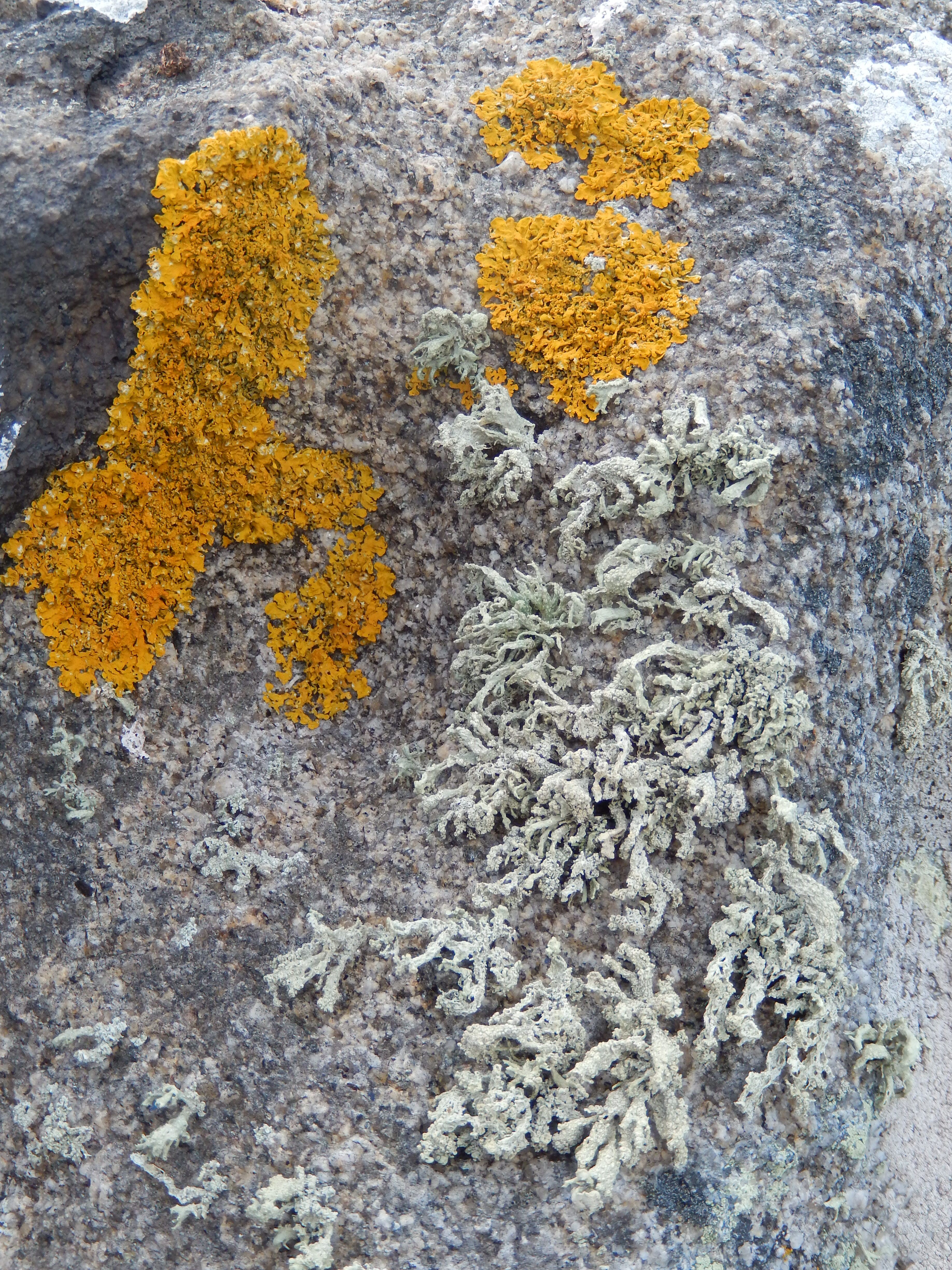
Xanthoria (orange scales) and Ramalina (grey tufts) lichens on megalith
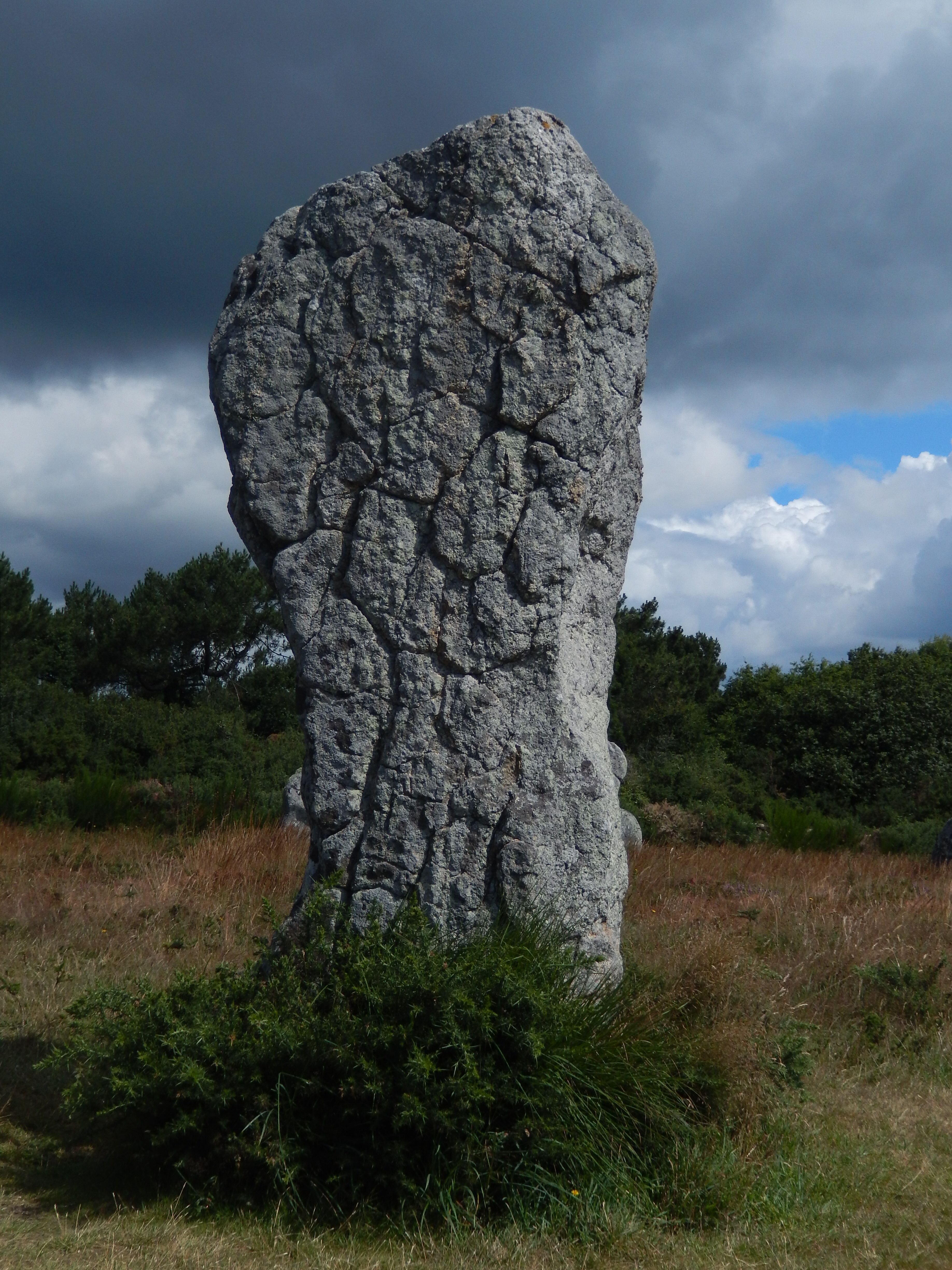
Large heavily weathered megalith, older than the others in the alignment, i.e. incorporated into a redesigned or expanded system of stones at Le Menec, Carnac
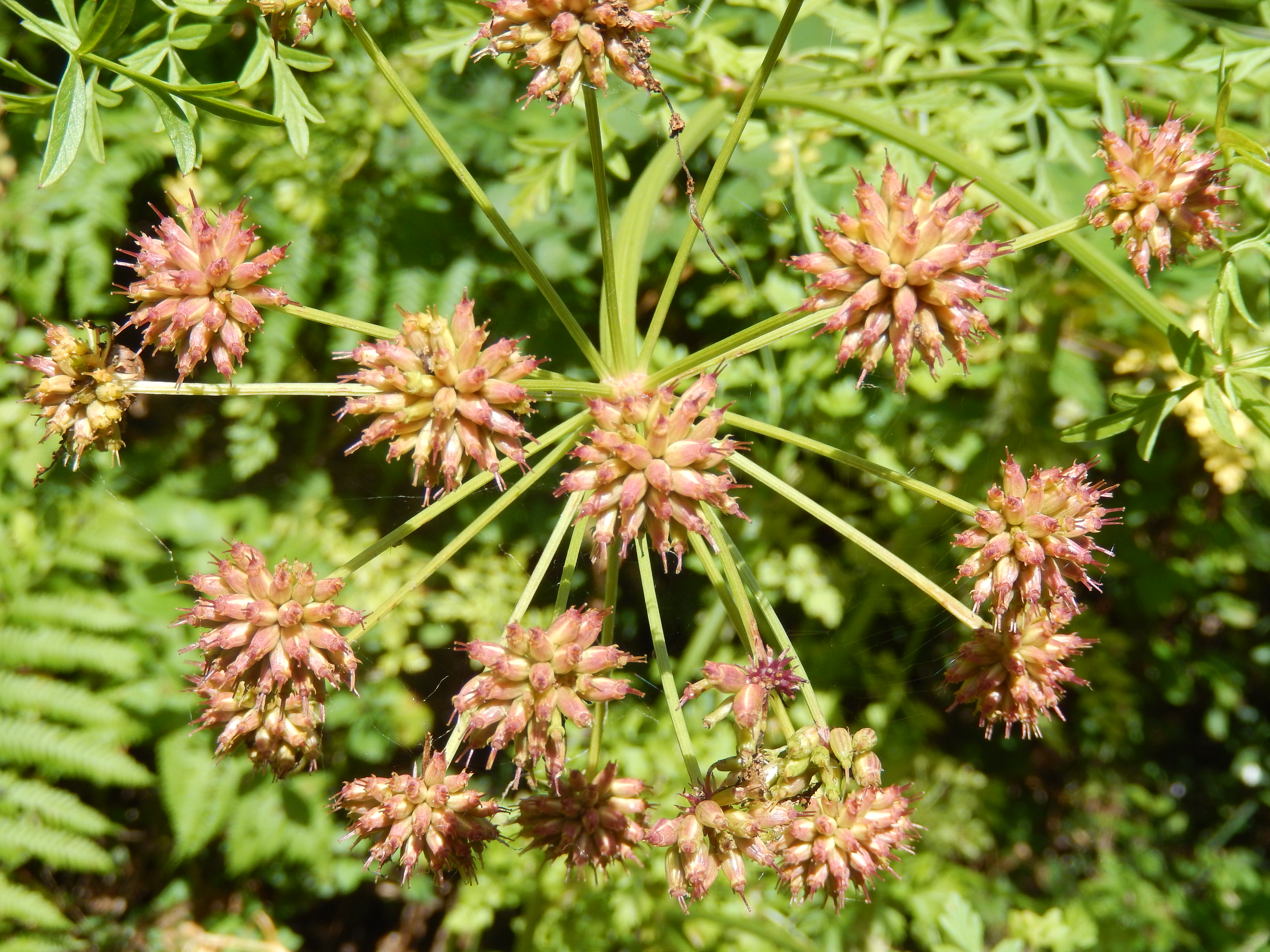
Cambridge Milk-Parsley Selinum carvifolia
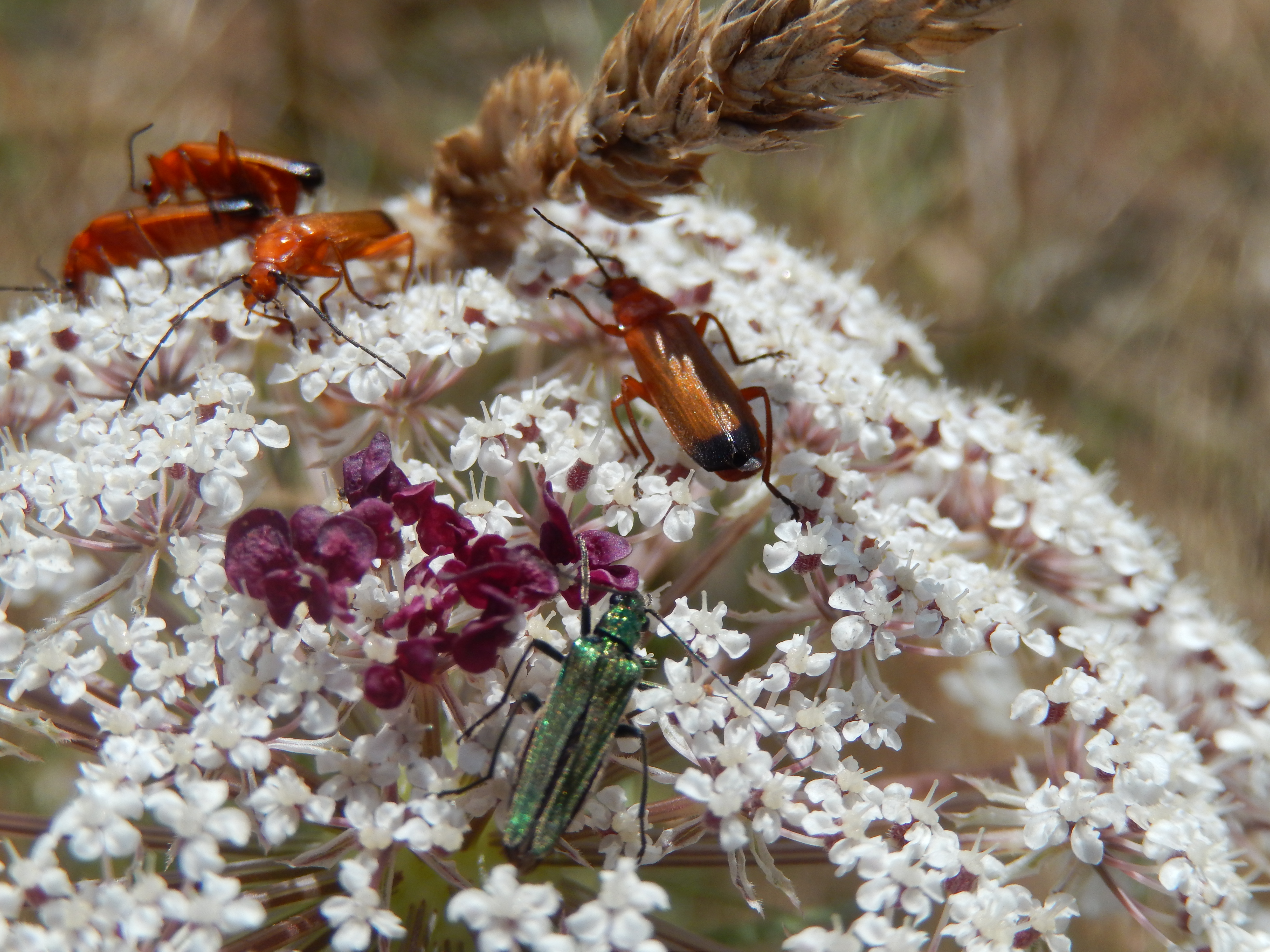
Cantharid and Oedemera beetles on umbel
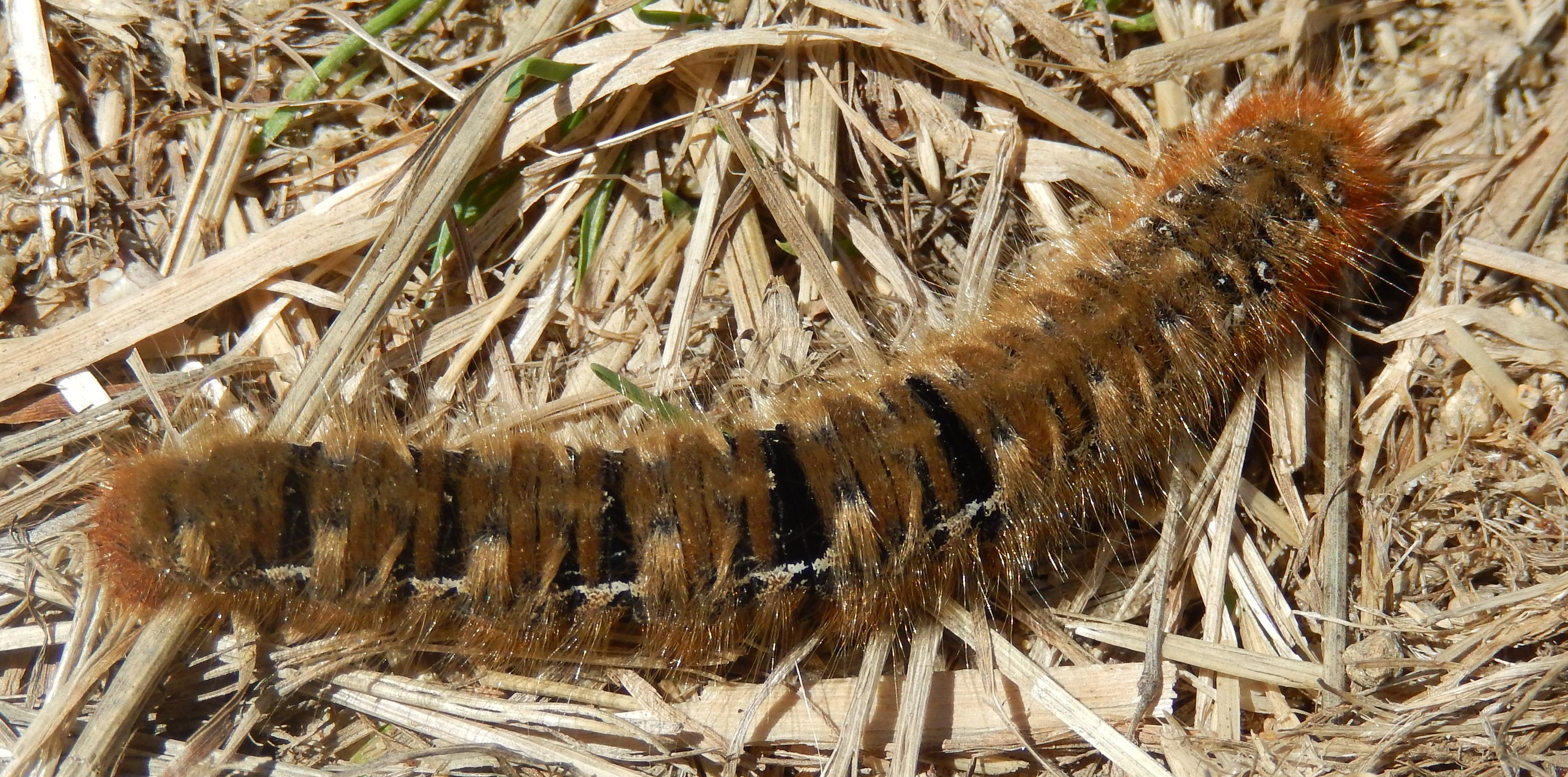
Brown hairy aposematic caterpillar crawling on ground
Brown hairy aposematic Grass Eggar (Lasiocampa trifolii) caterpillar crawling on ground


Coastal Life: St Malo, Brittany, France (7 July 2014)

Marine in St Malo: Plush Soft Toy Lobster and Crab

In St Malo, even the soft toys are marine invertebrates: lobsters and crabs, dressed in nautical striped shirts. The people are called Malouines: Malvinas in Spanish. The name is from Saint MacLaw, presumably a Scot, though that might not be sufficient grounds to claim that Las Malvinas, the ‘St-Maloers’ – better known as the Falkland Islands – are therefore inherently British.

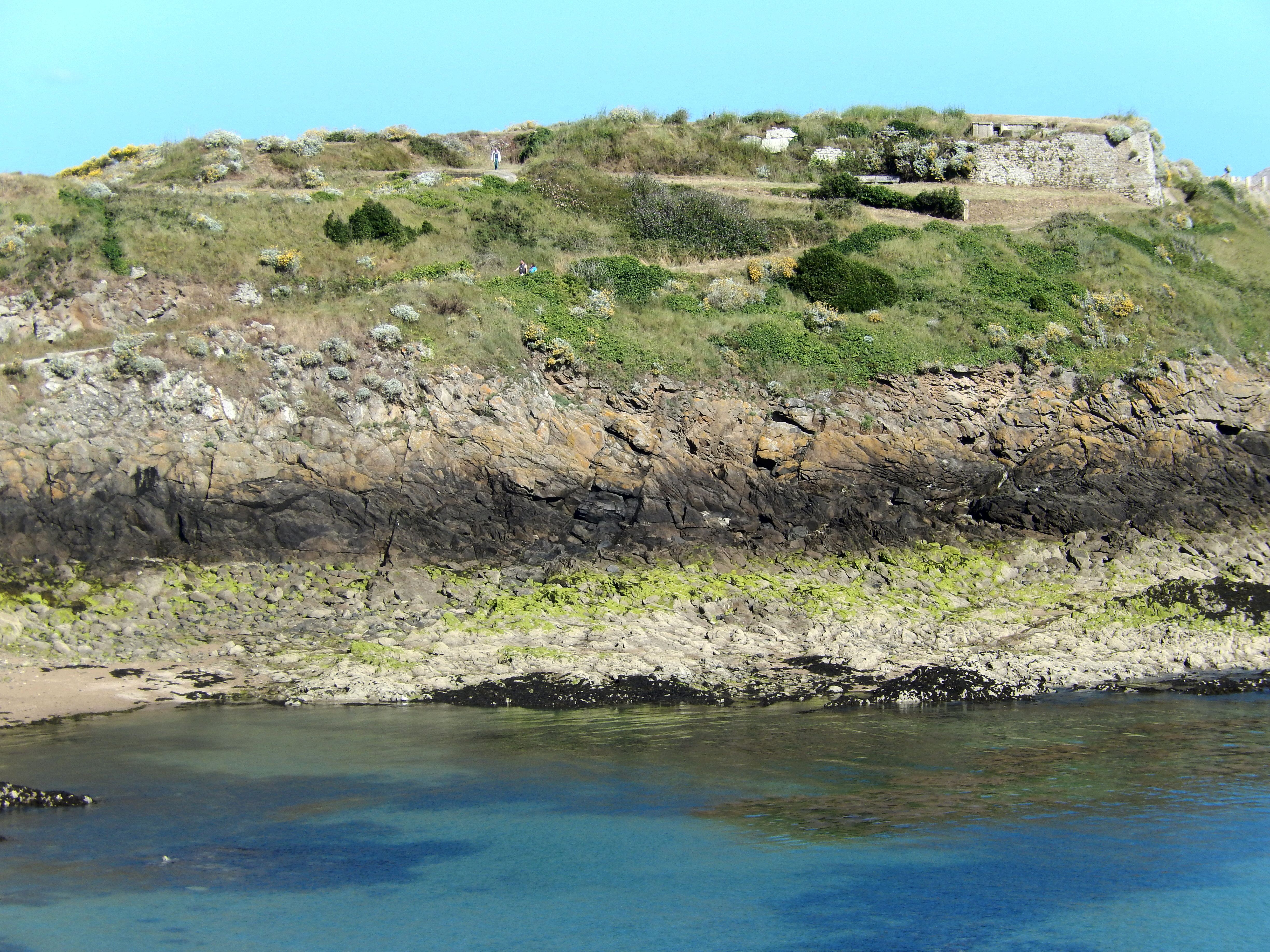
Coastal vegetation zones at St Malo: from top: grassland with gorse; the orange sea lichen Caloplaca marina; the black tar lichen Verrucaria maura; green algae; (dark) brown algae.

Around the walls of the old town, black redstart, house sparrow, jackdaw, chaffinch, rock pipit, herring gull, lesser blackback, black-headed gull, oystercatcher, swift.

Set-aside meadow beside saltmarsh on estuary of La Rance. Egrets, Kestrel, Turtle-Dove, Wood Pigeon, Wren, Swallow, House Martin. Butterflies in the meadow Large White, a Fritillary, Small Skipper, Meadow Brown, Gatekeeper, Marbled White.

Small Skipper, Water Scorpion, bugs at Gunnersbury Triangle

It was a pleasure to do the butterfly transect today. Even before I reached the Gunnersbury Triangle, I saw a Red Admiral in the street.

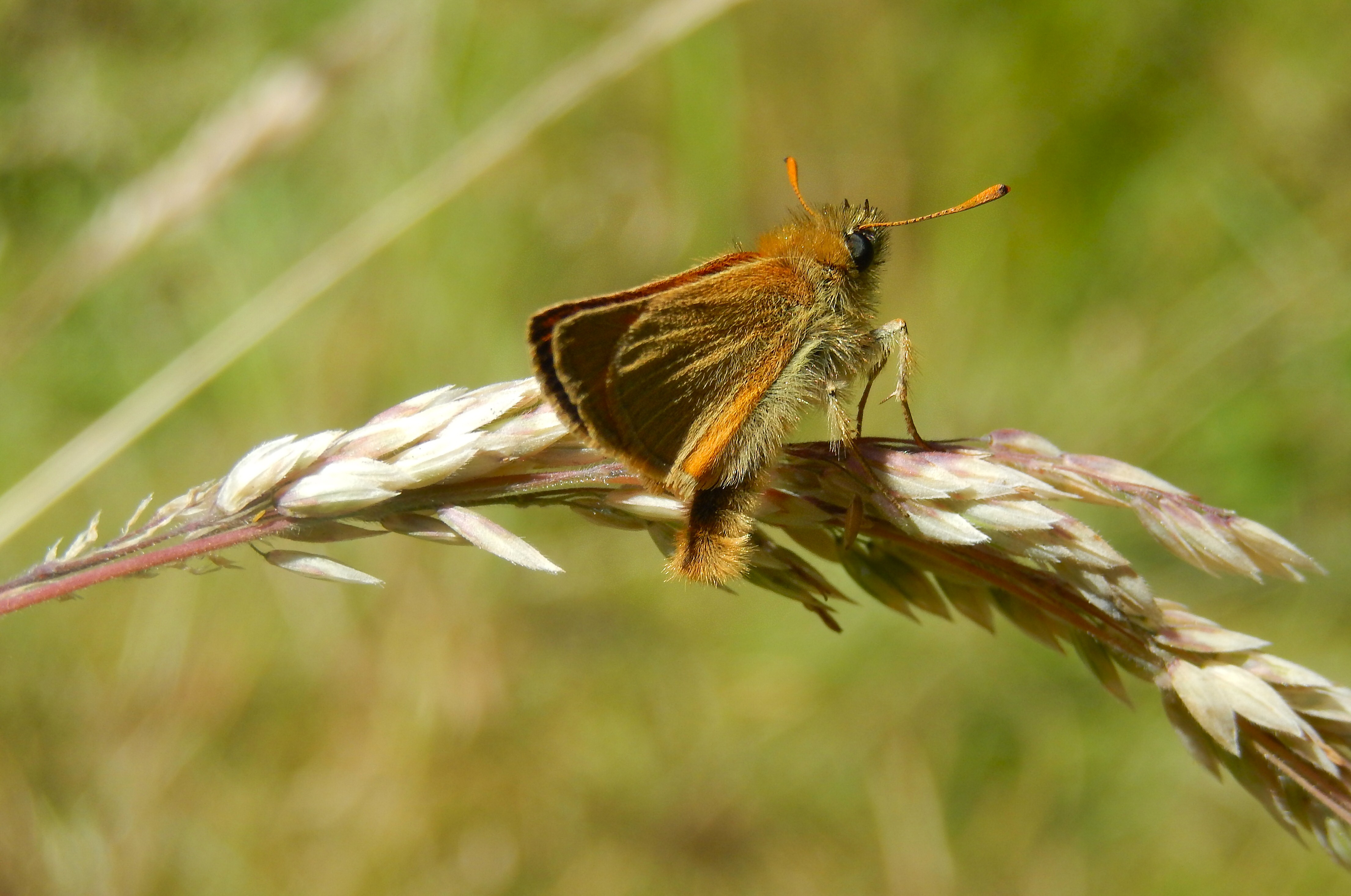
Small Skipper - the Essex Skipper has more black on the tips of its antennae
Small Skipper – the Essex Skipper has more black on the tips of its antennae

Once inside, I was rewarded with several very small, very active Skippers with their jittery, chaotic, jinking flight. It is hard enough to follow with the naked eye, close to impossible with binoculars, and presumably difficult for bird predators (as well as the reason for the name Skipper). When one finally did perch, it was clear it was a Small Skipper, as the Essex Skipper (not limited to that county) has more black on its antenna tips.

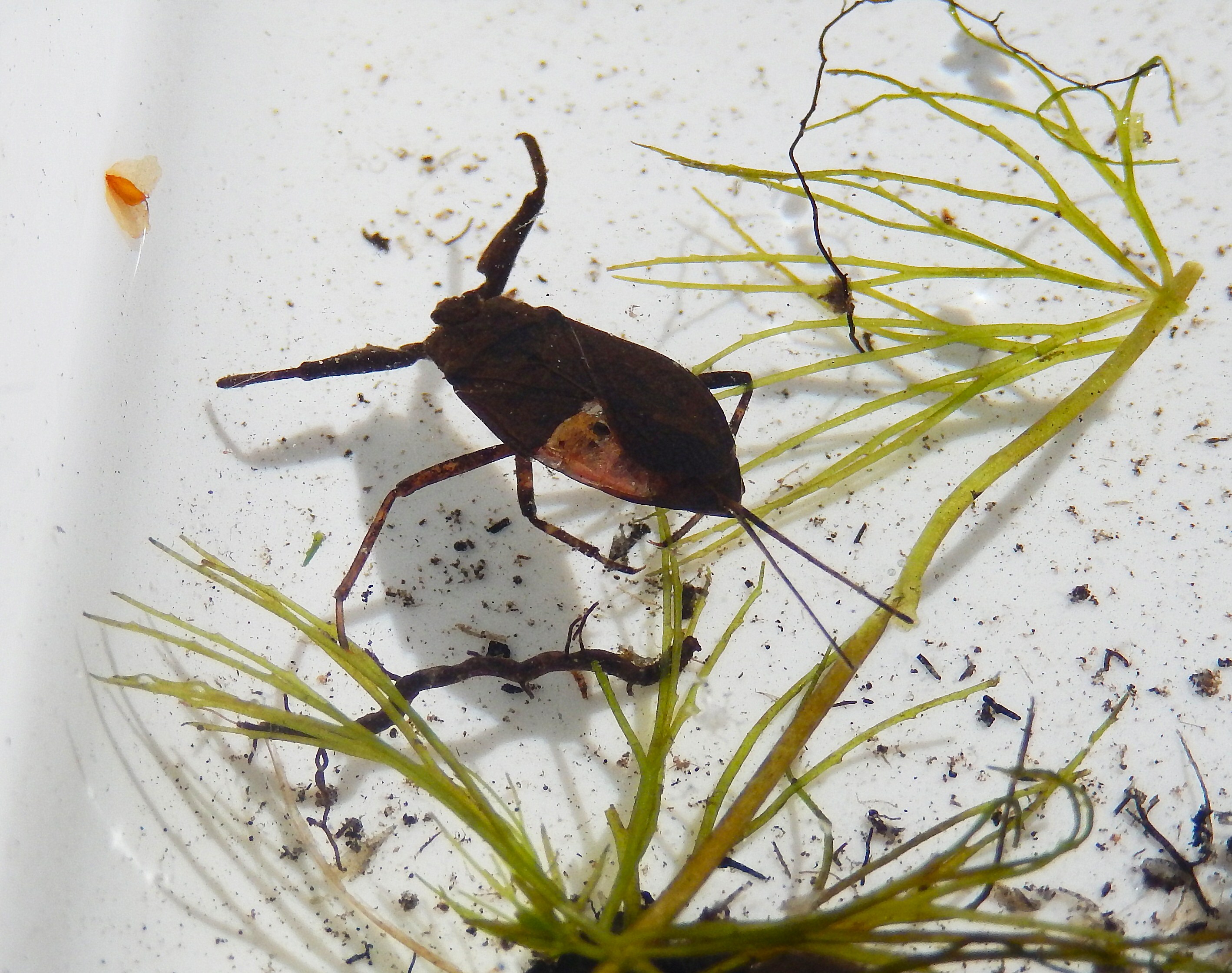
Water Scorpion
Water Scorpion

Down at the pond, a primary school class and a group of enthusiastic teachers were catching Ramshorn Pond Snails, Newts, Dragonfly larvae and this fine Water Scorpion.

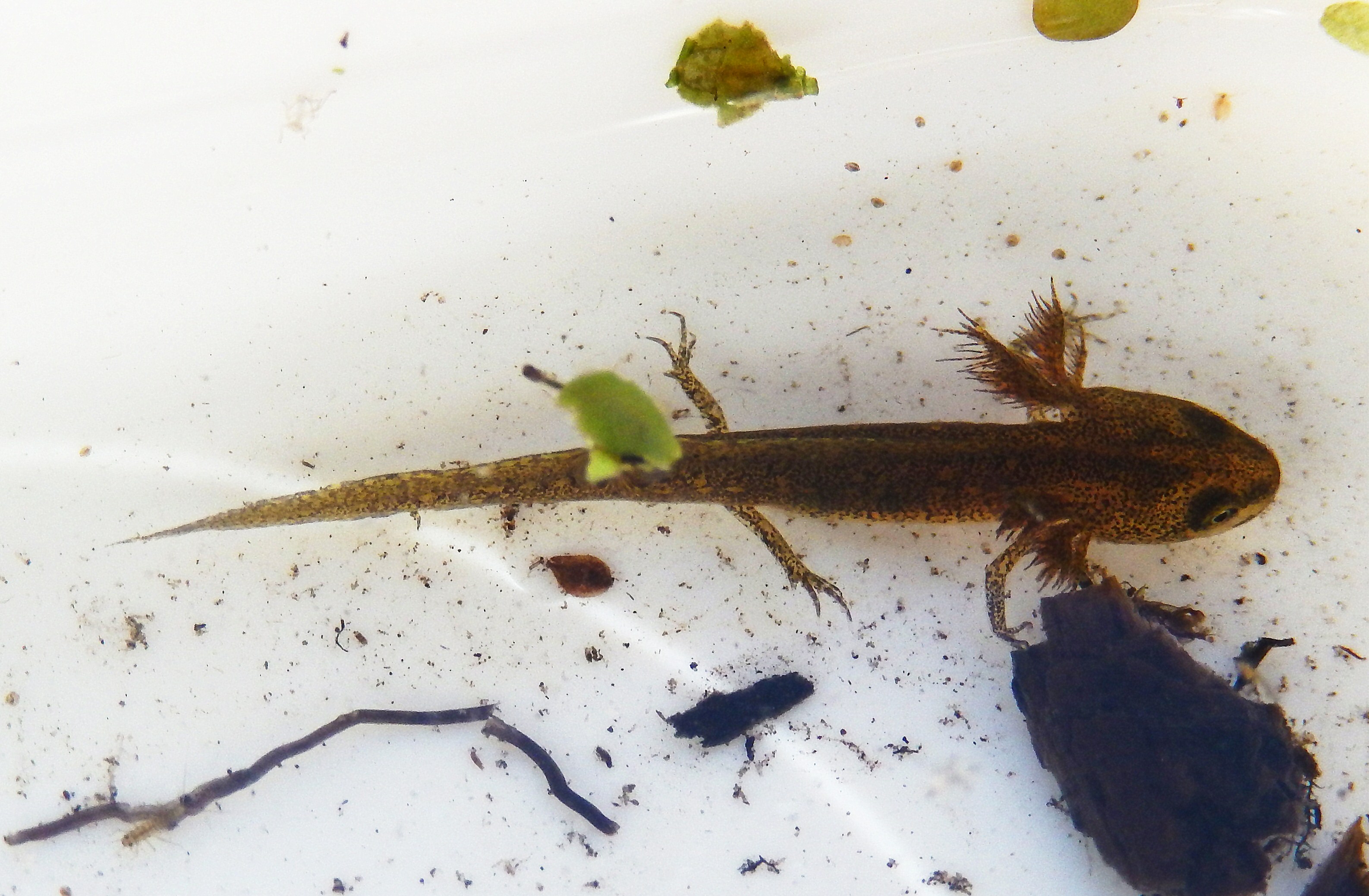
Tiny newt in metamorphosis, with four legs and gills
Tiny newt in metamorphosis, with four legs and large external gills

This small newt has nearly completed its metamorphosis from a tadpole. It has four legs, the hindlegs so thin they were nearly invisible to the naked eye, but its gills are still large, feathery and projecting from the sides of the head.

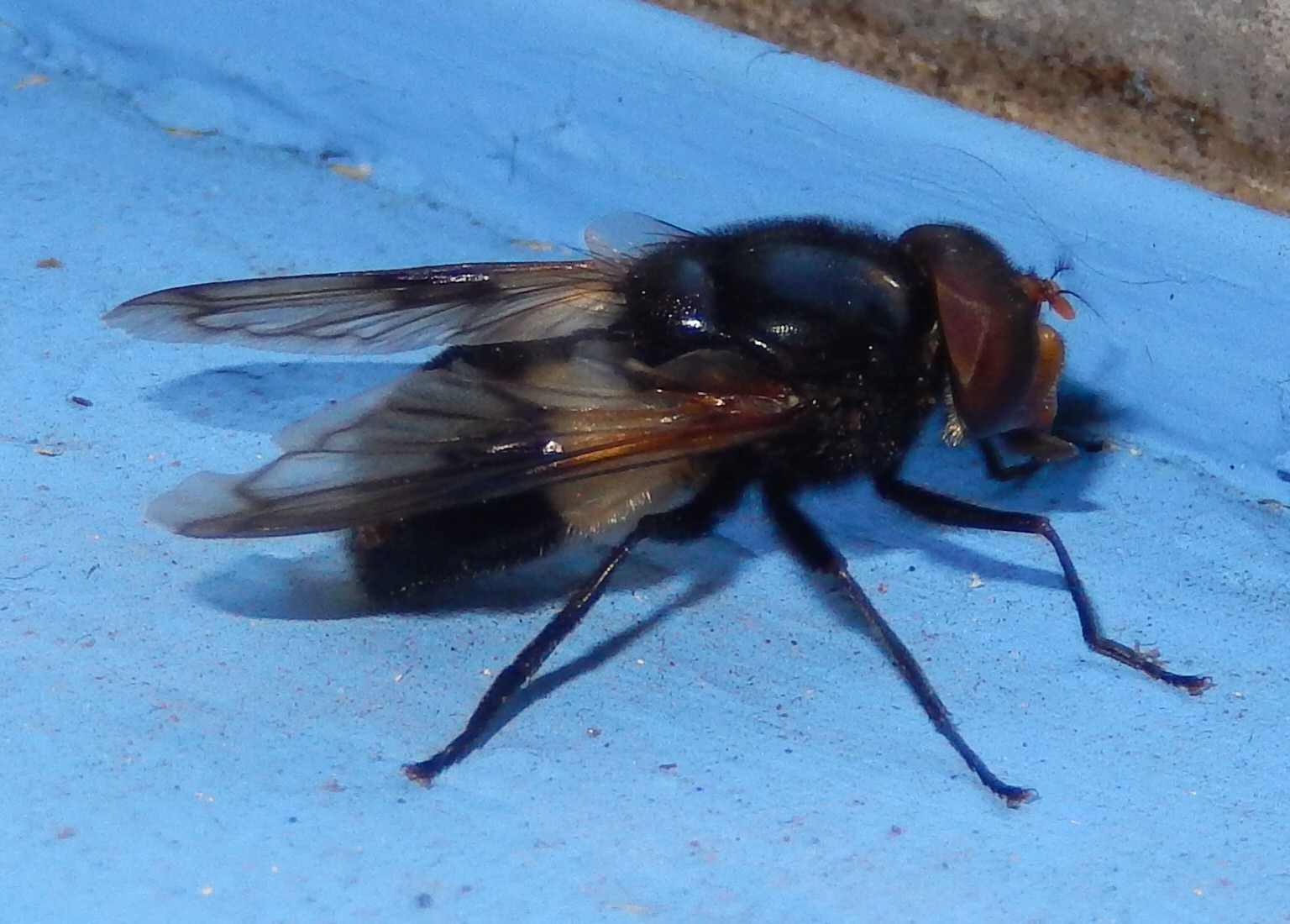
One of the large handsome hoverflies that frequents woodland glades came into the hut. This species has the front of the abdomen pale yellowish but no other stripes; the pale area seems to glow when the fly is hovering, presumably making it look sufficiently black and yellow to warn off predators (of course, many bees are black).

Large woodland hoverfly

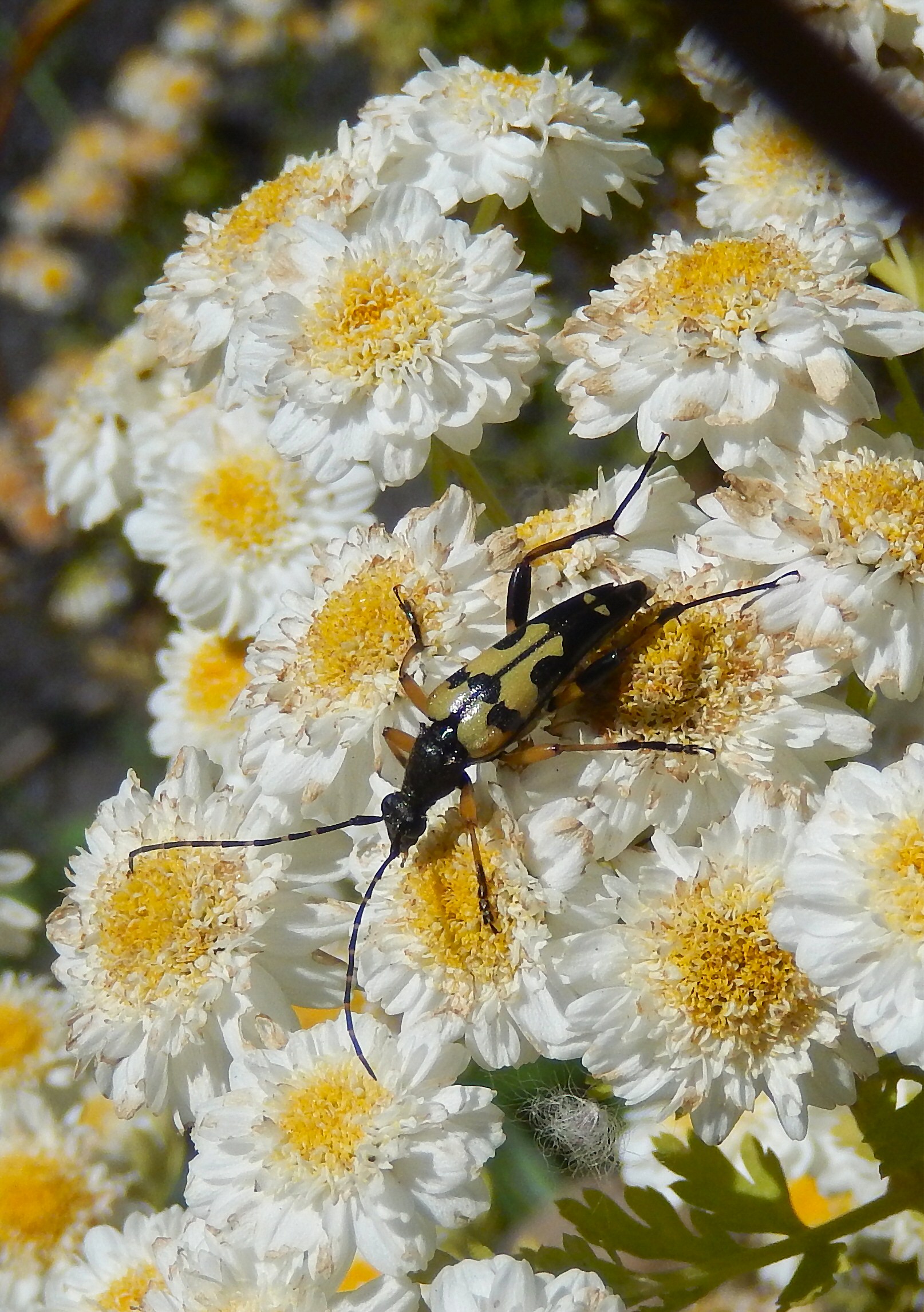
Finally, here’s a Strangalia maculata, one of our most handsome longhorn beetles. Nearby was another Red Admiral.

Strangalia maculata, a longhorn beetle

A Cloud of Keeled Skimmers at Thursley Common

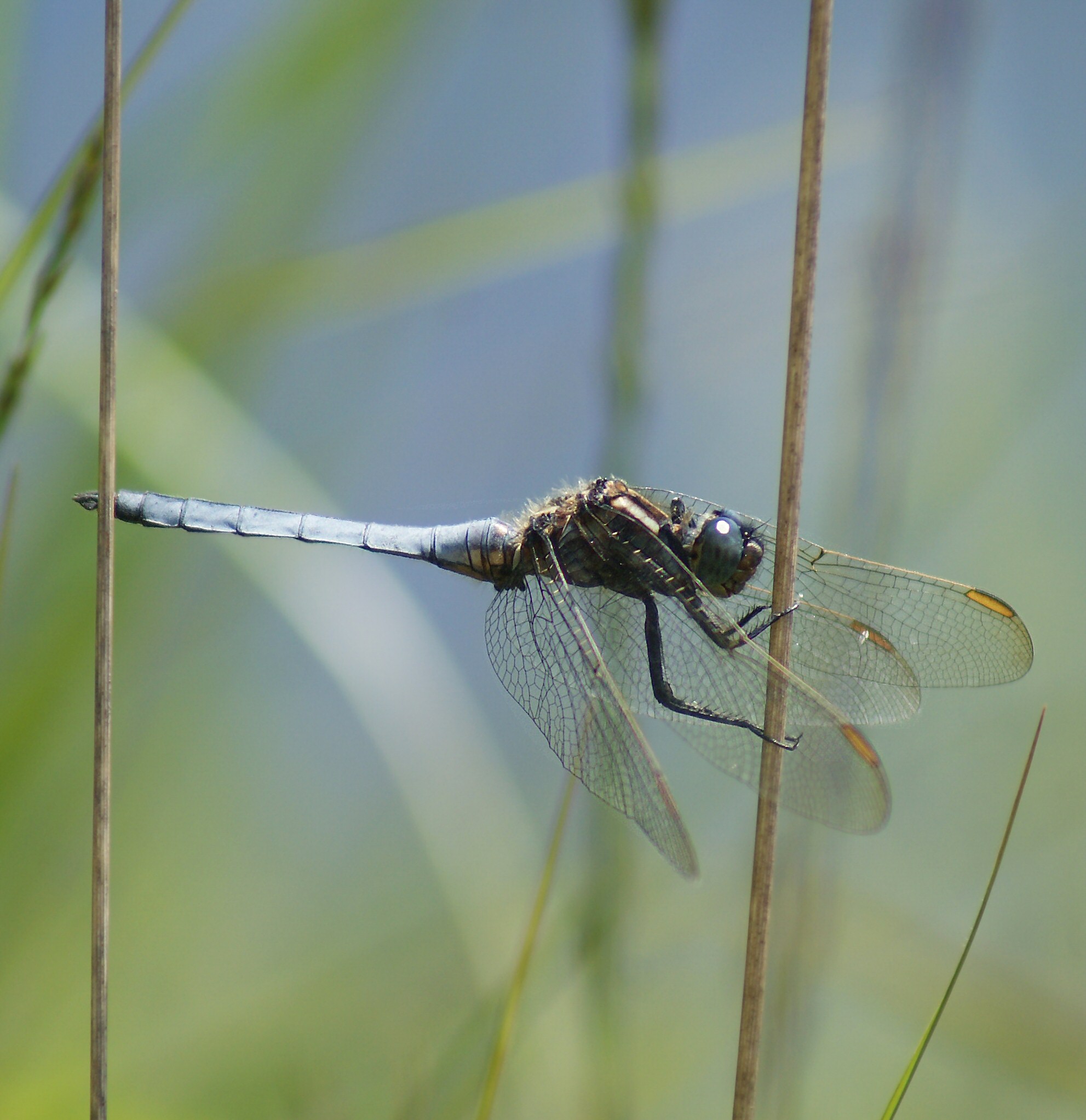
Male Keeled Skimmer on the Lookout

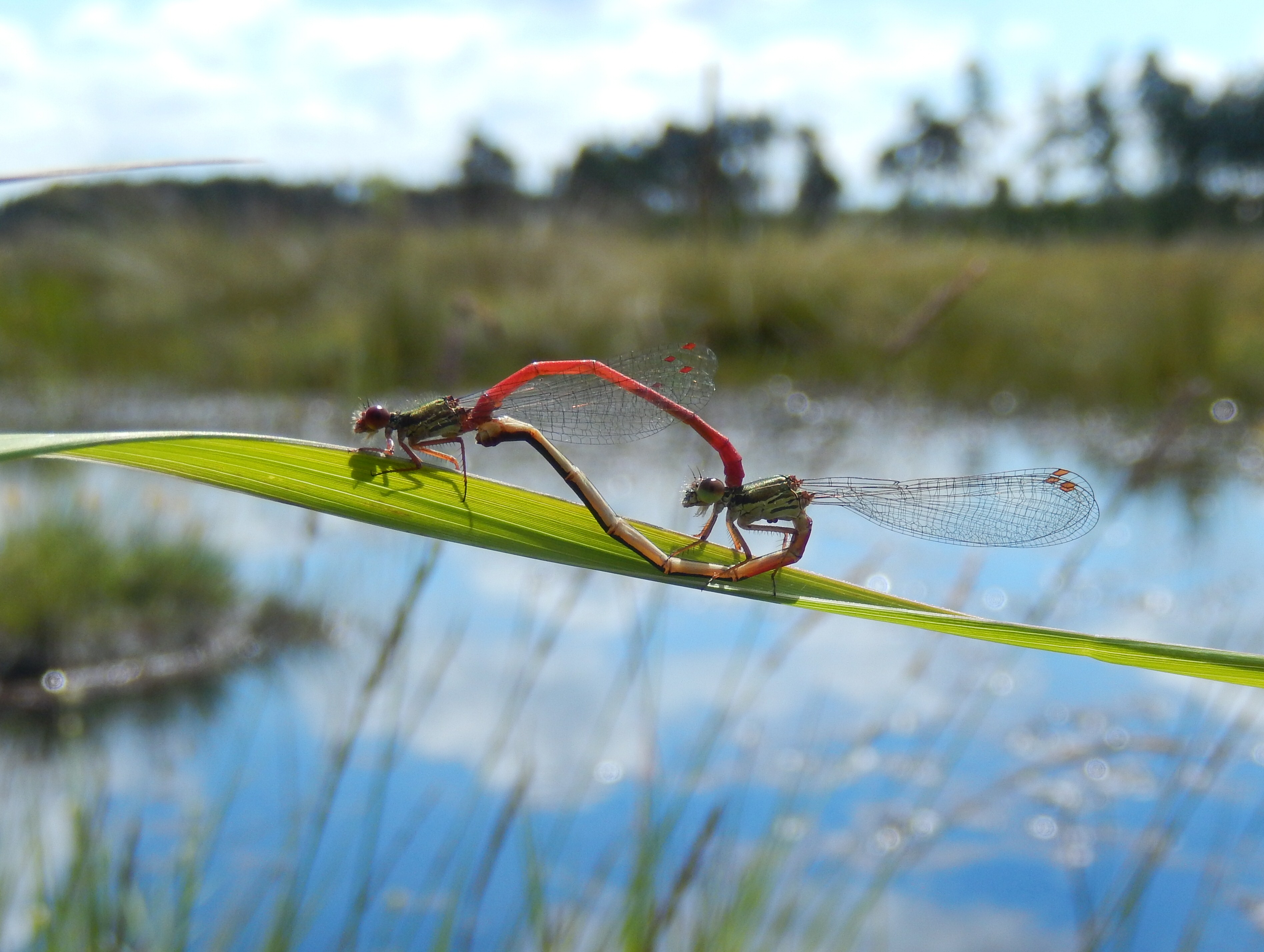
Thursley Common on a sunny July day can shimmer with the wings of dragonflies. Today, hundreds of Keeled Skimmers, joined by plenty of other species large and small – from the mighty Emperor to the dainty Small Red Damsel, made the air seem to sparkle as brightly as the water beside the boardwalk. There were Keeled Skimmers perched alertly on stalks, ready to spring into the air at an instant’s notice; Keeled Skimmers in tussling pairs, their wings rustling and scuffling as they clashed in brief, brutal territorial disputes; Keeled Skimmers in groups of four or five, dashing and swerving over the water; Keeled Skimmers over every pond, bog pool, and lakeside.

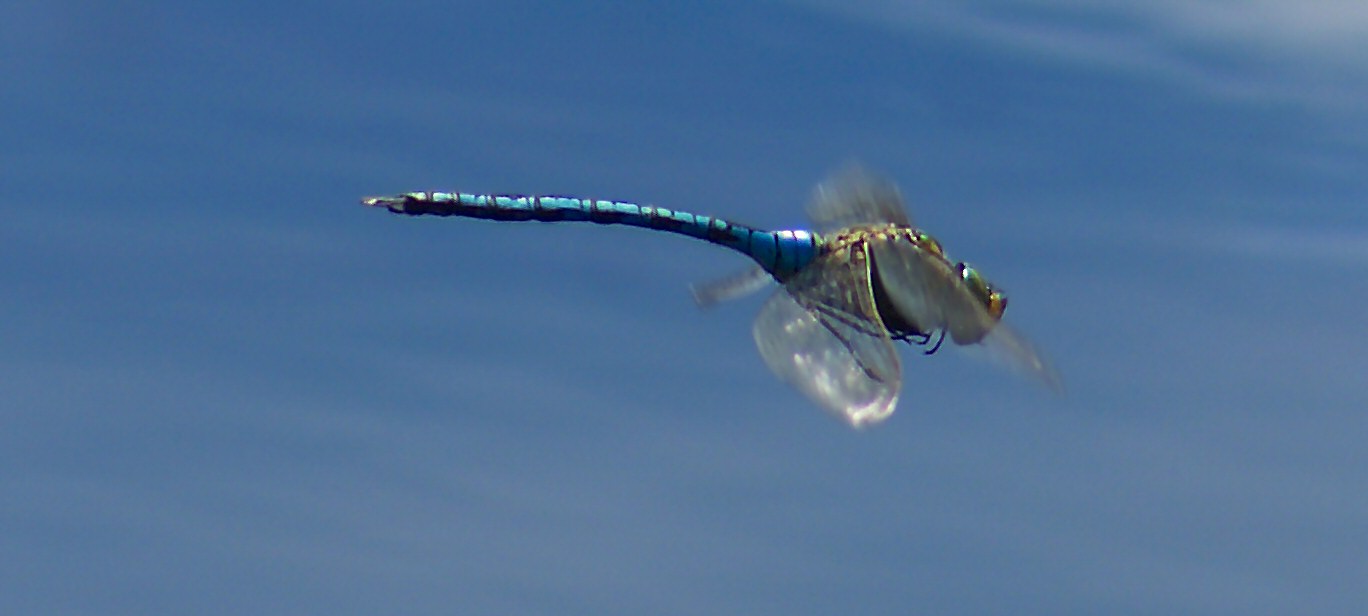
Emperor Dragonfly patrolling its pond at waist height

Over one quieter pool, an Emperor Dragonfly patrolled in more stately fashion, almost hovering, drifting forward slowly as if a helicopter pilot was holding the machine’s collective drive stick just a little forward of the hover position, its striped blue tail gleaming in the sun.

Small Red Damselflies in cop over a bog pool at Thursley
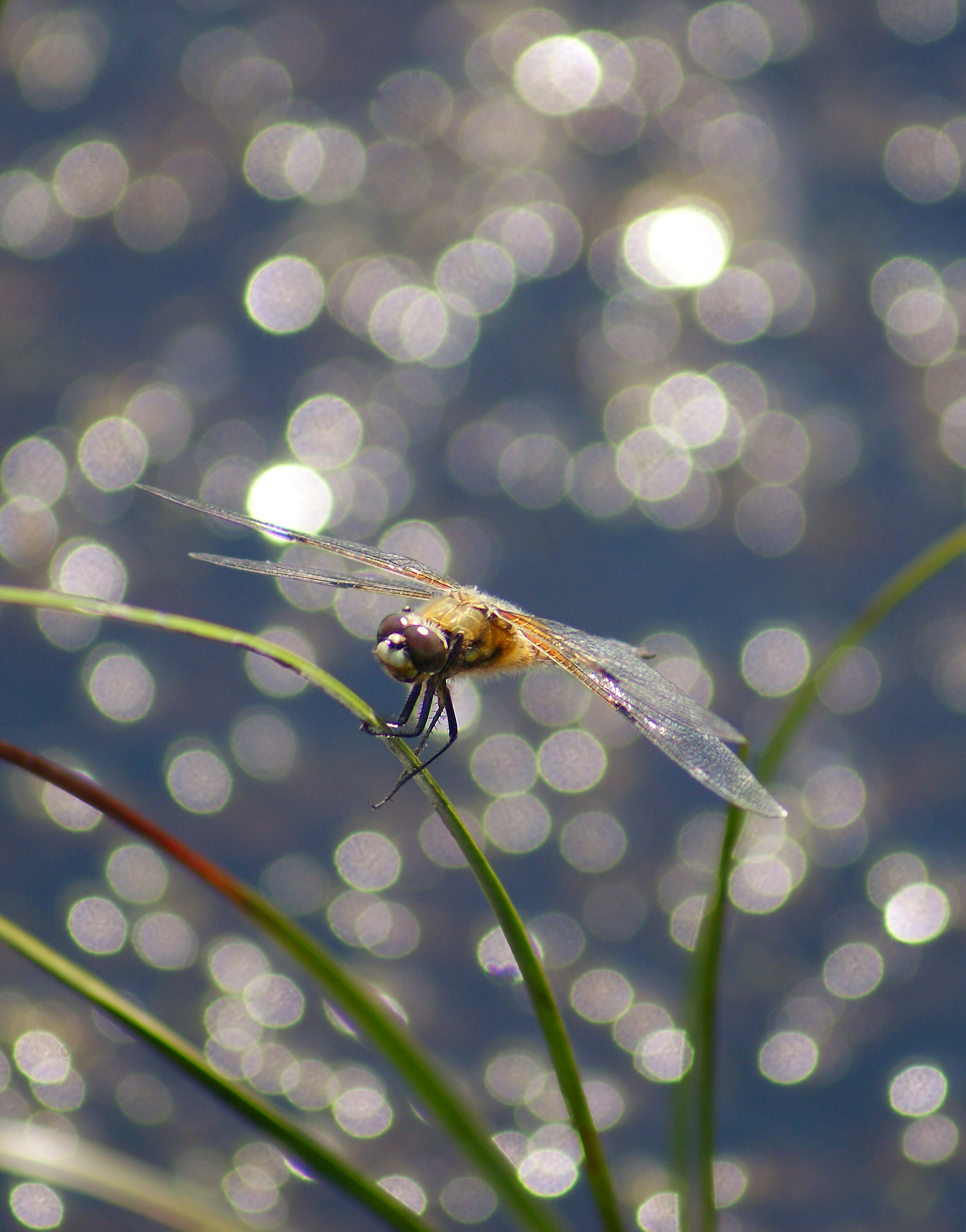
A Four-Spotted Chaser, pausing momentarily over a sparkling pool

Many of the Odonata were busy laying eggs, from the Skimmers to the damselflies. One or two Black Darters were about: they can be here in large numbers later in the season.

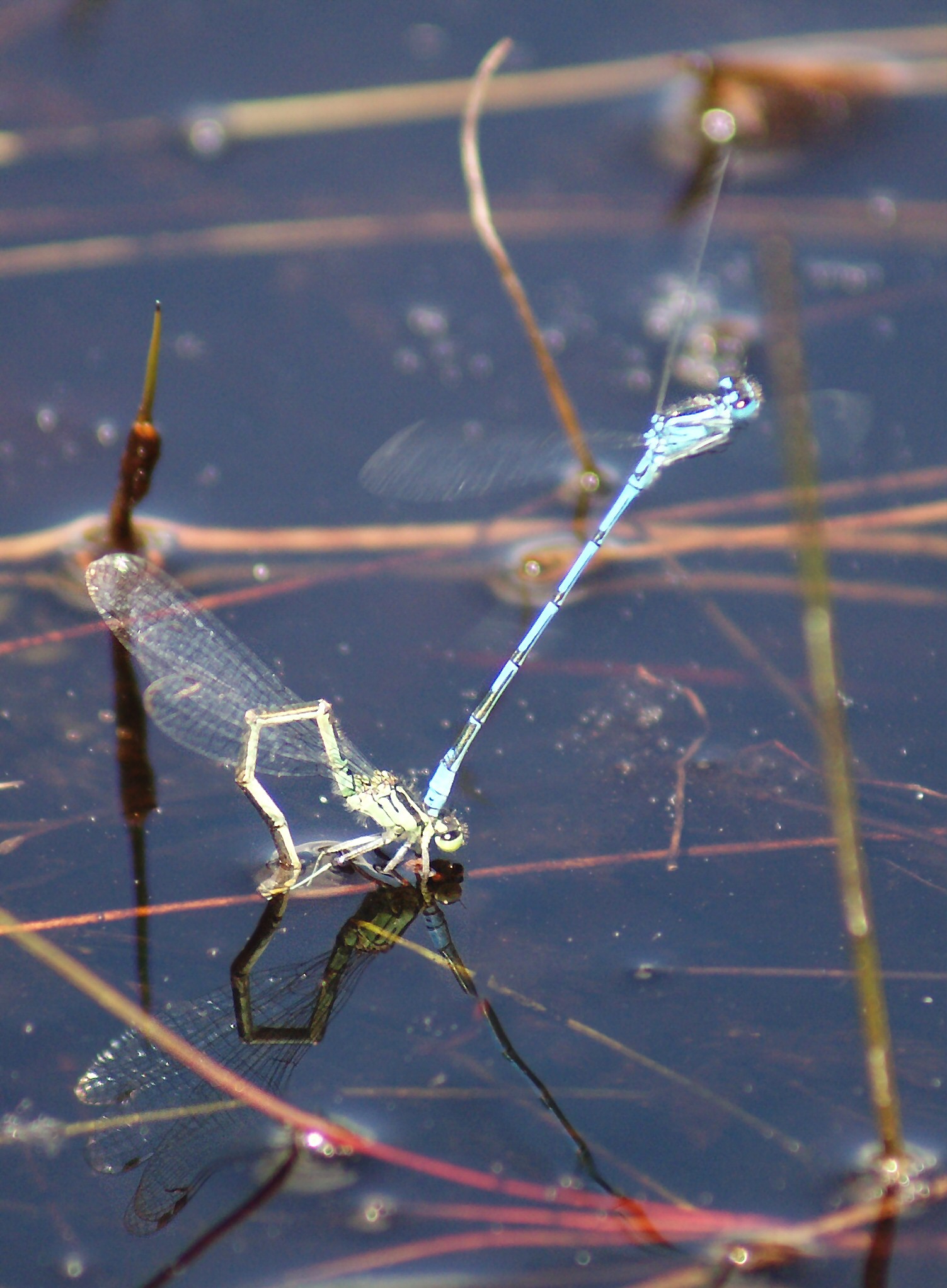
Azure Damselfly pair egg-laying

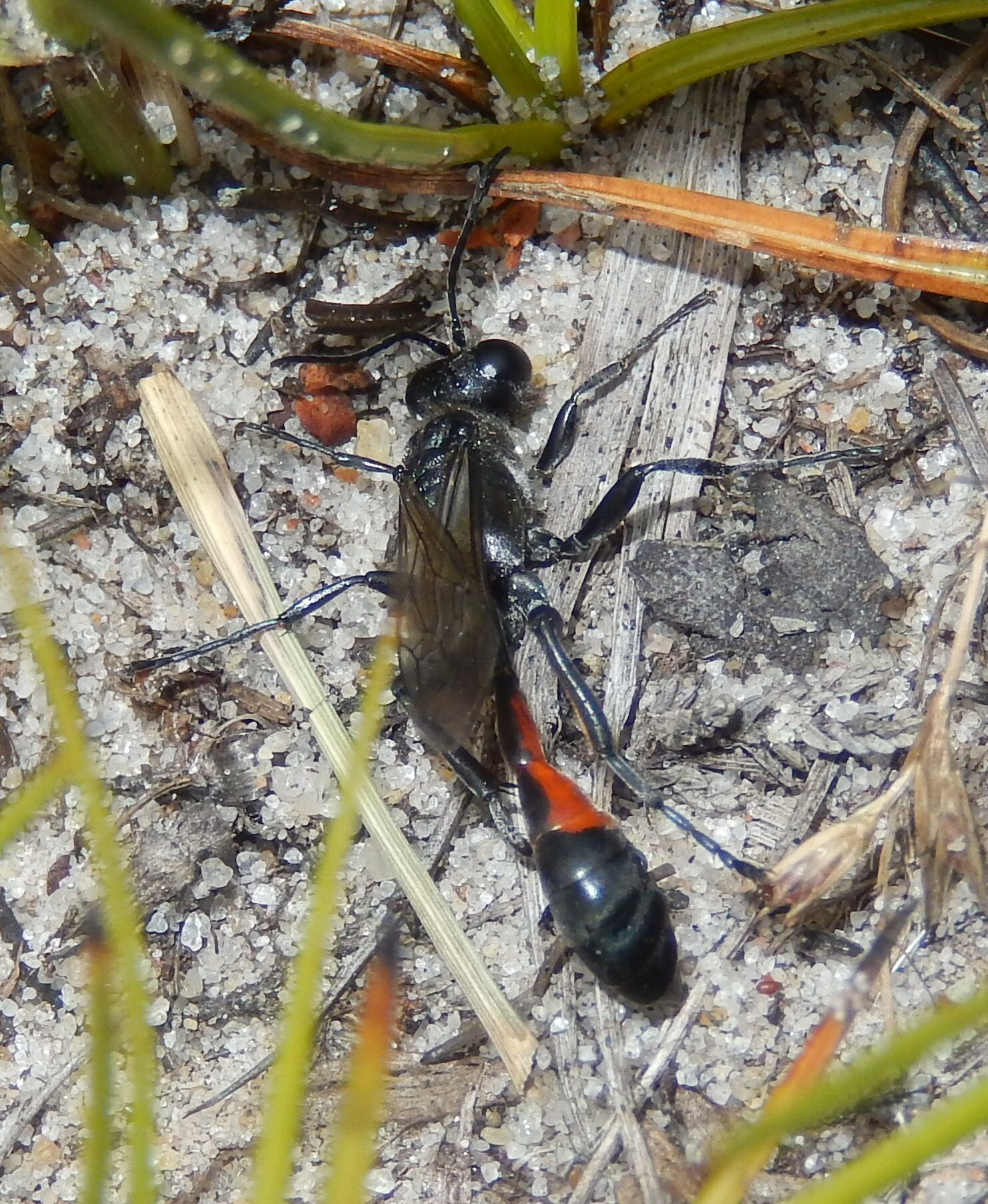
On the sandy heath, the Sand-Wasp Ammophila sought her insect prey, her distinctive shape almost dragonfly-like with an extremely elongated red waist leading to a plump ‘tail’ to her abdomen.

Sand-Wasp Ammophila
Sand-Wasp Ammophila
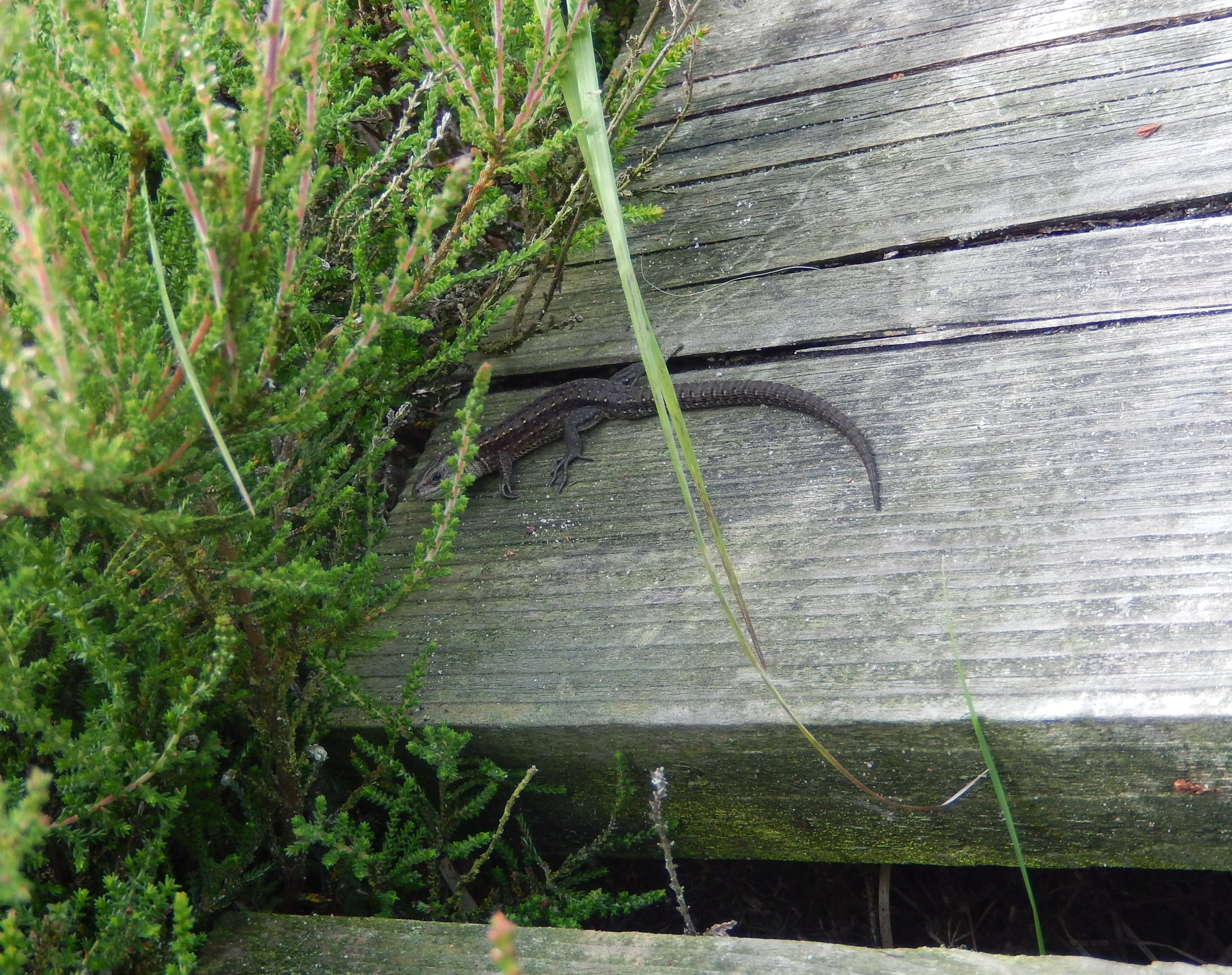
Lizard on the boardwalk

Overhead, a Hobby dashed and stooped, handsome through binoculars, moustachioed, spotted below, its long scything wings like a giant Swift easily outpacing the fastest dragonfly. Below, a lizard rested unobtrusively at the edge of the boardwalk, ready to scuttle into the heather at any threat; another a yard further on. A Reed Bunting rasped out its short scratchy song, skreek, skreek, skrizzick.  A Curlew called once; a Skylark soared invisibly high into the blue, singing as if John Keats were at hand to report on the beauty of its song.

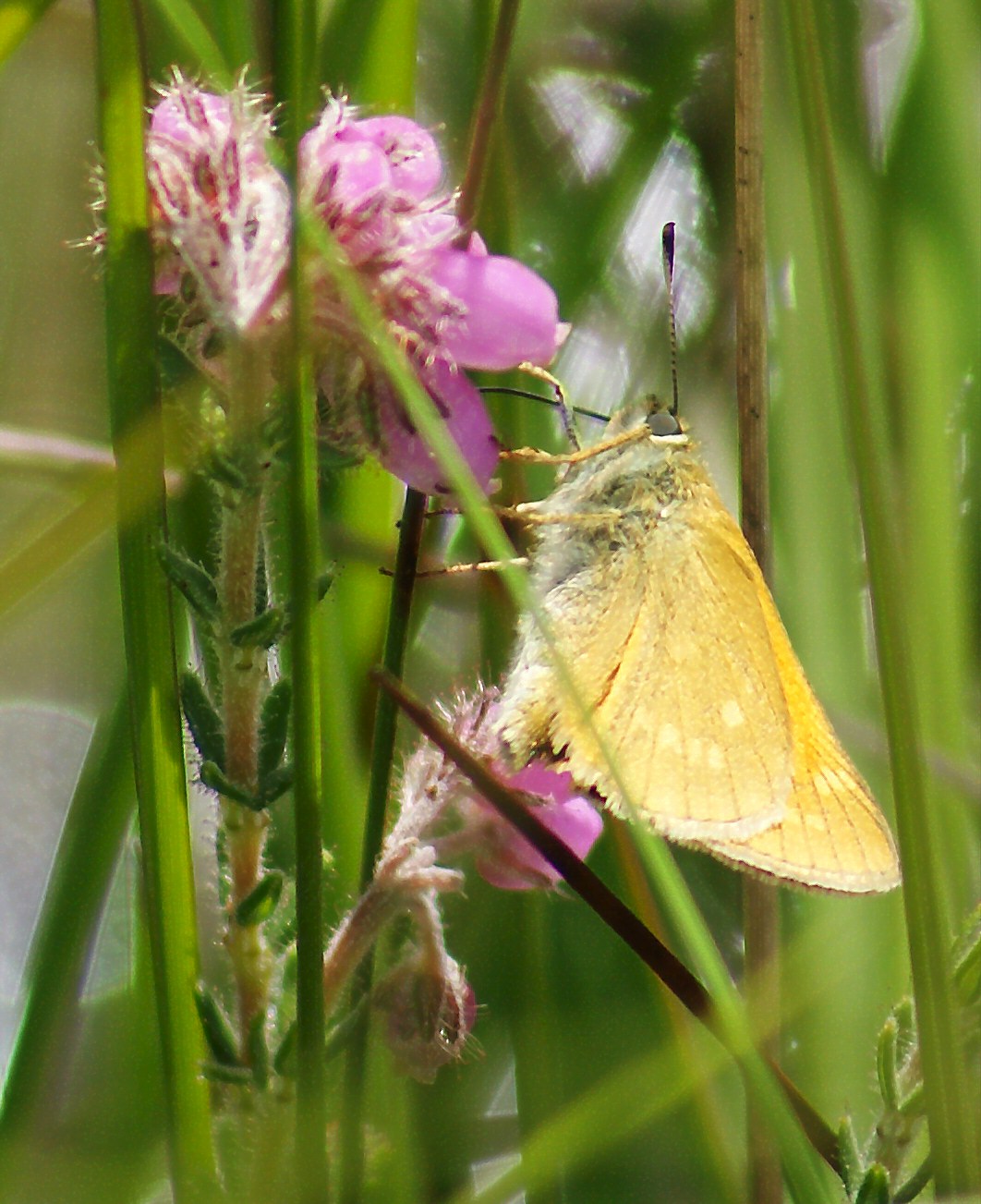
Large Skipper on Cross-Leaved Heath
Large Skipper on the rather special Cross-Leaved Heath
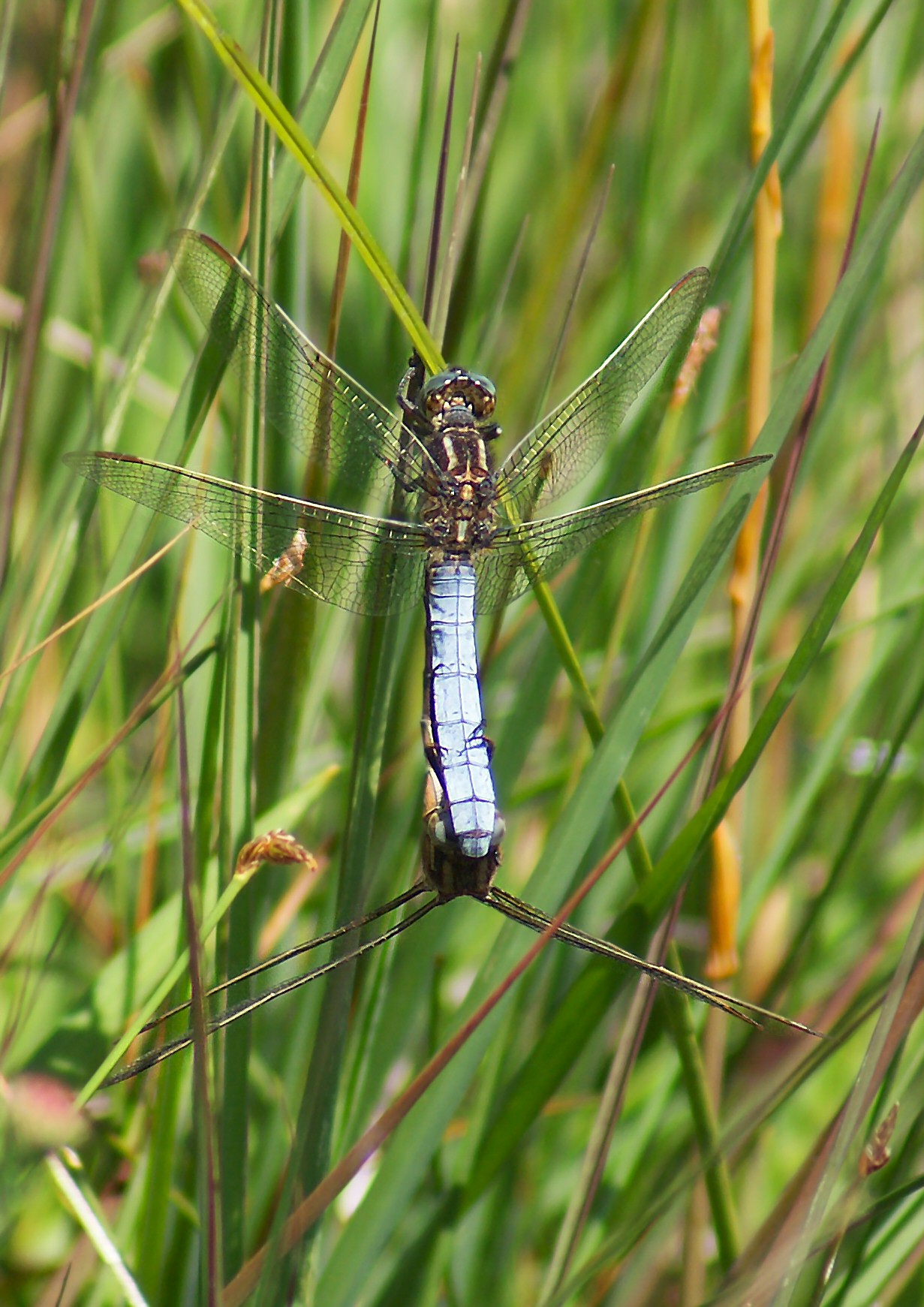
Four Wings Good, Eight Wings Better - Keeled Skimmers in cop
Four Wings Good, Eight Wings Better – Keeled Skimmers in cop

In the Lake District

Lonesome Splendour: looking up Wastwater to Wasdale Head, with Yewbarrow on left, Scafell and the Wasdale Screes on right

It was a delight to be able to take some time in the almost miraculously preserved Lake District, the landscape seemingly unchanged from a century ago. The real changes are in the main carefully hidden away: cunningly concealed caravan parks, sensitively expanded hotels and guest houses, visitor attractions built of grey slate and tucked behind walls or trees. One change cannot be hidden: the narrow lanes carry twice, no, four times the traffic of thirty years ago, and it travels at murderous speed. Some of the young men in their shiny red cars race along the few straights and around blind bends, trusting and assuming (without thought) that the other driver knows the road as well as them,  has the same speed of reaction, and will have space to pass. Given that the other driver may well be a foreigner in a slow, bulky camper van, or old and frail, or talking on the phone, or tired, drunk or just not quite as perfect as the young bloke in his speed-wagon, this may not be justified. Pedestrians and cyclists, too, take their lives in their hands. The park authority ceaselessly balances the conflicting pressures: facilities for the millions of visitors, landscape, wildlife, jobs, houses, schools and shops for the residents, car parking (as pricey as any city in the most popular spots). They have done an admirable job.

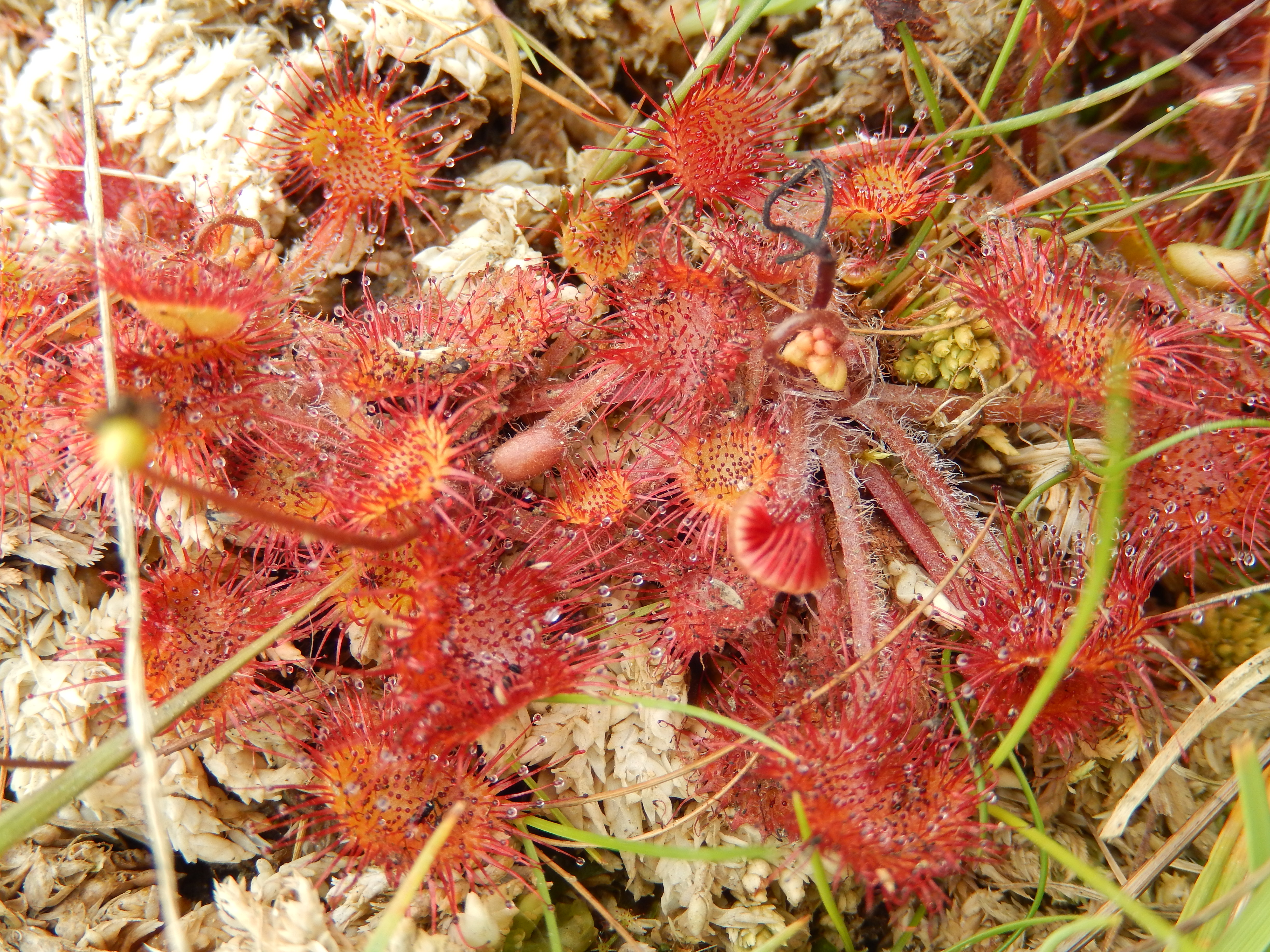
Round-Leaved Sundew, Drosera rotundifolia, and Sphagnum bog moss
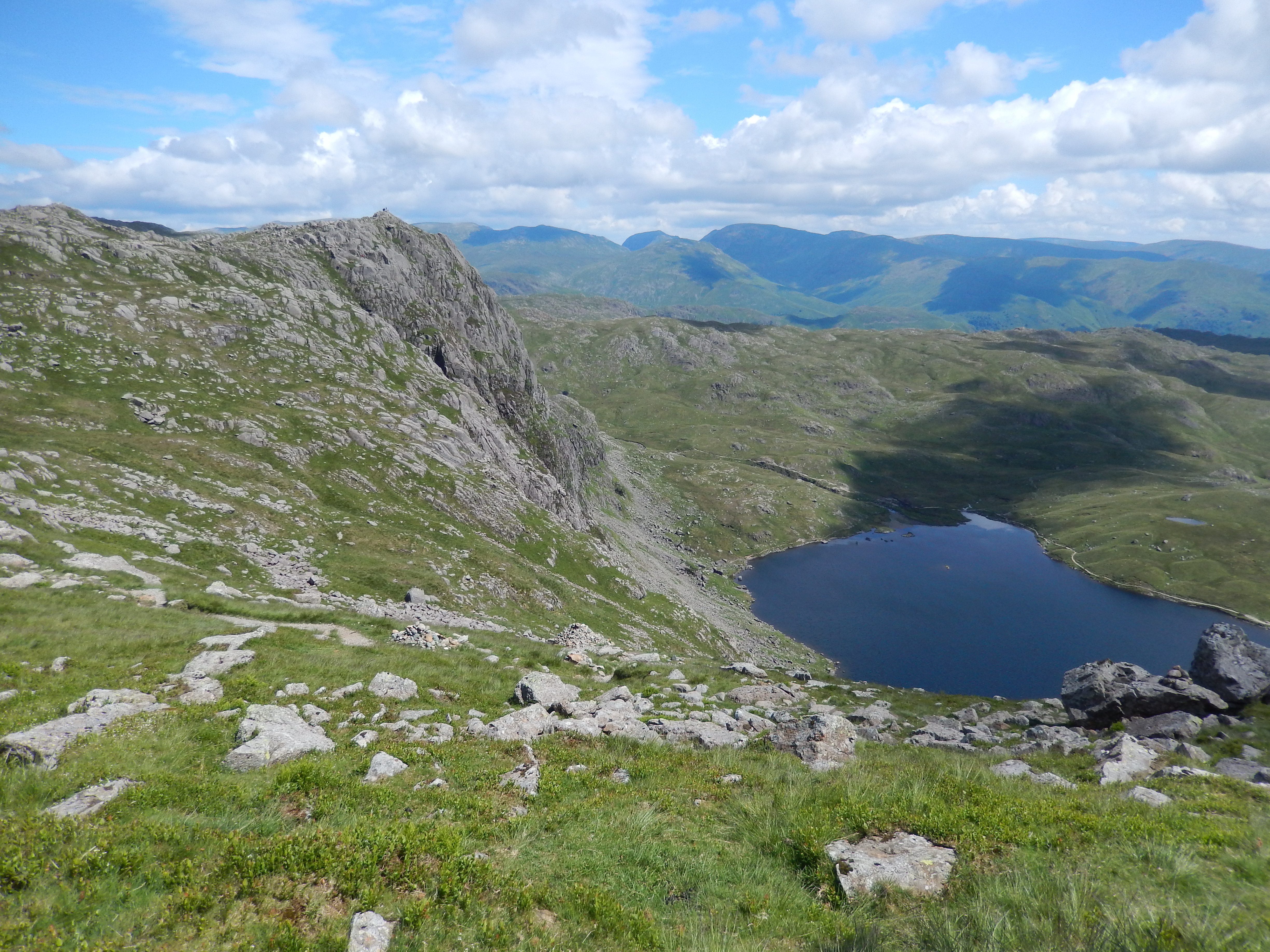
Glaciated Landscape: Pavey Ark above Stickle Tarn

The marvellously clean landscape of rock, grassland and glacial lakes appears so fresh on a fine day that it hardly seems feasible: it is sharper than a diorama illustrating geomorphology, and much more beautiful.

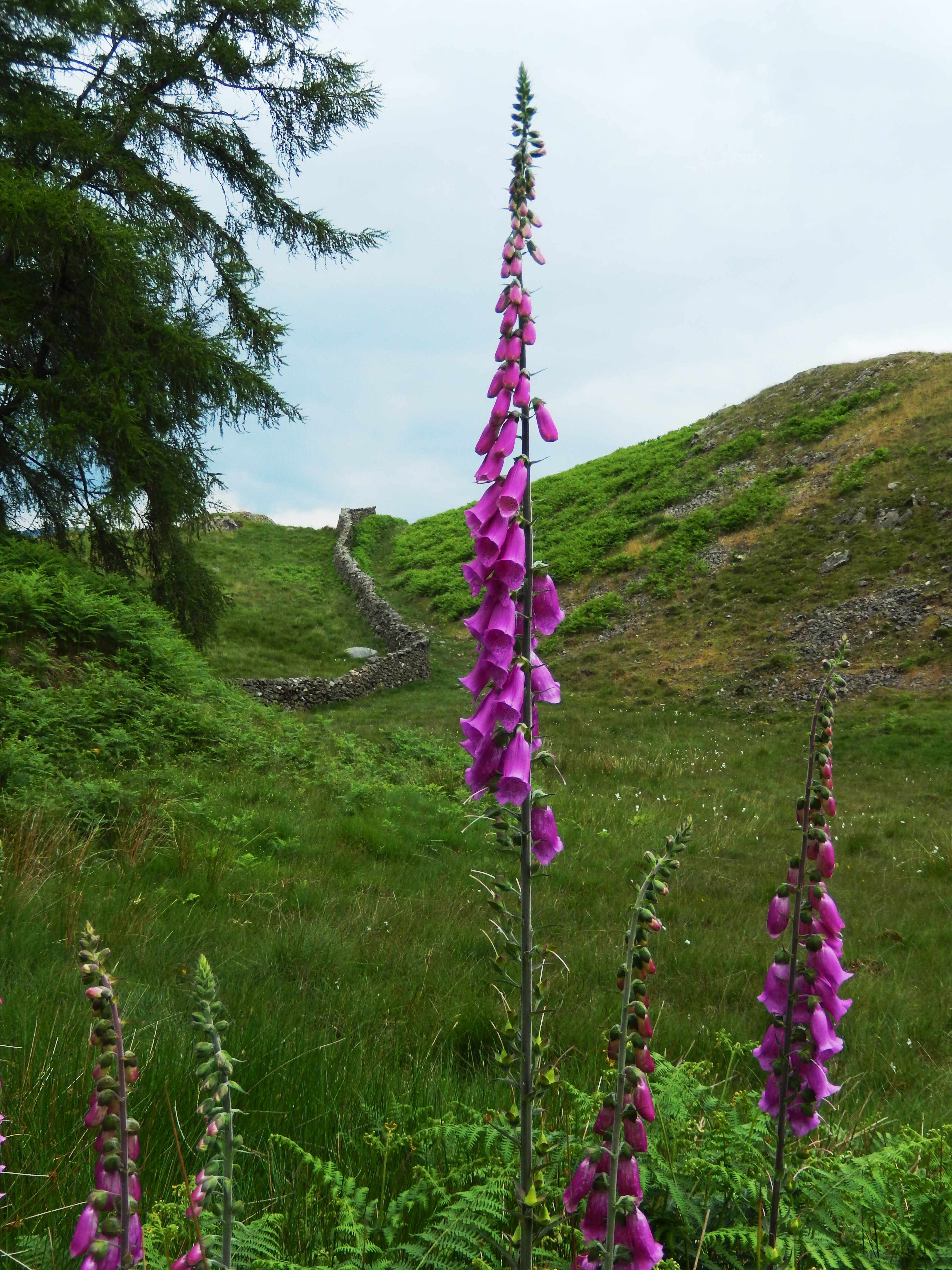
Foxglove in a Lake District landscape,Tarn Hows
Foxglove in a Lake District landscape, Tarn Hows

Sometimes the common flowers surprise us with their beauty. These foxgloves stood proud and tall in their hummocky landscape.

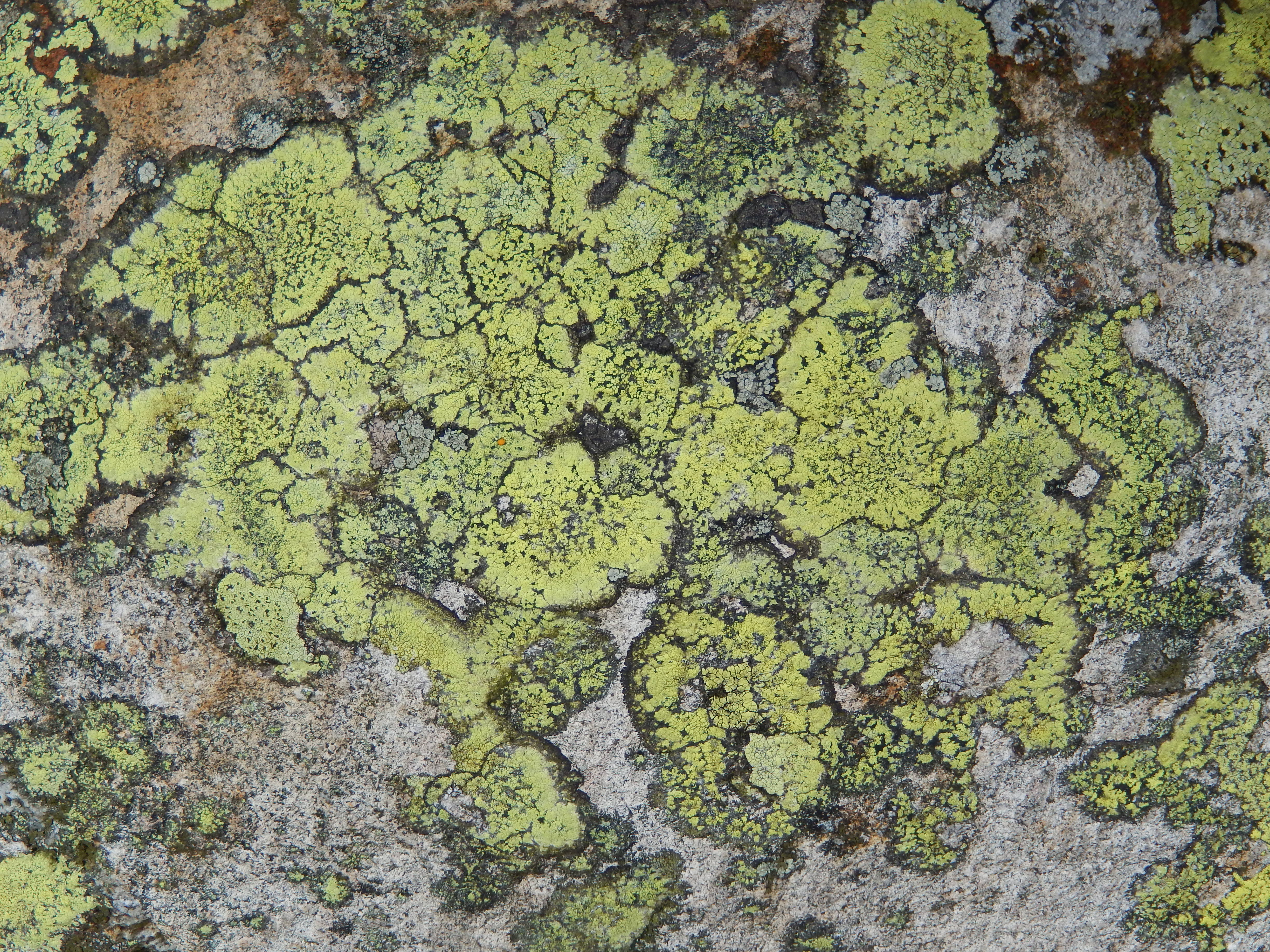
Map Lichen Rhizocarpon geographicum
Map Lichen, Rhizocarpon geographicum, on slate

The lime-green of the geographic or map lichen forms delightful maps of imaginary continents on the grey slate.

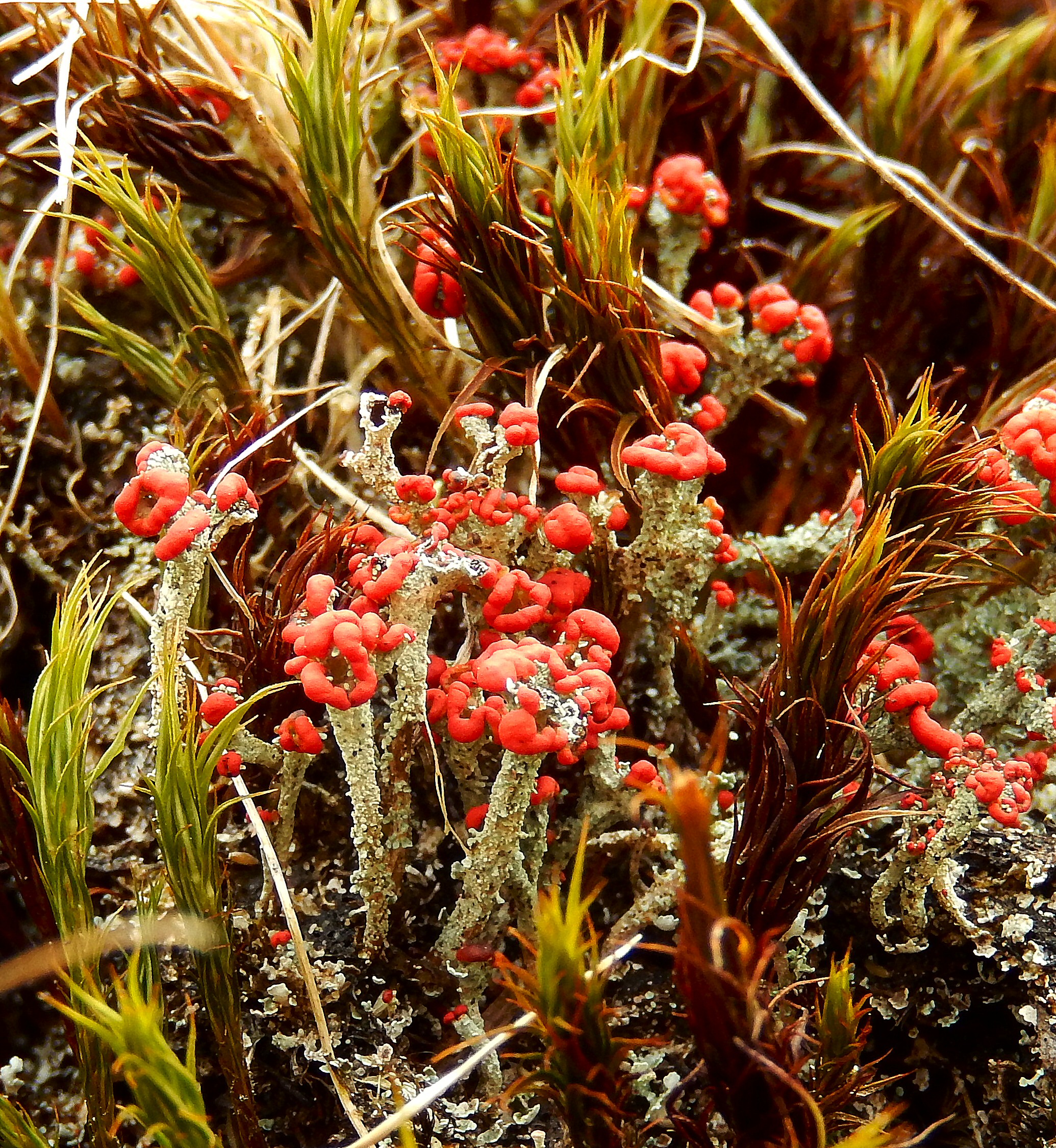
Cladonia floerkana lichen among moss, Tarn Hows

The artist Maurits Escher admired the apparently simple form of mosses and ground-living lichens like the gorgeously coloured Cladonia floerkana: but he quickly realized how complex they were when he started to draw them.

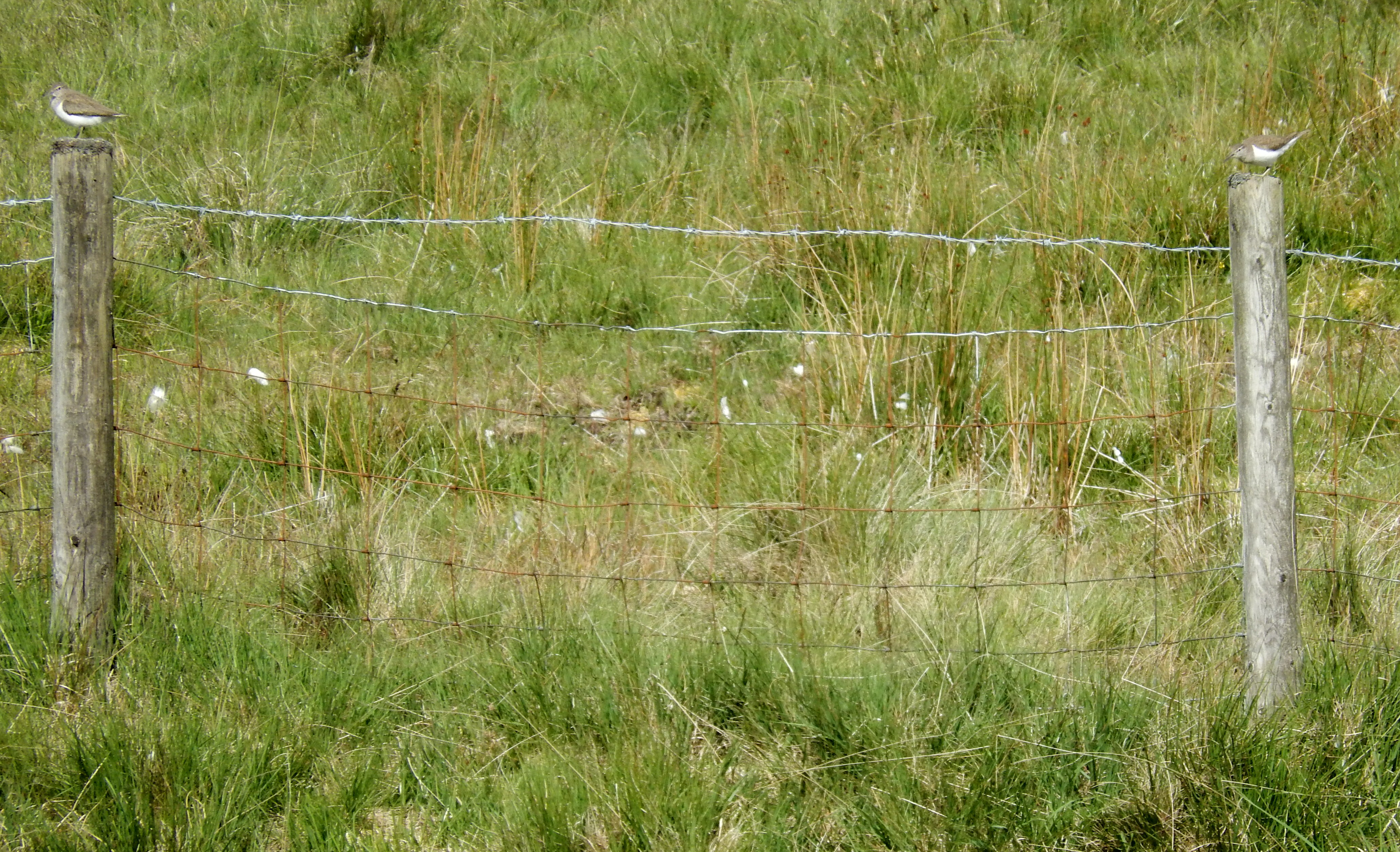
Two Common Sandpipers at Wrynose Pass

I was happily surprised to see these Common Sandpipers flying about and calling loudly: I really hadn’t expected to see them away from both forests and sizeable bodies of water: clearly, they don’t need much.

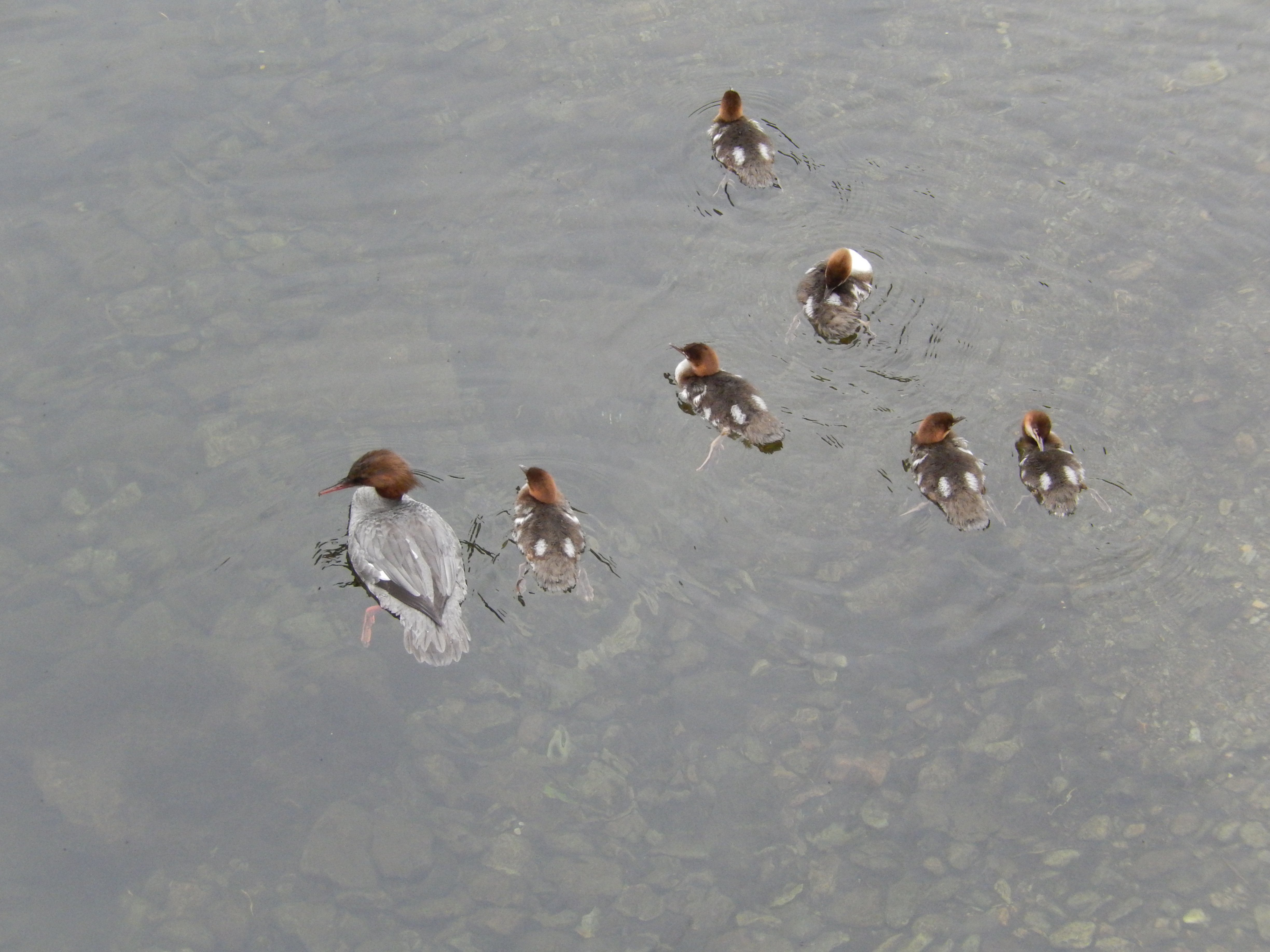
Goosander female with six spotted ducklings, River Rother, Grasmere

The Goosander is almost a rarity, breeding in not many thousands in Britain; but it is not shy, as this family seen from the bridge over the Rother in Grasmere demonstrates. The ducklings showed off their striking spotted pattern.

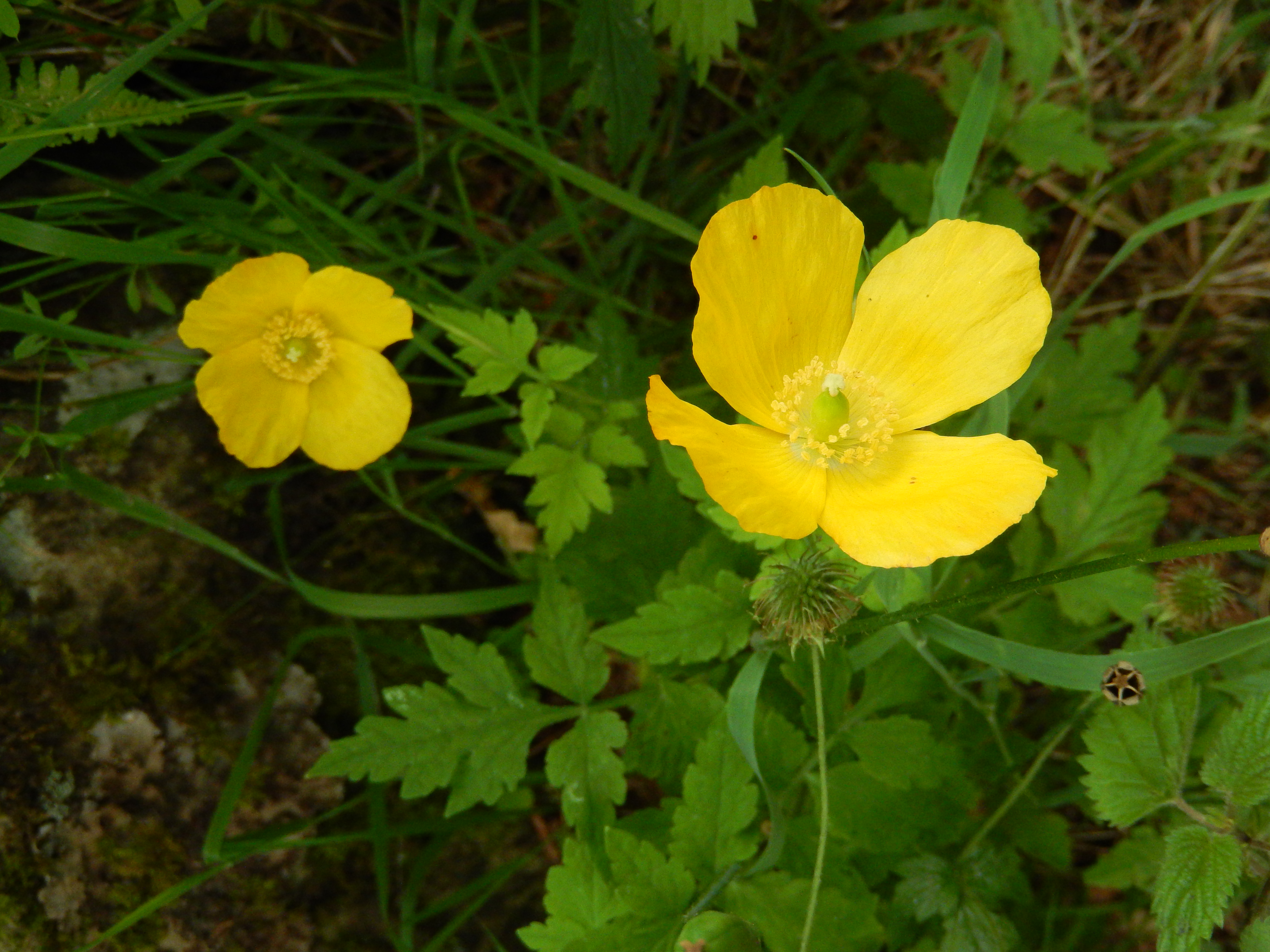
Welsh Poppies in Wasdale
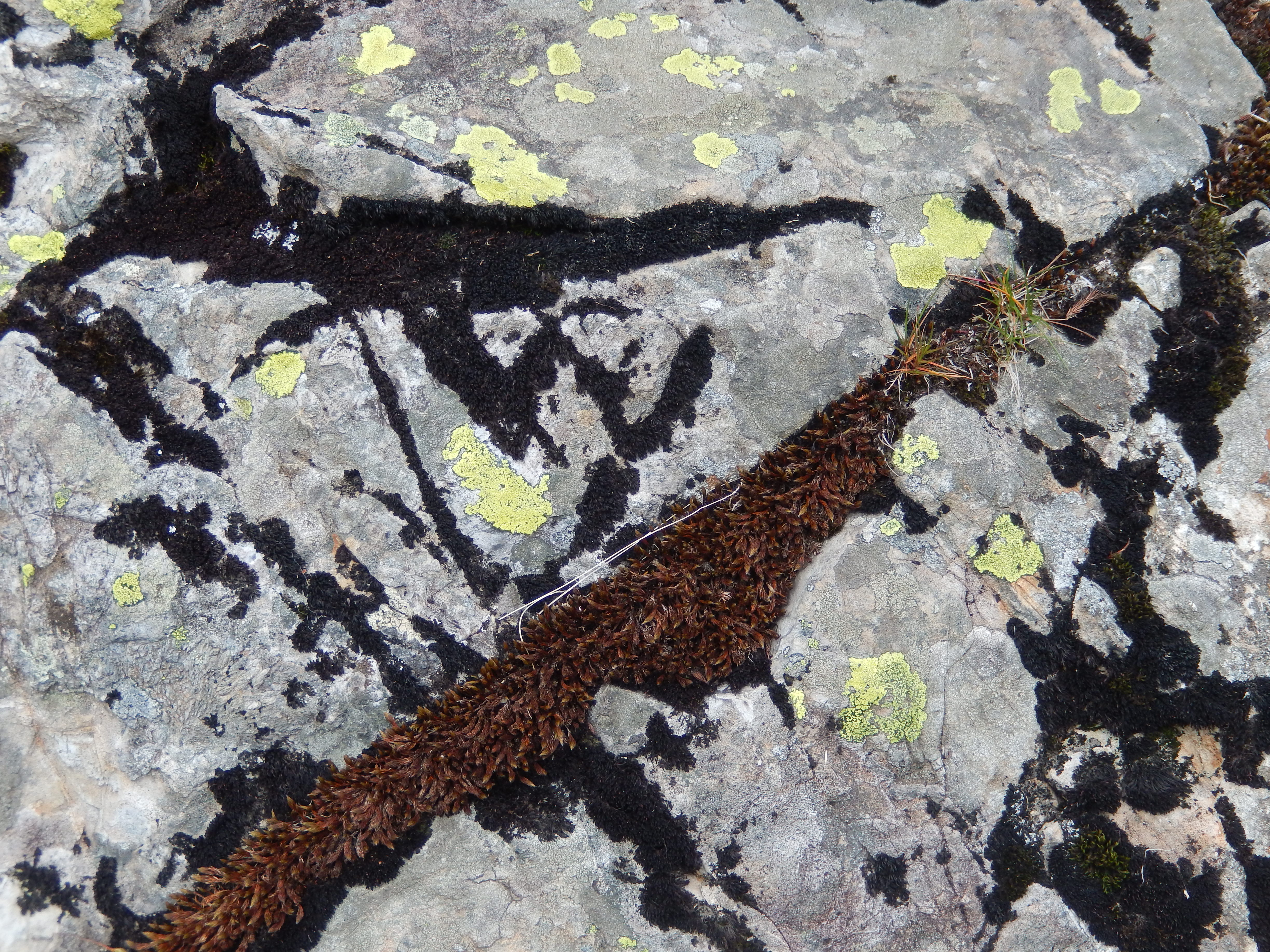
Natural Pattern: a rock with mosses and Map Lichen on Yewbarrow

On Yewbarrow in Wasdale, we enjoyed the views of lake and mountain, and glimpsed a Golden-Ringed Dragonfly: not really mistakable for anything else, the size of an Emperor Dragonfly and strikingly black-and-yellow with incomplete rings.

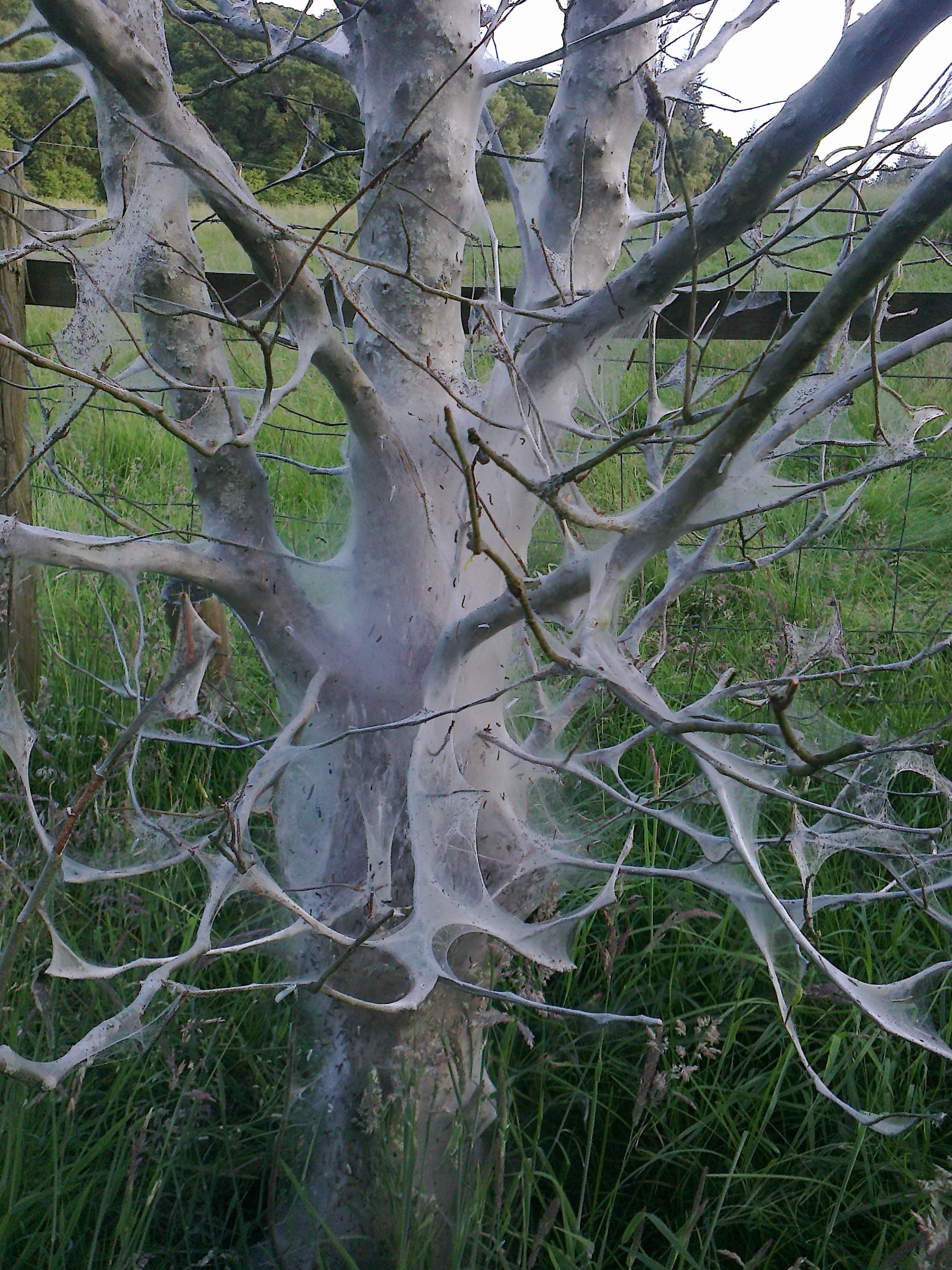
Ghostly tree covered in caterpillar tent silk, dotted with telltale frass

Back at our guest house, Marsh Tits visited the bird feeders, almost as relaxed as the resident Blue Tits. On the Cumbrian Way, walking down to the pub at Skelwith Bridge, we saw this extraordinarily ghostly tree, leafless and covered all over with silk, lightly decorated with caterpillar frass. The poor tree had been totally defoliated by the tent caterpillars. Since I doubt the Gypsy moth has reached the Lake District yet, this might be a Processionary moth, perhaps.

Aston Rowant: Beautiful, Brutalized

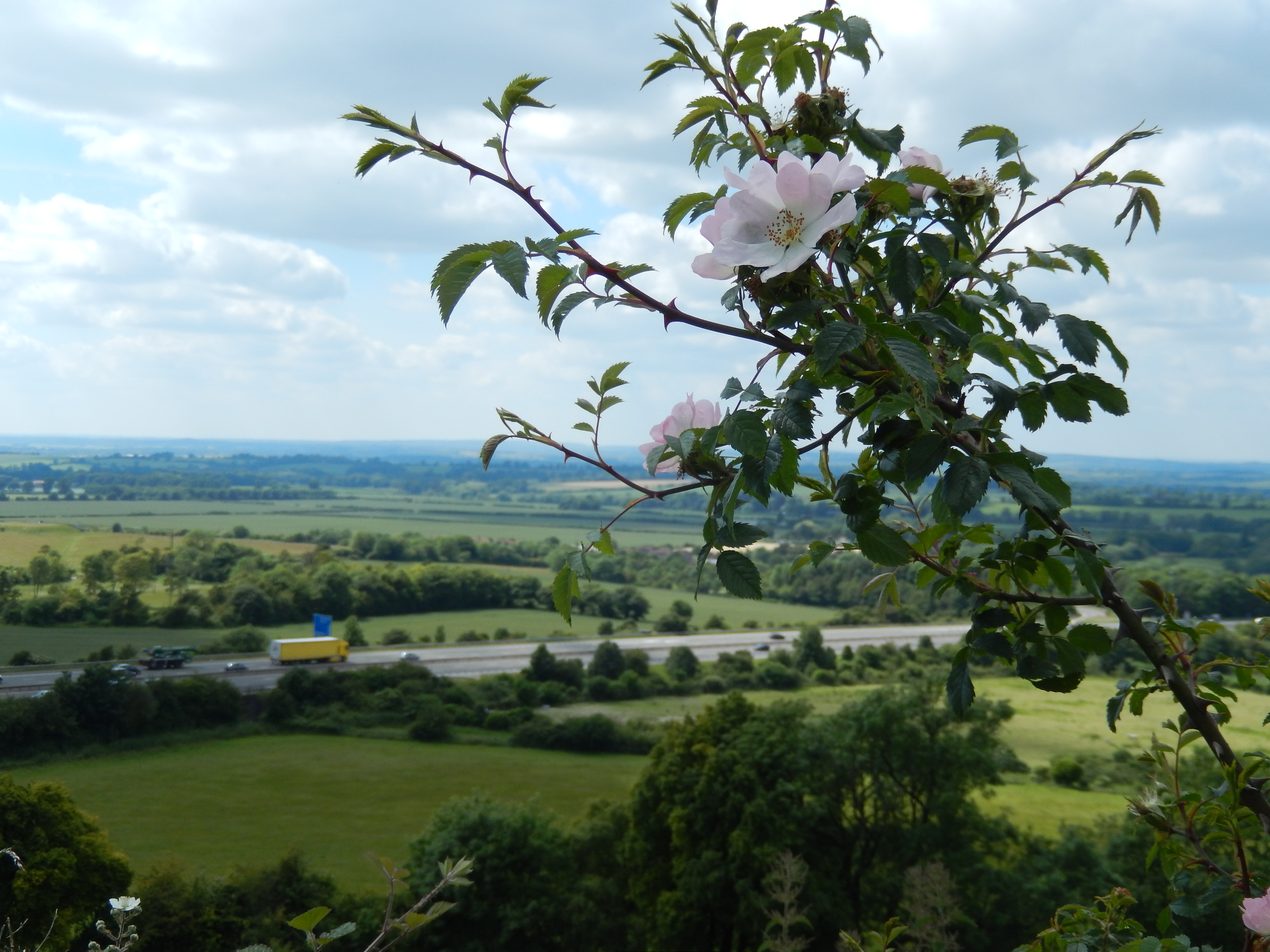
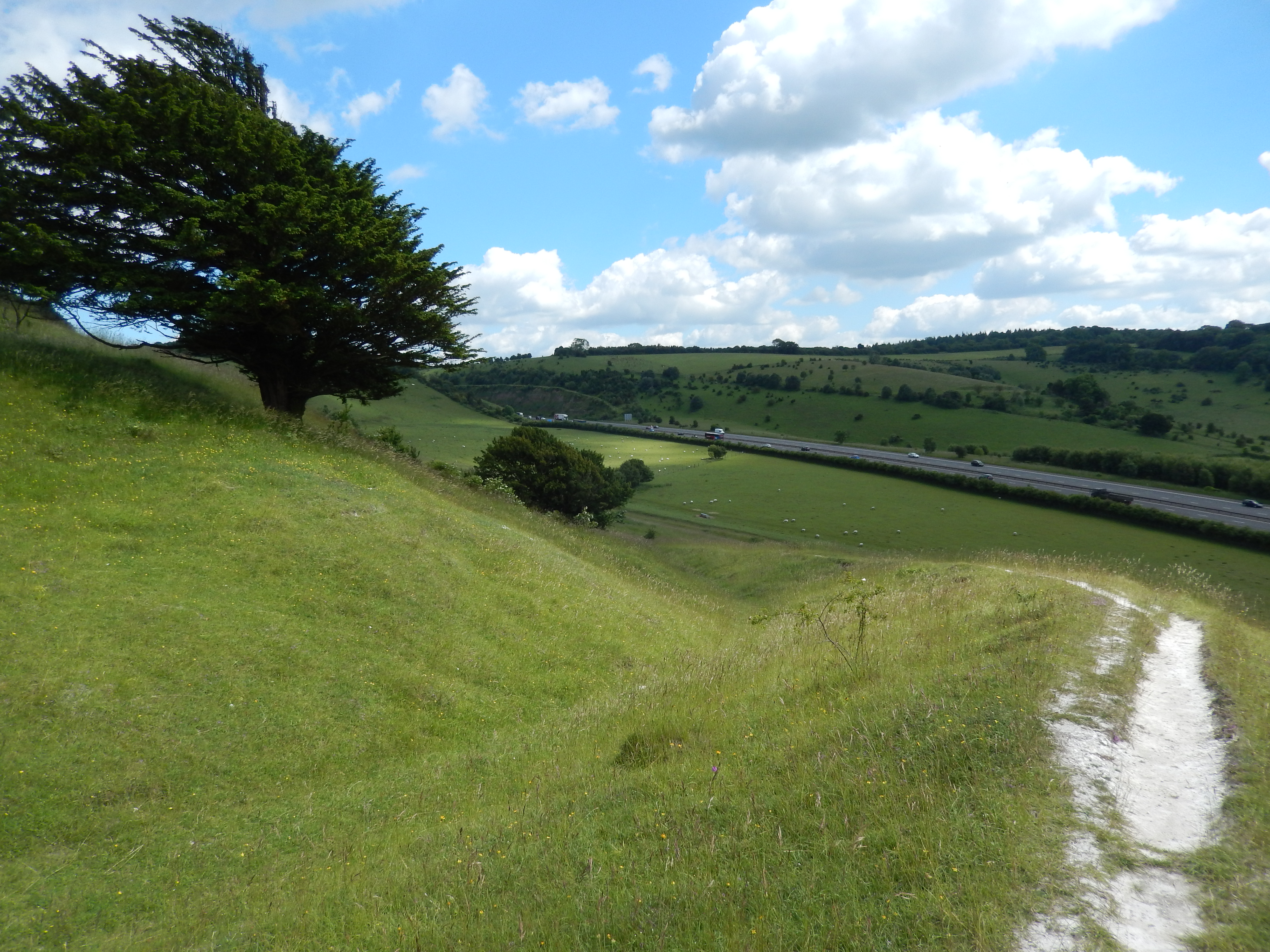
Aston Rowant: view over the Oxford Clay plain... and the M40
Aston Rowant: view over the Oxford Clay plain… and the M40

Aston Rowant National Nature Reserve is on the scarp of the Chiltern Hills, between Watlington and Chinnor. That places it at the western edge of the relatively hard rock of the Cretaceous period – Chalk – overlooking the softer rocks of the Jurassic period – the Oxford Clay. It has some fine chalk grassland, once a widespread habitat, though most has been lost to the plough, woodland, or development. And it has a rushing noisy motorway right through its middle, complete with a deep cutting hacked through the chalk escarpment. Here’s a short video clip to give you the general idea.

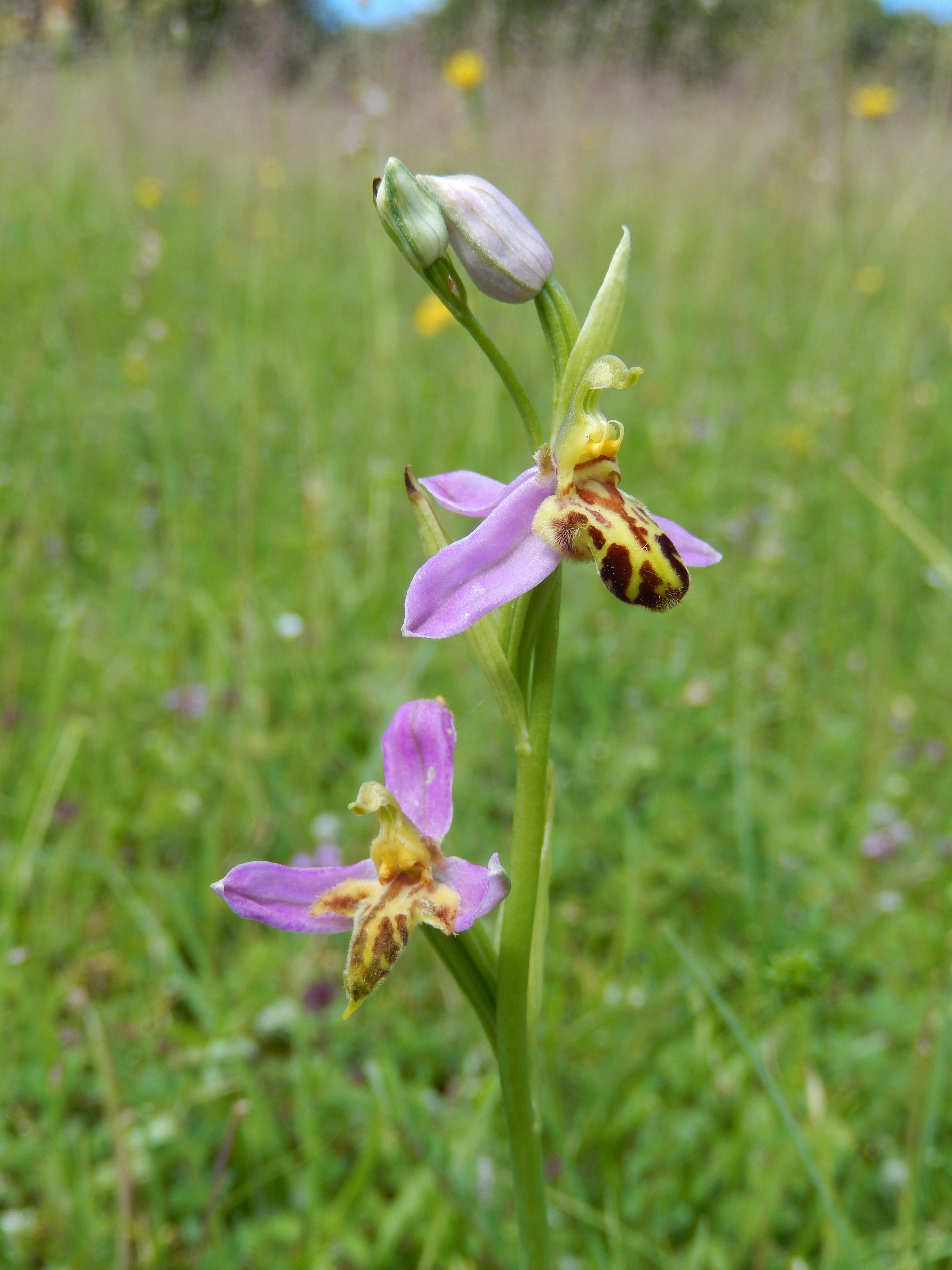
I visited in hope of seeing some orchids, and was delighted to find not only Pyramidal Orchid and Bee Orchid, but some seemingly hybrid plants with a few looking very close to ‘Wasp Orchid’, a variety of the Bee Orchid species.
Wasp Orchid, Orchis apifera var trollii

The site is carefully managed by English Nature to conserve the plants and animals of this special habitat. They employ a team of 24-hour all-terrain woolly mowing machines to keep the grass sward properly short for the more delicate flowers, such as the orchids, the Cistus rock rose, the delicately aromatic tufts of wild thyme, the eyebright, salad burnet, and many others.

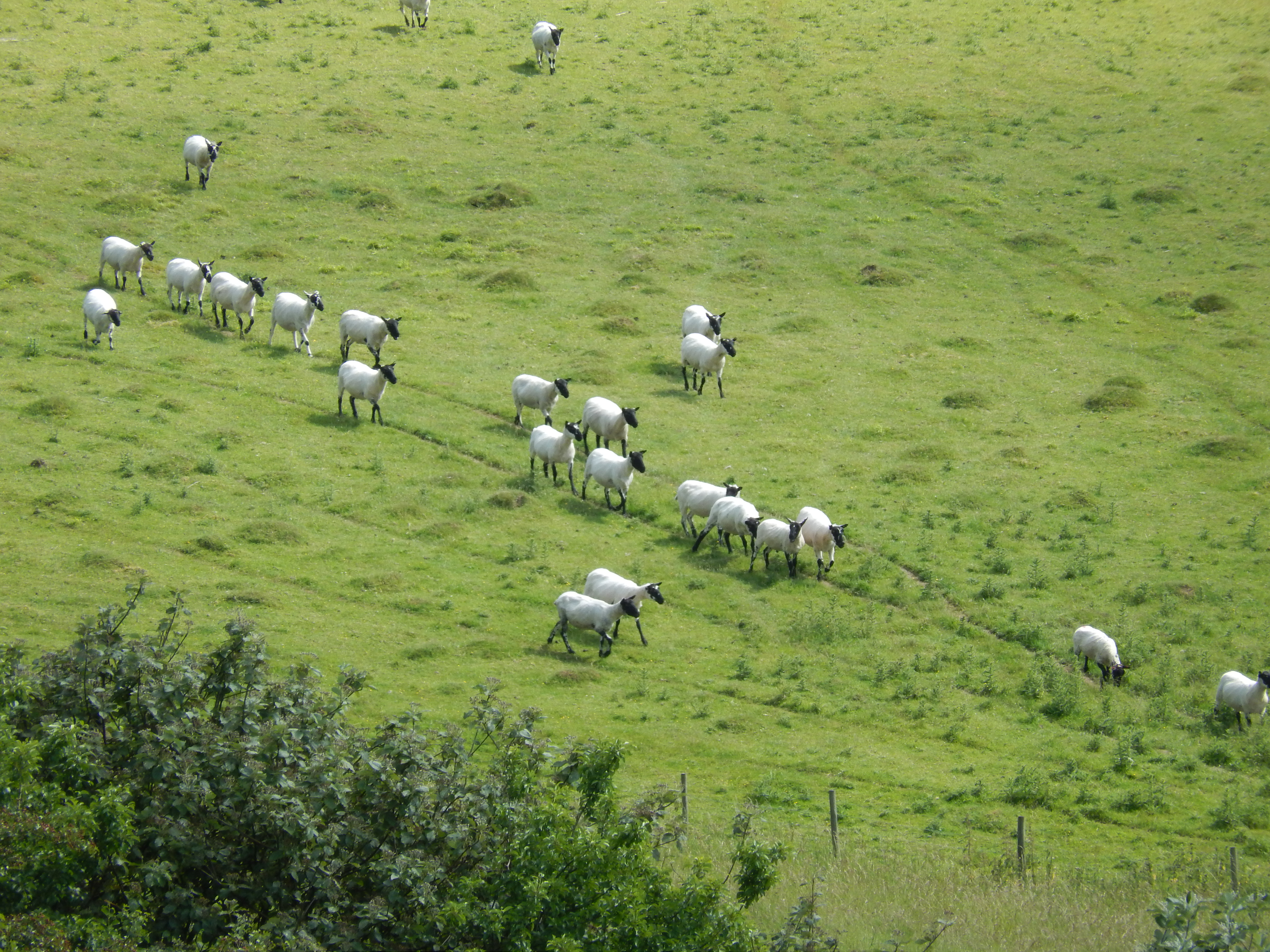
Team of all-terrain 24-hour mowing machines
Team of all-terrain 24-hour mowing machines: Beulah speckle-faced sheep

The flowers in turn support a wealth of bees, butterflies including (those that I saw) Meadow Brown, Small Heath, Marbled White, Speckled Wood, Brimstone, Adonis Blue and Small Tortoiseshell, as well as day-flying moths like the Cistus Forester and the Six-Spot Burnet.

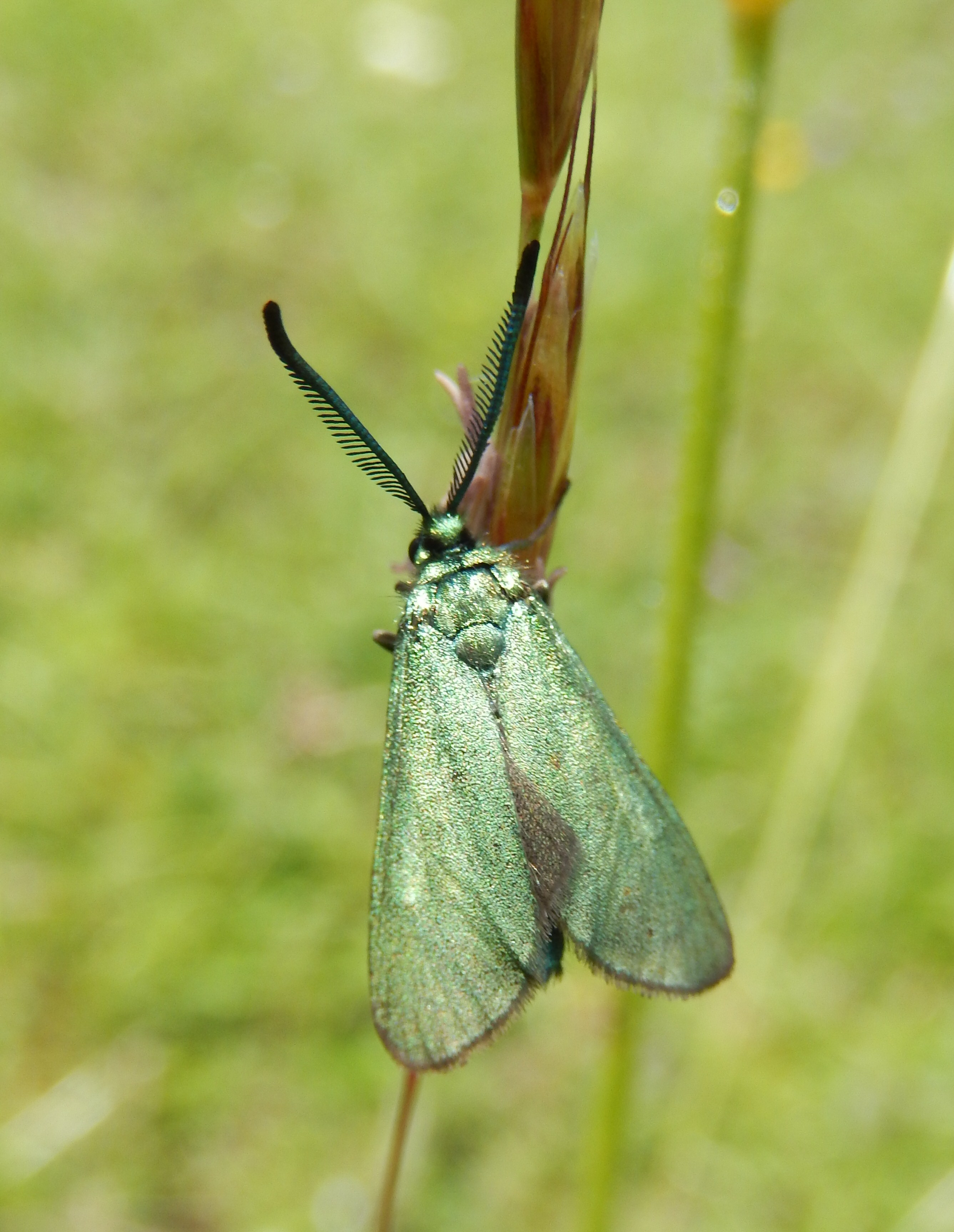
Cistus Forester moth, Adscita geryon, flies over chalk in full sunshine. Its caterpillar feeds on the rockrose
The shiny green Cistus Forester moth, Adscita geryon, flies over chalk in full sunshine. Its caterpillar feeds on the rockrose
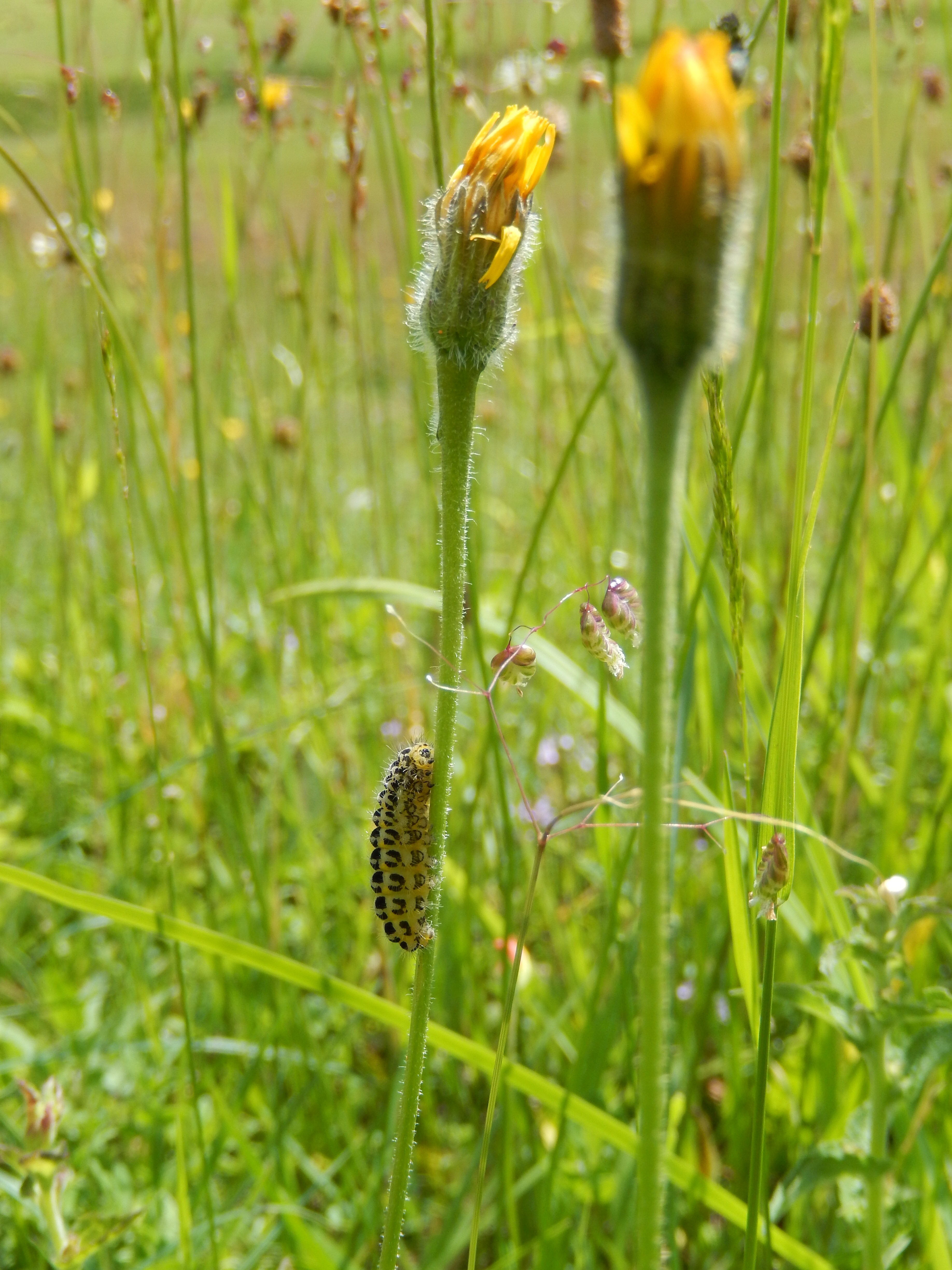
Caterpillar of Six-Spot Burnet moth
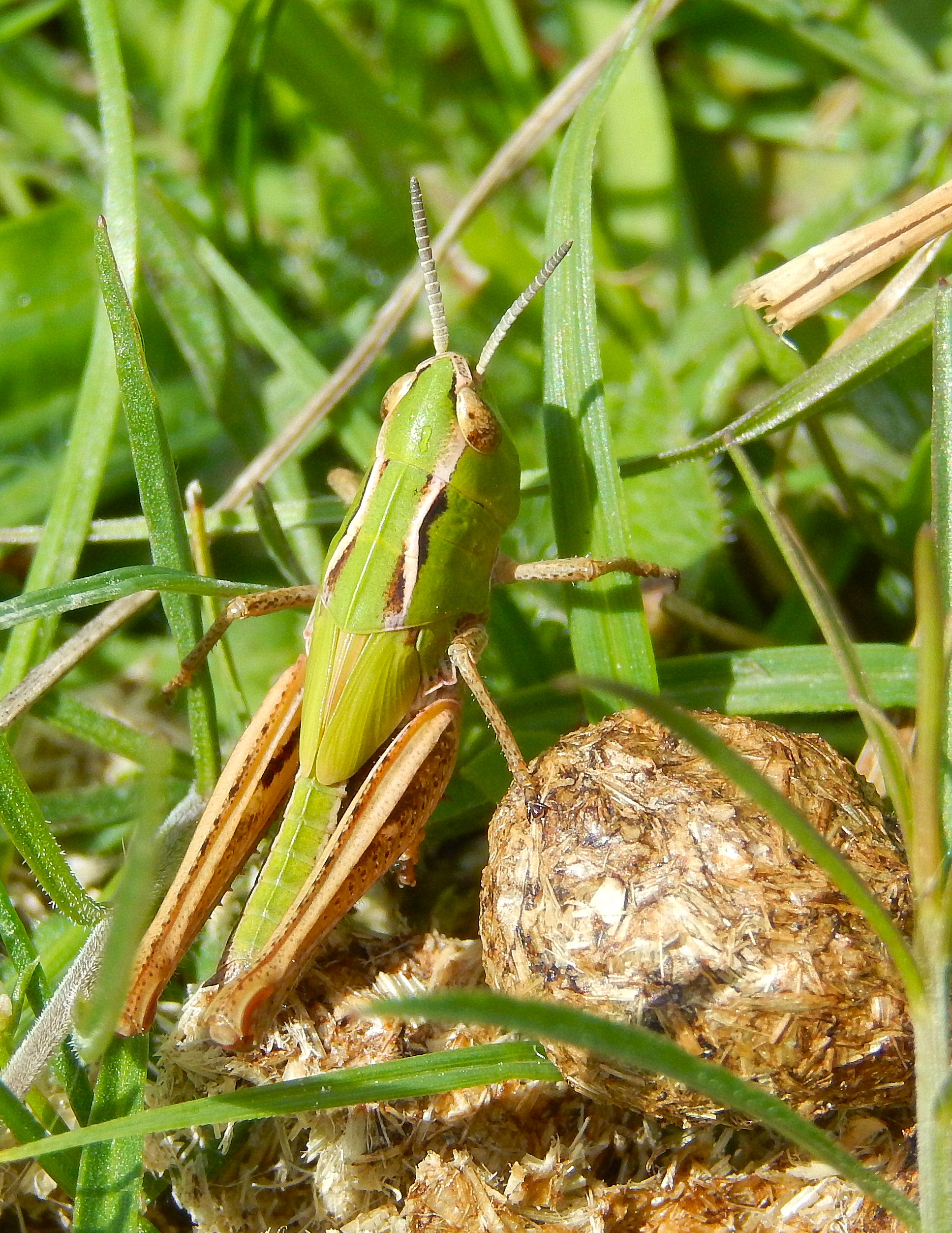
Grasshopper
Grasshopper

The delightful grassland is scored by ancient trackways, and the pre-Roman Ridgeway runs along the bottom (surprisingly) of the slope. Which brings us back to the modern trackway, its constant roar doing its best to drown out the bleating of the sheep and the screams of the red kites. The zizz of the grasshoppers is not lost entirely, but the quiet contemplation of them is certainly a little difficult.
Ancient Trackway, Modern Motorway: what are we conserving?

So, what are we conserving? Beautiful nature, ancient landscapes, specific habitats, individual species, an experience for the public, material for scientists to study? As the photograph shows, humans have cut trackways through the chalk for thousands of years: it’s just that somehow, an ancient trackway seems a little, well, quieter than the modern variety. The most obvious effect is on human visitors: the place isn’t quite the escape from modernity that it might be.

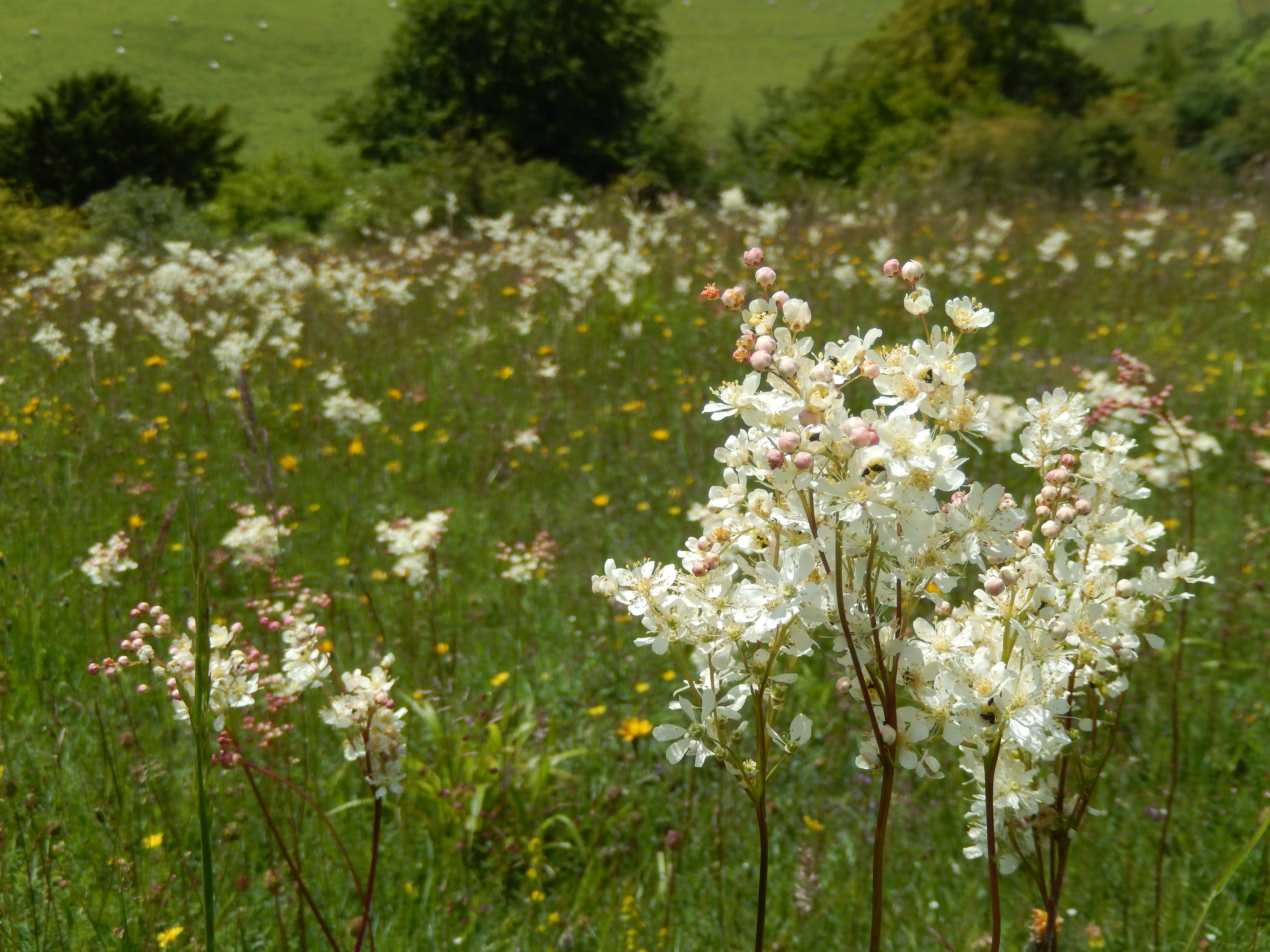
Drifts of scented Meadowsweet...
Drifts of scented Meadowsweet…

Beautiful but brutalized: perhaps meadowsweet waving in the breeze under the sunshine on the M40 is the perfect icon for the Britain of Cameron (and Blair before him). We need transport infrastructure, heaven knows, just as we need sufficient housing and everything else. And yet, a reserve where visitors can actually hear the birdsong (and record it if they want to) would be nice, even if the birds do manage to reproduce somehow. Are they affected? They easily might be.  So what is a nature reserve for? If it’s a place where a teacher can bring a class and say ‘this is what the countryside was like x years ago’, then Aston Rowant fits part of the bill. Realistically, what do we want our world to be like? Just with one or two pretty bits to conserve the orchids, the cameras judiciously avoiding getting trucks in the background, the video having to dubbed with birdsong and grasshopper stridulation in the studio? Can we afford something more complete, given all the other pressures on the budget? Not easy to say, I think.

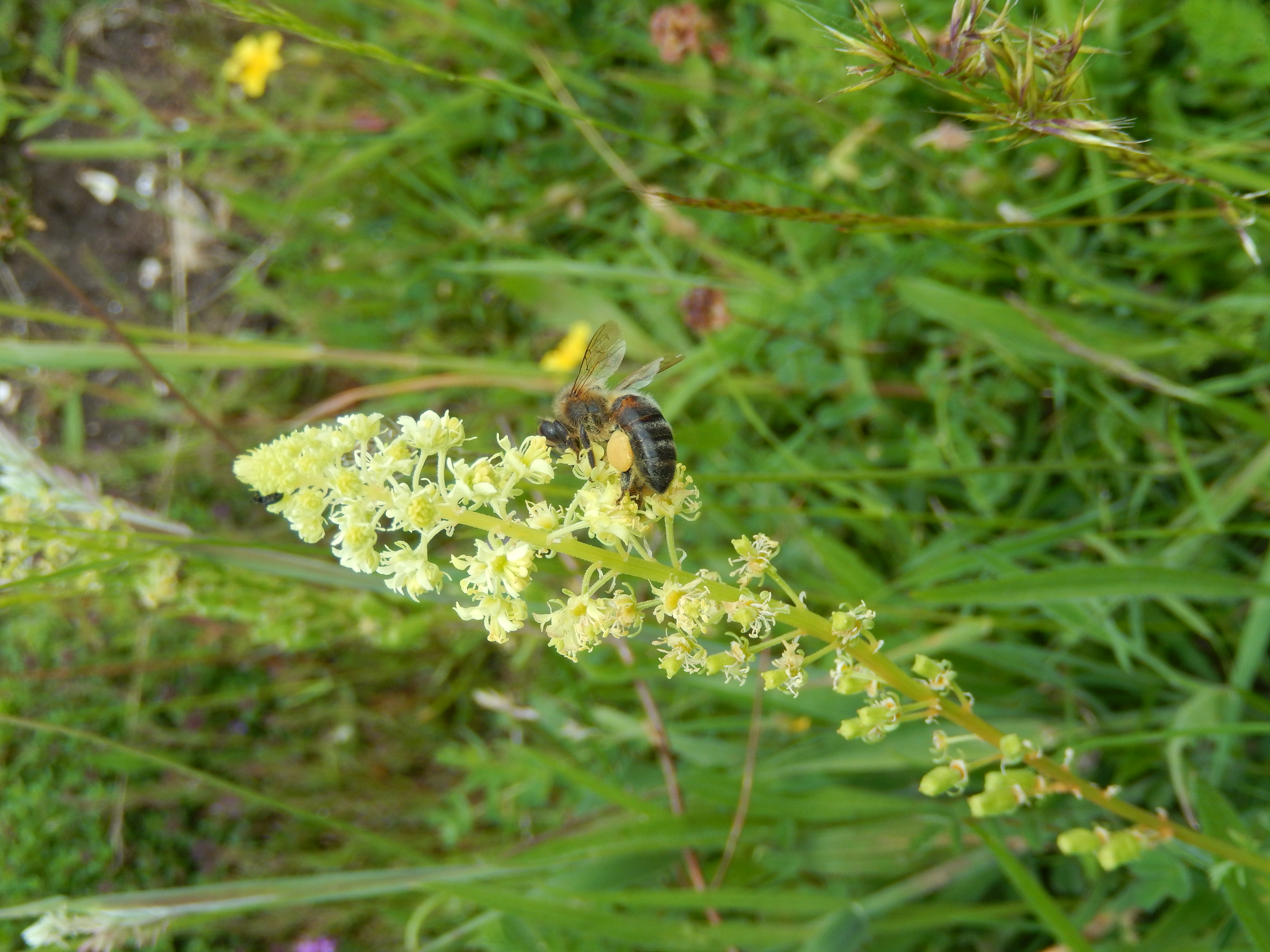
Bee with a good load of pollen on Wild Mignonette