Category Archives: Natural History

A Six Warbler Walk… First of the Year

A high pressure zone is bringing bright and mainly sunny weather to Britain, but as it’s not overhead it is also bringing quite a cold breeze. Down at Wraysbury Lakes, all the winter ducks have left, with just Tufted, Mallard and a pair of Gadwall remaining. Two Great Crested Grebes wandered around each other, not quite getting into a courtship dance.

Things were more exciting on the birdsong front. Blackcaps and Chiffchaffs sang sweetly all over. A Cetti’s sang very loud, very close by the lakeside as always, first in front … I stalked up very quietly … and then behind me. Invisible, the skulker. In the thicker scrub, several Whitethroats sang their scratchy short song, the first this year; and at least three Willow Warblers sang their descending scales, also the first of the year. And, briefly, one Garden Warbler gave me a burst of his even, musical tunefulness. There’s often a Sedge Warbler near the river but not apparently today. More song came from the Robins, a Song Thrush, and a Chaffinch or two.

Overhead, a Grey Heron circled upwards towards a Boeing 747-400 and did its best to resemble a soaring stork or crane, quite impressive really with broad, downcurved wings rather like one of those air-filled kites made only of light cloth.
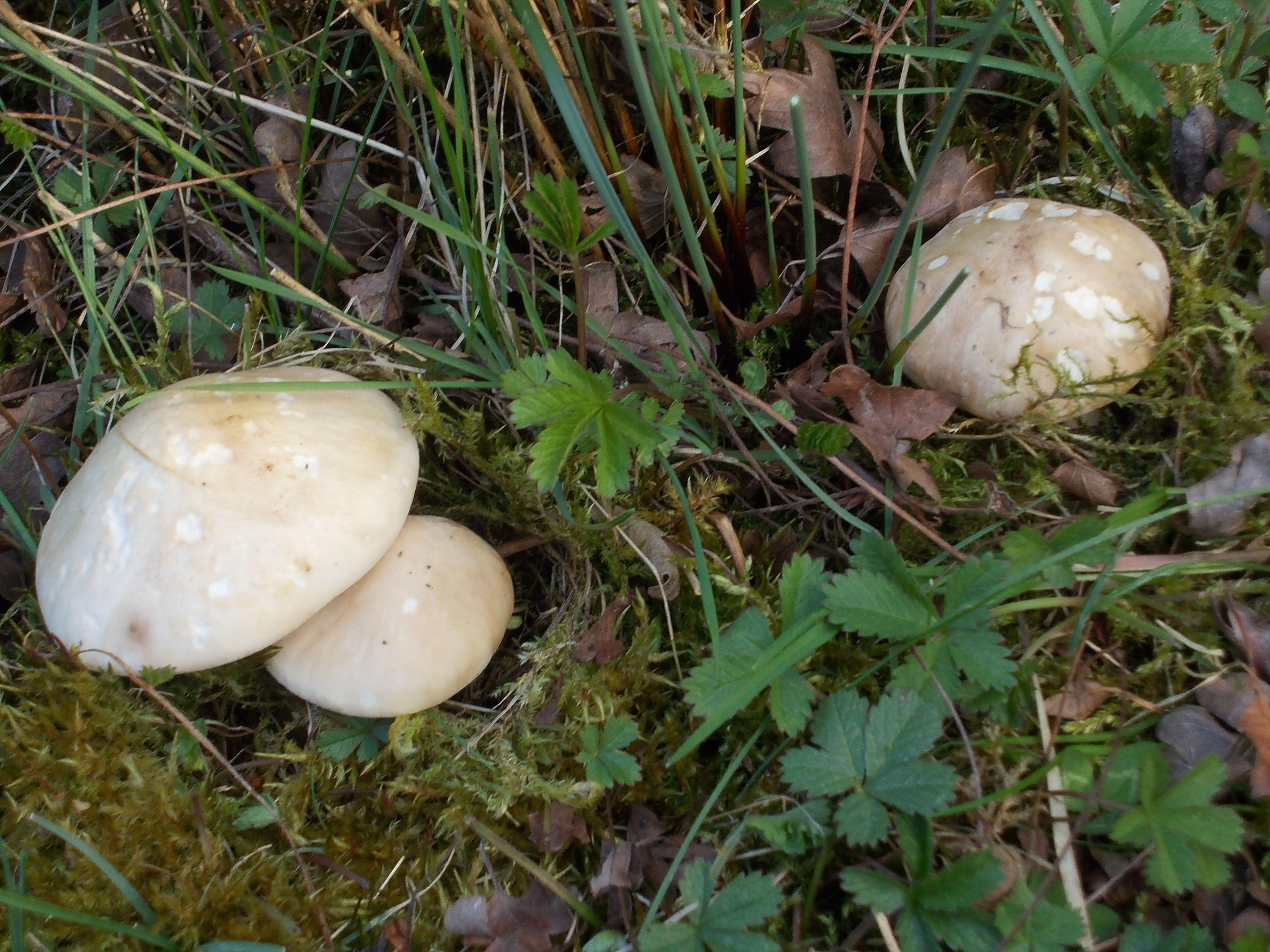
St George's Mushroom
St George’s Mushroom

A small patch of St George’s Mushrooms nestled among the Potentilla leaves by the path; it’s about the only edible mushroom at this time of year, but I don’t pick them, both for conservation reasons and because I’m not keen on their rather mealy taste.

The first Speckled Wood butterflies of the year are in evidence; they are fiercely territorial already, chasing off numerous Peacock butterflies. A few Green-Veined Whites settled, frail and shy, on the thicker herbs.
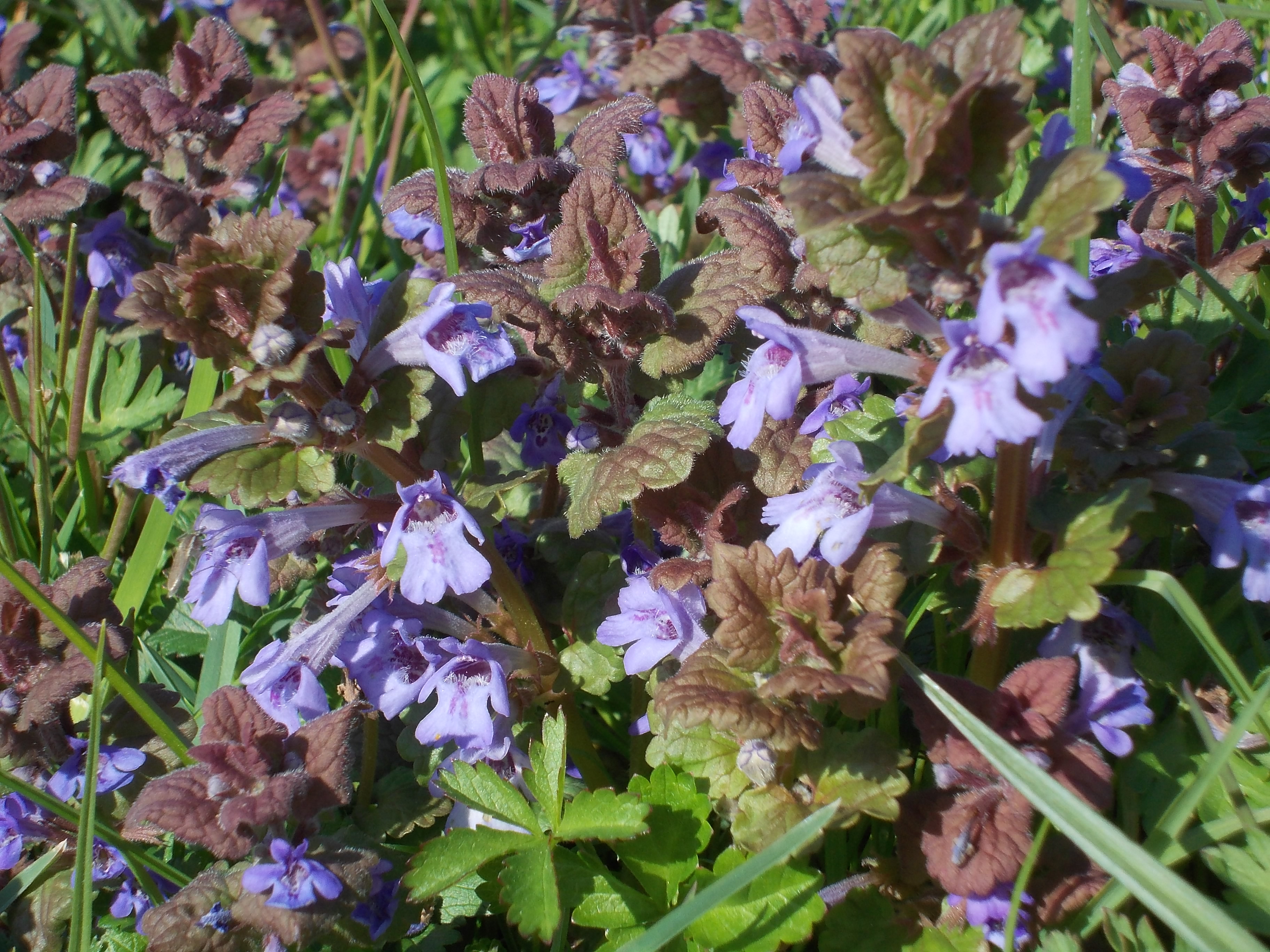
Ground Ivy
Ground Ivy

Great patches, almost carpets of Ground Ivy, which sounds a lowly herb, but looks glorious among the low-cropped grass, shining in the sunshine. It’s in the Labiate or Mint family, and has pretty rather short toothed leaves, purple-tinged, with attractive blue lipped flowers that are really quite orchid-like if you ignore their long tubes.
Wonders of Wakehurst Place … and Loder Valley

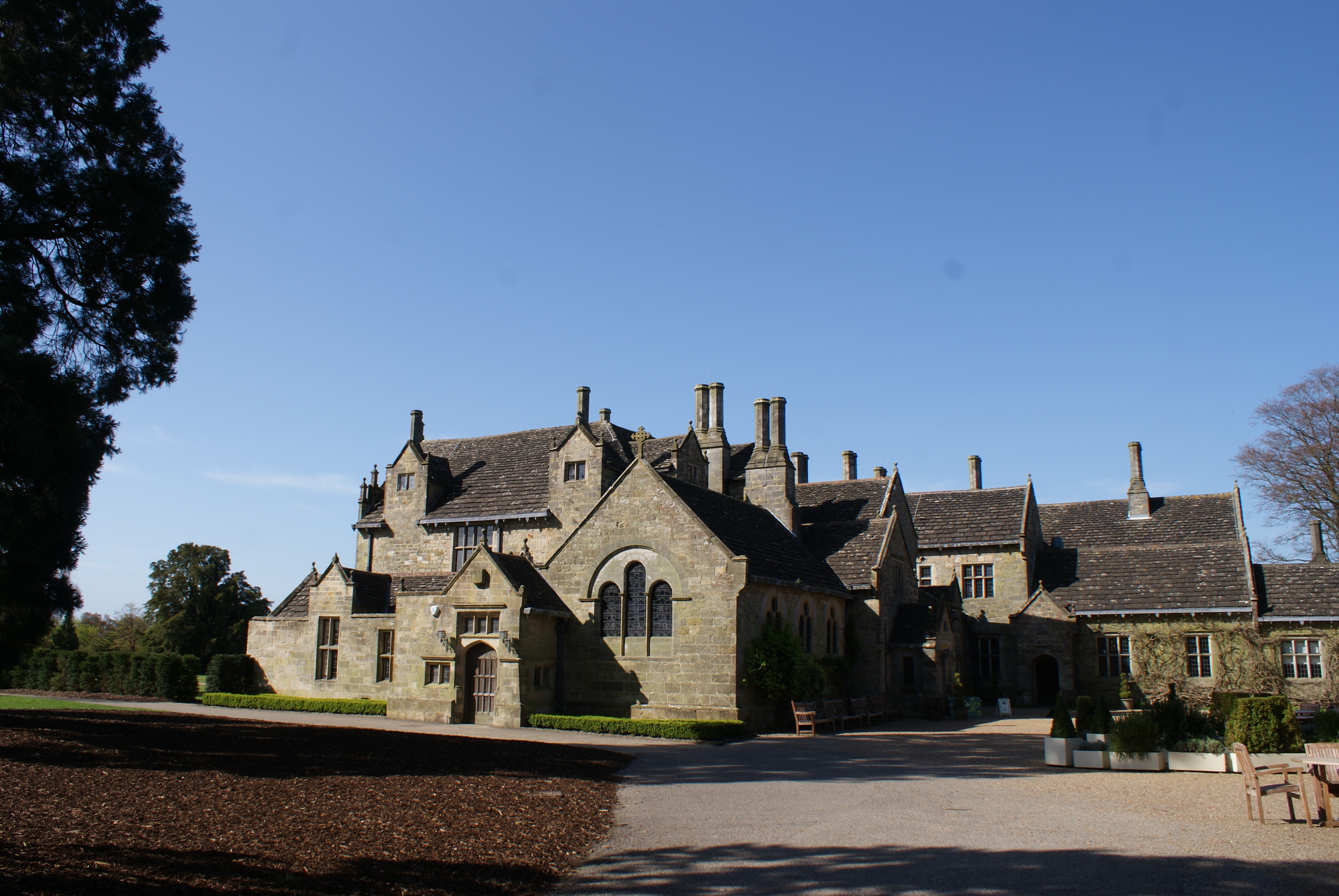
Wakehurst Place (mansion)

Wakehurst Place is Kew Gardens in the countryside of Sussex, glowing on a cool but very sunny April day with spring all around: cowslips, primroses (pin and thrum, some antique school botany coming back to mind), bluebells, dog’s mercury, wood anemone; and a fine chorus of birds, with chiffchaff, blackcap, song thrush, blackbird and an assortment of noisy pheasants and wood pigeons for good measure.

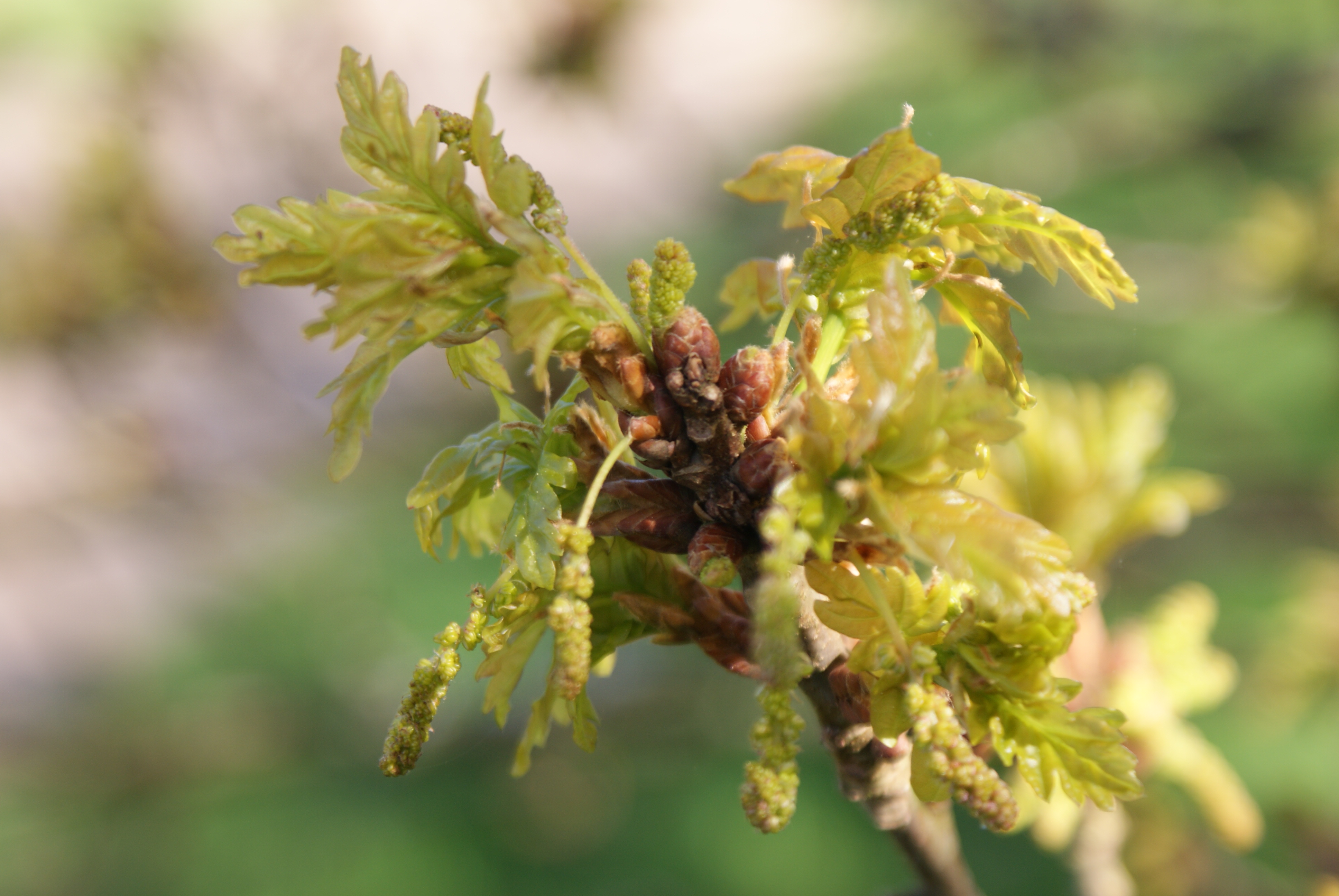
New Oak leaves and flowers

Everything was coming into new leaf or into bloom: some plants like this Oak tree were doing both at once.

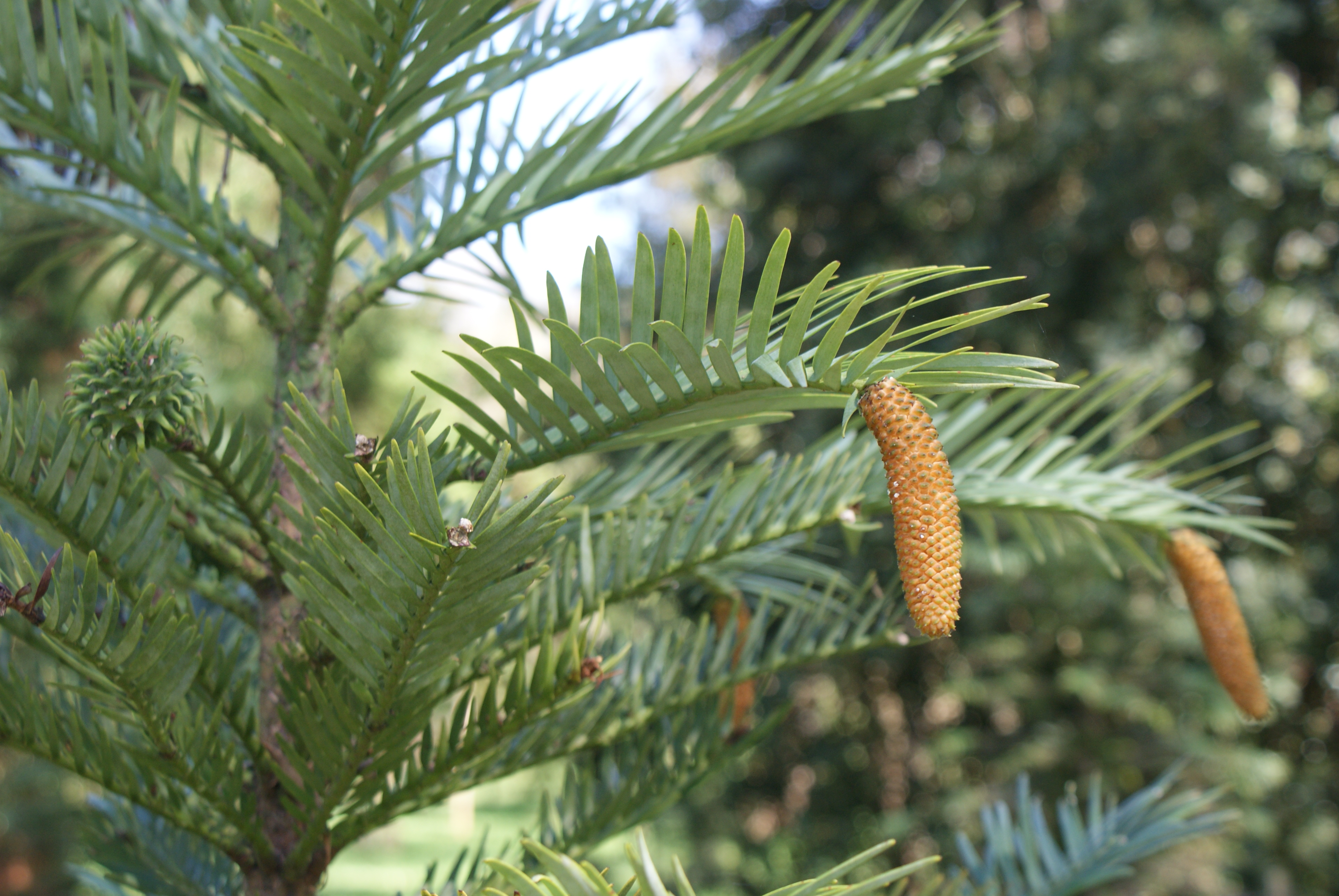
Wollemia nobilis, Australia's Wollemi Pine, in full fruit
Wollemia nobilis, Australia’s Wollemi Pine, in full fruit

Being Kew, there are some very special plants about, not least the one-step-from-extinct Wollemi Pine from Australia, here growing happily with odd-shaped cones of both sexes in the English countryside.

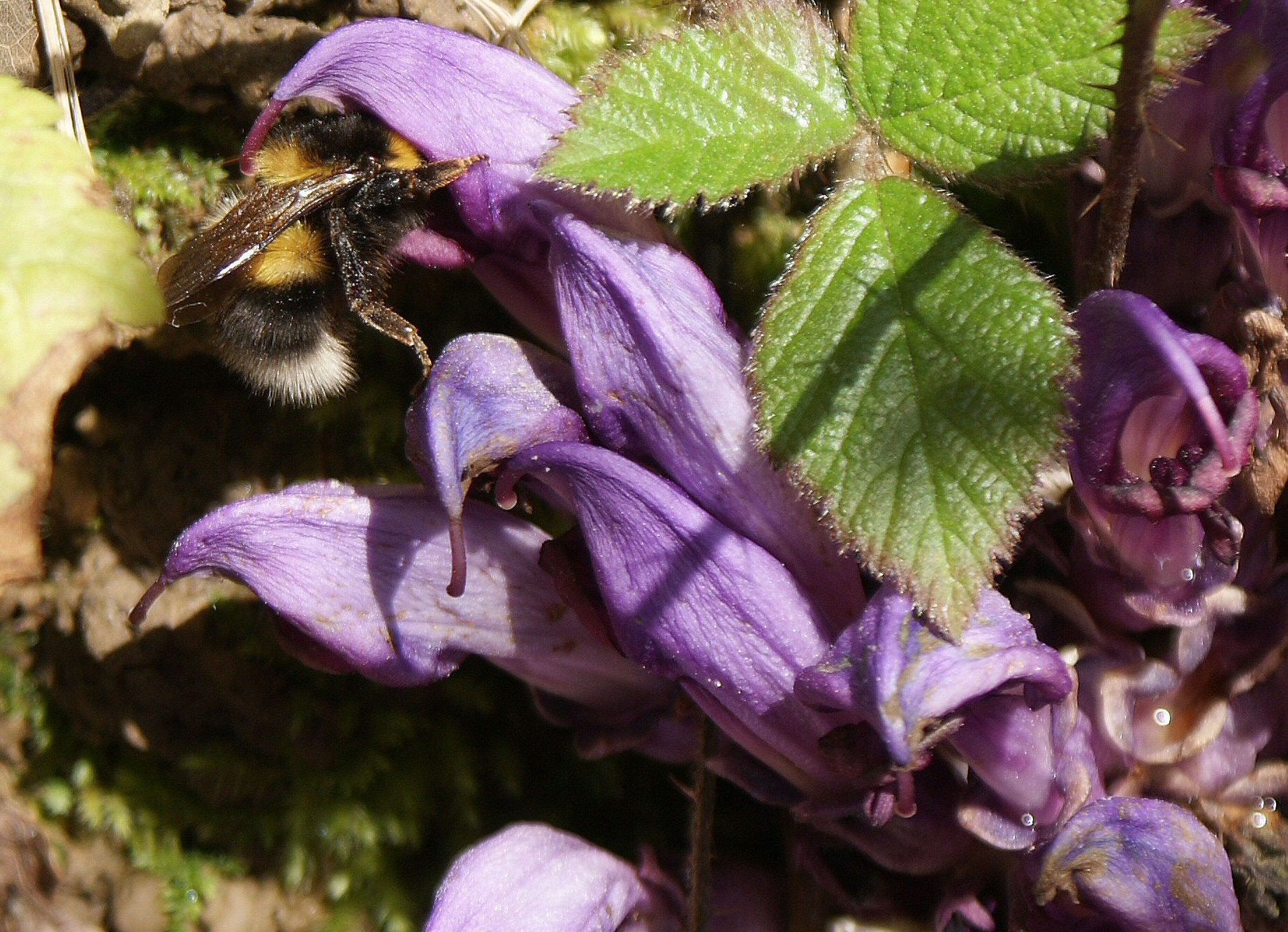
White-tailed Bumblebee pollinating Purple Toothwort
Garden Bumblebee pollinating Purple Toothwort

In the attached Loder Valley nature reserve, a special treat: the Purple Toothwort, a parasitic plant in the Broomrape family, scarce in Britain and a new plant for me. It wasn’t present as a lone stalk: there were good big clusters of it on a steep clayey bank. I’m not sure what it was parasitising, though at this time of year it must surely be a woody plant, and brambles were close by.

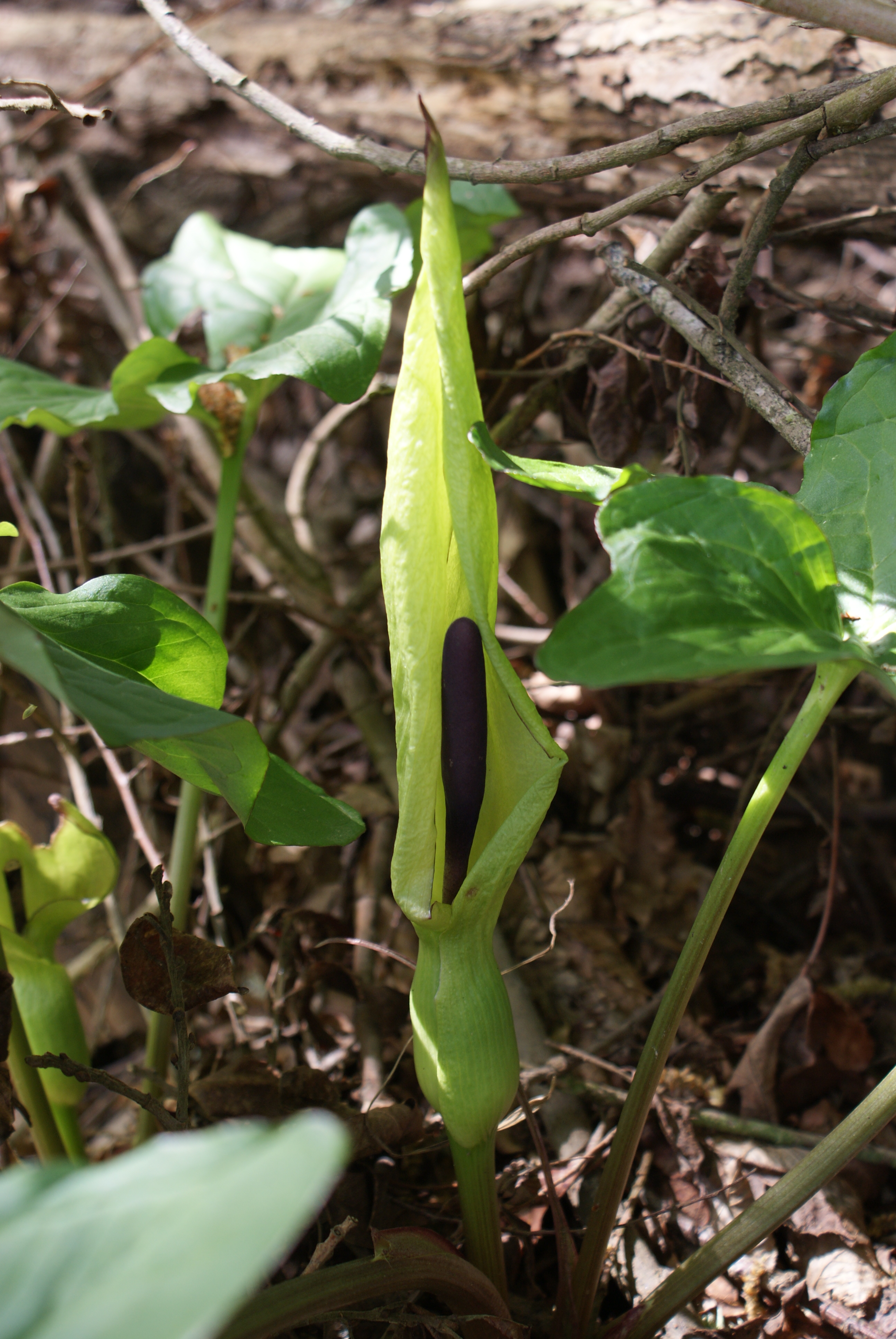
Lords and Ladies, new spathe and spadix

By a gatepost, a large and fresh wild arum seemed to deserve its country name Lords and Ladies, standing gracefully fresh.

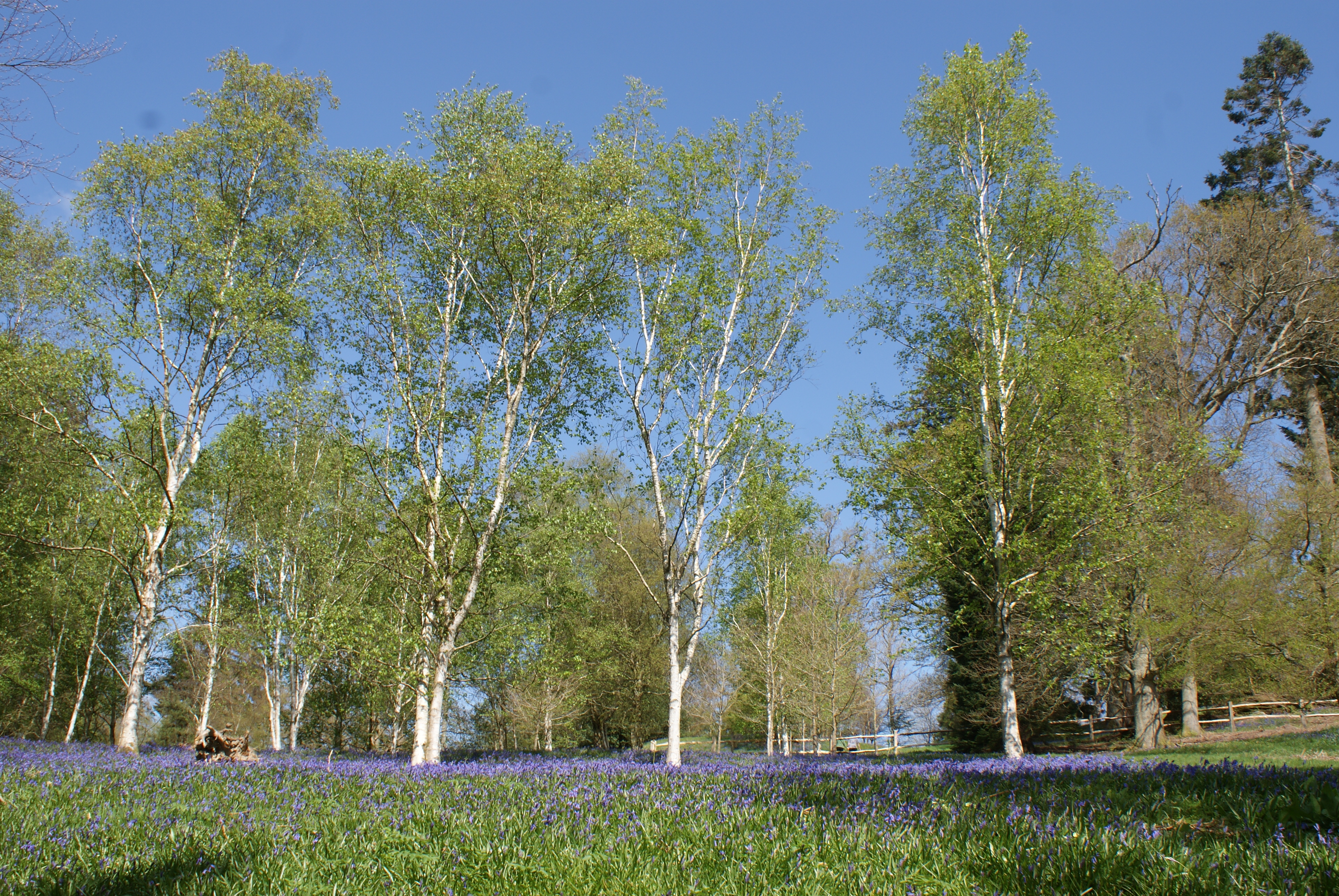
Blue Sky, White Birches, Bluebells

Back in the park, the silver birches perfectly set off the sea of bluebells.

 long trailing beards of Usnea lichen on oak trunk
long trailing beards of Usnea lichen on oak trunk

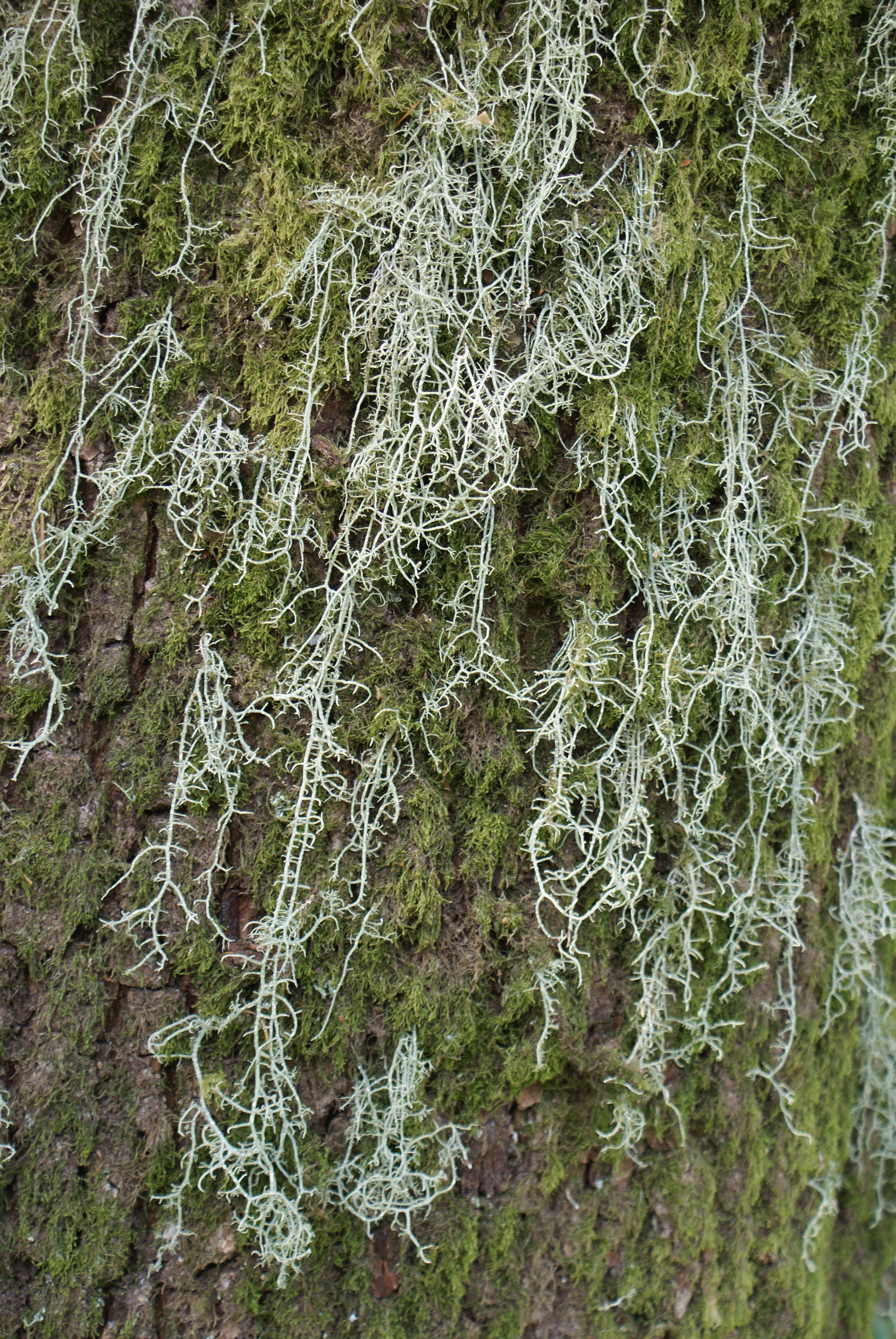
Great trailing beards of lichen draggled down an oak trunk: it’s a rare sight in Europe, and all the more surprising in Sussex, not far from the pollution of Gatwick airport. Perhaps the prevailing winds keep the air clean, but in that case why are lichens so few in Hampshire and the southeast generally?

Coco de Mer or Double Coconut

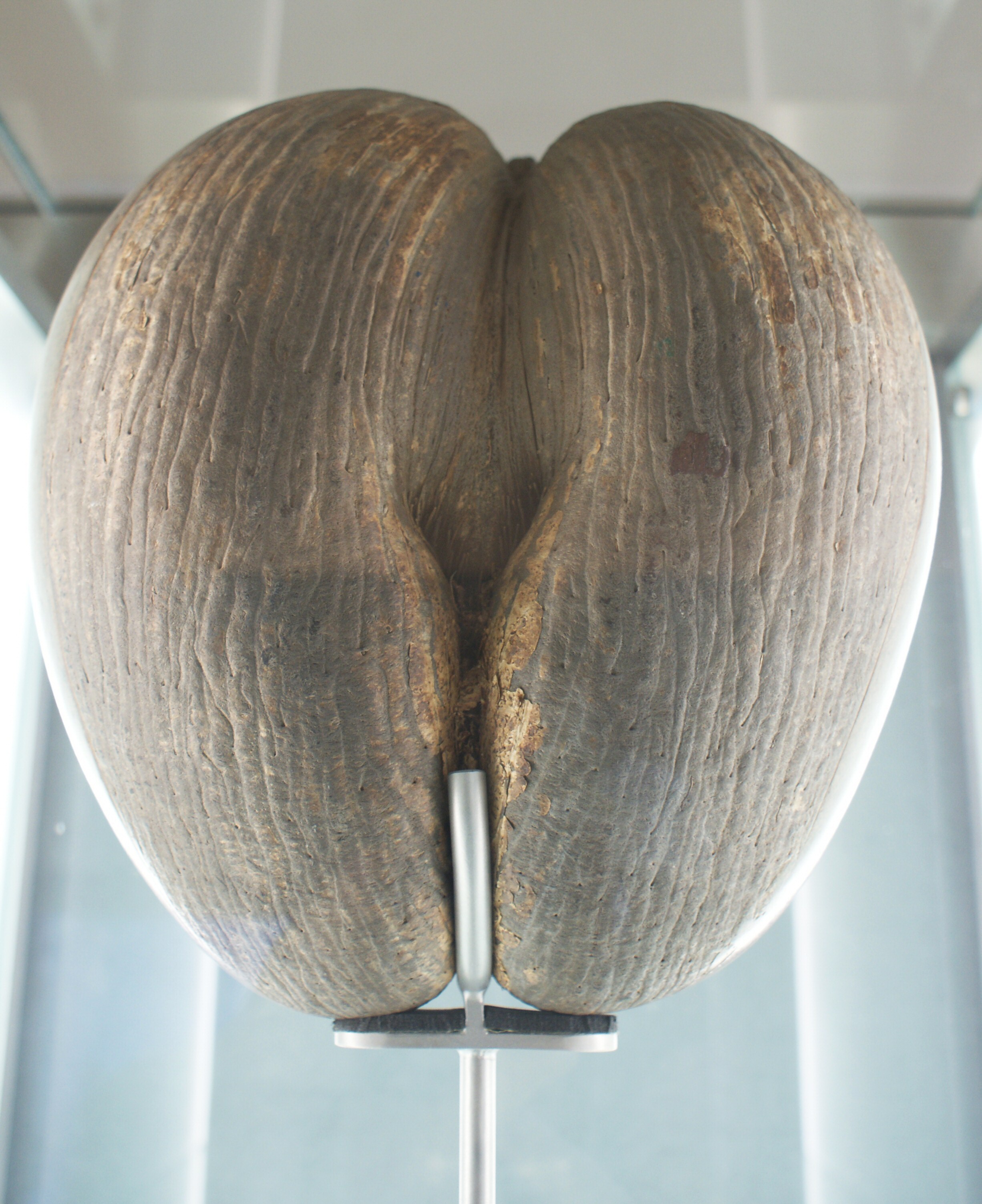
The park contains the extraordinary Millennium Seed Bank, complete with windows onto the world of toiling botanists, drying seeds and elegant specialised equipment – a gadget for pouring agar into stacks of Petri dishes, among others, and a dramatic selection of the world’s most bizarre seeds, like the very large and remarkably bottom-like Coco de Mer. It’s not one of the seeds in the seed bank just yet, as it is ‘recalcitrant’, refusing to be dried out so it can survive for centuries – it just dies instead.  Love stronger than death, or something.

Buff-Tailed Bumble-Bee Ambles About Aimlessly

Queen Buff-Tailed Bumblebee

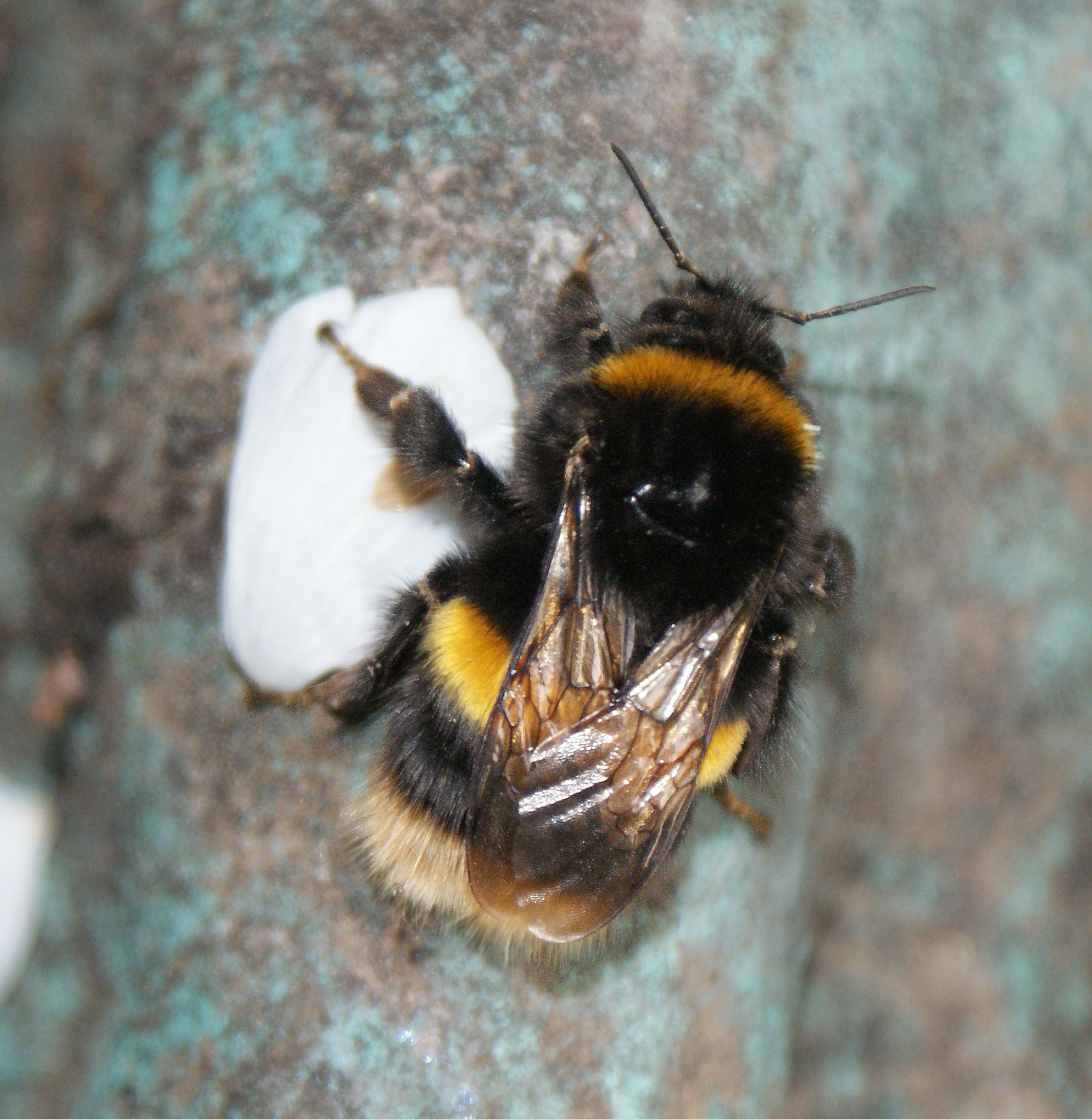
Yes, the Queen Bee is back, or rather, she’s probably been bumbling about the garden all along. She is as you can see certainly buff-tailed, unlike any workers of her species who, confusingly, have white tails. She constantly clambers about the grass, climbs up obstacles and then climbs down out of them, rather slowly. If something comes close she does not buzz, but raises a leg in warning, and carries on doing … whatever it is she is doing. I tried showing her a convenient hole for her nest under a stone slab: she was not at all interested. Wondering if she was low on energy, I offered a drop of watered-down honey: nothing doing there either. Since she must have been around since last autumn, she may well have enough energy to get through several days of searching, though not taking food when available does seem surprising. I left her still stumbling slowly around, within a couple of yards of where she was yesterday.

The compost heap, the pile of logs I left for stag beetles, and the garden shed with the undisturbed space underneath it are all nearby, so there would seem to be excellent freehold properties immediately available, no chain, immediate inspection recommended. But then, each bumblebee species has its own Lilliputian requirements, which are hard to guess from my Brobdingnagian proportions.

Or again, maybe she’s just low on energy.

Bicycle Birding without Binoculars

Birding on a Bike without Binos, how is that possible? My mind fogged by editing, I took an hour off and cycled down to the river to get some air, space, sunshine and nature. It was a lovely bright spring day. A holly blue butterfly flew about the garden, and a buff-tailed queen bumblebee crawled about the grass looking for a hole to nest in – she was certainly a queen as she was very large, and she’s the only form of her species that is actually buff tailed, the rest are white tailed.

Coots, 3 cootlings and an egg in Chiswick Park

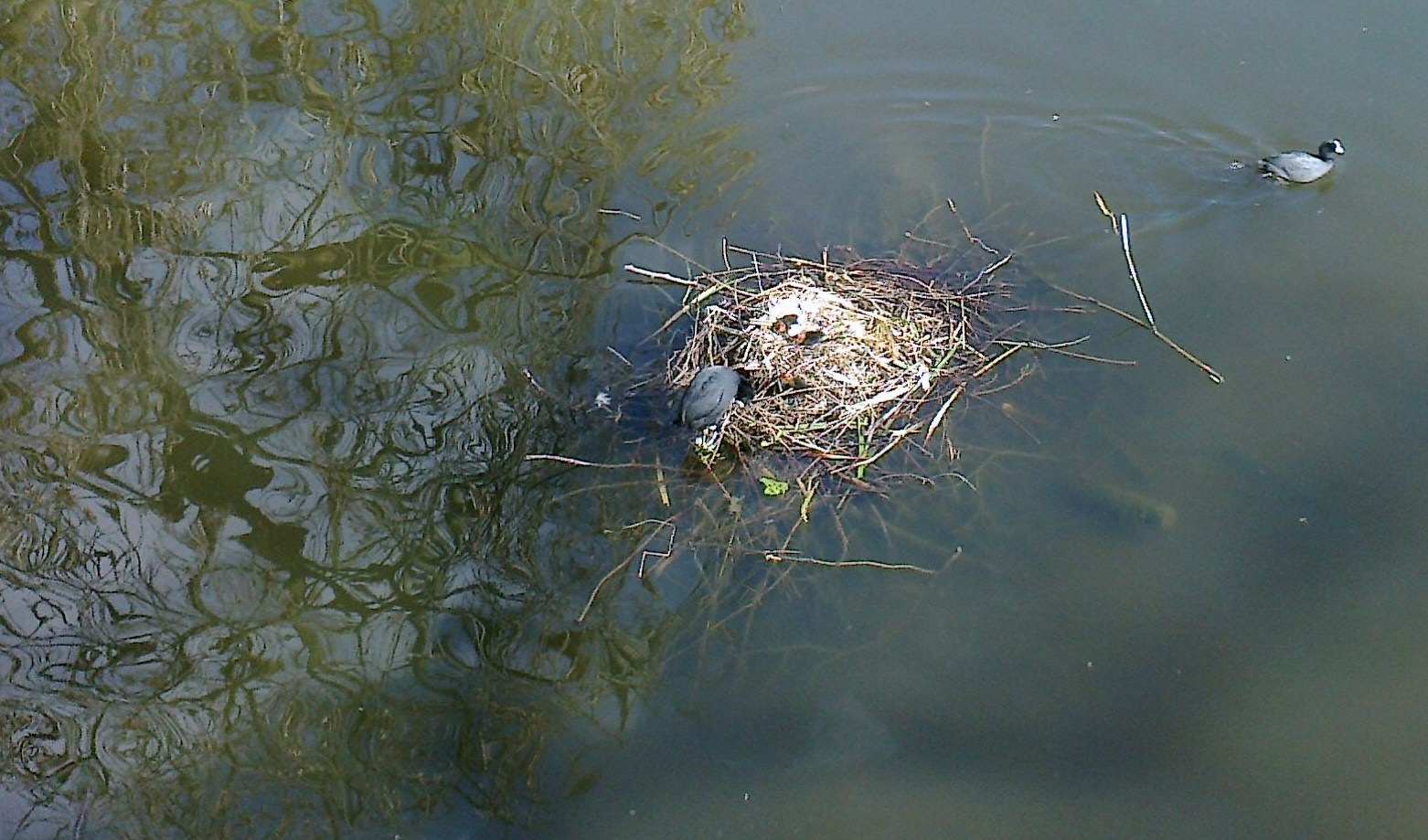
In Chiswick Park, a pair of mallard had at least six ducklings: the adults sat on the bank, with probably one more duckling (no binoculars today) while the six adventurous ones paddled nimbly about in circles not too far away. In the midst of William Kent’s carefully landscaped ‘river’ (a long narrow pond) was a coot’s floating nest; the sitting parent got up while I was watching, revealing three cootlings and one unhatched egg in the nest. A blackcap sang sweetly from the trees.

Down by the river, a solitary great crested grebe swam against the tide, glinting white in the sun. Goldcrests squeaked from the cypresses by the boathouse; allotment owners worked their patches of ground. A small tortoiseshell butterfly flew swiftly past the barbecues which were grilling kebabs. It did feel like spring.

Of Wild Pigs and Stained Glass, yes it’s the Forest of Dean

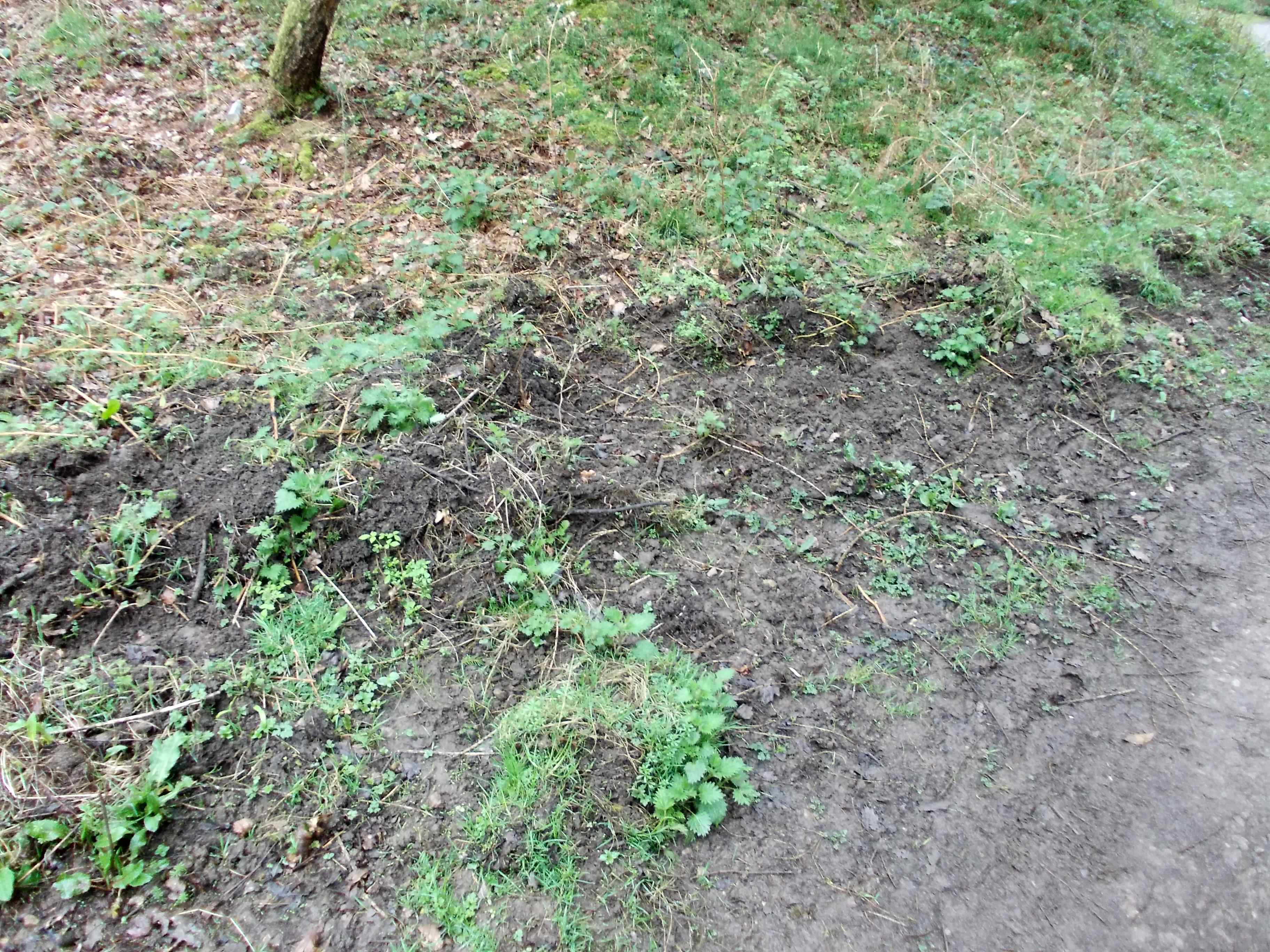
Wild Boar diggings in Forest of Dean

It’s one thing to be used to seeing signs of wild boar in France, quite another to realize these fine animals have returned without any bureaucracy about release licences and experimental sites and suchlike. Whatever happened, whether they just escaped or were released by animal rights protesters or some other story, they are now out in the wild, and exuberantly breeding.

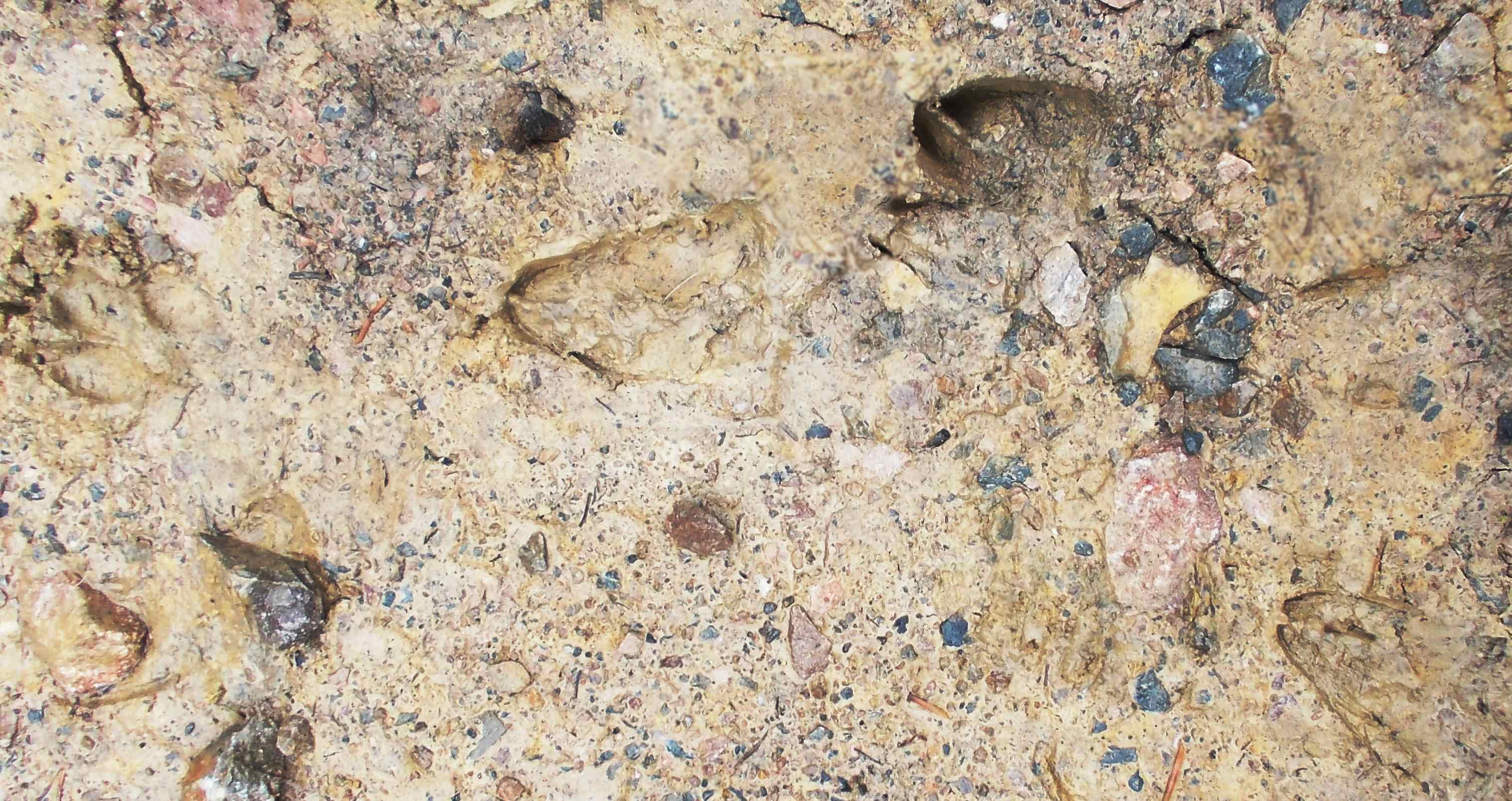
Wild Boar Prints of Different Sizes

The many diggings beside the trails in the Forest of Dean show the presence of numerous family groups, while the splayed prints of different sizes leave no doubt about the families of pigs with all ages represented.

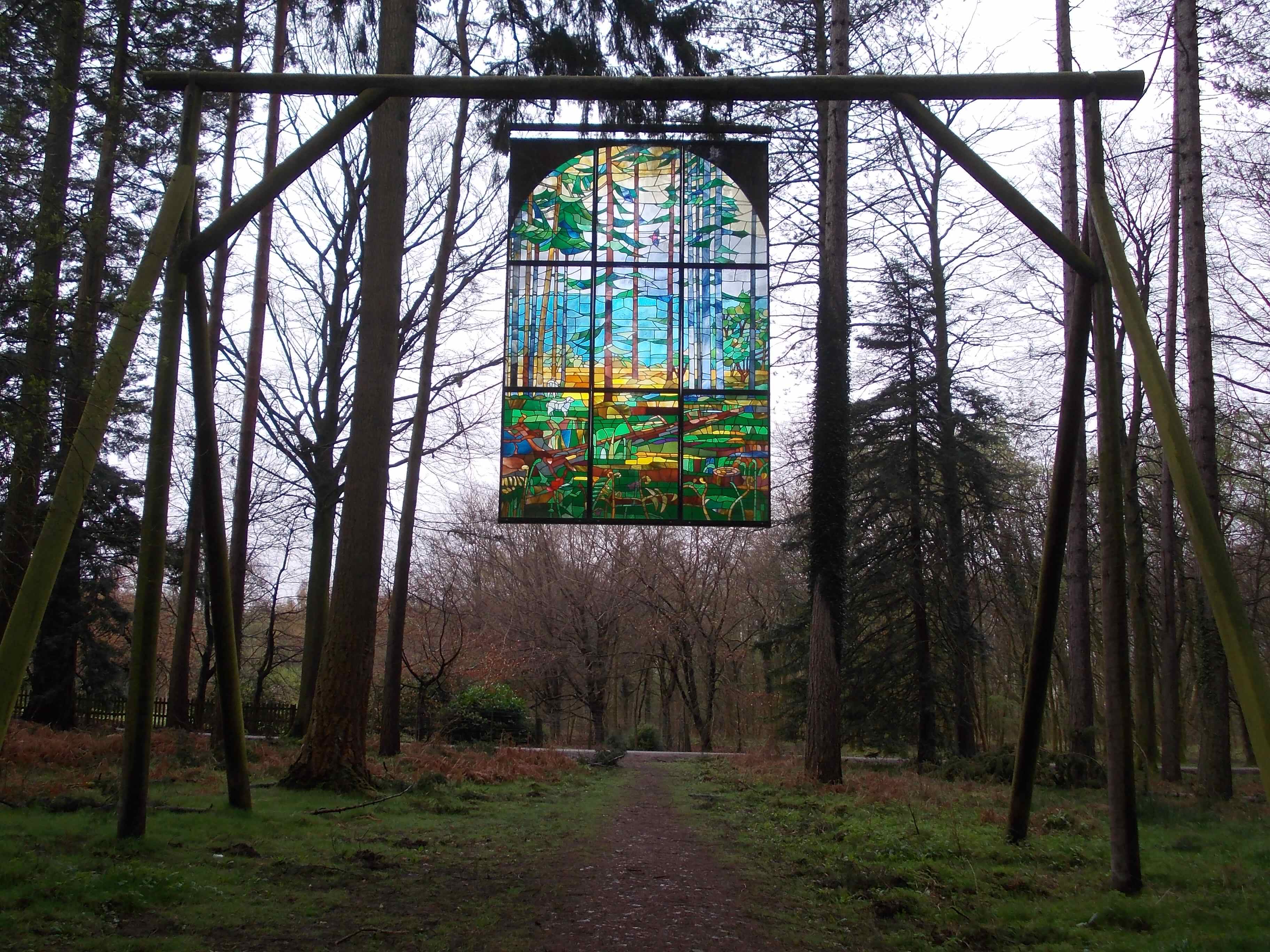
Stained Glass Window in the Forest: Sculpture Trail

Casting pearls before swine … or at least, dangling stained glass over them. The forest is enlivened with a wide range of sculptures in the now very well established trail. The famous giant chair is becoming a bit wonky, and has been repaired with cement. The magnificent stained glass window adds glowing colour whatever the weather.

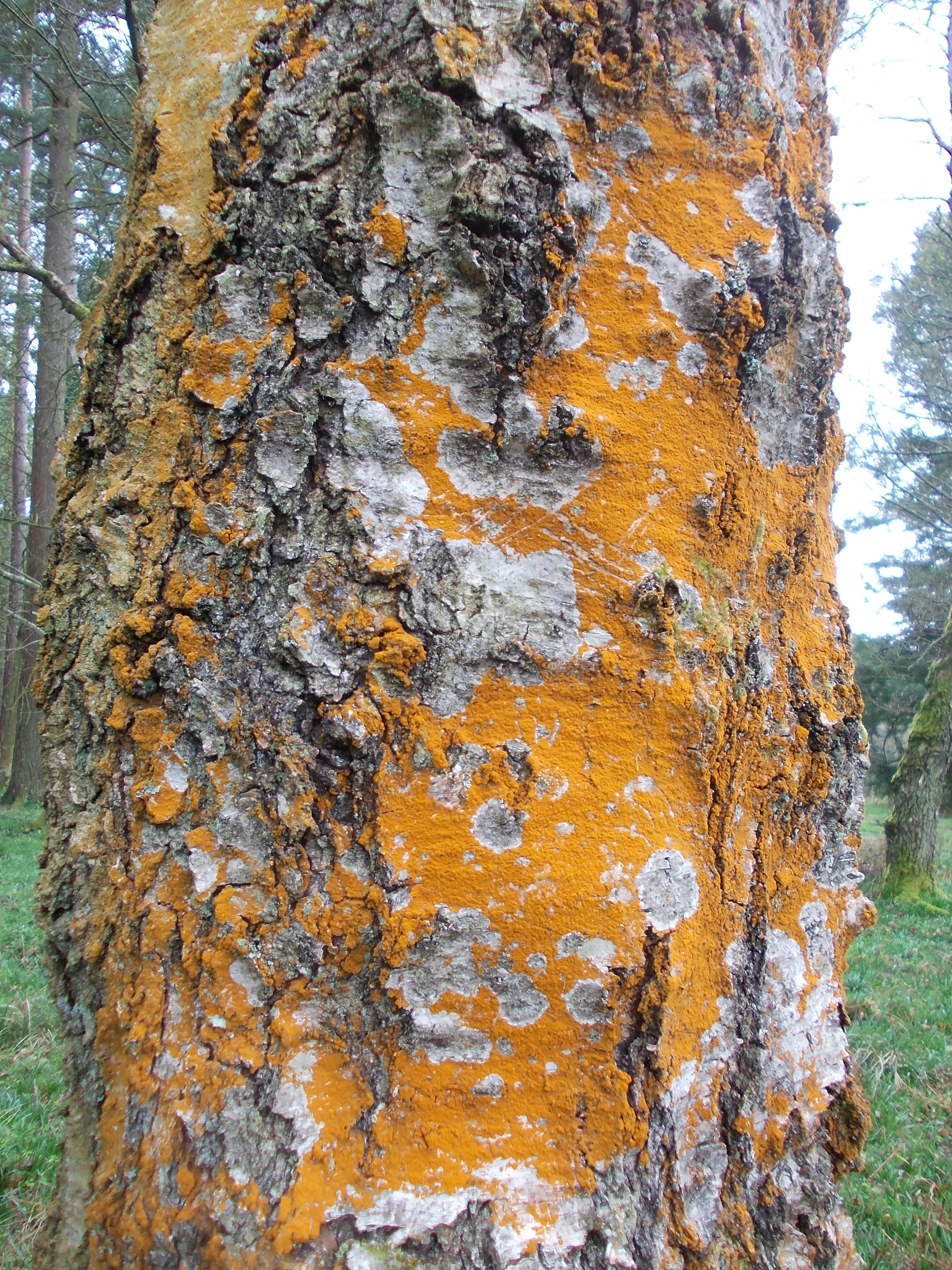
Orange and White Lichens on Birch in Forest of Dean

A lone birch in a clearing shines out with brilliant orange and white patches. The orange is not the common orange lichen (Xanthoria) which shows a leafy thallus: the orange patches here seem to consist almost wholly of fruiting bodies which are not circular apothecia with clear rims, but fuzzy tufts, presumably of spores.  And the white circular patches are also lichens, not just areas of bare bark: their fruiting bodies show up dark within the white circles.

Primroses by the River Usk

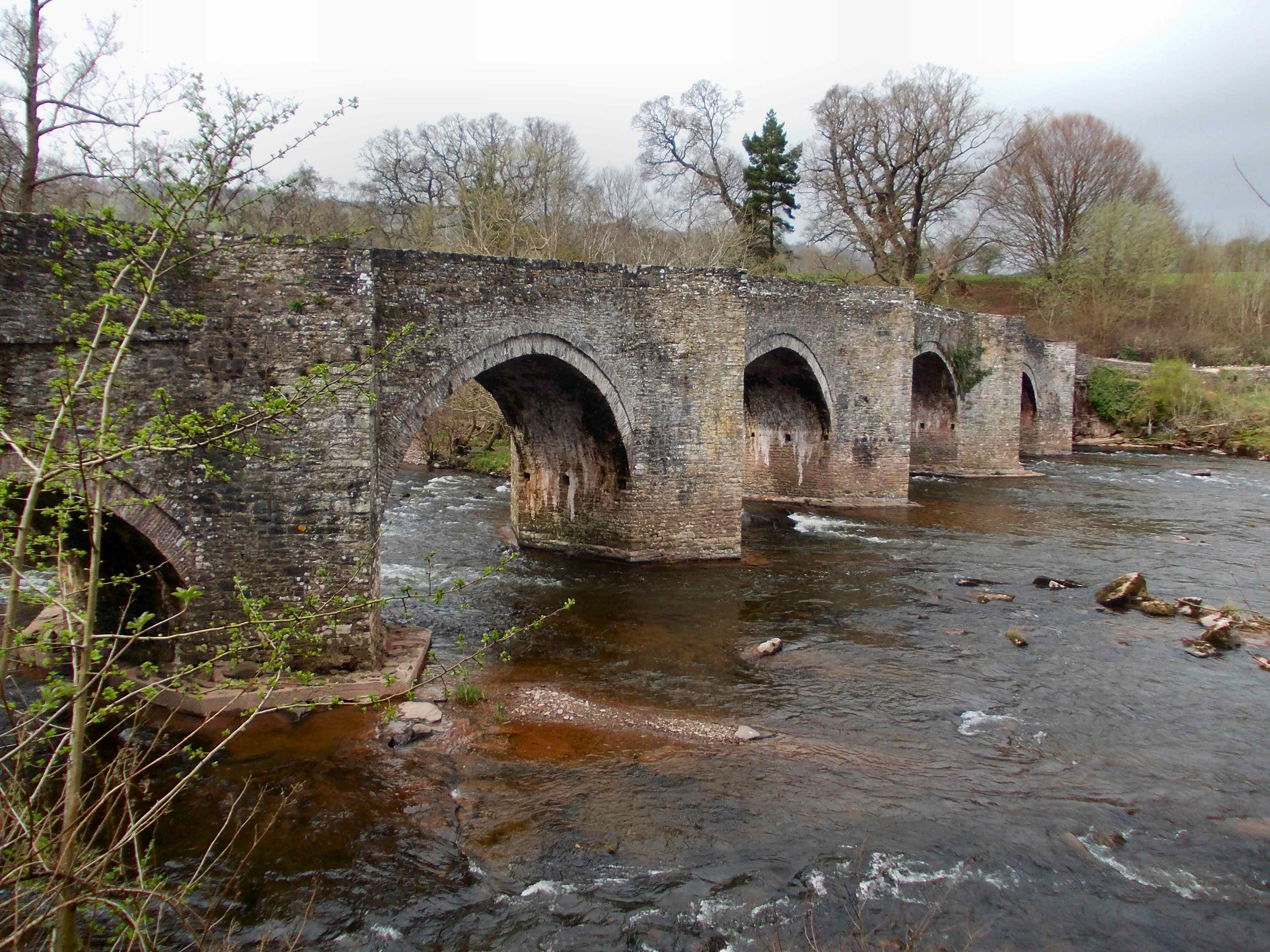
Llangynidr Bridge on the River Usk

Having by good fortune been able to get away for a few days, we drove down to Monmouthshire and had a fine walk from the mediaeval stone bridge at Llangynidr along the beautiful River Usk.

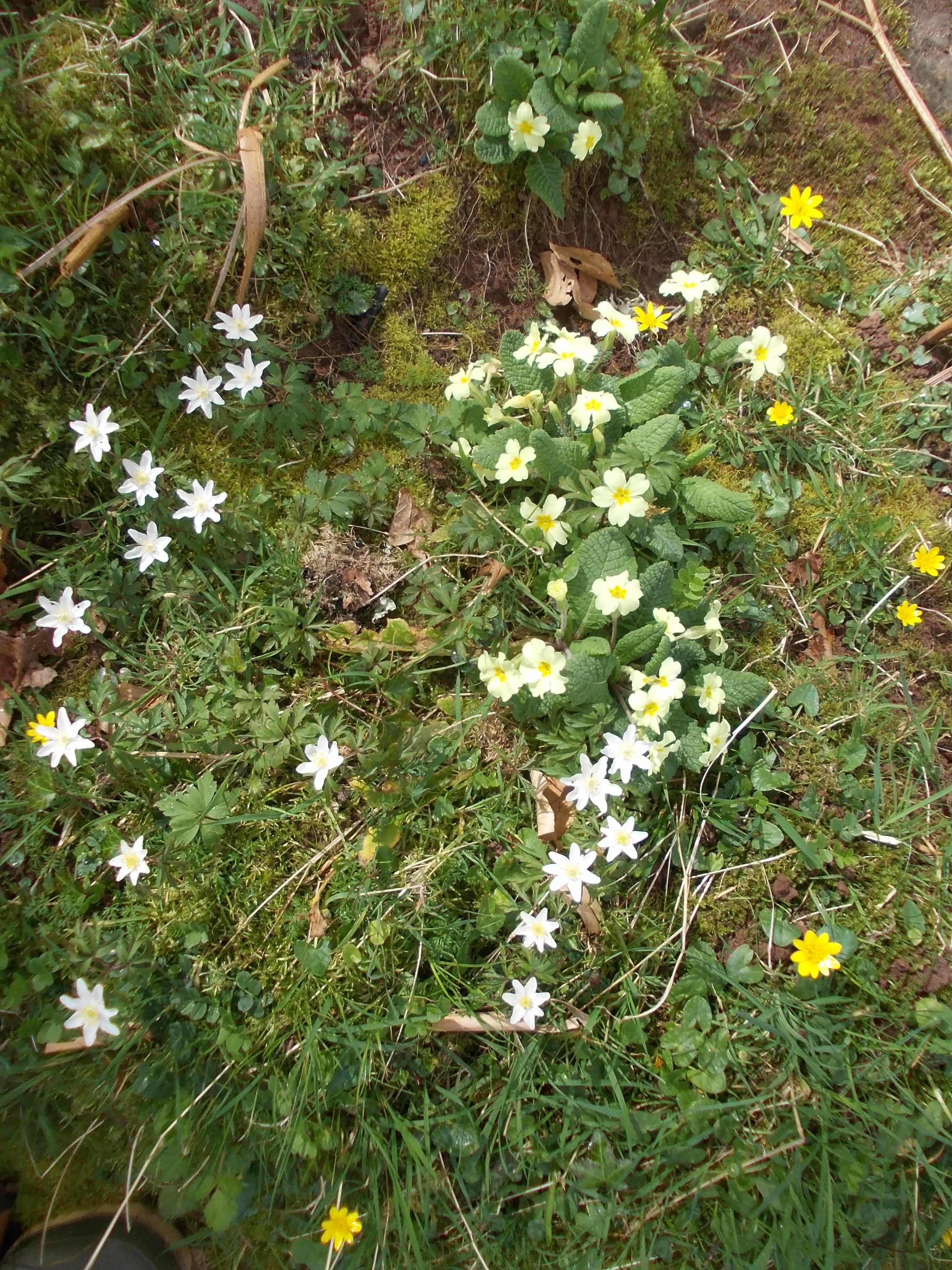
Primroses Celandines Wood Anemones by River Usk

The path had been damaged by the floods, but now the waters have receded the path is surrounded by primroses, celandines and wood anemones in delightful combination: specially good to see near a path, as so many wild primroses have vanished into thoughtless people’s gardens in England.

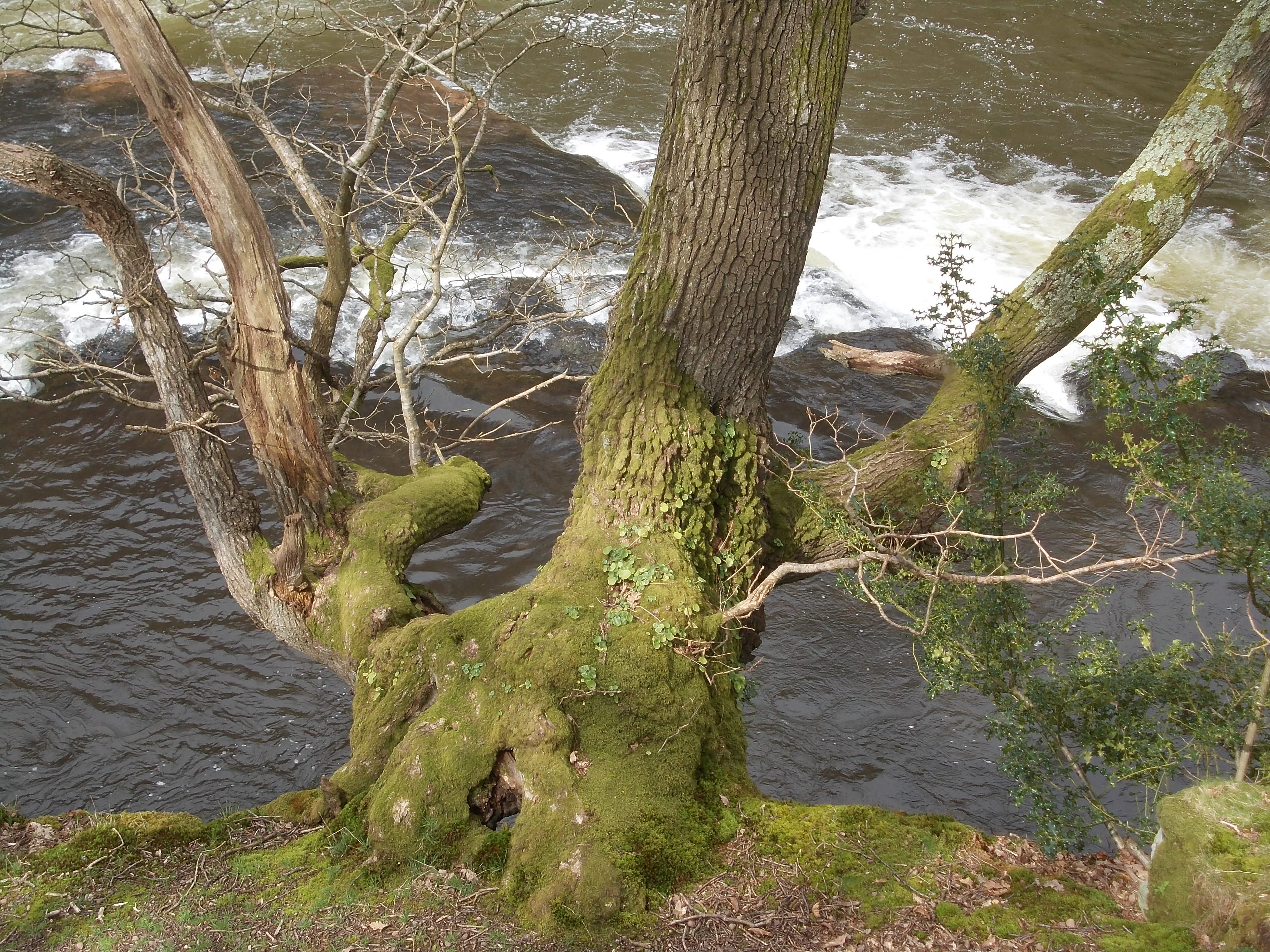
Tolkienesque Oak and rapids on River Usk

The River Usk – the Welsh name is from the same root as Whisky (Uisge), meaning simply ‘water’ – swirled over little rapids, a pied wagtail hawking for flies from the midstream rocks. Apparently the river names Exe and Wye share this origin; while Avon also just means ‘river’. In the days when people lived by just one river and rarely walked further than the nearest market town, ‘the river’ must have been a sufficient name.  As well as these etymologies, Tolkien would have liked the gnarled Old Forest oak trees beside the river, very mossy at the base, gripping the sandstone rocks with their roots.

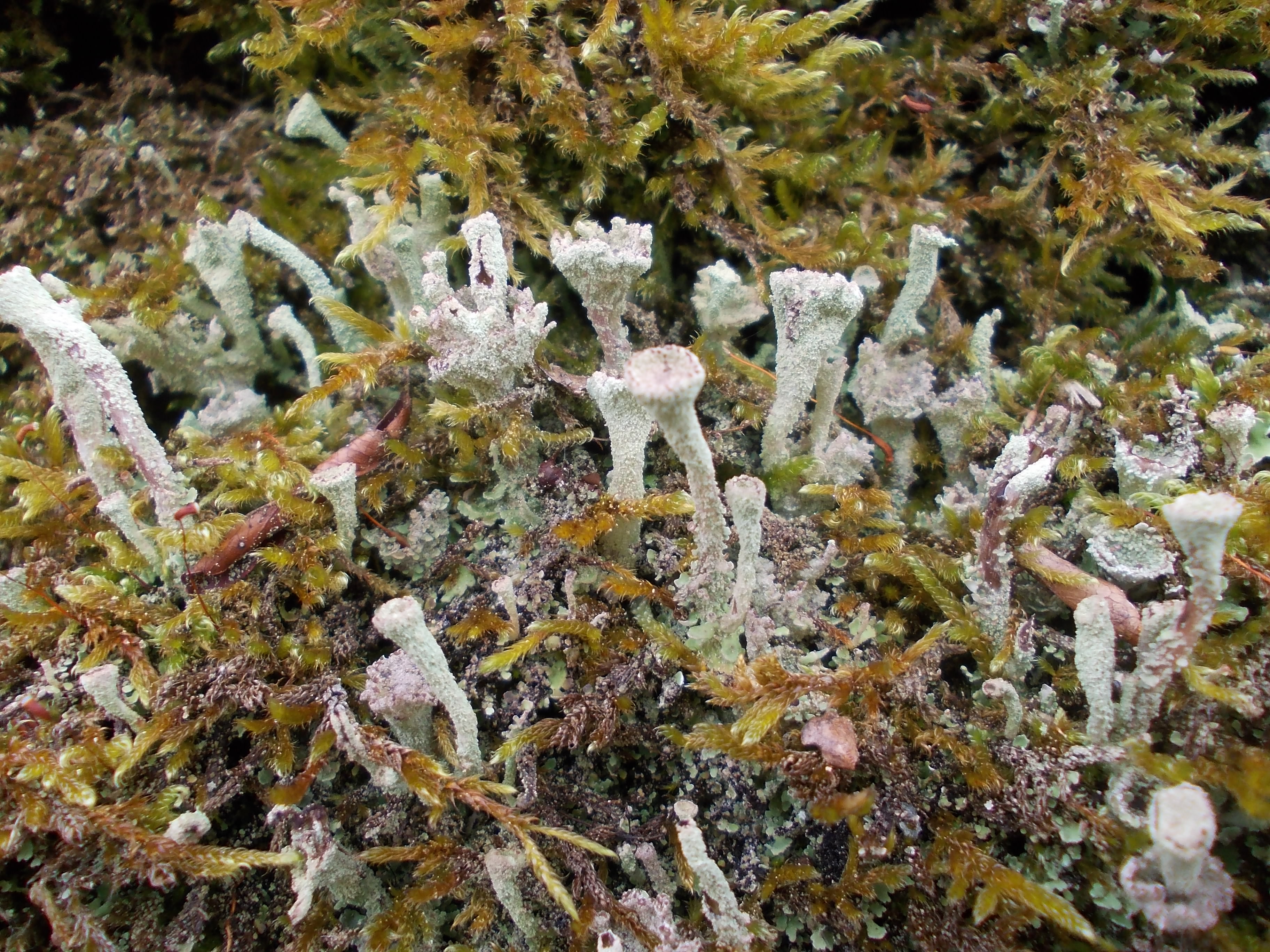
Common Cup Lichen
Common Cup Lichen

Lichens grew to good size in the clean air. A piece of beard lichen (Usnea) had fallen from a branch on to the path; common cup lichen Cladonia conoiocraea grew on a mossy wall.

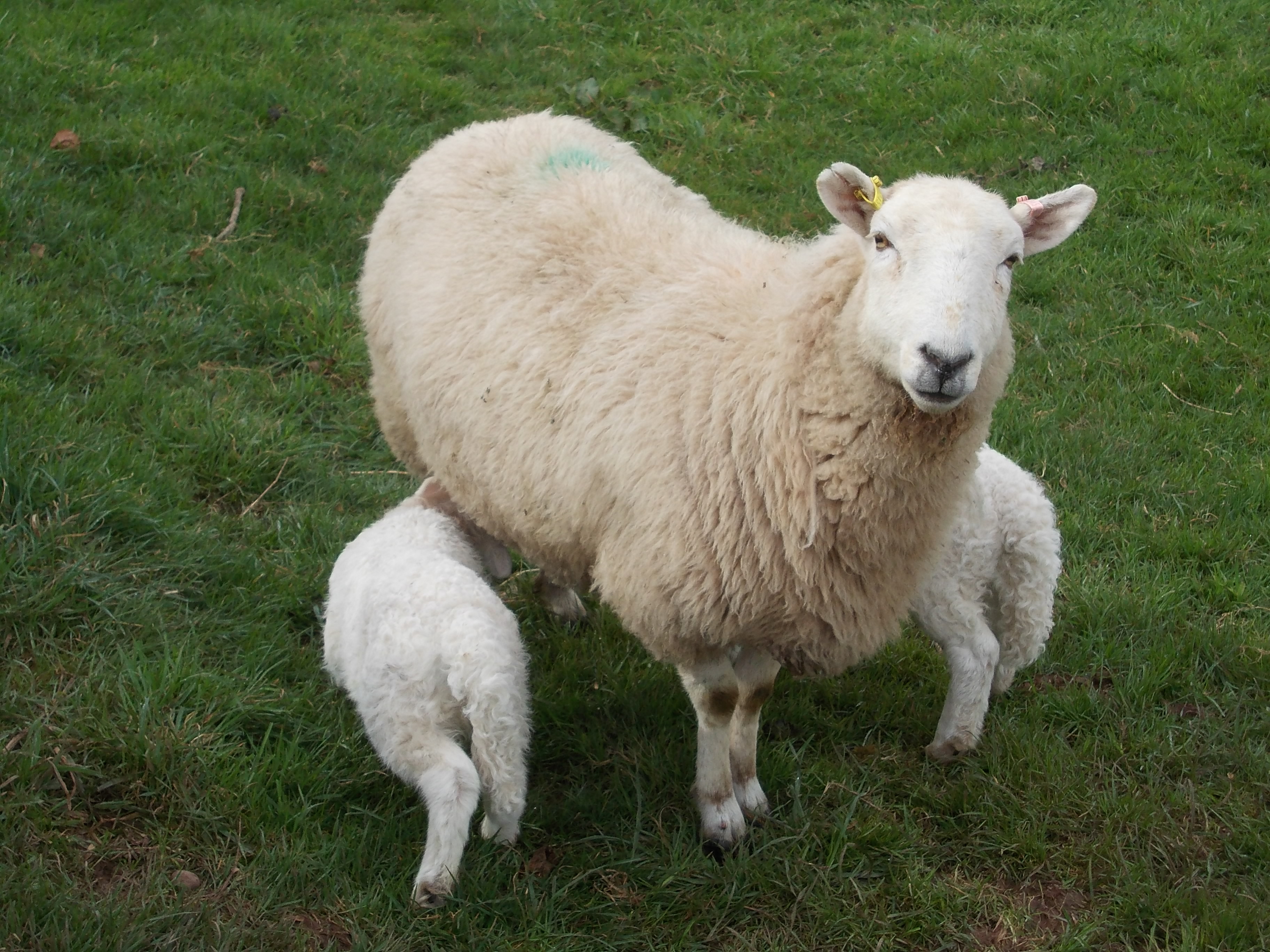
Ewe with twin lambs
Ewe with twin lambs

On the return walk through the fields we saw this ewe feeding her twin lambs.

Spring has sprung

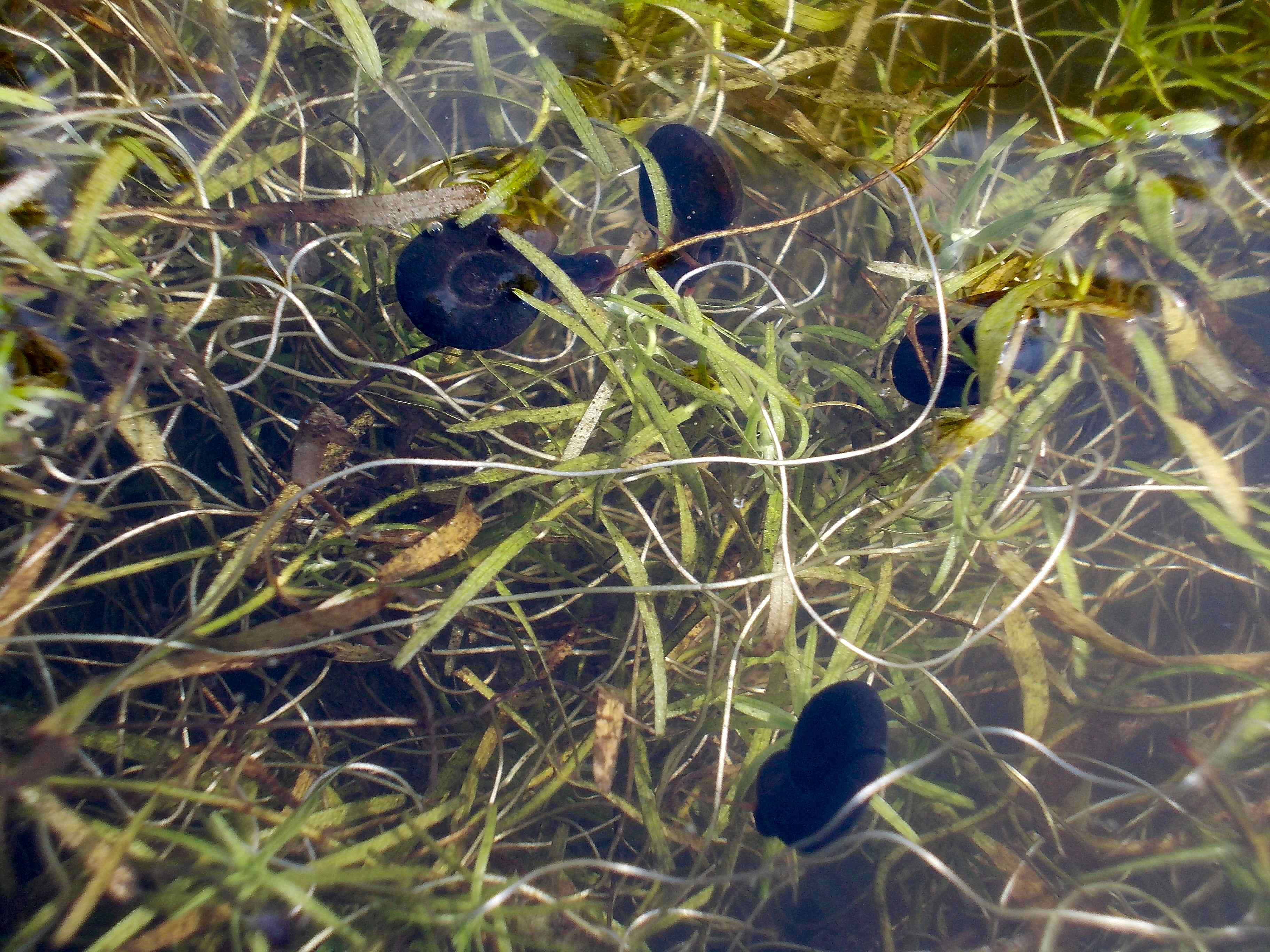
Ramshorn pond snails

Today dawned foggy and cool, but the sun soon burnt its way through and it became a hot spring day. I spent most of it reroofing the tool shed at the Gunnersbury Triangle nature reserve. It was in tatters after at least one hard winter, and it was an interesting exercise peeling off the layers hopefully tacked one on top of the leaky other. I then removed three full boards from the roof, complete with what I’m sure any mycologist would have found a fascinating colony of wet rot fungus, together with several wriggly centipedes and a lot of woodlice.

As it grew hotter on the roof, I was joined by at least two species of hoverfly, one large, dark, and almost unstriped. A brimstone butterfly chased around with a smaller white, perhaps a green-veined or an orange tip. A comma butterfly wandered about. Down below, the stinging nettles, hops, and garlic mustard (ideal for orange tips) are coming up nicely, but there’s too much cow parsley and some volunteers are pulling a lot of it out.

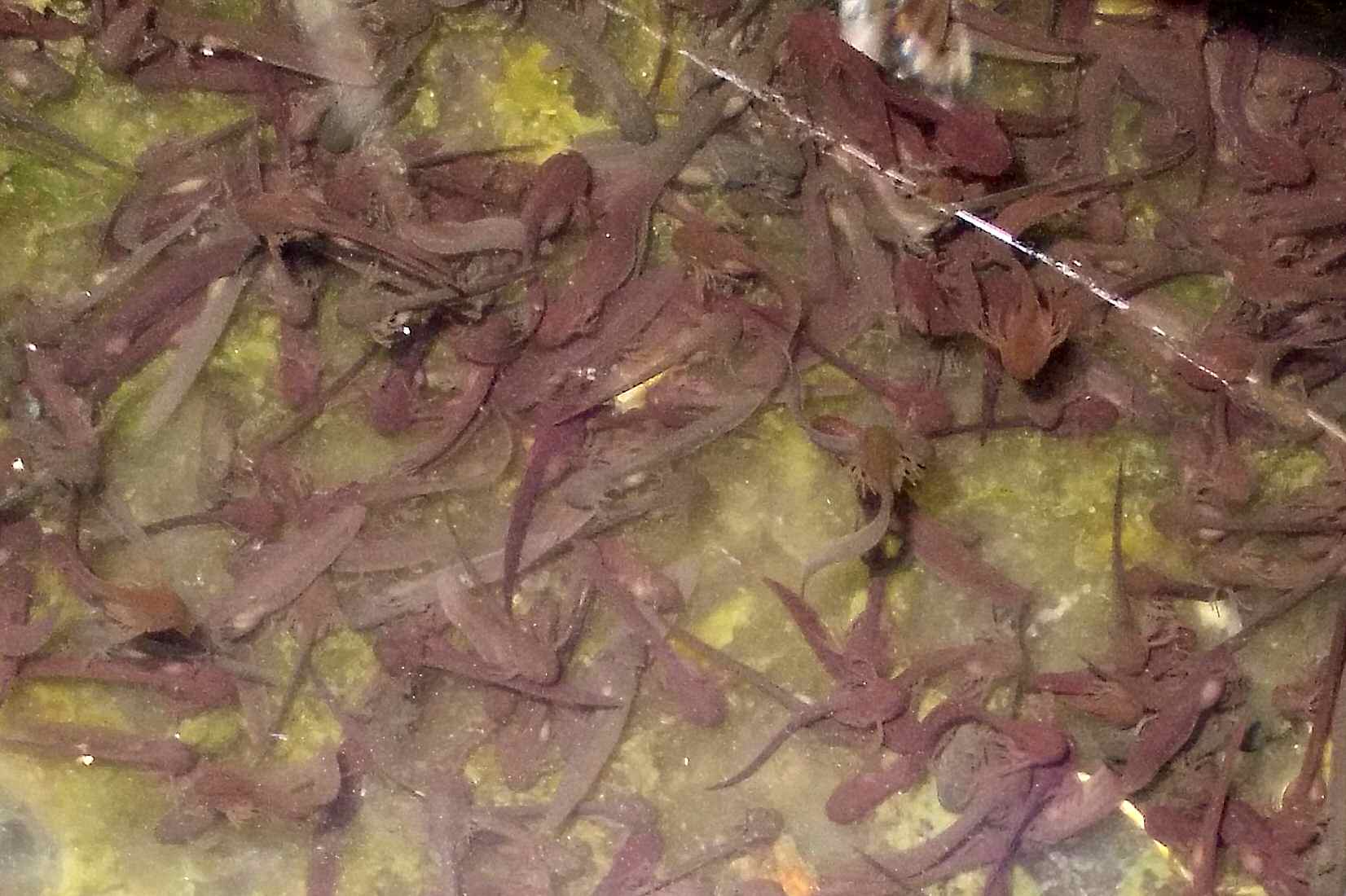
Newly-Hatched Tadpoles

At lunchtime I walked down to the pond. Chiffchaffs were singing all over; the pond was suddenly covered in pond skaters (Gerris) with one or two whirligig beetles. The tadpoles have hatched out into a wriggling mass.
Spring has sprung.

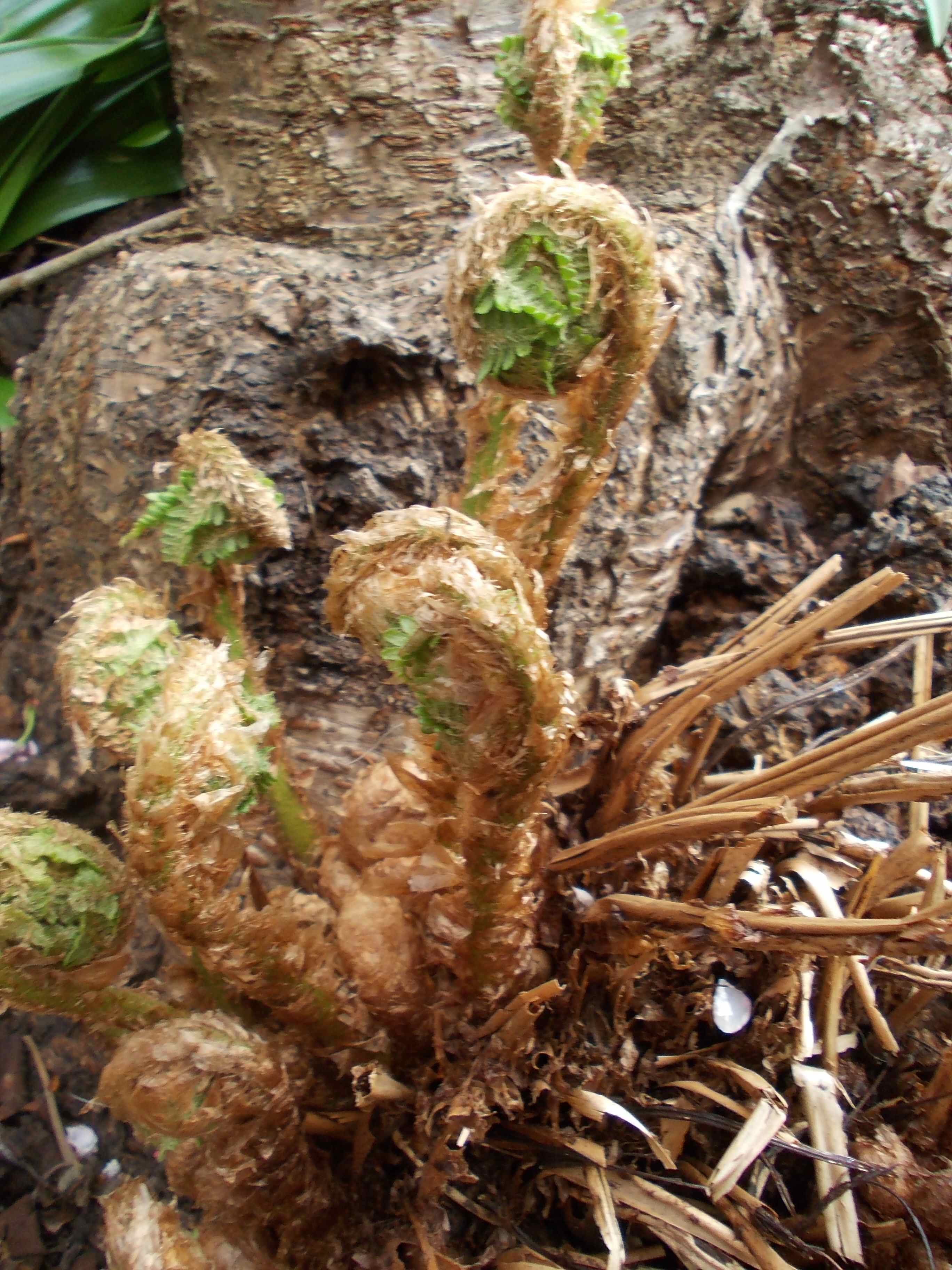
Circinnate Vernation (what ferns do in spring)

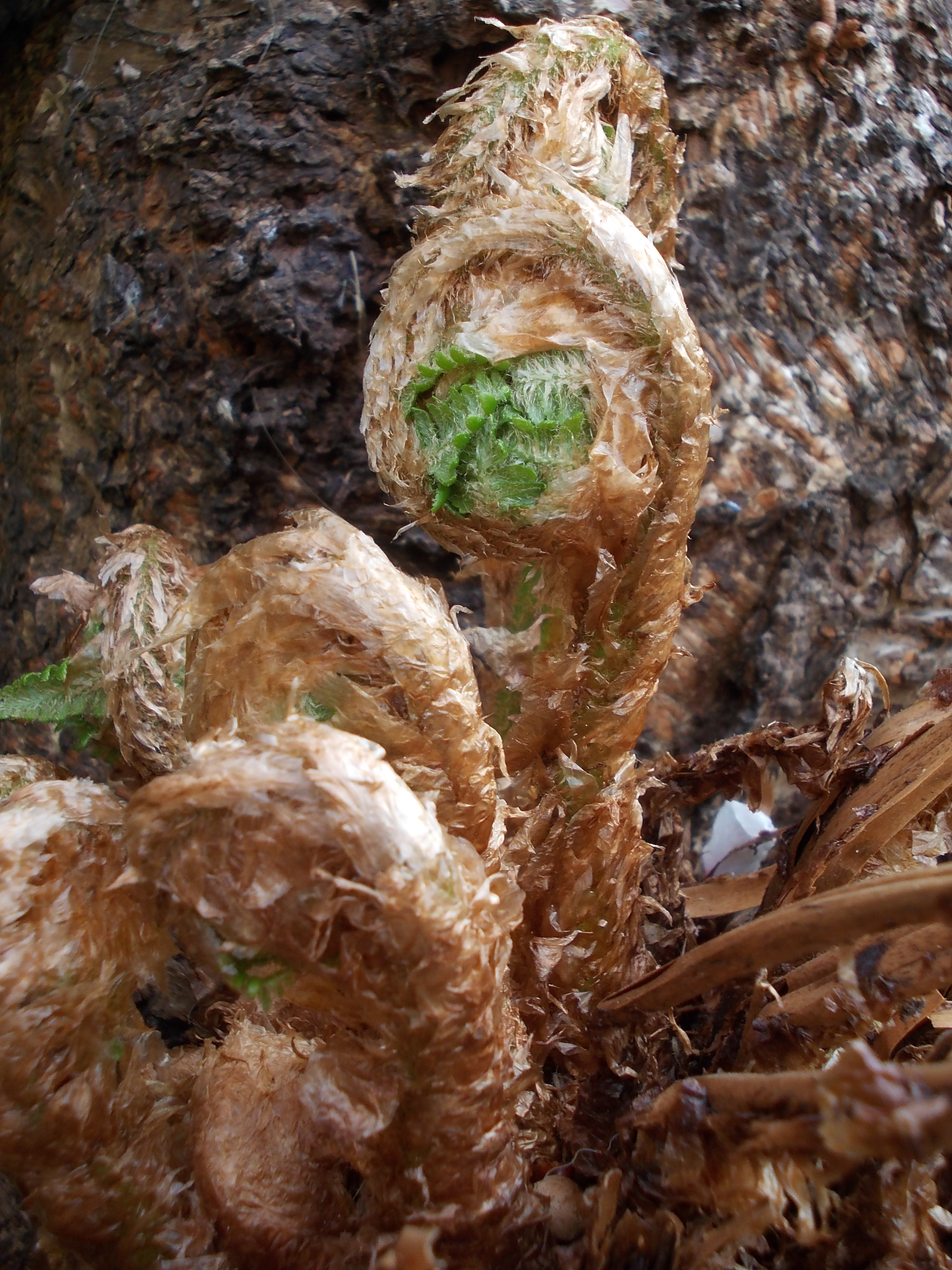
One of the loveliest names in botany is Circinnate Vernation. It rolls, echoing, off the tongue, exotic and complicated-sounding. J.R.R. Tolkien had a theory that sounds like ‘Cellar Door’ were especially beautiful, presumably because they resonated with Old English speech (ok, you can call it Anglo-Saxon if you prefer). I think he’d have loved the sound of Circinnate Vernation.

Circinnate Vernation: fern fronds unrolling

Right, what does it mean? Circinna is the Latin for a shepherd’s crook, a long stick with a curled-over end to hook errant animals out of hedges or whatever. Ferns unroll in springtime as mini-shepherd’s crooks, craftily leaving the tiny green growing tips tightly protected in the middle of the roll, while anything trying to eat the new shoot gets the toughest, oldest part to try first. Sounds like a good survival strategy for the fern.

A day later
A day later, unrolling fast

Update: just a day later, the fronds have unrolled a turn or so.

Definitely not a Jack Snipe

This morning dawned bright and crisp, all the car windscreens covered in frost (the air 1.8 Celsius). In the garden, a Chiffchaff was singing, not a bird that often visits here: probably it has only just flown in from Africa.

Constrained to stay indoors all morning, I managed to get out to the Wetland Centre in the afternoon. There was a buzz of excitement in the hide, faces and optics jammed up against the windows, notebooks at the ready: someone had seen a Jack Snipe. A young man with a Canon SLR camera and a cream-coloured telephoto lens asked if I knew the difference between the Jack and the Common Snipe. Er, I said. It has shorter legs, a shorter bill, no pale stripe on its crown, and it bobs up and down a lot. He looked just a tiny bit embarrassed. Could I tell from a photograph? I went over and peered into the bright little screen. The crown, striped or not, was not in view; half the beak was in the mud; and the legs were bent and seemed … shortish. I said I couldn’t tell and did he have another photo. He apologised, the next one was overexposed. To me, it looked much more like a Common Snipe. Where did he see it? He pointed down, where I’d seen a Common Snipe zigzag in across the water and land. I said I thought it was probably a Common Snipe: he hadn’t seen it bobbing up and down? He thought not. I observed that the light was difficult, as the sun kept on coming out of a cloud, and the water varied from dazzling to nearly black in the reflections; did he bracket the exposures? He said yes, it would be a good idea. He took some more photos, said he had a nice one against the dark water. I looked into the screen again: it was true, the contrast of the sunlit brown-and-cream of the camouflaged plumage and the velvet-black water was quite lovely. I smiled and murmured that it was beautiful, but definitely not a Jack Snipe. We had both enjoyed seeing the commoner species, so close, so bright, so crisply patterned, in such fresh spring weather.

I left the hide and walked quietly around the sheltered lagoon. On the grassy bank, a Green Woodpecker’s red cap and black moustache – it was a female – caught my attention. The way the woodpecker was probing quickly in the soft ground with her long pointed beak, then bobbing up to take a quick look around for possible predators, was remarkably snipe-like. I suppose the problem of feeding on something buried a distance beneath the surface pretty much guarantees you are going to be vulnerable while your beak is jammed into the mud and you are busy feeling with your tongue to decide if you’ve caught something edible… your attention is simply not going to be on the sky for those moments. It was curious to feel the similarity between two such different birds as the big hole-dwelling woodpecker with its jolly green and yellow plumage and its black and red face markings,  and the plump little snipe with its marvellously cryptic brown and cream camouflage jacket, and an absurdly long beak. Each was delightful; but definitely not a Jack Snipe.

Drown that Dabchick

On a glittering, beautiful spring day I visit the London Wetland Centre. Even out in the street the magnolias and cherries are dazzling, splendid in full flower. Inside, the blackthorns are covered head to foot in soft, pure white blossom, like costume drama heroines in broderie anglaise.

Every species seems to be celebrating springtime. The parakeets race overhead in pairs. My first red mason bee of the year perches on the welcome signboard. Redshanks stilt-walk about in the shallow water, probing in the mud with their long beaks. A reed bunting, handsome with black and white head markings, sings from atop a bush. A greylag goose flaps his wings, vigorously chases off a Canada goose, several times; then both start courting their females. Cetti’s warblers sing, very close and really loud. A little troop of long-tailed tits flit between trees. A greater spotted woodpecker drums rapidly on a tree trunk. Little clouds of midges enjoy the warm sunshine. A pair of shelduck snooze like holidaymakers on an island; a large cormorant with fine large white thigh patches and grey head and neck stretches out his wings in the species’ classic Christ-on-the-cross pose: renaissance painters used the cormorant for its symbolism. The first chiffchaff of the year warbles out its simple happy song.

But all is not sweetness and light. In the flooded reedbed, a tremendous amount of splashing, struggling and trilling disturbs the peace. A coot seems to have decided to try to drown a dabchick, a little grebe. Perhaps it is too close to the coot’s nest. Whatever the reason, the dabchick keeps on vanishing underwater and popping up nearby, squealing loudly, as the coot splashes about aggressively. If the coot really hopes to drown the bright little waterbird, it is disappointed: the dabchick is as buoyant as a cork, bobbing instantly to the surface and definitely alive.  Spring has sprung.