Tag Archives: Black-Tailed Skimmer

A Cloud of Keeled Skimmers at Thursley Common

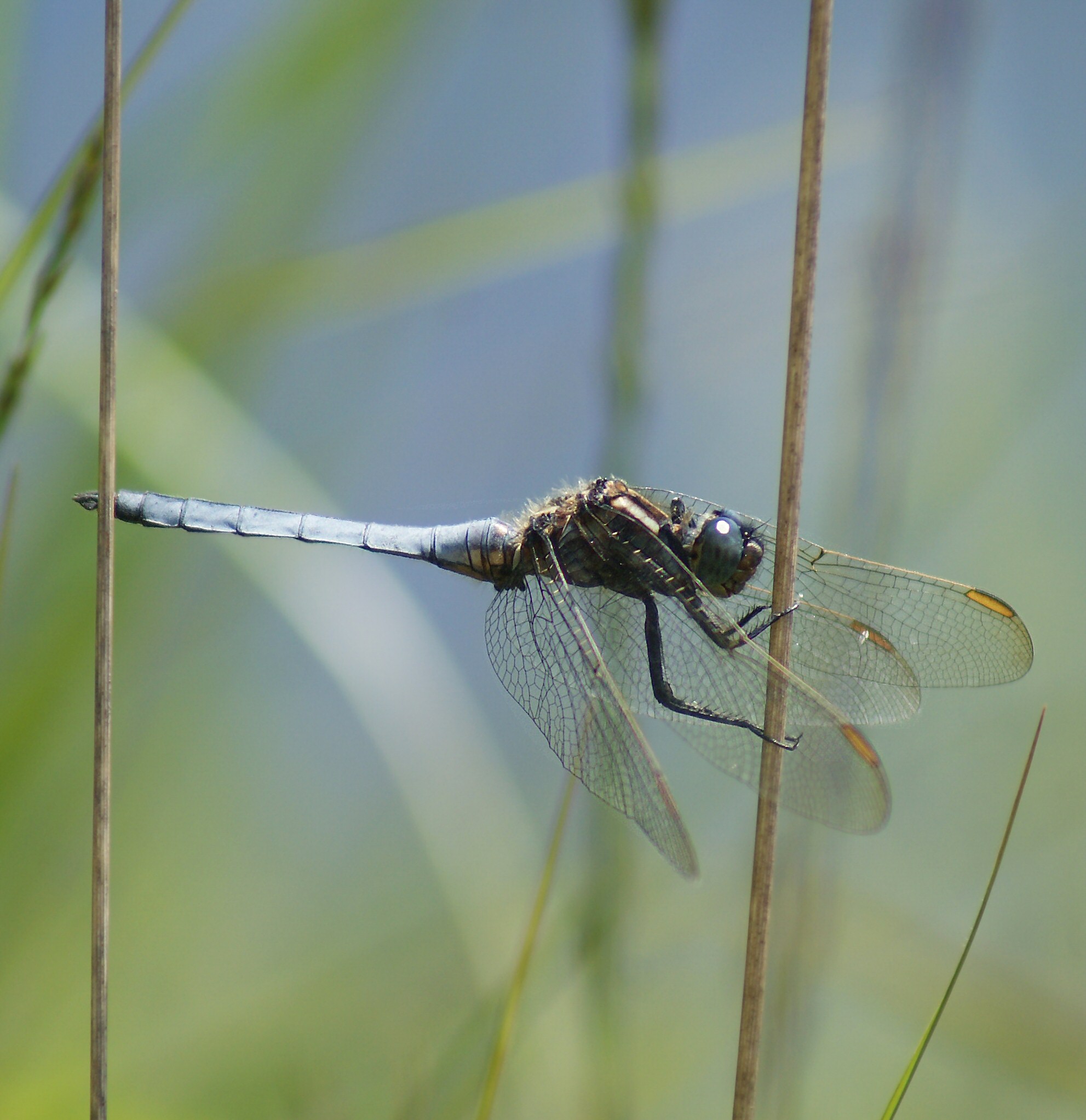
Male Keeled Skimmer on the Lookout

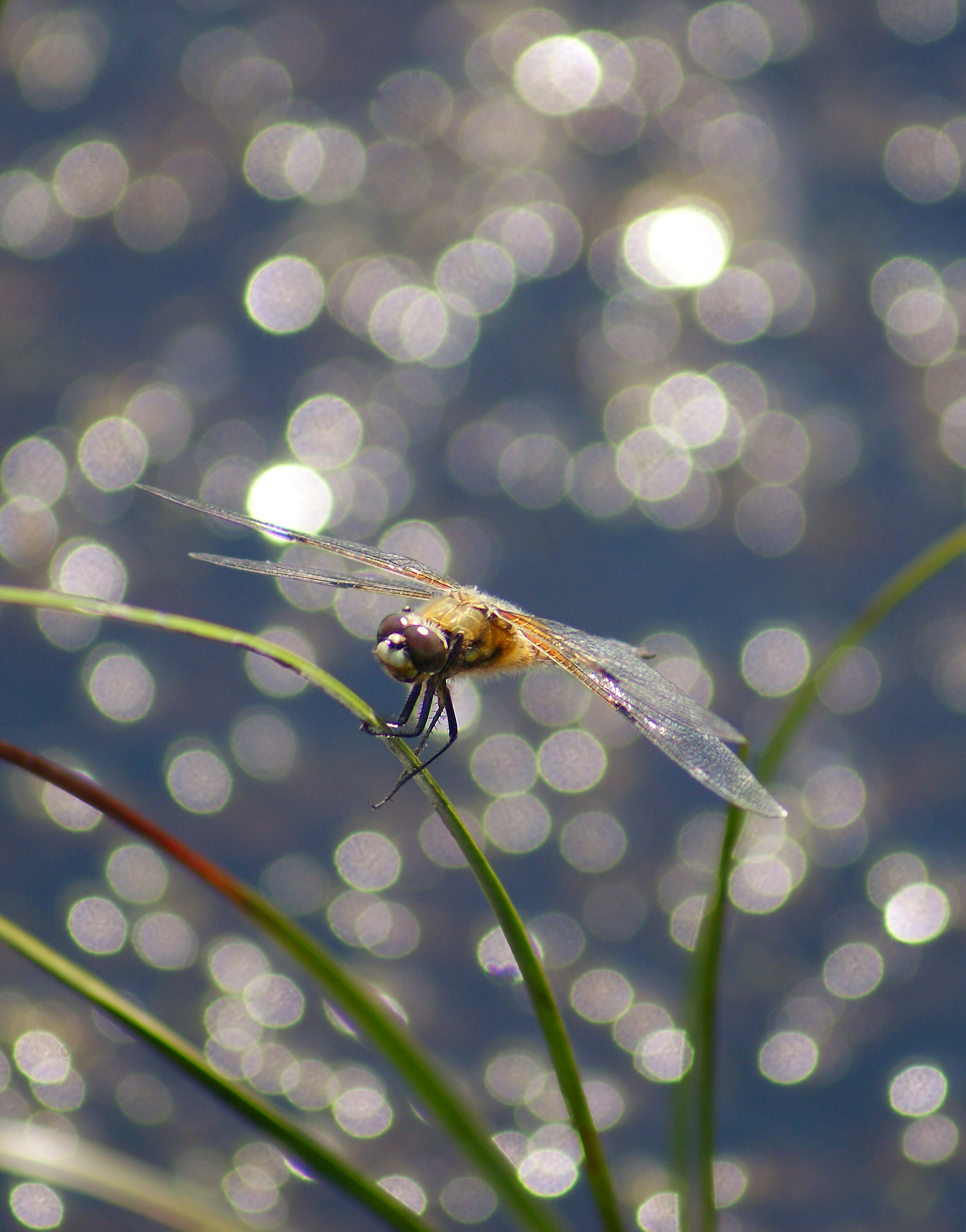
Thursley Common on a sunny July day can shimmer with the wings of dragonflies. Today, hundreds of Keeled Skimmers, joined by plenty of other species large and small – from the mighty Emperor to the dainty Small Red Damsel, made the air seem to sparkle as brightly as the water beside the boardwalk. There were Keeled Skimmers perched alertly on stalks, ready to spring into the air at an instant’s notice; Keeled Skimmers in tussling pairs, their wings rustling and scuffling as they clashed in brief, brutal territorial disputes; Keeled Skimmers in groups of four or five, dashing and swerving over the water; Keeled Skimmers over every pond, bog pool, and lakeside.
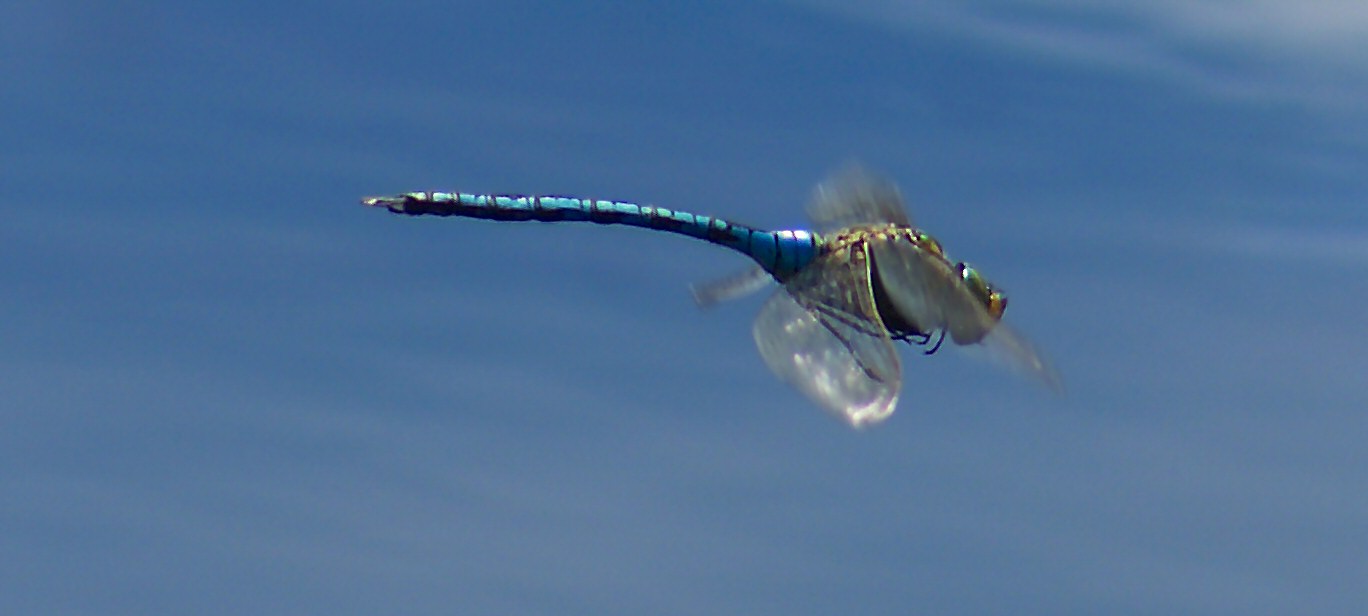
Emperor Dragonfly patrolling its pond at waist height

Over one quieter pool, an Emperor Dragonfly patrolled in more stately fashion, almost hovering, drifting forward slowly as if a helicopter pilot was holding the machine’s collective drive stick just a little forward of the hover position, its striped blue tail gleaming in the sun.
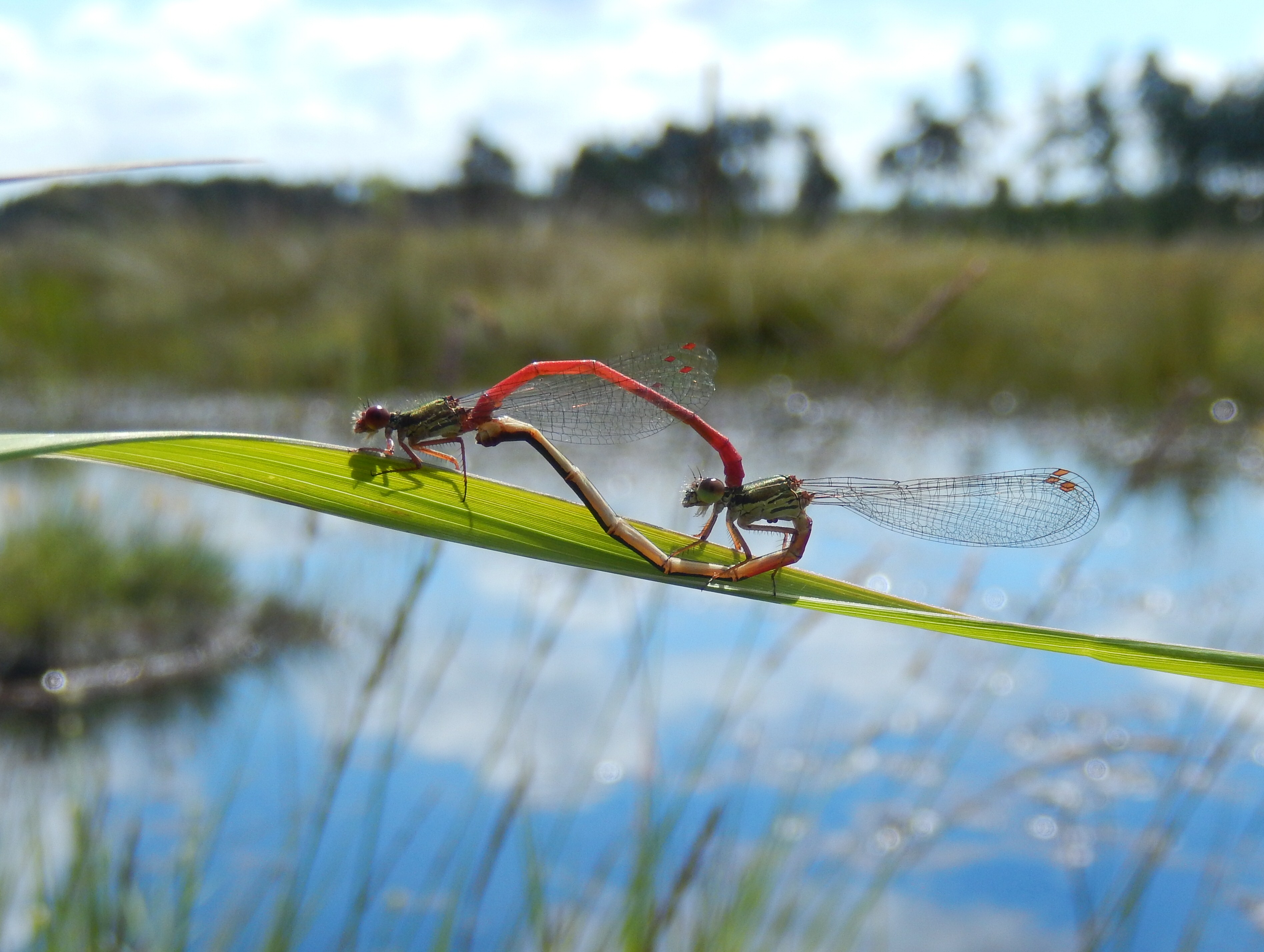
Small Red Damselflies in cop over a bog pool at Thursley
A Four-Spotted Chaser, pausing momentarily over a sparkling pool

Many of the Odonata were busy laying eggs, from the Skimmers to the damselflies. One or two Black Darters were about: they can be here in large numbers later in the season.
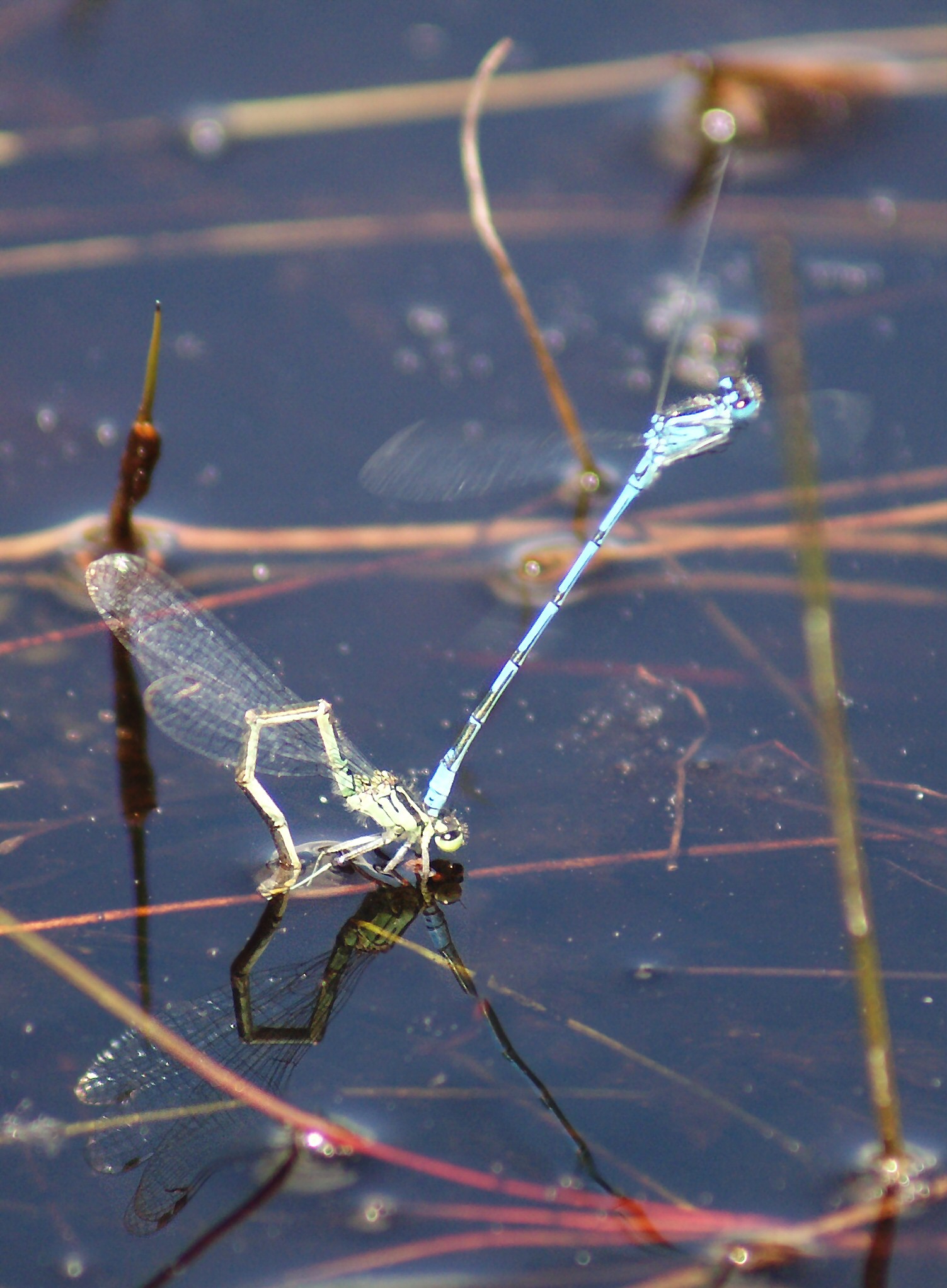
Azure Damselfly pair egg-laying

On the sandy heath, the Sand-Wasp Ammophila sought her insect prey, her distinctive shape almost dragonfly-like with an extremely elongated red waist leading to a plump ‘tail’ to her abdomen.
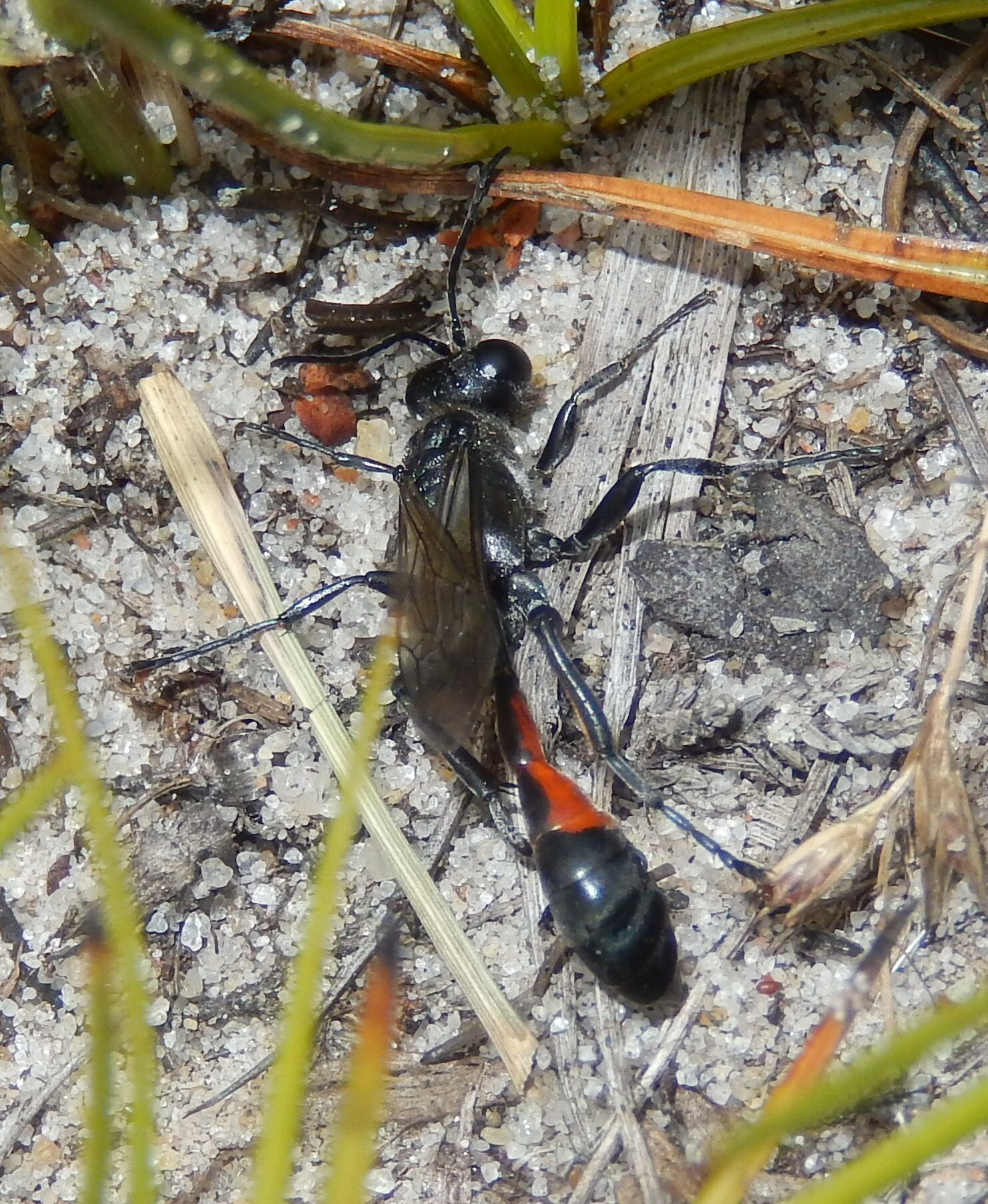
Sand-Wasp Ammophila
Sand-Wasp Ammophila
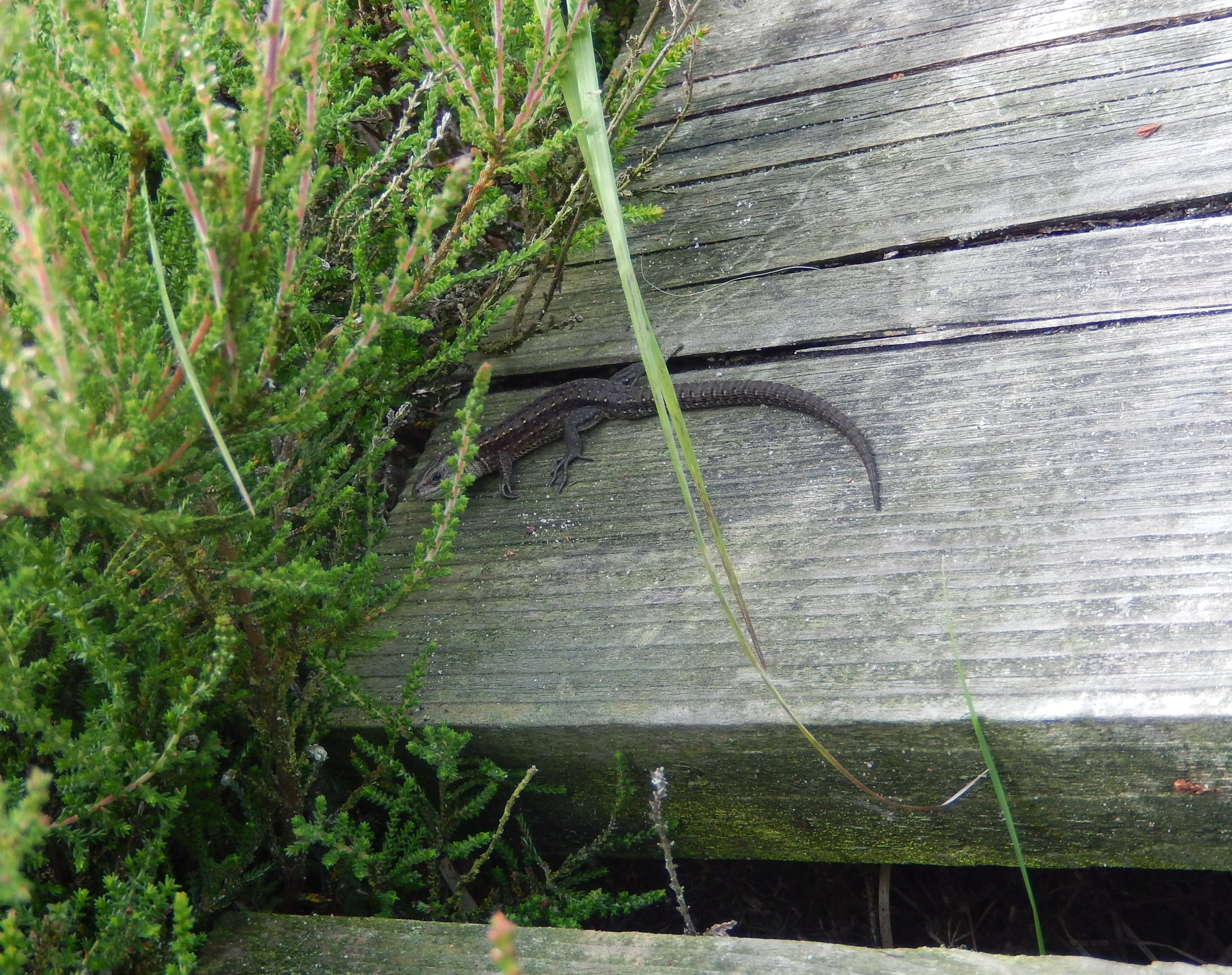
Lizard on the boardwalk

Overhead, a Hobby dashed and stooped, handsome through binoculars, moustachioed, spotted below, its long scything wings like a giant Swift easily outpacing the fastest dragonfly. Below, a lizard rested unobtrusively at the edge of the boardwalk, ready to scuttle into the heather at any threat; another a yard further on. A Reed Bunting rasped out its short scratchy song, skreek, skreek, skrizzick.  A Curlew called once; a Skylark soared invisibly high into the blue, singing as if John Keats were at hand to report on the beauty of its song.
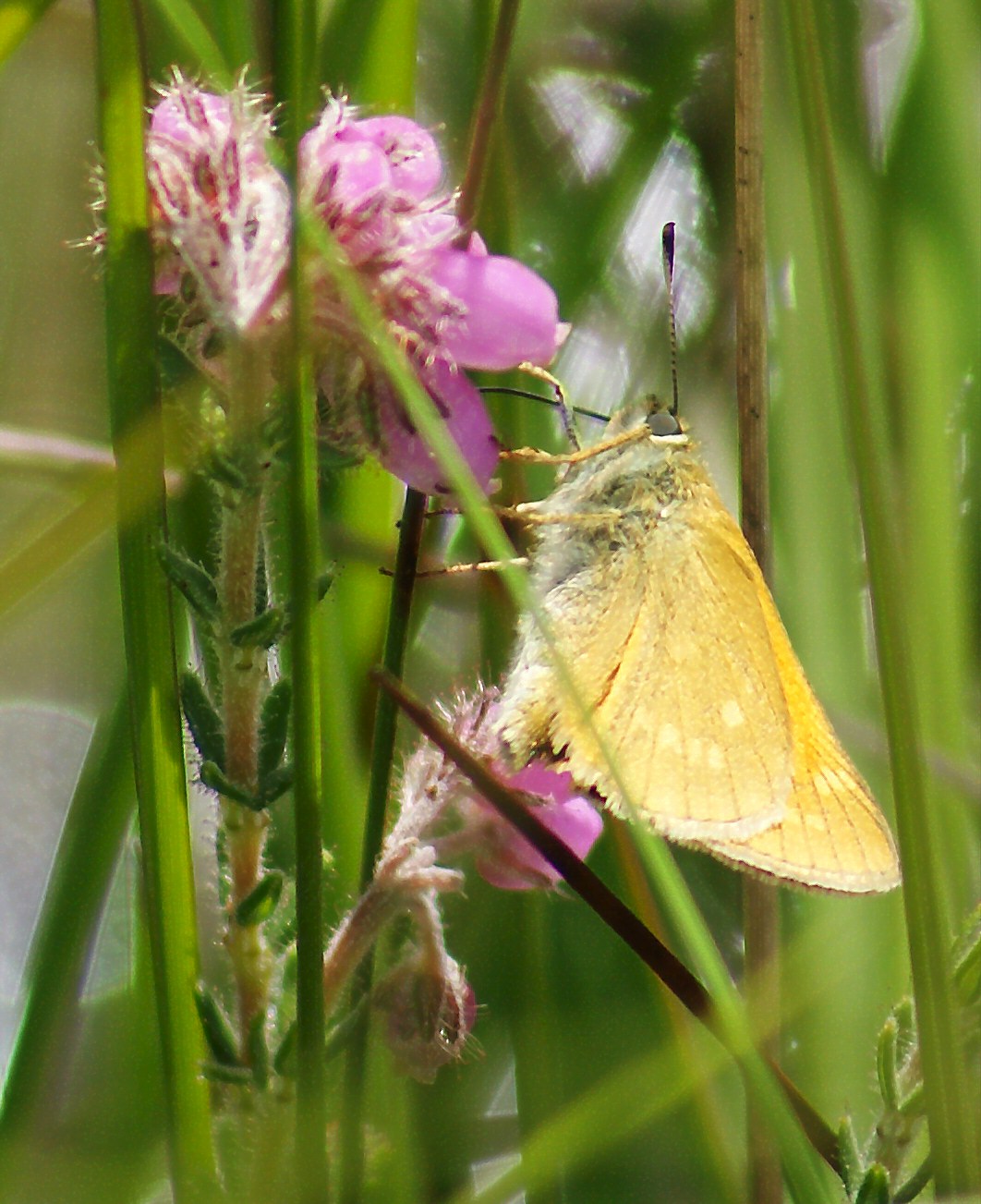
Large Skipper on Cross-Leaved Heath
Large Skipper on the rather special Cross-Leaved Heath
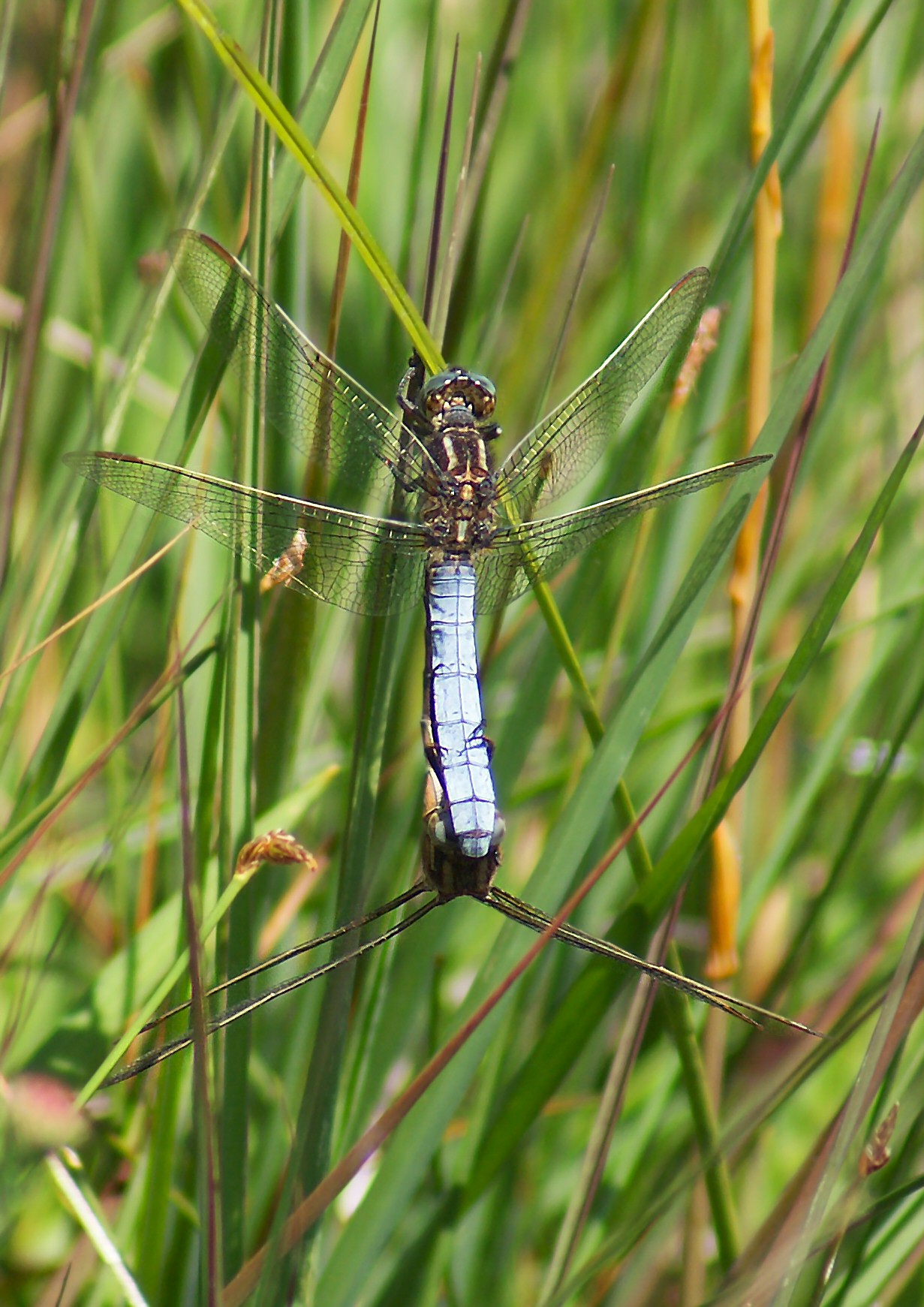
Four Wings Good, Eight Wings Better - Keeled Skimmers in cop
Four Wings Good, Eight Wings Better – Keeled Skimmers in cop

Aah, it’s Duckling Time

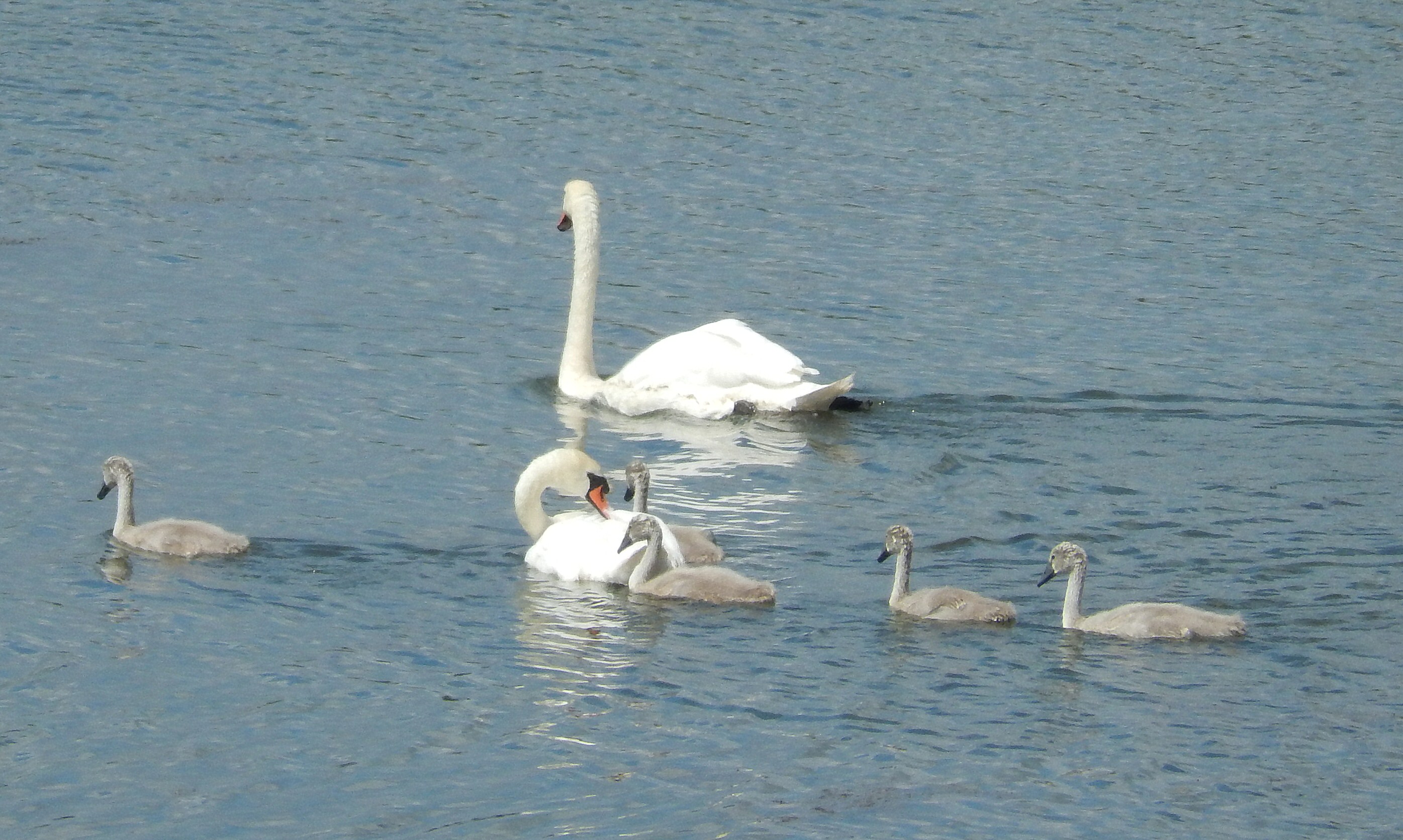
Mute Swans with Cygnets

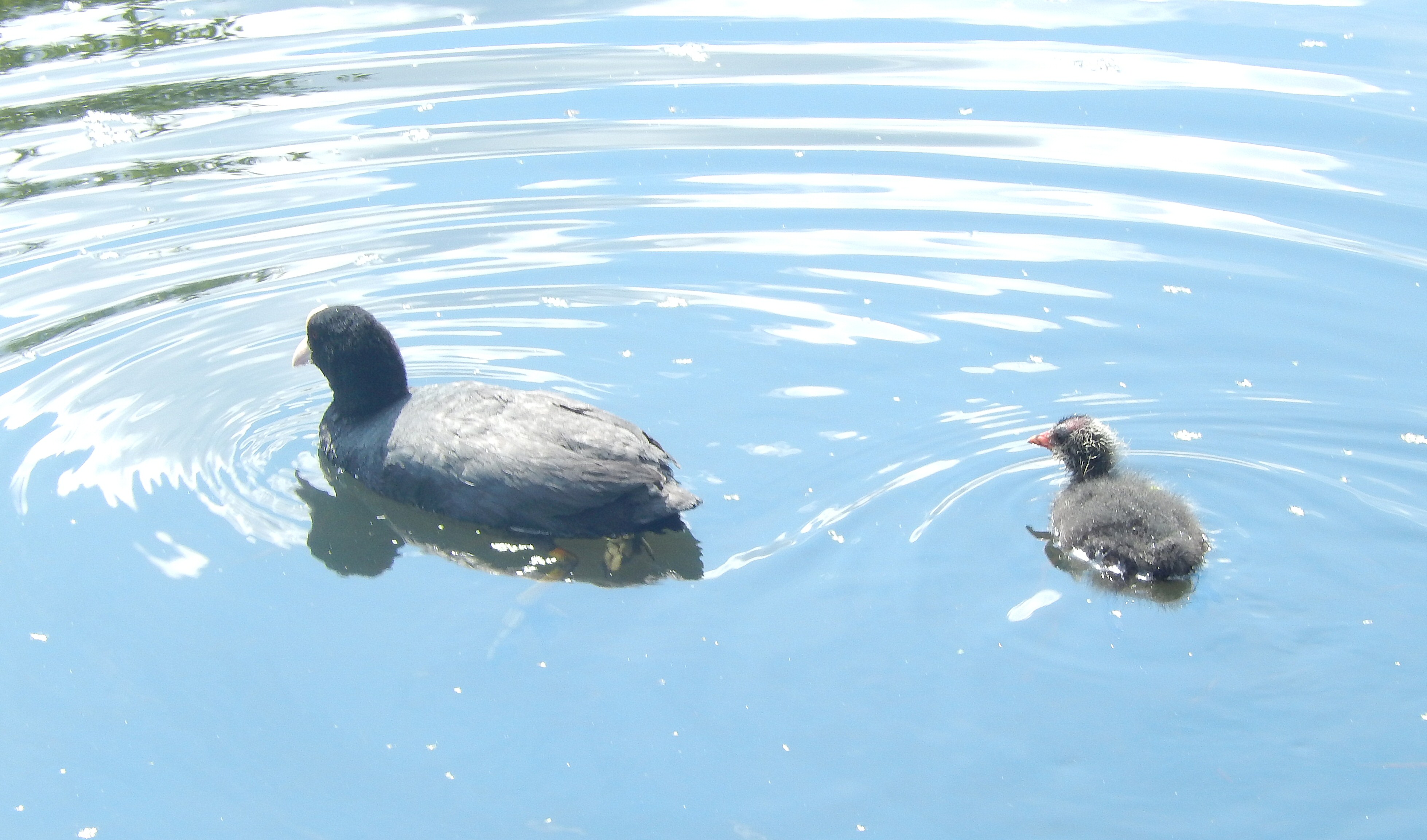
Aah. Ducks with ducklings. Coots with Cootlings. Geese with Goslings. Swans with Cygnets. Moorhens with … chicks. Whatever the charmingly mediaeval diminutive nouns, it was a day for walking around the London Wetland Centre, enjoying the ‘sunny spells’ and the bright display of wild flowers, artfully seeded, and delighting in Mother Nature’s ability to conjure up fluffy sentimental feelings about roughly duck-shaped balls of fluffy down feathers.

Coot with Cootling
Coot with Cootling

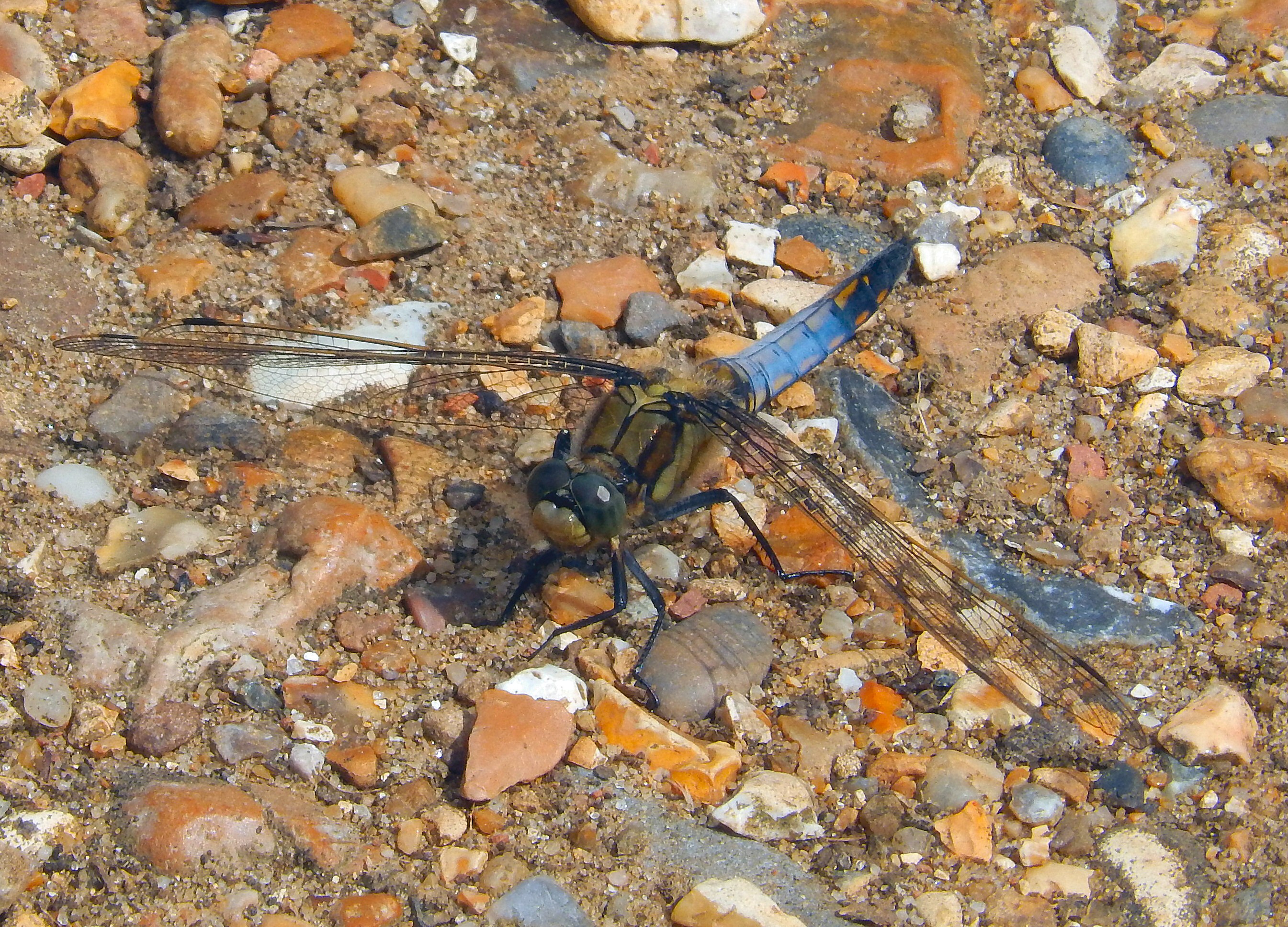
I’d gone alone to see if there were any interesting dragonflies, but there weren’t many about: a warmer day is always better. But there was a Black-Tailed Skimmer basking on one of the ‘wildside’ paths.

Black-Tailed Skimmer

Apart from that, I glimpsed one Hawker dragonfly – probably a Hairy dragonfly, as the only kind other than the Emperor seen there in the past month; and there were plenty of Common Blue and Bluetail damselflies about.

As for butterflies, it was alarmingly empty: a couple of meadow browns, a small white or two, and a female brimstone the highlight. My alarm at the lack of insects in general in England is growing. If it’s neonicotinoids – hot on the heels of all the earlier insecticides, many now rightly banned for their destructive side-effects on wildlife – then we are watching a manmade calamity. The BBC noted that some ditch water was toxic enough to be used, just as it was, as an insecticide spray for crops. The effect of that on dragonflies can only be imagined: a sad thing, as (living in rivers and ponds rather than on farmland) they have to some degree escaped the disaster that has all but eliminated our farmland birds, bees and butterflies.

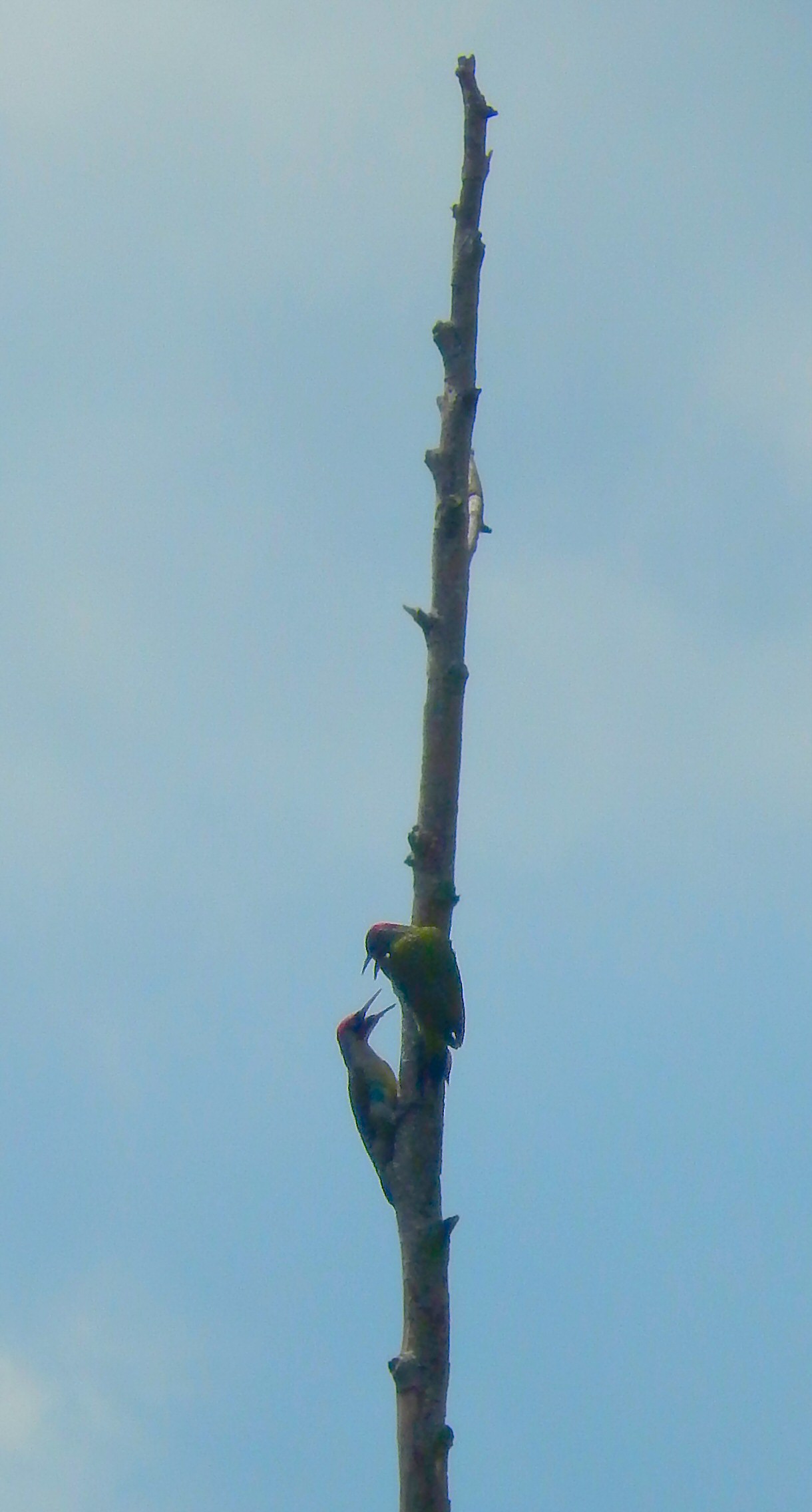
But on a dead tree, wildside, was another fluffy-duckling sight, this time from a distinctly arboreal bird.

Parent and juvenile Green Woodpecker

Two Green Woodpeckers, presumably a parent and a newly-fledged juvenile, were clinging to a dead tree, the parent a little higher up, the youngster apparently begging for food with open beak. The family drama went on for several minutes.

Two different Hoverflies on Burnet

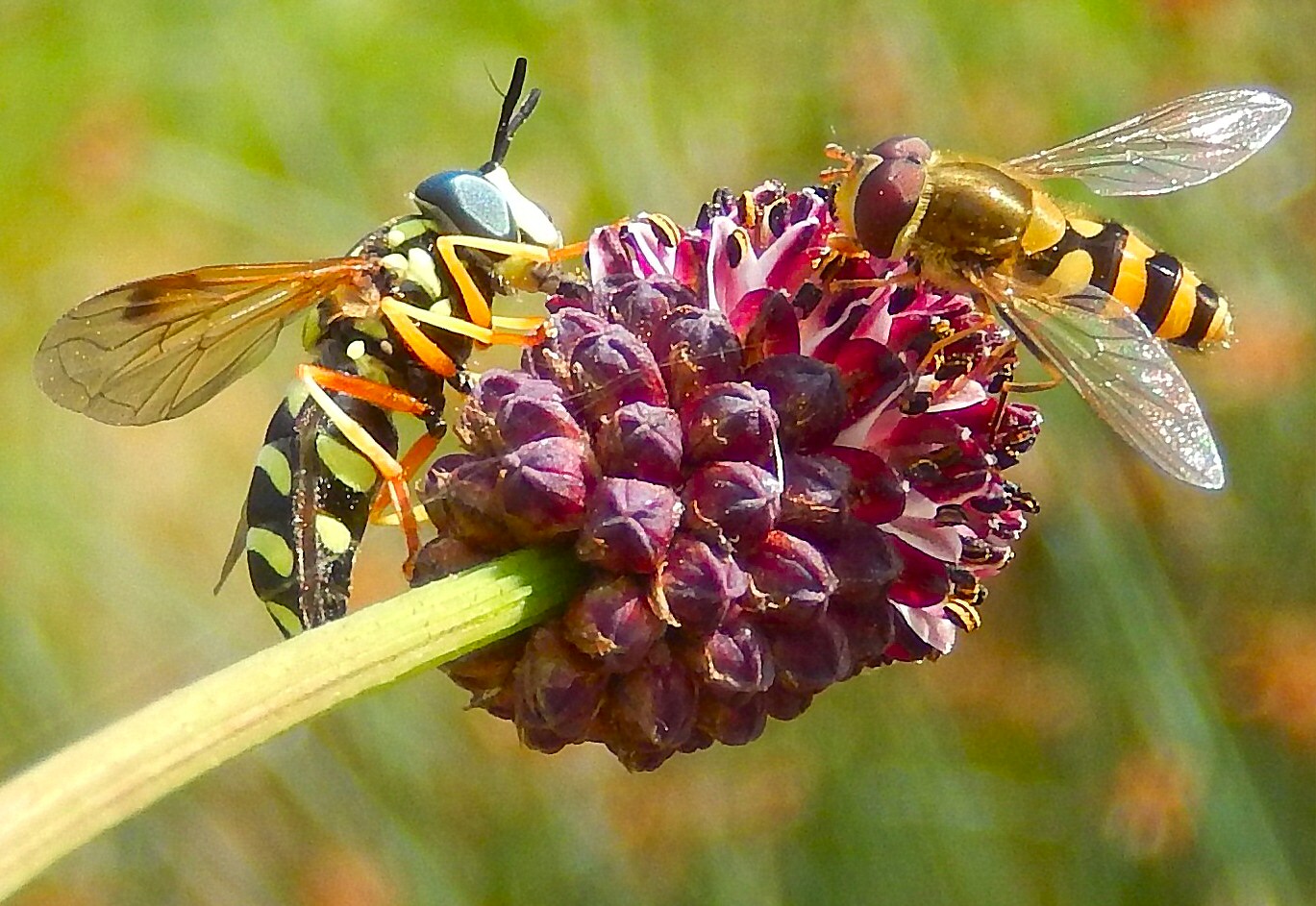
Tiny wildlife shows were visible on the flowers: here, two hoverflies of different species, busy being Batesian mimics of dangerously stinging wasps (but harmless as doves) are feeding, slow and relaxed in the sunshine, on the small flowers in a Great Burnet’s flowerhead. They didn’t seem at all bothered by each other, or by any risk from predators. But despite their glorious colours, it was duckling day today.