Tag Archives: Small Heath

LWT Nature Walk at Hutchinson’s Bank

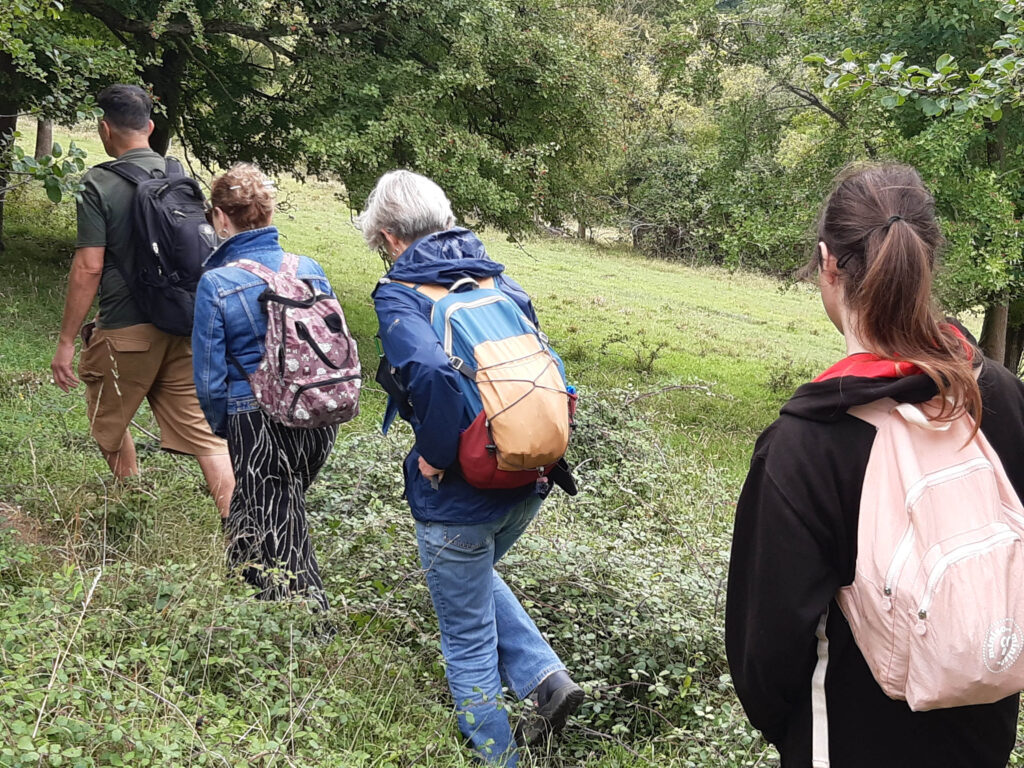
GT LWT group setting off into the reserve

Our entire LWT volunteers group (well, everyone who wanted) took a day off work and travelled the tube, overground, and tram to get to New Addington. From the end of the tram line, we walked a few steps to Hutchinson’s Bank.

This is the start of the group of beautiful and quiet LWT reserves that line this part of the warm south-facing scarp slope of the chalk of the North Downs.

The chalk formed as the tiny shells of marine algae (coccolithophores) rained down on to the seabed of a warm shallow sea during the Cretaceous period. The upper chalk here formed 100 to 66 million years ago. It then hardened, and was eventually crumpled by tectonic movements to form a ridge above what is now the Weald of Kent and Sussex. That ridge eroded away, leaving a north-facing scarp on the South Downs, and the south-facing scarp of the North Downs that we were standing on.

The chalk is a soft limestone, rich in calcium, which makes the soil on it basic (alkaline), unlike the neutral or acidic London Clay and Thames Flood Gravels. The resulting soil is a thin, free-draining Rendzina on steep slopes, and a thicker Brown Earth in the valleys. These support a wealth of flowers such as Marjoram, Scabious, and several Orchids that like an alkaline soil. Those in turn support many species of butterfly; Andy says there are 40 species on the local list.

We strolled eastwards through the woods and chalk grassland of Hutchinson’s Bank, down the slope and through the wood of Three Corner Grove, and across the road to the third reserve, Chapel Bank.

The area is a few miles west, but on the same chalky slopes that Darwin visited from Down House: Down Bank and the little hill he called ‘Orchis Bank’ where he found specimens, and most famously described as a “tangled bank” in his 1859 book The Origin of Species.

Oh, all right then, here’s his description. You can decide for yourself if the chalk hills of the North Downs led him to devise his theory of evolution by natural selection:

  • It is interesting to contemplate a tangled bank, clothed with many plants of many kinds, with birds singing on the bushes, with various insects flitting about, and with worms crawling through the damp earth, and to reflect that these elaborately constructed forms, so different from each other, and dependent on each other in so complex a manner, have all been produced by laws acting around us.

I gave a brief introduction to the geology, soils, and ecology; Andy did the same for the butterfly fauna.

To see the images uncropped and at full size, open them in a new tab or window.
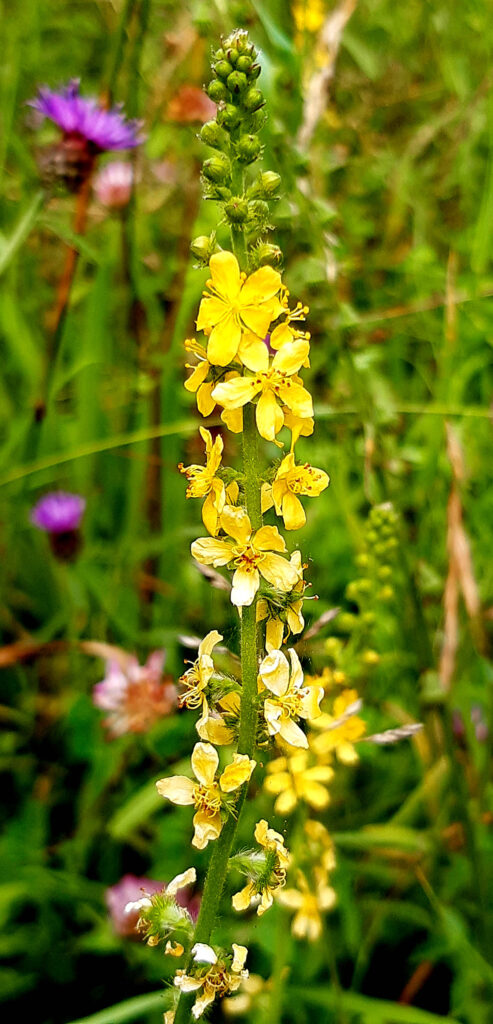
There was great excitement among the butterfly enthusiasts in the group when a large orange-brown butterfly flew past with the strong purposeful flight of a Fritillary. Two species, the Silver-Washed and the Dark Green, are native to the area; they are larger than the introduced or “escaped” species, the Glanville, Heath, and Marsh Fritillaries which can also be seen here.

Eventually, amidst much stalking of the first specimen, which proved to be a Silver-Washed, three more of that species came by, chasing each other about, and then obligingly landing on some of the abundant Marjoram which was aromatically in flower and nectar among the grass.

Here’s Andy’s photo of one of them.
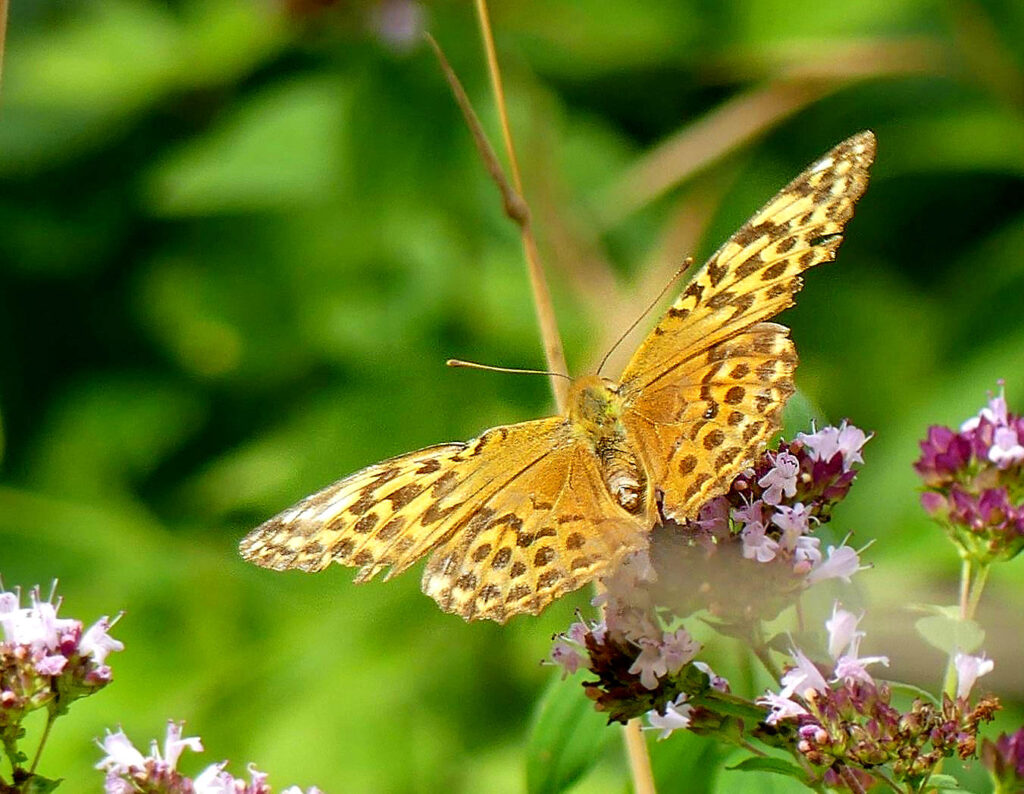
Silver-Washed Fritillary on Marjoram, taken by Andy

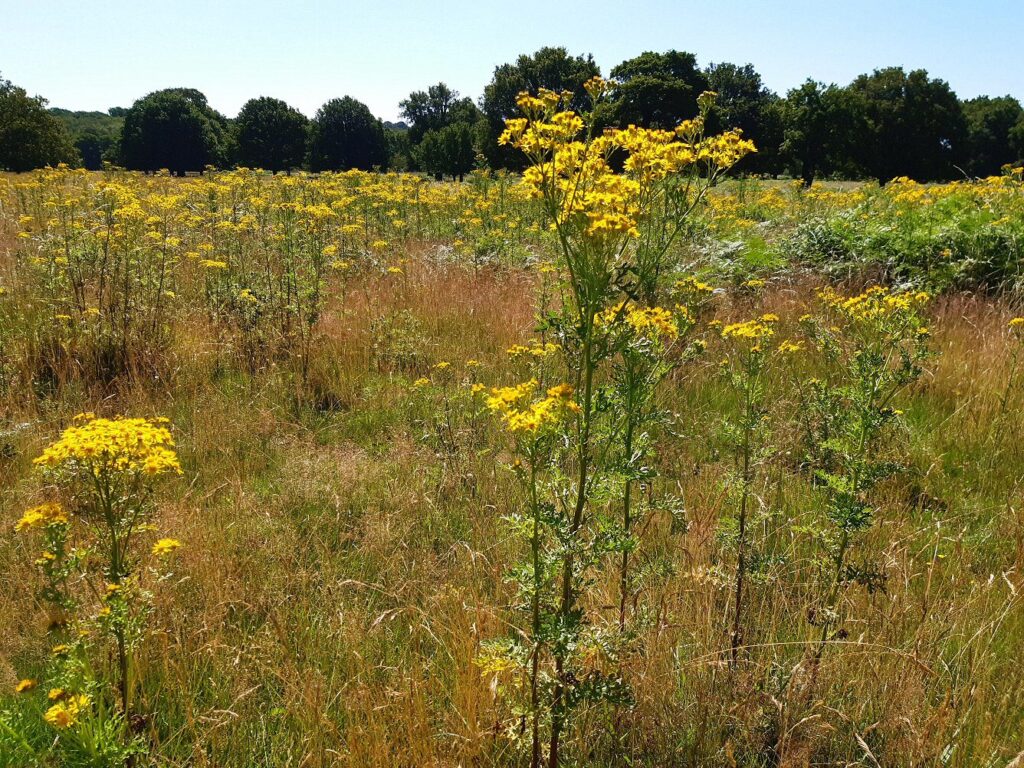
Plague of Ragwort in Richmond Park

Ragwort by the thousand … and as yet hardly any Cinnabar Moth caterpillars. But I’m getting ahead of myself.

Ragwort is not just a common weed, but a curious one. It used to be a Notifiable Weed to the Ministry of Agriculture and Fisheries (more Ag. than Fish., probably). This was because it gave livestock that incautiously ate it, fresh or in hay, a violent stomach upset and sometimes caused death. So, farmers were obliged to report it and destroy it.

Why so dangerous? It contains Cardiac Glycosides, yup, chemicals that interfere with heart rhythms. Presumably natural selection has favoured this as animals end up not eating too much of the plant, which favours its survival. That includes cows and most insects.

However, a few beasties can tolerate the poison; and the Cinnabar Moth is one such. Actually, it goes a step further — it benefits from the stuff. Its caterpillars are large, conspicuous, and slow-moving; they’re also striped brilliant orange and black, warning coloration. That says “eat me, you’ll regret it”, and it’s an honest signal; any bird that tries it will indeed be violently sick, at least, and won’t try eating larvae that look like that again. Ever.

However however, one bird can tolerate the poisonous caterpillars: the Cuckoo. It arrives and feasts on the conspicuous and presumably delicious, nutritious larvae which nobody else will touch with a bargepole and rubber gloves.

Even more however, there’s a catch. The caterpillars are Very Hungry (this is a literary reference). They munch through the Ragwort like there’s no tomorrow, until it’s all gone. Then they pupate, turn into beautiful cinnabar-red and grey adults, lay eggs, and die. The Ragwort is already dead, obviously. And Cuckoos and everyone else who comes alone the next year won’t find a Ragwort plant or a Cinnabar moth for love nor money.

Then, gradually, a few surviving seeds grow into Ragwort plants. There are no Cinnabar caterpillars to do the damage on them. They go forth and multiply, as the bible has it. After a year or two there are Ragwort to the Left, Ragwort to the Right, and Ragwort all around. The man at the Min. of Ag. and Fish (or whatever it’s now called) spends all day answering phone calls about Ragwort (only he doesn’t, he’s got fed up of doing it by now). The few Cinnabar caterpillars have food in plenty and they breed like rabbits. Well, like Cinnabar moths. And the cycle goes round again.

So there you have it. Plague of Ragwort? Don’t tell the Ministry, but do wonder at the power of Nature.

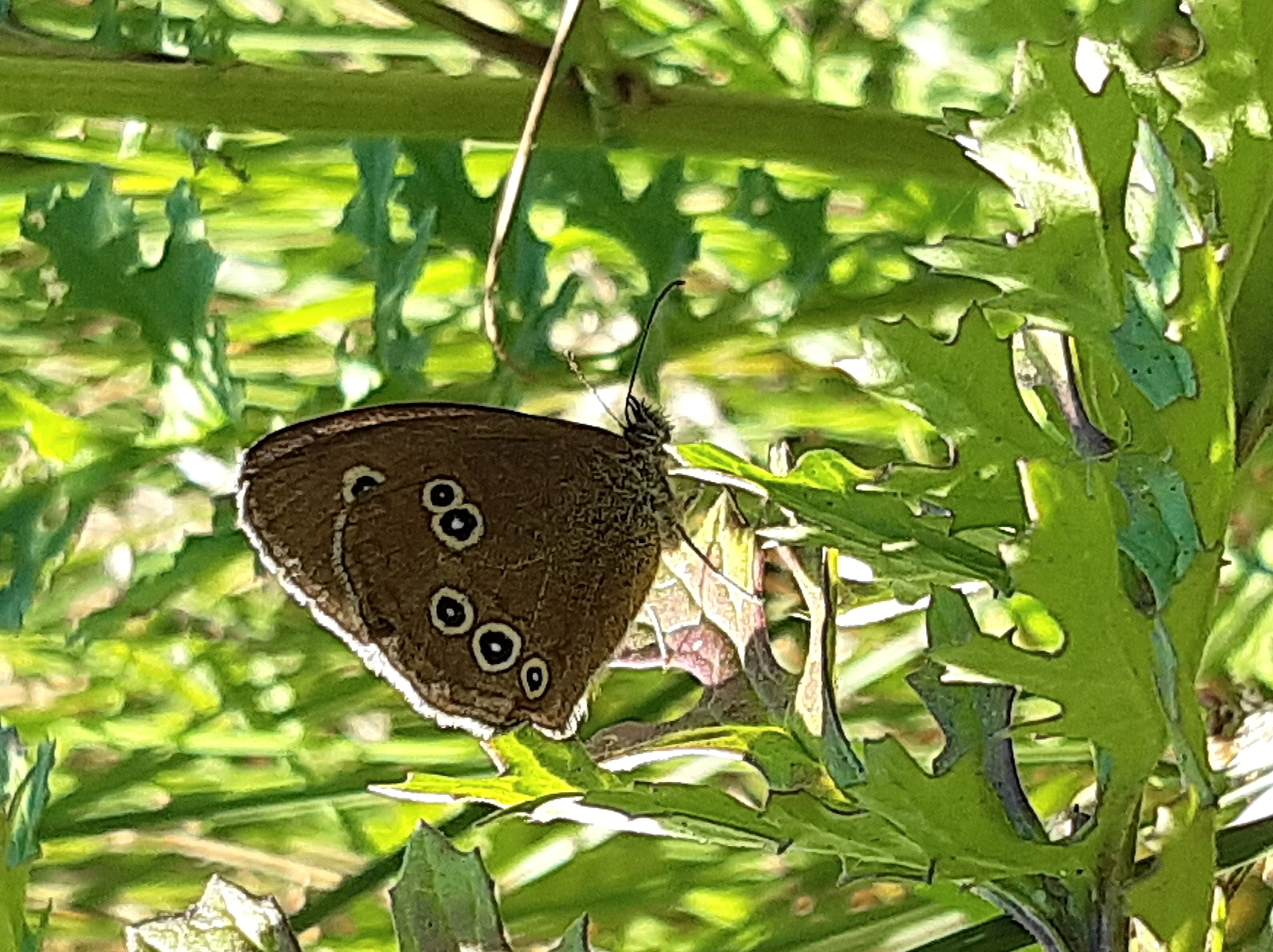
Ringlet Butterfly

P.S. It was a lovely day for butterflies, too, with Small Coppers nectaring on Ragwort flowers; Ringlets by the Pen Ponds; Small Heaths knocking seven bells out of each other; and (Cabbage) Whites and Red Admirals about too. Grasshoppers skipped about; a Lizard ran across a path into the grass. A big flock of Canada Geese, with a few Greylags, grazed peacefully. Ants rebuilt their flooded-out nests.

Indian Summer in Richmond Park

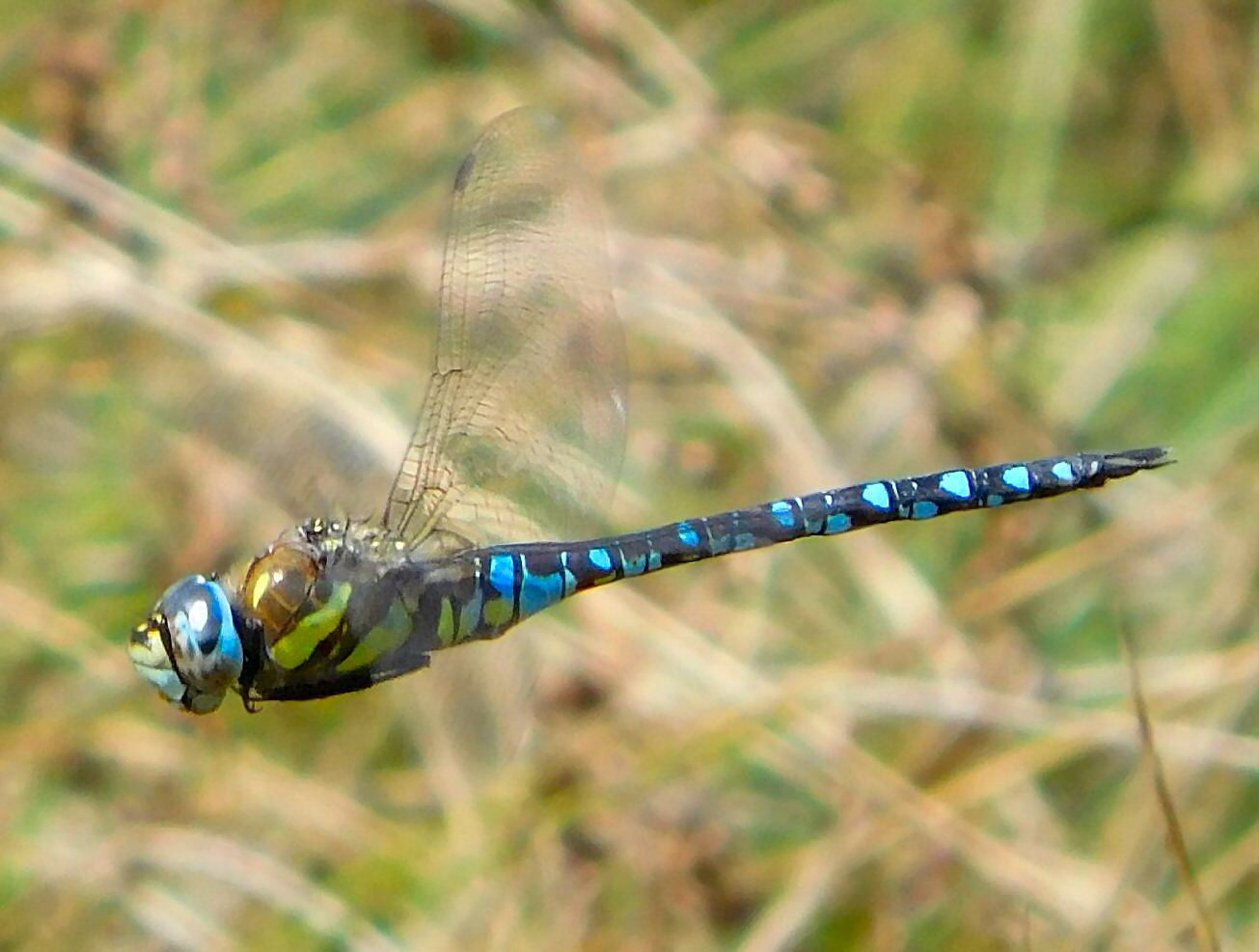
Migrant Hawker hovering by lower Pen Pond. I was pleased to get this nice shot of one of these handsome dragonflies, one of the most delicate and shimmering of the hawkers. It was alongside Common Blue damselflies (low over the path) and a few Common Darters.

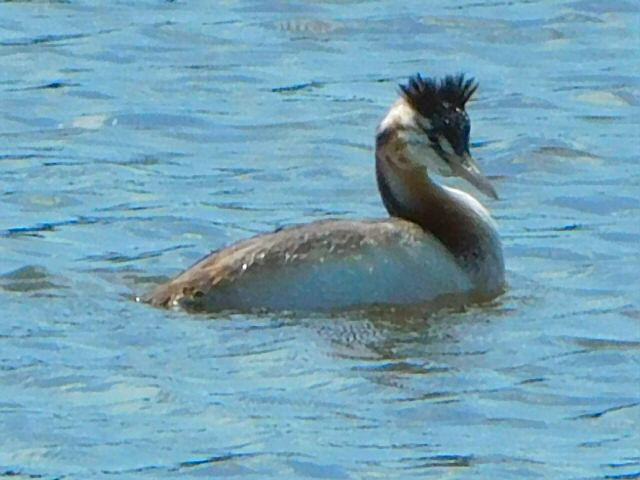
Great Crested Grebe in the warm water

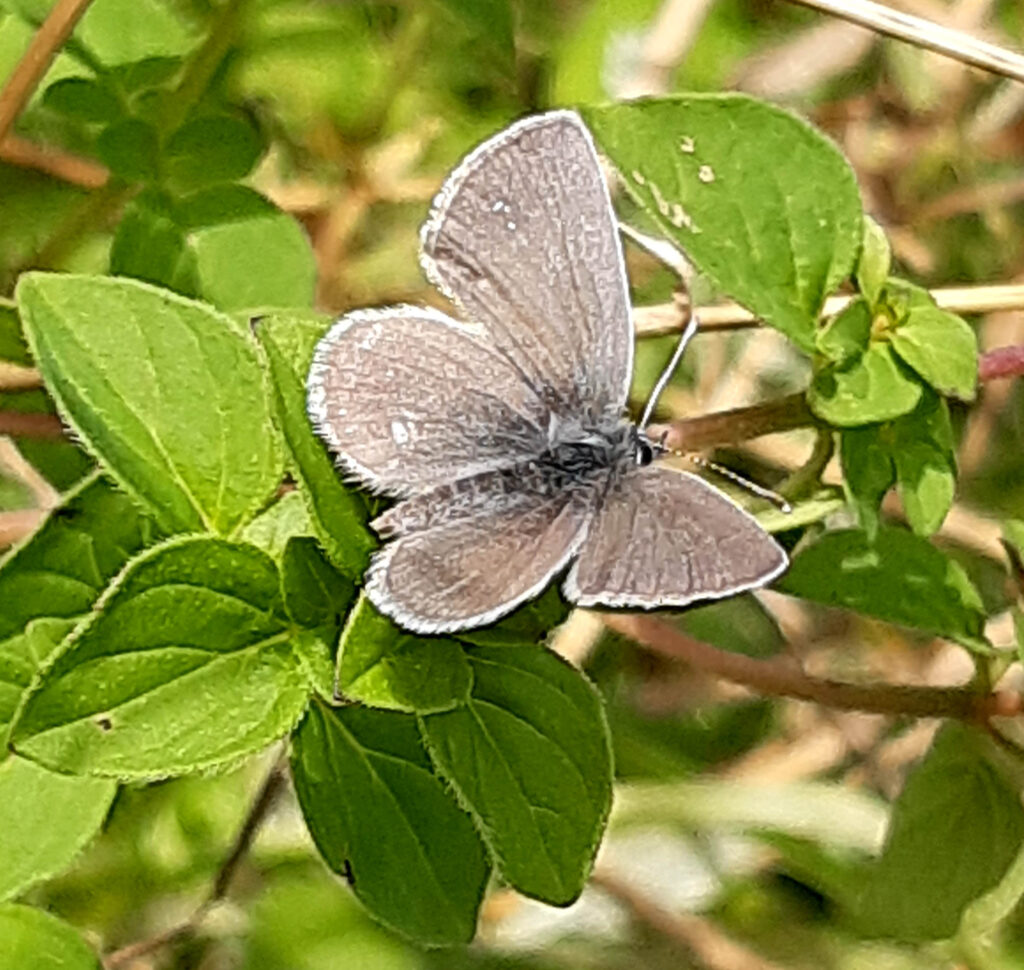
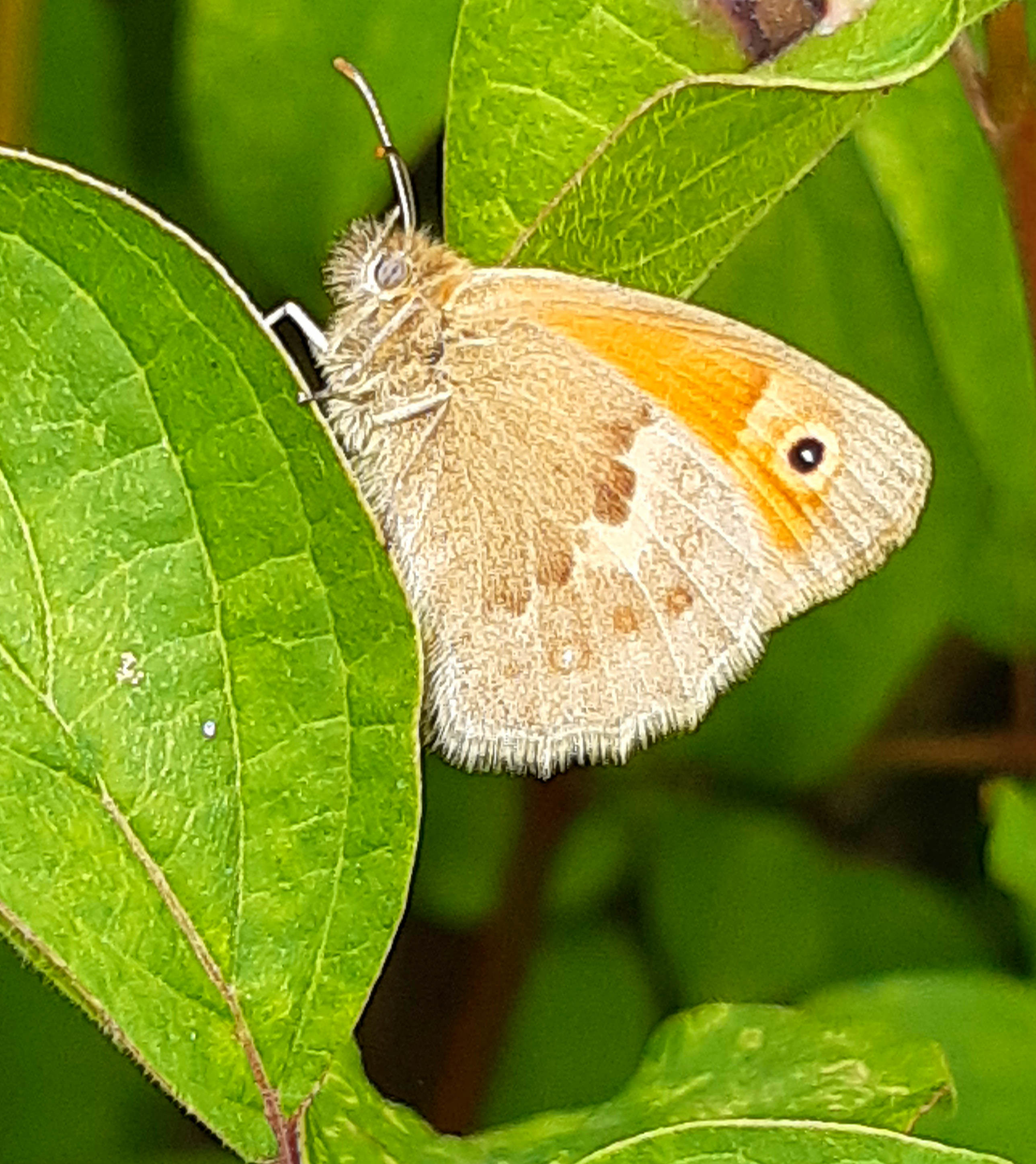
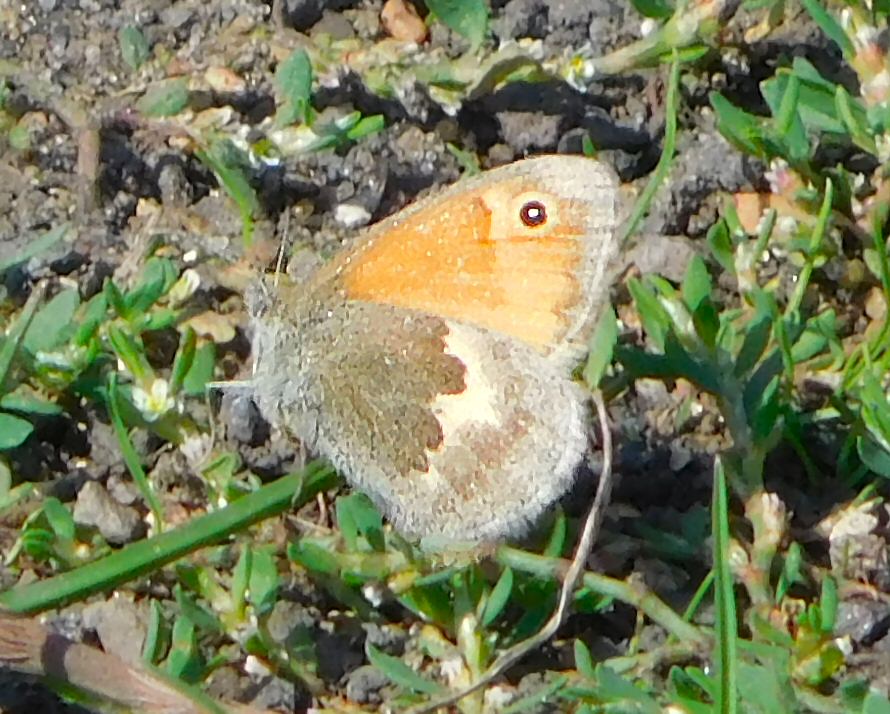
Small Heath butterfly: one of many skittering low in the short heathy grassland, perching on the ground. We saw few other insects, barring a fast and wriggly Carabid Beetle.

Therfield Heath, Royston – surviving chalk grassland in East Anglia

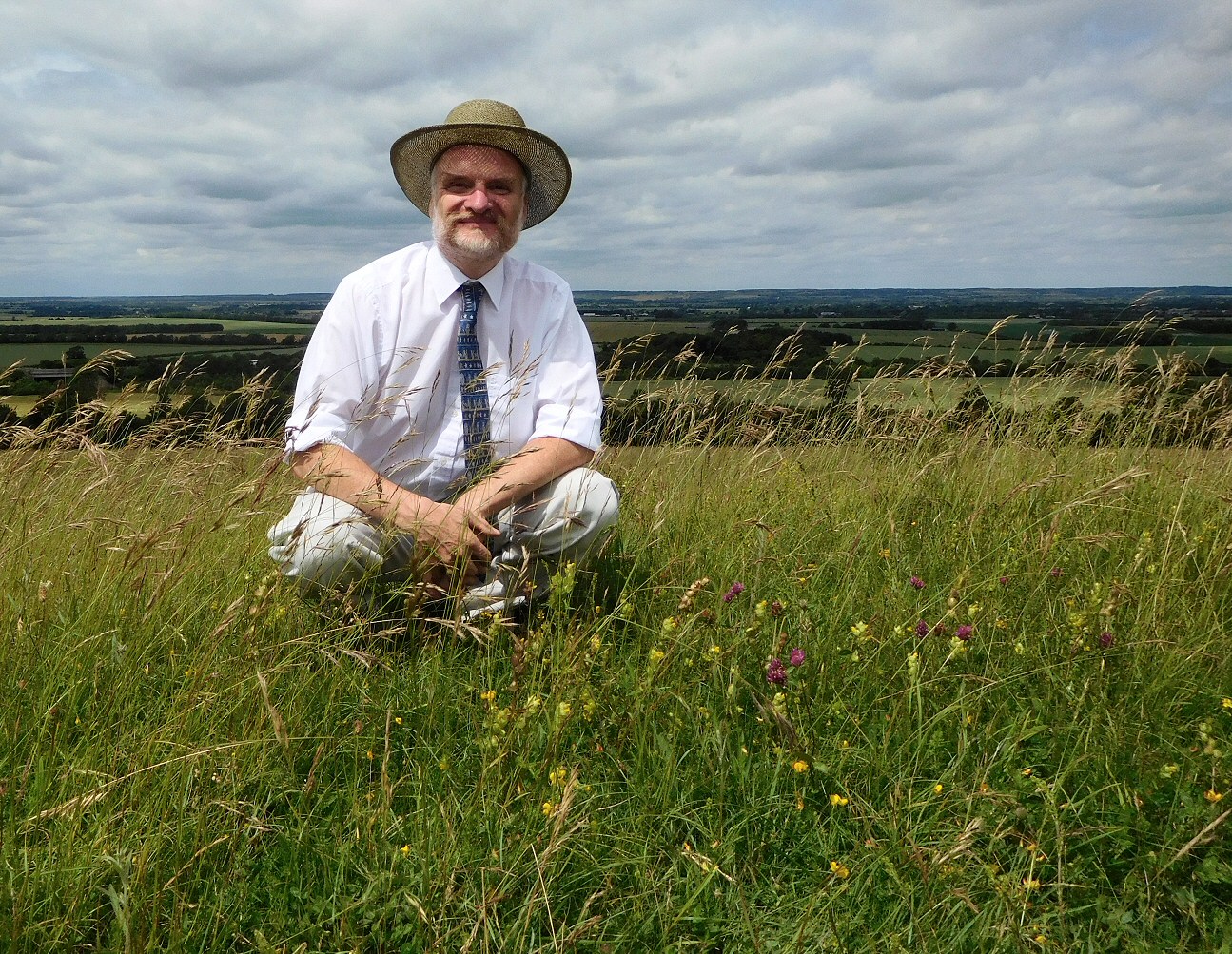
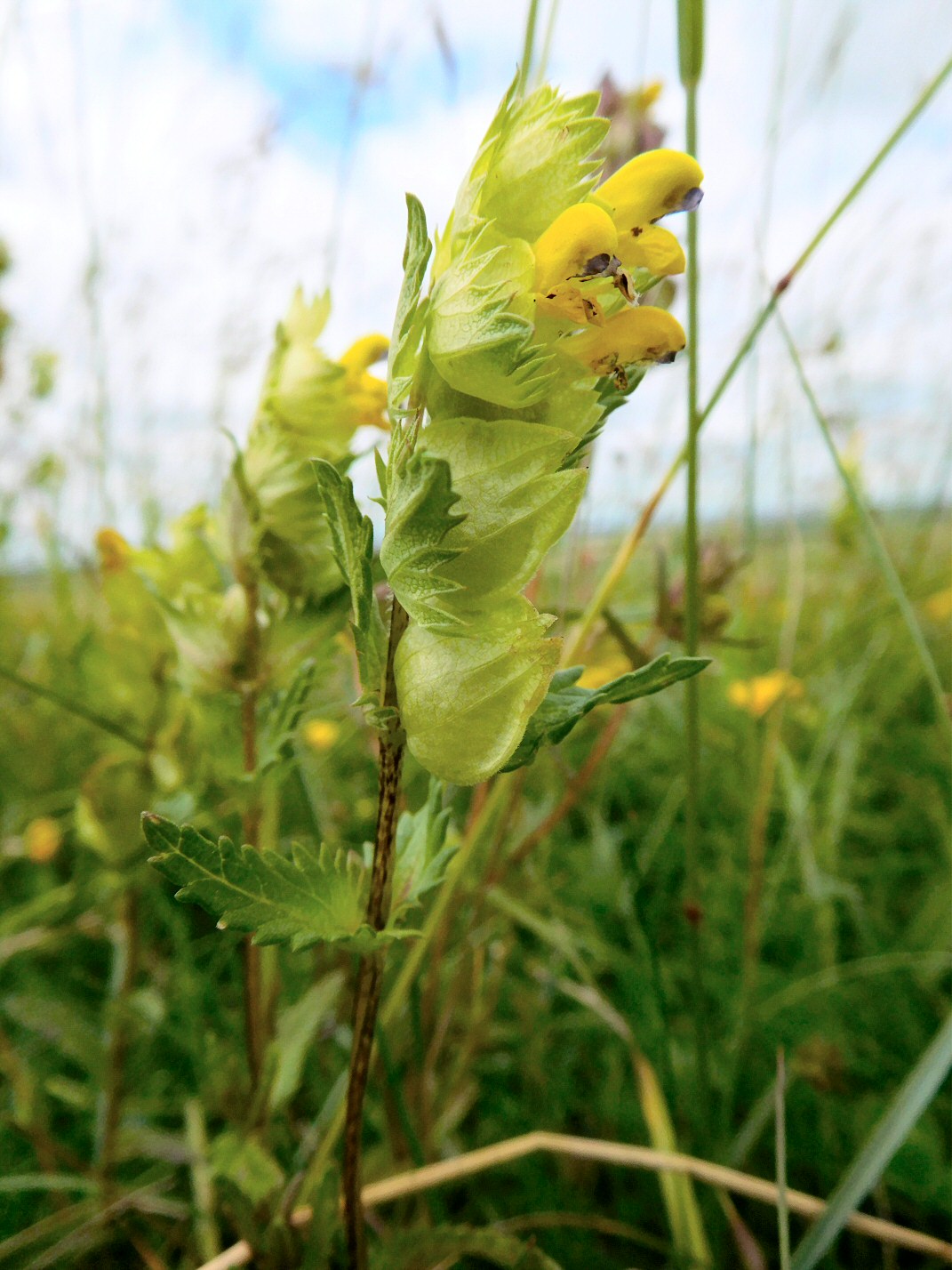
On Therfield Heath SSSI (Royston Hill) with Yellow Rattle, with the plains of Cambridgeshire behind

Much of East Anglia is flat, and very low-lying, indeed parts of the Fens are basically at sea level. But there are some hills, and even a Chalk escarpment. It’s pretty low, but still affords a fine view northwards across the plains. The nearly complete “failure of a major escarpment” is the result of the Ice Ages – the ice sheet, maybe a mile thick, ground interminably over the hills and plains, reducing most of the chalk to rock flour with flints, creating the sticky Boulder Clay that carpets much of eastern England. But at Royston, a delightful range of low hills survives, and has somehow survived the plough and the developers.

Yellow Rattle

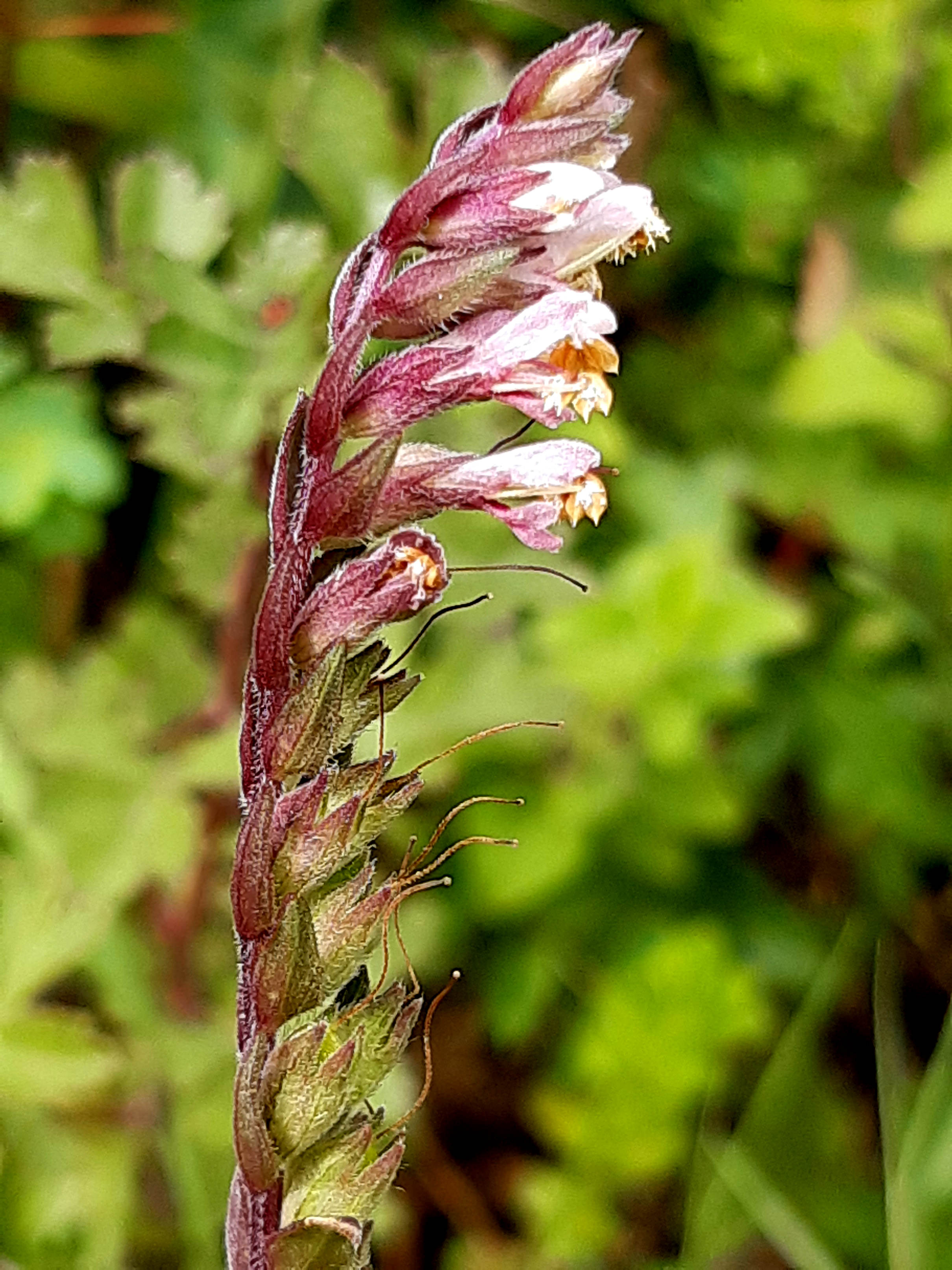
The grass of Therfield Heath (Royston Hill) is thinned by the parasitic Yellow Rattle (Orobanchaceae, the Broomrape family of parasitic plants): it helpfully weakens the grass, allowing in many other flowers, so it’s a bit of a Keystone Species, one on which the health of the ecosystem depends.

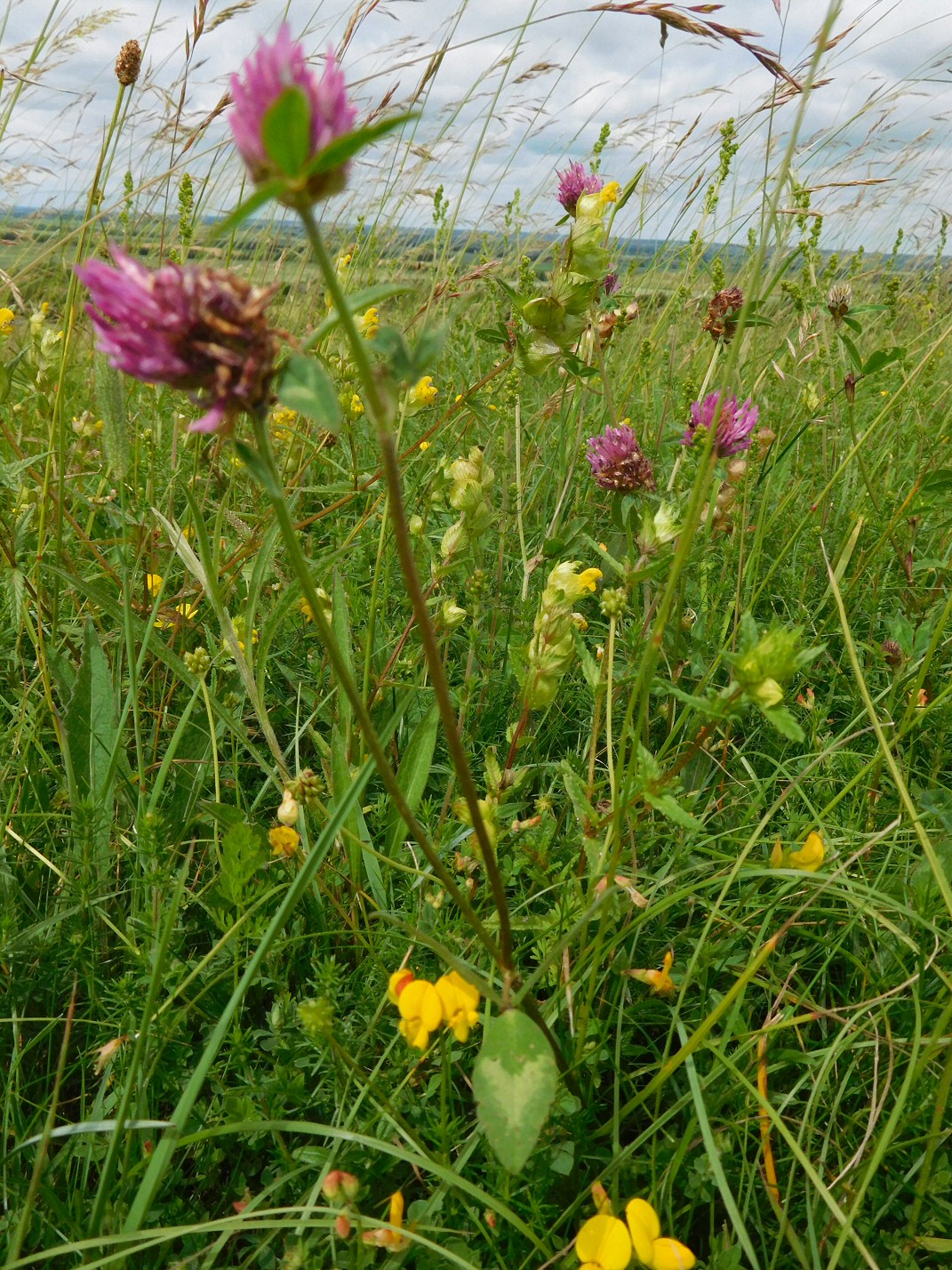
A colourful assemblage: Yellow Rattle – Red Clover – Birdsfoot Trefoil

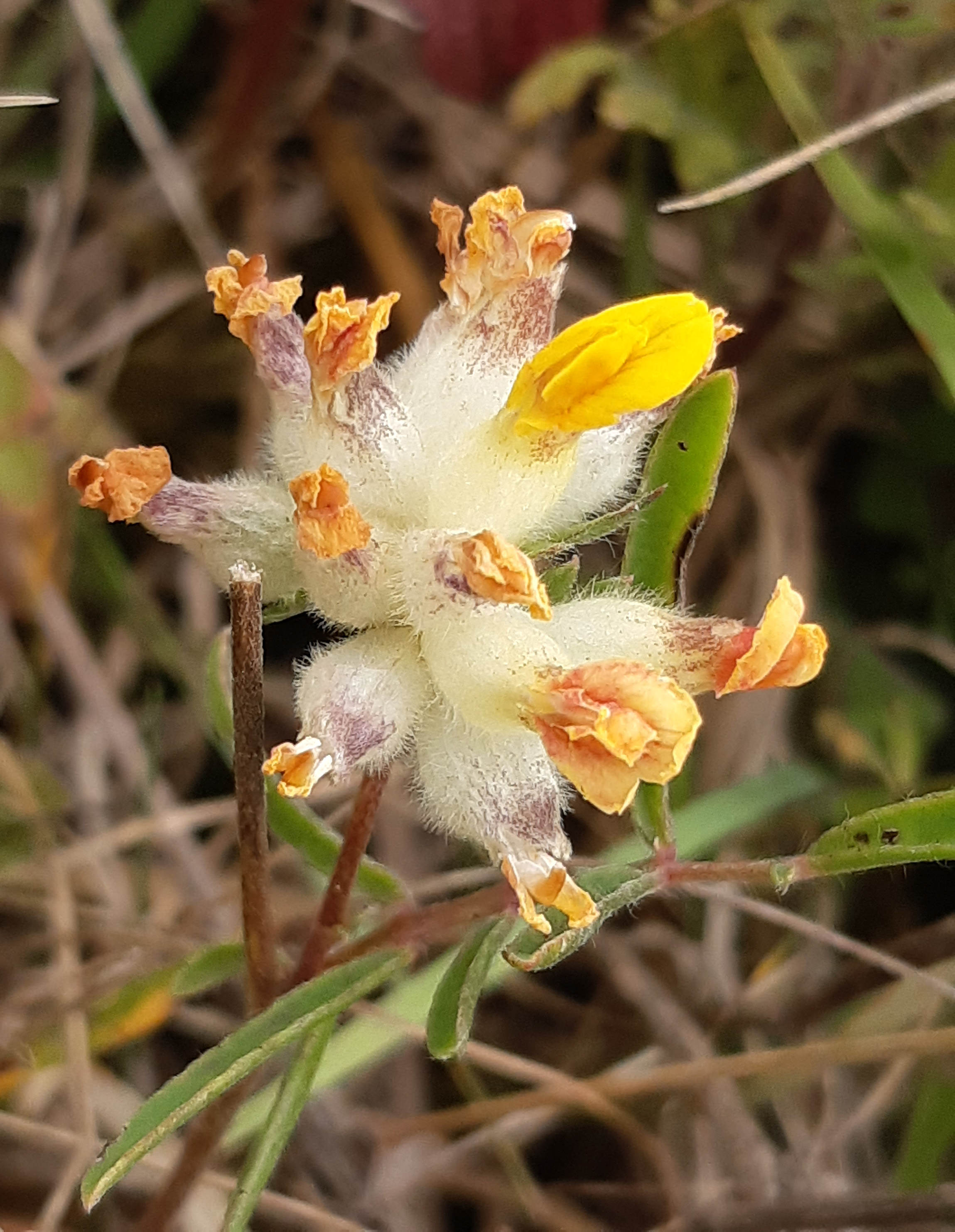
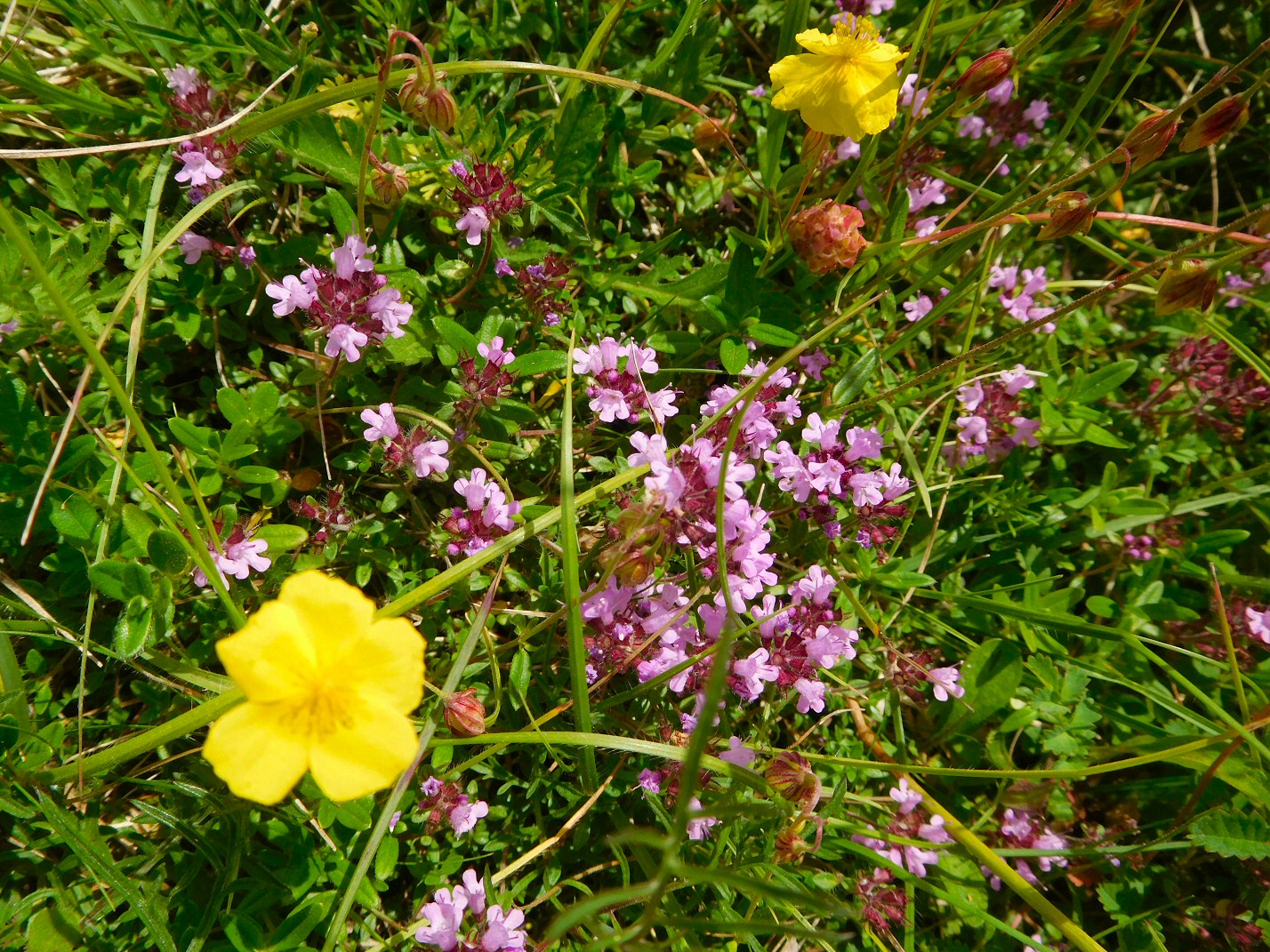
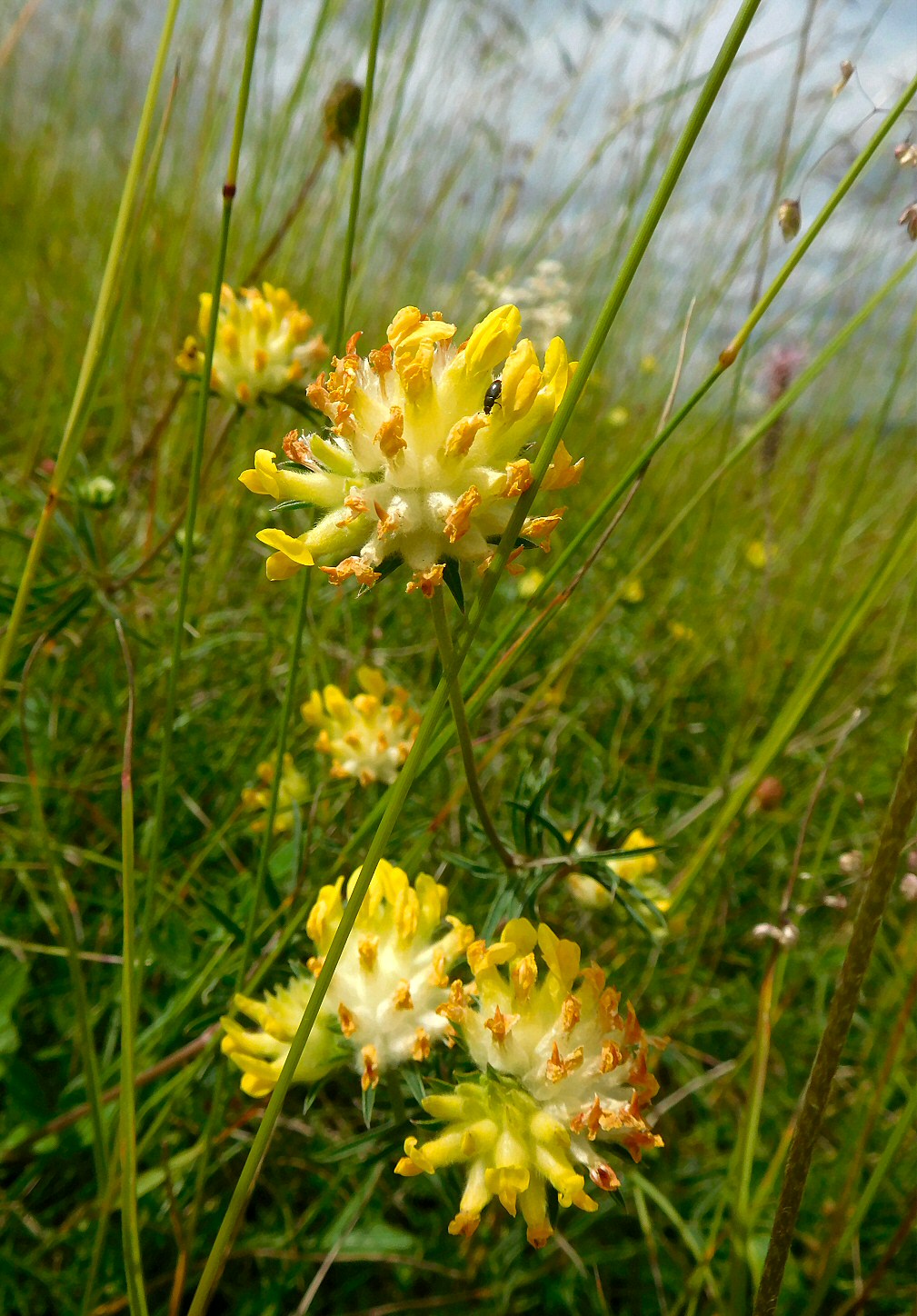
The plants let in by the weakening of the grass include a colourful and increasingly rare assemblage, which includes Kidney Vetch, Birdsfoot Trefoil, Rockrose, Thyme, Wild Mignonette and many others.

Rockrose and Thyme, attractive plants of Chalk Grassland

The flowers in turn support butterflies including Marbled White, Meadow Brown, and Small Heath. Half-a-dozen Skylarks were singing all around; one got up pretty close to us for a brief song-flight, quickly followed by several of his neighbours. A Swift dashed overhead. All these once-familiar and widespread species are becoming rather special, a measure of the ecological disaster that has spread not just across England but across Europe and, really, the whole world.

Kidney Vetch

Meadow Brown on Thyme

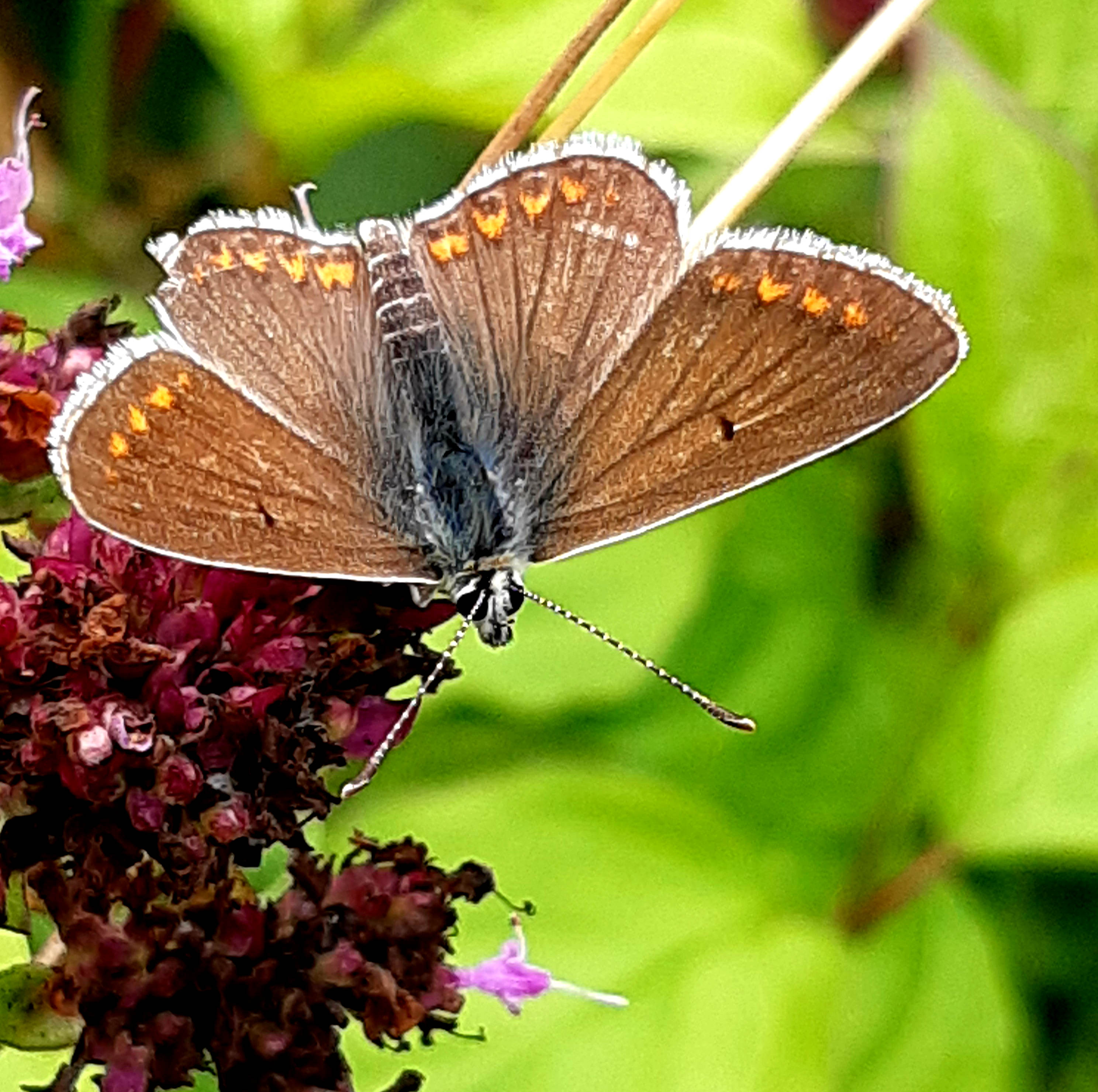
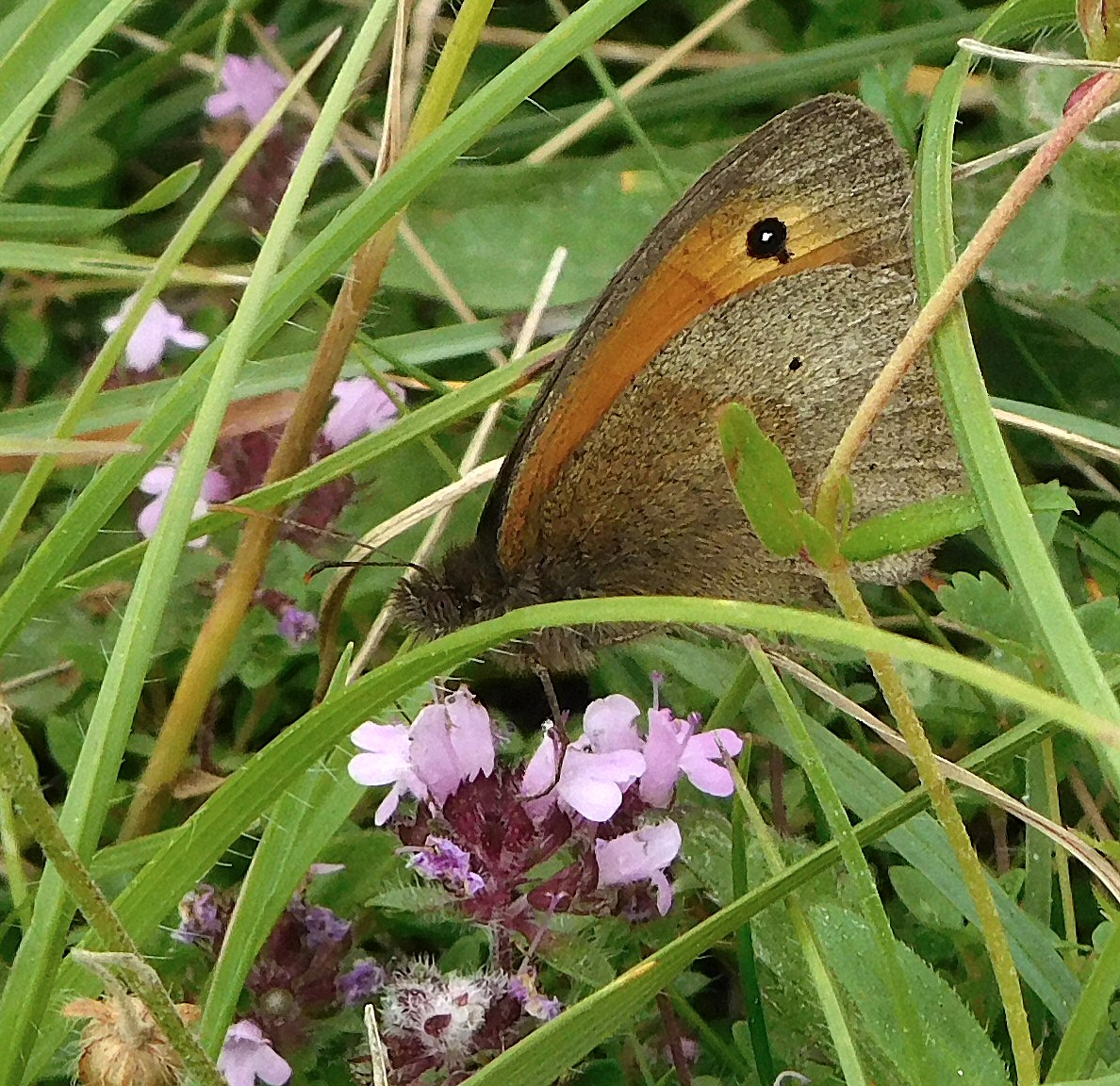
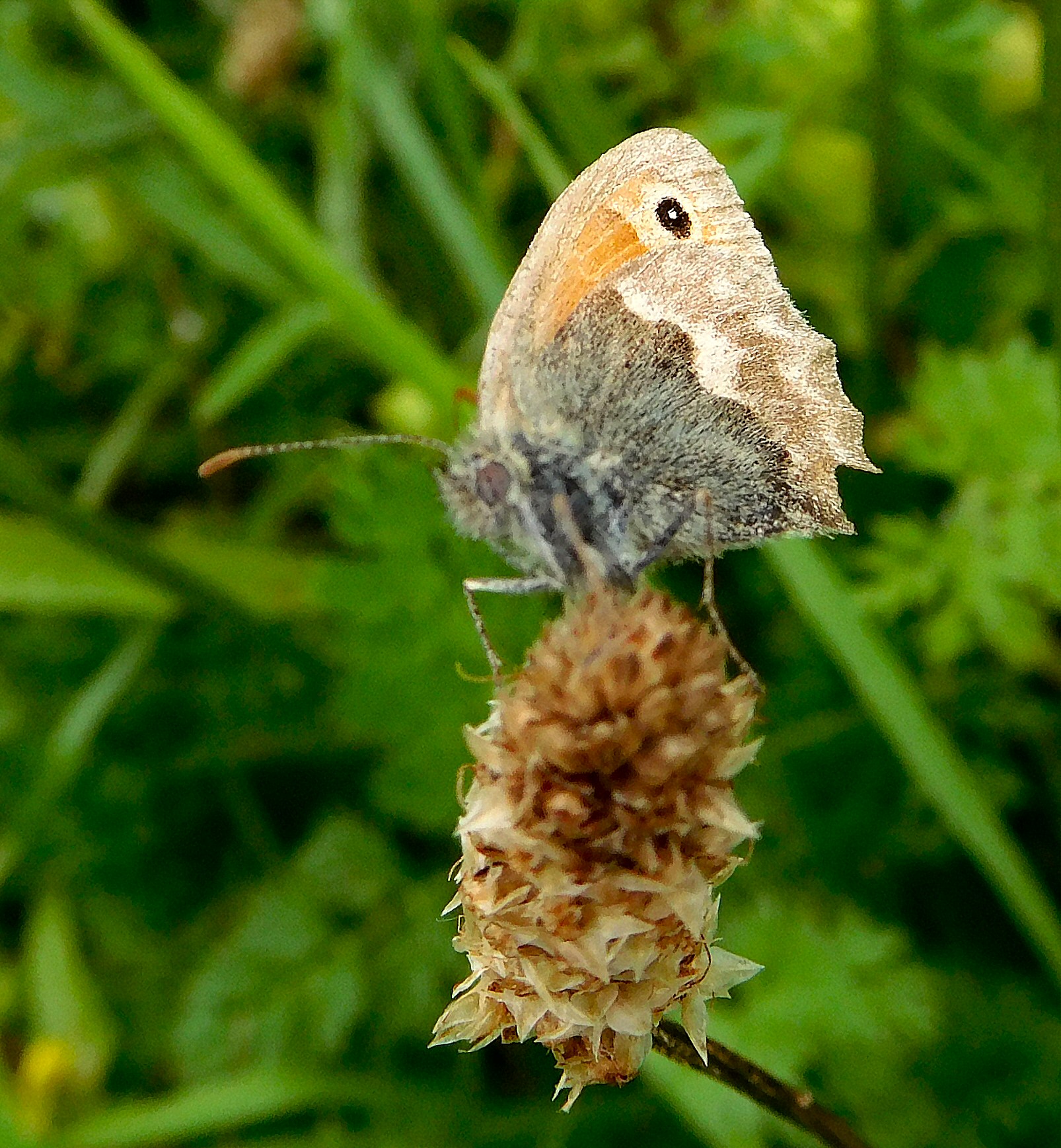
Small Heath

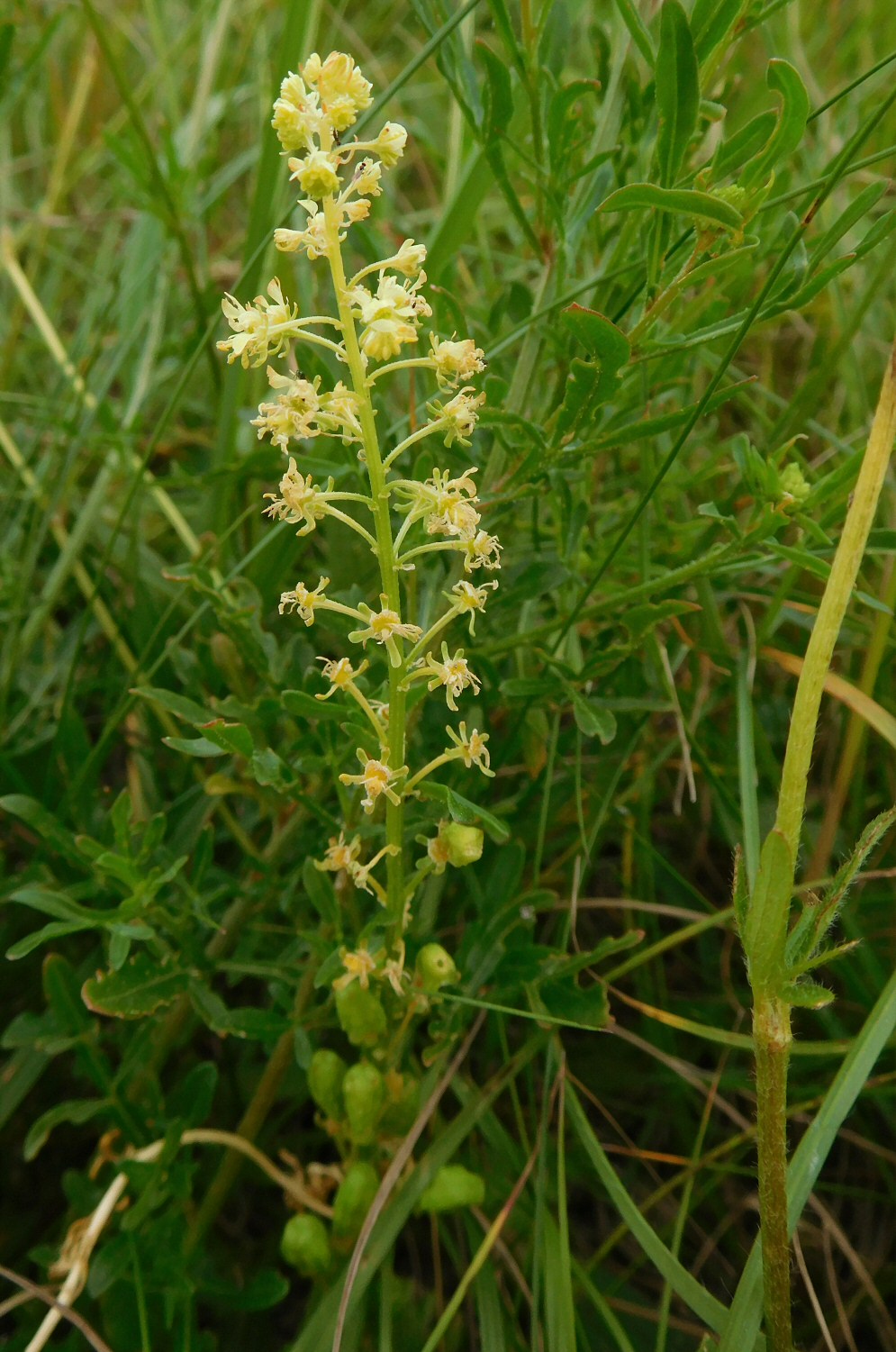
Wild Mignonette

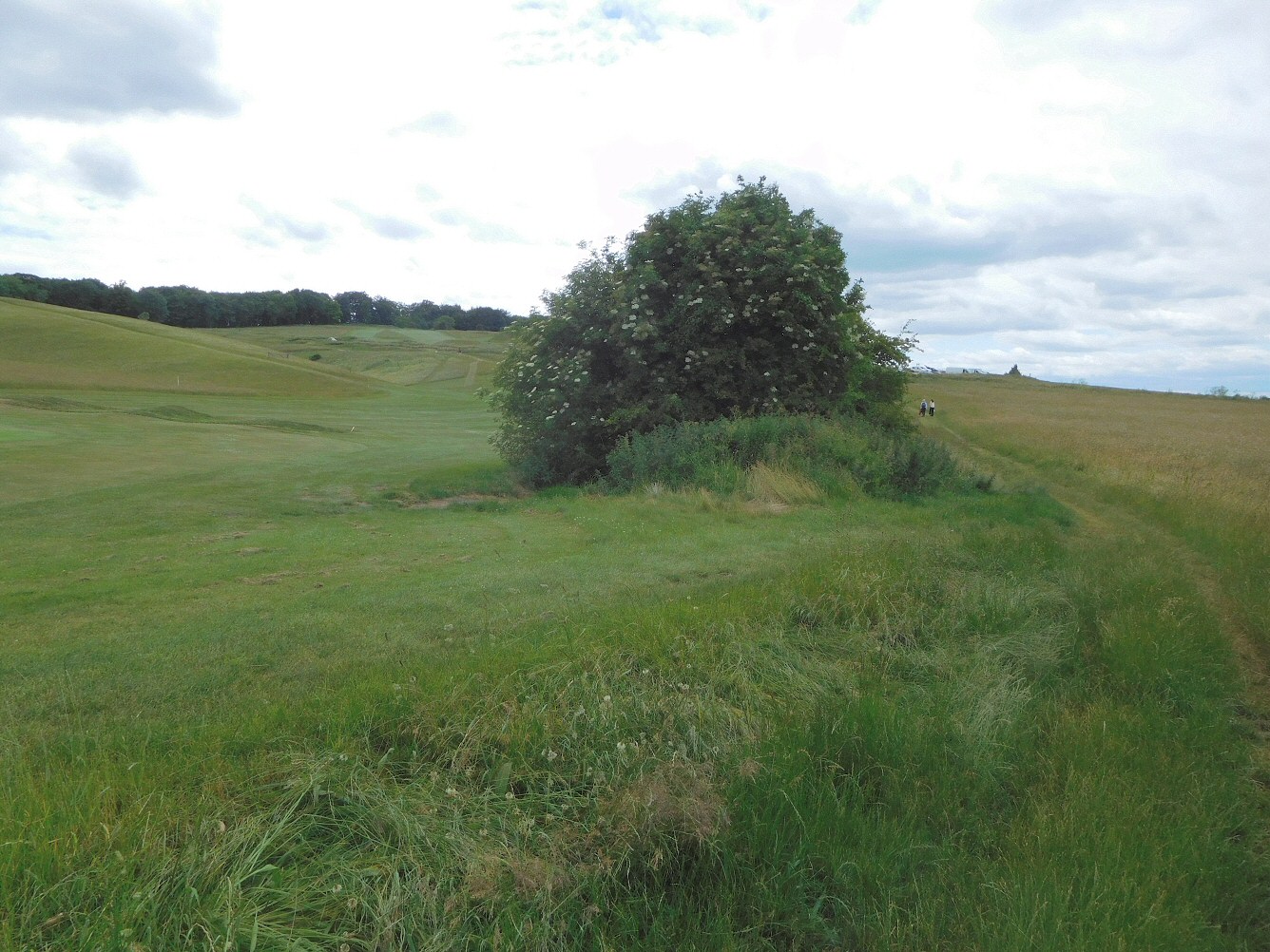
Therfield Heath landscape with Elder-Hawthorn bush

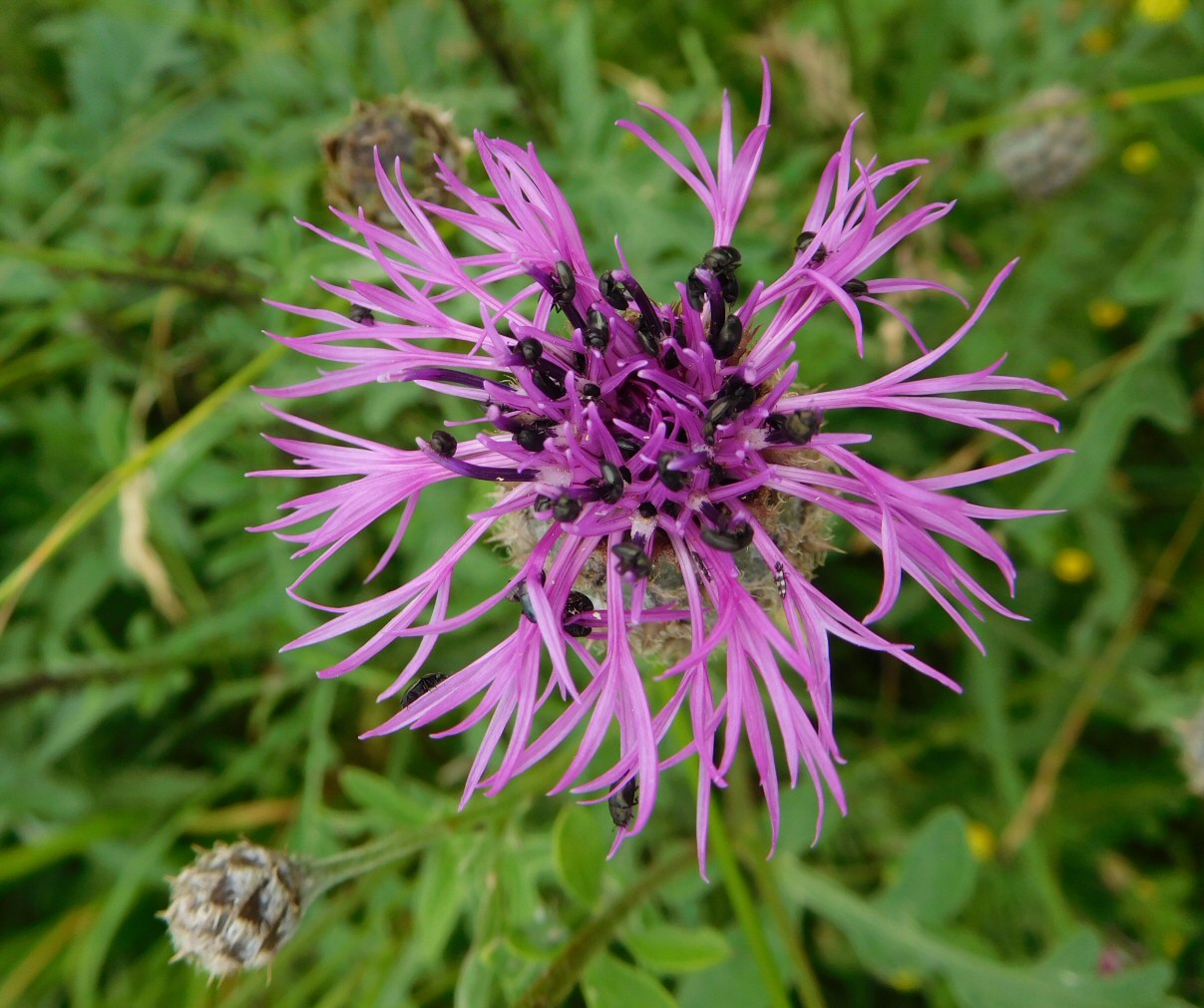
Greater Knapweed

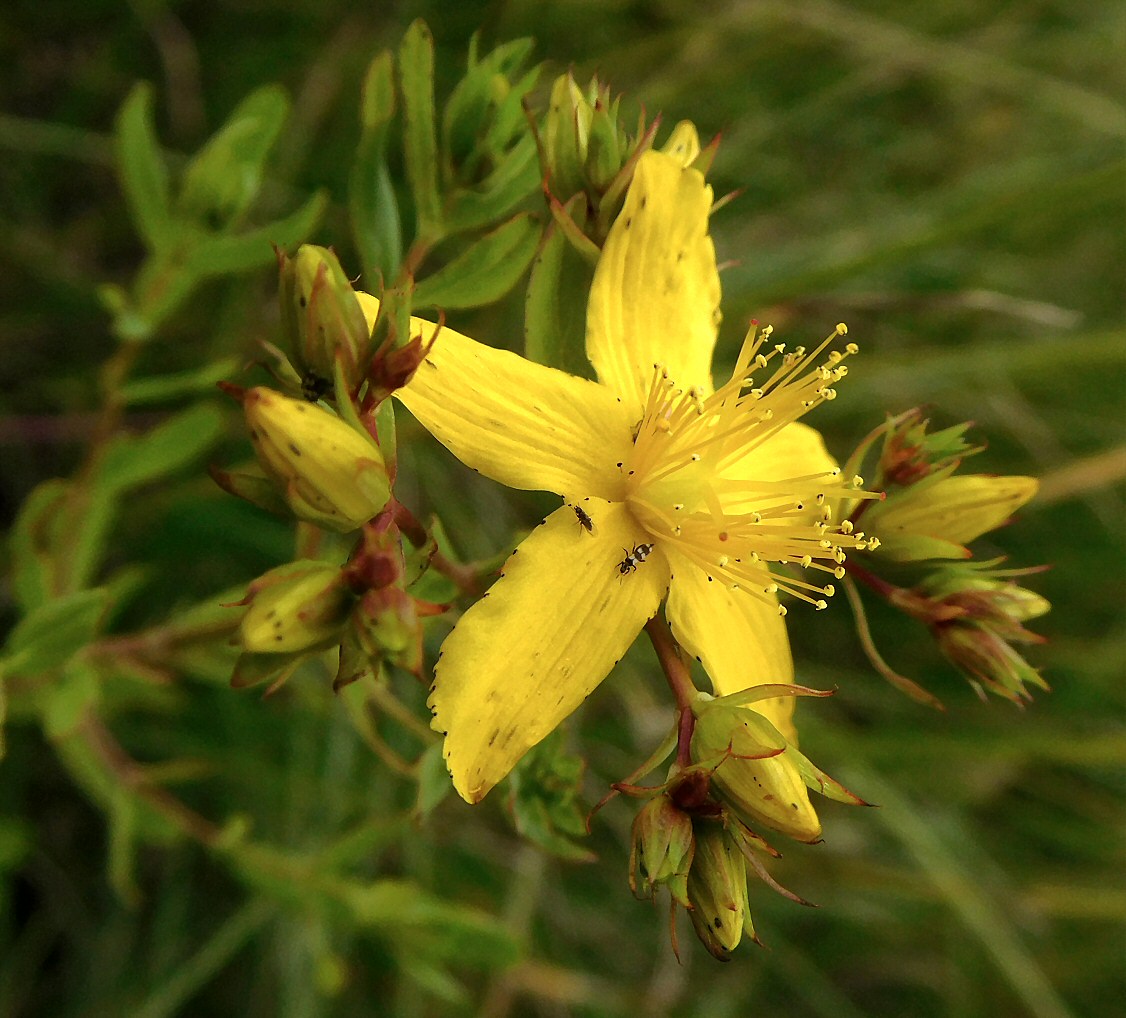
Perforate St John’s Wort with interesting small pollinators

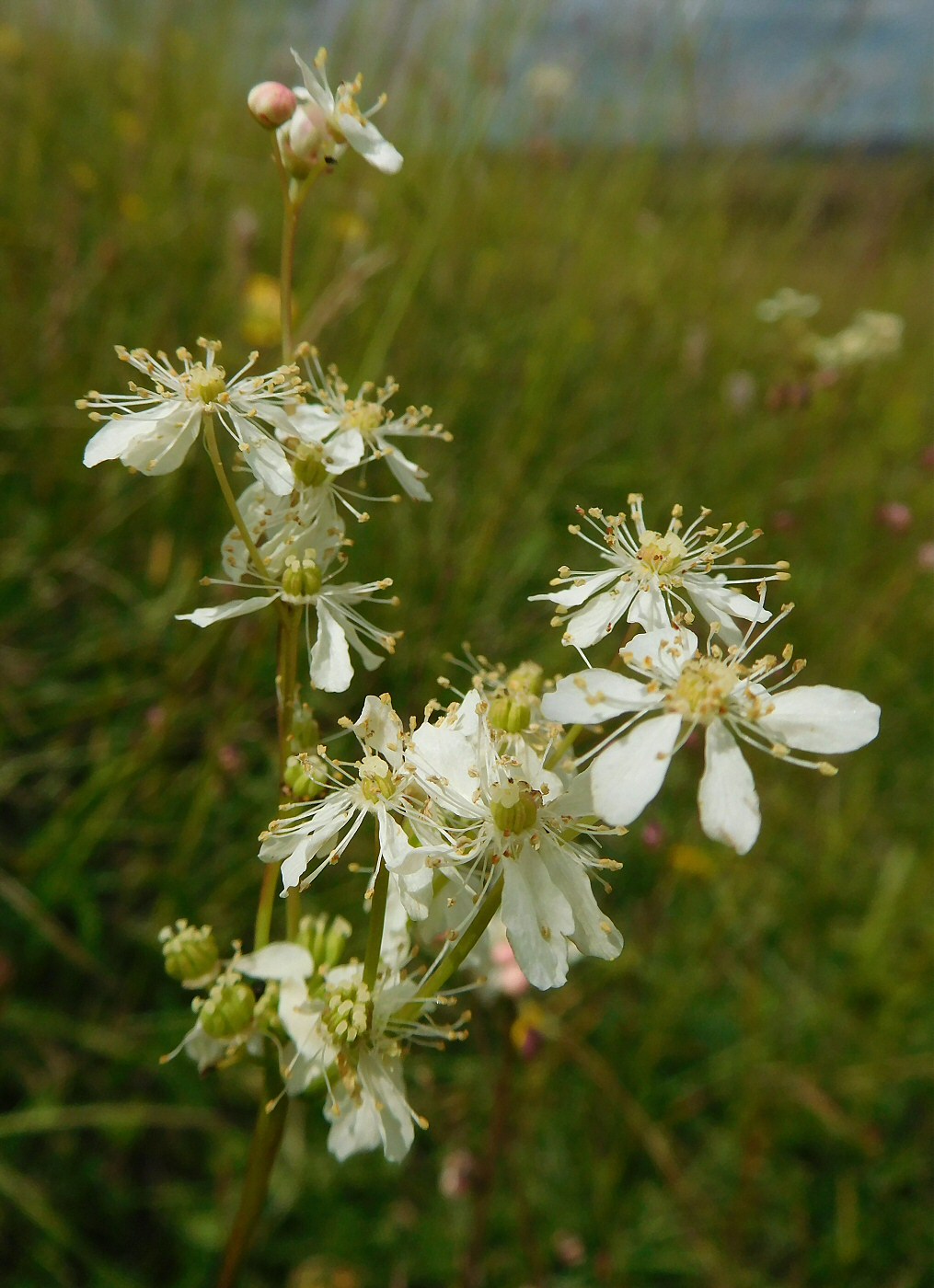
It’s interesting to see a pattern in the distribution of plants. I last saw Dropwort on Helsington Barrows, a limestone hill at the southern edge of the Lake District (not a place with much limestone, given the area’s ancient volcanic rocks and slates). Here it’s on a very different form of limestone, chalk, but if the soil is alkaline and supports open grassland, that’s fine with Dropwort.  It’s a plant with a beautiful foamy white cluster of flowers on a rather isolated stalk rising from the grassland. The attractive foaminess is reminiscent of Meadowsweet, Filipendula ulmaria, and indeed Dropwort is in the same genus: it’s Filipendula vulgaris, though it could hardly be called common these days.

Dropwort, Filipendula vulgaris