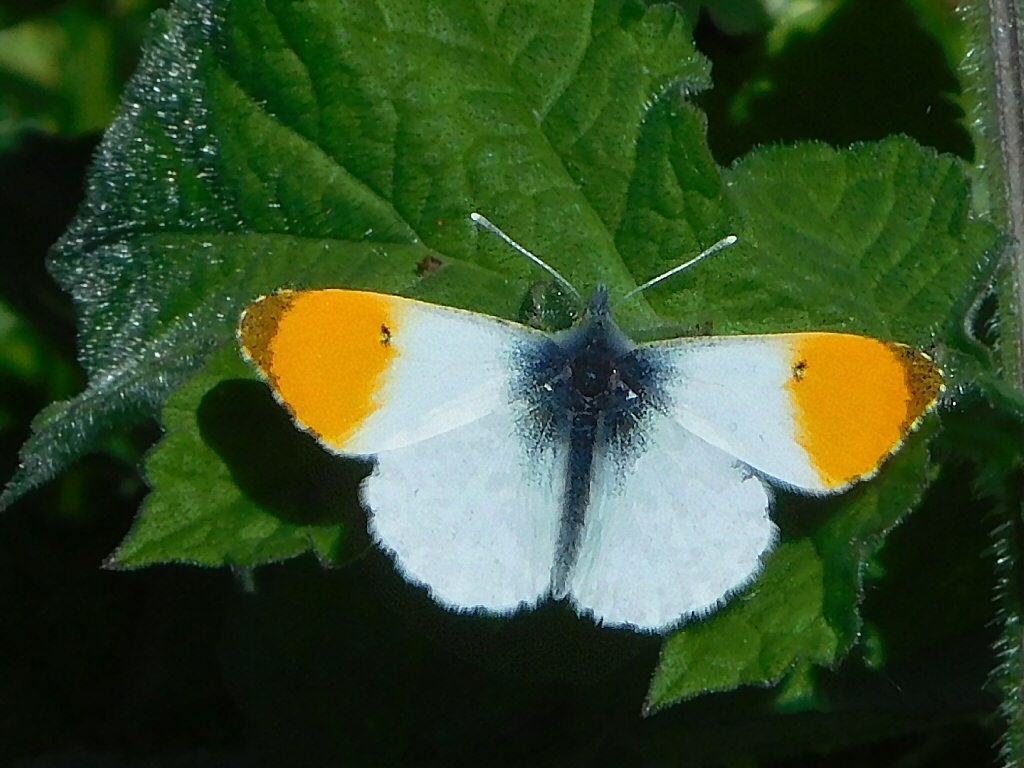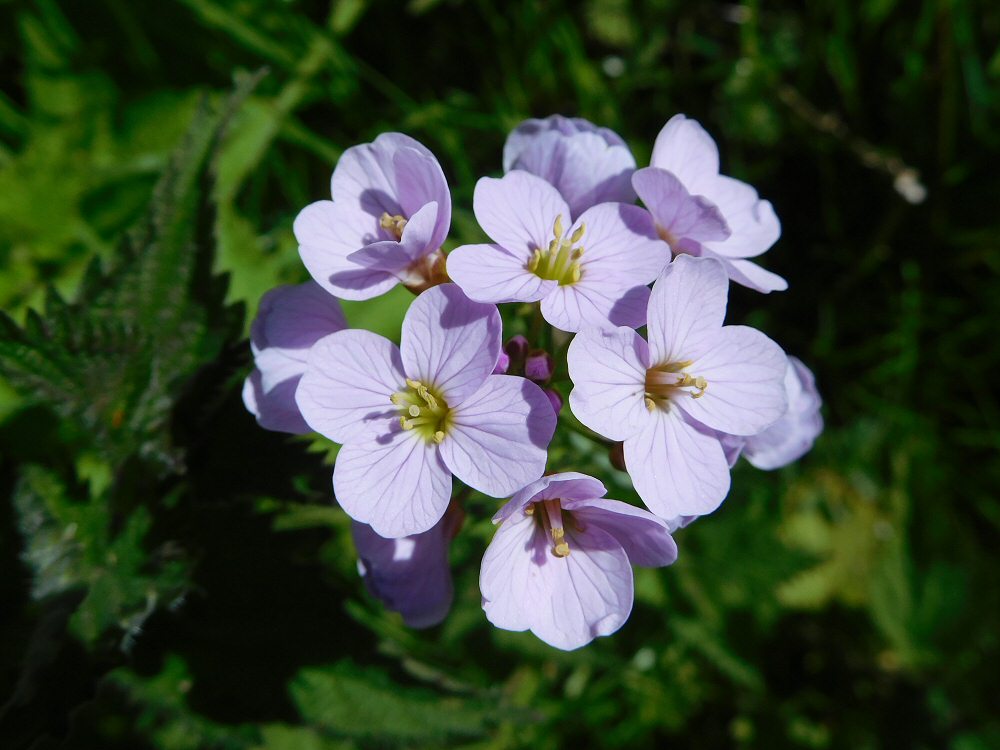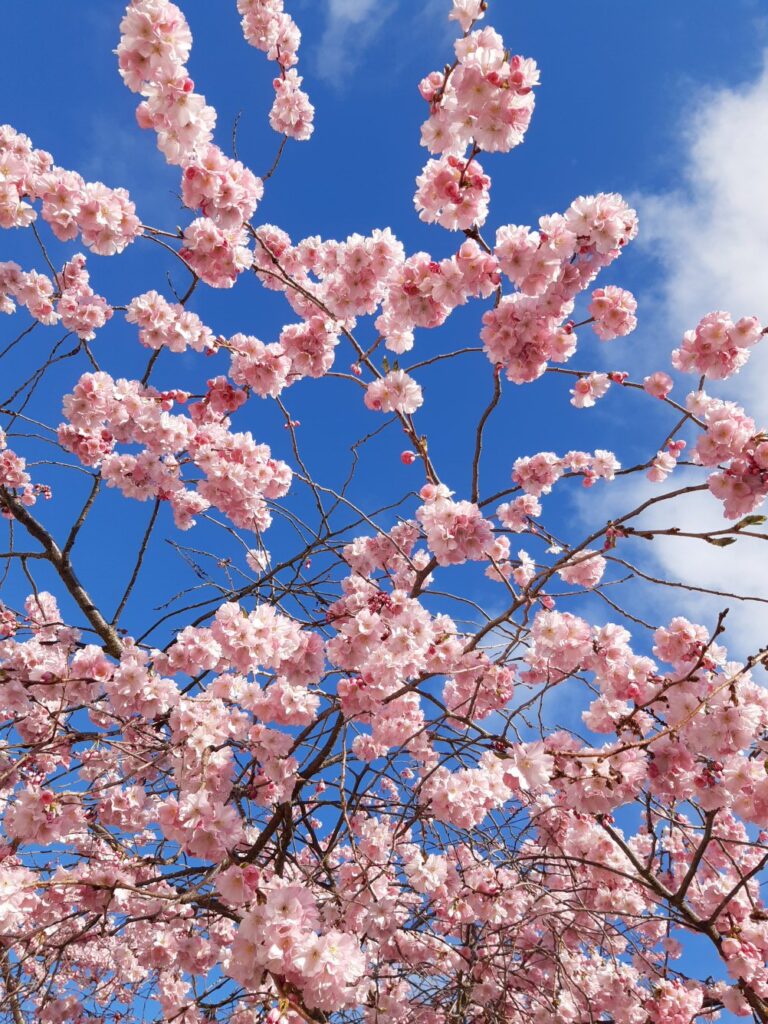
Male Orange Tip butterfly, a herald of summerCuckoo Flower, and yes, it’s so named because it comes out when the Cuckoo arrives
Cuckoo Flowers … and a singing Cuckoo! A real pleasure after months of lockdown. And a flight of 3 Swifts over the lake:
“Sumer is Icumen In, Lhude sing Cuccu!”
sang the Middle English poet, centuries ago.
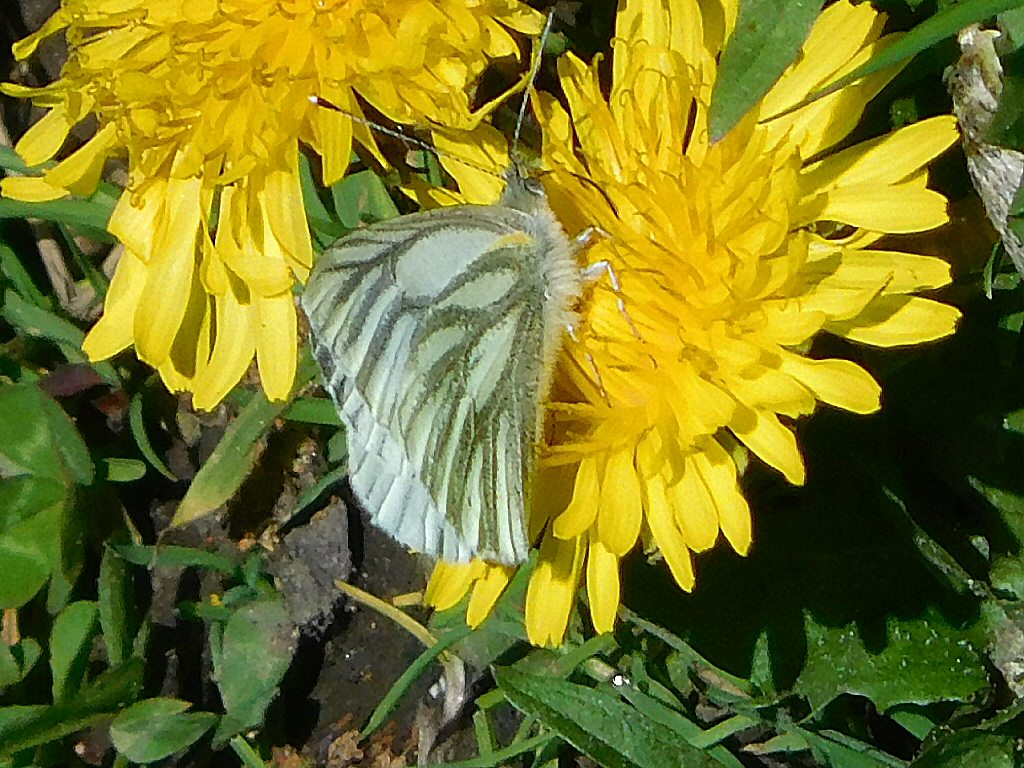
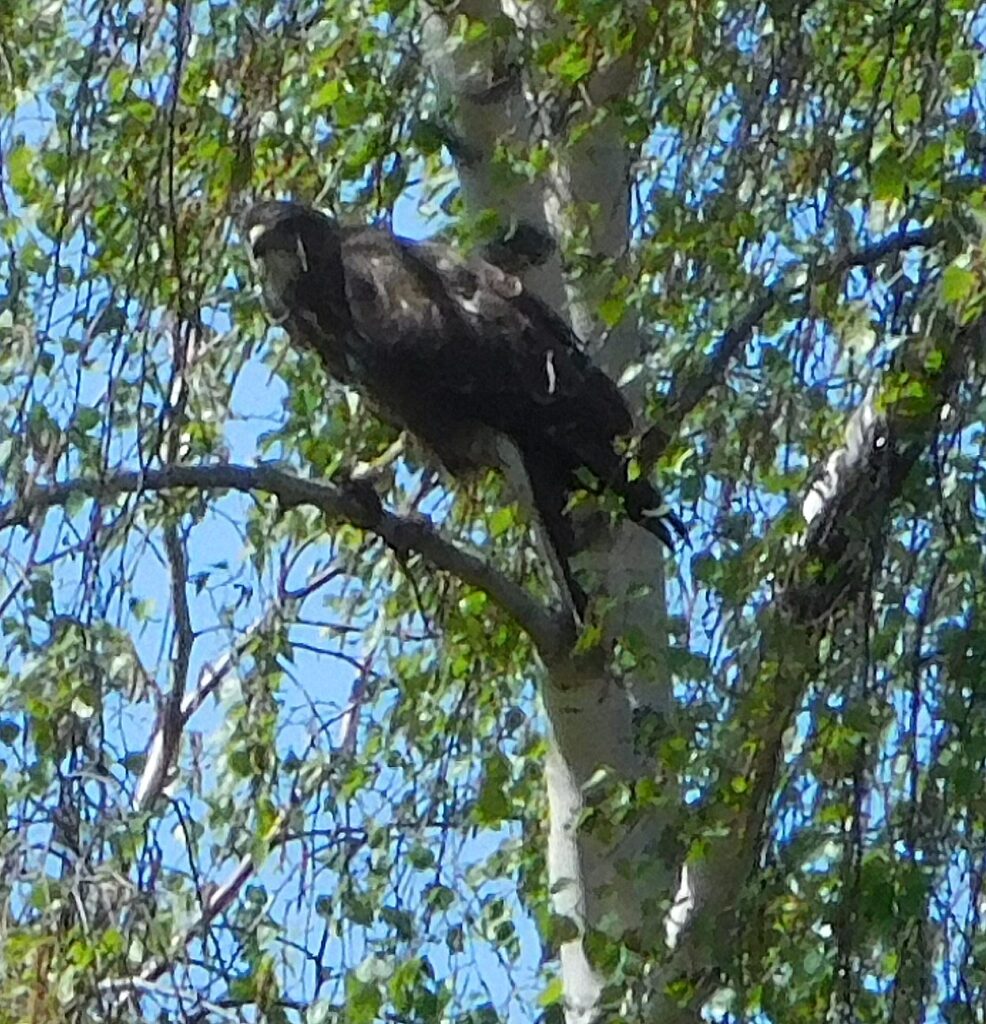
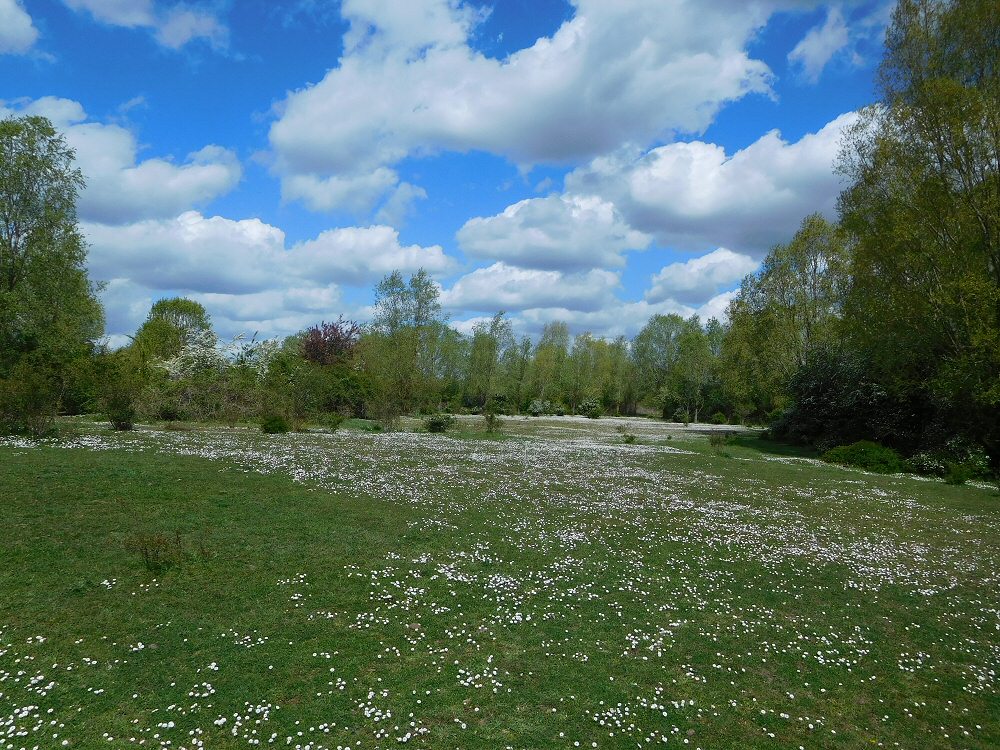
A Green-Veined White butterfly taking nectar in the brilliant sunshineA Buzzard with prey, eyeing the camera beadily from a tall treeA beautifully-framed lawn of Daisies among the Willows and Poplars
Not pictured are the many Warblers that were singing today – Blackcaps, Chiffchaffs, Garden Warblers, Cetti’s Warblers, and Whitethroats. There weren’t any Sedge Warblers, though, something there always used to be here.
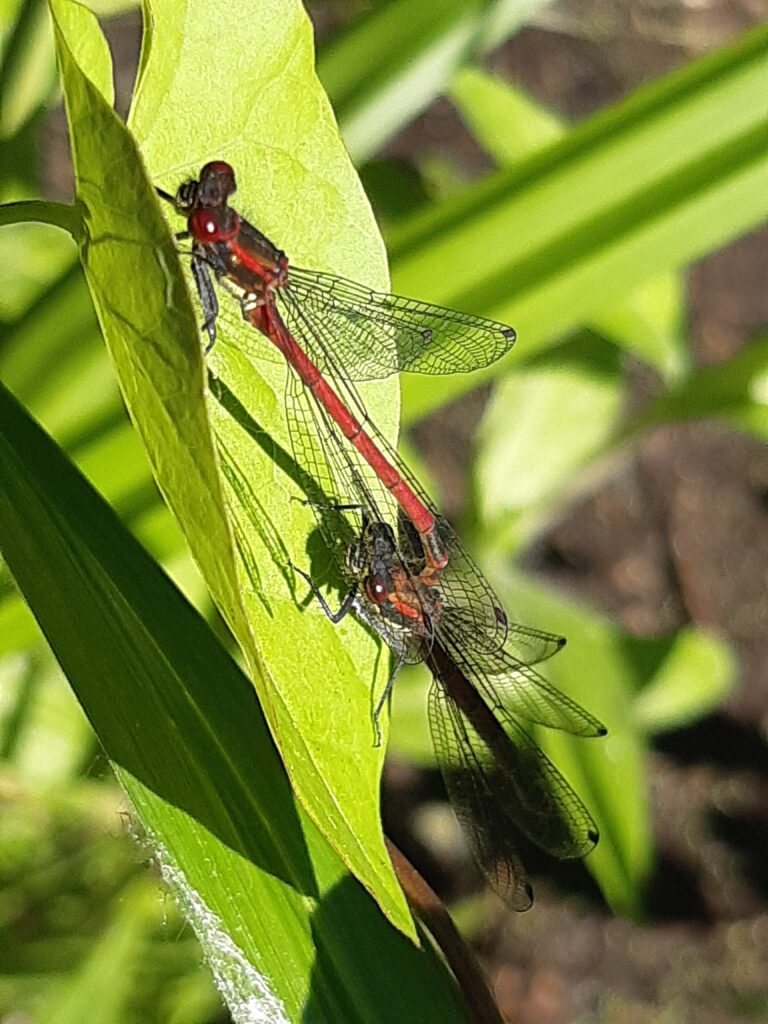
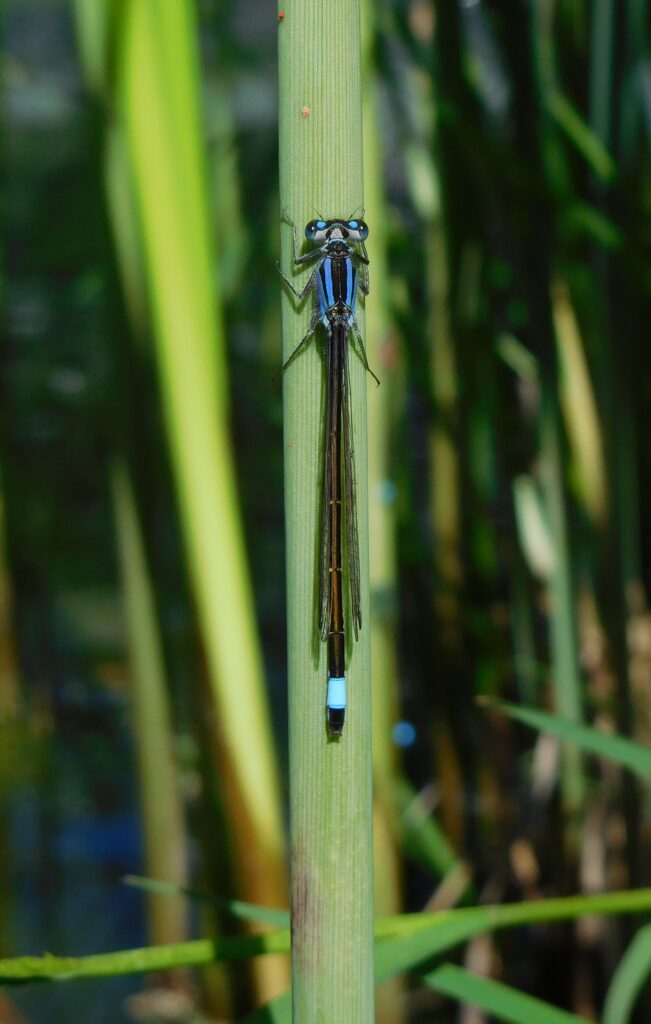
Apart from the attractive butterflies, there were the year’s first Banded Demoiselles, the males with their long transparent wings marked with a large dark blue patch; and near the water, Alder flies with their clear wings with dark veins.
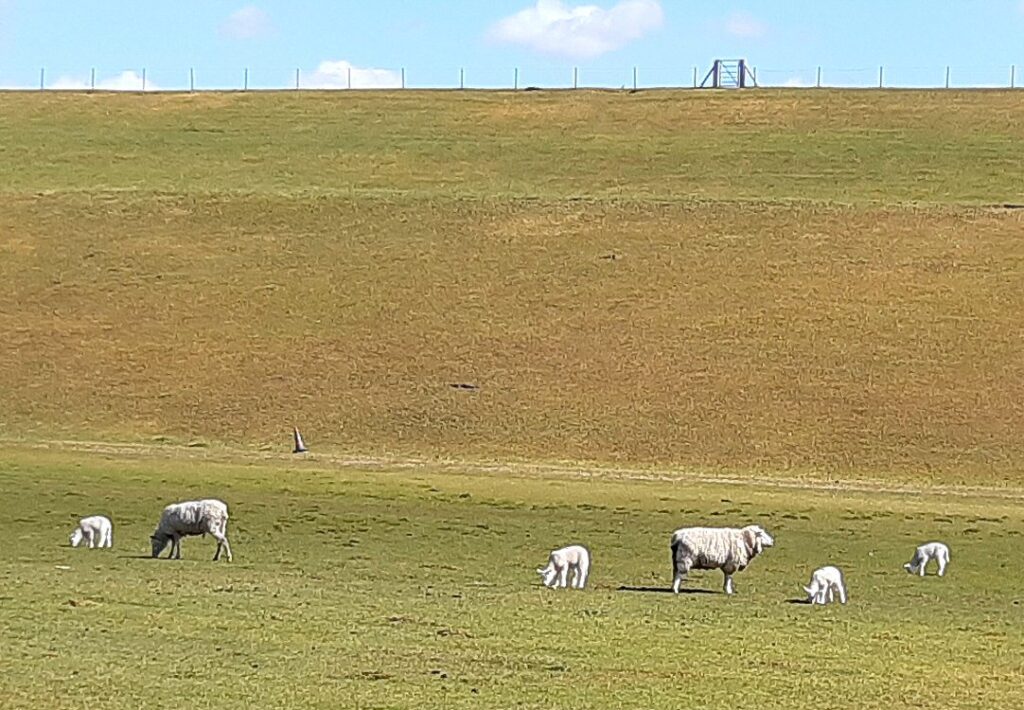
Ewes and lambs grazing the banks of the reservoir
Isn’t that a fine sight for London? Sheep peacefully grazing the steep grassy banks of the reservoir. The water company saves a lot of trouble, noise, fuel, money, and frankly danger trying to mow the slopes: the sheep do the job better. Now if only everything was so well thought out…
Balm to the urban soul … Cherhill Down and monument, taken from the edge of the Iron Age Hill Fort (the White Horse just out of shot, to the right). A view that must stretch for 50 miles. Silence. Space. Sky.
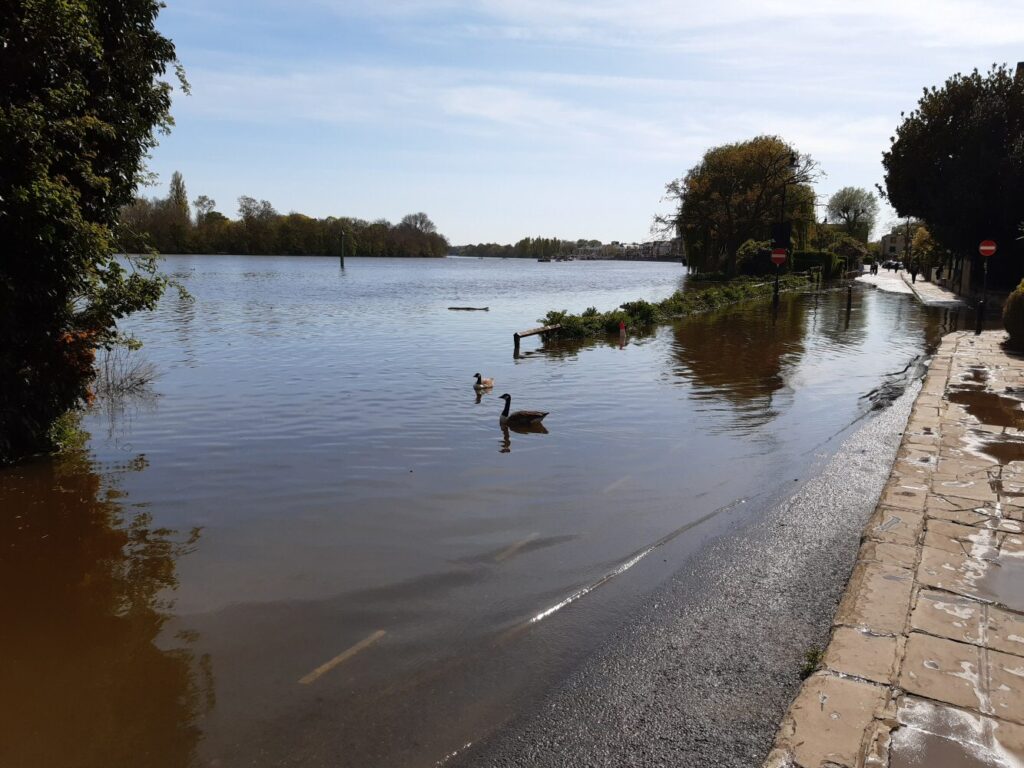
The goose is swimming in the road; the camera position is the pavement which stretches away on the right, though the road junction in the middle distance is flooded. The opposite side of the road is marked by the fence which runs from image centre to upper right. This happens at high spring tides, at least when the Thames Barrier is not operated to prevent damaging flooding.
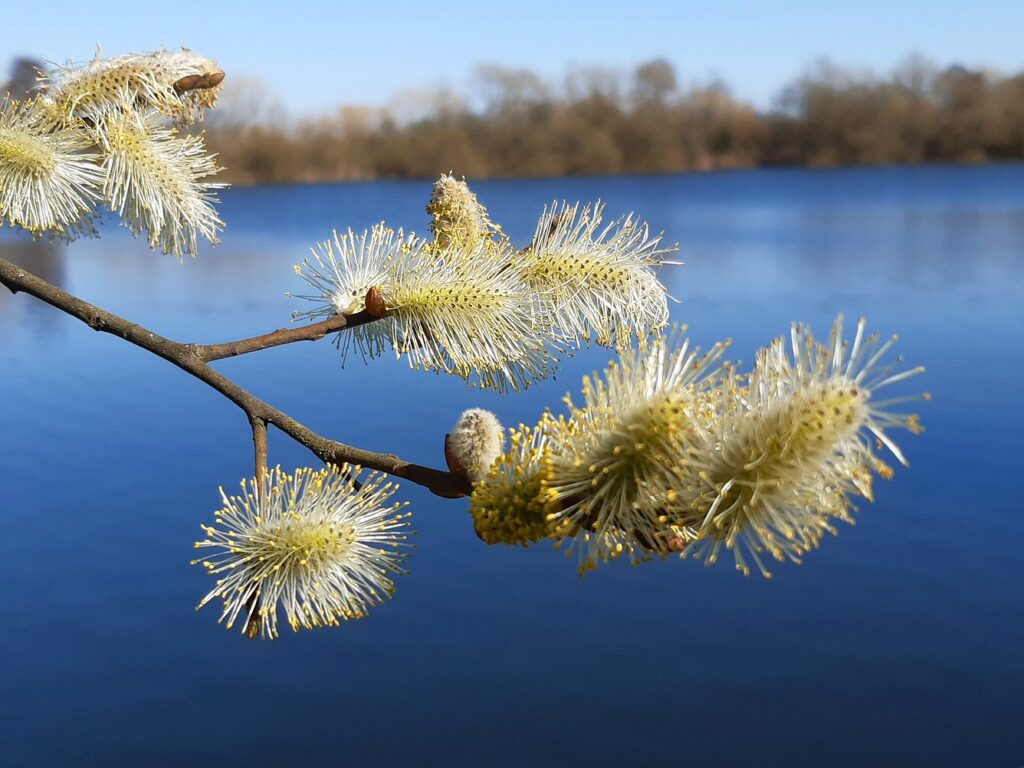
A sunny day … quiet, calm, the Chiffchaff, Blackcap, and Song Thrushes all singing, the Pussy Willow in glorious fluffy flower by the lake … and we’re allowed out for a proper walk. Another world.
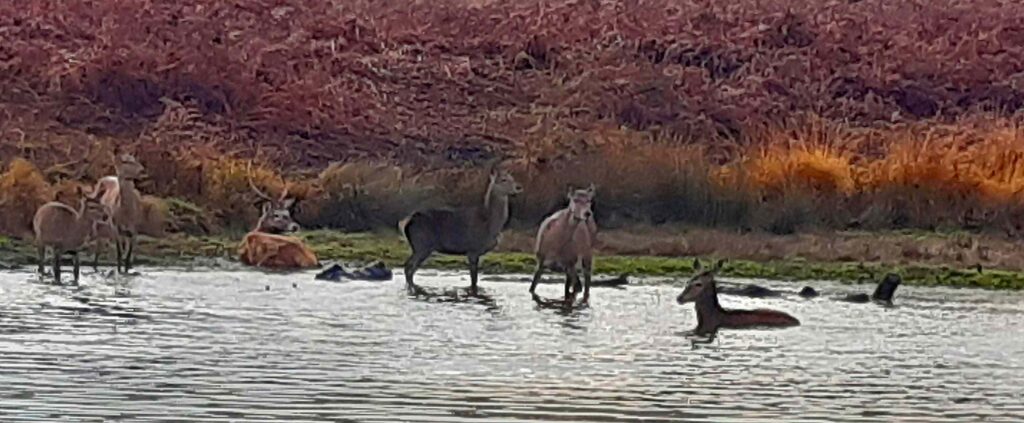
My daily lockdown walk was today in Richmond Park. I was delighted to see a harem group bathing in one of the ponds – the male is lying down centre left, with the females around him. I suppose this must happen most days, but I never saw it before. The scene has a peaceful domesticity about it, as well as being quite wild and free.
Birdwatching in a time of Covid, RSPB-style, the day before the second lockdown: normally one does anything to avoid the risk of scaring off the wildfowl, but here the reserve offers a convenient fence to peer over in the wide open air, and glimpse wheeling flocks of waders and gulls, their wings catching the sunlight.
A group of Greater Black-Backed Gulls, their deep calls markedly different from the Herring Gull, strode past on their long wings.
Managing a Habitat Mosaic: RSPB team cutting and burning Blackthorn scrub to provide a varied mix of habitats for passerine birds and other wildlife. The idea is to cut a bit of the scrub each year, so that some of it is low, some medium, some high and thick, providing as much diversity in types of cover and exposure to light as possible in the area, so that different plants can flourish, and the visiting birds have the choice of insects, seeds, and fruits they need to feed on.
A big long-winged (predatory?) bug, with long antennae, still flying in November, as were several moths
Colourful lichens (inc. Common Orange Lichen, Xanthoria parietina) and ripe Haws
Reeds, shallow water, wet meadows: perfect habitat for Golden Plover (in hundreds), Lapwings, and Geese. The sound of a hundred Greylags and Canada Geese, their honks and calls mixing into a symphony of wild joy, has to be heard to be believed.
Rushes covered in sparkling spider-silk (detail), in case you couldn’t make it out in the wider landscape — quite beautiful in the surprisingly warm November sunshine!
One of the extremely well-done info-paintings (if it was computerised, I’d have called it an infographic), explaining Duck Ecology, Niches, Habitat exploitation and other complex concepts in one clear image. Remarkably good, and beautiful, too: both scientific and welcoming, quite an achievement.
People often wonder why you need one telescope to look through, and another for the camera. Couldn’t you take a picture through a normal ‘scope? Well, it’s a bit tricky without an adapter (which you can buy, naturally), but yes, it is kind of possible… as here witnesseth the handsome church just across Otmoor from the reserve. I almost fancy I can read the church clock …
Actually, there is a ring of villages, each with its own distinctive church, all around Otmoor. All interesting; and the subject of fascinating social history research, showing that the rate of marriages between villages went down with distance, and with the presence of small streams between the villages! A little stream that you could just about step across increased the effective ‘marriage-distance’ by something like a mile … worth reflecting on.
One day, lockdown will end, and we’ll be able to end our walks in England’s good old Hobbity Pubs, like Beckley’s splendid Abingdon Arms, once again.