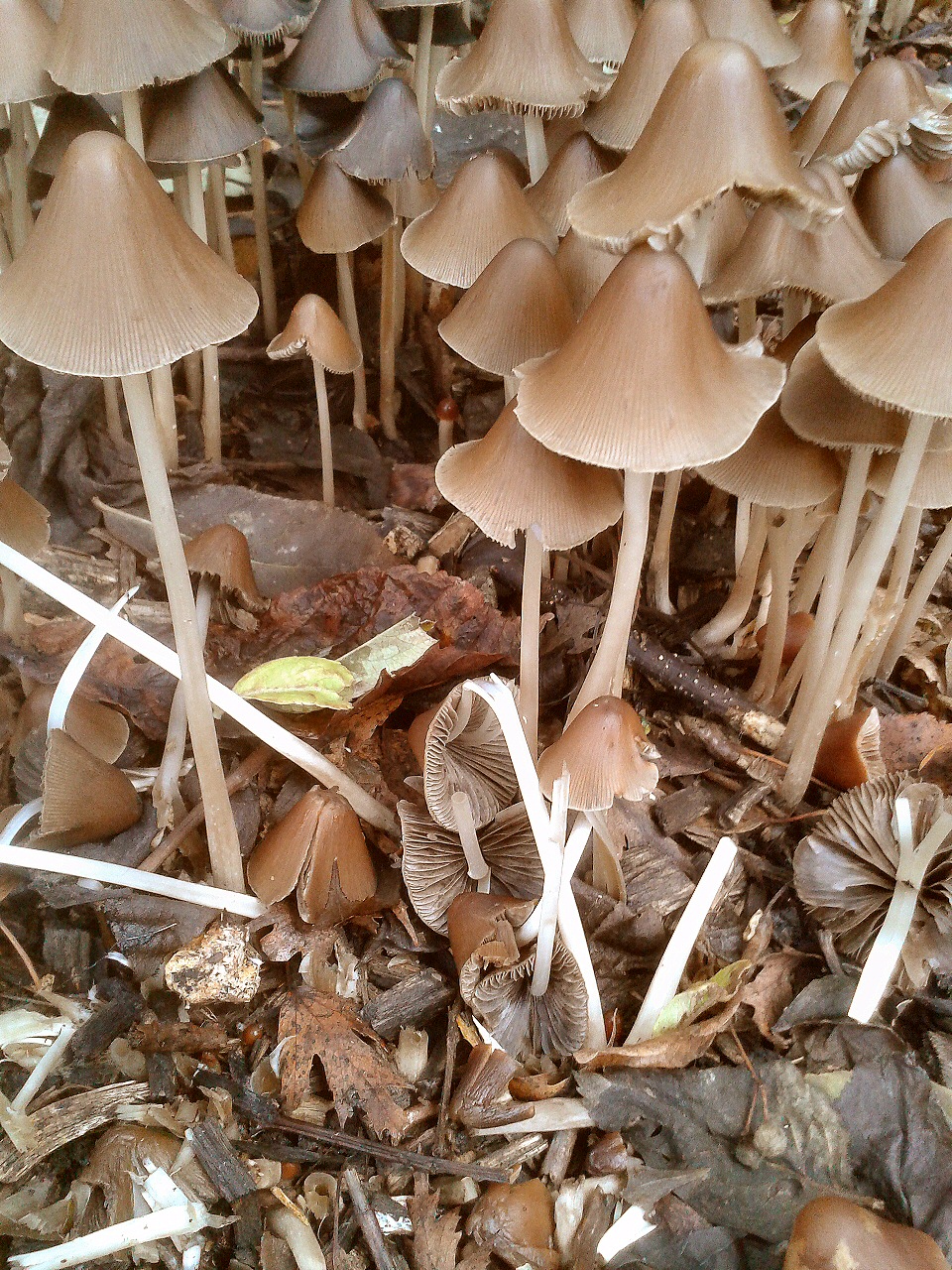
Masses of Mycena (Bonnet Fungi)

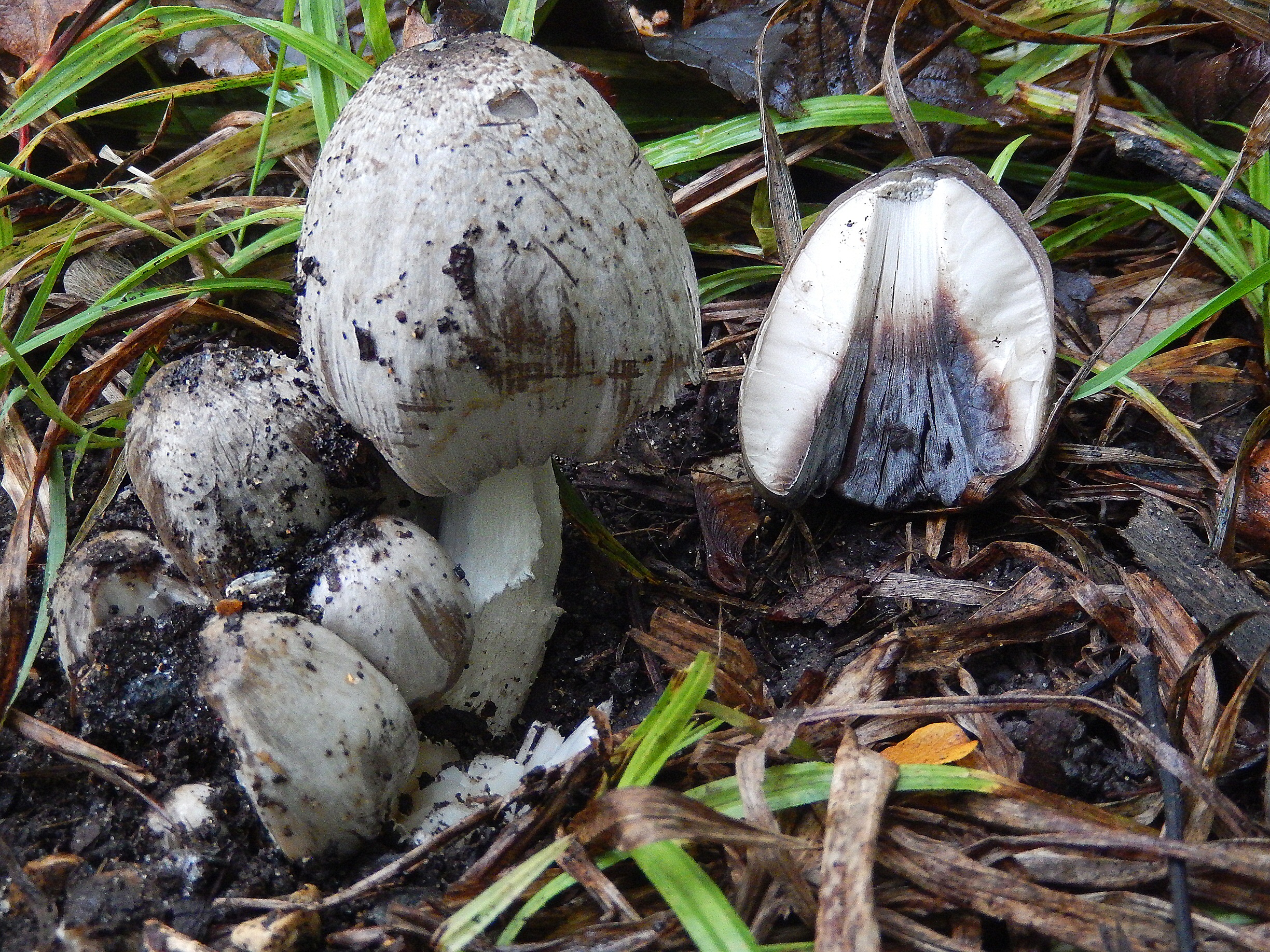
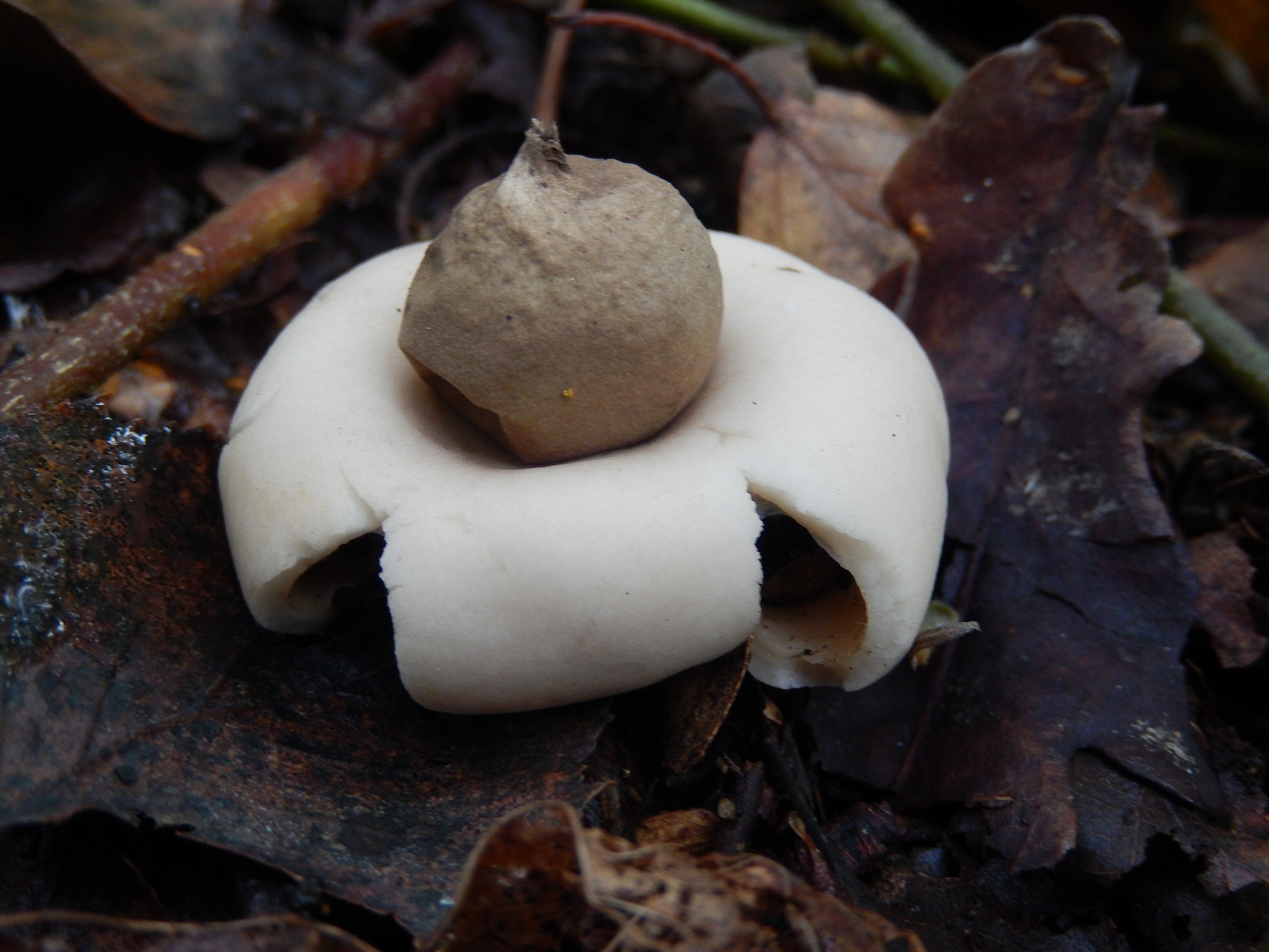
This small handsome Earthstar appeared close to where we had a large Collared Earthstar (Geastrum triplex) last year. However this one as yet has no sign of a collar, so either it’s a baby or it’s another species. Will be interesting to see what happens. Right now my money’s on the baby theory.
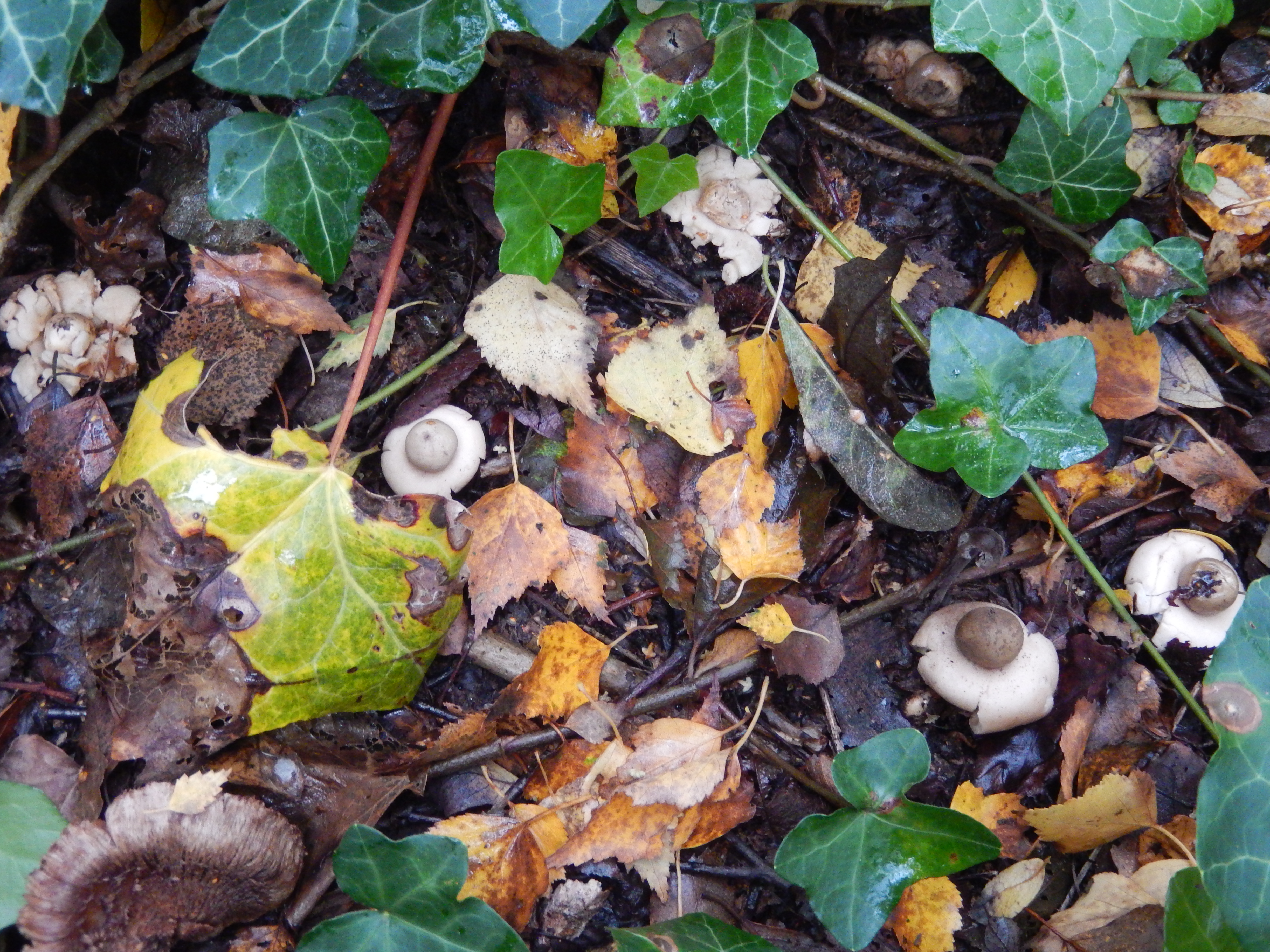
Well (a week later), they have stayed the same size and shape, only there are now as many as seven fruiting bodies within 30 cm of the original site.
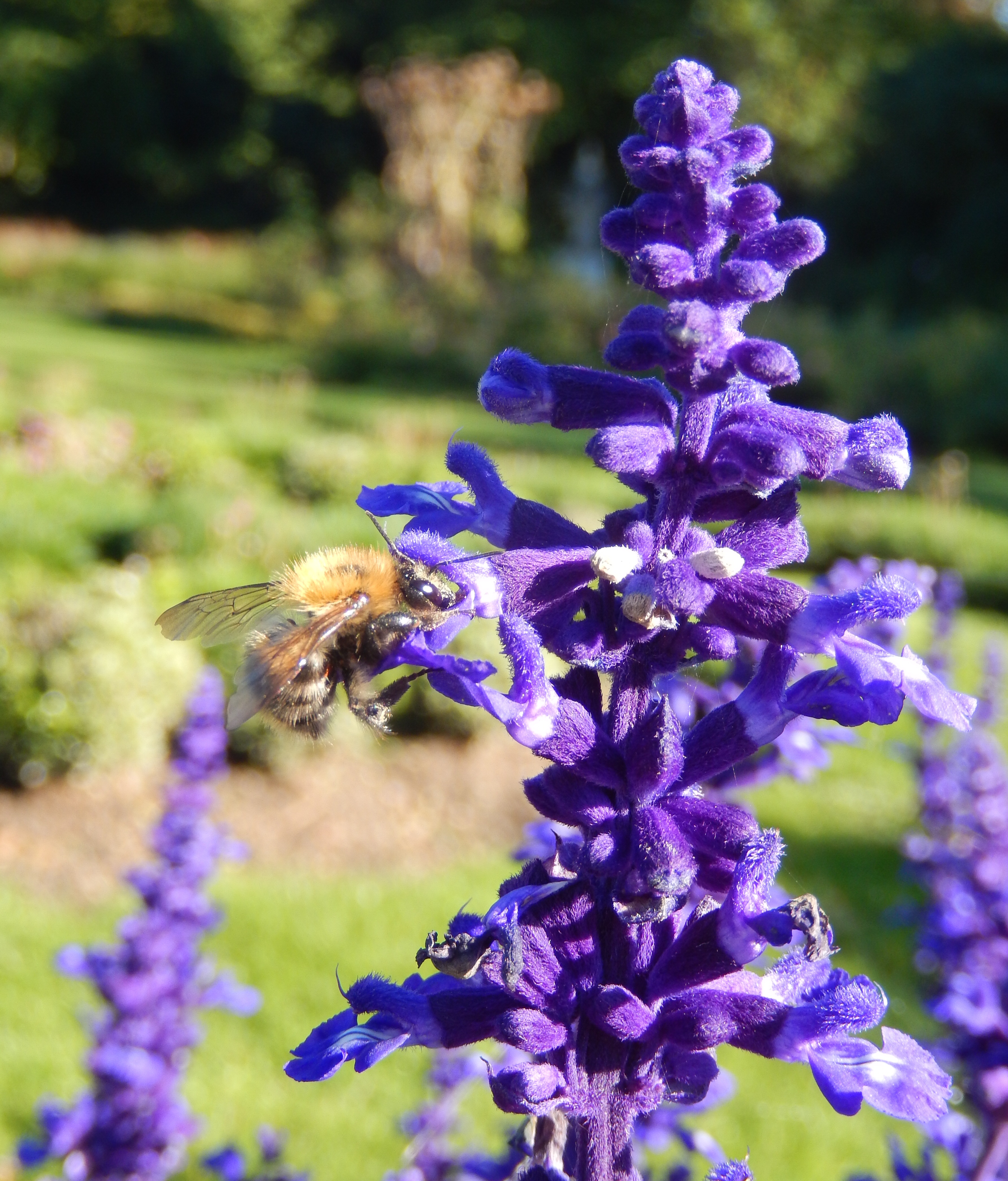
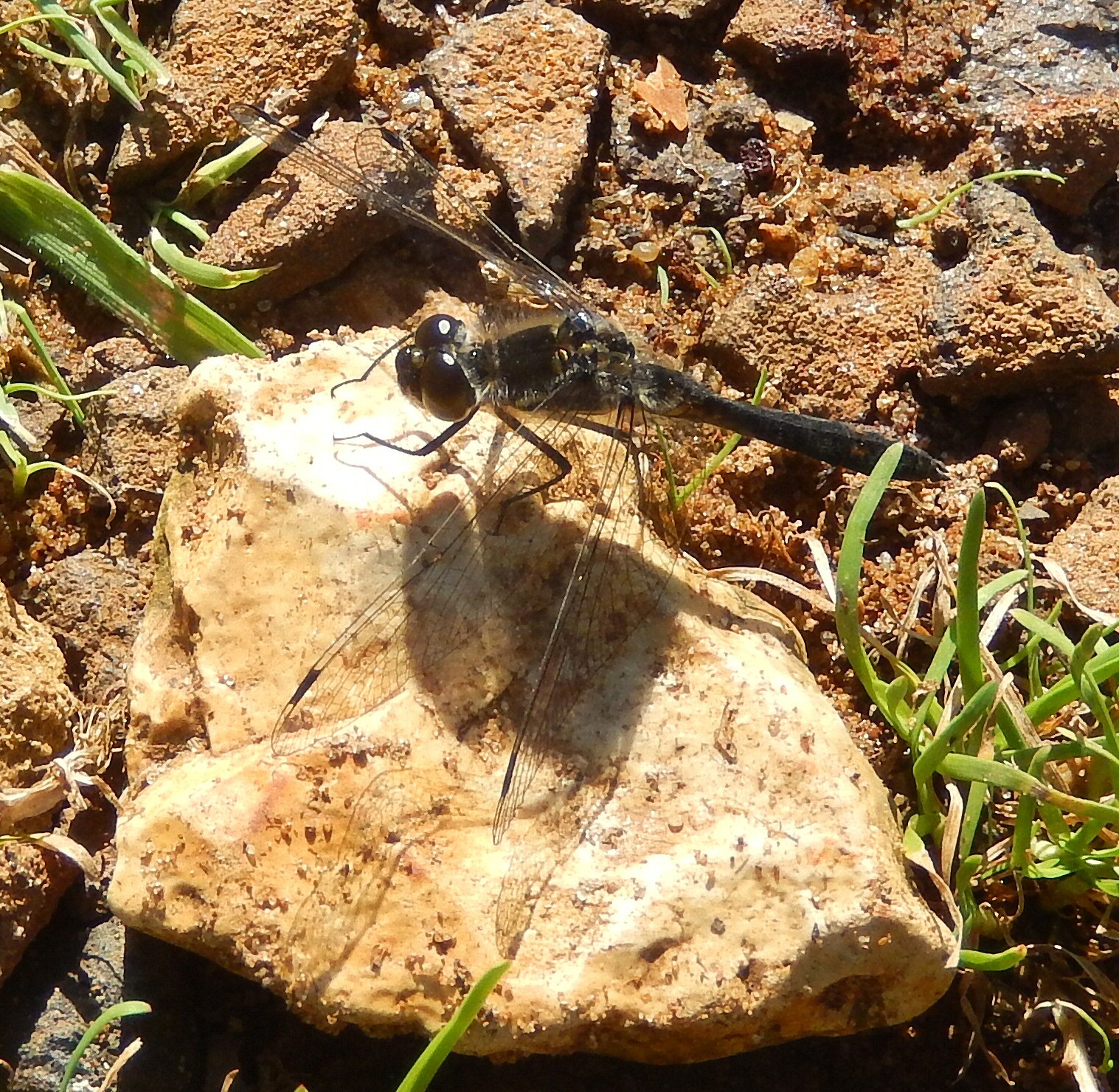
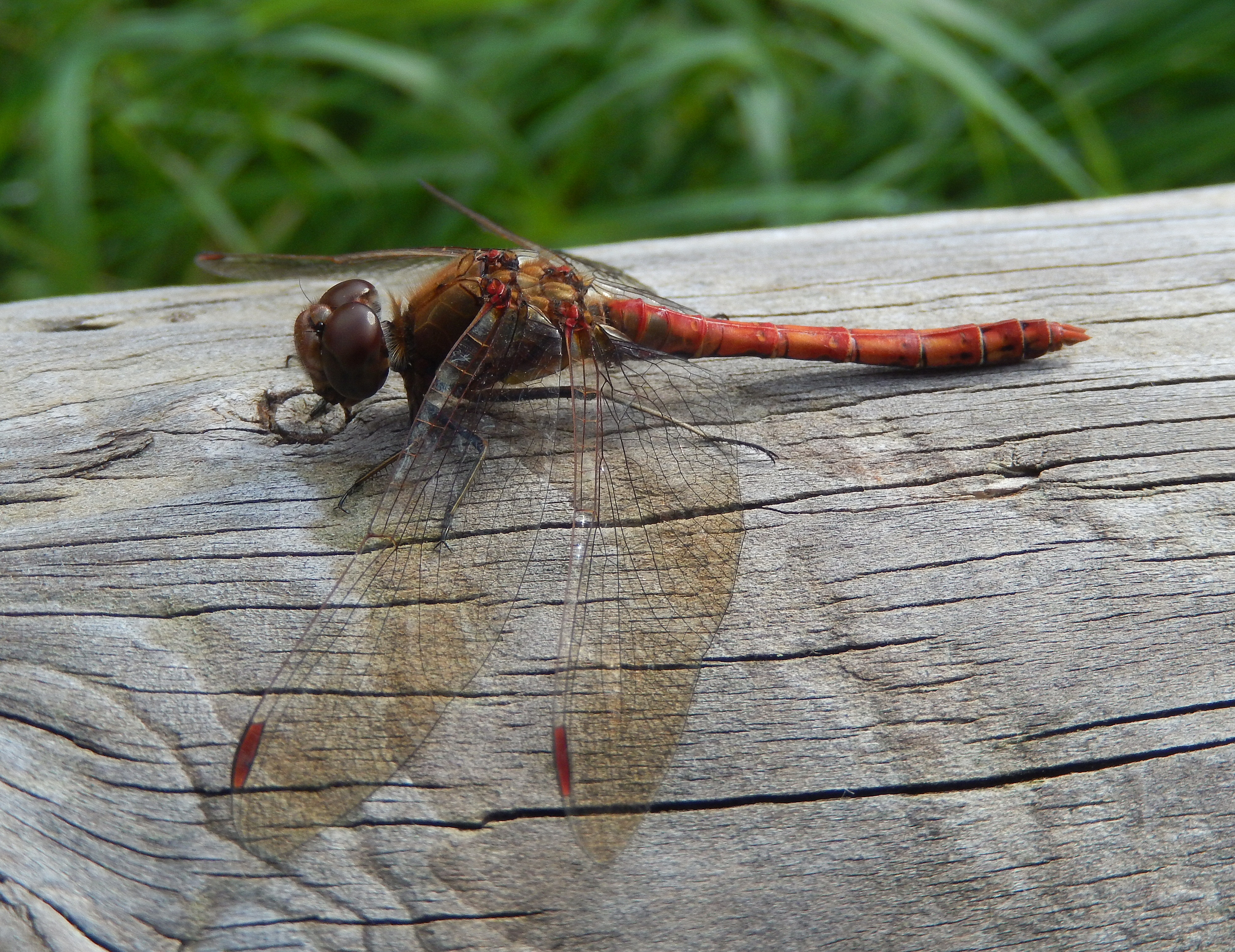
A flock of some fifty Swallows twittered high above the sparkling blue lake among the bog pools. Dragonflies – the occasional Emperor, plenty of small red Common Darters and tiny Black Darters, some Migrant Hawkers – dashed about or sunned themselves on the boardwalks. A pair of Hobbies, those dashing, Swift-winged falcons, soared and watched the Swallows cunningly, waiting for a careless moment. One of the Hobbies swooped down, raced low, agile, among the reeds, up and switchback over a dead tree to snatch a dragonfly on the wing, powered right across the wide bog all the way to the pinewoods. Three pairs of Common Darters in cop, the males leading the females, their claspers about their females’ necks, flew in strict formation like so many Spitfires. A Hobby, high above the bog, accelerated in a long straight shallow dive, for all the world like a Junkers 88 bomber taking careful aim, racing down for a hundred yards at incredible speed to grab a dragonfly: it must have seen its prey all that distance away.
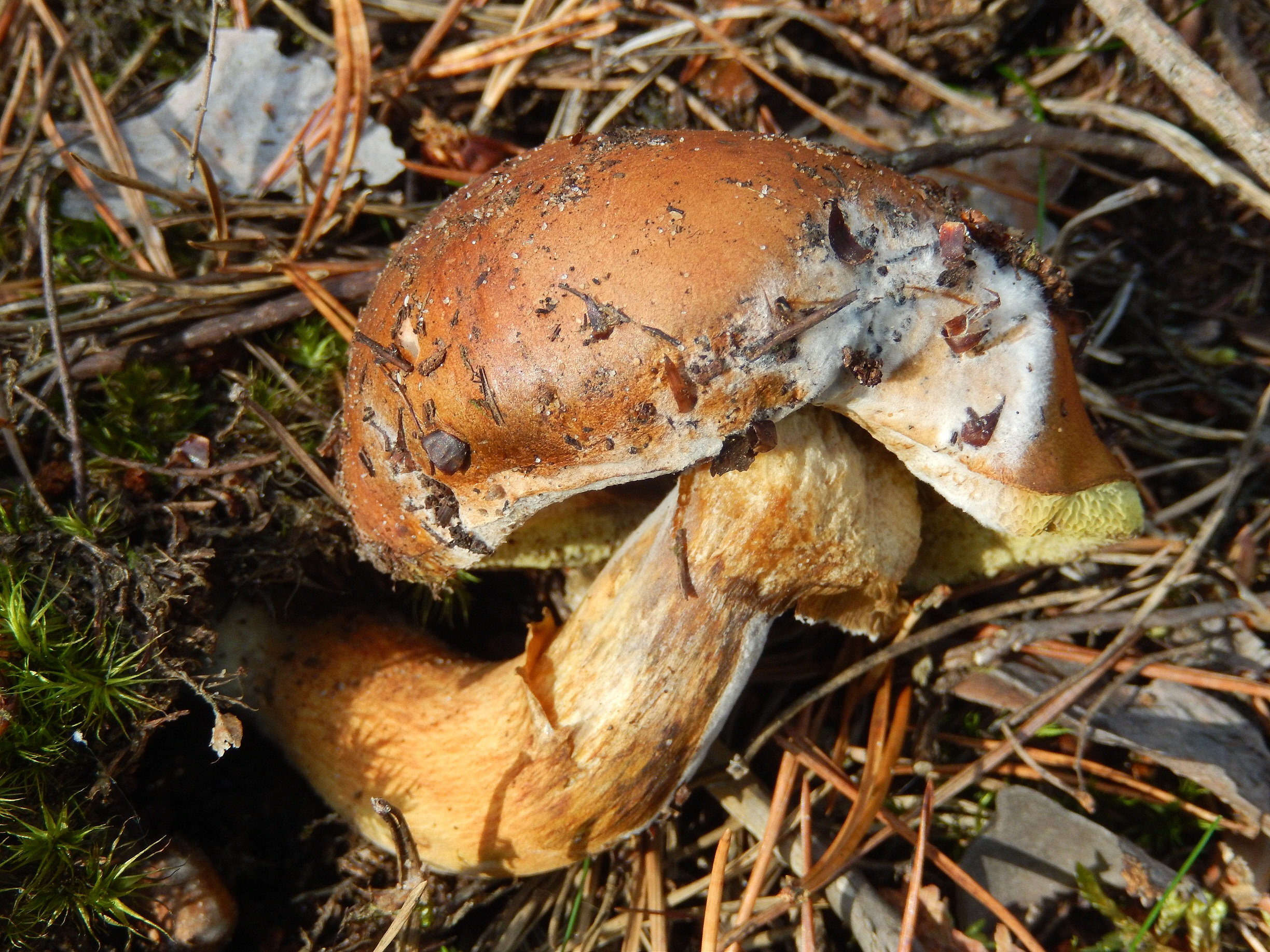
Clusters of the light brown Birch Bog Bolete – yes, it grows under Birches in Sphagnum bogs – are dotted about, their large squarish pores quite unlike the little round holes of the true Cep. Phillips says they’re edible but not worthwhile. This isn’t stopping a pair of plump thirty-something Poles with a sports bag wandering along collecting them (National Nature Reserve? Really?). I greet them, establish their nationality, say my mother used to do the same in the Carpathians and that there aren’t many mushrooms here. The guy with the sports bag shows me a meagre haul of Birch Bog Boletes just about lining the bottom of his bag: he means, he hasn’t found much worth collecting. I try Natsional Natur Reservat and waggle my finger, we part smiling and he shuffles off sheepishly.
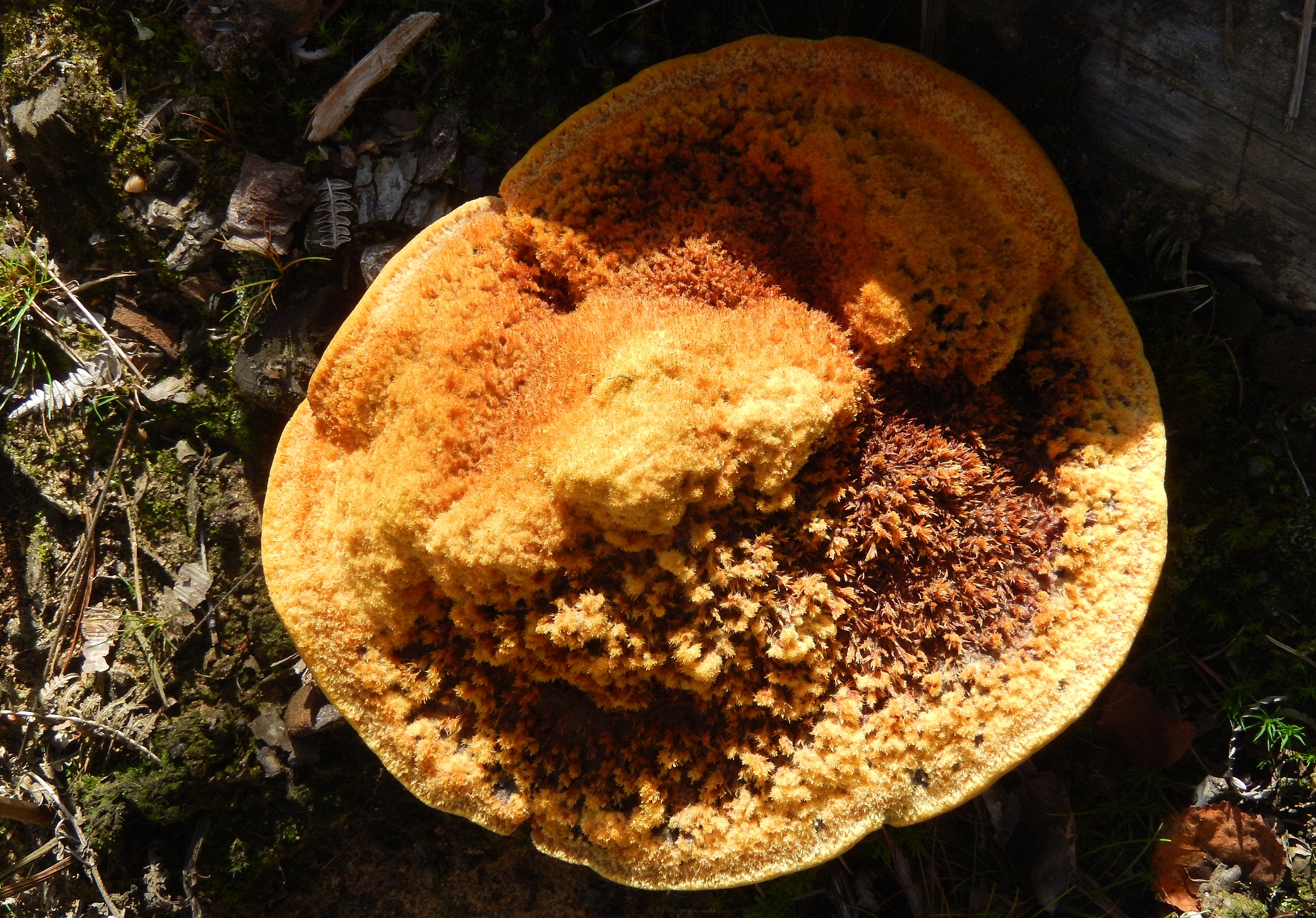
Under some Pine trees, a dead stump, killed by Phaeolus schweinitzii, three or four enormous dinner-plate sized yellow discs, thick and rough with orangey-brown branching tufts: they are overgrown Polypore bracket fungi, dangerous parasites of conifer tree roots. Nobody has given it an English name, which is a pity as the namers could really have fun with it: Yellow Pine Death? Giant Pine Polypore? A magnificent fungus, somewhat alarming if you’re a forester.
On the open sandy heath, some Ammophila sandwasps are still active, perching on the path. A few butterflies – a white, some Speckled Woods, probably a Red Admiral – are about; a very large brown butterfly with agile flight, dancing around a pine trunk and up high, is tantalisingly impossible to get binoculars on, was very probably a Fritillary, in which case it was likely the Silver-Washed Fritillary.
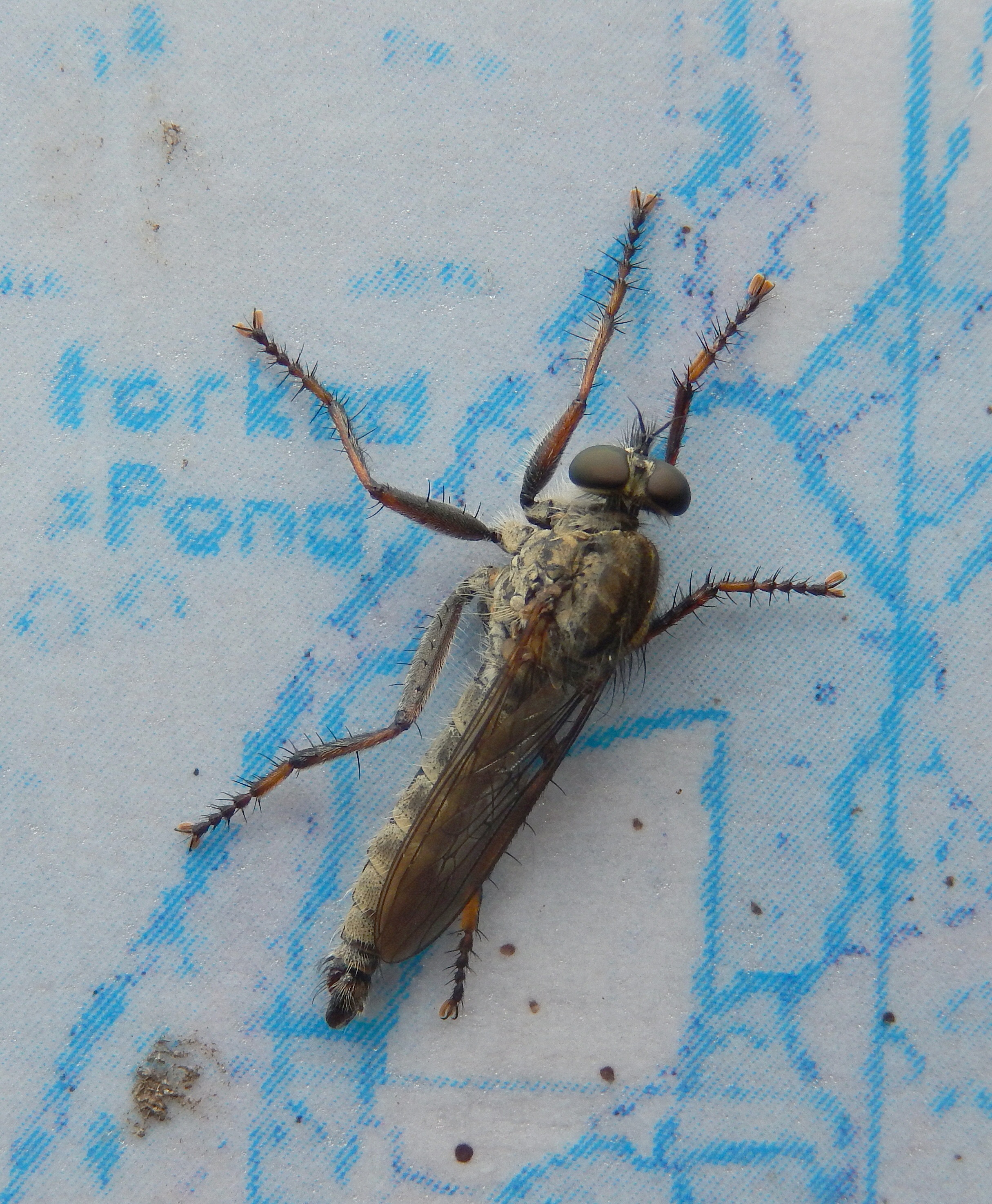
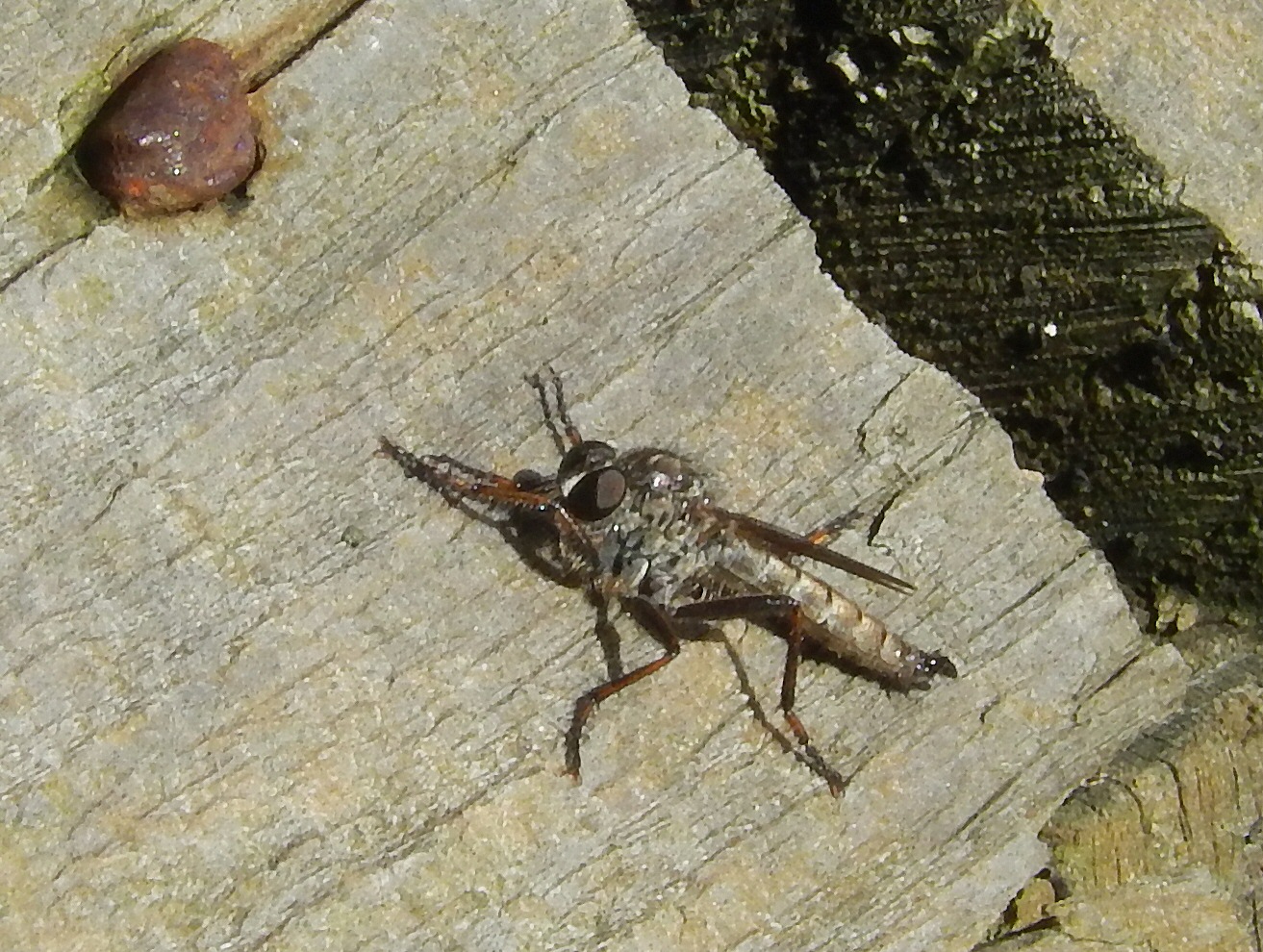
A couple of mean Robber Flies perched on a rather bleached map of the common: they had as Shakespeare said “a lean and hungry look”. They have a tuft of stiff bristles below their antennae to keep their prey from striking them in the head. They wait on a perch – a signboard will do if there’s nothing better – until an unsuspecting fly comes past, then they sally into the air and grab it.
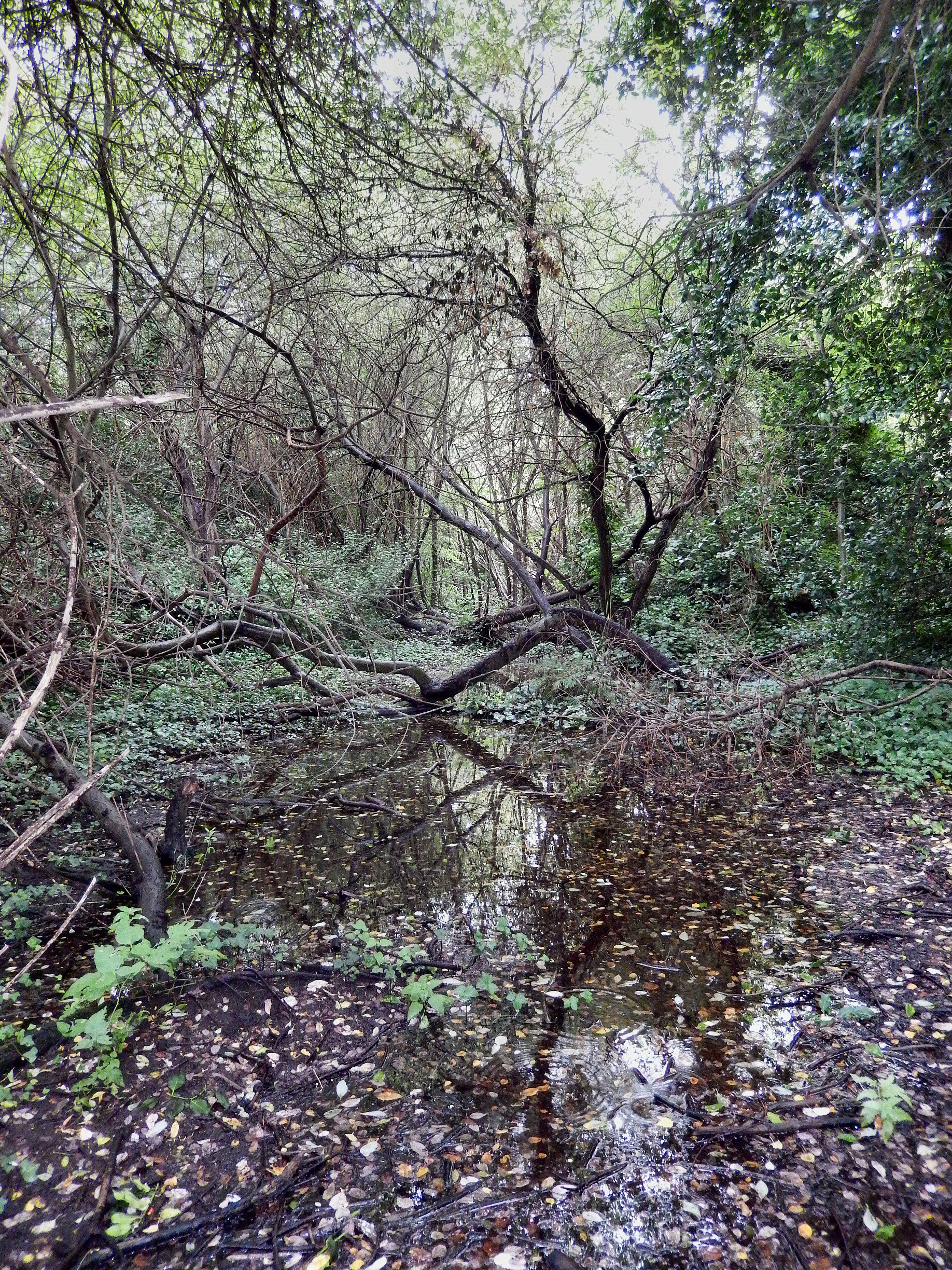
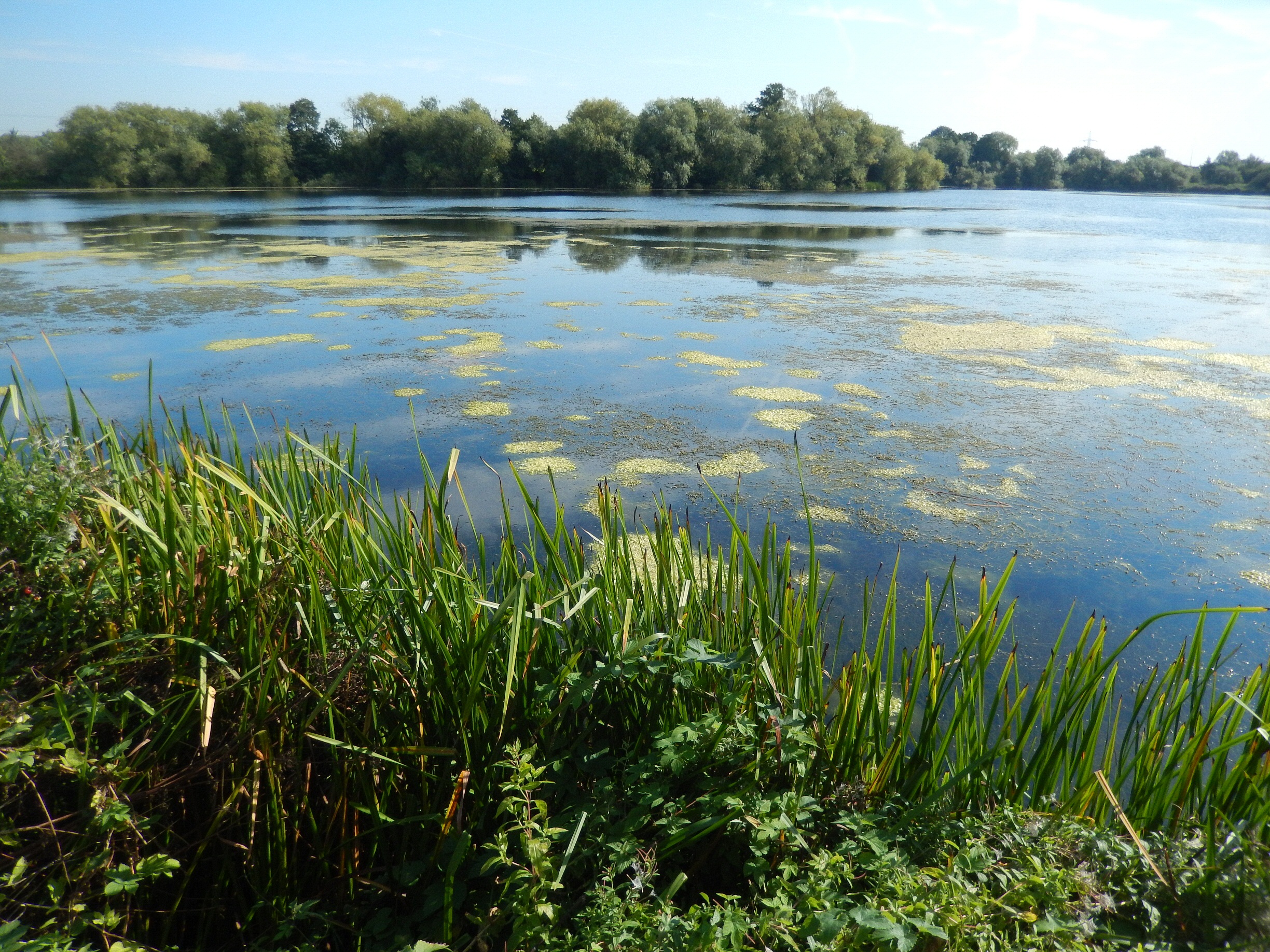
The usually clear lake was covered in thick green patches of weed, enough for Coots to be able to walk on.
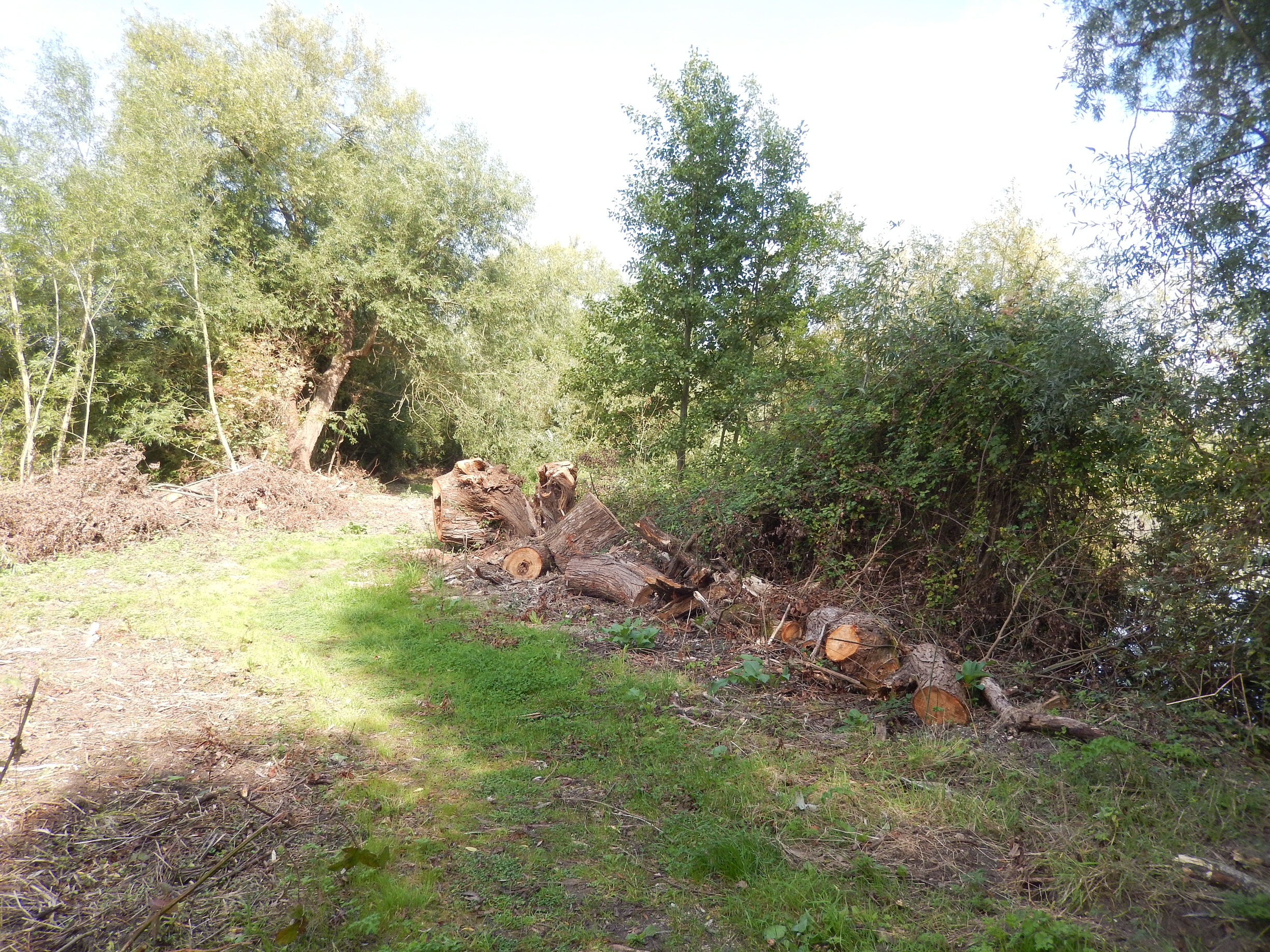
The path, too, looked rather different, with many of the large creaky poplars cut down leaving a wide unfamiliar swath of bulldozed path. The poplars constantly drop branches and fall over so it was about time.
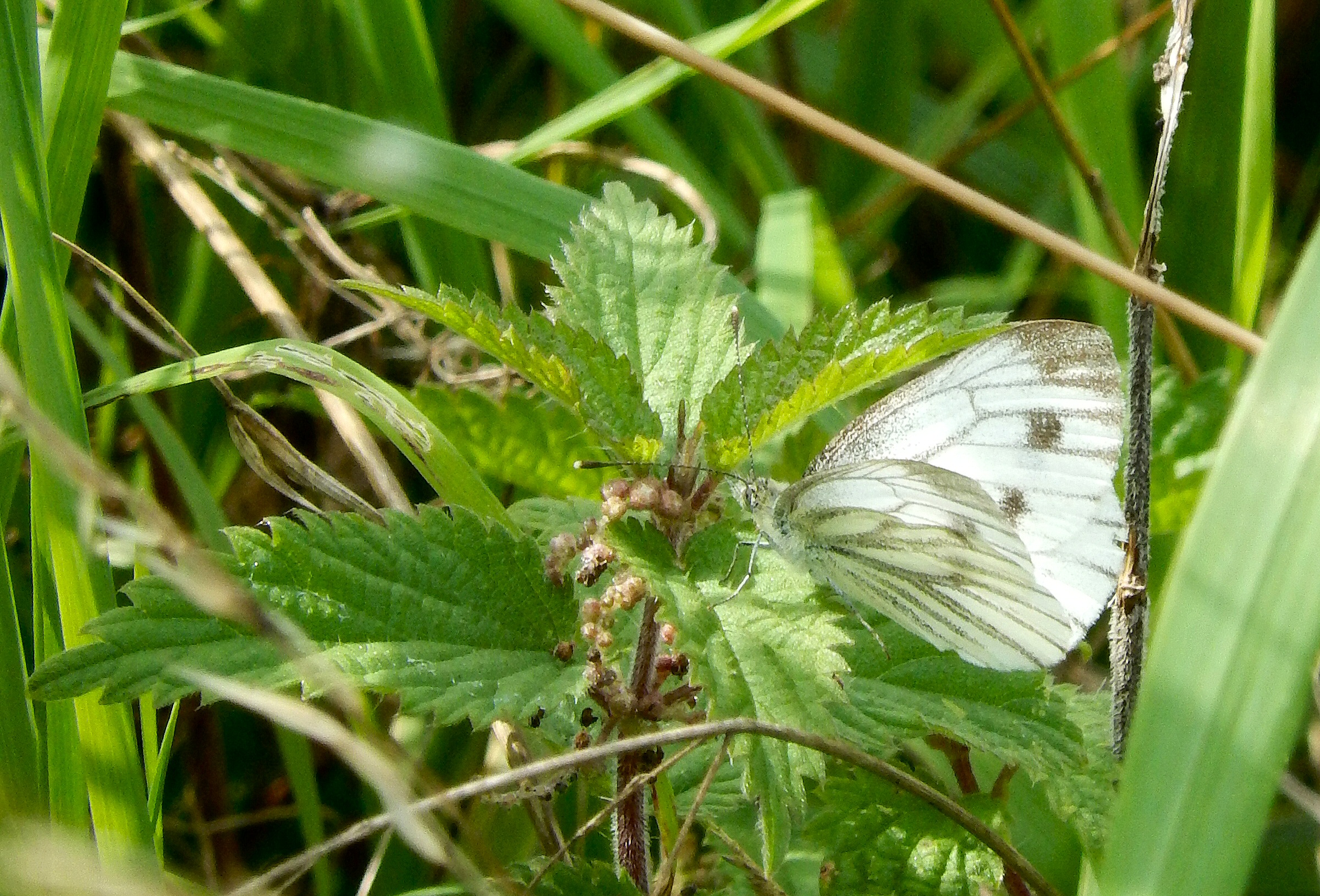
There were not many insects about – Emperor Dragonfly, Migrant Hawker, Common Blue Damselfly (with the ace-of-spades on segment 1 of the abdomen), Green-Veined White, a few Speckled Wood was about it.
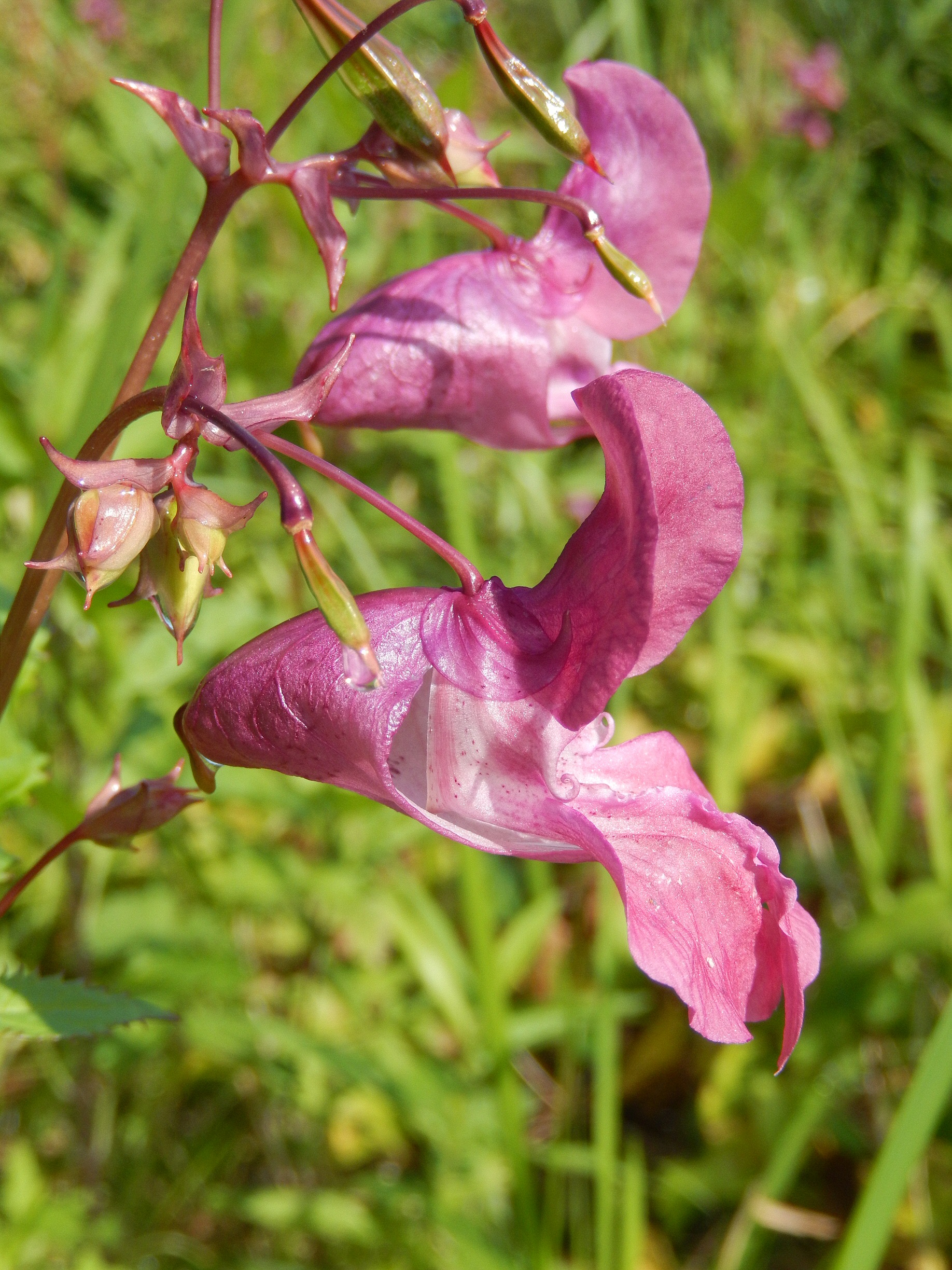
I don’t recall seeing much of that troublesome weed of nature reserves, the Himalayan Balsam, but it was evident in cleared areas. Shame it’s a nuisance, as it’s rather a beautiful plant.
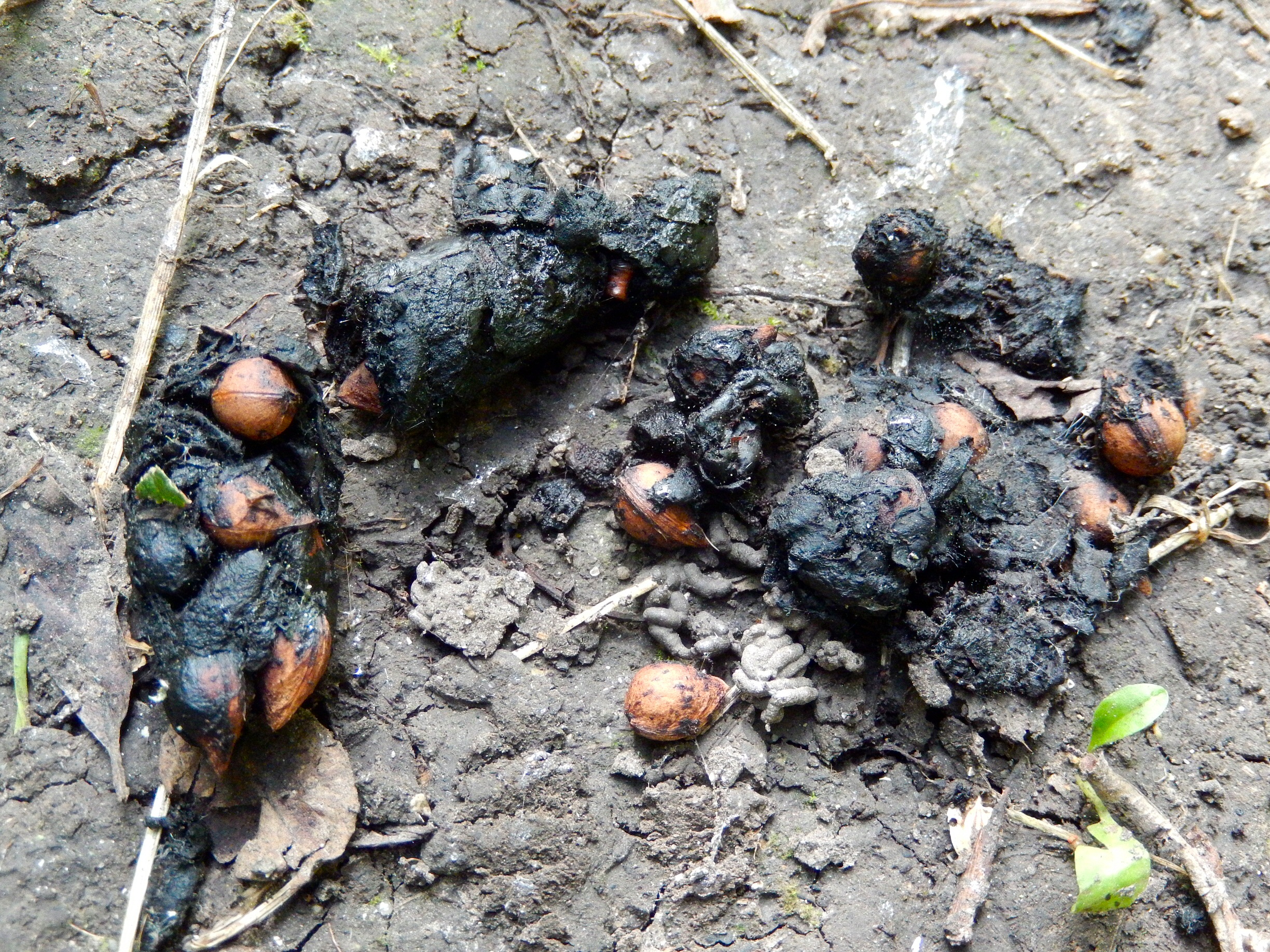
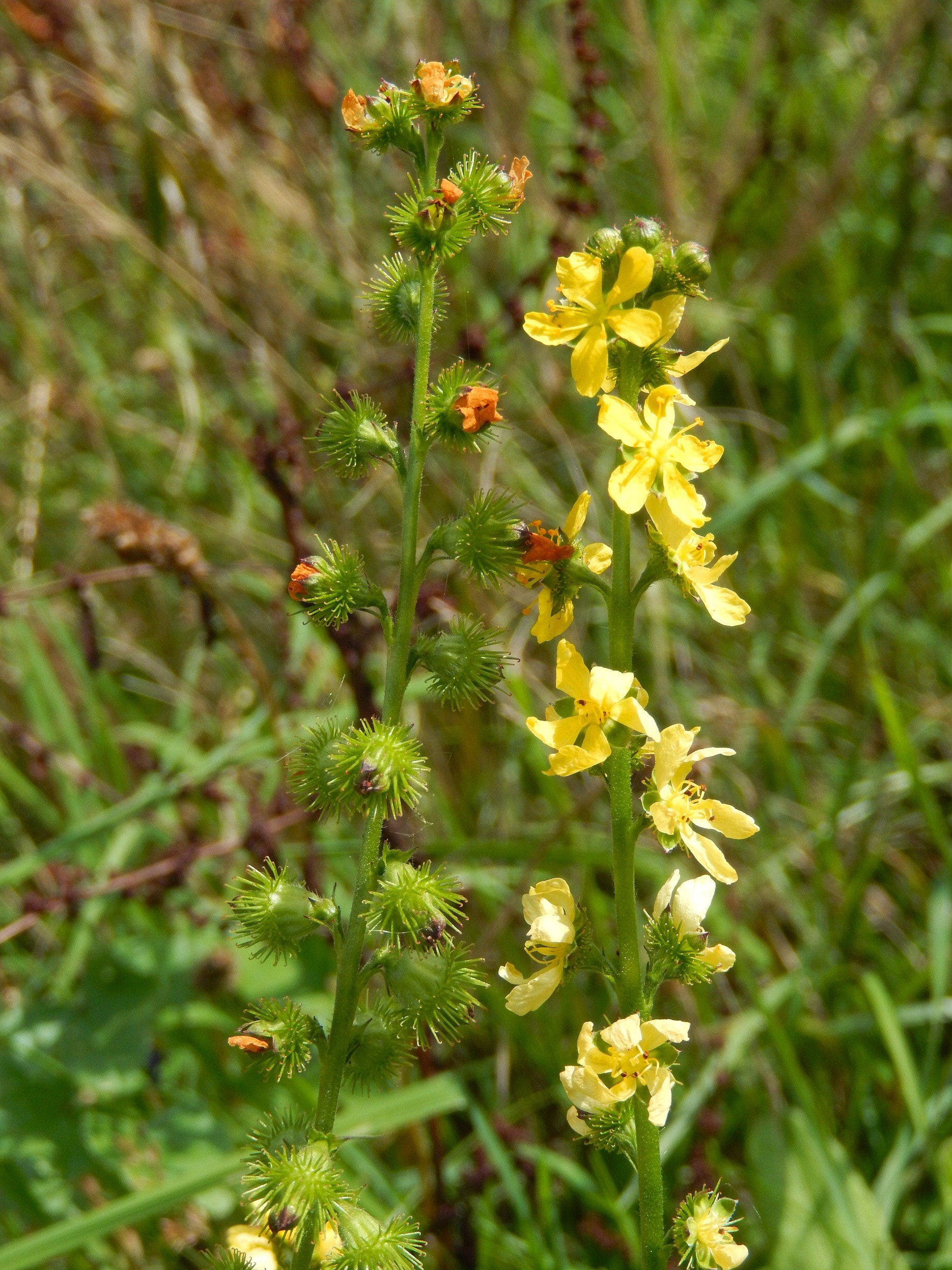
Warm September weather usually means no migrants as they all settle down to enjoy the last bit of summer before moving. I heard a Cetti’s Warbler and a brief unseasonal burst of Chiffchaff song; I think I glimpsed a Blackcap diving from a patch of Teasels back to its bush. A few Jays shrieked and flapped butterfly-like across the horse pasture. A lone Kestrel flew lazily to perch in a tree. On the water, not much apart from Coots, a Mute Swan, Mallard, a family of Egyptian Geese, some Cormorants (quite a few of them with a lot of white on their fronts).
An Apple tree glowed with nice ripe fruit; someone had beaten a path under it to do a little picking.
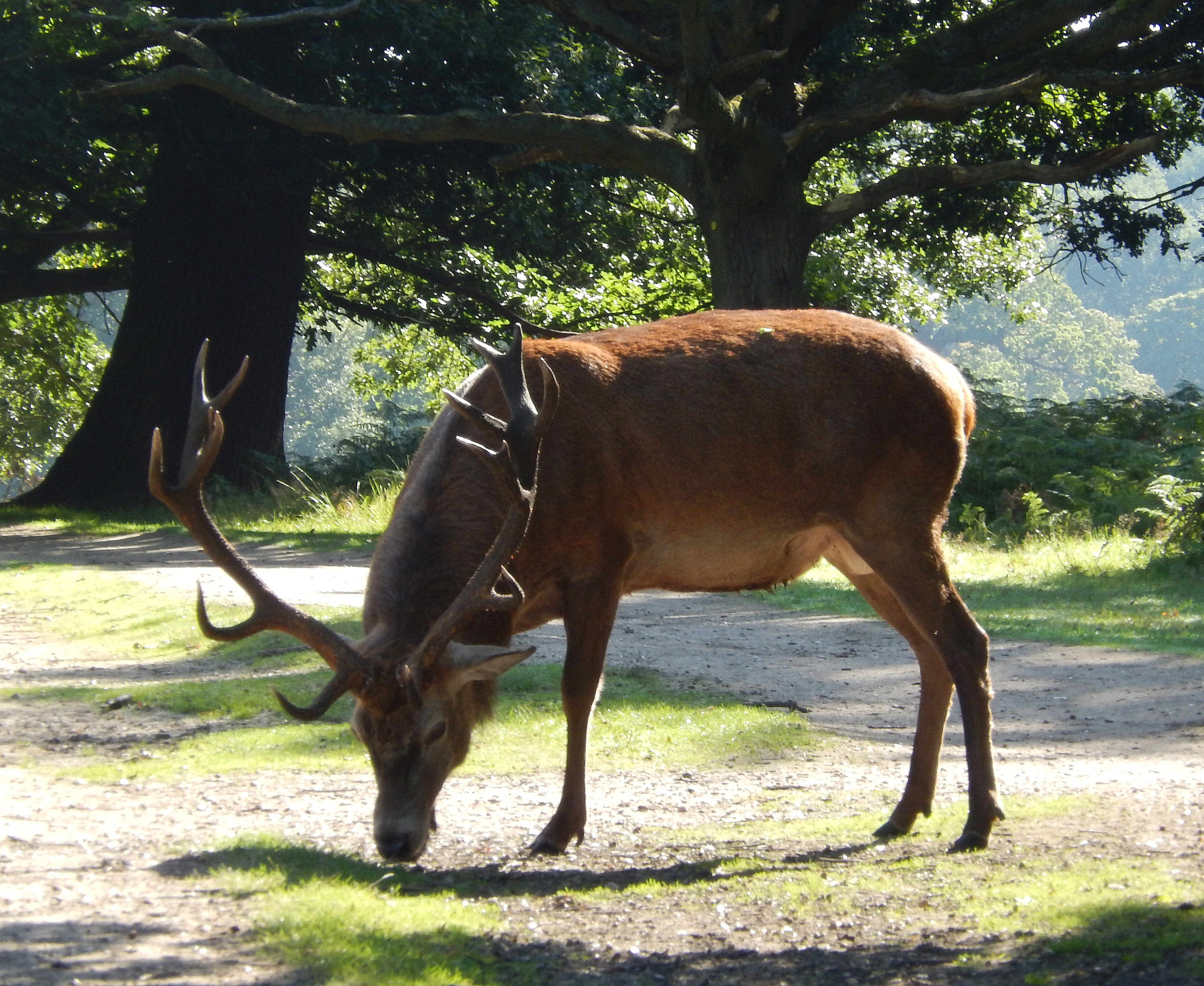
… everyone posts photographs of magnificent Red Deer stags on their nature blogs. Actually this was in such splendidly warm sunshine that I had to carry my pullover and my jacket.
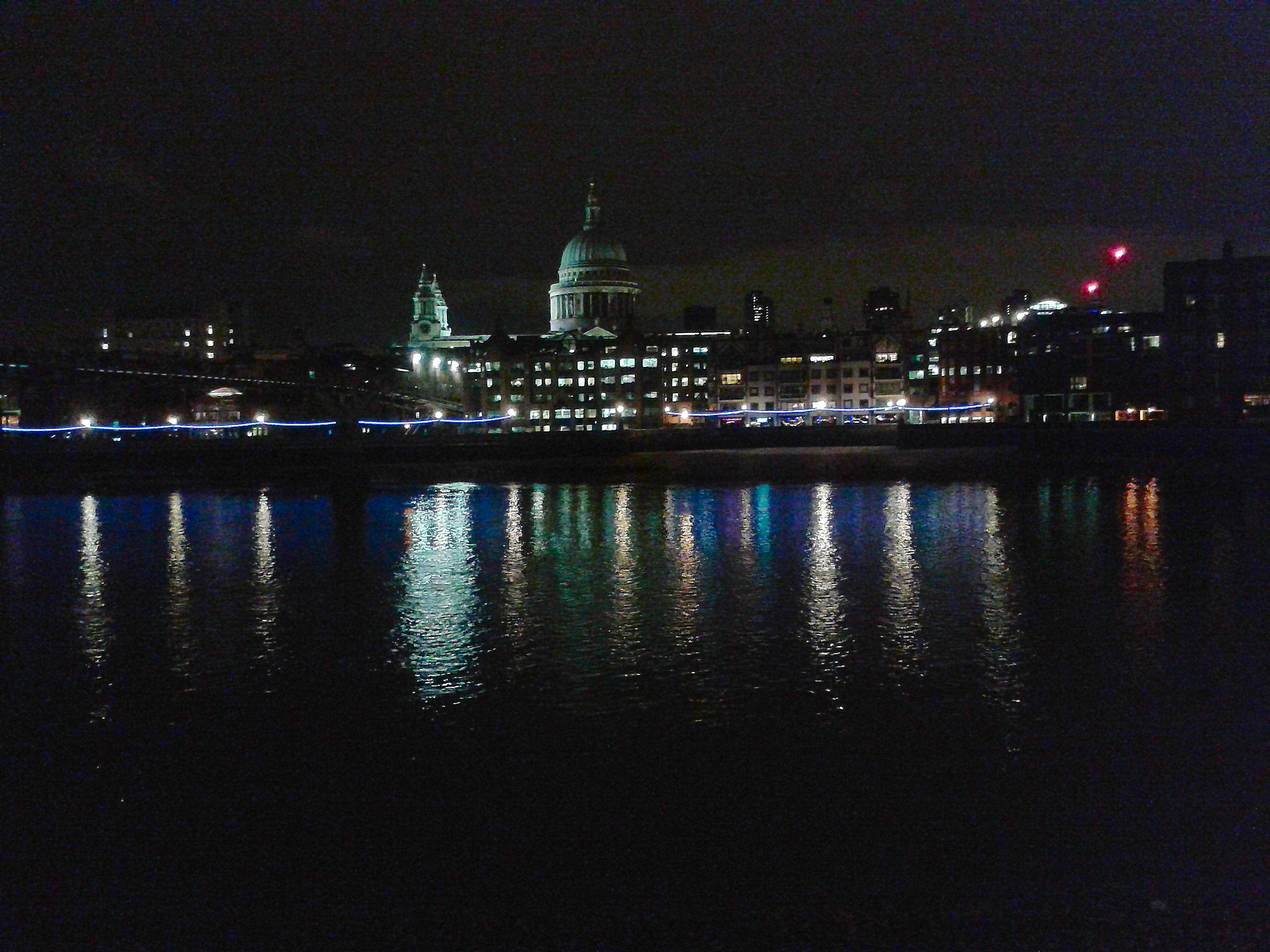
London does look beautiful at night when seen across the river, whether you look at the classical outlines of St Paul’s Cathedral – not the one that Shakespeare knew, of course – or at the brash towers of the City, the slick take-your-money confidence of quick men who know all the patter and have the steel, glass and concrete to prove it.
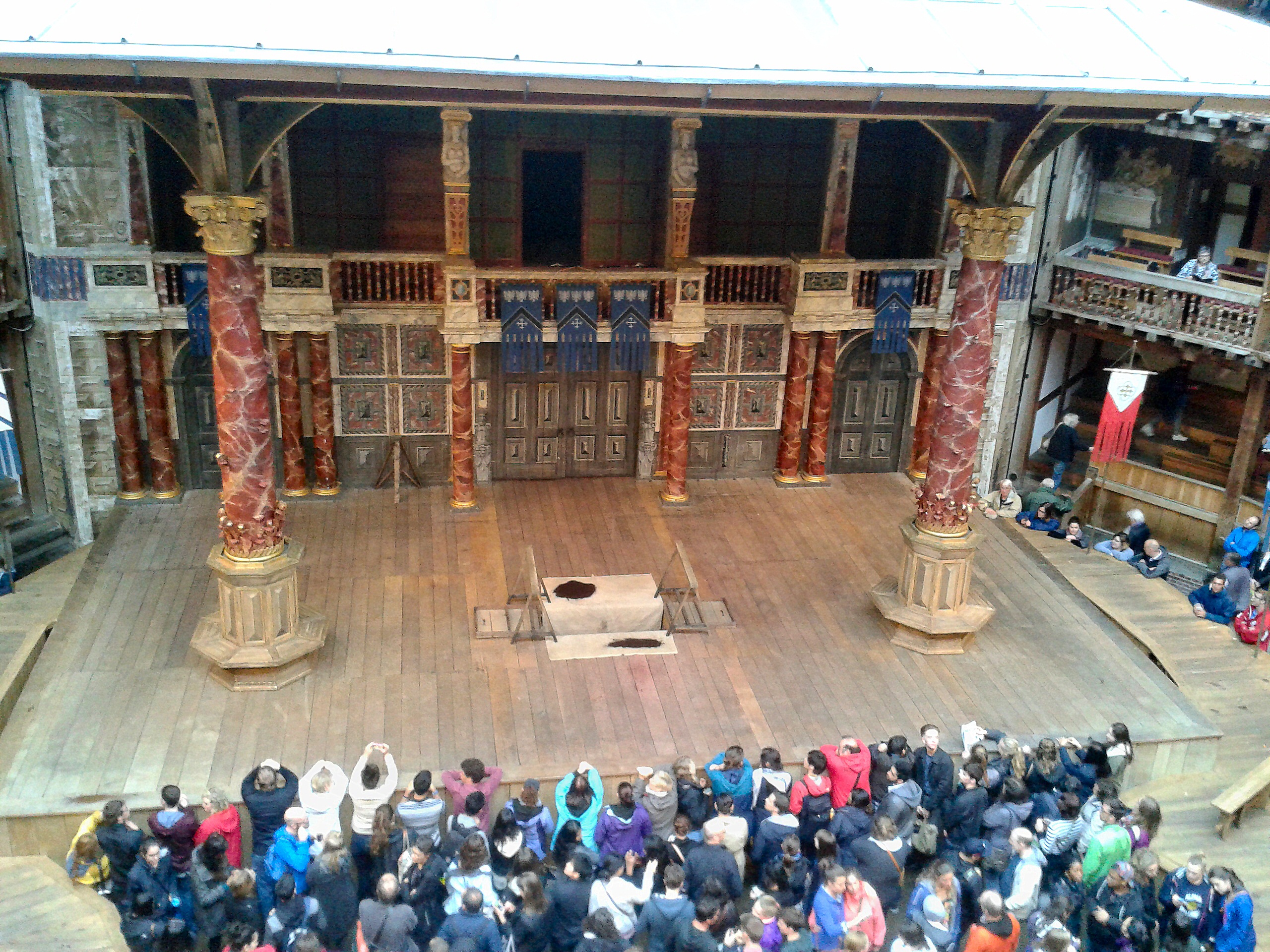
Everyone knows Shakespeare’s “All the world’s a stage” speech from As You Like It, and when that appears on stage as it did yesterday, it’s striking to see how well the strutting and fretting of the actors can work on that big wooden rectangle “in the round”, surrounded by the beautifully reconstructed circle of the Globe Theatre with the long-suffering audience standing in the pit. As you can see, we decided on the more comfortable course of seats in the upper gallery, affording a fine view of the pit audience reaction as the actors come right up to them, sit with legs dangling over the edge of the stage, walk round behind them, or actually push straight through the crowd.
But perhaps the Nature’s Book aspect of As You Like It is not so obvious:
Nature speaks to the (banished) duke in the Forest of Arden (Act II, Scene 1): the trees talk, the brooks babble as if reading, the stones deliver sermons. Here is the voice of Nature with a capital N, “the classroom, the library, and the church“, figured if not quite personified as pastoral wisdom.
In Shakespeare’s time, the Book of Nature was a “theological commonplace” (Paul J. Willis; JSTOR, library or subscription needed). The curious concept of nature more or less literally as a book
‘”originated in pulpit eloquence, was then adopted by medieval mystico-philosophical speculation, and finally passed into common usage,” where it was “frequently secularized”‘.
Nature is described as good in Genesis chapter 1, and Saint Paul’s Epistle to the Romans argues that God’s power is seen by the creation of the world and in his works. Willis observes that this is a bit difficult to reconcile with Paul’s assertion that nature is utterly fallen and sinful, but no matter. Willis concludes by noting the “often recurring comment” that As You Like It mocks the pastoral while basically enjoying the pastoral quality, and suggests that Shakespeare similarly mocks the rather lofty Book of Nature theme “without tossing it aside”. The comedy comes from realizing that the forest is an imperfect divine text, just as we are “faulty readers” of that book. “The result in this rich comedy is the book of nature as you like it, a forest that exposes both God and man.”
Having written a book on the English view of Nature, I find Willis’s analysis – and Shakespeare’s treatment – extraordinarily good.
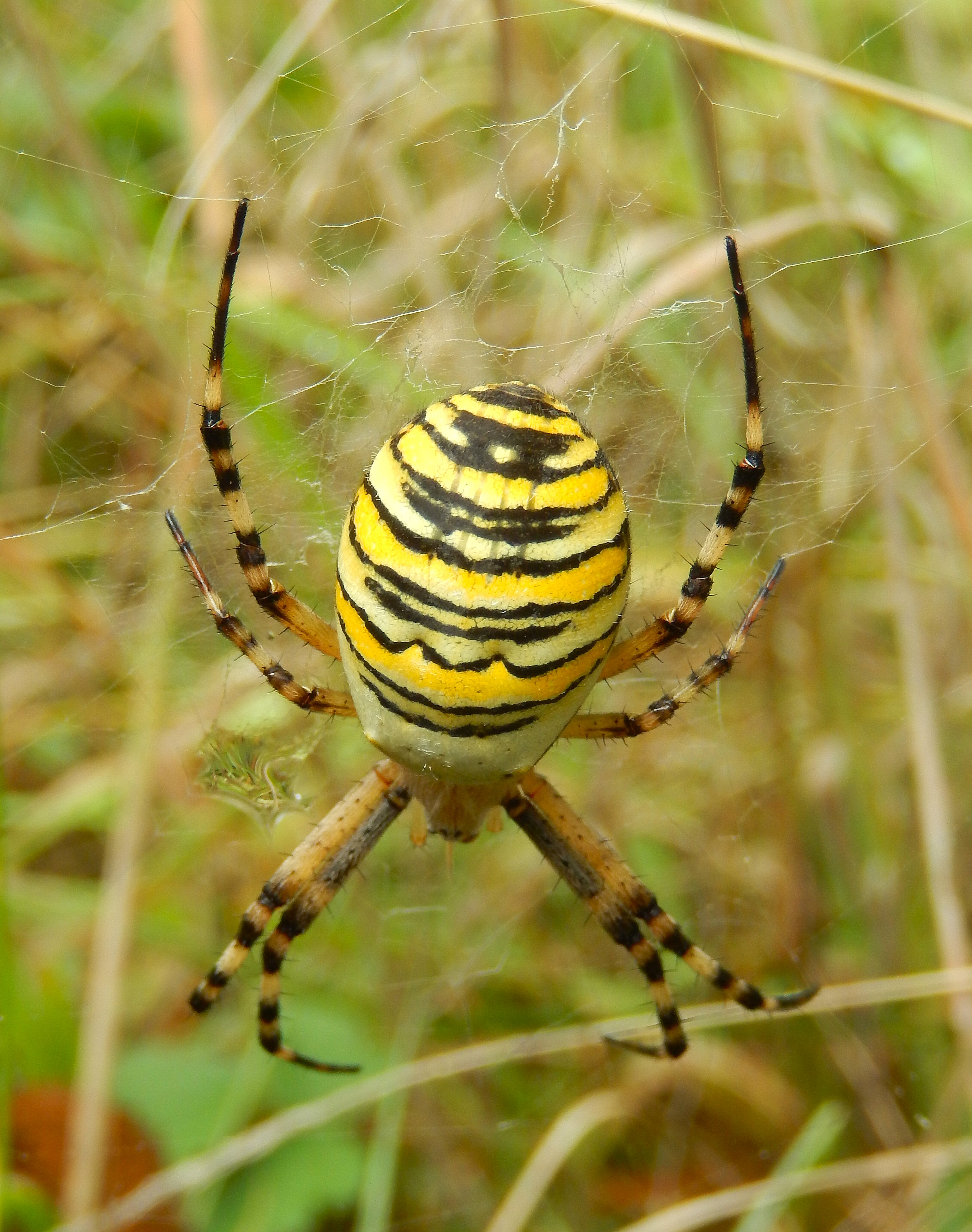
Right in front of Mike the new conservation officer was a Wasp Spider. Of course, arriving late after working on scenarios for the new hut, I noticed it – her – before he did. The species only arrived in Britain about 15 years ago, and it’s certainly spreading.
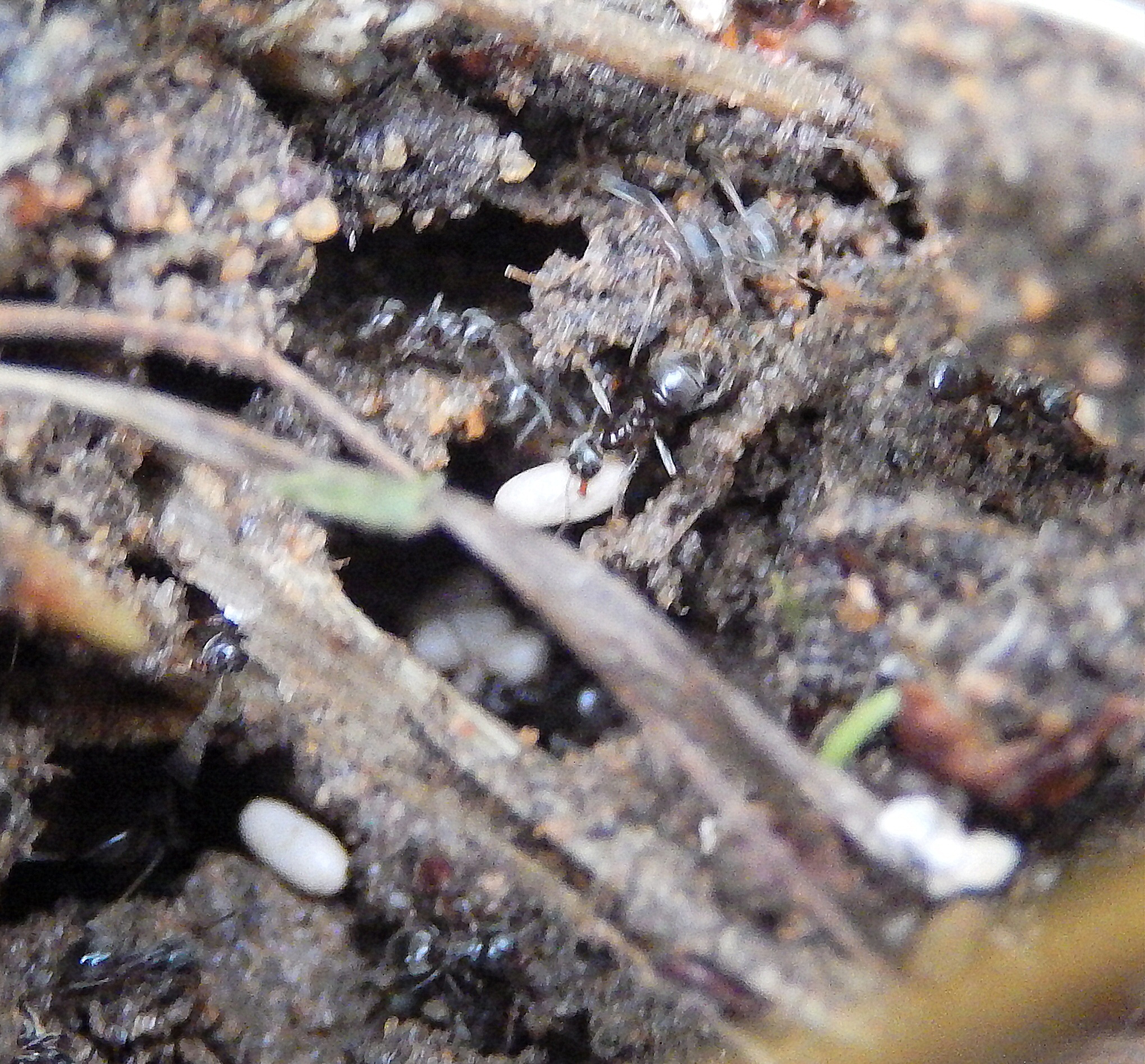
Anthill ants are supposed to be minute, yellow, and never appear above ground. If so, these weren’t them. While we were digging brambles out of the anthill meadow, as gently as possible because the anthills are said to be one of the best features of the reserve, we couldn’t help disturbing some nesting ants a little. They seem to be black with grey abdomens; and as you can see, they quickly picked up their white cocoons and carried them off to safety. They certainly look as if they’re the owners of the anthills, but since the anthills are supposed to have been made by little yellow ants, perhaps the black-and-grey ones are just enjoying the resulting environment.
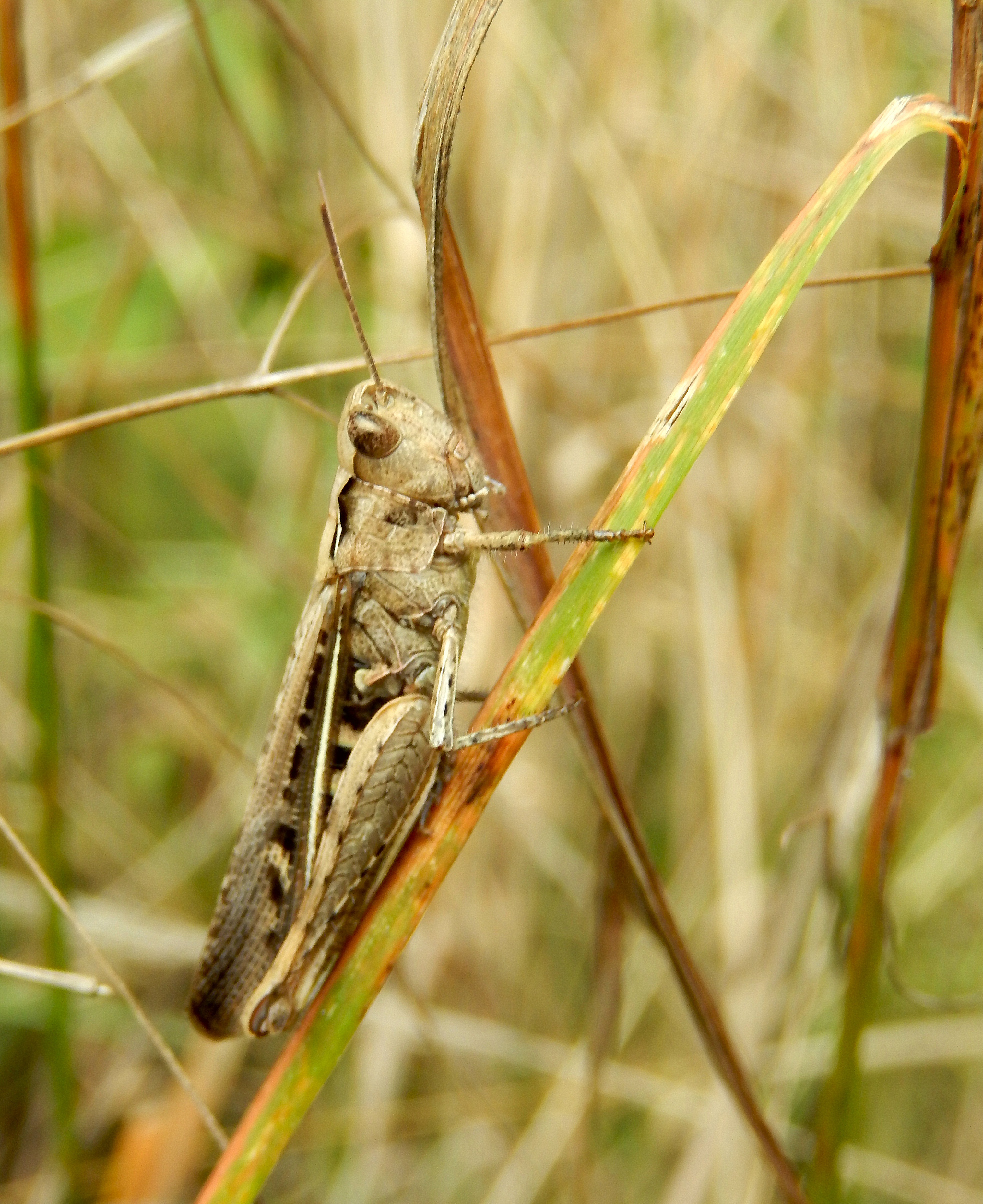
Several inch-long grasshoppers took a look at us.
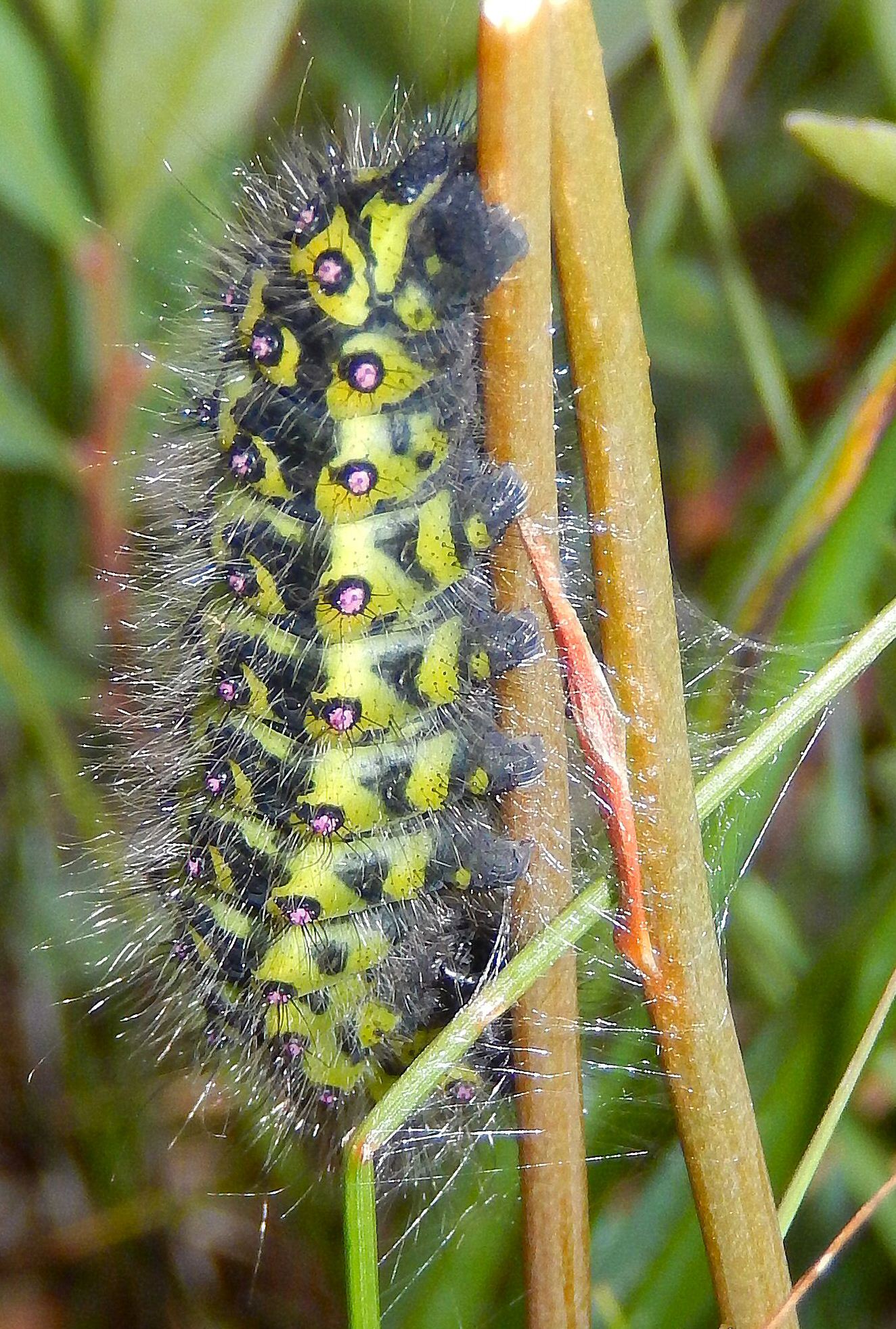
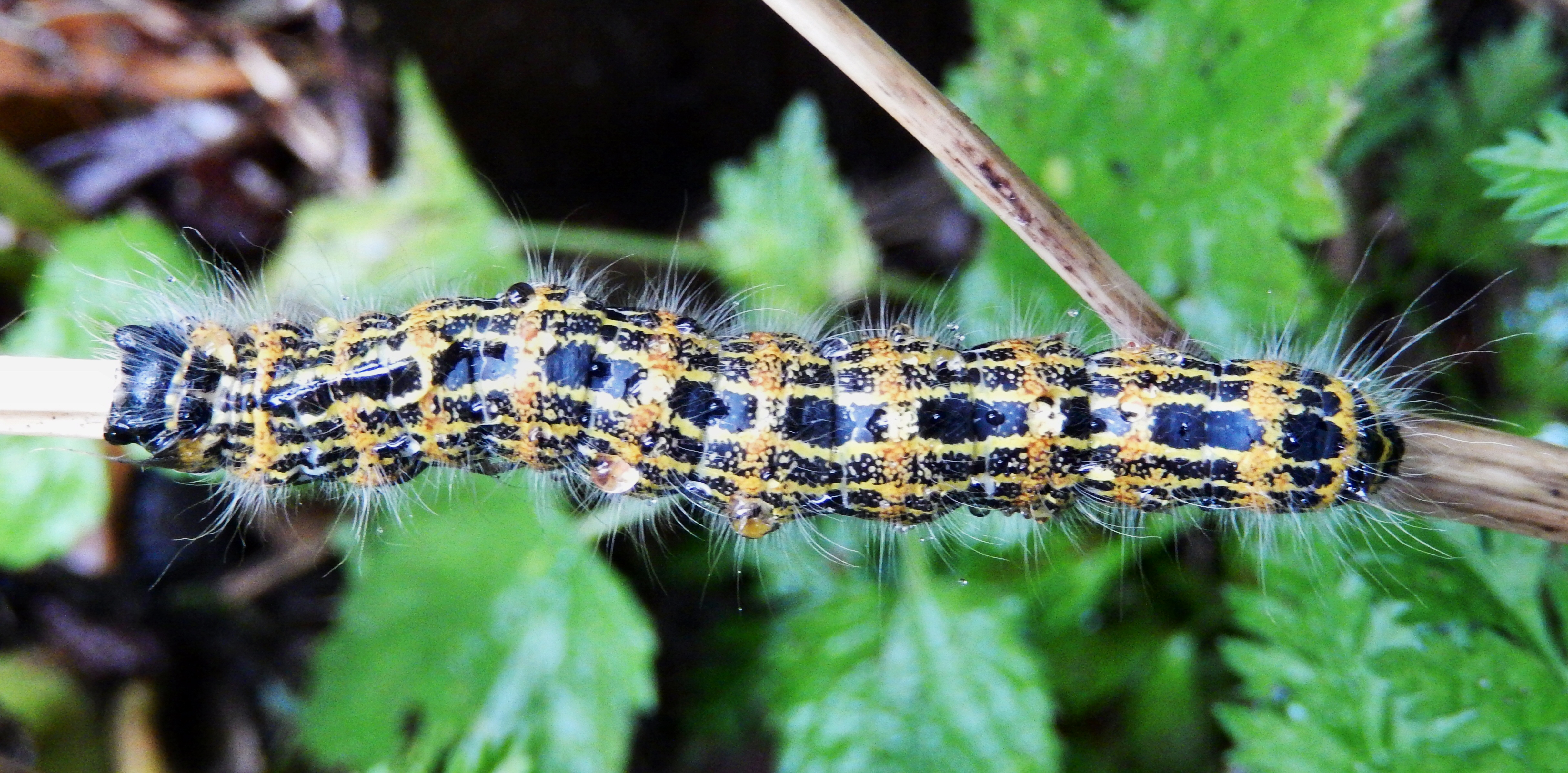
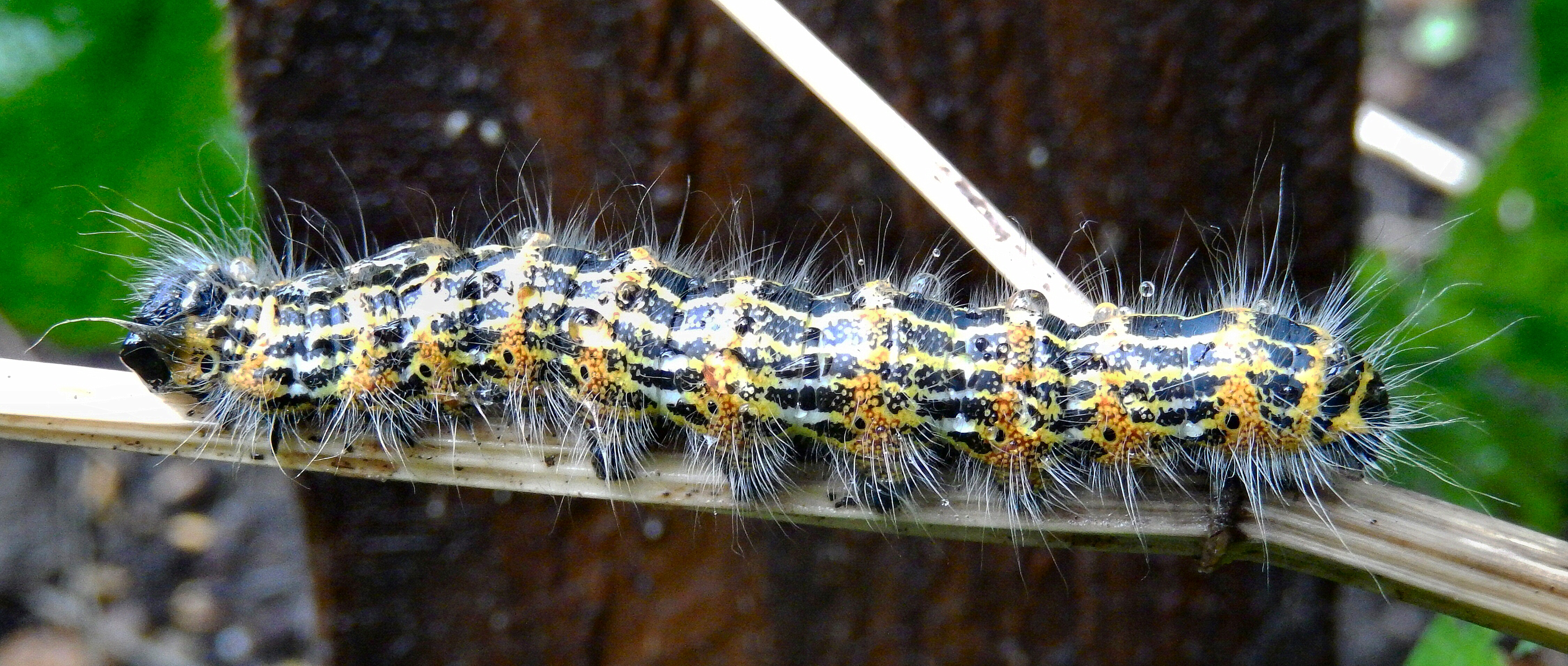
I was lucky enough to catch an Emperor Moth caterpillar in the act of preparing to pupate; the full-grown caterpillar with its hairy aposematic yellow-green body marked with black is tied on to the grass stems with a hundred silken threads.

On the summit ridge, this flat rock was covered with magnificently coloured lichens in shades of orange, yellow ochre, grey and white, with black, grey, brown or burgundy apothecia.
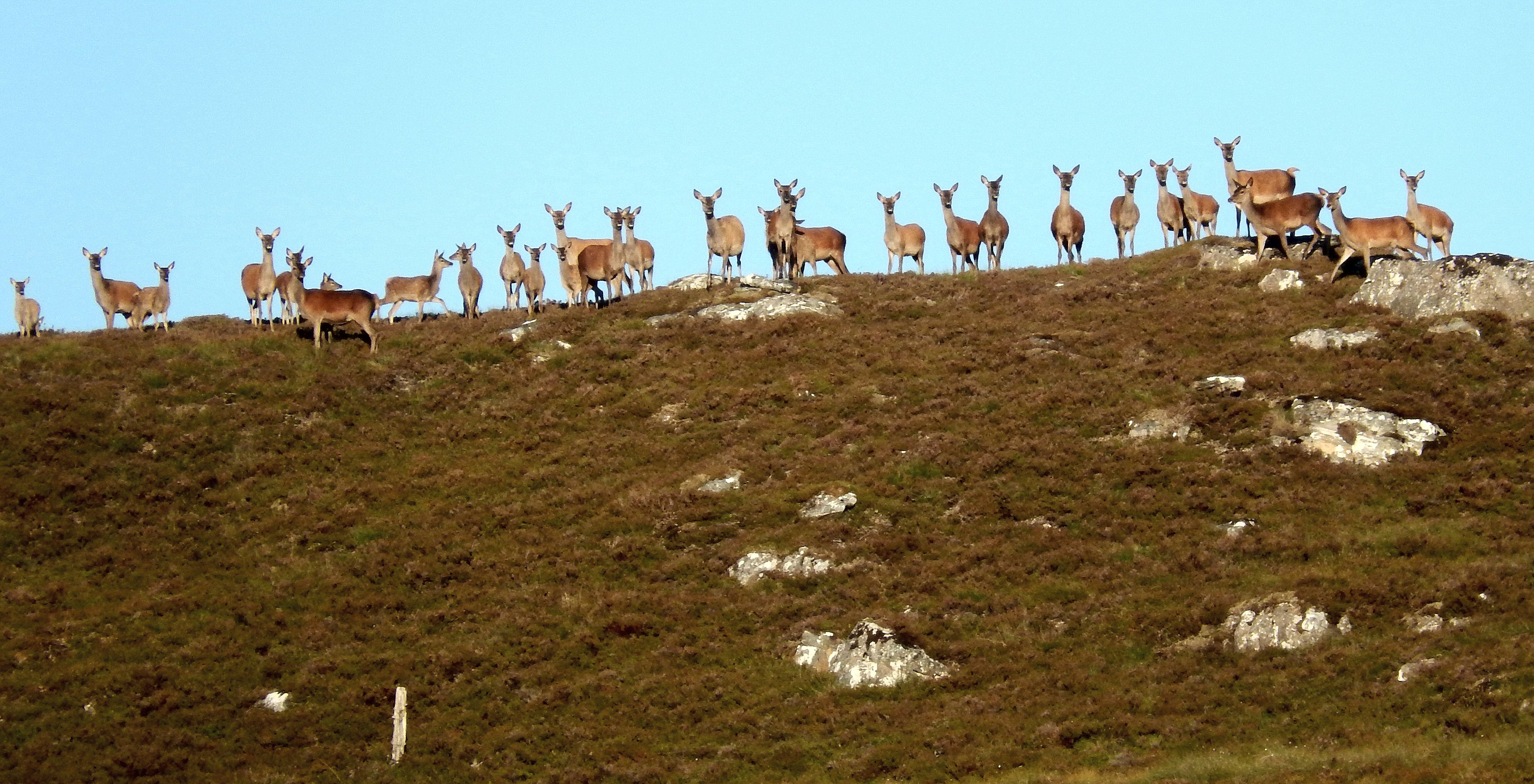
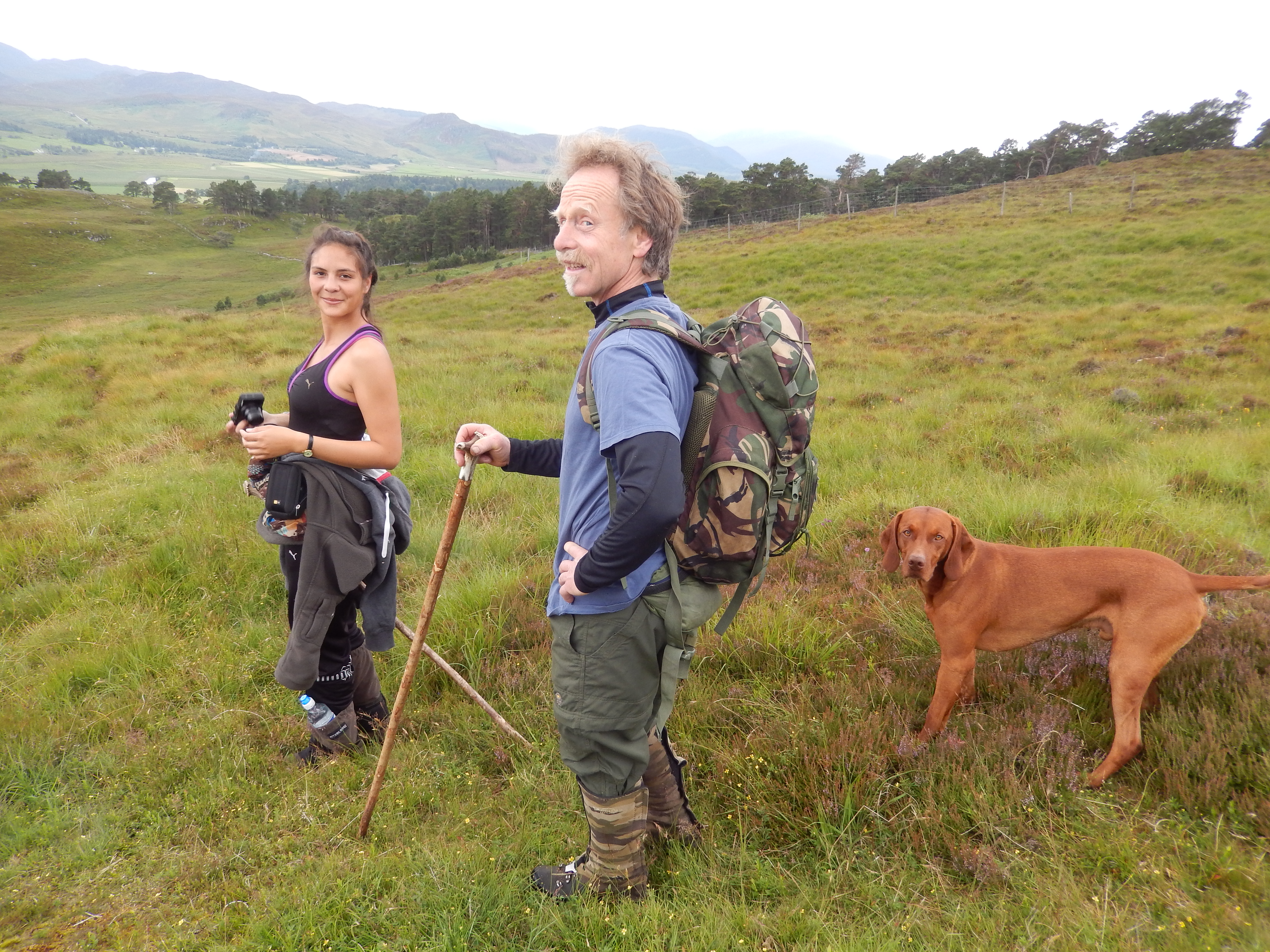
Towards the end of the eight-and-a-half-hour walk with the sun westering low over the hills, we caught sight of a herd of 32 hinds. The little Nikon captured this nice shot of them, all peering down at us from the skyline.