Tag Archives: London Wildlife Trust

LWT Nature Walk at Hutchinson’s Bank

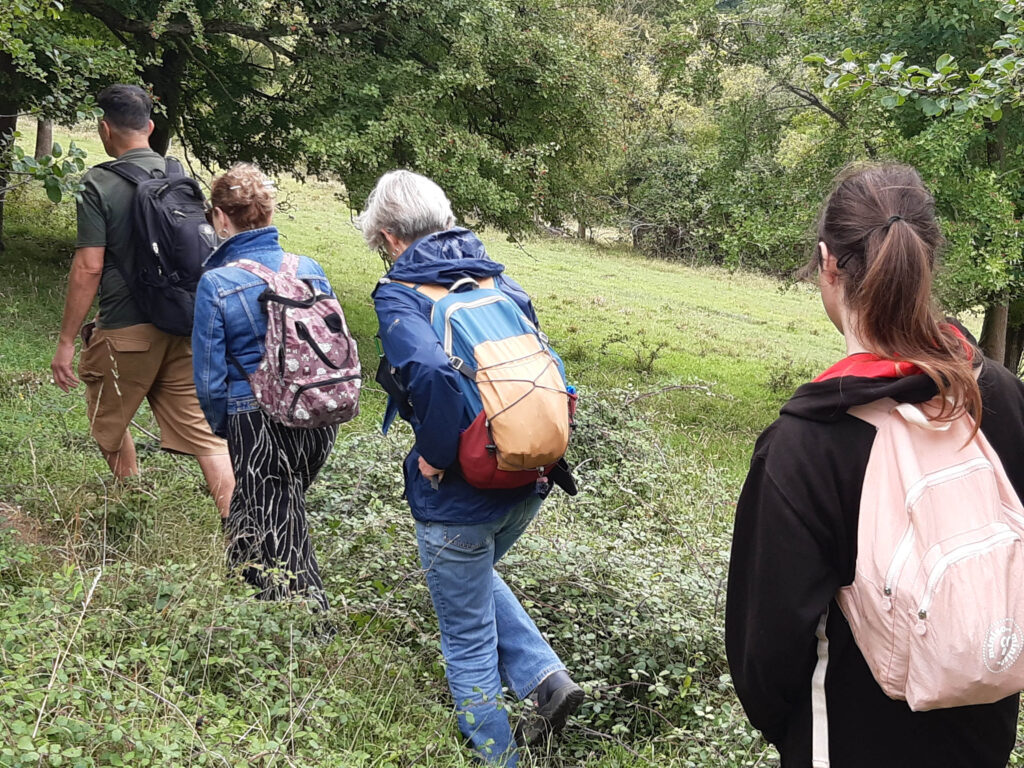
GT LWT group setting off into the reserve

Our entire LWT volunteers group (well, everyone who wanted) took a day off work and travelled the tube, overground, and tram to get to New Addington. From the end of the tram line, we walked a few steps to Hutchinson’s Bank.

This is the start of the group of beautiful and quiet LWT reserves that line this part of the warm south-facing scarp slope of the chalk of the North Downs.

The chalk formed as the tiny shells of marine algae (coccolithophores) rained down on to the seabed of a warm shallow sea during the Cretaceous period. The upper chalk here formed 100 to 66 million years ago. It then hardened, and was eventually crumpled by tectonic movements to form a ridge above what is now the Weald of Kent and Sussex. That ridge eroded away, leaving a north-facing scarp on the South Downs, and the south-facing scarp of the North Downs that we were standing on.

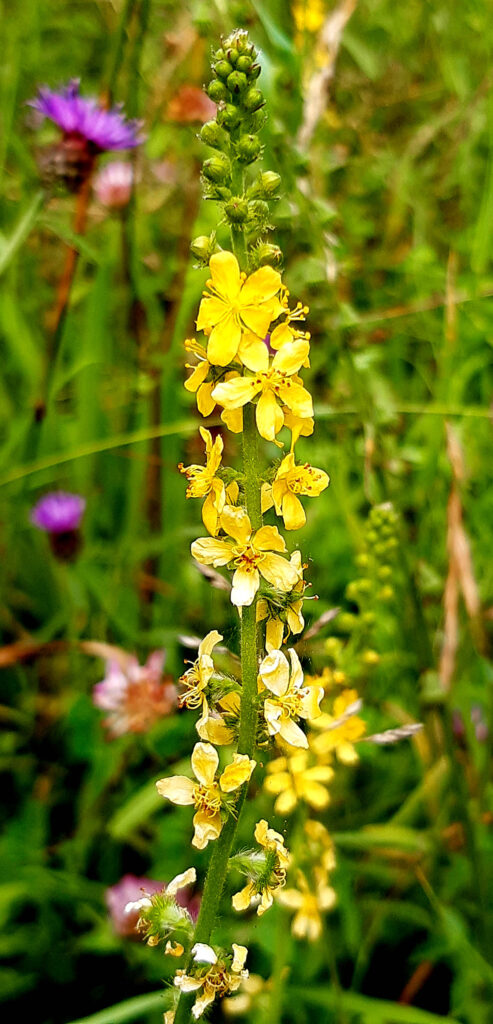
The chalk is a soft limestone, rich in calcium, which makes the soil on it basic (alkaline), unlike the neutral or acidic London Clay and Thames Flood Gravels. The resulting soil is a thin, free-draining Rendzina on steep slopes, and a thicker Brown Earth in the valleys. These support a wealth of flowers such as Marjoram, Scabious, and several Orchids that like an alkaline soil. Those in turn support many species of butterfly; Andy says there are 40 species on the local list.

We strolled eastwards through the woods and chalk grassland of Hutchinson’s Bank, down the slope and through the wood of Three Corner Grove, and across the road to the third reserve, Chapel Bank.

The area is a few miles west, but on the same chalky slopes that Darwin visited from Down House: Down Bank and the little hill he called ‘Orchis Bank’ where he found specimens, and most famously described as a “tangled bank” in his 1859 book The Origin of Species.

Oh, all right then, here’s his description. You can decide for yourself if the chalk hills of the North Downs led him to devise his theory of evolution by natural selection:

  • It is interesting to contemplate a tangled bank, clothed with many plants of many kinds, with birds singing on the bushes, with various insects flitting about, and with worms crawling through the damp earth, and to reflect that these elaborately constructed forms, so different from each other, and dependent on each other in so complex a manner, have all been produced by laws acting around us.

I gave a brief introduction to the geology, soils, and ecology; Andy did the same for the butterfly fauna.

To see the images uncropped and at full size, open them in a new tab or window.
There was great excitement among the butterfly enthusiasts in the group when a large orange-brown butterfly flew past with the strong purposeful flight of a Fritillary. Two species, the Silver-Washed and the Dark Green, are native to the area; they are larger than the introduced or “escaped” species, the Glanville, Heath, and Marsh Fritillaries which can also be seen here.

Eventually, amidst much stalking of the first specimen, which proved to be a Silver-Washed, three more of that species came by, chasing each other about, and then obligingly landing on some of the abundant Marjoram which was aromatically in flower and nectar among the grass.

Here’s Andy’s photo of one of them.
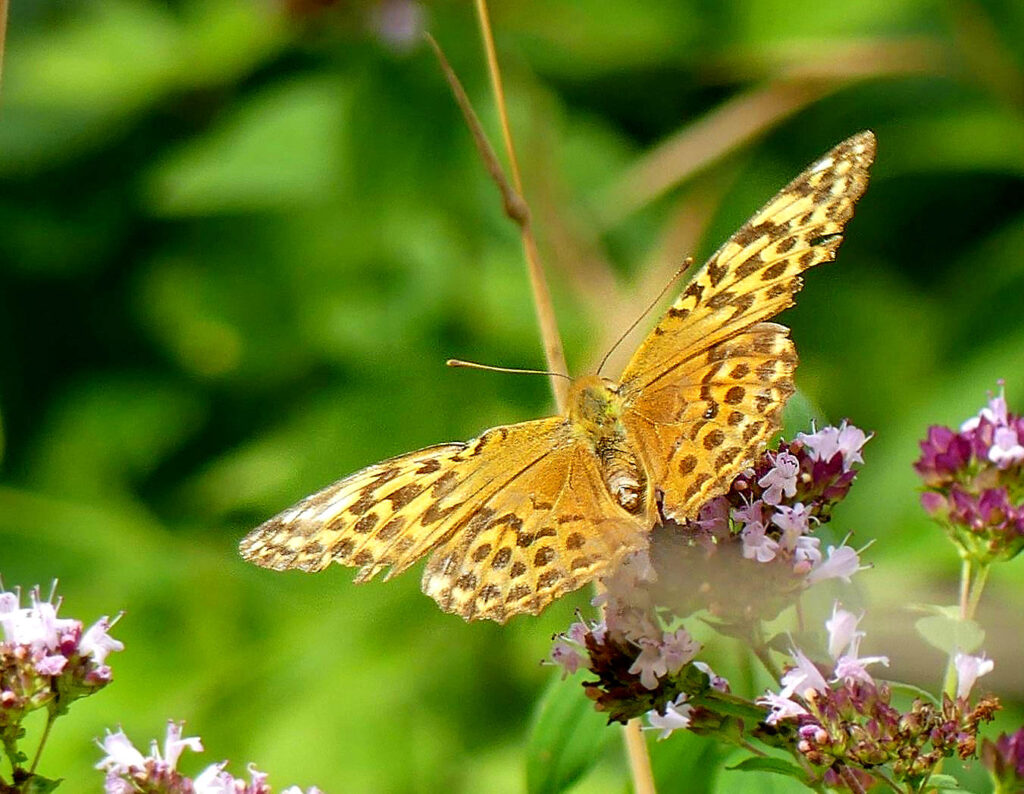
Silver-Washed Fritillary on Marjoram, taken by Andy

A Lesson in Monitoring Pondlife

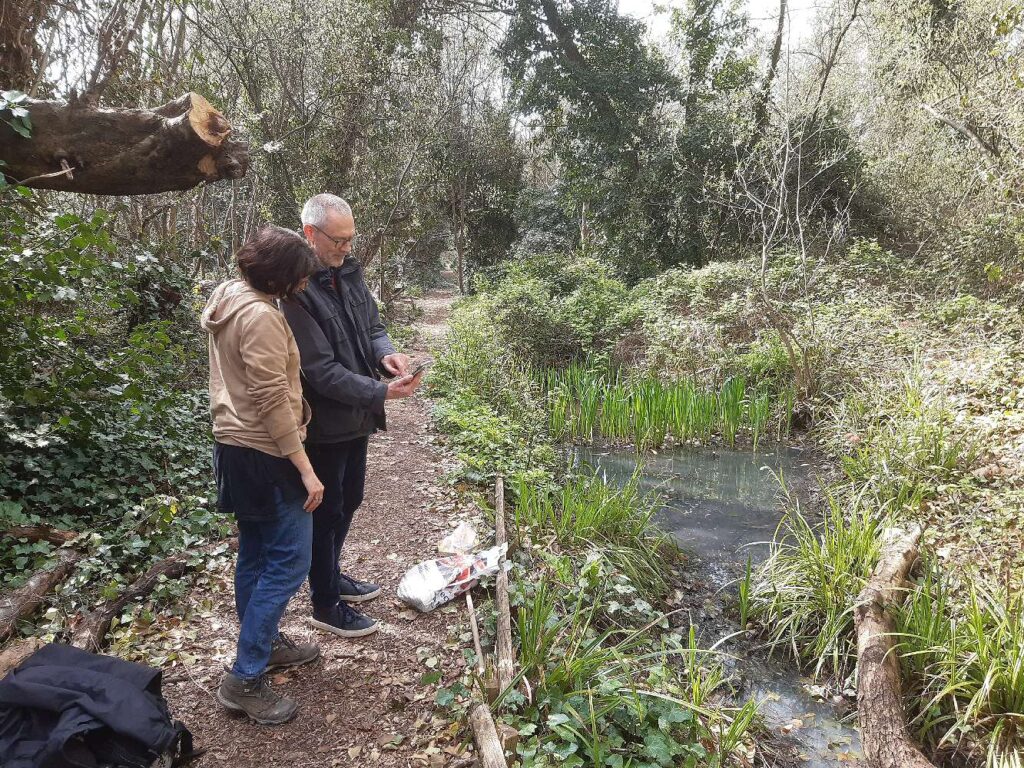
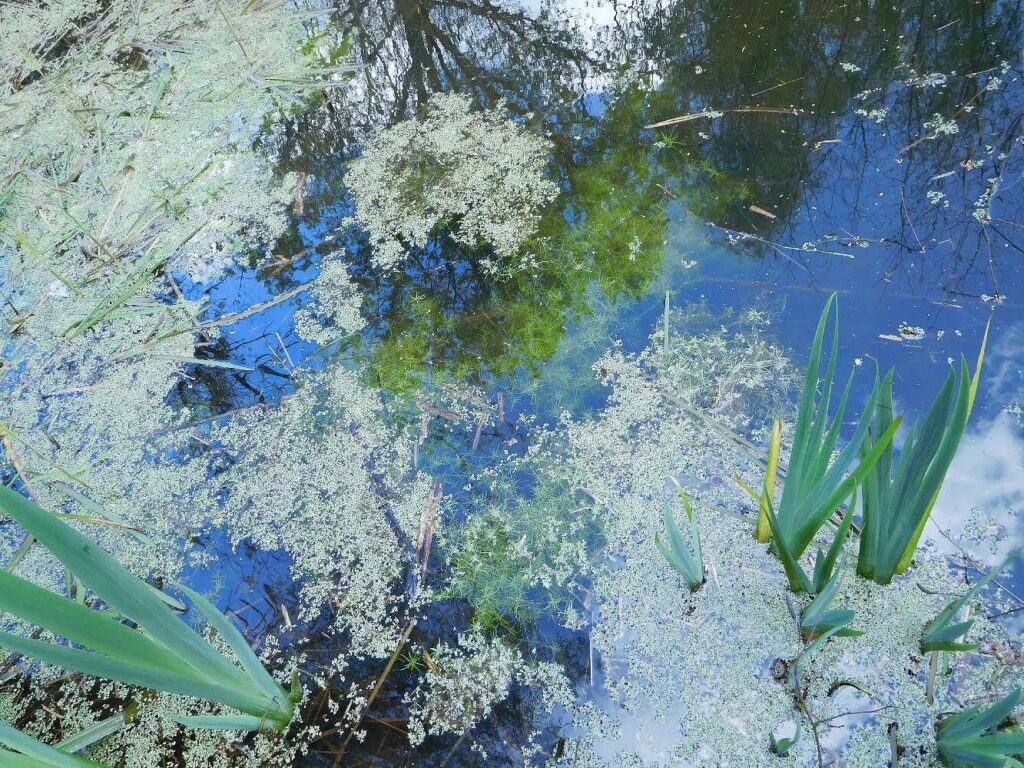
Alex and Andy monitoring the Apple Tree seasonal pond, whose water looks to have been polluted.

London Wildlife Trust’s ecologist, Alex, has set about finding out what is actually happening to multiple sorts of wildlife across the Trust’s many reserves, including quite a few that don’t have a warden, or even a group of volunteers. This is quite the task, when you consider that each reserve may contain multiple habitats — woodland, meadow, and pond, for instance — and that each habitat may be monitored for different sorts of beastie, like amphibians or pond invertebrates, and that each site may be sampled in each of several places (different ponds), each with multiple micro-habitats (open water, between plants, …), and each sampled repeatedly through the season.

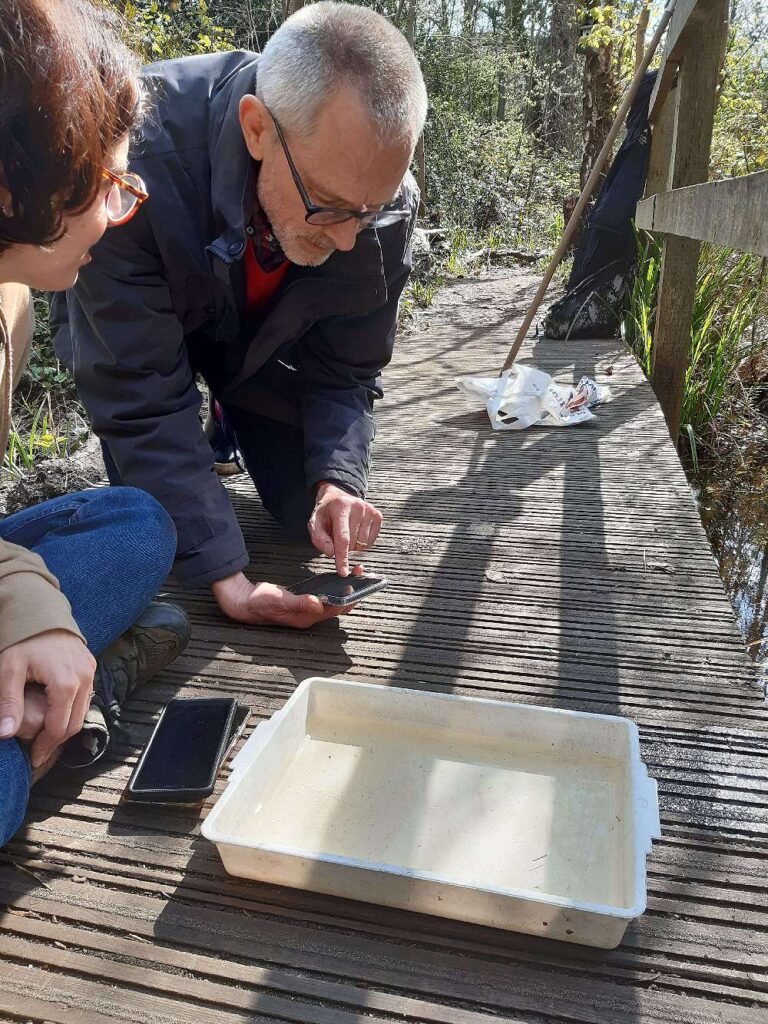
Alex teaching Andy how to enter a sample description into the template, as we began monitoring of the ‘mangrove swamp’ seasonal pond

Alex has set up templates for each type of monitoring in the Memento Database app, which has the merit of being free to download, and of being usable entirely offline if people are saving their mobile’s battery or have a wobbly data connection. We downloaded the app and installed her ‘Aquatic invertebrates’ template.

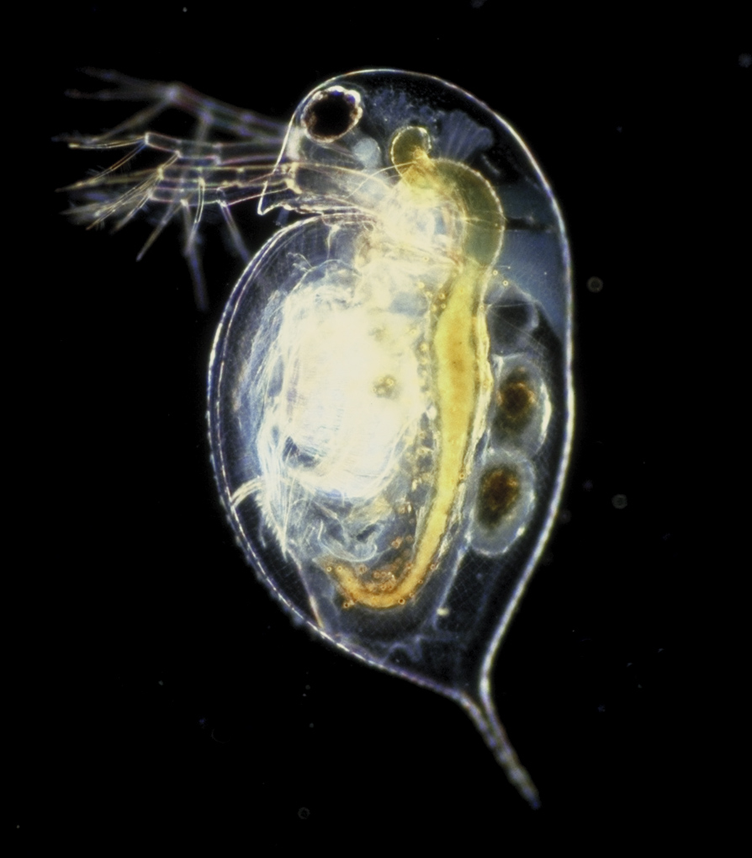
Daphnia, a water-flea, under a microscope

Then we half-filled a plastic tray with pond water and told the template to create a new sample record. We put in our initials, agreed a numbering for our four ponds: the seasonal ponds P1, P2, P3, and the main one P4, and filled in the amount of shade on the water, amount of vegetation, depth of water (the net handle came in handy here as a depth gauge) whether there was rubbish or dead wood or signs of eutrophication or a few other parameters, and then looked VERY carefully at the “water” in the tray to see if there were any beasties in there BEFORE we’d collected our carefully-taken sample. So if you find 5 Daphnia water-fleas in there, you have to subtract that number from your sample when you count it…

One of us — Andy or me — then took the net, swished it about in the chosen area of the pond for 3 seconds, and brought the sample to the tray, carefully washing the net in the tray water.

The ‘Between Plants’ sampling area in the main pond

The template had been constructed for Android. Andy had an interesting time working out how to use it on his i-phone. On my Android phone, it turned out to be a good deal simpler to use, though with three tabs to complete, each with a long list of fields of various sorts, and a nearly invisible SAVE button (the critical bit, really), it took a little practice to get used to it.

The other requisite skill, of course, was being able to see and recognize the little beasties in the water. I thought I’d have no difficulty as I know my Midge larvae from my Mayfly nymphs: but a large number of the pondy bestioles (all technical terms here) turned out to be extra-small water fleas too small to make out clearly without reading glasses (at home, naturally), and too deep in the water to focus on with my hand-lens. So for next time, glasses, and my oversized Sherlock Holmes magnifying glass that someone gave me when I was a teenager — absurdly low magnification, but a wide field of view and a large depth of field. Aha.

The smidgeon-sized millibeasts on which the survey depended (at least on this lovely April afternoon) were the tiniest Daphnia I’d ever seen; equally tiny Cyclops; and (if possible) even smaller Water Mites. My first reaction was, we’ll never manage to ID those things, let alone count them. But you know what? It’s possible, even with a bit of presbyopia. How? Well, the trick is to rely on the “jizz”, the plane-spotter’s “general impression, size and shape” (yes, that must have been “giss” originally, but pronounced jizz anyway), i.e. how it moves, what sort of smudge of colour you can make out, and any hints as to what shape the thing would have if you were actually able to pop it into a watchglass and peer at it properly with a binocular microscope (at home, advisedly).
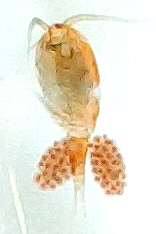
Daphnia are basically oval, and have a slight reddish hue to them. Cyclops are slender, tapering to a point at the tail, and look greyish. If you’re really lucky, you get a female Cyclops with a pair of obvious egg-sacs either side of her tail.

Cyclops, with nice obvious egg-sacs under the microscope. She has one eye, like the terrifying Greek monster, and a pair of long antennae which she uses as oars.

So you can tell Daphnia and Cyclops apart even if you can barely make them out, because they give a different impression. And, Daphnia swim on their sides, thrashing along with their feathery antennae; while Cyclops swim on their bellies, flicking their antennae like an athlete doing butterfly-stroke with their arms. Both therefore move in little jumps or saccades. The other micro-bestiole that we had in numbers today was the Water Mite. They’ve got 8 legs and a basically round body (the head does not protrude). They swim with their little legs, rather smoothly and continuously … so they don’t look anything like water-fleas except in size.

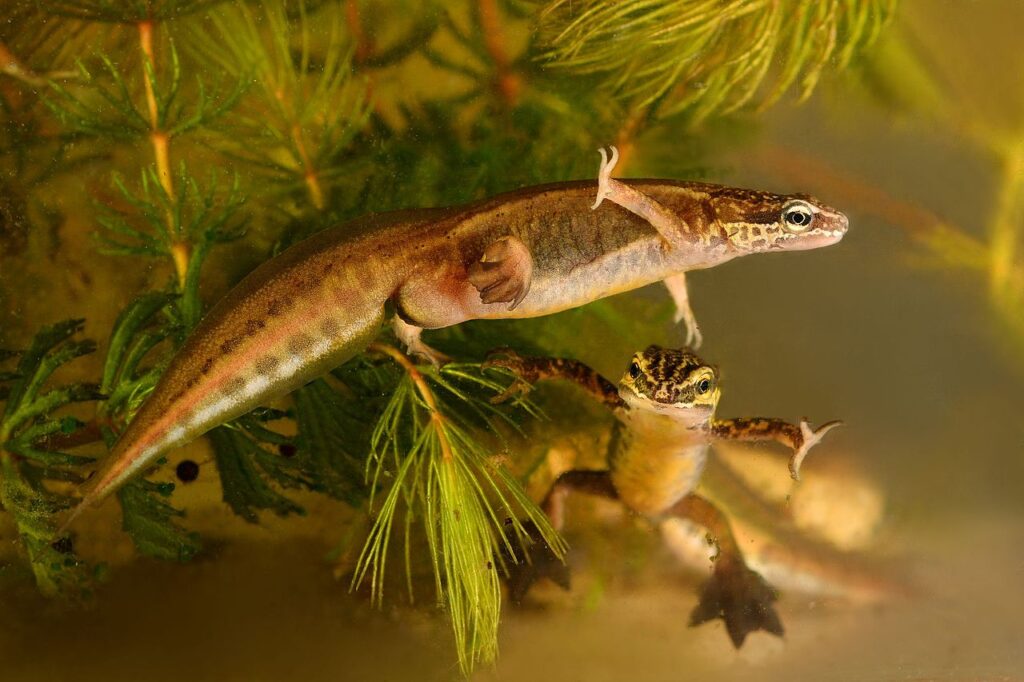
So we counted the animals in each sample. Coming to the main pond was a pleasure, as it’s a beautiful spot; the sun was warm; and the first thing we saw (rising to the surface of the pond) was a nice big male newt, the first of the year. More, Alex identified it as a breeding Male Palmate Newt, not our usual Smooth Newt: its tail goes down to a point, making it seem relatively short, and its hind feet are webbed.

Palmate Newts

I added it to the “Notes” field (this was a record of invertebrates). Andy and I found that we were getting used to the template, and filled it in a lot more quickly than our first efforts. I saved and exported the sample record to a .CSV data file, and pressed the email button. To my astonishment I only had to make a couple more clicks and the whole dataset sent itself off to Alex for analysis.

Expedition to Fray’s Farm … to collect logs

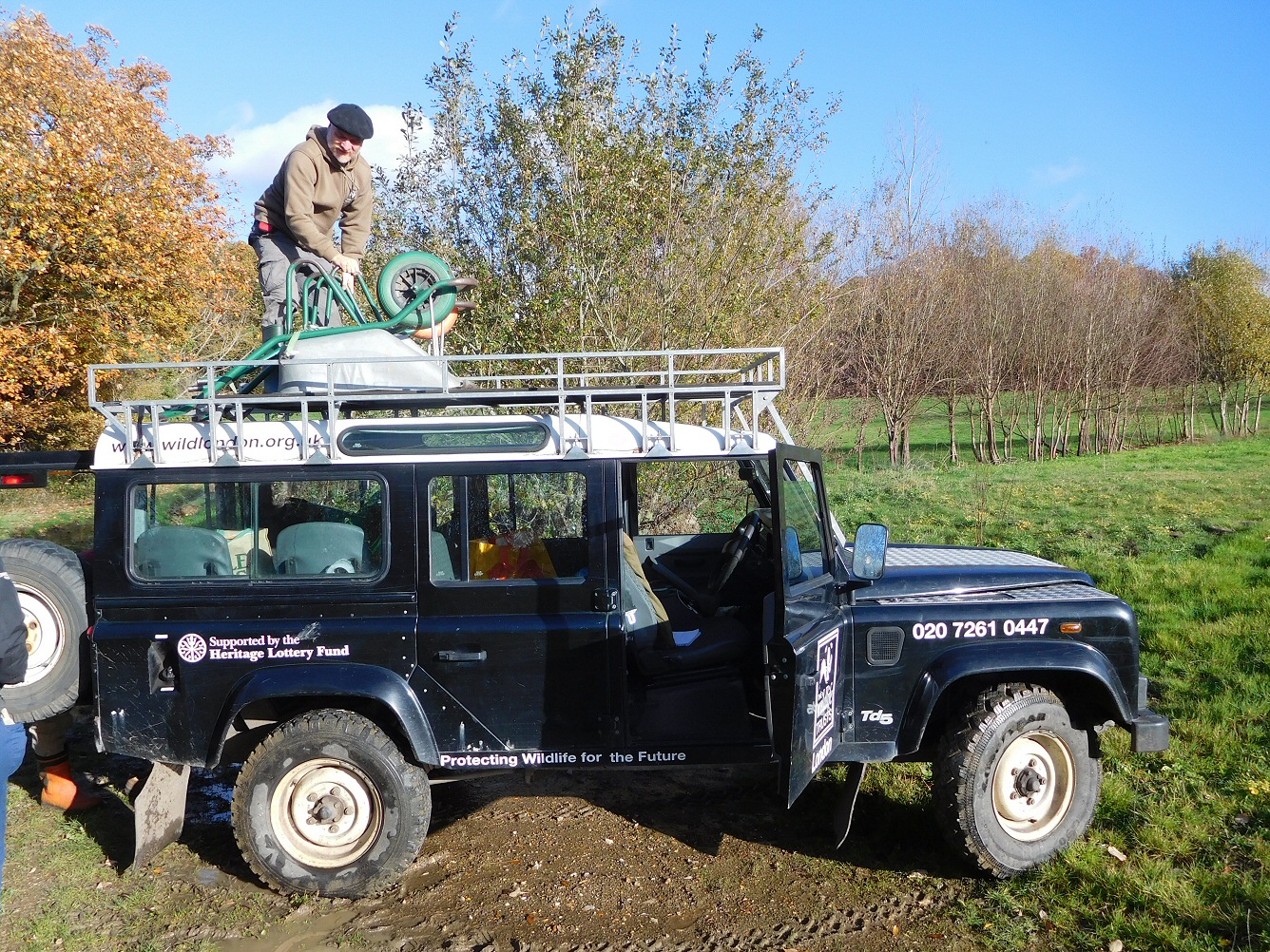
Unloading wheelbarrows from roof of Land-Rover at Fray’s Farm, one of London Wildlife Trust’s numerous reserves on the western edge of London. All we needed to do was to find the logs!

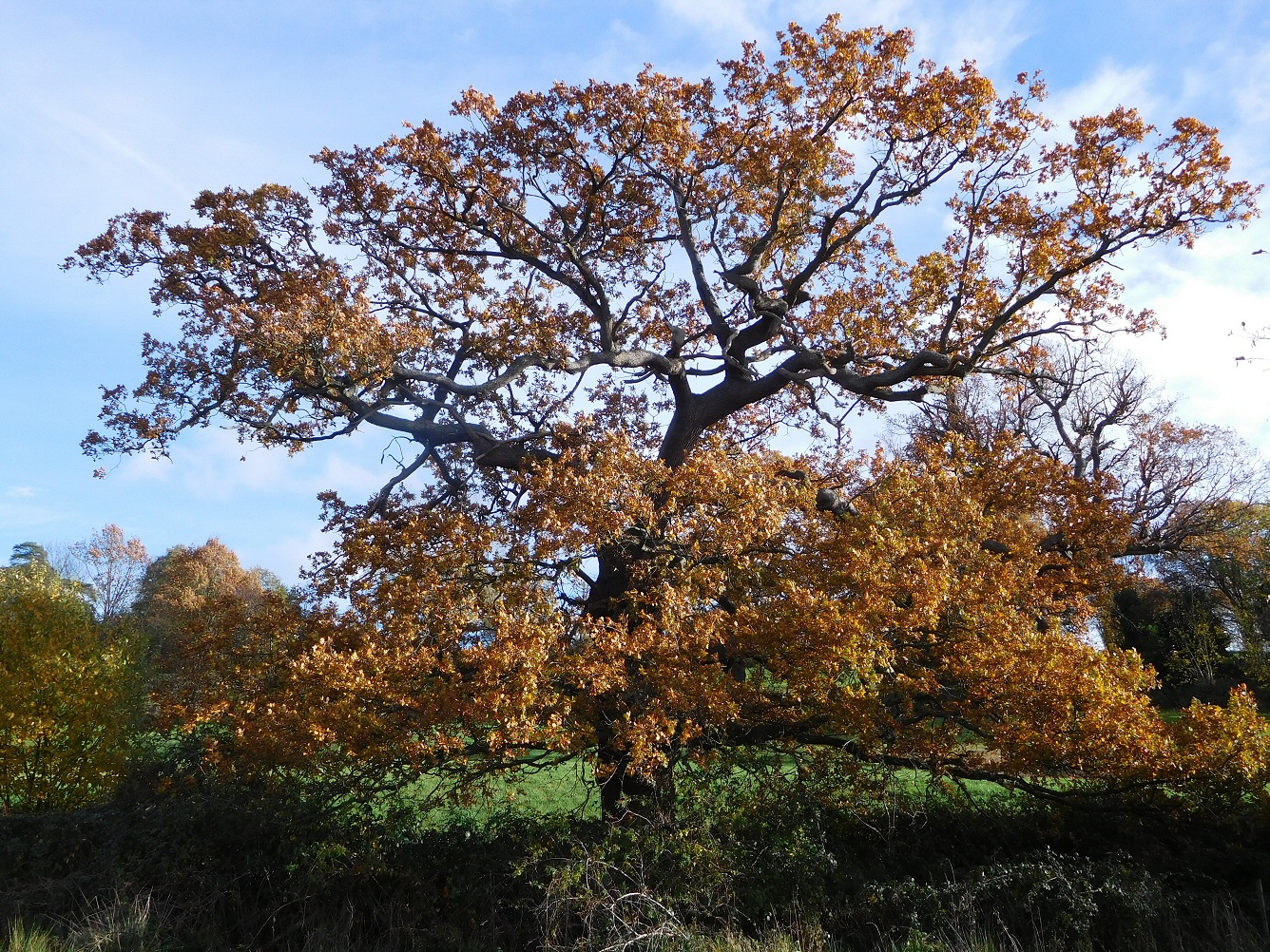
We fanned out across the reserve looking for log-piles. On the way, I found this beautiful Oak in full autumnal splendour, as well as a buzzard, a red kite, and a common darter dragonfly (not bad for mid-November), and a brief glimpse of a roe deer. Jules found a handsome Carabid ground beetle.

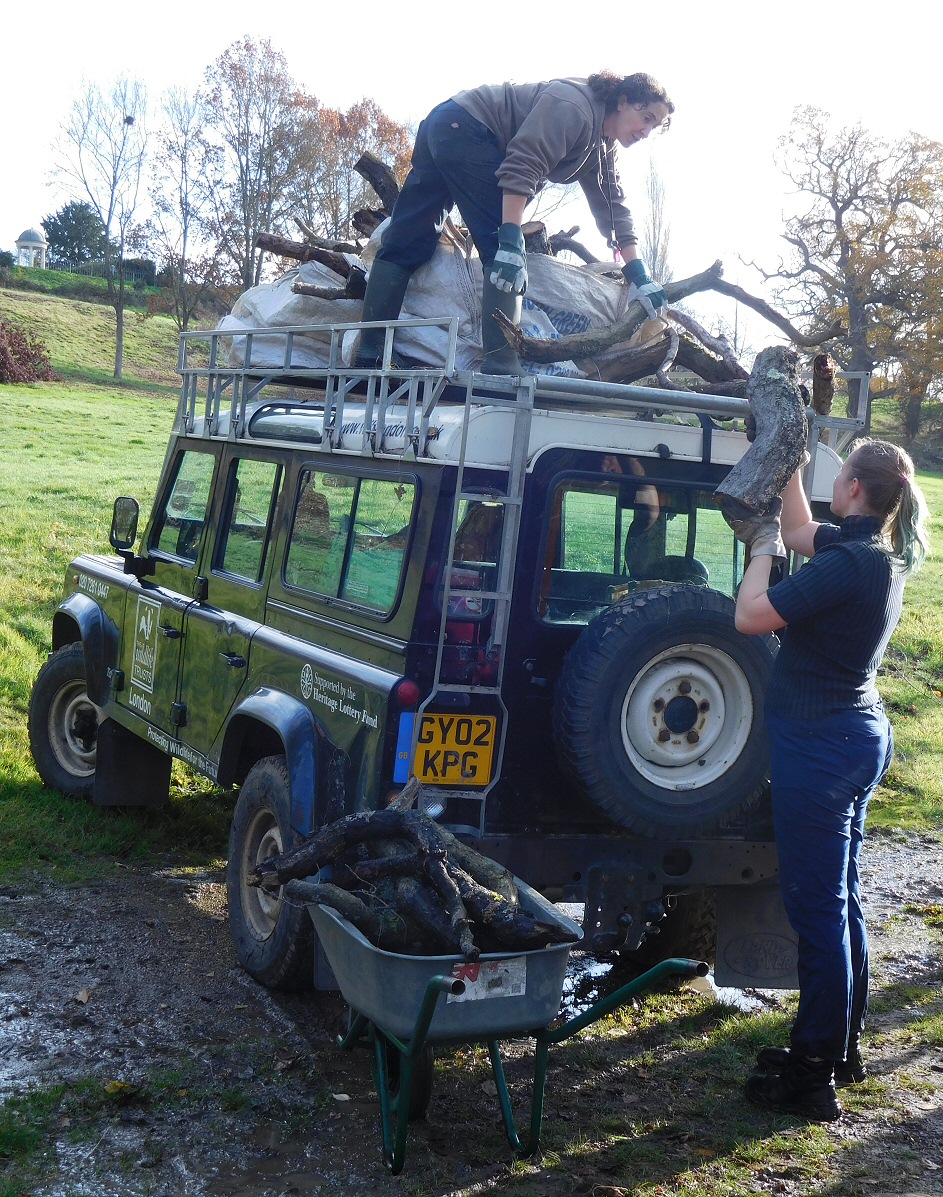
Anna and Netty loading the spoils. The logs were covered in lichens and the ones which had lain a year or two with elegant curtain crust fungi as well.

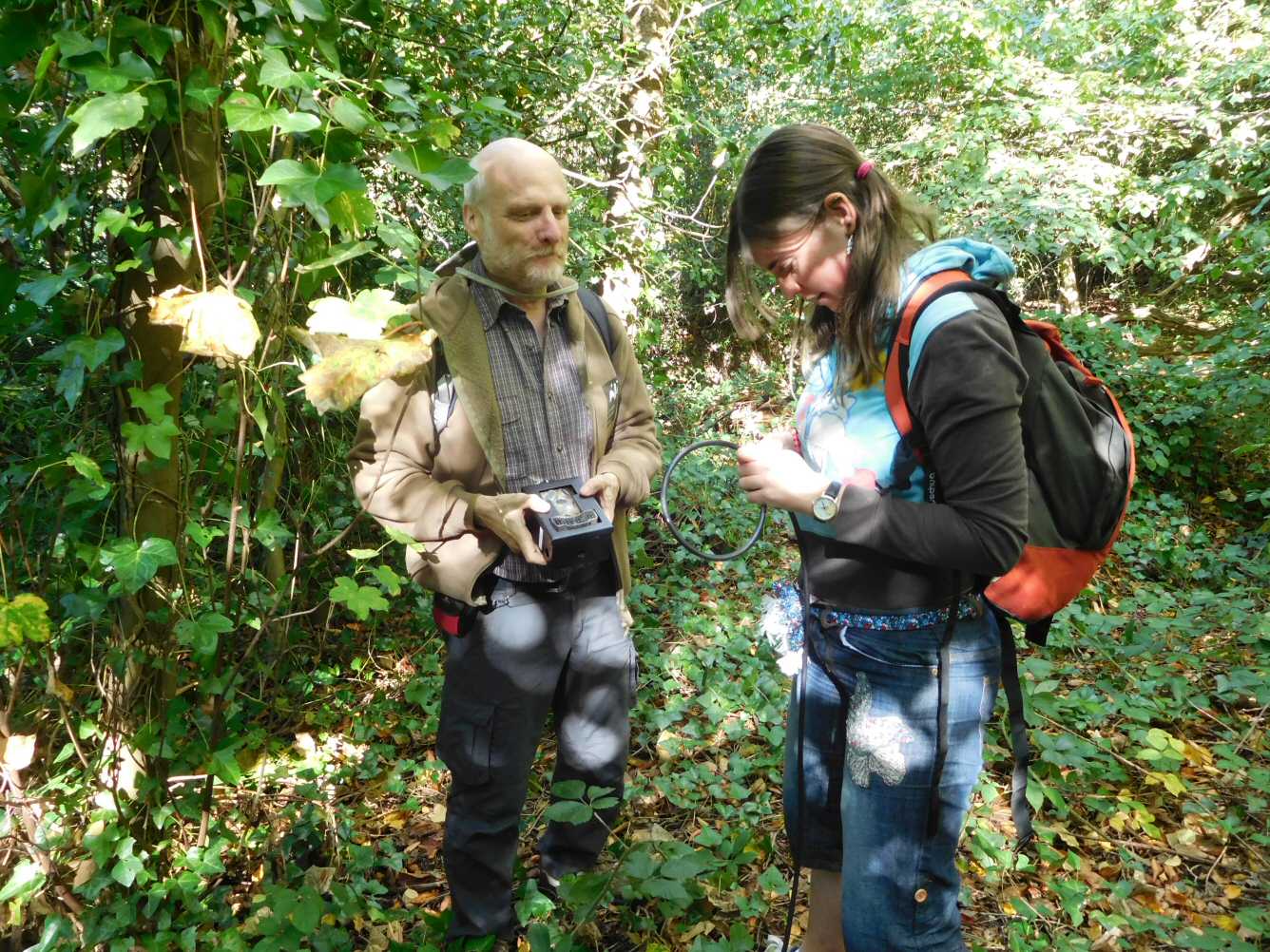
Learning how to use Camera Traps in Sydenham Hill Wood

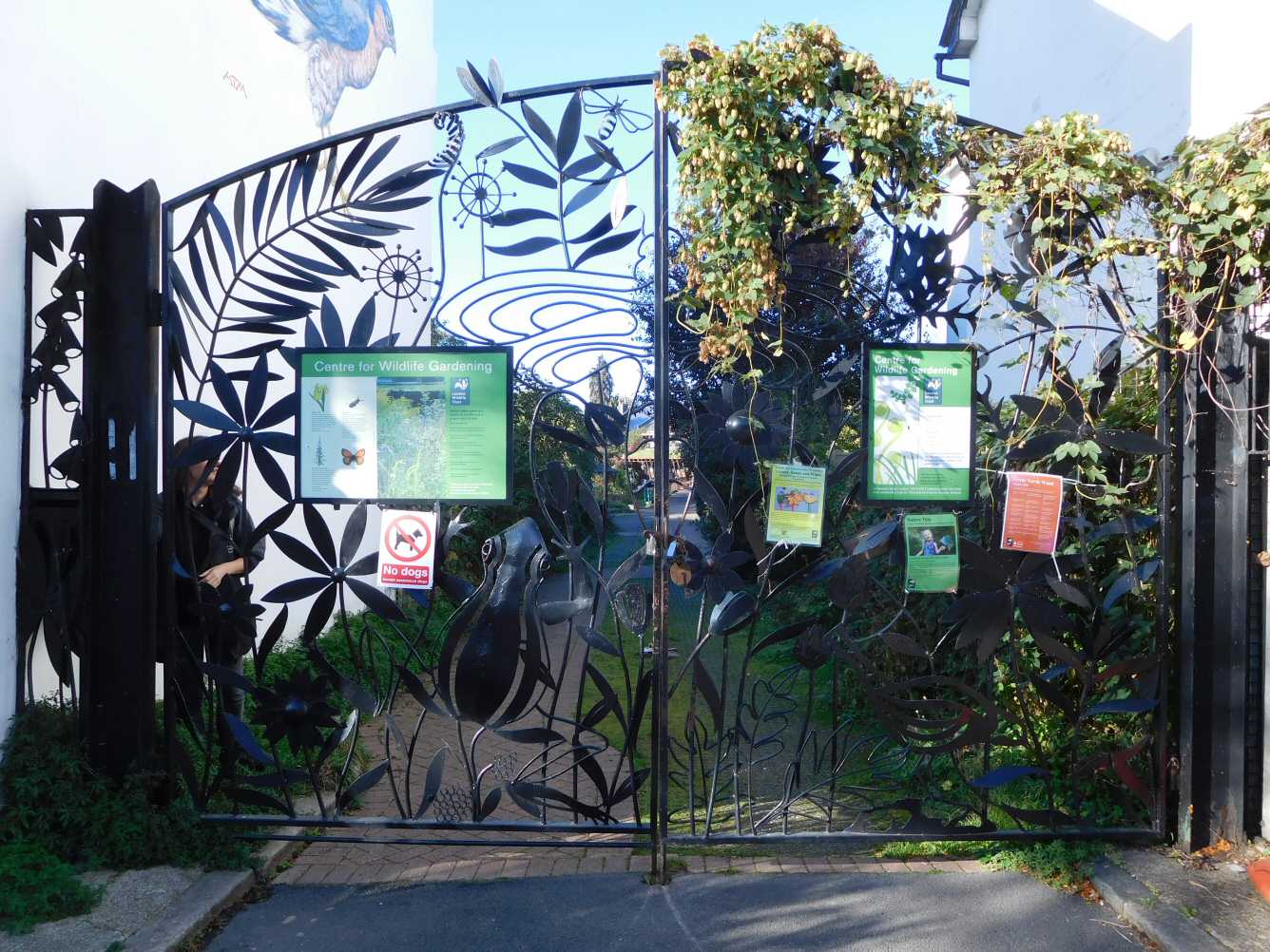
The course began at London Wildlife Trust’s beautiful Centre for Wildlife Gardening.

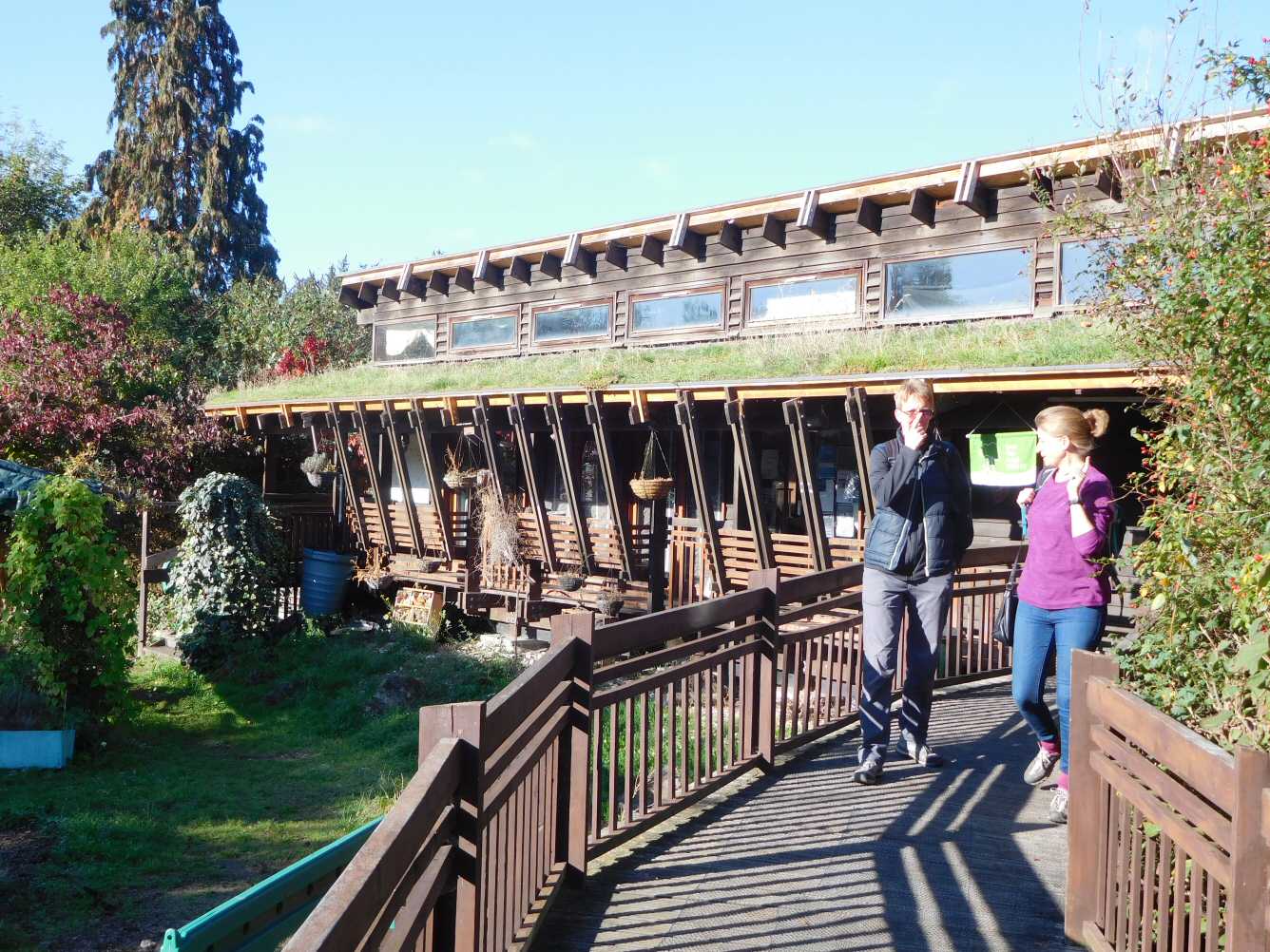
The green classroom – sustainable construction materials, low energy usage, green roof

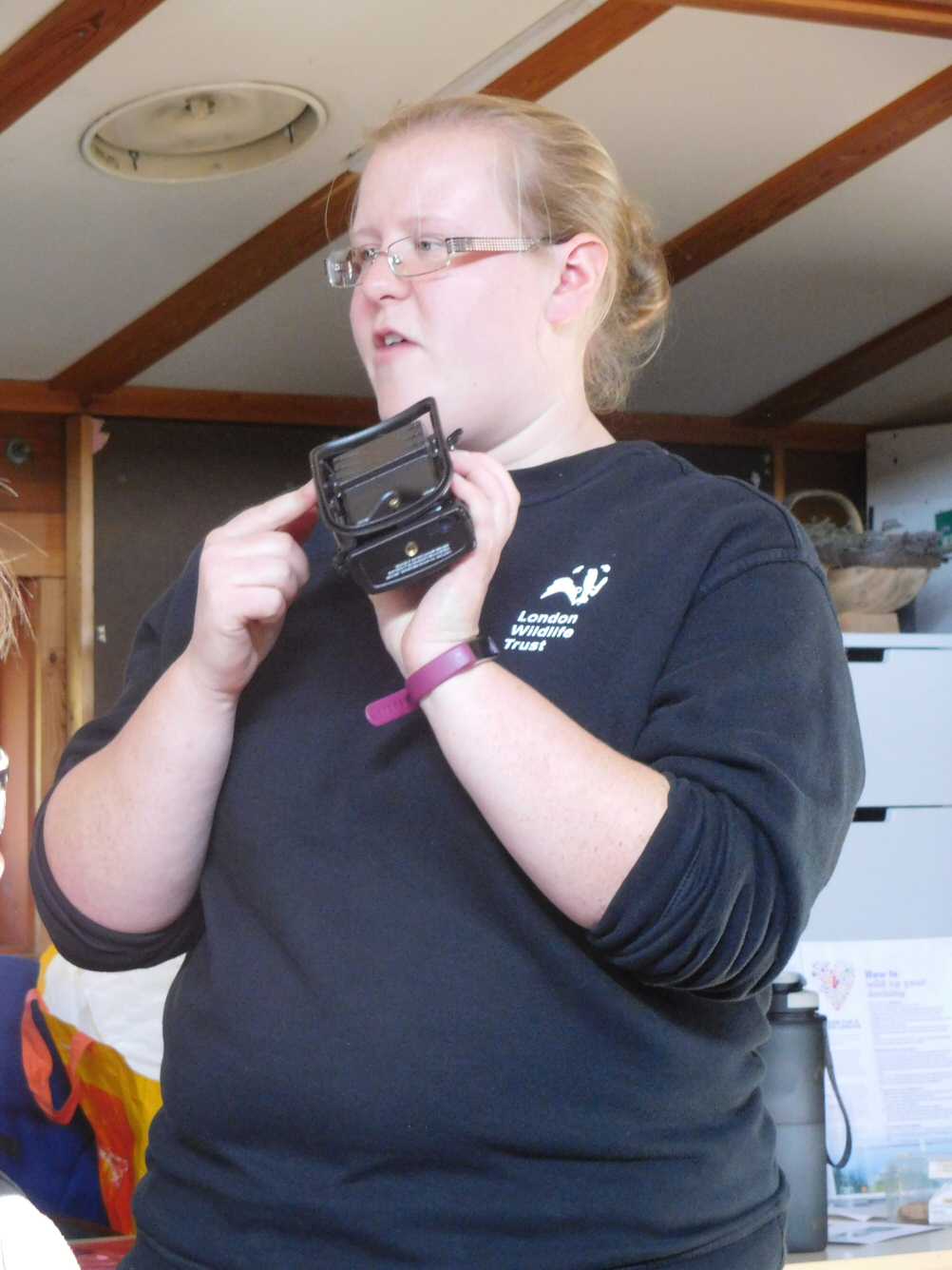
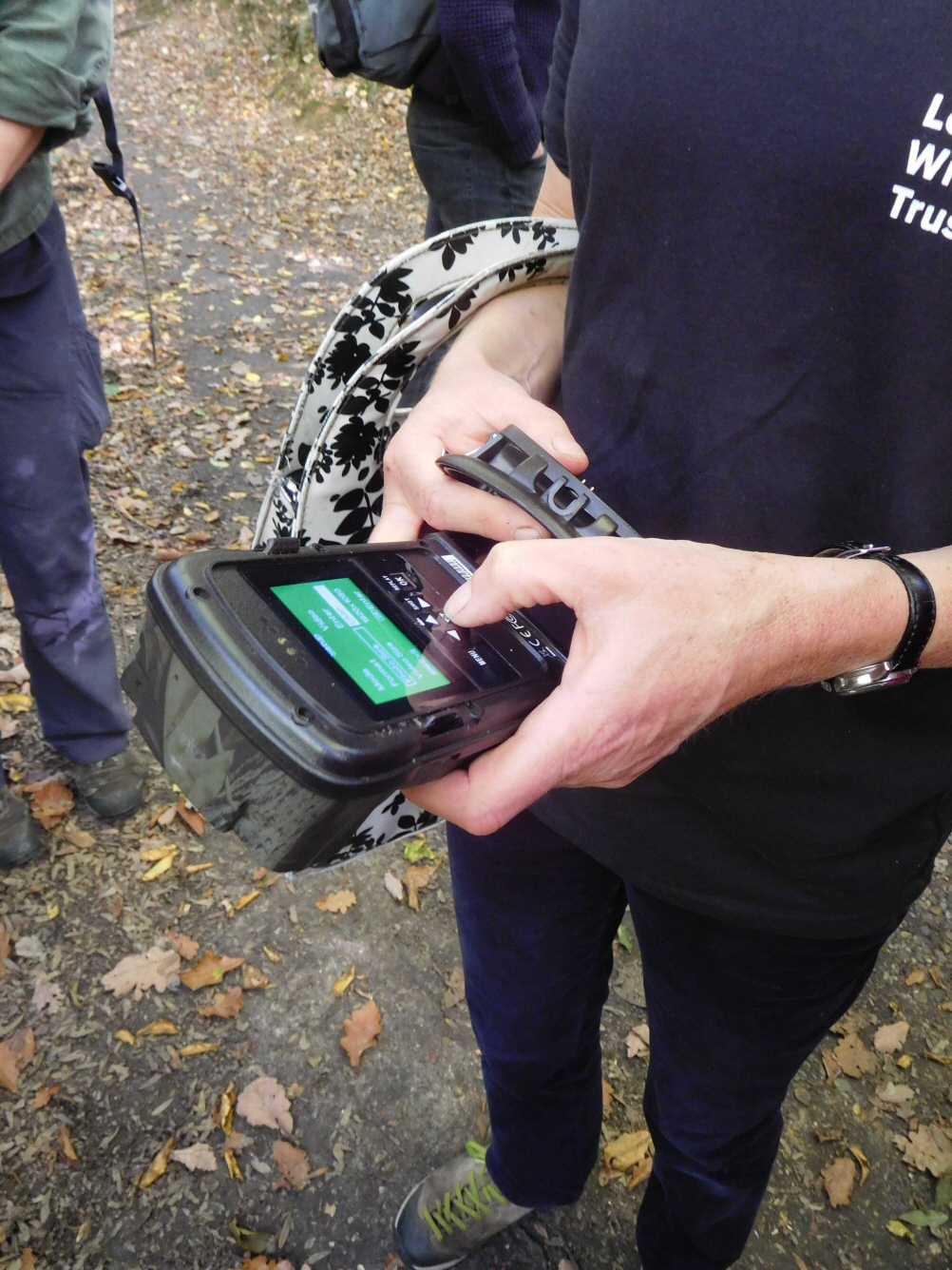
Inside a Camera Trap (this one’s an Acorn)

Emma teaching the course

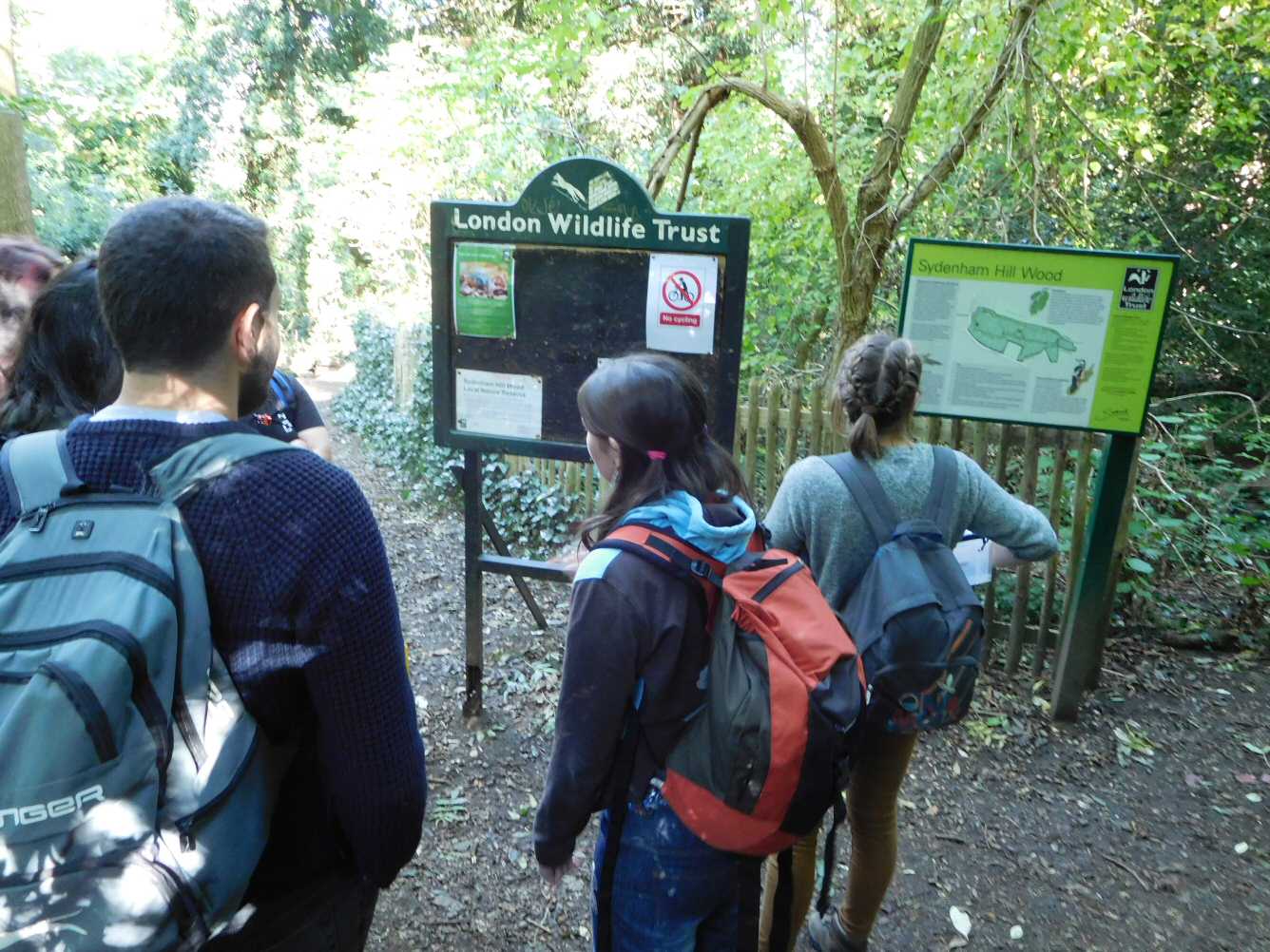
Arriving at Sydenham Hill Wood

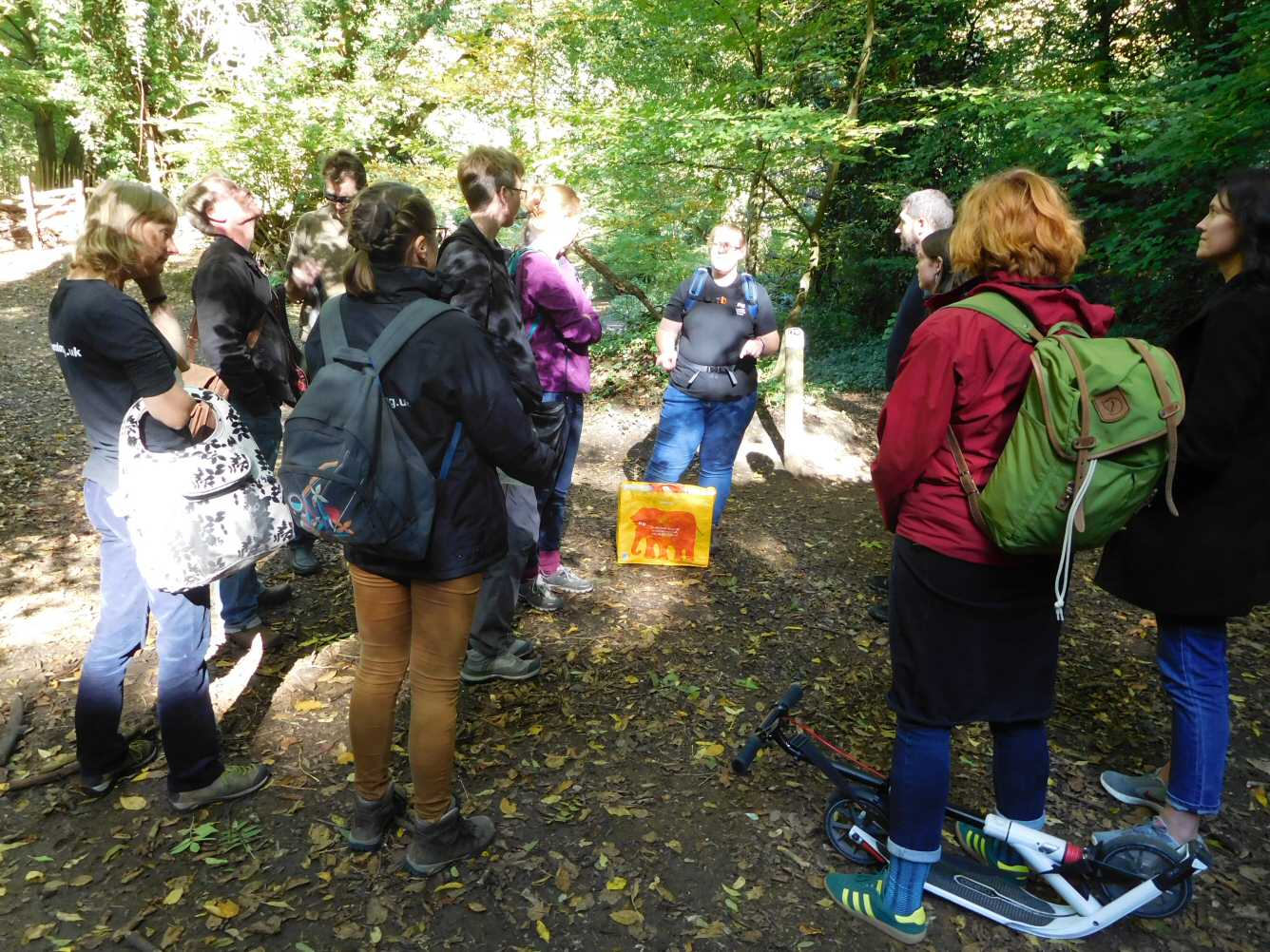
An outside classroom

Set phaser to ‘hedgehog’

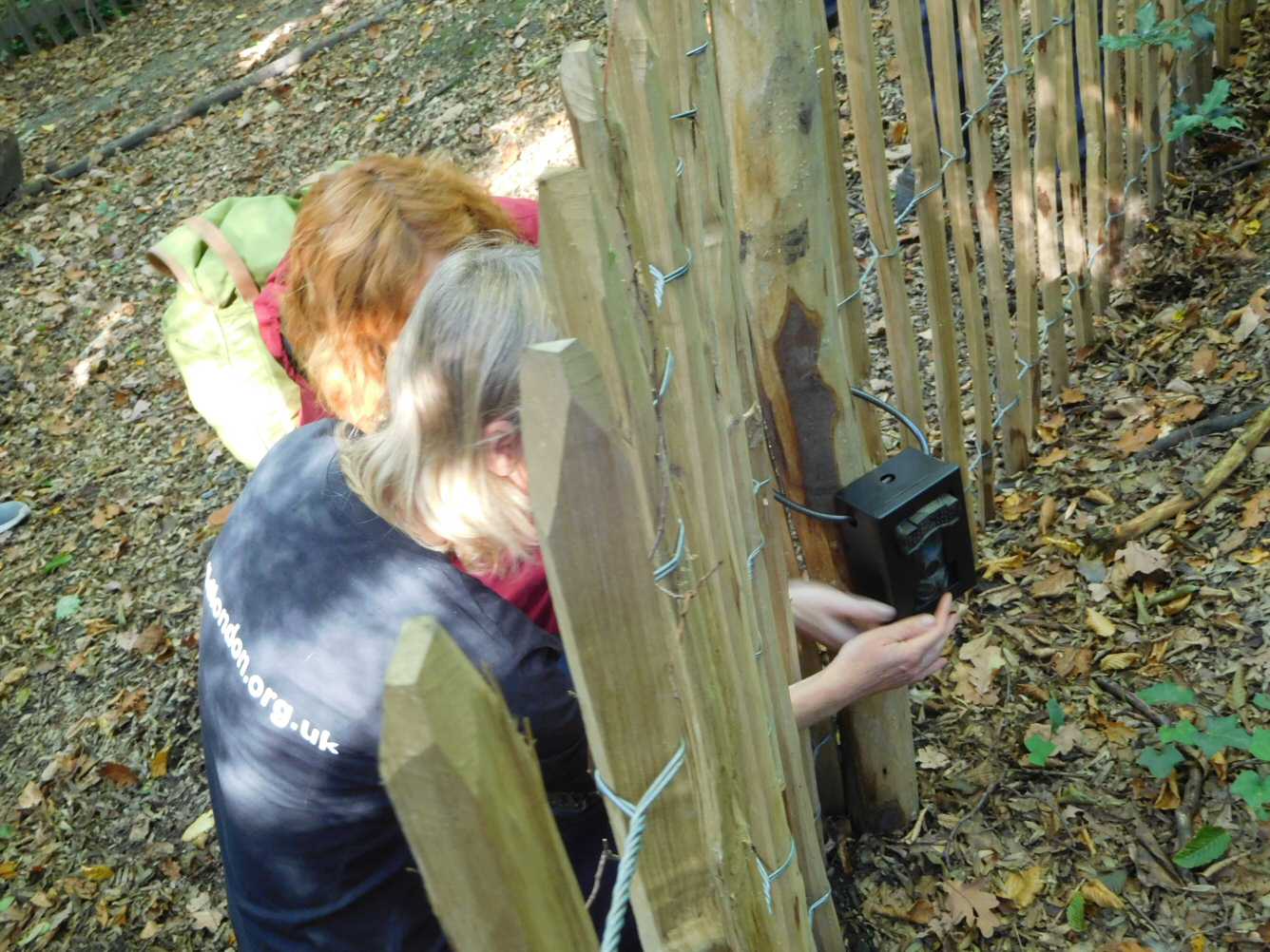
Tie in position, lock the box

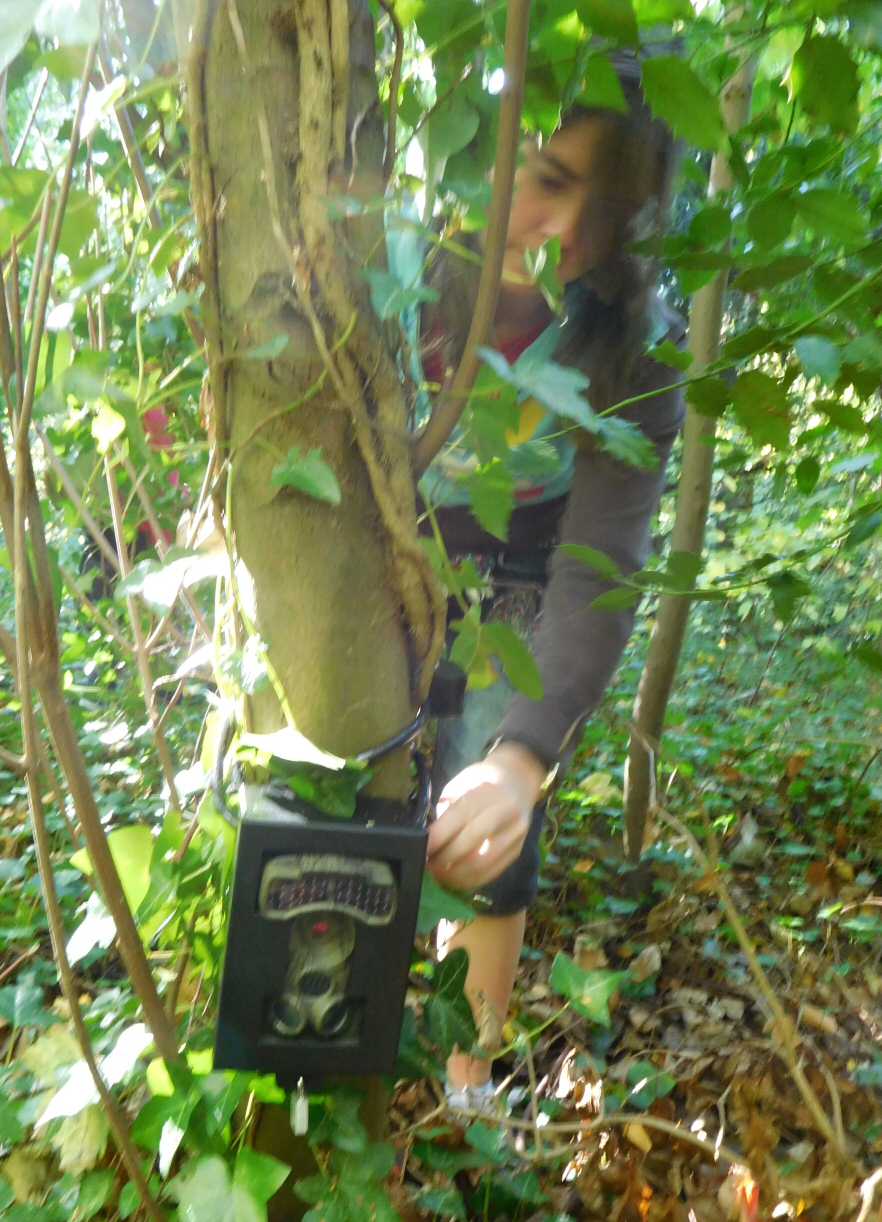
My turn – Rachel and me setting camera by a fox run

Fixing it nice and tight

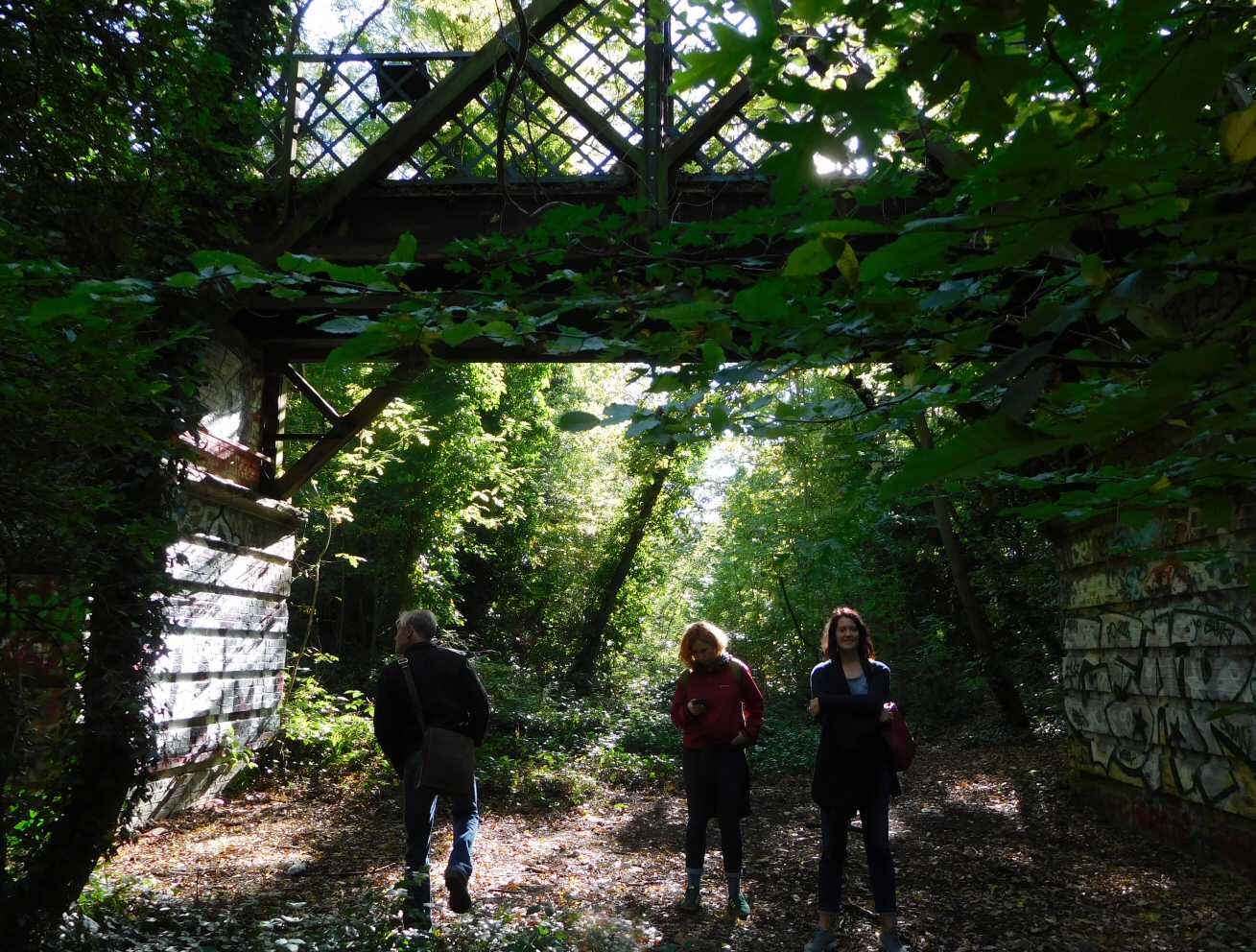
Dramatic Indian Summer light under the old railway bridge

All these images are copyright. You are welcome to use them as long as you name me beside the image and provide a link to this page.


Book Launch: The English Love Affair with Nature

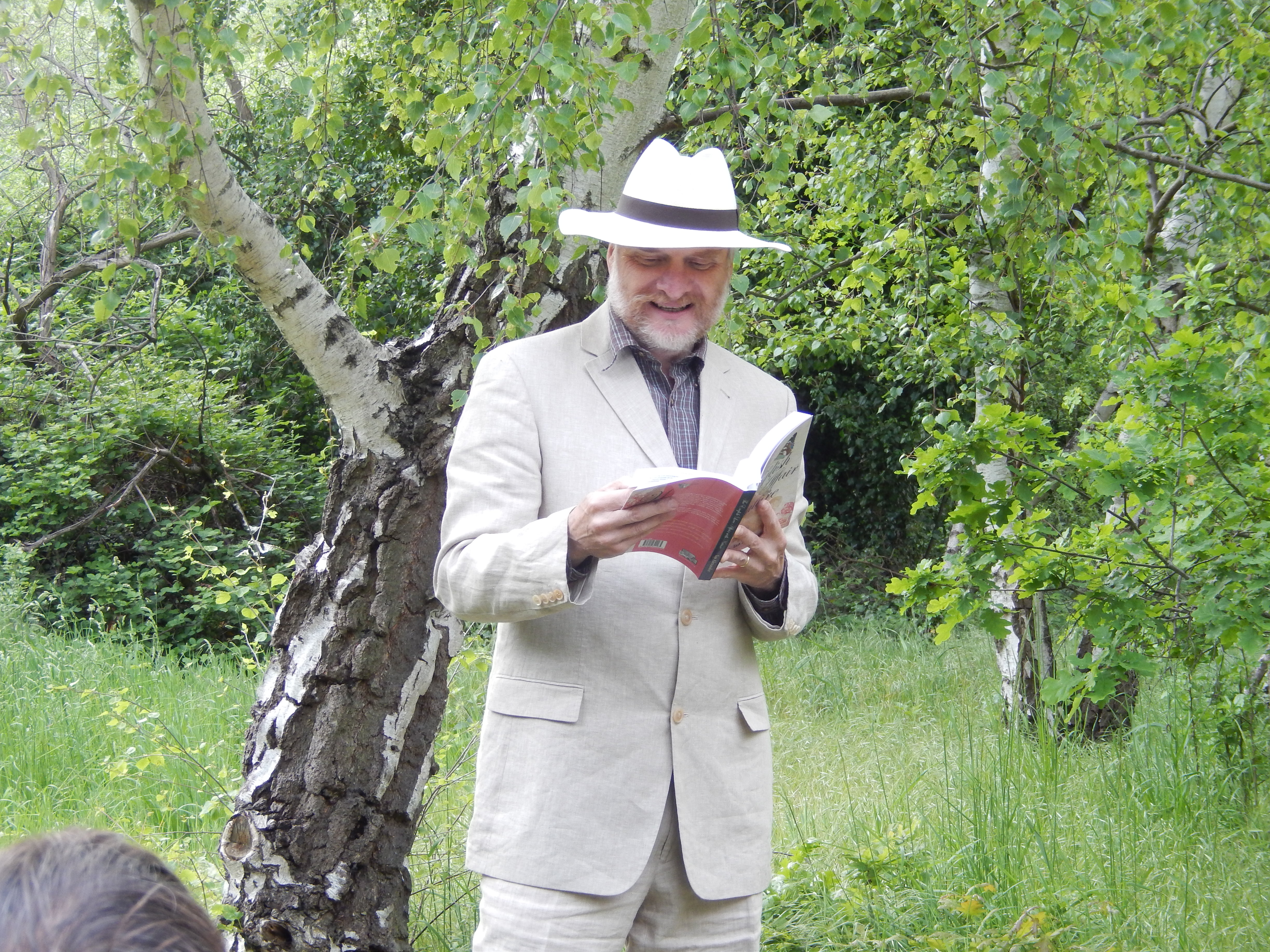
The author reading under a Birch tree during the book launch

We were fortunate yesterday to have bright dry weather for the book launch of The English Love Affair with Nature, generously hosted by London Wildlife Trust.

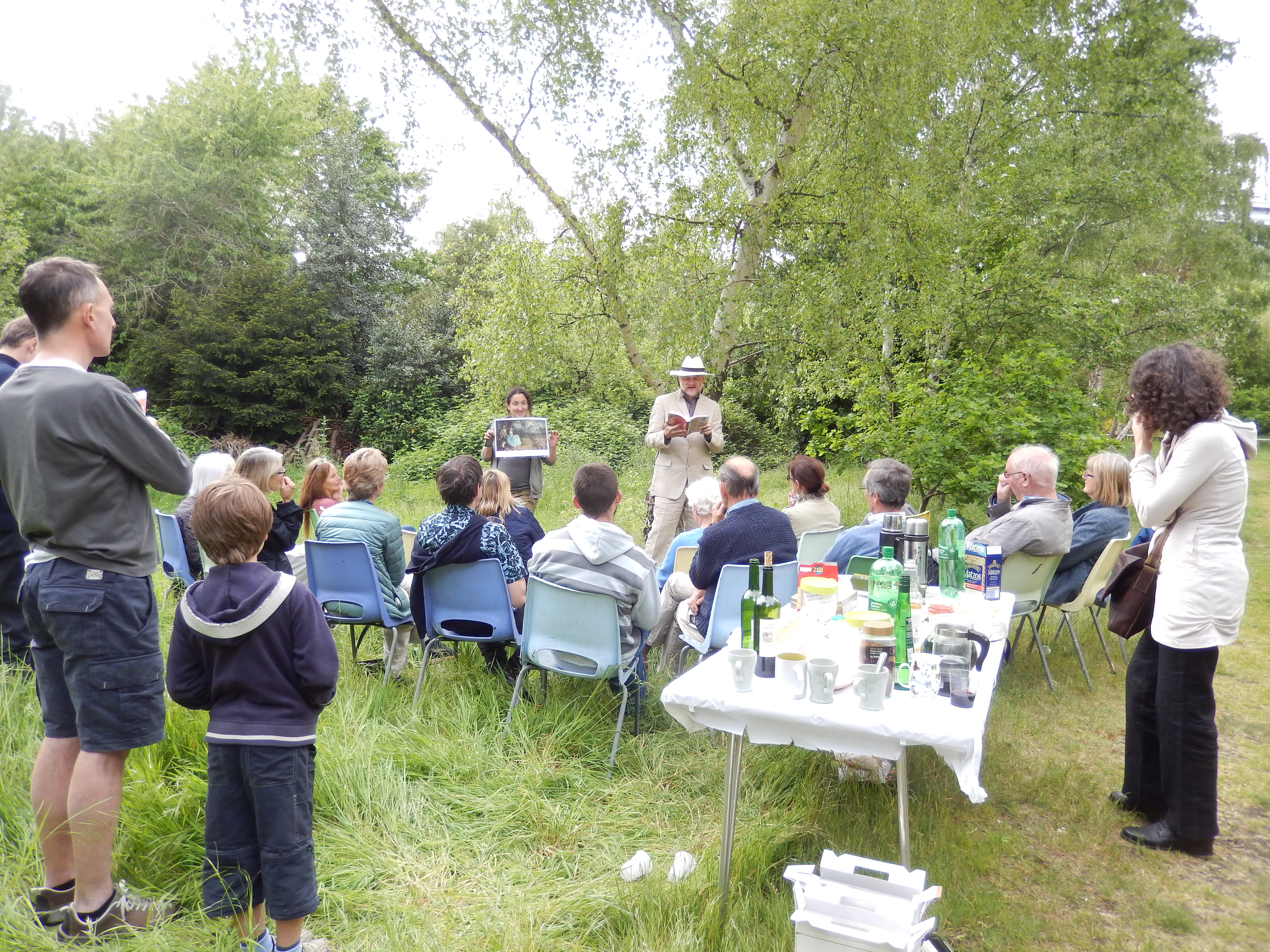
Book launch in Gunnersbury Triangle

I read sections from the Introduction, Art, and Gardening chapters, with an encore from Spiritual Rebels. The audience took a few minutes, in pairs, to share three things they personally loved about nature. I was kept busy signing copies. Everyone seemed to be enjoying the event, at least they laughed at the jokes and clapped unexpectedly at the end. And everyone lent a hand tidying up, so it all felt very friendly.

Free Public Event: Book Launch at Gunnersbury Triangle 17 May 2015

LWT reading by the author 17 May 2015

London Wildlife Trust have kindly put on a book launch event for my new book The English Love Affair with Nature. The event is free and open to all; though small children may prefer to eat the cakes and go pond-dipping, which will be available on the reserve! Attractions will include me, reading from the book; a chance to buy a signed copy, if that’s your sort of thing; nice things to eat and drink; and the beauty of a nature reserve in May, complete with birds, butterflies, bees, bugs, flowers and trees in new leaf, not to mention mini-beasts, newts and everything that wriggles in pond water! I hope to see you there.

Yay! It’s Frog Day! Pond-dipping at Gunnersbury Triangle

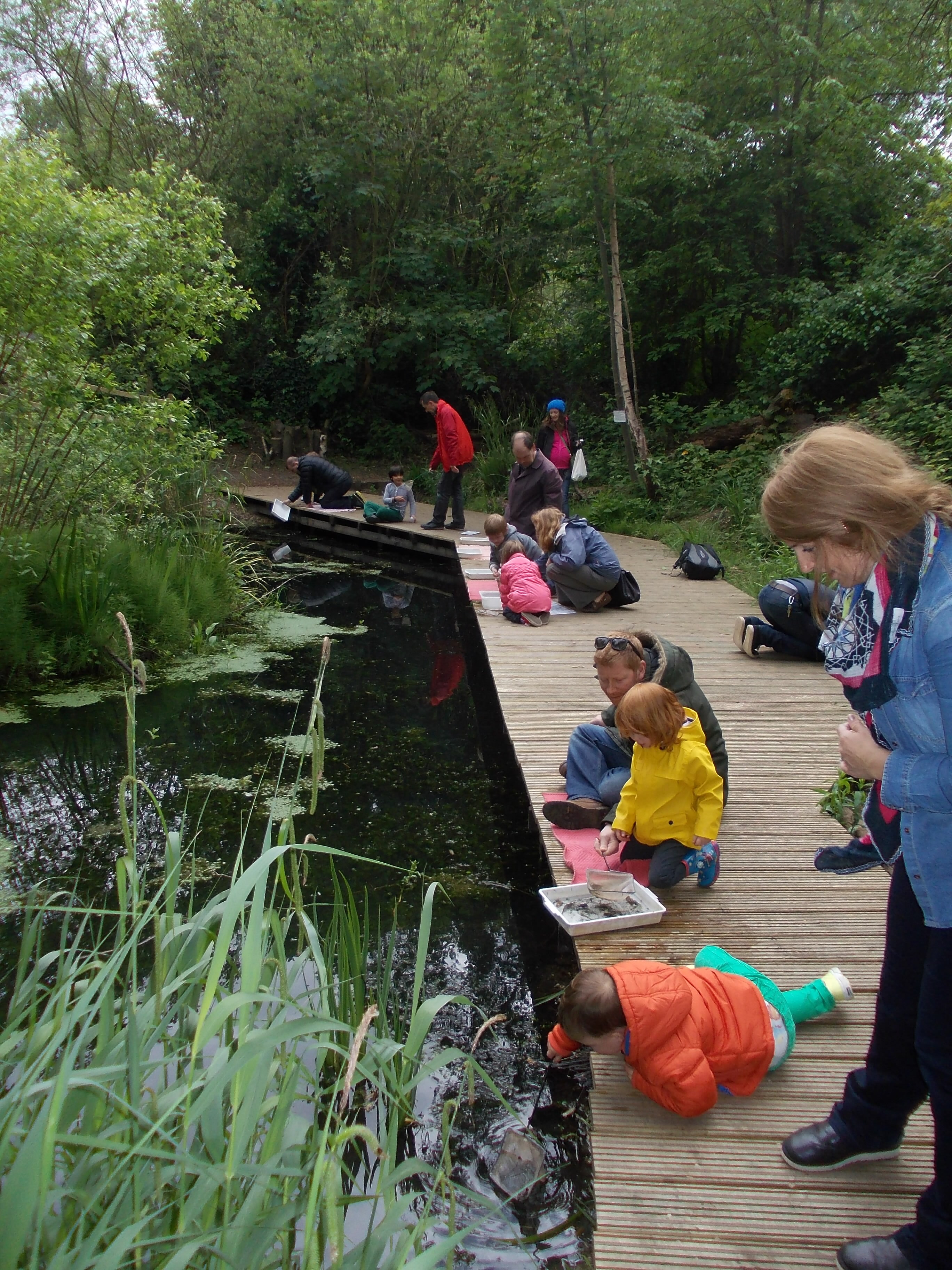
I try to get down to the pond on Frog Day because, whatever the weather, it’s always such fun looking into trays, seeing what people have caught, and helping people to get a rough idea of what sort of wildlife they are looking at. The parents too are frequently fired up with (especially boyish) enthusiasm. One dad turned out to be expert at catching newts; another family caught dozens of tadpoles (all still without legs).

Pond Dipping on Frog Day

People come and go; some are regulars, some are new, some were just passing by and are astonished to find a nature reserve here, let alone a pond and volunteers and free pond-dipping and wriggly wild animals.

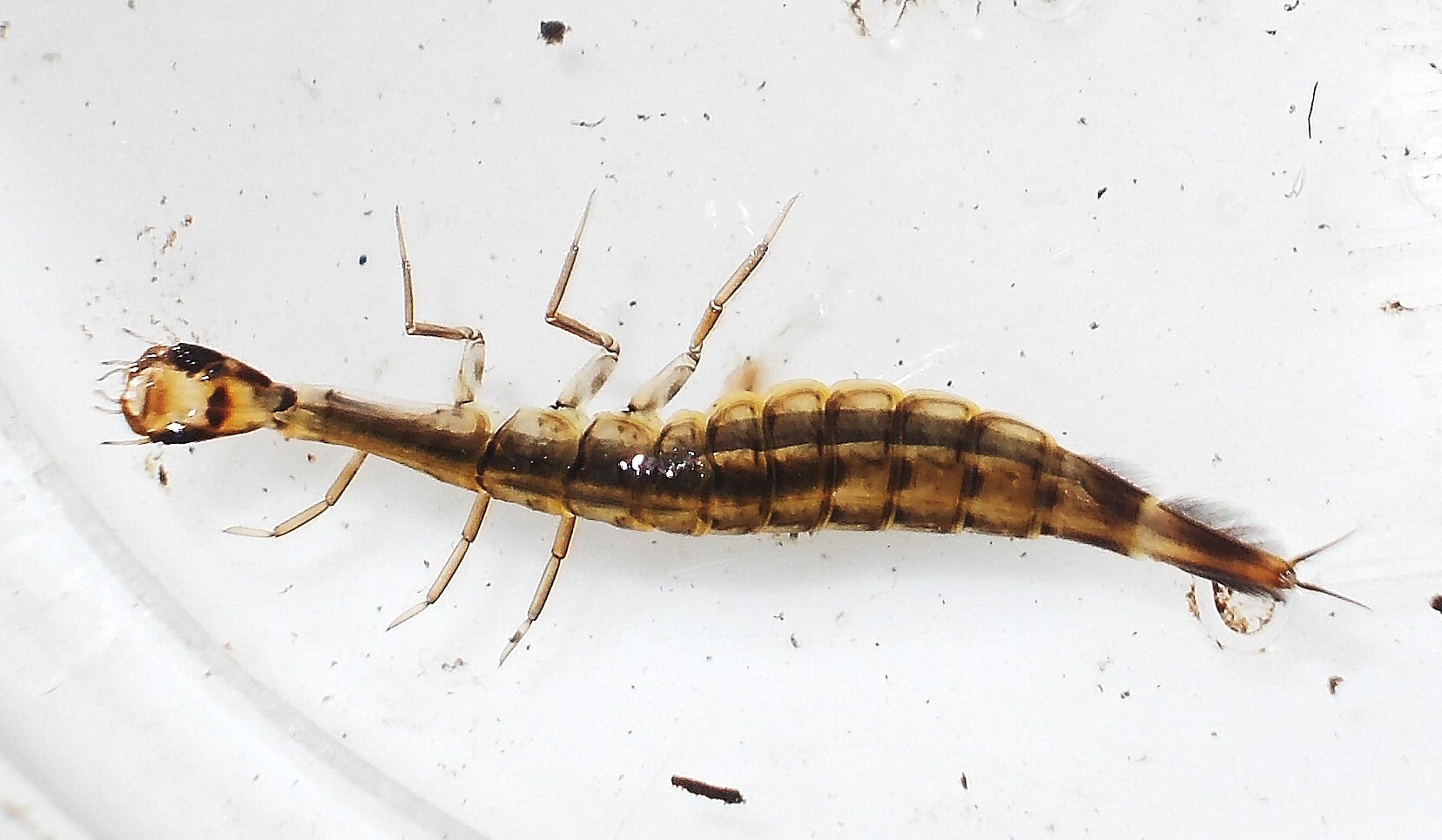
Beetle larva from the pond

And there definitely weren’t just the usual suspects in the water, either.

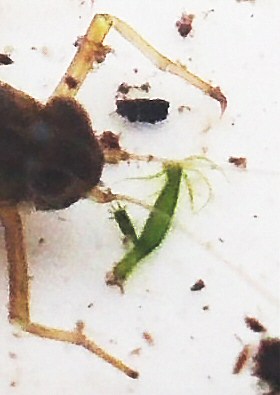
Budding Hydra, with head of a damselfly nymph
Budding Freshwater Hydra, with a nymph

This really was a surprise; a Hydra, not just bright green but actually budding. These tiny animals are coelenterates, like corals and jellyfish, with no proper gut running mouth-to-anus, but just a mouth surrounded by the tentacles, and a hollow bag of a body; anything undigested has to come out the way it went in. The animal is green with symbiotic algae, so it has quite a bit of plant about it, and when it isn’t in a white dish, it’s practically invisible.

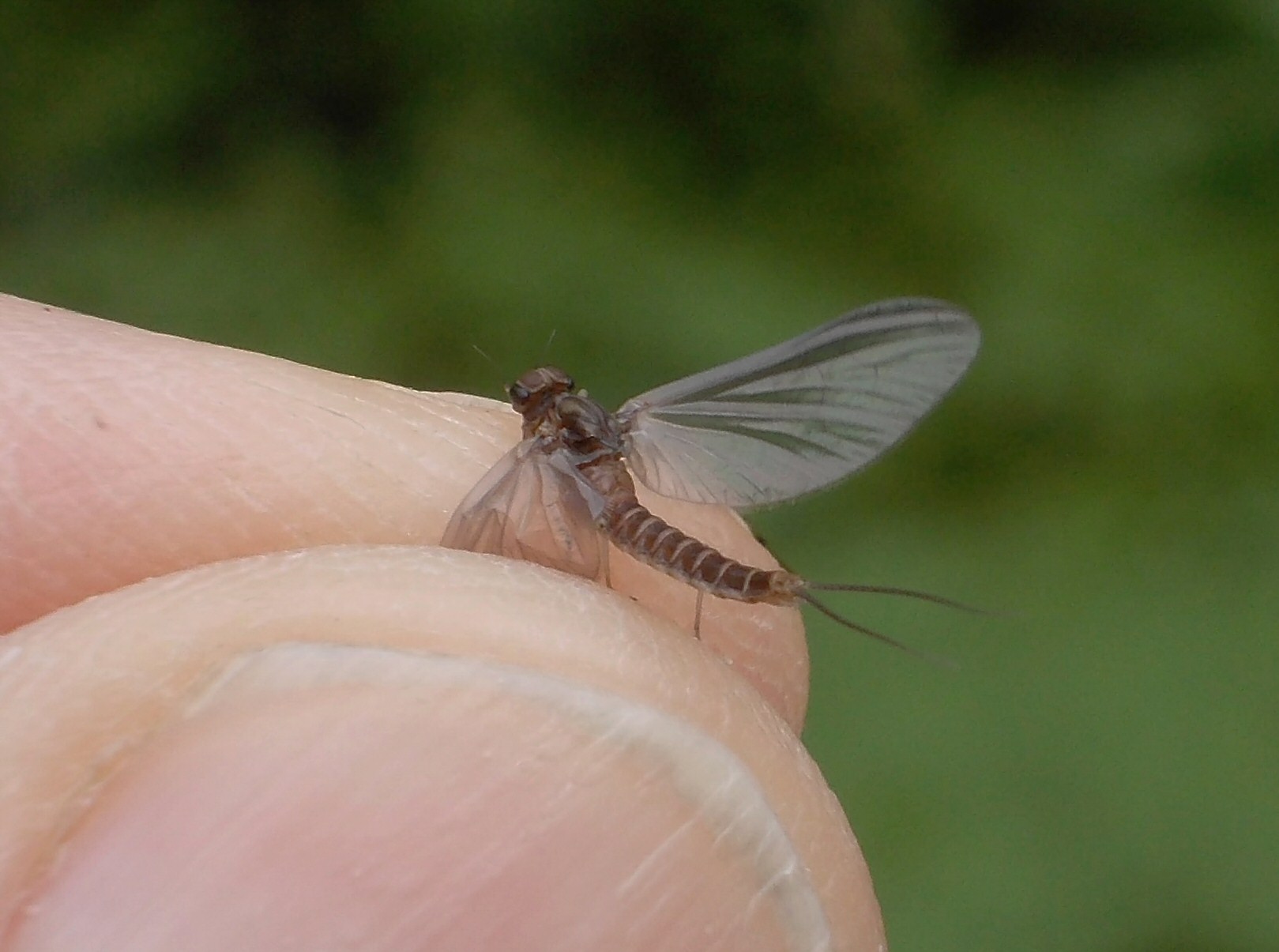
Stonefly
Stonefly

This little fly has two tails, and may well be a Stonefly; it is a lot smaller than the common Mayflies, which have three tails. It seems like a special animal today.

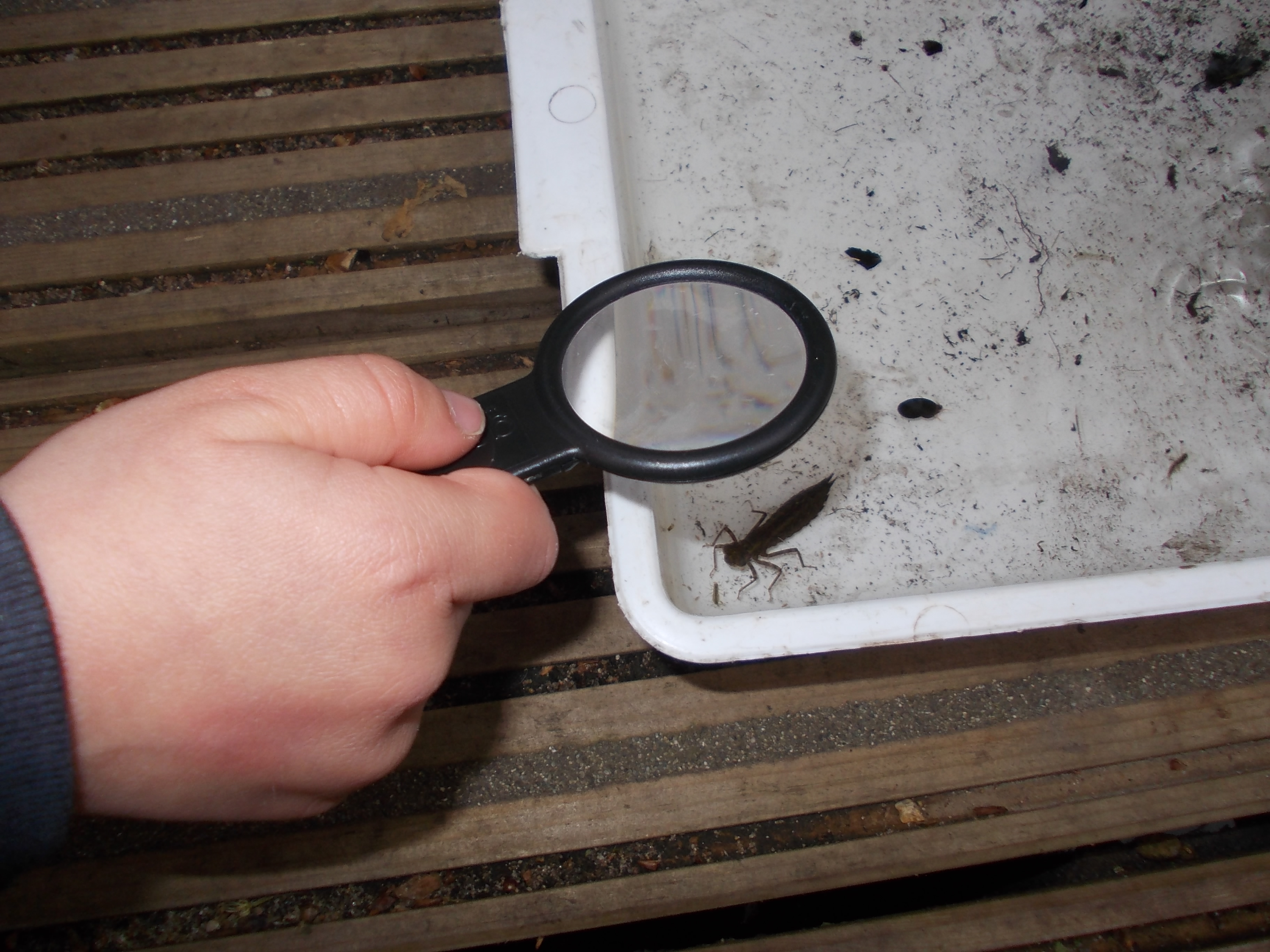
Looking at a Dragonfly Nymph

A fine Dragonfly nymph was captured in one dish; here it is, being examined closely by one youngster. I saw a Broad-Bodied Chaser near the pond some years ago, so it might be that species.

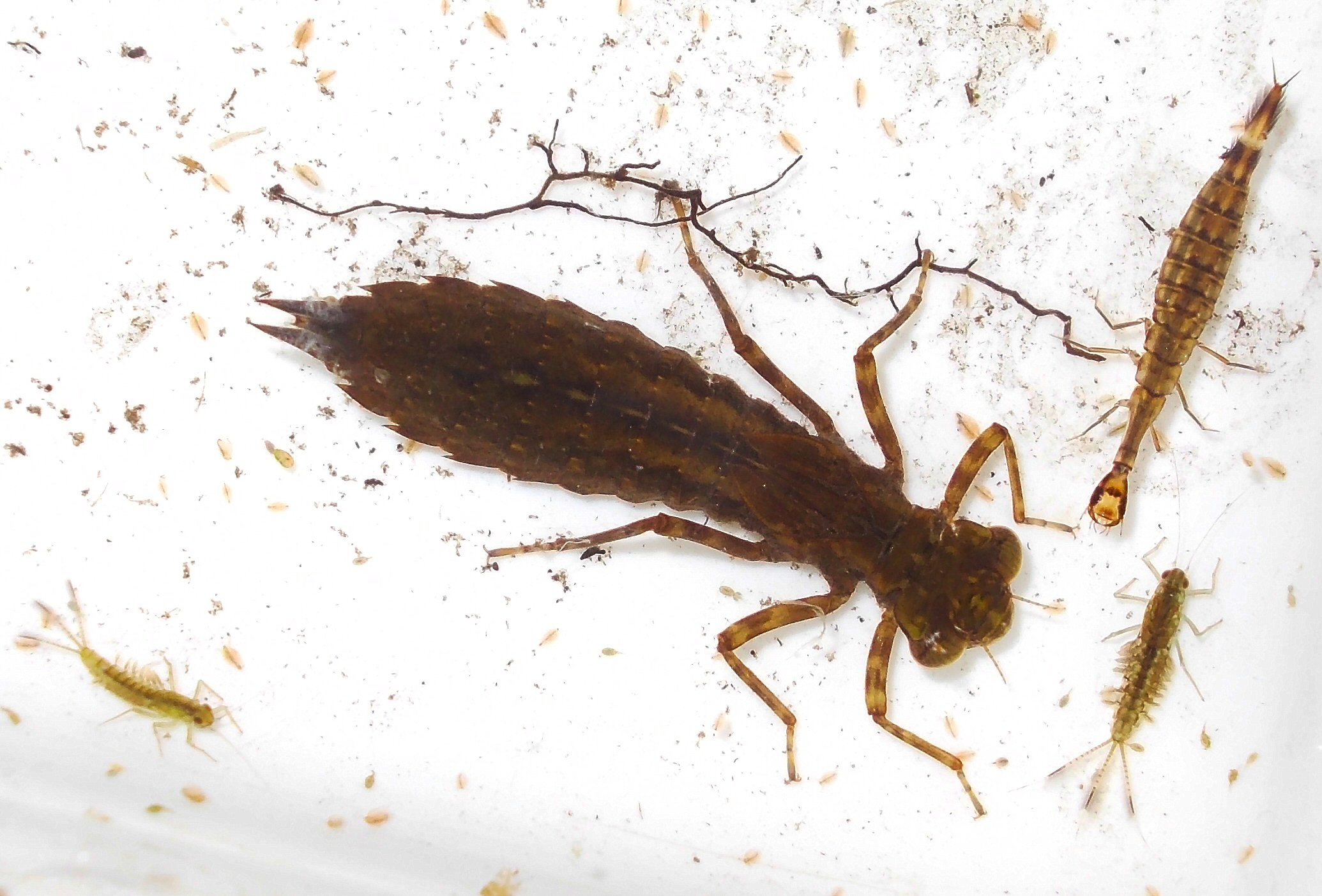
Nymphs and waterfleas

With their characteristic three tails, the Mayfly nymphs are distinctive. Here in one dish are some, along with what seems to be a long slim beetle nymph, and the Dragonfly nymph. There were quite a few Damselfly nymphs about too, some quite boldly green.

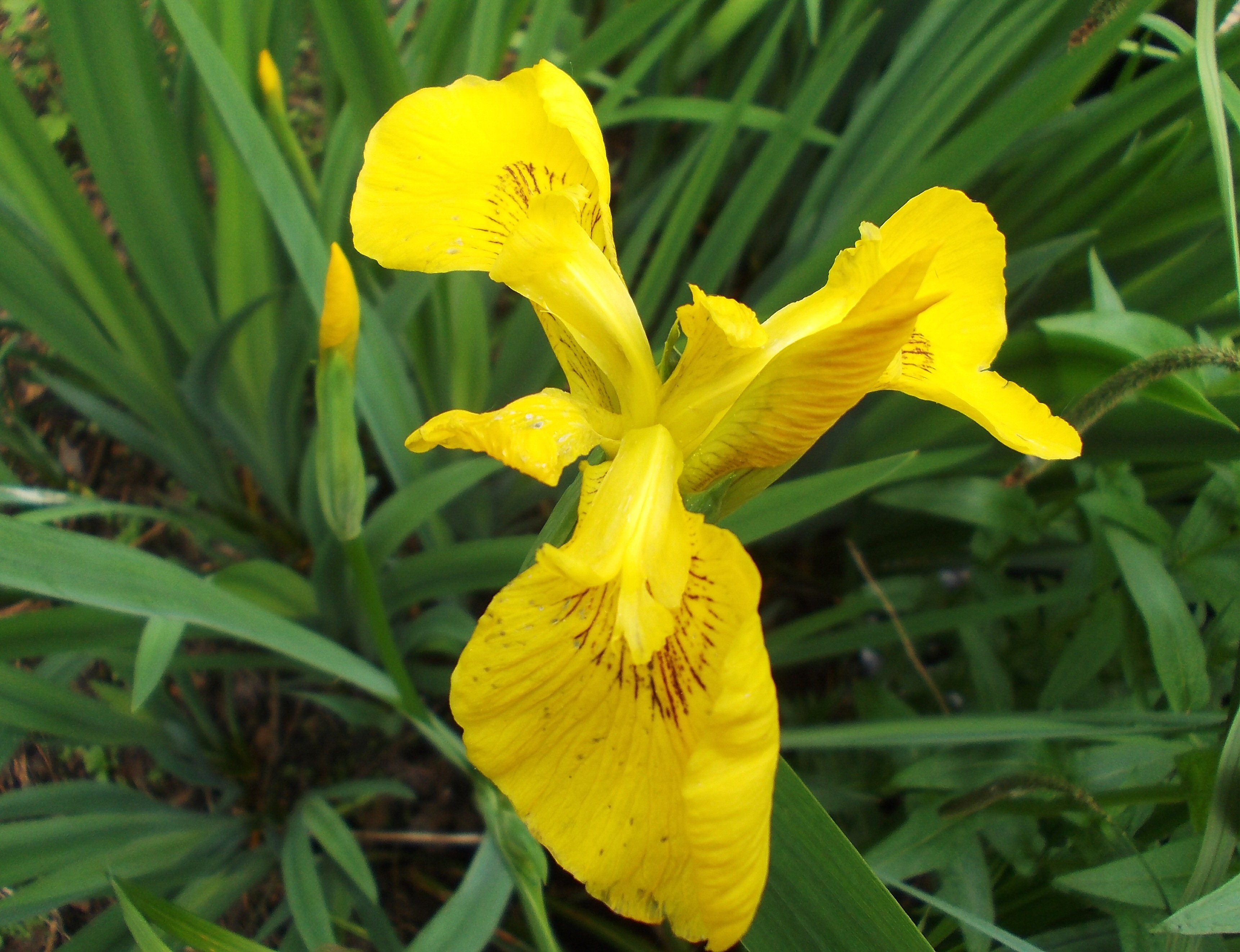
Yellow Iris or Flag
Yellow Iris or Flag

At four we packed up to go and have a well-deserved cup of tea. As I turned round, I realised the Yellow Irises the other side of the boardwalk were in full bloom.

Wood Wasp, Sprouting Loggeries

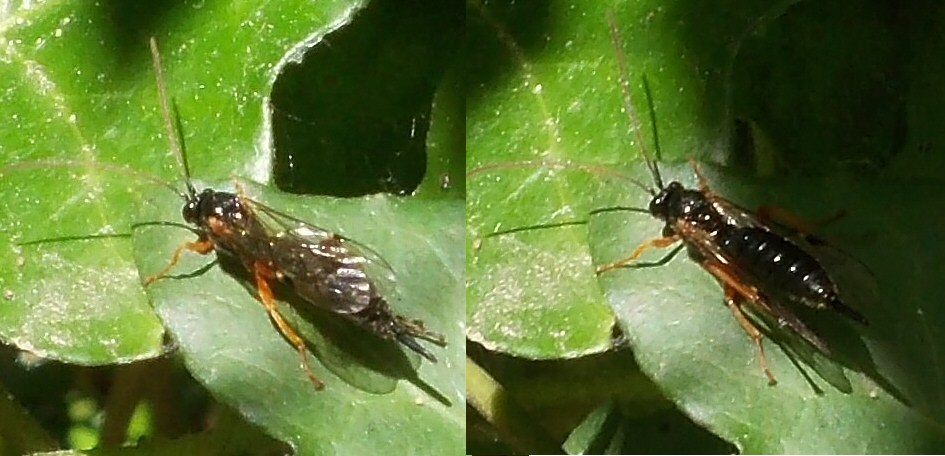
While doing the Butterfly Transect at the Gunnersbury Triangle, I came across a fairly large Wood Wasp (in the sawfly family), about 25mm long. It was a bit tricky getting a photo,  as these insects are distinctly skittish – they race about in the shadows, occasionally perching on a leaf’s upper surface. The breeze was wafting the branches gently, so patches of sunlight came and went. I shot several images with the miniature camera – it has two big advantages over my full-size SLR: one, it has a very short focal length, so it has a better depth of field than an expensive macro lens; two, it’s small and cheap, so I habitually carry it with me in my rucksack.

Wood Wasp, cf Sirex, on Ivy

The two images here show (left) the resting position with the wings over the body, the long antennae,  the alarming-looking ovipositor, and the orange-brown legs; and (right) the plump black abdomen with white spots. Perhaps the two images show that it’s rather hard to get a single image which is suitable for identification. This one looks like a Sirex so perhaps that’s what it is. The eggs are drilled into wood.

The butterfly transect yielded the first definite Green-Veined Whites, i.e. I was able to get close enough to be sure; until now they’ve all been “Small/Green-veined” worse luck. There were some Speckled Woods and an Orange Tip, too; a Brimstone turned up after I’d put the clipboard away.

Sprouting Loggery
Sprouting Loggery

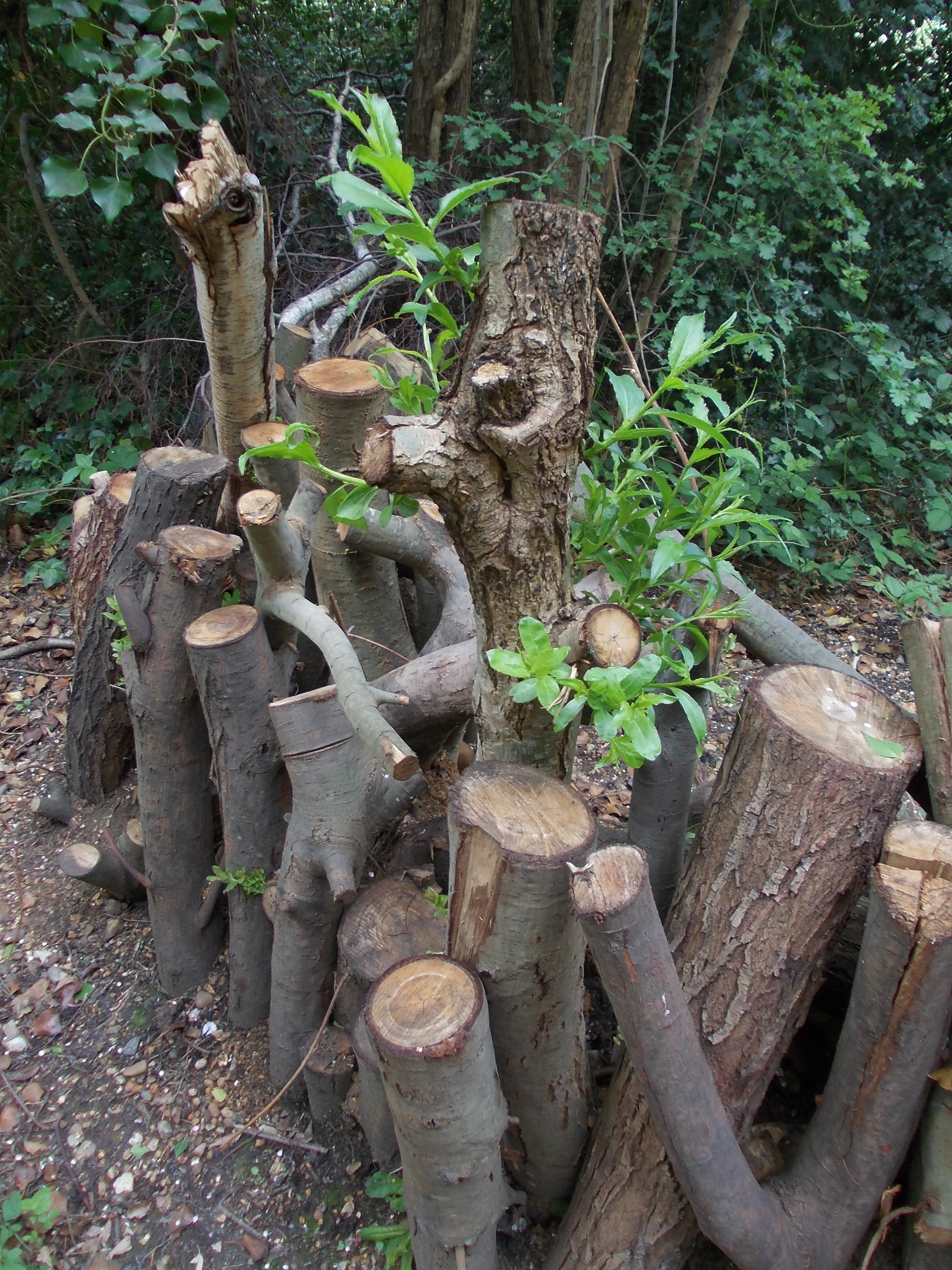
But the most curious observation of the day was this sprouting loggery. We ‘planted’ (more literally than we knew) the sawn Willow logs in the winter. They seem very happy in their new setting and are growing vigorously. It will be interesting to see how they get on.

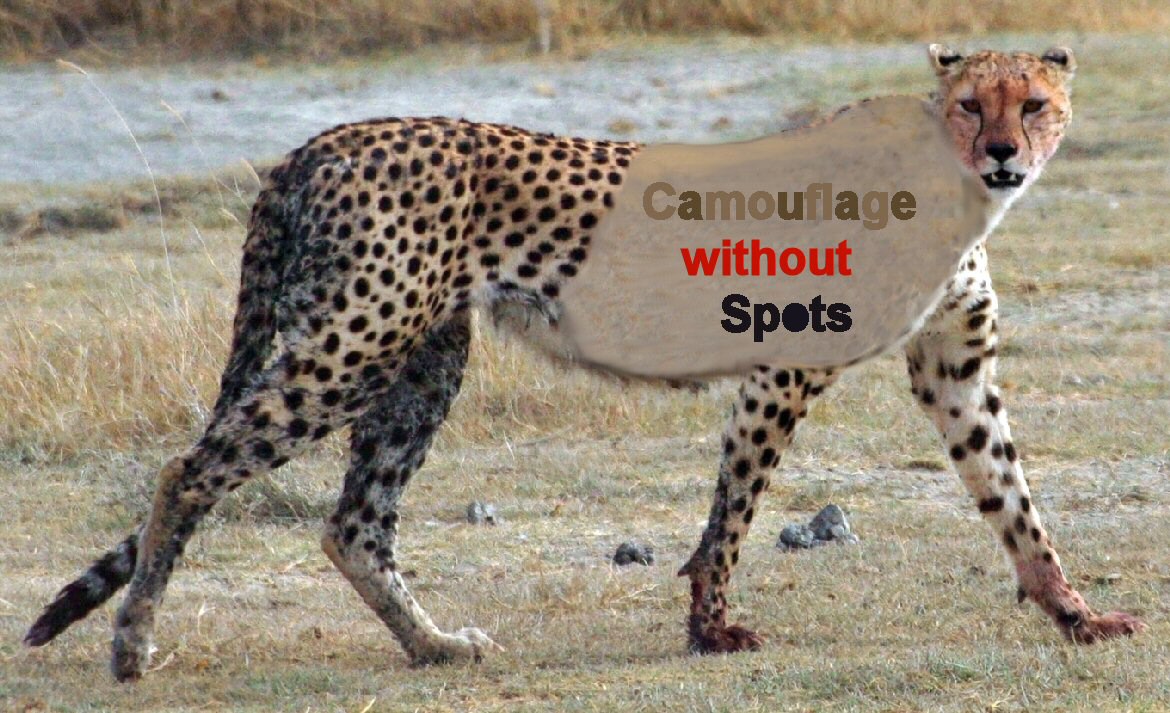
Camouflage without Spots: Gunnersbury Triangle, Sunday 8 June 2014 at 2pm

Cheetah (title image)
Camouflage without Spots: is that even possible?

Free Talk: Gunnersbury Triangle, Sunday 8 June 2014 at 2pm

In this short and I hope lively talk, illustrated with models and photographs, I will try to show that camouflage is a lot more than spotty coats.

Animals use many different tricks to hide themselves. Even when there is no cover to hide behind, animals find ingenious ways to make themselves invisible. And if they don’t need to hide, they use the same tricks in reverse to make themselves as obvious as possible.

“Suitable for ages 8 – 80”. Roughly.

OK, you want more technical detail. Hmm. Well, I shall not be talking about military camouflage, though it is (or should be) based on the same principles as in zoology. The title already promises no spots, more or less, so I shall obviously mostly be avoiding what my hero Hugh Cott called disruptive patterns. Yes, you can see that I’ve spent far too much time trying to improve Wikipedia’s coverage of camouflage. If you nose about in there you’ll discover that I’ll have plenty of spotless methods to talk about.  To whet your appetite, here’s Hugh Cott’s beautiful drawing of a Potoo, which makes itself as good as invisible by perching, stone-still, atop a broken branch. I’ll leave it up to you to work out how the trick works. Even better, come along to my talk.

Hugh Cott's Invisible Potoo
Hugh Cott’s Invisible Potoo

Burning Brash at Ten Acre Wood

London has a chain of not-quite-secret nature reserves stretching down its western side along the line of the Grand Union Canal and the valleys of the River Colne, River Frays, and the Yeading brook all the way to the River Crane, where there are more reserves; they are in the green strip you may briefly glimpse as you leave town on the M4 or M40. Many of them are rather tricky to reach because, almost by definition, the places that haven’t been built over are off the beaten track, round the back of airfields or industrial estates, past the housing estates and into the surprisingly green and quiet areas that have not yet been cut up by HS2 or other developments.

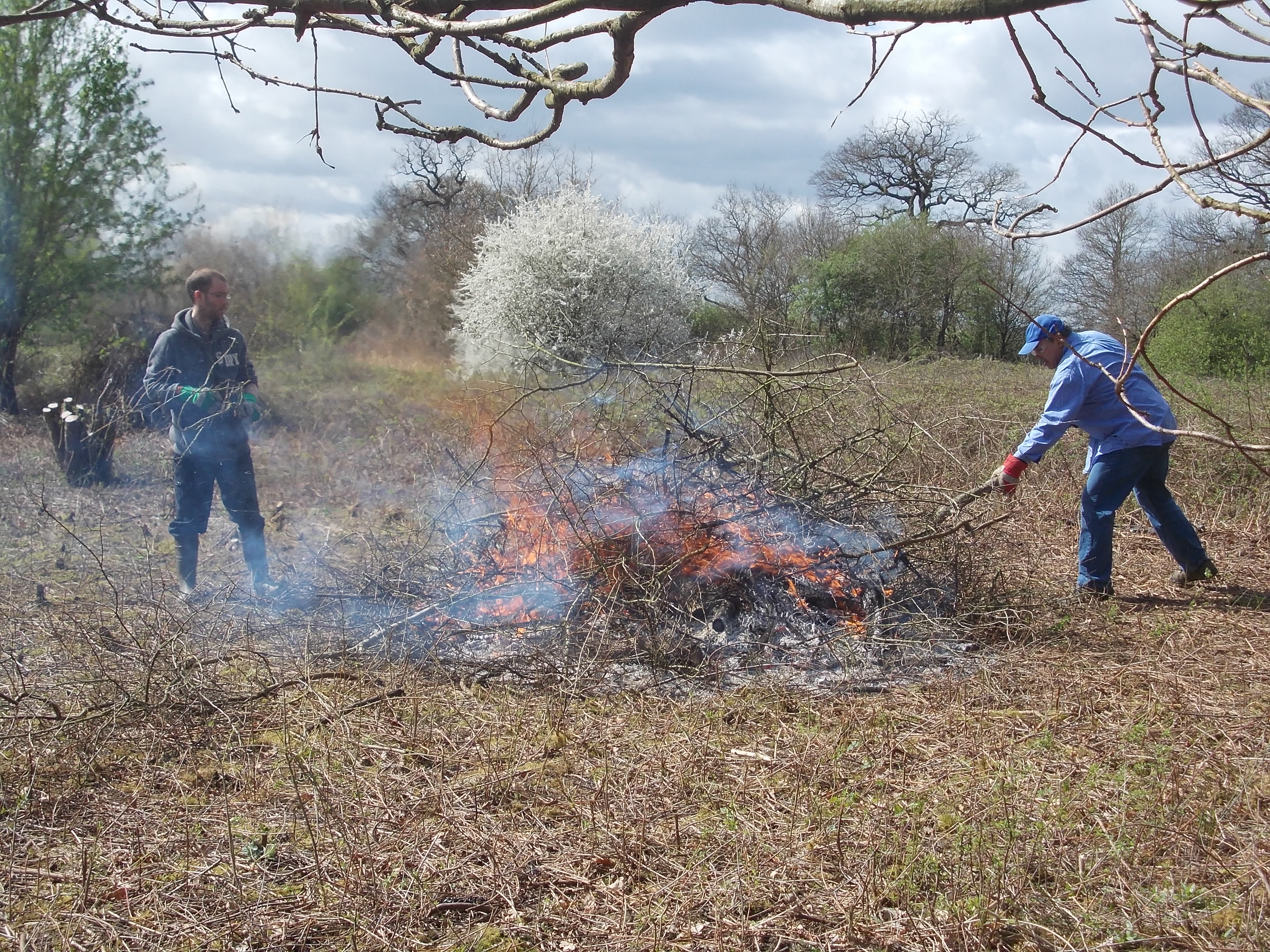
Burning Brash at Ten Acre Wood
Burning Brash at Ten Acre Wood, with a blackthorn in full bloom

A Land-Rover full of London Wildlife Trust volunteers wriggled through the Hillingdon suburbs to Ten Acre Wood and what used to be the Ten Acre Wood Meadows. These have seen little management as agriculture has declined. The Trust’s chainsaw team had cut a fine crop of small trees – blackthorn, hawthorn, even oak, the climax plant in the succession from bare ground to full-blown forest – and left the branches neatly stacked in enormous rows across what should be meadow. The Yeading brook made the ground squelchy; six mallard flew in looking for somewhere suitably wet. Chiffchaffs and a blackcap sang merrily. We started two bonfires, admirably fanned by the cool breeze, and dragged branches on to them for hours until a sandwich and a welcome cup of tea intervened. With a bit more bramble clearance, and preferably some grazing, the meadows will again be a fine place for meadow flowers. Even now, it was amazing to realize that the city was all around, with nothing but greenery and blue sky in sight.