When a chilly east wind drops and the sky clears to a brilliant blue in February, it is a shame not to drop everything and rush outside to enjoy it. So I found myself down at Wraysbury Lakes, all wrapped up in my winter clothes — but my gloves never left my pockets, and my jacket and pullover were soon unzipped as the temperature climbed to 9.5 C, and in the sun with scarcely a breeze (the planes returned to their usual takeoff towards the west) it felt far warmer than that.
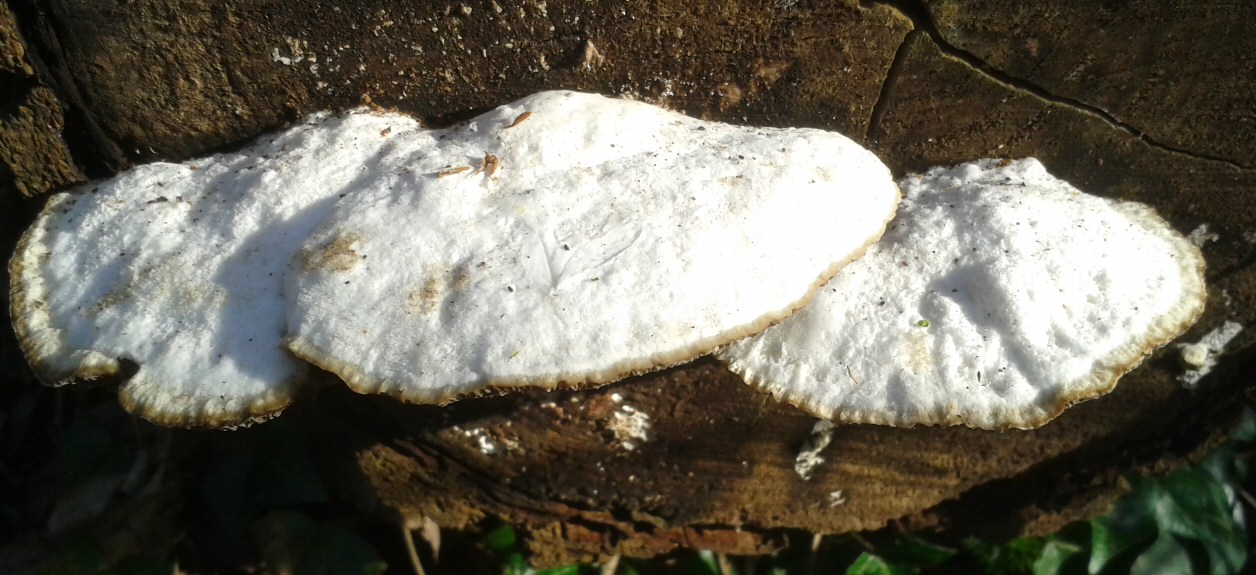
White bracket fungi on fallen Poplar
Some handsome white bracket fungi shone in the sun; they were triangular in section with flattened tops, slightly toothed beneath. Could be a Trametes or Tyromyces perhaps.
On the lake, half a dozen Goldeneye were all that were left of the more ‘special’ ducks; a male joined the party, and a female swam rapidly up to him, bobbing her head; he bobbed back, and threw his head over his back too. Spring is in the air. It looked as if they were already a pair, I’d say.
Also on the lake were some handsome Pochard, mostly asleep, one diving and surfacing, and a Shoveler, preening. A Heron flew slowly over, half a wingspan from the water. A Field Mouse ran right in front of me and down to the waterside by the willows, and obligingly fed in the open for a minute while I watched with binoculars on close focus: the long tail, round ears and quivering ‘whiskers’ (vibrissae) at work.
Away from the lakes, a Rabbit hopped across the path. A Mistle Thrush called harshly; another flew past; a solitary Fieldfare left over from the sizeable flock a week or two ago.
I wandered down to the confluence of the Colne with the Thames; a Kingfisher gave me a good of that always astonishing turquoise bolt of blue lightning, flashing on short triangular wings over the little river. A minute later, it flashed back upstream, as startling as before. A single green sphere of Mistletoe clung to the leafless canopy of a tree behind the industrial estate.
The “Georgian” Welsh poet W. H. Davies (1871-1940) wrote the much-loved lines:
What is this life, if, full of care,
We have no time to stand and stare.
No time to stand beneath the boughs
And stare as long as sheep or cows.
No time to see, when woods we pass,
Where squirrels hide their nuts in grass.
No time to see, when woods we pass,
Where squirrels hide their nuts in grass.
No time to see, in broad day light,
Streams full of stars, like skies at night.
No time to turn at beauty’s glance,
And watch her feet, how they can dance.
No time to wait till her mouth can
Enrich that smile her eyes began.
A poor life this if, full of care,
We have no time to stand and stare.
This is Leisure, a modern sonnet (in his 1911 Songs of Joy and Others), in a long tradition of poetry that reflects on nature, including Wordsworth’s “emotion recollected in tranquillity”. I’ll hardly be the first to observe that modern life is very far from tranquil, or that people rush through parks or countryside looking only at a tiny screen, or talking on the telephone. (John Fox’s My Musical World, a lifetime in music, page 252, for example.) It’s interesting that Davies anticipated this view of modern life by a century. If we were transported back to 1911, we would surely find it a slow, peaceful and carefree existence, at least if we were lucky enough to be out of poverty. It is striking that the poet’s sensitivity picked up the acceleration and lack of awareness of nature that go with Western culture, all the way back then in Edwardian times.
Winter has definitely set in. The spinach beet in my garden was all frozen, the air at -3 Celsius and the ground presumably rather colder under a clear night sky. Fearing it might all be lost, I picked some and went out to see what there might be today down at Wraysbury Lakes.
Almost the first thing I saw was a bulky little finch high in a waterside willow. It called ‘deu’ quite loudly, fidgeted about and flew before I could focus on it. Still, there was no doubt it was a Bullfinch: the call, its shape, its solitary habits, and its shyness all pointing the same way. It is never an easy bird to see, even where it is resident (it is regularly ringed at Wraysbury). Leafless trees and the rising energy of the coming breeding season provide one of the few opportunities to catch a glimpse of this less well known finch.
At first sight there seemed to be no birds out on the lake. Finding a small illicit patch cleared by a fisherman I set up the telescope and looked about. A Pochard or two; some Tufted Duck and Coot; a male Goldeneye… but the Smew and Goosander of a week or two ago were nowhere to be seen. The old truth is that you never know what you’ll see: but it’s often a delightful surprise, and almost always energizing to be out in nature.
I walked on and looked about again: some rather white ducks caught my eye in the distance. Two male Goldeneye, each with a female in tow. The males threw their heads forward a few times, pretended to preen; one threw his head back and forth, then lowered his head and stretched it out and in. His female swam after him, her head resting on her back as if she were asleep! But she was certainly watching the display, and swimming to keep up a few lengths behind.
A loud squawk betrayed a Heron; it flapped out of cover at the end of the lake and landed on the bank behind the ducks. A few Mallard panicked from the water below me; a Moorhen briefly took flight.
Away from the lake, a few Robin and Dunnock hopped in and out of the bushes. A solitary Fieldfare or two gave their chack-chack call from the hawthorns, watchful and flighty. Another Bullfinch calling, this time atop a bare hawthorn bush – or maybe the same bird, half a mile on – and again I couldn’t get binoculars on to it, despite my stealthiest movements: it had surely seen me at once, and just took a few seconds to decide when to flee.
A Kestrel hovered beyond the tall poplars: no Buzzards or Red Kites today, but really the Kestrel feels almost more special than them, its numbers declining across Britain.
A few Jackdaws, Carrion Crows and Wood Pigeons on the horses’ hill; some Fieldfares in the trees, with a single Redwing; a Stock Dove flying low.
After a chilly grey start, the clouds dispersed and it turned into a brilliant winter’s day, the sky crisp blue, the air clear. I grabbed the telescope and went down to Wraysbury to see if the winter ducks had finally arrived.
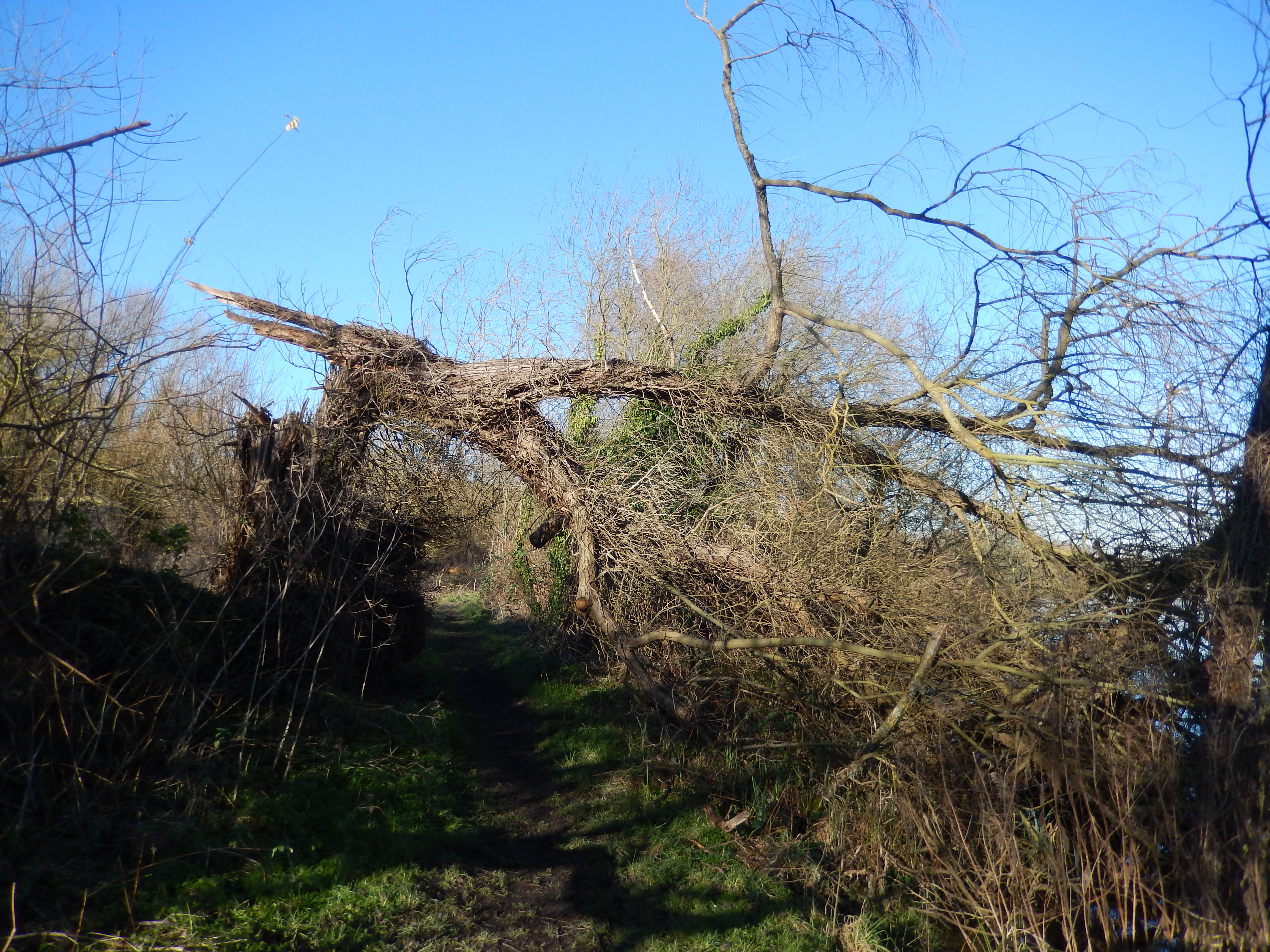
Snapped tree (Poplar) over path
The first thing I saw was a sign of the violence of the recent storms; a Poplar, always a fast-growing and short-lived tree, had snapped off and fallen over the path. But a way had already been cut beneath it.
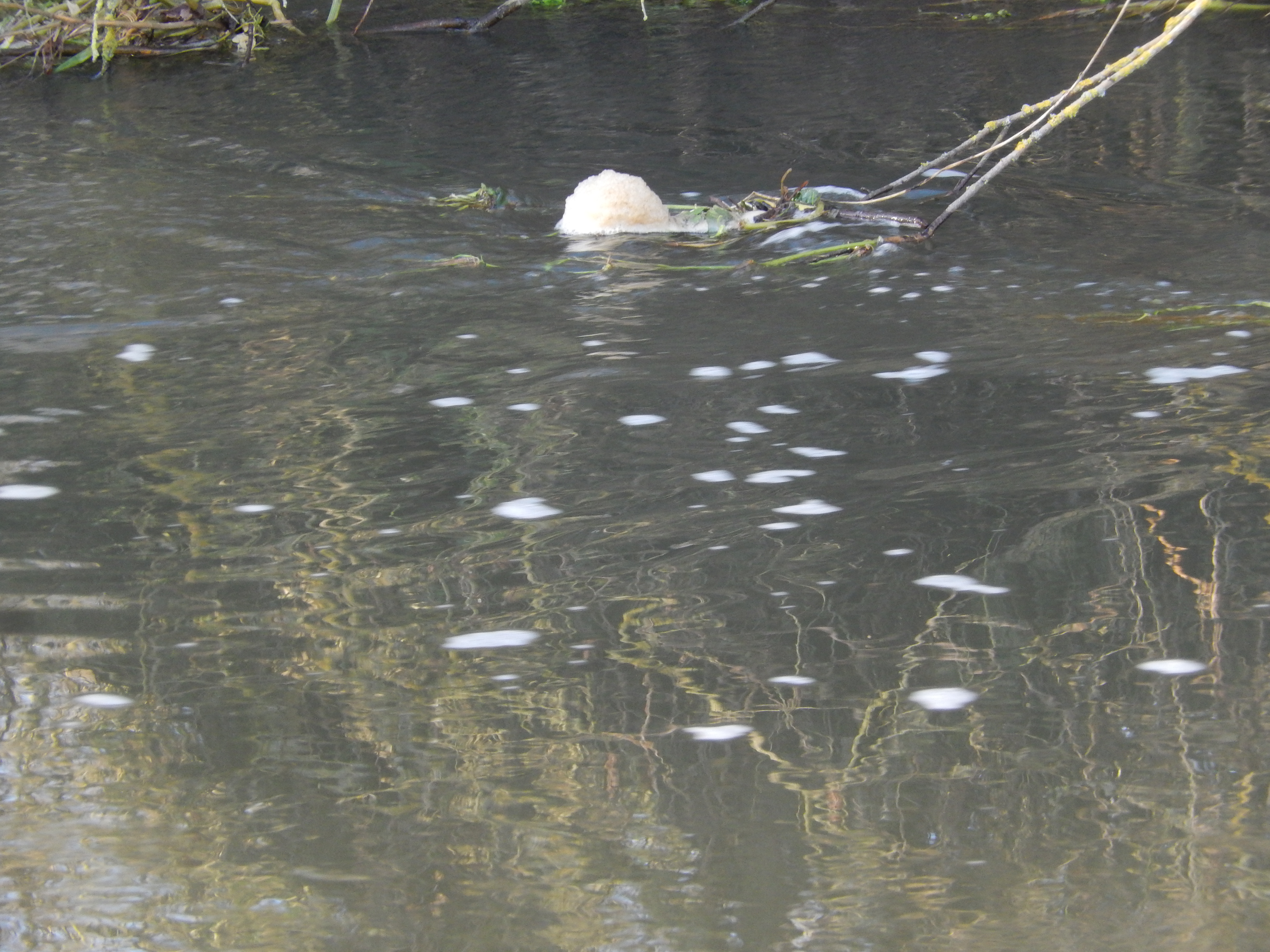
Soapy Pollution in River Colne
The next sight was a sad one: for the first time I can remember, the River Colne was obviously polluted, with lumps of foam drifting rapidly by, or caught on branches in the normally clean water. The river supports Kingfishers, wagtails and assorted waterfowl, so I hope the cause is a brief one-off event.
On the lake were four or five Goldeneye, the males waving their heads up and down to signal to the females – or to warn off rival males – the bold white patches on the sides of their heads visible without binoculars.
A little further on was a small party of Goosander, a male and two redhead females, their long serrated hooked bills and distinctive long bodies instantly recognisable, a sign of winter in this part of the world as they come down from their chillier breeding grounds.
Then, just as I was moving on, the bold whiteness of a male Smew caught my eye. With him was a redhead female, both ducks far smaller and shorter than the rather big Goosanders. A few grebes and tufted ducks vied unsuccessfully for my attention.
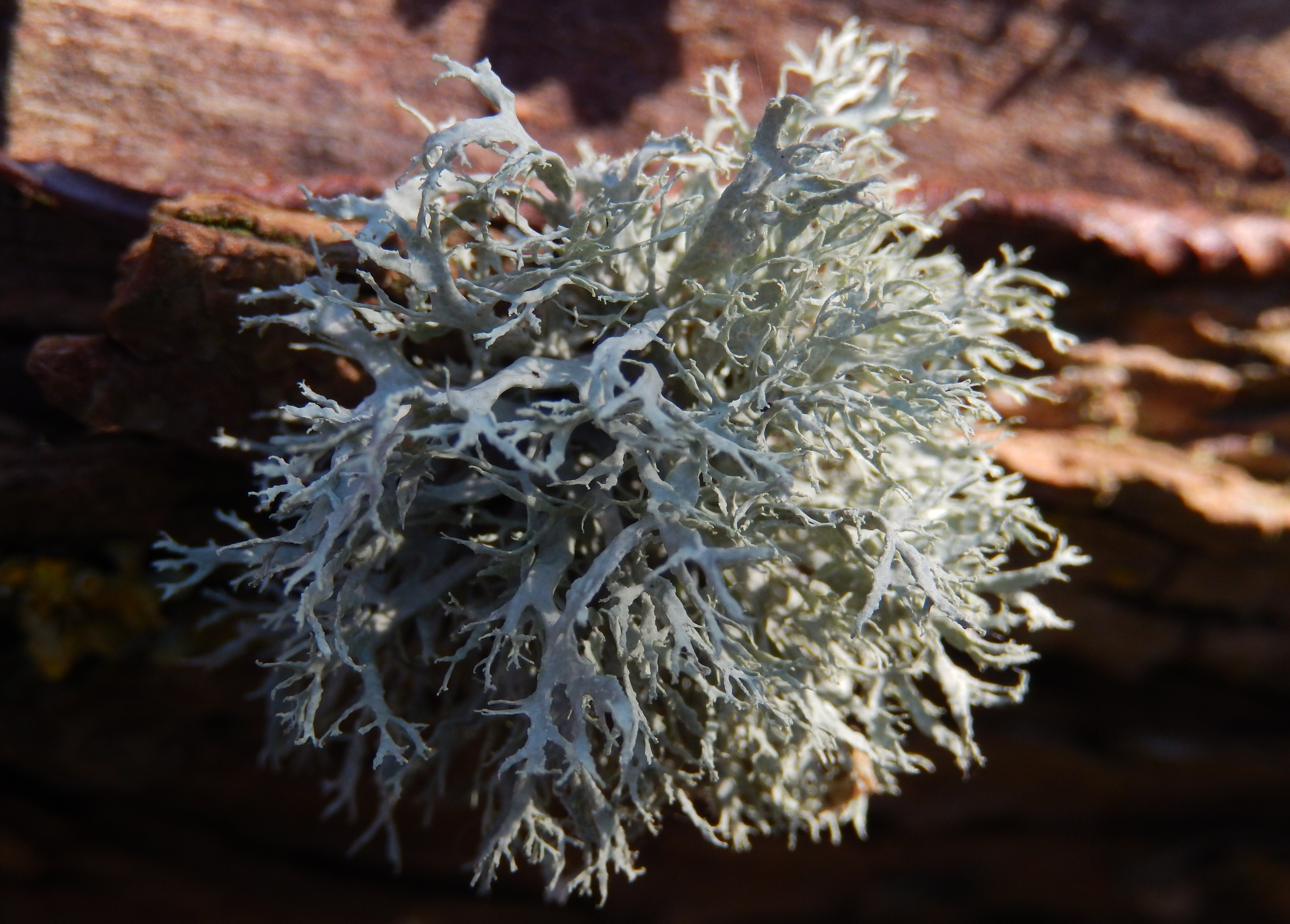
Ramalina lichen on Poplar
Some of the poplars, half-fallen, offered normally out-of-reach branches for close inspection. Along with the usual Common Orange Lichen and the grey leafy lichens (Parmelia sulcata and such) were a few bristly tufts of Ramalina, easily told for being rather stiff, slightly forked, and the same grey-green on both sides. You’ll probably have seen the genus on rocks just above the high-tide mark by the sea, or on big old stone-age megaliths. It’s a lichen that demands clean air, so it’s rather a nice surprise to see it so close to Heathrow Airport. Perhaps the prevailing Westerly winds keep most of the atmospheric pollution away. There is no doubt, though, that London’s air quality is far better than it was a generation ago: hardly anyone burns sulphurous coal any longer, and while there are hotspots of nitrogen oxides (Heathrow for one, Oxford Street for another) and diesel particulates, these aren’t as harmful to lichens as sulphur dioxide was.
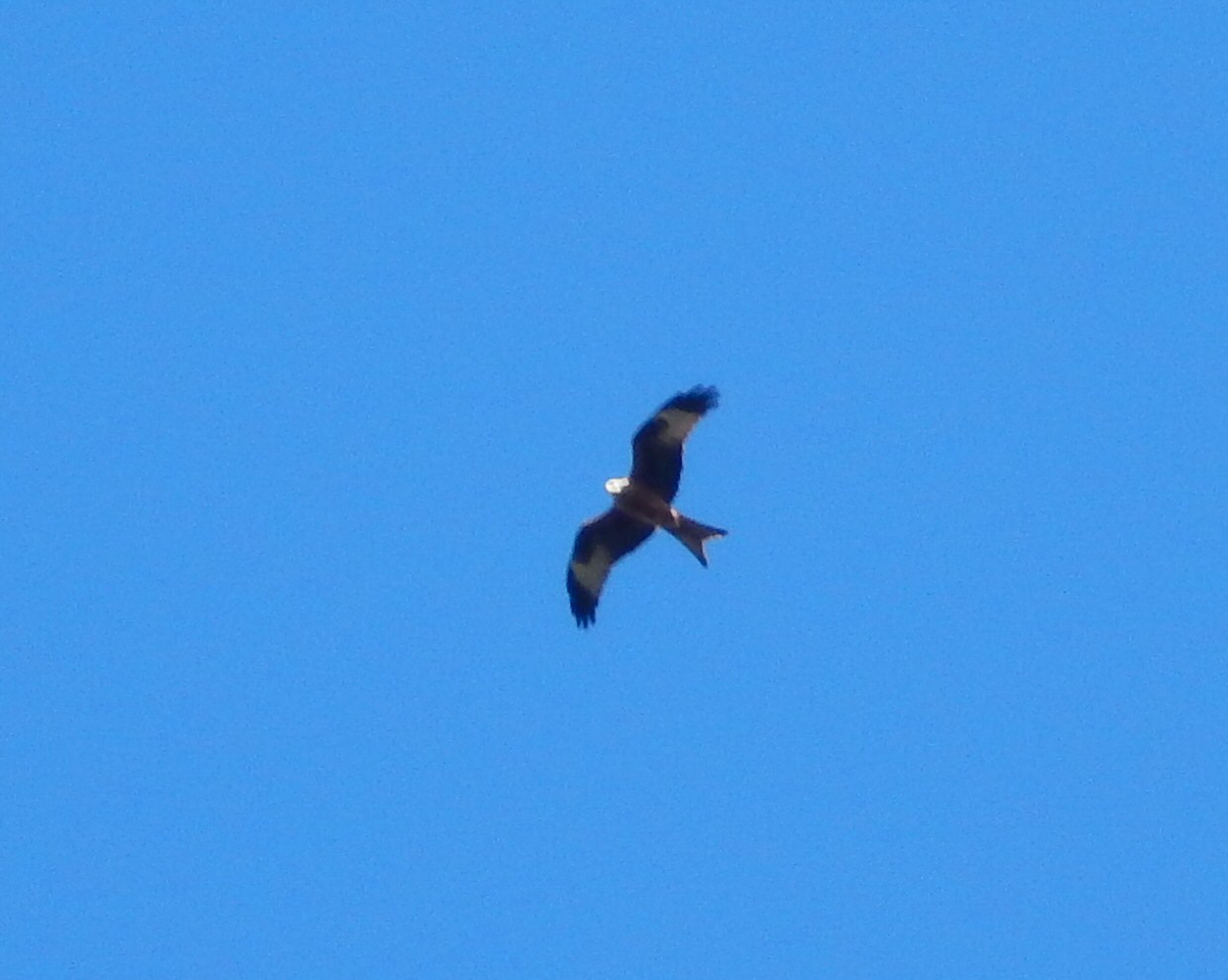
Red Kite
Around the corner into the area of wet grassland and scrub, I was delighted to be surprised by two Red Kites circling silently overhead against the brilliant blue, their long wings and forked tails a welcome sight that would have been familiar to Shakespeare but was missing until their recent reintroduction to lowland Britain. There was plenty of professional angst about whether the new Chiltern population should be encouraged to interbreed with the remnant Welsh population: but in the event, the birds easily dispersed the couple of hundred miles involved, and soon the gene pools mixed all by themselves.
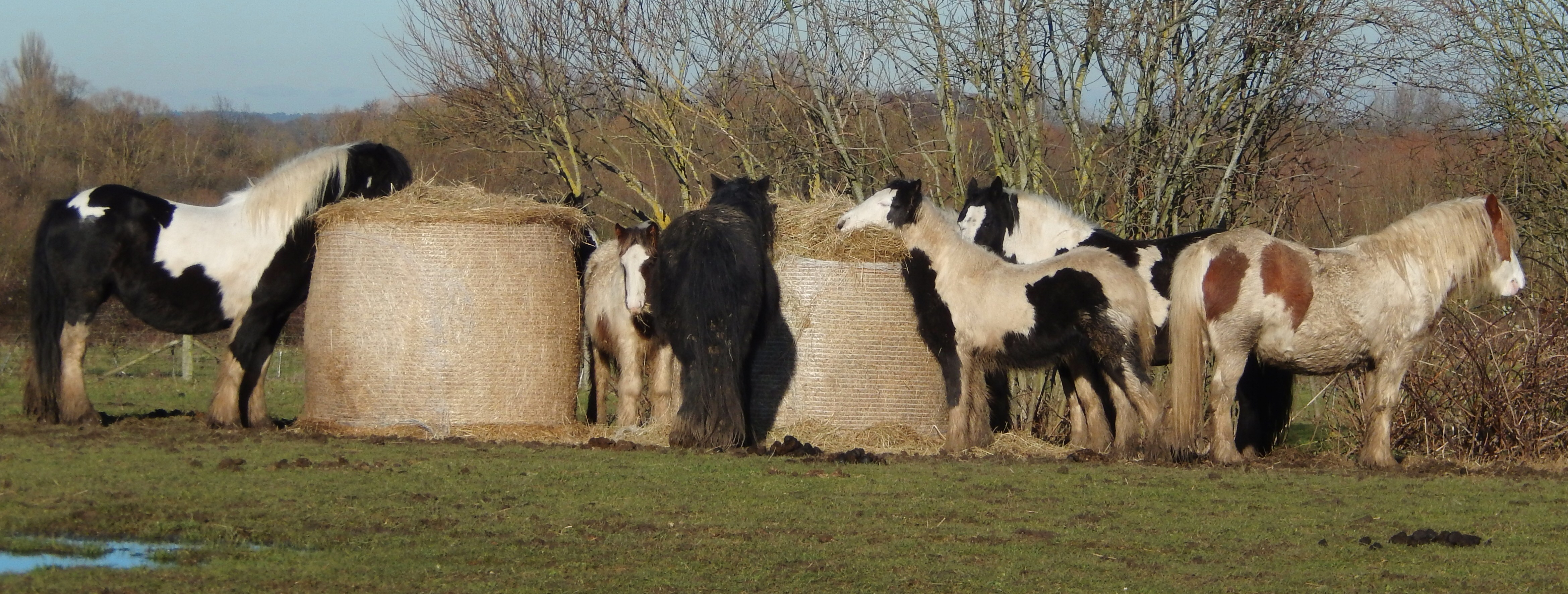
Ponies and Hay
Up on the smooth green hill that was the old rubbish mountain and is now home to a dozen ponies and horses, the distant chack-chack of Fieldfares drifted to my ears. At least fifty of them were standing, watchful but constantly feeding, on the bare grass, flying up and chattering at the least warning. A solitary Mistle Thrush stood big and grey with its boldly spotted breast among them; a flock of a hundred Starlings moved flightily between trees and grass. A Wood Pigeon panicked and all the Fieldfares flew into the trees, still chacking. I splashed through the ankle-deep mud and puddles on the somewhat flooded path to the road.
“We have a clear signal that our climate is changing, and when you look at the evidence it’s because of human activities. The evidence is so strong I don’t know why we are arguing any more”.
So said Don Wuebbles of the University of Illinois. He pointed out that the world has just had the hottest year for 1,700 years, very probably for 5,000 years.
NOAA 1880-2014 global average temperature anomaly: recent decades, and especially the most recent twenty years, have been the warmest since records began. Global warming is under way
Thirteen of the fifteen warmest years ever recorded in Britain have been since 2000: the others were just before then. 2014 had the hottest summer for 350 years (when local records began). There is no doubt that we are experiencing climate change in these islands.
Around the world, the pattern is as clear as crystal: rapid, global warming, especially strong in the furthest northern climes, as in Alaska. There, the warming is drastic. Permafrost, which stores enormous reserves of carbon locked away in frozen peat, is melting: and the fossilized plant material, exposed to the air for the first time in millennia, is starting to oxidize. There is nothing to stop all the rest of it melting away.
Actually, the story up in the far north is more frightening than that. The warmer it becomes, the more three different positive feedback cycles collaborate to speed up global warming even more.
First, as mentioned, the permafrost is melting. That releases carbon to the air, as the greenhouse gas carbon dioxide, which accelerates the warming and melting.
Second, as the ice vanishes, the albedo (reflectivity) of the once-frozen north goes down dramatically, from icy white (reflecting most of the sunlight that hits it) to muddy brown or black (hardly reflecting anything). The ground absorbs more sunlight, so it becomes warmer, accelerating the melting and oxidation of carbon; and it directly contributes to having a warmer planet.
Thirdly, as the lakes and pools lose their ice cover, enormous amounts of methane hydrates, chilly masses of carbon-rich material in the icy mud, collapse and release streams of bubbles of methane gas, a far more potent greenhouse gas than carbon dioxide. If it were to be burnt, carbon dioxide would be released; unburnt, it accelerates global warming still more rapidly.
Back in Britain, everyone noticed that the weather in late 2014 was exceptionally warm. October and November in my childhood were leafless windy months with what seemed to be incessant grey skies and driving rain that churned football pitches into cold greasy mud. This time around, it was possible to work outside in shirtsleeves to the end of November. The change? Out of all recognition. It was a wholly new climate.
But the weather is not the climate. Britain is now in winter’s grip. Scotland shivers down to -15 Celsius. Here, under clear blue skies, the Birch trees glitter in the nearly horizontal sunlight. A greater spotted woodpecker, calling “Chik!” loudly, flies into the canopy of a Birch, clings to the elegant white trunk, the few remaining triangular leaves shining a rich yellow. The woodpecker bounds off, its wings whirring in short bursts.
The cold weather, like the increasingly violent storms that brought down two trees in the reserve last week, is part of the warming pattern too. The atmosphere has more energy than before: warmer air masses meet cold ones with a higher difference in temperature, releasing more powerful storms than we ever used to see. Winters can be colder, wetter, and windier as a result: more trees fall; more valleys flood. It may not feel warmer, but this is a direct consequence of climate change. Feel like denying it? Look at the evidence. It’s all around you.
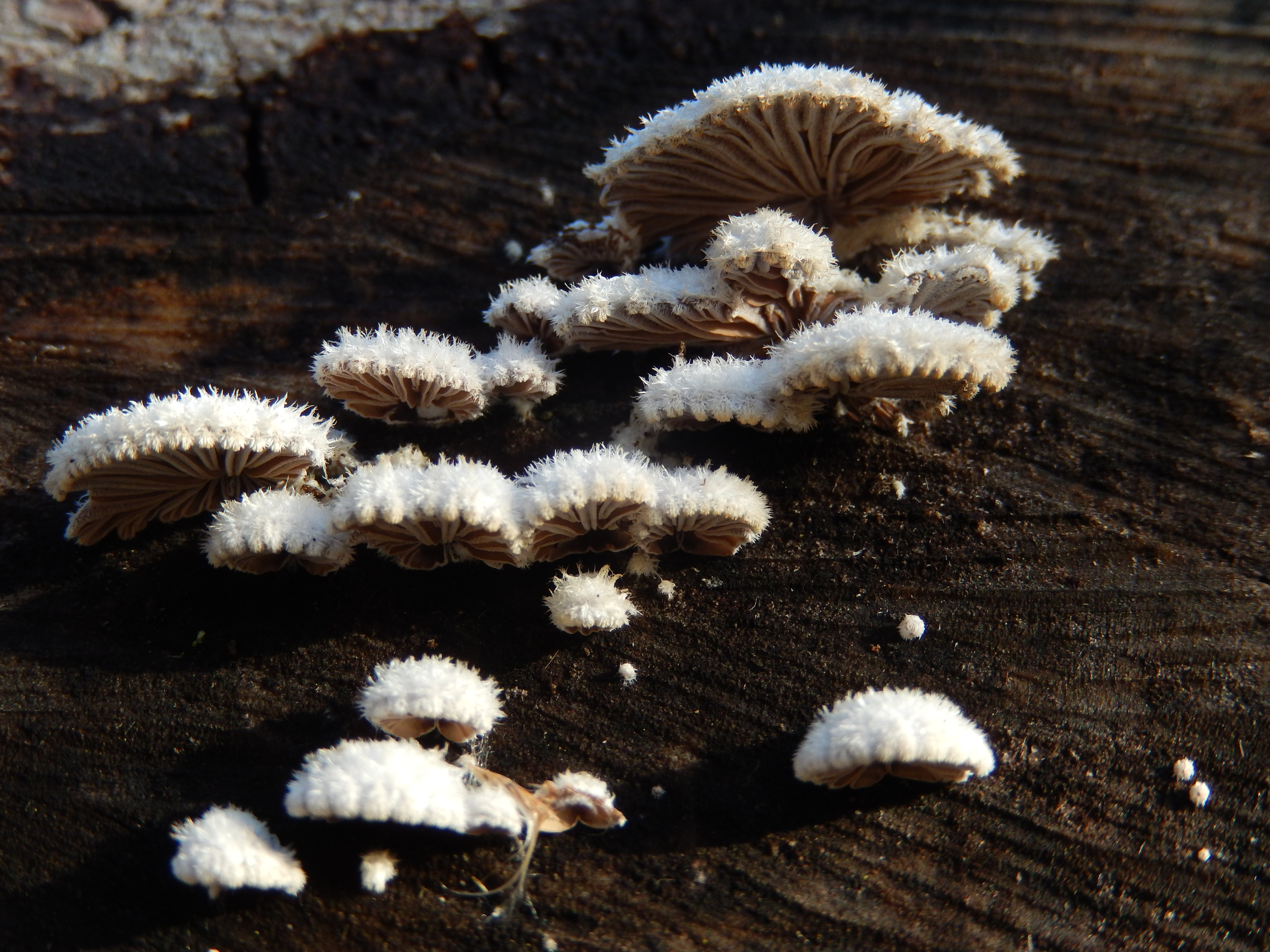
2 January may not seem like a good time for mushrooms, but even now there are interesting and beautiful species to be seen. The Variable Oysterling, Crepidotus variabilis, is as its name implies able to take on different appearances. Here its small cap is distinctly fluffy with tufts of hyphae. The gills are fairly widely spaced, and extra ones are inserted (ok, intercalated) towards the edges.
Crepidotus variabilis – small fluffy white fungi clustered on log
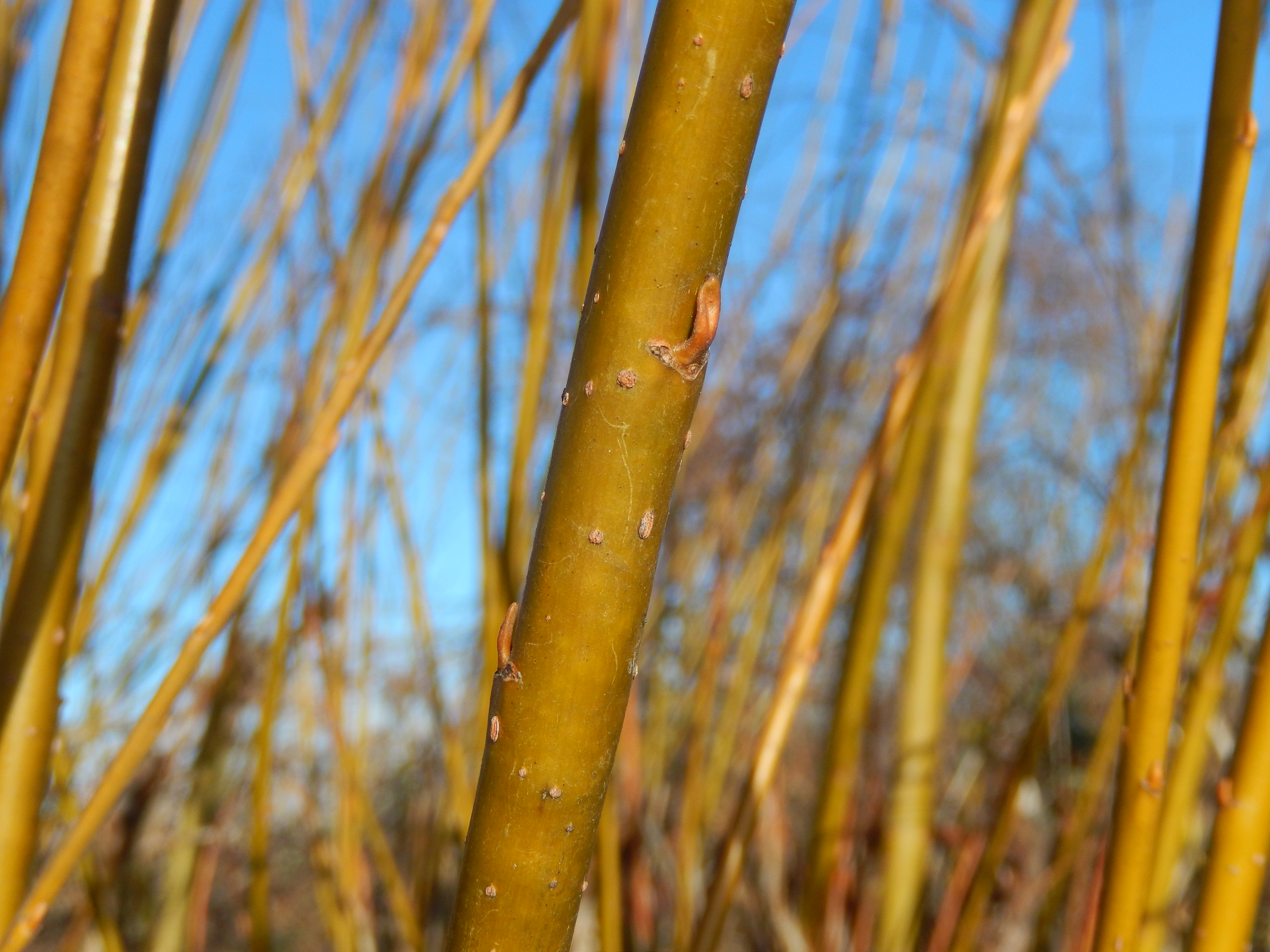
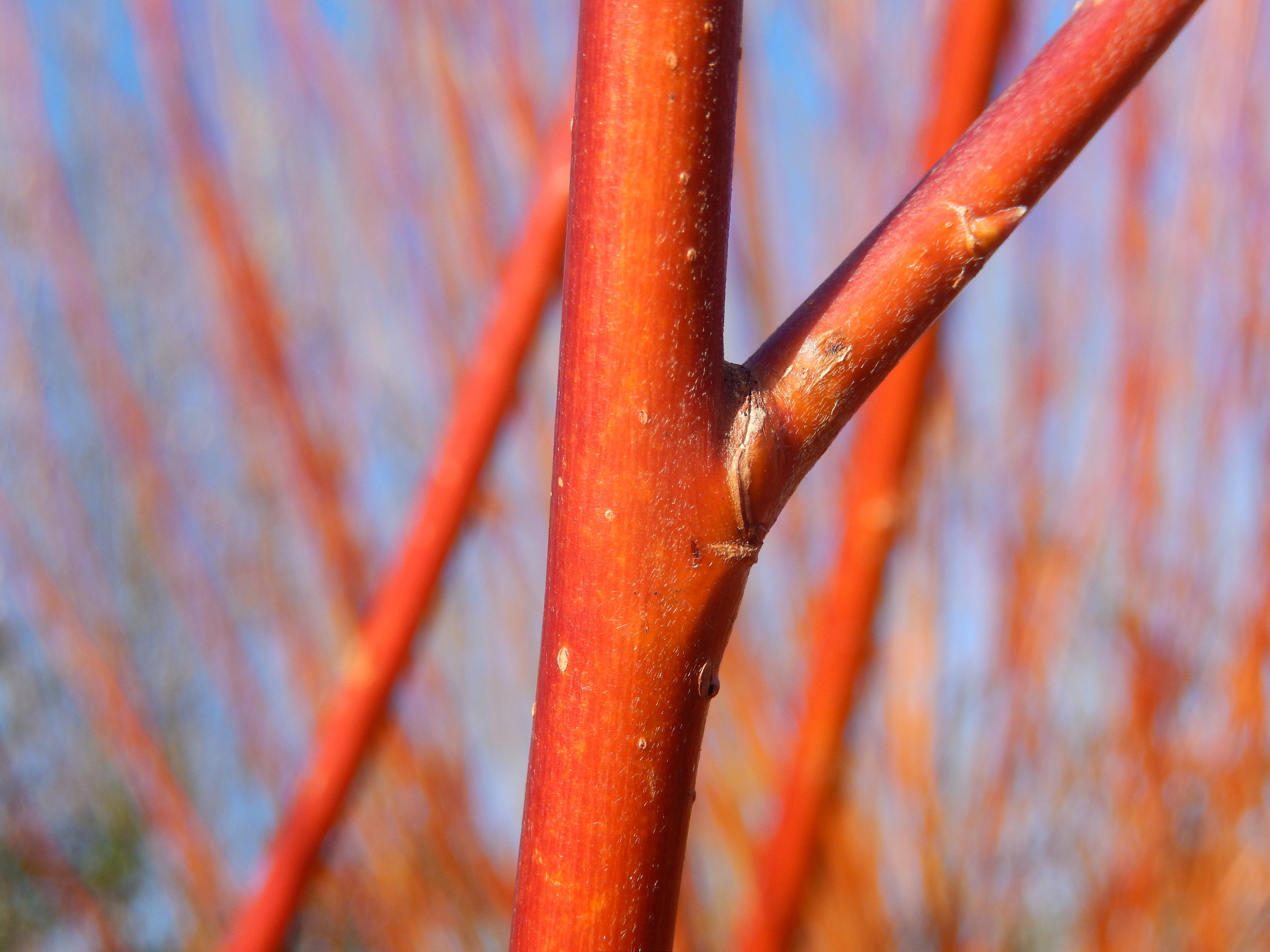
The Osiers – long thin whippy poles of willows ideal for basket-making – are seen at their most colourful in midwinter.
Green OsierRed Osier
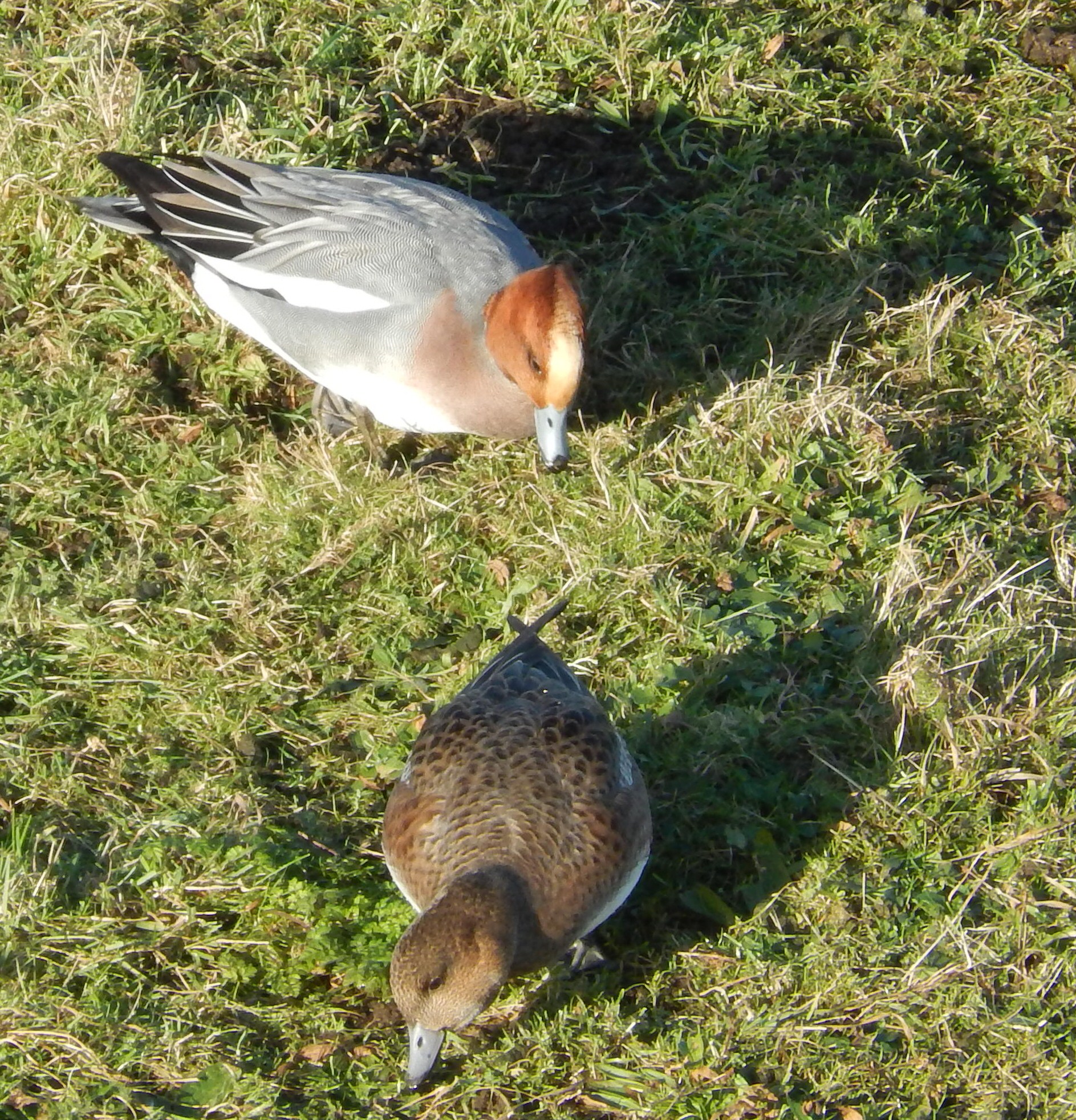
A flock of sixty or more grass-eating Wigeon, the males handsome with rufous heads complete with yellowish Mohican centre-stripe, grazed hungrily on the lush grass of the marsh. It must be a lot more welcoming than the frozen wastes of Scandinavia or Arctic Russia, where these birds have probably flown in from.
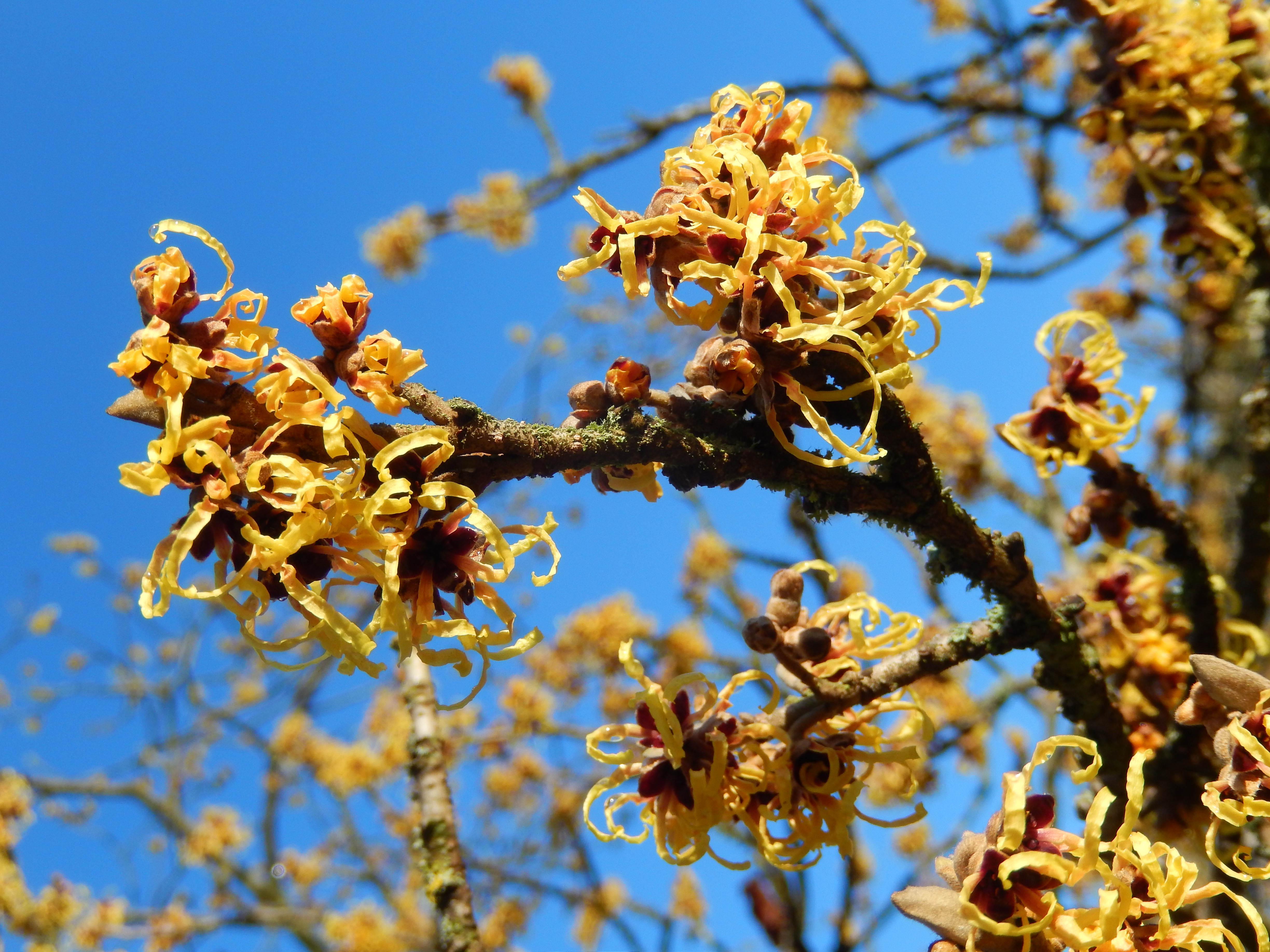
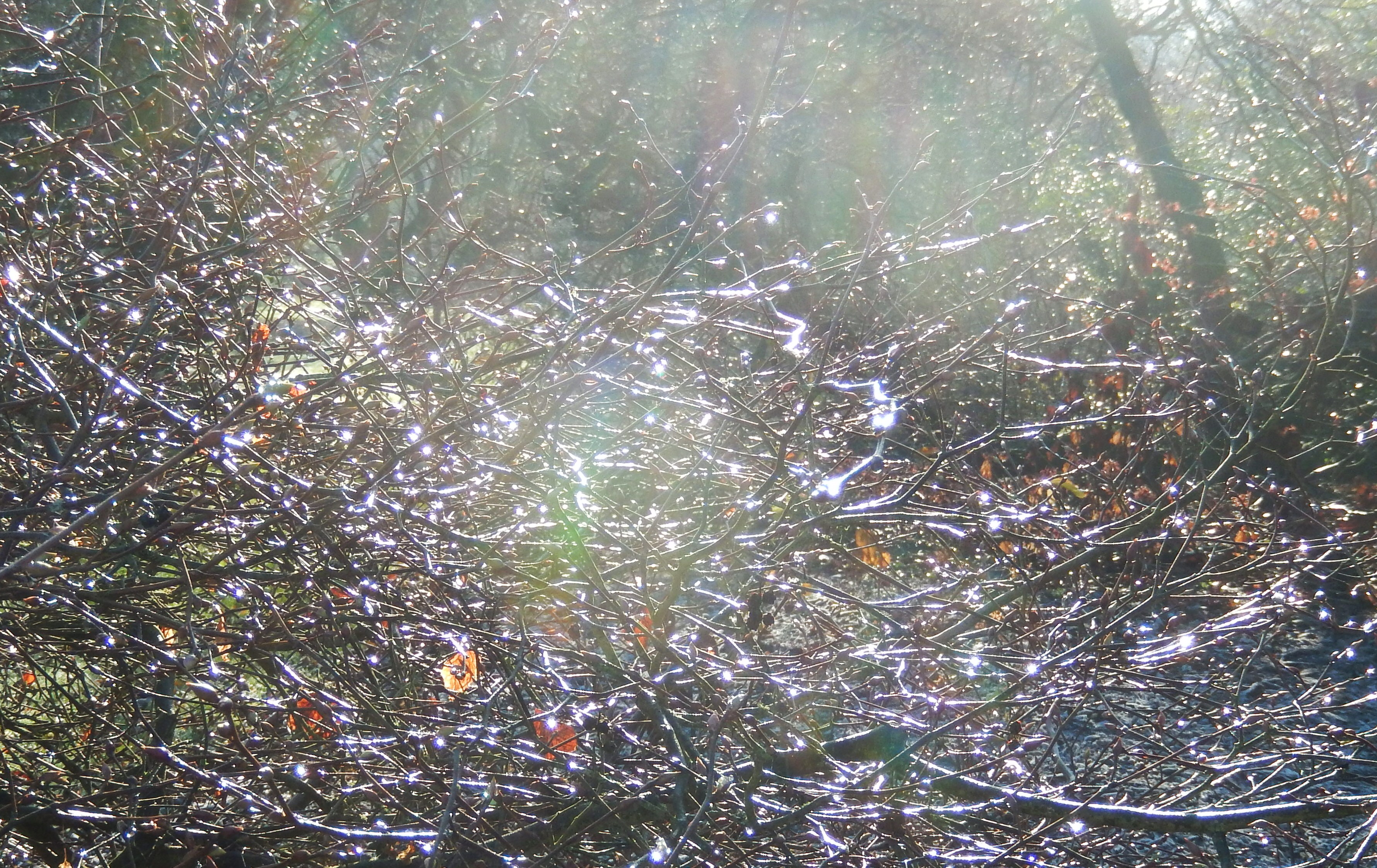
The period between Christmas and New Year can easily feel flat, but a walk in brilliant winter sunshine, with the low slanting light making everything glisten or glow in beauty, is exactly the opposite. Kew Gardens is famous for its marvellous Witch Hazels. Today, Hamamelis x intermedia was in full ‘bloom’, its extraordinary flower structures in deep yellows and oranges contrasting crisply with the cloudless sky. The photo is unretouched.
Backlit twigs glistening in winter sun
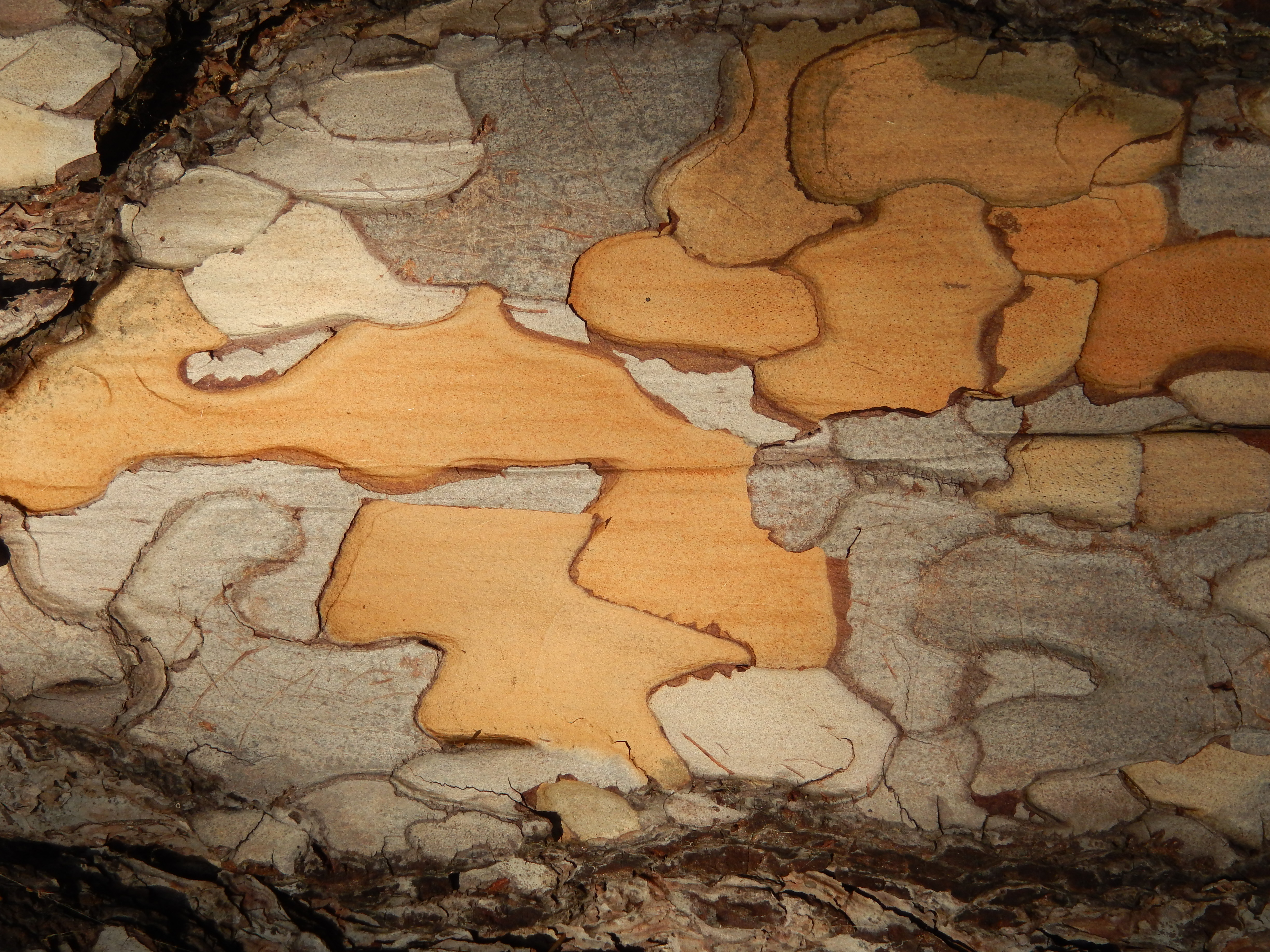
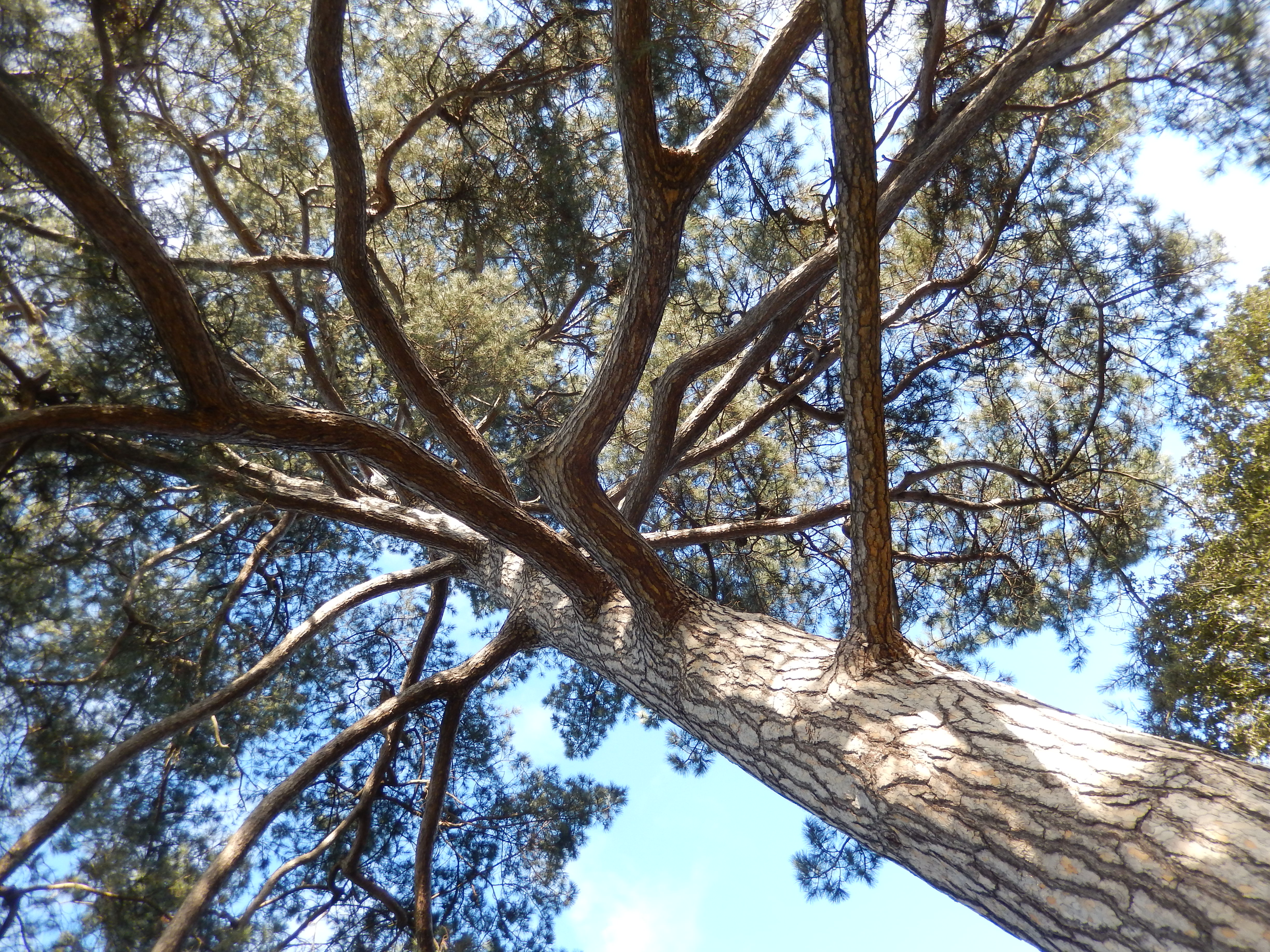
The Corsican Pine near the Queen Elizabeth gate is always beautiful. Today in the slanting light the soft colours and subtle shapes of its jigsaw-flaked bark were shown off to perfection.
Corsican Pine barkCorsican Pine, Pinus nigra: a lovely tree
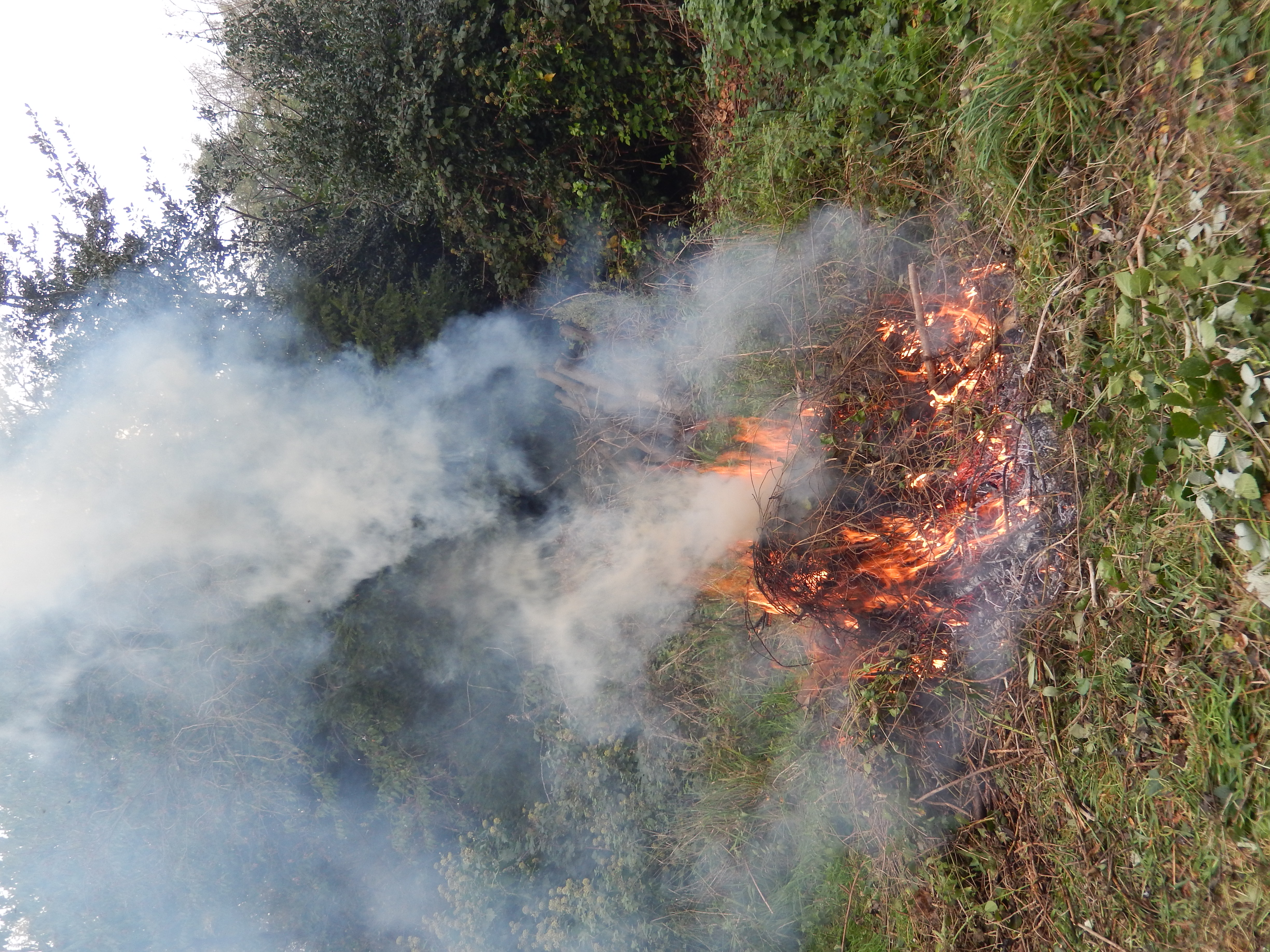
Today, with dry weather, damp ground and a gentle breeze it was perfect for burning some of the brash that we had cut in the past few months. Three enormous piles of wood and brambles were eaten up by the flames. As we raked up the remains, a few little frogs, charmingly bright green, hopped away. A red admiral butterfly fluttered energetically around an ivy bush.
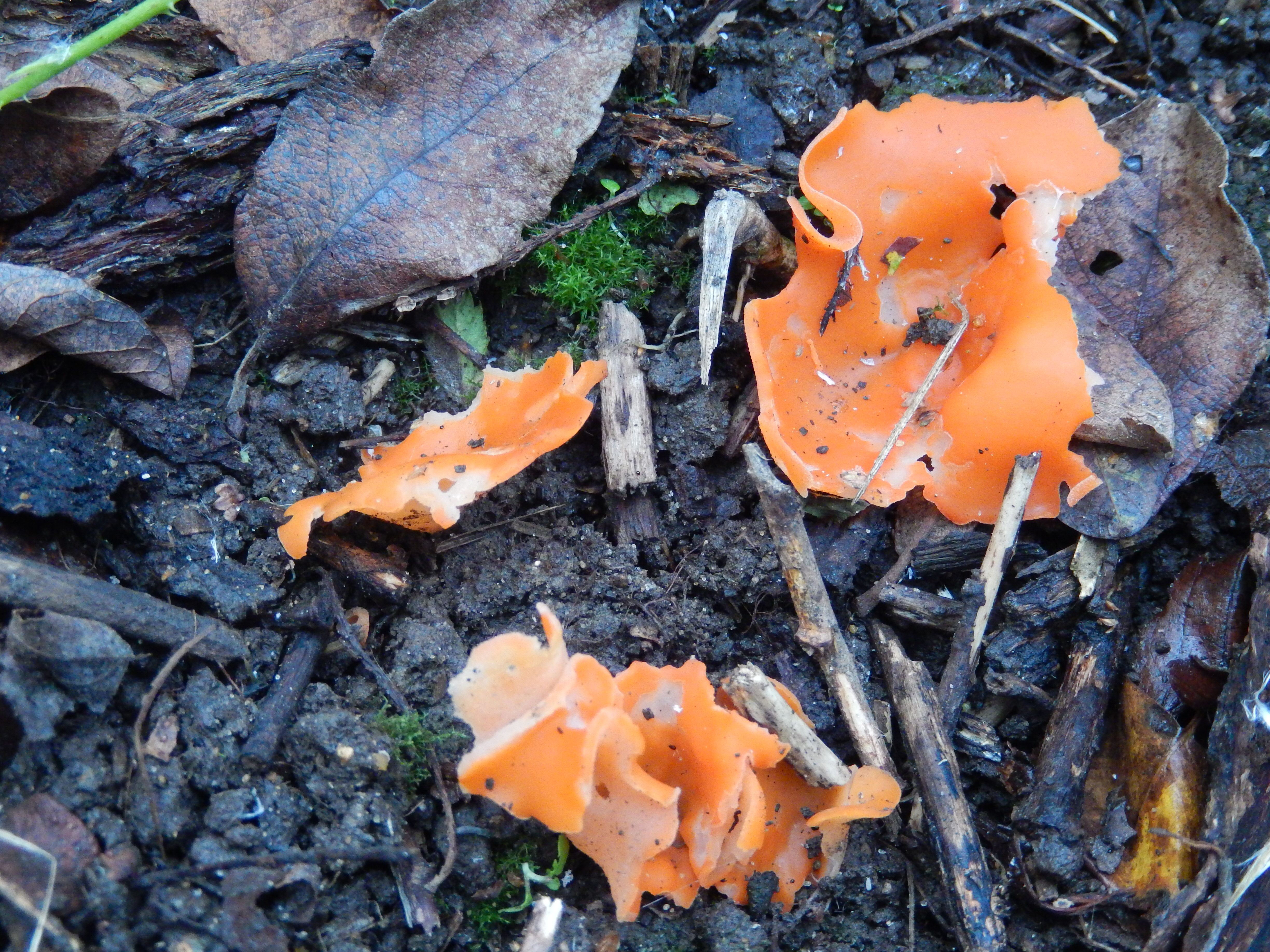
Orange Peel Fungus Aleuria aurantia
On bare ground in the open meadow was a good clump of Orange Peel Fungus, Aleuria aurantia. With its brightly coloured open cup, it’s clearly an Ascomycete. It’s said to be edible; it looks as if something – maybe a snail – has been eating away at this one.
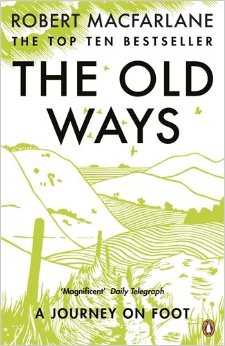
The Old Ways completes Robert Macfarlane’s trilogy about the British landscape, the earlier (and excellent) books being The Wild Places and Mountains of the Mind. As in those books, nature is a major player in The Old Ways, along with the people that Macfarlane meets in the places he visits. The ‘old ways’ are not only footpaths; sea roads too find a place, as he sails in an open boat, the old way, with knowledgeable guides. The footpaths, too, are not only in Britain: there is a marvellous pair of chapters on the poet Edward Thomas, ‘Flint’ and ‘Ghost’, as Macfarlane tracks him across the South Downs, and then to Thomas’s death as an artillery officer on the first day of the Battle of Arras, poignantly described with “The morning is a triumph for the British batteries”. Yes, we think; but was it worth the loss of one poet’s life, thousands of other lives. This is fine writing, not escapism, nor yet history, but a walking meditation that encompasses human life past and present, situated in the natural and human world with all its elements—social, political, emotional, spiritual.
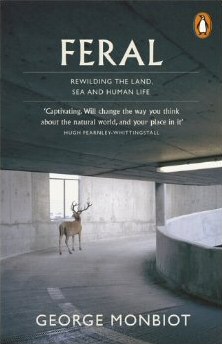
Well, what a terrifically interesting book. I’ll say at once that while I’m right up there with Monbiot’s dream of a well-rewilded landscape (with a bit of wildwood near you for peace and refreshment from the electronic world), Monbiot is so bold in his arguments that it’s impossible to agree with everything he writes.
The starting point for this book is that we all feel the need to be free of our society’s stifling artificiality. We quietly hate being stuck on commuter trains, boxed into offices, jammed onto pavements, trapped in front of screens, permanently at the beck and call of electronic devices and social media. Monbiot is very funny on this sad topic. He uses as evidence not all this stuff from today’s world – you know it already – but the results when people from our world have gone into tribal societies: they uniformly want to stay. Conversely, when tribespeople have visited our world, they always want to go back home. Wild, 1. Civilised, 0.
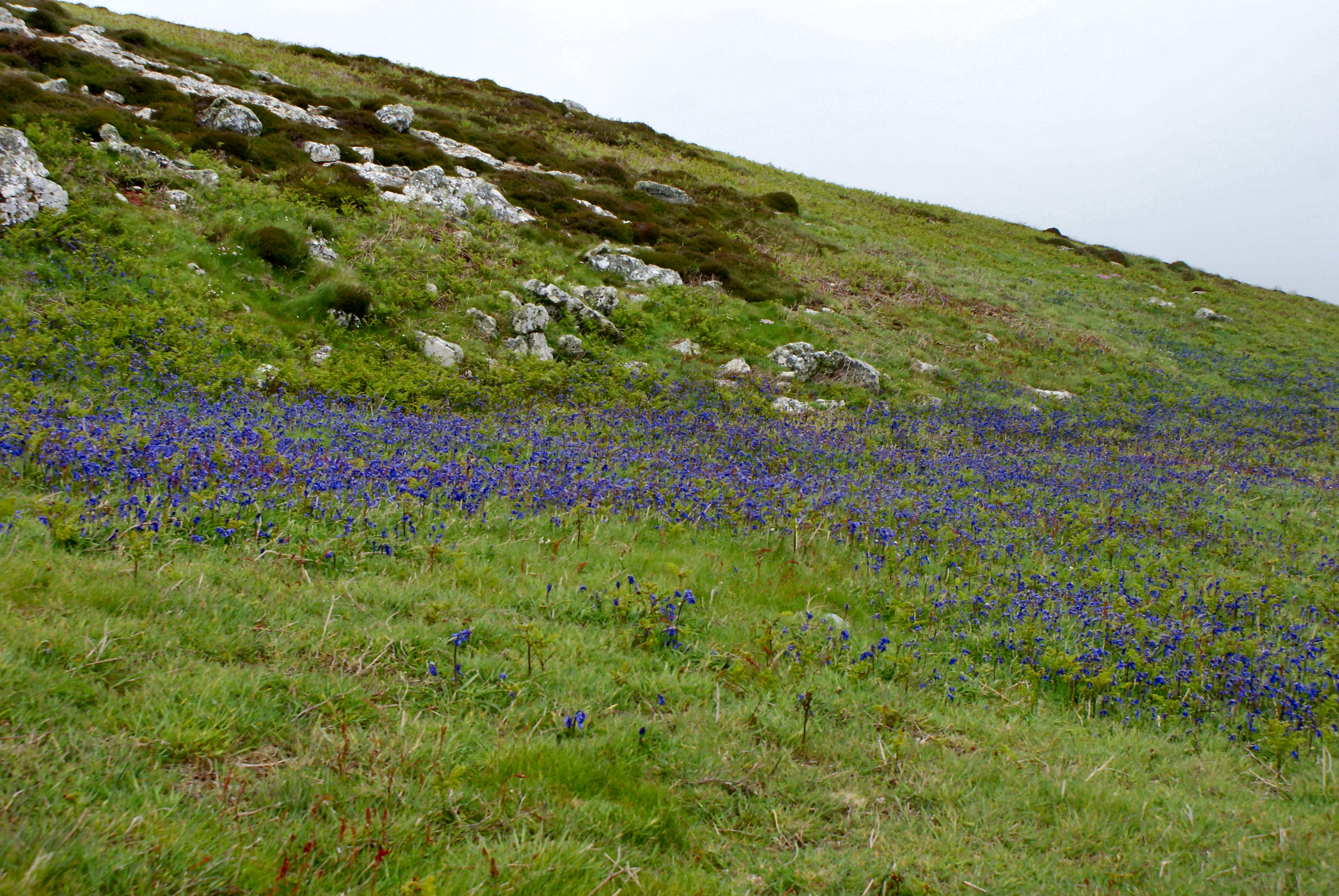
Remnant Bluebells on Ramsey Island, Pembrokeshire: once this bare moorland was forest. Photo: Ian Alexander
Monbiot moves to Wales, near the bare open heathery uplands of the Cambrian Mountains, that everybody tells him are beautiful. He finds what every hillwalker (myself included) must have noticed without thinking too much of it, that there are very few species up there: few flowers (save Tormentil, a marker of overgrazing as sheep won’t eat it), few insects, few birds.
“I hate sheep”, writes Monbiot, startlingly: no echoes of Wainwright here, no grudging admiration of those toughest of hillwalkers, the mountain sheep like the Herdwicks of Lakeland. He hates the bare sward, devoid of trees. Trees? On the mountains? Yes, he shows us the record from pollen cores: from the end of the last ice age, the Welsh uplands were covered in forest – hazel, oak, alder, willow, pine and birch. “By 4,500 years ago, trees produced over 70 per cent of the pollen in the sample.” Then, Neolithic farmers cleared the wildwood, and by 1,300 years ago the trees had gone, replaced by heather. And domestic animals, sheep and cattle, replaced the great beasts of the forest: the elk, bear, wolf, wild boar, lynx, wolverine. Even the mild beaver was driven to extinction.
Just proposing to rewild the British Uplands would be controversial enough, though the process has begun with many small schemes and a few large ones – Trees For Life’s vast Caledonian Forest project notable among them, with (at its core) the 40 square kilometres of the Dundreggan estate becoming bushier by the year. Proposing the reintroduction – the release into the wild, not yet legal in Britain – of beaver and boar and elk and lynx is more dramatic still. But Monbiot would like the large predators, too. Gulp.
And he goes further. We are all guilty of “Shifting Baseline Syndrome” (let’s call it SBS for short, it sounds a horrible disease). We imagine the world should be as we recall it from our own childhood. But it was already depauperate then!
Monbiot would like to allow nature to rebuild itself, with a little help to get started where necessary. He observes a remarkable fact that again we hadn’t thought much of: if you cut a tree, or lay a hedge of hawthorn, hazel, oak, willow – it sprouts vigorously up from the broken trunk, the cut stumps, the splintered branches. Why did our native trees evolve those responses? Because, argues Monbiot, they are adapted to large herbivores. Really large herbivores: elephants, rhinoceroses. Oh my. He wants to bring those back too. Actually it was the straight-tusked elephant we used to have: and the woolly rhino, both extinct: but Monbiot suggests that the living species are good and close replacements. Clearly, getting the relevant permissions might take a little time.
These are just some of the big, meaty ideas in Feral. There are sacred cows in there: the conservation authorities value the bare uplands, and certainly they have a beauty, manmade or not. The story is powerfully told, enlivened and illustrated by tales of wild (and dangerous) personal adventures. Monbiot knows his ecology and his landscapes: he just interprets them differently from the establishment. Quite often, as with his descriptions of the disgraceful overfishing practised by Britain and the European Union, he is certainly right. At other times he is controversial, even combative, but always fascinating. Whether you agree or disagree, if you’re interested in nature – as I assume you are, given that you’re here – you need to read Feral.