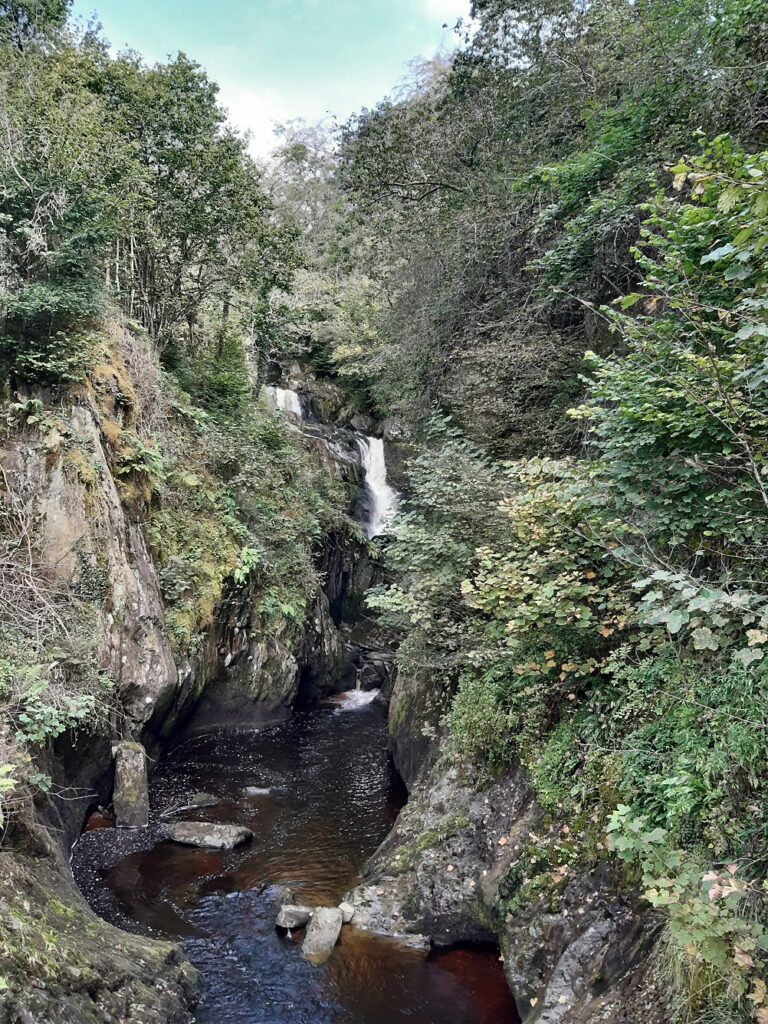
Some of the many beautiful waterfalls, pools, and rapid swirling course of the river Twiss on the Ingleton Waterfalls Trail
The Ingleton Waterfalls Trail is on private land, with a fee that includes car parking (it was £7 per person when we did it). The trail has been made one-way for the Covid crisis to enable social distancing, so the only current route is from the car park at Ingleton, up the valley and gorge of the little River Twiss, across the windy moor at the top, and down the gorge of the River Doe back to Ingleton. It’s about 8 kilometres, 5 miles, and takes most people about three hours, as there’s quite a bit of uphill walking and a lot to look at, listen to, and photograph, sketch, or paint according to your taste.
Where much of the Yorkshire Dales scenery is (white) limestone, the rocks here also include reddish sandstone and striped bluish or greenish shale and slate. The sandstone is a hard, massive, blocky rock that causes the rivers to run in narrow gorges. The slate, like the slates on many local rooftops quarried from the area, is a hard, waterproof, compressed (metamorphosed) rock that splits into flat sheets at an angle to the layers of mud from which it was originally formed; it forces the rivers into waterfalls. The rocks are up to about 500 million years old.
The walk begins up through the pretty wooded Carboniferous limestone “glen”, with a canopy of Ash trees and undershrubs especially of Hazel. The forest floor is carpeted with Bluebells in wet places, Dog’s Mercury where it’s drier, and plenty of handsome mosses and ferns.
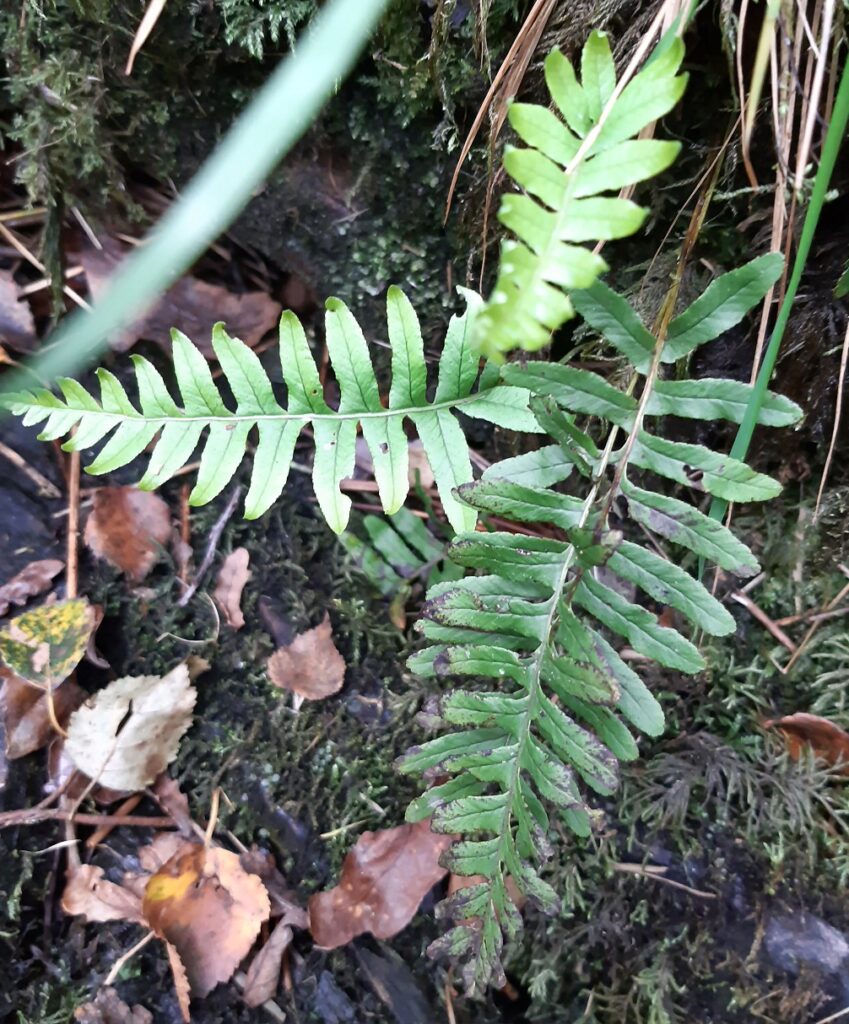
Polypody Fern by the River Doe
The valley narrows into a gorge, with the river swirling with natural foam in interesting vortex streets against the dark brown peaty water. The foam is created by the action of the waterfalls on soapy chemicals from moorland plants; there is no pollution here.
The five Pecca Falls are already spectacular to eye and ear; I had fun making a video of the rushing water from two converging falls.
Up at the top is Thornton Force — the Norse word for waterfall is “Fors”, so this is another instance of Viking influence, along with familiar local placename elements like Dale from Norse “Dal”, valley and all the towns and villages whose names end in -by, from “By”, village. It is an attractive place for a picnic, sheltered from the wind, with the beautiful fall and nice flat rocks to sit on.
The path climbs out of the now very small Twiss valley, and crosses the open moor eastwards to the valley of the River Doe.
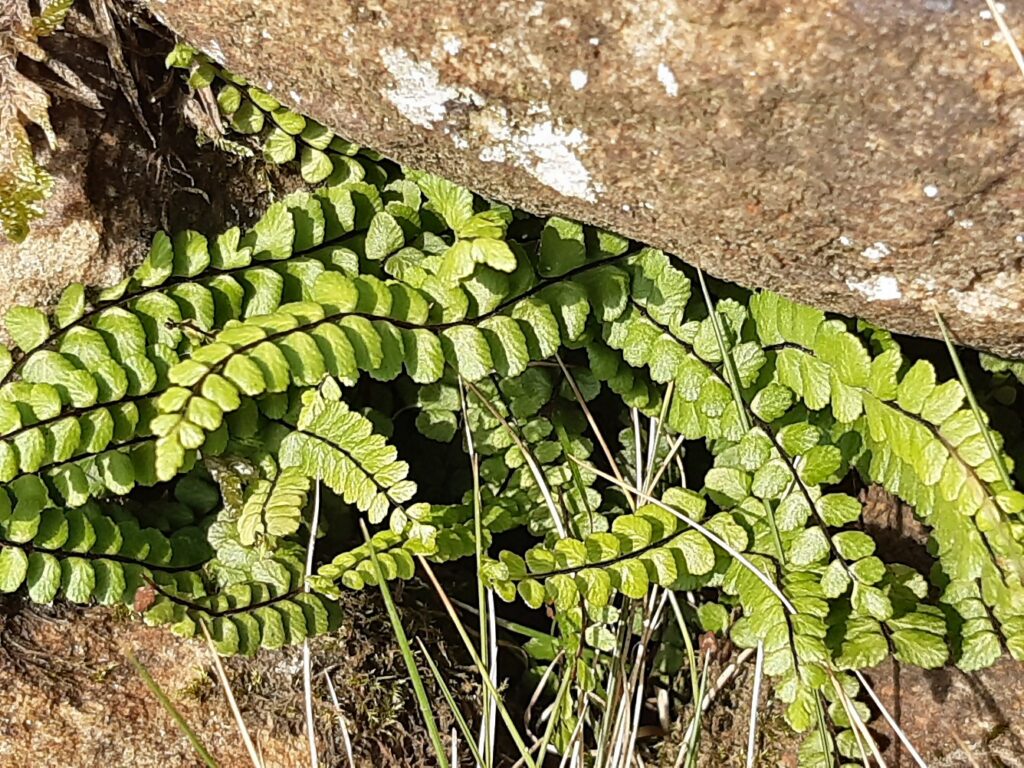
Adiantum, Maidenhair fern
The path winds down quite steeply, while the river is sometimes so deep in its narrow gorge that you can’t actually see down to the water! There are more attractive waterfalls, and several slate quarries: you can see exactly where the quarrymen split off flat slabs of rock.
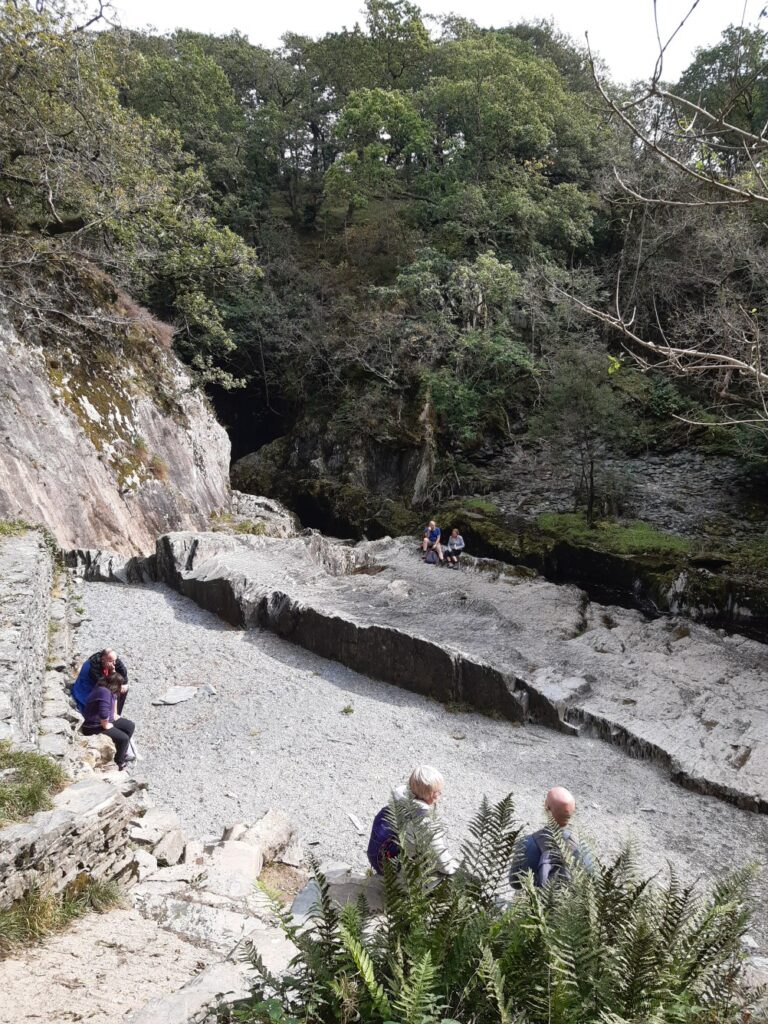
An old slate quarry forms an attractive spot for a picnic (or just a little rest); the River Doe is in a narrow gorge behind the seated visitors, while the foreground shows where slates were split from the bedrock.
The path drops into Ingleton with its cosy shops, cafes and restaurants, not to mention its impressive but disused railway viaduct high above. Just keep going downhill to cross the river at a low stone bridge, and the car park is right around the next corner.
The presenters on Radio 4’s PM programme said that we needed an Awesome Nature Walk to lift our spirits during this renewed Covid Lockdown. Happily, we had already planned to go on one, and here it is: an Awesome Nature Walk at Wraysbury Lakes.
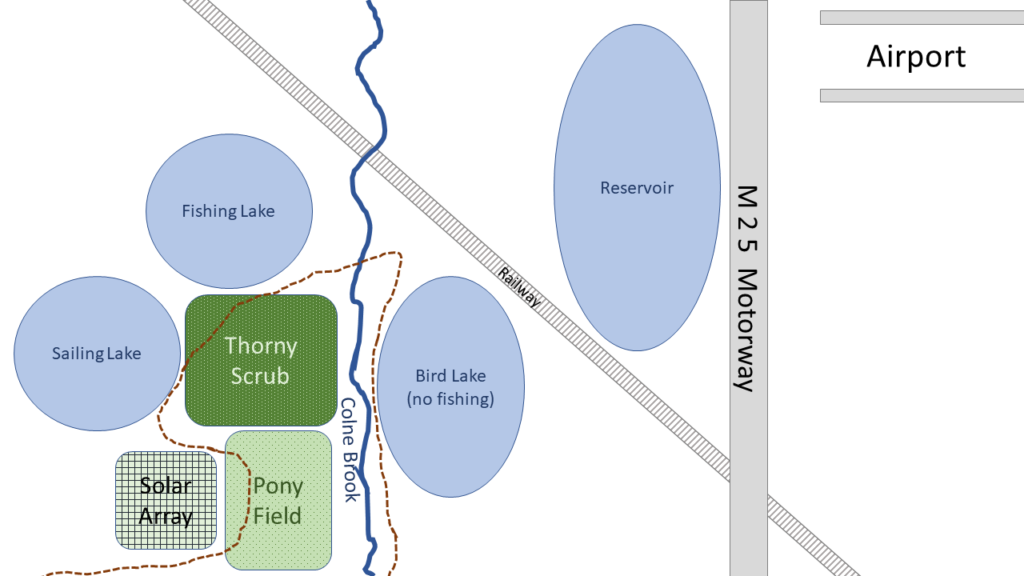
Sketch Map of the walk as it feels when I’m on the path (rather than mere cartographic accuracy, whatever that is)
The walk begins near the road bridge over the Colne Brook at the bottom of the map, which is by a repair garage. I’ve drawn the sketch map to give something of the feeling of the route while I’m walking it, rather than attempting to make an objective map.
The Area’s Natural and Unnatural History
The area is just outside the M25 ring motorway that informally defines London’s boundary; Heathrow Airport is just inside that, so in normal times (hmm) there is a plane overhead every 90 seconds. Down on the ground, there are numerous lakes which all started life as gravel pits. The River Thames laid down great amounts of sand and gravel in its wide flood plain during the Pleistocene, and the various Flood Gravels now form valuable building materials. Extraction round here has finished, but there are active pits a bit further afield. The pits go below the water table so they fill up by themselves. The large Reservoir is a bit different – it has an enormous high earth bank all around it, so the water level is high above the surrounding ground level (maybe there was gravel extraction there too before the Reservoir was built). A railway runs across the area; it can be crossed at a pedestrian level crossing with a pair of stiles and a lot of looking both ways. To the south of the lakes is an attractive area of thorn scrub with Hawthorn, Dog Rose, Spindle, Bramble and suchlike, with quite a few trees, all very good for wildlife. Down by the lake edges and the Colne Brook are many large Willows and Poplars which grow quickly, lean over, fall, and sprout up anew, forming a constantly-changing cycle of growth and regeneration, and providing cover and roosting-sites for warblers and water-birds.
The lakes have variously been repurposed – one is used by the sailing club, though I more often hear the clatter of rigging vibrating against sail-less masts on windy days than people actually sailing. Another is a strictly private fishing lake, protected by fierce signs and fiercer fences which must have cost a fortune to put up. The lake by the start of the walk is open to wildlife and fishing is forbidden; a delightful trio of icons make it clear that running with a large carp under your arm is forbidden, as is spear-fishing (or is that a black line crossing out a standing fisherman diagonally); frying fish on a griddle is not allowed, though nothing is said about making fish stew in a saucepan, interpret the icon how you will.
South of the scrubland is a pleasantly scruffy pony-field with scattered thorn-bushes and rough grass dotted with tufts of Alfalfa. It rises to a low hill which was once a municipal landfill dump. For some years the dump was grassed over and the ponies roamed all over it; then men came and installed deep pipes to sample and carry away the presumably polluted groundwater; finally, a sizeable array of solar panels was installed and fenced off, complete with security cameras, so ponies and walkers had to make a detour around the array.
So — airport, motorway, gravel-pits, railway, landfill, post-industrial leisure activities, it’s pretty much the classic Urban or Peri-Urban nature area.
The Walk
The bridge over the Colne Brook offers a glimpse of calm nature; the water babbles softly among the waterweeds, and two Kingfishers dark on triangular wings just above the surface. One swerves into a U-turn, catching the sun to reveal its brilliant blue-and-turquoise plumage. What a moment to start a walk.
We dive gratefully down the few steps from the pavement to the path: the pavement by the bridge is half-occluded by unclipped bushes, and the traffic whizzes past perilously close to unwary walkers.
In the sudden quiet we peer through the trees to the lake. A gang of twenty Cormorants is on the water, with a group of Mute Swans.
The path is bordered with Willows and coarse herbs; a patch of colourful Comfrey, once used to help knit broken bones, attracts some Common Blue Damselflies. At a gap in the Willows, a Cetti’s Warbler sings its abrupt, loud song. Some Migrant Hawker Dragonflies scoot too and fro beside the water, their transparent wings whirring, their long slender bodies glittering blue.
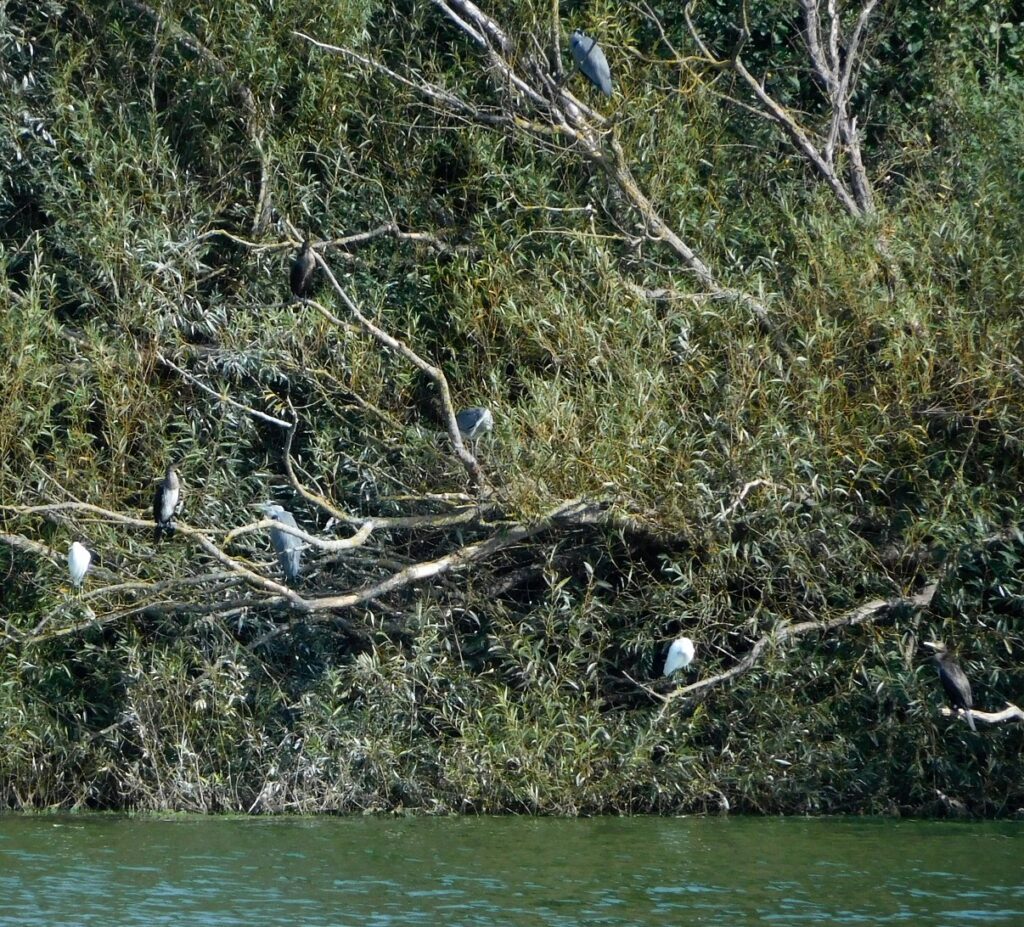
Little Egrets, Grey Herons, and Cormorants roosting and preening in the Willows beside the lake: not bad for an Urban Nature Walk
We come to a patch of reeds where we can see right across the lake. A Chiffchaff flits between bushes. On the far side is a bank of Willows, several with protruding dead branches. Perched on these are a few Grey Herons, half-a-dozen Cormorants, and most excitingly three Little Egrets — small white herons with black legs and yellow feet: uncommon visitors here. All of these are predators, feeding on fish and small animals like frogs; the Cormorants fish by diving from the surface, while the herons stand by or in the water, looking out for prey.
The track through the thorny scrub is bright with Rose and Hawthorn fruits — “Hips and Haws” in the fine old country phrase, rich with double entendre, glowing in different shades of red. Across a wide patch of Teasels and Burdocks and Thistles, all tall and prickly in their differing ways, more Hawthorn bushes are still in green leaf but bursting with red fruits, so they are red and green at once, which you might have thought impossible, but there it is, spectacular.
We swing through the kissing-gate and into the pony-field. The animals barely glance at us, the rich grass is clearly far more interesting. “Alfalfa” apparently means “King of Herbs” in Arabic; it was supposedly the finest pasture for grazing animals from goats to camels.
The path rounds the Solar Array; I guess it’s good to know that more and more of our energy is renewable, even if an Electric Vehicle, with its large price-tag, doubtful driving range, and complicated charging arrangements if like me and many city-dwellers, you don’t have a front drive to park and charge it on, is still perhaps a bridge too far. It does feel as if, with one more push, there could be charging points everywhere and affordable prices, and suddenly it’ll look not exotic but obvious. Five years, maybe? Who knows, but at least it’s coming.
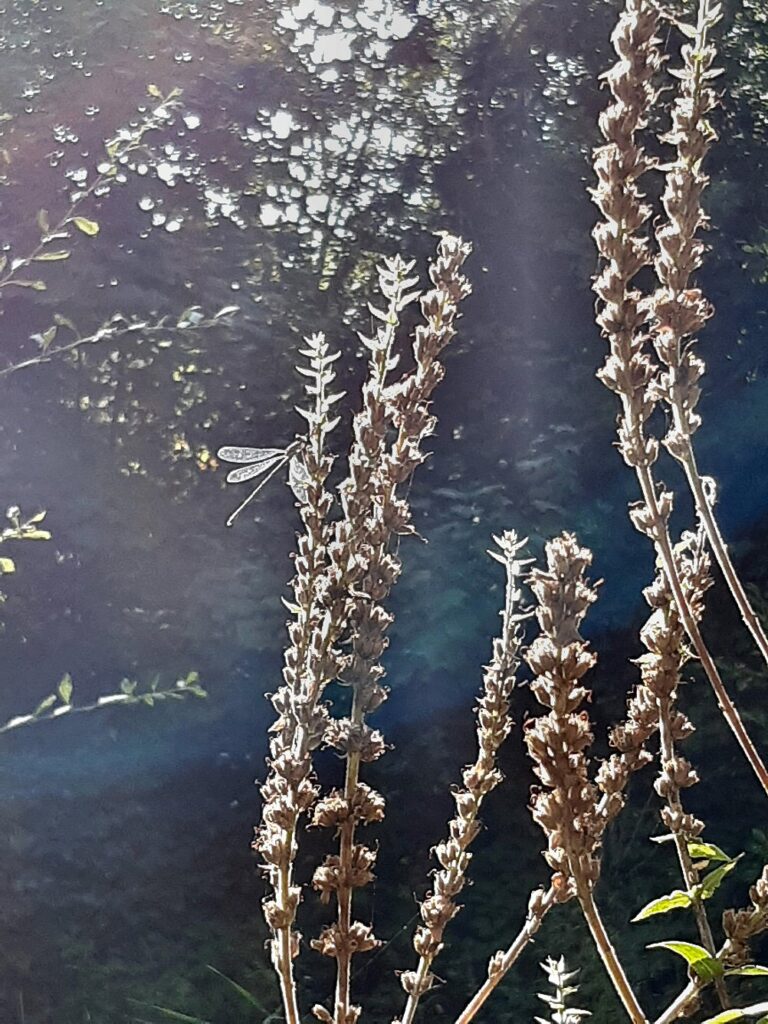
A Willow Emerald Damselfly on the Lookout by the Gunnersbury Triangle Pond, in the warm autumnal sunshine: taken just with the little camera in my phone, I hadn’t come for nature photography, so the resolution is nothing special, but perhaps it will give you an idea of the scene.
Amidst the returning crisis of Covid and the chaotic responses to it, I felt it was time to go and sit quietly and enjoy a little Nature, just as it was.
A Grey Squirrel looked up from the path below the bench where I was headed, and lolloped off. There were several little holes where it must have been hiding or retrieving nuts in its boom-and-bust economy – surplus one moment when a tree’s fruits ripen all at once, famine when nothing is ripe a while later.
The afternoon was warm and sunny at 24 Celsius, and it was very pleasantly quiet. I sat cross-legged — in half-lotus, halfway to meditation maybe — on the bench by the pond and watched.
A Willow Emerald Damselfly (aka Willow Spreadwing, a good name as it’s one of the few damselflies that perches with its wings open like a dragonfly) came and rested on a dry Purple Loosestrife flower-spike. It had a good viewpoint above the little open water remaining in the pond, and clear air all around. Soon I could see why: it chased off a fly that came close, and returned to its perch: clearly it was a territorial male. A moment later, a rival Willow Emerald flew by, and the two of them dashed and spiralled up and across the pond until the rival gave up and fled. The victor returned to another stalk nearby.
Meanwhile, several Magpies squawked and chattered, actually quite Jay-like in their calls though with more chattering conversation. They kept this up more or less continually.
A Wren hopped about in the Willows on the little island, presumably catching insects, and then whirred, its little tail still cocked, across past my shoulder into the brambles. Some Wren warning-chatter came out of the bramble thicket behind me.
At the top of the Willows on the island, a cloud of non-biting Midges clustered in their cheerful display flight, backlit by the sunshine. Lower down, bees and hoverflies whirred about, apparently finding something sweet worth visiting; perhaps drops of sticky half-dried sap excreted by aphids, as there were no flowers up there.
A Red Admiral Butterfly, an occasional visitor here, flapped gracefully past. A Speckled Wood Butterfly, very territorial, perched on the bench beside me, then angled its wings in three steps closer and closer to the angle of the sun, camouflaging itself by choosing the smallest possible shadow. It’s the same reason soldiers drape nets to stretch away from their equipment, to hide the telltale shadow (as well as to break up any recognisable outline).
Down by the water, something large stirred. A Red Fox slinked silently up the bank, no more than three metres from my seat, and vanished into the Wet Woodland.
I unfolded my legs gently. I suppose half an hour had passed: something interesting had been happening every moment.
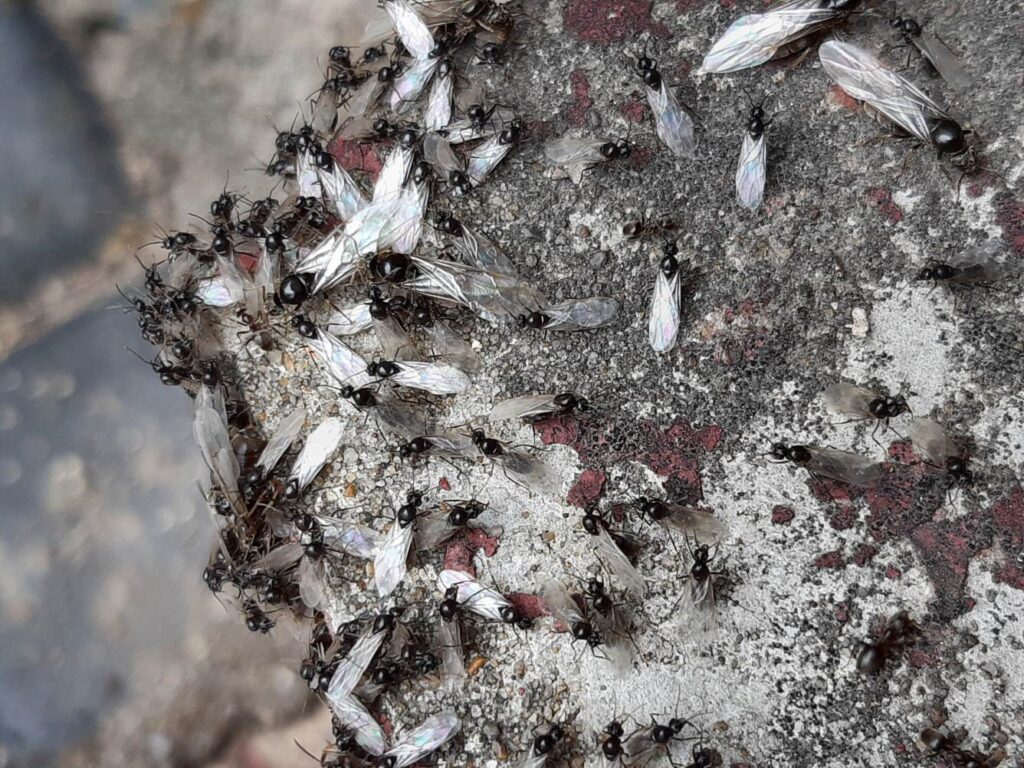
Winged Reproductive Ants emerging on back doorstep …
Every year, the ants that nest underneath our back doorstep form a swarm of winged reproductives that fly off on a day in July.
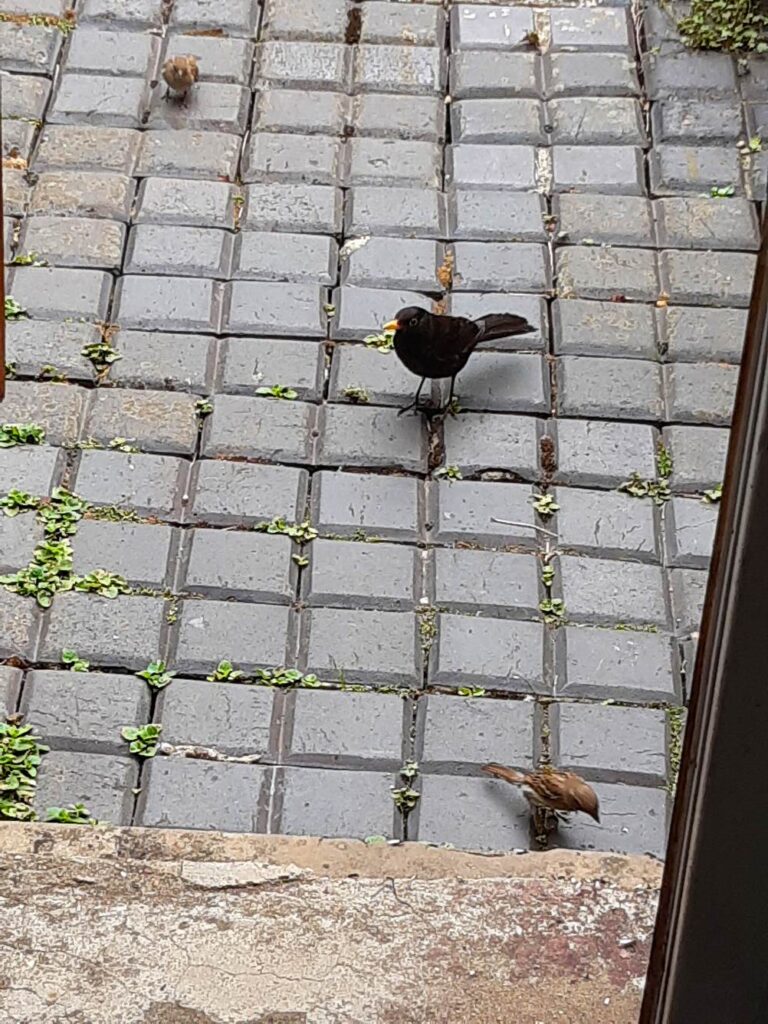
We were surprised to find at least 10 House Sparrows perched all around the garden, and flying up catching ants. They were joined by a male Blackbird and a Robin. The Robin, the only insect specialist among them, had its beak full of insects. The nearest Sparrow in this photo is just below the doorstep where the ants are emerging: it was just a few feet from the camera.
Three House Sparrows catching ants by the doorstep
We’ve never seen so many House Sparrows in our street. There is just one house nearby where they nest, and there are usually just two or three birds there. Maybe they had a large successful brood this spring. Whatever the case, they found the ants emerging very quickly; they whole flight took only a couple of hours, though we’d noticed increased (wingless) ant activity over the past few days.
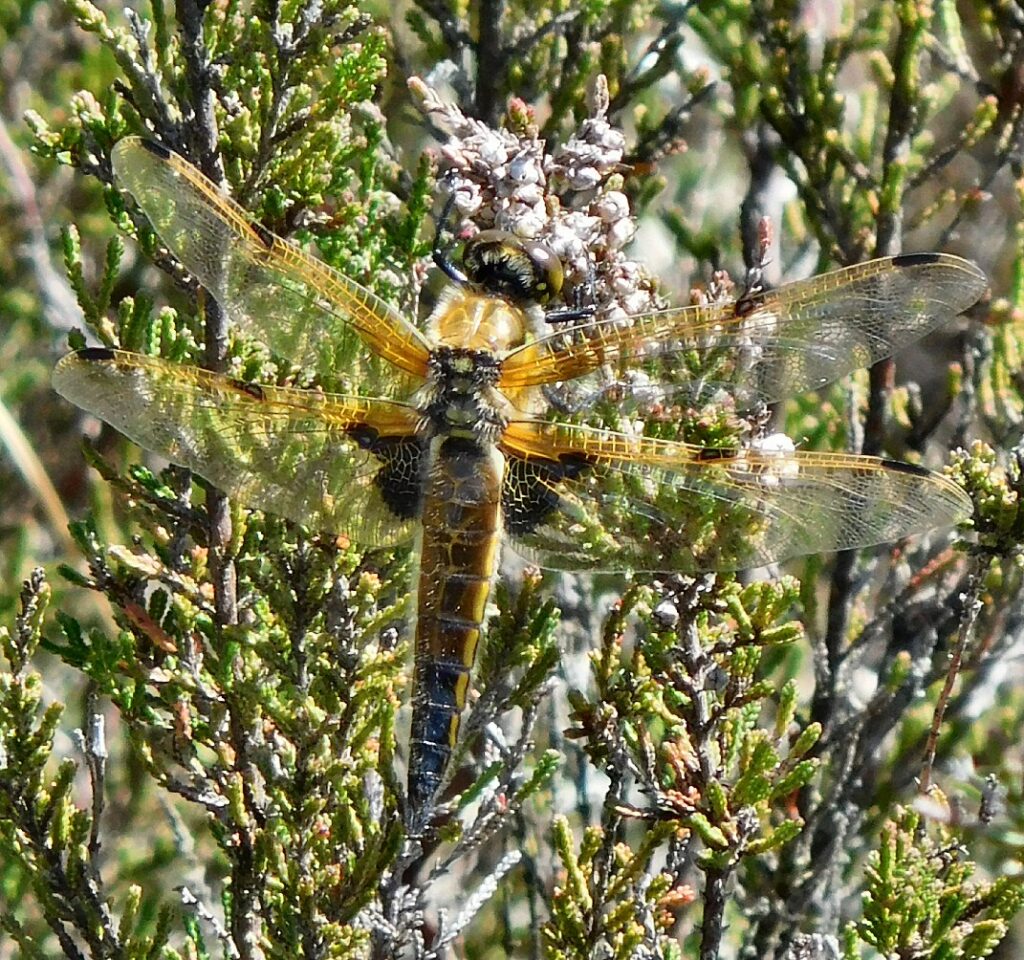
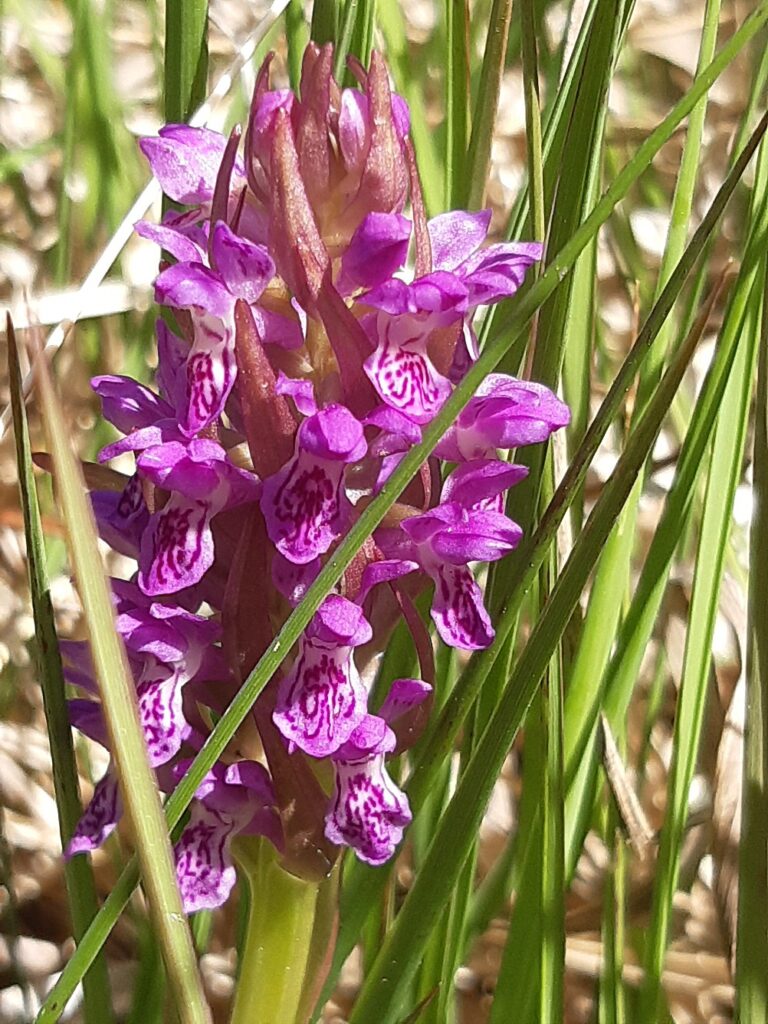
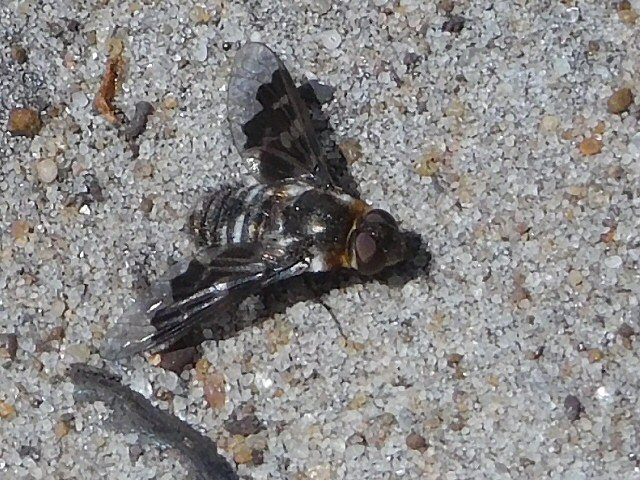
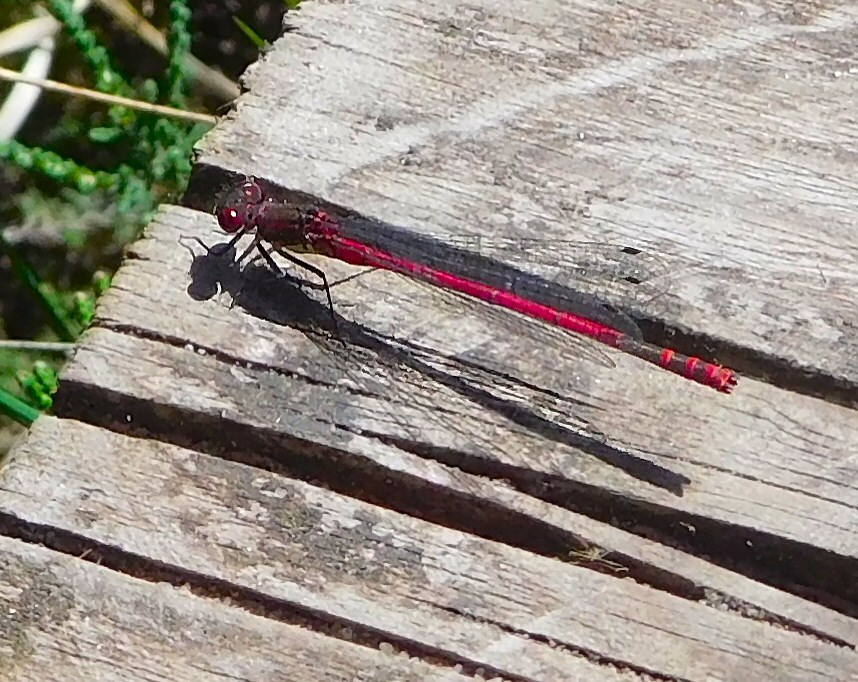
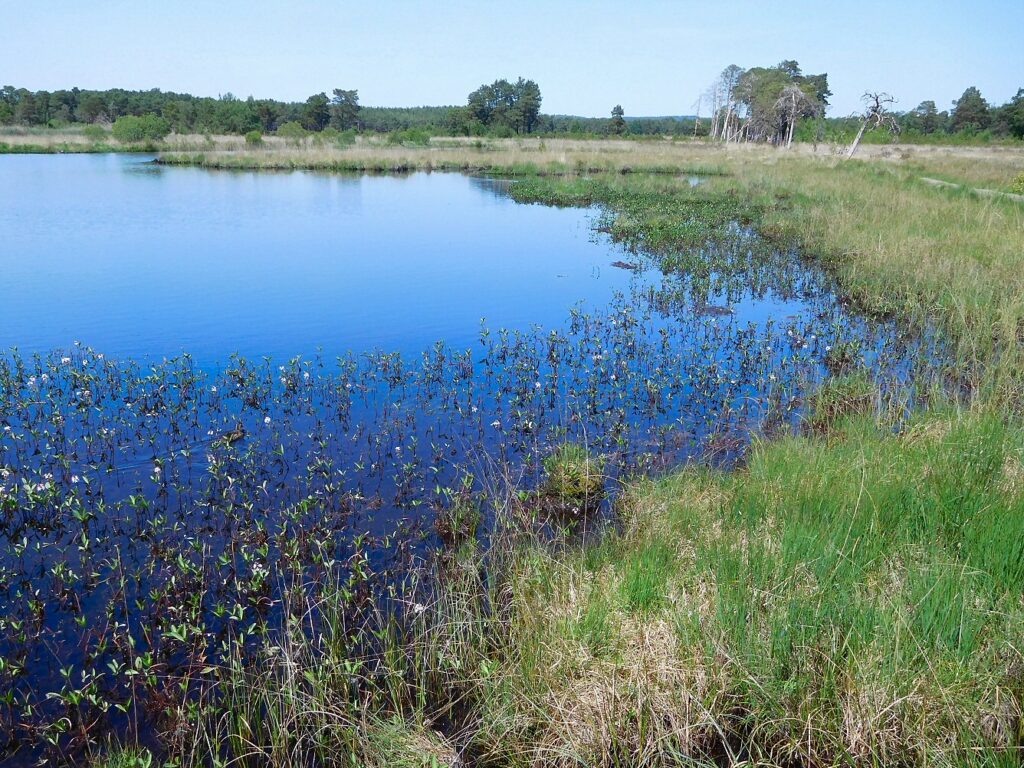
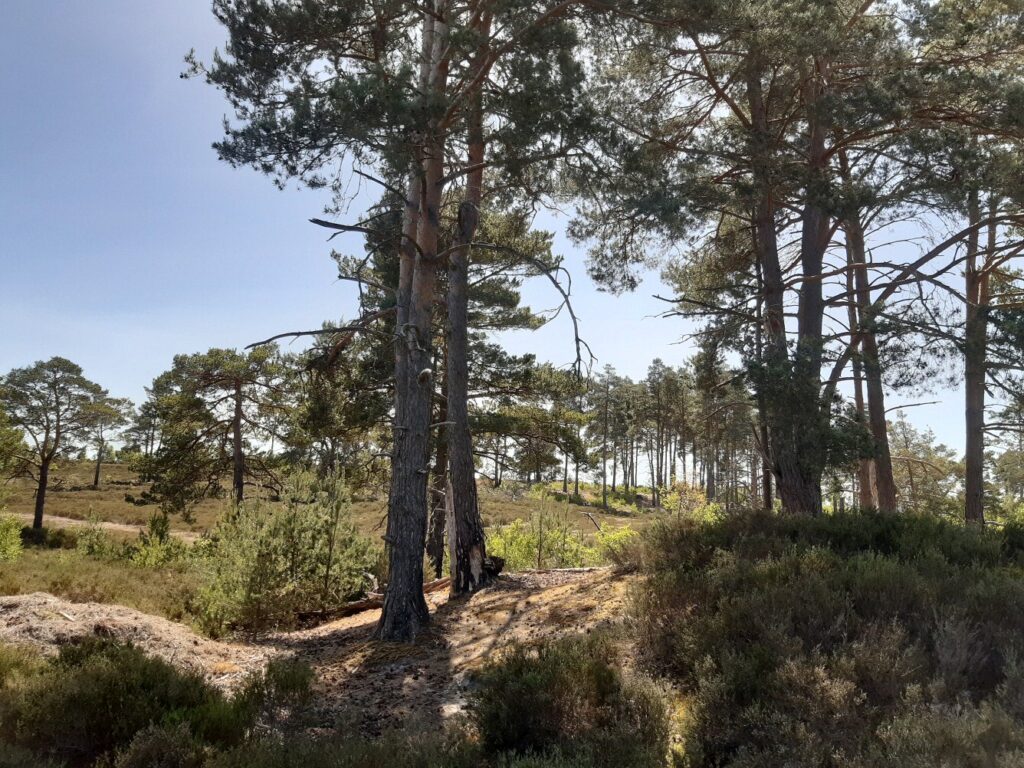
Four-Spotted Chaser, resting on HeatherSouthern Marsh-Orchid Dactylorhiza praetermissaPicture-Winged Fly on sandy pathLarge Red Damselfly on one of the splendid boardwalksMain lake in Thursley’s acid bogBogbean flowers emerging from the main lakePines and Heather – simple but special, compete with a Cuckoo singing, a Stonechat, and a Dartford Warbler
Once upon a time, the pigs took over the farm. “All animals are equal“, they said. Then a mystery virus came over the land. “Lock down!” shouted the pigs. “All animals must stay in their barns, sties, sheds, and chicken-coops.” BozJoz and DomCum ostentatiously stayed in the farmhouse, eating bacon butties and baking bread on the nice warm Aga stove, while the other animals shivered in their barns and lodgings. Then DomCum felt like going for a nice walk. He felt a bit sick and feverish but never mind, the rules were just for the other animals. Weasel spotted him and told everybody else. “Oi, that’s not fair!” they mooed, grunted, brayed, clucked, and quacked. “All animals are equal, but some are more equal than others”, said a source close to DomCum.
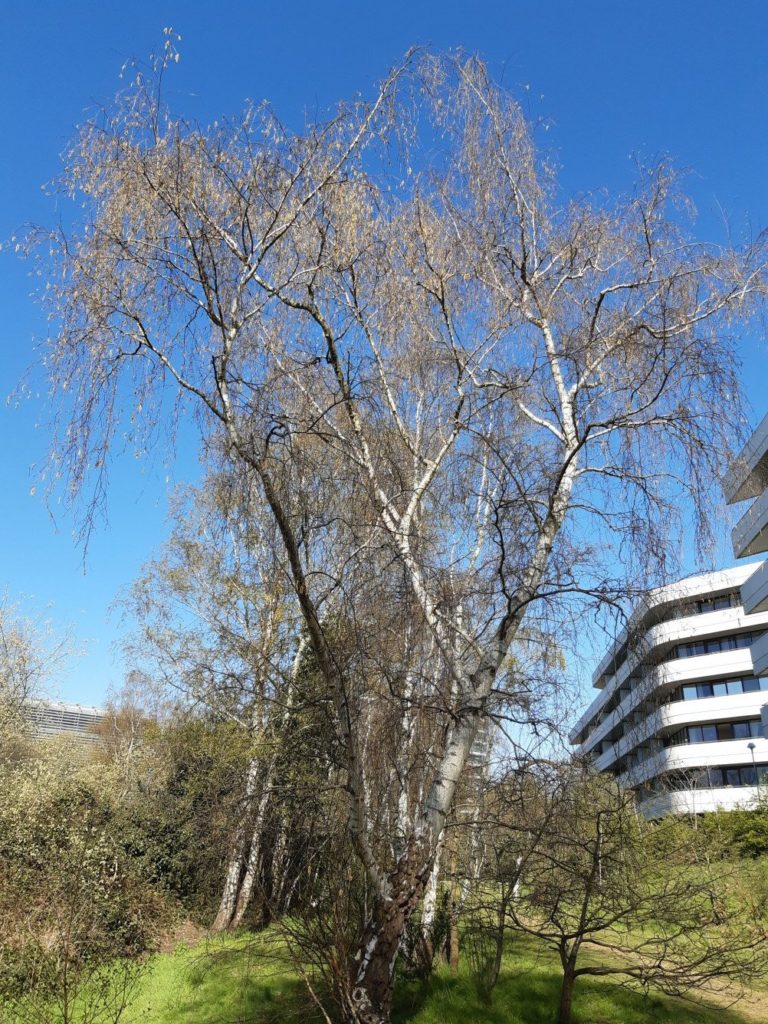
April Come She Will … A beautiful spring day, the sky deepest blue, the birches gleaming white, their catkins reddish, the grass glowing green as the lawns of Tolkien’s Lothlórien. I glimpse the beauty on my daily exercise walk: even the phrase sounds like a prison routine.
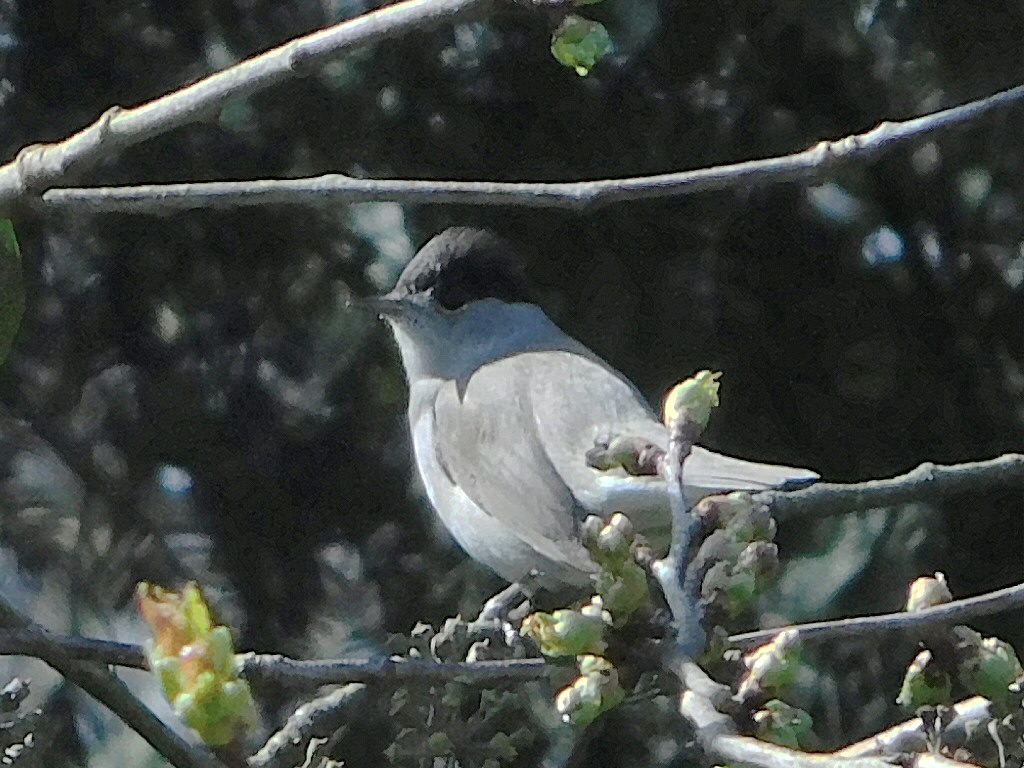
First sight of a Blackcap this spring, right out in the open, and singing beautifully! The male songster has the smart black cap; the female, a warm brown cap of the same shape.
A pair of Brimstone butterflies basked and showed off their marvellous dancing flight — jinking like a rugby footballer to keep safe from predators — in the warm sunshine on the entrance ramp meadow.
One or two Bee-flies hovered in their distinctive way (cheating by resting their front legs on a flower). They’re parasites of bumblebees, but so fascinating and beautiful that their lifestyle is quite forgiven.
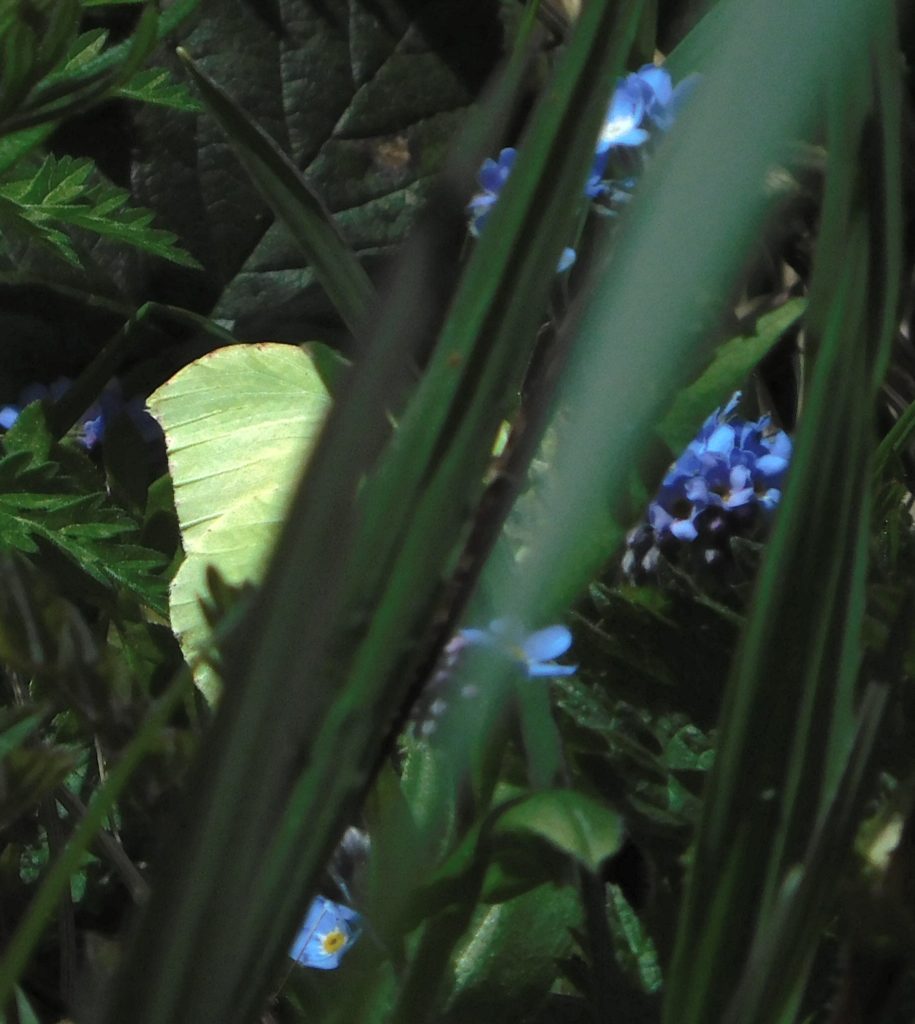
A Brimstone momentarily resting on some early Forget-me-nots
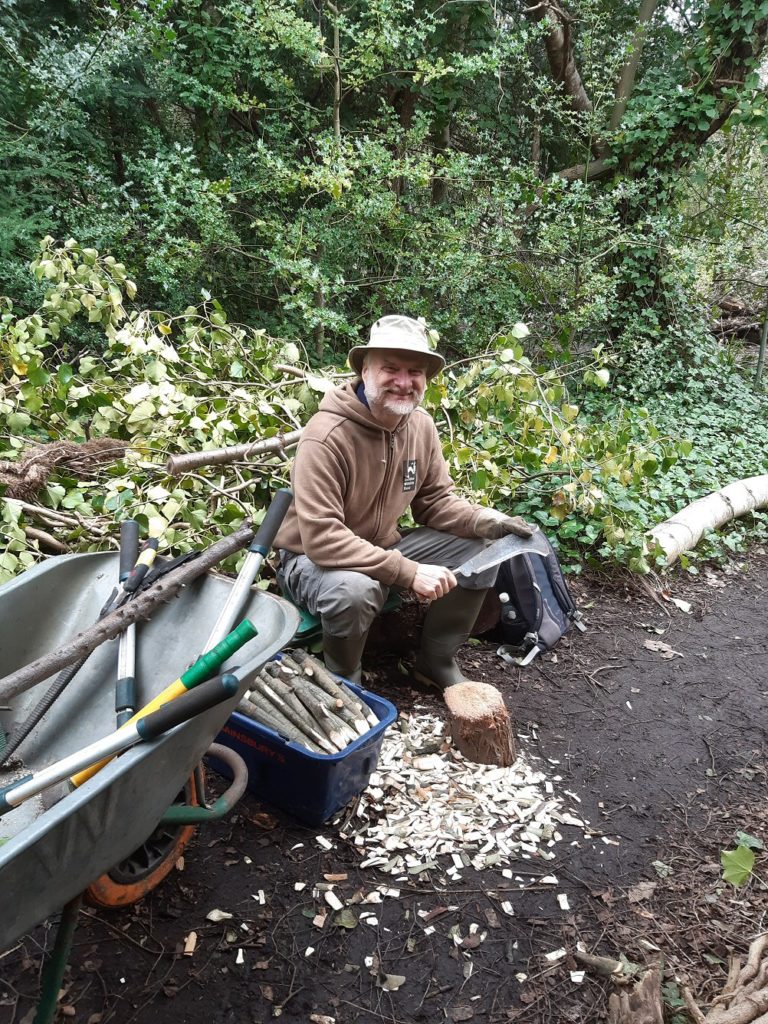
Corona-virus is reaching every part of all our lives. Last week I made my final box of stobs like overgrown willow-pencils, along with a fine pile of woodchips, before Gunnersbury Triangle volunteering was shut down. It was a happy workday with relaxed chat about everything from knitting to frogspawn.
Today I went for a solitary walk around, keeping a good 2 metres from passers-by.
A Chiffchaff sweetly sang its simple song (its name, many times over), hopping about the still mainly-bare Willows and Birches, and feeding on the newly-leafed bushes of rose and hawthorn. Early spring is the best time to glimpse our warblers, which are small, slim, greeny-brown and very difficult to spot when all the trees are in full leaf. This one gave me a front seat in the stalls, singing in full view.
A brilliant yellow Brimstone butterfly, my first of the year, fluttered about the brambles, reflecting the warm spring sunshine, its wings slightly pointed in the middle (in the manner of Elf-ears, if you take my meaning).
A gloriously orange Comma butterfly, also the first for this year, shot past me and then landed near my feet to take the sun, its markings wonderfully fresh.
On the way home, my Dentist phoned to cancel the last remaining appointment in my diary. Let’s hope people will respect the rules so we can all continue to go out quietly and at least enjoy Nature.