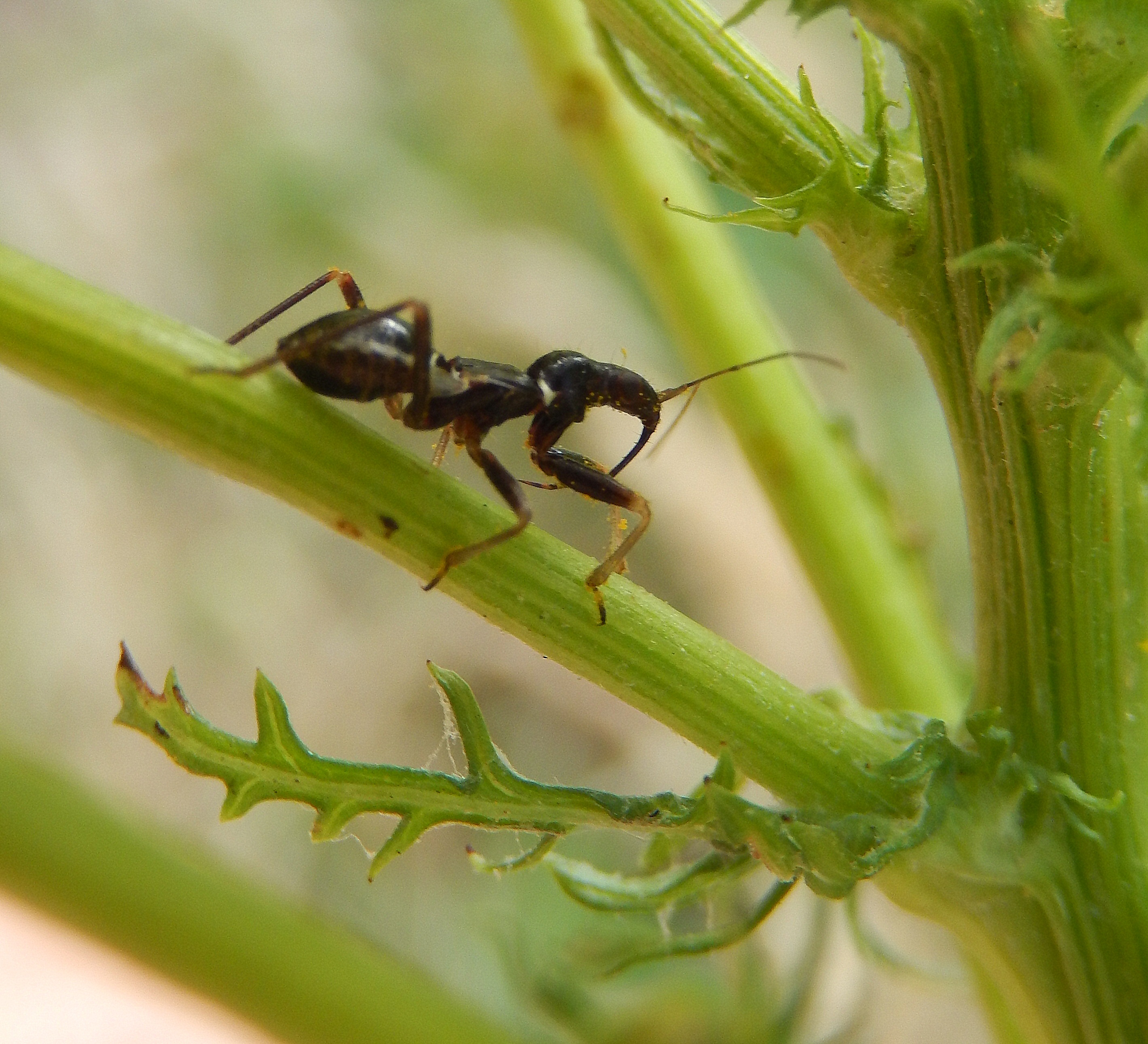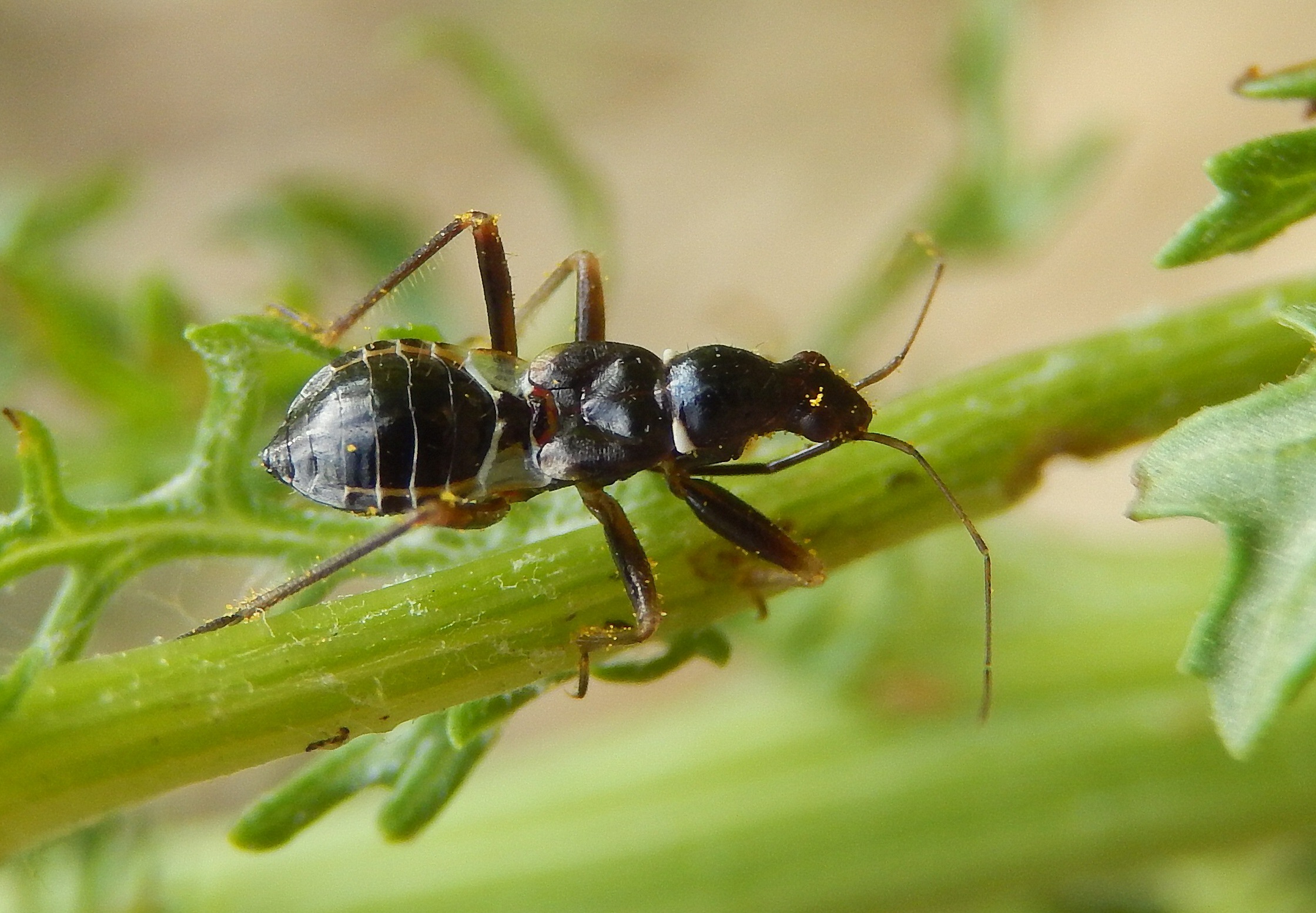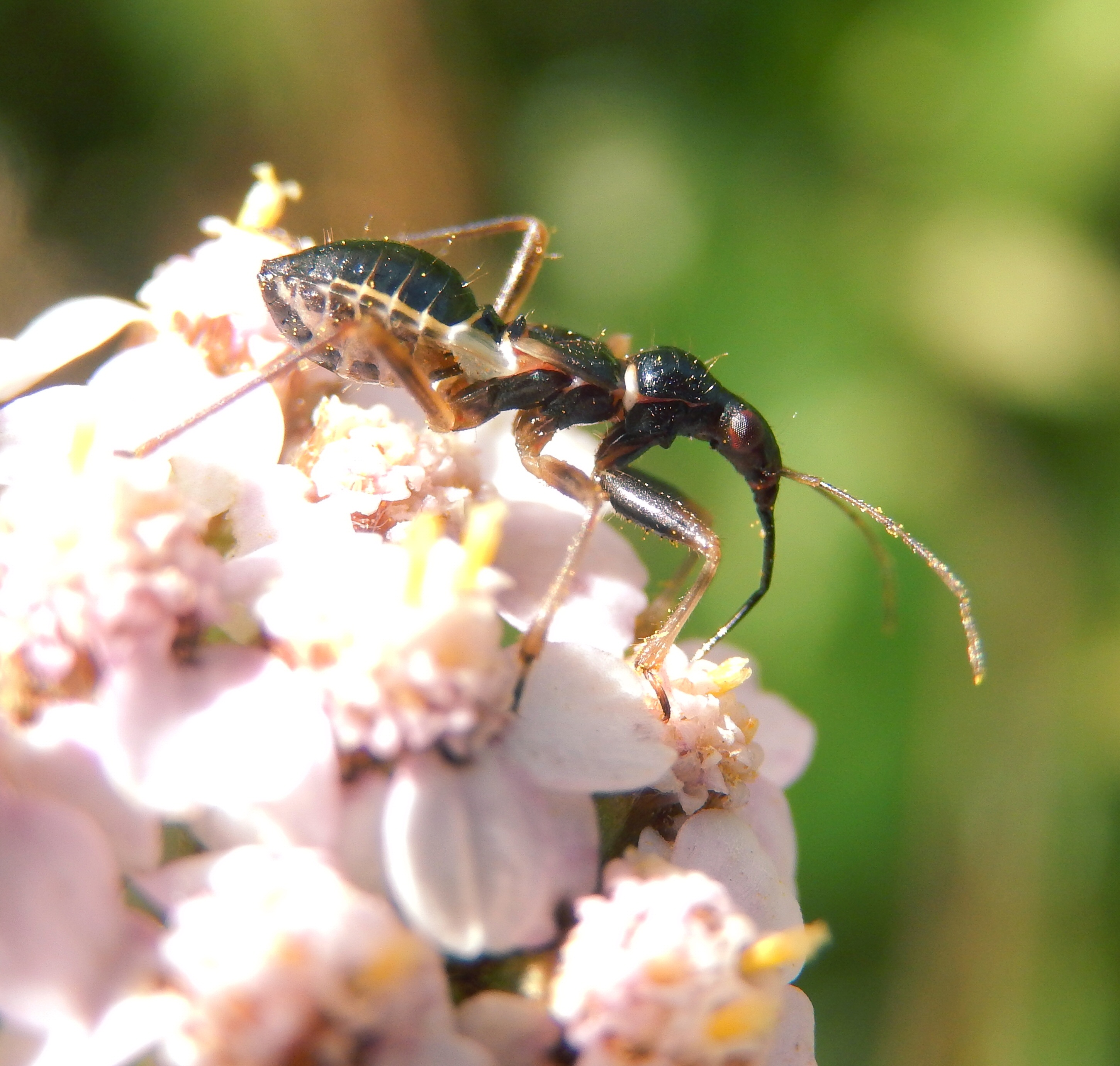
Here’s a bug that avoids being eaten by looking quite enough like an ant to fool a variety of predators. Its name, mirmicoides, means ant-like. Its naturally thick body is made to appear to have a typical ant “waist” with a judicious bit of white camouflage.
Ant-mimic predatory bug, Himacerus mirmicoides, dorsal view, on Ragwort
Certainly an interesting “bug” to find. (It’s a true bug, family Nabidae, the damsel bugs, in the Hemiptera.)
On Yarrow
The long and distinctly un-antlike rostrum is held under the head, so predators presumably don’t notice it much. The antennae are similarly much too long to be an ant’s.
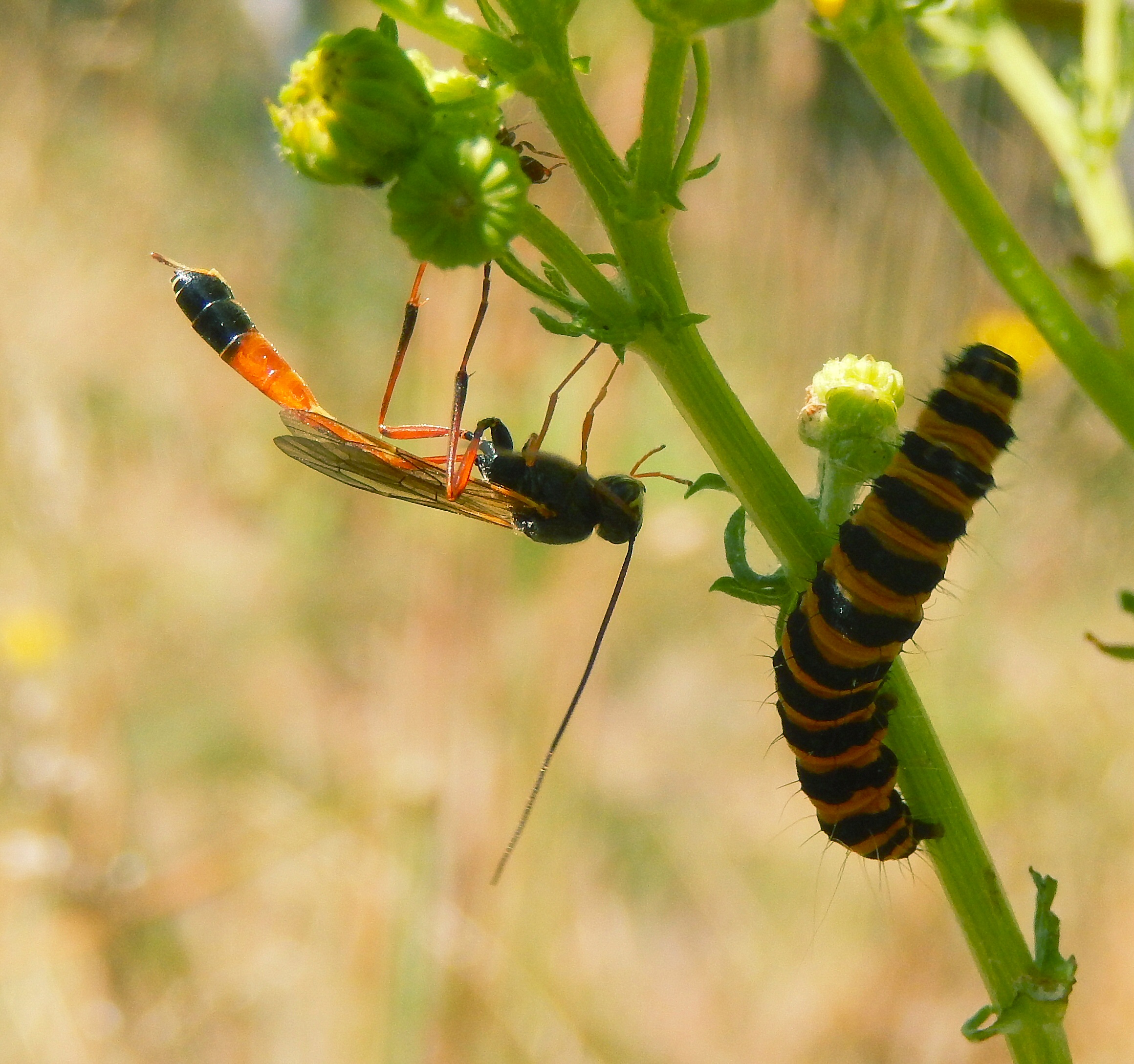
Ichneumon Wasp and Cinnabar larva, just after the ‘sting’
Well, what a piece of luck. I was just inspecting the ragwort where the Cinnabar caterpillars were clustered (by the rail of the Anthill Meadow), and had seen they had grown, and had dispersed from one stalk to three or four — when I saw an Ichneumon approach with the usual dancing flight. Grabbing the camera, I took three photographs, of which the above is the last, and I think the prettiest.
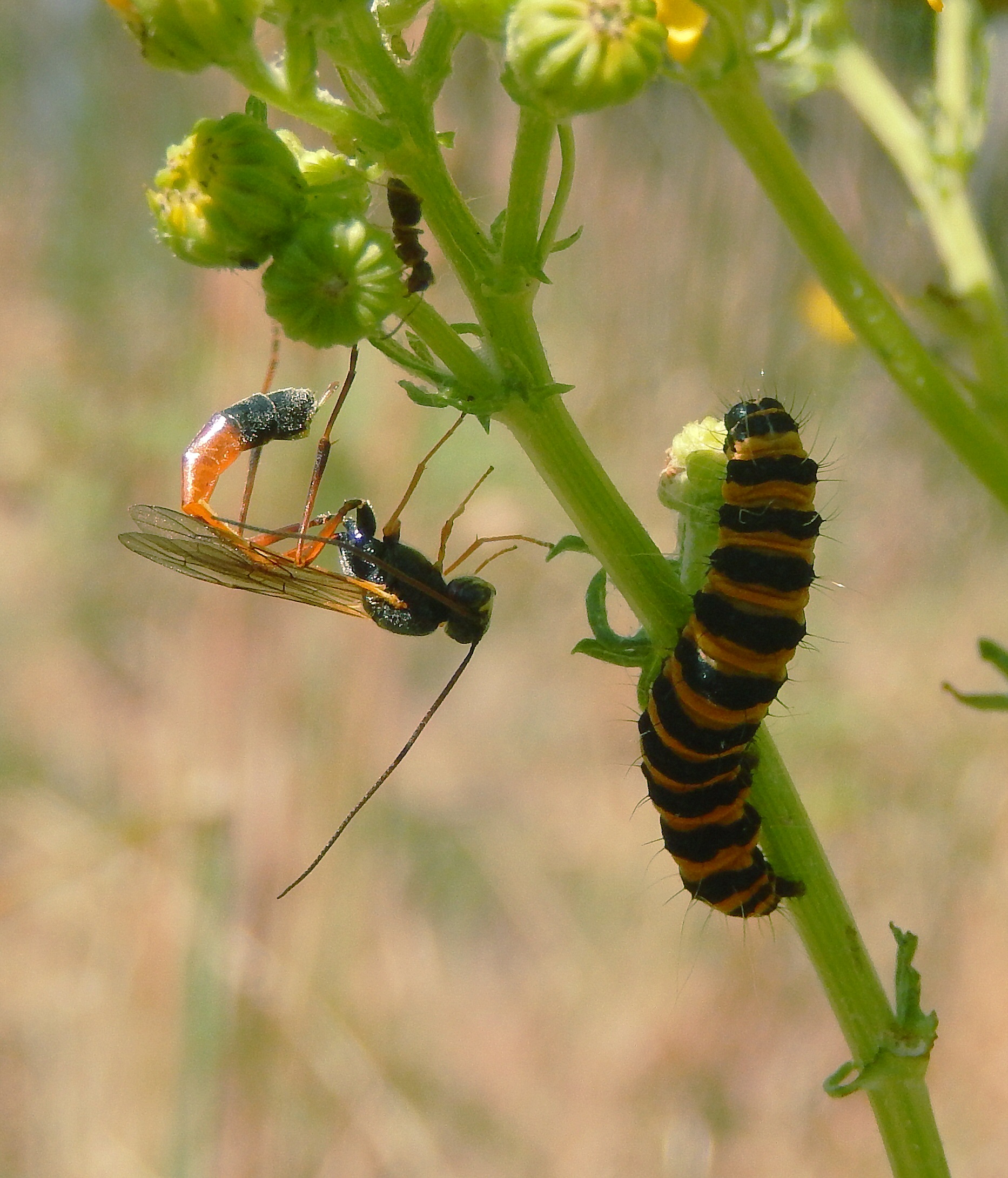
Ichneumon Wasp pointing ovipositor at Cinnabar larva
This is the second photo: the wasp has her abdomen curled beneath her body, towards her prey (ok, host, she’s a parasitoid).
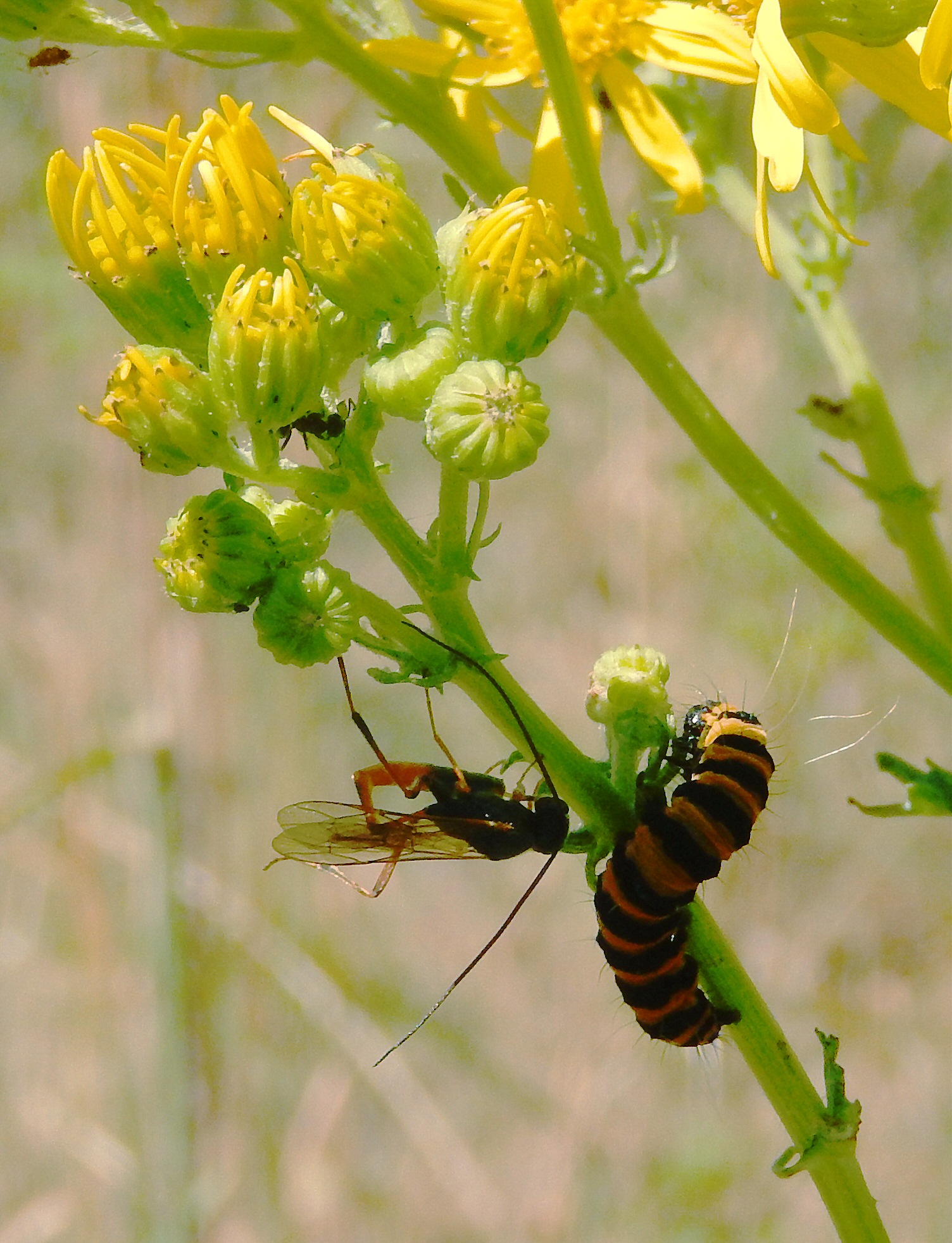
Ichneumon attacking Cinnabar larva
And this is actually the first photo, the wasp very close to the caterpillar, her ovipositor sharply folded under her thorax: the caterpillar has just twitched sharply, presumably on being ‘stung’ with an egg now fatally implanted in its body. The cinnabar is aposematic, full of bitter and poisonous chemicals, which don’t protect it against this sort of attack, evidently.
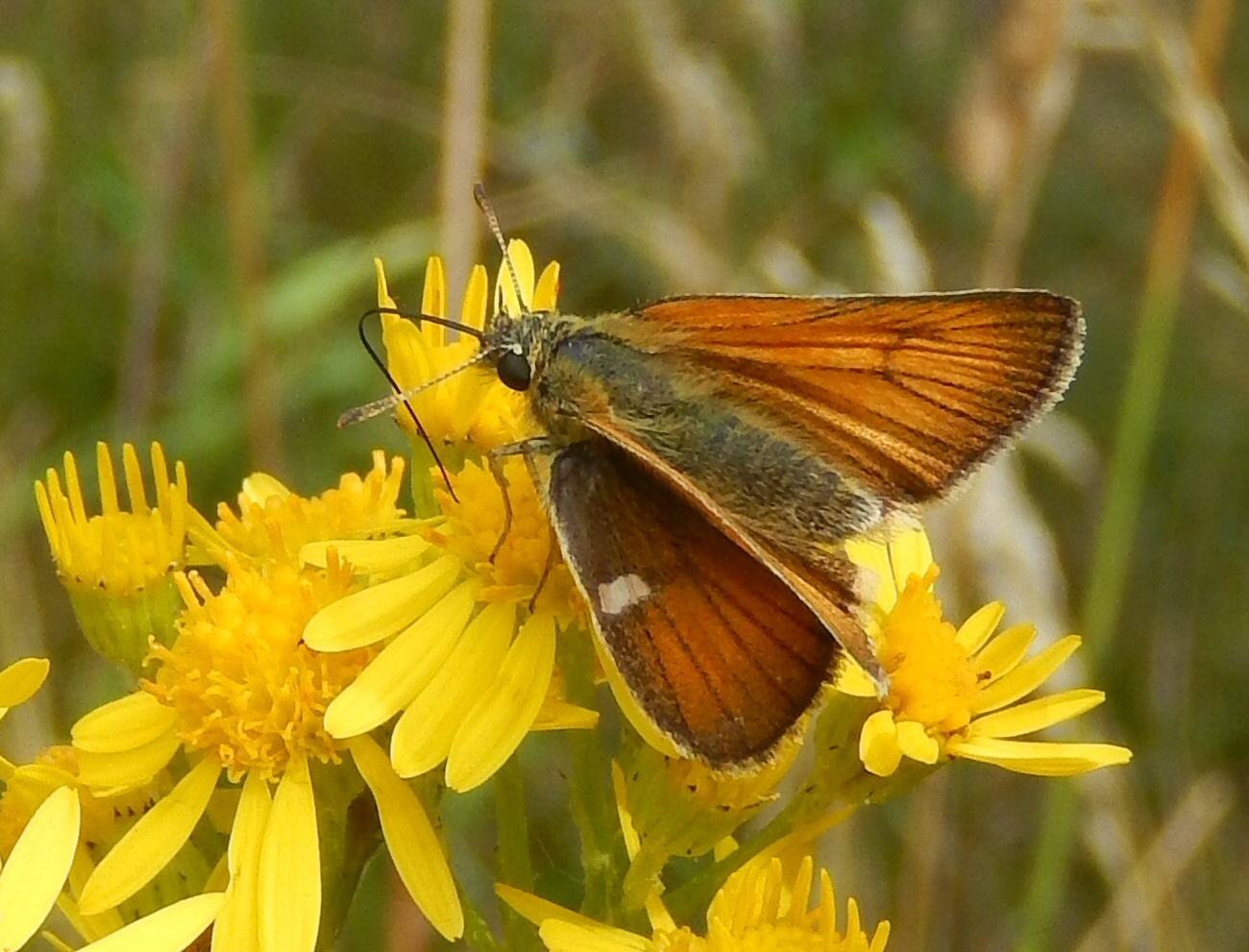
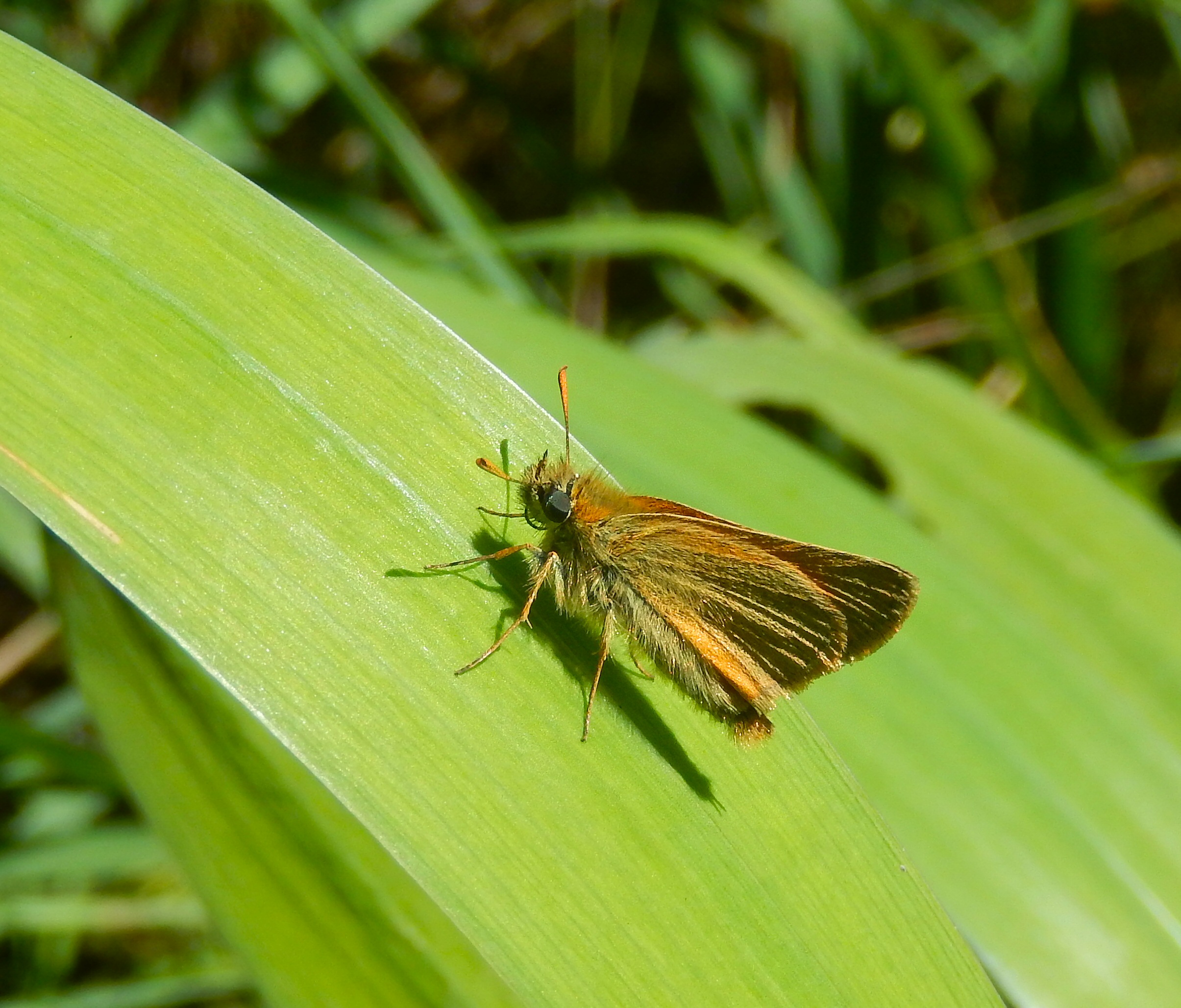
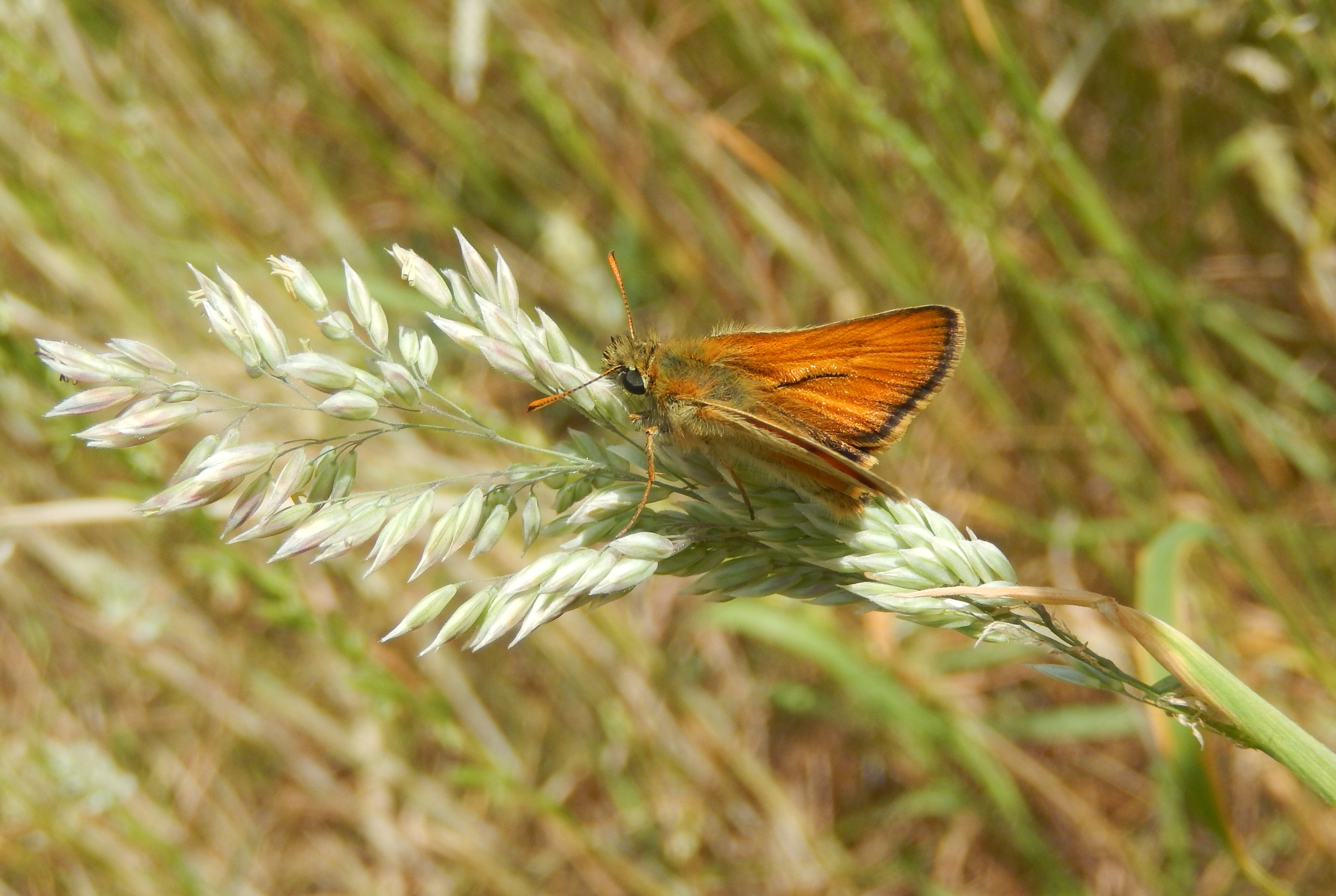
Down by the pond there were plenty of Azure damselflies, one Common Bluetail, and some really tiny newly-metamorphosed froglings hopping about in the mud. A Small Skipper perched obligingly on a Yellow Iris leaf, not far from a plump Iris Sawfly larva.
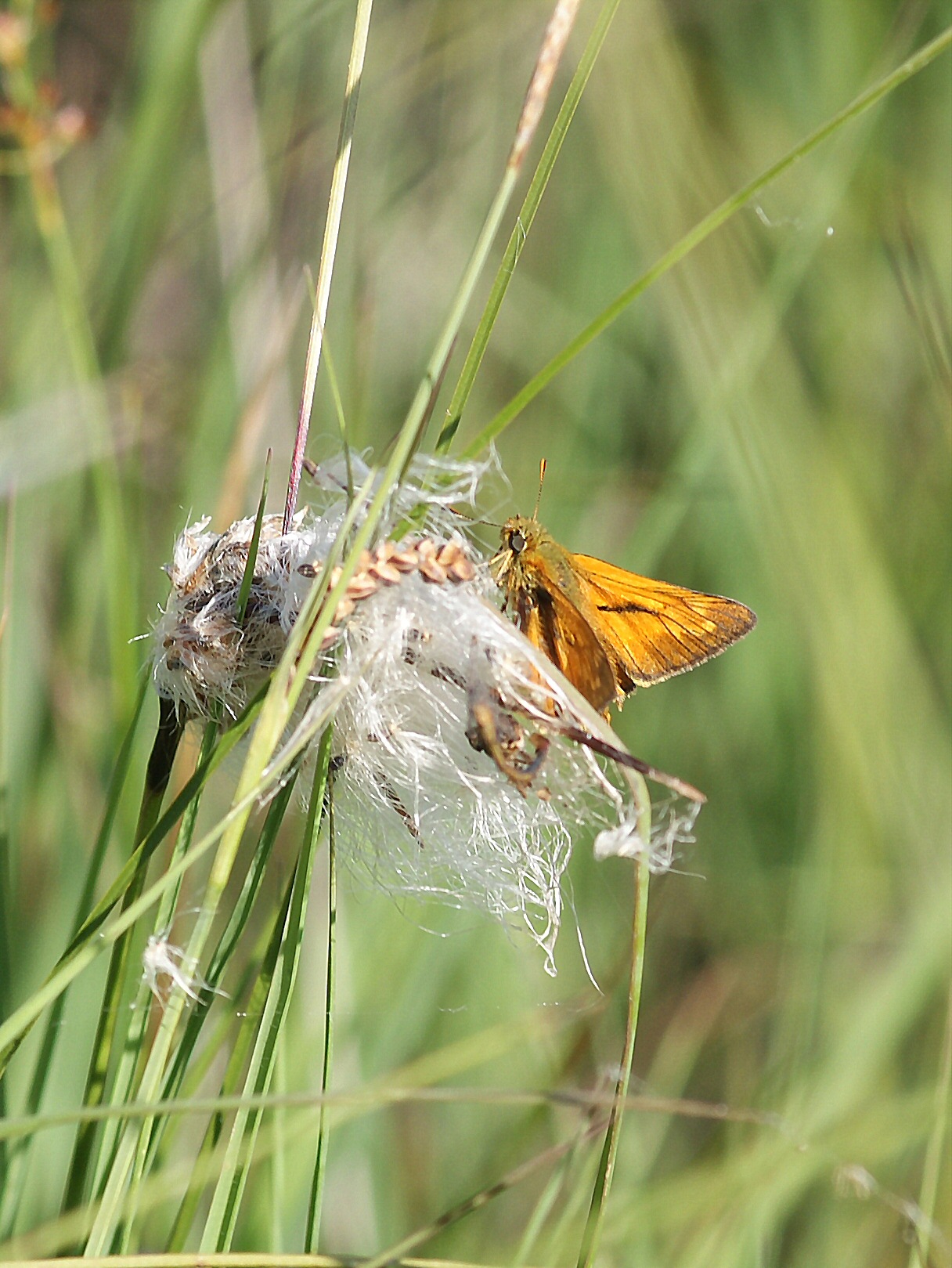
Small Skipper on Yellow Iris leaf
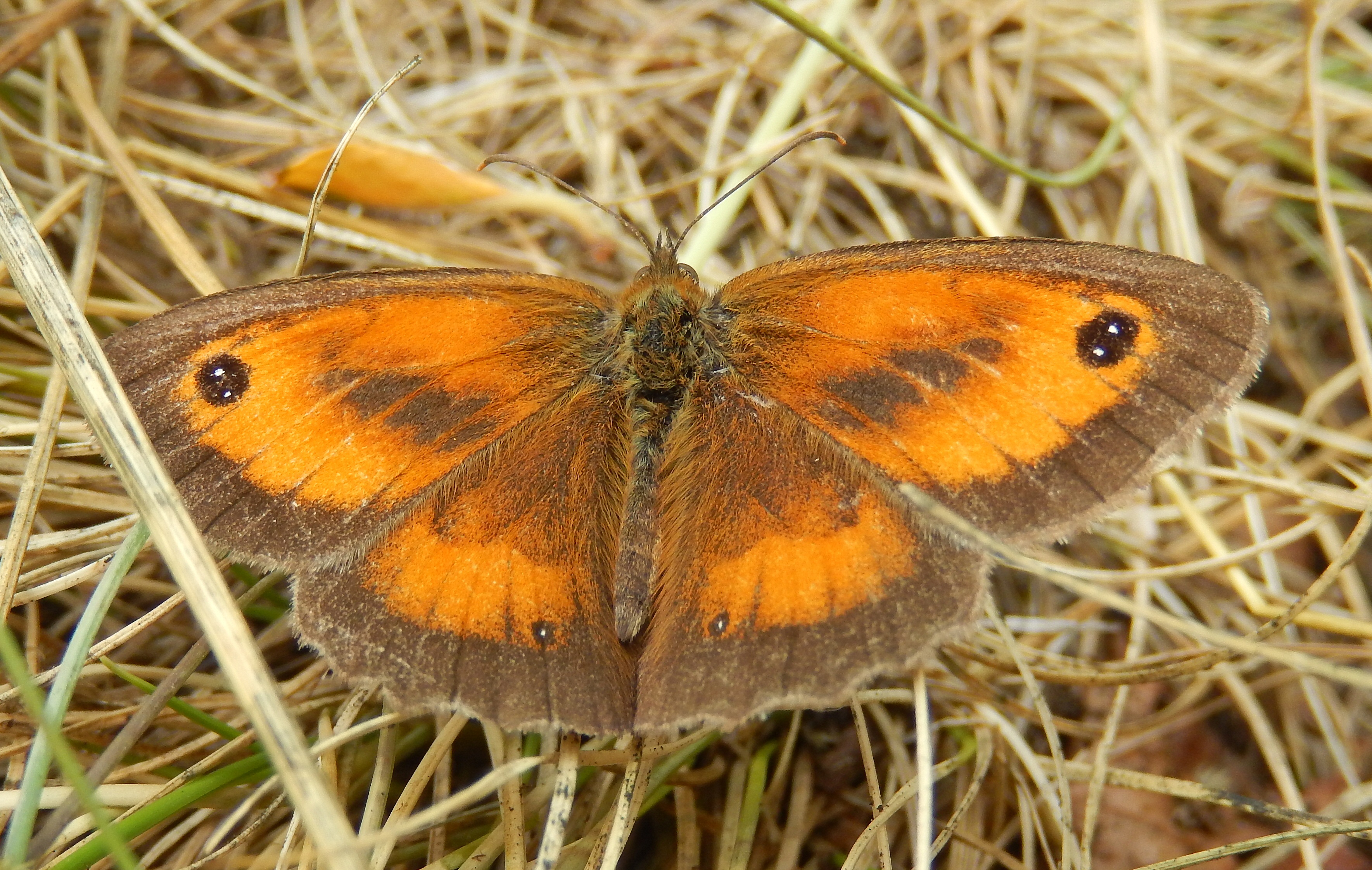
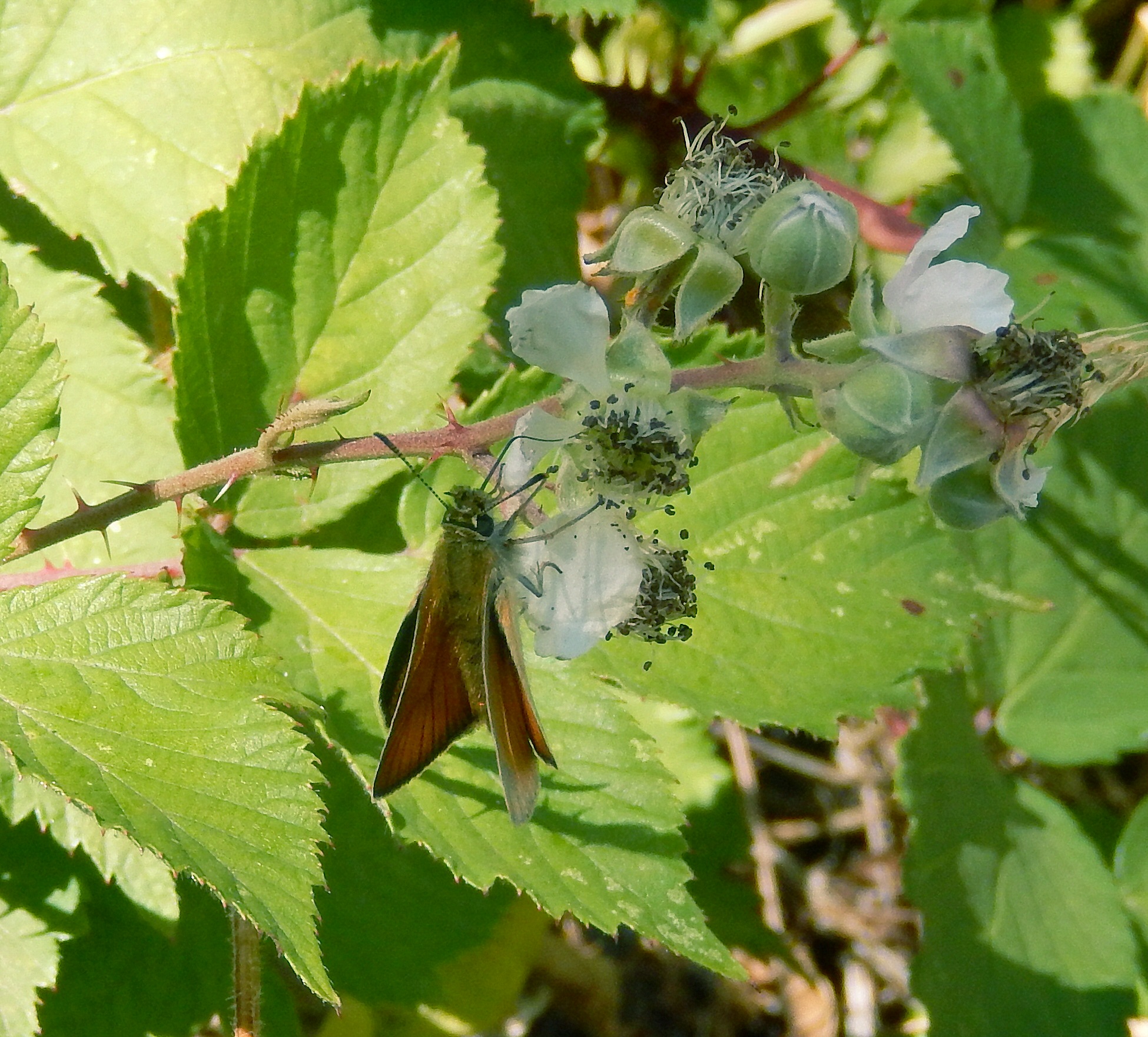
Down at the Picnic Meadow, ignoring a picnic and dropped bicycle in the entirely dry brown grass, an Essex Skipper visited some Bramble flowers. It’s just like the Small Skipper, but without the orange on the antennae. A Meadow Brown sat in the grass.
Essex Skipper on Bramble flower picnic meadow
In the woods, a Holly Blue flew high, near a Holly tree. A Small White completed the butterfly tally for the walk.
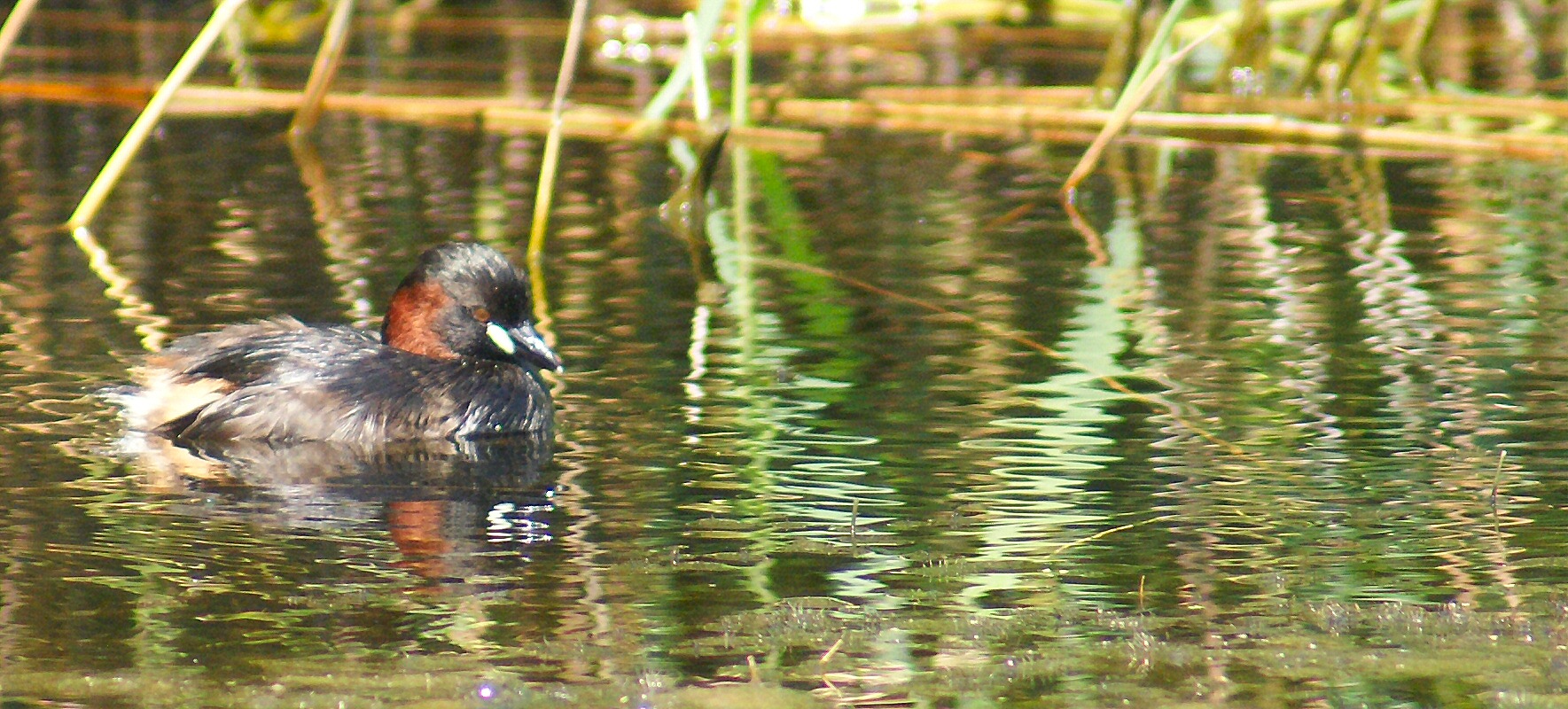
I wasn’t really birding but it was nice to see a little cloud of House Martins flycatching, and a richly dressed Dabchick diving for food.
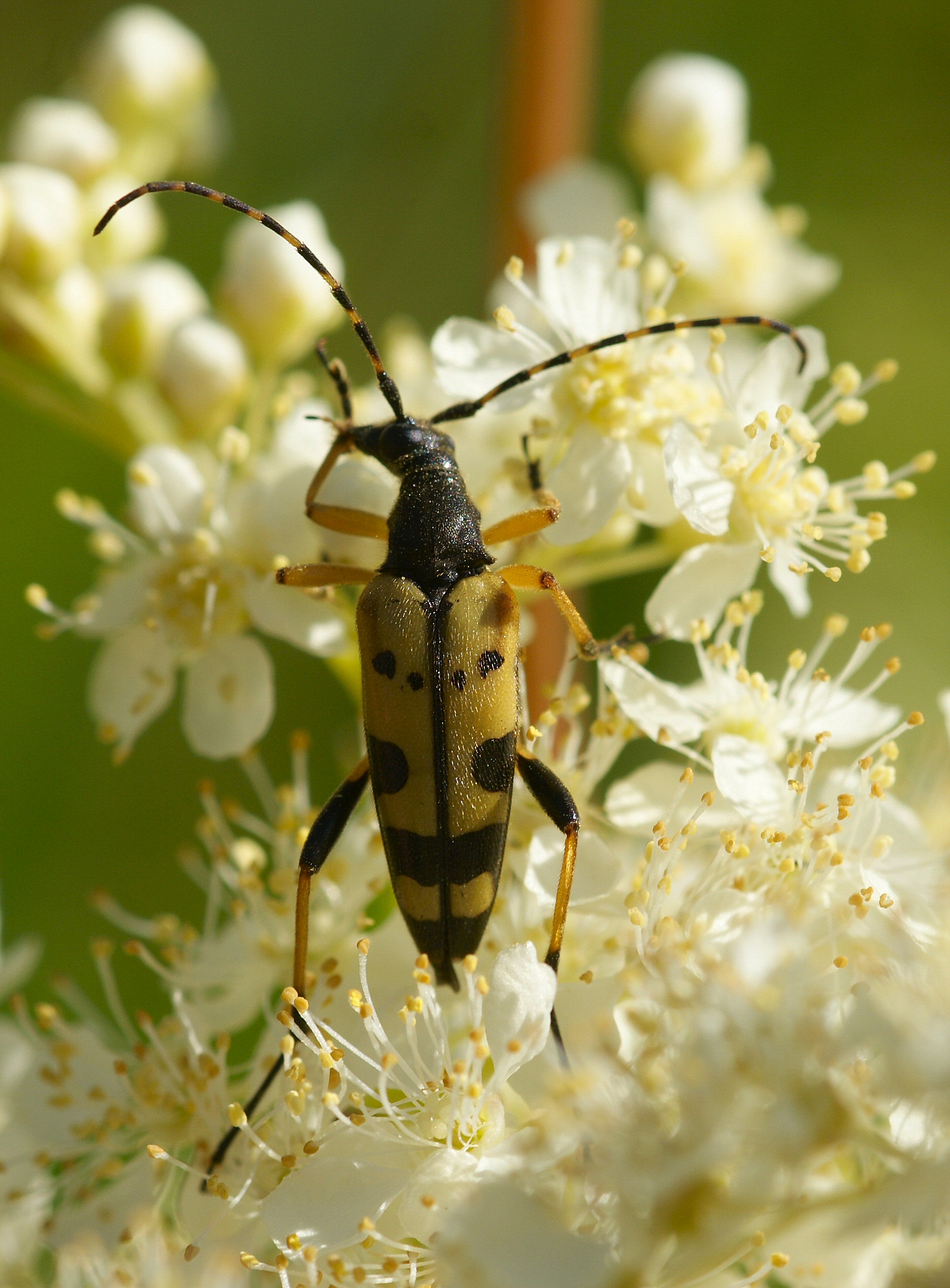
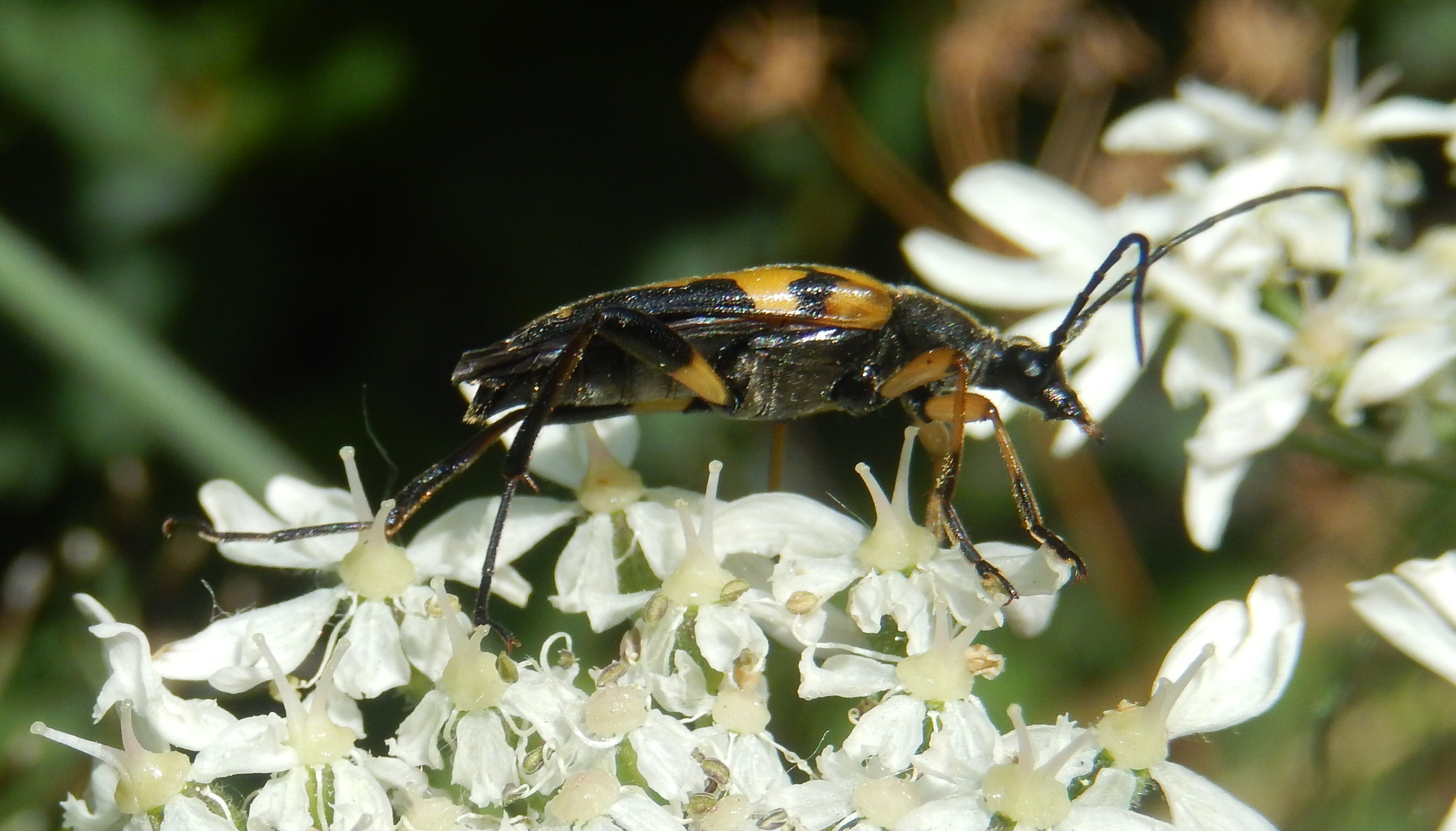
Foamy wisps of scented Meadowsweet flowers were visited by honeybees; a Strangalia maculata longhorn beetle (it doesn’t have an English name, but it’s not the one usually called Wasp Beetle) clambered slowly over the flowerheads. It looks reasonably wasplike, if not terribly convincingly; it would be interesting to know if it is itself foul-tasting and hence actually aposematic, or just hitching a free ride through Batesian mimicry.
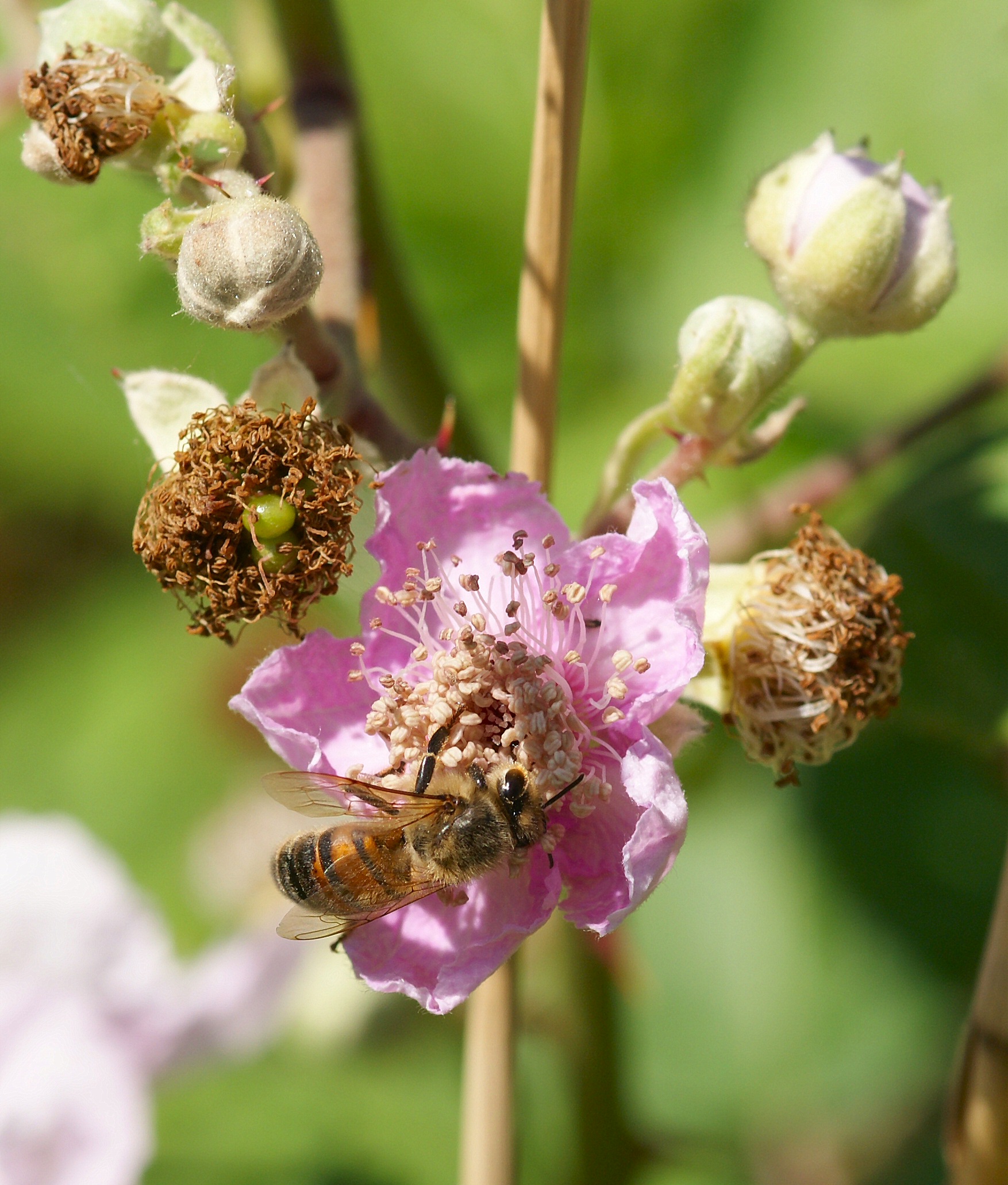
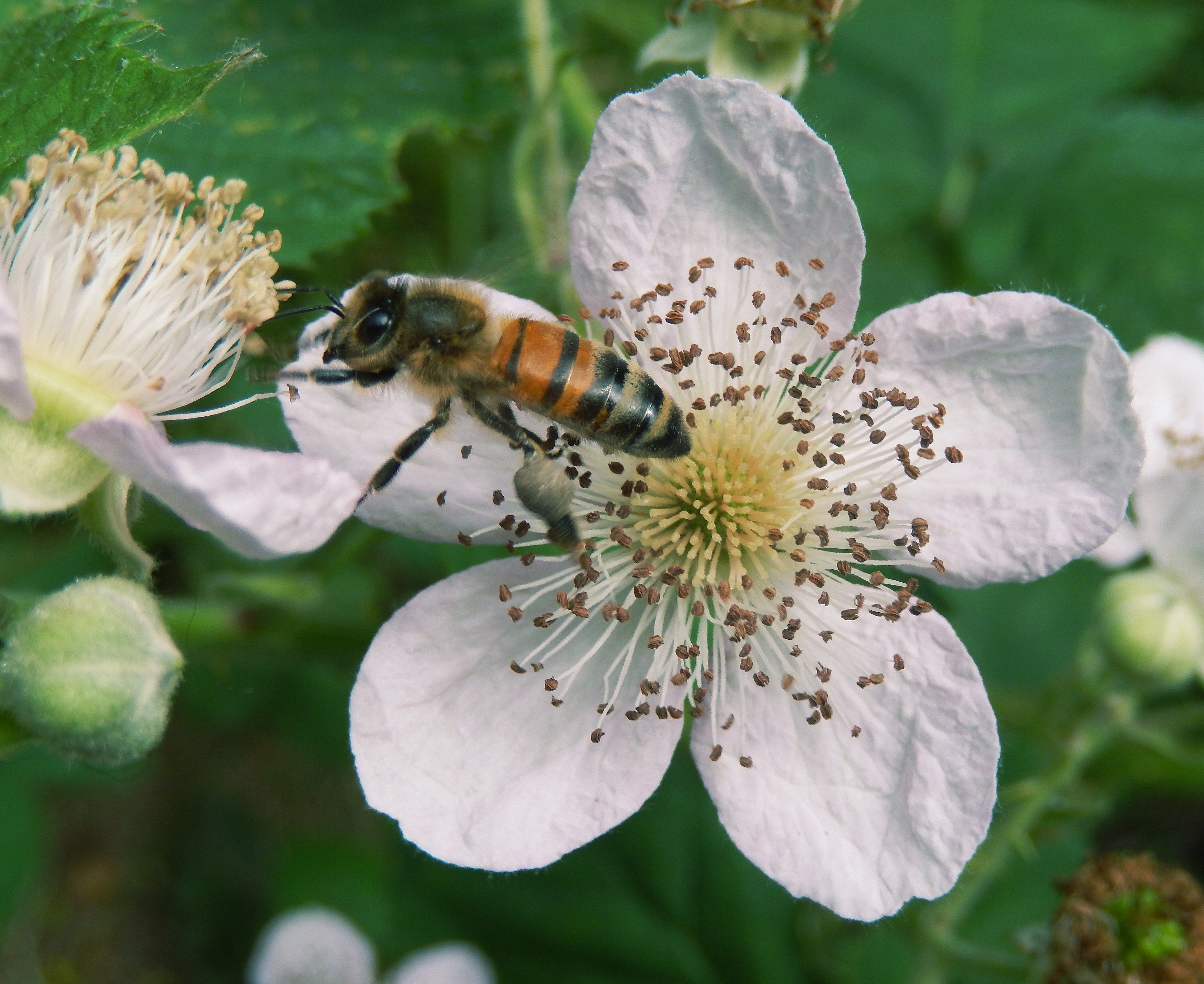
Strangalia maculata, a waspish longhorn beetle, on MeadowsweetBee on Bramble flower
The Wetland Centre was very sunny, a little windy for butterflies (only Small Skipper, Red Admiral and Green-Veined White) but with the bees buzzing around the many flowers, very attractive. Several Orchids were in bloom, including purple and pyramidal. Even the different bindweeds looked wonderful. A pair of Mute Swans rested calmly with a cygnet or two at the bronze feet of Sir Peter Scott.
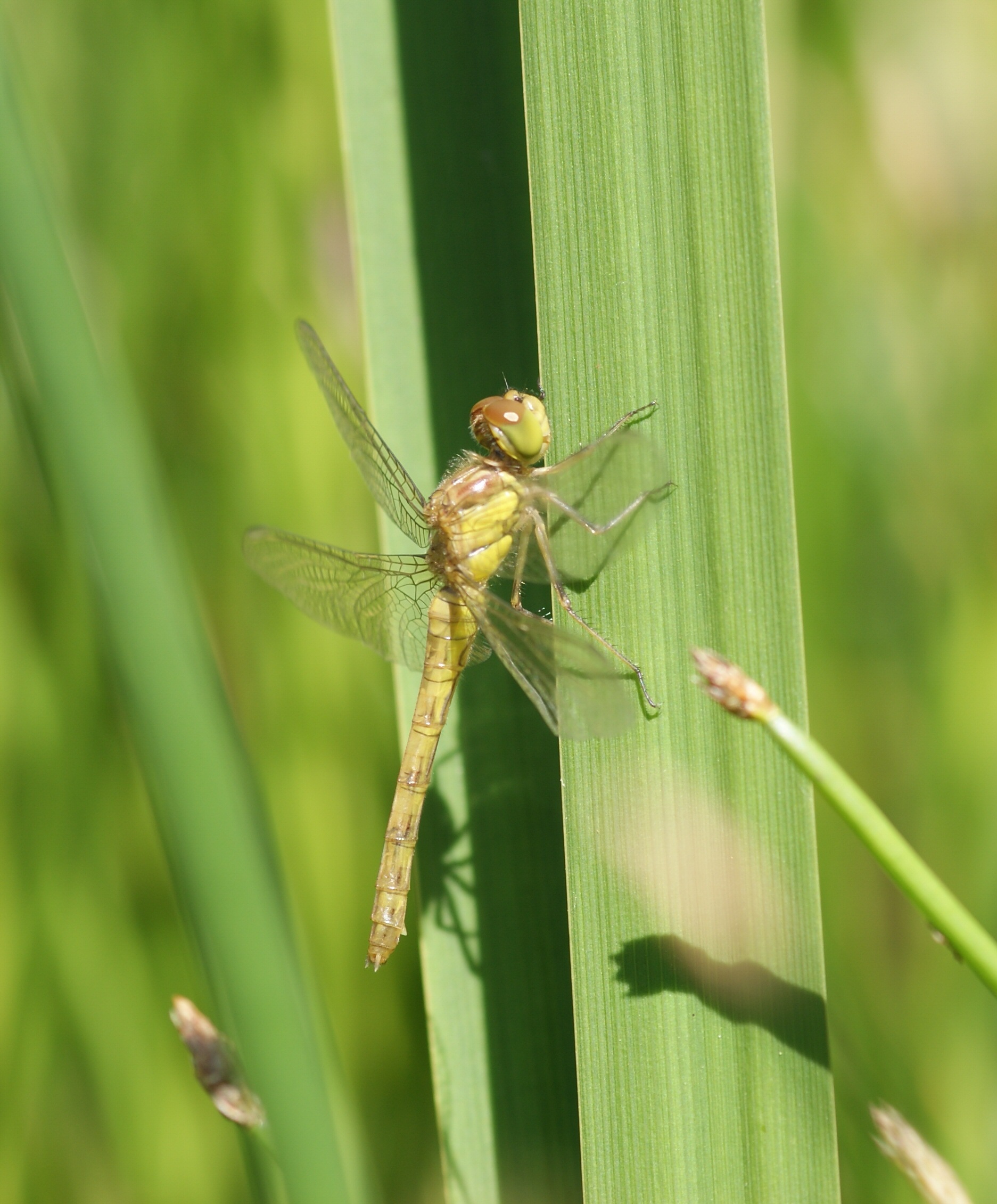
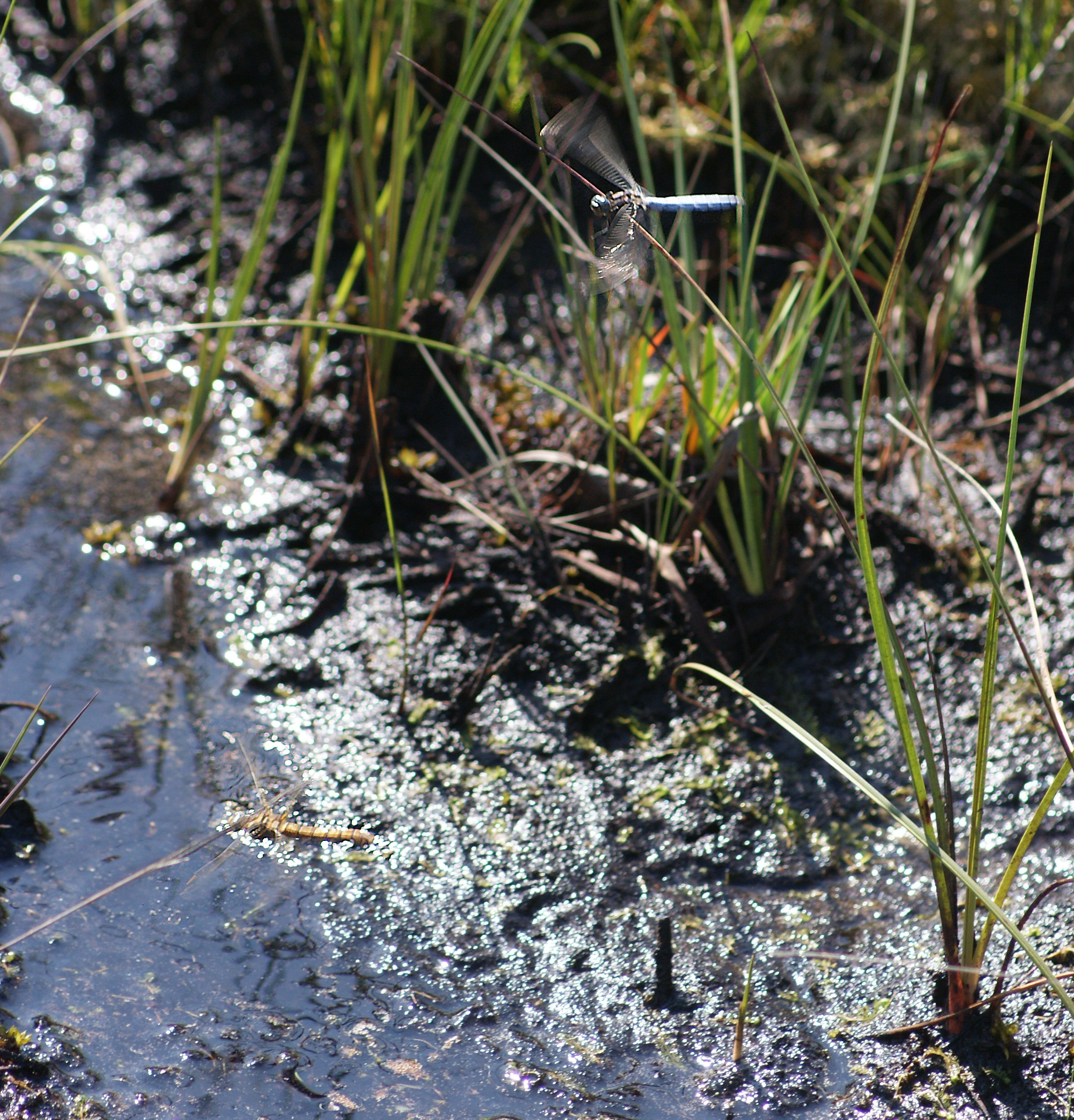
A teneral (new) darter
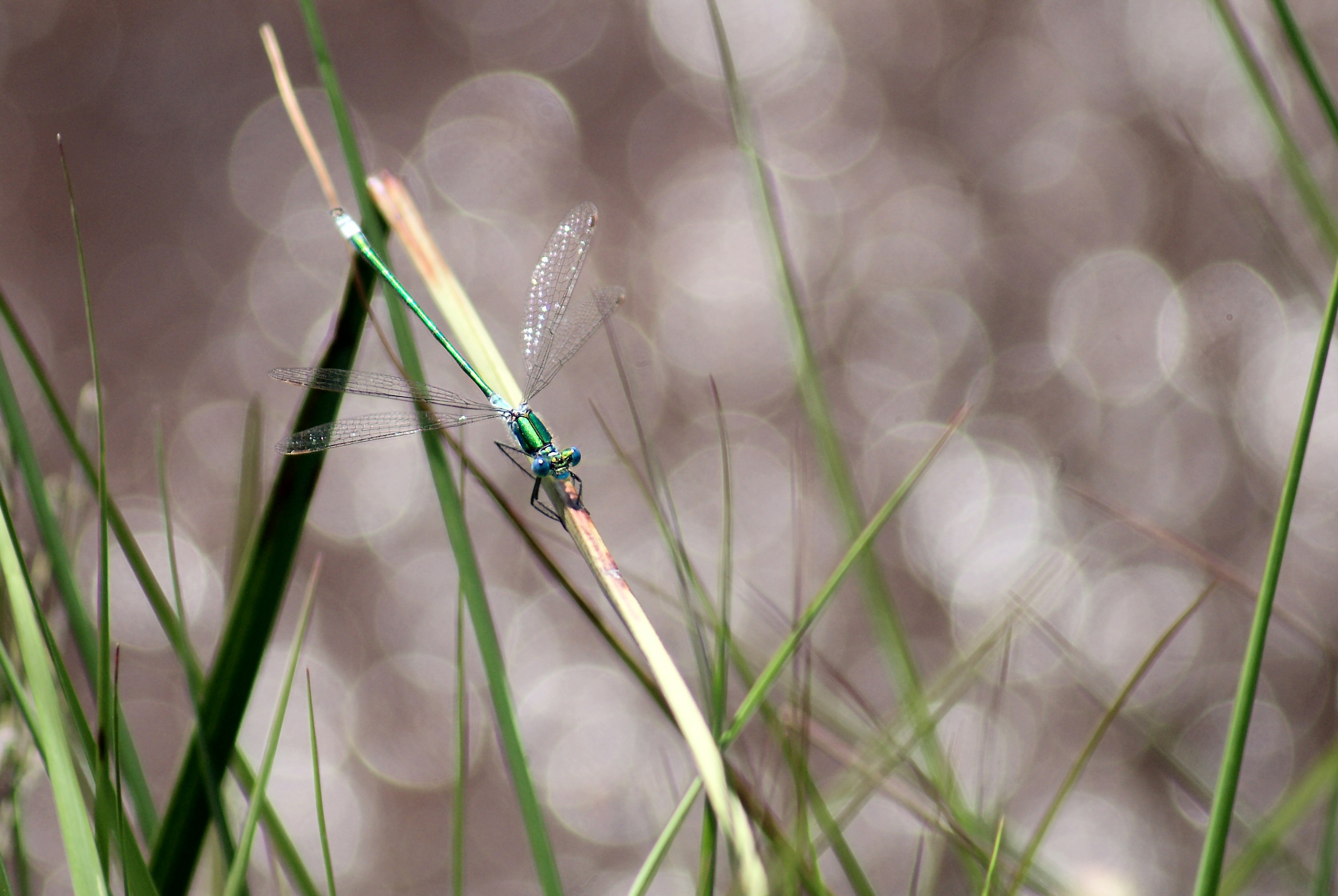
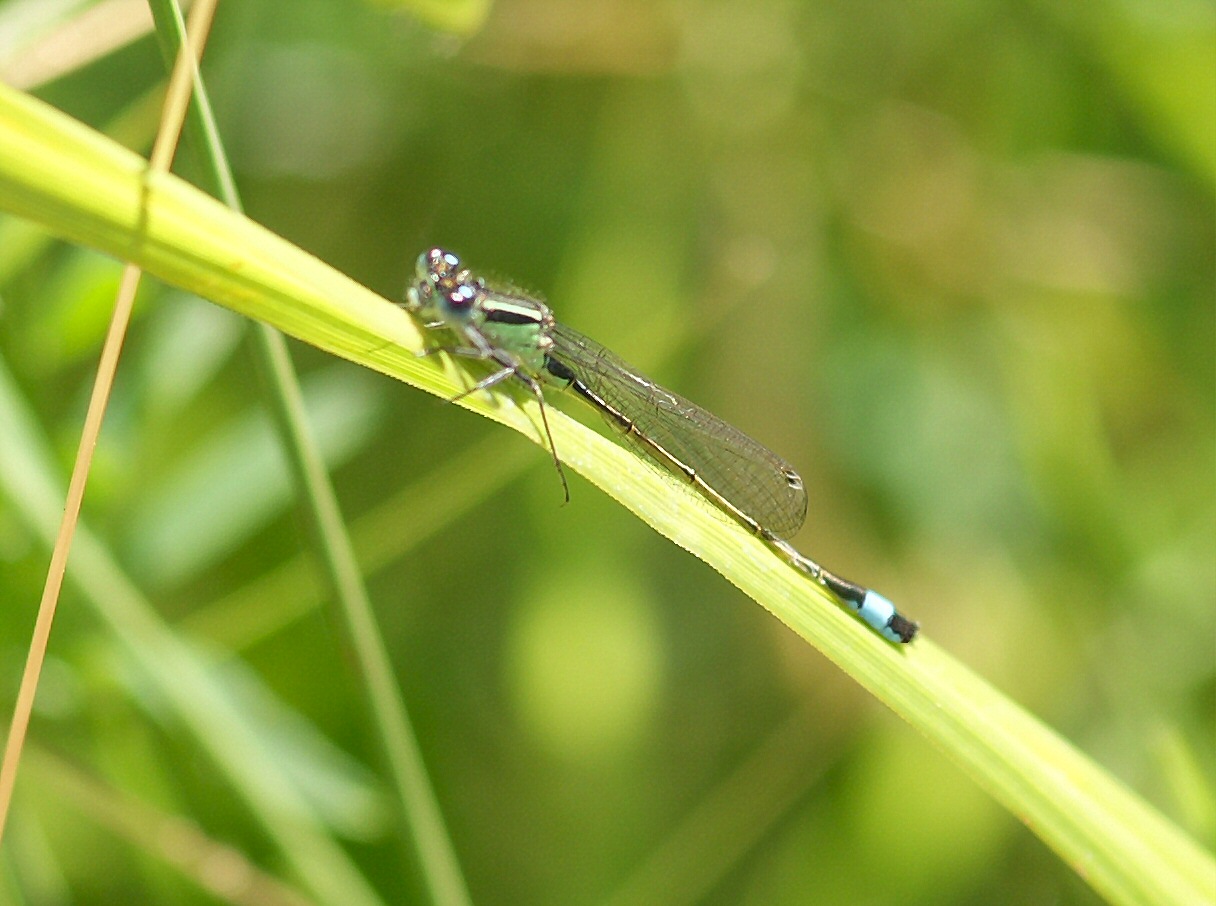
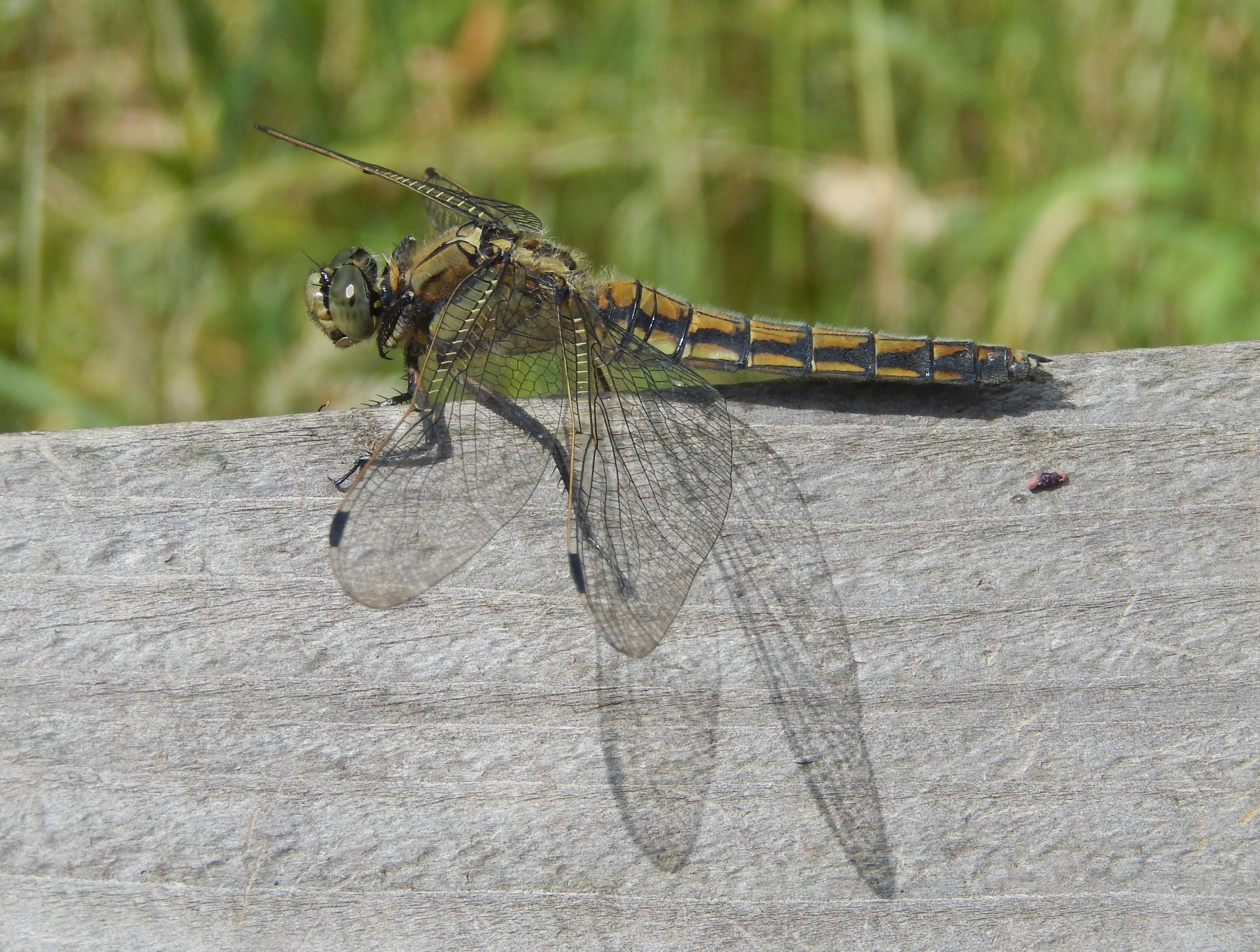
The dragonflies included one Black-tailed Skimmer, sunning itself on a “wildside” path; several blue hawkers, probably Hairy Dragonflies; an Emperor; a teneral darter, probably Common Darter; masses of blue damselflies – all the ones I managed to check were Azure Damselfly; and a few Common Bluetail damselflies.
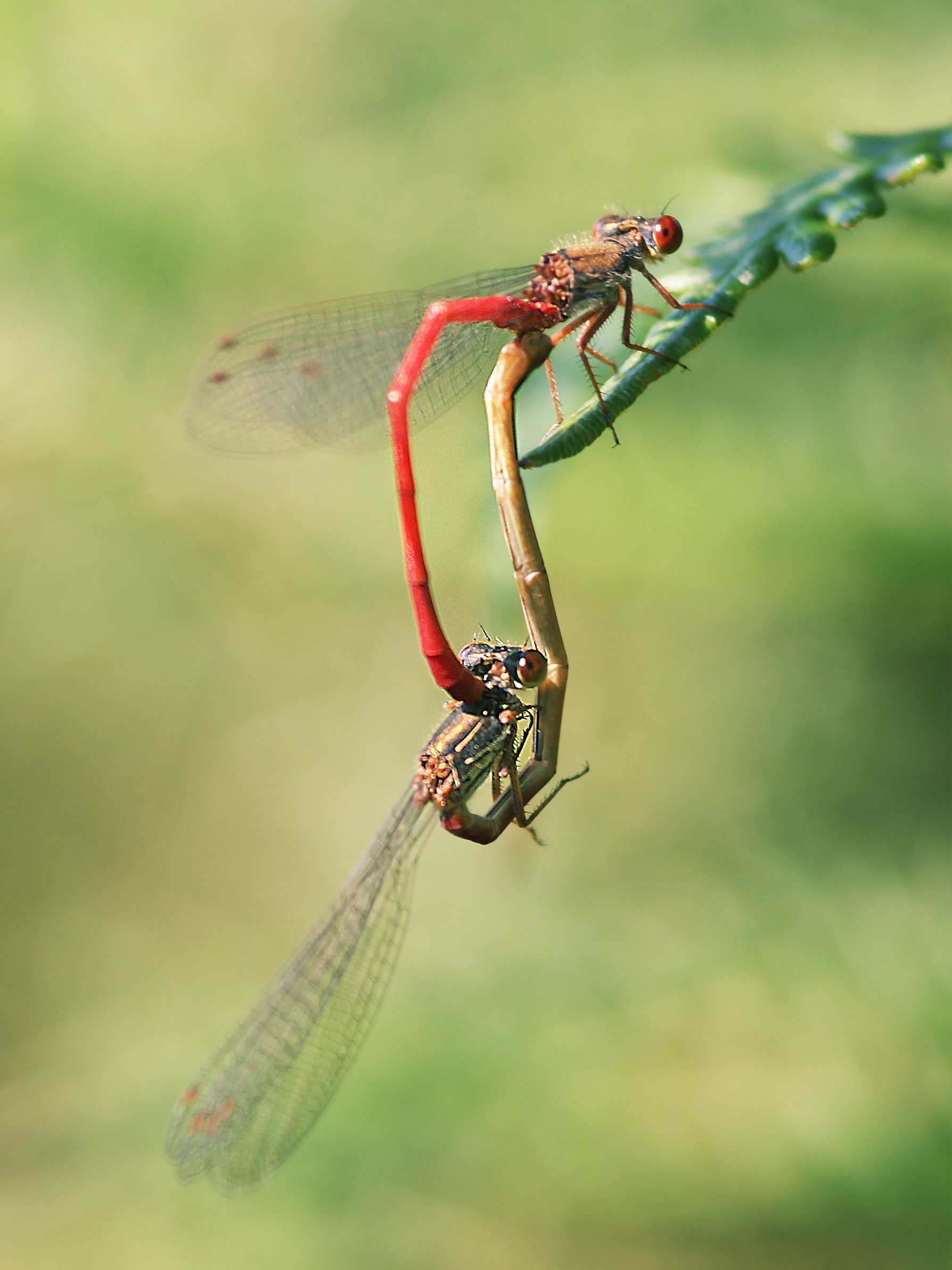
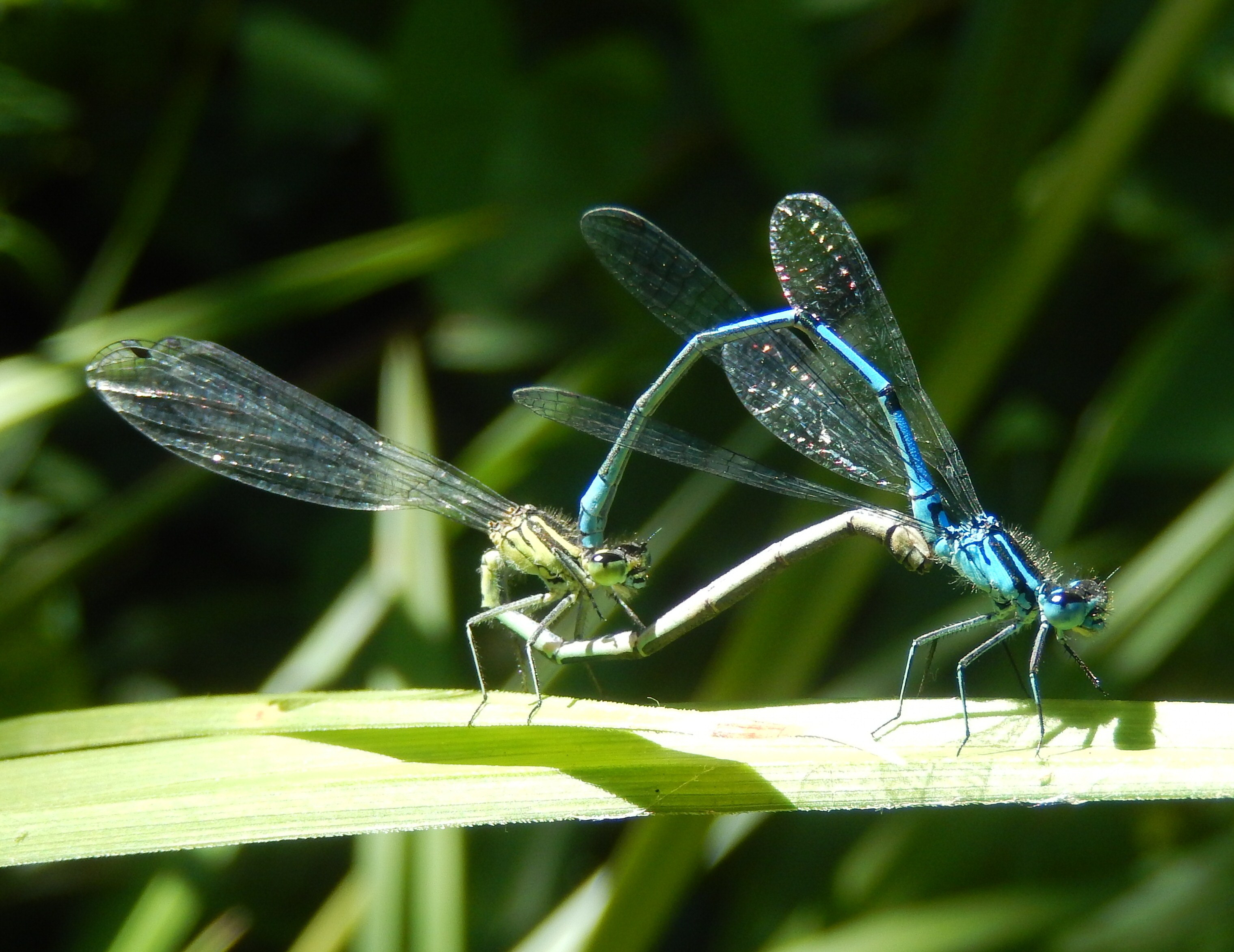
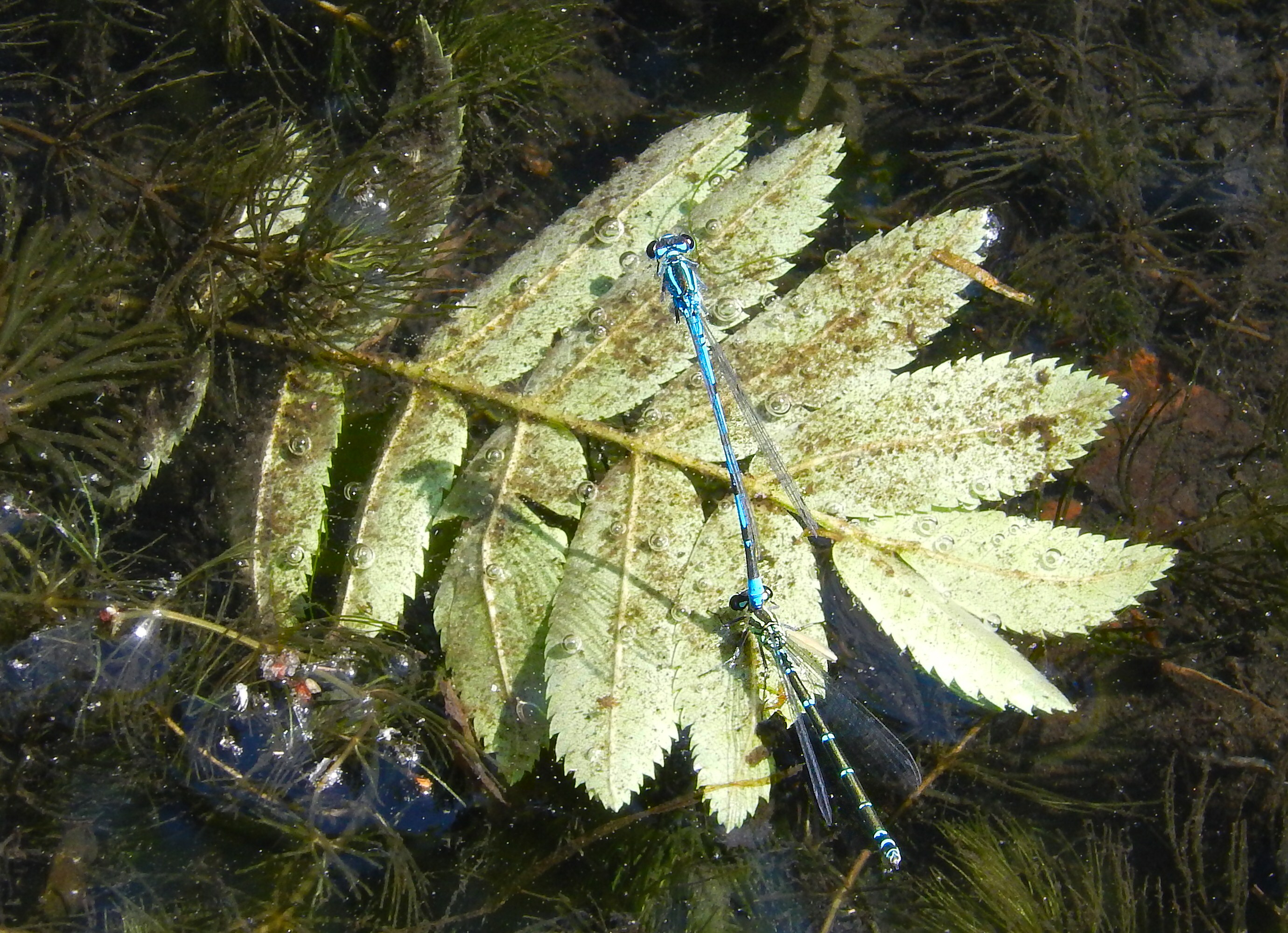
The pond is really low in the heat (and the grass is brown and crisp, and Birch trees large and small are dying). There are Large Red, Azure and Bluetail damselflies urgently laying eggs; this pair of Azures was in the incredibly complicated mating posture that we call the Heart or Wheel, with secondary genitalia locked on in preparation for transfer of the spermatophore; then the female does her thing with sperm storage. Bizarre.
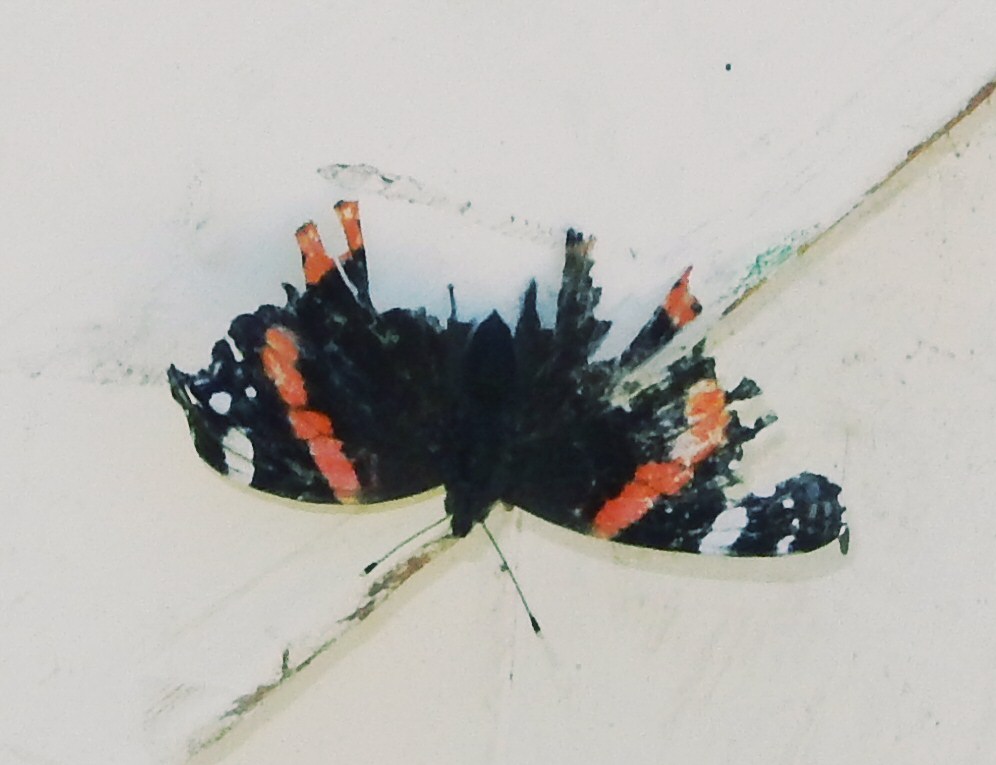
Red Admiral – battered but still flying
If there’s an insect equivalent of a World War II Hurricane landing safely with most of its tailplane, rudder, and wings shot away, this battered but defiant Red Admiral must be it. I saw the odd outline and thought “Comma?” – then I saw the colours and thought “Hot weather, beaten-up butterfly, Painted Lady”; then it landed and I realized what it was.
Heat. It’s apparently the hottest day in England for nine years: right now it’s 33ºC here, and remarkably sticky.
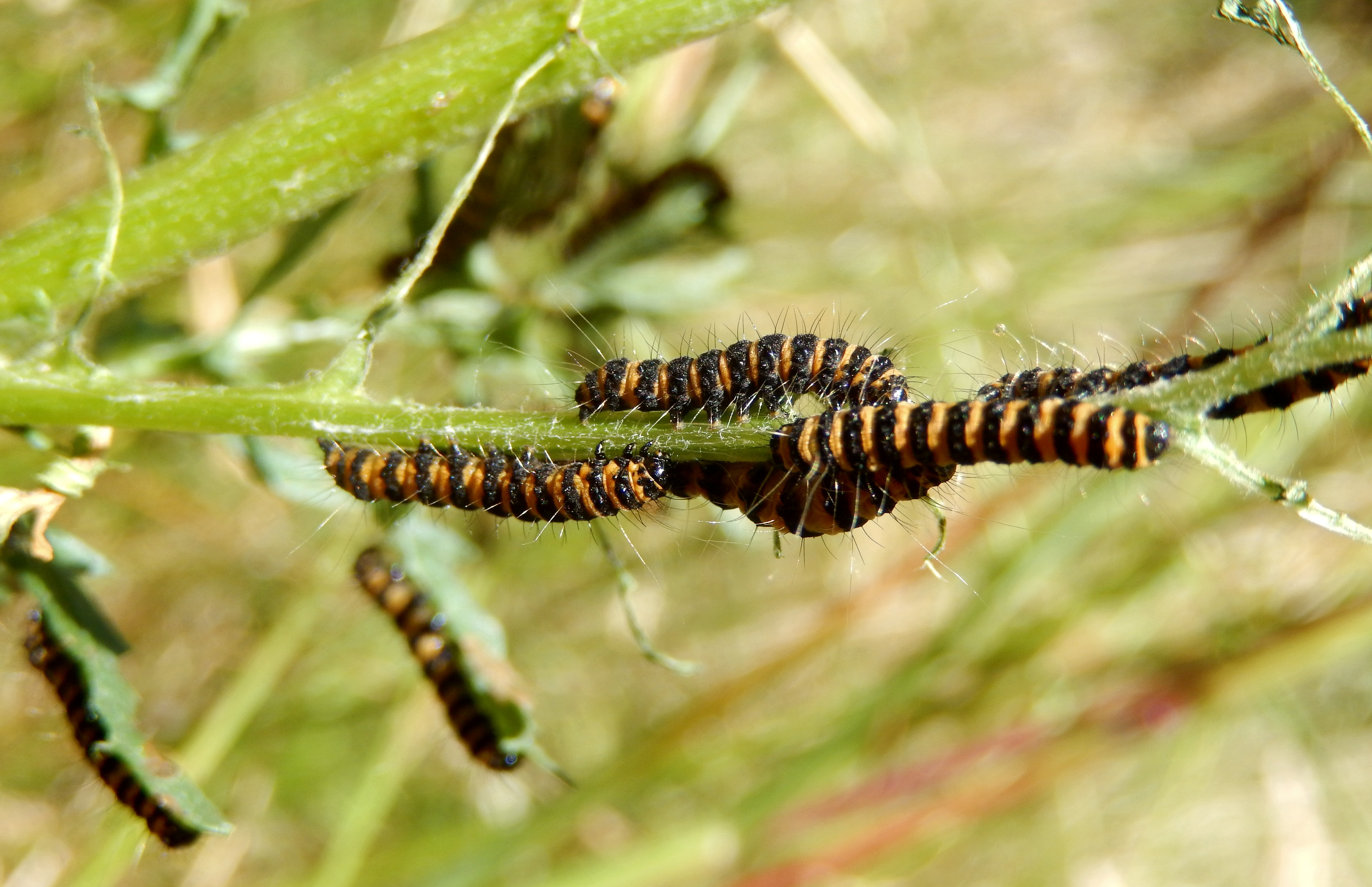
Cinnabar Moth Caterpillars on Ragwort
Among the dry grass are an increasing number of Ragwort plants; at the moment, having seen just one Cinnabar moth flying briefly, there is also just one plant covered in Cinnabar caterpillars. They are aposematic: brightly coloured black and orange, warning, like wasps and bees, of their poisonous cocktail of chemicals picked up from their food plant. They seem to grow in numbers until they devastate the Ragwort population, which then crashes … which wipes out the Cinnabar moth, until a new outbreak of Ragwort restarts the cycle. It seems to me the nearest thing to the Lotka-Volterra model ever, given that the model basically predicts wild swings in population of “predator” and “prey”. For lynx and snowshoe hares it’s a wildly wrong model; for moths and Ragwort, maybe there’s something in it.
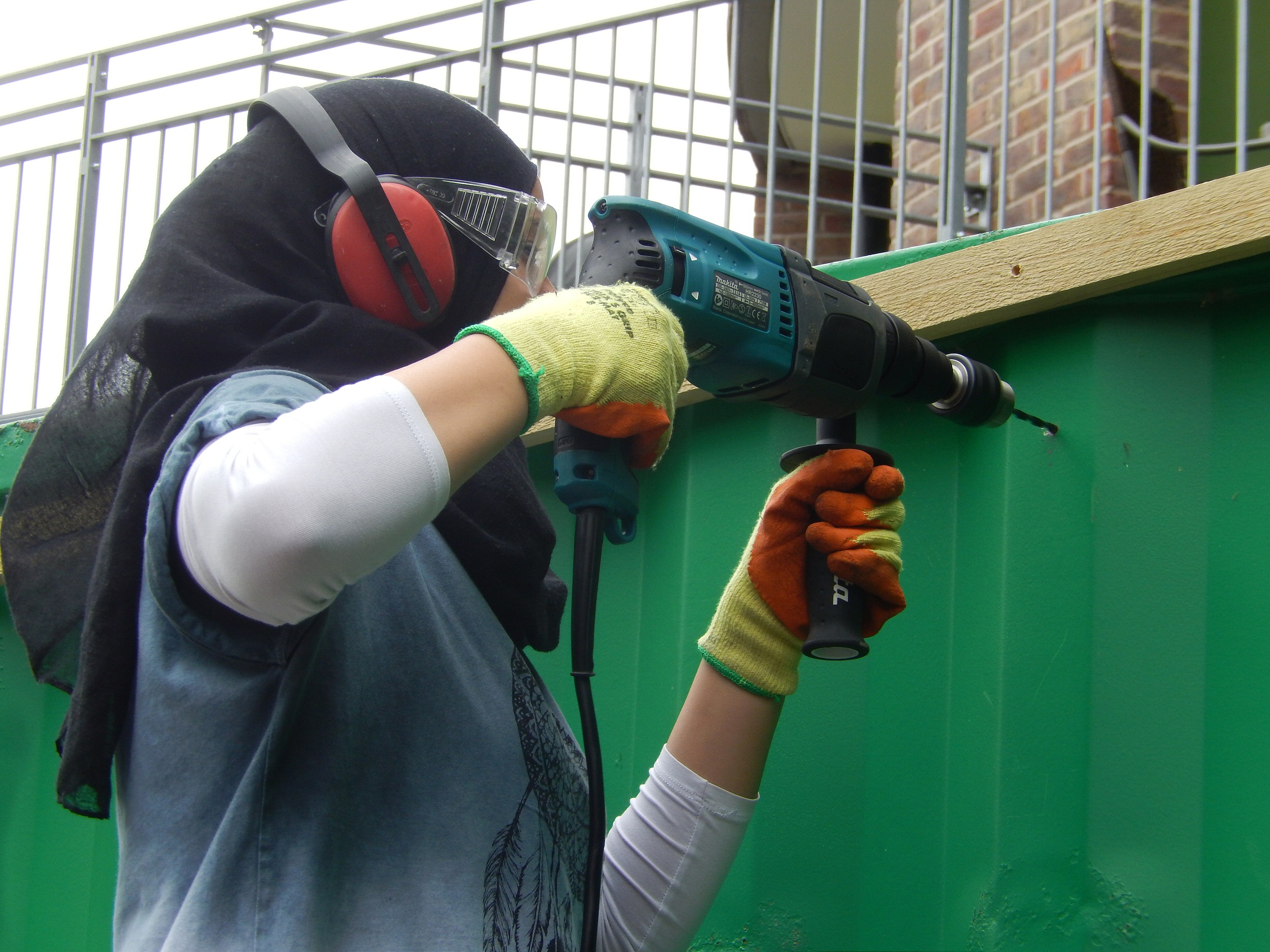
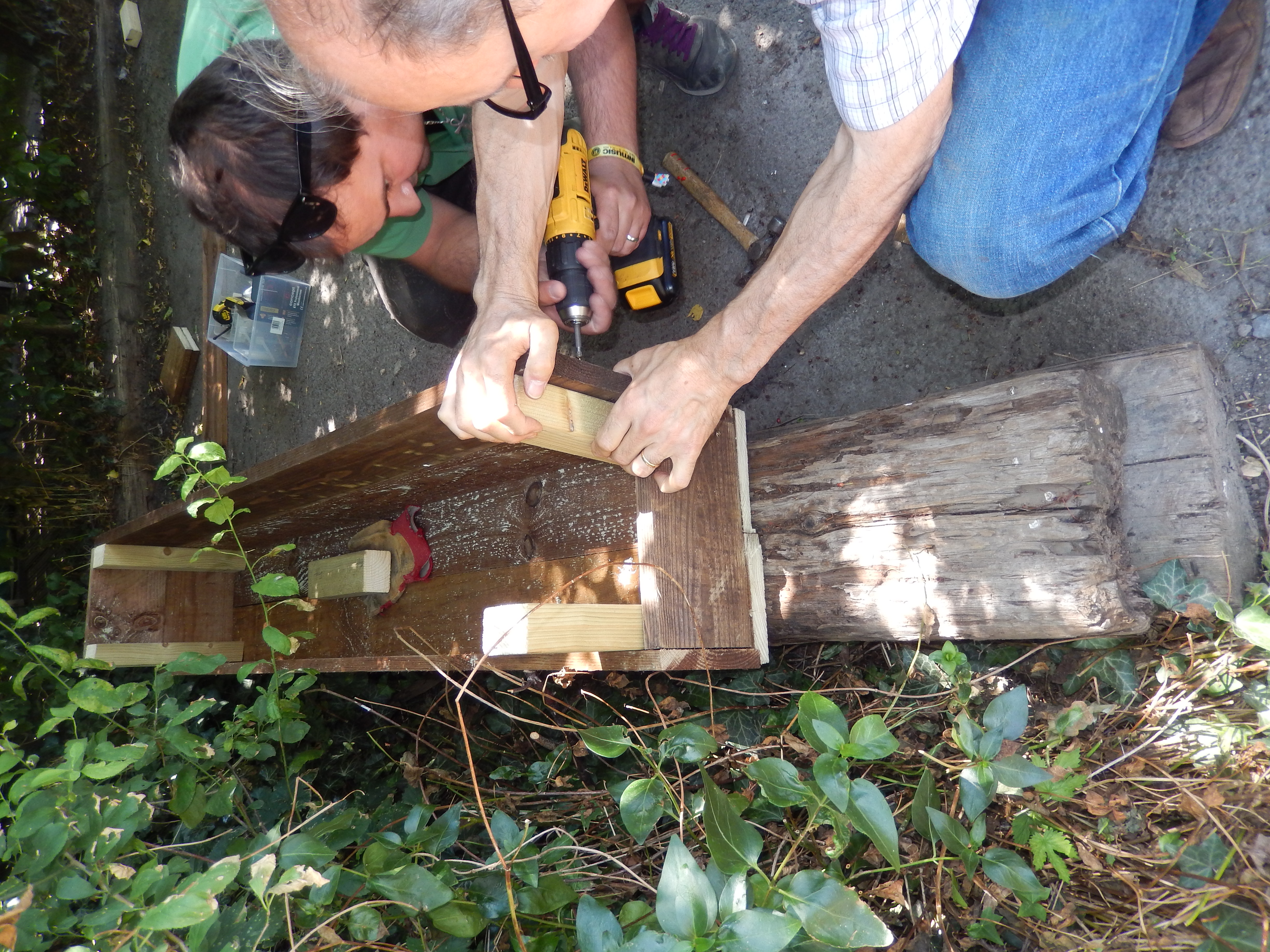
Making croc coffins (plant boxes) for the car park
We spent some happy hours cutting up a lot of wood to make two large “planters” to disguise the green metal box of a shed in the car park. The plants will need constant watering, which sounds a bit of a problem, but maybe for annuals it’ll do fine. We nicknamed the planters “crocodile coffins” as they are the size of young crocs and perfect for their funerals, if crocs need ceremonies.
Yesterday evening we had a fine view of the conjunction of Venus and Jupiter in the western sky, Venus an elegant bright crescent (evening star) on our side of the sun, Jupiter a smaller and dimmer star, visibly a complete disk, far away from us of course on the other side of the sun. The 80mm birdwatching telescope did a good job; of course it would be lovely to have a big astronomical telescope to get a bigger view.
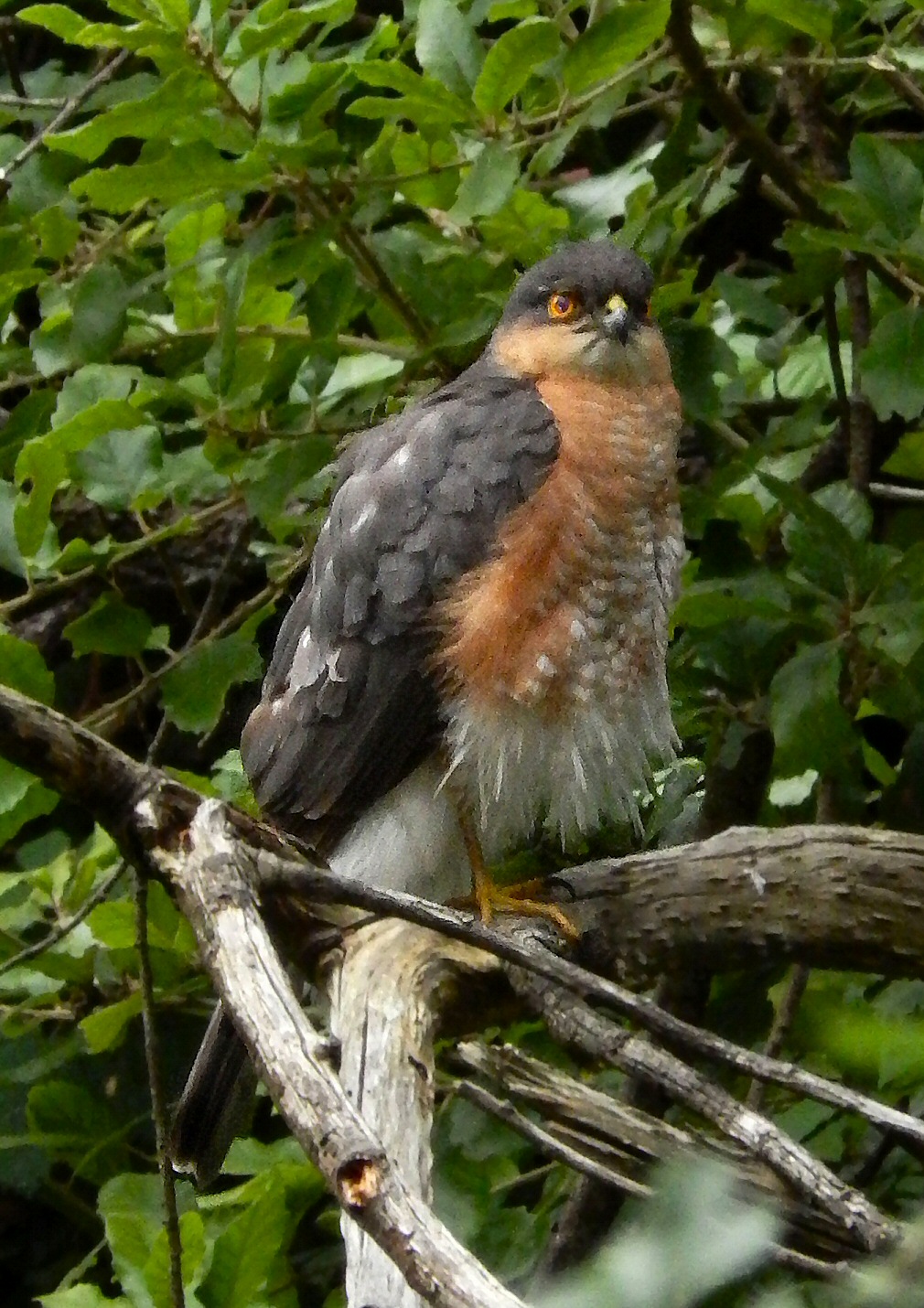
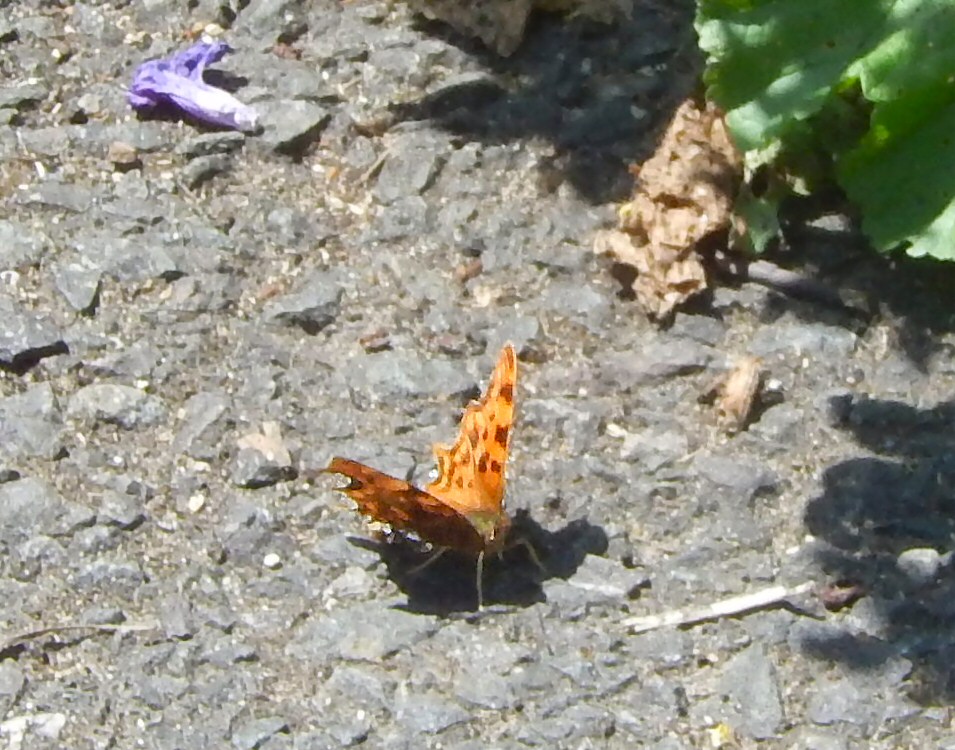
Comma, Red Admiral, Small White, Meadow Brown, Holly Blue, Speckled Wood butterflies this week. A Cinnabar Moth, the first of the year, flew over the bank near a patch of Ragwort, the food plant of its caterpillars. Let’s hope she laid some eggs.
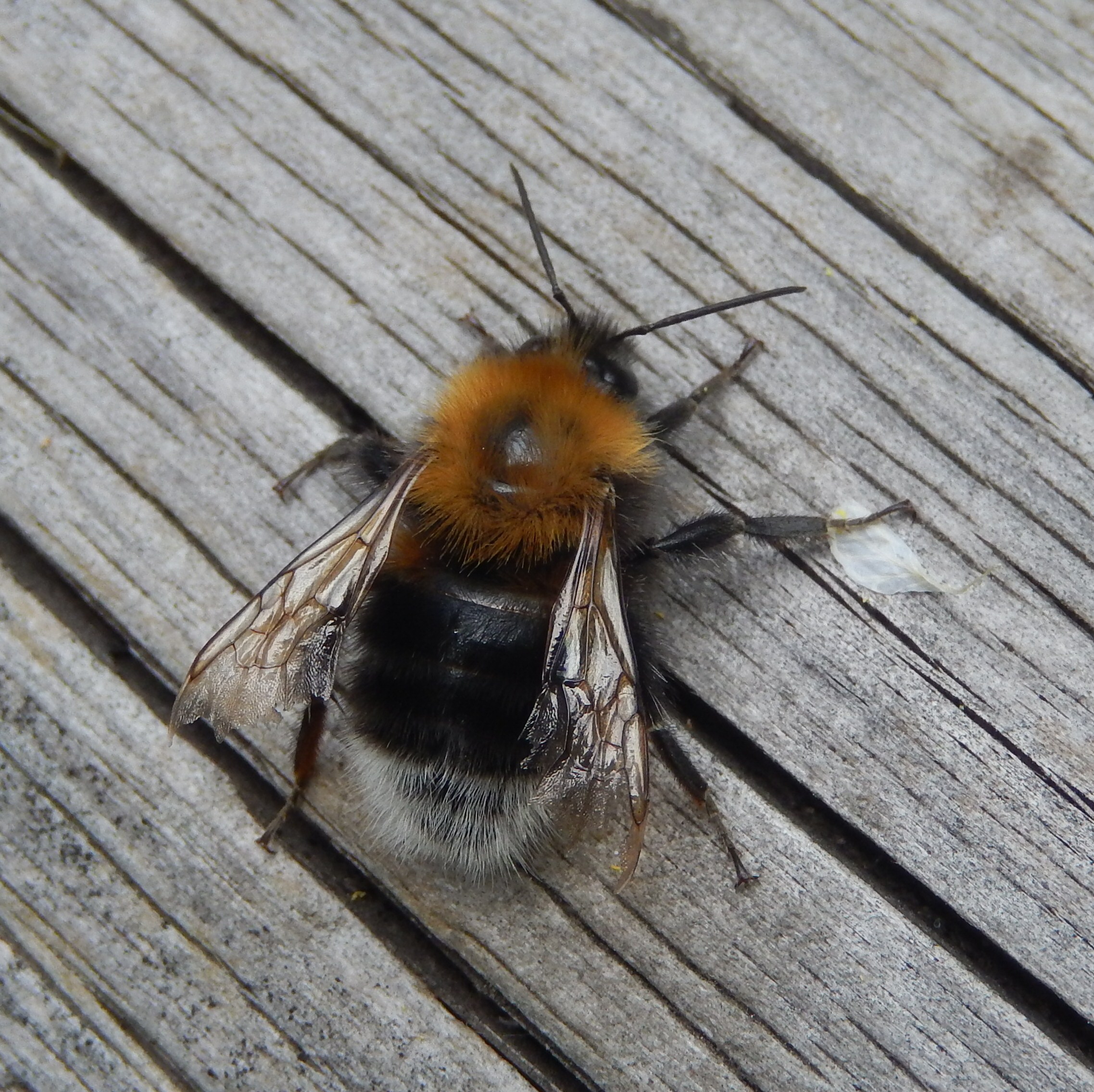
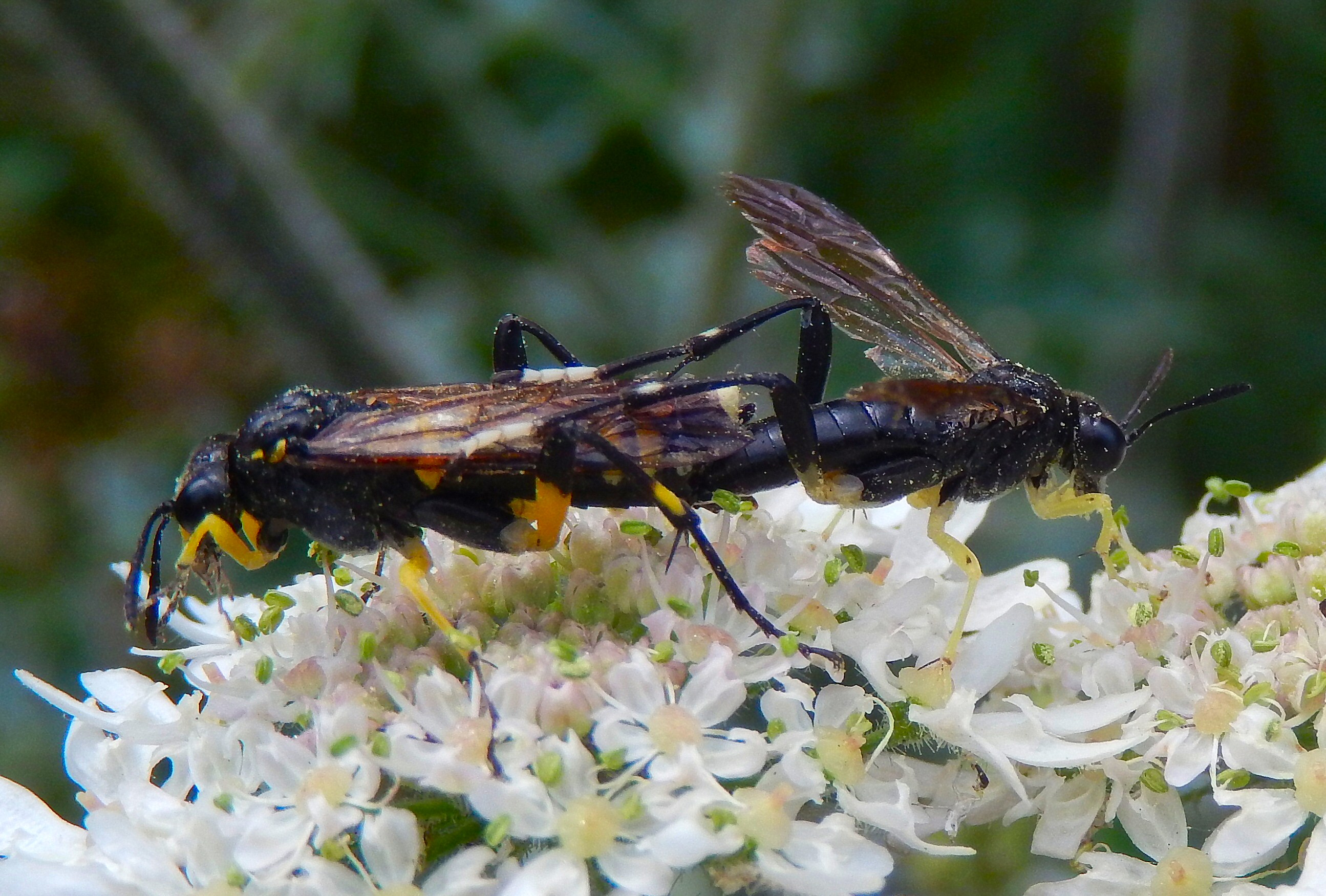
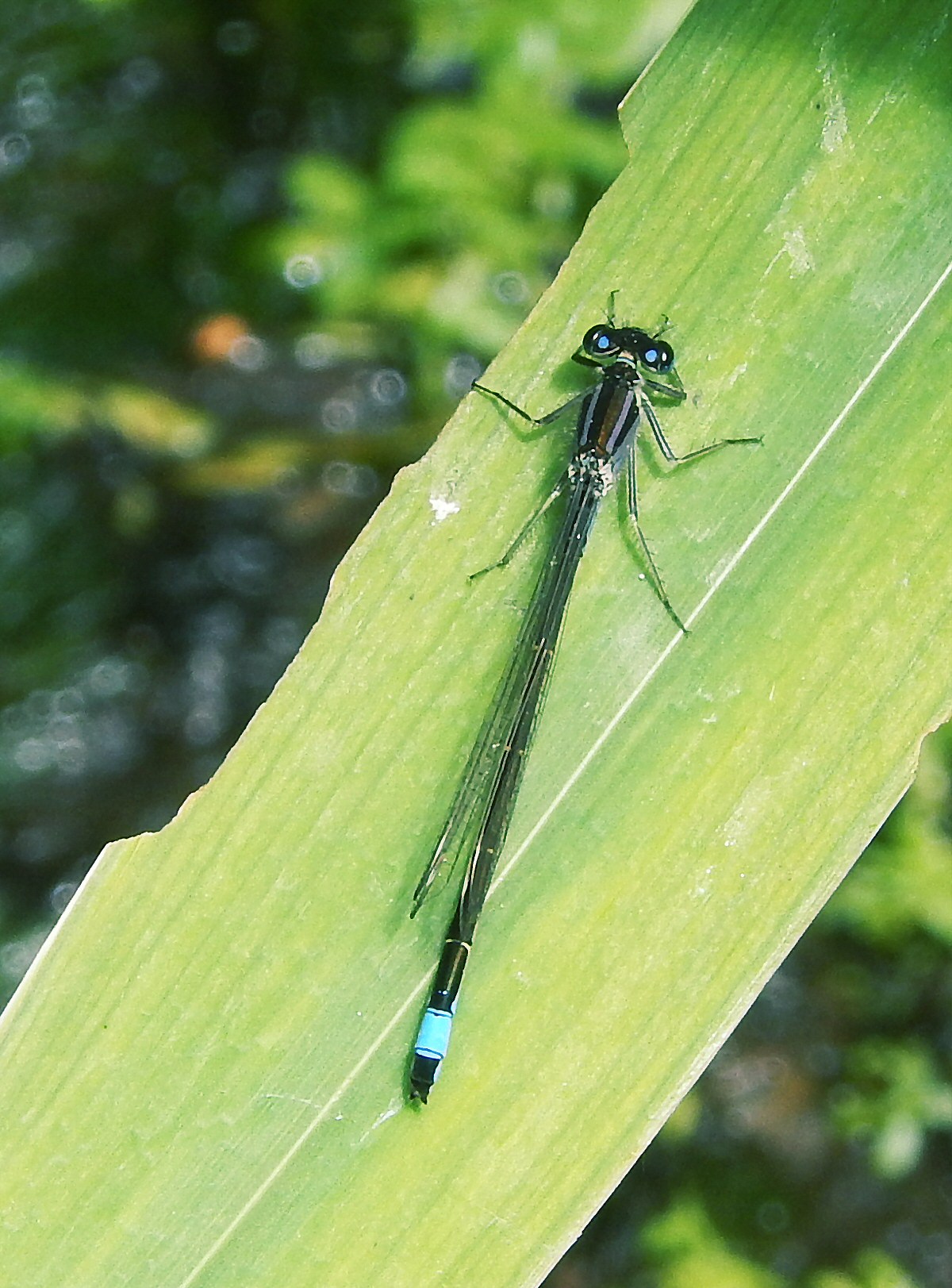
Tree Bumblebee Bombus hypnorumMacrophya Sawflies mating on HogweedBluetail Damselfly on Iris
The first Bluetail Damselfly appeared today; Azure and Large Red Damselflies still about.
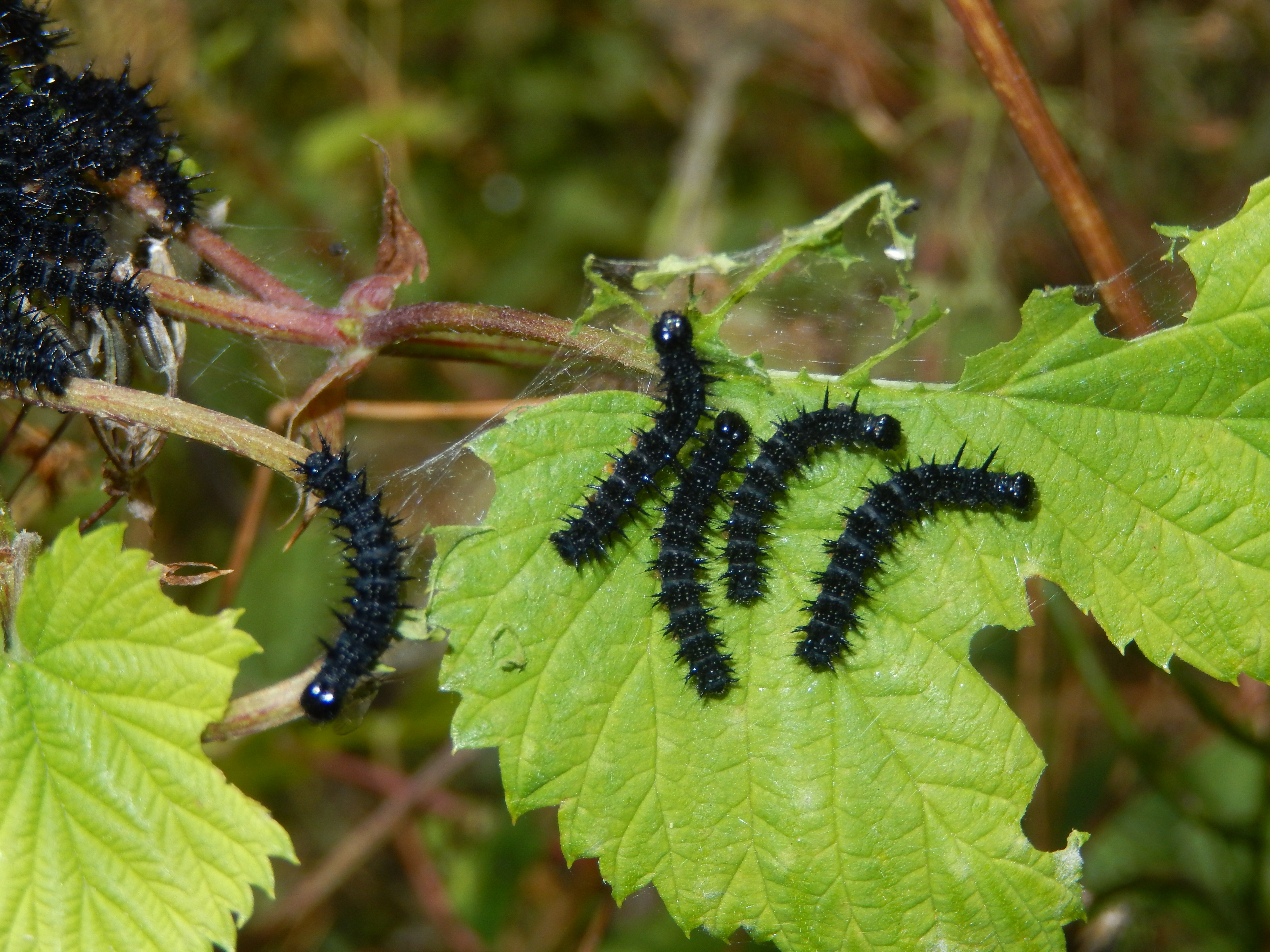
We had a lovely day down the reserve in the warm sunshine with a gentle breeze. We dug out an unwanted post with extreme use of pickaxe, crowbar and shovel, and thus refreshed did the butterfly transect. It found a Red Admiral, some Speckled Woods, wonder of wonders a Small Skipper (the second Skipper species this week), a Meadow Brown (not common here), and a Green-Veined White. Not a bad haul. And a lot of Peacock caterpillars, if those count!
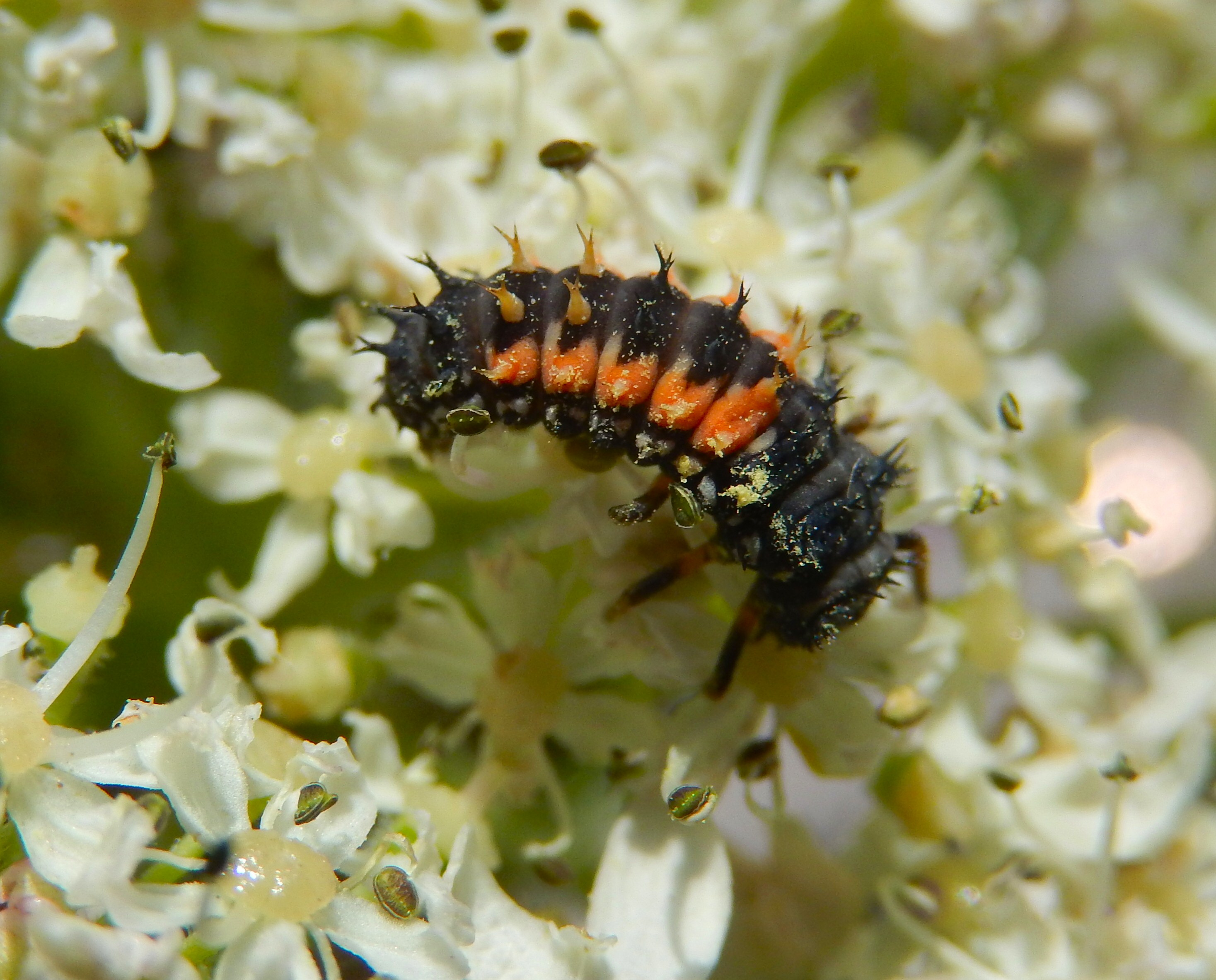
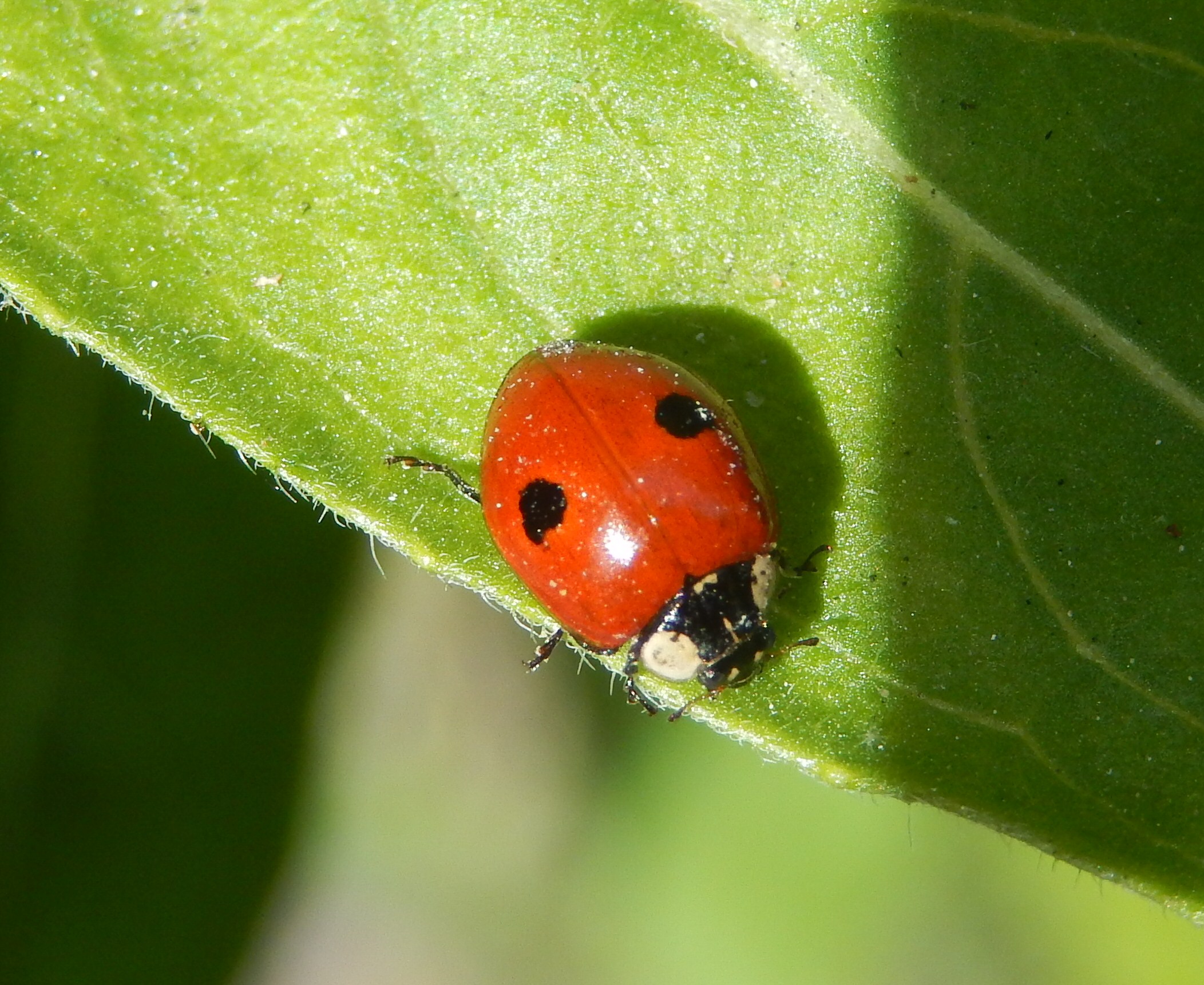
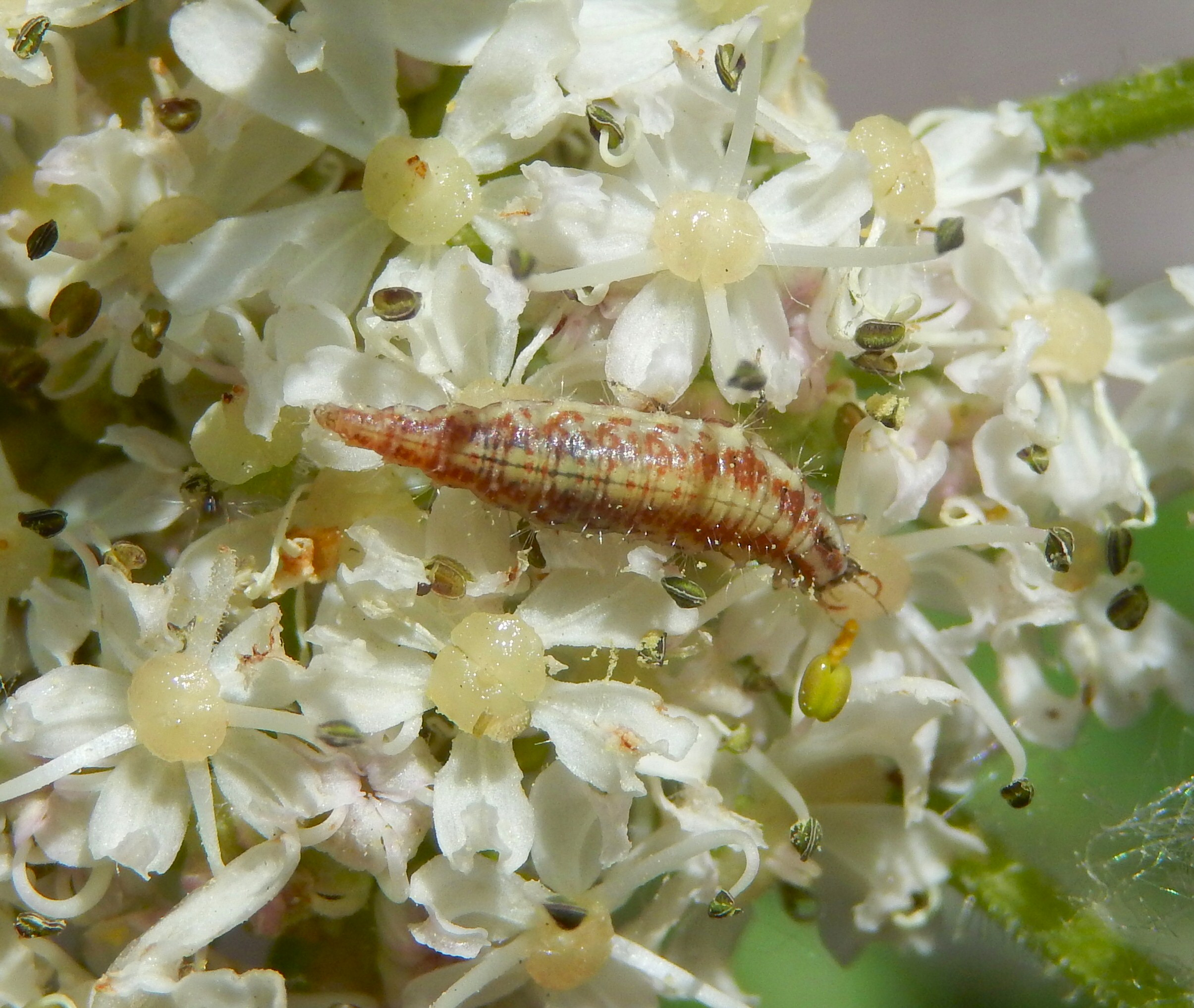
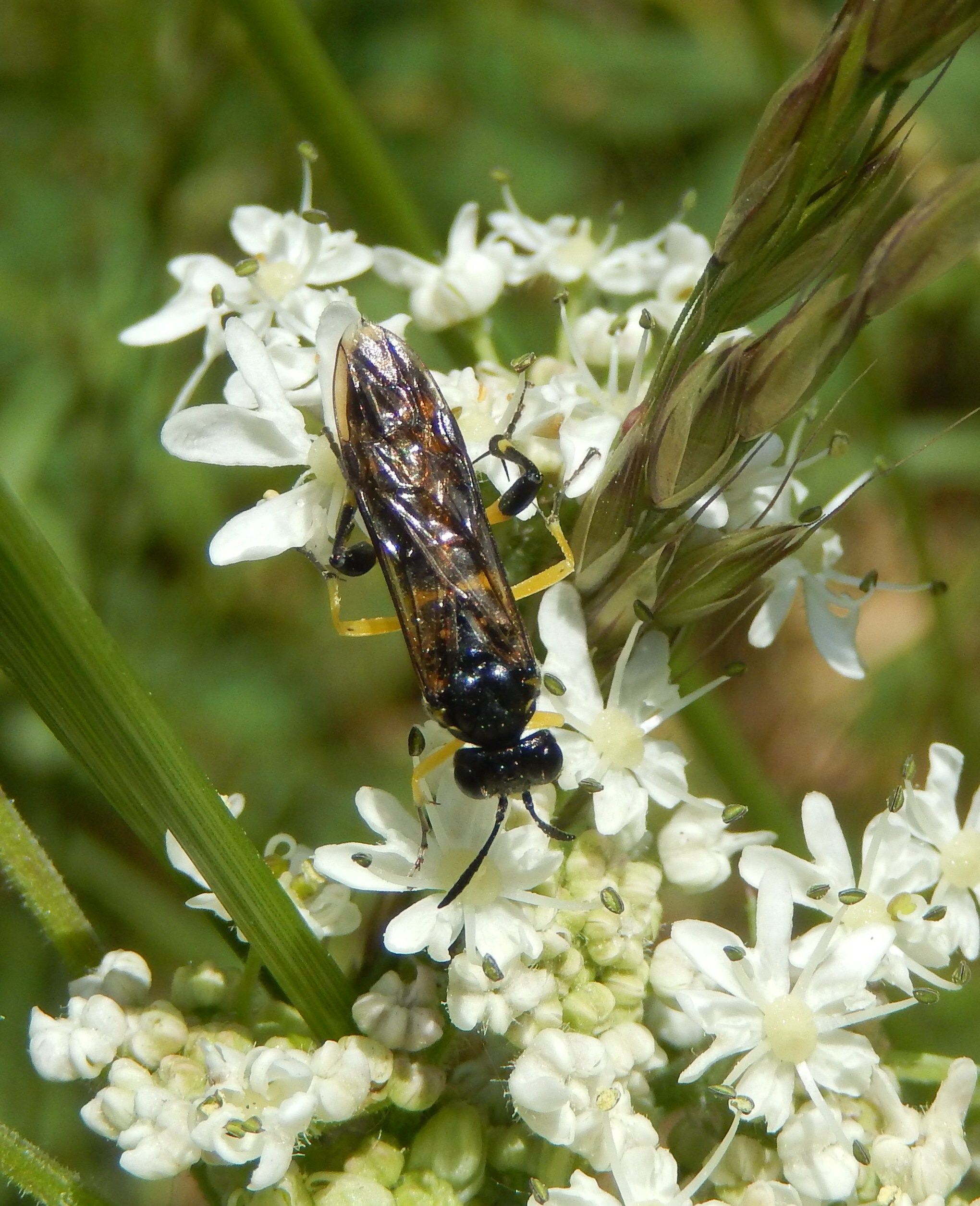
Small SkipperWasp Beetle (Strangalia maculata)Ladybird LarvaMigrant HawkerTwo-Spot LadybirdEat me if you dare – Aposematic caterpillars of Peacock ButterflyNeuropteran (Lacewing) larva – note the forceps-like mandiblesMacrophya sawfly dorsal view
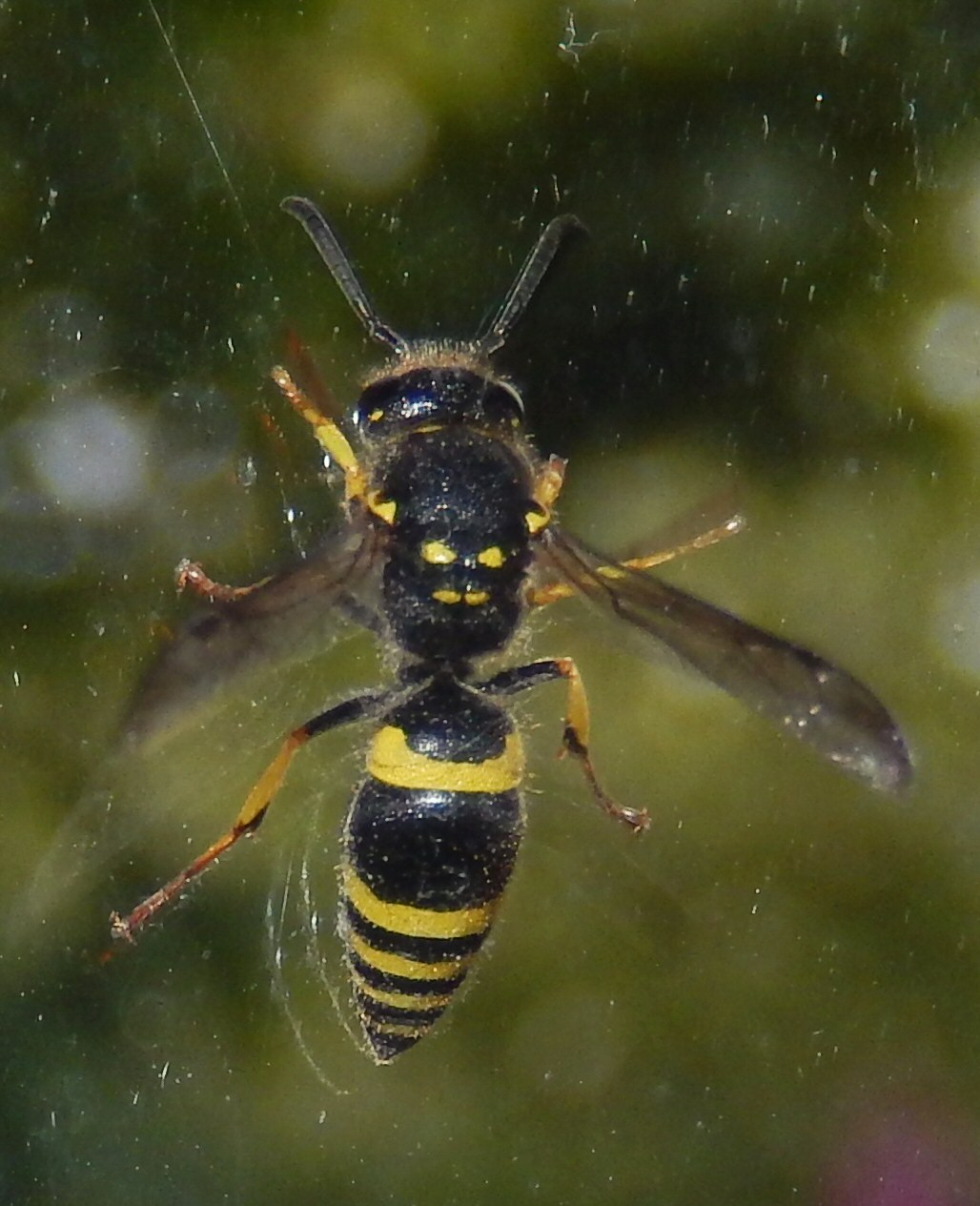
This handsome potter wasp (Eumeninae) appeared in the kitchen window. She has 4 spots on the thorax, not the usual two, so I’m not certain she’s Ancistrocerus nigricornis, but if not she’s definitely a similar species.
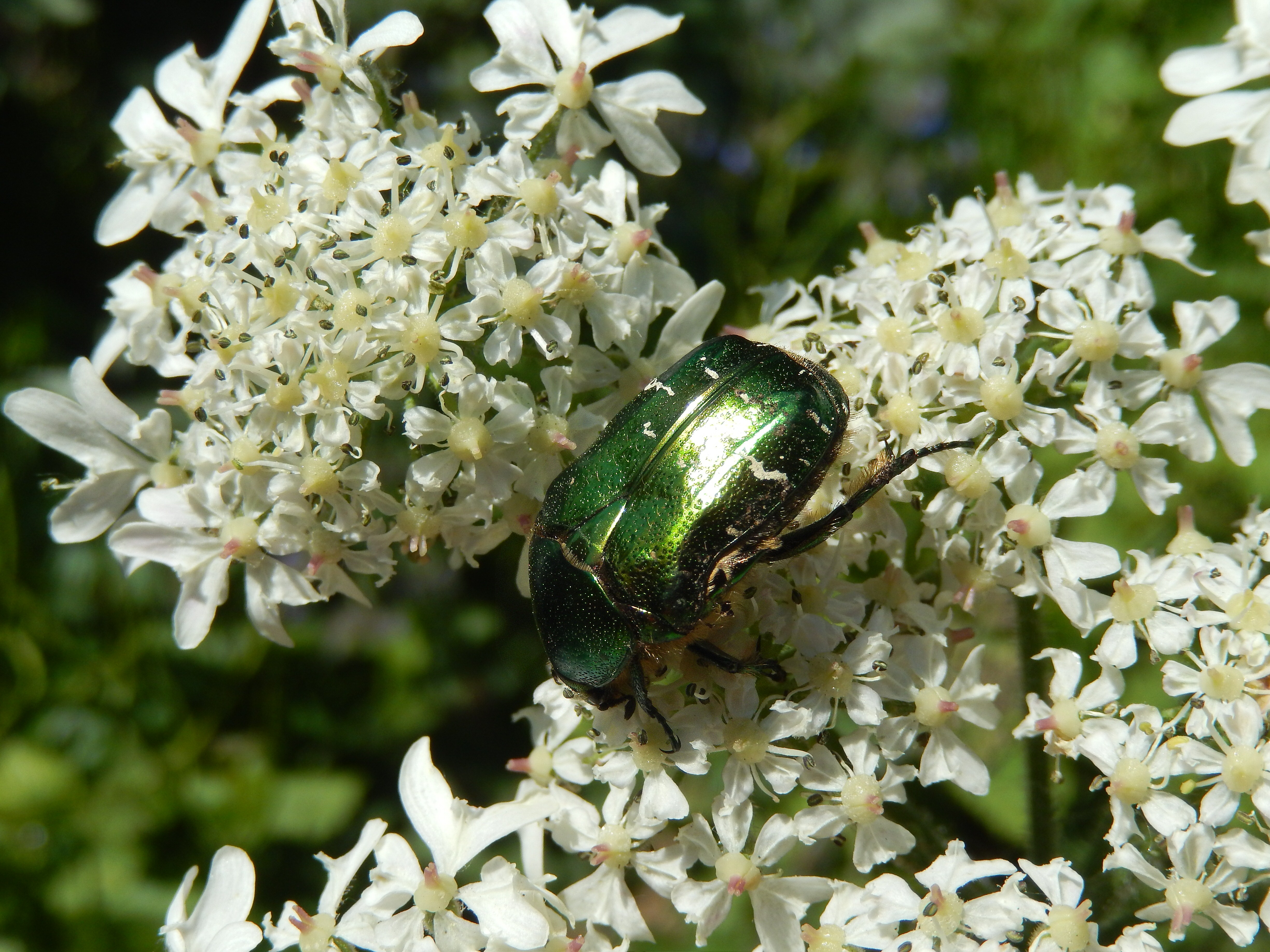
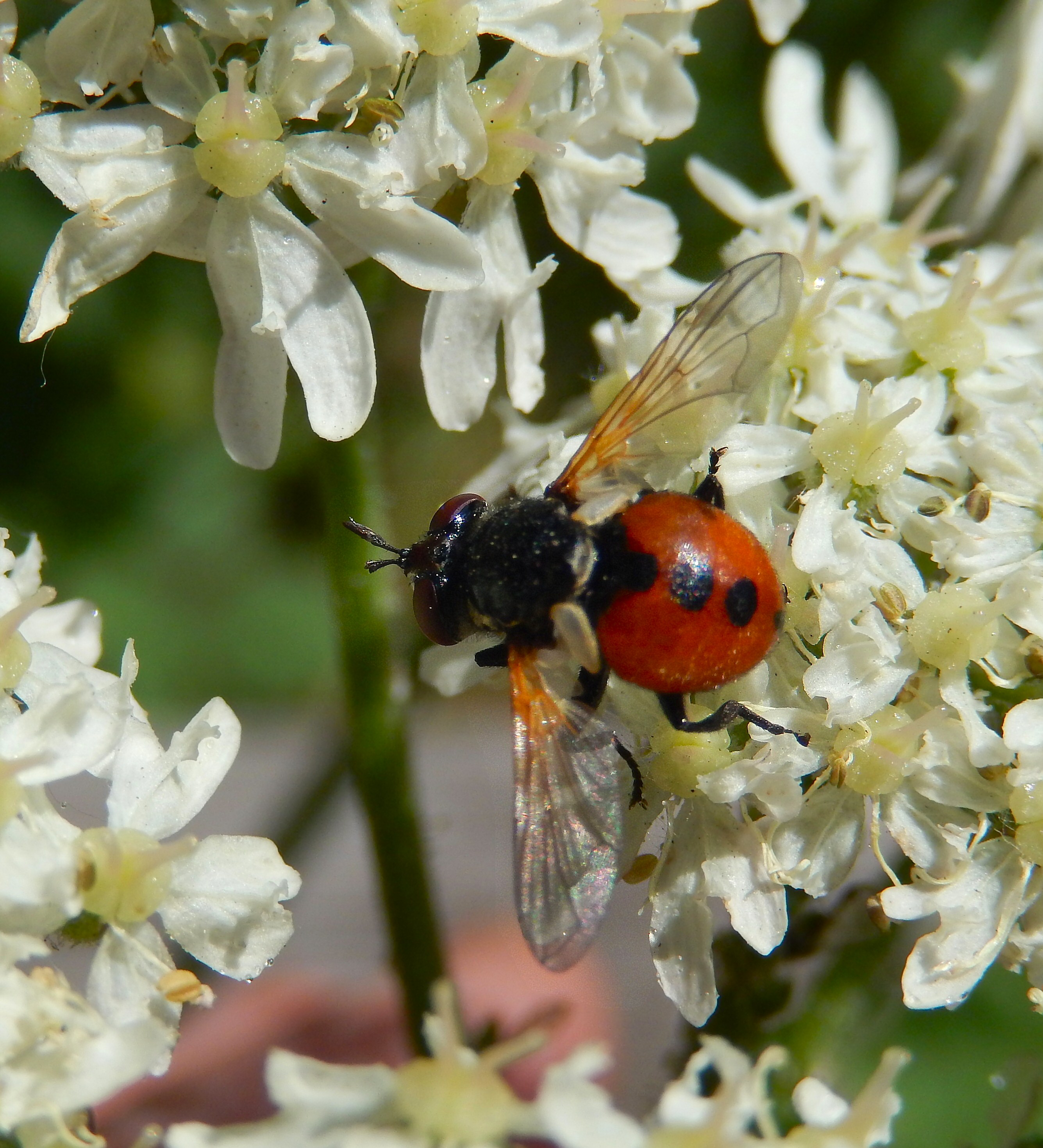
Rose Chafer Beetle on Hogweed, dorsal viewamazing fly red abdomen black spots
On this lovely hot day, we tried to work, hammering in pegs to fix path edging poles. When we were all a bit dizzy from the heat and effort, we gave up swinging the sledgehammer and had a tea in the hut. Then we did a butterfly transect, which in the absence of anything but Speckled Woods, turned into a nature walk as we photographed all the other interesting insects. The Rose Chafer (on hogweed) is worth looking at full-screen as it’s very pretty.
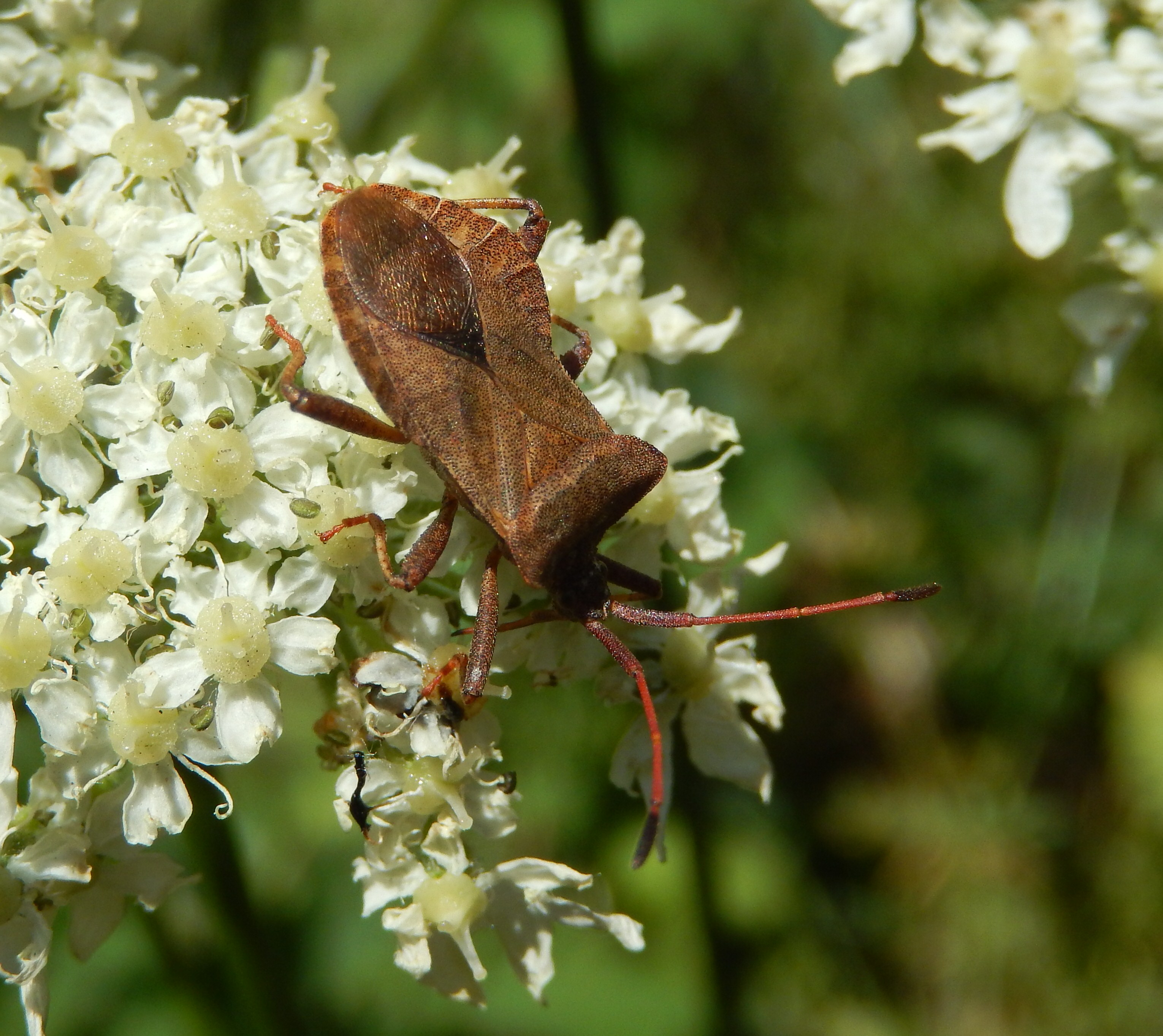
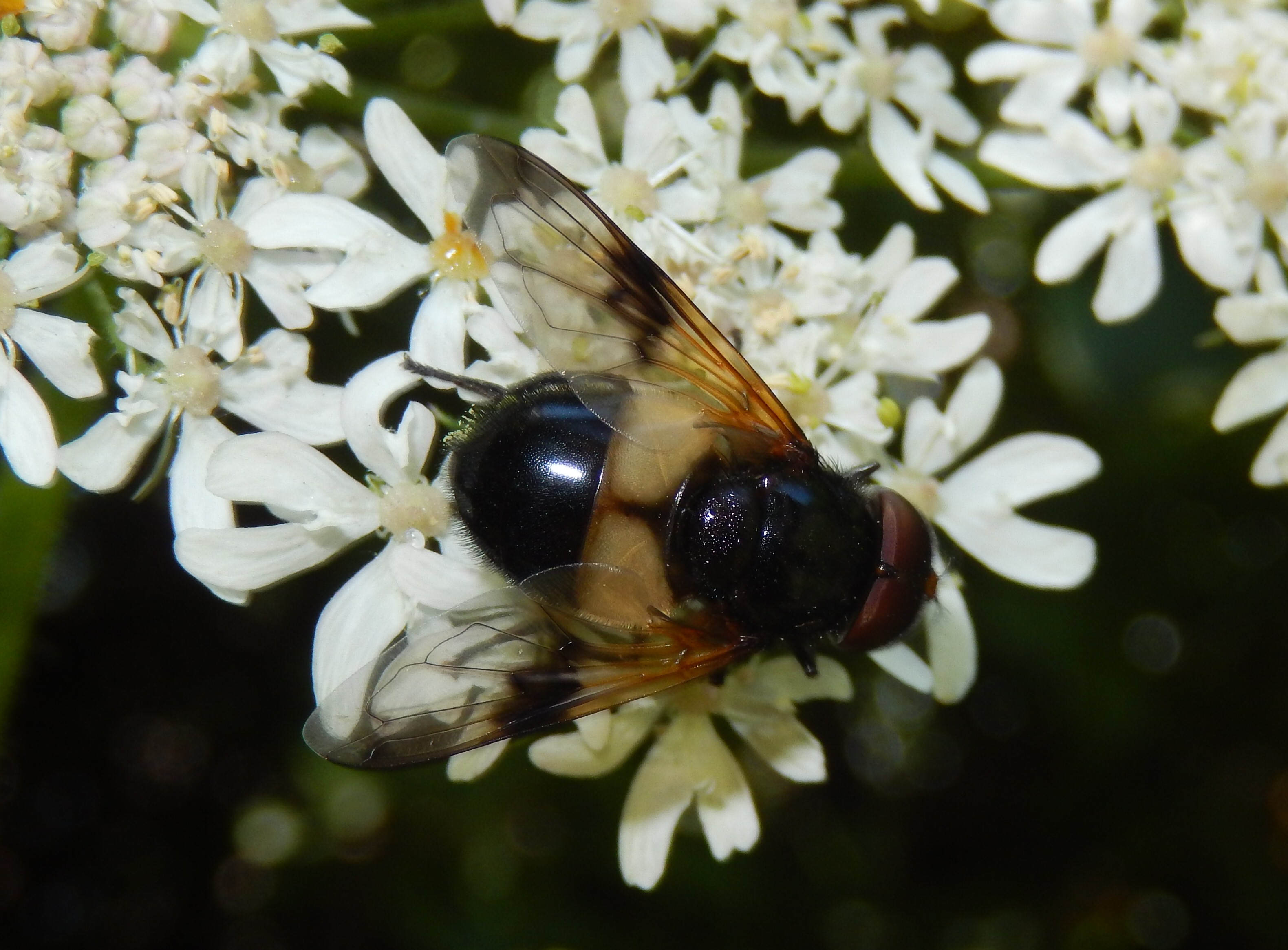
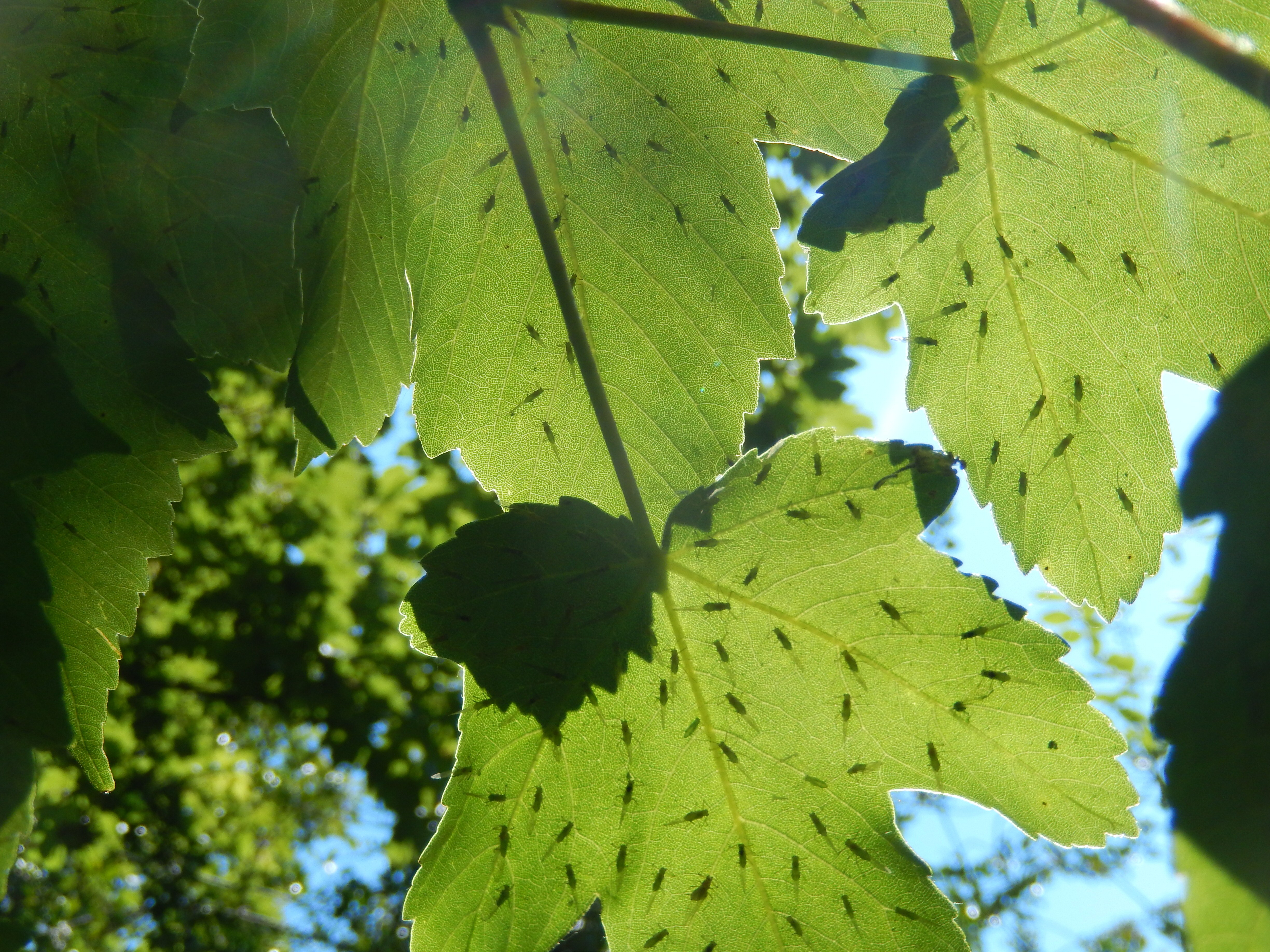
A brown Shield Bug cf Coreus Hoverfly Leucozona leucorum Array of Aphids on translucent Sycamore leaves
These aphids looked amazing with the sunlight streaming through the leaves; the leaves below were spattered with sticky sugar dropped by the aphids.
There was a beautiful Click Beetle too (like Athous haemorrhoidalis) but I didn’t photograph it as we were having too much fun making it go click and jump out of our hands.
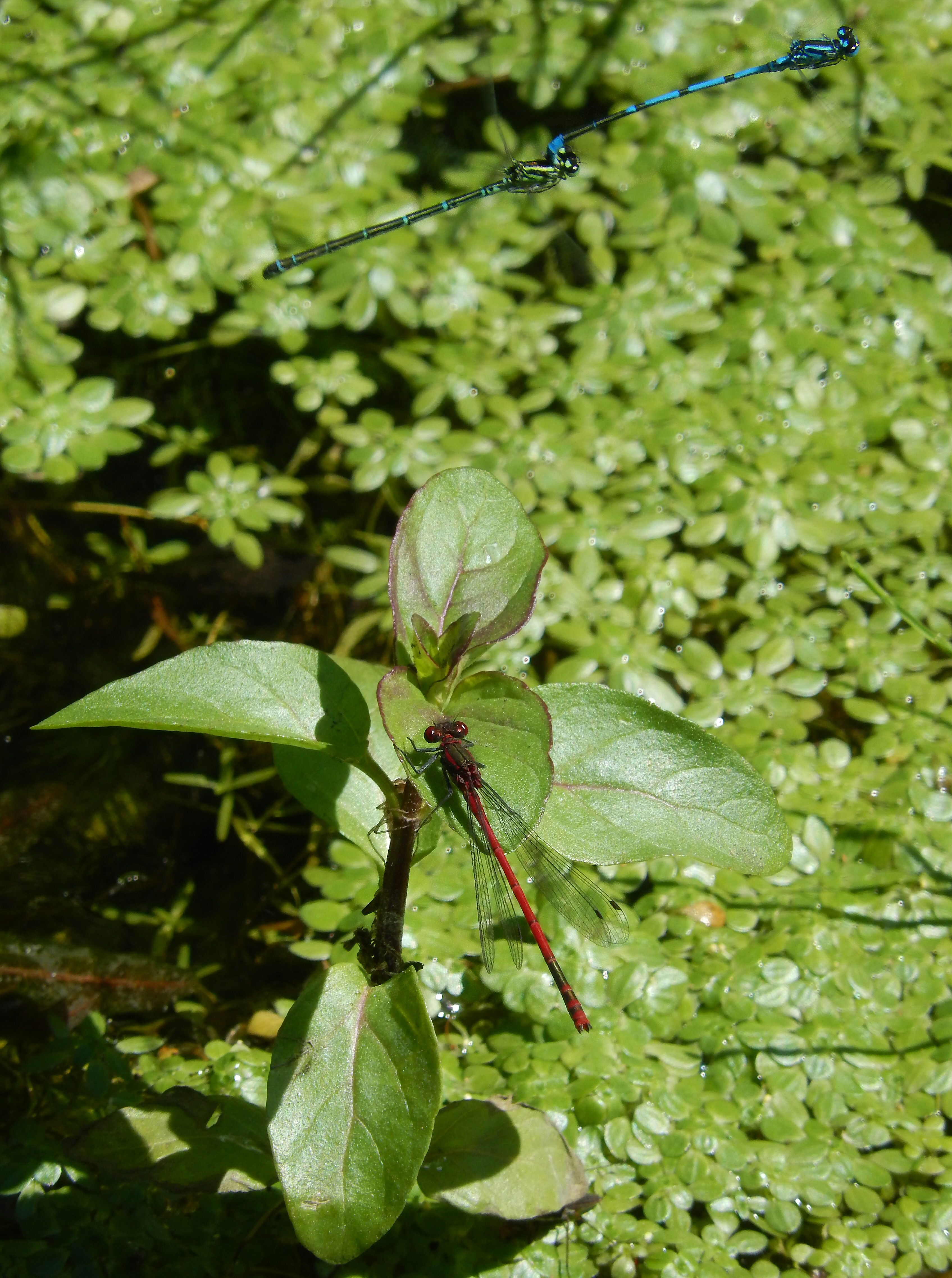
Azure pair over Large Red Damselfly
See the Red damselfly? Look up: there’s a pair of Azure damselflies hovering above. Well worth viewing full screen.
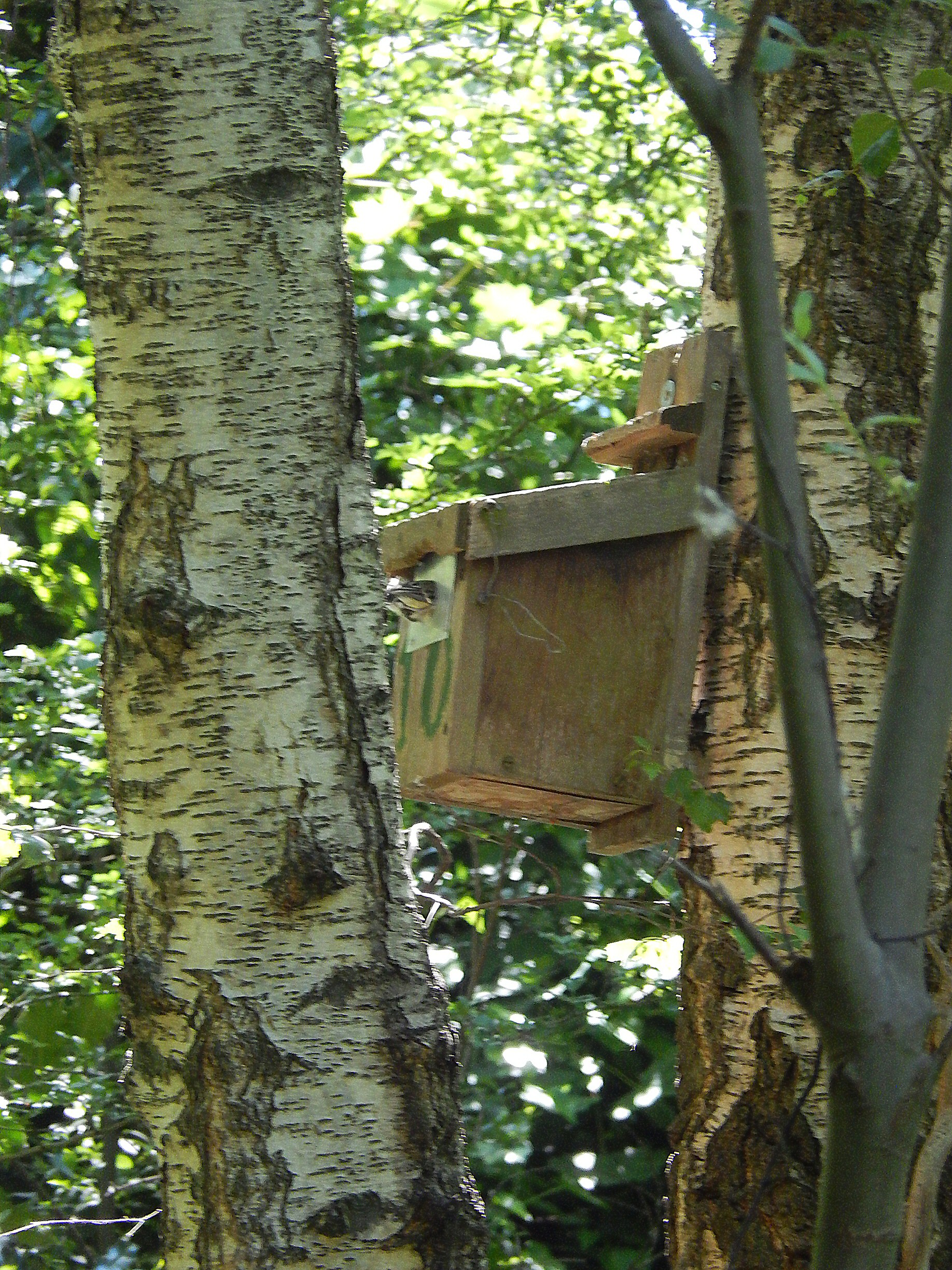
Great Tit feeding brood in Nest Box 10
We were pleased (and somewhat surprised) to find a family of Great Tits in box 10, right beside the path, and not terribly high up either, but it was an old and presumably proven nest-site, and so it has proven again this year. I got a blurry photo of one of the proud parents entering the hole, which I had repaired with some aluminium sheet this winter.
Ovipositing pair of Azure Damselflies; female is the green morph
I was very pleased with this photo, with its surreal light and bubbles. I’ve not remarked the green female morph before: most Azure females seem to be a paler, more lime-green form.
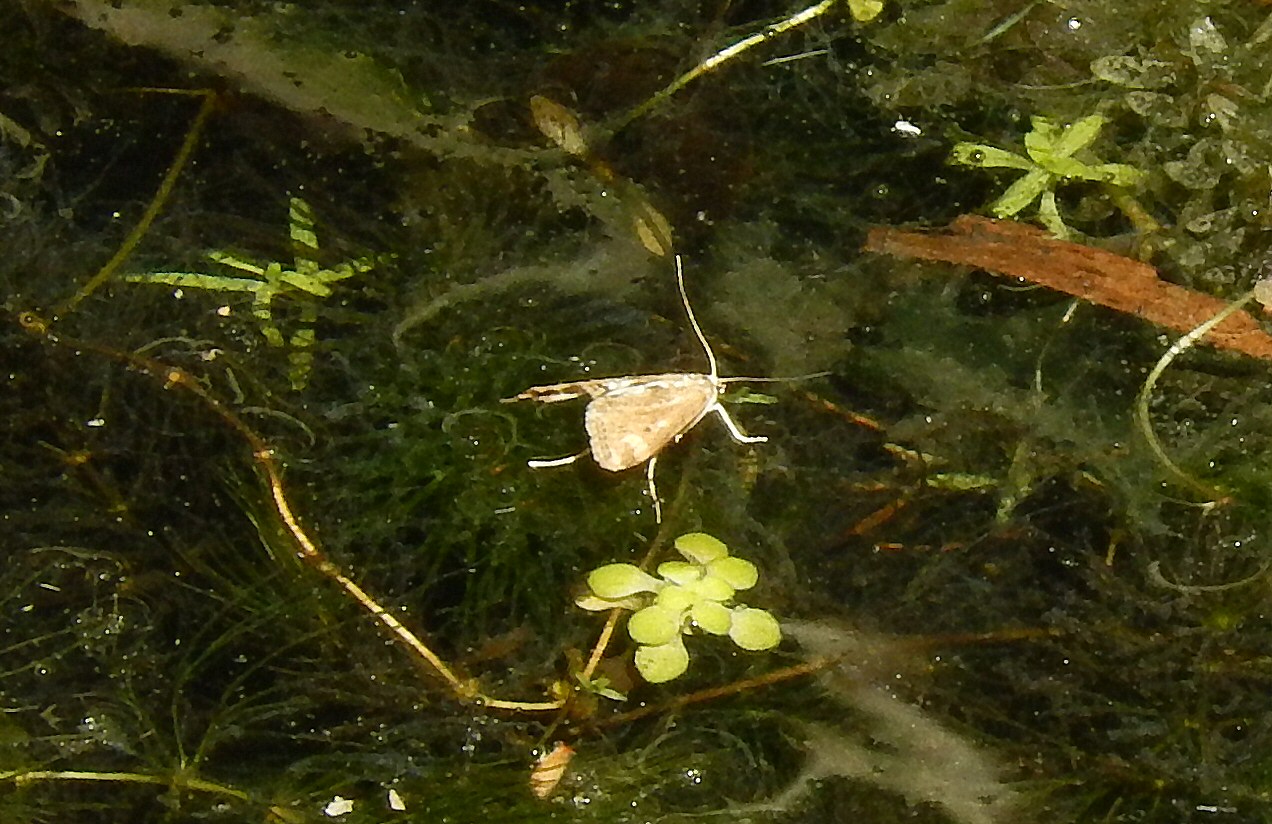
Brown China Mark Moth laying eggs on pondweeds
This last photo (taken at quite a distance) shows something very curious: the Brown China Mark, a micro moth that lays its eggs on pondweeds, scurrying over the surface of the water searching for suitable ovipositing sites. In the dazzling light, she was far more reflective than anything else, and I had to turn the exposure down two whole stops to get her about right. The larva is aquatic, feeding on pondweeds.
Not pictured: sawflies; a swift Ichneumon beside the pond (without a long ovipositor, but with a clearly clubbed abdomen); many bumblebees and striped hoverflies. Nests of Peacock butterfly caterpillars too.
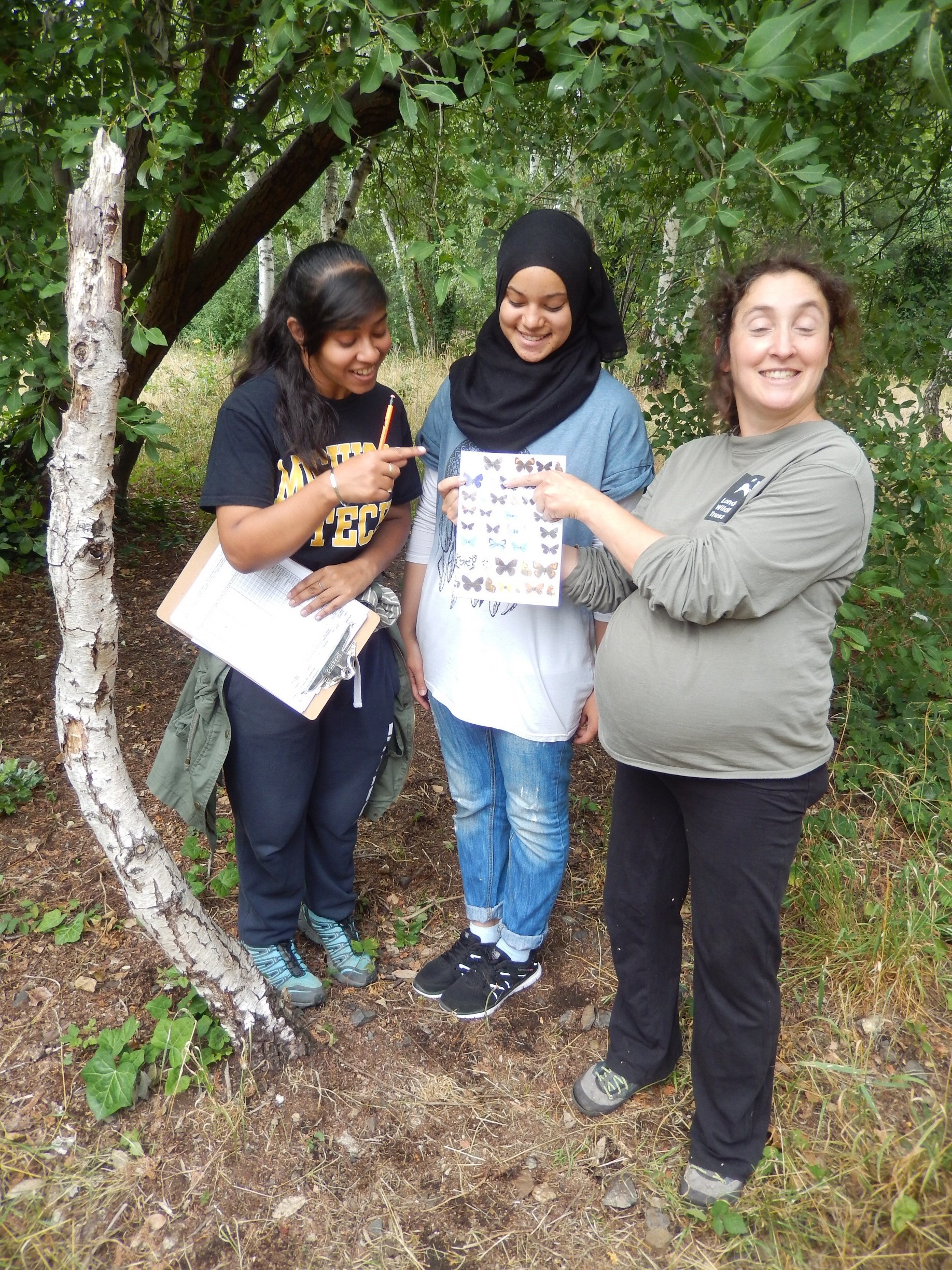
Today I “manned the pond”, resplendent in my The Wildlife Trusts T-shirt complete with badger logo on a black background. I didn’t so much as “stand up for nature” as lie down, hoping that the rather lively toddlers waving pond-nets wouldn’t fall in. Their fortunately very quick mother asked me if any children had in fact fallen into the pond, and I replied truthfully that none had done so, so far. And somehow, they didn’t.
In the warm sunshine, the air above the pond was buzzing with Azure and Large Red Damselflies, some paired up and laying eggs, some males patrolling anxiously, chasing off rivals and presumably hoping for some more females to turn up.
The eager dippers caught lots of Greater Ramshorn Snails, and some smaller ramshorns too. Among the haul were some very small Water Boatmen, midge larvae in reds and yellows, water fleas, a tadpole or two, some mayfly larvae (very zippy) with 7 pairs of gills, and some little damselfly larvae (more placid).
Large Red Damselfly on Iris leaf; nice hexagons from camera shutter
Two Sunday volunteers, relaxed and jolly, joined in the pond-dipping: it turned out that the Conservation Officer was out on a flat roof trying to catch a mallard duck and her six ducklings. Unfortunately the duck escaped while they were trying to scoop up the ducklings, so the rescue was abandoned. If the ducklings can’t be got to a pond soon, they’ll starve as the duck has no other way of feeding them.
Queen Bufftail Bumblebee in Yellow Iris …
We did carry out another rescue, however: a very large Queen Buff-Tailed Bumblebee was sitting exhausted on the boardwalk. We looked about for flowers, and tried her on a Yellow Iris, with some success; but she soon used up the energy its nectar provided. I suggested some sugar-water. This was fetched, and it seemed to have the right effect, as she perked up considerably.
Queen Buff-Tailed Bumblebee drinking sugar water
Then, in between telling people about the ridiculously complex fertilisation system in damselflies and dragonflies (indirect fertilisation, sperm storage, yeah) and identifying pond animals, I tried to photograph a mayfly nymph with the absurdly limited depth-of-field of my macro lens. What with the white glare from the pond tray, the sun going into clouds, and toddlers leaning into the light to get a better look, it was somewhat difficult. Here’s what I got.
Mayfly nymph in a (fairly) clean pond tray, more or less correctly exposed and in focus
On a lovely May day, we replaced quite a bit of wooden railing, the rail mainly being fine but several of the posts having rotted at the base.
As we worked, a pair of Brimstone butterflies flew nearby, as well as a few Orange Tips, a Red Admiral, a couple of Holly Blues, and a Large White. It was very pretty among the cow parsley, green alkanet and garlic mustard, with visiting bees and hoverflies. A couple of brilliant metallic green Rose Chafer beetles flew over, just above the tops of the cow parsley.
Around the reserve, newly-fledged robins and jays were hopping about unsteadily. A blackcap sang sweetly; a blackbird, a wren and some robins chattered in alarm from a thicket, mobbing a predator, apparently a magpie — most probably as it threatened to rob a nest of eggs or young.
Azure Damselfly pair choosing egg-laying sites together
Above the pond, Azure Damselflies and Large Red Damselflies were in cop and egg-laying (both species); up to three male Small Reds at a time were dashing about in tiny dogfights.
The English seem unemotional … except for their passion for nature