Category Archives: Wildlife

Poaching

Ah, poaching. It sounds so romantic.  The merry strains of the English folk song, “The Lincolnshire Poacher“, that we sang at school come into my ear:

When I was bound apprentice in famous Lincolnshire
Full well I served my master for nigh on seven years
Till I took up to poaching as you shall quickly hear
Oh, ’tis my delight on a shiny night in the season of the year.

We think of the cheerfully naughty countrymen pushing a hare or a pheasant into their bag, making off home and delighting their wives with something to put into the pot for their families. We hardly spare a thought for the landowners, and if we do, it is with a pantomime image of greedy, fat, rich and selfish characters who “will not sell their deer”. Cue a chorus of boos and hisses from the gallery.

But (like most rose-tinted views of the world) this is all wrong. Poaching on that scale may or may not still exist: but much worse forms of it certainly do.

In Britain, poaching is organized crime, and becoming big business. Stolen game, farm animals and wild fish, especially salmon, find their illegal way into the human “food chain” (the term is borrowed from an older view of ecology, where it has fallen into disuse, and of course it has shifted its meaning: we consumers do not eat slaughterhouse workers, or supermarket shelf-stackers). There is no inspection of the unlawfully sold meat, which may be infected with tuberculosis (TB), may have been handled unhygienically, or may simply be past what should have been its sell-by date. There is no attempt to manage the ‘crop’ sustainably. If a wounded deer escapes, it will receive no veterinary treatment for its injuries or infections.  In short, the whole sorry business is about money, with none of the usual protections that we expect in food and farming.

Across the world, matters are even worse. As roads cut into rainforests all through the tropics, the poor go into the remaining wildlife-rich areas to kill anything worth eating for bushmeat. In lawless areas, hunting the last of the game animals is an easy way for anyone with a gun to earn a little money. Once common and widespread species in many groups – monkeys, deer, snakes, birds, you name it – are being driven towards extinction.
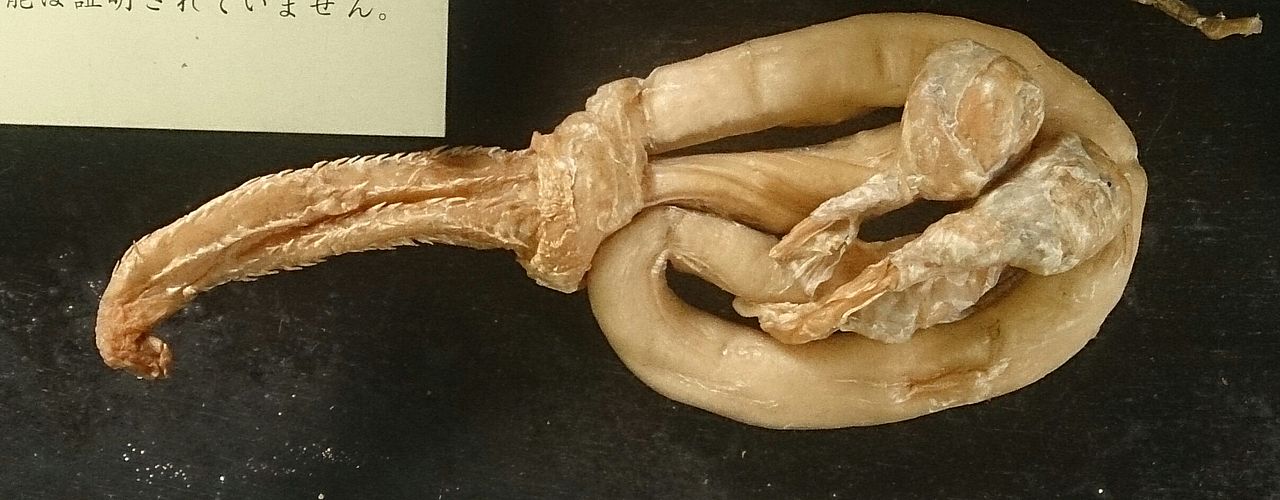
Tiger Penis. Image by ProjectManhattan on Wikimedia Commons.
Tiger Penis is supposedly aphrodisiac. Image by ProjectManhattan on Wikimedia Commons.

And of course, poaching can mean killing elephants for ivory, rhinoceroses for their horns, tigers for their skins or their penises, bears for the bile from their gall bladders. Frankly, even the most beautifully carved ivory statues cannot compensate for the loss of elephants in the wild. Even if a dose of tiger penis brought an erection so huge that a horde of beautiful women were to flock about me, an unlikely result, it would not make up for the loss of one of these magnificent animals, let alone their extinction. If you have erectile dysfunction, Viagra might help you; animal body parts certainly won’t.

There is nothing romantic about poaching. It is incredible that, although it is illegal in Britain, it is not a notifiable crime: the police do not have to keep any record of how many animals are killed, how much property damaged, how many crimes committed.

With wars and refugee crises, human suffering and epidemics of tropical diseases from Malaria to Ebola virus, it is no wonder that poaching gets scant mention. Yet all the while, when there is money to be made, wildlife gets short shrift. Satellite imagery shows deserts expanding, forests burning. The destruction wrought by poaching is less visible, but it is having a terrible effect on hundreds of species.

You can do something about it. Support a wildlife charity.  Campaign against the use of animal body parts in traditional medicine. Lobby your member of parliament, your government. Vote for a greener government next time. Now is the time to get on with it.
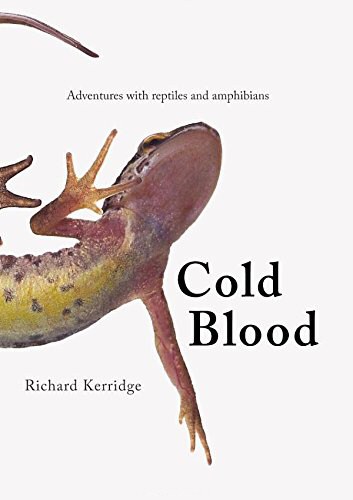
Book Review: Cold Blood: Adventures with Reptiles and Amphibians, by Richard Kerridge

Cold Blood, by Richard Kerridge

Richard Kerridge’s personal story of life with cold-blooded animals (he wisely doesn’t say ‘poikilothermic’ anywhere) tells how he makes contact with nature for comfort at times of crisis – the first snog with a girlfriend after spotting a Grass Snake, delicately and wittily narrated; or the escapes from his troubled father, who has recurring nightmares of being again in a tank battle in Normandy.

It’s a skilfully told story, with interesting facts about Britain’s native newts, frogs, lizards and snakes, interspersed with personal encounters, mainly from Kerridge’s boyhood, when it was still possible for boys to find, catch and keep these now heavily-protected animals in and around London. It is a shock to realize that Natterjack Toads, now confined to a few wardened sites in the whole of Britain, were a century ago common even in the capital, and everybody knew and seemingly liked their call. Thursley Thrushes, was one of their names: Thursley remaining a fine place for lizards, but sadly too acid for the little toads – did acid rain combine with the natural acidity of the bogs there? All these events are complex and too little known.

I really enjoyed the boyhood adventures, and the boy’s mixed feelings on jumping on a pregnant lizard, only for her to shed her tail, leaving an unhappily bloody stump, a wriggling tail, and disappointment. Kerridge is very good on such moments. I’m less sure I really needed his agonies with his father: not quite convinced there was any organic connection with whatever the wildlife did. Perhaps he was trying a little too hard to make it all into a single story: life can just be untidy. But the fifty-year sweep from the sixties to now, from confused but reptile-rich childhood to mature enjoyment of nature and sober reflection on how much has been lost, is well done. ‘Field herping’ (herpetologising, i.e. finding and photographing reptiles by disturbing them, flipping up stones and the like) is a new term to me: and the fact that it’s illegal in Britain, and pretty much futile given how few species we have, and how rare they have become, triggers another melancholy moment. It’s a matter of everyone’s experience that there is more to see on the continent: that nature in our country is seriously damaged, despite our extraordinary concentration of nature-lovers.

For all that, and the ‘cold blood’ in the title – not exactly a passion-stirring phrase, perhaps – this is a book with plenty of joyful moments, one that gives something of the flavour of what it means to be English and obsessed by nature. As such, it is a book that people who do love nature can read for self-discovery; and people married to nature-lovers can read for explanation.

Buy it from Amazon.com (commission paid)
Buy it from Amazon.co.uk (commission paid)

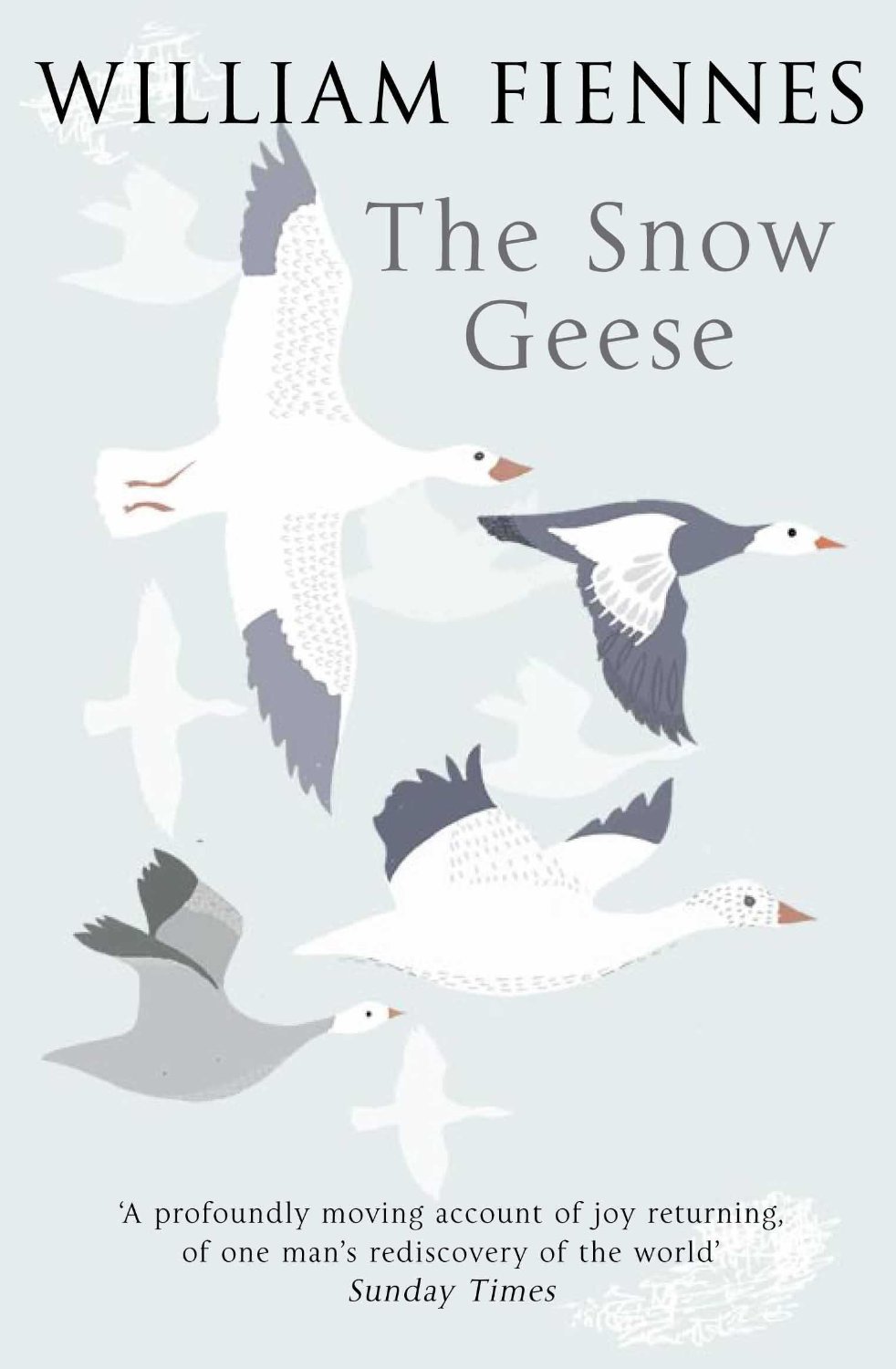
Book Review: The Snow Geese by William Fiennes

The Snow Geese by William Fiennes (2002)

A young Englishman has been very ill, has spent a long time in hospital, has had the joy of life knocked out of him, is lonely, disorientated. He is brought home by his parents, to the old ironstone house that he loves, in the fields whose names and shapes he knows. Slowly he regains his strength. He reads Paul Gallico’s old tale, The Snow Goose  (illustrated by Peter Scott, founder of the Wildfowl and Wetland Trust; Peter Scott Books, 1946).

Buy it from Amazon.com (commission paid)
Buy it from Amazon.co.uk (commission paid)

He decides to go to America to follow the real Snow Geese all the way from Eagle Lake, Texas to the Foxe Peninsula, Baffin Island, three thousand miles on their spring migration.

Here we are in Texas:

“The first sign was a faint tinkling in the distance, from no particular direction, the sound of a marina, of halliards flicking on metal masts. Drifts of specks appeared above the horizon ring. Every speck became a goose. Flocks were converging on the pond from every compass point, a diaspora in reverse, snow geese flying in loose Vs and Ws and long skeins that wavered like seaweed strands, each bird intent on the roost at the centre of the horizon’s circumference. Lines of geese broke up and then recombined in freehand ideograms: kites, chevrons, harpoons. I didn’t move. I just kept watching the geese, the halliard yammer growing louder and louder, until suddenly flocks were flying overhead, low over the shoulder, the snow geese yapping like small dogs, crews of terriers or dachshunds – urgent sharp yaps in the the thrum and riffle of beating wings and the pitter-patter of goose droppings pelting down around me. They approached the roost on shallow glides, arching their wings and holding them steady, or flew until they were right above the pond and then tumbled straight down on the perpendicular. …”

Fiennes writes with glittering perfection: this is a book of rare beauty, taut as a fairytale, a journey back to joy in life, a story of homesickness and longing, of loneliness and company, of the generosity of strangers, of Greyhound bus journeys, and days and nights in a tiny ‘roomette’ in a Canadian sleeper train, of long periods of waiting in small towns and hotel rooms, of wildlife and landscapes, of snow geese themselves, and, marvellously simply, of returning home.

This is a special book that can be read as literature or as narrative natural history. Either way, it’s a marvellous read. I guarantee you won’t be disappointed.

Buy it from Amazon.com (commission paid)
Buy it from Amazon.co.uk (commission paid)

Small Skipper, Water Scorpion, bugs at Gunnersbury Triangle

It was a pleasure to do the butterfly transect today. Even before I reached the Gunnersbury Triangle, I saw a Red Admiral in the street.

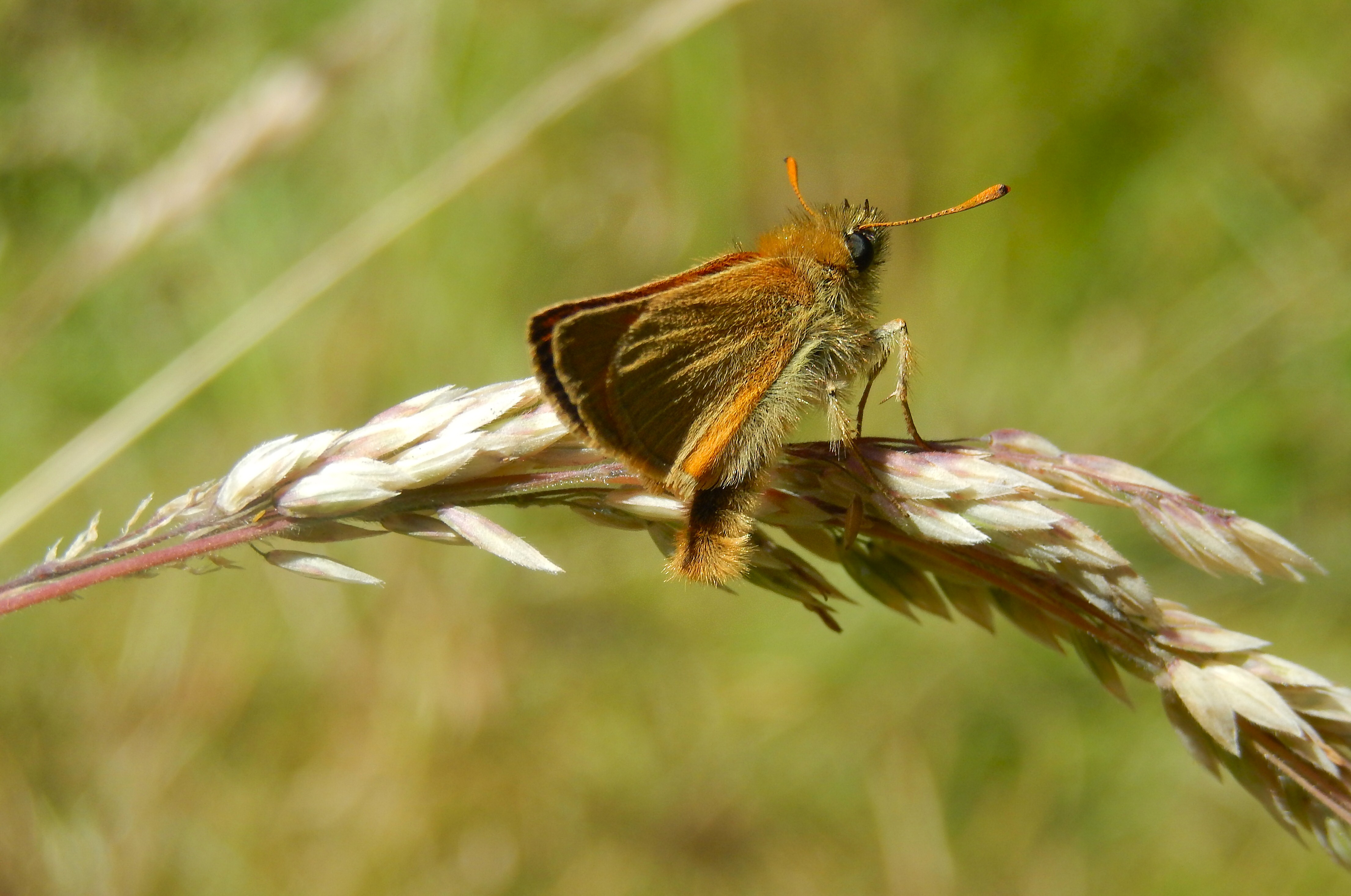
Small Skipper - the Essex Skipper has more black on the tips of its antennae
Small Skipper – the Essex Skipper has more black on the tips of its antennae

Once inside, I was rewarded with several very small, very active Skippers with their jittery, chaotic, jinking flight. It is hard enough to follow with the naked eye, close to impossible with binoculars, and presumably difficult for bird predators (as well as the reason for the name Skipper). When one finally did perch, it was clear it was a Small Skipper, as the Essex Skipper (not limited to that county) has more black on its antenna tips.

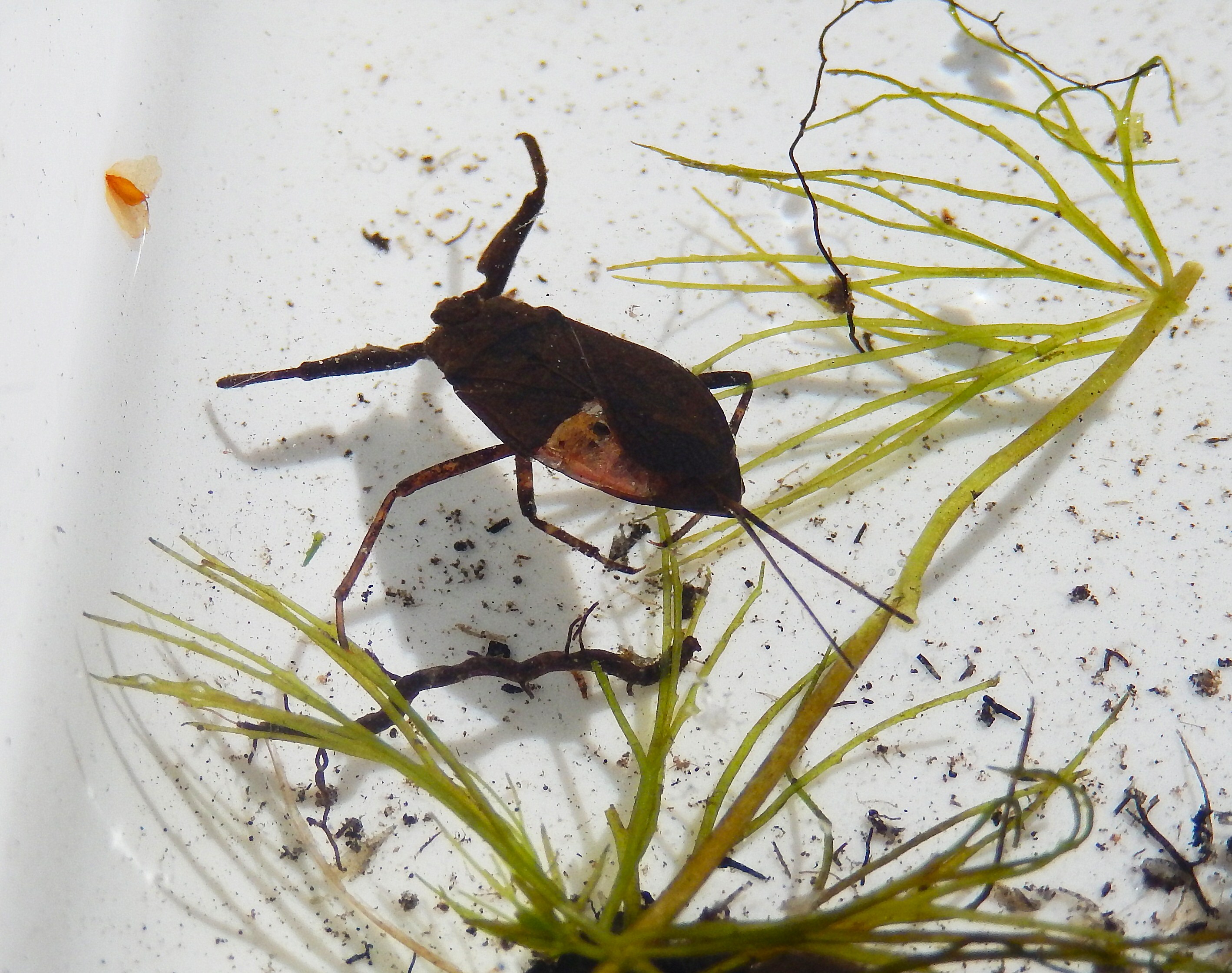
Water Scorpion
Water Scorpion

Down at the pond, a primary school class and a group of enthusiastic teachers were catching Ramshorn Pond Snails, Newts, Dragonfly larvae and this fine Water Scorpion.

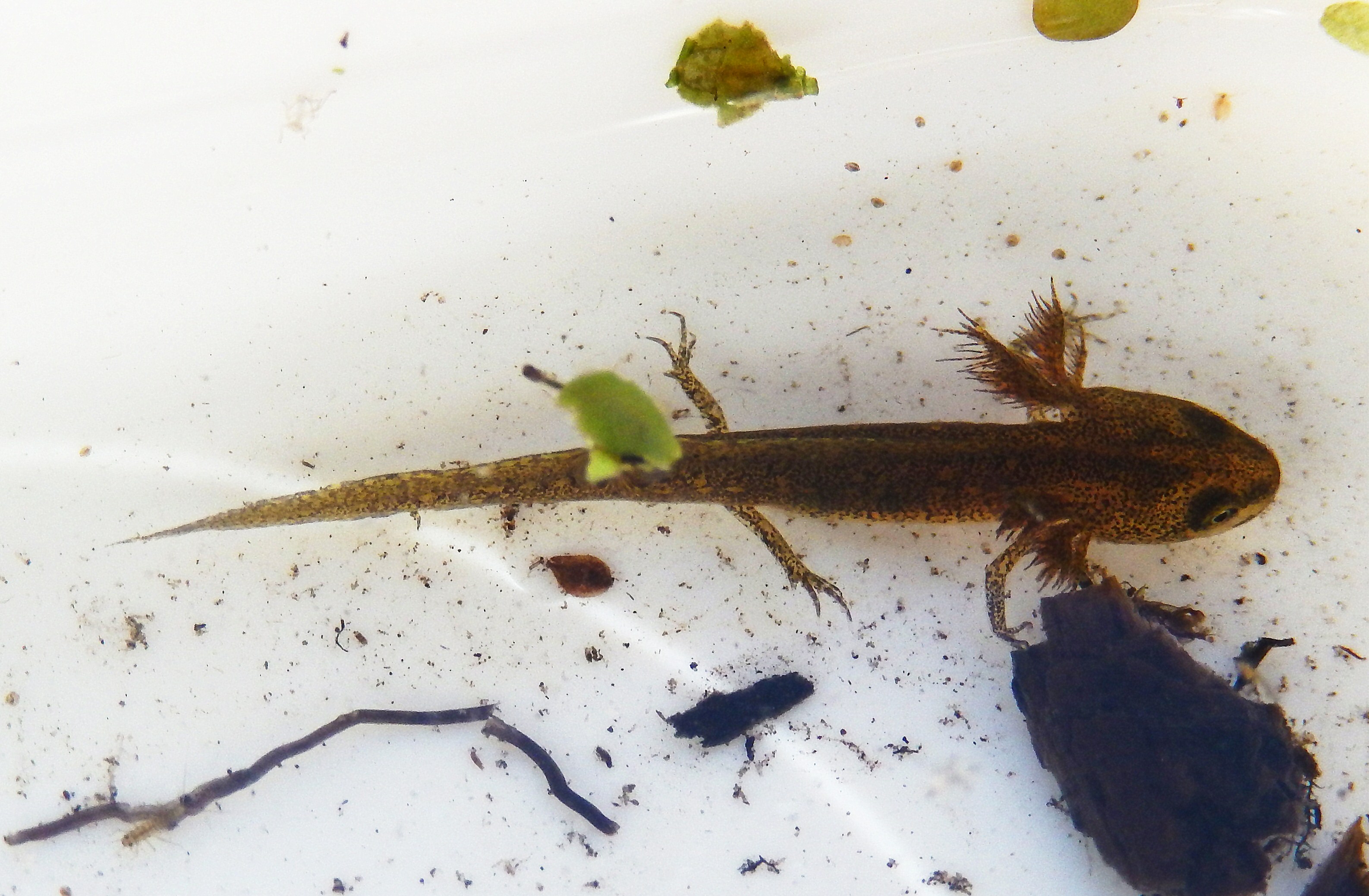
Tiny newt in metamorphosis, with four legs and gills
Tiny newt in metamorphosis, with four legs and large external gills

This small newt has nearly completed its metamorphosis from a tadpole. It has four legs, the hindlegs so thin they were nearly invisible to the naked eye, but its gills are still large, feathery and projecting from the sides of the head.

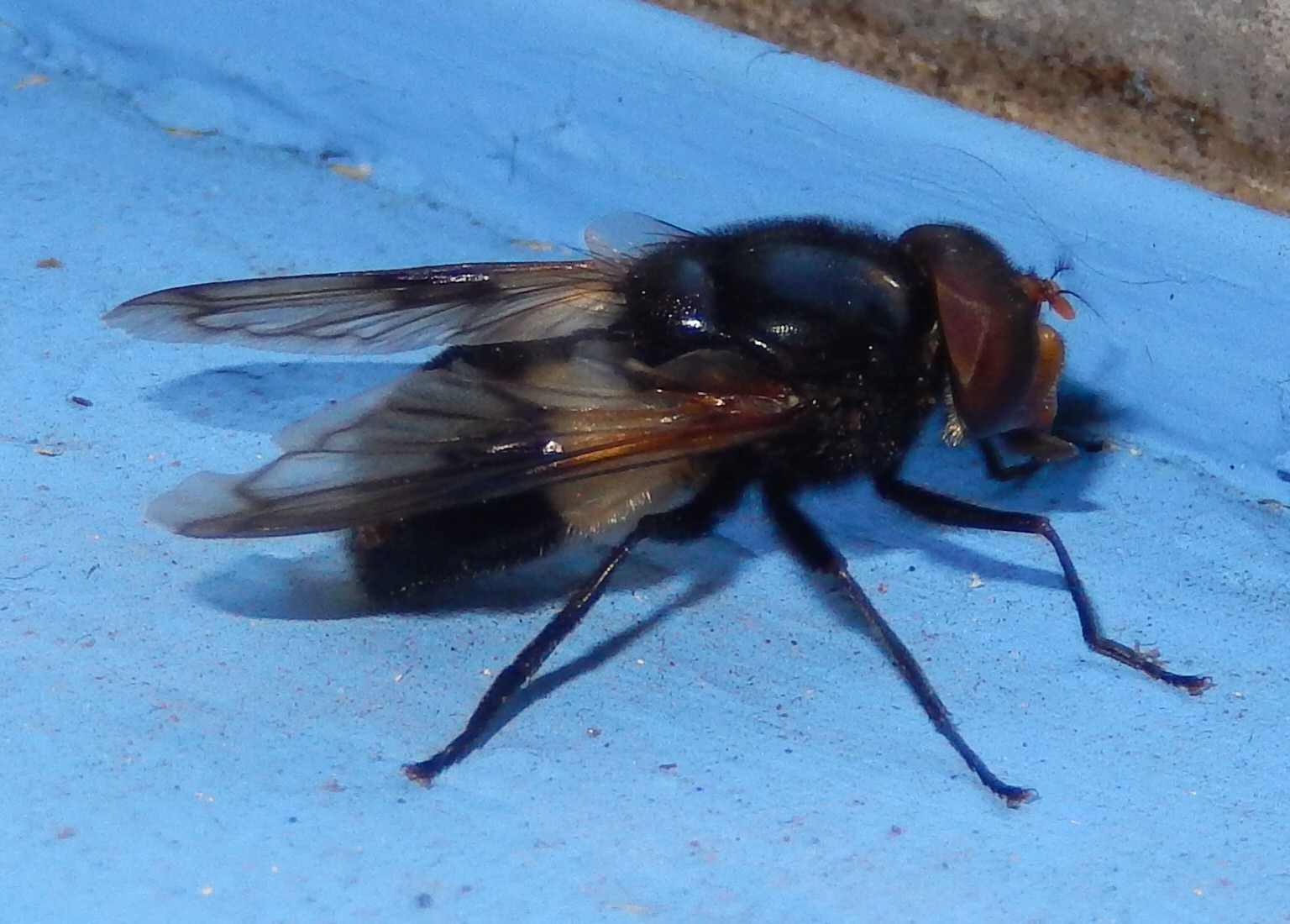
One of the large handsome hoverflies that frequents woodland glades came into the hut. This species has the front of the abdomen pale yellowish but no other stripes; the pale area seems to glow when the fly is hovering, presumably making it look sufficiently black and yellow to warn off predators (of course, many bees are black).

Large woodland hoverfly

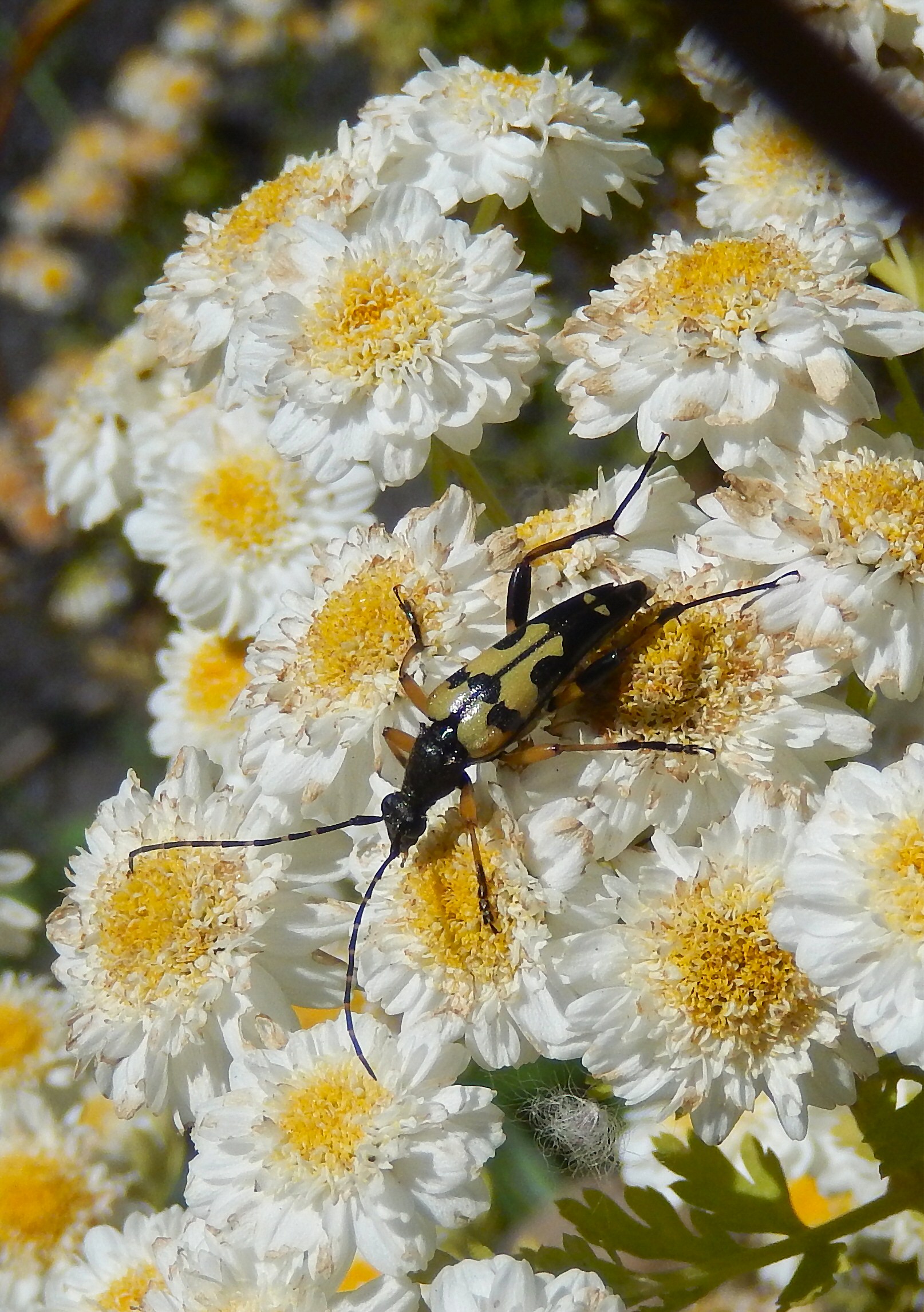
Finally, here’s a Strangalia maculata, one of our most handsome longhorn beetles. Nearby was another Red Admiral.

Strangalia maculata, a longhorn beetle

Vixen Moon

In the evening, the full moon rose between the housetops, a huge, orange-yellow circle, slightly squashed into an ellipse by refraction through the atmosphere. A thin wisp of cloud in the otherwise clear sky gave her yellow glow a ghostly appearance. The moon’s dusty ‘seas’ glowed grey-brown,  distinct in outline.

The night was warm. I rose, sticky with sweat, washed, drank, tried to sleep.

A vixen barked, once, twice, faded. I dozed, tried to dream.

The vixen returned, gave her brief yelping bark, louder, nearer, coming closer. I parted the curtain. She was running from left to right along the middle of the road, tail down, nose to ground, shoulders lower than rump, legs moving swiftly in a short trotting gait, grey-brown in the sickly yellow streetlights.

Behind her, on the far pavement, a ghostly shape similar to hers appeared and disappeared, seeming to flicker in the light, vanishing behind the parked cars, more a movement than a shape, her yearling cub, under the vixen moon.


Mayflies Rising!

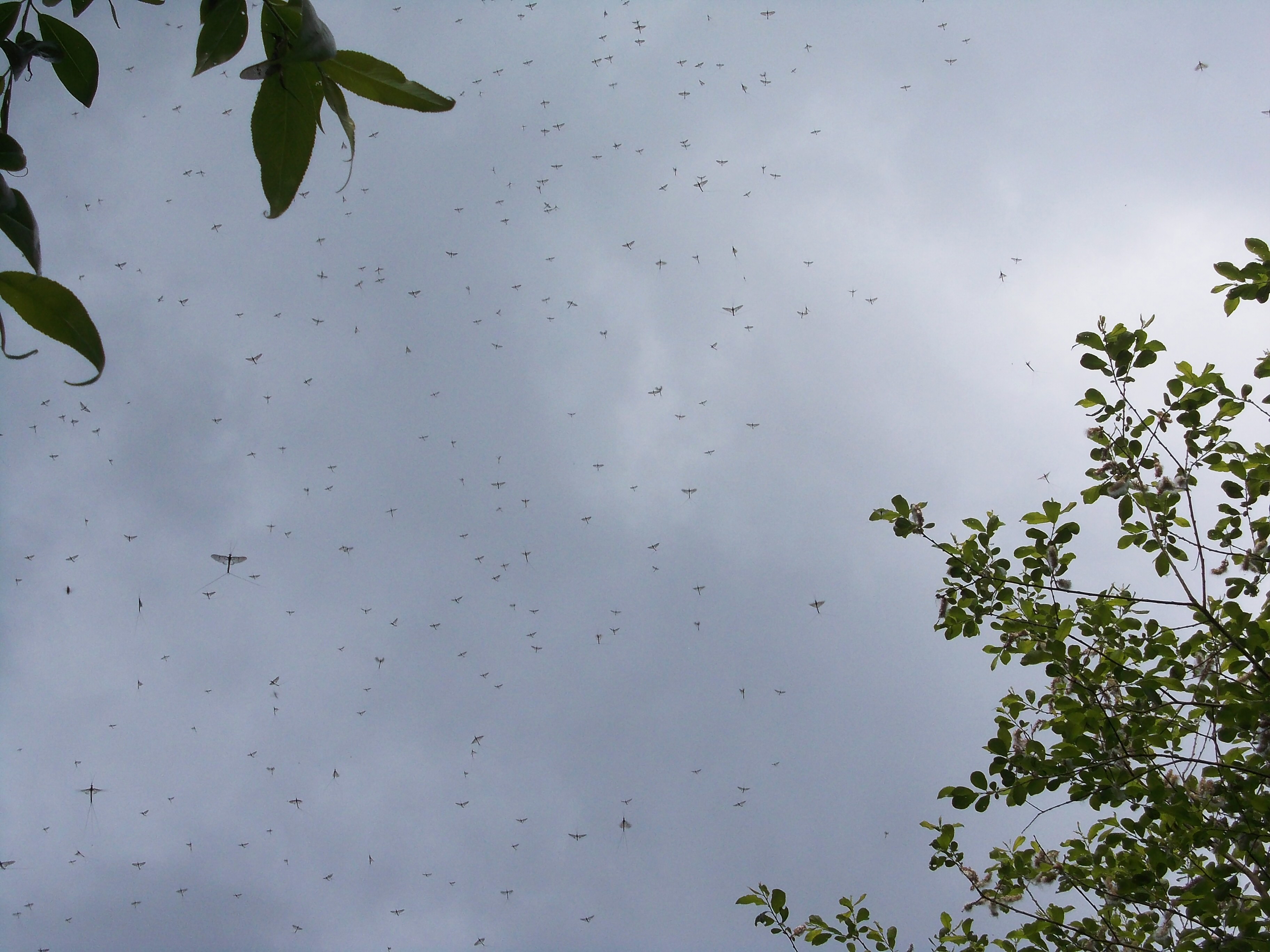
Mayflies rising over Wraysbury Lakes

May is the fastest time of Nature’s year. What a difference a few days make! Last time at Wraysbury, a few sluggish mayflies sitting around as if waiting for something to happen in a one horse town.

Well, today it’s happening. In places, the sky is filled with rising mayflies: a few mating, most alone. Here and there, some repeatedly dance up, and a few seconds later, down; but most just climb, and fly about, seeming frail on their large wings, their triple tail streamers hanging below them: it’s worth zooming in on the picture. Even better, here’s a short video clip. The soundtrack combines an airliner taking off and a Blackcap singing.

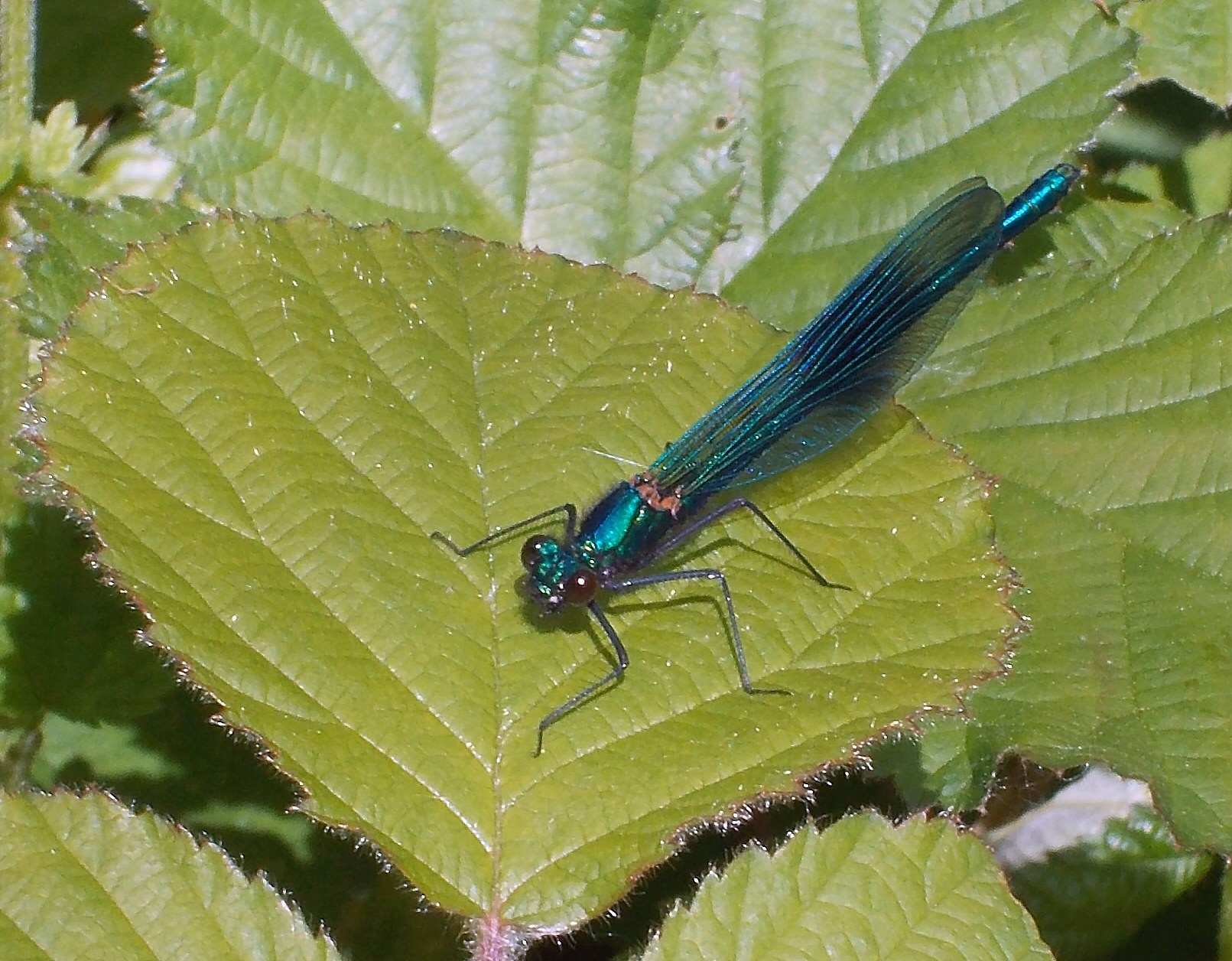
Male Banded Demoiselle on Bramble

One of the glories of summer by water is the brilliant turquoise and green iridescence of the male Banded Demoiselle – the so-called band is actually the appearance of flickering of the wings, the dark spot on each of the four wings giving a hard-to-describe semblance of a sparkling blue jewel in flight, with bands of colour too fast and changeable for the eye to understand. But he’s pretty fine at rest, too.

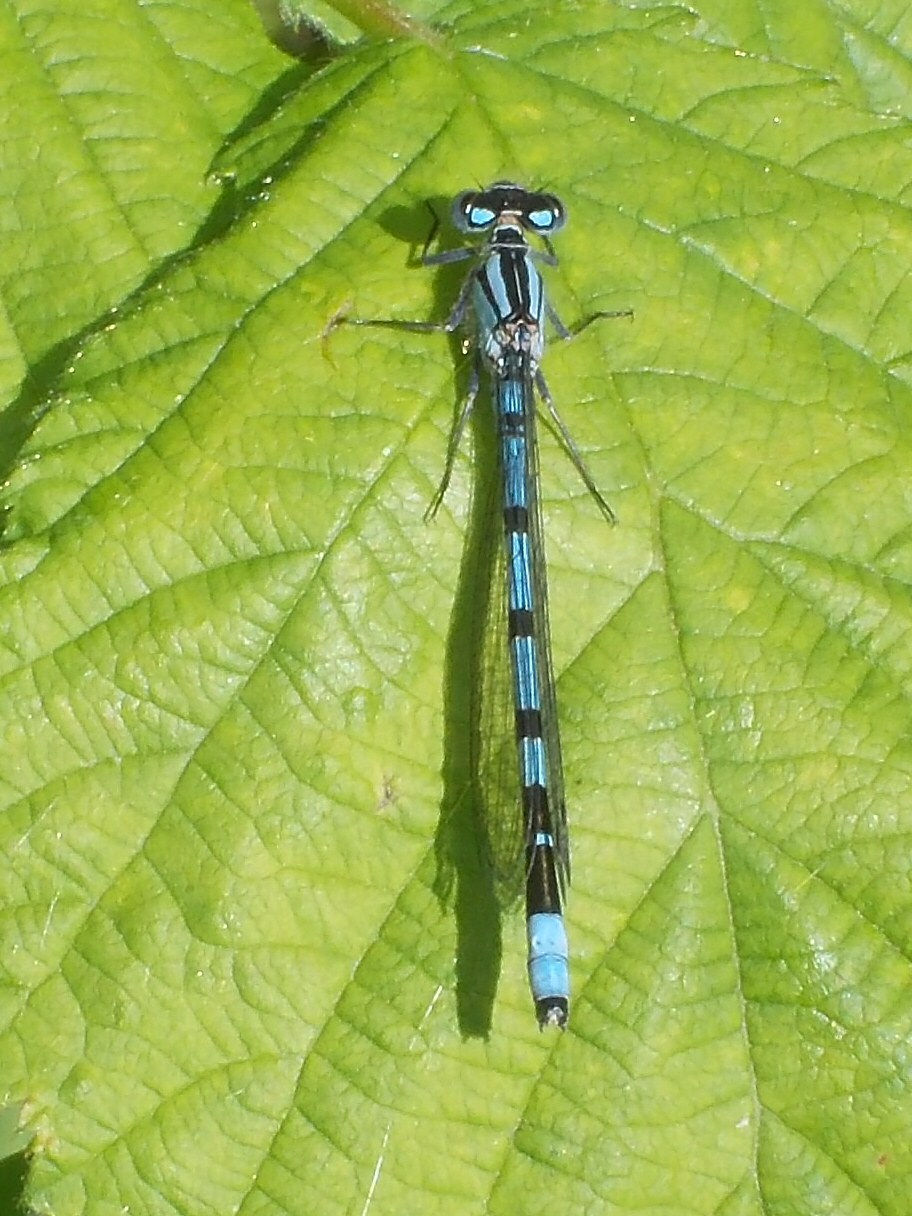
Male Common Blue Damselfly

Common Blue, Bluetail, and Red-eyed Damselflies have all now emerged, the Red-eyed being the scarcest of the three, seemingly.

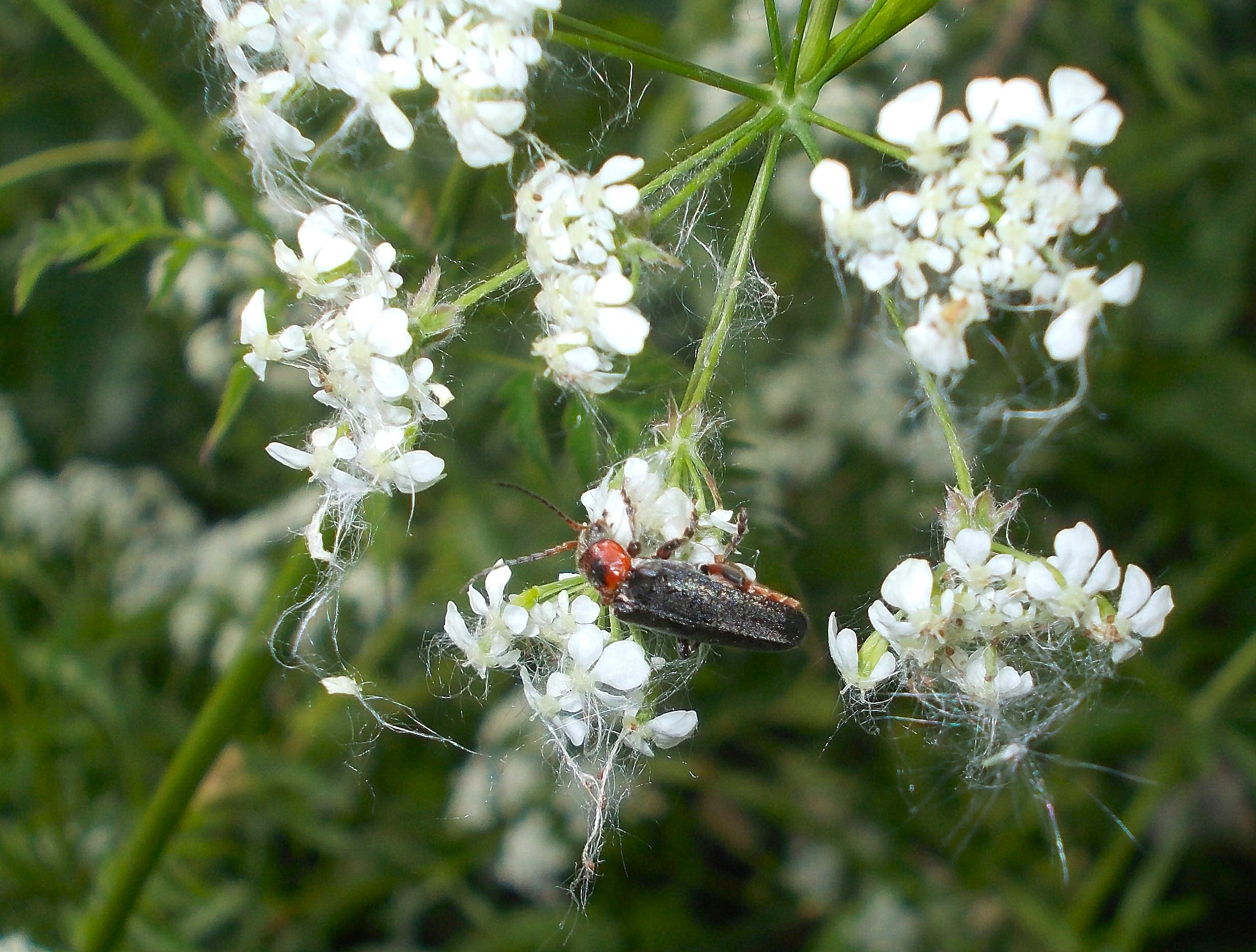
Soldier Beetle, Cantharis rustica on Cow Parsley

On the Cow Parsley were, as well as the damsels, two cantharid Soldier Beetles, Cantharis rustica or a close relative. Another enormous cloud of rising mayflies, and suddenly behind them a pair of Hobbies, hawking for insects – whether damselflies or even mayflies is impossible to tell. One comes close, wheels away on scything wings as it sees me.

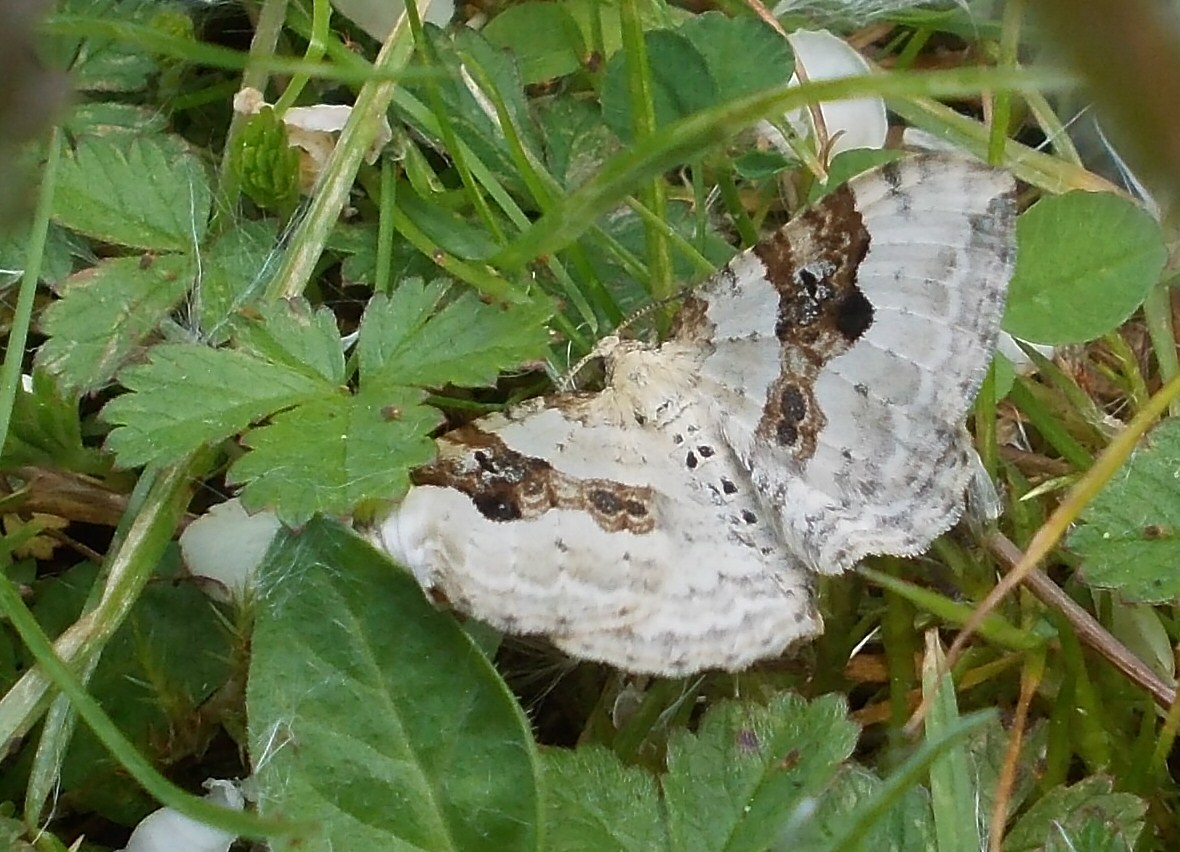
Silver-Ground Carpet Moth Xanthorhoe montanata

A Silver-Ground Carpet Moth, Xanthorhoe montanata, flutters weakly past me among the Hawthorn bushes and flops onto the grass. Garden Warblers sing, a Whitethroat rasps in its songflight. A Treecreeper sings its little ditty sweetly from near the river.

On the hill, three Greylag and two Egyptian Geese form a peaceful flock. Stock Doves and a mixed flock of Crows and Jackdaws rise from the grass. A Song Thrush gives a marvellous solo recital near the road.


Mayflies, May Blossom… yes, it’s May at Wraysbury Lakes

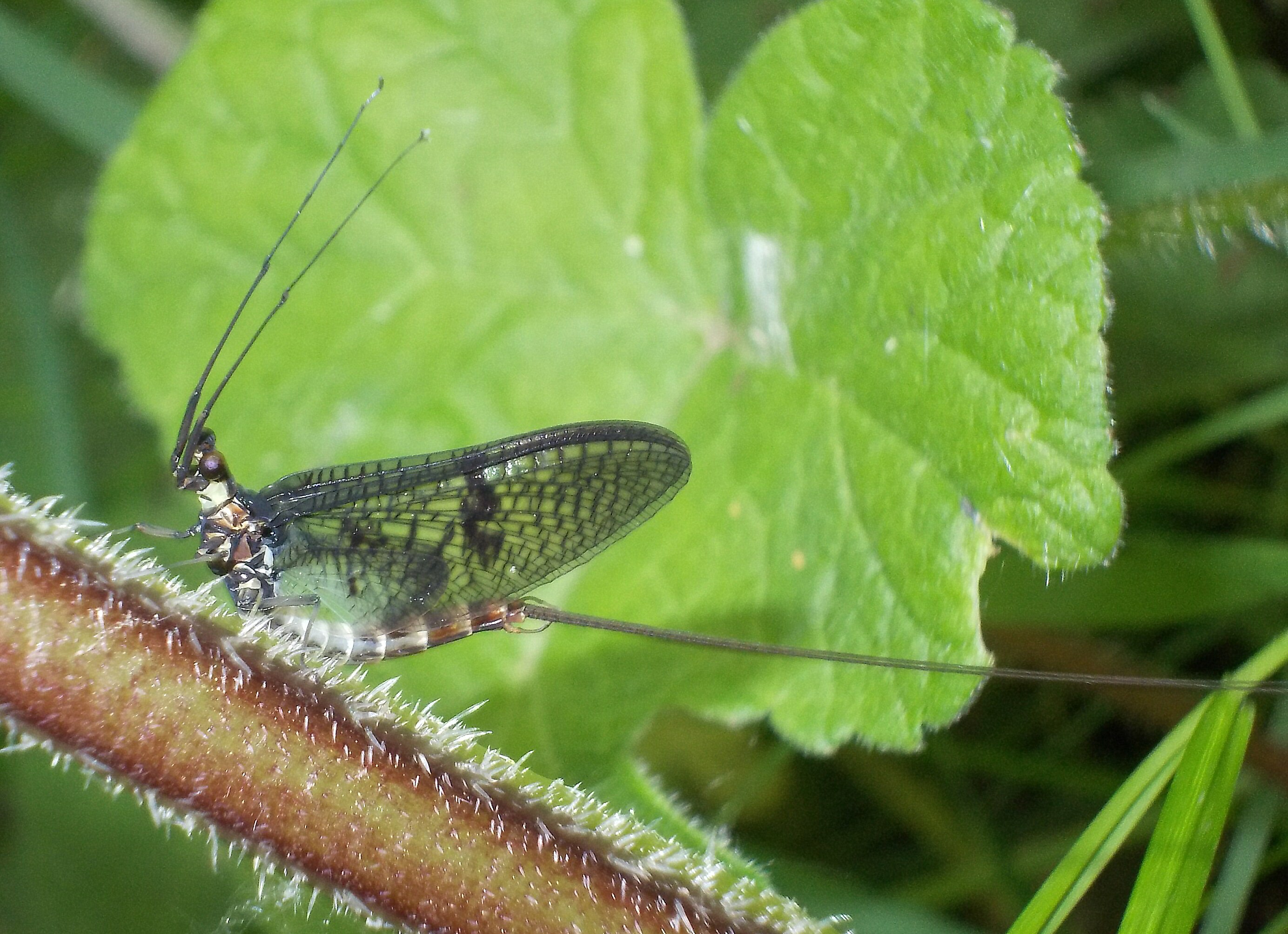
Mayfly cf Ephemera vulgata

The sun is shining … in between the showers. Mayflies are resting all over the plants near the river. May blossom makes a bright show on every hawthorn bush. Yes, it’s May down at Wraysbury Lakes. The energetic breeze gives a cool feel, but out of the wind it’s very pleasant. Enjoying the brisk airflow are at least four Common Terns over the lakes and overhead; a few Swallows; and a small number of Swifts, newly arrived in the last few days, racing down to the water surface to catch flies — not the mayflies, which are active mainly at night. The warblers which are definitely about are hard to hear for the wind in the trees, but I caught snatches of Chiffchaff, Blackcap, many Whitethroats, plenty of Garden Warbler, a Willow Warbler, three Song Thrushes and a Blackbird, not to mention Robins and Wrens.  A Cormorant lumbered past, climbing with effort, its jizz very much like that of the Boeing 747s lumbering heavily into the air.

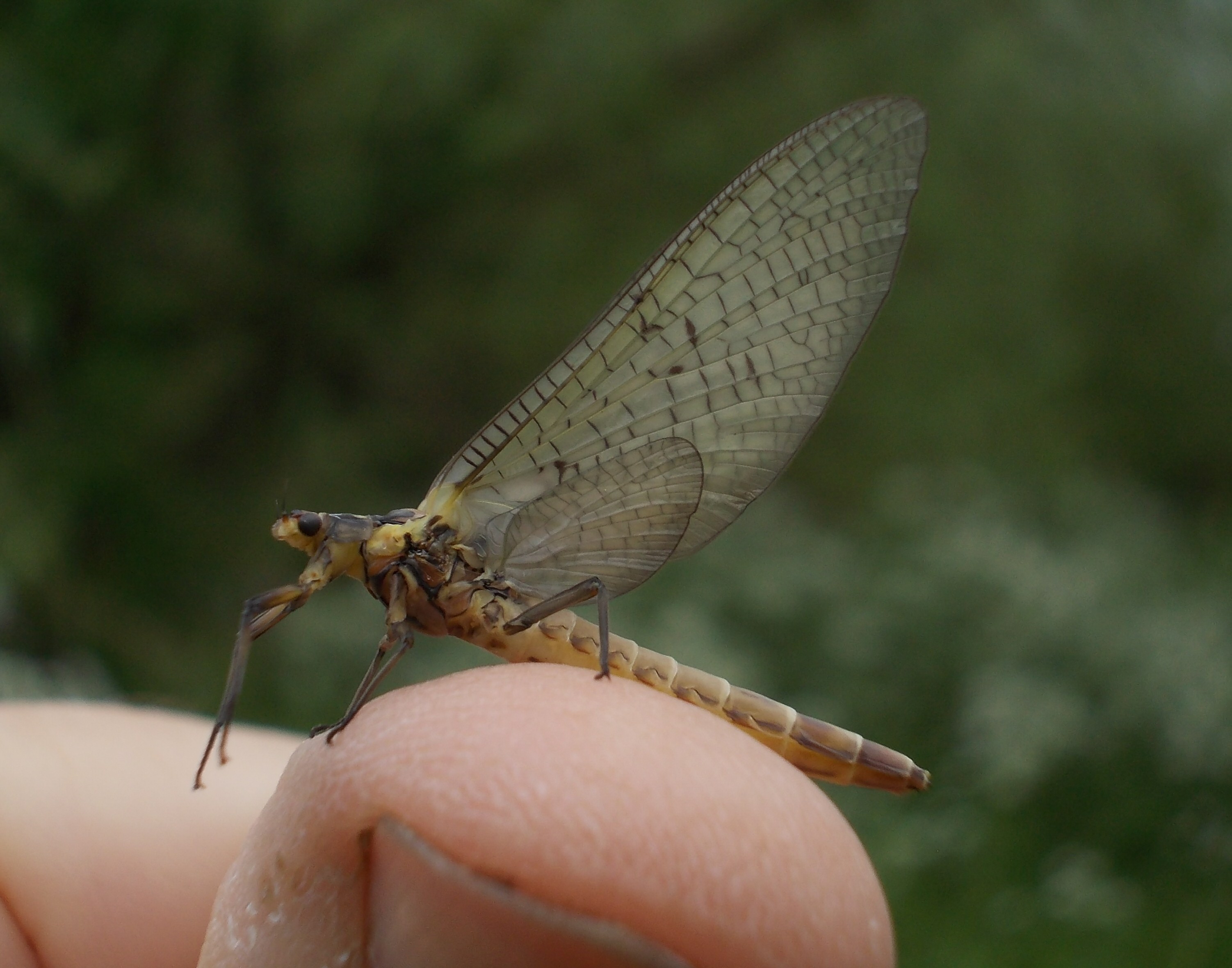
Mayfly look, but no tails. Hmm

There are some pale mayflies, with neither antennae nor the 3 tails: maybe these have broken off in the vegetation.

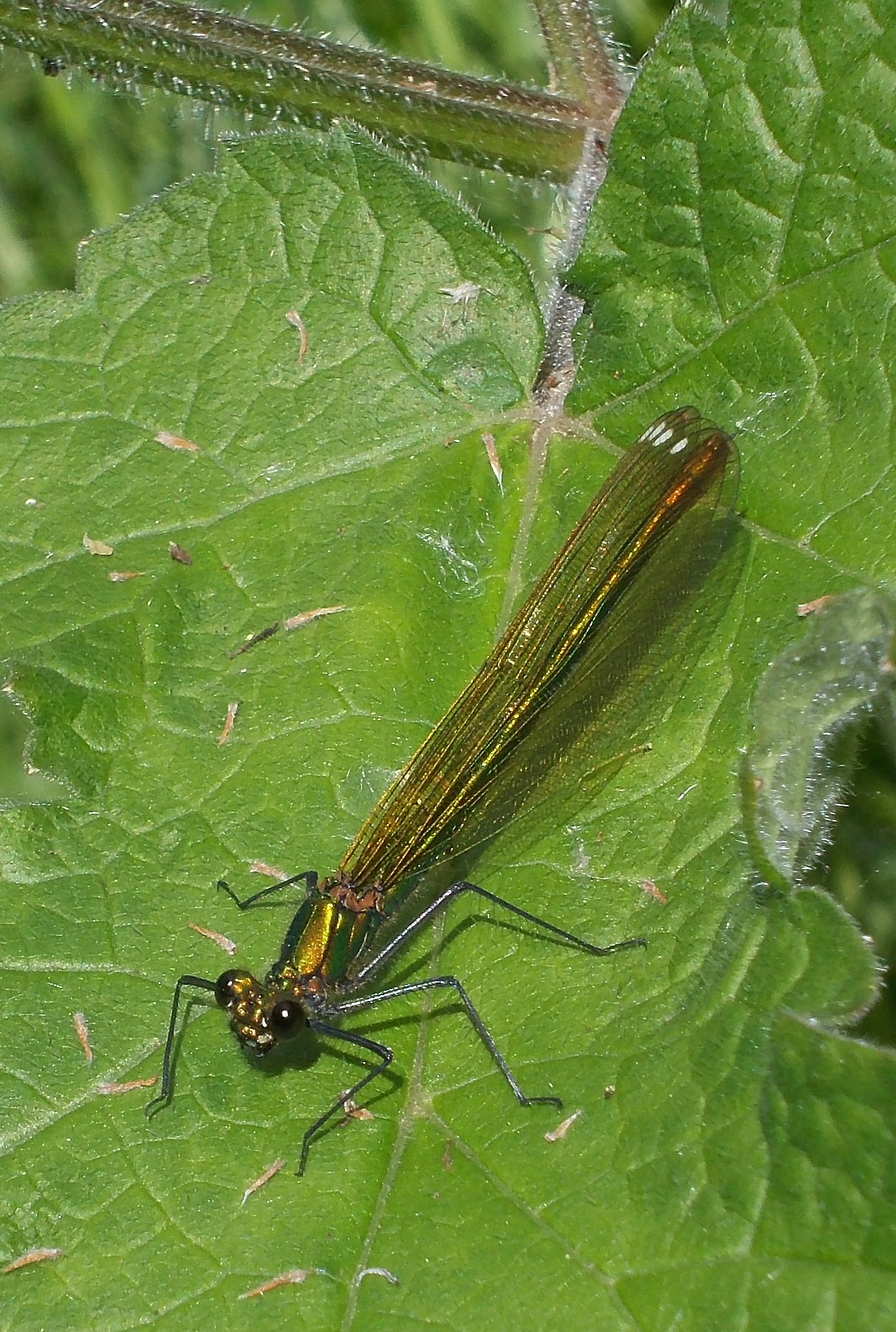
Beautifully iridescent green-bronze female Banded Demoiselle
Beautifully iridescent green-bronze: a female Banded Demoiselle

Also new today are quantities of damselflies: there are many brilliant iridescent blue male Banded Demoiselles, with their beautifully clear green-bronze females. This one seemed definitely to be watching me attentively. Two small blue species have also emerged, Blue-Tailed Damselfly and Common Blue Damselfly.

Over the lake, a long-winged falcon swooped at speed: I wondered for a moment if I had a Cuckoo, but the moustache and white face markings showed it was a Hobby, arrived from Africa in pursuit of the Swifts, and perhaps hunting damselflies as easier prey in this place. The low number of Swifts is worrying; they have been declining for years, as building renovation removes their old nest-holes, and increased human population pressure in Africa threatens them there too.

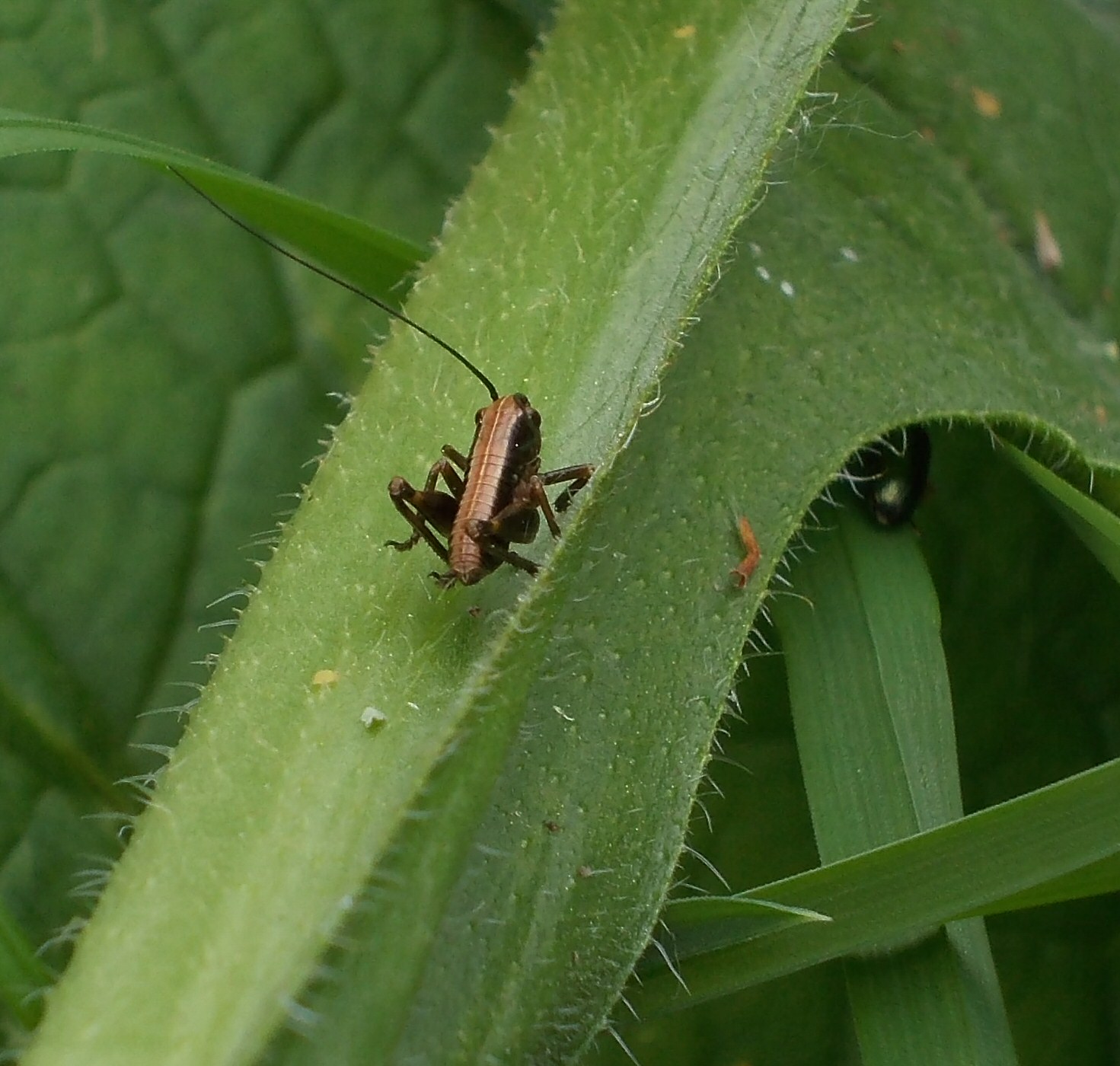
A small Grasshopper on Comfrey

This small grasshopper, missing an antenna, is my first of the year.

Further along, the bare damp area that often has teasels is bright yellow with clumps of a yellow Brassica that has clasping leaves like wild turnip (or cultivated swede). There’s a definite cabbagey smell. A Whitethroat, caught out in the open, makes a dash for a bush.

Even more on a Blackcurrant Leaf … Welcome or Not

Further to the World on a Blackcurrant Leaf, today the Ichneumons and the Harlequins were joined by two more conspicuous flying visitors, some green Shield Bugs (true bugs, Hemiptera) and some swift yellow-abdomened Sawflies, most probably Gooseberry Sawfly. Both of these are held in definite disfavour by many gardeners, the bugs for sucking plant juices and possibly weakening plants or spreading disease, and the sawflies for making caterpillars which in a bad year can totally defoliate gooseberry bushes — it only happened to me once, and it was quite a shock: from seeing the first little green caterpillars to leafless plants only took a week or so.

Since then I have carefully checked the gooseberry every few days for signs of sawfly damage (and actual caterpillars). If there are just a few, I remove the affected leaves and squash any caterpillars I find; this usually does the trick. If there are many, which has only happened once or twice, I consider spraying, choosing a time without wind, after sunset so the bees aren’t flying, and work close to the bush to keep the stuff local. The approach seems to work well for bees and berries.

As for the bugs, well, I rather like their handsome appearance and their confident swagger. There always seem to be enough currants so I don’t mind if the yield is down a bit on what it might have been.

Wood Wasp, Sprouting Loggeries

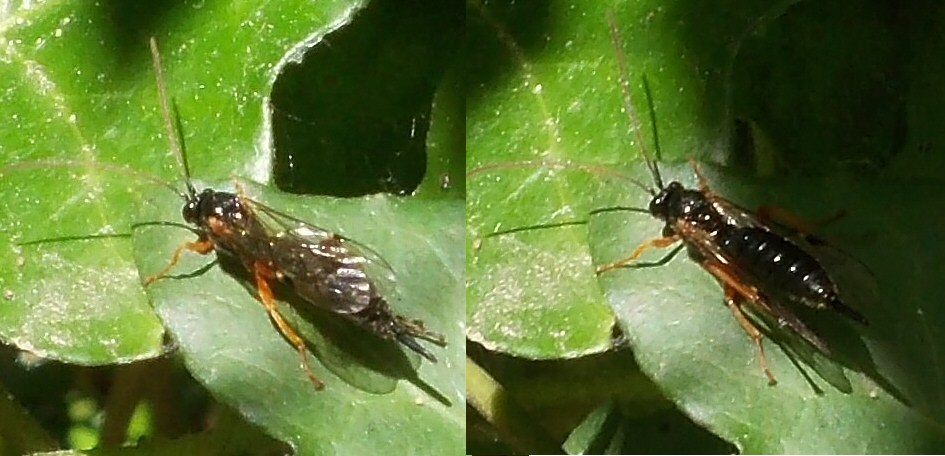
While doing the Butterfly Transect at the Gunnersbury Triangle, I came across a fairly large Wood Wasp (in the sawfly family), about 25mm long. It was a bit tricky getting a photo,  as these insects are distinctly skittish – they race about in the shadows, occasionally perching on a leaf’s upper surface. The breeze was wafting the branches gently, so patches of sunlight came and went. I shot several images with the miniature camera – it has two big advantages over my full-size SLR: one, it has a very short focal length, so it has a better depth of field than an expensive macro lens; two, it’s small and cheap, so I habitually carry it with me in my rucksack.

Wood Wasp, cf Sirex, on Ivy

The two images here show (left) the resting position with the wings over the body, the long antennae,  the alarming-looking ovipositor, and the orange-brown legs; and (right) the plump black abdomen with white spots. Perhaps the two images show that it’s rather hard to get a single image which is suitable for identification. This one looks like a Sirex so perhaps that’s what it is. The eggs are drilled into wood.

The butterfly transect yielded the first definite Green-Veined Whites, i.e. I was able to get close enough to be sure; until now they’ve all been “Small/Green-veined” worse luck. There were some Speckled Woods and an Orange Tip, too; a Brimstone turned up after I’d put the clipboard away.

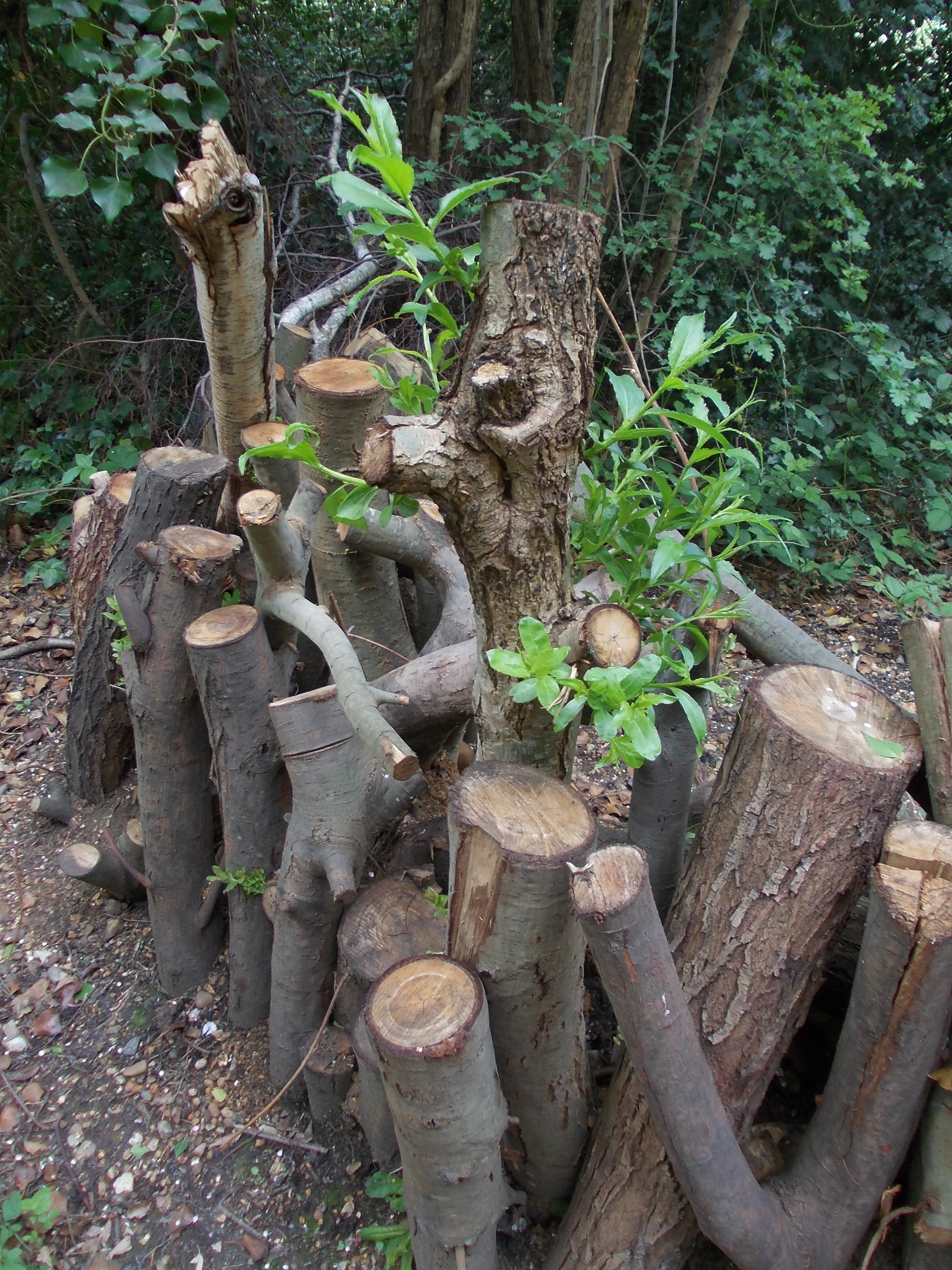
Sprouting Loggery
Sprouting Loggery

But the most curious observation of the day was this sprouting loggery. We ‘planted’ (more literally than we knew) the sawn Willow logs in the winter. They seem very happy in their new setting and are growing vigorously. It will be interesting to see how they get on.