Tag Archives: Forestry

Dolomites 2025

Here are some of the natural history delights of the Dolomites. I’ve avoided duplicating species from my earlier Dolomites post. To see the images at full size, open them in a new tab or window.
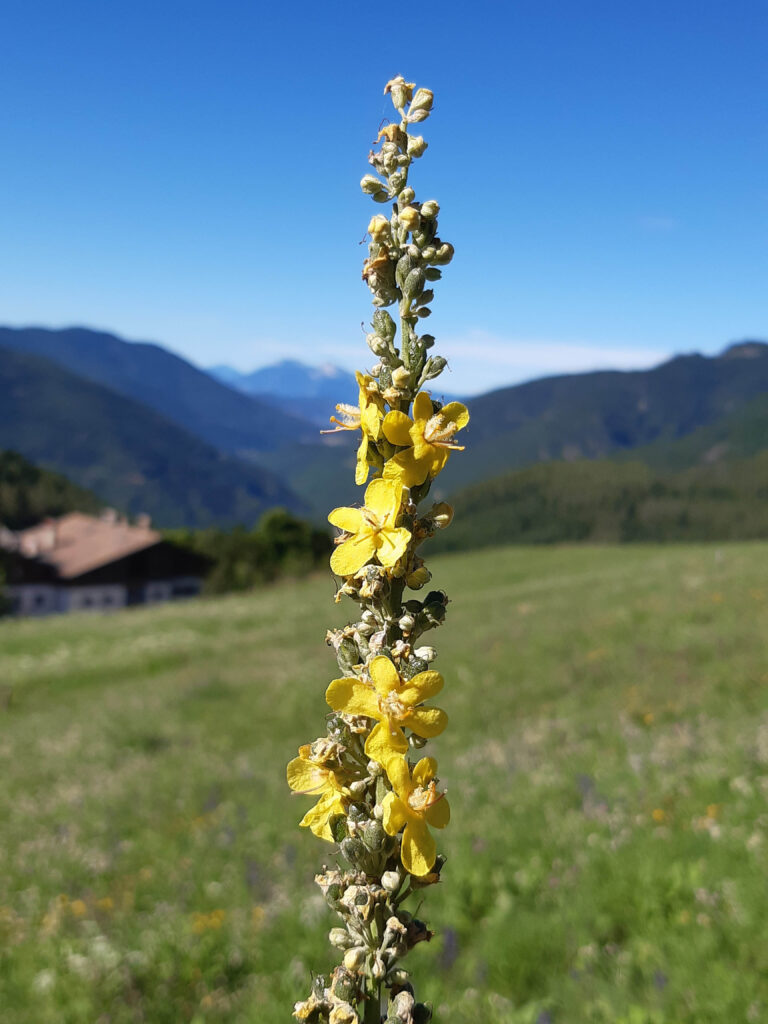
Mullein, Anterivo
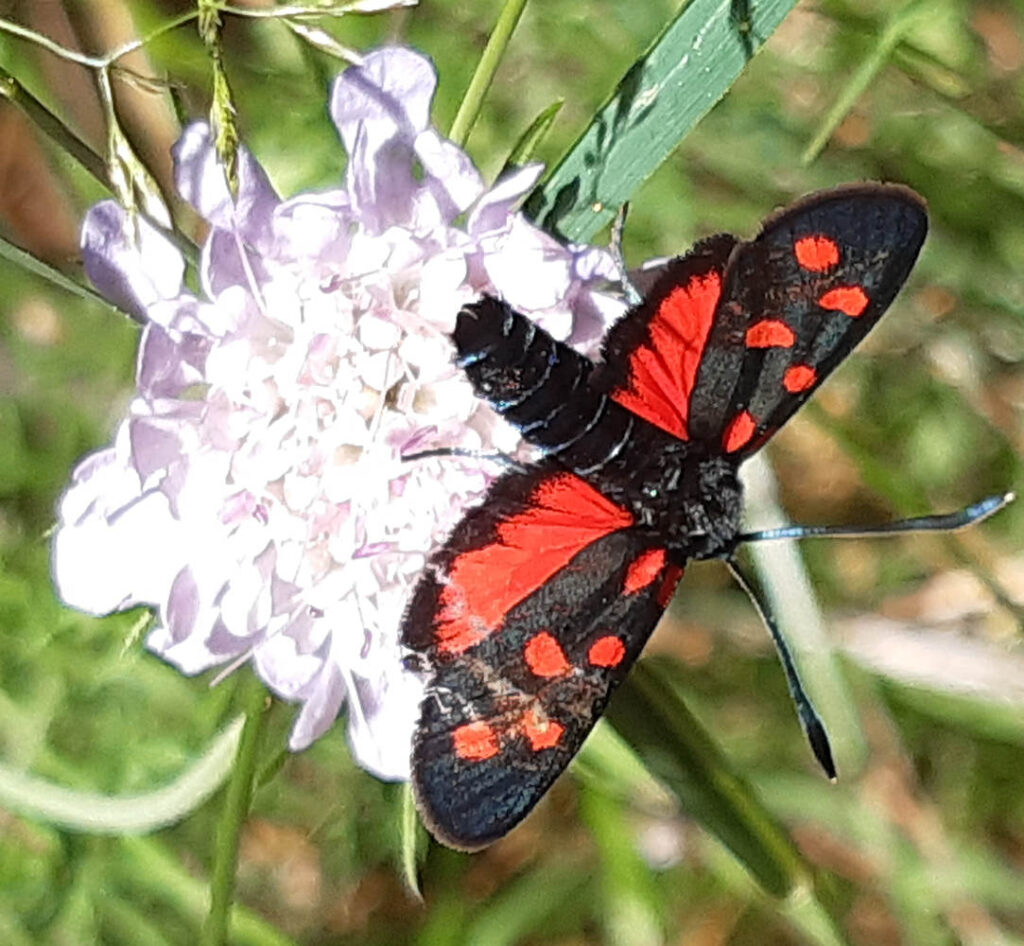
Narrow-bordered 5-spot Burnet Moth, on Scabious

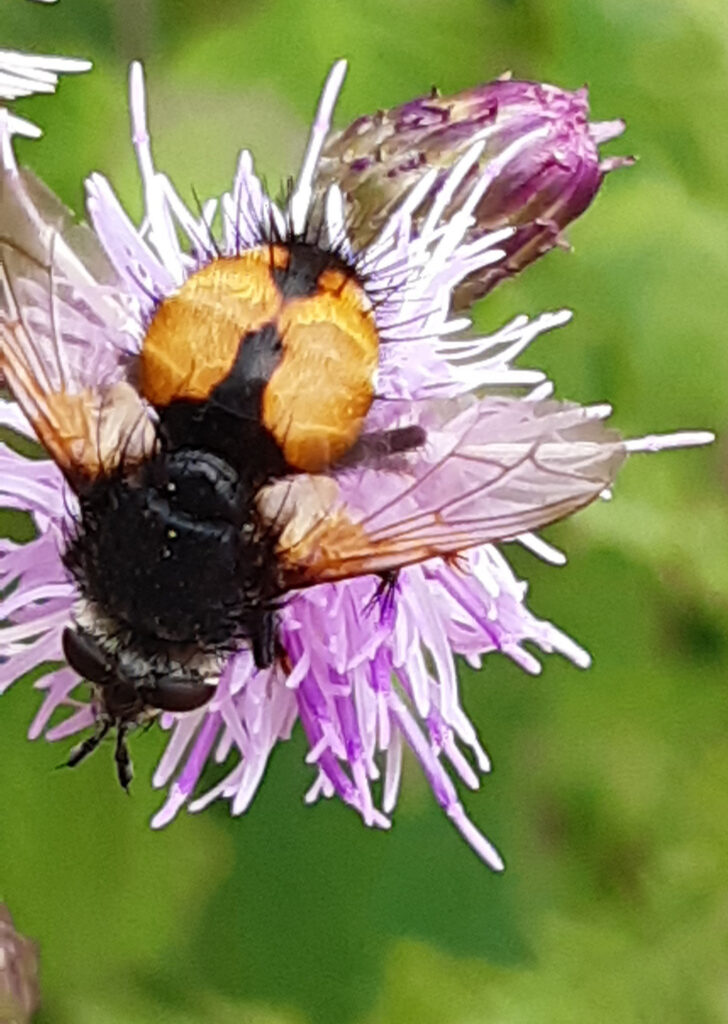
Orange-backed Tachinid fly, presumably mimicking a bee
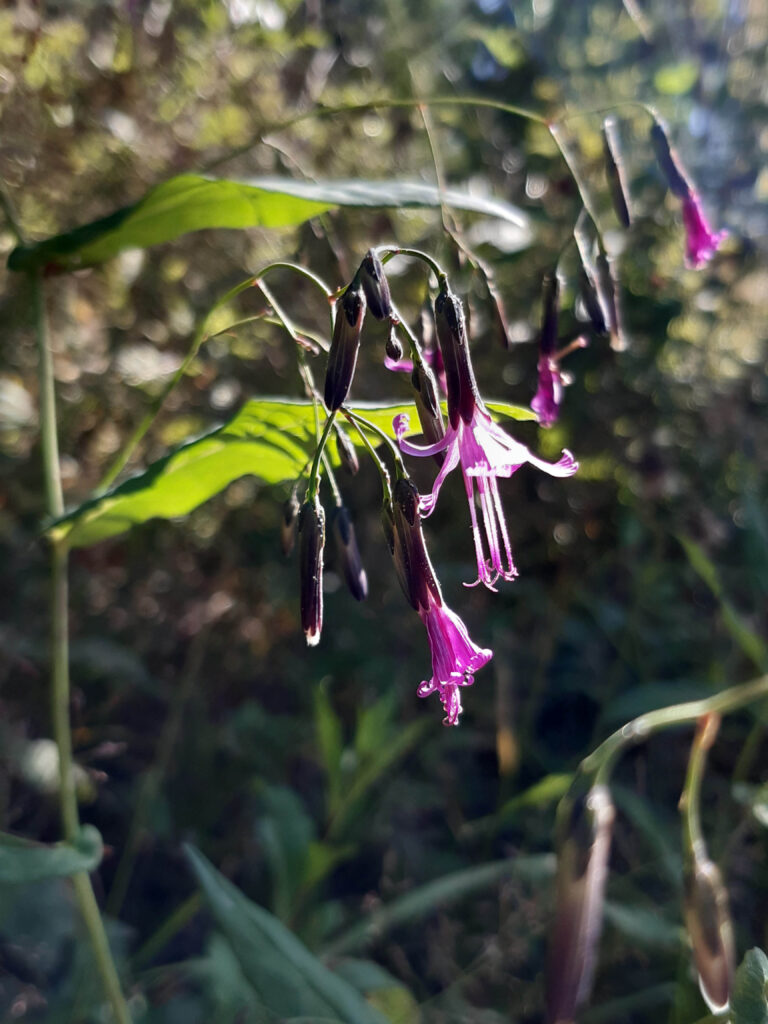
Purple Rattlesnake-root
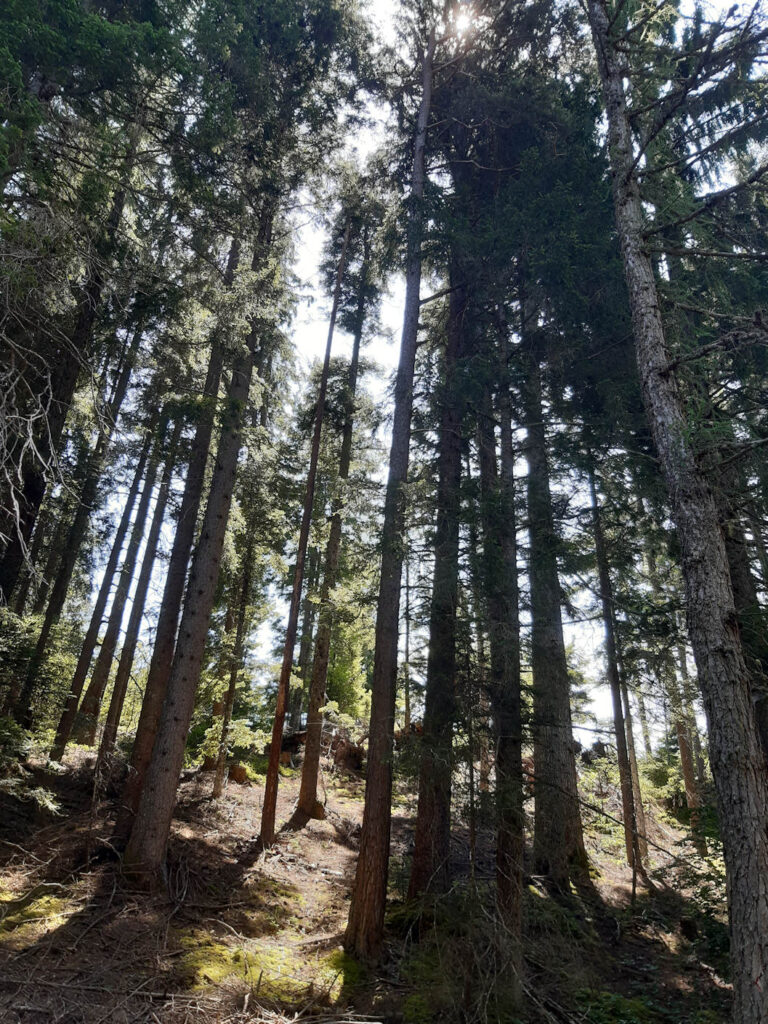
Marvellous tall firs, Anterivo
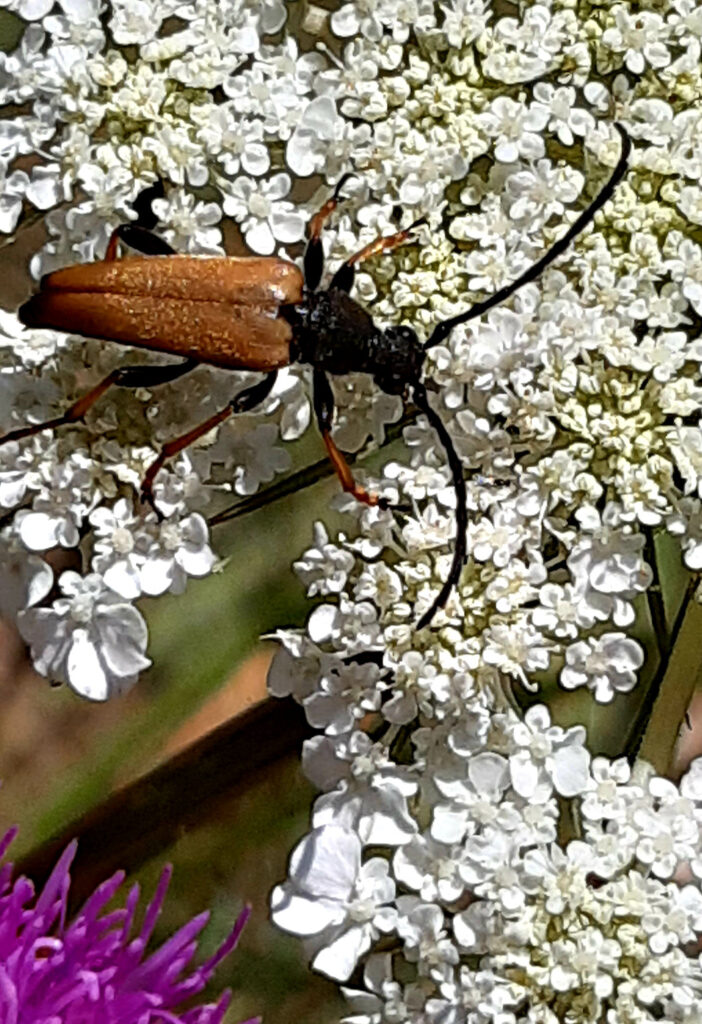
Red Pine Longhorn beetle. The adults take nectar; the larvae feed on rotting wood.
Keeled Garlic
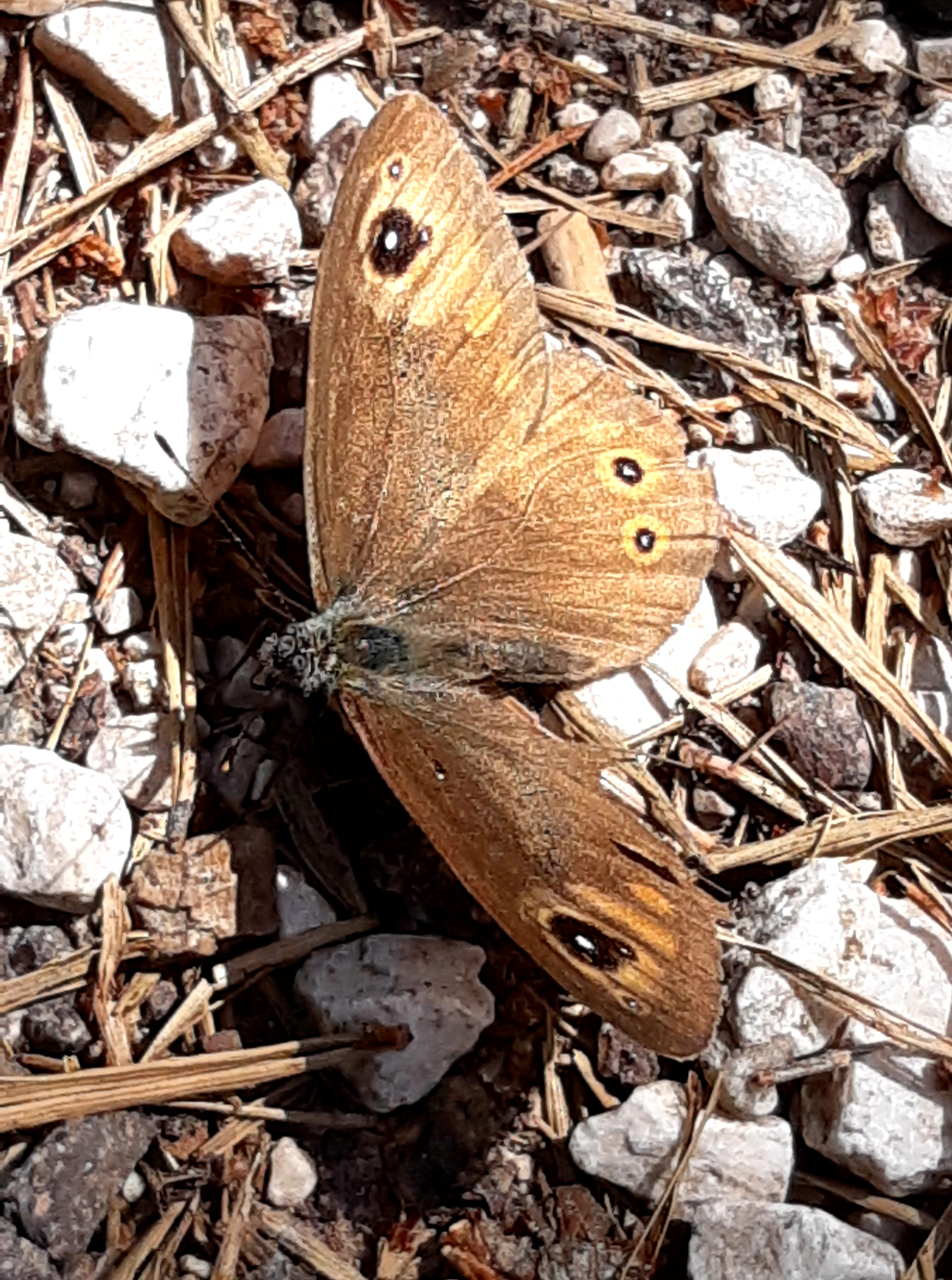
Large Wall Brown, Trodena
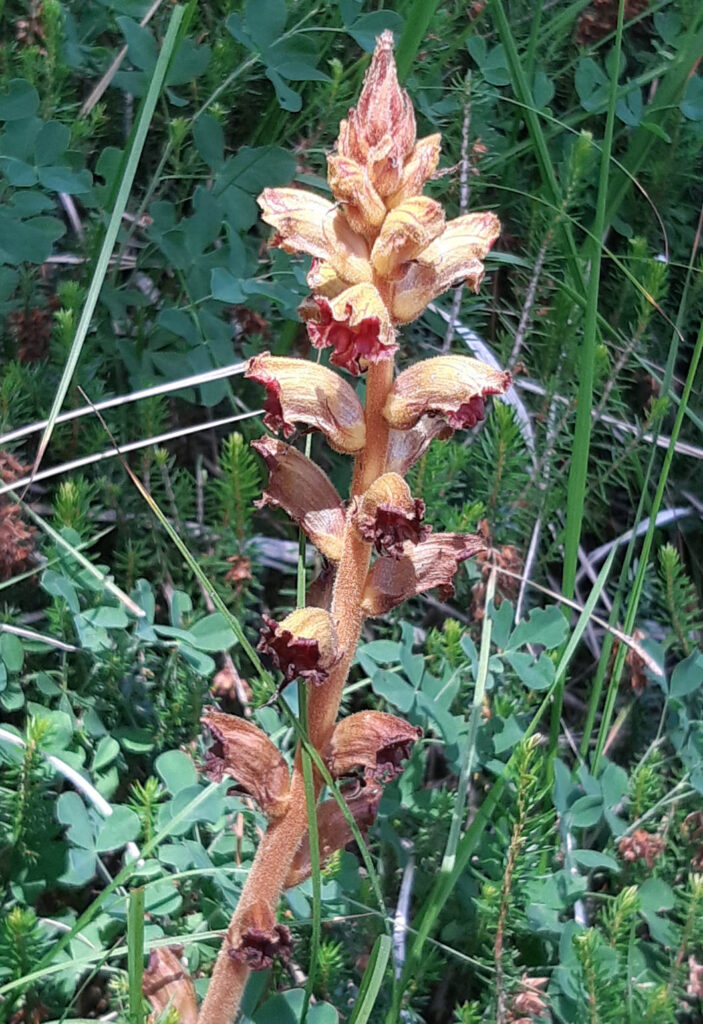
Purple Broomrape, Trodena. The plant has no leaves, relying entirely for its food on parasitising its host plant, Yarrow.
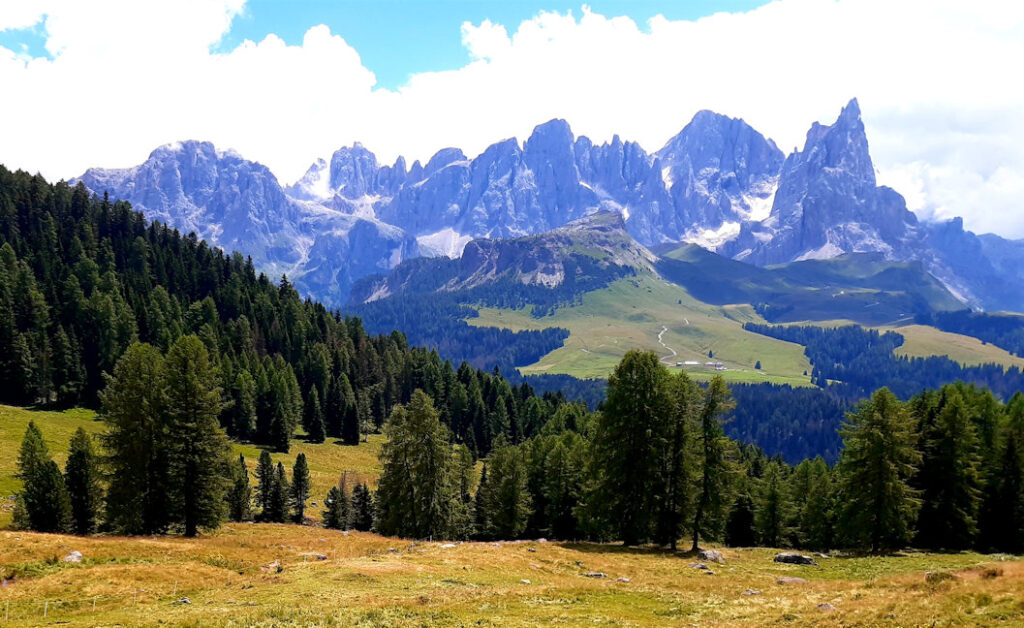
Pale di San Martino mountains, alpine meadows, mixed coniferous forest of Spruce, Fir, Larch, and Pine
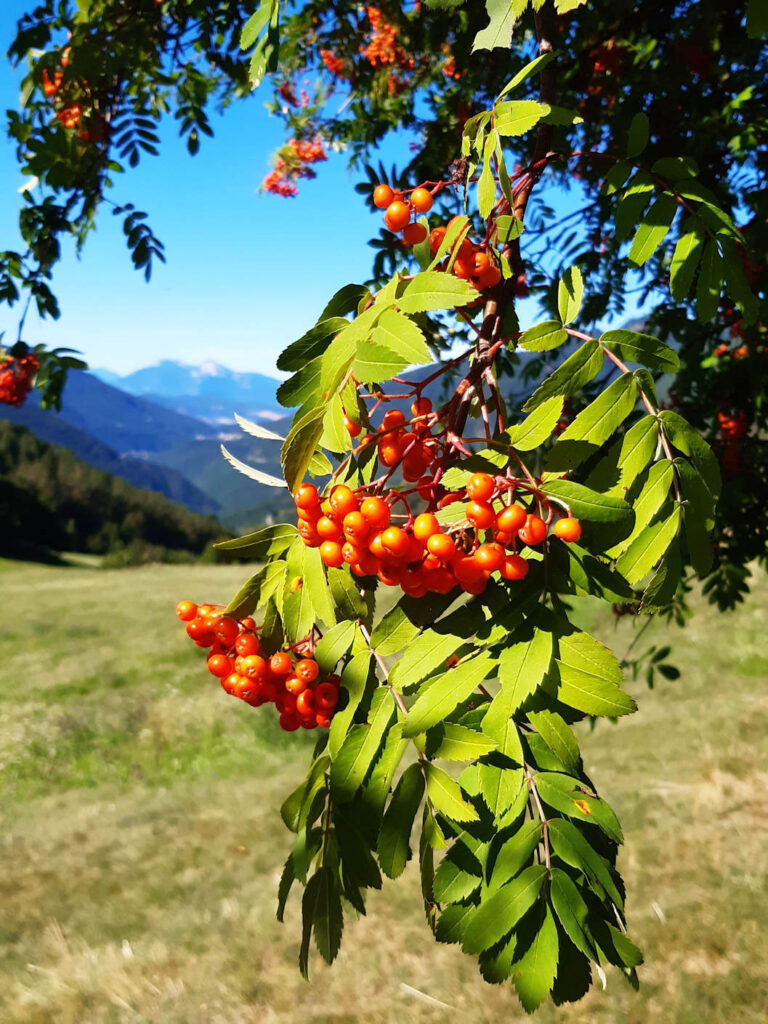
Rowan or Mountain Ash, Anterivo
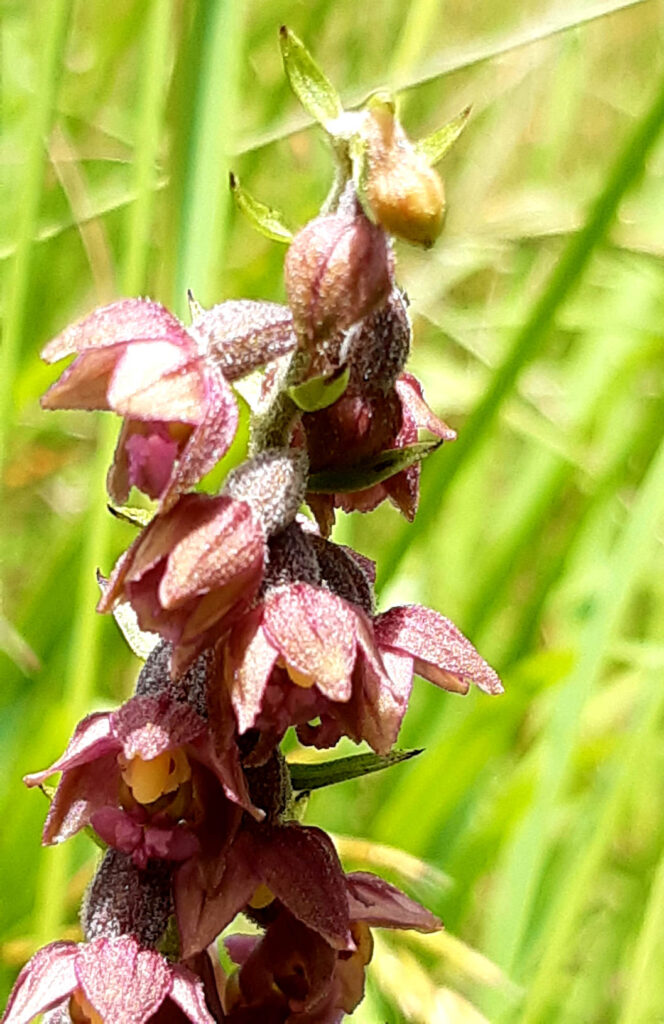
Dark Red Helleborine, Aldino
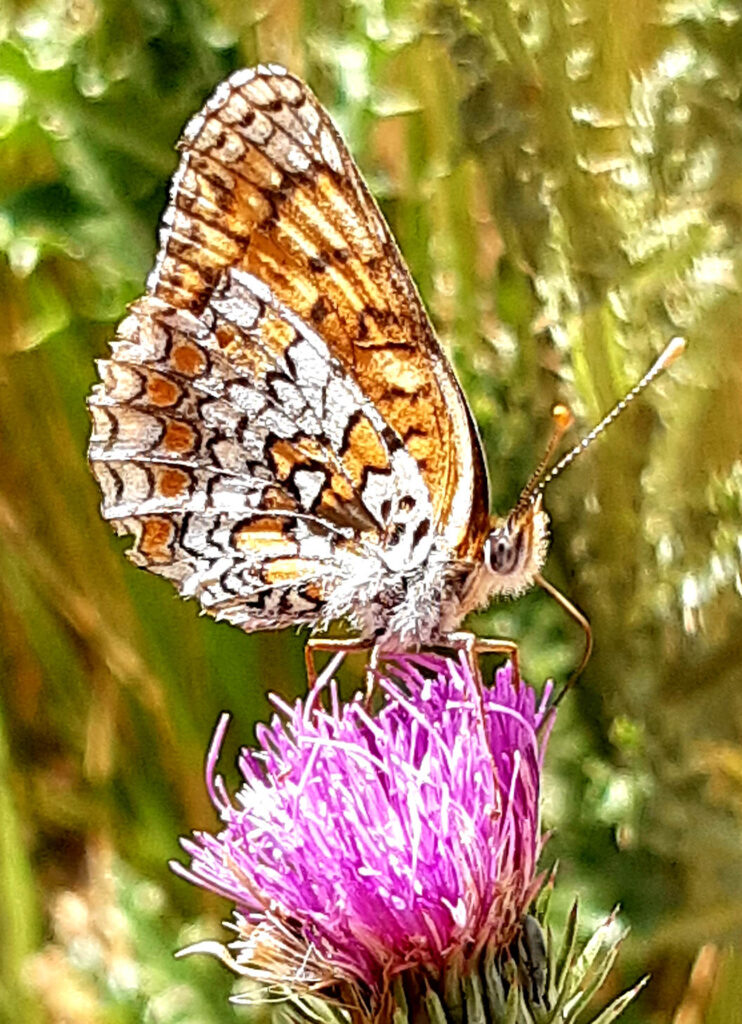
Knapweed Fritillary, on Knapweed
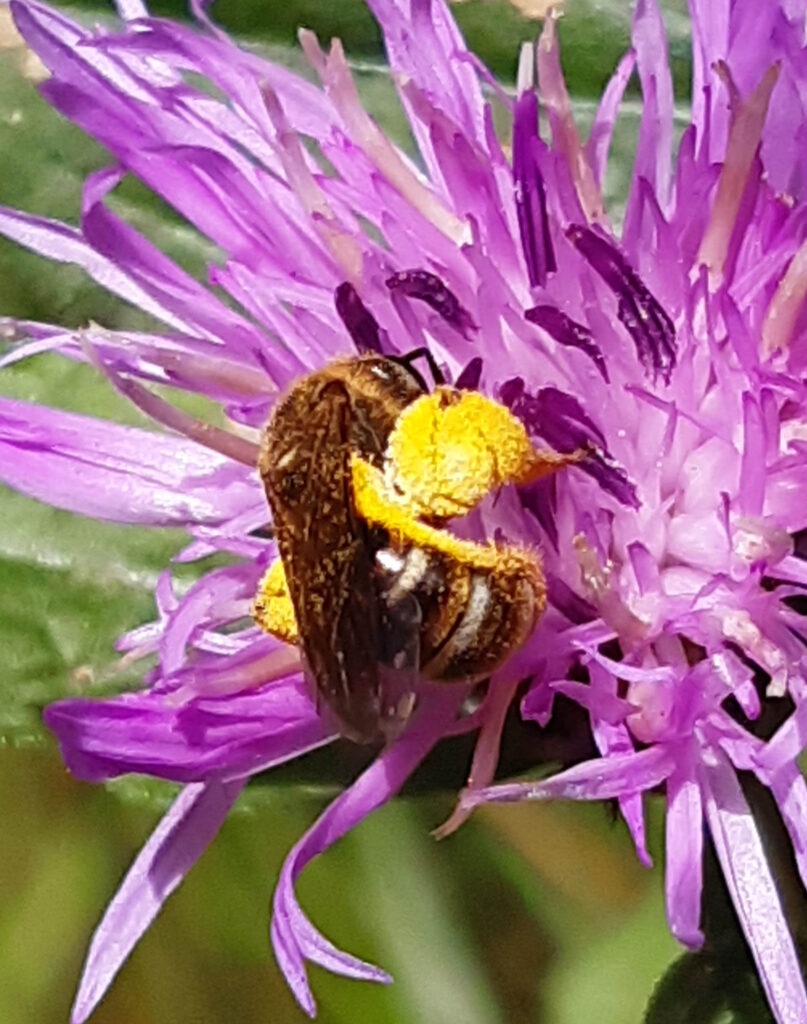
Pollinator at work: a bee with full pollen baskets on its legs, probably a Halictus mining bee, on Knapweed (cf Halictus scabiosae, which does nectar on Knapweed as well as on Scabious, and has stripes of three colours on its abdomen)
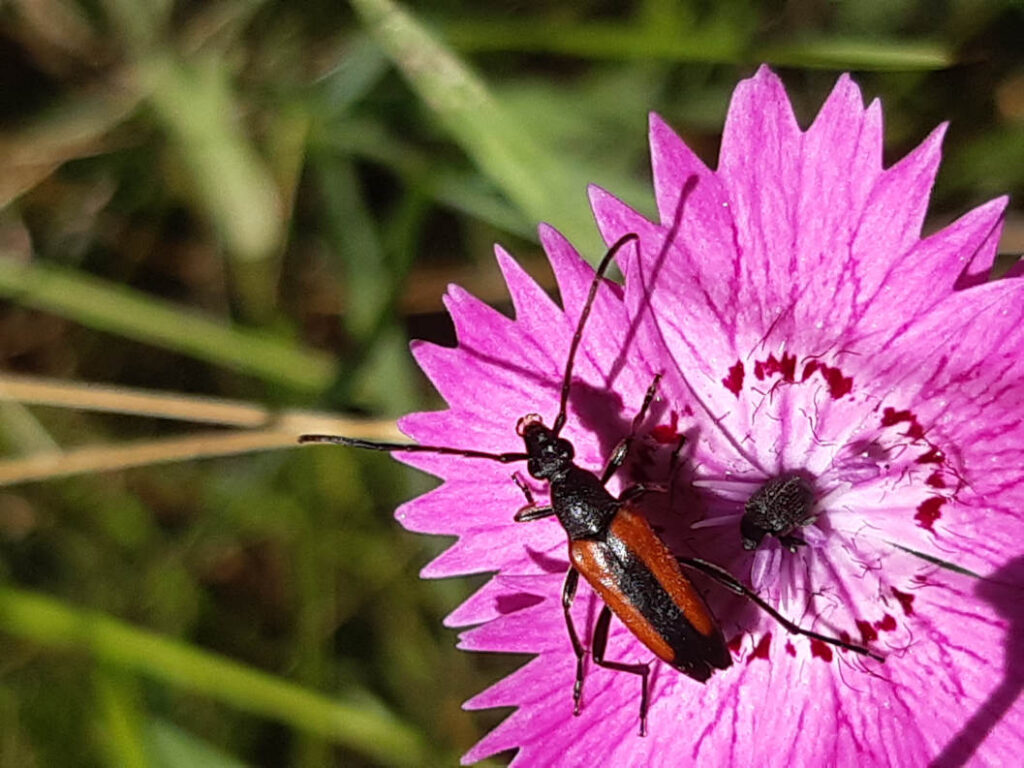
Black-striped Longhorn Beetle, on Seguier’s Pink
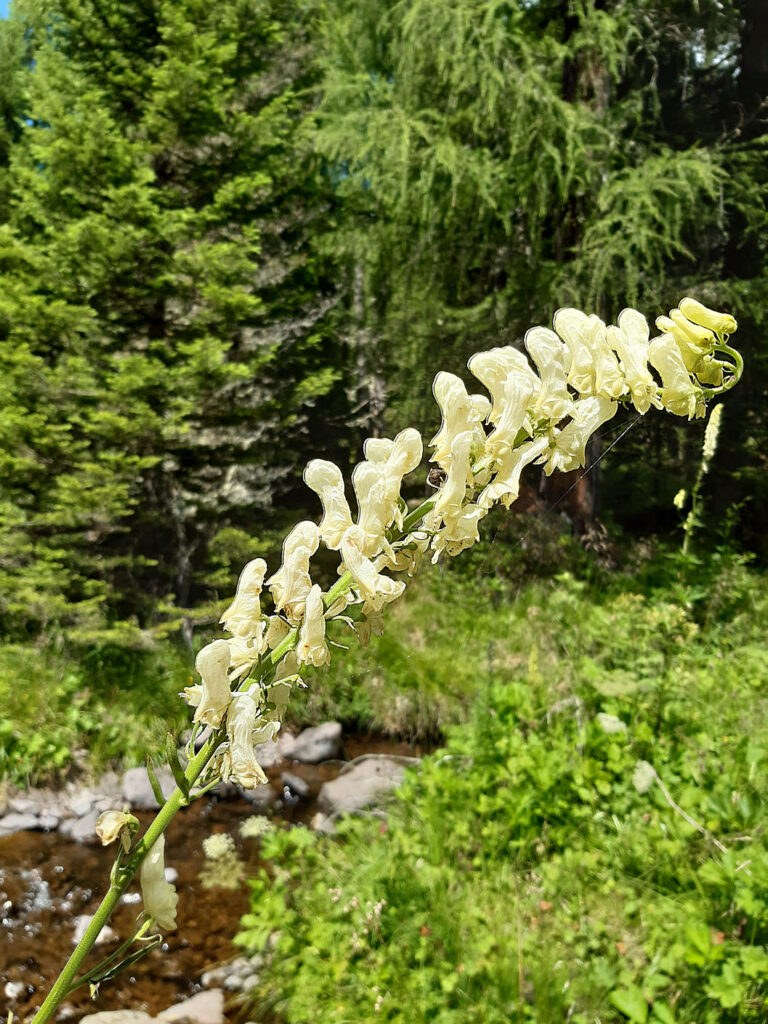
White Hellebore
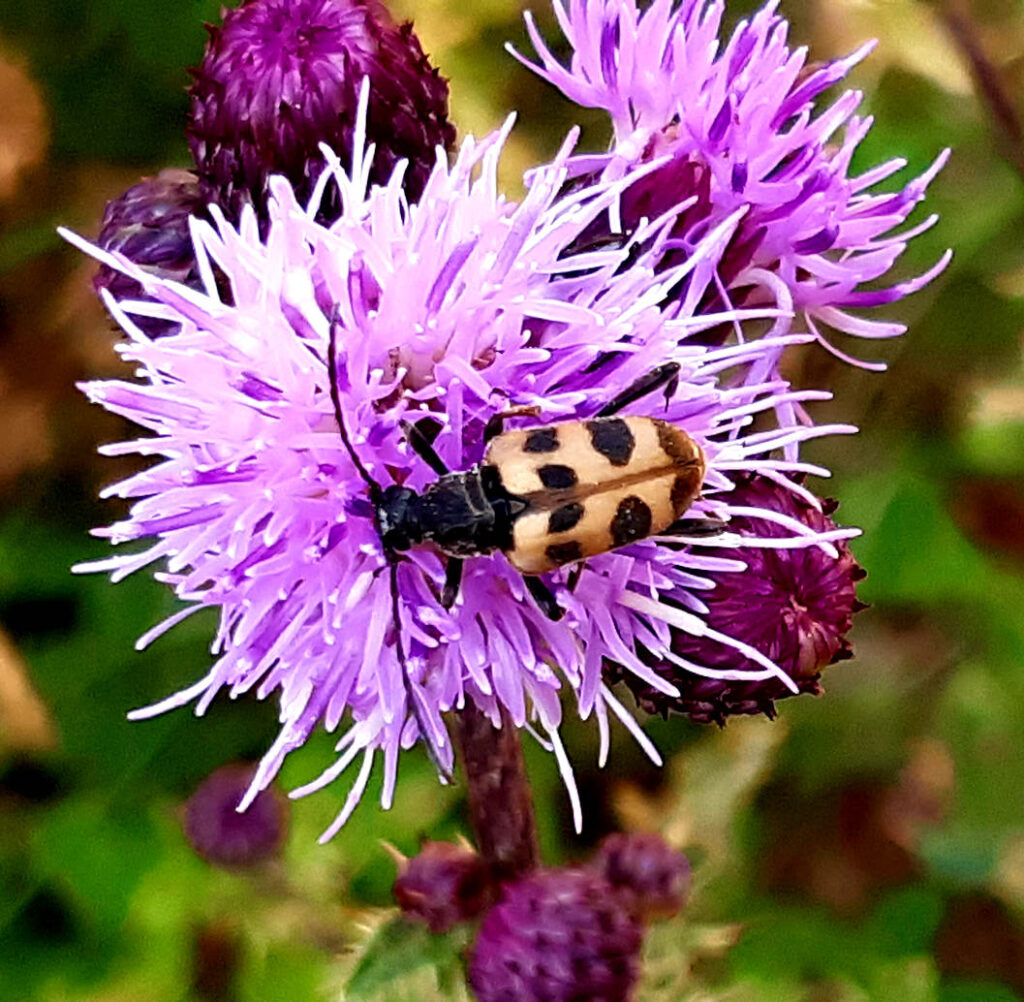
Spotted Flower Longhorn
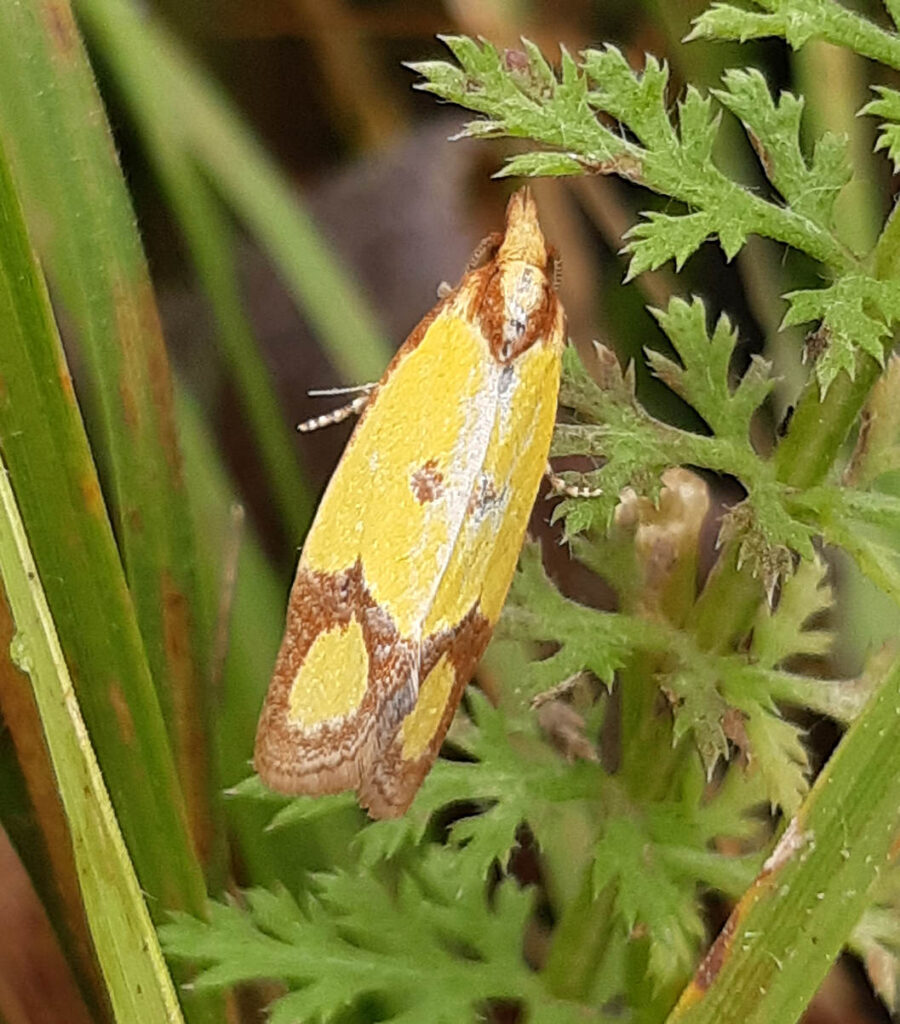
Sulphur Knapweed moth
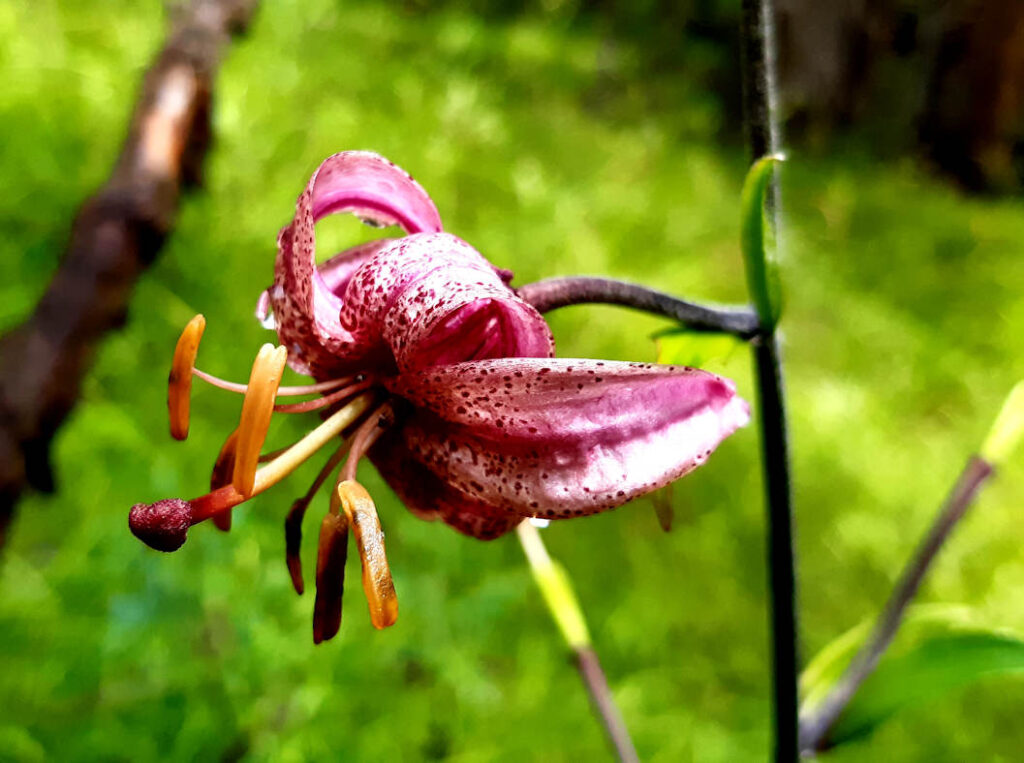
Martagon or Turk’s Head Lily
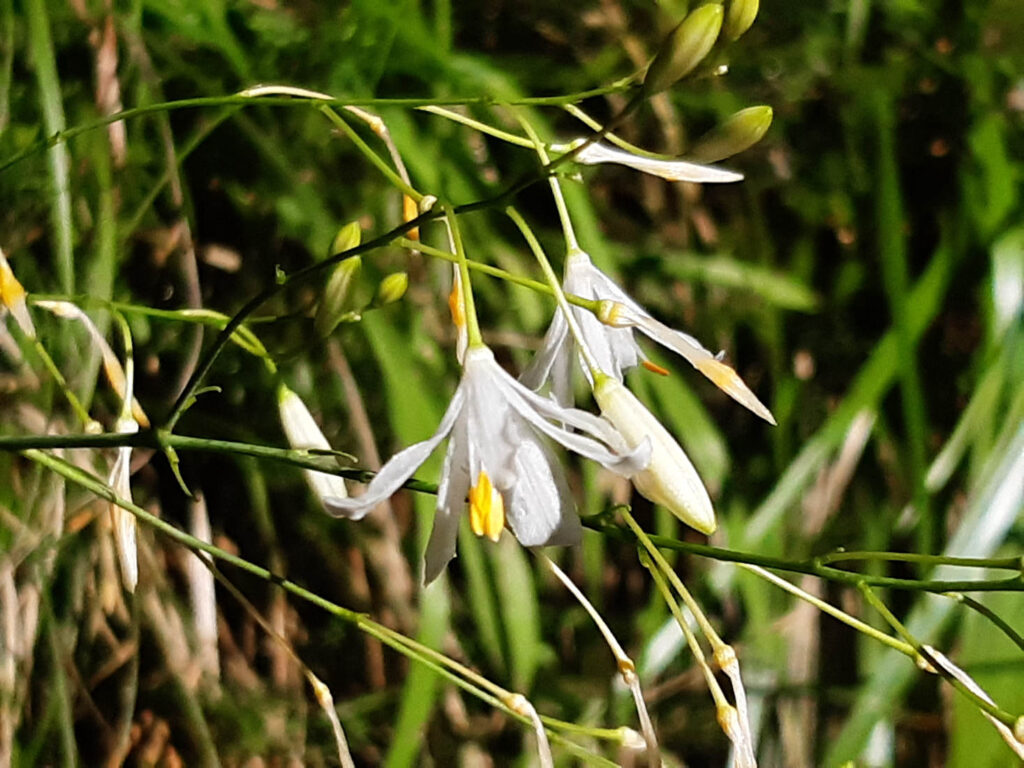
St Bernard’s Lily
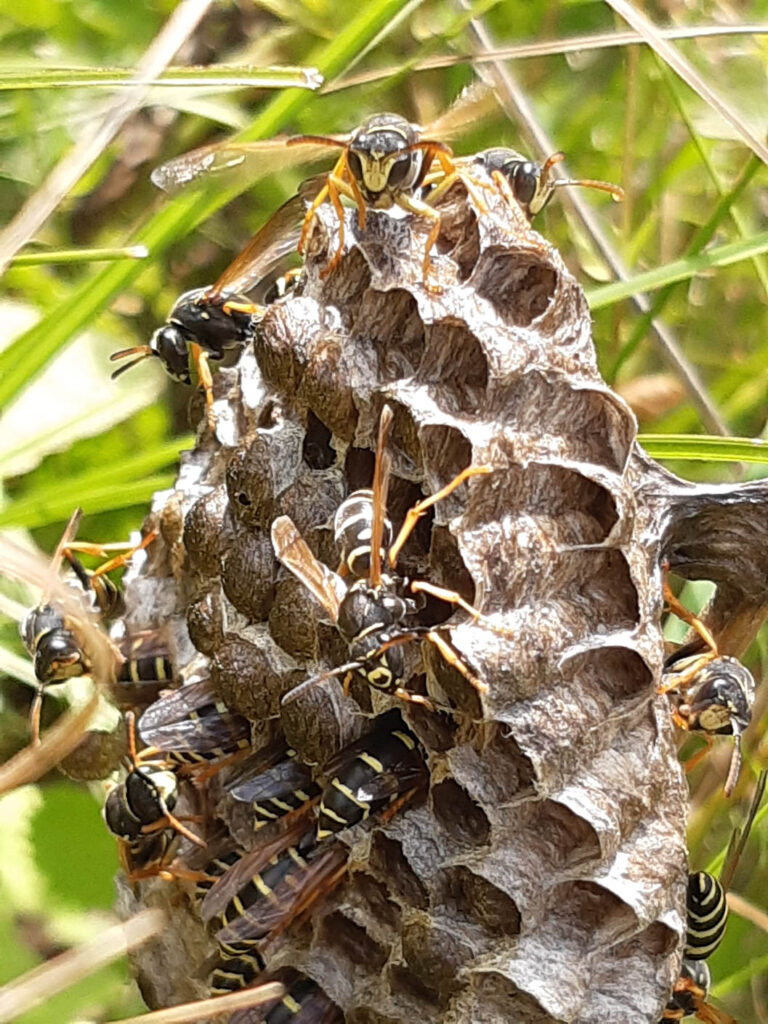
Nest of Paper Wasp (Polistes). Workers are on guard; others tend the larvae. The outer row of cells always remains unused. Unlike common wasps, the nest is made in the open, attached to a herbaceous stem as here, and it never gets much larger than this. Some of the cells are sealed, with domed ends and pupae inside.
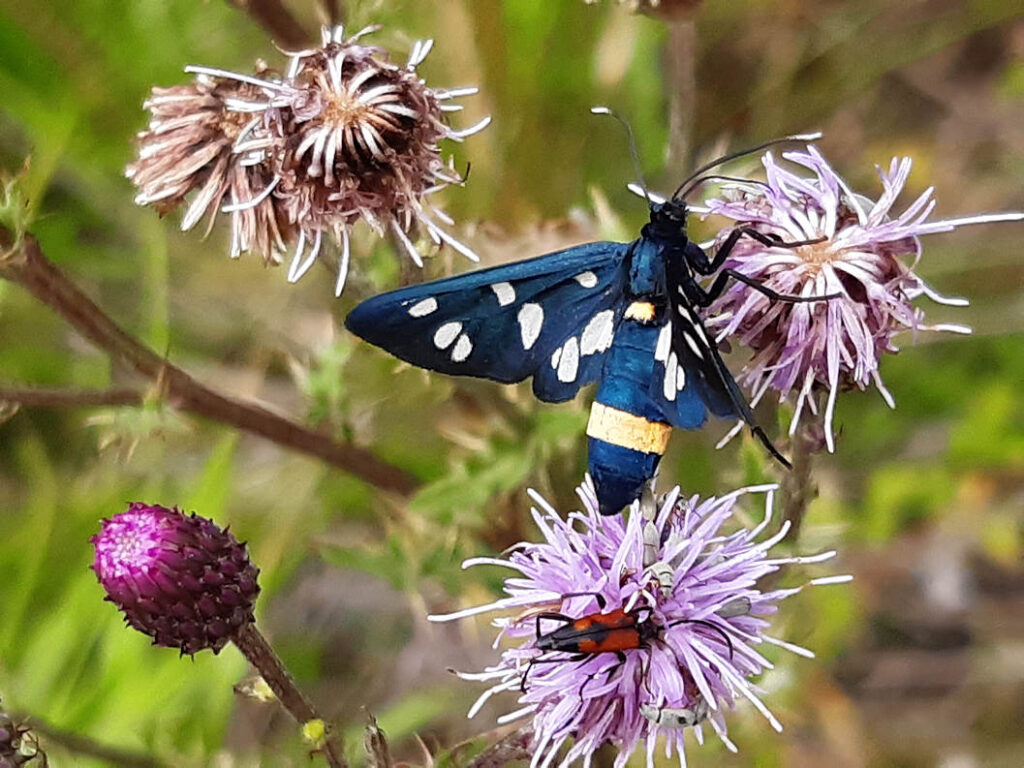
Nine-spotted Moth taking nectar on Knapweed. Like the Burnet moths, its bold coloration is aposematic; it may also be a wasp mimic with the bold yellow stripe on its abdomen. Below it is a heart-spotted flower longhorn beetle, Stictoleptura cordigera.
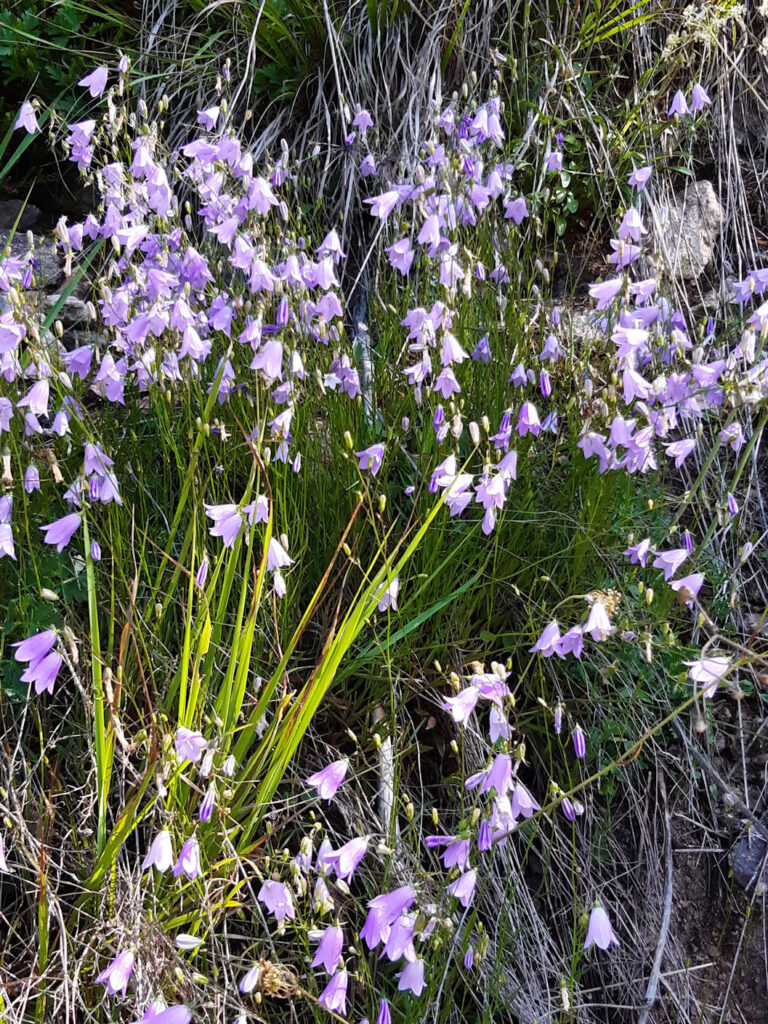
A mass of Harebells
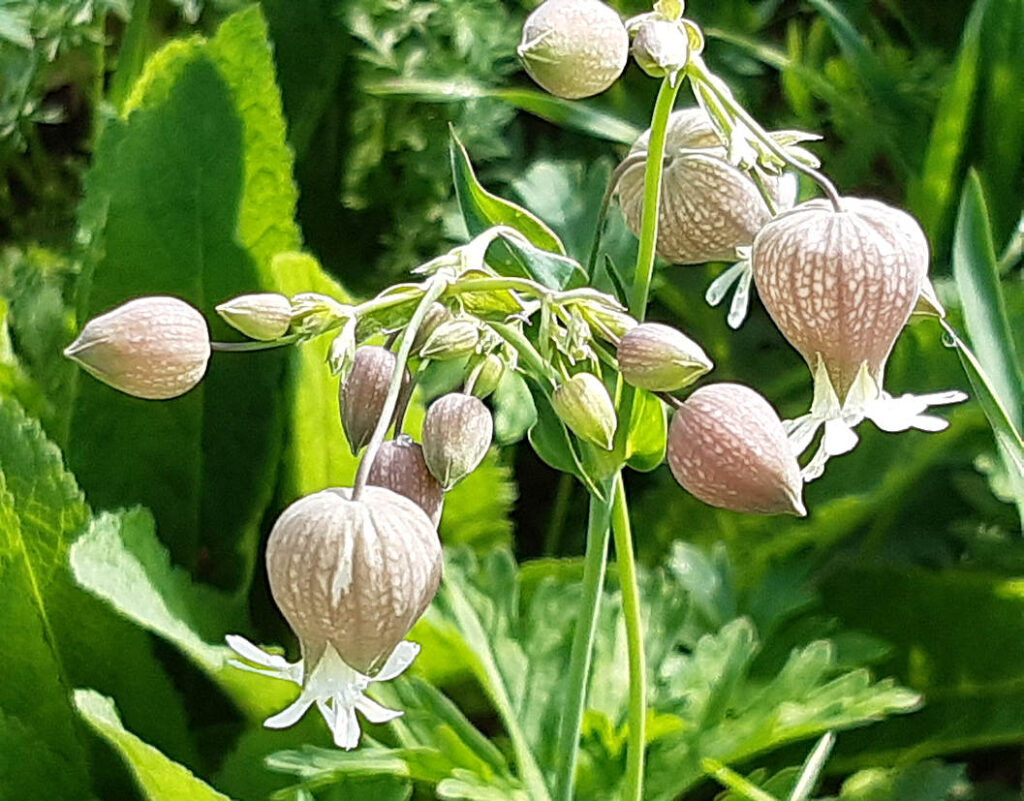
Bladder Campion
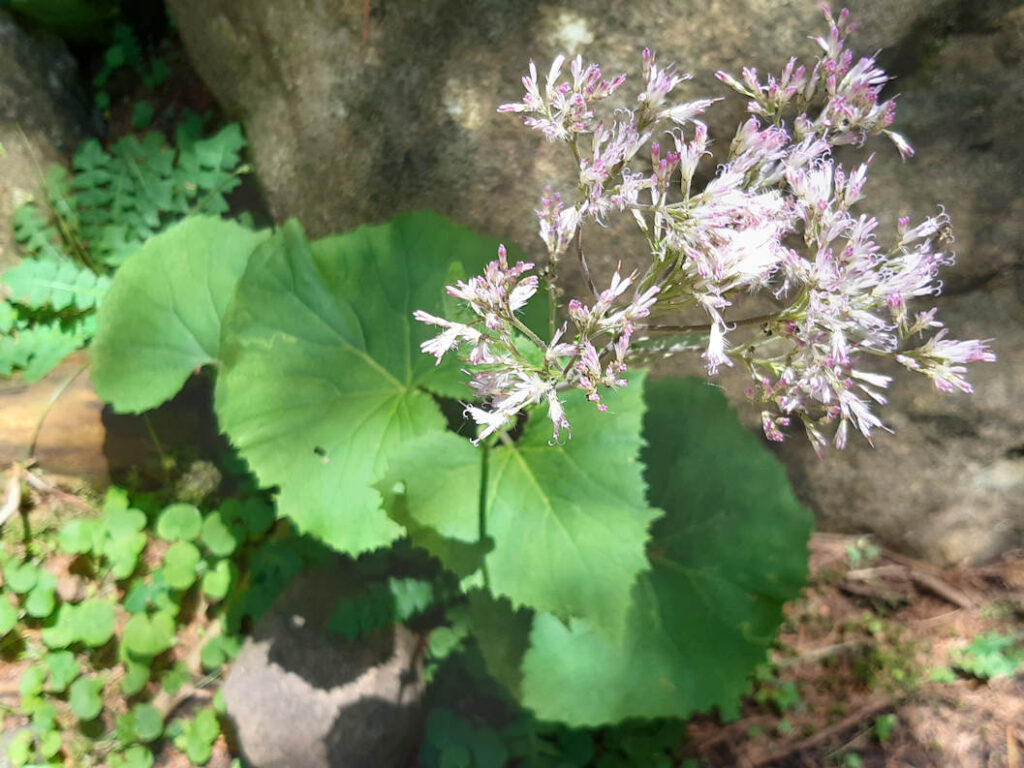
Alpine Butterbur
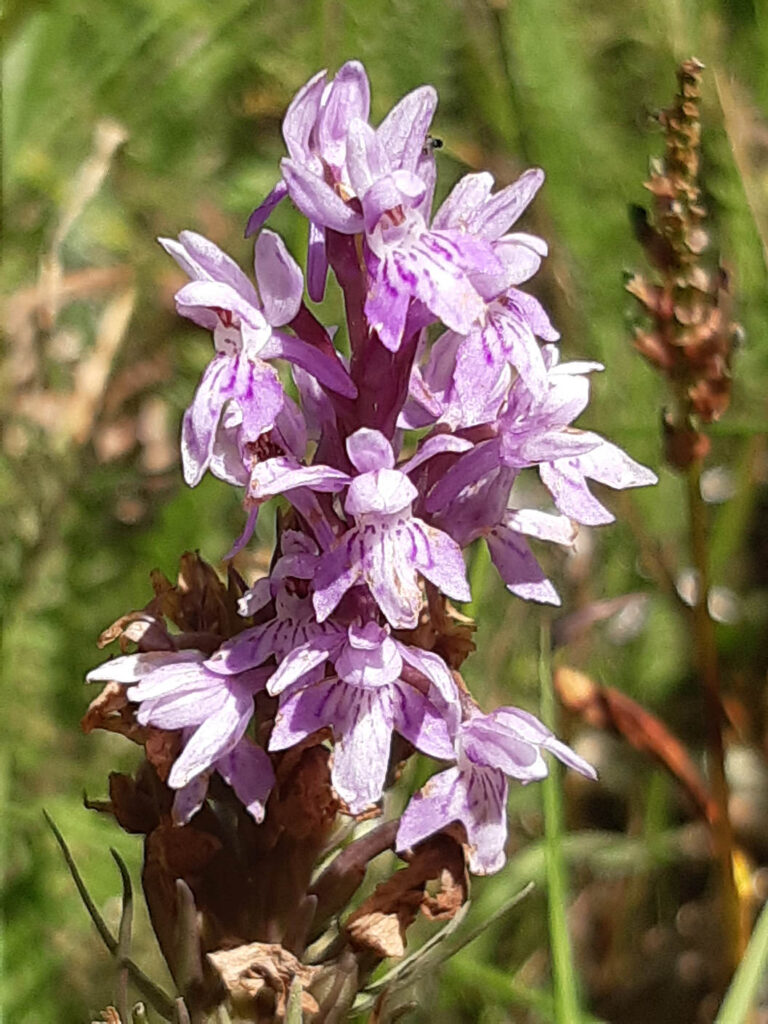
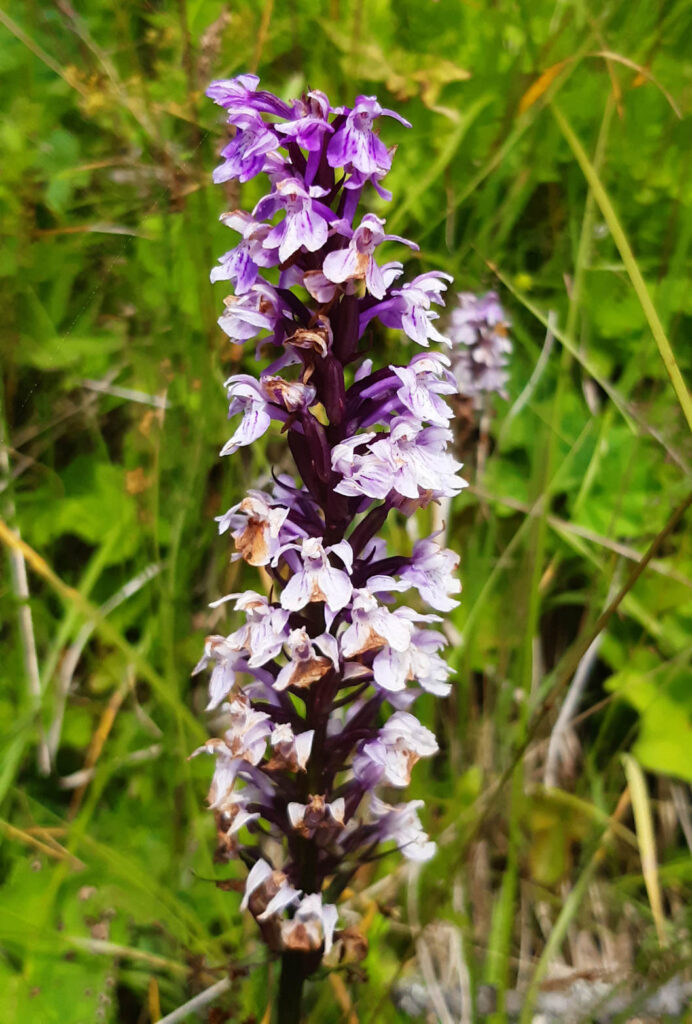
Heath Spotted-orchid
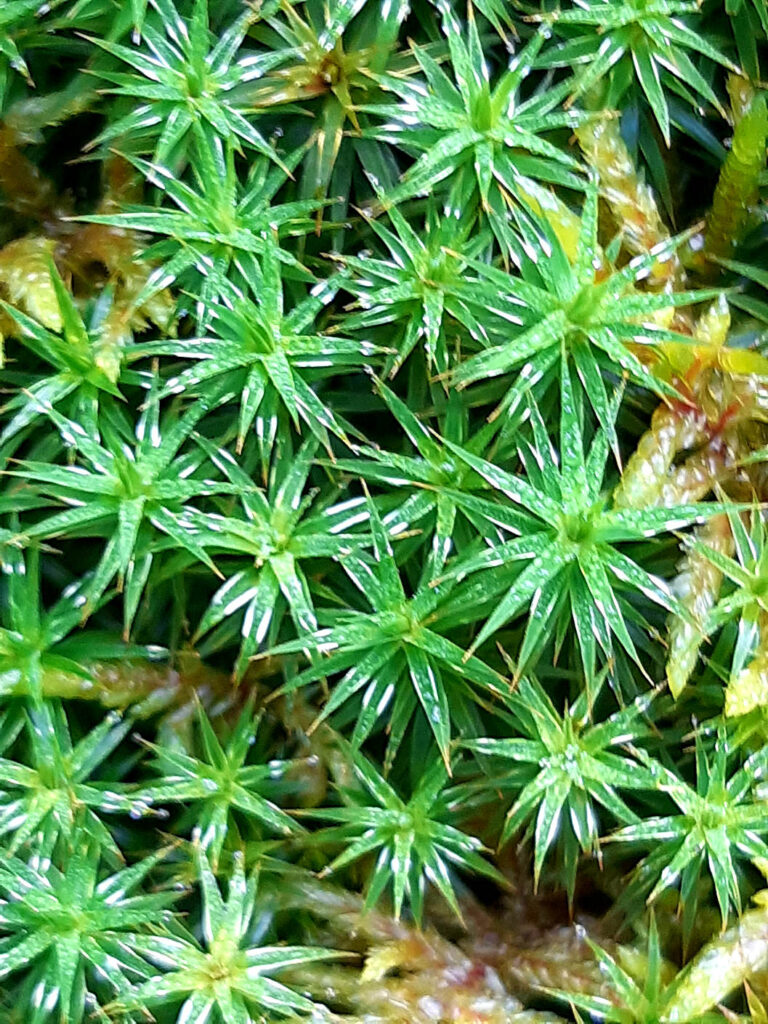
Haircap Moss (Polytrichum)
Common Spotted Orchid
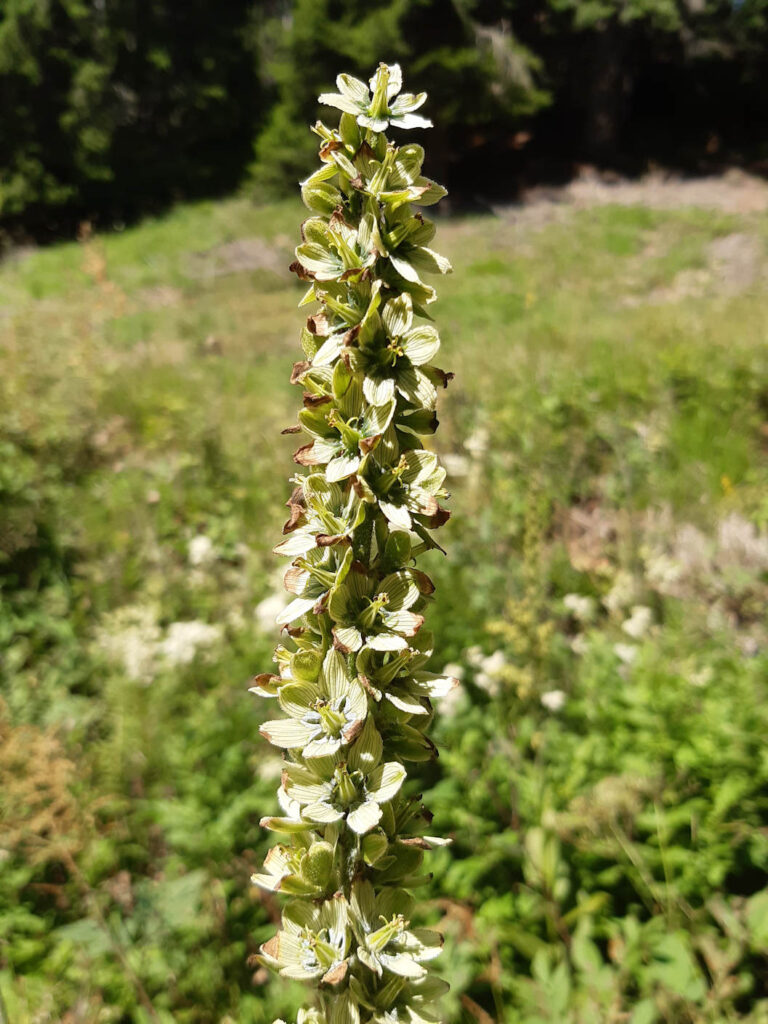
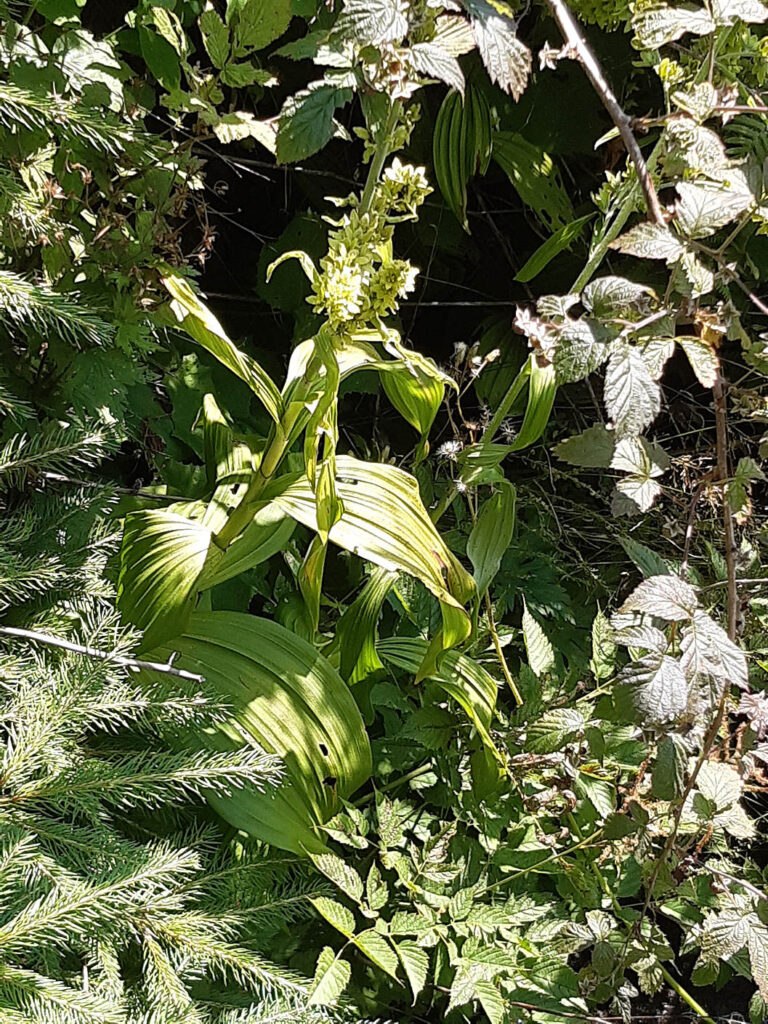
False Hellebore (Veratrum), in the Liliales (like lilies) not the Asparagales (like the orchids that it resembles)
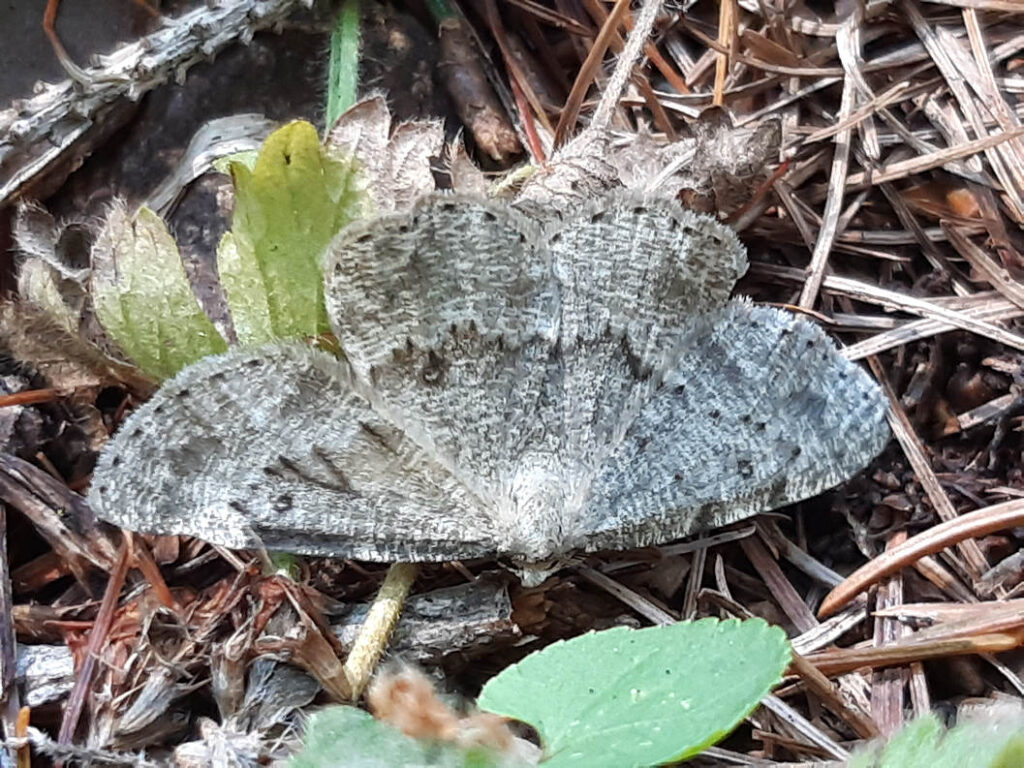
Lesser Cream Wave (Scopula immutata)
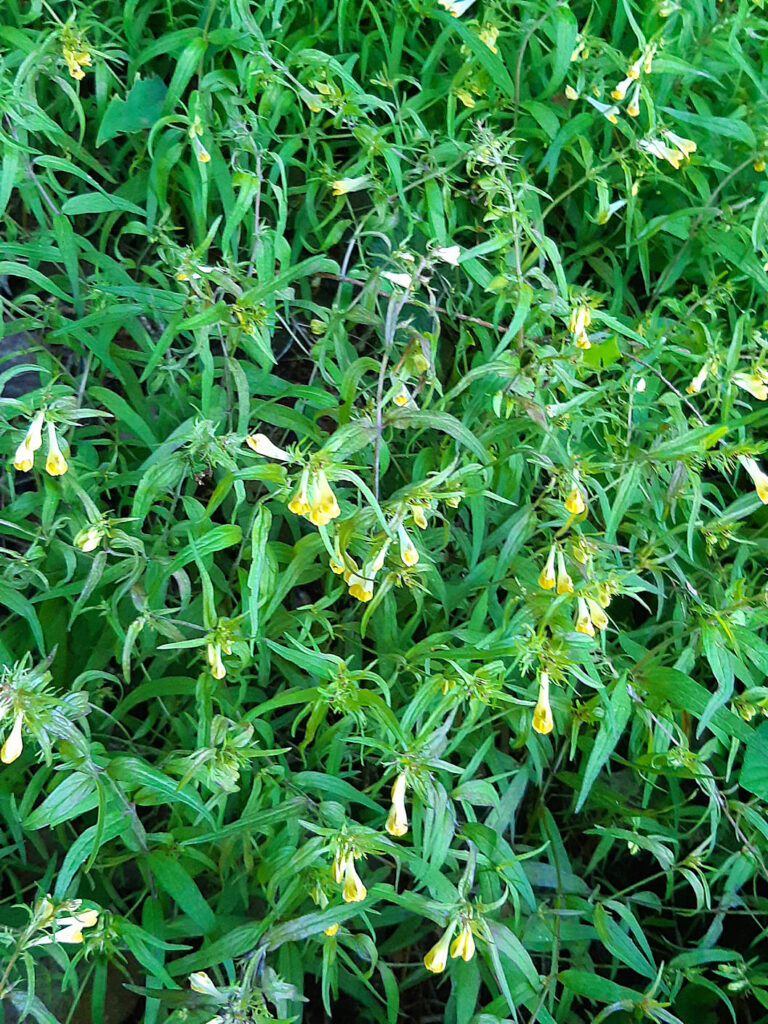
Cow-wheat is a hemiparasite, lives in a mutualistic relationship with the wood ant, and is the host plant of the Heath Fritillary.
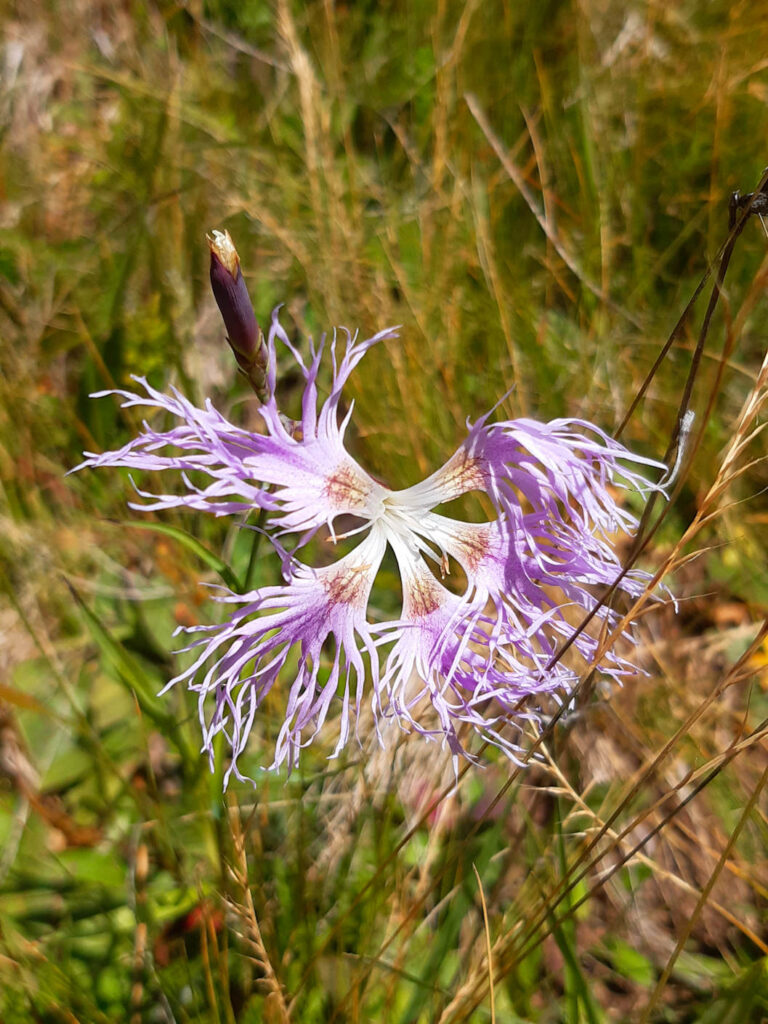
Fringed Pink
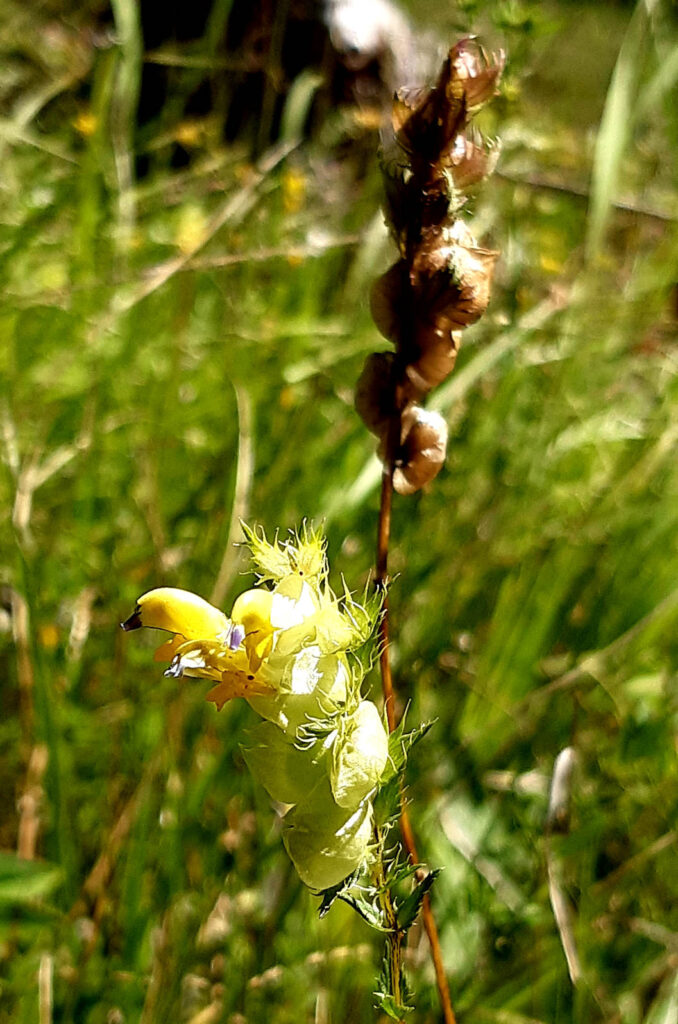
Yellow Rattle, a key plant in grassland as it parasitises tall grasses, weakening them and allowing many shorter flowers to flourish in alpine meadows.
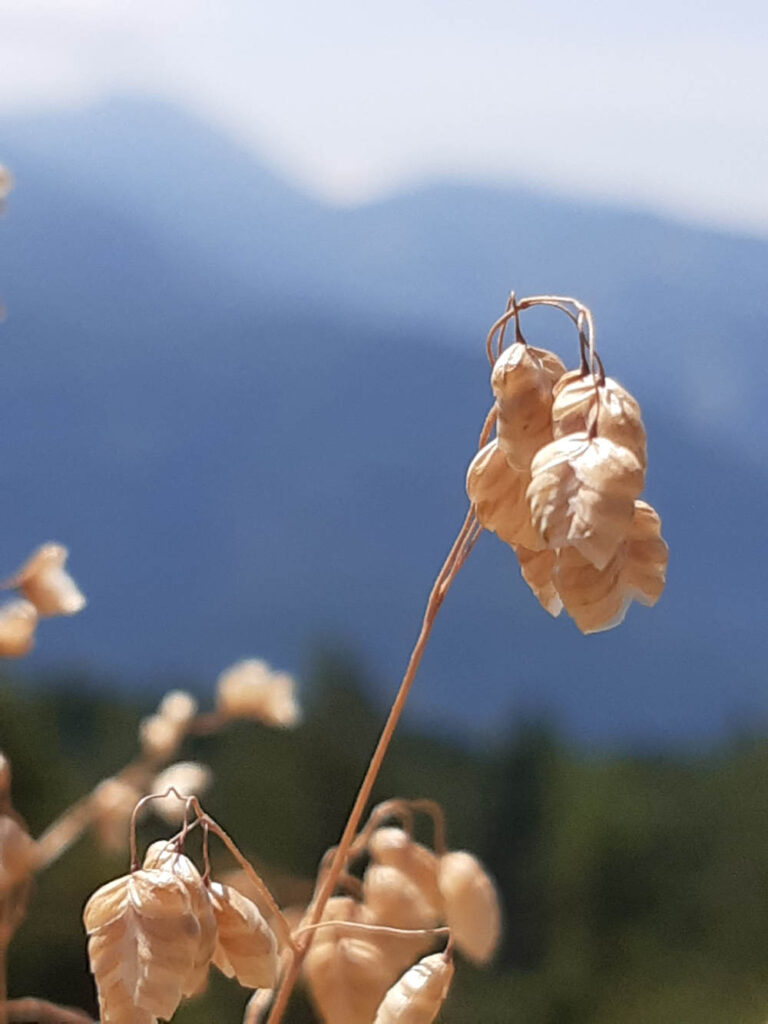
Greater quaking-grass (Briza), Anterivo
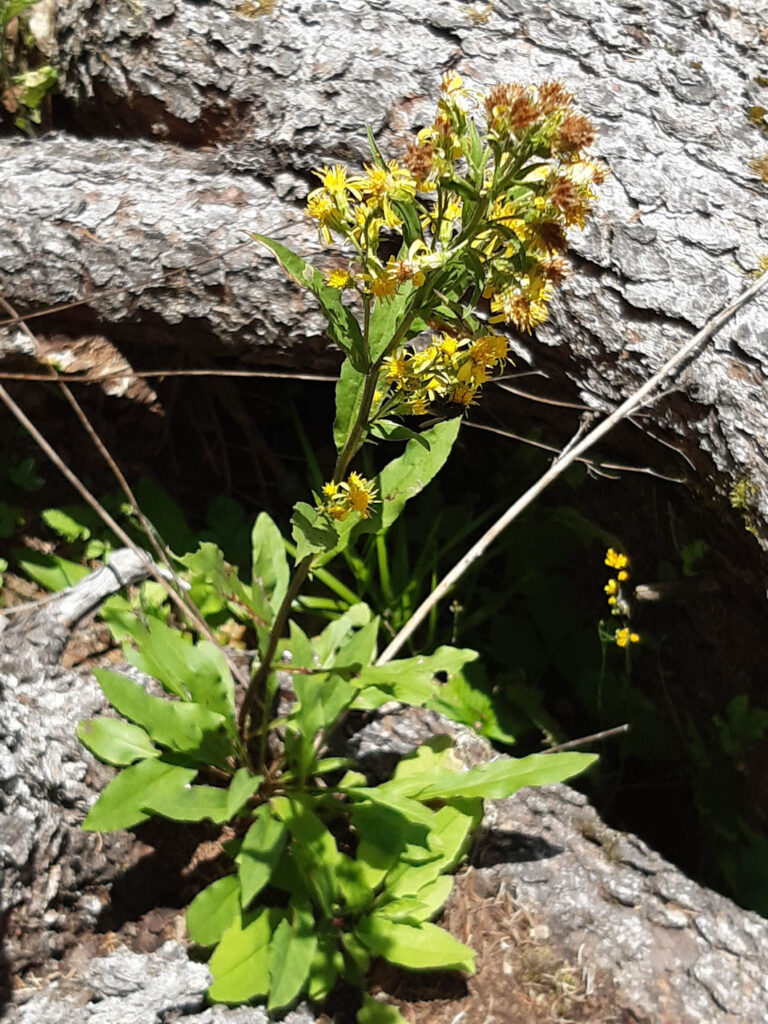
Goldenrod
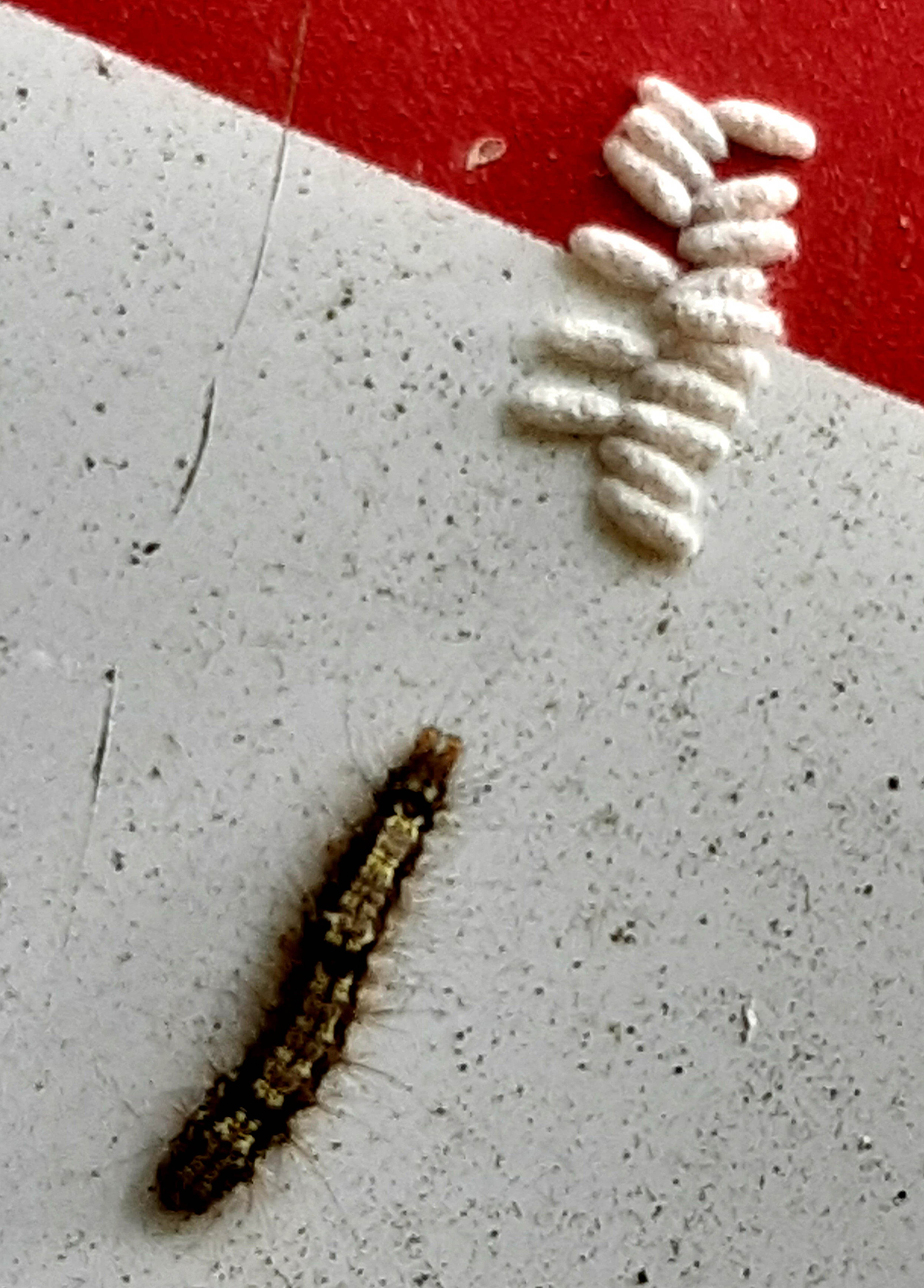
Gypsy moth caterpillar parasitised by Braconid wasps. They have eaten the inside of the caterpillar and have pupated alongside its body. The caterpillar has later slipped down away from the pupae.
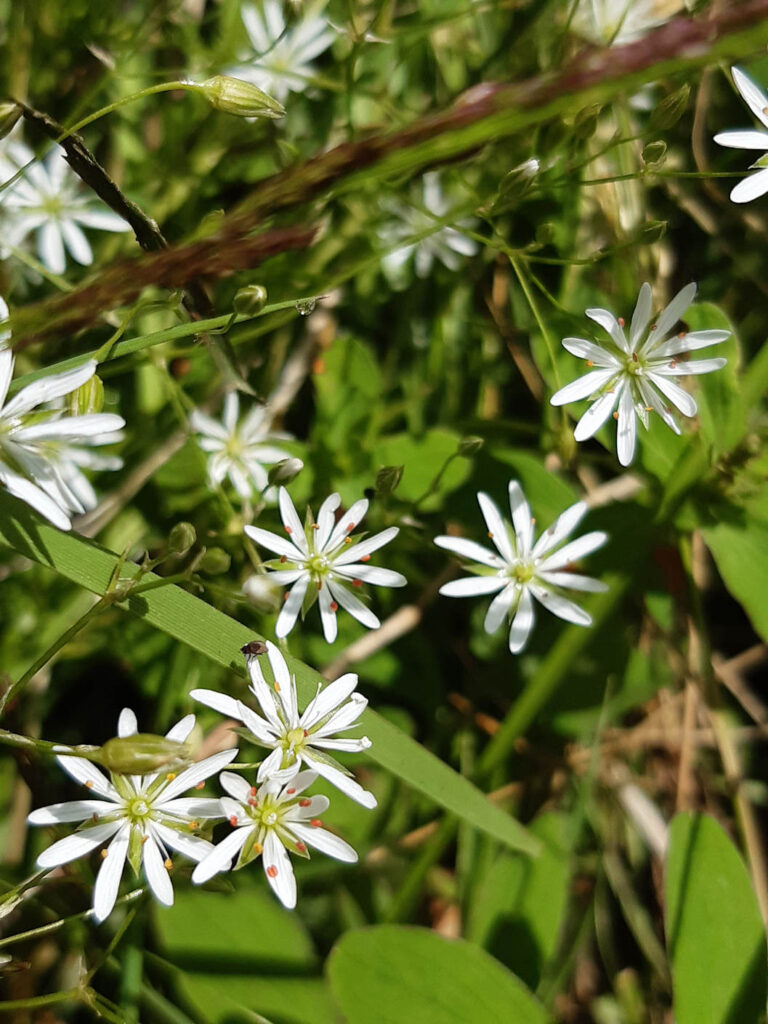
Grassy Stitchwort
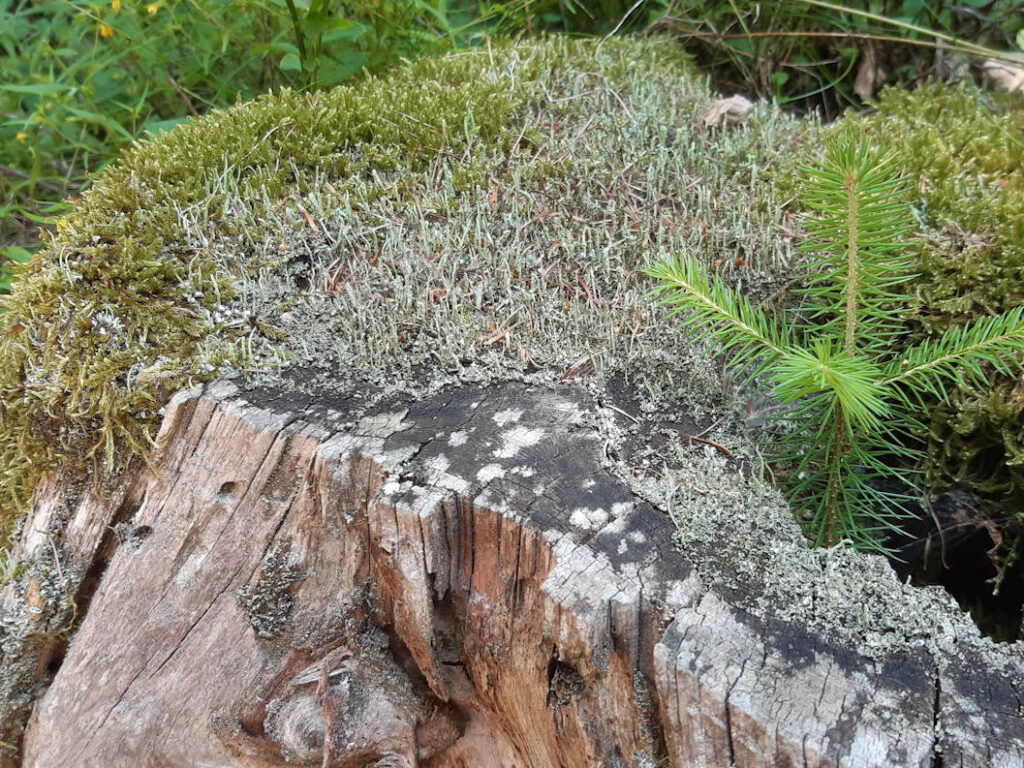
Cladonia lichen on fir stump
Small Yellow Foxglove
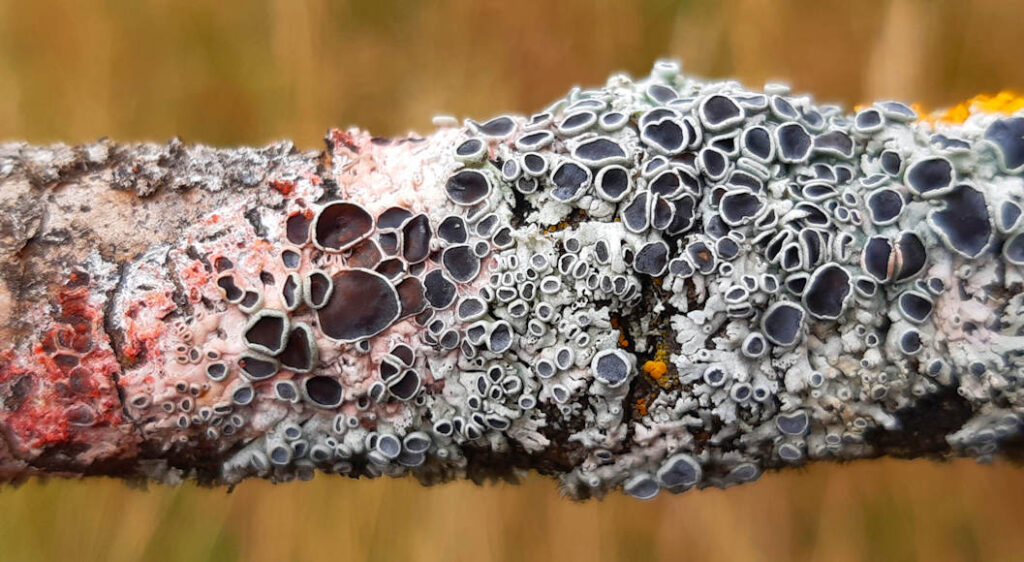
Handsomely lichened twig. The leafy Parmelia-type lichens have large rounded apothecia which release spores of the lichen fungus. The reddish area on the left is a discouraged patch of lichen; many lichens are used to create vegetable dyes in reds, oranges, and yellows.
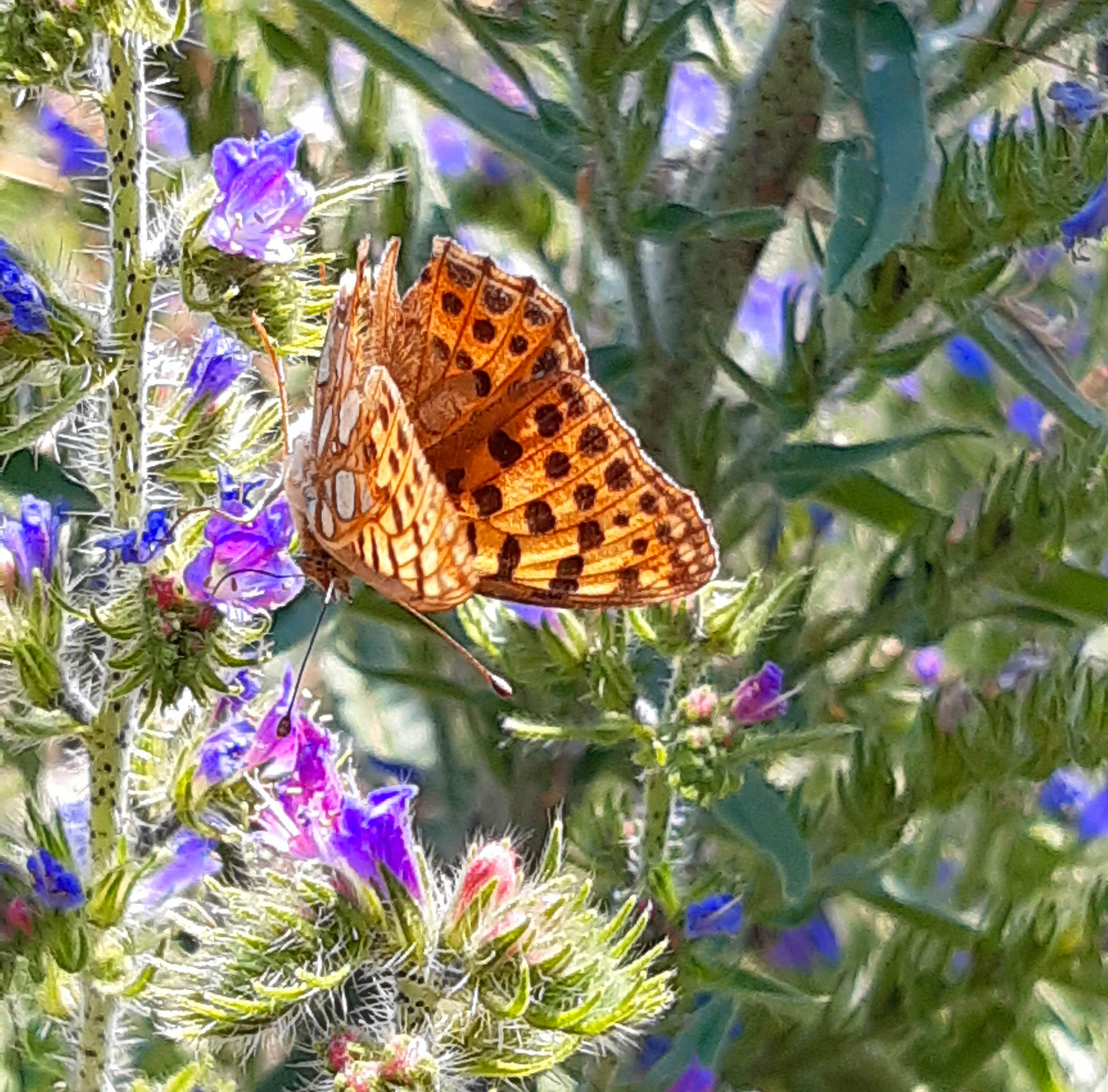
Queen of Spain Fritillary on Viper’s Bugloss
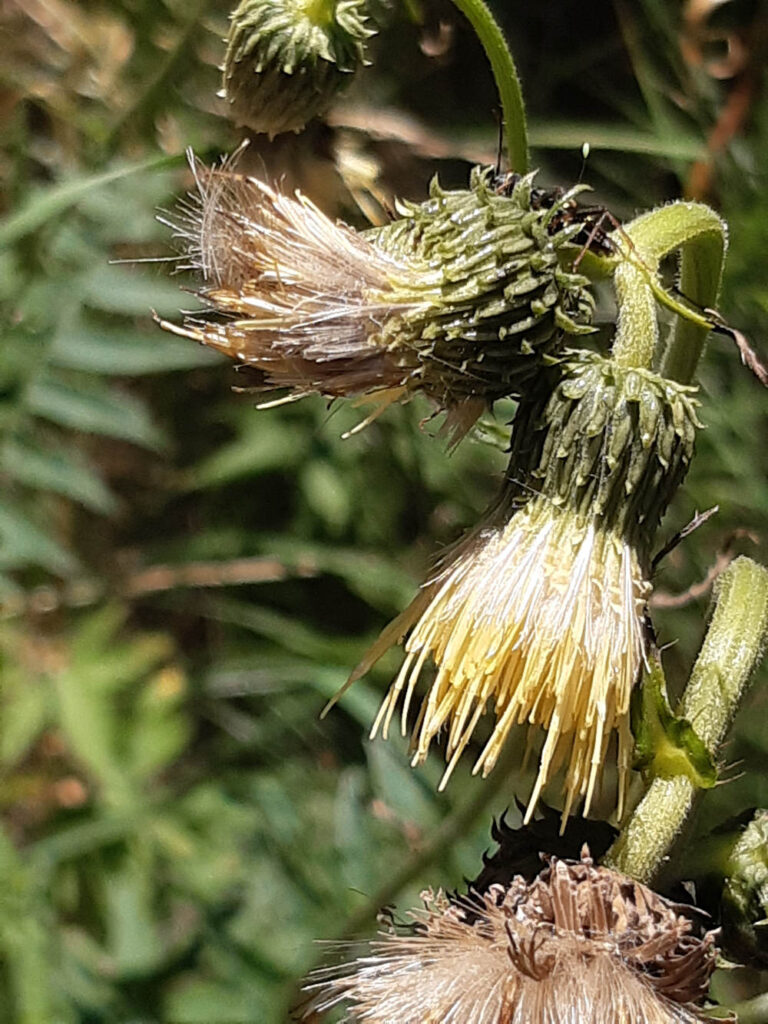
Sticky Thistle (Cirsium)
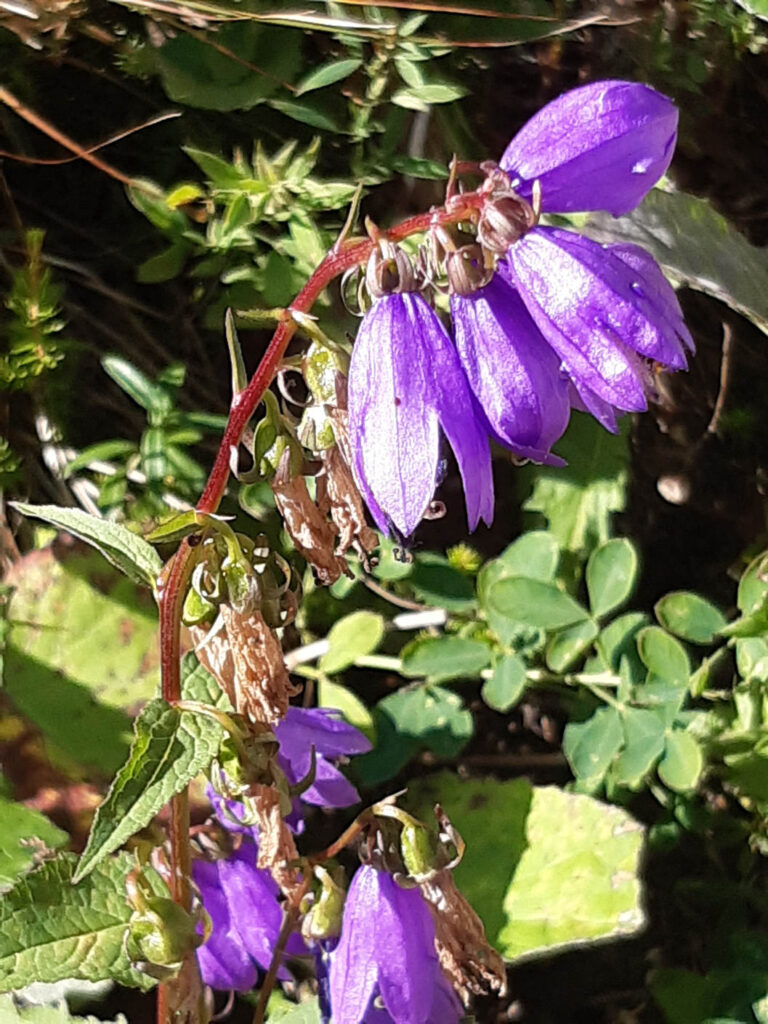
Creeping Bellflower
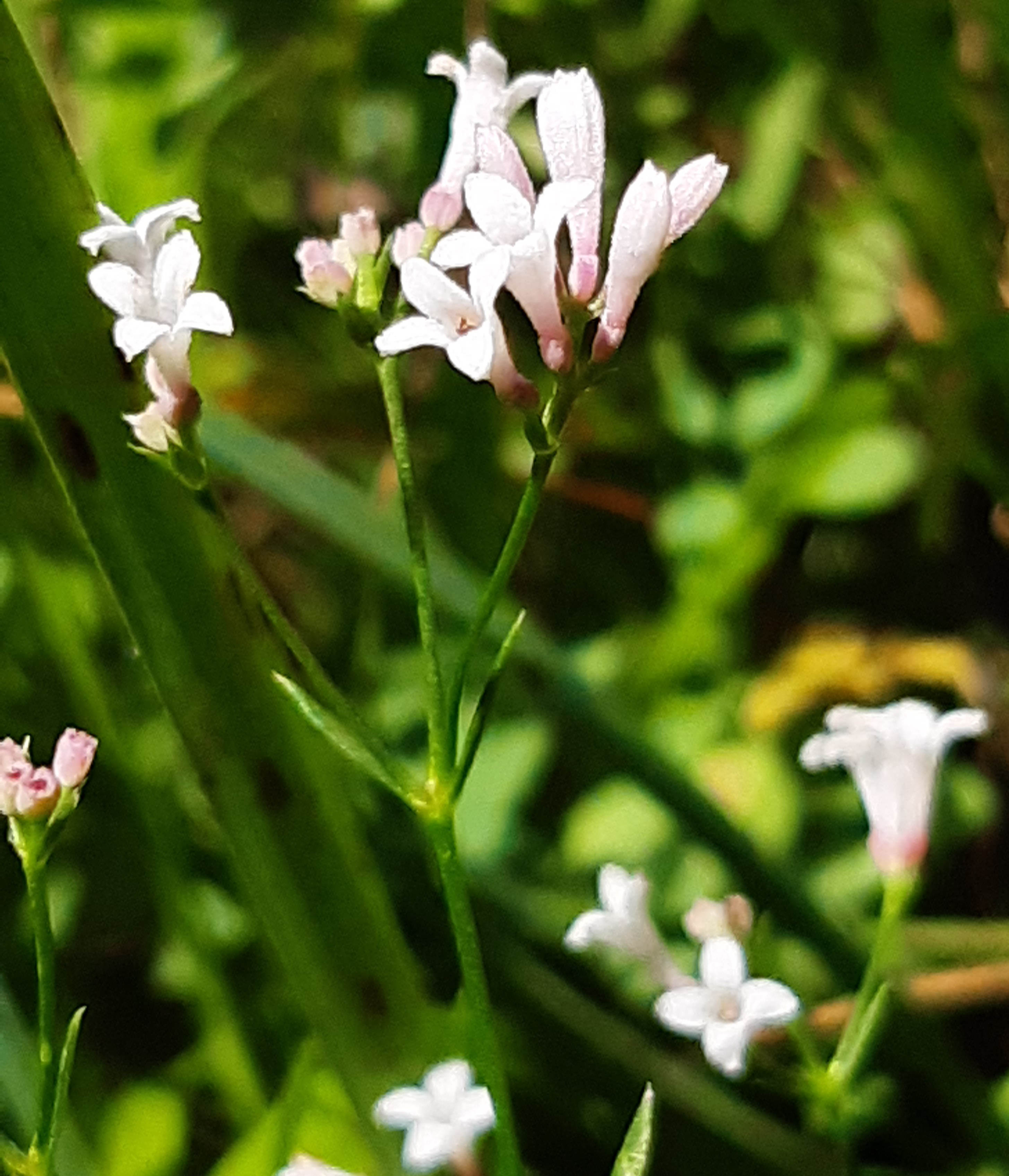
Squinancywort. It was formerly used to treat ‘quinsy’, an abscess behind the tonsils.
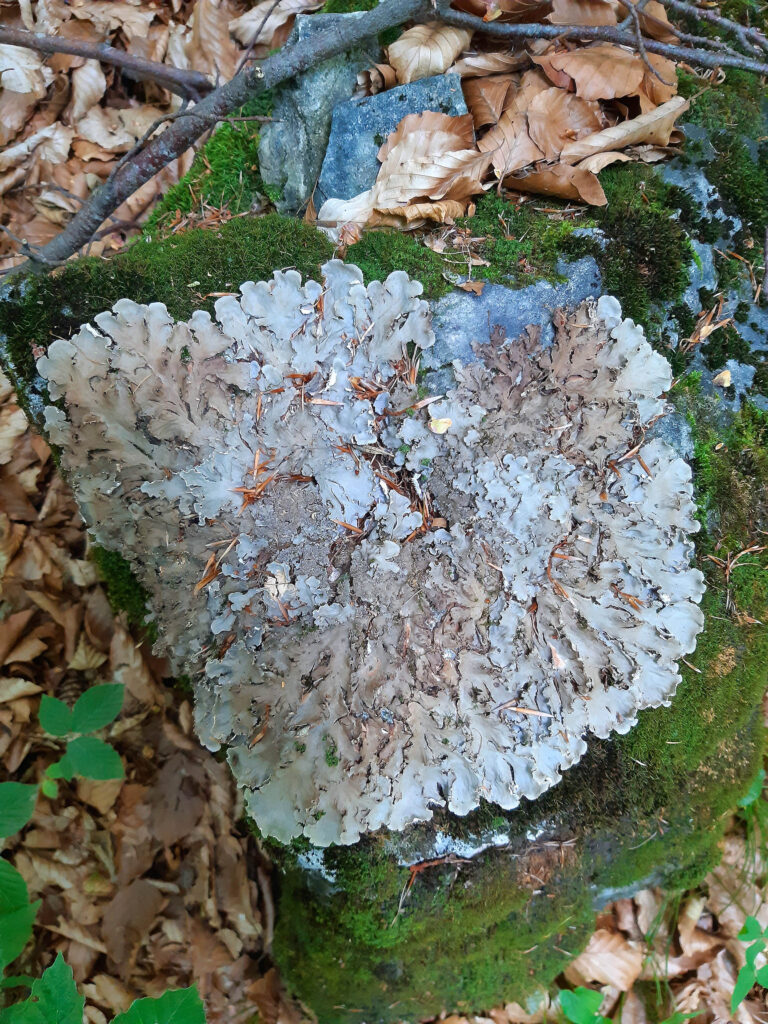
An impressively big patch of Dog Lichen (Peltigera canina) covering a tree-stump
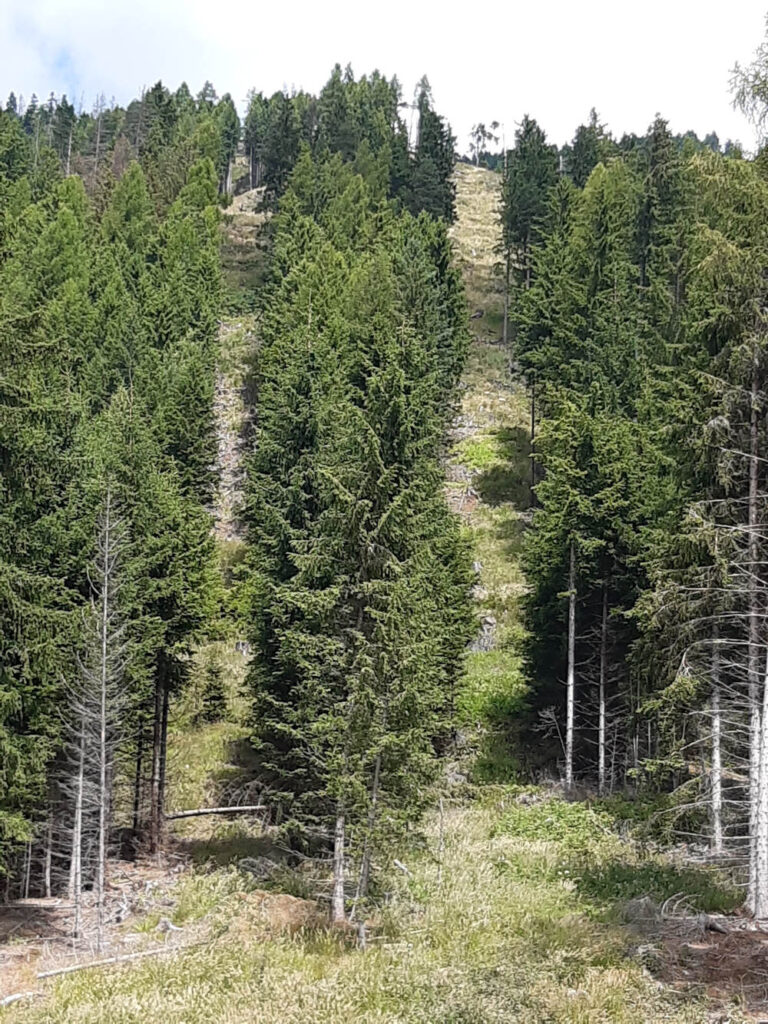
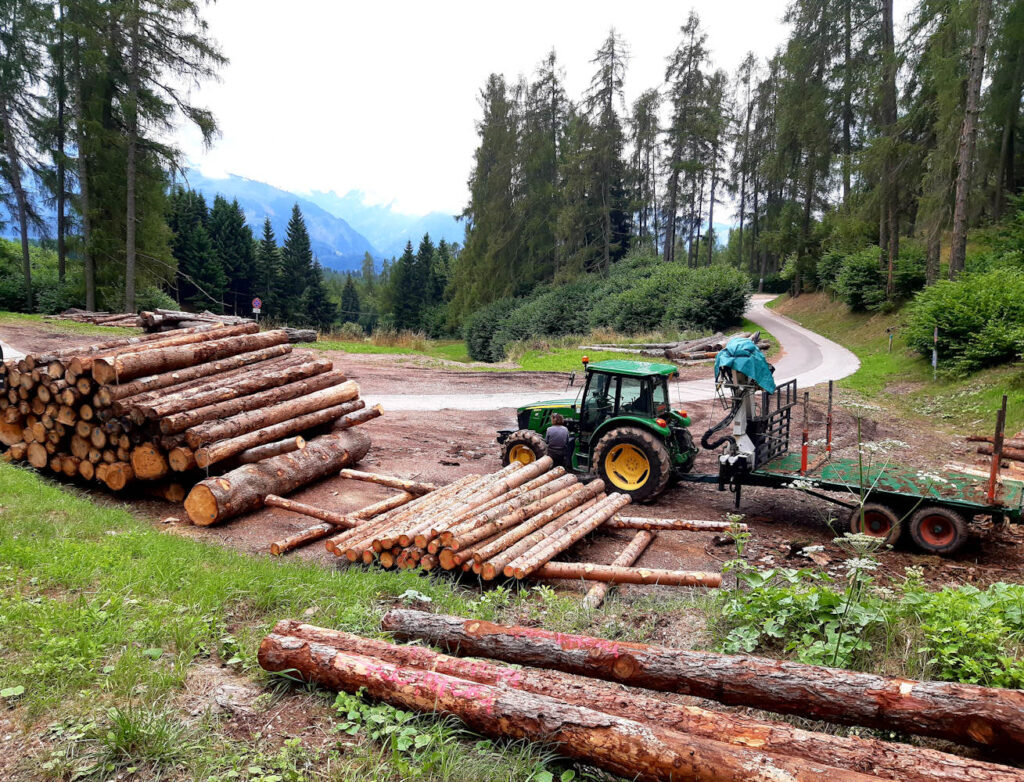
Local-scale commercial forestry. Trees are removed in small strips, not clear-felled, respecting the ecology of the forest.
Local-scale commercial forestry. The harvested trees are of different species and sizes.

Other sightings

Among other interesting finds (including species recorded in my earlier posting), I am pretty sure I heard the call of the Nutcracker, a small crow of forested mountains. A Black Redstart perched obligingly on a fence post, twitching its red tail. A surprised Stag, early one morning, bounded away uphill from a forest track: there were generally few signs of deer, though plenty of cattle and some horses grazing in the alpine meadows and forest clearings. A Hummingbird Hawkmoth hovered over the flowerbed near the house one morning, gathering nectar. Male Common Blue butterflies showed off their dazzling coloration of caerulean blue, but there were no Idas Blue butterflies, which I saw last time (at another time of year). Seen again like last time was the handsomely red/black striped bee parasite beetle Trichodes apiarius, plenty of Scotch Argus, one Chalkhill Blue, countless Marbled Whites, and plenty of Brimstones and Clouded Yellows, and one or two Speckled Woods. Common Heath moths were, well, common; they may not exactly be day-flying, but they’re readily disturbed in long grass.

We enjoyed seeing some familiar plants, too: Meadowsweet, never common in these hills, sticking strictly to very damp meadowland; the small yellow 4-petalled Tormentil, the delicate yellow Rock-rose, and the aromatic Wild Thyme, as much at home in the English uplands as here. Less familiar were the umbellifers (Apiaceae) Sweet Cicely and Broad-leaved Sermountain. Wild flowers that we saw that share the distinction of being also in our London garden include Eyebright and Self-Heal. Among the less usual ferns were Polypody and Wall Rue Spleenwort.

Reflections

It is hard not to compare the species richness of the flourishing alpine meadows and forests with that of Britain’s uplands. In Britain, sheep prevent trees from taking hold, and graze so severely that few flowers can grow. Farm subsidies and agricultural policy since the war have favoured production at the expense of wildlife; over 97% of Britain’s wildflower meadows, permanent pastures, have been ploughed up. Some of the ploughing was to enable reseeding with an “improved” grass mix, sometimes with clover. The result was invariably an impoverished agro-ecosystem, with far fewer species of grasses and flowers, far fewer insects, and degraded soil with fewer earthworms.
In some places, such as the chalk grassland near Beachy Head, the land was returned to pasture soon after the war with its urgent need for food. There is still, over 50 years later, a sharp contrast between the ploughed pasture land and the undamaged chalk grassland: the ploughed land has not recovered in that time.

It is no surprise that Britain’s bird, insect, and flower populations have collapsed. When hedges have been grubbed up and large fields carefully cultivated, after a while the farmer has a clean crop without flower “weeds” or insect “pests”, even without using herbicides or insecticides: there is no place for them to grow, no food for the insects to eat.

The only wild species that can survive in such a regime are efficient and troublesome weeds, like grasses too similar to cereal crops to be possible to spray; or genuinely pestlike insects, such as “cabbage white” butterflies, that can breed rapidly, fly or be blown long distances, and quickly destroy fields of Brussels sprouts if a farmer is unwary. All the more attractive and beneficial organisms are long gone.

See also Wildlife of the Dolomites (the animals and plants arranged into groups)
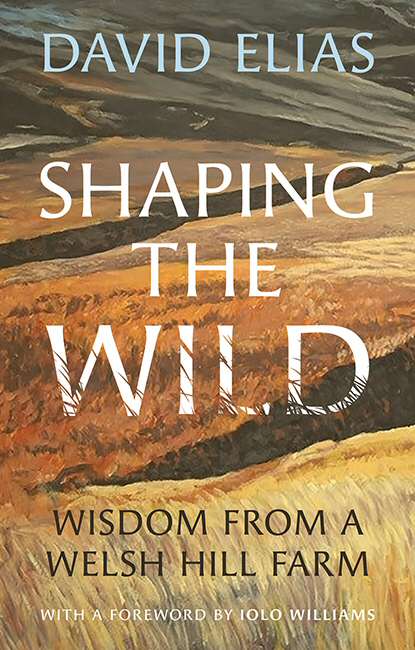
Shaping the Wild, by David Elias

Shaping the Wild: Wisdom from a
Welsh Hill Farm, by David Elias.
Calon, 2023.
ISBN 978-1-9152-7934-7.

There are plenty of nature-on-farms books written by anxious conservationists, telling how everything is falling to bits (and it’s the farmers’ fault). There are not a few written by nature-loving farmers, telling how farmers are the people closest to the land and the nature on it.

There are rather fewer written by lifelong conservationists, who’ve chosen to visit and study one farm for a period of years, and try to understand the constraints on the farmer, the shifting tides of policy, and the balance that will actually benefit wildlife. In fact, I rather suspect this is the first one.

Craig-y-tân is a hill farm in the Eryri (Snowdonia) national park. There are some tiny stone-walled fields near the farmhouse; some rough pasture down by the river, the Afon Lliw; some old-fashioned broadleaved woodland on the hillslope, up to the mountain wall; an area as big as all of the above of “steep ffridd”, bouldery mountainside; and then a large area of upland blanket bog. The neighbouring areas include another isolated house, two footbridges, a ruined farm, a waterfall, and a chunk of 20th century conifer plantation.

It is difficult to make money on a hill farm. Traditional life was close to subsistence. Lambs were lost to foxes; hay was hard to make in wet Welsh mountain summers; peat was cut by hand. Governments have offered money to “improve” the land by draining or reseeding. Constant changes of farming policy have meant that one action was required to get a grant: then another. The blanket bog was filled with drainage ditches; now there are grants to stop up the drains and restore the peat, which stores large amounts of carbon: as long as it stays wet.

Conservationists have scratched their heads about how to manage wildlife on hill farms. If you take the sheep off the land, birch and willow trees spring up, their shoots un-nibbled, and the attractive rough grass, with its flowers and birds and insects, disappears into forest. If you add sheep, the farm may make more money but the flowers are grazed down to nothing and you again lose much of the wildlife. Just a little bit of conservation grazing, then? Elias notes the doubtful looks he gets when he hums and hahs in answer to a plain farming question, what to do. Possibly the farmer is doing really rather well, given all the trade-offs.

As for trees, governments in the 20th century encouraged economic forestry, meaning plantations of Sitka spruce, a non-native tree. This can all the same be good for wildlife, as young conifers compete with sallow, birch, rowan, and bramble, with homes for reed buntings, tree pipits, whitethroats and other warblers, along with butterflies and dragonflies. But as the spruces get tall and dark, all of that disappears, and there is a bare forest floor, shaded by a dense canopy, which supports a few specialist birds like siskins and crossbills. When the trees are big enough, they are harvested all at once with an enormous “sexy-looking Finnish machine” that enables one man to cut the trees, strip the trunks, slice them to length, and stack them for transporting without leaving the machine’s cab.

If you could have the conifers in small blocks of different ages (more like a traditional coppice woodland), then you would get a mosaic effect, with much more wildlife; even better, you might mix in some broadleaved trees for the insects and birds they can support. Of course, harvesting then becomes less convenient.

That’s not even to mention climate change. Many of the most-prized species are vanishing as the climate warms. Familiar upland birds like the curlew have all but gone; the farmer’s son doesn’t know them at all. A day spent searching the upland bog for large heath butterflies finds none: apparently there were only 2 sightings in the whole of Wales. Elias admits that in 50 years as a naturalist and conservationist, he has seen “a quiet draining away” of wildlife from many landscapes.

This is Elias’s first book. I found the first two or three chapters a little repetitive, as he chews over the issues slowly and carefully; a bit of copy-editing would not have gone amiss. But he warms to his work, and the later chapters are more direct, more fluent, if still grappling with the tangled conservation and farming issues.

His familiarity with farming legislation, carefully footnoted, and his evident sympathy for the Welsh hill-farmer make this an informative and distinctive book. Shaping the Wild doesn’t offer easy answers; but it steers clear both of despair (conservation has achieved nothing, hill-farming is doomed) and of facile optimism (the next government policy will fix everything).

The last chapter agrees that the countryside has changed beyond recognition, but insists that many people who are not conservationists enjoy nature, from farmers to mountain bikers. They’re the audience. And the farm? Elias considers whether

Craig-y-tân is an anachronism maintained at considerable public expense, or a beacon of hope and a way forward. It is still a beautiful place and rich in wildlife, especially by current standards; it is also a viable, if subsidised, working farm in the hands of a local Welsh-speaking family committed to their community and way of life. — Ch. 13 In the End

May it long continue.

Buy it from Amazon.com (commission paid)
Buy it from Amazon.co.uk (commission paid)

I received a review copy of this book.

Classic Book Review: The Worm Forgives the Plough, by John Stewart Collis

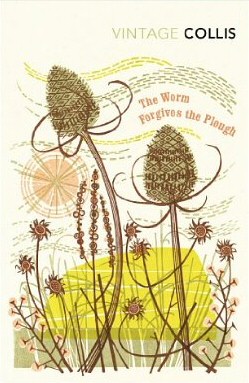
The Worm Forgives the Plough, by John Stewart Collis (Vintage Classics edition)
The Worm Forgives the Plough, by John Stewart Collis (Vintage Classics edition). The fine linocut of teasels is by Angie Lewin.

I promised myself I would only review books I really loved, that I would urge a close friend to read, sure they wouldn’t be disappointed. Few books pass this test.

John Stewart Collis was an educated man, born in  Ireland in 1900, living and working in England. He wrote some biographies and pottered along quietly in the literary life. Then the Second World War came along. Wanting to work for his country, but too old to fight and not fancying a dull desk job, he volunteered for the Land Army. It consisted mainly of women, “Land Girls”, as thousands of farm labourers joined the armed forces.

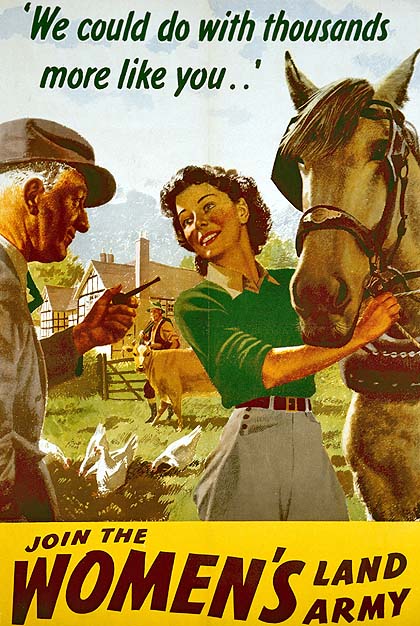
"We could do with thousands more like you: Join the WOMEN'S Land Army". Second World War recruitment poster
“We could do with thousands more like you: Join the WOMEN’S Land Army”. Second World War recruitment poster

Collis makes the long-gone era of scythes and horses immediately accessible. As a professional writer, he is from our modern urban world, familiar with politics, technology, change,  middle-class angst. As a man experiencing the daily toil of following the plough or harrow, hoeing by hand, harvesting, pacing oneself while looking out for the owner’s car (a good moment to appear busy), he is in that rural world painted in such a golden light by the wartime posters.

And he’s funny. He notes that farm work is not an exhilarating form of exercise — he recommends a game of tennis for that; instead, you go at it steadily, never hurrying, whatever the weather. He is perfectly capable of writing wide-eyed descriptions, as when he kneels down beside an ancient tree-trunk and admires the insects hidden under the bark “building their Jerusalem in these countries of decay which must represent for them the acme of perfection”, the strange world of the fungi. But much more often he is direct, matter-of-fact: he likes to test the rotten wood with his boots.

Collis has the gift — I’d say it was rare — of noticing that the ordinary aspects of life and work all around him are strange and temporary. Here he is on what it is like trying to harness a farm horse by yourself:

When I came to harnessing for the first time I was surprised at the weight of the harness. I found that the breeching and attendant straps were as heavy as a saddle. When I tried putting the collar on I found I had put the bridle on first. Having taken off the bridle, the collar still wouldn’t go on — for the simple reason that you must reverse it while negotiating the head, which I had not done, thus following the example of Wordsworth who also failed in this matter. I was no more successful with the hames; I got them the wrong way round, and when at last I got them the right way round, I failed to pin them under the collar in a sufficiently tight notch. This done, I was now ready to put the horse into the cart. But I was not prepared for the difficulty of backing it straight between the shafts nor for the weight of the cart when lifted up by one of the shafts, nor for the difficulties confronting me in continuing the good work. For, having thrown over the long chain that rests on the breeching, and dodged under the horse’s neck to catch it on the other side, I missed it and it rolled back so that I had to throw it over again, all the time holding up the shaft with one hand while I went to the other side. And after this came the fixing of the remaining chains, all of which I put into the wrong notches.

I don’t know about you, but I’m sweating and powdered with stable dust just reading about it.

With the arrival of the first combine harvesters, which Collis admires, he perceives that the old way of life is going to be utterly disrupted, even while he and the other farm labourers continue to work on the farm, while the village pubs were still full of countrymen. It would be nostalgic, only the writing is quite unsentimental, and we are right there alongside Collis, looking up from our work as we watch the new machine as it roars and rattles along doing the work of twenty men, and reflect on what it will mean. This is something special.  And I promise you’ll want to go out and buy a well-balanced axe and billhook, to try the pleasure for yourself.

Buy it from Amazon.com (commission paid)
Buy it from Amazon.co.uk (commission paid)