Tag Archives: Gypsy Moth

Dolomites 2025

Here are some of the natural history delights of the Dolomites. I’ve avoided duplicating species from my earlier Dolomites post. To see the images at full size, open them in a new tab or window.
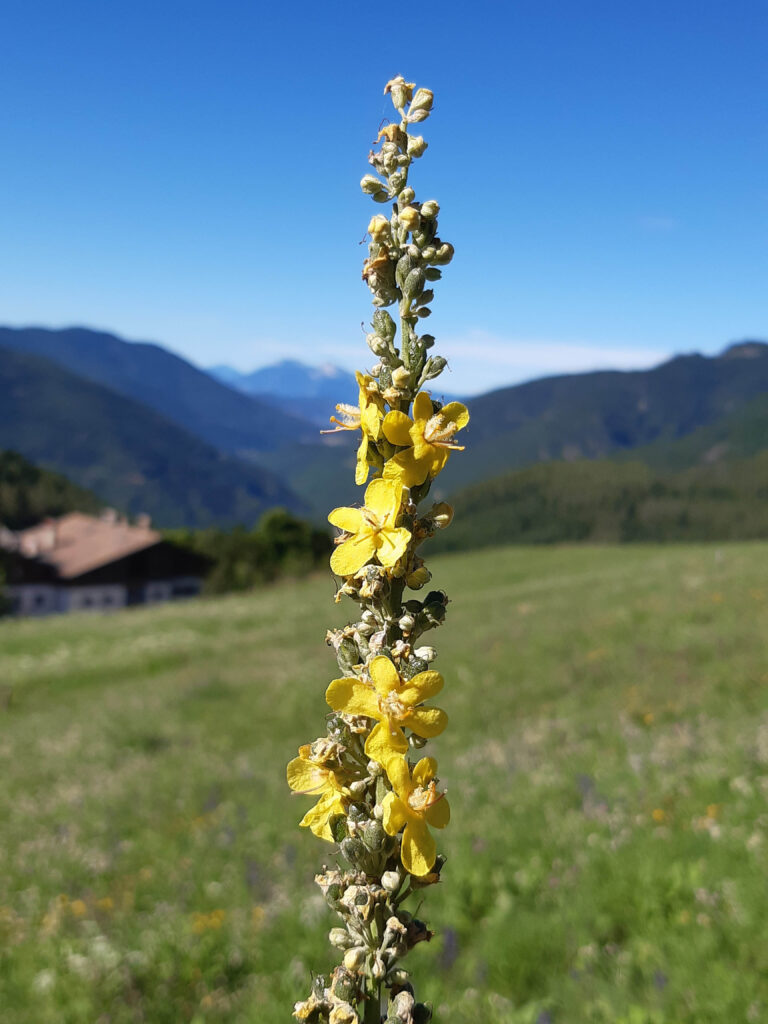
Mullein, Anterivo
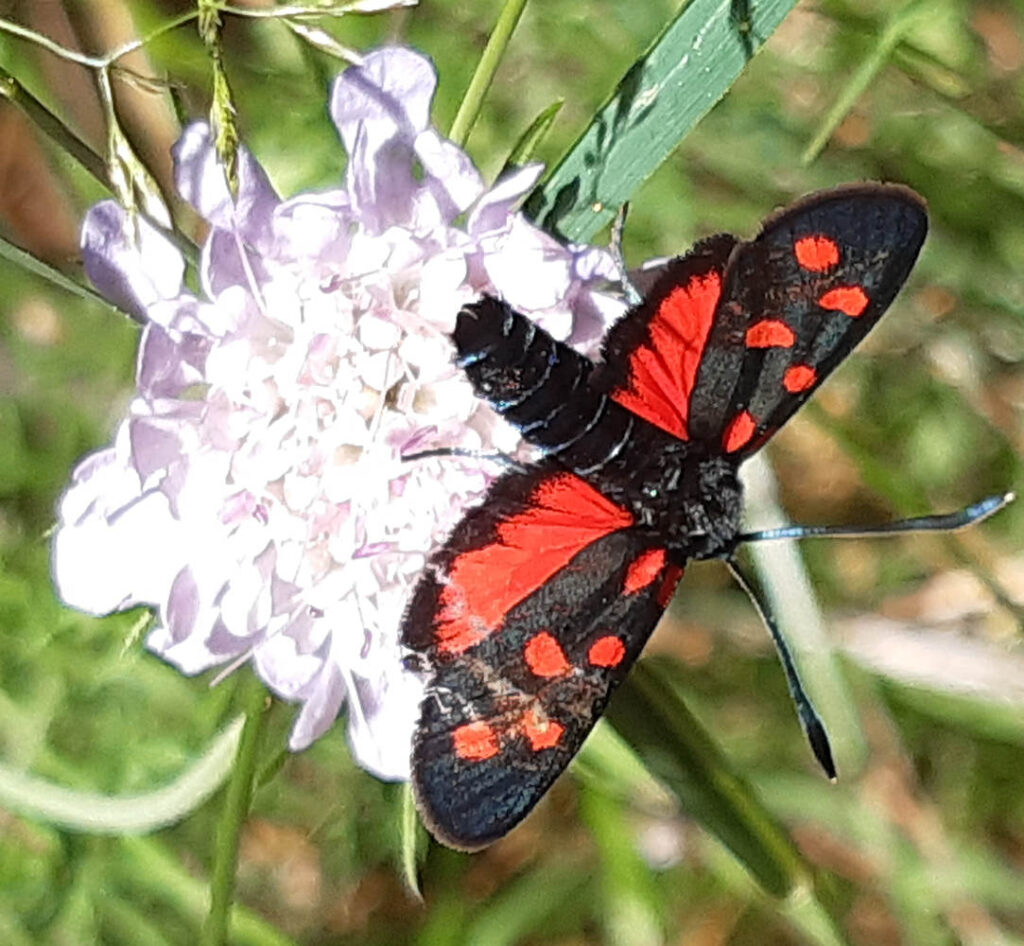
Narrow-bordered 5-spot Burnet Moth, on Scabious

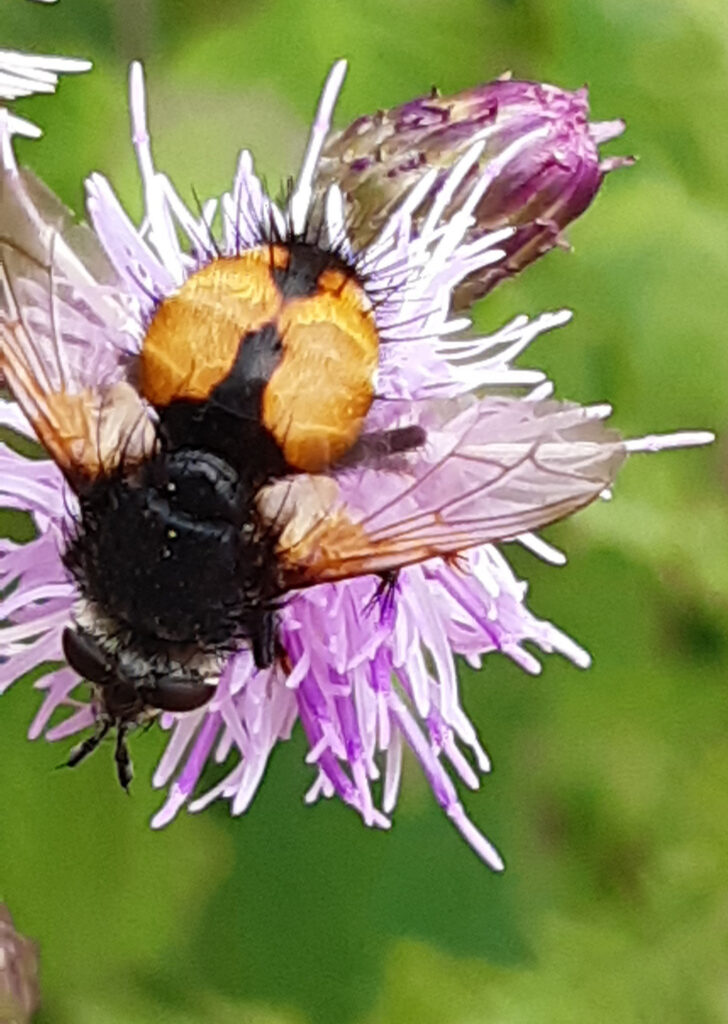
Orange-backed Tachinid fly, presumably mimicking a bee
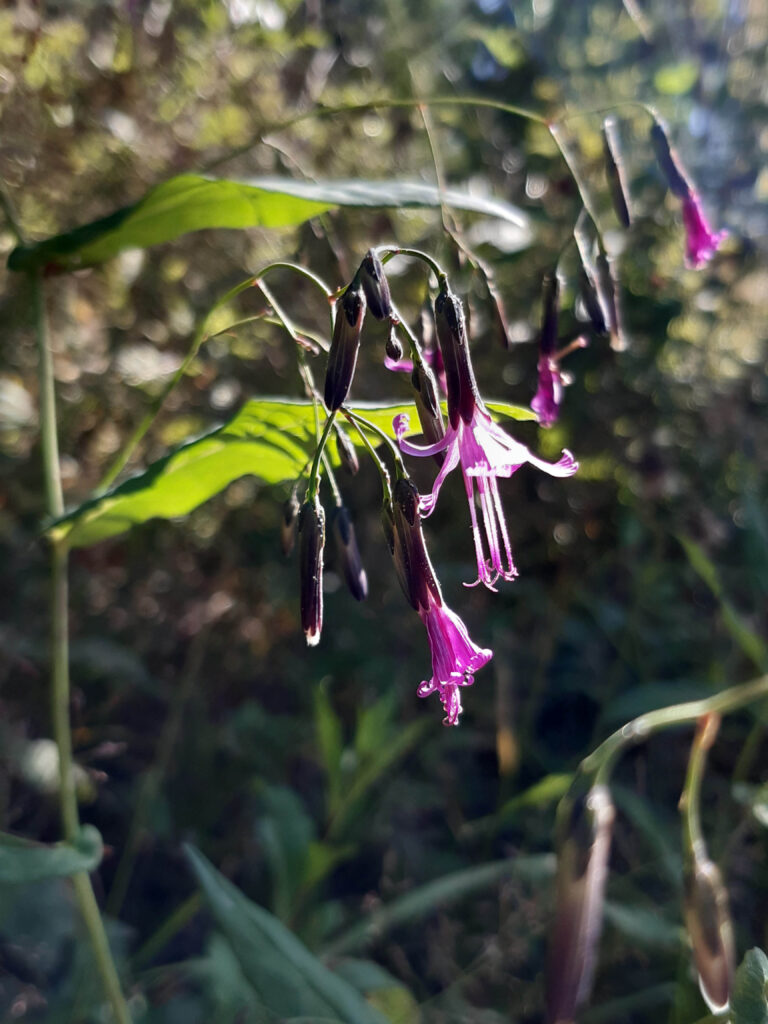
Purple Rattlesnake-root
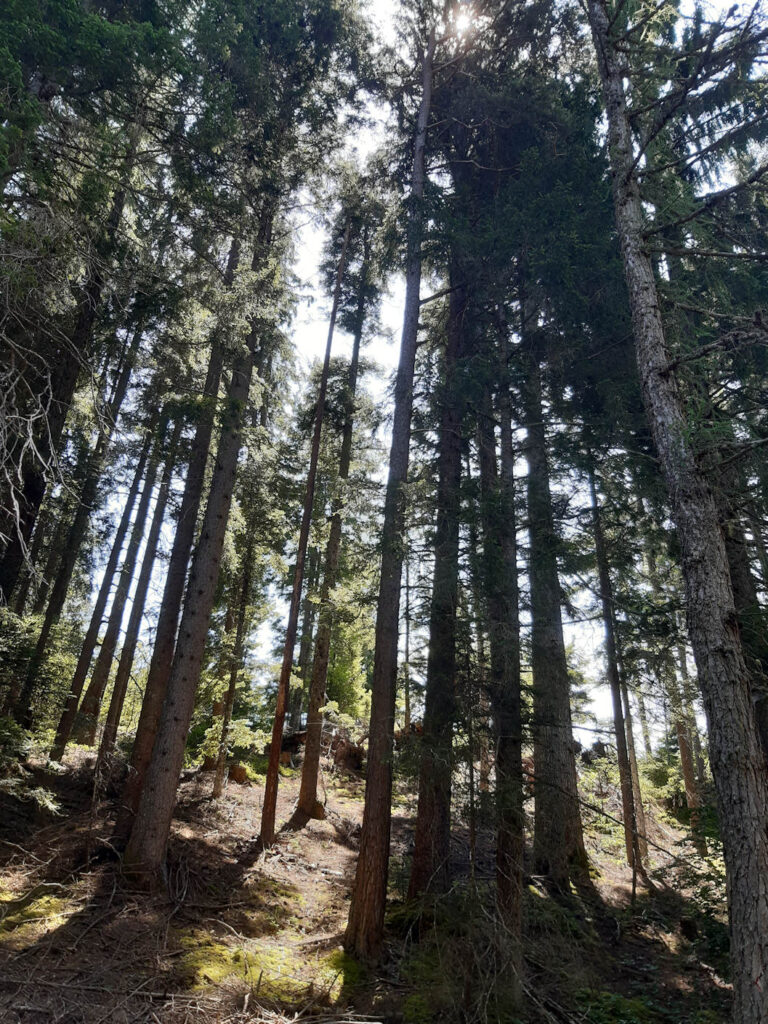
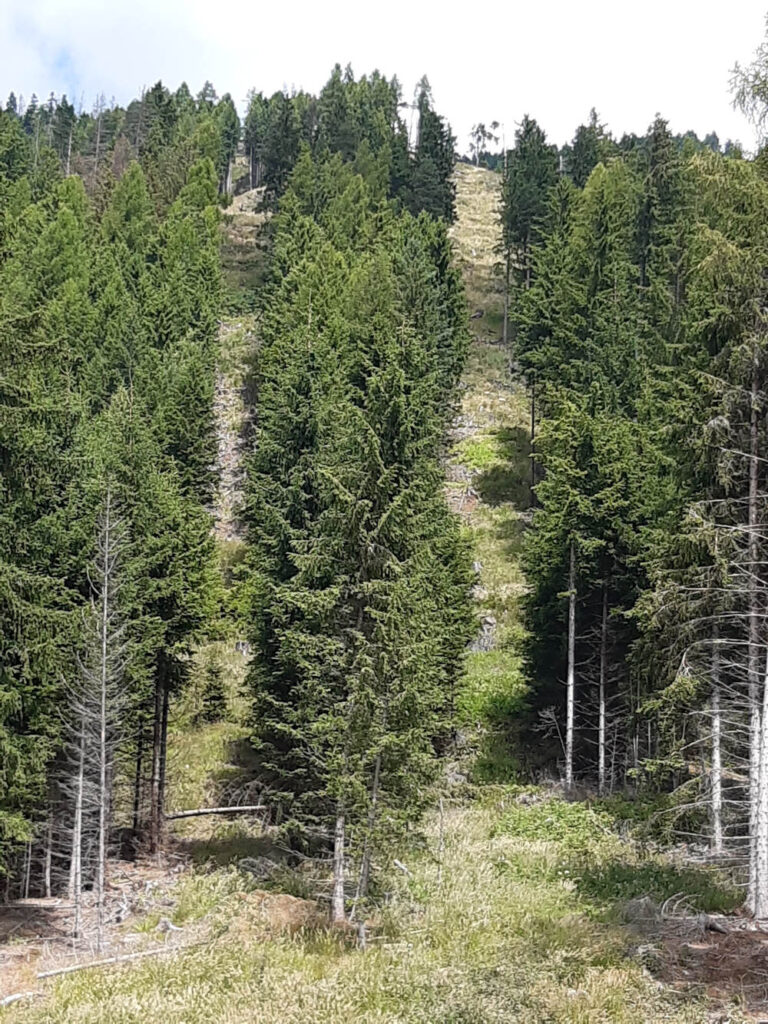
Marvellous tall firs, Anterivo
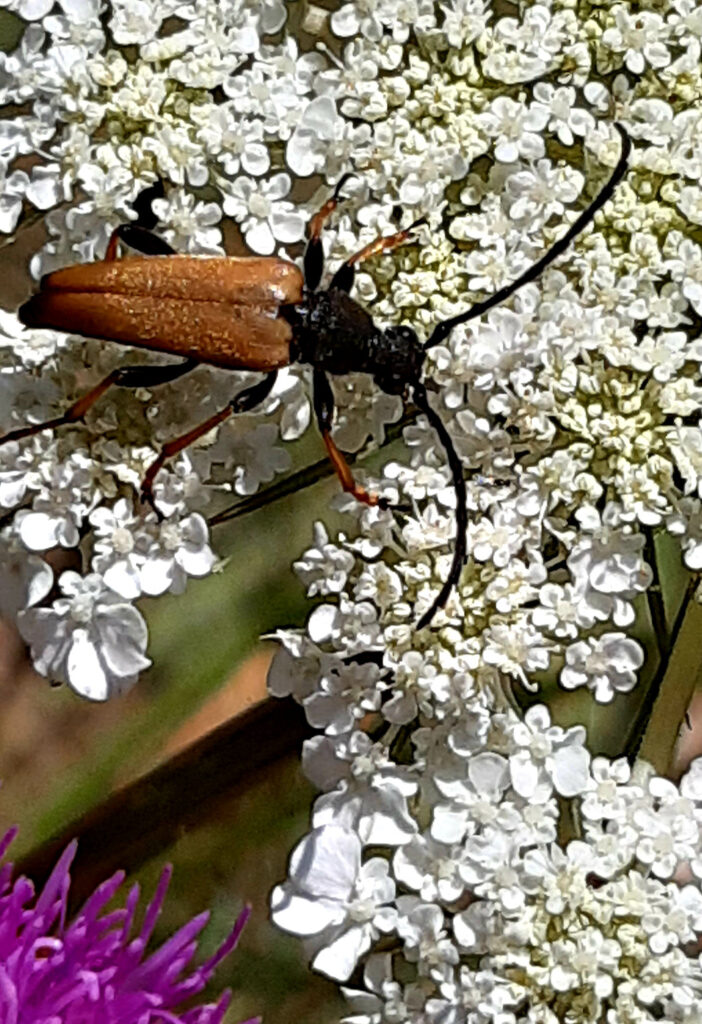
Red Pine Longhorn beetle. The adults take nectar; the larvae feed on rotting wood.
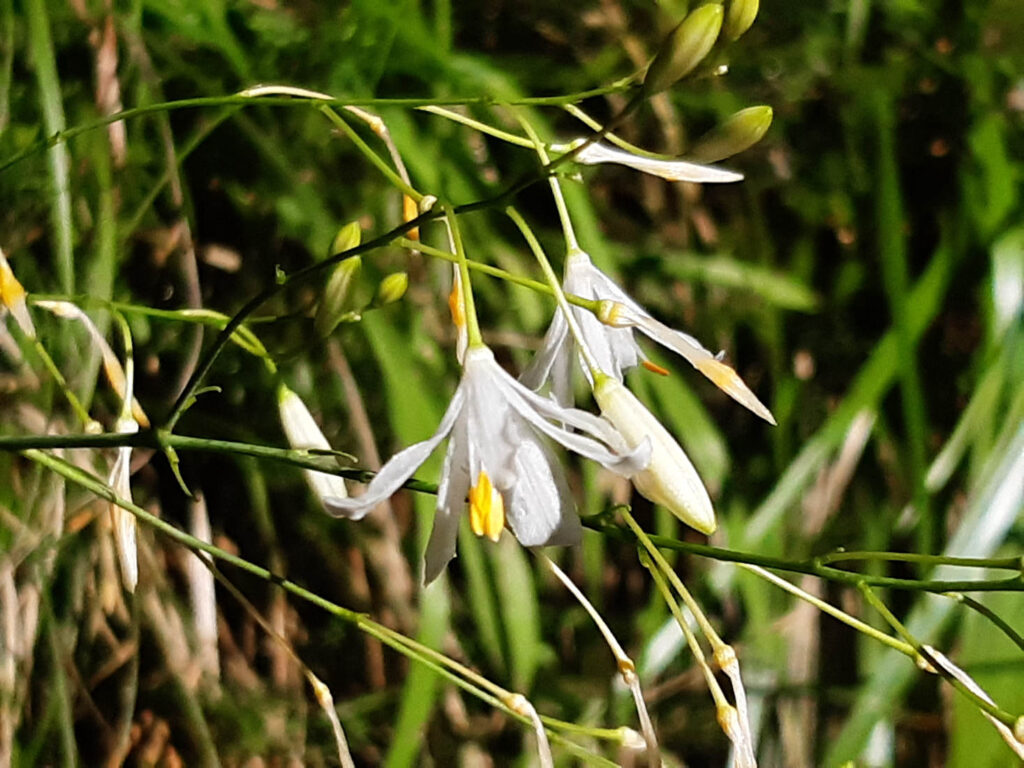
Keeled Garlic
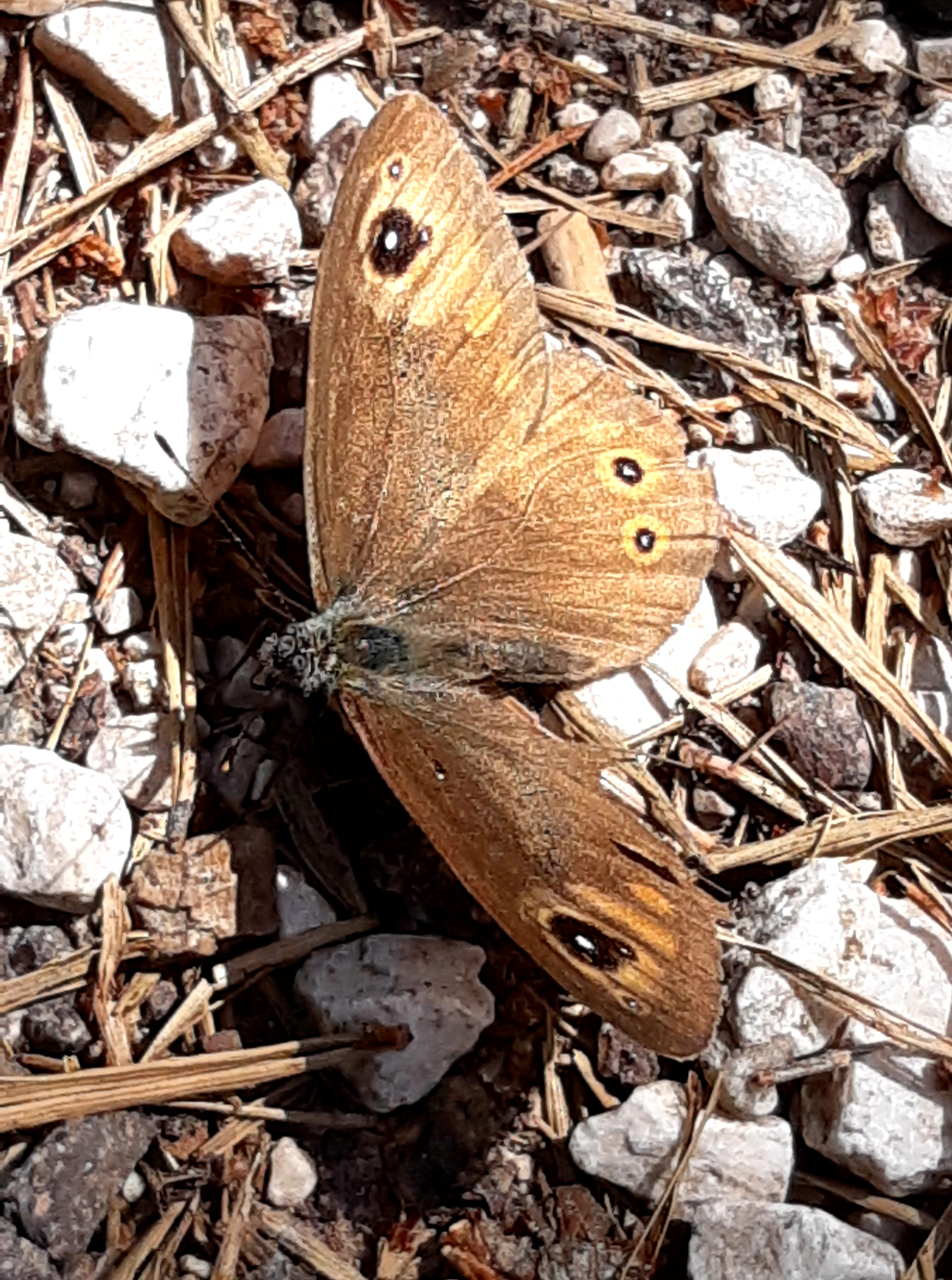
Large Wall Brown, Trodena
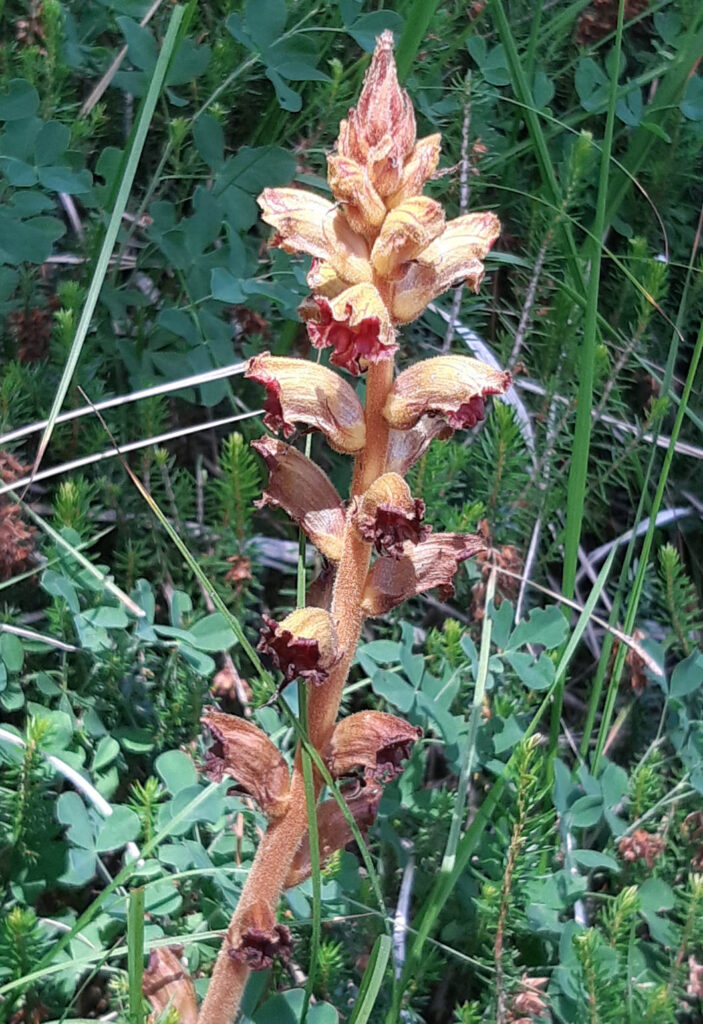
Purple Broomrape, Trodena. The plant has no leaves, relying entirely for its food on parasitising its host plant, Yarrow.
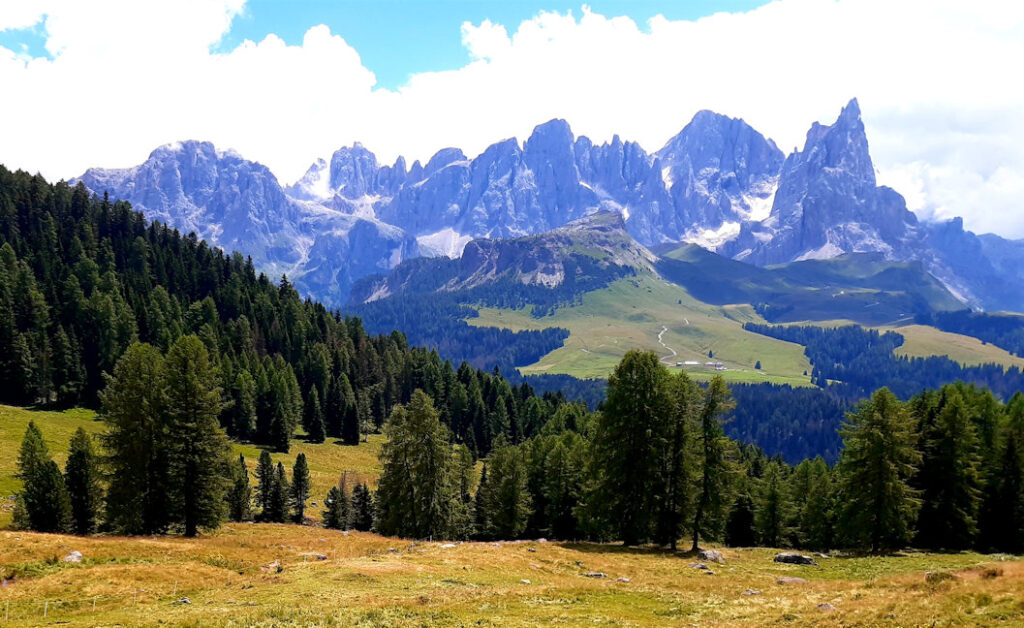
Pale di San Martino mountains, alpine meadows, mixed coniferous forest of Spruce, Fir, Larch, and Pine
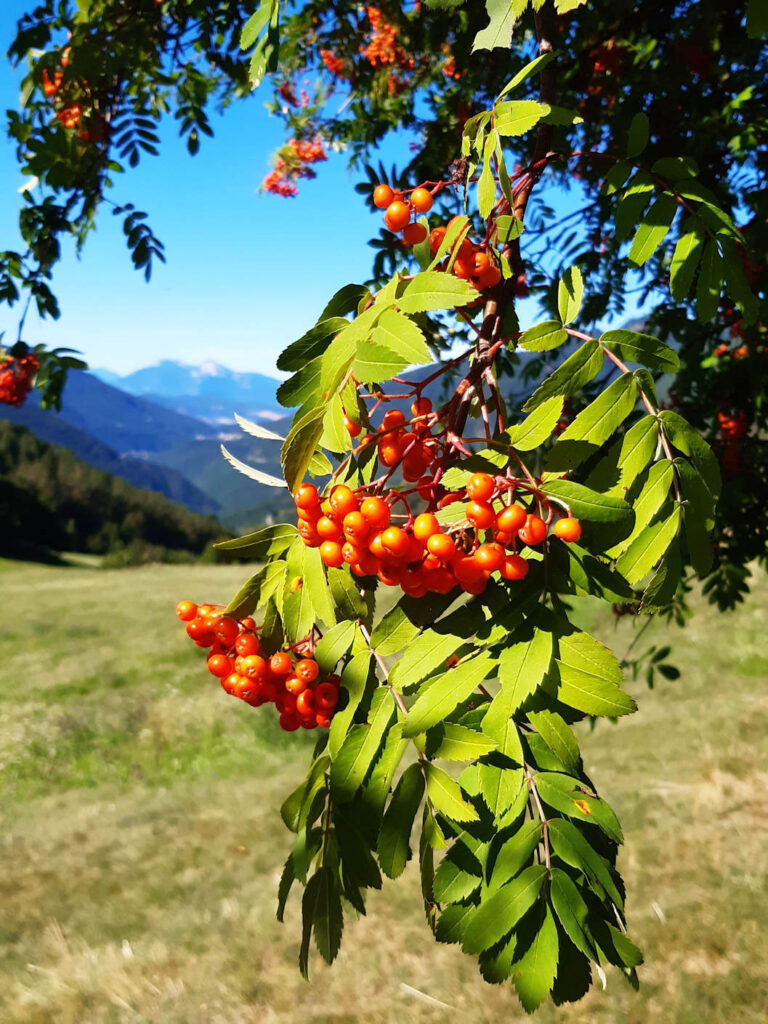
Rowan or Mountain Ash, Anterivo
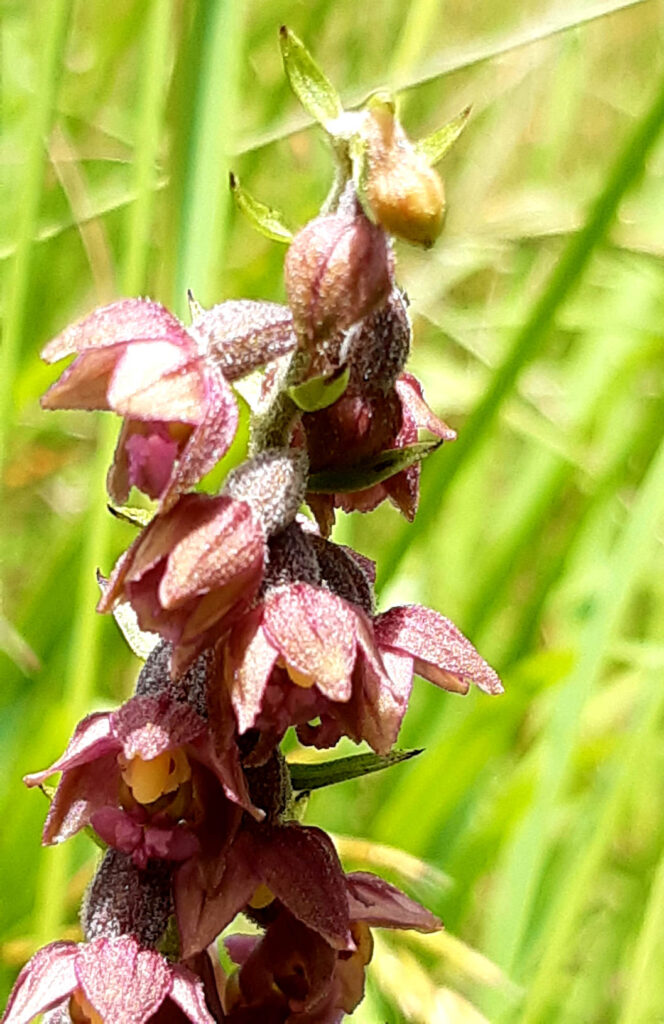
Dark Red Helleborine, Aldino
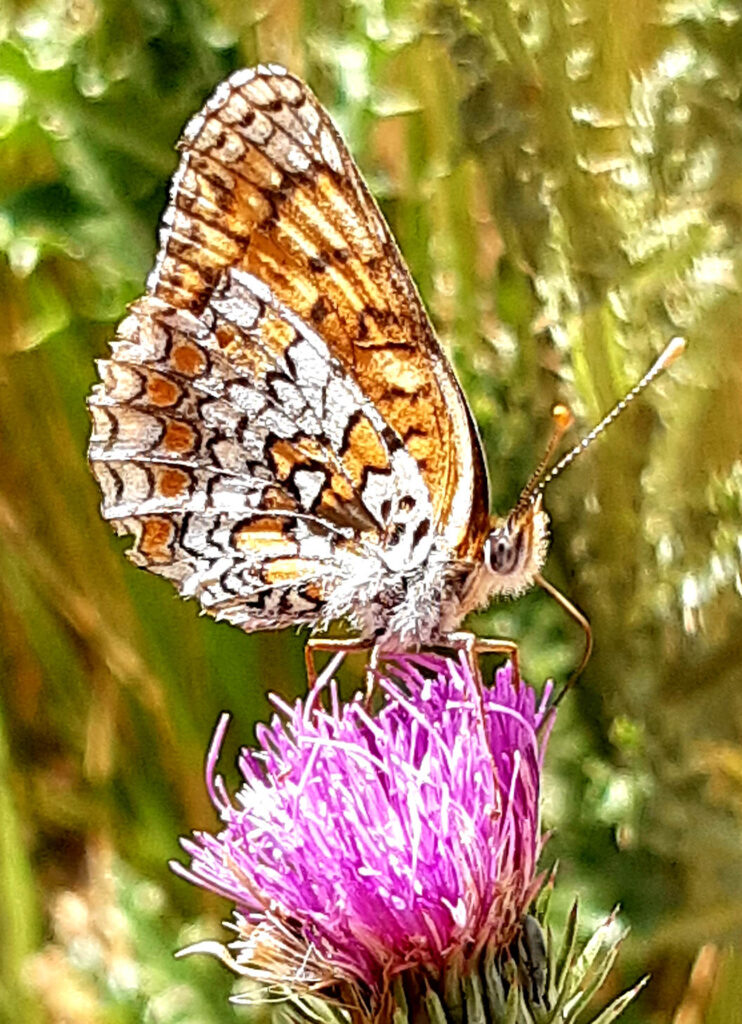
Knapweed Fritillary, on Knapweed
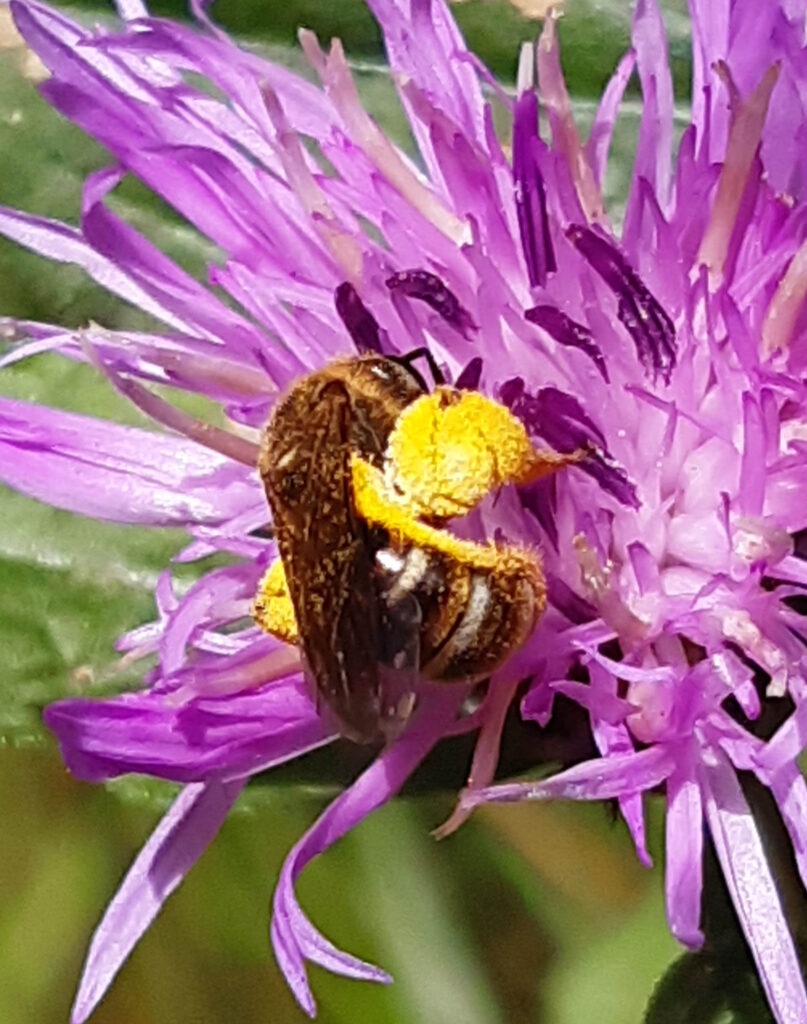
Pollinator at work: a bee with full pollen baskets on its legs, probably a Halictus mining bee, on Knapweed (cf Halictus scabiosae, which does nectar on Knapweed as well as on Scabious, and has stripes of three colours on its abdomen)
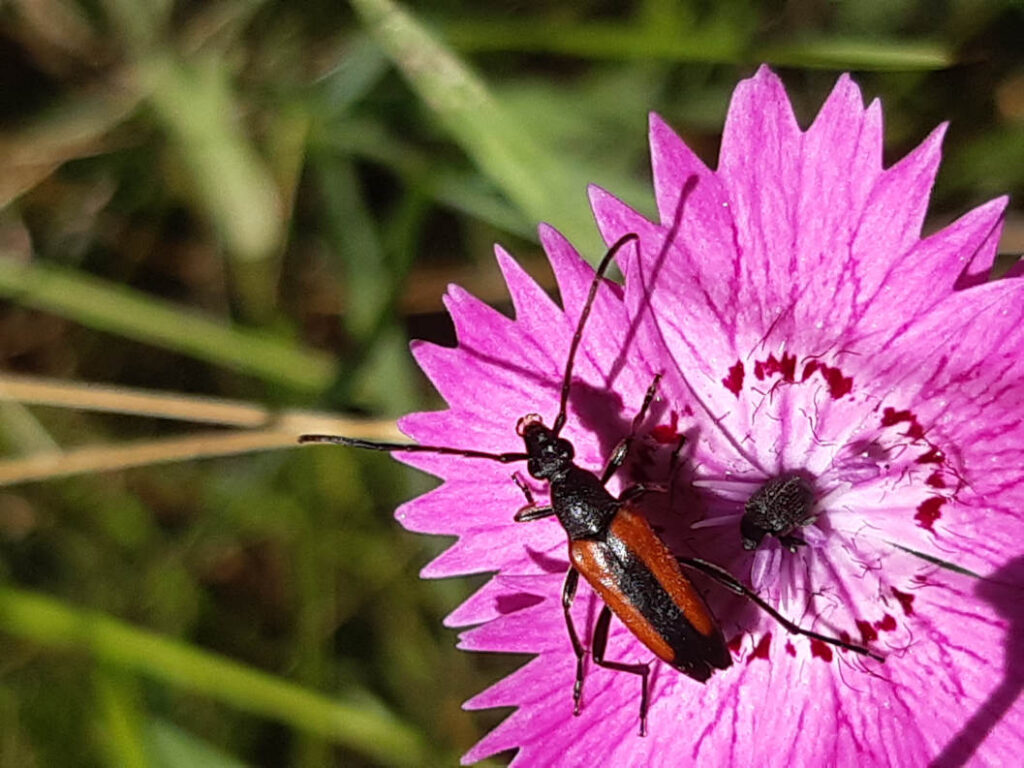
Black-striped Longhorn Beetle, on Seguier’s Pink
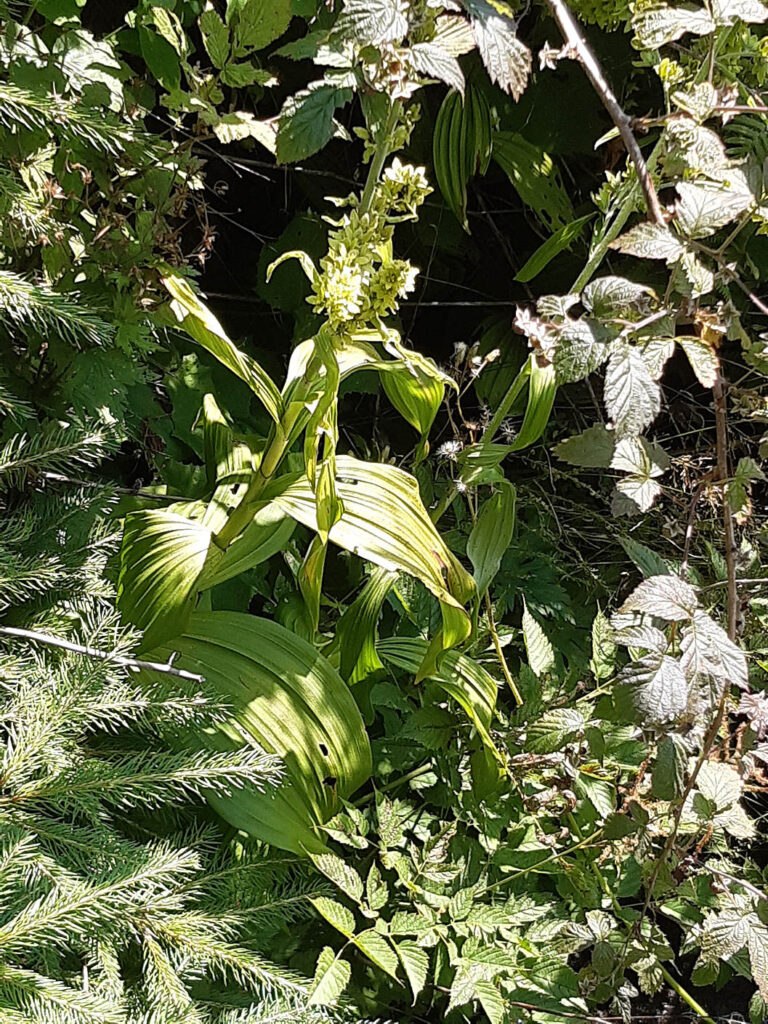
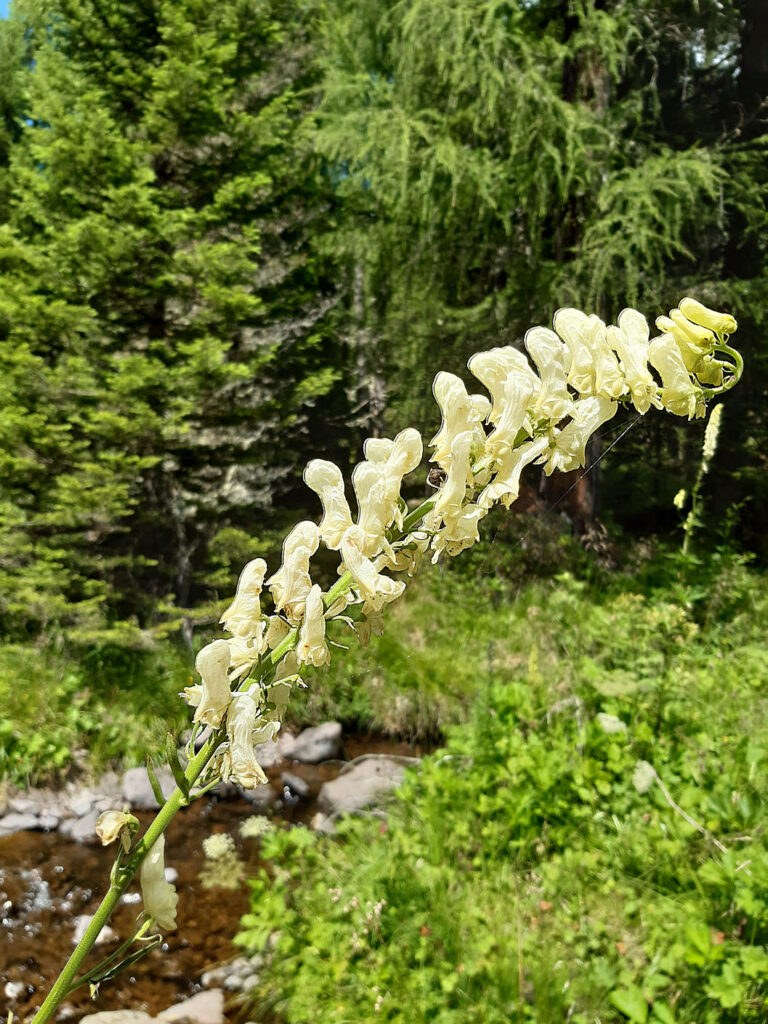
White Hellebore
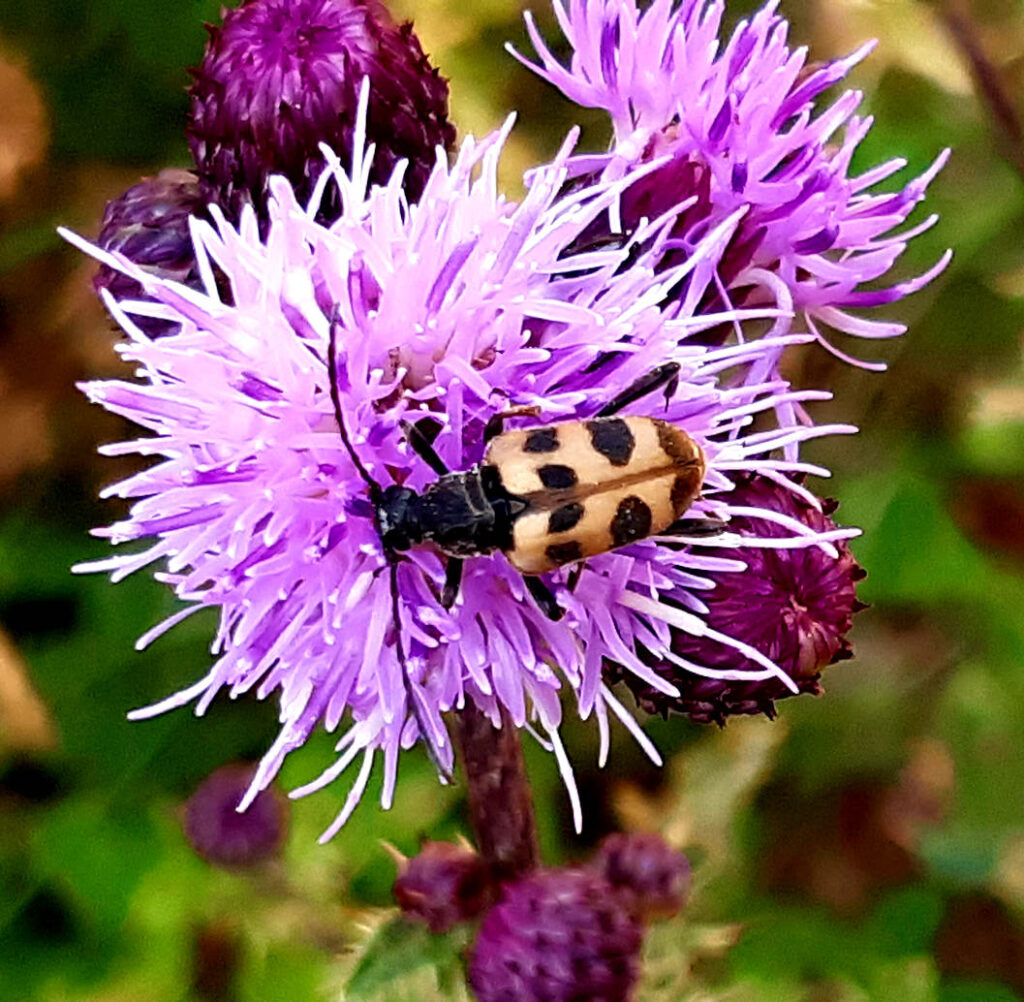
Spotted Flower Longhorn
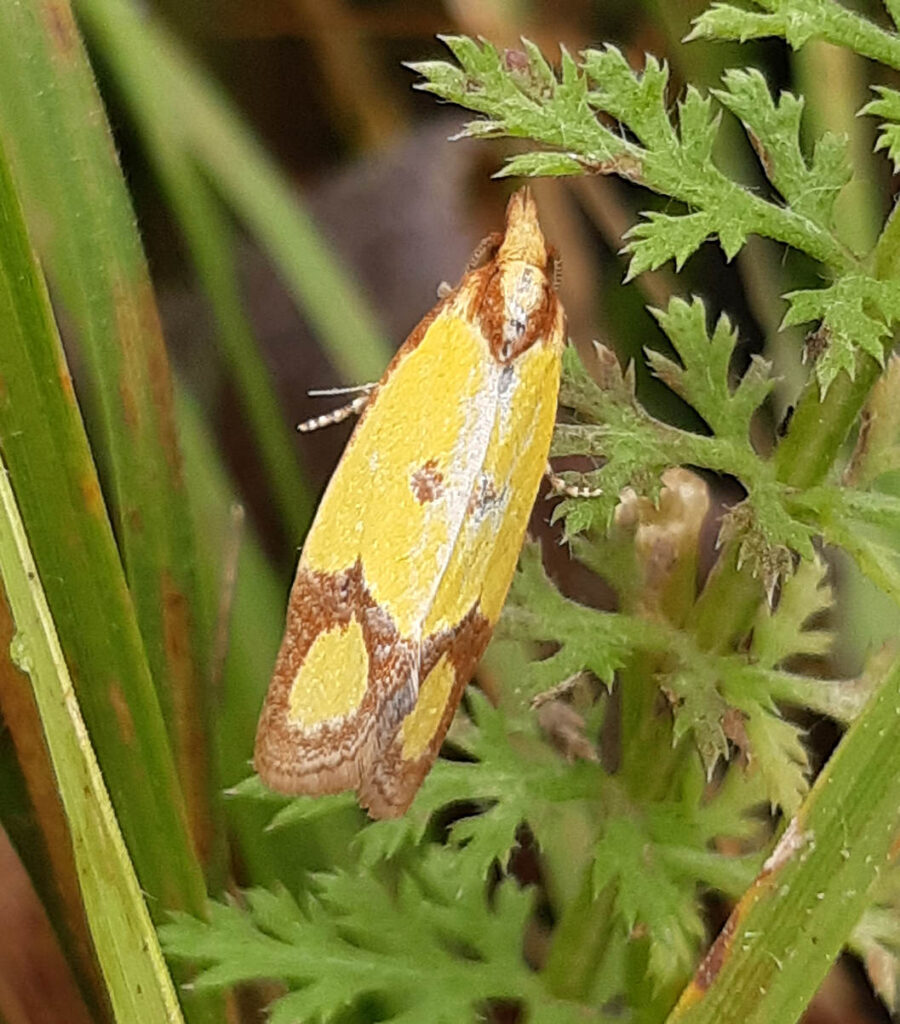
Sulphur Knapweed moth
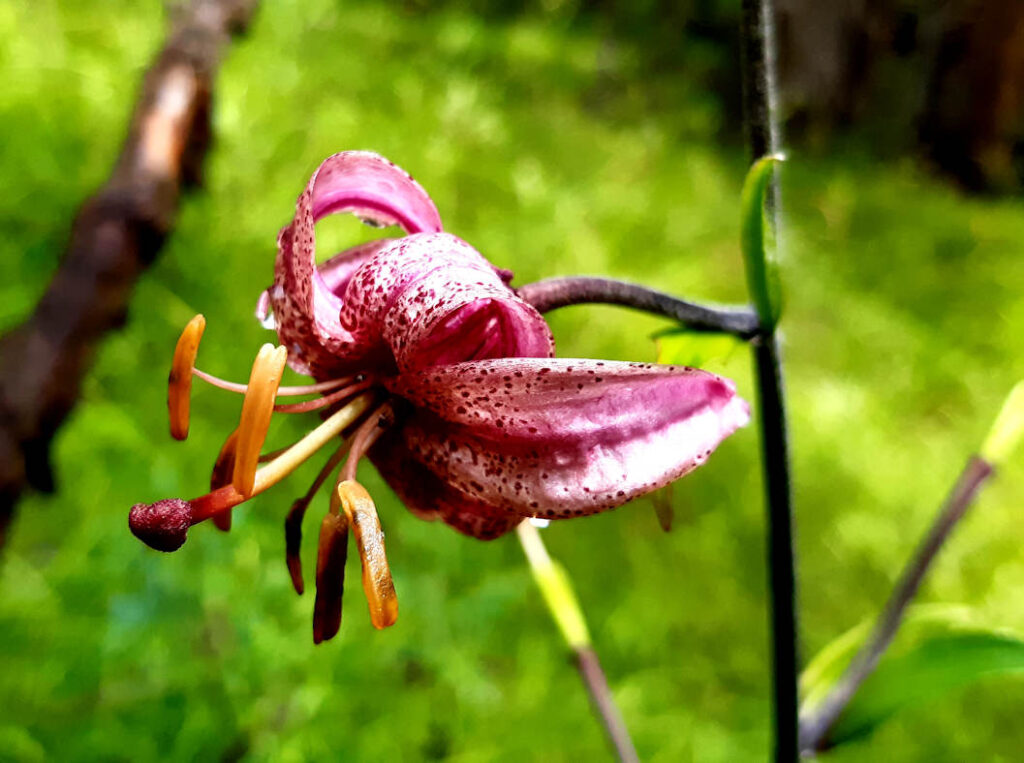
Martagon or Turk’s Head Lily
St Bernard’s Lily
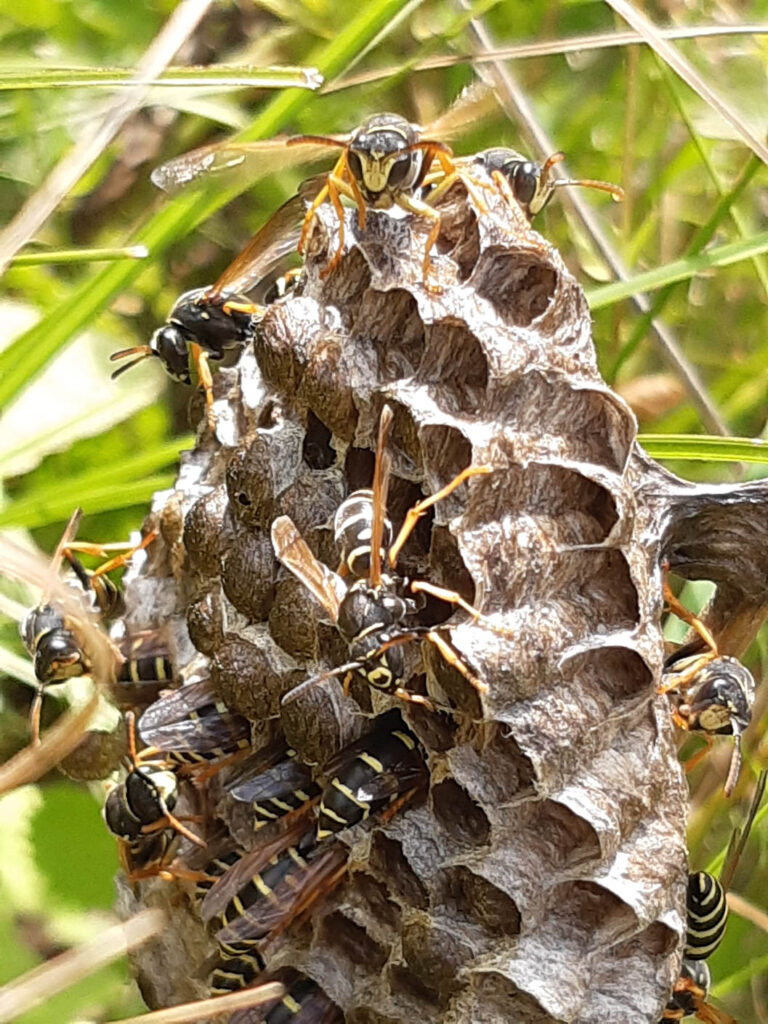
Nest of Paper Wasp (Polistes). Workers are on guard; others tend the larvae. The outer row of cells always remains unused. Unlike common wasps, the nest is made in the open, attached to a herbaceous stem as here, and it never gets much larger than this. Some of the cells are sealed, with domed ends and pupae inside.
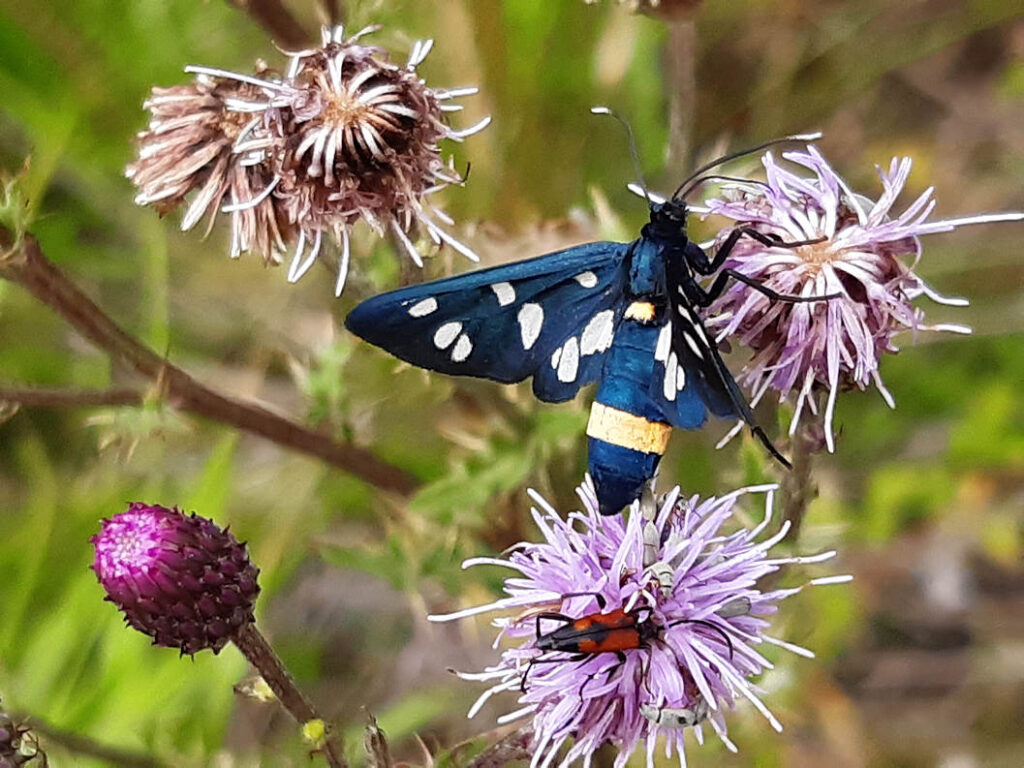
Nine-spotted Moth taking nectar on Knapweed. Like the Burnet moths, its bold coloration is aposematic; it may also be a wasp mimic with the bold yellow stripe on its abdomen. Below it is a heart-spotted flower longhorn beetle, Stictoleptura cordigera.
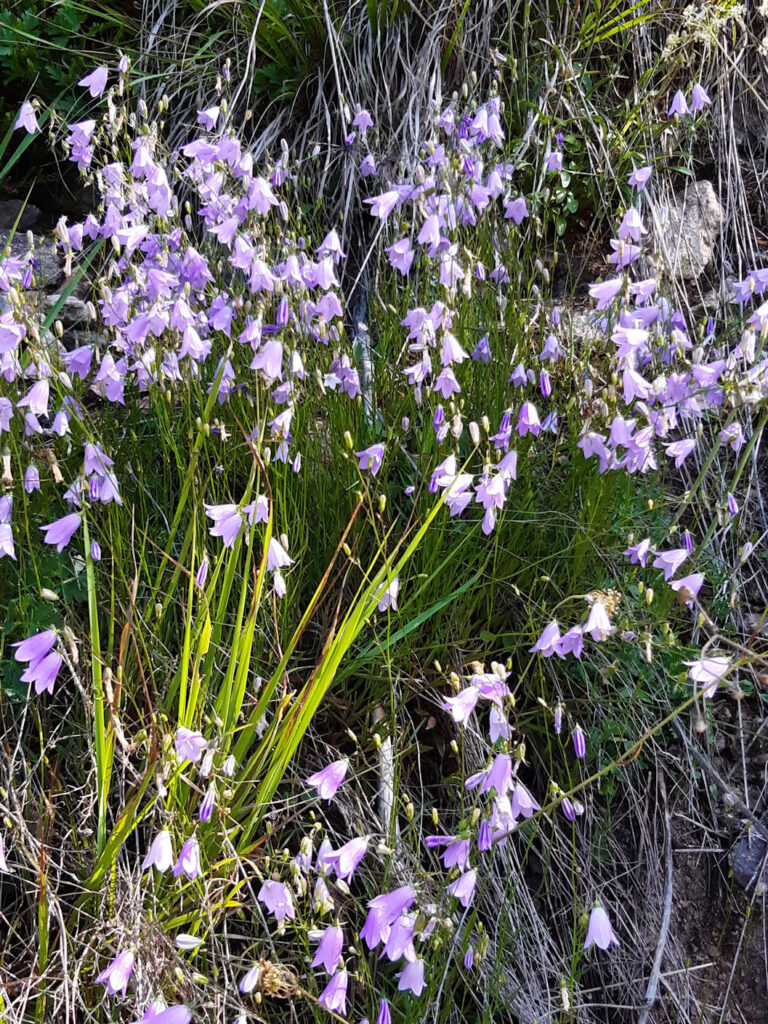
A mass of Harebells
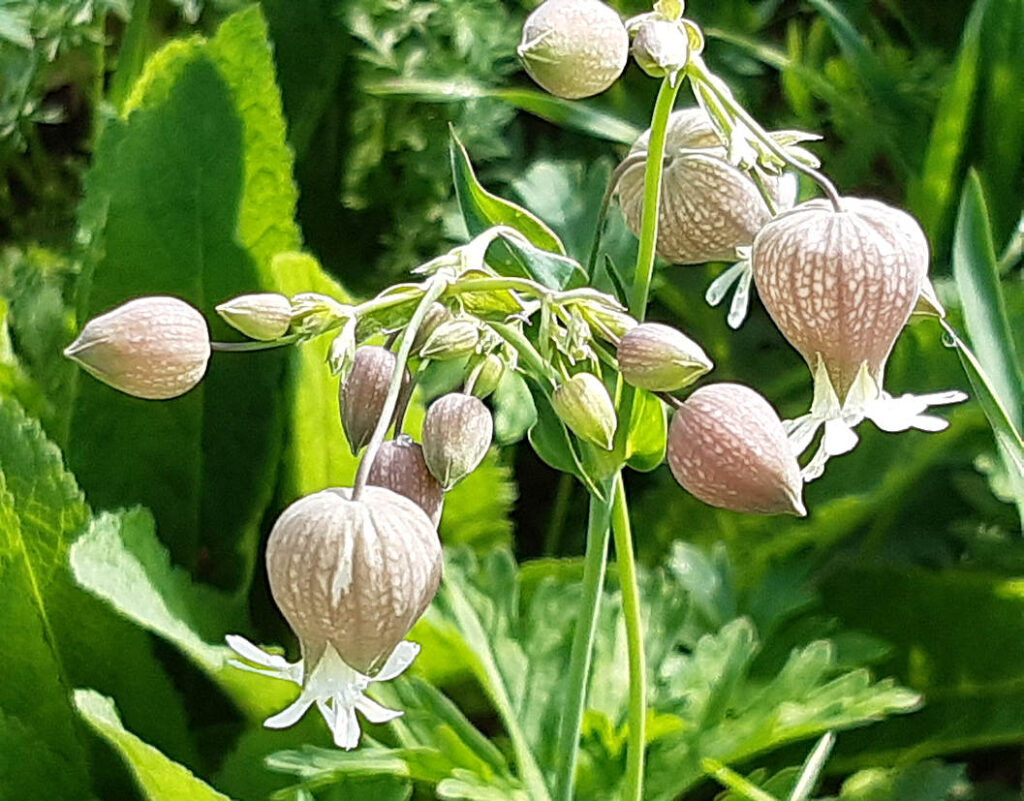
Bladder Campion
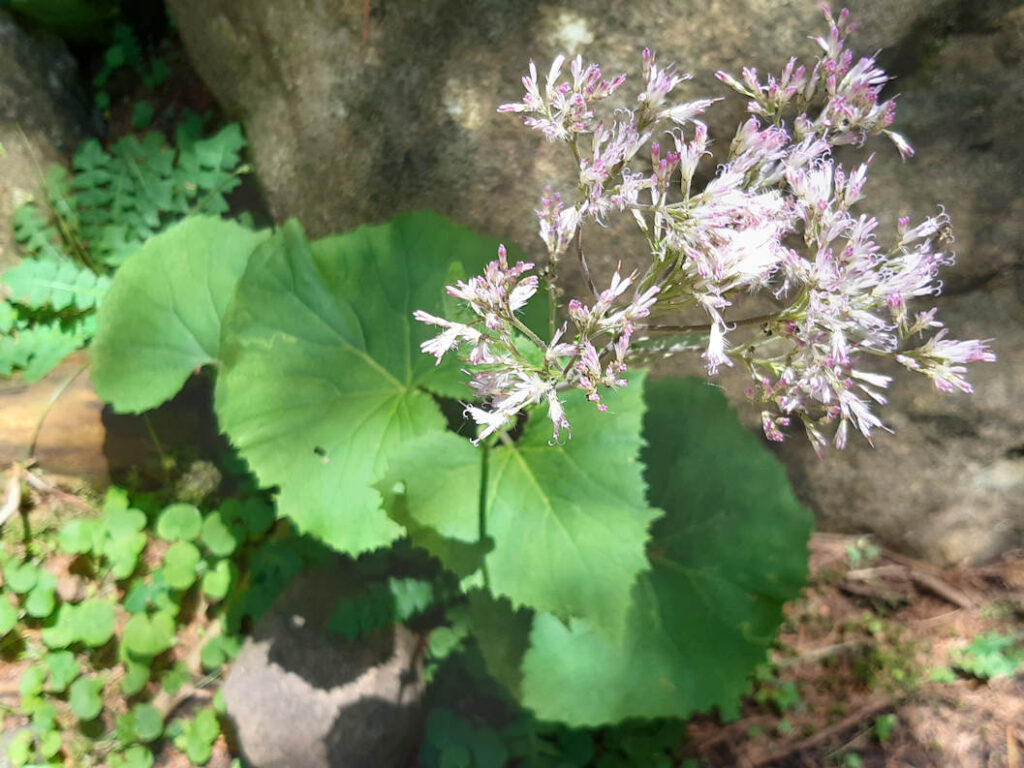
Alpine Butterbur
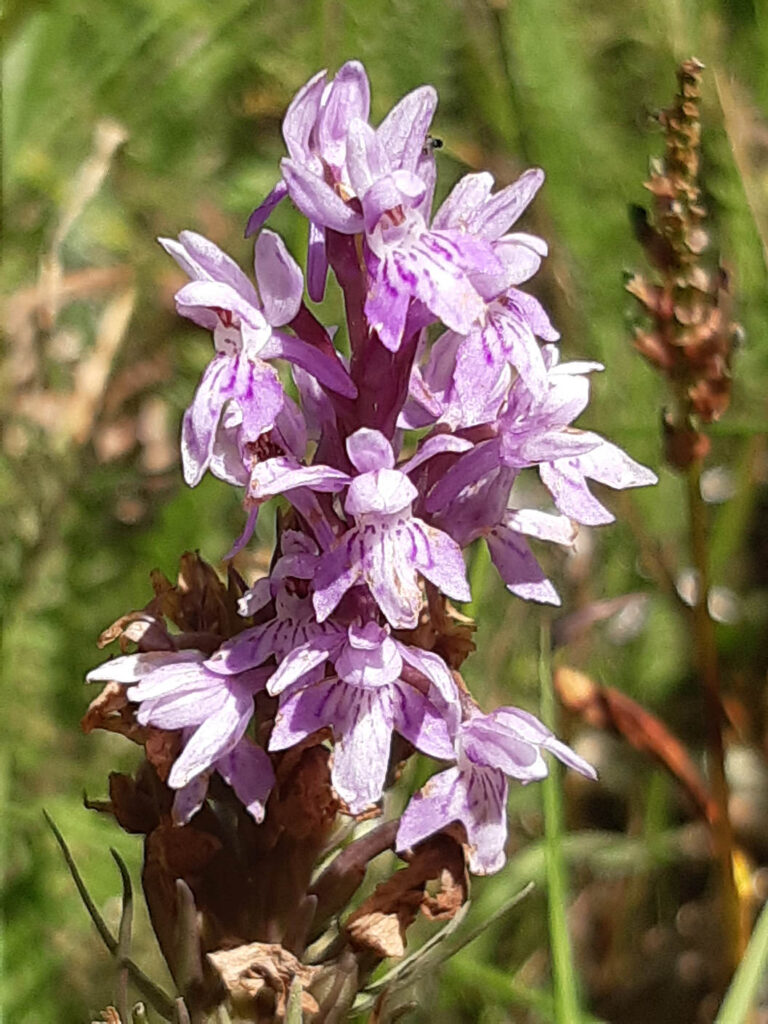
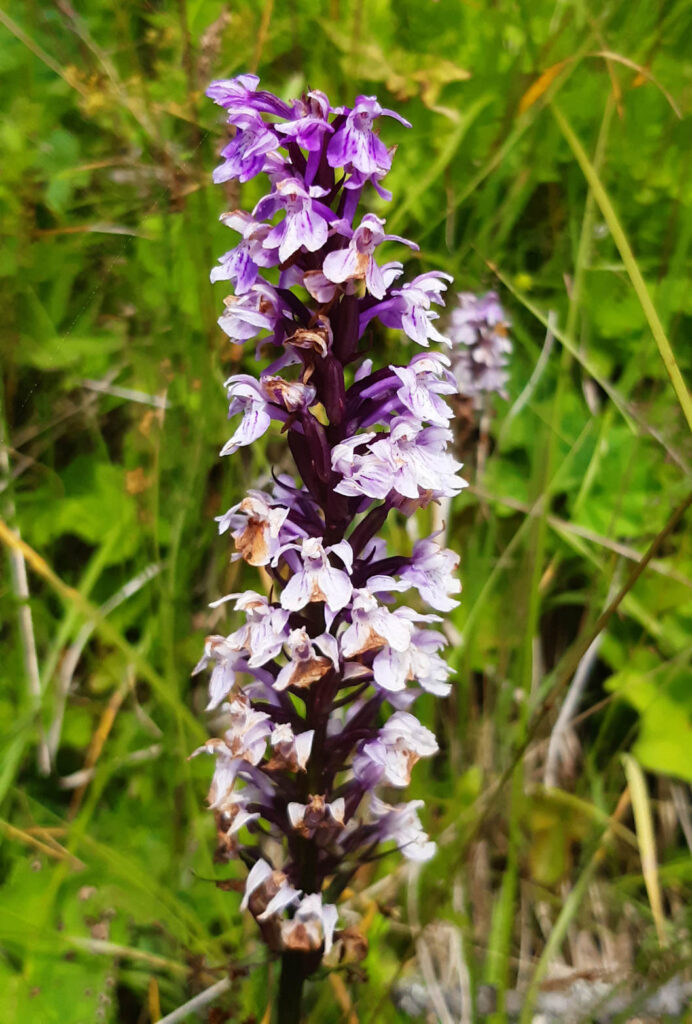
Heath Spotted-orchid
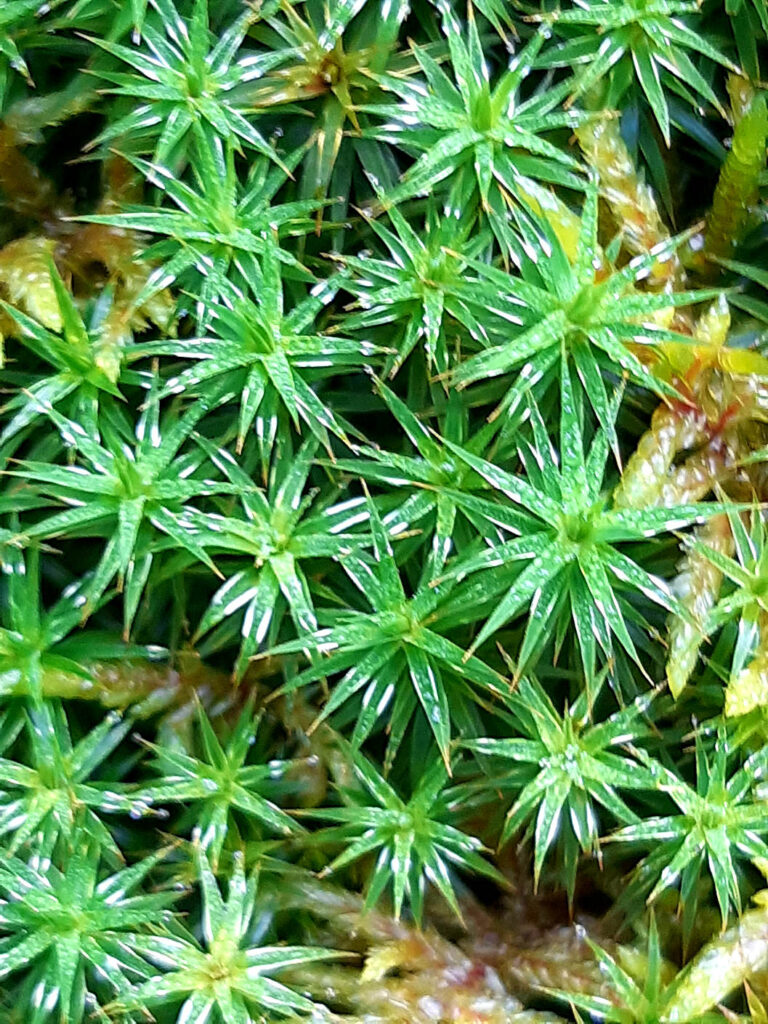
Haircap Moss (Polytrichum)
Common Spotted Orchid
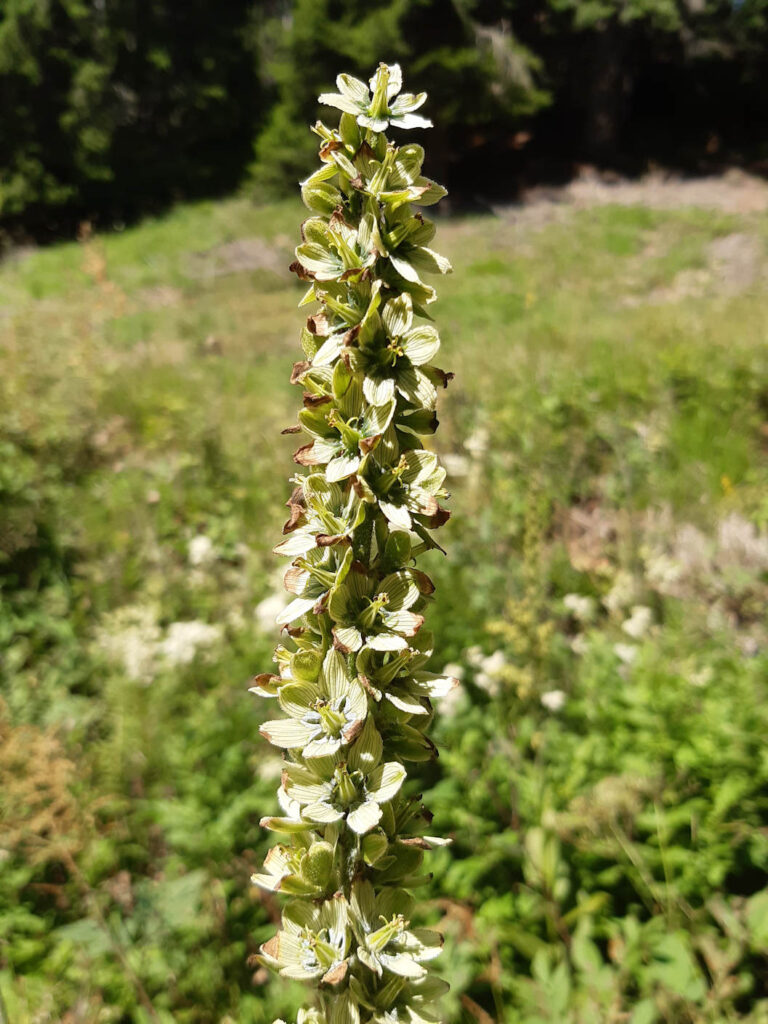
False Hellebore (Veratrum), in the Liliales (like lilies) not the Asparagales (like the orchids that it resembles)
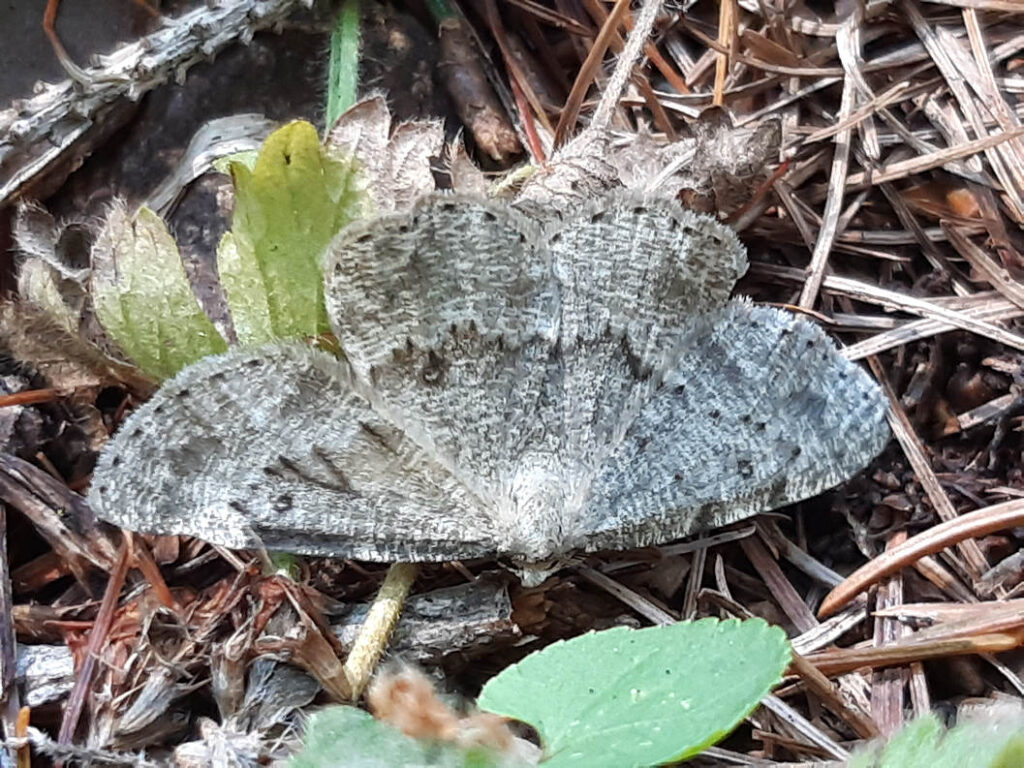
Lesser Cream Wave (Scopula immutata)
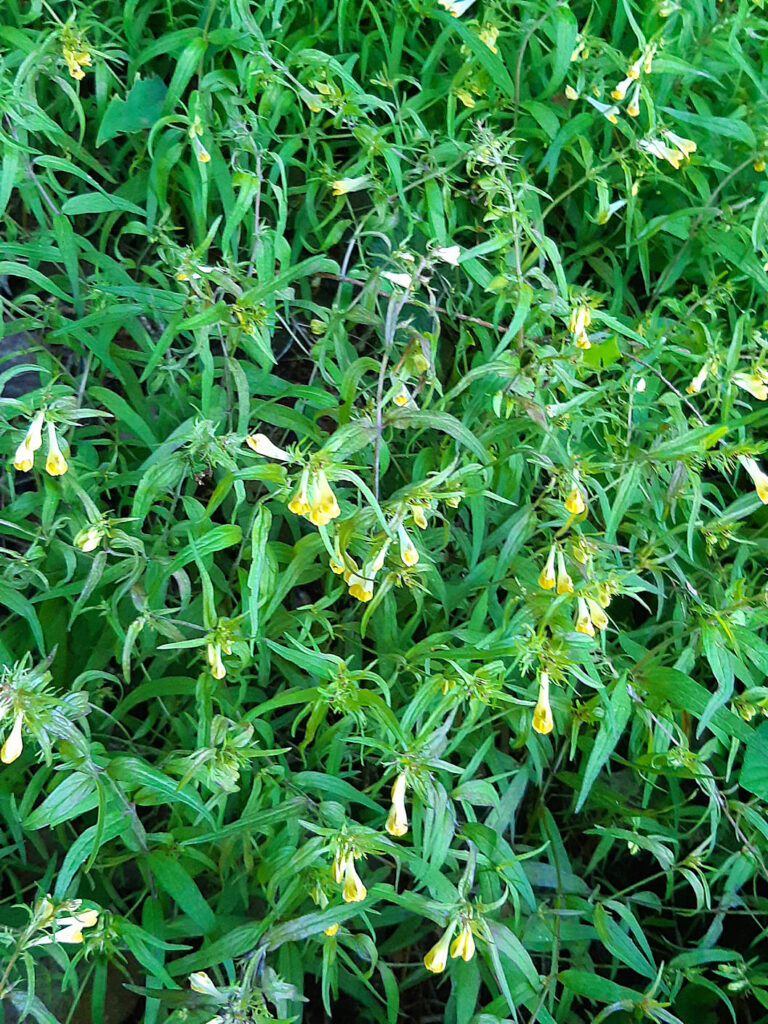
Cow-wheat is a hemiparasite, lives in a mutualistic relationship with the wood ant, and is the host plant of the Heath Fritillary.
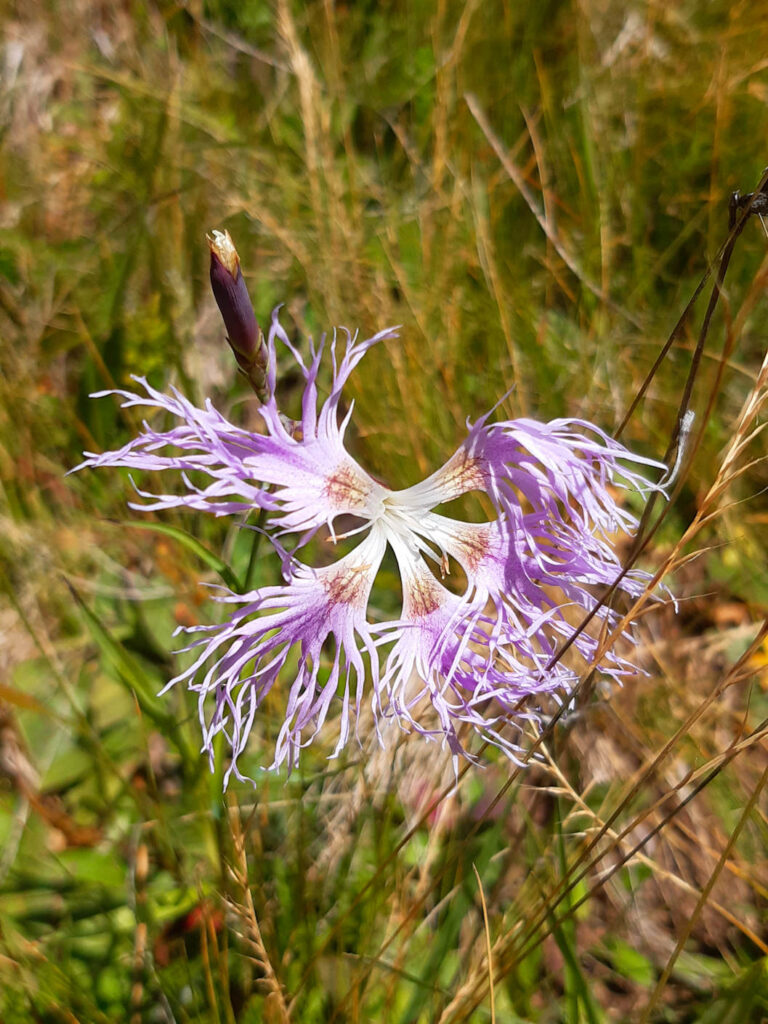
Fringed Pink
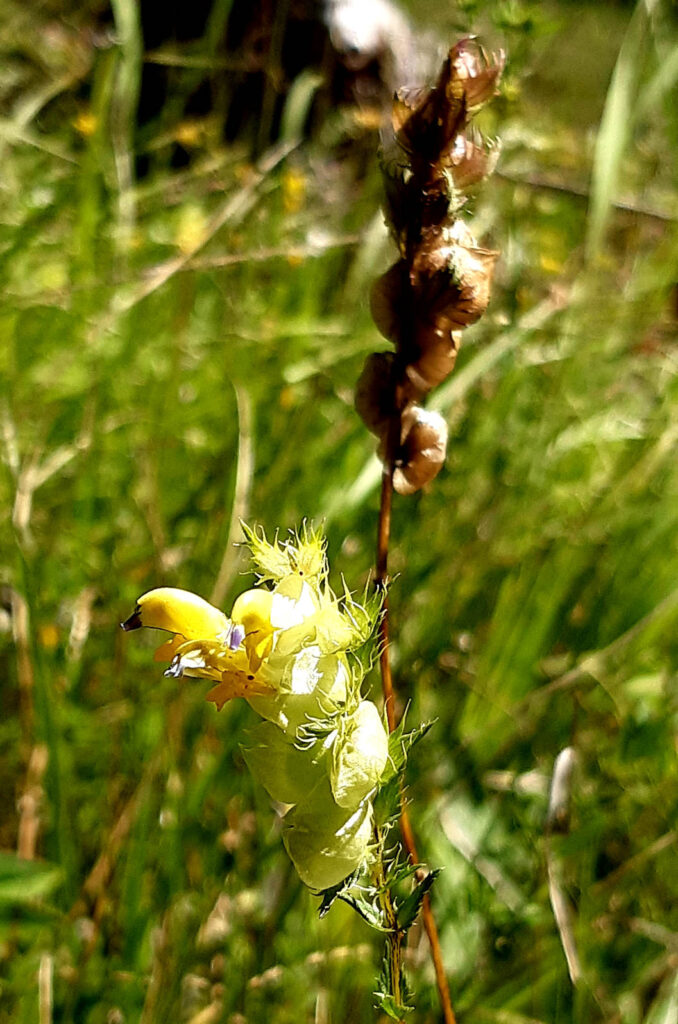
Yellow Rattle, a key plant in grassland as it parasitises tall grasses, weakening them and allowing many shorter flowers to flourish in alpine meadows.
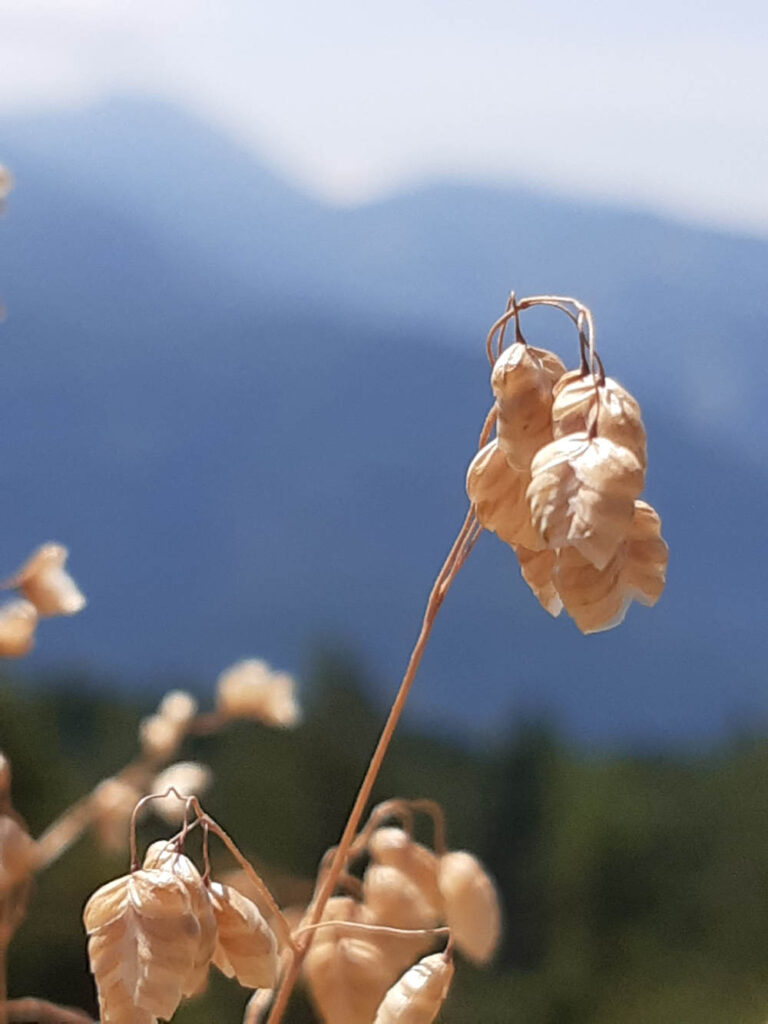
Greater quaking-grass (Briza), Anterivo
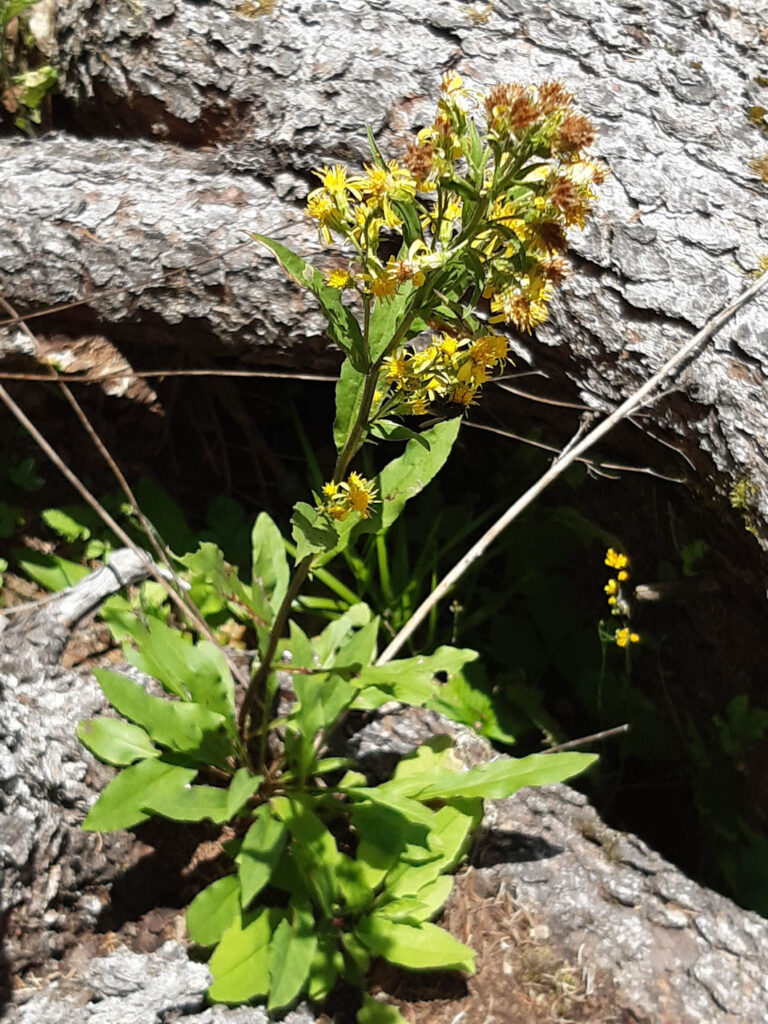
Goldenrod
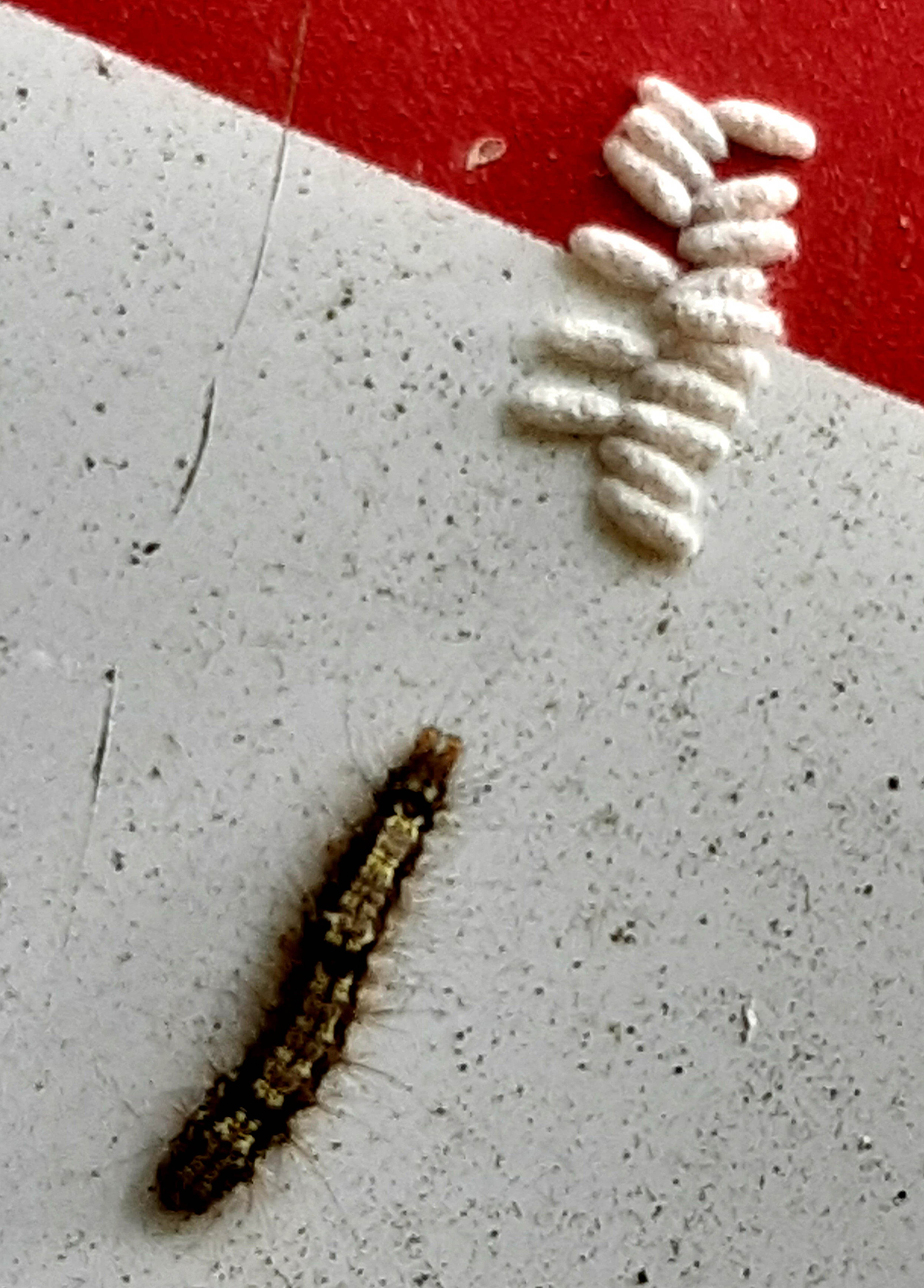
Gypsy moth caterpillar parasitised by Braconid wasps. They have eaten the inside of the caterpillar and have pupated alongside its body. The caterpillar has later slipped down away from the pupae.
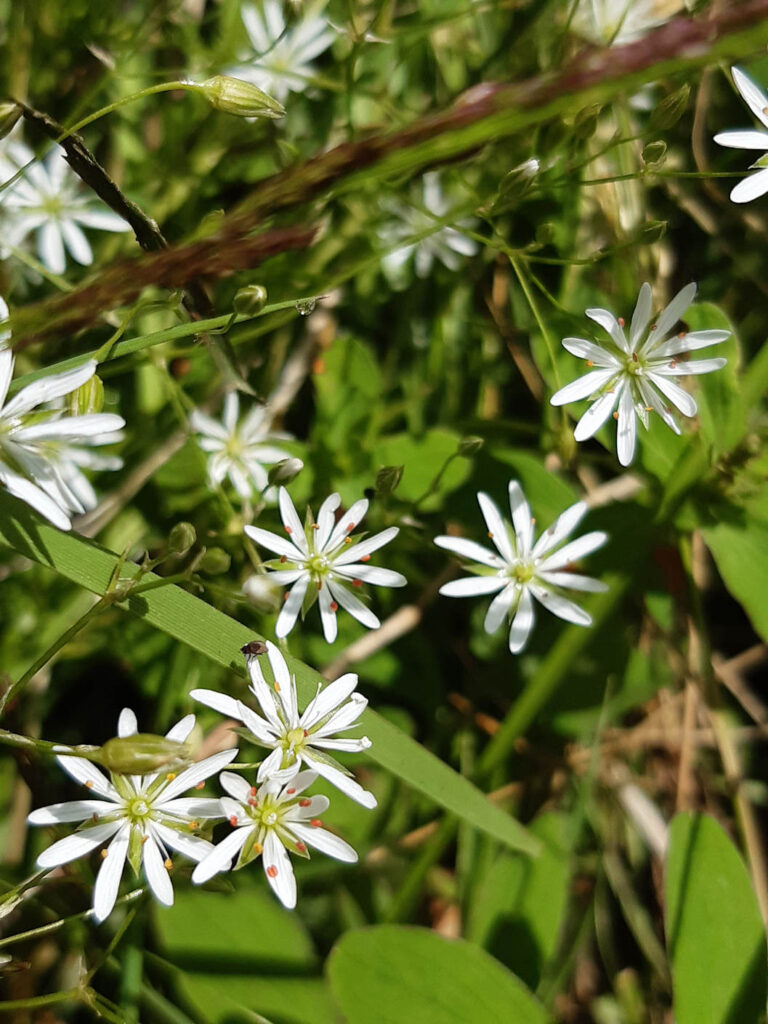
Grassy Stitchwort
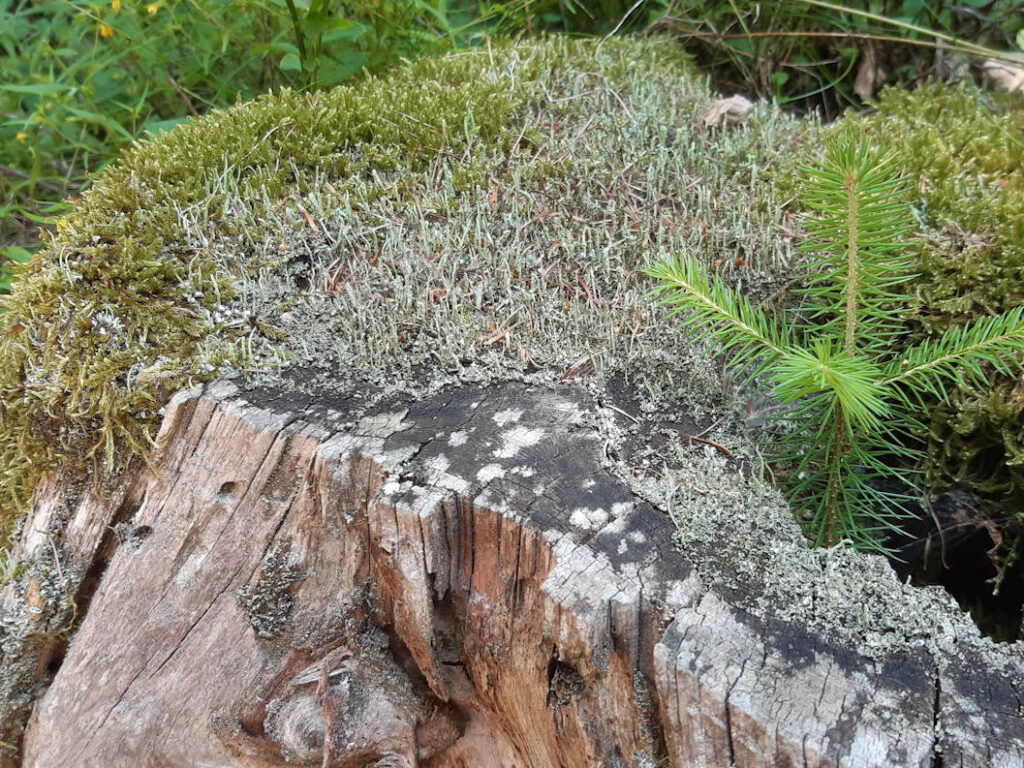
Cladonia lichen on fir stump
Small Yellow Foxglove
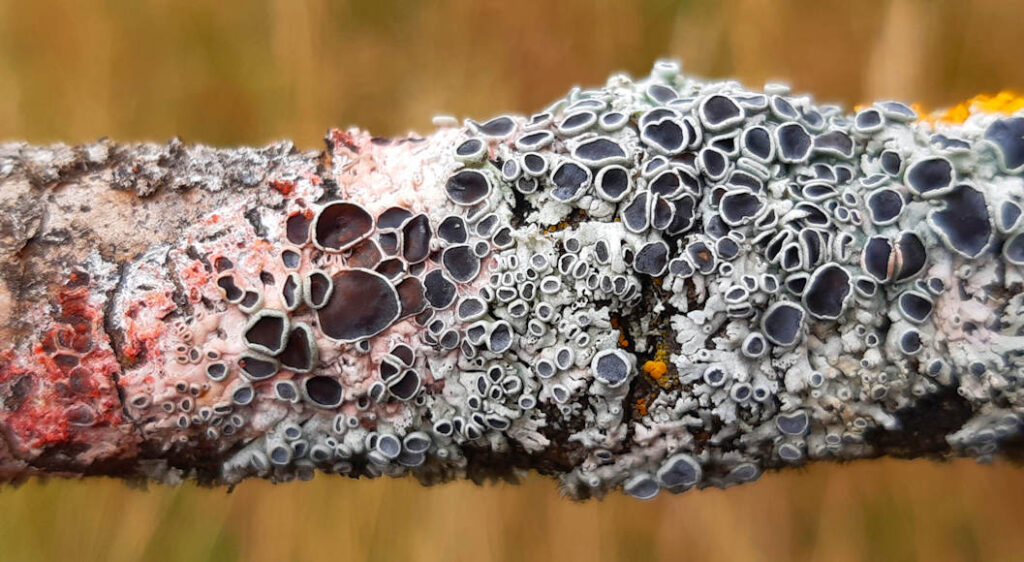
Handsomely lichened twig. The leafy Parmelia-type lichens have large rounded apothecia which release spores of the lichen fungus. The reddish area on the left is a discouraged patch of lichen; many lichens are used to create vegetable dyes in reds, oranges, and yellows.
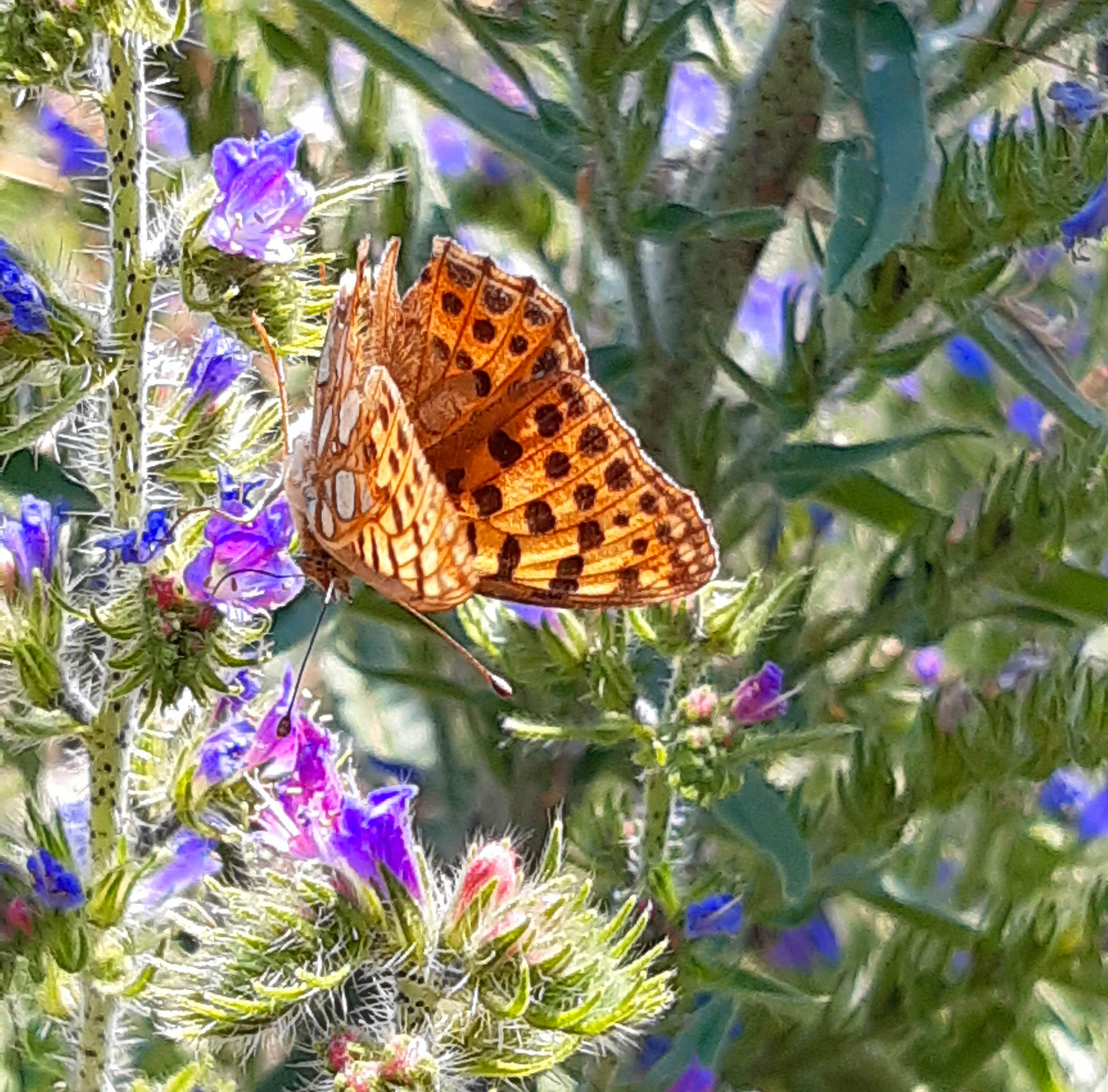
Queen of Spain Fritillary on Viper’s Bugloss
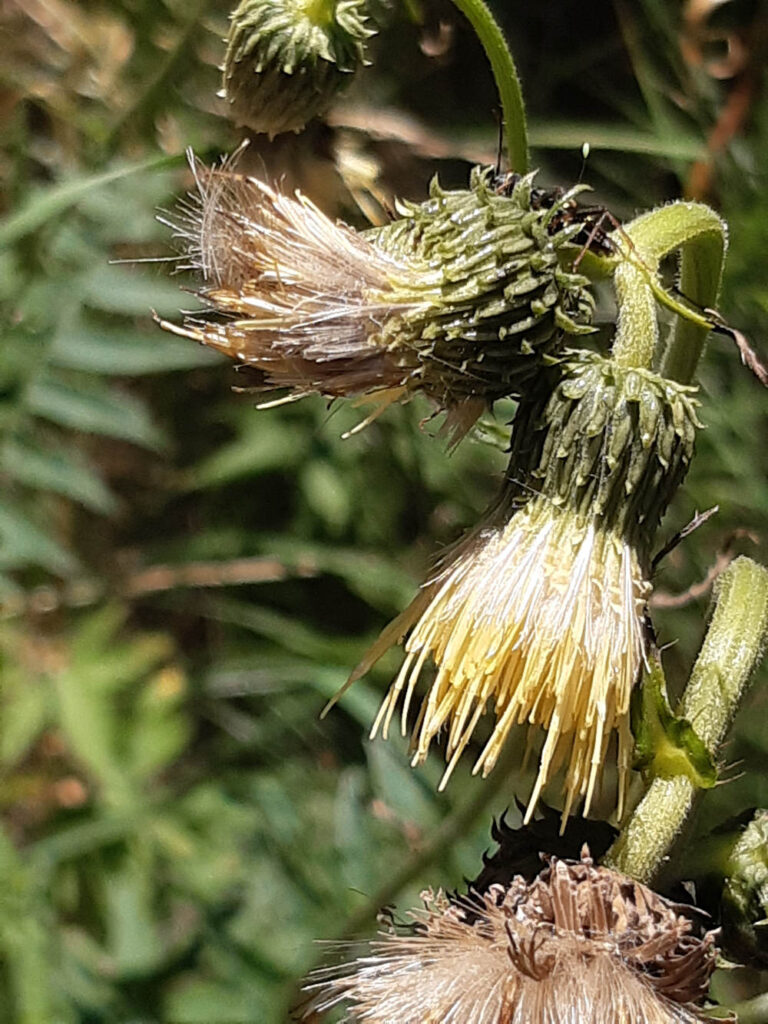
Sticky Thistle (Cirsium)
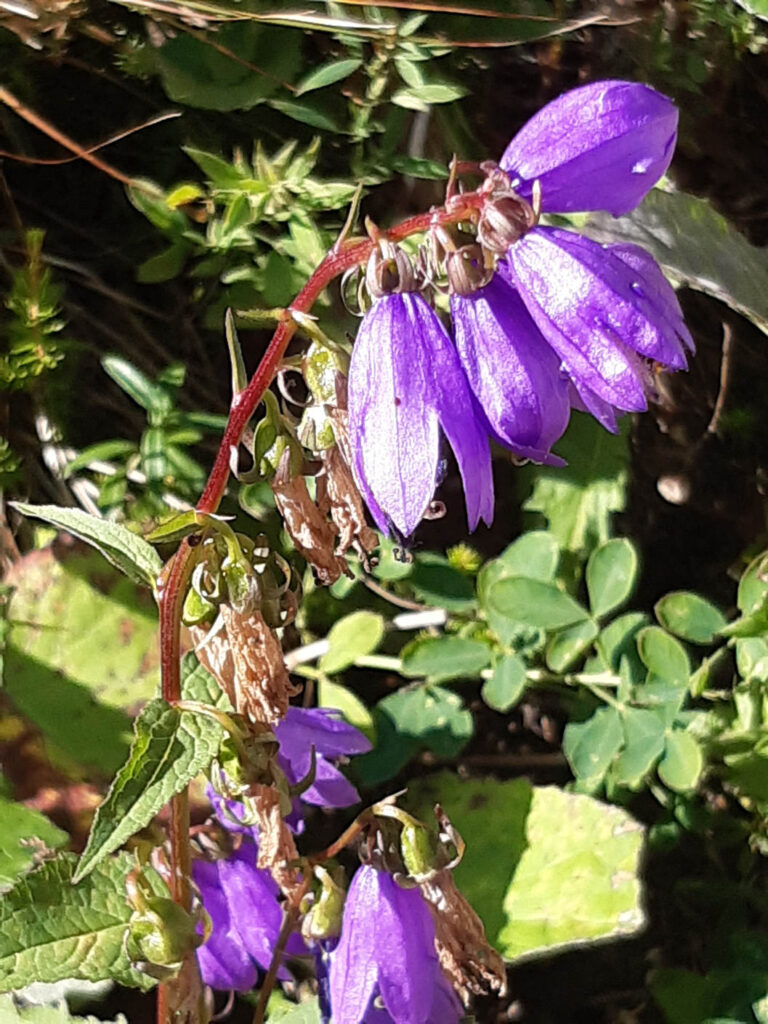
Creeping Bellflower
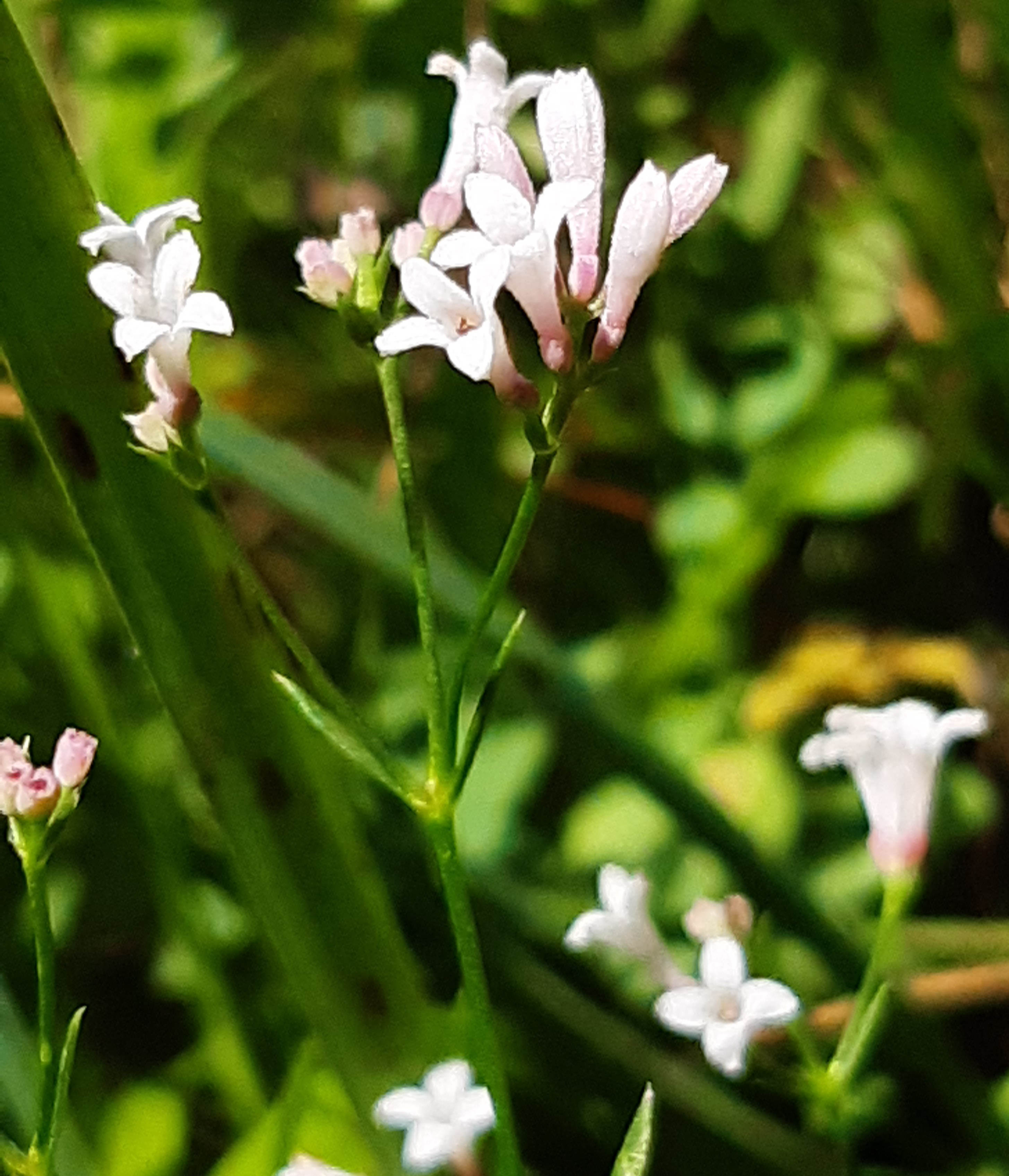
Squinancywort. It was formerly used to treat ‘quinsy’, an abscess behind the tonsils.
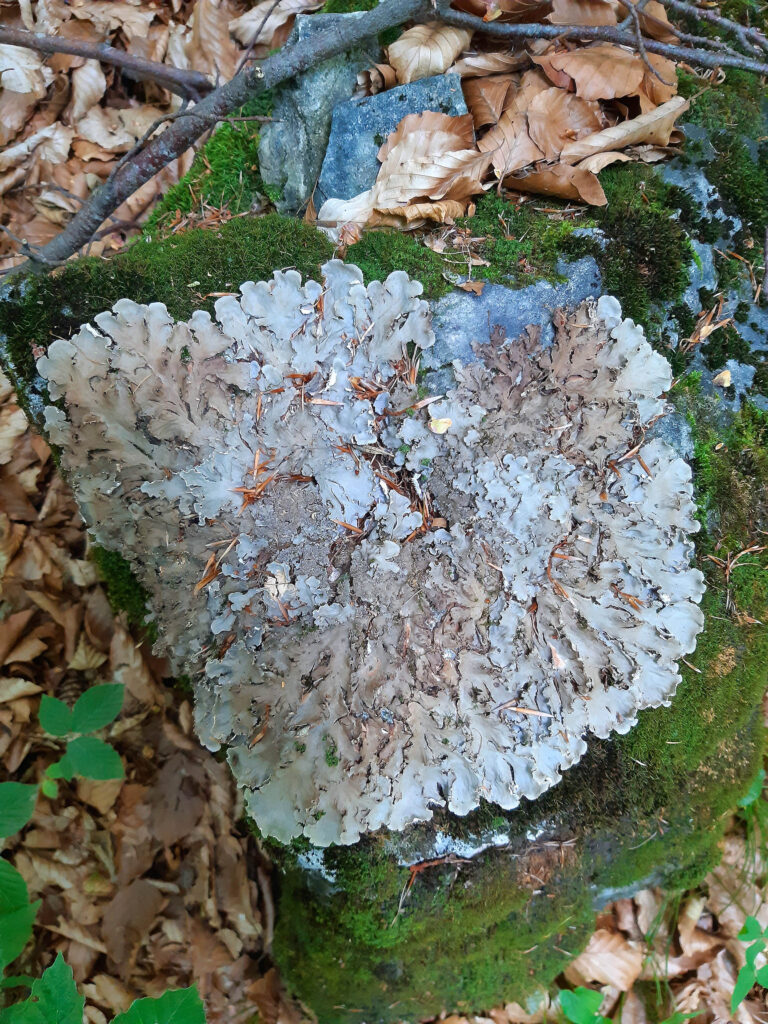
An impressively big patch of Dog Lichen (Peltigera canina) covering a tree-stump
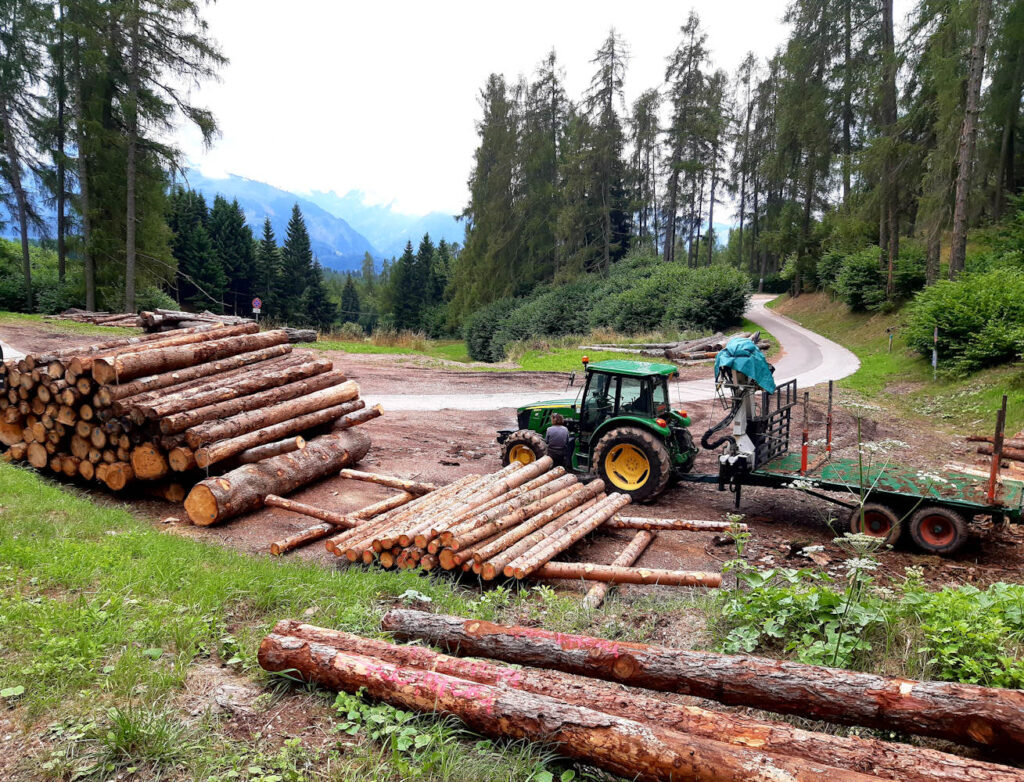
Local-scale commercial forestry. Trees are removed in small strips, not clear-felled, respecting the ecology of the forest.
Local-scale commercial forestry. The harvested trees are of different species and sizes.

Other sightings

Among other interesting finds (including species recorded in my earlier posting), I am pretty sure I heard the call of the Nutcracker, a small crow of forested mountains. A Black Redstart perched obligingly on a fence post, twitching its red tail. A surprised Stag, early one morning, bounded away uphill from a forest track: there were generally few signs of deer, though plenty of cattle and some horses grazing in the alpine meadows and forest clearings. A Hummingbird Hawkmoth hovered over the flowerbed near the house one morning, gathering nectar. Male Common Blue butterflies showed off their dazzling coloration of caerulean blue, but there were no Idas Blue butterflies, which I saw last time (at another time of year). Seen again like last time was the handsomely red/black striped bee parasite beetle Trichodes apiarius, plenty of Scotch Argus, one Chalkhill Blue, countless Marbled Whites, and plenty of Brimstones and Clouded Yellows, and one or two Speckled Woods. Common Heath moths were, well, common; they may not exactly be day-flying, but they’re readily disturbed in long grass.

We enjoyed seeing some familiar plants, too: Meadowsweet, never common in these hills, sticking strictly to very damp meadowland; the small yellow 4-petalled Tormentil, the delicate yellow Rock-rose, and the aromatic Wild Thyme, as much at home in the English uplands as here. Less familiar were the umbellifers (Apiaceae) Sweet Cicely and Broad-leaved Sermountain. Wild flowers that we saw that share the distinction of being also in our London garden include Eyebright and Self-Heal. Among the less usual ferns were Polypody and Wall Rue Spleenwort.

Reflections

It is hard not to compare the species richness of the flourishing alpine meadows and forests with that of Britain’s uplands. In Britain, sheep prevent trees from taking hold, and graze so severely that few flowers can grow. Farm subsidies and agricultural policy since the war have favoured production at the expense of wildlife; over 97% of Britain’s wildflower meadows, permanent pastures, have been ploughed up. Some of the ploughing was to enable reseeding with an “improved” grass mix, sometimes with clover. The result was invariably an impoverished agro-ecosystem, with far fewer species of grasses and flowers, far fewer insects, and degraded soil with fewer earthworms.

In some places, such as the chalk grassland near Beachy Head, the land was returned to pasture soon after the war with its urgent need for food. There is still, over 50 years later, a sharp contrast between the ploughed pasture land and the undamaged chalk grassland: the ploughed land has not recovered in that time.

It is no surprise that Britain’s bird, insect, and flower populations have collapsed. When hedges have been grubbed up and large fields carefully cultivated, after a while the farmer has a clean crop without flower “weeds” or insect “pests”, even without using herbicides or insecticides: there is no place for them to grow, no food for the insects to eat.

The only wild species that can survive in such a regime are efficient and troublesome weeds, like grasses too similar to cereal crops to be possible to spray; or genuinely pestlike insects, such as “cabbage white” butterflies, that can breed rapidly, fly or be blown long distances, and quickly destroy fields of Brussels sprouts if a farmer is unwary. All the more attractive and beneficial organisms are long gone.

See also Wildlife of the Dolomites (the animals and plants arranged into groups)

More a Bug than a Butterfly Transect

I had a go at the ‘regular’ butterfly transect down at the reserve. It was warm and humid but overcast and it didn’t look promising. A large willow covered in Gypsy Moth caterpillars had been loosened by all the rain, and had fallen across the path. I lopped off the crown branches and carted them down to a dead hedge to fill in a gap someone had been climbing through.

The sun peeped out and the cloud cover reduced to maybe 60%, making it warm and pleasant. A single Small White appeared over the ramp and made it onto the transect. I wandered around the reserve, but there was nothing until I found a solitary Speckled Wood in the large meadow.
However, there was plenty to notice all around. The building site looks a lot better now the ‘Costa Concordia’ white horizontal balcony cladding on ‘Chiswick Point’ (well, it’s in Acton Green and on Bollo Lane, but I guess Bollo Block didn’t quite have the same cachet) has been completed: it will be nice when the noise of cranes and drilling stops.
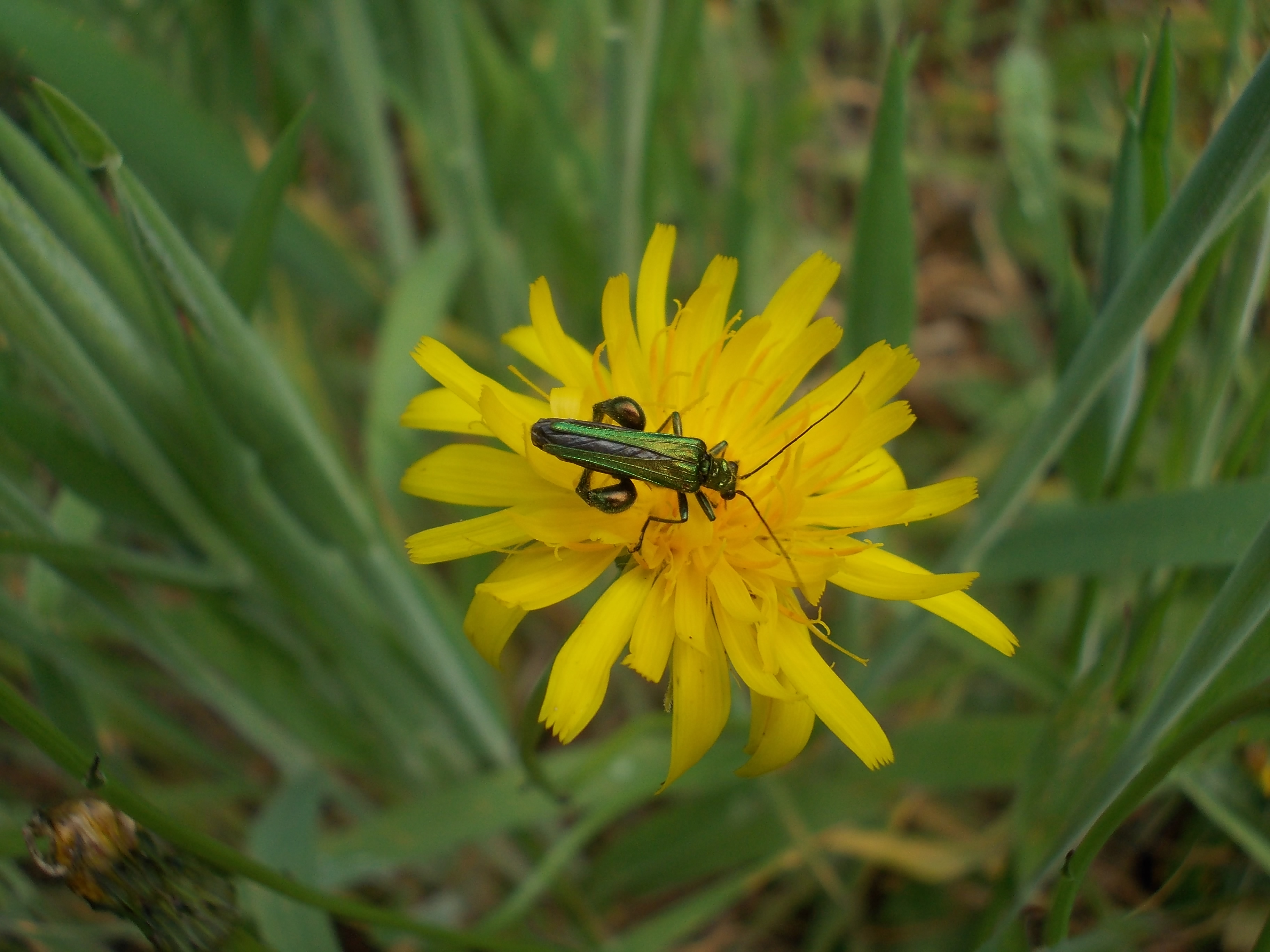
Handsome iridescent green male Oedemera nobilis on Catsear

Many ichneumon flies were out on the Hogweed, some mating; almost every Catsear flowerhead had one or two handsomely iridescent green Oedemera nobilis, the “thick-kneed flower beetle” – only the males have the swollen hind femurs, but both sexes have a gap between the slender wing-cases. The males were of noticeably varying sizes, presumably the large ones having the best chances of mating.

Tent of Comma? caterpillars on Stinging Nettle
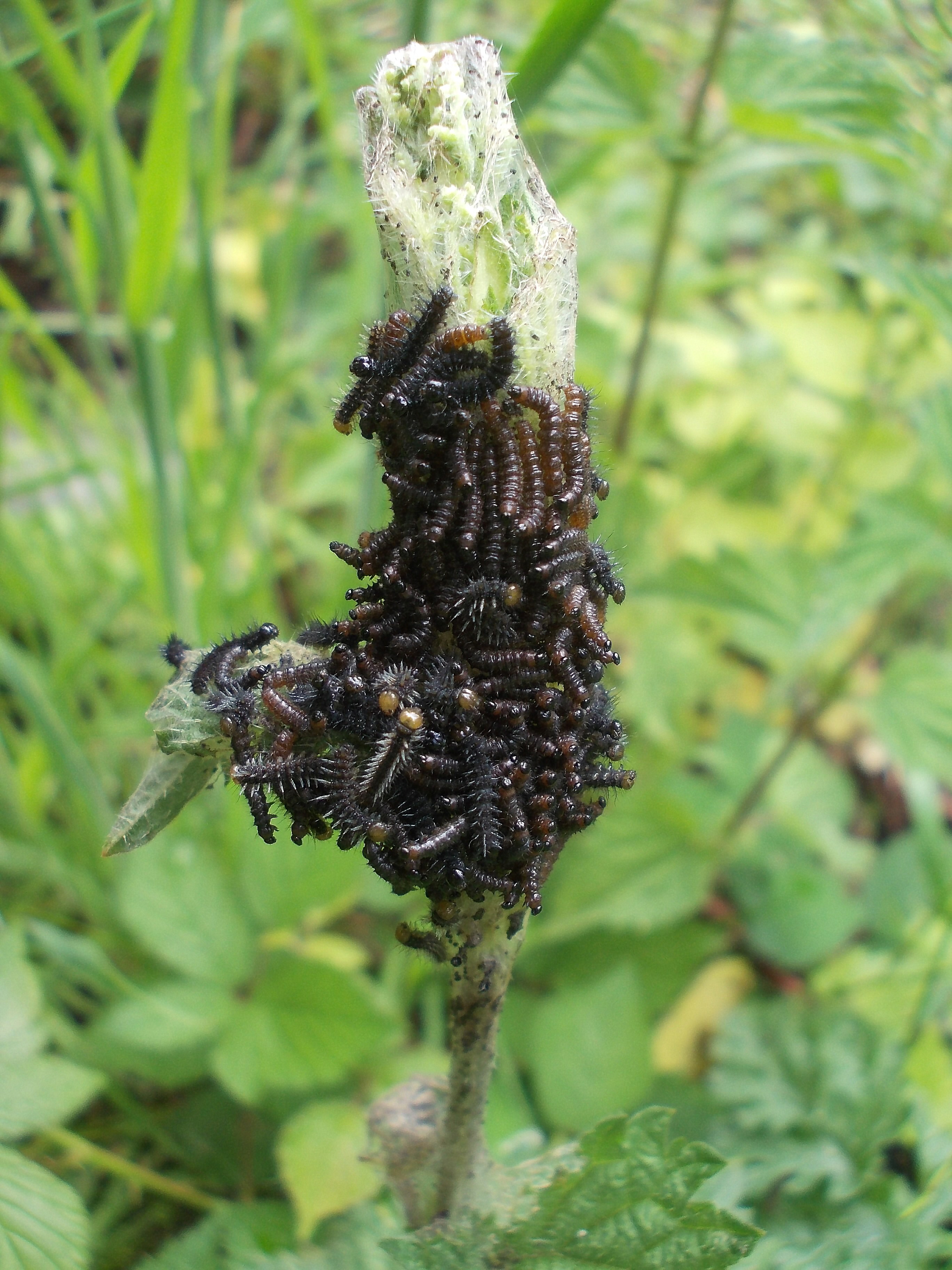
Tent of Peacock butterfly caterpillars on Stinging Nettle

A fine bustling mass of hairy black early-instar caterpillars of the Peacock butterfly, wriggled on their silk tent atop a Stinging Nettle.

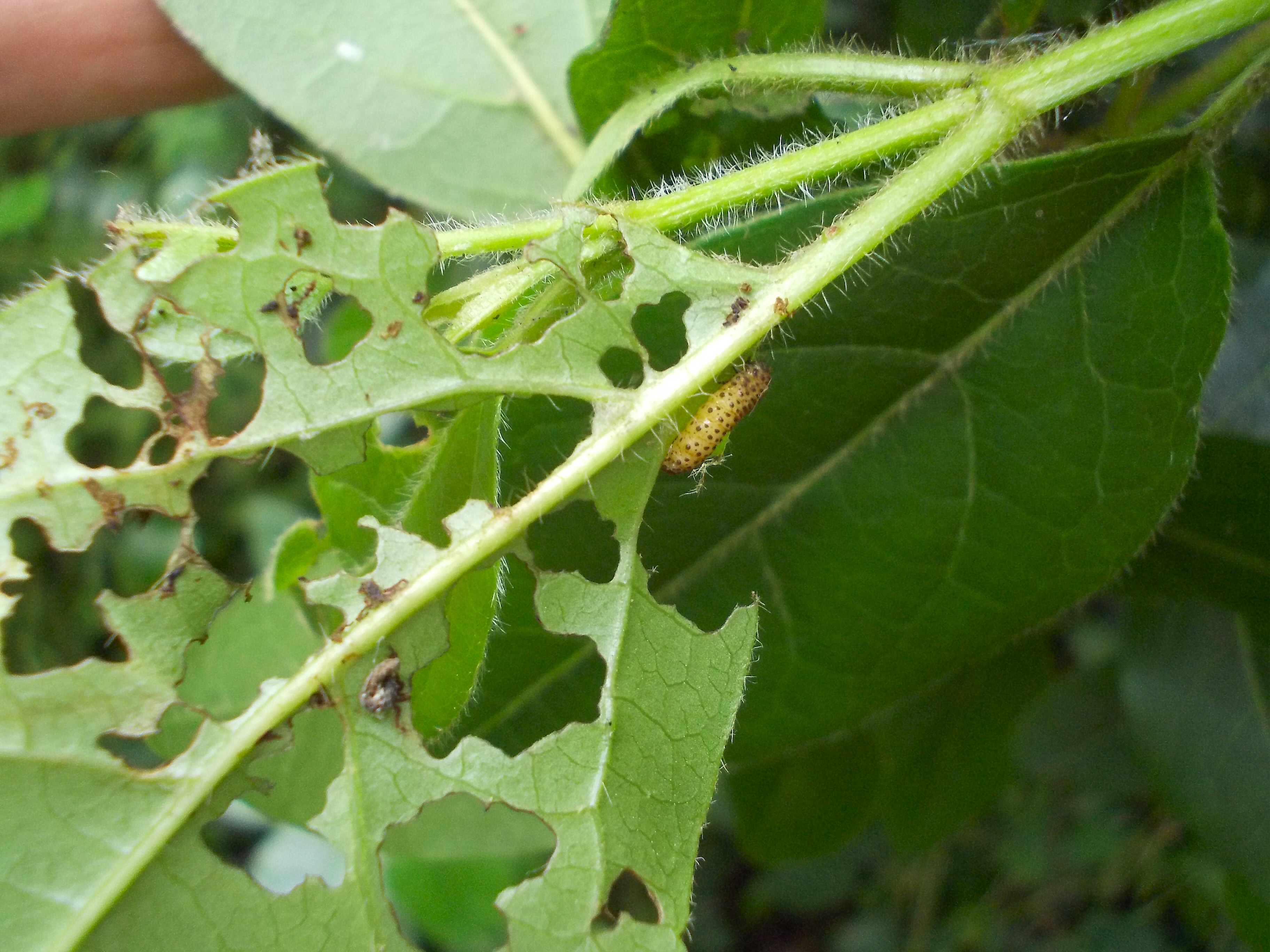
Laburnum leaf beetle larva doing an impressive amount of leaf damage

The Laburnum by the main path is being eaten full of holes, probably a good thing for a non-native shrub in the reserve, by spotted and striped larvae of the Laburnum Leaf Beetle. Never seen it before.

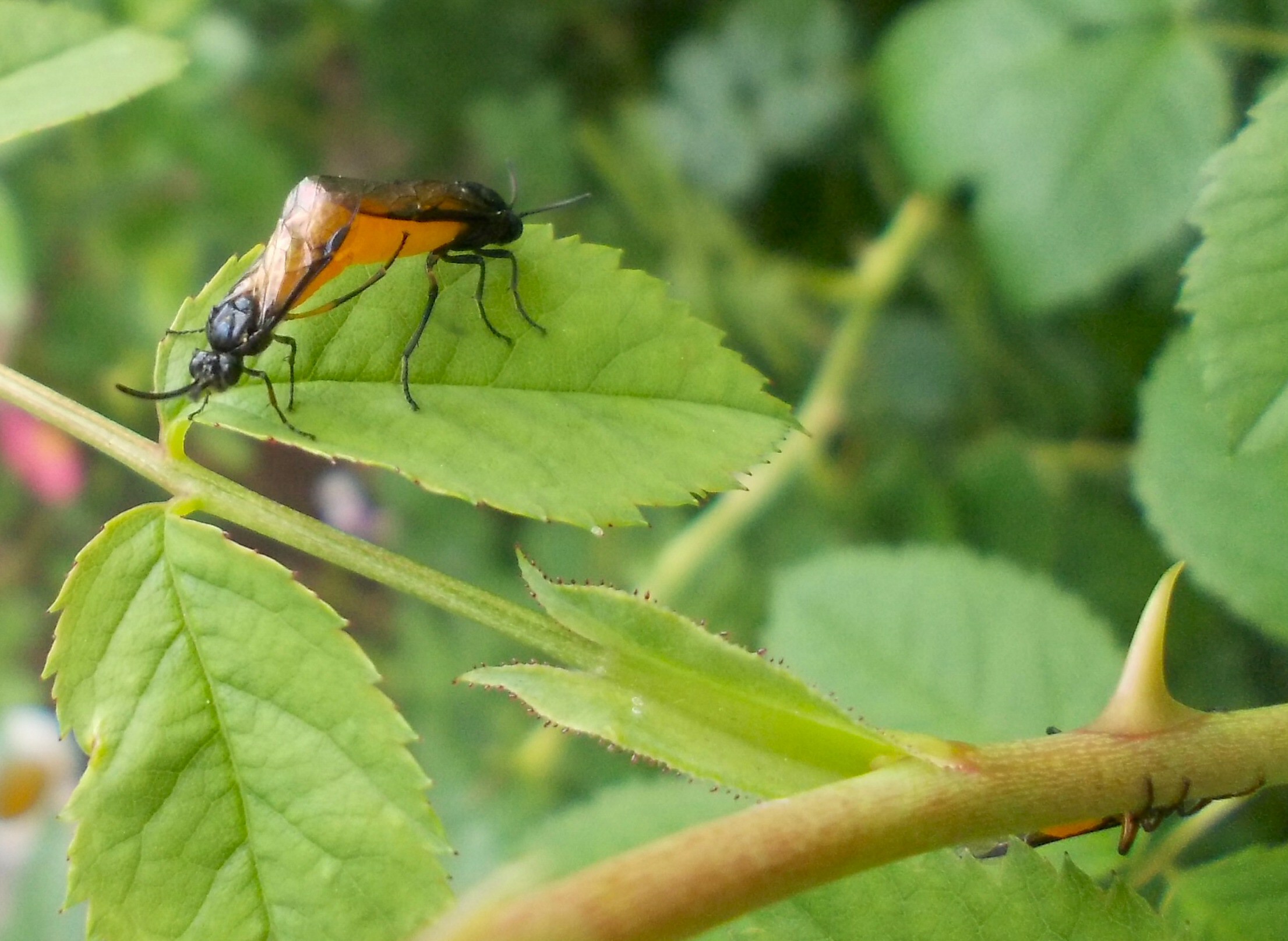
Mating Rose Sawflies

The wild rose in the car park hedge was host to a mating pair of Rose Sawfly, a serious pest for gardeners but an attractive insect with a bright yellow abdomen.

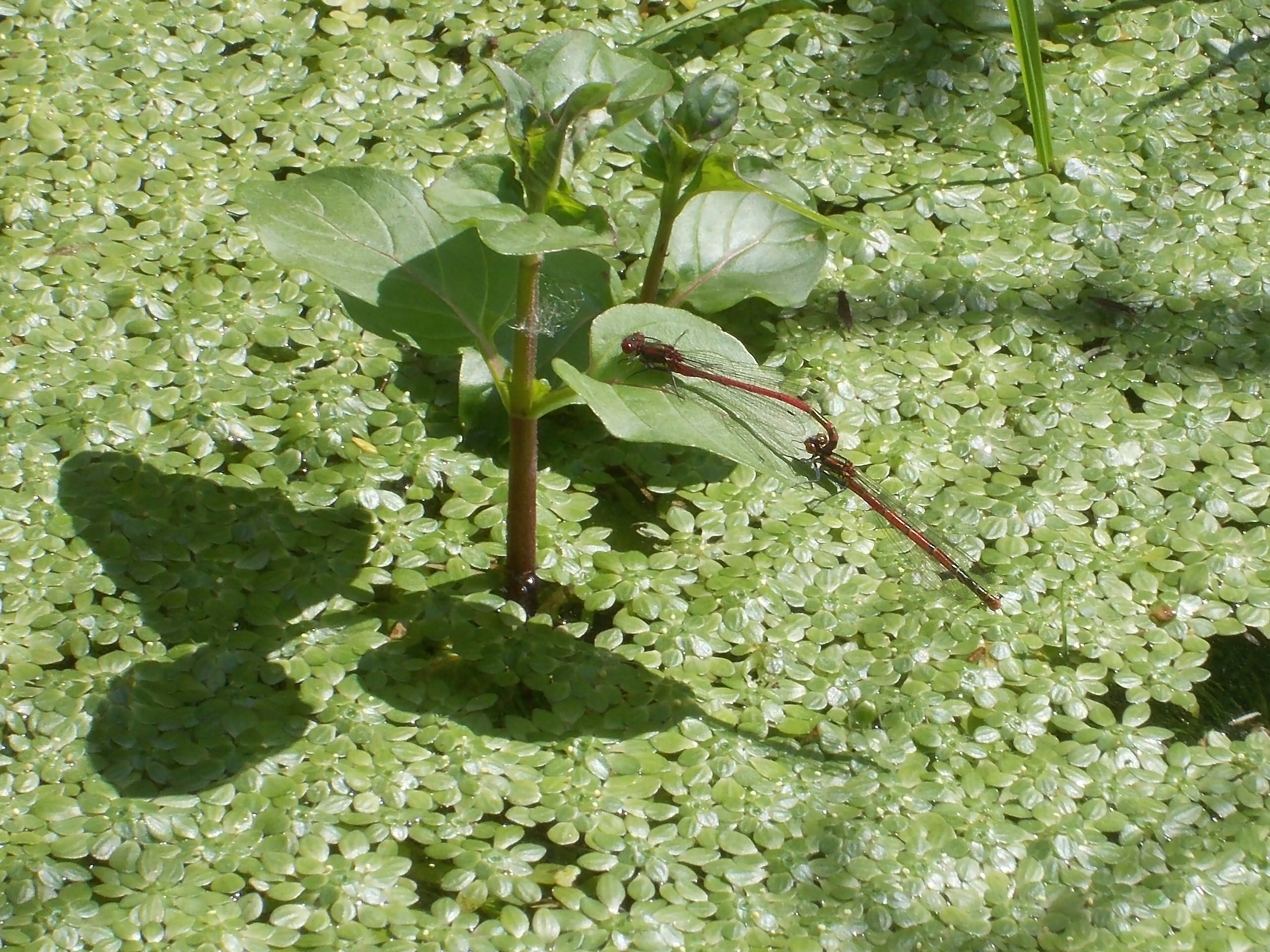
Large Red Damselflies in cop over a lot of healthy Starwort in the pond

As if all these treats weren’t enough, there were Large Red Damselflies mating and egg-laying on the pond, Common Blue Damselflies, lots of Hoverflies, Click Beetles (seemingly Athous haemorrhoidalis), large brown frog tadpoles and small black toadpoles, singing Blackcaps, a Song Thrush, a Jay, and plenty more. Maybe it’s not just Bugs Day on Saturday, but Bugs Week.


Gypsy Moth plague

The Gypsy Moth, Lymantria dispar, is  a notifiable pest listed by DEFRA, or at least it was when that document was published back in 1997. The insect was announced to be “a serious pest of trees and shrubs” and nurserymen and landholders were required to notify DEFRA or the PHSI HQ immediately.

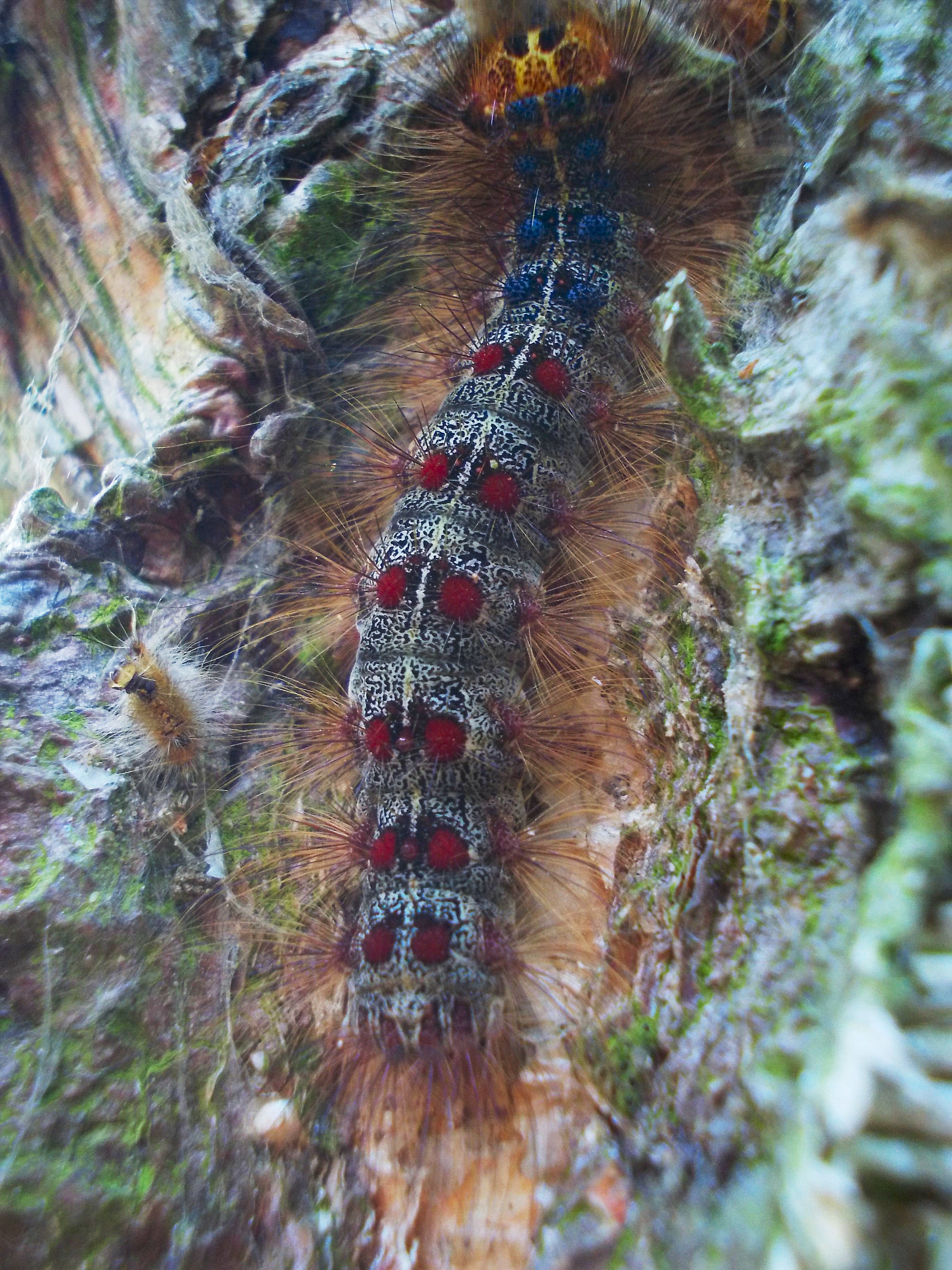
Gypsy Moth caterpillar on birch trunk
Gypsy Moth caterpillar on birch trunk: blue warts at front, red warts at back. The black-and-white pattern may also be aposematic

It has arrived in the Gunnersbury Triangle with the hairy dark caterpillar larvae with blue and red warts on their backs all over some Birch trees. The infestation is rapidly defoliating them, and causing substantial damage to some Oaks too.

Lymantria means ‘destroyer’, quite a well-named genus. The caterpillars are aposematic, their hairs and bright coloration warning off predators; the hairs are irritant, containing diterpenes, complex organic ring compounds found in wood and plant resins for defence against microbes and fungi, and retained by the caterpillars for defence against predators.

It will be interesting to see how the trees cope. Oaks can generally recover even when thoroughly defoliated; the Birches may suffer more. People can hardly use pesticides in the nature reserve, even given the means to spray whole trees safely, but biological controls are imaginable. The caterpillars are parasitised by Ichneumon flies, which may well be keeping Gypsy Moths under some sort of control in Europe. There were no controls in place to halt the spread of Gypsy Moth in America, however, where the pest was accidentally introduced in 1869 from Europe by the amateur entomologist Étienne Léopold Trouvelot. He was hoping to cross-breed them with silkworms to improve their disease resistance; he is remembered instead for starting a disastrous continent-wide caterpillar plague which still continues. Attempts with other pest species to introduce their predators or parasites have often proved unsuccessful and sometimes disastrous in their turn.