Tag Archives: Rowan

Dolomites 2025

Here are some of the natural history delights of the Dolomites. I’ve avoided duplicating species from my earlier Dolomites post. To see the images at full size, open them in a new tab or window.
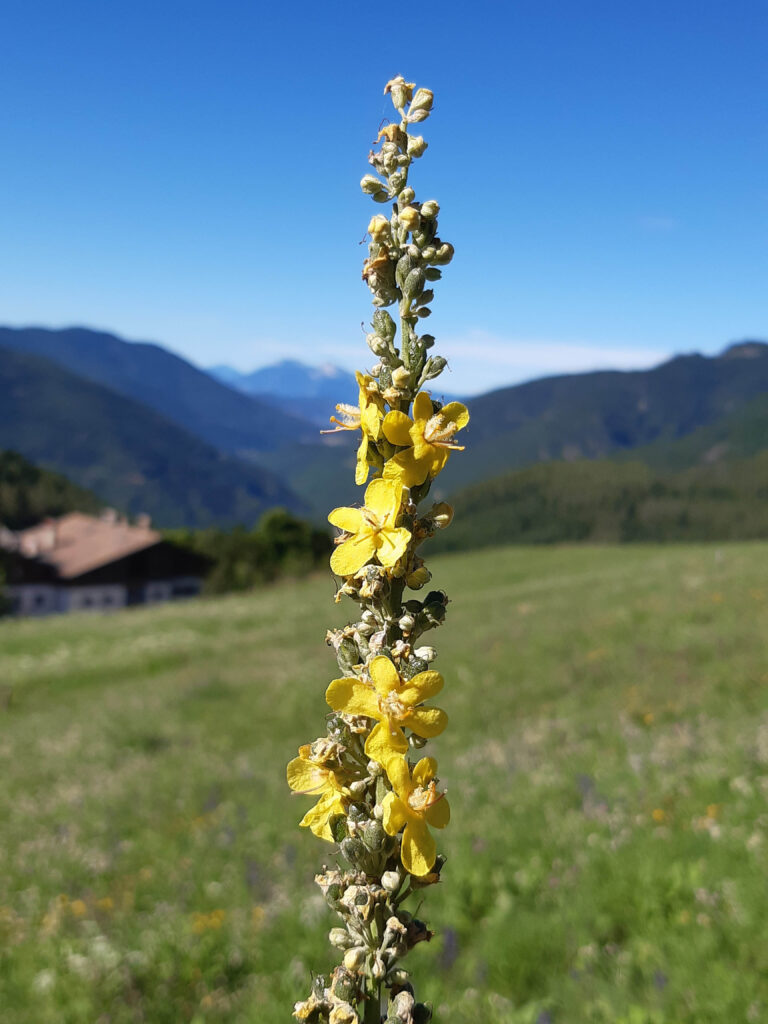
Mullein, Anterivo
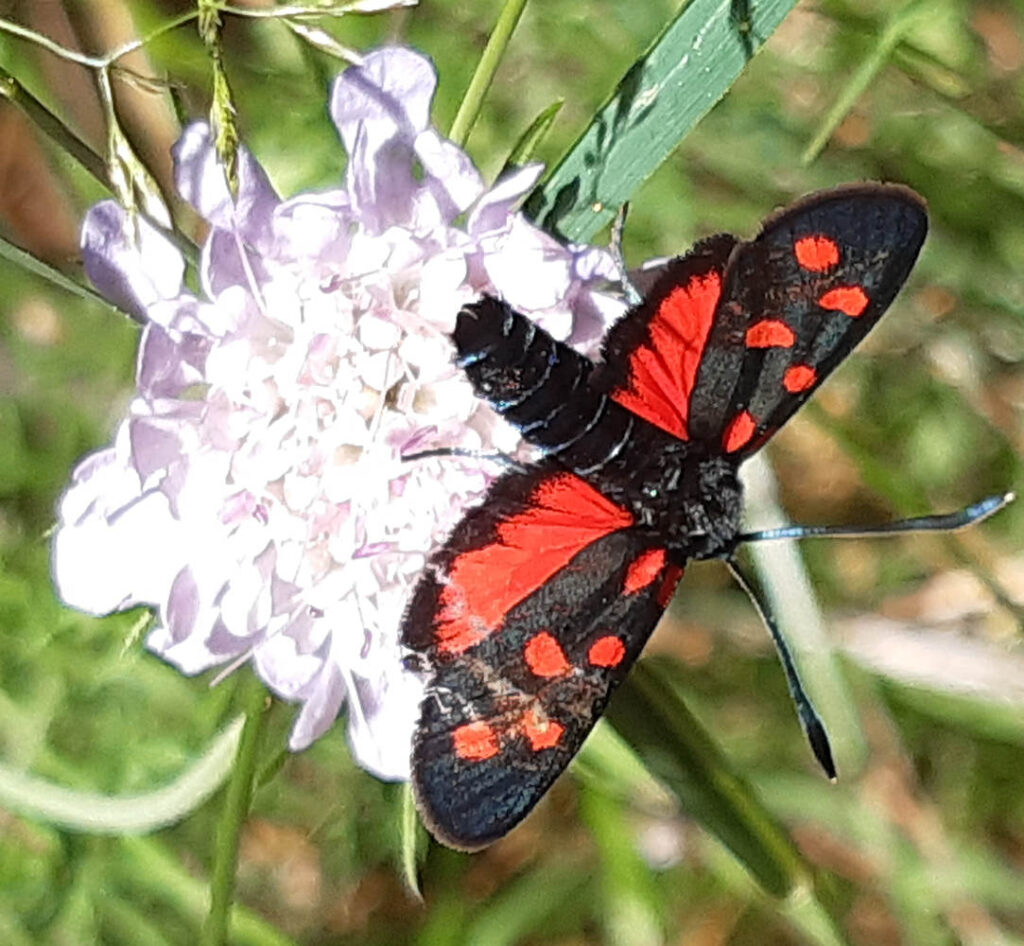
Narrow-bordered 5-spot Burnet Moth, on Scabious

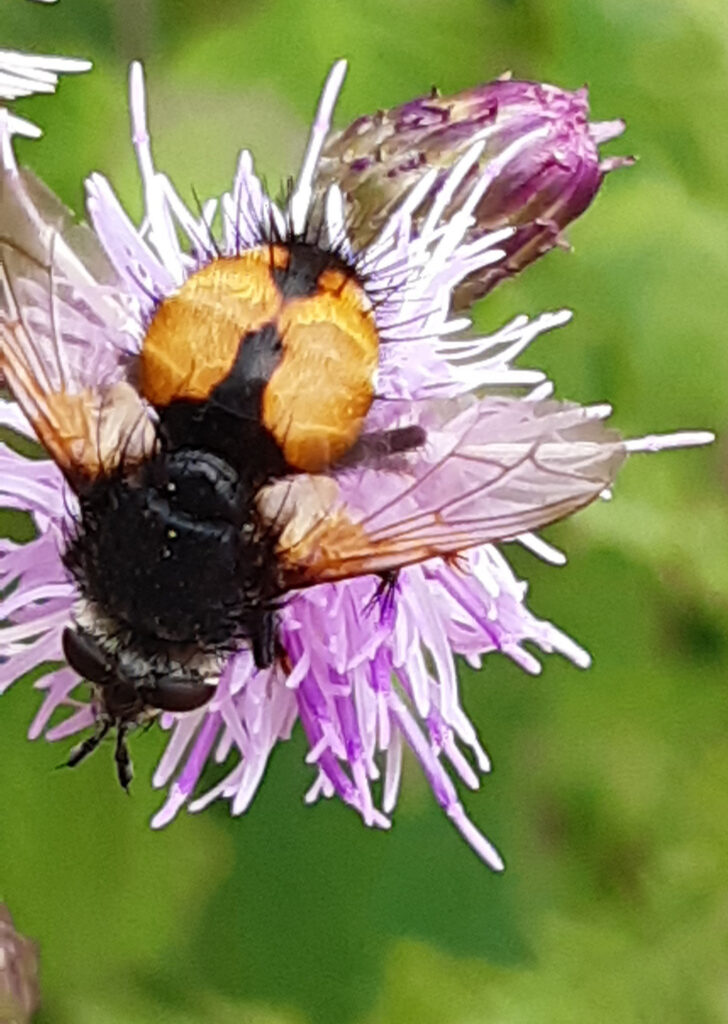
Orange-backed Tachinid fly, presumably mimicking a bee
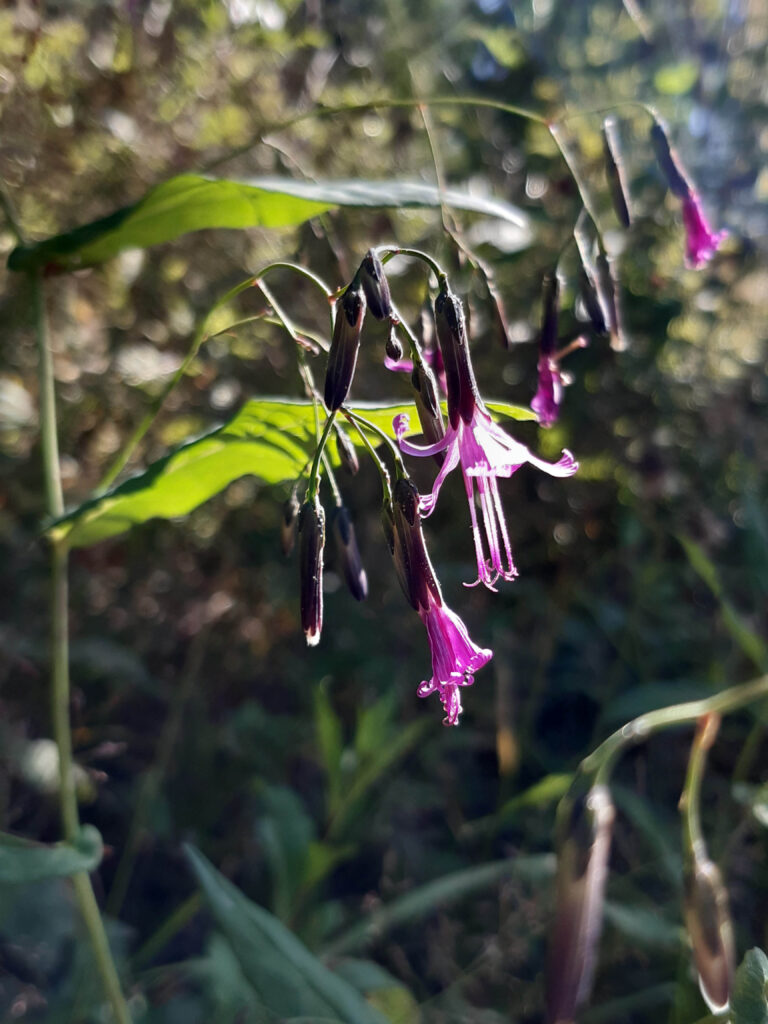
Purple Rattlesnake-root
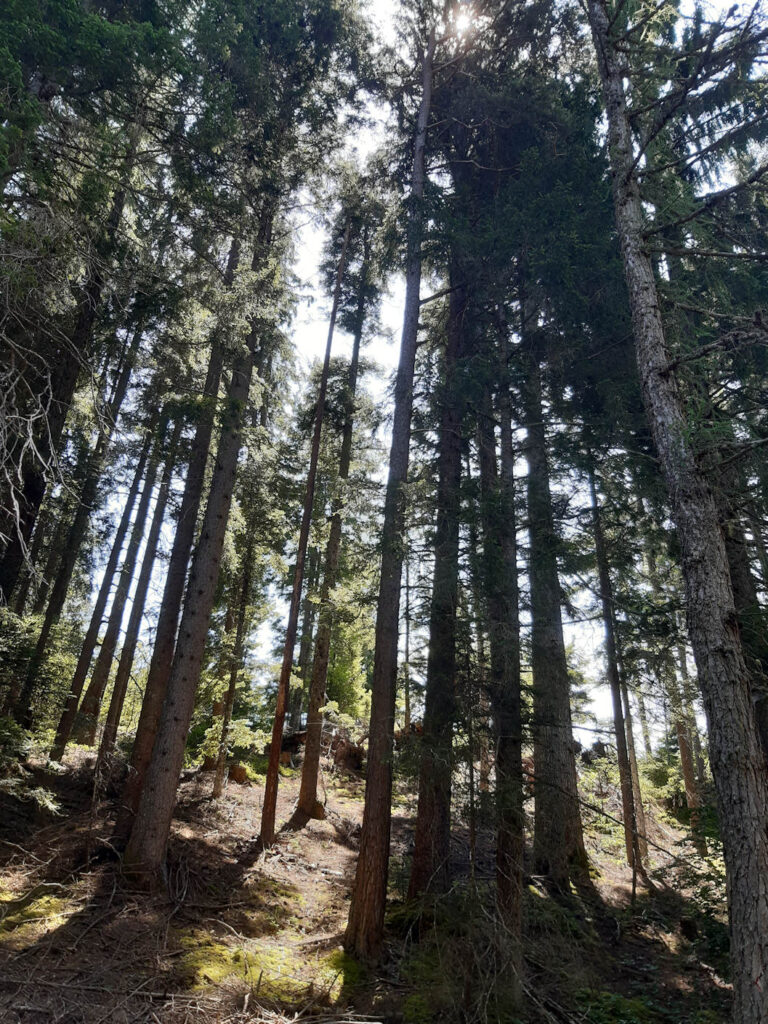
Marvellous tall firs, Anterivo
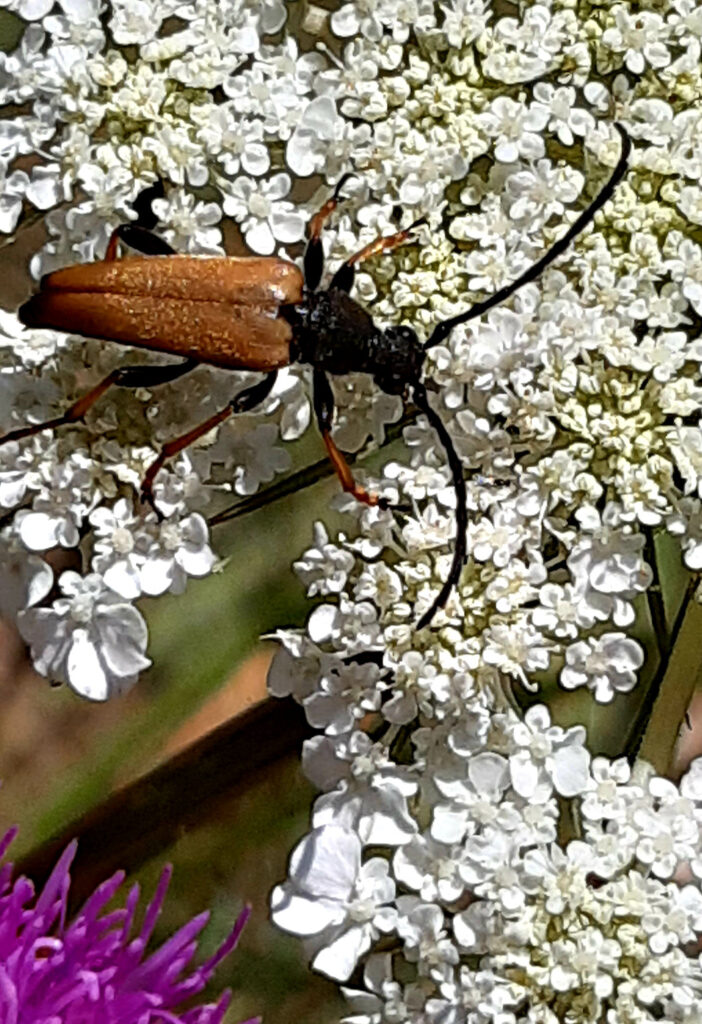
Red Pine Longhorn beetle. The adults take nectar; the larvae feed on rotting wood.
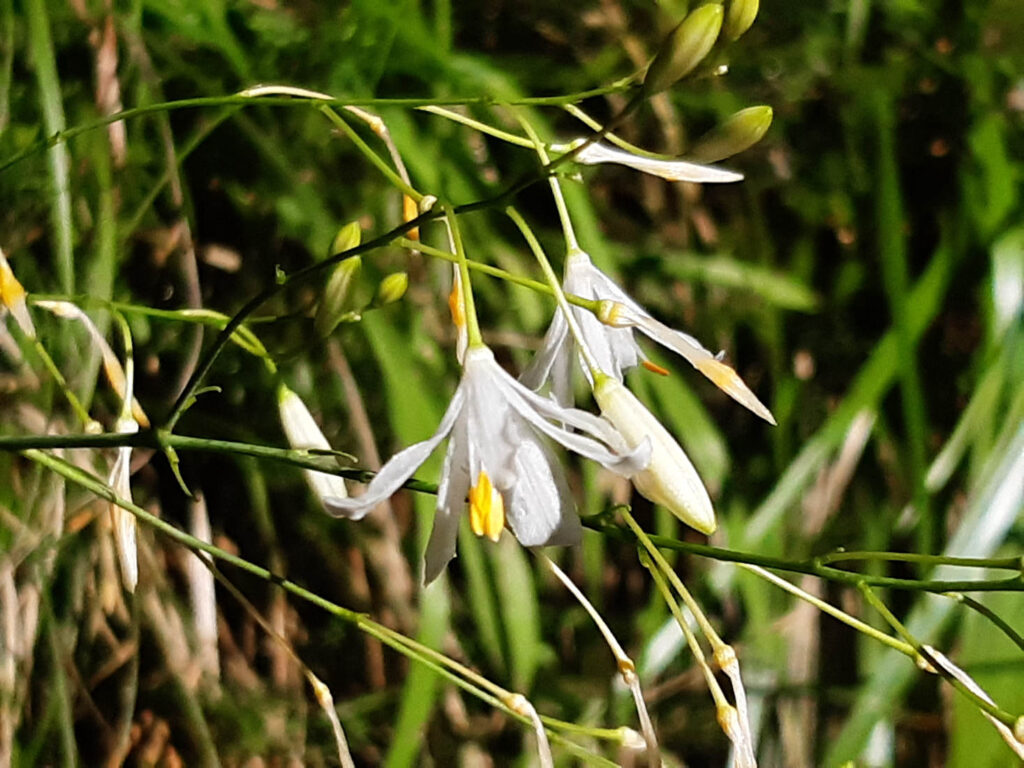
Keeled Garlic
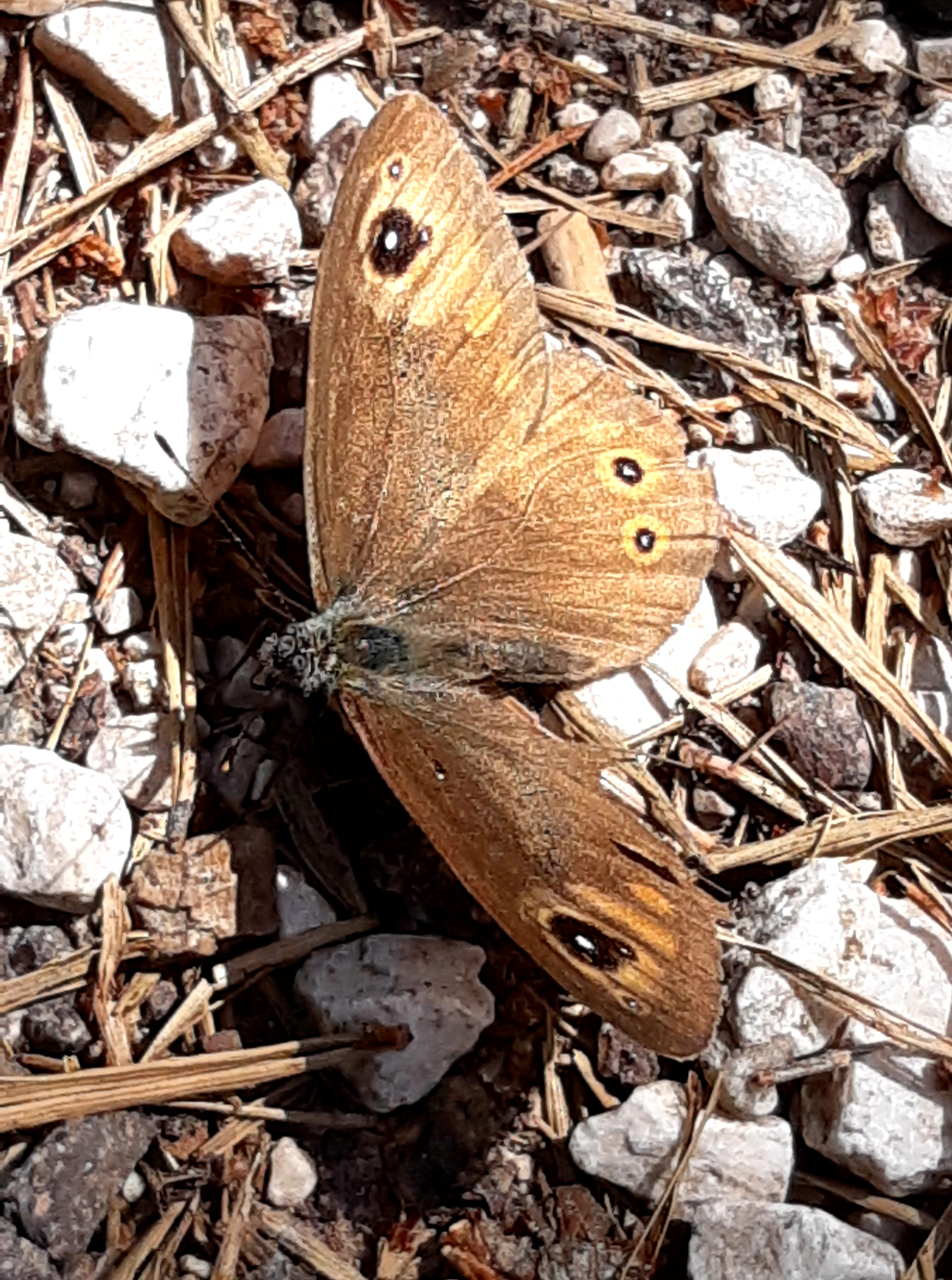
Large Wall Brown, Trodena
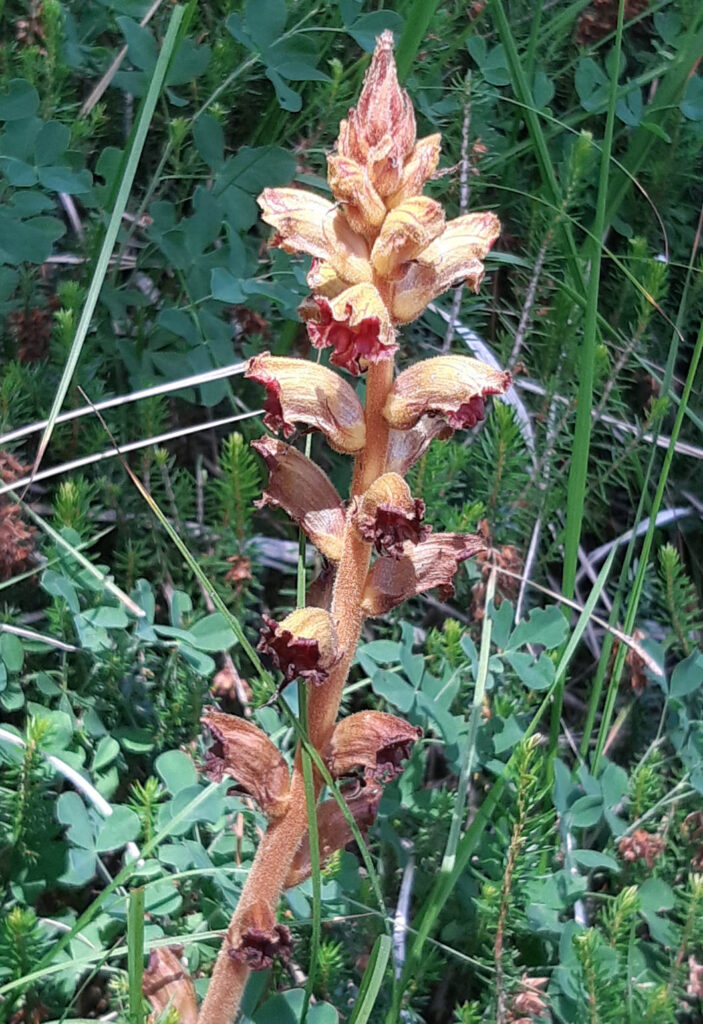
Purple Broomrape, Trodena. The plant has no leaves, relying entirely for its food on parasitising its host plant, Yarrow.
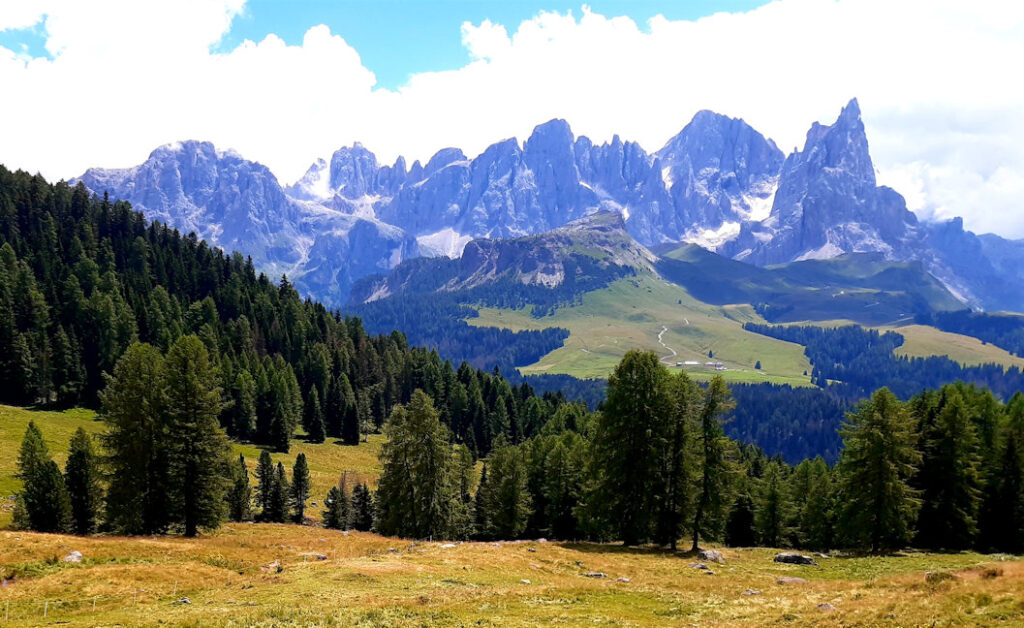
Pale di San Martino mountains, alpine meadows, mixed coniferous forest of Spruce, Fir, Larch, and Pine
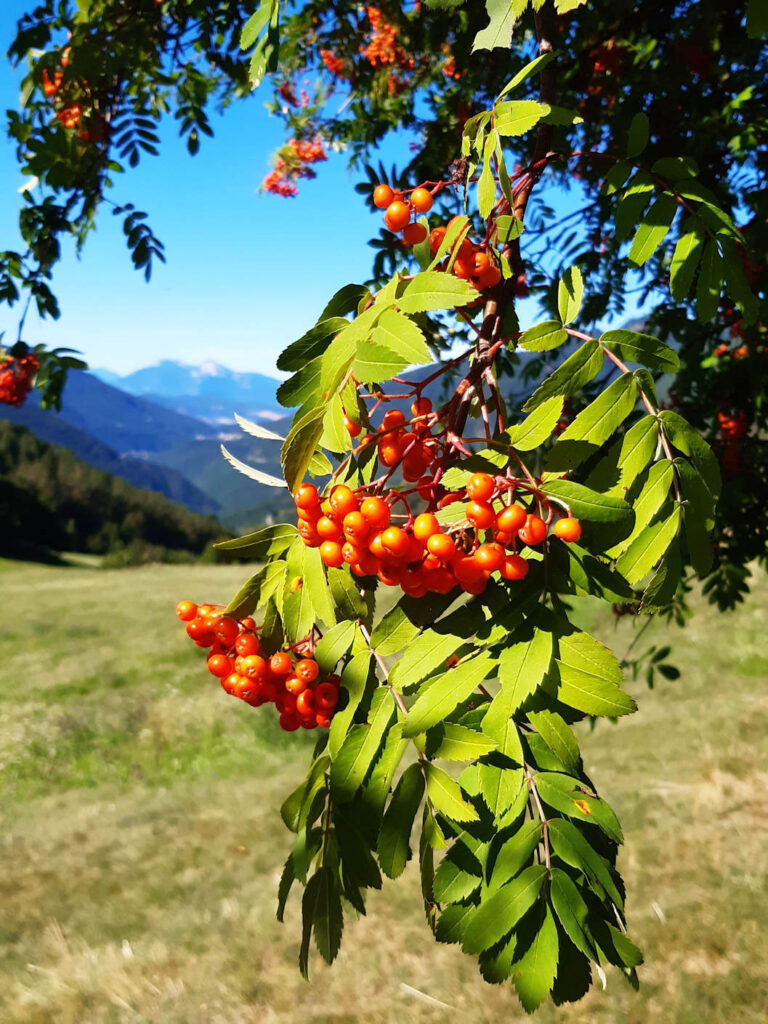
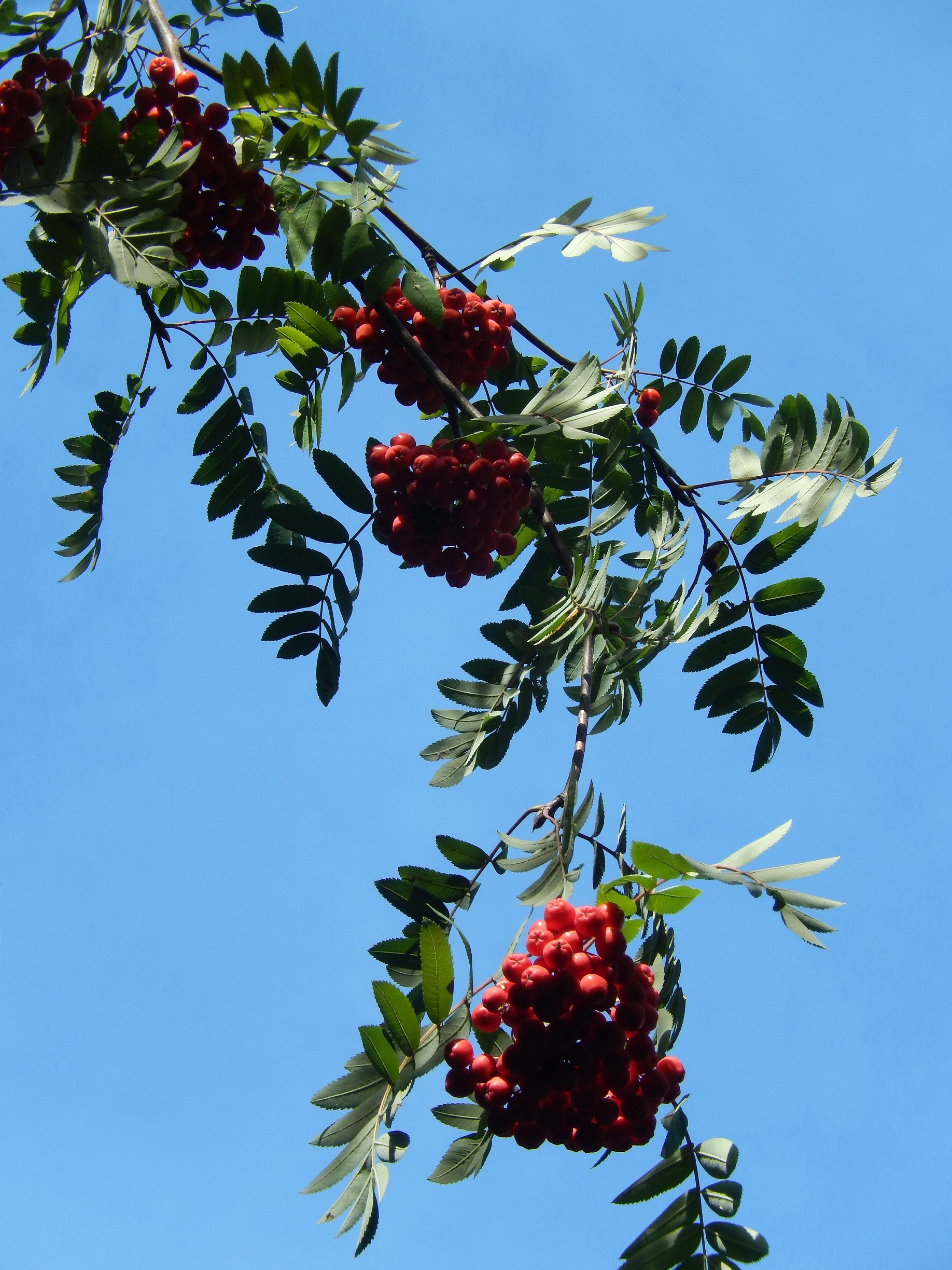
Rowan or Mountain Ash, Anterivo
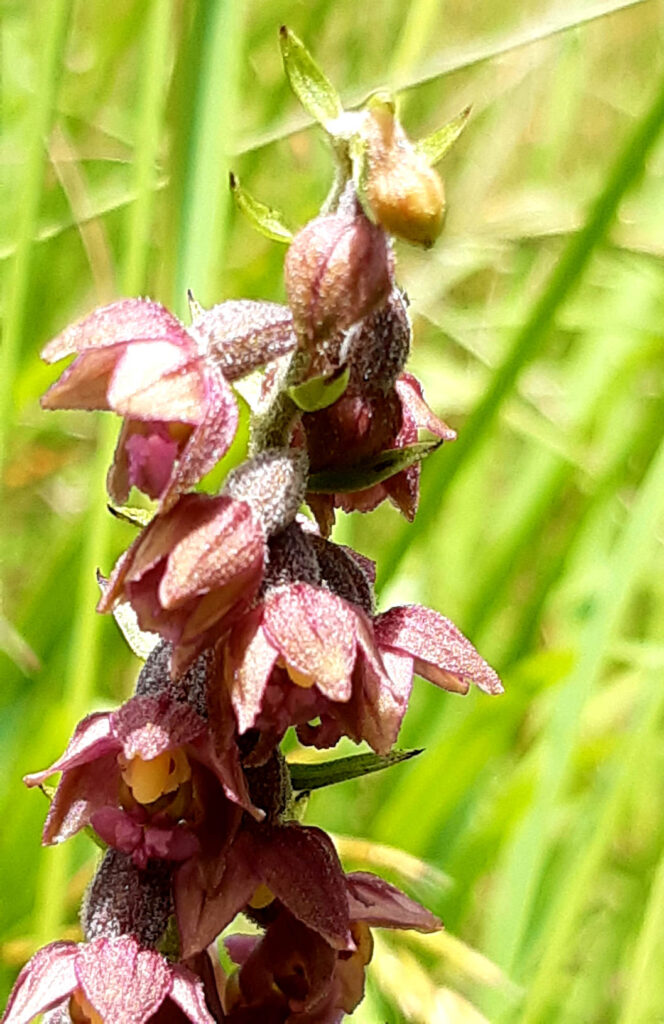
Dark Red Helleborine, Aldino
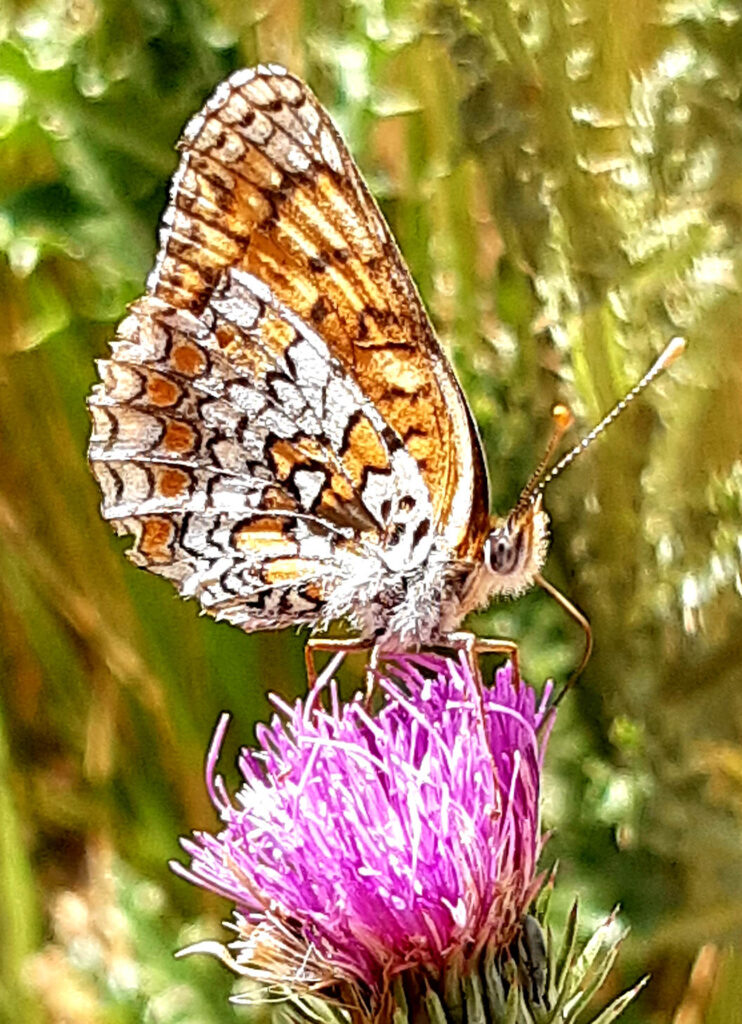
Knapweed Fritillary, on Knapweed
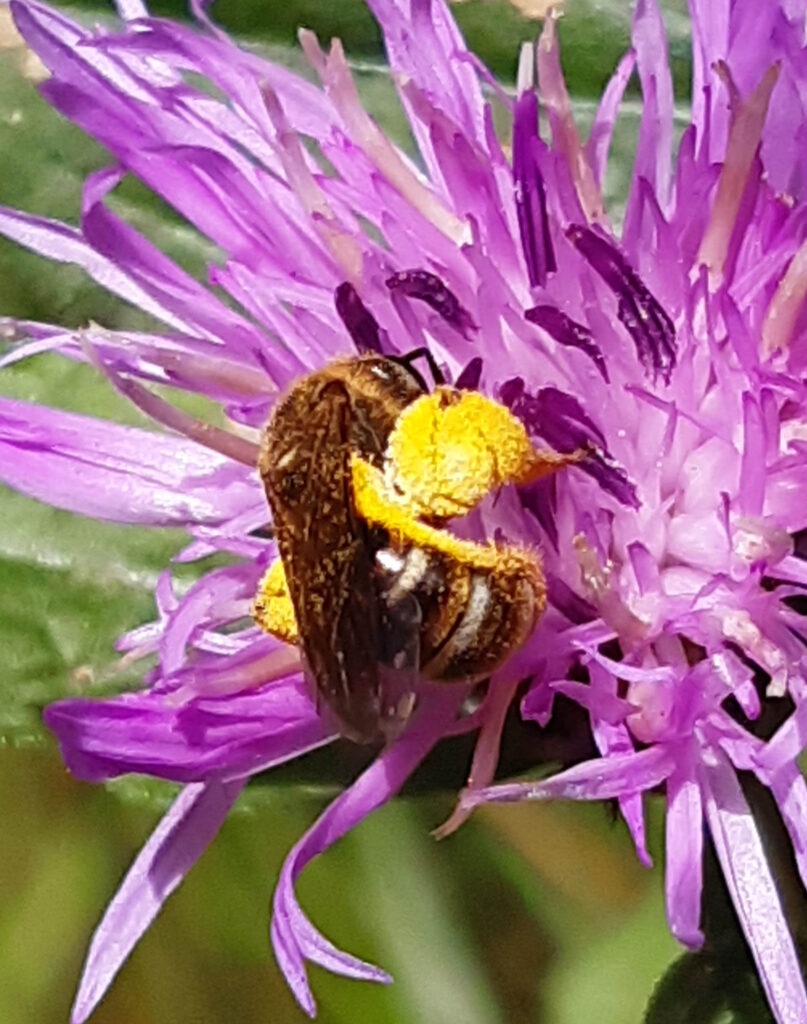
Pollinator at work: a bee with full pollen baskets on its legs, probably a Halictus mining bee, on Knapweed (cf Halictus scabiosae, which does nectar on Knapweed as well as on Scabious, and has stripes of three colours on its abdomen)
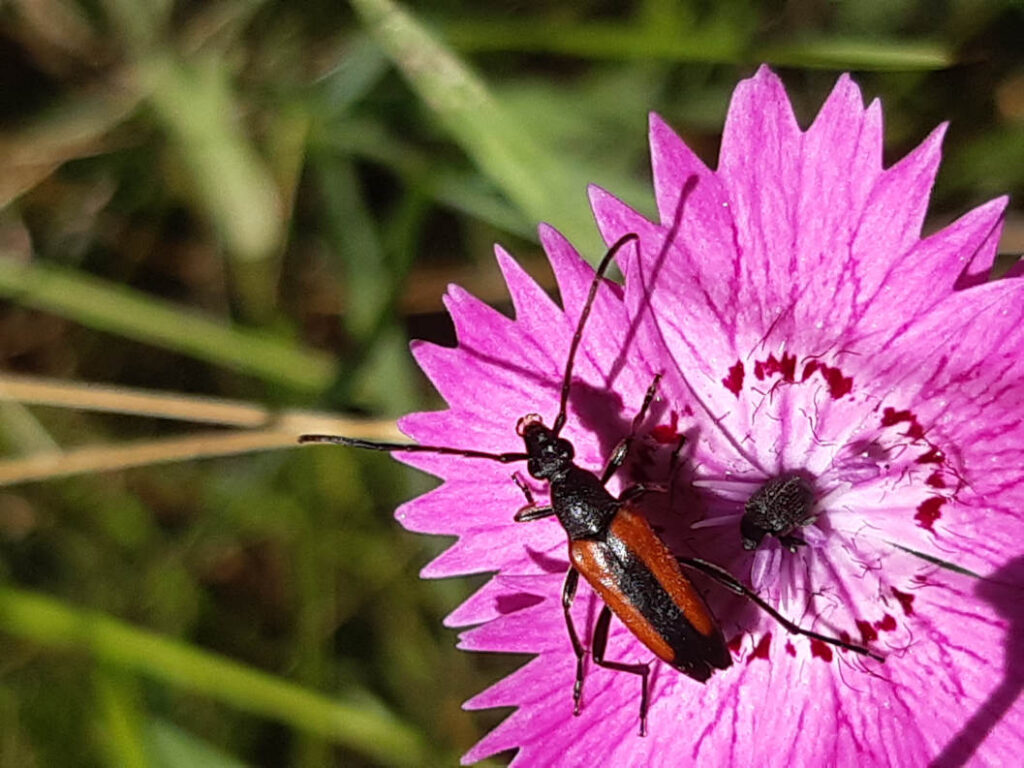
Black-striped Longhorn Beetle, on Seguier’s Pink
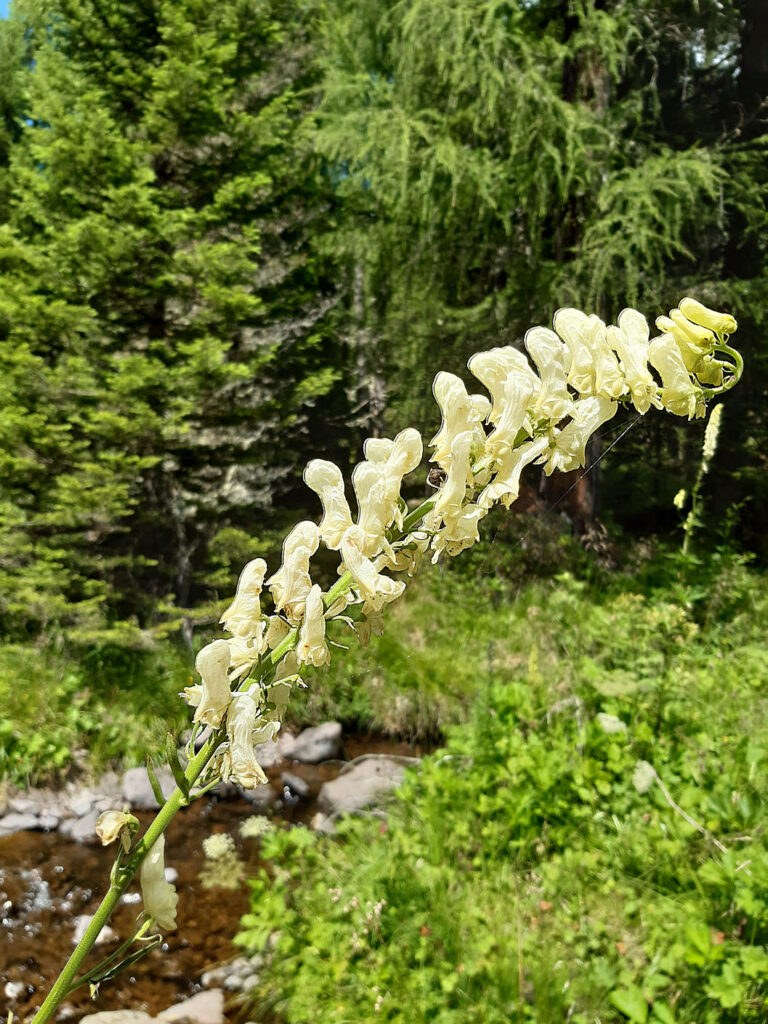
White Hellebore
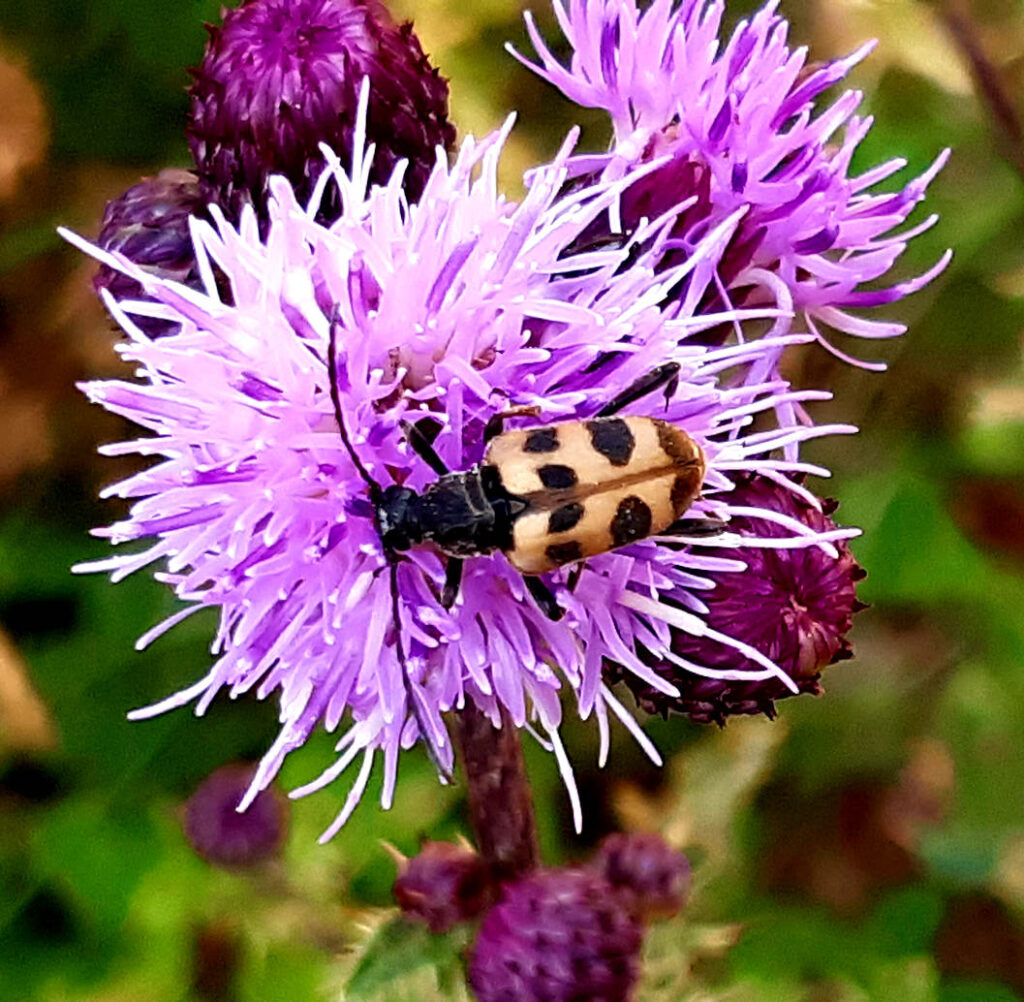
Spotted Flower Longhorn
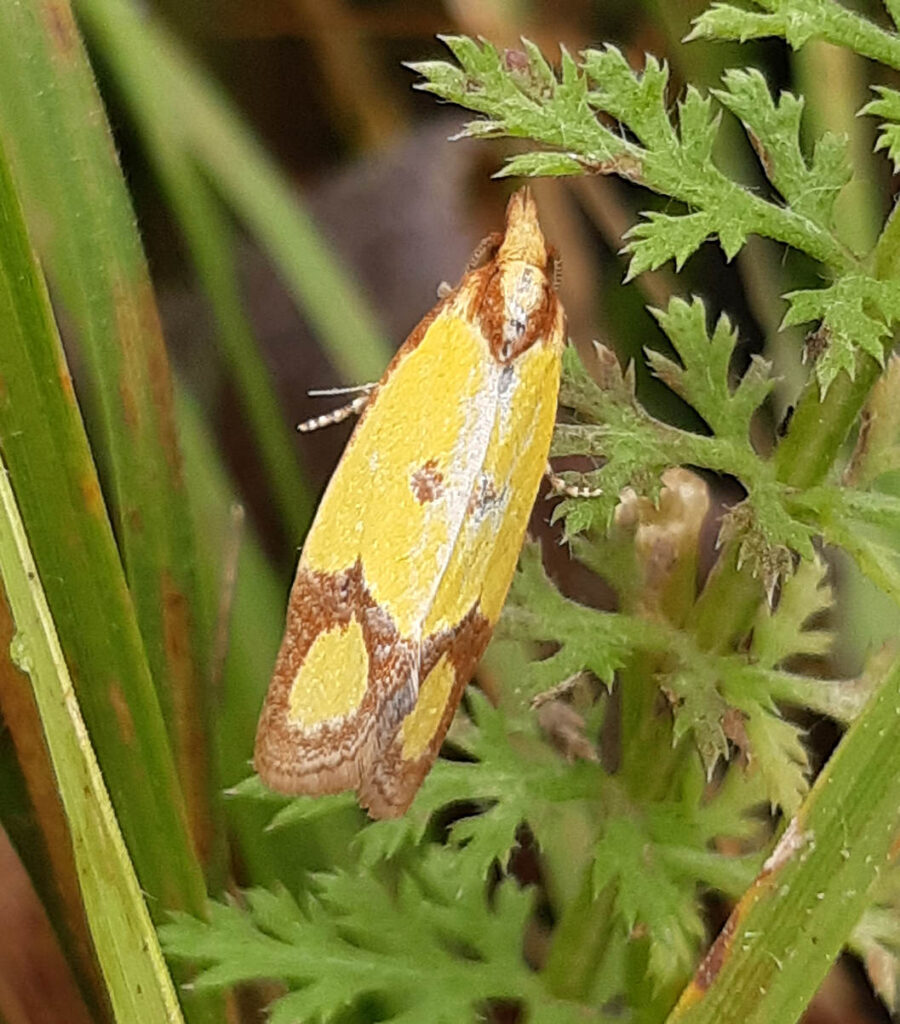
Sulphur Knapweed moth
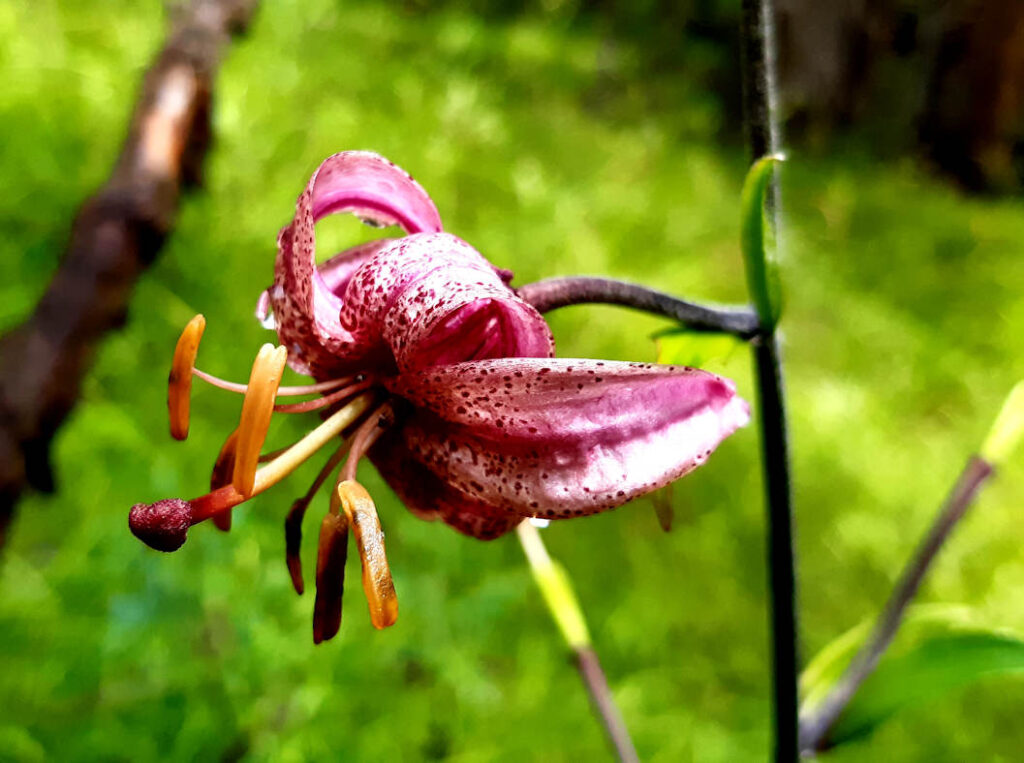
Martagon or Turk’s Head Lily
St Bernard’s Lily
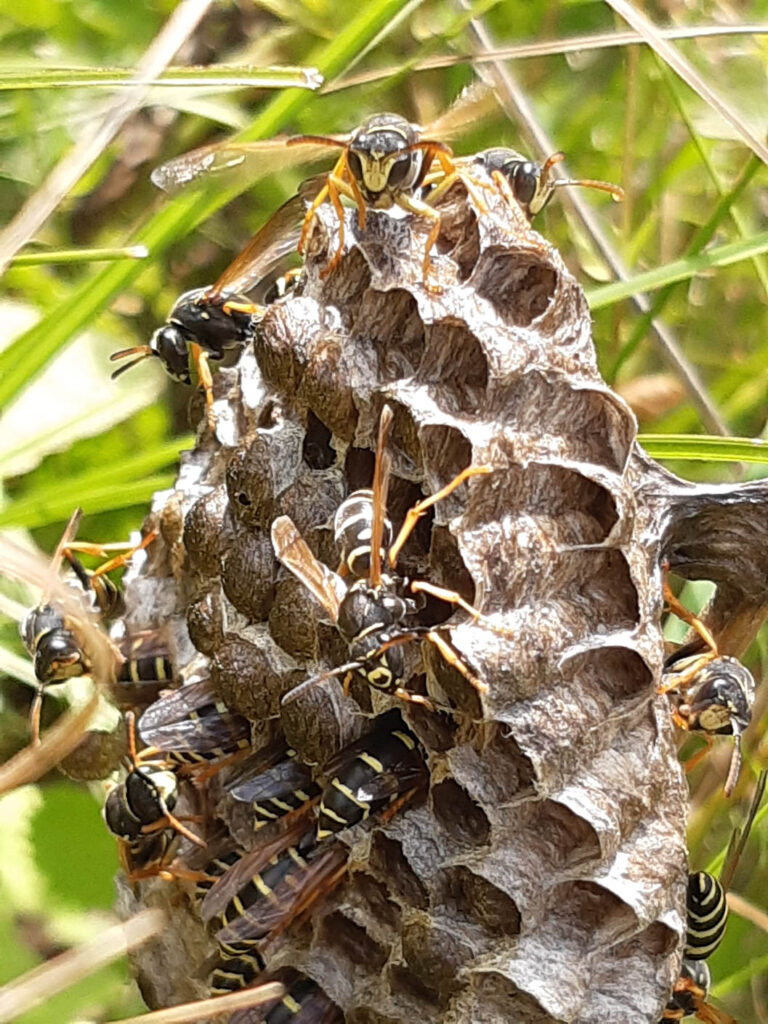
Nest of Paper Wasp (Polistes). Workers are on guard; others tend the larvae. The outer row of cells always remains unused. Unlike common wasps, the nest is made in the open, attached to a herbaceous stem as here, and it never gets much larger than this. Some of the cells are sealed, with domed ends and pupae inside.
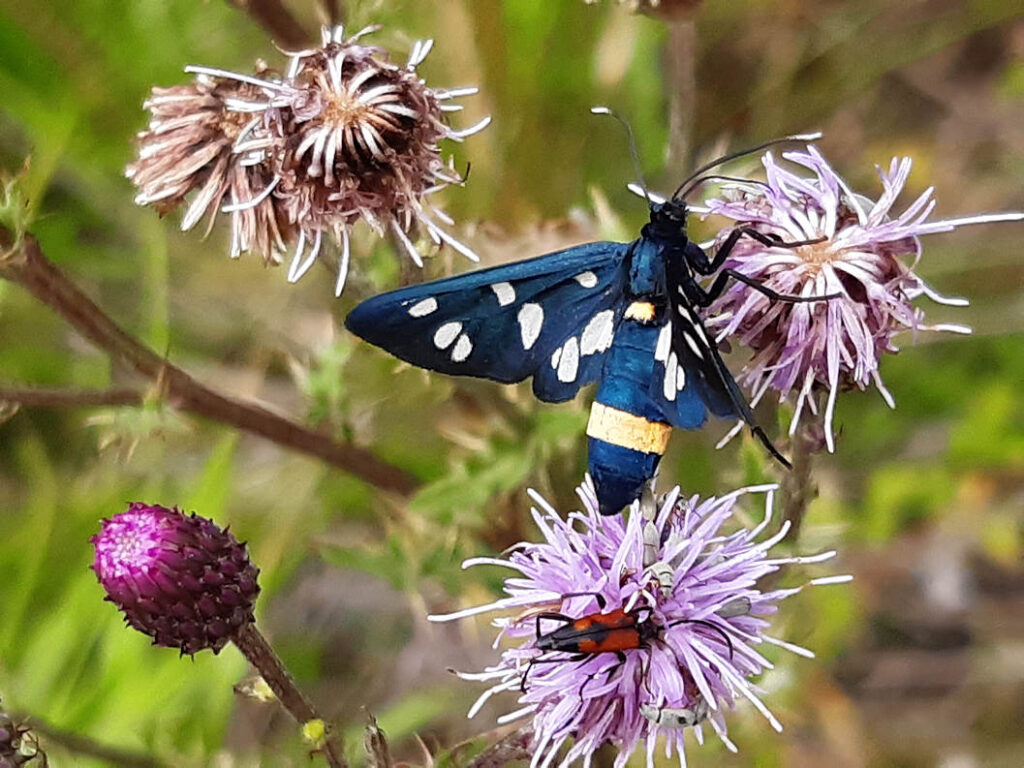
Nine-spotted Moth taking nectar on Knapweed. Like the Burnet moths, its bold coloration is aposematic; it may also be a wasp mimic with the bold yellow stripe on its abdomen. Below it is a heart-spotted flower longhorn beetle, Stictoleptura cordigera.
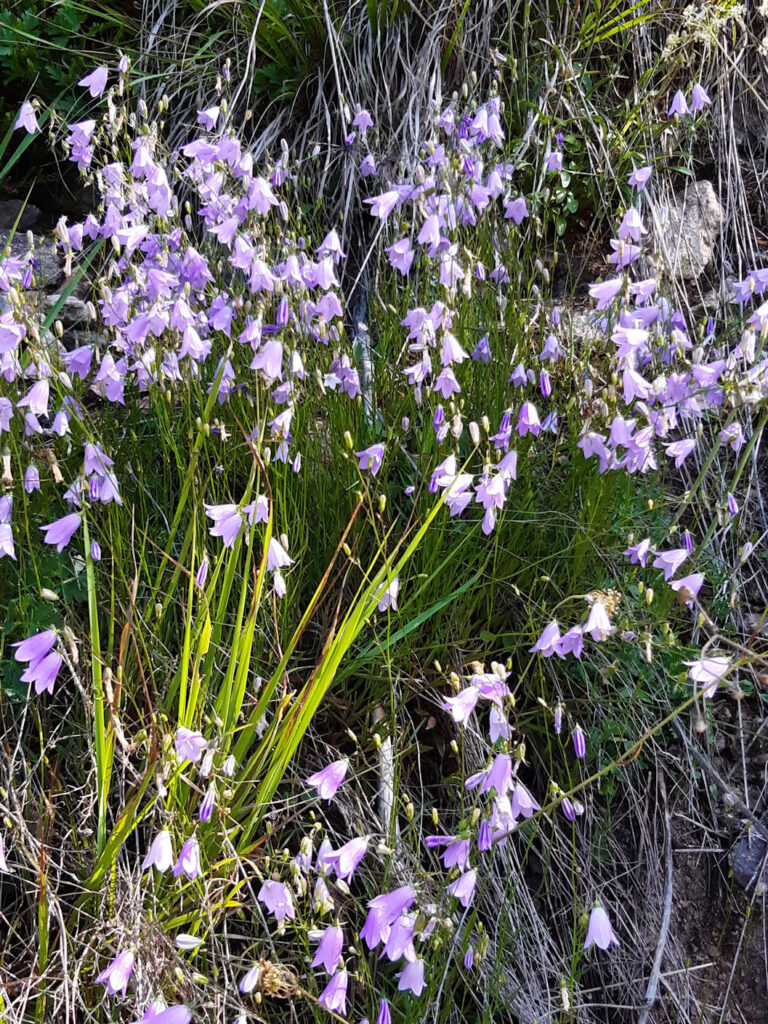
A mass of Harebells
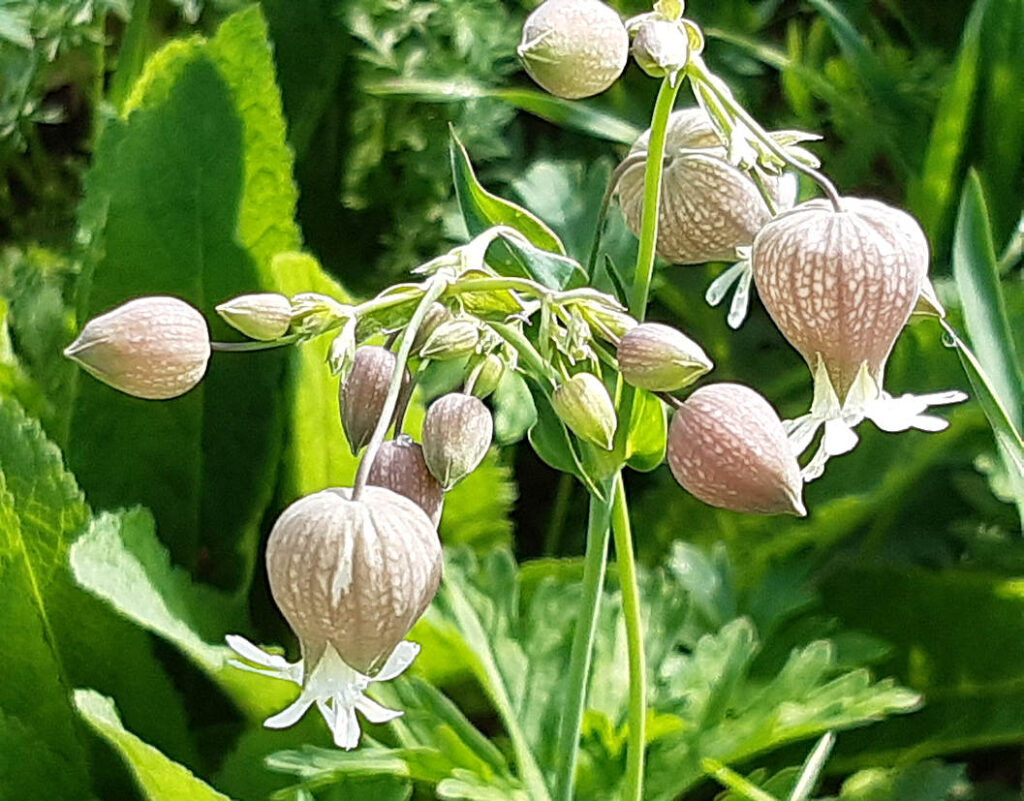
Bladder Campion
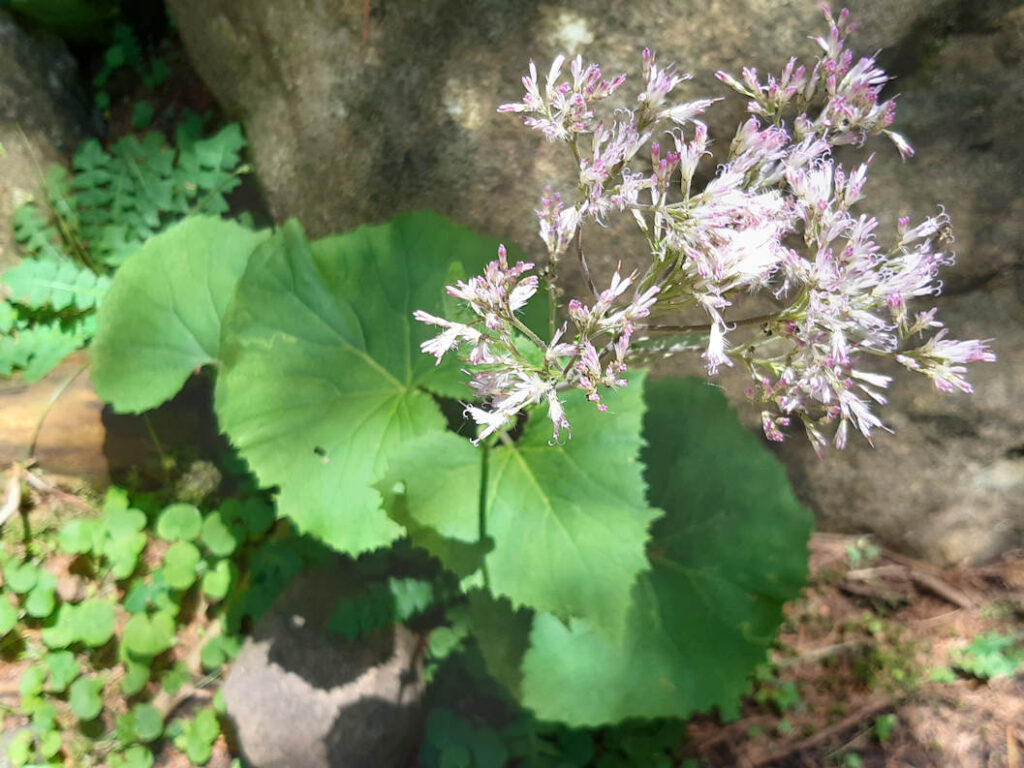
Alpine Butterbur
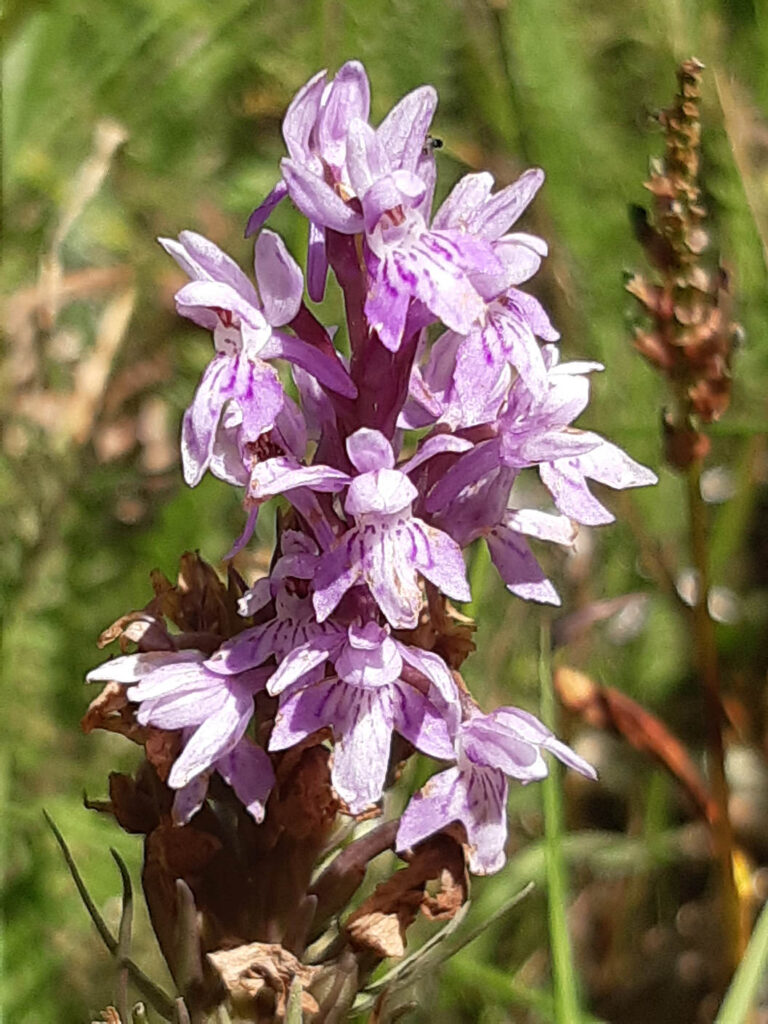
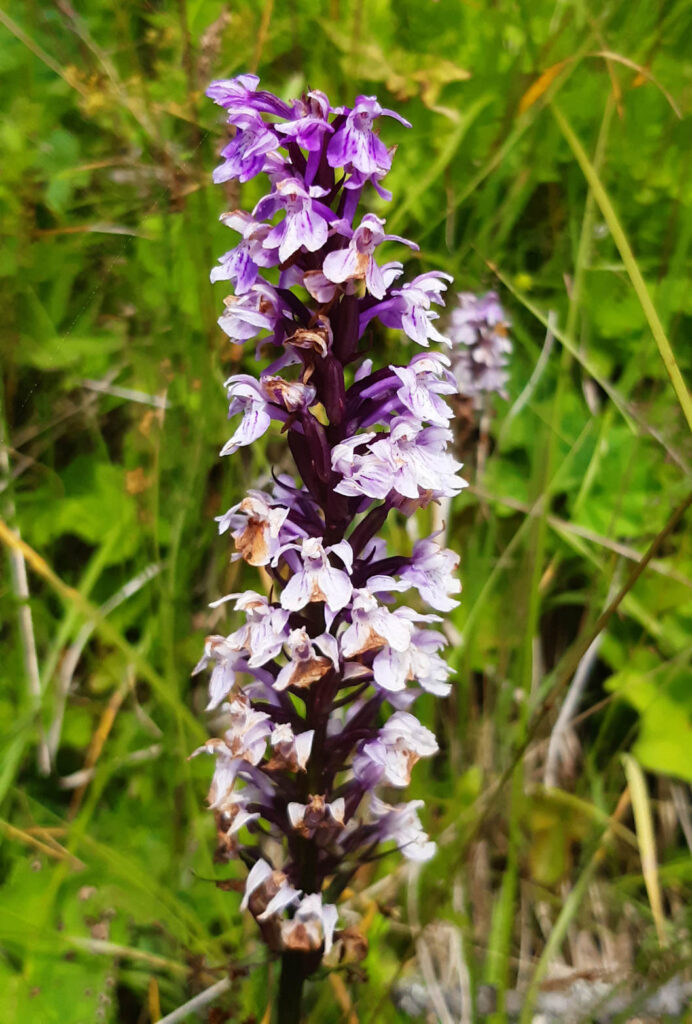
Heath Spotted-orchid
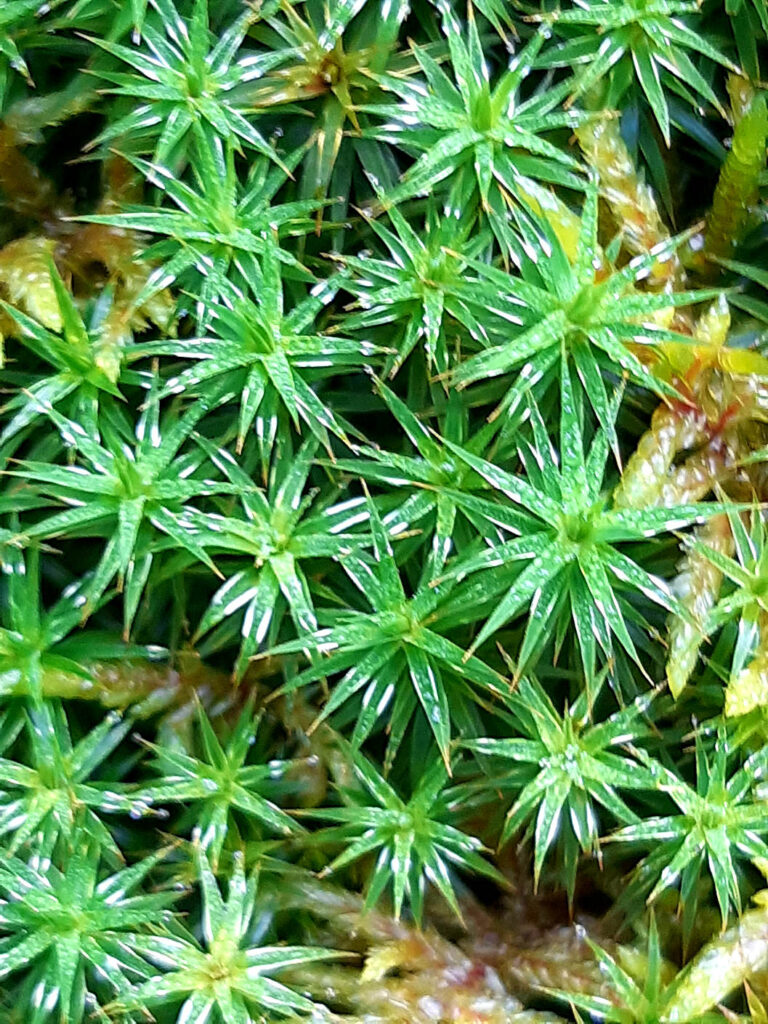
Haircap Moss (Polytrichum)
Common Spotted Orchid
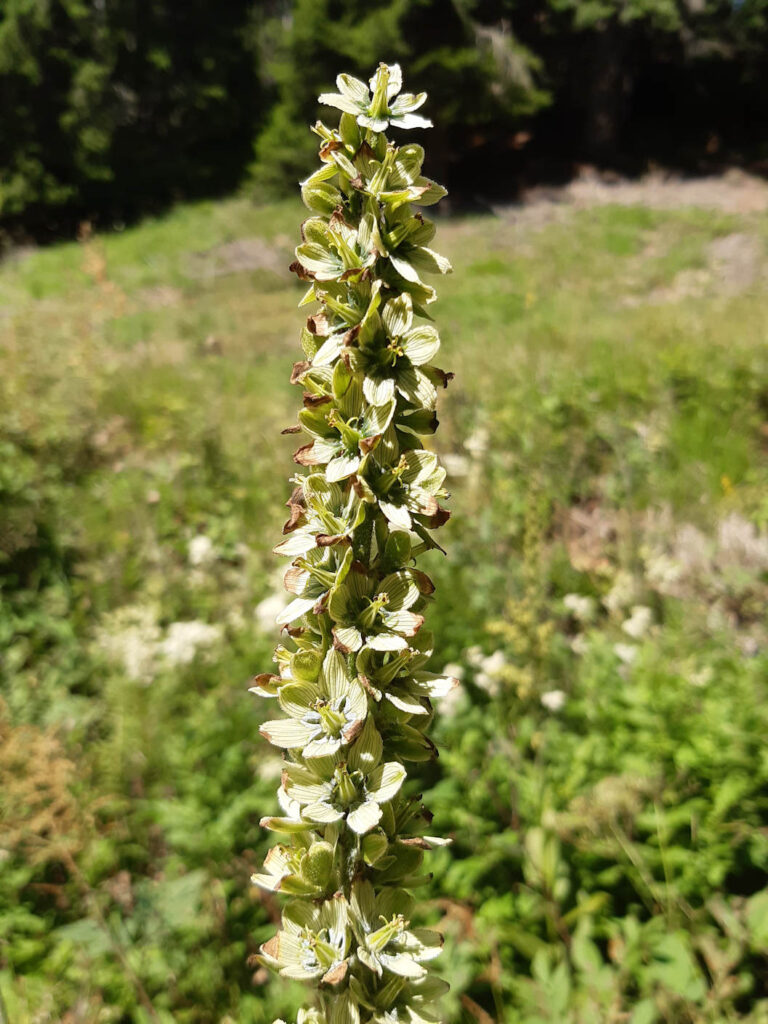
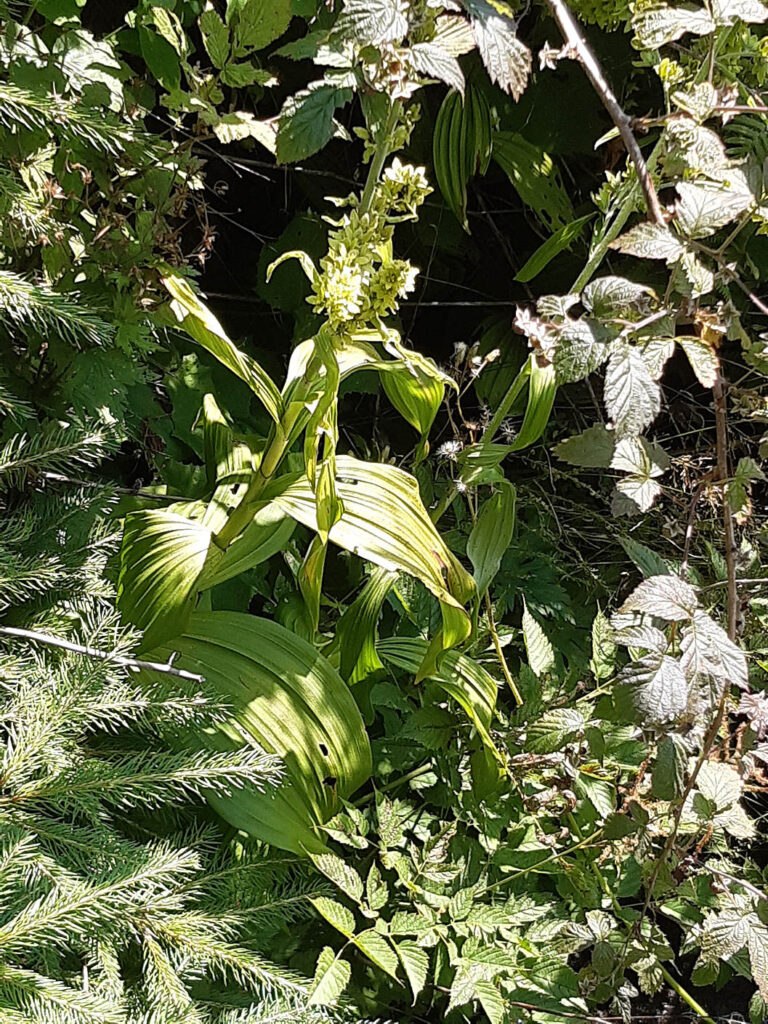
False Hellebore (Veratrum), in the Liliales (like lilies) not the Asparagales (like the orchids that it resembles)
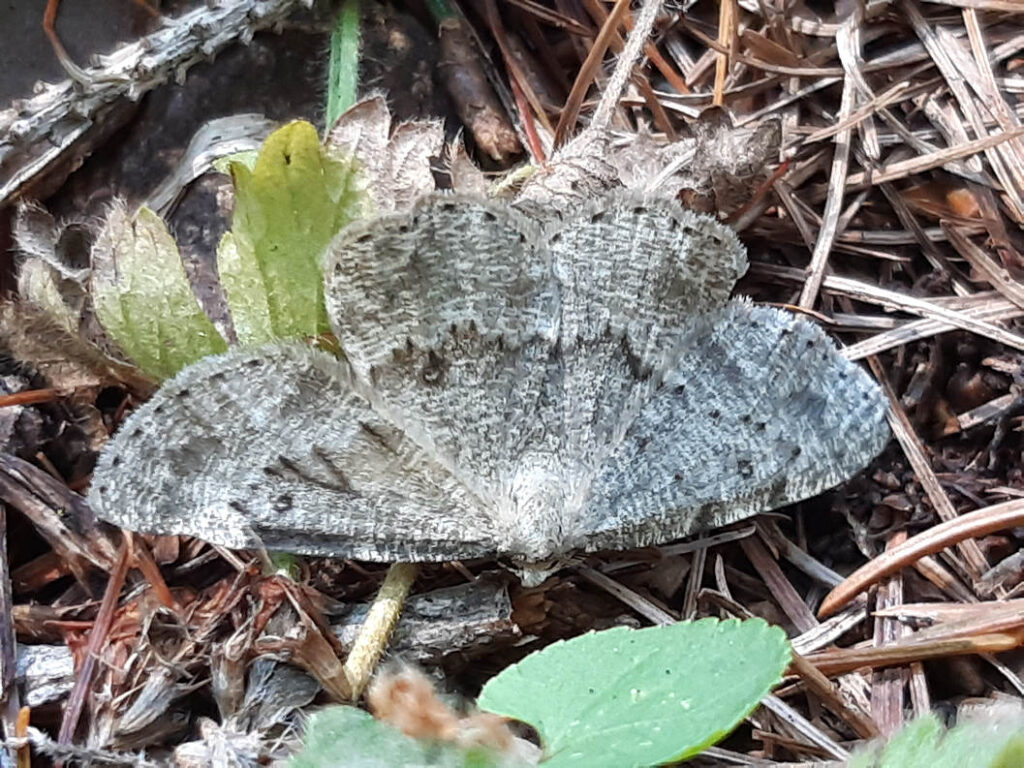
Lesser Cream Wave (Scopula immutata)
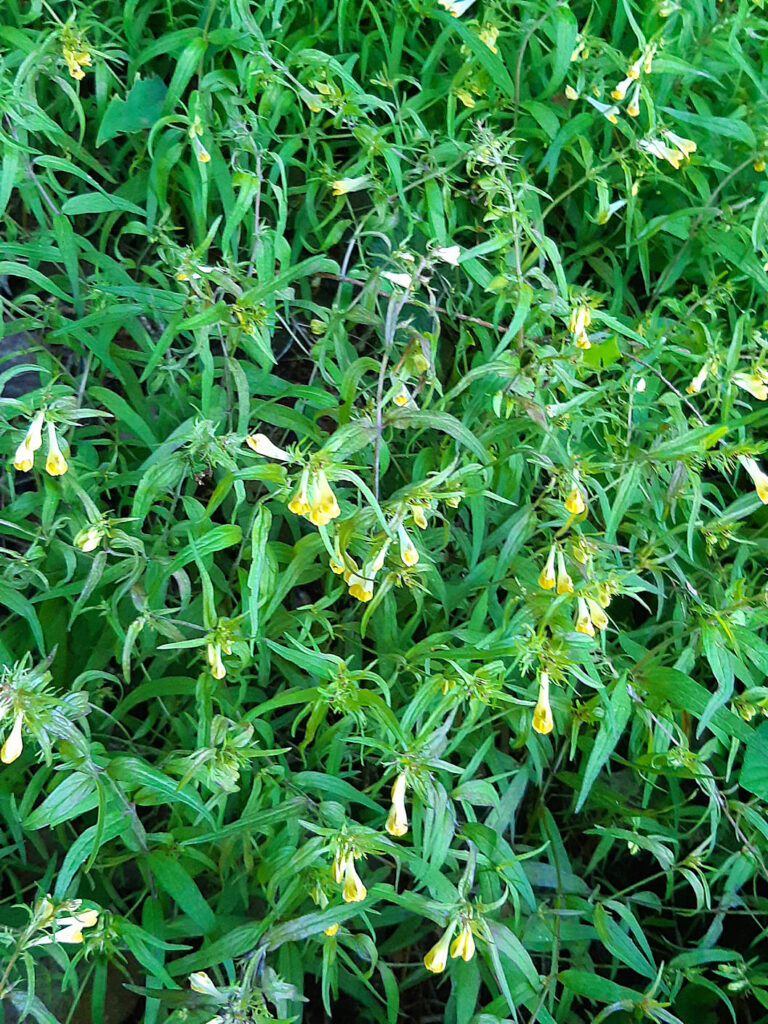
Cow-wheat is a hemiparasite, lives in a mutualistic relationship with the wood ant, and is the host plant of the Heath Fritillary.
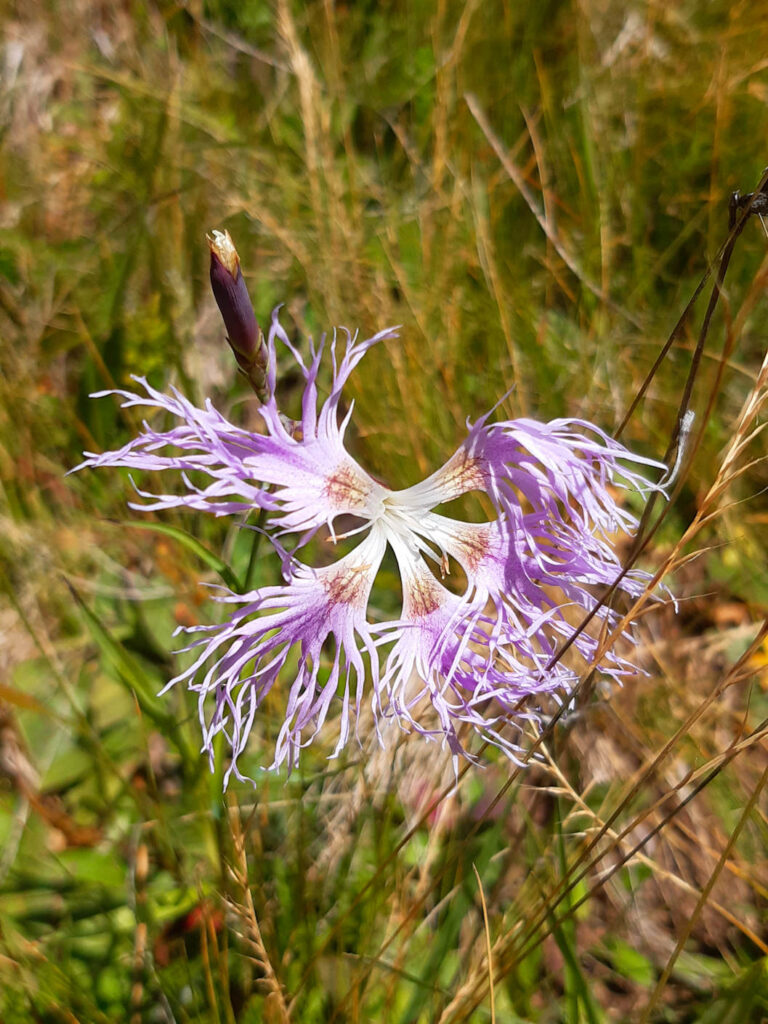
Fringed Pink
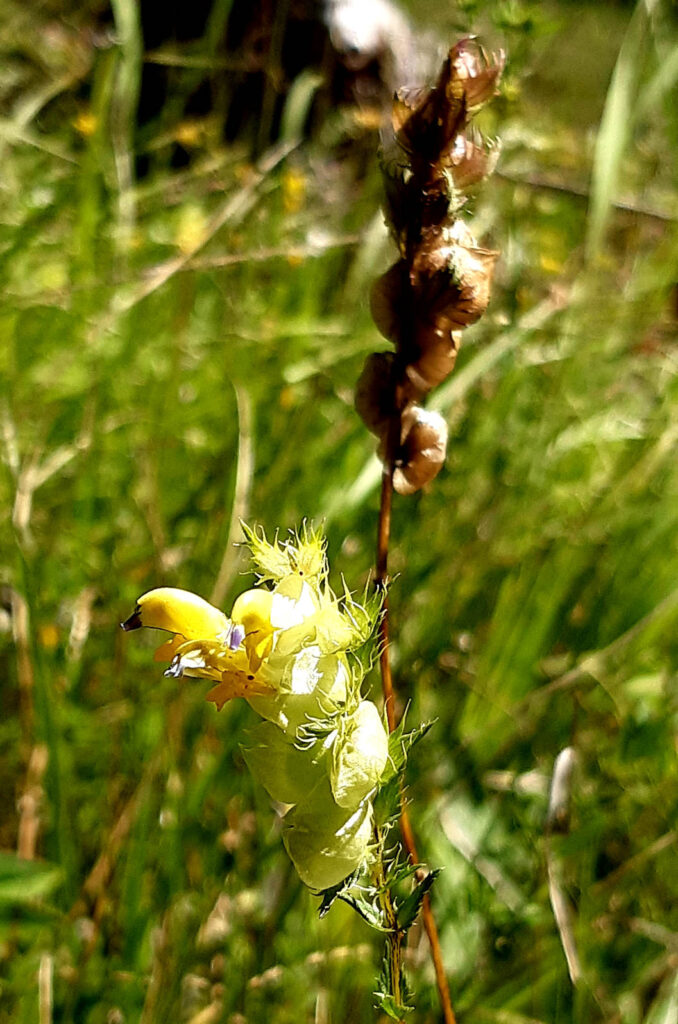
Yellow Rattle, a key plant in grassland as it parasitises tall grasses, weakening them and allowing many shorter flowers to flourish in alpine meadows.
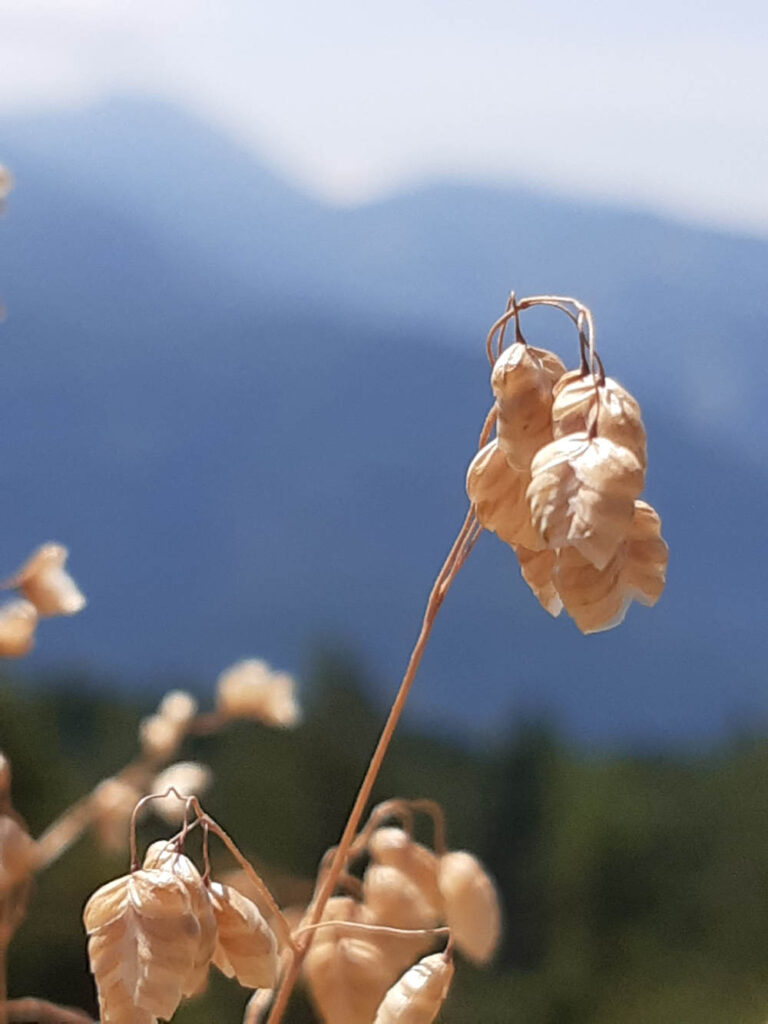
Greater quaking-grass (Briza), Anterivo
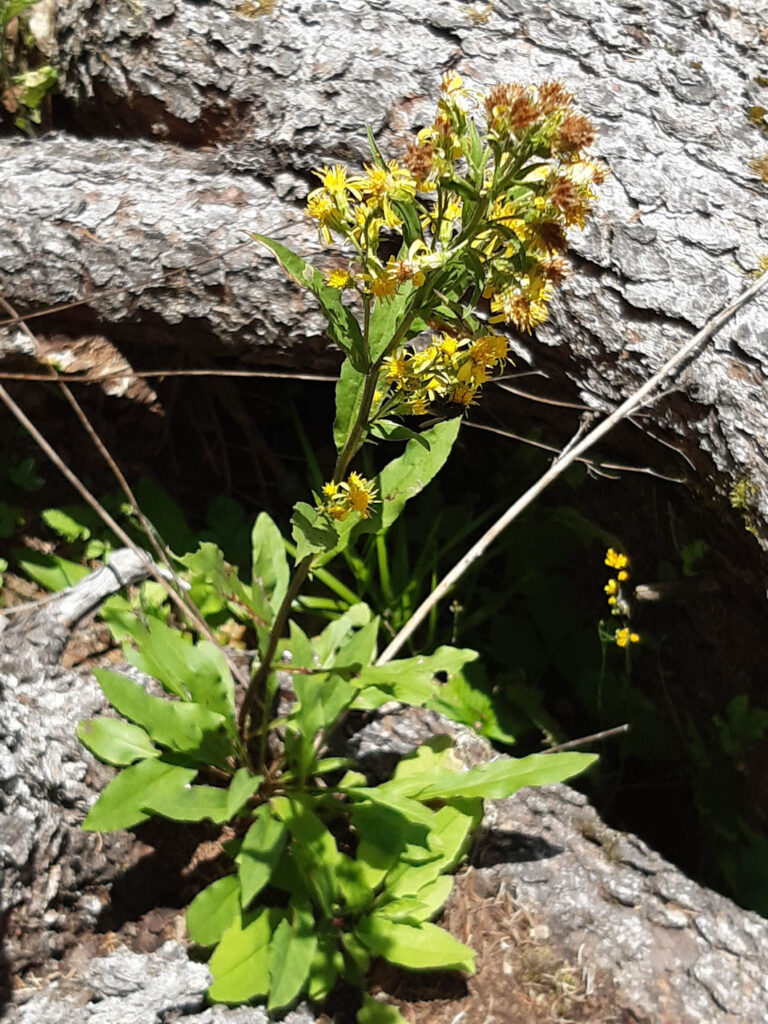
Goldenrod
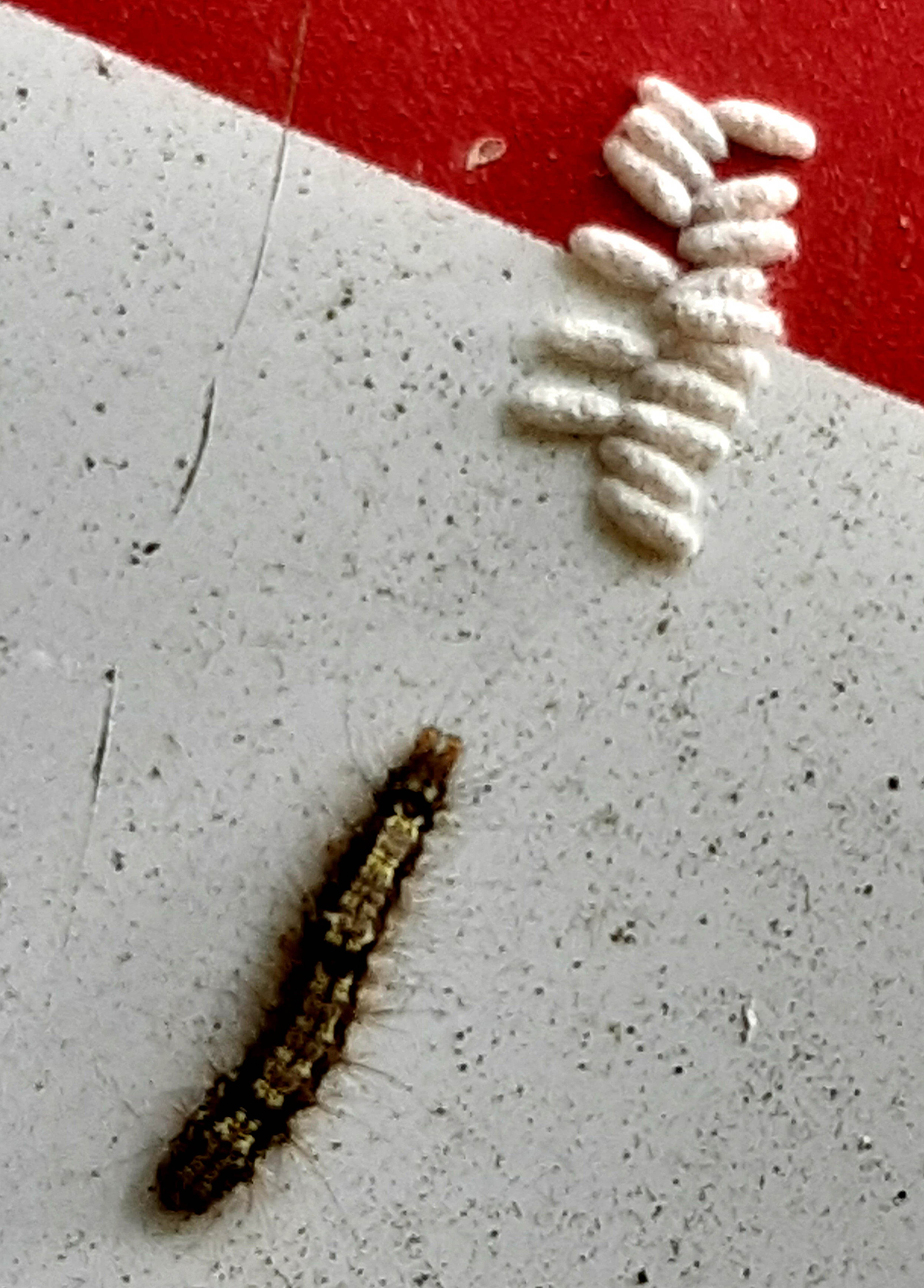
Gypsy moth caterpillar parasitised by Braconid wasps. They have eaten the inside of the caterpillar and have pupated alongside its body. The caterpillar has later slipped down away from the pupae.
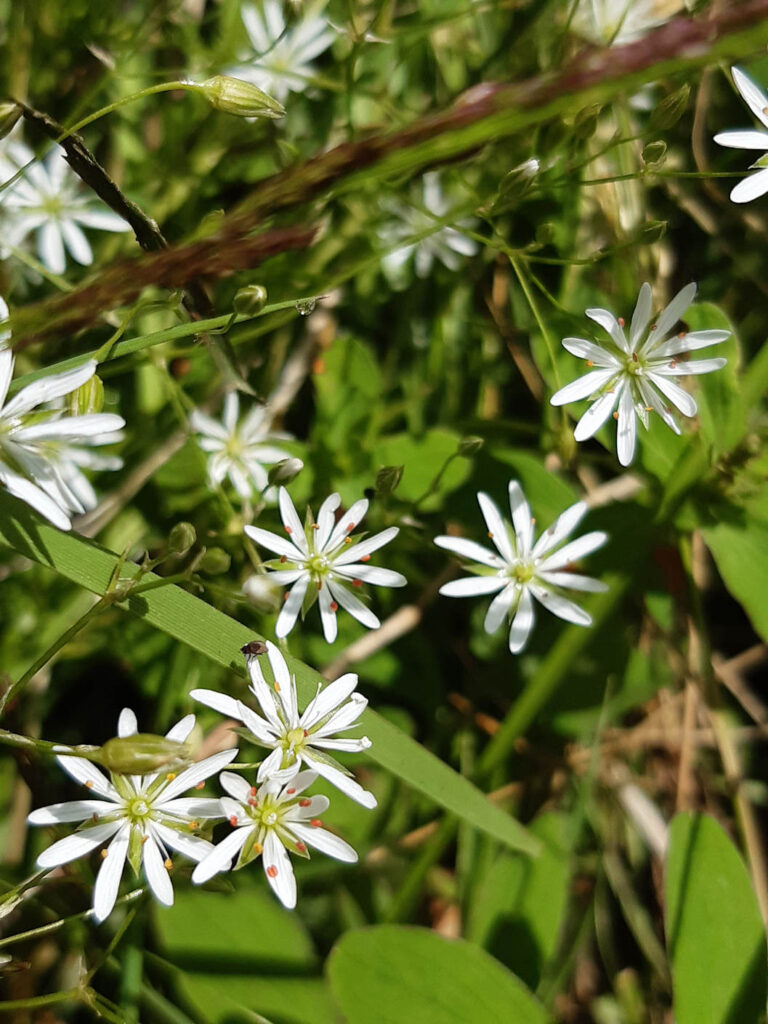
Grassy Stitchwort
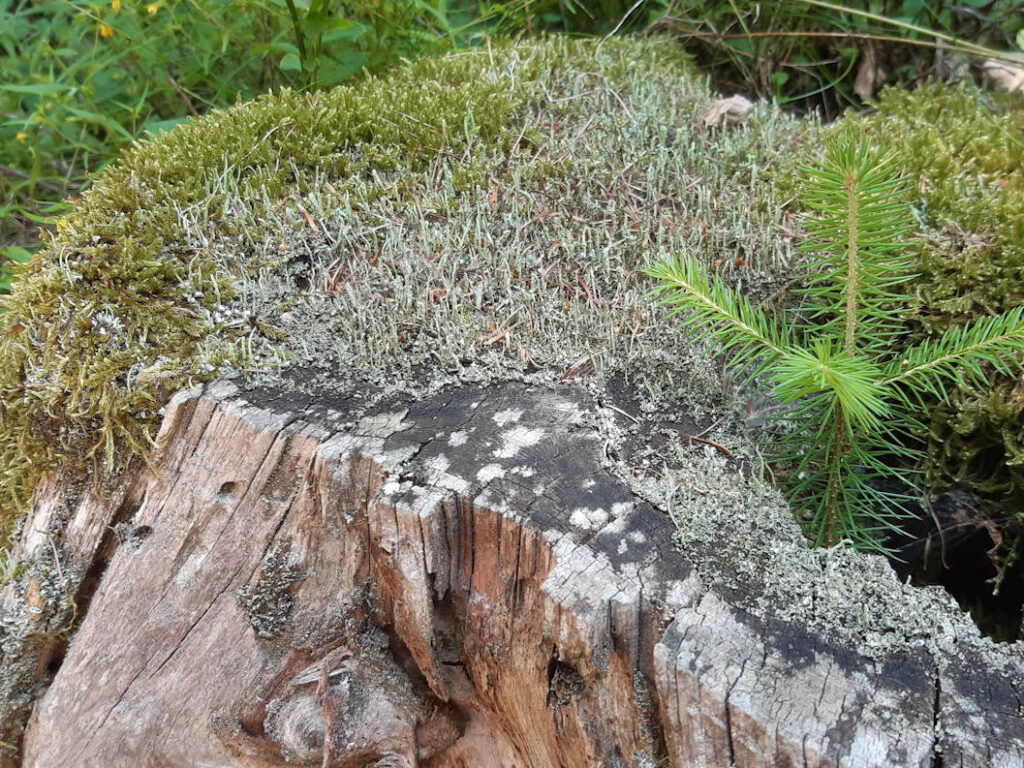
Cladonia lichen on fir stump
Small Yellow Foxglove
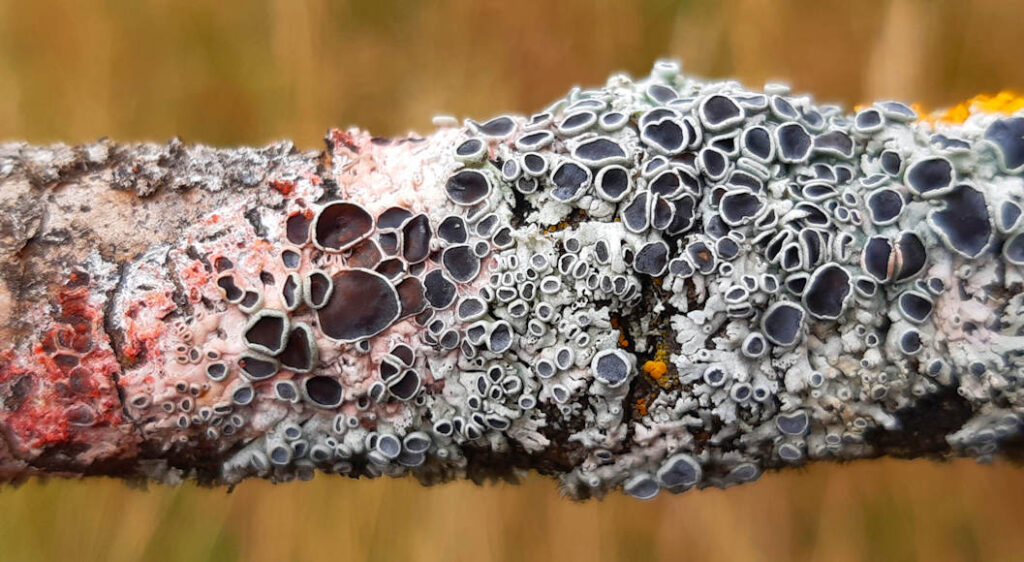
Handsomely lichened twig. The leafy Parmelia-type lichens have large rounded apothecia which release spores of the lichen fungus. The reddish area on the left is a discouraged patch of lichen; many lichens are used to create vegetable dyes in reds, oranges, and yellows.
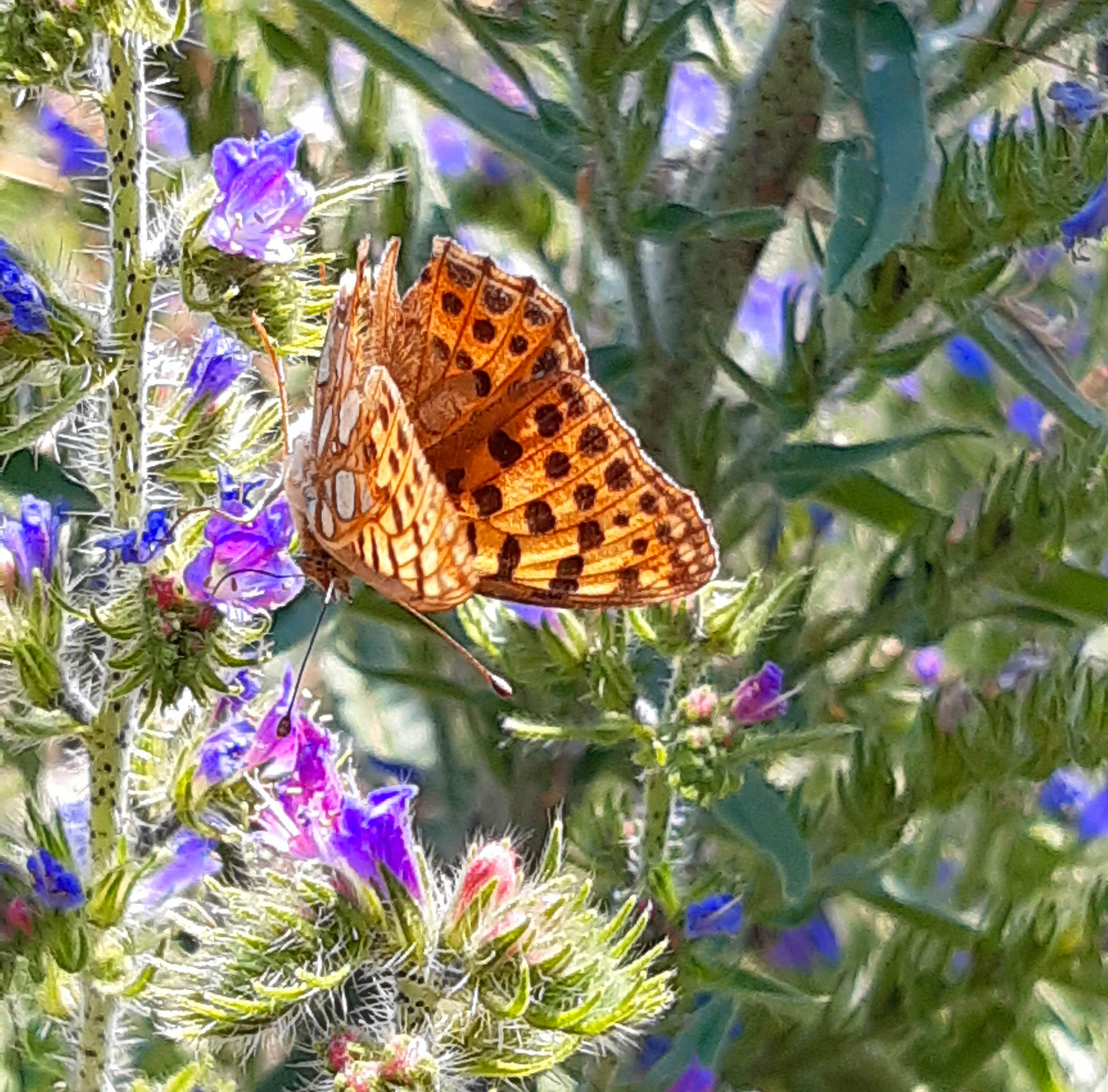
Queen of Spain Fritillary on Viper’s Bugloss
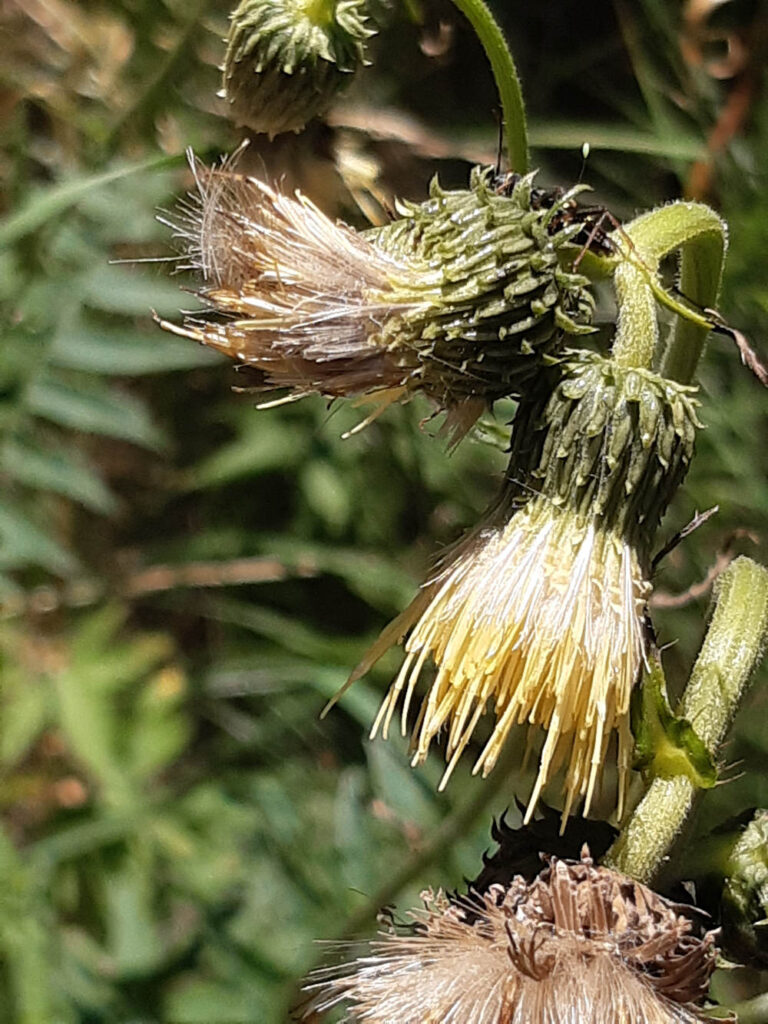
Sticky Thistle (Cirsium)
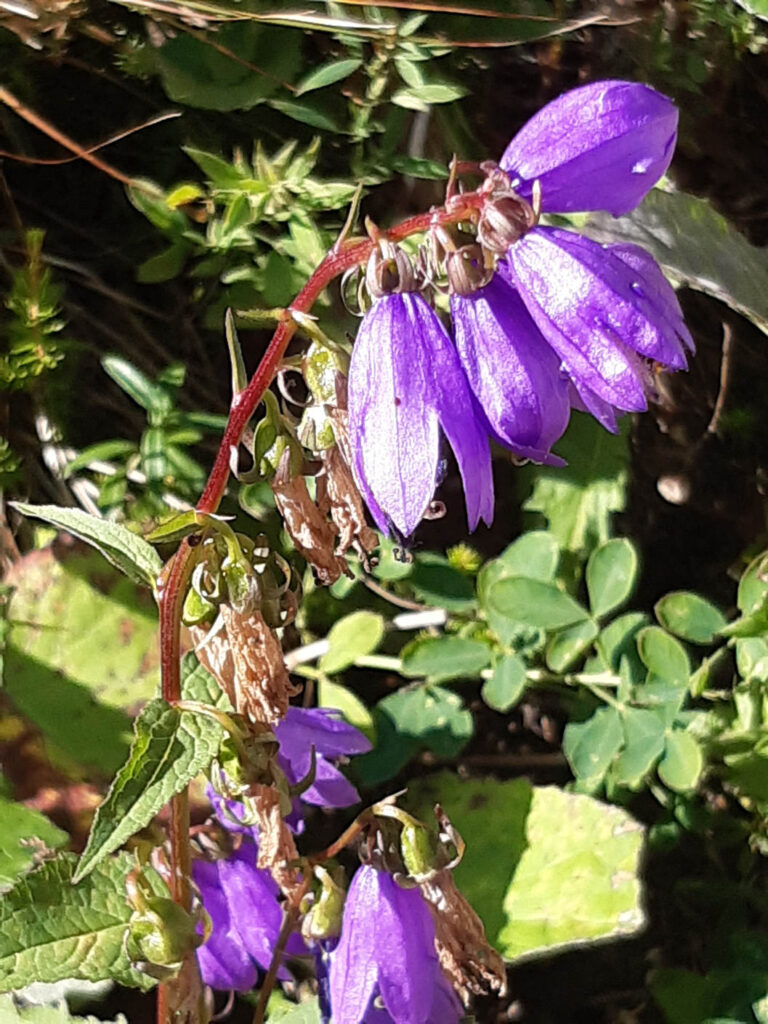
Creeping Bellflower
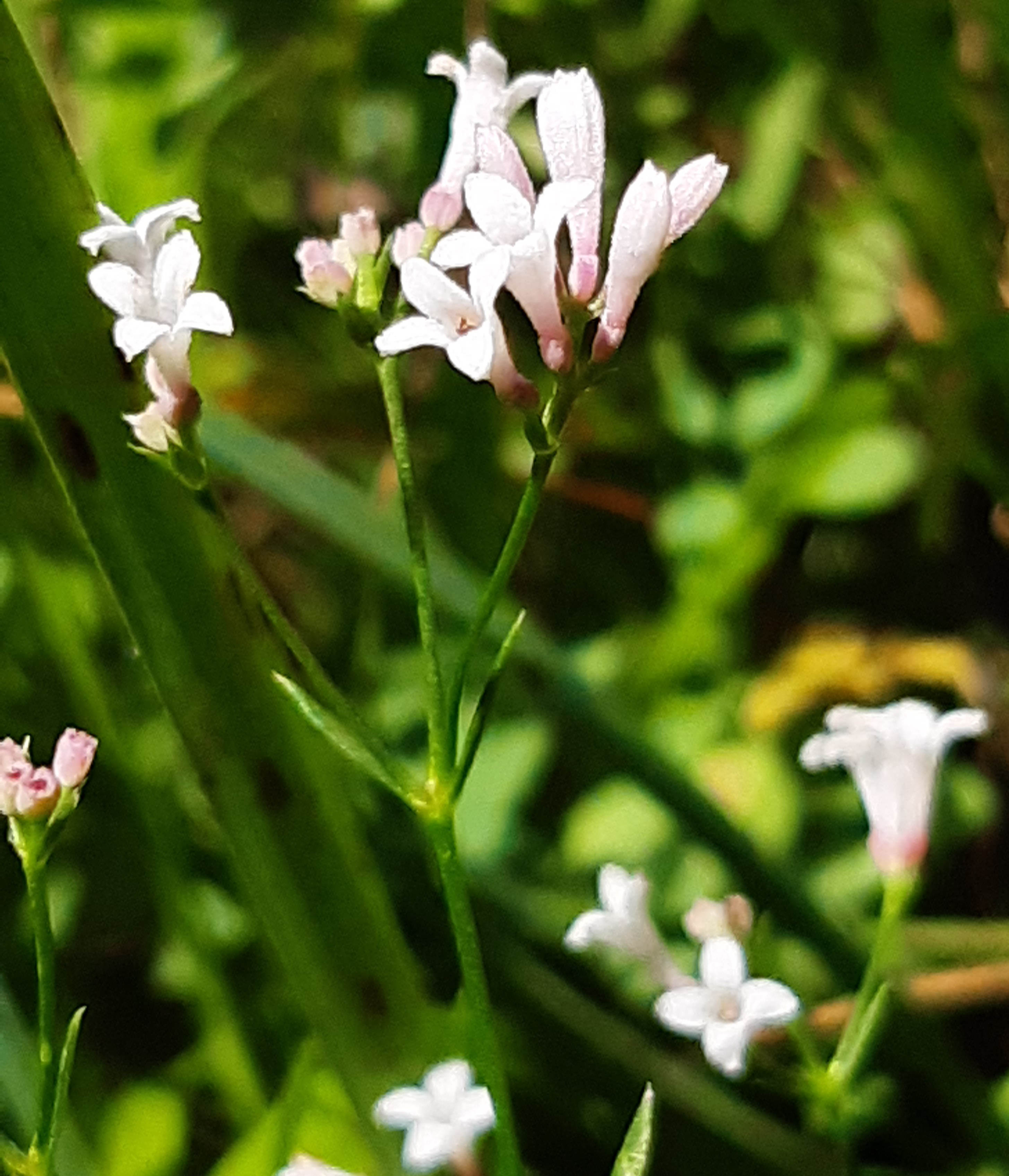
Squinancywort. It was formerly used to treat ‘quinsy’, an abscess behind the tonsils.
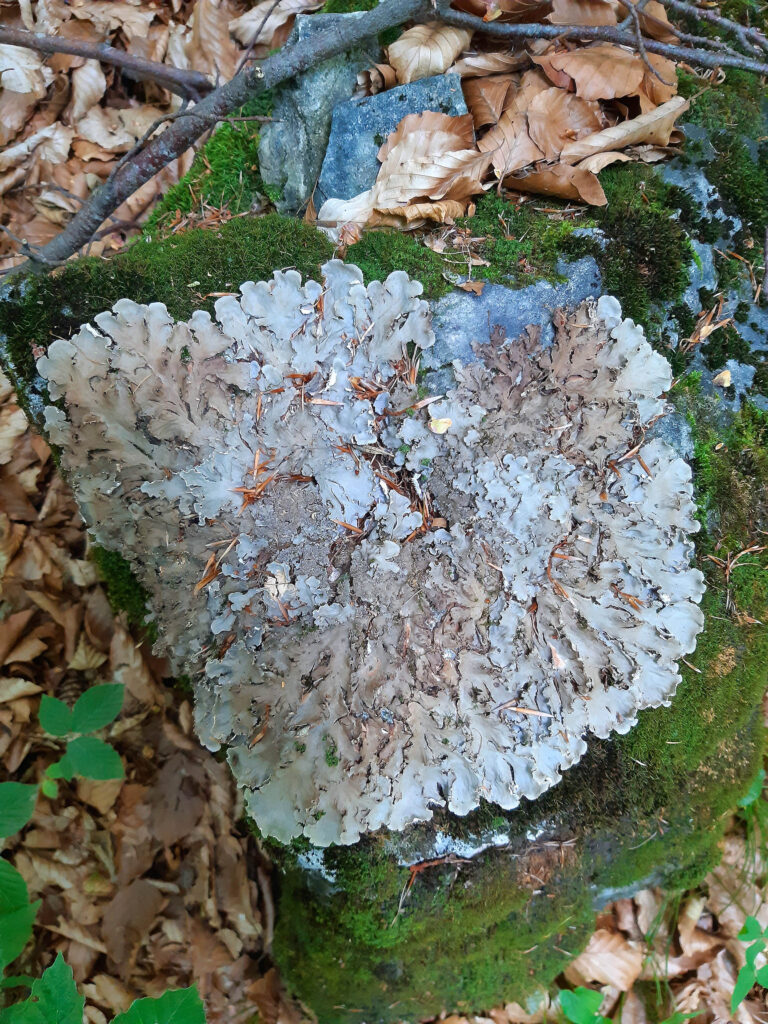
An impressively big patch of Dog Lichen (Peltigera canina) covering a tree-stump
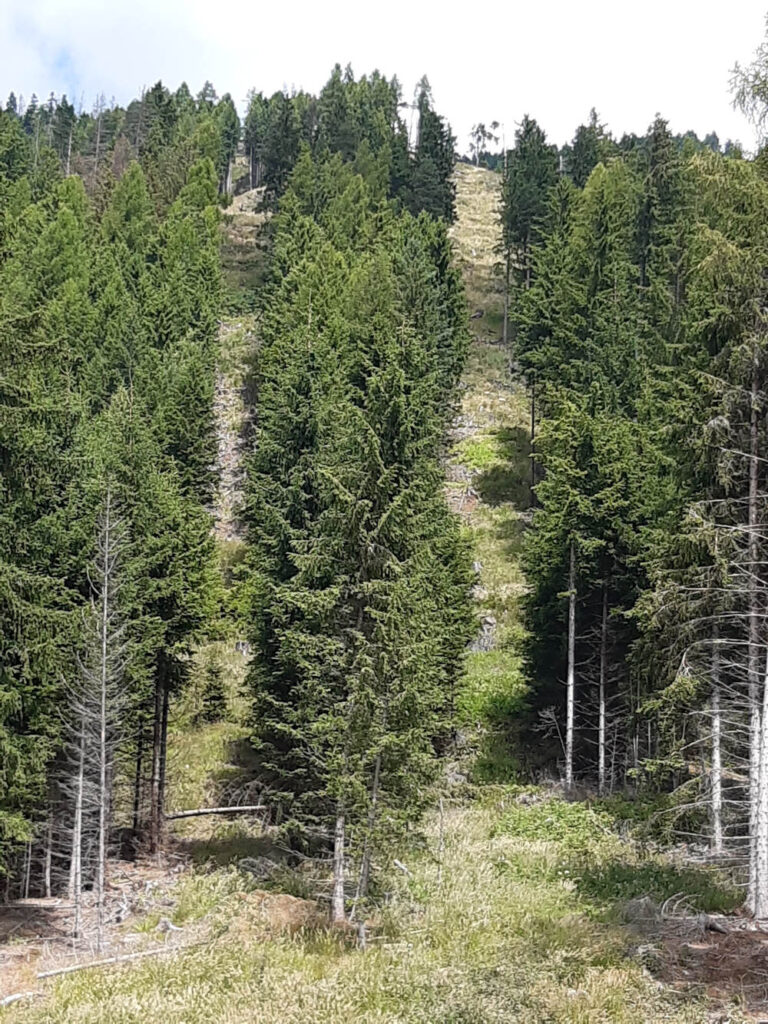
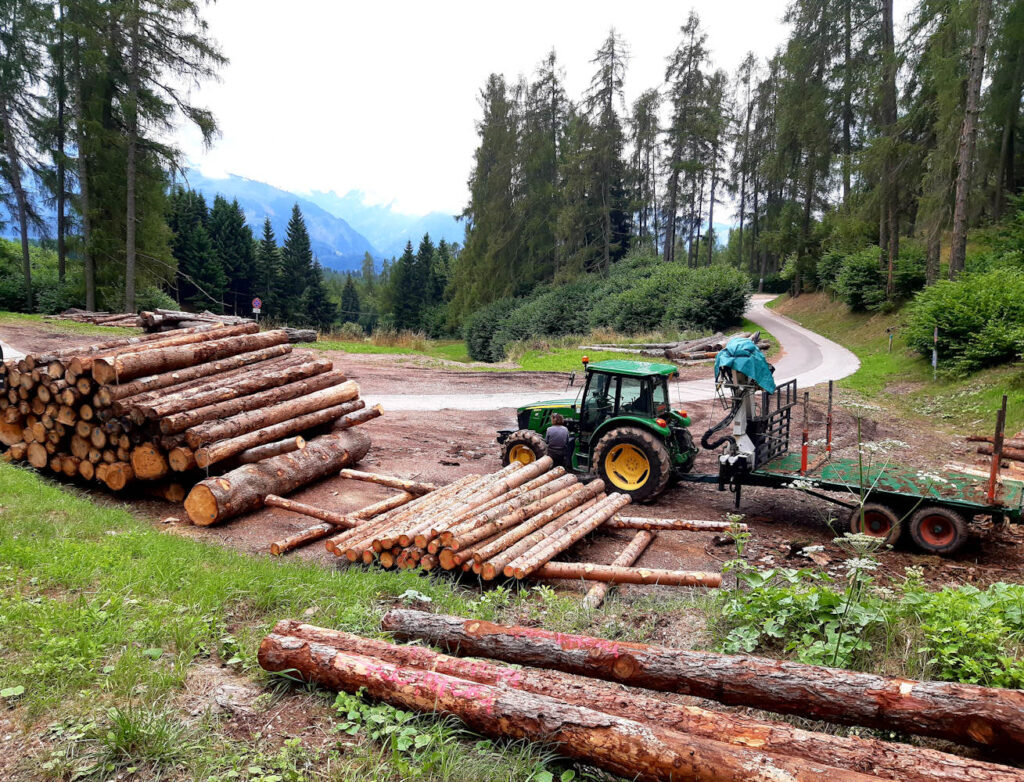
Local-scale commercial forestry. Trees are removed in small strips, not clear-felled, respecting the ecology of the forest.
Local-scale commercial forestry. The harvested trees are of different species and sizes.

Other sightings

Among other interesting finds (including species recorded in my earlier posting), I am pretty sure I heard the call of the Nutcracker, a small crow of forested mountains. A Black Redstart perched obligingly on a fence post, twitching its red tail. A surprised Stag, early one morning, bounded away uphill from a forest track: there were generally few signs of deer, though plenty of cattle and some horses grazing in the alpine meadows and forest clearings. A Hummingbird Hawkmoth hovered over the flowerbed near the house one morning, gathering nectar. Male Common Blue butterflies showed off their dazzling coloration of caerulean blue, but there were no Idas Blue butterflies, which I saw last time (at another time of year). Seen again like last time was the handsomely red/black striped bee parasite beetle Trichodes apiarius, plenty of Scotch Argus, one Chalkhill Blue, countless Marbled Whites, and plenty of Brimstones and Clouded Yellows, and one or two Speckled Woods. Common Heath moths were, well, common; they may not exactly be day-flying, but they’re readily disturbed in long grass.

We enjoyed seeing some familiar plants, too: Meadowsweet, never common in these hills, sticking strictly to very damp meadowland; the small yellow 4-petalled Tormentil, the delicate yellow Rock-rose, and the aromatic Wild Thyme, as much at home in the English uplands as here. Less familiar were the umbellifers (Apiaceae) Sweet Cicely and Broad-leaved Sermountain. Wild flowers that we saw that share the distinction of being also in our London garden include Eyebright and Self-Heal. Among the less usual ferns were Polypody and Wall Rue Spleenwort.

Reflections

It is hard not to compare the species richness of the flourishing alpine meadows and forests with that of Britain’s uplands. In Britain, sheep prevent trees from taking hold, and graze so severely that few flowers can grow. Farm subsidies and agricultural policy since the war have favoured production at the expense of wildlife; over 97% of Britain’s wildflower meadows, permanent pastures, have been ploughed up. Some of the ploughing was to enable reseeding with an “improved” grass mix, sometimes with clover. The result was invariably an impoverished agro-ecosystem, with far fewer species of grasses and flowers, far fewer insects, and degraded soil with fewer earthworms.
In some places, such as the chalk grassland near Beachy Head, the land was returned to pasture soon after the war with its urgent need for food. There is still, over 50 years later, a sharp contrast between the ploughed pasture land and the undamaged chalk grassland: the ploughed land has not recovered in that time.

It is no surprise that Britain’s bird, insect, and flower populations have collapsed. When hedges have been grubbed up and large fields carefully cultivated, after a while the farmer has a clean crop without flower “weeds” or insect “pests”, even without using herbicides or insecticides: there is no place for them to grow, no food for the insects to eat.

The only wild species that can survive in such a regime are efficient and troublesome weeds, like grasses too similar to cereal crops to be possible to spray; or genuinely pestlike insects, such as “cabbage white” butterflies, that can breed rapidly, fly or be blown long distances, and quickly destroy fields of Brussels sprouts if a farmer is unwary. All the more attractive and beneficial organisms are long gone.

See also Wildlife of the Dolomites (the animals and plants arranged into groups)
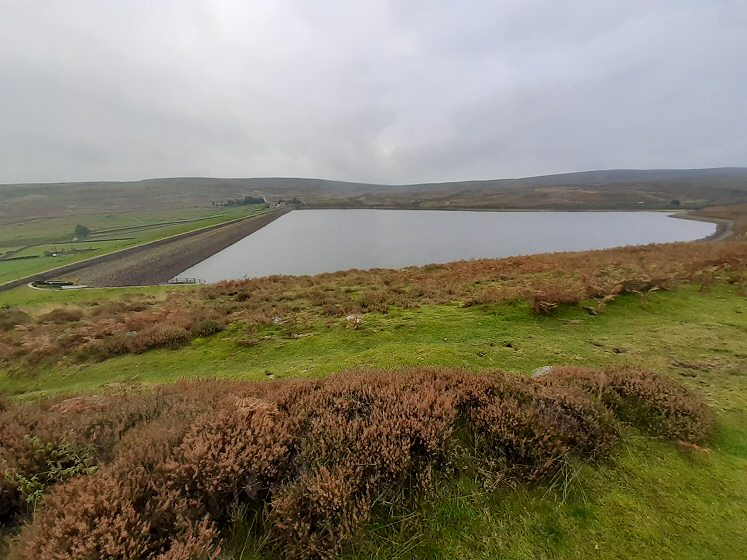
Barden Moor, Yorkshire Dales

Lower Barden Reservoir, constructed in the 1880s by Bradford Corporation Water Works

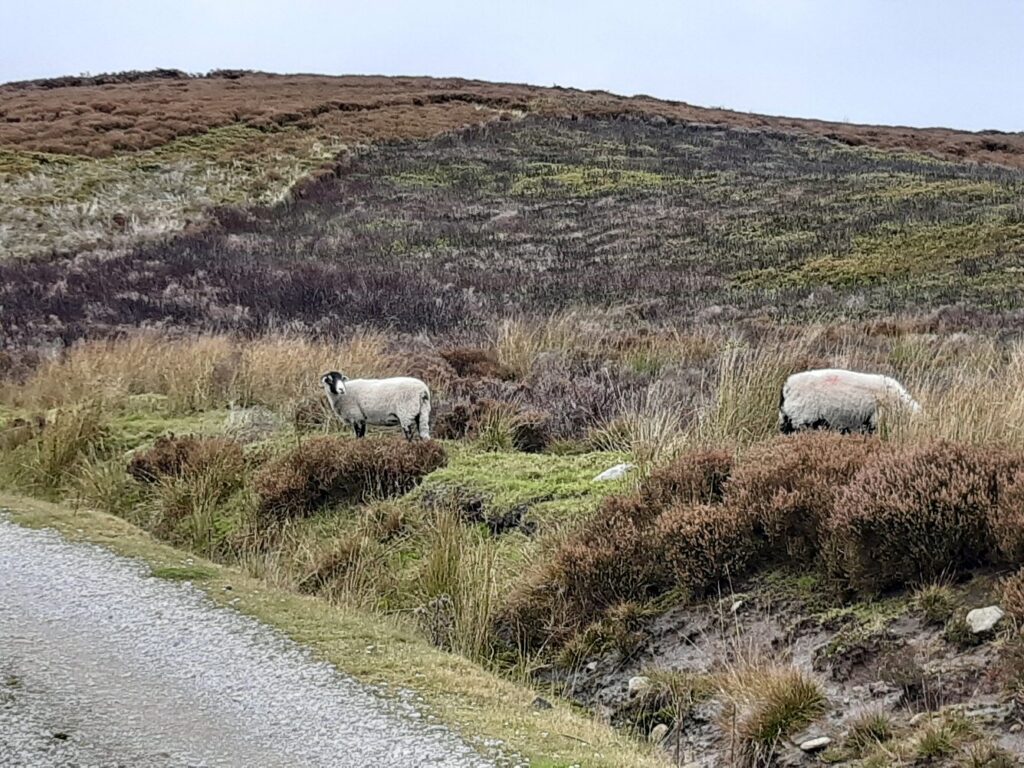
Barden Moor is an extensive water catchment area, on acidic rock (Millstone Grit), providing soft drinking water to the city of Bradford. The area is part of the ancient Bolton Abbey estate, and is now also in the Yorkshire Dales National Park. It’s covered in heather and moorgrass with areas of meadow and bog pools. It’s a fine place for an open airy walk away from the sometimes busy mountaintops, and a wonderful spot for nature.

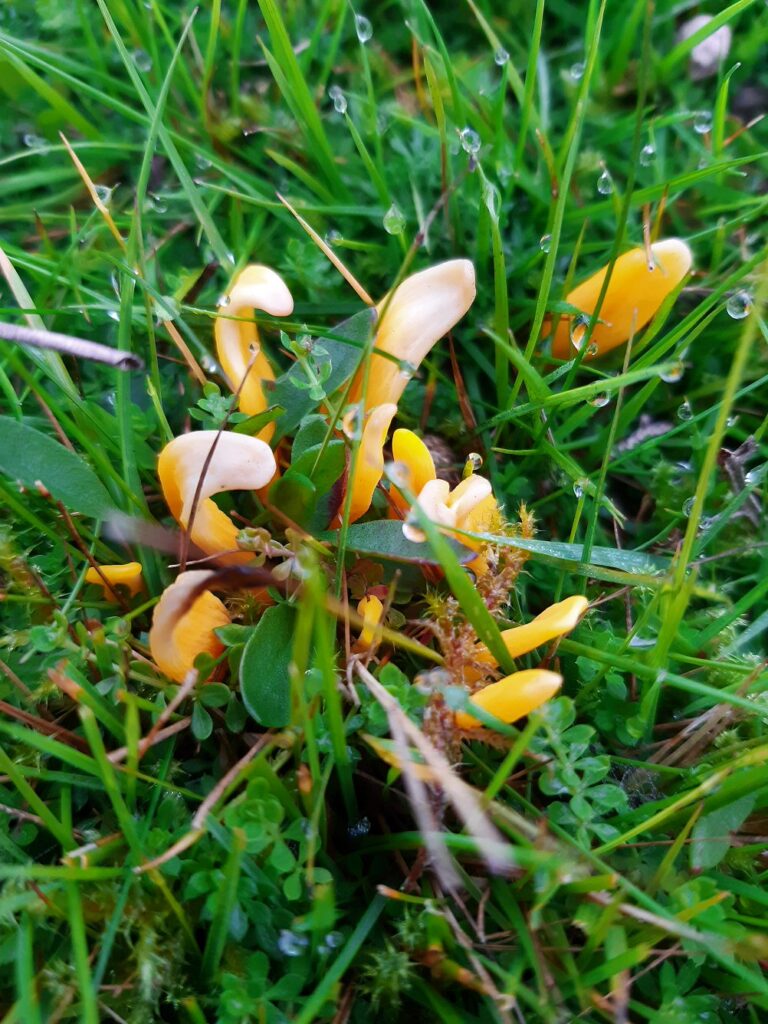
Apricot Club, Clavulinopsis luteoalba. The fungi are yellow all over, but some look white in the bright light. The clubs are quite broad, unlike the slim spindles of C. fusiformis.
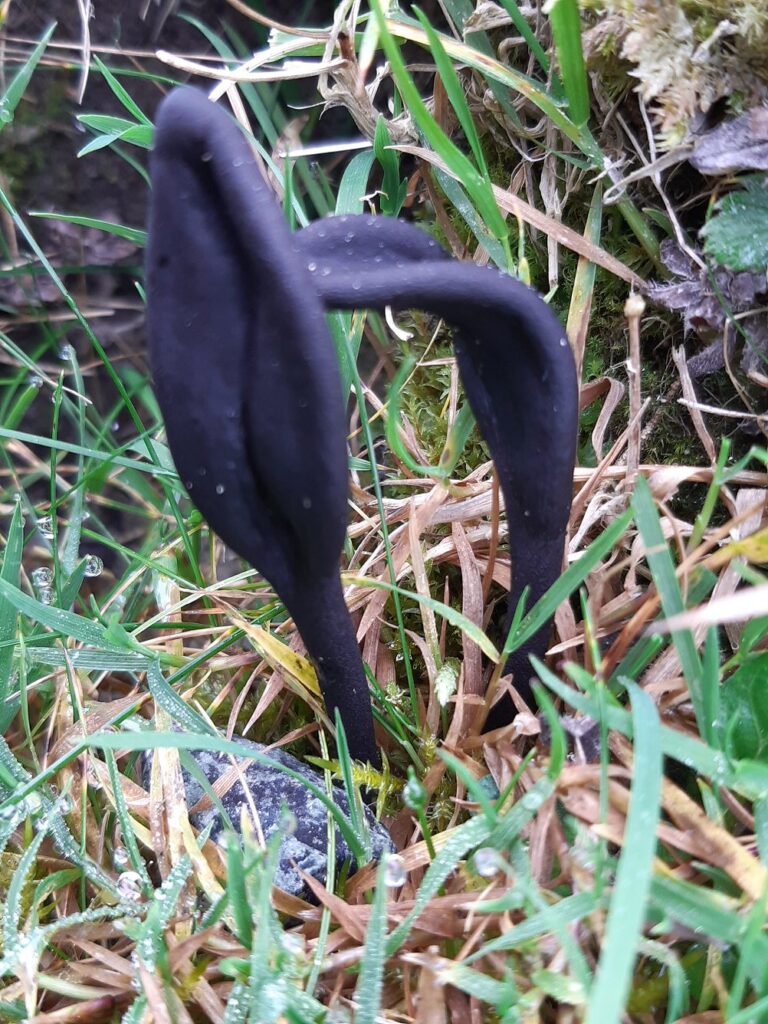
The grooved Earthtongue, Geoglossum cookeanum
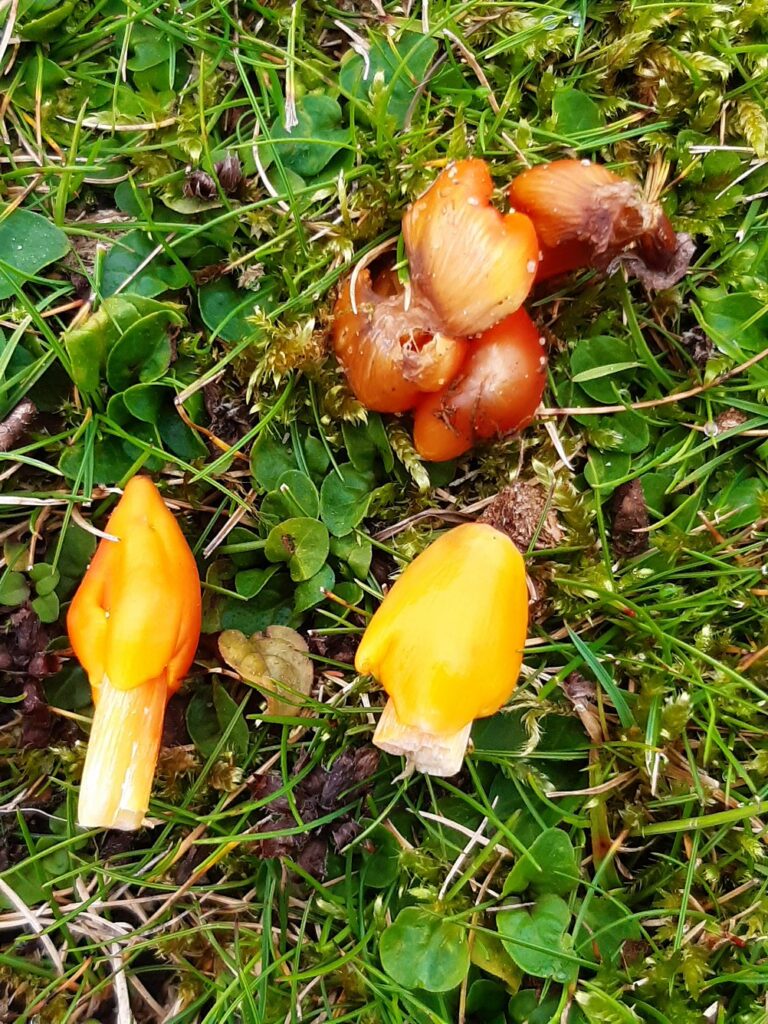
Persistent Waxcap, Hygrocybe persistens
Blackening Waxcap, Hygrocybe conica
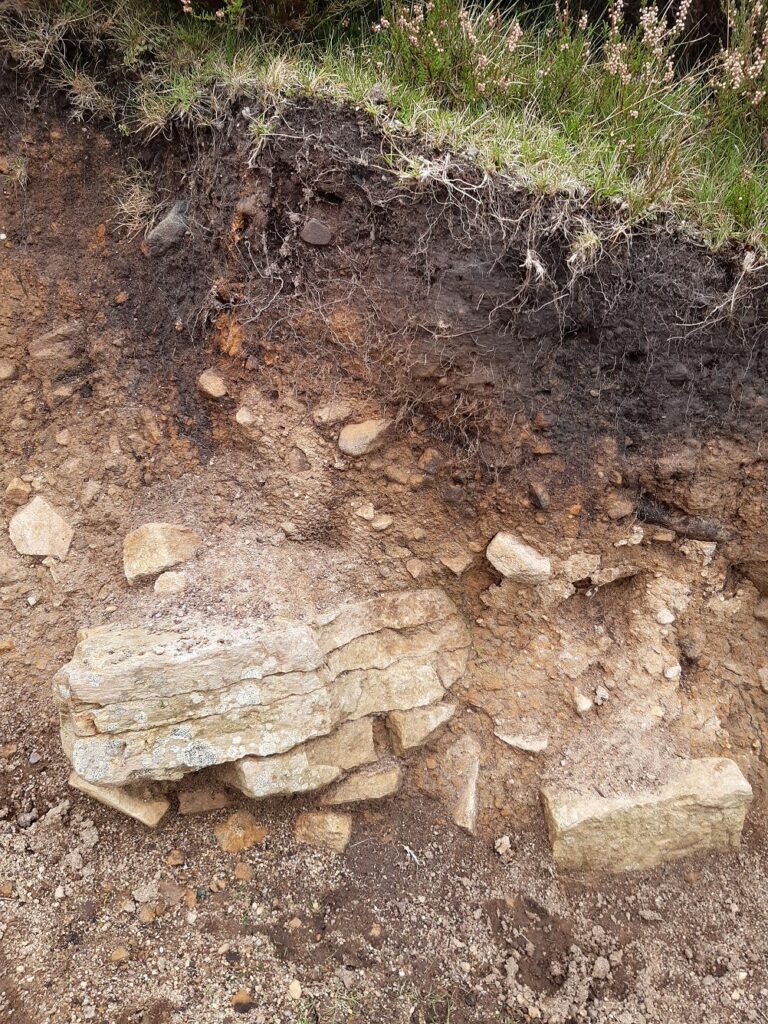
Like much of Britain’s uplands, the land is managed by muirburn, controlled burning of the moorland, to encourage new growth of heather, mainly Ling, which is the principal food of Red Grouse, and is also nibbled by the hardy upland sheep, which of course prefer open areas with grass to tall woody bushes. The thin ash-grey subsoil (Podsol, Russian for ash-soil) can be seen on the trackside bank.
Podsol on top of Millstone Grit, the local rock. The soil is black and slightly peaty with plant material at the top, then quickly turns to a poor subsoil with sand and fragments of rock, and then not very far down, actual bedrock.
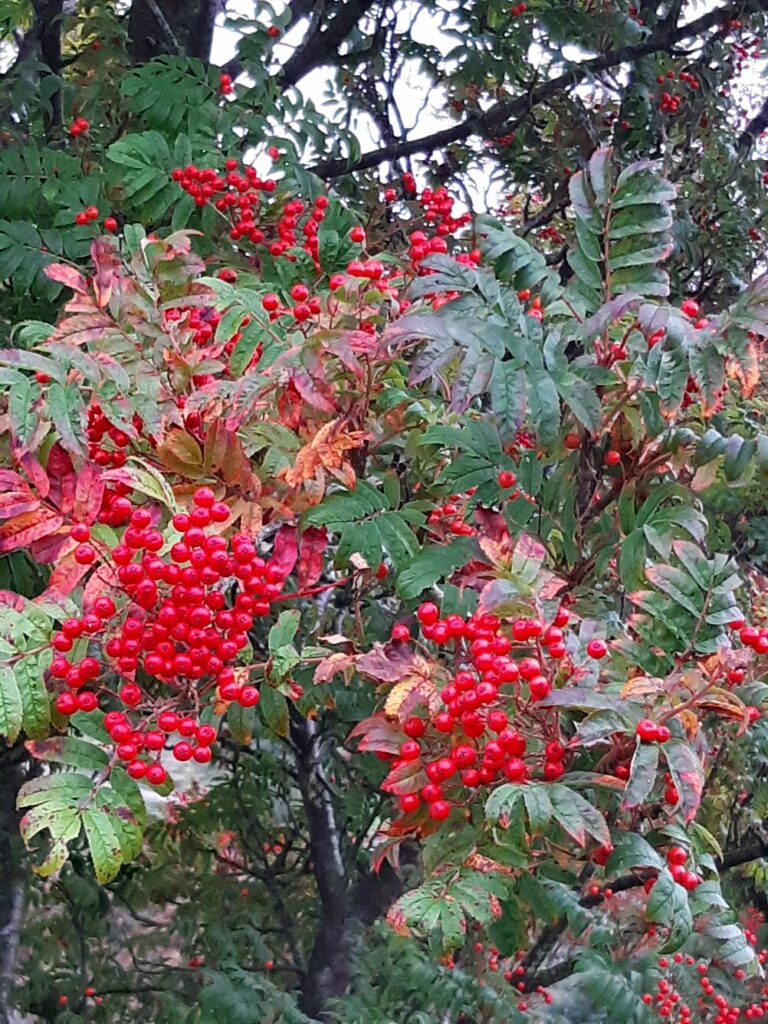
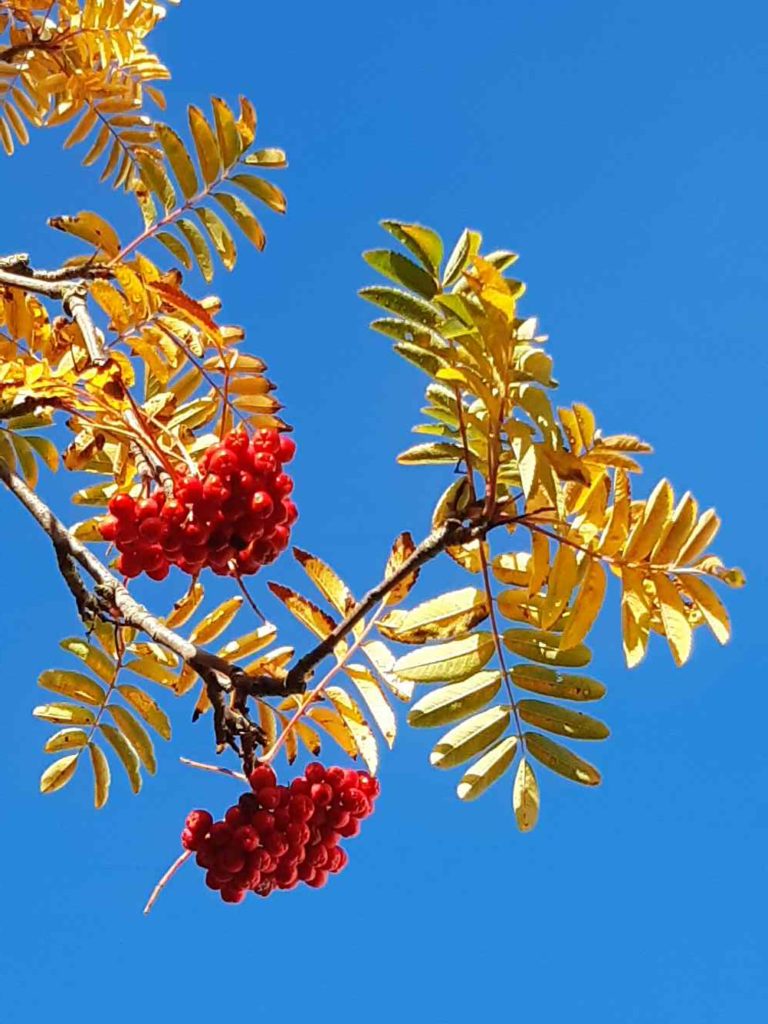
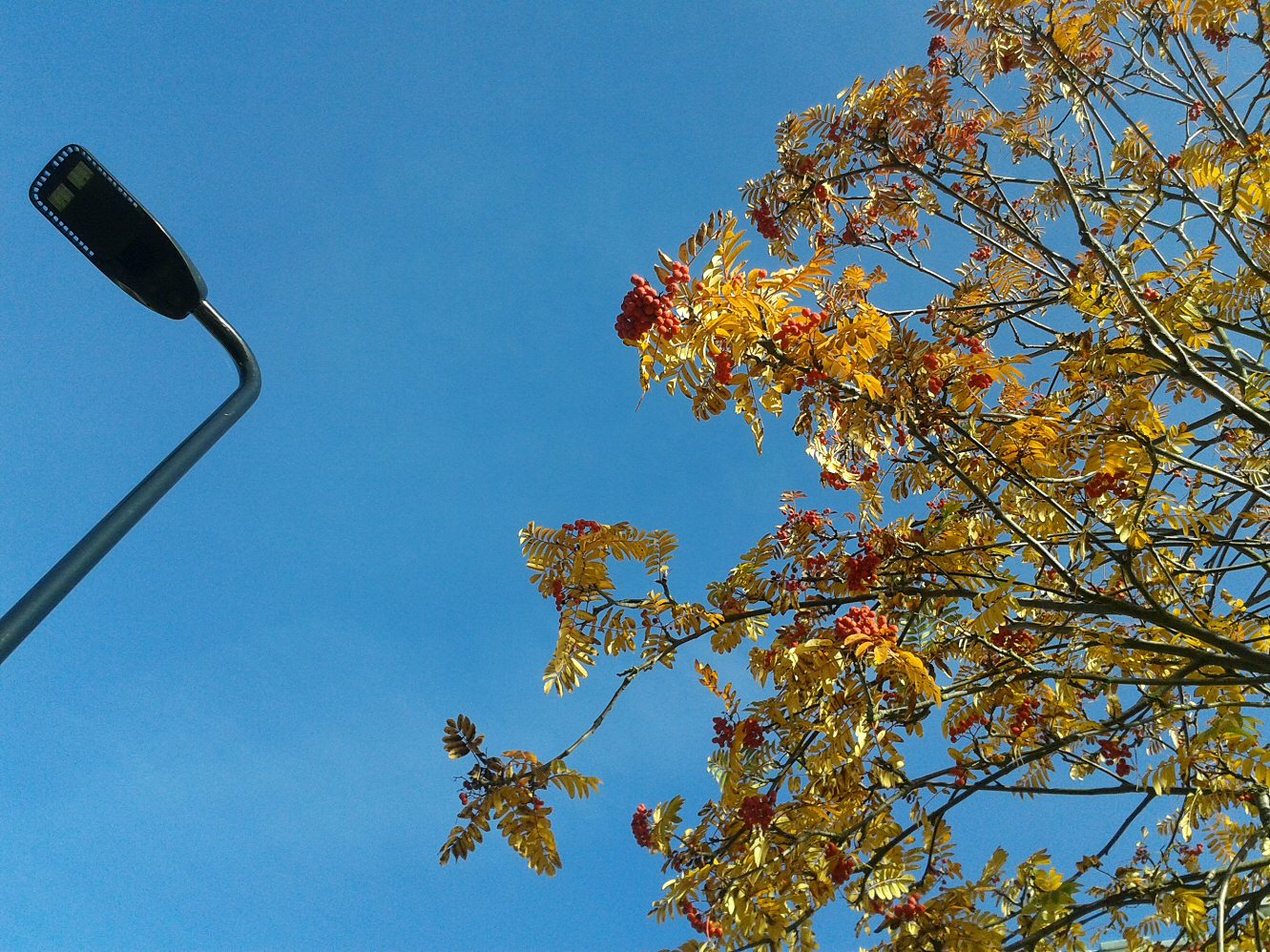
Rowan (Mountain Ash) in full fruit
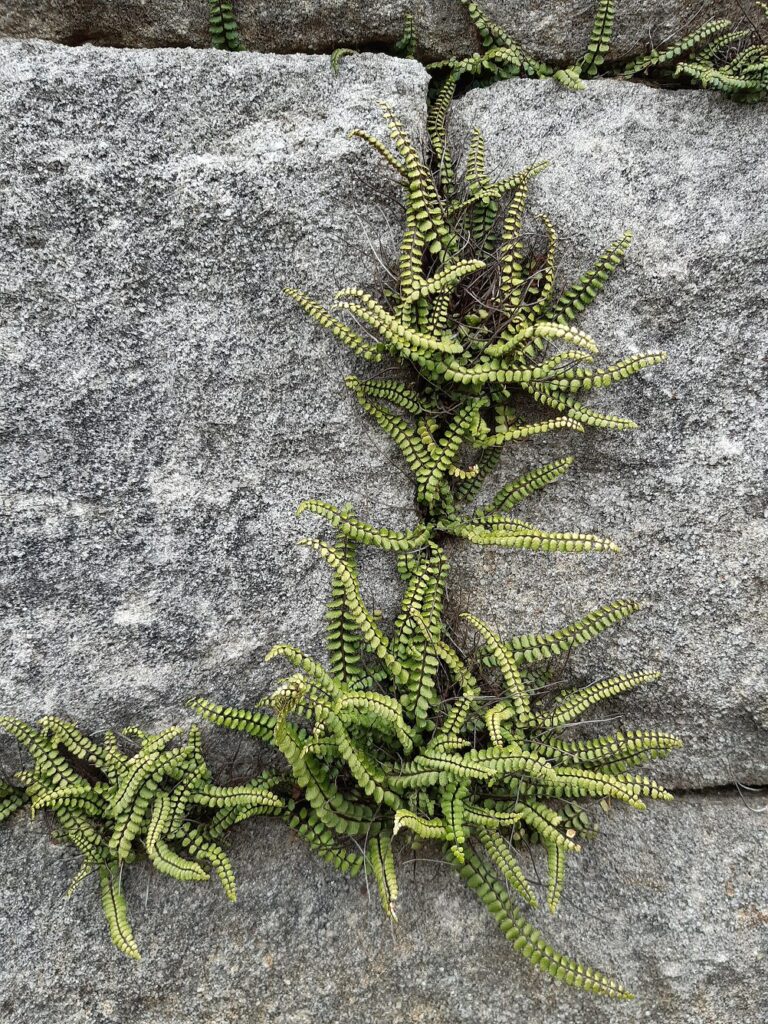
Maidenhair Spleenwort, Asplenium trichomanes, a beautiful small fern of rocks and walls
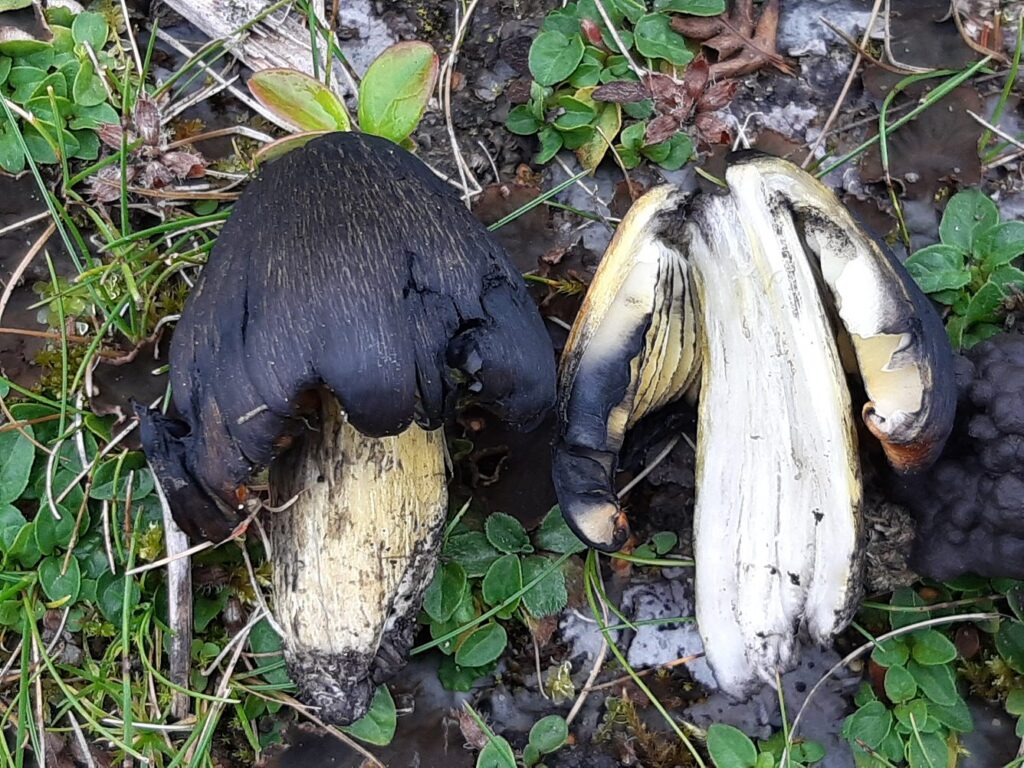
This seems to be a Dapperling; I’d have said it was Lepiota hystrix except that that’s a woodland species. Suggestions?
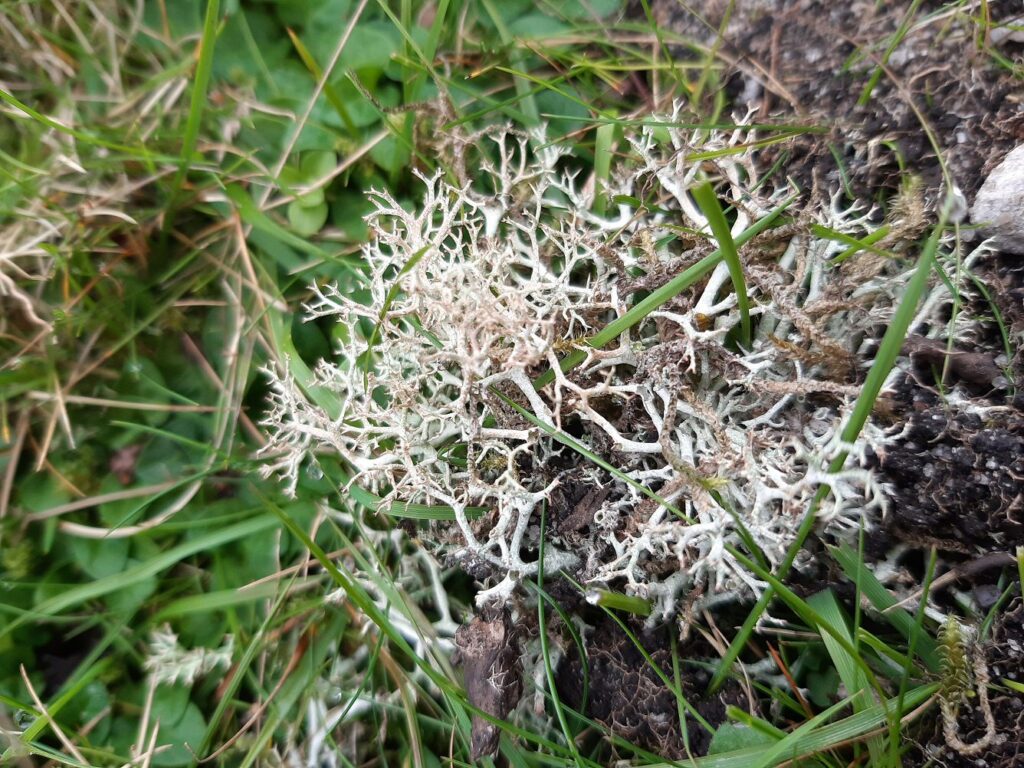
One of the Cladonia ground-living lichens of the ‘reindeer moss’ group.
This one might be C. portentosa, which likes acid moorland.
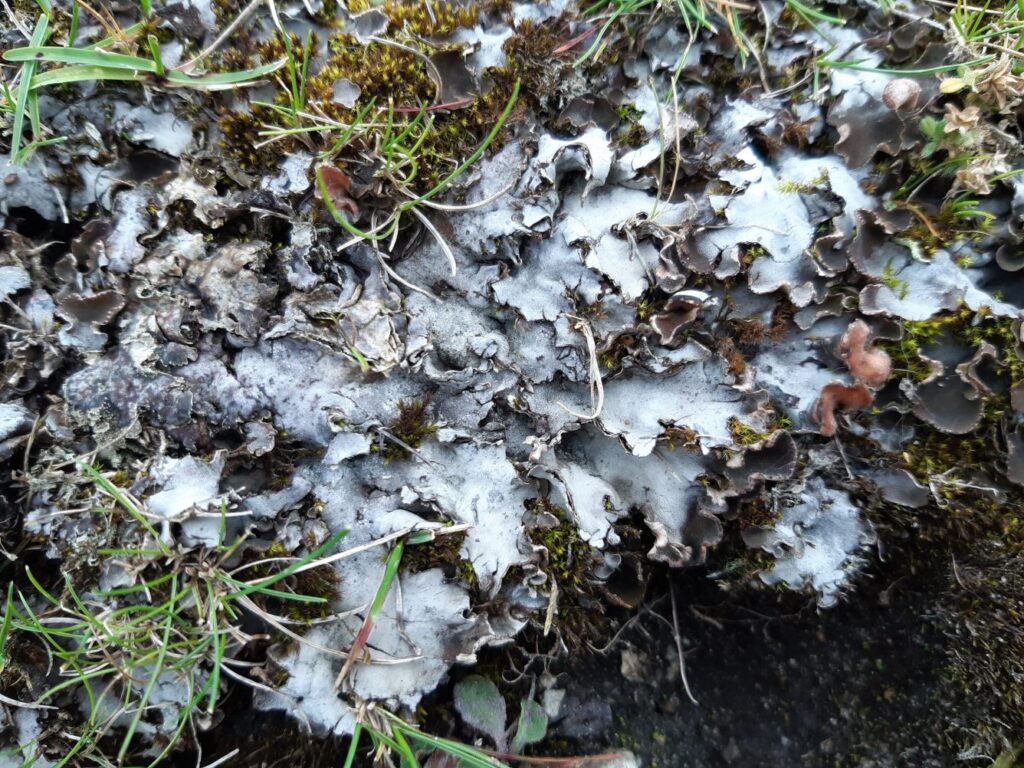
Dog Lichen, Peltigera canina, a lichen of sandy moorland.
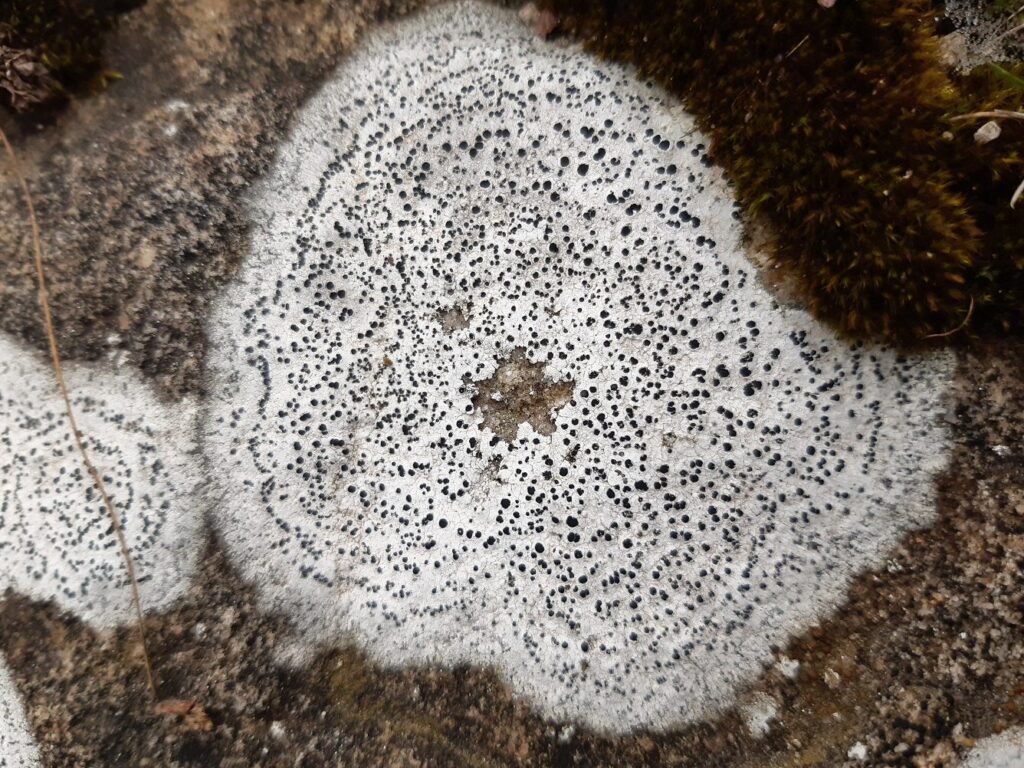
A handsome crustose lichen on rock, cf. Ochrolechia.
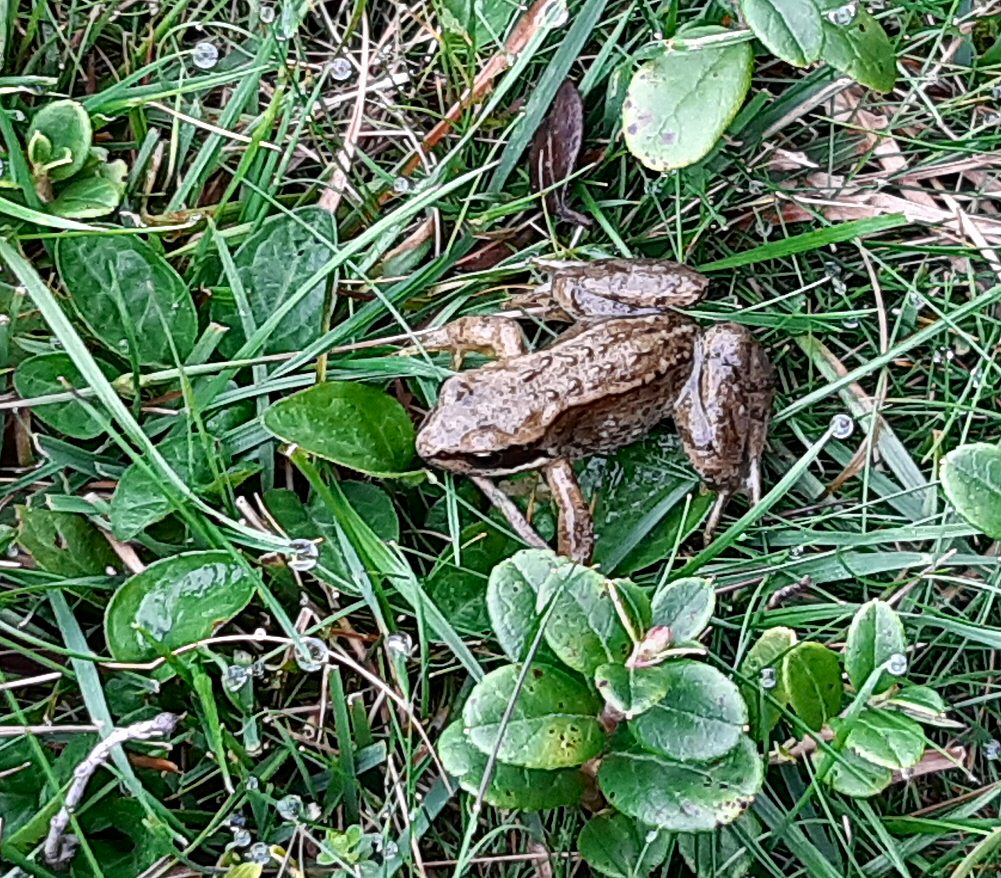
Common Frog among the tiny cowberry bushes

Sussex Wildlife

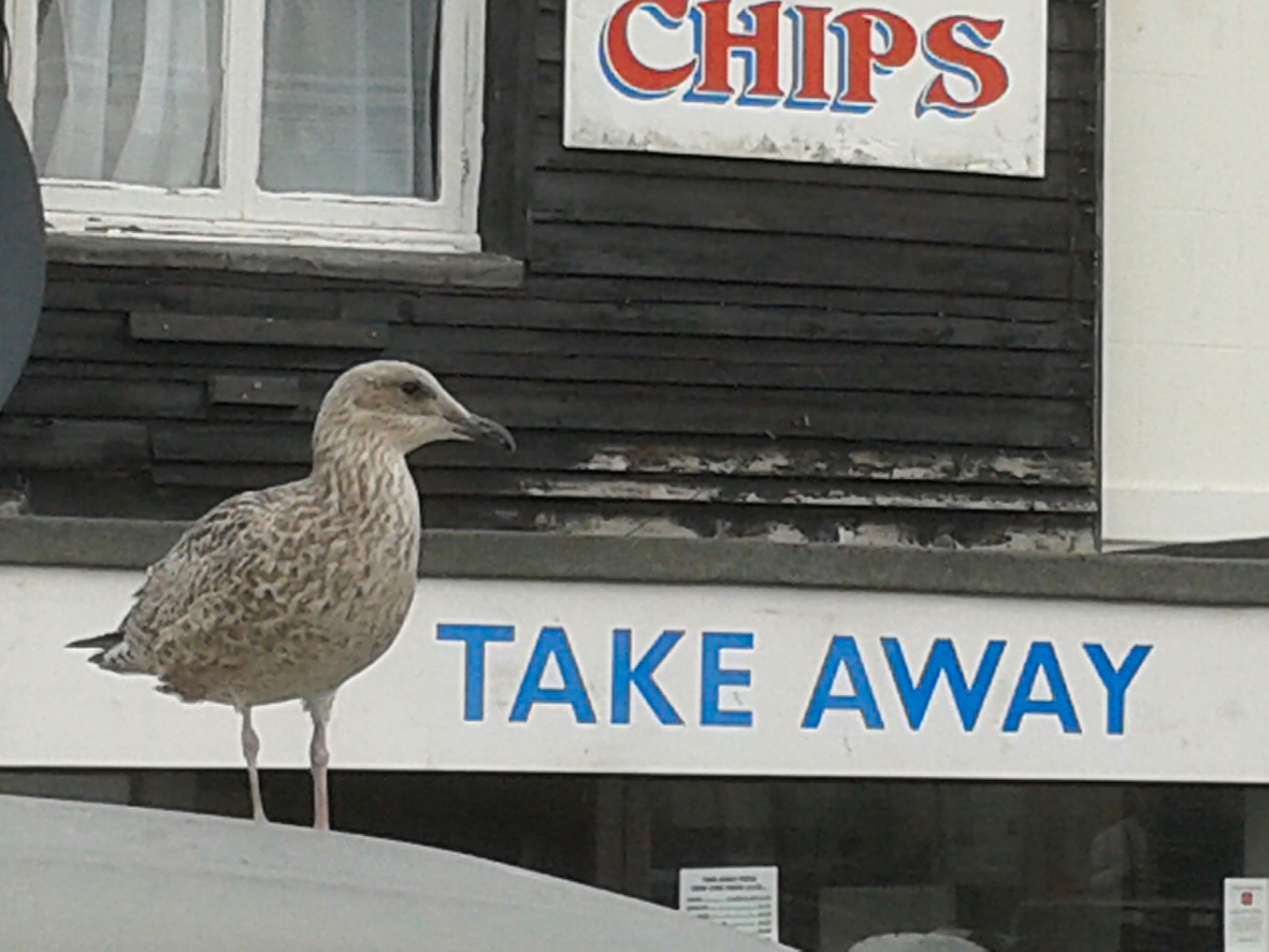
Fish and Chips to Take Away, with watchful Herring Gull Customer, Hastings

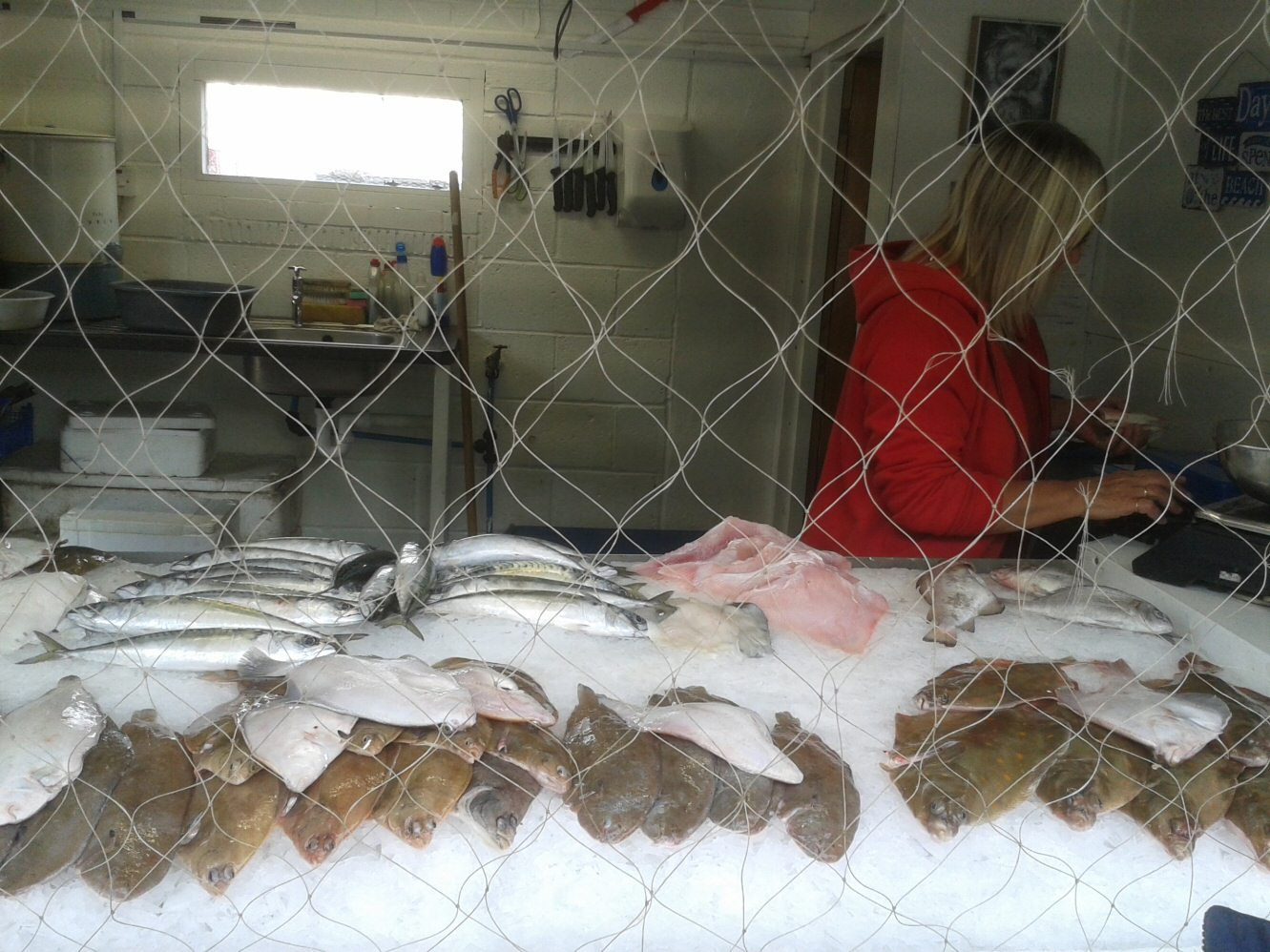
Fish Stall, netted against Herring Gulls, Hastings. The stallholder reported that they had lost a Dover Sole and a Plaice to gulls in the past few days, so the netting is anything but purely decorative. Customers choose through the netting, and then pay and collect through the quickly closed door!

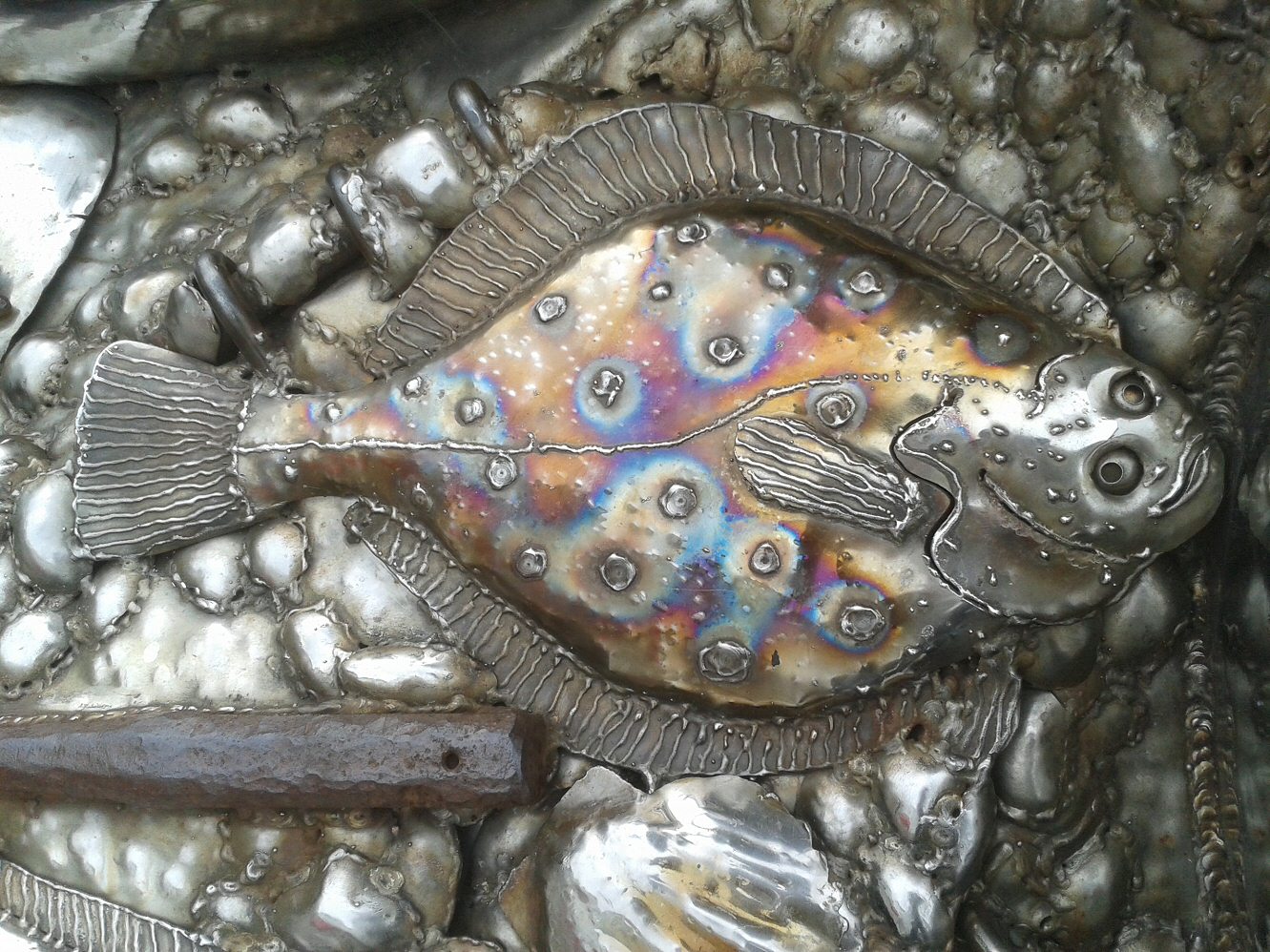
A fine Plaice … stainless steel sculpture, Hastings. The rainbow coloration is created by the heat of welding the spots on to the skin, forming thin layers of oxide which interfere with light (structural coloration).

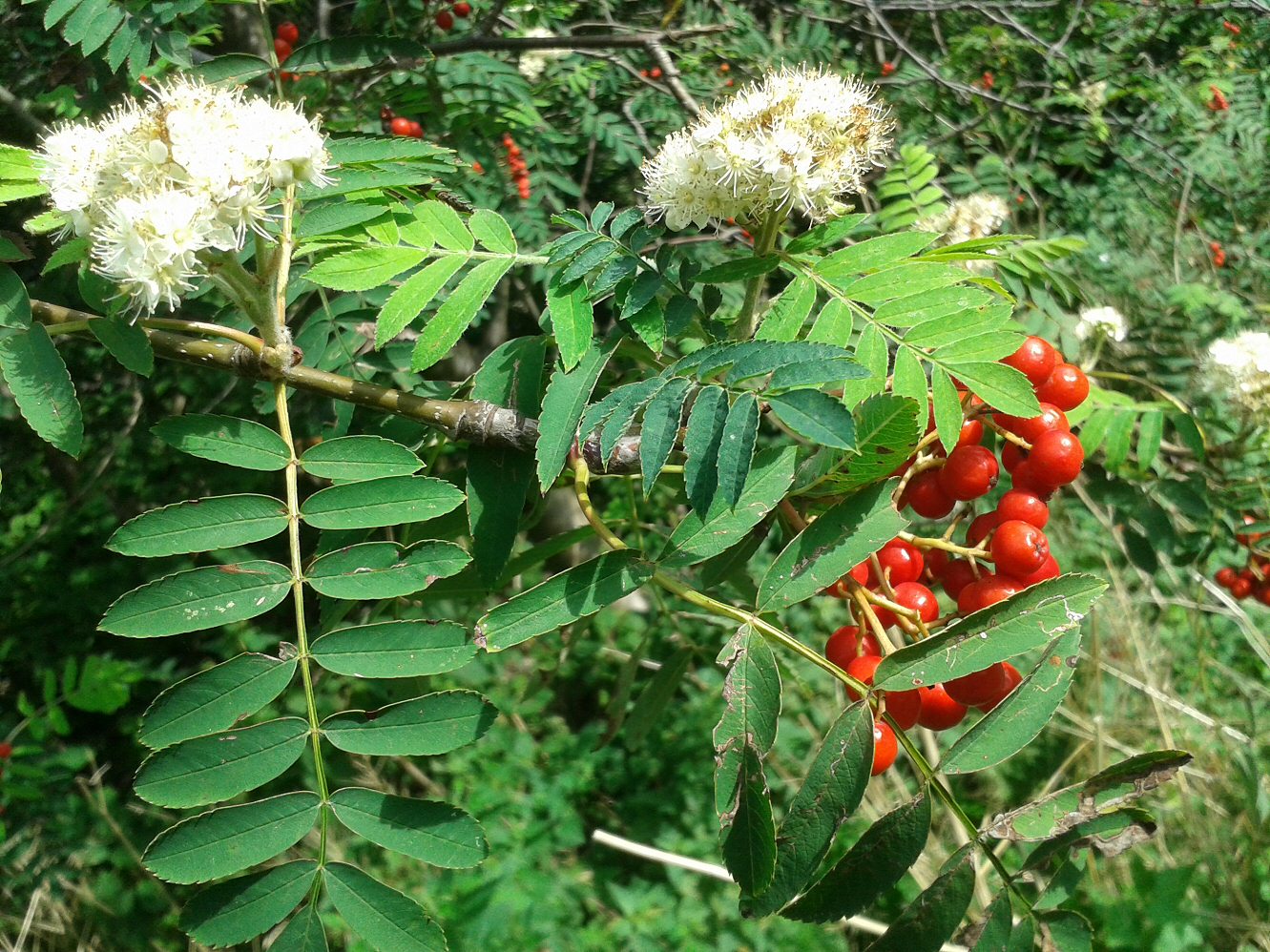
Rowan in leaf, flower and fruit, Wakehurst Place

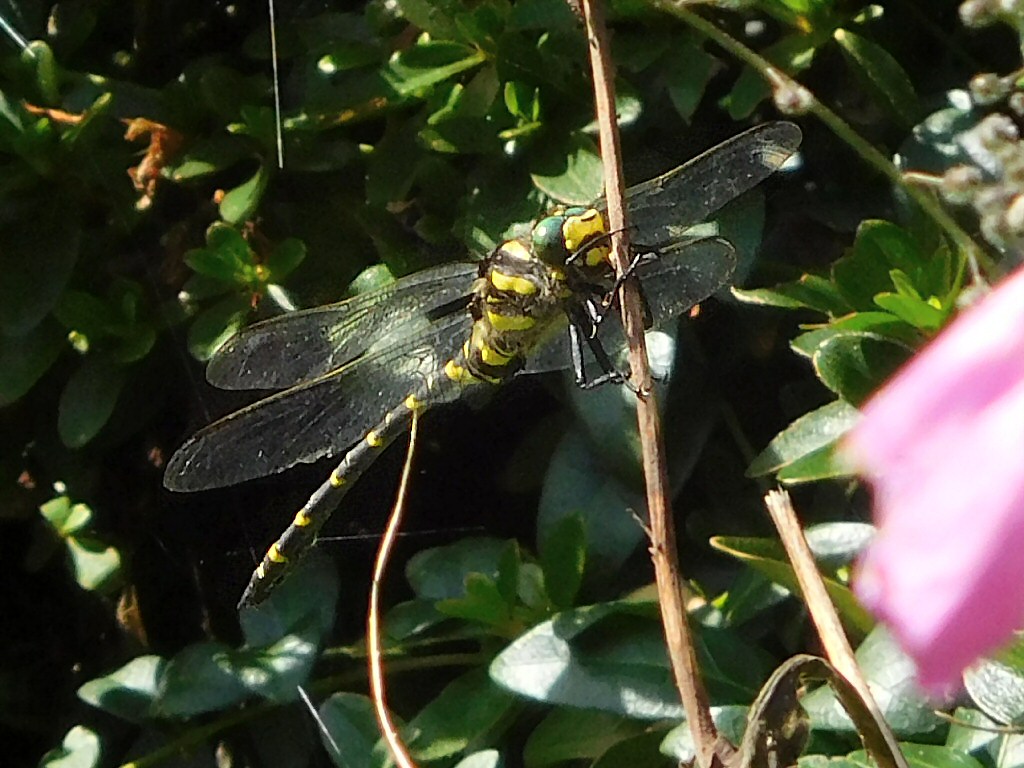
Golden-Ringed Dragonfly, Wakehurst Place

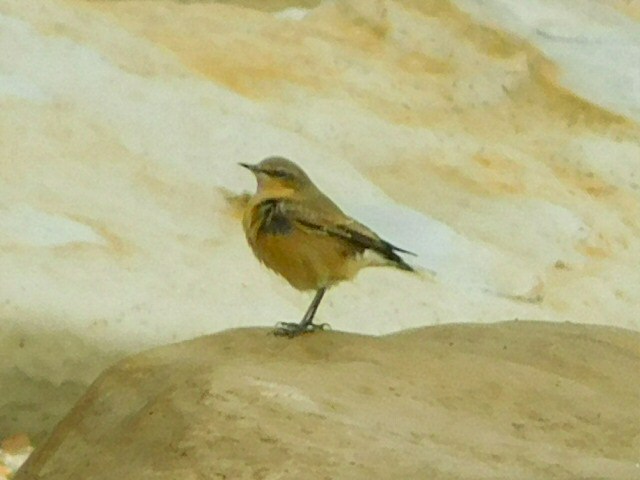
Wheatear, below Pett cliffs, which are inhabited by Fulmars; the gulls were accompanied by noisy Oystercatchers, and a Little Egret

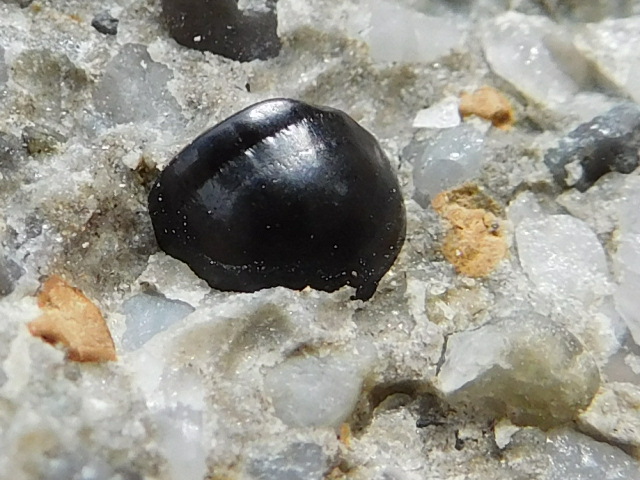
Tiny hemispherical Jurassic shark tooth, Pett cliffs

Not illustrated are the family of three Spotted Flycatchers and the Redstart surprisingly seen in a Sussex hedge! At this time of year they could easily be migrants from somewhere further north, of course. The Peregrine falcon that had a go at a Rook, however, was probably a local.

Opening up the Mangrove Swamp

Today, down at the nature reserve, it was a day for work and weather rather than natural history. A vigorous Low was working its way across the top of Britain, with a brisk, freshening southwesterly wind bringing little showers across town. The water table had risen appreciably in two days, and I was glad of my gumboots, as I had decided it was time to do something about the overgrown ‘Mangrove Swamp’ in the middle of the reserve.

I should explain at once that we don’t have any coral reefs or fringing banks of Rhizophora mangroves here in Chiswick: that would be a fine thing. What we do have is a wet hollow – probably once a tributary of the long-gone Bollo Brook, one of London’s lost rivers – with attractive carr vegetation. Carr means wet woodland: we have willow of various species (probably mainly crack willow), birch and an assortment of other trees in the drier places – sycamore, hazel, holly, rowan, cherry, oak. But down in the Mangrove Swamp the willows predominate, their feet in the water for half the year. They grow rapidly, and then fall over; or branches get shaded out and die. The result, quite soon, is a tangle of lodged trunks and dead wood that cuts off the view and fills up the hollow, part of the natural succession, but tending to make the reserve less diverse (I think) and less interesting to look at. (I’m reflecting on whether one should be “managing” a “nature reserve” at all, given what George Monbiot says in Feral – he’s all for leaving nature to itself – but in a small reserve in town, management does seem necessary. Perhaps it’s a nature garden or something, not really a reserve at all.)

I cleared a mass of broken or cut dead wood from the wet floor, putting it to one side – it will still be available for fungi and beetles to consume. I then cut several long, heavy willow branches, mostly dead or dying, that had fallen most of the way to the ground across the mangrove swamp. A couple of hours hard work (I completely forgot about the brisk wind) had the main area cleared. We then set to and cleared what seemed to be a dark shrubbery near the boardwalk, but which was actually a large fallen tree shrouded in a six-foot thick mass of ivy. It was satisfying to get it clear; the tree trunk will need chainsawing, however.

After a well-deserved cup of tea, I pruned the hedge that was overhanging the street, pulling down a mass of strong twining hops that had scrambled all over the hawthorn. Blood-red haws rained down but there were plenty left when I had finished. Around the reserve, the rowans were in fine fruit, with some roses covered in scarlet hips.