Category Archives: Love of Nature

Meeting George Monbiot: Rewilding Britain

George Monbiot at Kew
George Monbiot at Kew: Inspirational

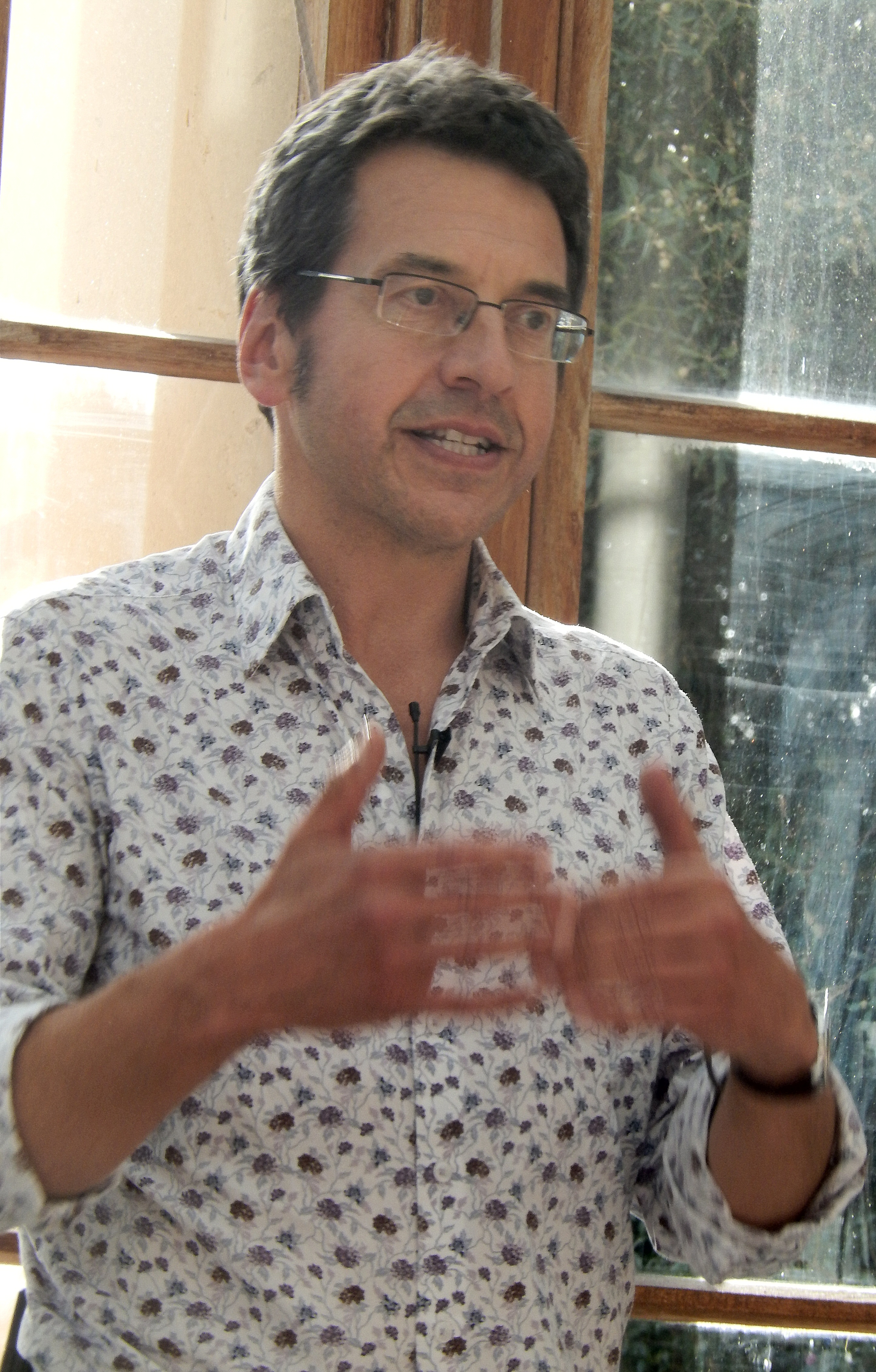
Yesterday I went along to Kew Gardens’ new book festival to hear George Monbiot, the author of Feral: Rewilding the land, sea and human life (Penguin, 2014). He was genuinely inspirational.

We sat down in neat rows on elegantly stiff, lightly-made wooden chairs in the beautiful Nash Conservatory, the sun streaming right into our eyes; Monbiot’s first words were to apologise humorously for the rather bright lighting. The two large computer screens displayed the festival’s welcome screen, and stayed that way: Monbiot spoke without slides, and without notes. He was clear, sharp, warm, and where appropriate really quite entertainingly rude about government policy.

Britain’s “trashed” uplands

He told us how his excitement at moving to the Cambrian Mountains turned to puzzlement and then despair as he realized there were no trees: no birds: no butterflies: no bees: no flowers except Tormentil, indicator of poor soil. He directly and simply told us complicated stuff, like the Structural Heterogeneity of the rainforest, a whole architecture of ecosystems with multiple niches for species of every description. He reminded us that Britain has less tree cover than almost anywhere else in Europe – 12% against an average of 37%. His mountains had been shagged to death by sheep, ruined by the white plague; other mountains (Scotland, say) had been just as well trashed by management for shooting grouse or red deer. Britain had the second biggest landholdings of any country – after Brazil. Why? Because farm subsidies reward the largest landholders, the oil sheikhs and Russian oligarchs, the world’s luckiest landlords, paid for doing nothing but keeping the land in “agricultural condition”. And that meant? Keeping it free of what the bureaucrats call “permanent ineligible features”, in other words, trees. Britain’s mountains are wet deserts, profitable only to the rich. And they are paid to keep the land species-poor.

Even the nature reserves have “key indicator species” (Monbiot was really warming to his theme now, putting the boot in) like Red Grouse, Ring Ouzel, Skylark, Meadow Pipit: the few birds that thrive in bare open moorland (and there were hardly any of them, he said). Montgomeryshire’s claimed “really wild” jewel in the crown reserve was “identical” to the rest of the cold wet desert. It, like the rest of it, was maintained by a programme of cutting, burning and grazing to prevent trees and bushes from taking over. The “undesirable species”? They were, erm, native trees like Hawthorn and Birch, the pioneering colonisers that pave the way for all the trees of the forest, all the way up to, um, the beautiful natural primary forest of the Wildwood, complete with glorious epiphytic ferns like Polypody, great trailing beards of lichen, all the mosses and liverworts and flowers and invertebrates and beasts of every size that you’d find in a rainforest.  It’s a circular argument: you need grazing to maintain “favourable condition”; and that is measured by indicator species which are the ones found on bare moorland; which you’ve defined as what favourable condition is. Only, that isn’t what the Eurocrats actually asked for: they specified “favourable ecological situation”, which might mean … wildwood. Quite the opposite.

Protecting the ranchers from the rainforest

Now for the sting: if the ranchers of Brazil start a program of cutting, burning and grazing to destroy the rainforest, leaving bare meadows for their cattle, there’s an international outcry. But in Britain, it’s the required management regime for our best nature reserves! We’re protecting the ranchers from the rainforest. Why is mid-Wales bare and open? Because for 200 years it was devastated by lead mining; and after that, grazed to nothing by sheep. The white death only need to be present at one sheep per ten Hectares (hardly any, basically) to kill all the new tree seedlings: young saplings are delicious and nutritious, and sheep greedily and selectively seek them out.

Well, I’m not going to try to recap the whole talk, let alone the whole book, which I’ve already reviewed for you. Rewilding, Monbiot says with simple and direct plausibility, is informed by Remembering. And our memories are terribly short. Back in the 18th Century, Oliver Goldsmith described the massive shoals of Herring in our waters; harried by enormous numbers of Tuna, Porbeagle, Sperm Whale, Fin Whale. Yes, there was in the past few centuries, recorded by careful scholarly intellectuals, a thriving Tuna fishery at Scarborough. Not the Tonnara in Sicily, now defunct; not the Tuna fishery of Monterey Bay with its Cannery Row, now a marvellous Aquarium (I have the T-shirt to prove it); but right here. Like our coast-to-coast temperate rainforest, it’s practically all gone.

Trophic cascades

BUT… we can have it back! “Amazing things can happen”, said Monbiot. There are Trophic Cascades, life pouring down from the top in an ecosystem. How? The classic example is from America’s Yellowstone National Park. The wolves were removed in the 1920s to “improve” on nature, allowing more deer (and better hunting). Only, it didn’t work out like that. The park, deprived of the wolf, became steadily poorer in wildlife. Then in 1995, after lengthy argument (very lengthy argument, in fact), the wolf was brought back in small numbers.

The effect was dramatic. Within six years, the trees were FIVE TIMES taller. The wolves had scattered the deer from their grazing haunts down by the rivers. Saplings sprouted. Trees shot up. Beavers felled trees to make dams and lakes. Waterside plants flourished. Fish, invertebrates, amphibians, reptiles and muskrats appeared all over. The wolves killed coyotes. Small animals appeared all over. The trees stabilised the banks of the rivers. The rivers meandered less; erosion patterns altered. Bison multiplied among the larger trees. Fruiting shrubs blossomed and bore berries; bears ate quantities of them, and fish. The wolves changed the landforms, planted trees, made flowers bloom. Everyone, including professional ecologists, was astonished.

Rewilding Britain

What could we have here? Getting the moose, bison, bear and wolf back may take some time here in tightly-buttoned Britain. Elsewhere in Europe, wolverines are coming back from the far north; millions of beavers are making dams in dozens of countries; lynx are being reintroduced with minimal fuss. Everyone except us thinks it’s NORMAL. Everyone except the British governing elite (and their landowning friends and relatives) wants to see beavers and wild boar in our countryside: lynx, too.

Can we have wildlife and people? Sure.

Can we have wildlife and subsidies for grouse moors and a “stupid” Common Agricultural Policy? No. Even the supposedly “green” part of the CAP is insane – we pay 55 billion to farmers to do nothing with the land (except destroying trees), then we pay them a bit more to put a tiny bit of wildlife back on a tiny part of it: and even that part is basically worse than useless.

Conservation sites have to be resilient, argues Monbiot, self-willed, running nature’s own processes, if they are to survive the shocks that are coming. All we have to do is to let nature get on with it.
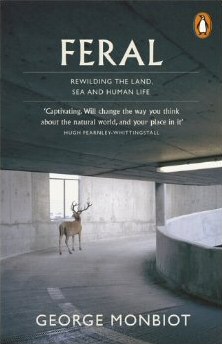
Feral by George Monbiot
Hope

At the end we all trooped to a table where Monbiot signed our copies of Feral (here’s my book review), in my case a clean but pretty well-thumbed copy. He wrote “To Ian, with hope, George Monbiot”, and I went home in the sunshine thinking, yes, with hope: “conservation” sounds worthy and dull, like aunties with conservatories in their garden, or conservative opinions, or carefully conserving dusty artefacts against moth and museum beetle. But hope: hope that Britain will gain new and better kinds of nature reserve, full of deer, and beaver, and wild boar, and lynx, a sparkle of excitement at glimpsing what the wildwood was really like.
Indian Summer on Thursley Common

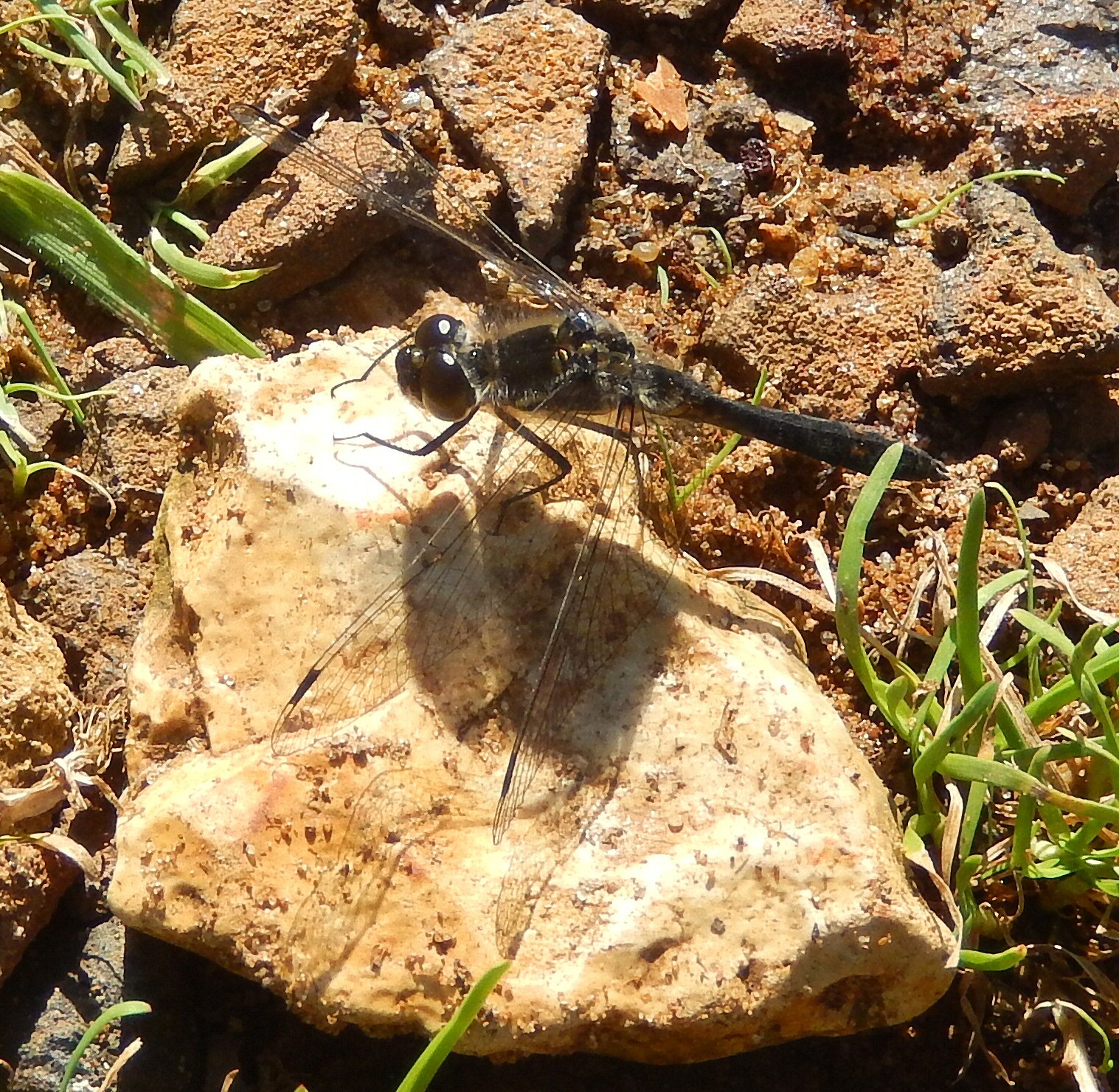
A (very) Black Darter perched on a stone

A flock of some fifty Swallows twittered high above the sparkling blue lake among the bog pools. Dragonflies – the occasional Emperor, plenty of small red Common Darters and tiny Black Darters, some Migrant Hawkers – dashed about or sunned themselves on the boardwalks. A pair of Hobbies, those dashing, Swift-winged falcons, soared and watched the Swallows cunningly, waiting for a careless moment. One of the Hobbies swooped down, raced low, agile, among the reeds, up and switchback over a dead tree to snatch a dragonfly on the wing, powered right across the wide bog all the way to the pinewoods. Three pairs of Common Darters in cop, the males leading the females, their claspers about their females’ necks, flew in strict formation like so many Spitfires. A Hobby, high above the bog, accelerated in a long straight shallow dive, for all the world like a Junkers 88 bomber taking careful aim, racing down for a hundred yards at incredible speed to grab a dragonfly: it must have seen its prey all that distance away.

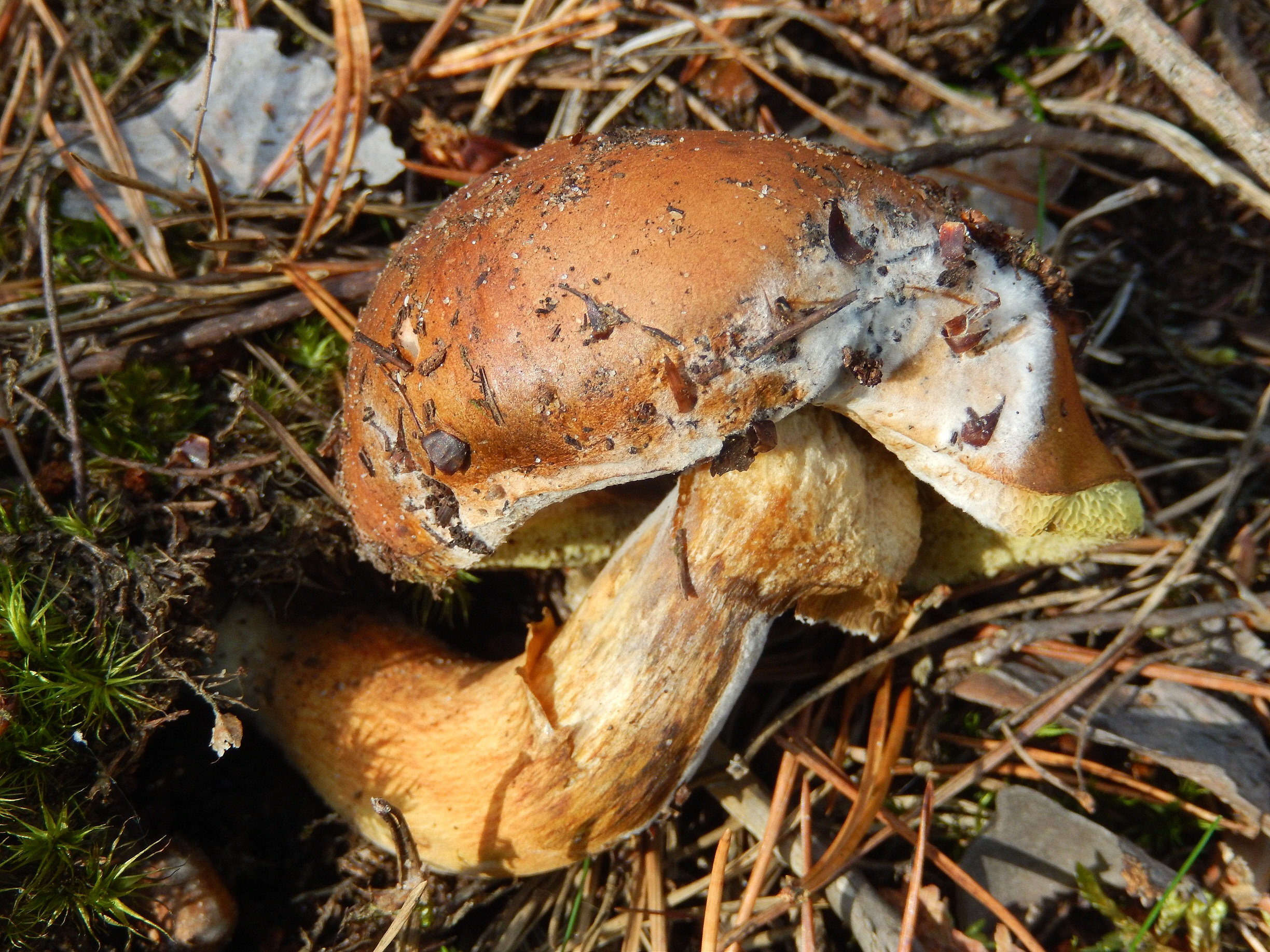
Birch Bog Bolete Leccinum rigidipes

Clusters of the light brown Birch Bog Bolete – yes, it grows under Birches in Sphagnum bogs – are dotted about, their large squarish pores quite unlike the little round holes of the true Cep. Phillips says they’re edible but not worthwhile. This isn’t stopping a pair of plump thirty-something Poles with a sports bag wandering along collecting them (National Nature Reserve? Really?). I greet them, establish their nationality, say my mother used to do the same in the Carpathians and that there aren’t many mushrooms here. The guy with the sports bag shows me a meagre haul of Birch Bog Boletes just about lining the bottom of his bag: he means, he hasn’t found much worth collecting. I try Natsional Natur Reservat and waggle my finger, we part smiling and he shuffles off sheepishly.

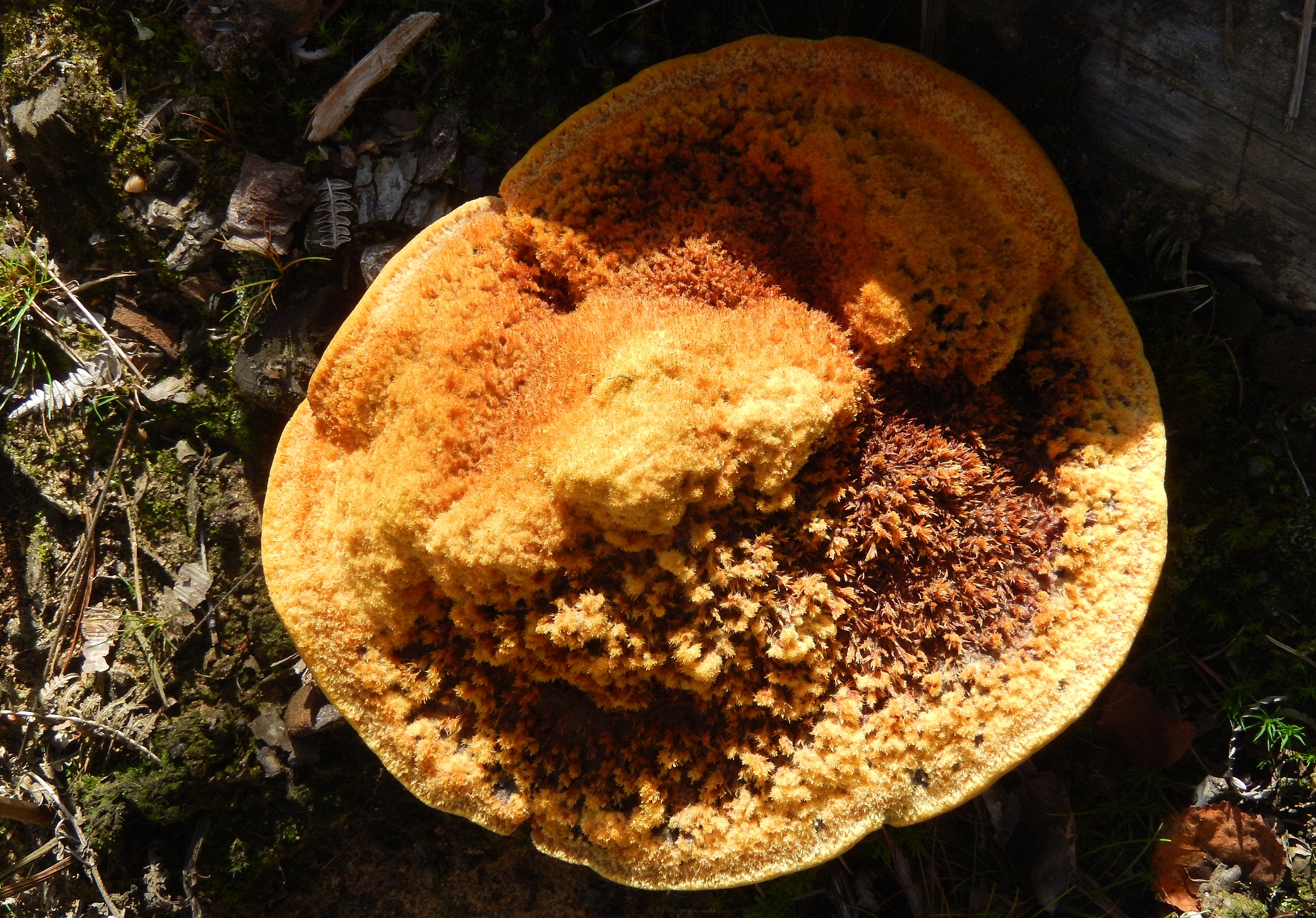
Phaeolus schweinitzii (giant polypore)

Under some Pine trees, a dead stump, killed by Phaeolus schweinitzii, three or four enormous dinner-plate sized yellow discs, thick and rough with orangey-brown branching tufts: they are overgrown Polypore bracket fungi, dangerous parasites of conifer tree roots. Nobody has given it an English name, which is a pity as the namers could really have fun with it: Yellow Pine Death? Giant Pine Polypore? A magnificent fungus, somewhat alarming if you’re a forester.

On the open sandy heath, some Ammophila sandwasps are still active, perching on the path. A few butterflies – a white, some Speckled Woods, probably a Red Admiral – are about; a very large brown butterfly with agile flight, dancing around a pine trunk and up high, is tantalisingly impossible to get binoculars on, was very probably a Fritillary, in which case it was likely the Silver-Washed Fritillary.

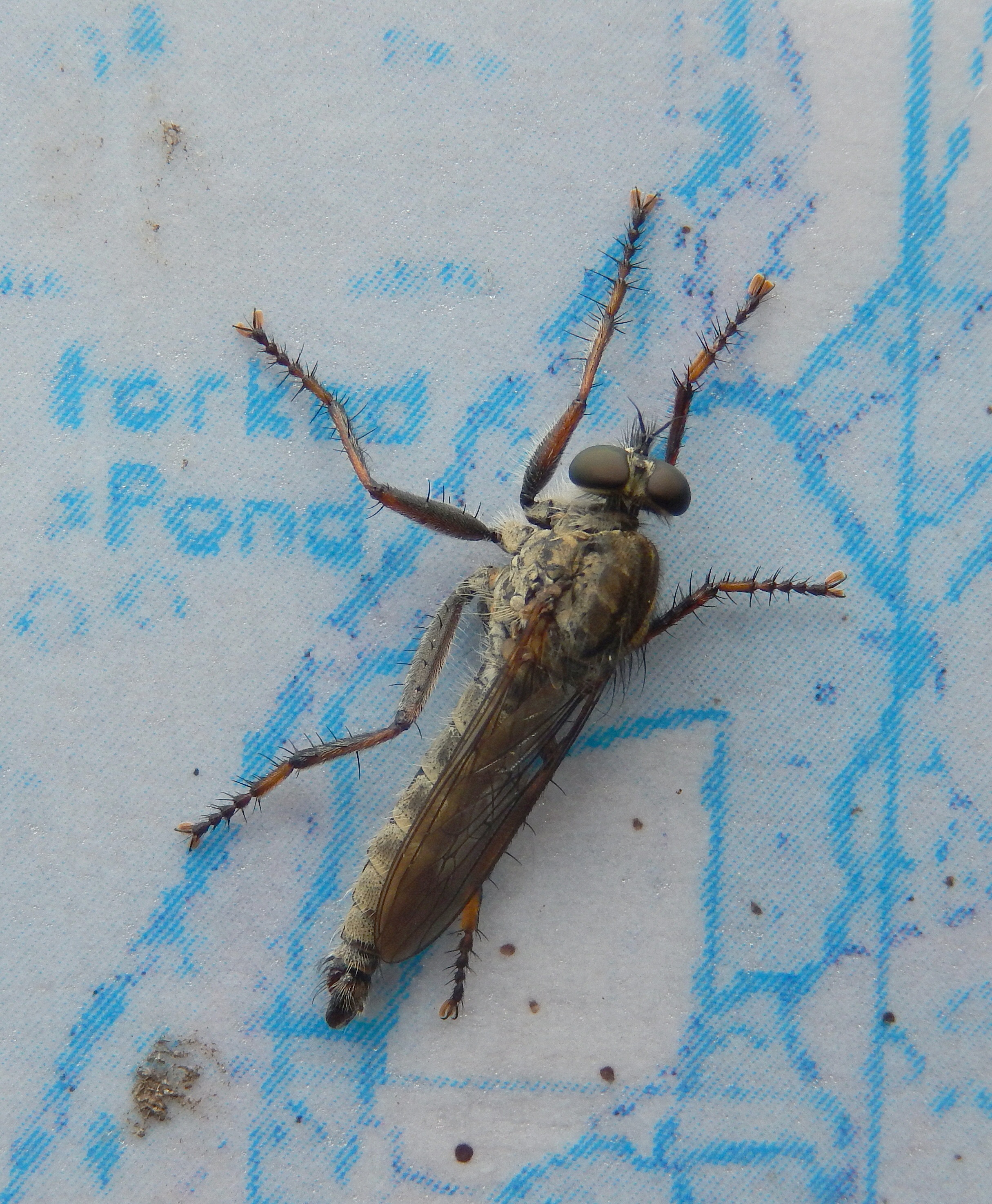
Robber Fly Dysmachus trigonus on Thursley map
Robber Fly Machimus atricapillus on Thursley map

A couple of mean Robber Flies perched on a rather bleached map of the common: they had as Shakespeare said “a lean and hungry look”. They have a tuft of stiff bristles below their antennae to keep their prey from striking them in the head. They wait on a perch – a signboard will do if there’s nothing better – until an unsuspecting fly comes past, then they sally into the air and grab it.

Birds, Bugs, Blooms in Bornholm (Denmark)

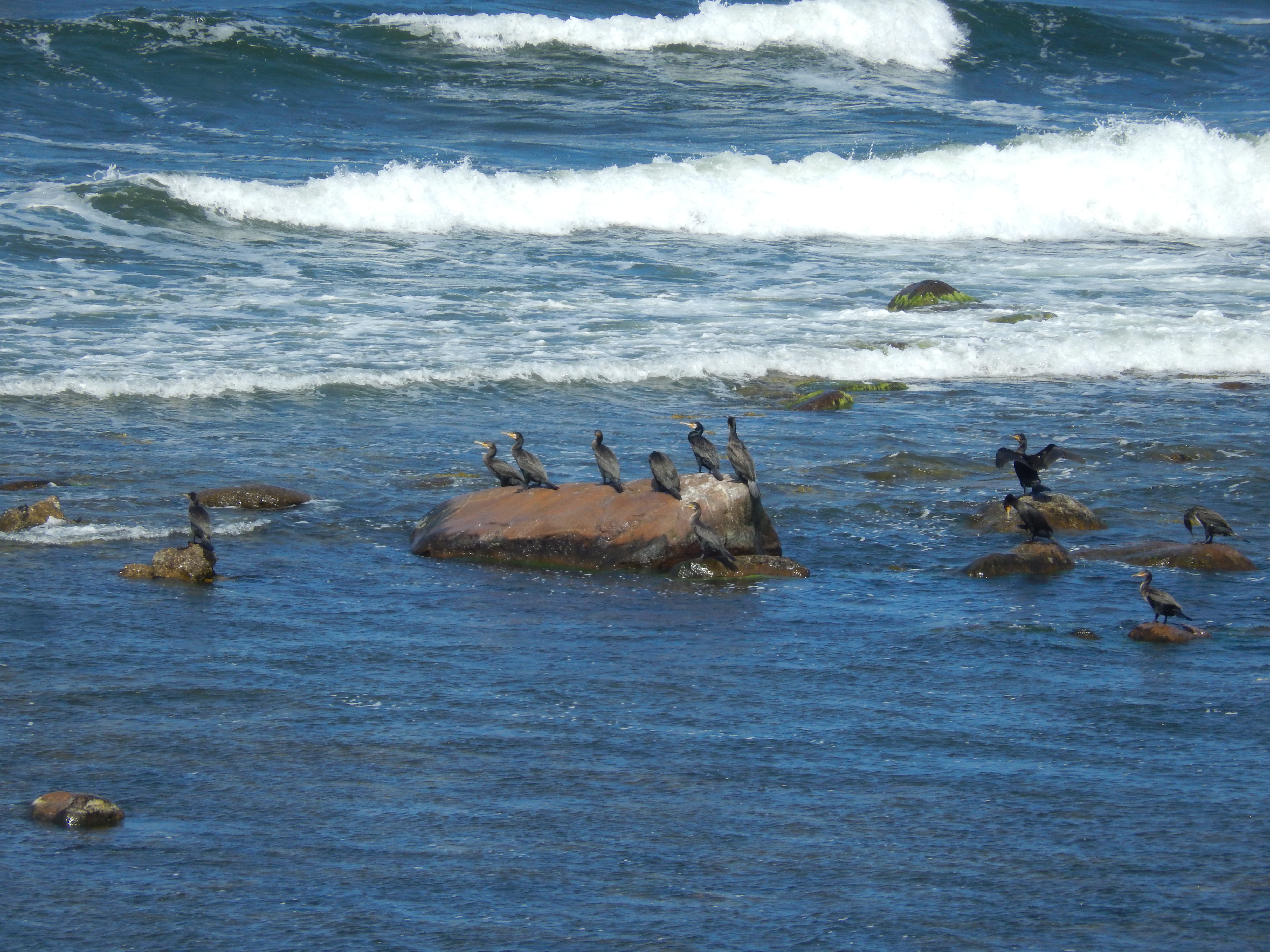
Cormorants basking off Hasle, Bornholm
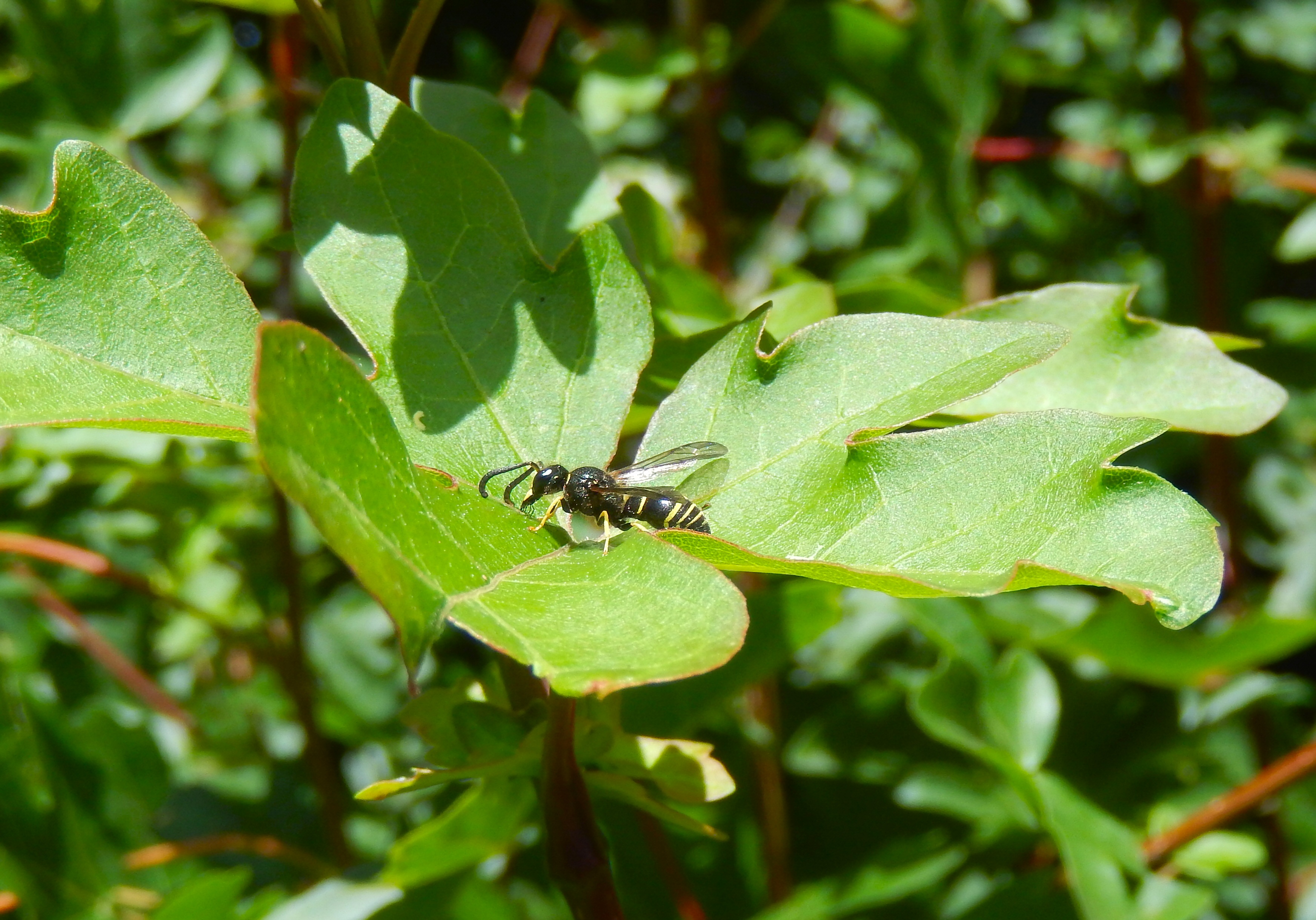
Mason Wasp Odynerus spinipes (Eumenidae) on aphid-sticky leaves
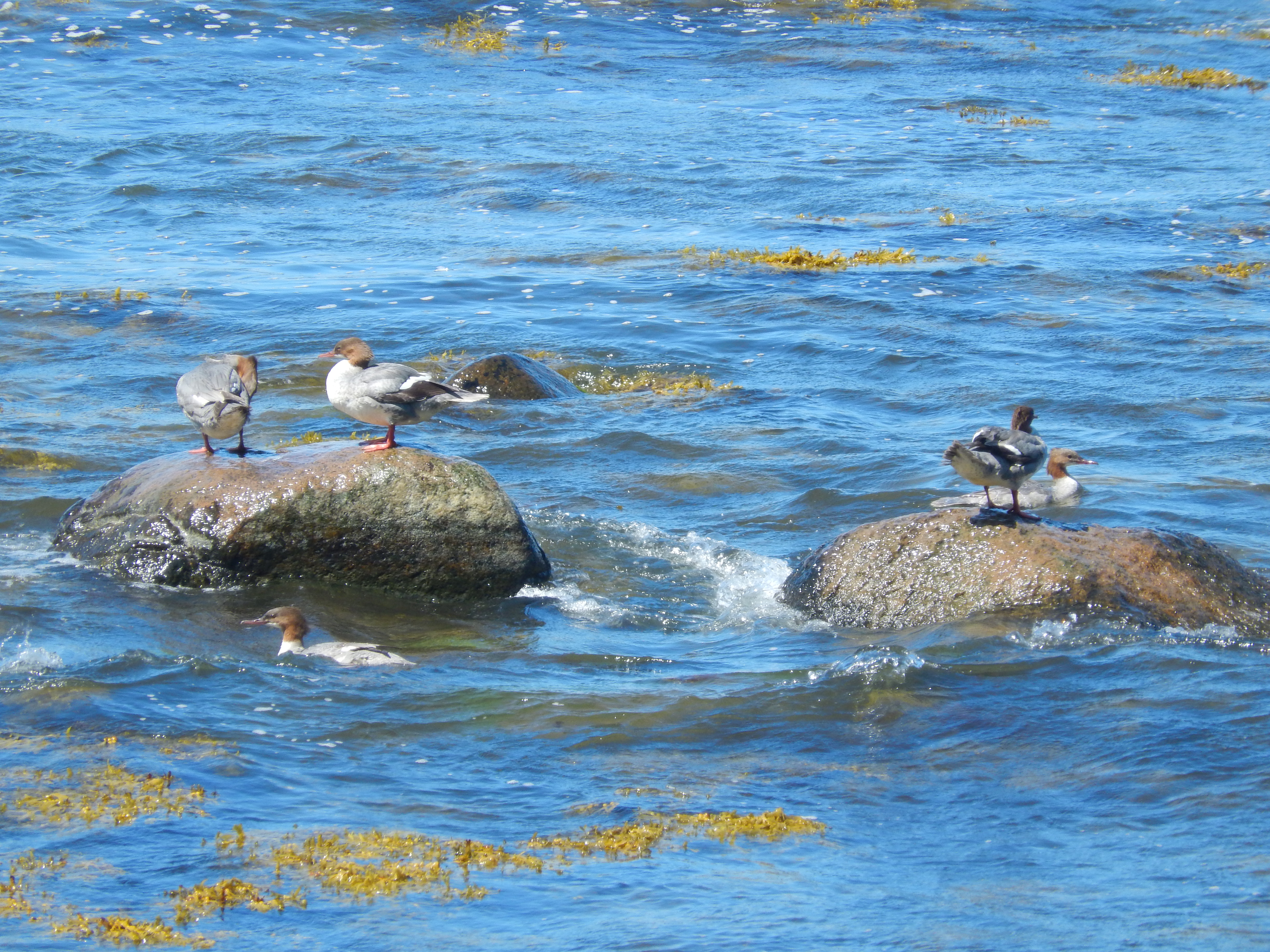
Goosanders in the Baltic sea
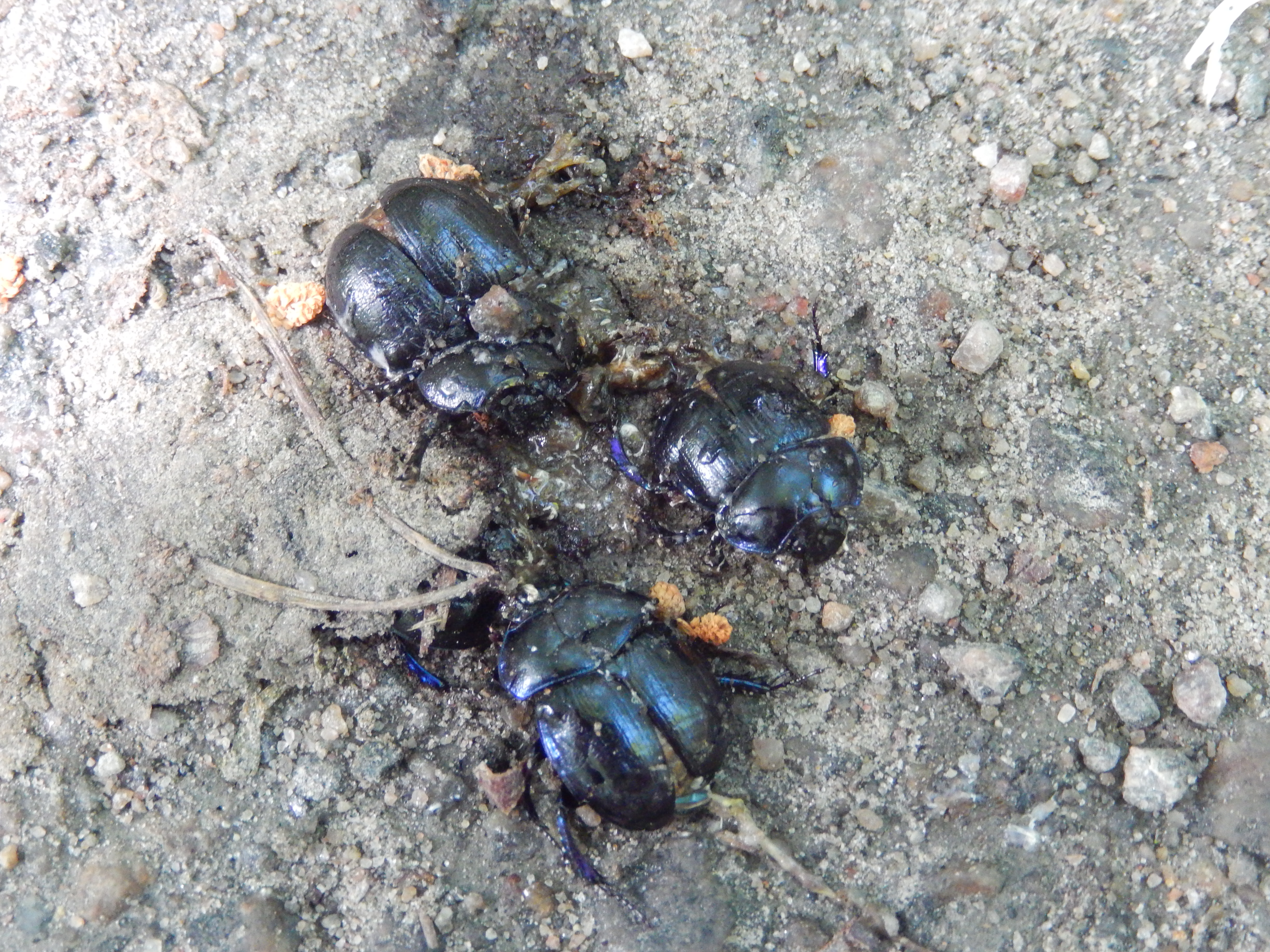
Three unlucky  Dor Beetles on cycle track
Three unlucky Dor Beetles on cycle track
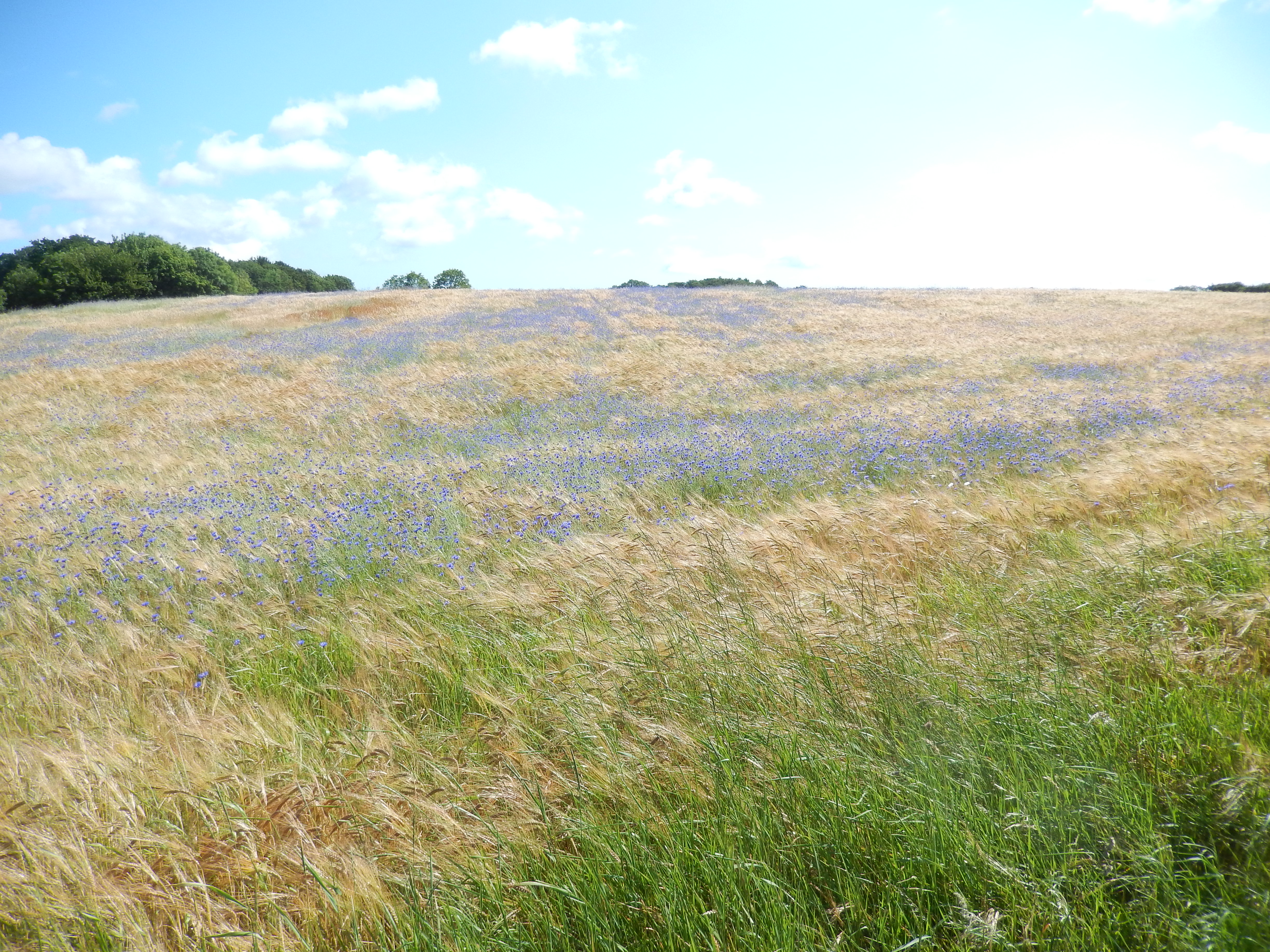
Blue! Cornflowers across a Cornfield

Bornholm is in some ways as Britain was half a century ago or more: there are still swathes of cornflowers and poppies, though many of the fields are plainly weed-free except for narrow margins. The sky over arable fields and set-aside is loud with the song of skylarks; the hedges are full of the cheerful little-bit-of-bread-and-no-CHEESE song of yellowhammers. Swallows race in numbers low over the corn; the towns are busy with house sparrows, swifts and house martins, the many handsome old houses and churches offering plentiful nesting places to suit all parties. The woods held good numbers of blackcap, with willow warblers in the more open areas, a chiffchaff or two, plenty of whitethroats in scattered bushes, a garden warbler or two.

Some things are simply modern, despite the unspoiled rural look of the island: butterflies seem to be few – red admirals, speckled woods, peacocks, small tortoiseshells, meadow browns, and what I think was a fritillary over a marsh-fringed lake – it was quite big and fairly pale, roughly like a dark green: perhaps it was a marsh fritillary, but I couldn’t stay to find out. It was somewhat windy all week, so perhaps there are many more species on windless days, but I rather doubt it (and wind does seem rather usual on the island).

Of course in many ways it is quite different. The presence of eider ducks and goosanders in numbers on the (brackish) Baltic Sea, along with the occasional mute swan and mallard (and a less surprising shelduck), is strikingly unfamiliar. The crows, as in Scotland, are a reminder that this is the North: handsome grey-mantled hooded crows instead of their all-black carrion crow cousins; and there are rooks in numbers all over, including in the villages, boldly scavenging.

Large Skipper and Ichneumon in Gunnersbury Triangle

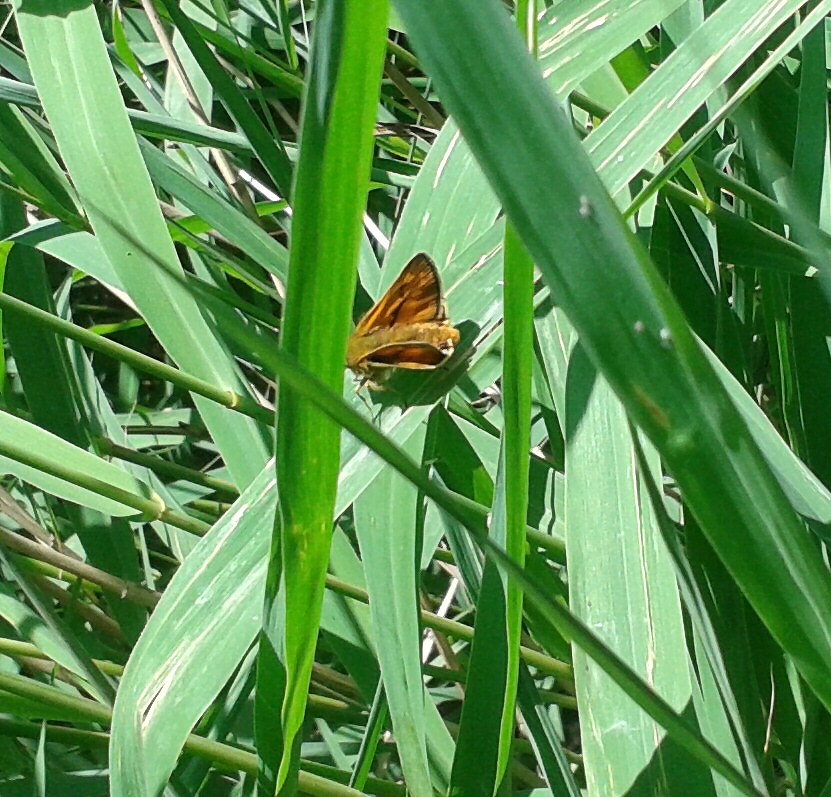
Down at the reserve today, the first Skipper of the year, basking on a reed by the pond (with Azure and Large Red Damselflies too). It must be a Large Skipper from its size and pattern: uncommon in the reserve.

Large Skipper on reeds by pond

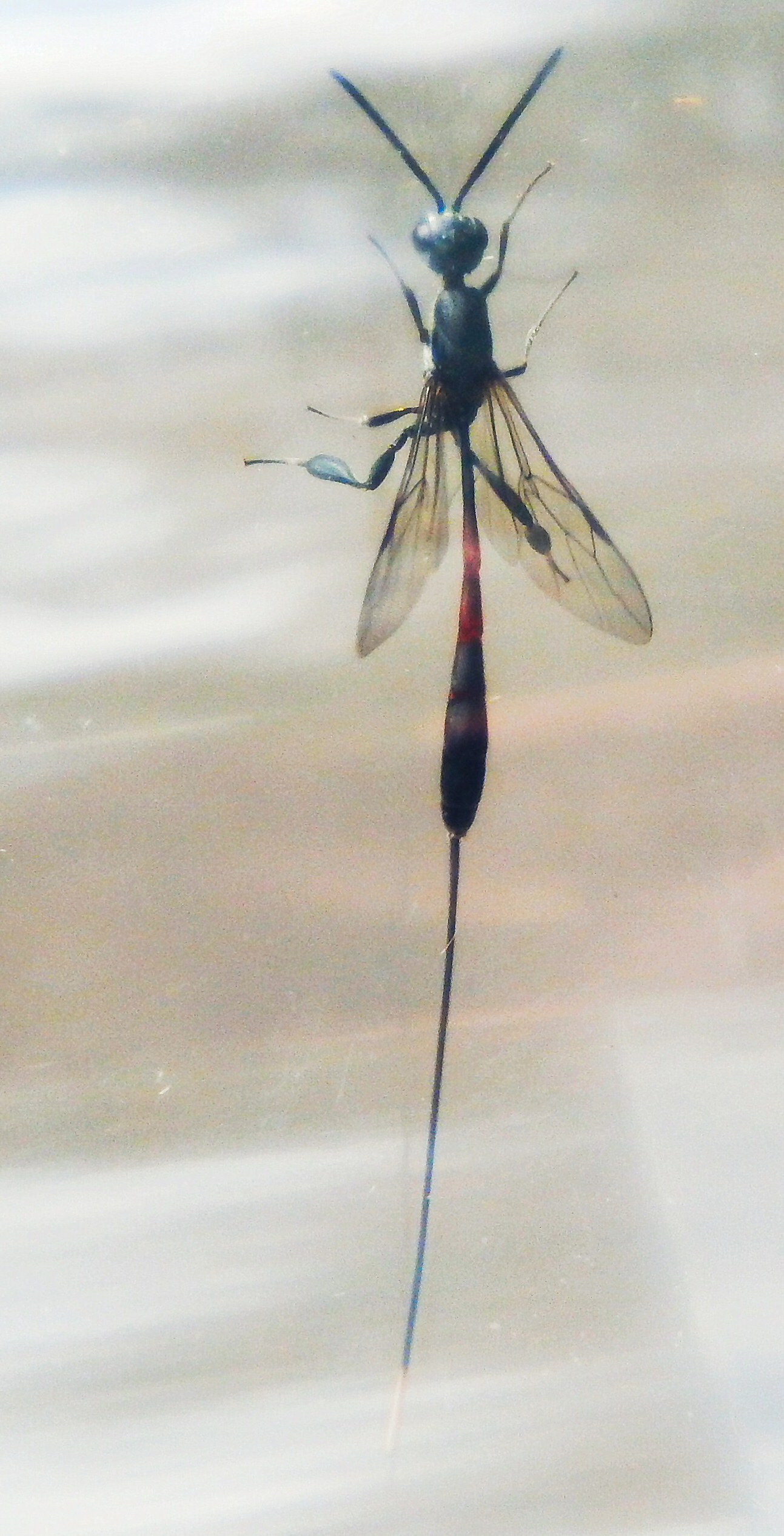
Up on the ramp, a Red Admiral; and this Ichneumon wasp, which looks very much like Gasteruption jaculator, a fine parasitoid with an ovipositor as long as her head, thorax and abdomen together.  She was inside the hut trying to escape through the window; she is black all over, except for the front of her abdomen which is red, and the tip of her ovipositor, which is white. Her wings are nearly transparent with a hint of brown.

Ichneumon wasp Gasteruption jaculator, probably
Ichneumon wasp Gasteruption jaculator

We spent the morning fixing path edgings – poles of elm, with handmade wooden pegs, sharpened to stakes. A foreign couple came along and asked if we were preparing for Vampires: perhaps they were from Transylvania, who knows.

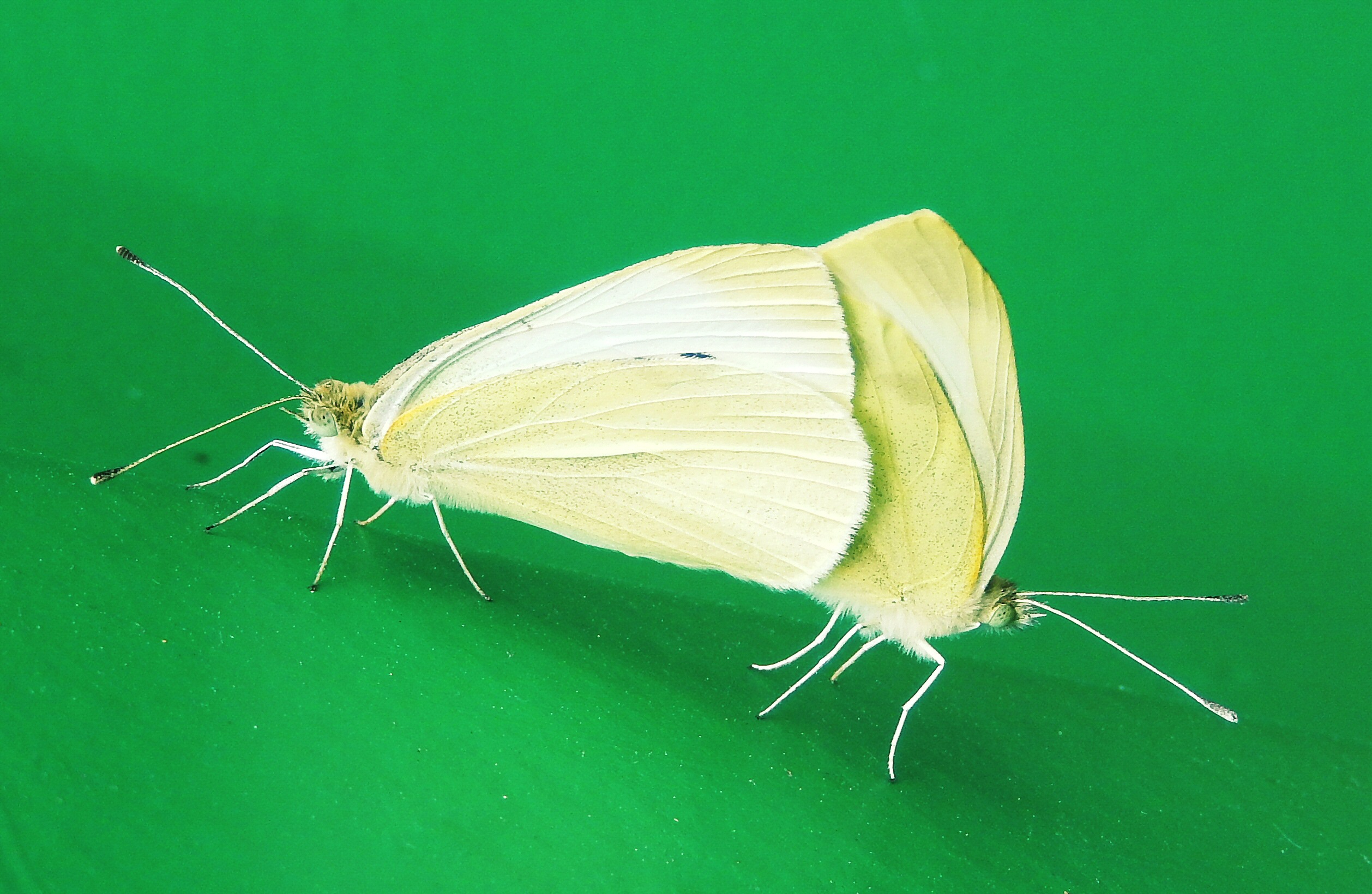
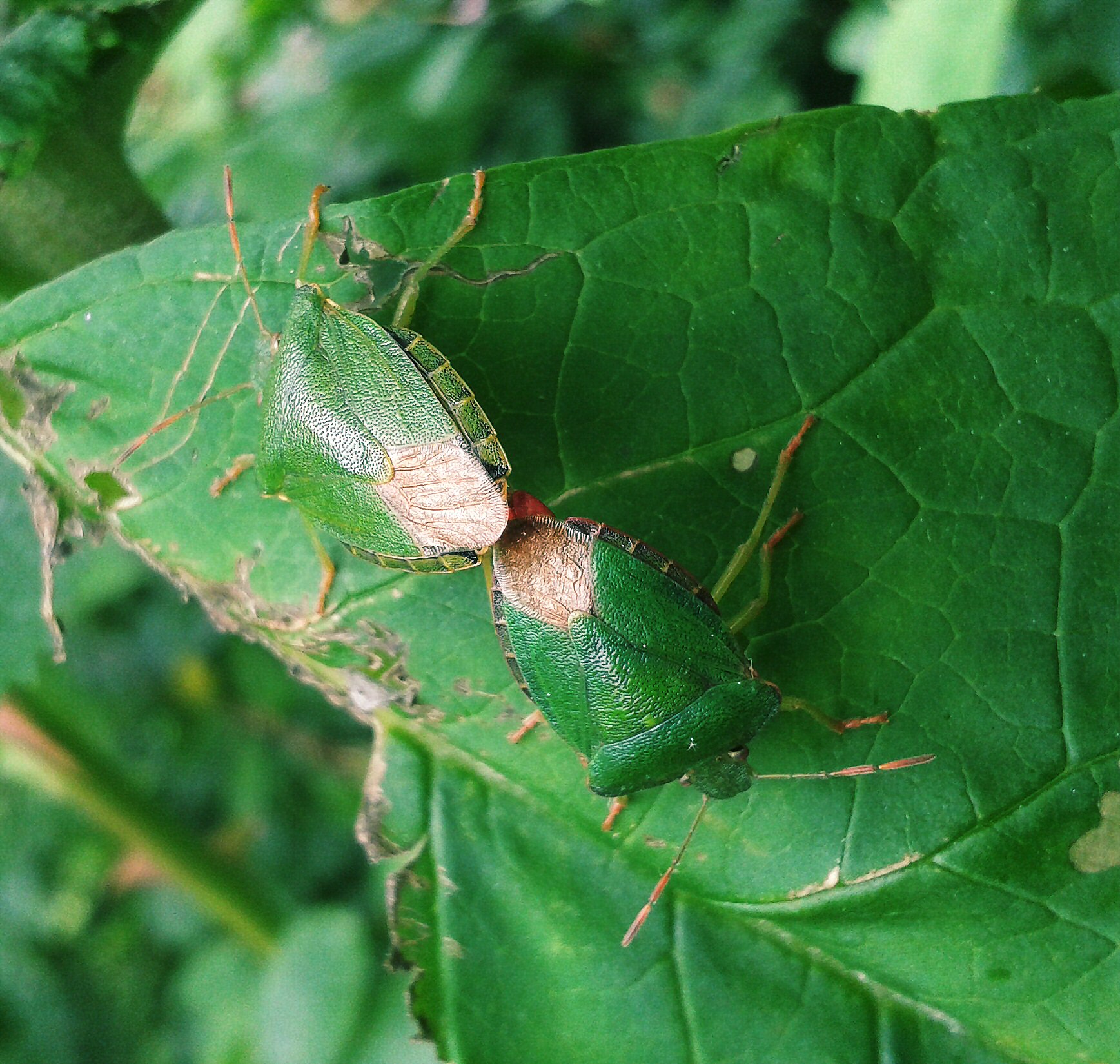
Mating Green Shield Bugs

In the afternoon we repaired the gaps in the fence where vandals have started jumping over and running down the bank. We hammered in an enormous metpost with a tall square oak post – we had to bring the stepladder to reach the top to drive it in with the round post-hammer – and we had to shave off the edges so the hammer fitted over the post! Then we twisted wire supports and barbed wire to repair the gaps, and hammered extra-large staples into the posts to fix the wire. It was hot and hard work but we’ve fixed a definite problem. Happily the rest of the fence has become totally overgrown with brambles and bindweed, with leafy branches reaching down to it, so it seems unlikely anyone will climb over it there.


Hot Summer’s Day Insects

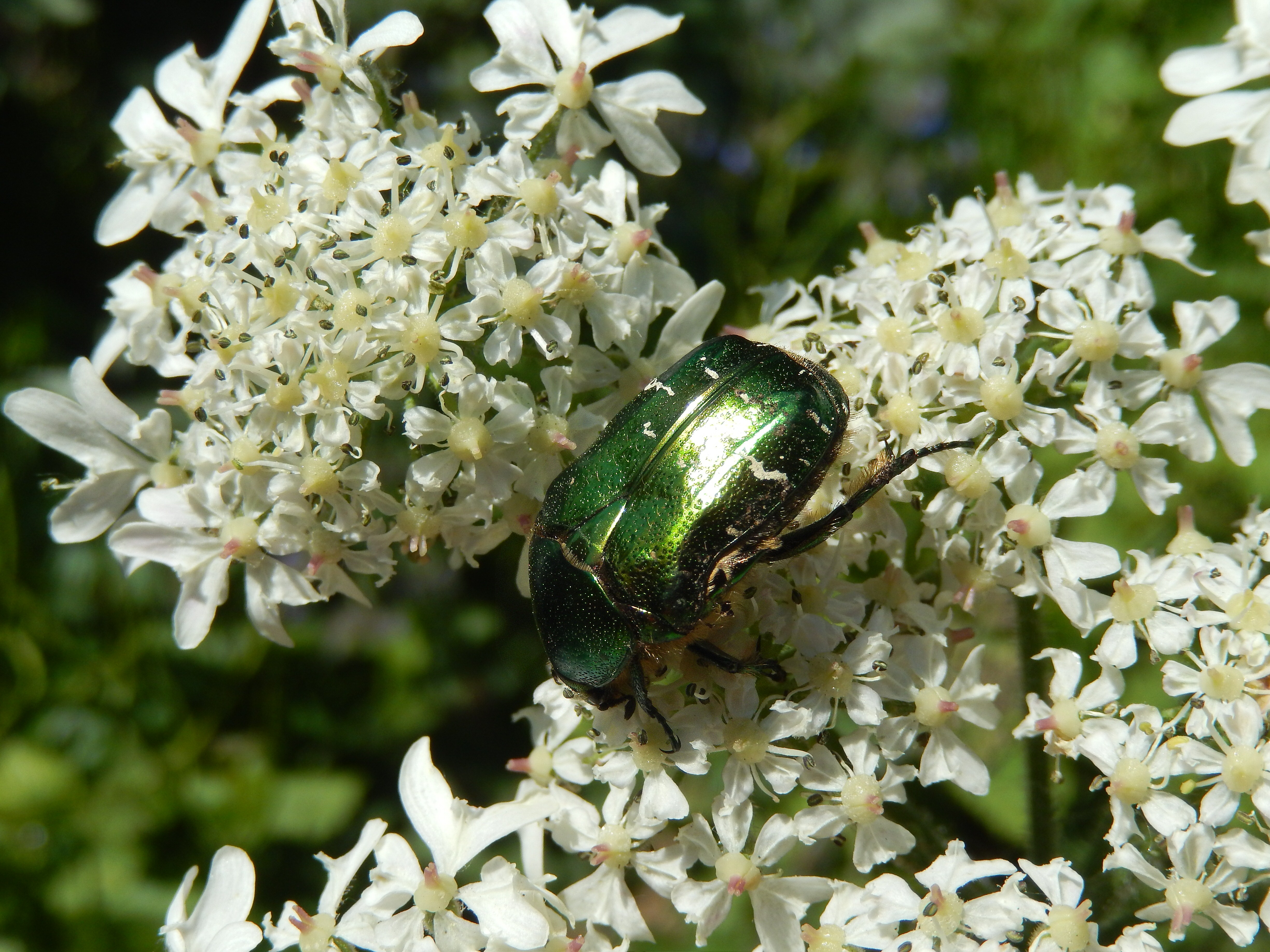
Rose Chafer Beetle on Hogweed, dorsal view
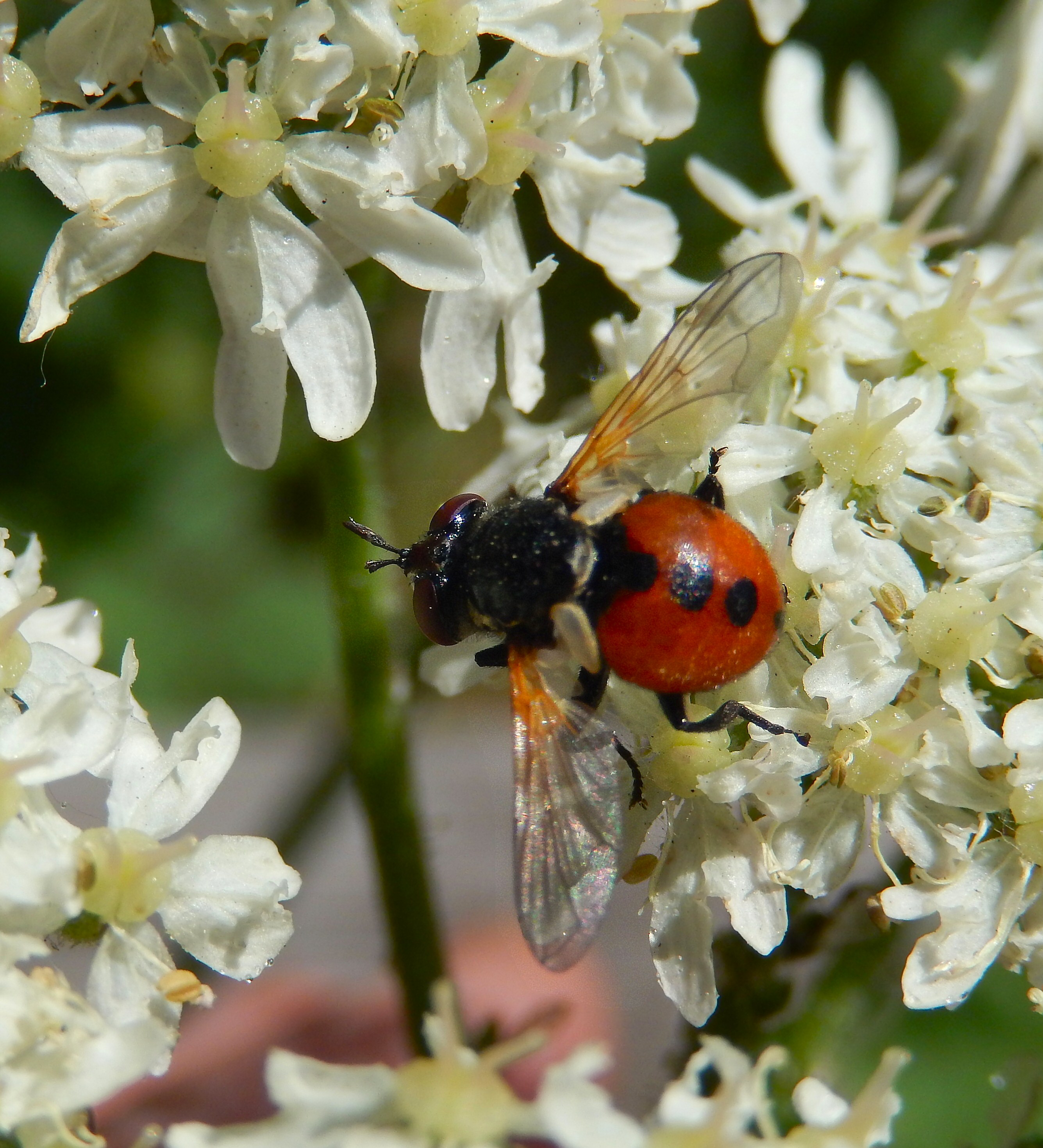
amazing fly red abdomen black spots

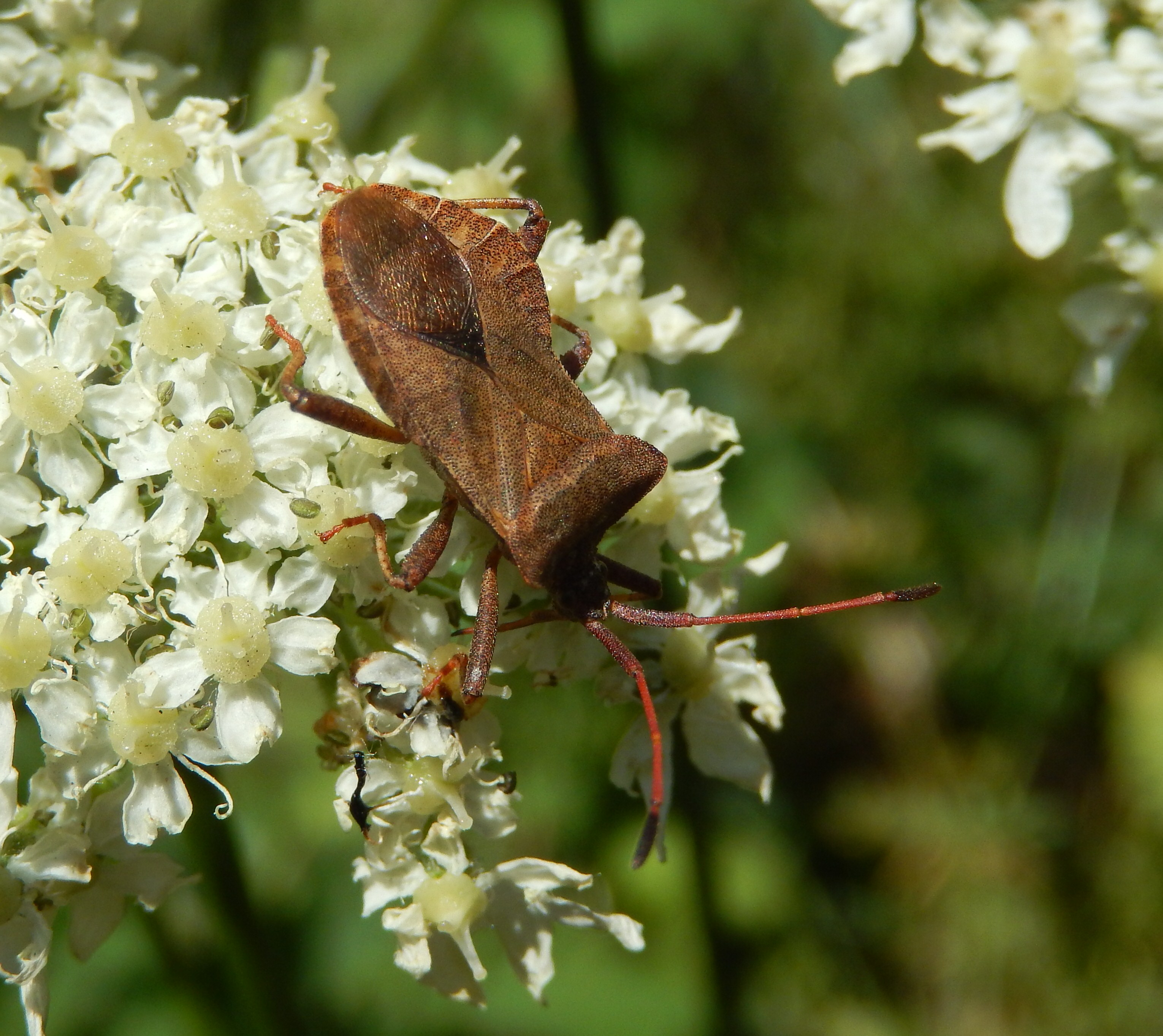
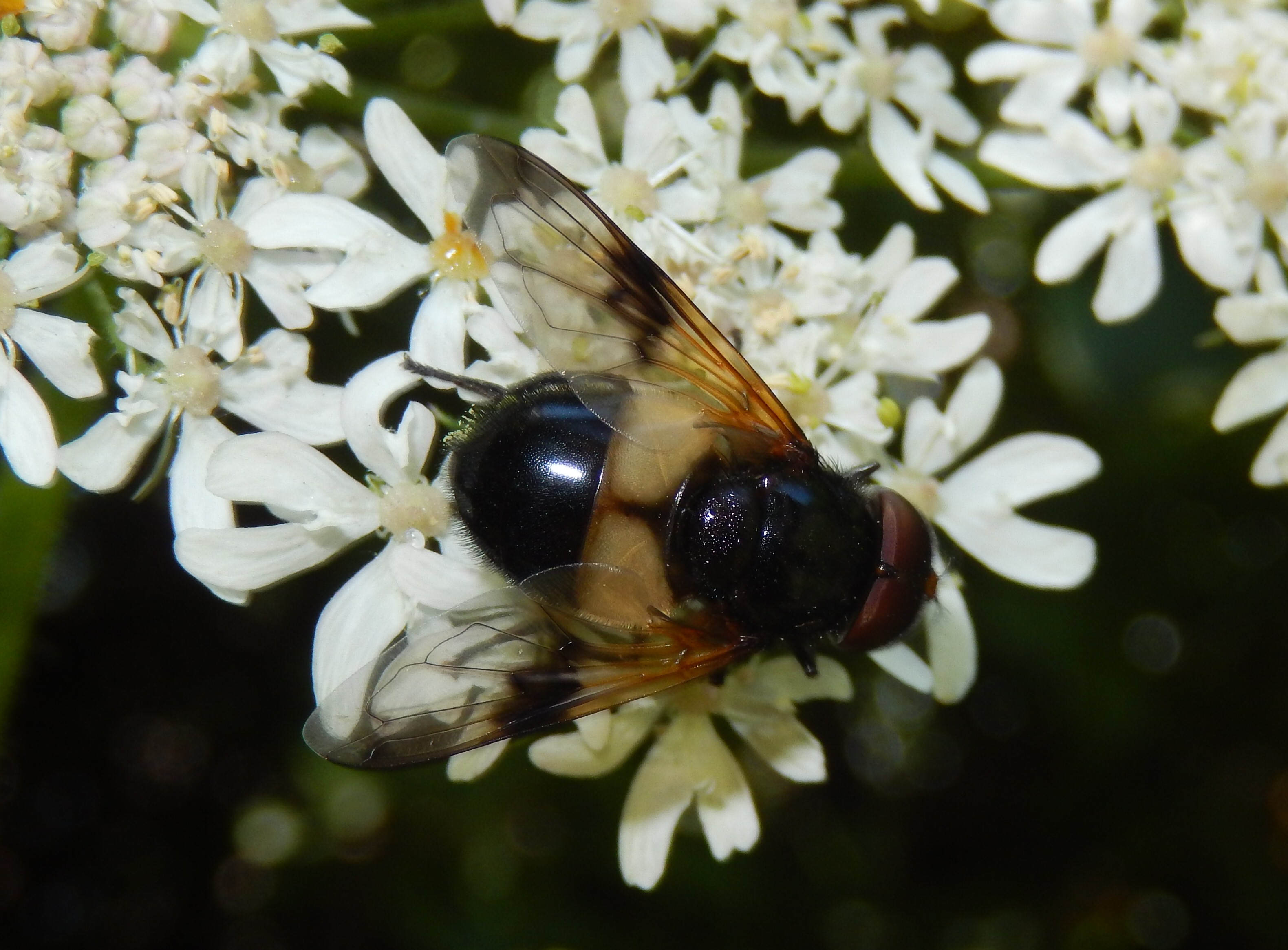
On this lovely hot day, we tried to work, hammering in pegs to fix path edging poles. When we were all a bit dizzy from the heat and effort, we gave up swinging the sledgehammer and had a tea in the hut. Then we did a butterfly transect, which in the absence of anything but Speckled Woods, turned into a nature walk as we photographed all the other interesting insects. The Rose Chafer (on hogweed) is worth looking at full-screen as it’s very pretty.

A brown Shield Bug cf Coreus on Hogweed
A brown Shield Bug cf Coreus
Hoverfly Leuzozona leucorum
Hoverfly Leucozona leucorum
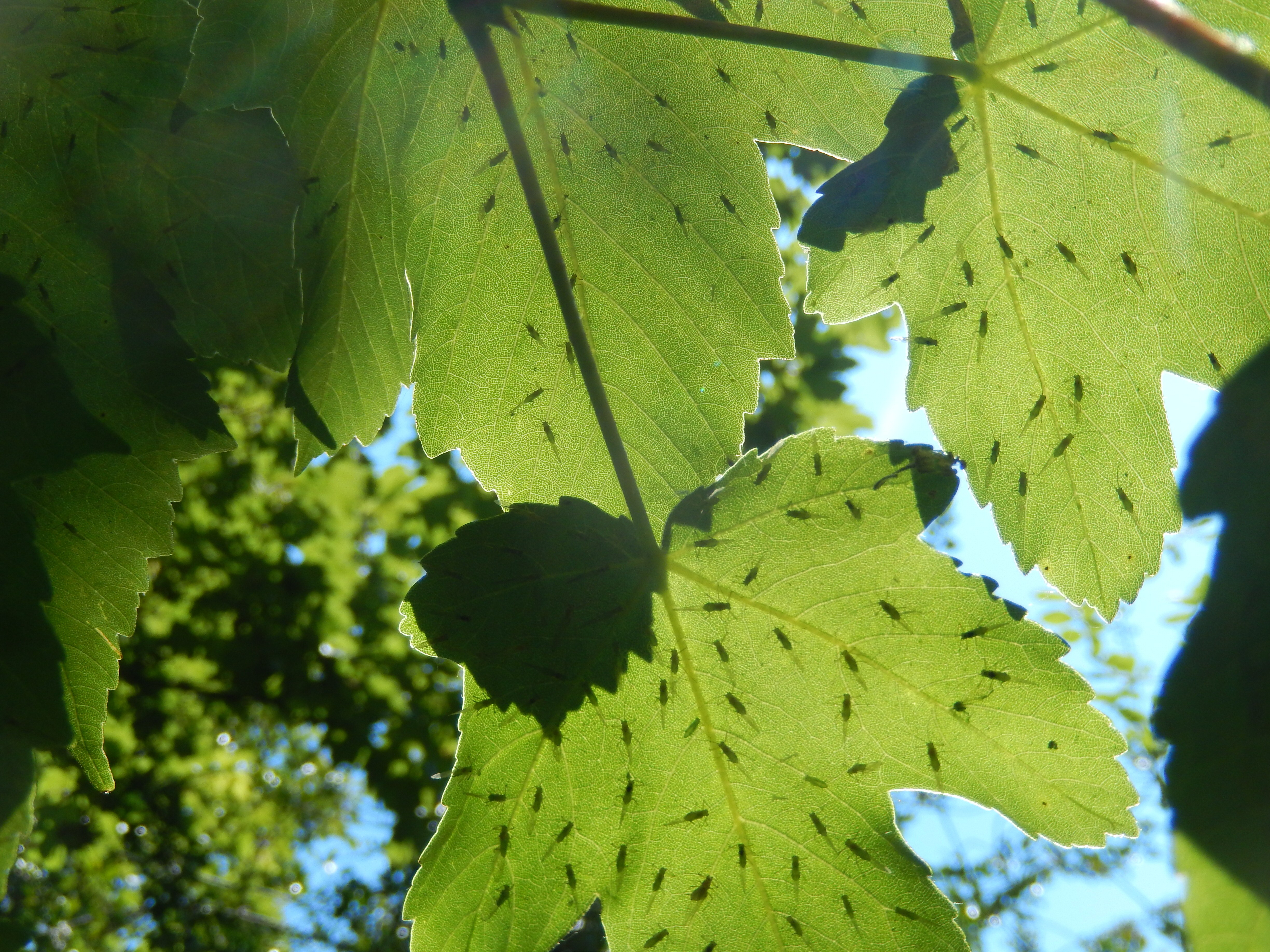
Array of Aphids on translucent Sycamore leaves

These aphids looked amazing with the sunlight streaming through the leaves; the leaves below were spattered with sticky sugar dropped by the aphids.

There was a beautiful Click Beetle too (like Athous haemorrhoidalis) but I didn’t photograph it as we were having too much fun making it go click and jump out of our hands.

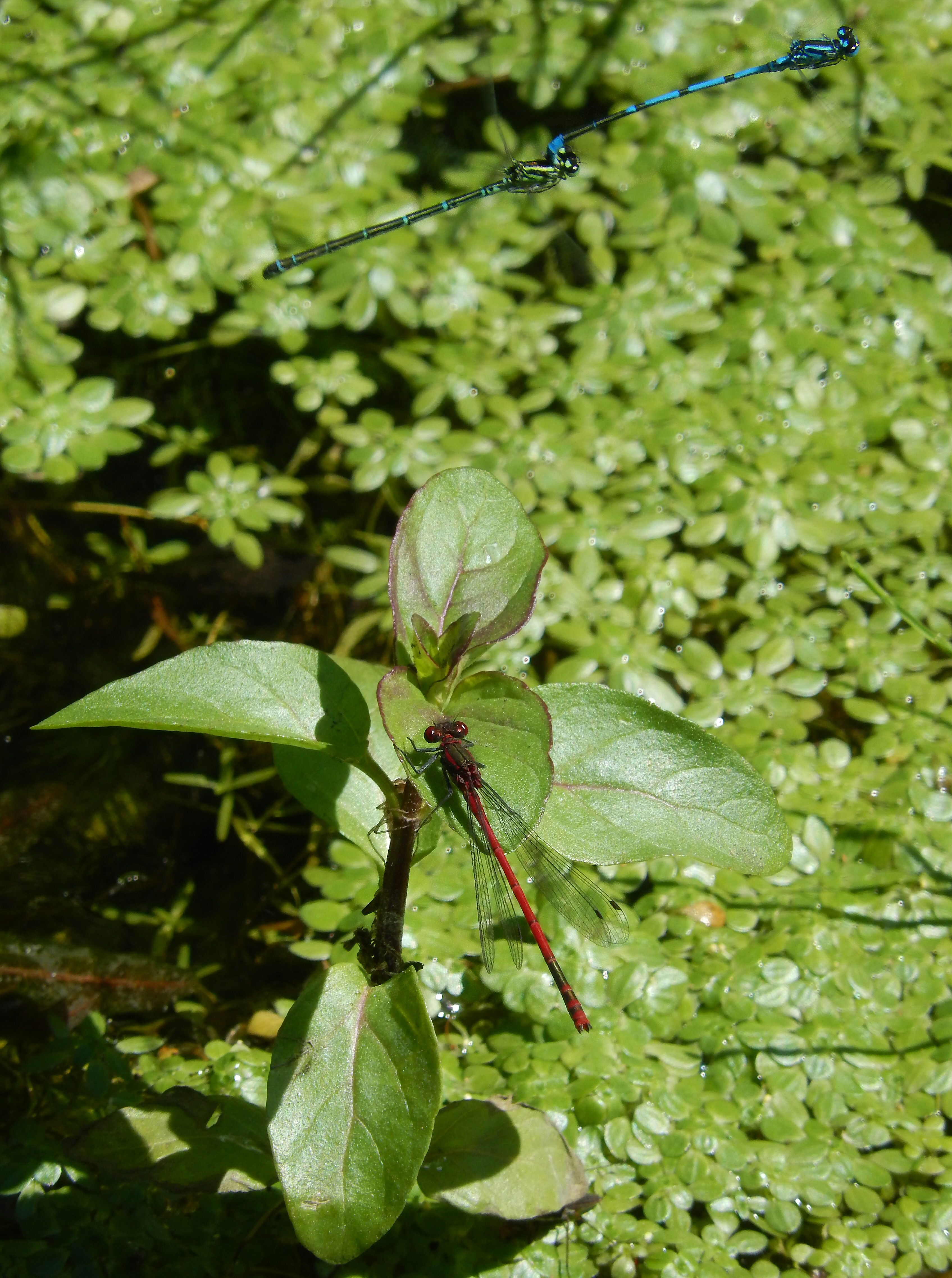
Azure pair over Large Red Damselfly

See the Red damselfly? Look up: there’s a pair of Azure damselflies hovering above.  Well worth viewing full screen.

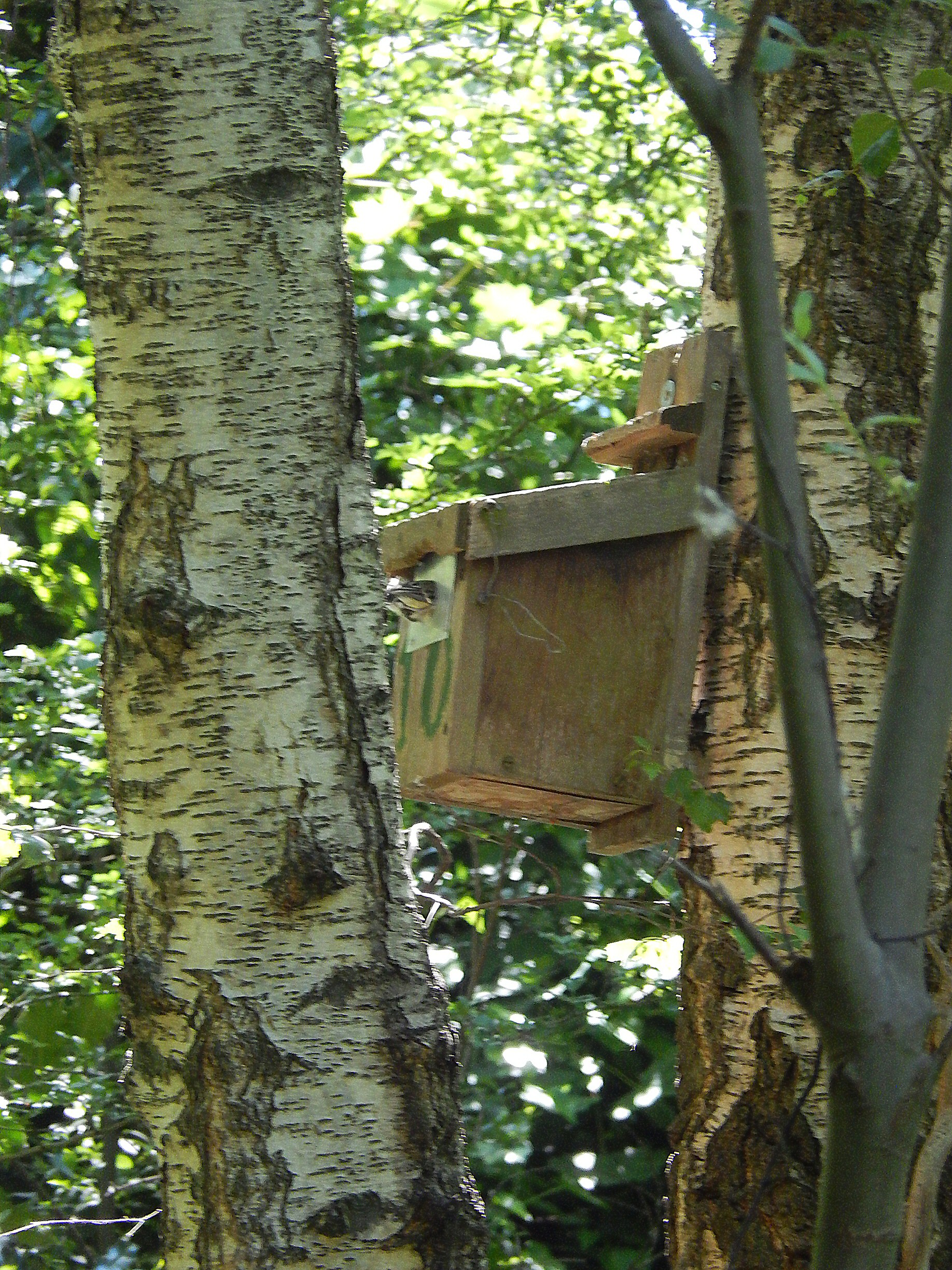
Great Tit feeding brood in Nest Box 10

We were pleased (and somewhat surprised) to find a family of Great Tits in box 10, right beside the path, and not terribly high up either, but it was an old and presumably proven nest-site, and so it has proven again this year. I got a blurry photo of one of the proud parents entering the hole, which I had repaired with some aluminium sheet this winter.

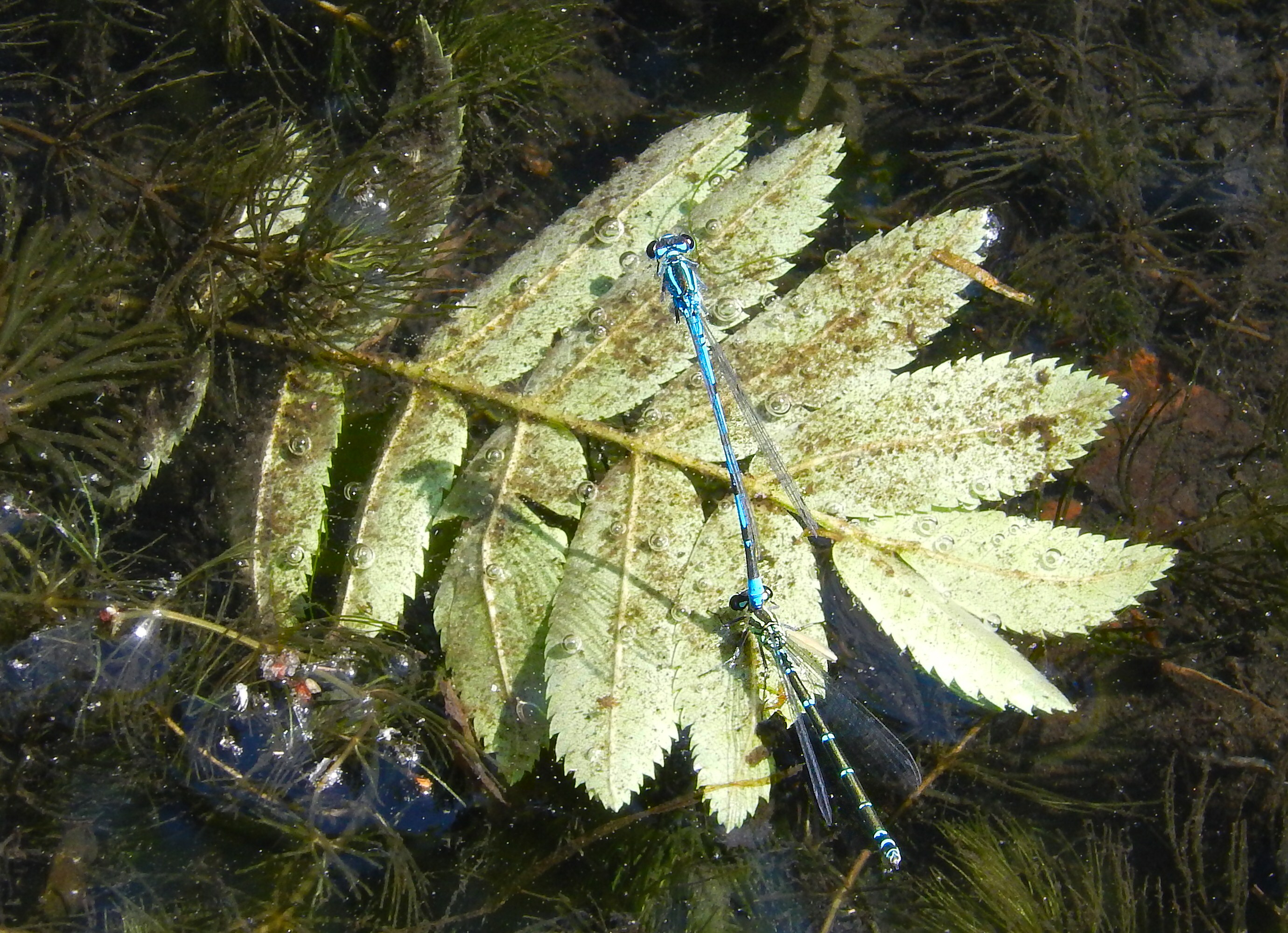
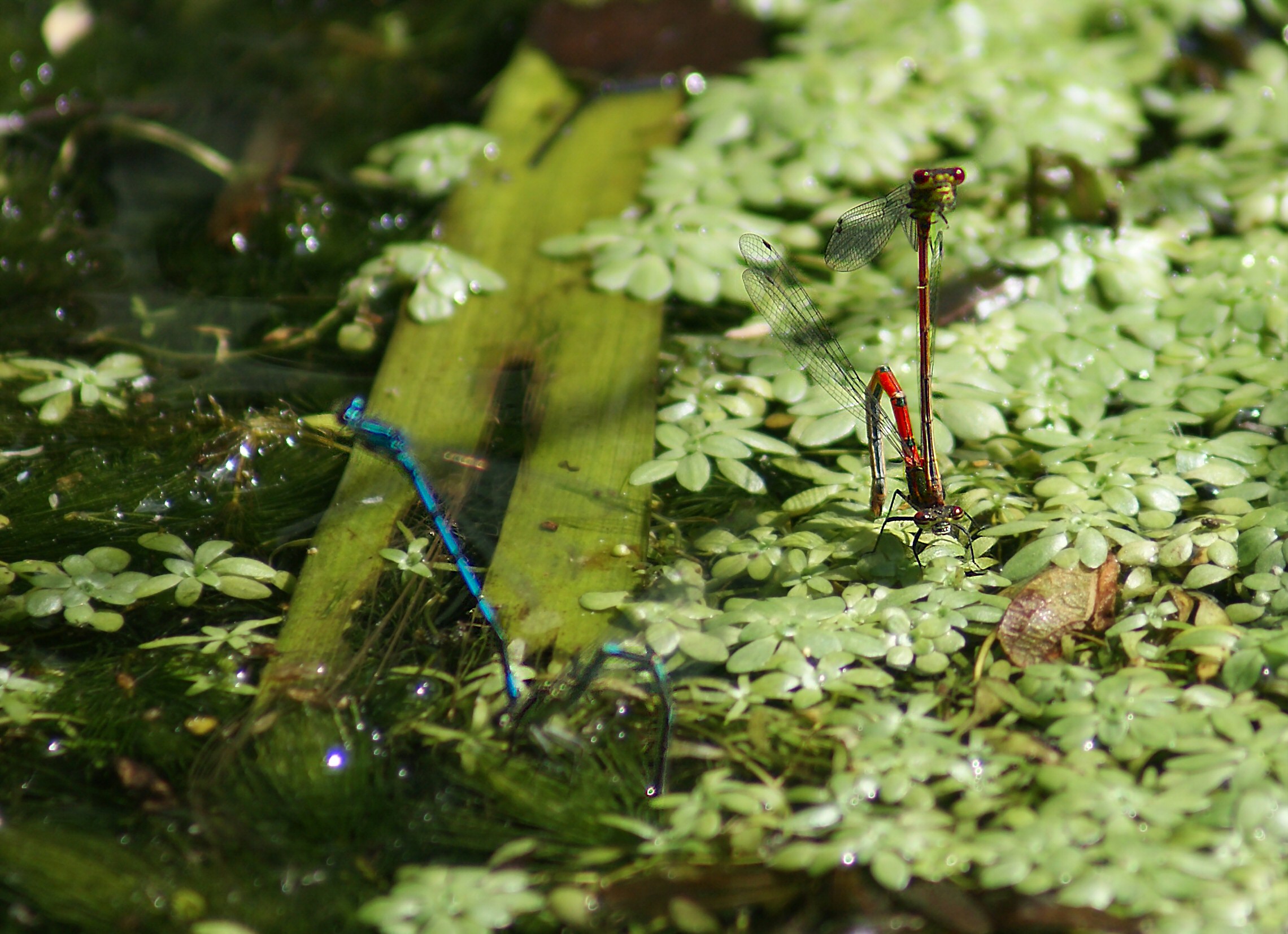
Ovipositing pair of Azure Damselflies
Ovipositing pair of Azure Damselflies; female is the green morph

I was very pleased with this photo, with its surreal light and bubbles. I’ve not remarked the green female morph before: most Azure females seem to be a paler, more lime-green form.

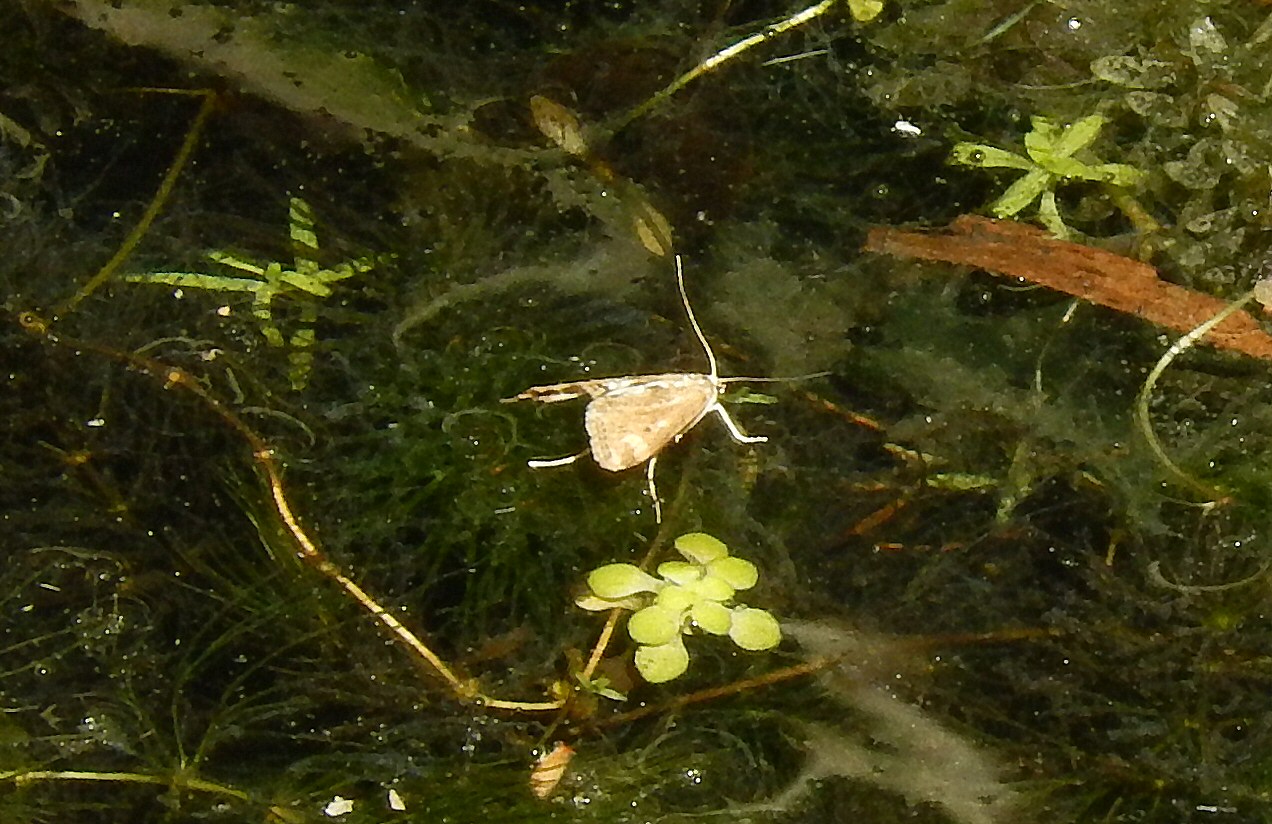
China Mark Moth laying eggs on pond weeds
Brown China Mark Moth laying eggs on pondweeds

This last photo (taken at quite a distance) shows something very curious: the Brown China Mark, a micro moth that lays its eggs on pondweeds, scurrying over the surface of the water searching for suitable ovipositing sites. In the dazzling light, she was far more reflective than anything else, and I had to turn the exposure down two whole stops to get her about right. The larva is aquatic, feeding on pondweeds.

Not pictured: sawflies; a swift Ichneumon beside the pond (without a long ovipositor, but with a clearly clubbed abdomen); many bumblebees and striped hoverflies. Nests of Peacock butterfly caterpillars too.

Pond-dipping Day, Gunnersbury Triangle

Large Red (and Azure) Damselfly pairs ovipositing

Today I “manned the pond”, resplendent in my The Wildlife Trusts T-shirt complete with badger logo on a black background. I didn’t so much as “stand up for nature” as lie down, hoping that the rather lively toddlers waving pond-nets wouldn’t fall in. Their fortunately very quick mother asked me if any children had in fact fallen into the pond, and I replied truthfully that none had done so, so far. And somehow, they didn’t.

In the warm sunshine, the air above the pond was buzzing with Azure and Large Red Damselflies, some paired up and laying eggs, some males patrolling anxiously, chasing off rivals and presumably hoping for some more females to turn up.

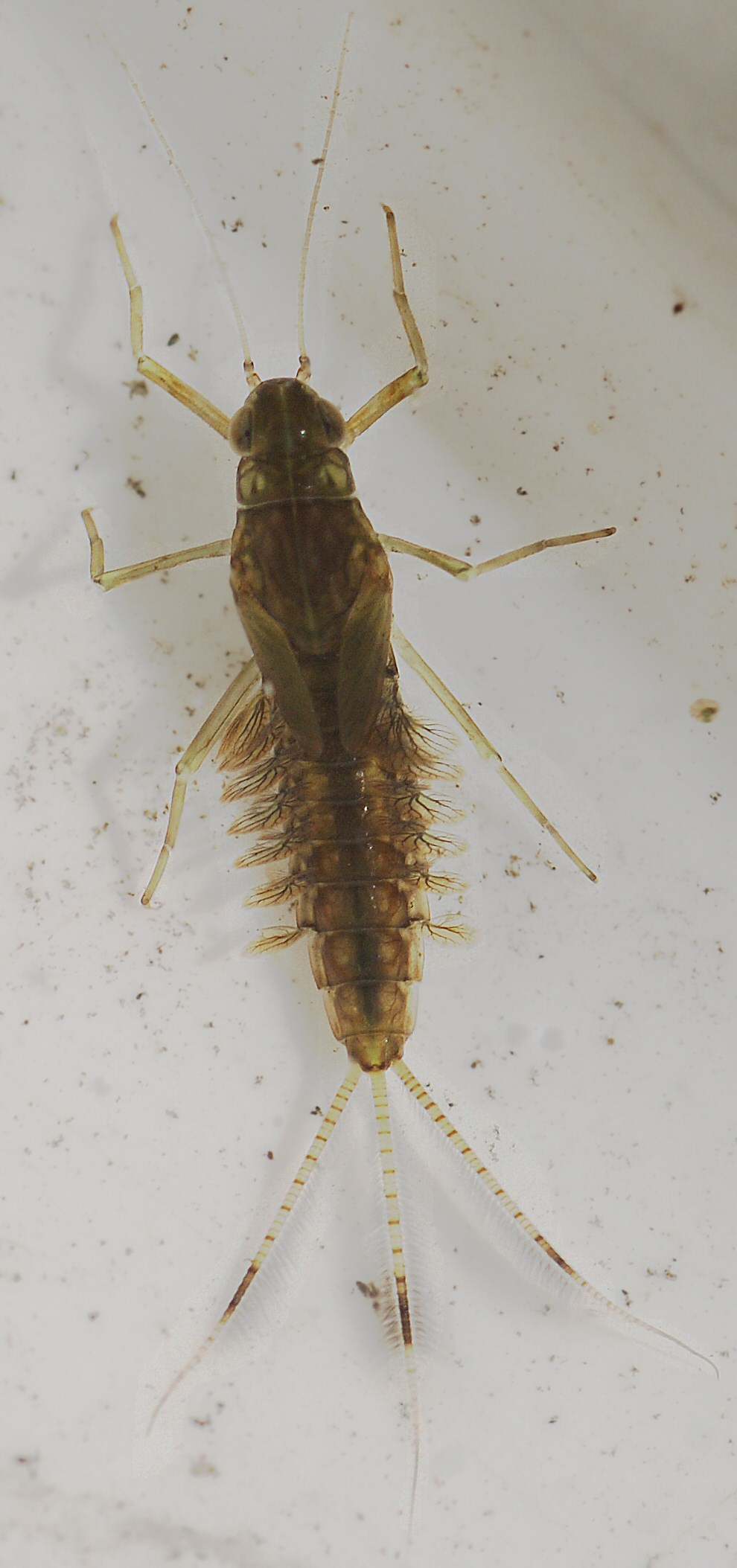
The eager dippers caught lots of Greater Ramshorn Snails, and some smaller ramshorns too. Among the haul were some very small Water Boatmen, midge larvae in reds and yellows, water fleas, a tadpole or two, some mayfly larvae (very zippy) with 7 pairs of gills, and some little damselfly larvae (more placid).

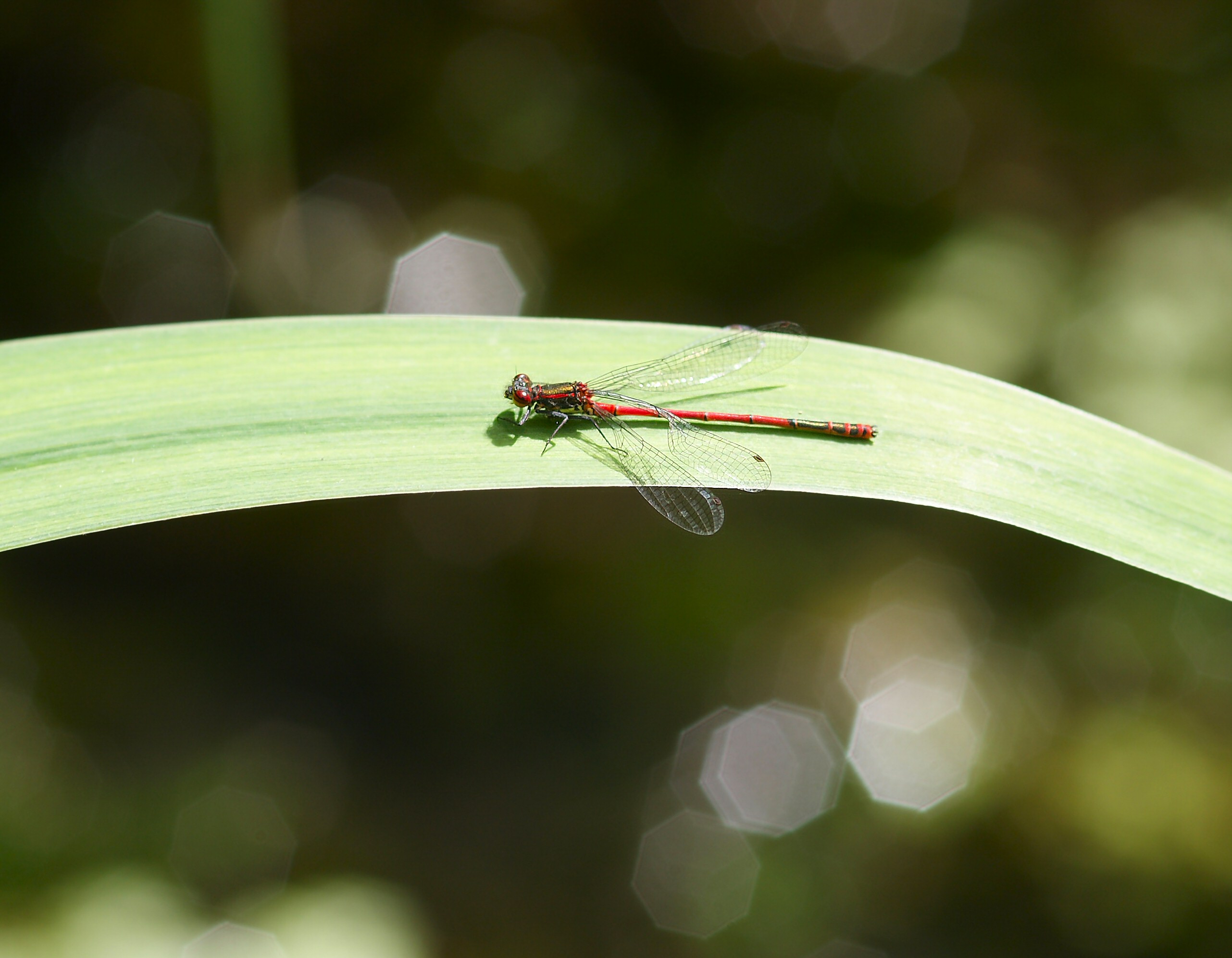
Large Red Damselfly on Iris leaf; nice hexagons from camera shutter

Two Sunday volunteers, relaxed and jolly, joined in the pond-dipping: it turned out that the Conservation Officer was out on a flat roof trying to catch a mallard duck and her six ducklings. Unfortunately the duck escaped while they were trying to scoop up the ducklings, so the rescue was abandoned. If the ducklings can’t be got to a pond soon, they’ll starve as the duck has no other way of feeding them.

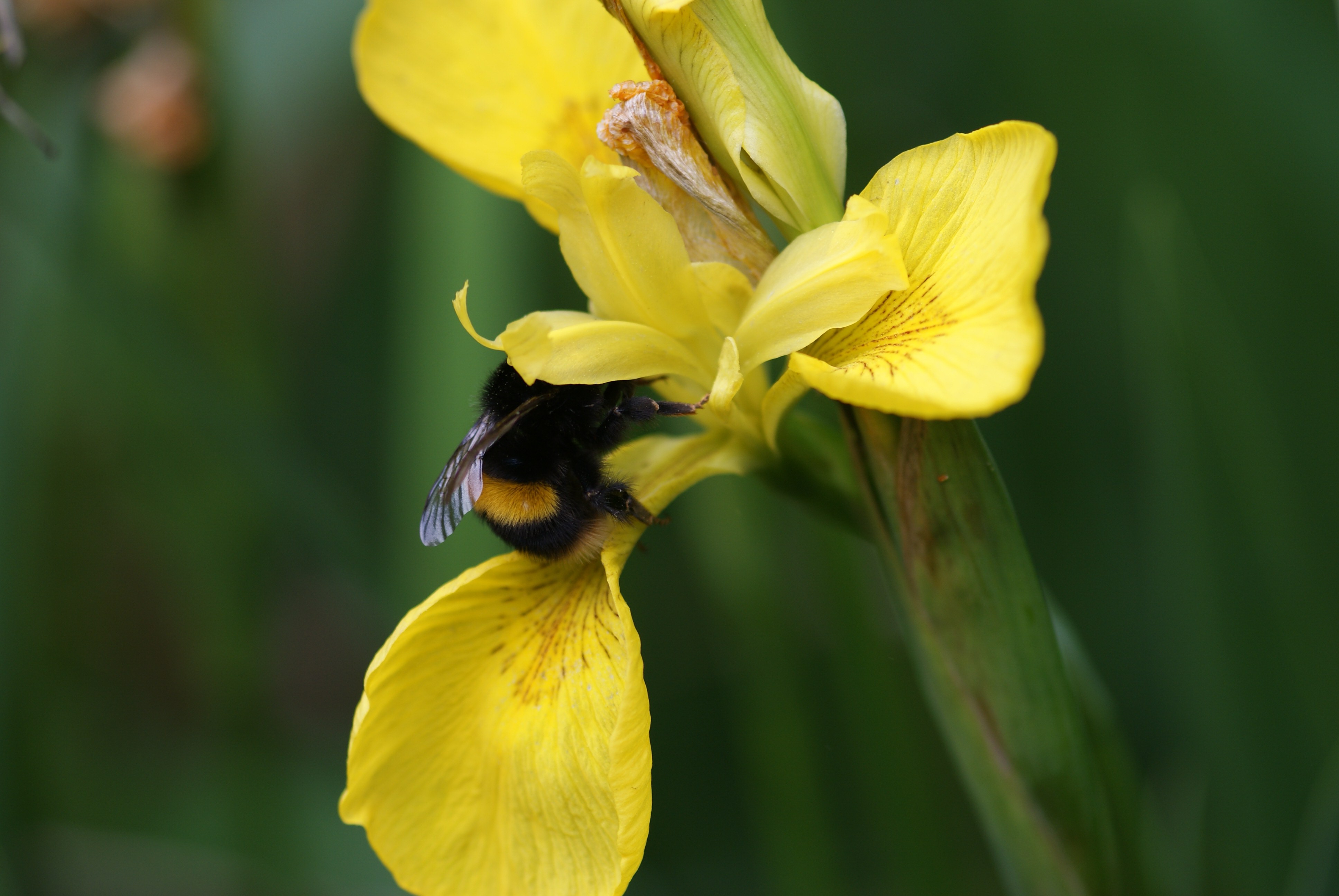
Queen Bufftail Bumblebee in Yellow Iris ...
Queen Bufftail Bumblebee in Yellow Iris …

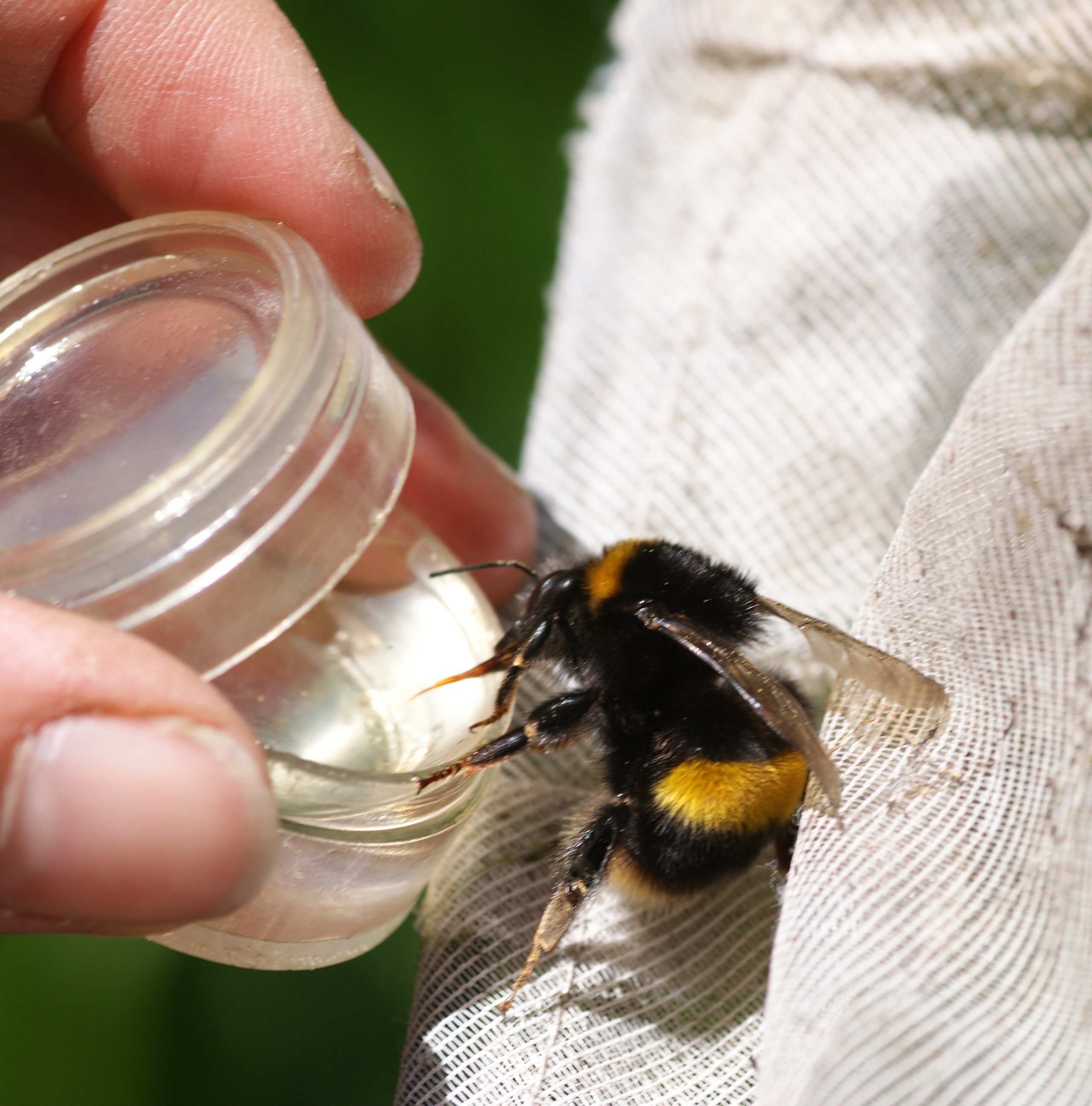
We did carry out another rescue, however: a very large Queen Buff-Tailed Bumblebee was sitting exhausted on the boardwalk. We looked about for flowers, and tried her on a Yellow Iris, with some success; but she soon used up the energy its nectar provided. I suggested some sugar-water. This was fetched, and it seemed to have the right effect, as she perked up considerably.

Queen Buff-Tailed Bumblebee drinking sugar water

Then, in between telling people about the ridiculously complex fertilisation system in damselflies and dragonflies (indirect fertilisation, sperm storage, yeah) and identifying pond animals, I tried to photograph a mayfly nymph with the absurdly limited depth-of-field of my macro lens. What with the white glare from the pond tray, the sun going into clouds, and toddlers leaning into the light to get a better look, it was somewhat difficult. Here’s what I got.

Mayfly nymph in a (fairly) clean pond tray, more or less correctly exposed and in focus

Free Public Event: Book Launch at Gunnersbury Triangle 17 May 2015

LWT reading by the author 17 May 2015

London Wildlife Trust have kindly put on a book launch event for my new book The English Love Affair with Nature. The event is free and open to all; though small children may prefer to eat the cakes and go pond-dipping, which will be available on the reserve! Attractions will include me, reading from the book; a chance to buy a signed copy, if that’s your sort of thing; nice things to eat and drink; and the beauty of a nature reserve in May, complete with birds, butterflies, bees, bugs, flowers and trees in new leaf, not to mention mini-beasts, newts and everything that wriggles in pond water! I hope to see you there.

Cetti’s, Chiffchaffs and Chaffinches at Wraysbury Lakes

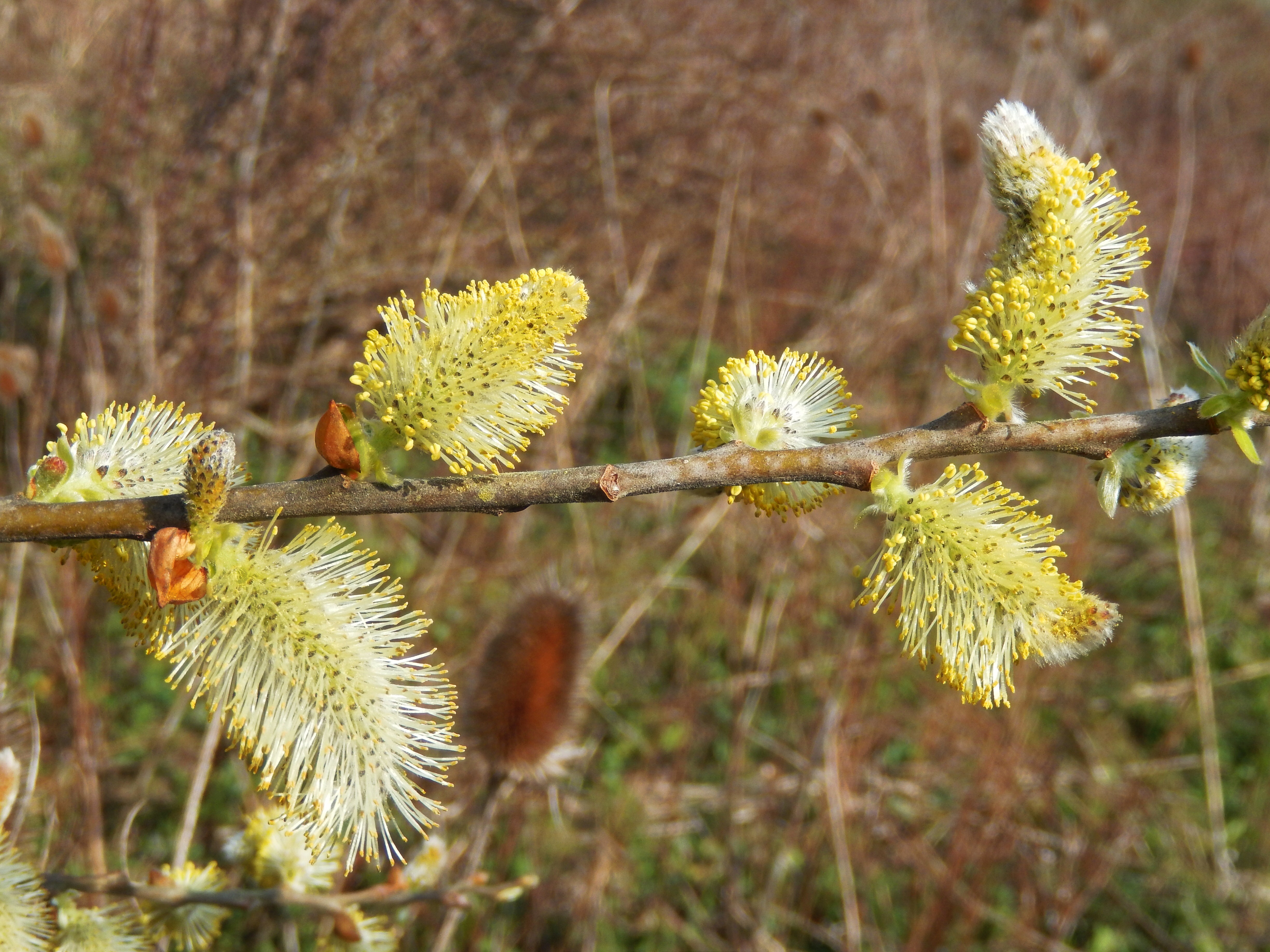
First Pussy Willow of the year

Amongst the chilly weather brought by the East Wind, today has at least been sunny, and out of the wind pleasantly warm.

Down at Wraysbury Lakes, plenty of Chiffchaffs, presumably mostly recently arrived from Spain or Africa, are now singing. The other migrant warblers have not yet arrived – if they think it’s too cold, who can blame them – so the only other warbler singing is the robust, secretive Cetti’s, calling from across the lake.

Apart from them,  a flock of cheerful Jackdaws fluttered about the horse meadow; each mare had a new foal, wobbly on its new legs. A few Goldfinches and Chaffinches sang bravely.  A Crack Willow’s buds gleamed silver, the green just starting to show; a solitary Pussy Willow (Sallow) shone golden against the dry brown scrubby area, last year’s dried Teasels still tall and handsome. Some Poplar branches gleam orange-yellow with Common Orange Lichen.

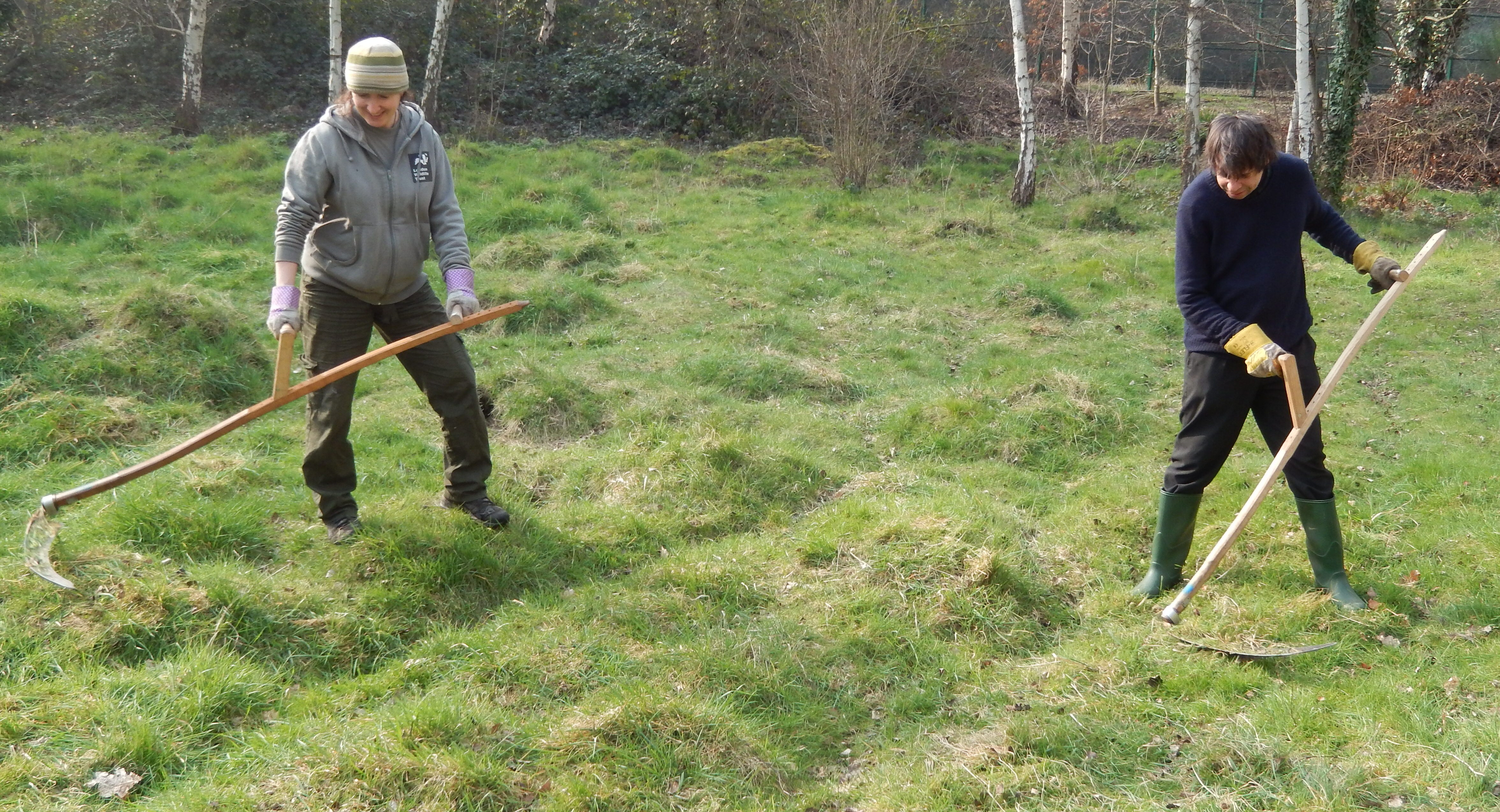
Scything the Anthill Meadow, Gunnersbury Triangle

Scything the Anthill Meadow

Spring, as in so many years, seems to be coming and going. Today, despite a gloomy forecast, the sun came out, coats came off, the Chiffchaffs started to sing, and we went happily to work in the sunshine. We fixed a new rail to mark off a Forest School area as “not a path”, despite appearances: we rigged it up with a hinge one end and a keeper – posh name for a pair of bits of batten screwed on to the post – to hold the rail the other end when it’s in the down position. We cleared up a vandalized loggery, using the stray bits of log and lots of cut ivy to block off an undesired path, and filled in the hole.

And then we all had a lesson in scything – you have to put the thing together to fit your height and arm length. The main pole is ingeniously not quite straight; the two handles each fit on with a bolt; the blade fits on with a lug and two grub screws in a metal housing. It sounds a bit fiddly and it takes a little time to adjust it, but when you have it exactly right, it’s a pleasure to use, and astonishingly light to swing. The blade needs to be sharpened every few minutes to keep it slicing effortlessly through grass, which contains silica (aka sand) and quickly blunts blades. But, well-maintained, the scythe is a remarkably efficient tool, and environmentally friendly. Contrary to expectations, it does not cause strain or backache, and people large and small can use it effectively. It’s trickier on bumpy ground covered in anthills. Five of us mowed the picnic meadow and the anthill meadow in an afternoon: it was no quicker (and a lot noisier) with the brushcutter. We disturbed a small frog or two, and accidentally scraped a small toad that was hiding in the long grass, but it wasn’t seriously hurt.

On the common I heard a Mistle Thrush calling, and a flock of Goldfinches. A party of Long-Tailed Tits visited the garden. Red and White Deadnettles are in bloom; Cow Parsley is coming into fresh leaf.