Category Archives: Natural History

Autumn Fungi, at last: Gunnersbury Triangle

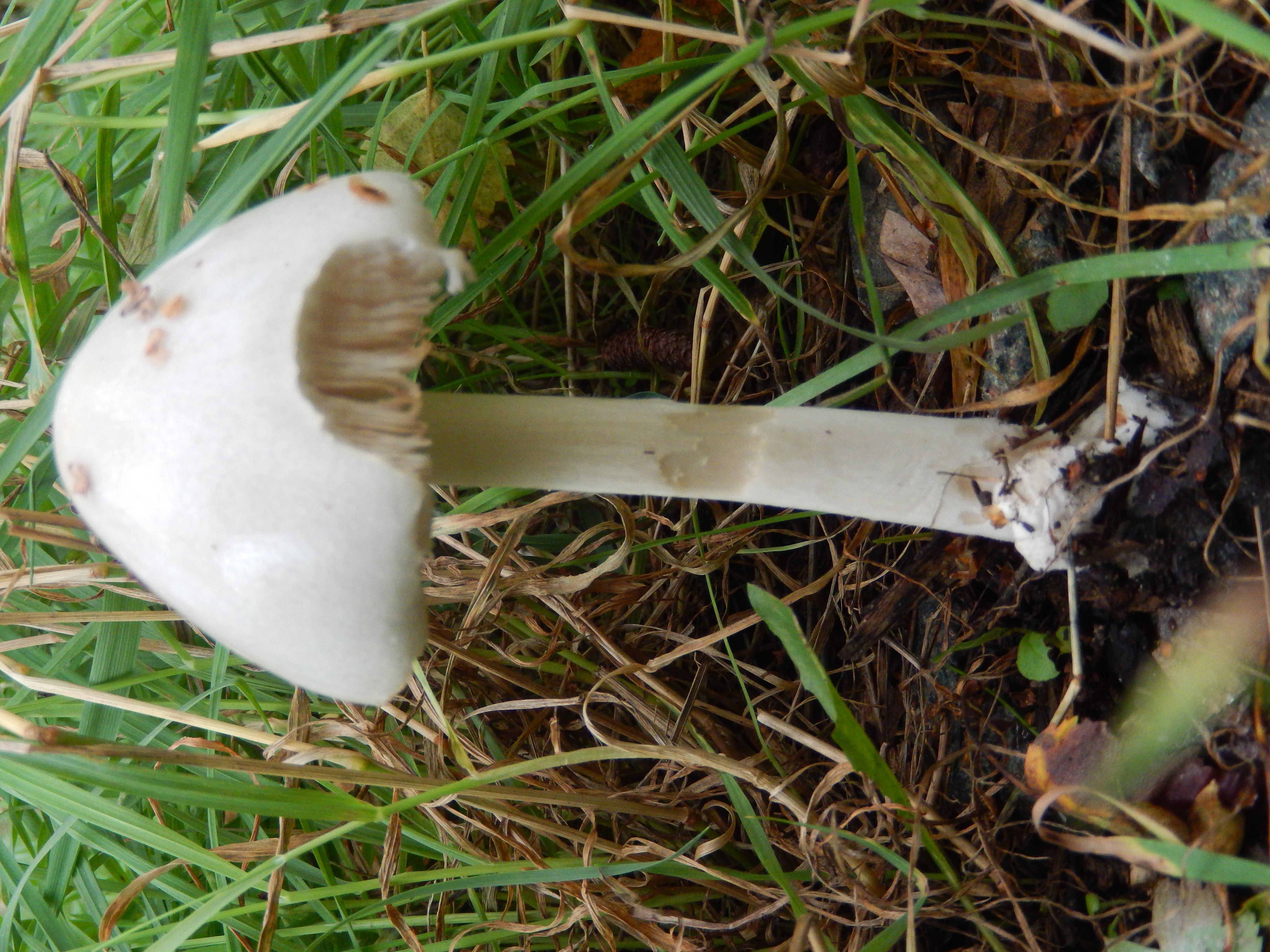
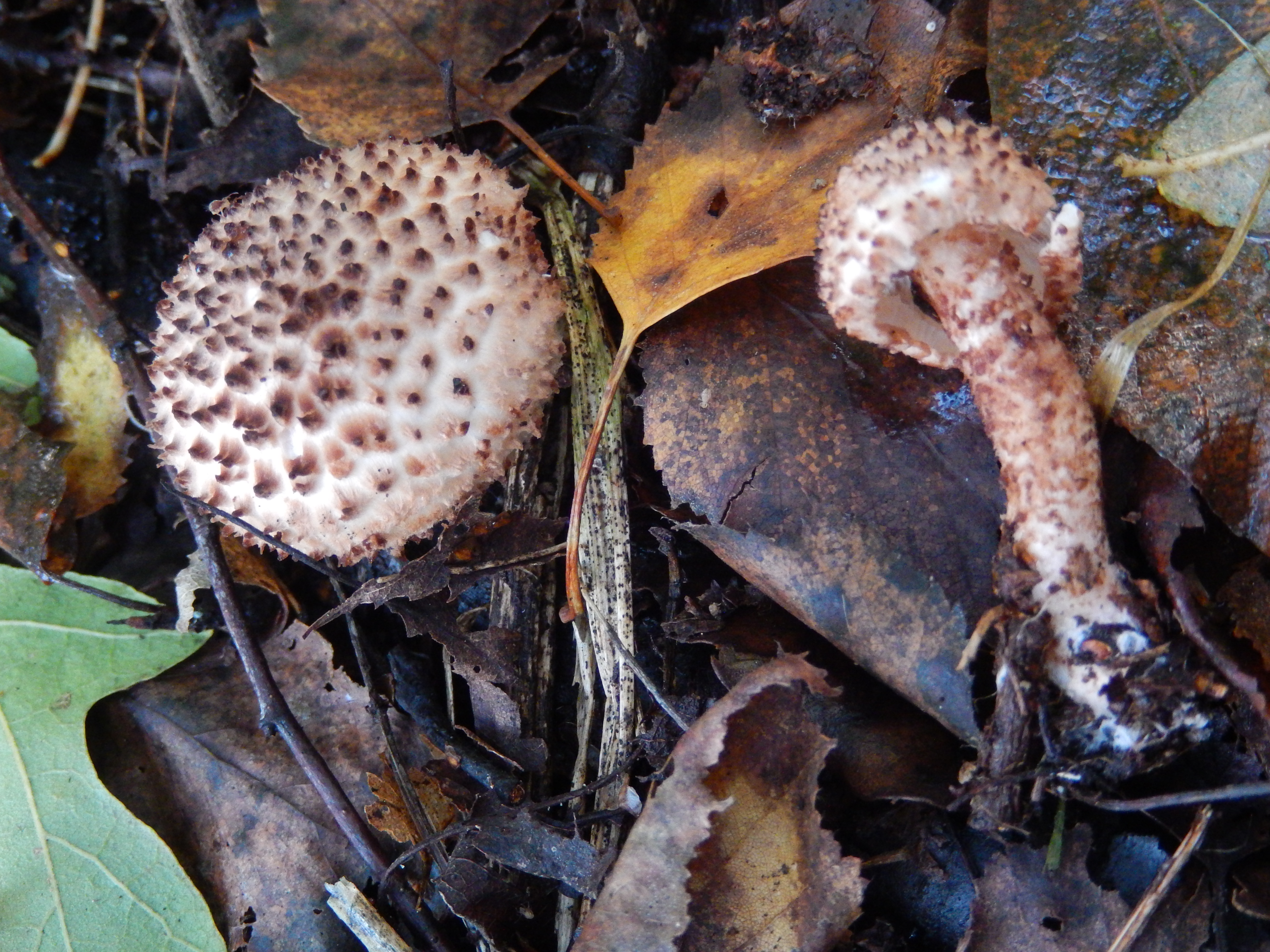
Lepiota, a Dapperling
Lepiota hystrix, a Dapperling

Well, despite the extraordinary warmth of both September and October – I was still working in a T-shirt down at the Gunnersbury Triangle nature reserve today, anything more being too hot – the fungi have finally come out in earnest. This small speckly Dapperling seems to be Lepiota hystrix, a rare species.
Birch Log fungi
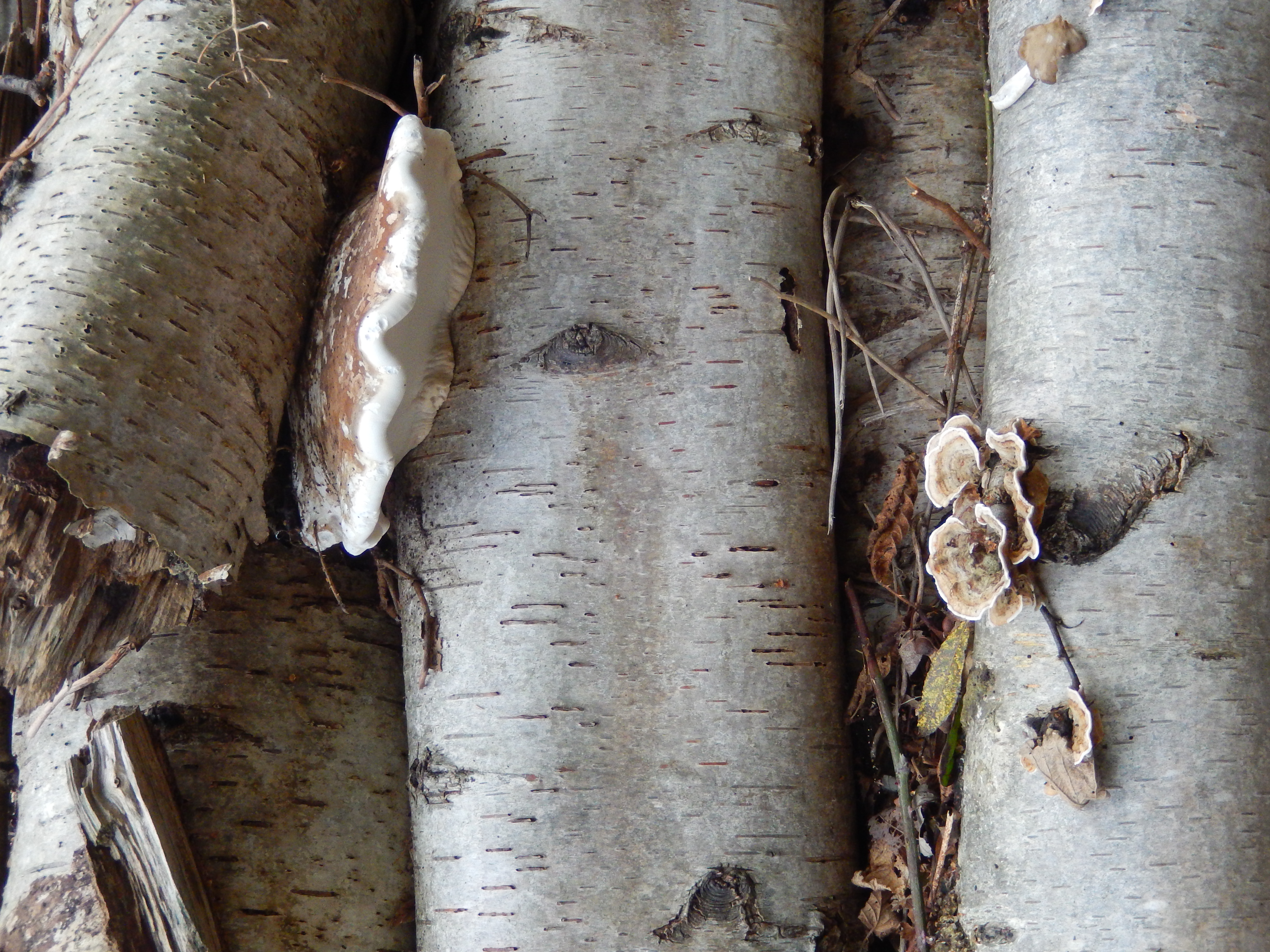
Birch Log fungi

Several fungi were on show on a pile of birch logs, including a large Birch Polypore and some elegant smaller Turkeytail brackets as well as Orange Curtain Crust.
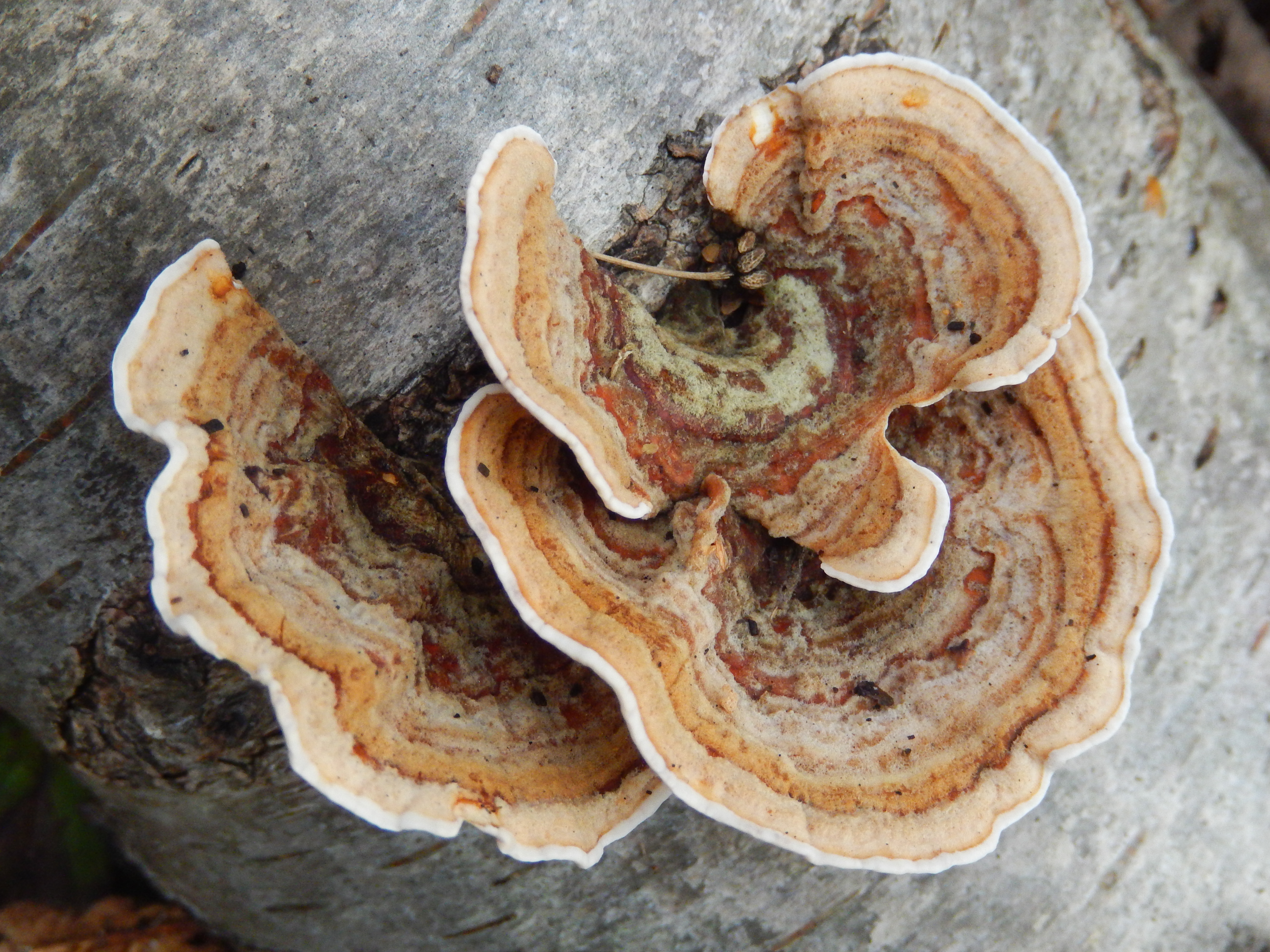
Turkeytail, Trametes versicolor (aka Coriolis versicolor)
Turkeytail, Trametes (Coriolis) versicolor

These handsome Common Cavaliers were growing beside the path.
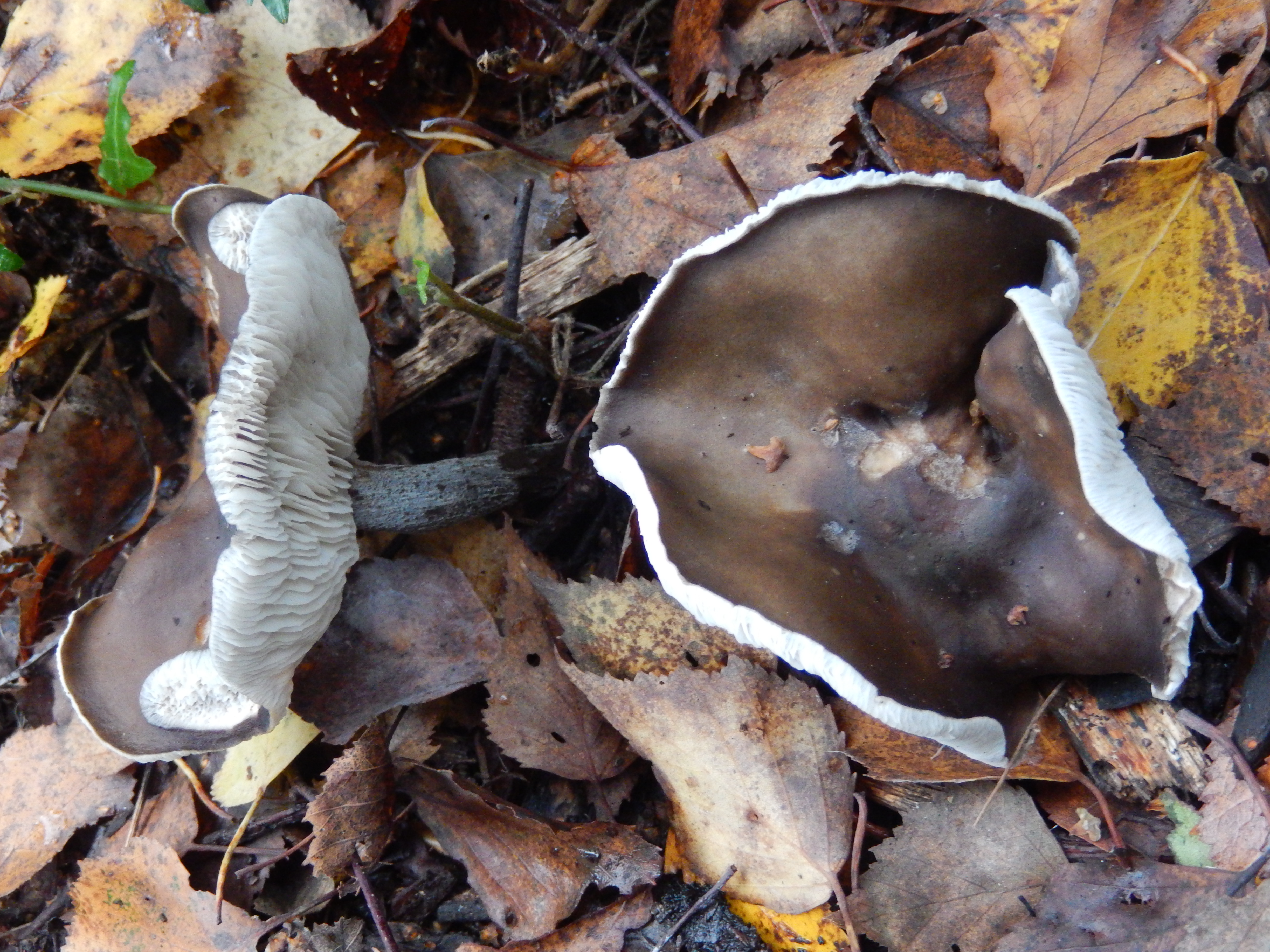
Common Cavalier Melanoleuca polioleuca (aka M. melaleuca)

Many damp rotting sticks and stumps had Stagshorn or Candlesnuff fungus growing out of them, Xylaria hypoxylon. These were thin and stick-like early in November, well-developed by 20 November.
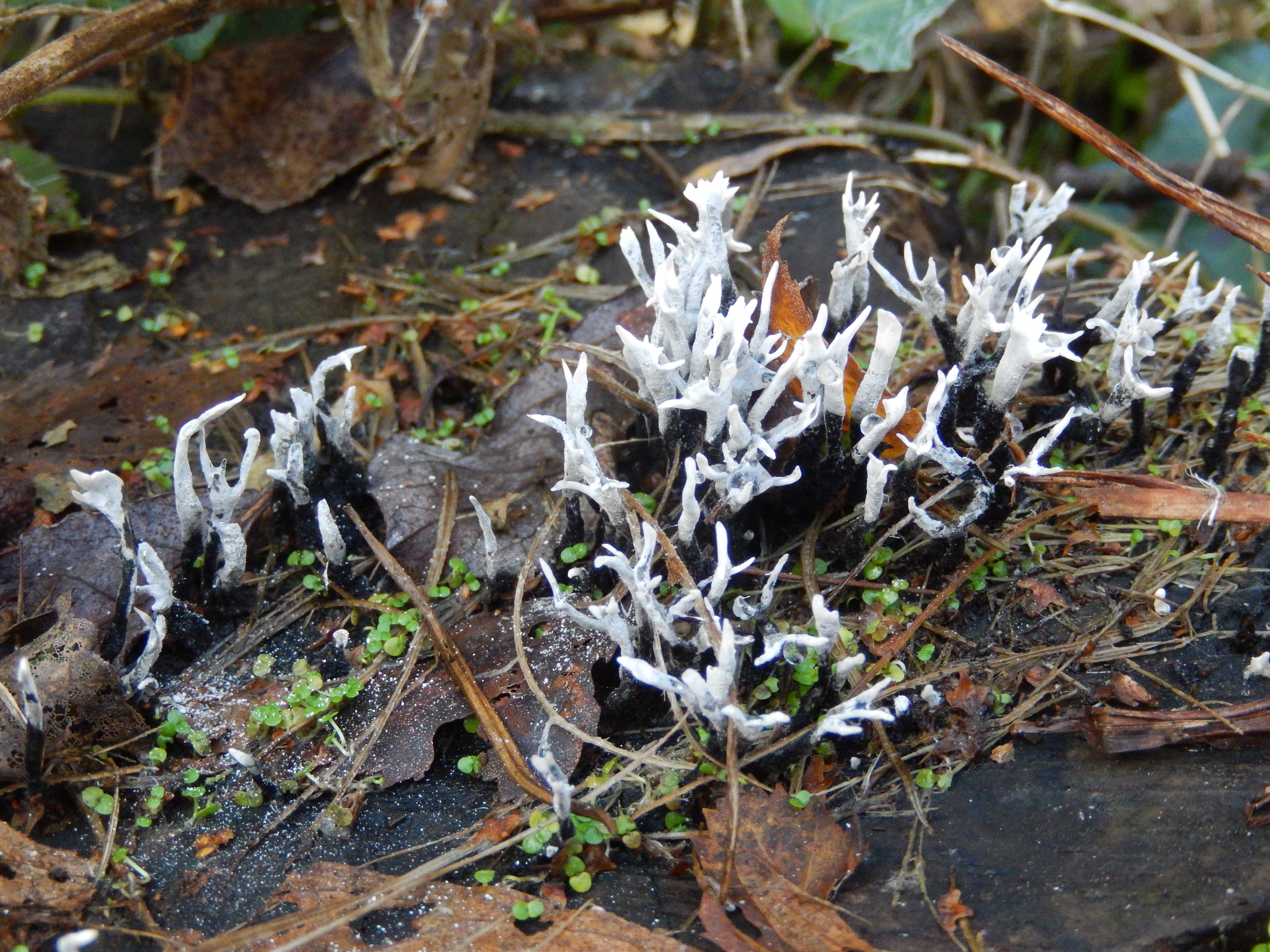
Stagshorn Fungus, Xylaria hypoxylon
Stagshorn Fungus, Xylaria hypoxylon, well developed

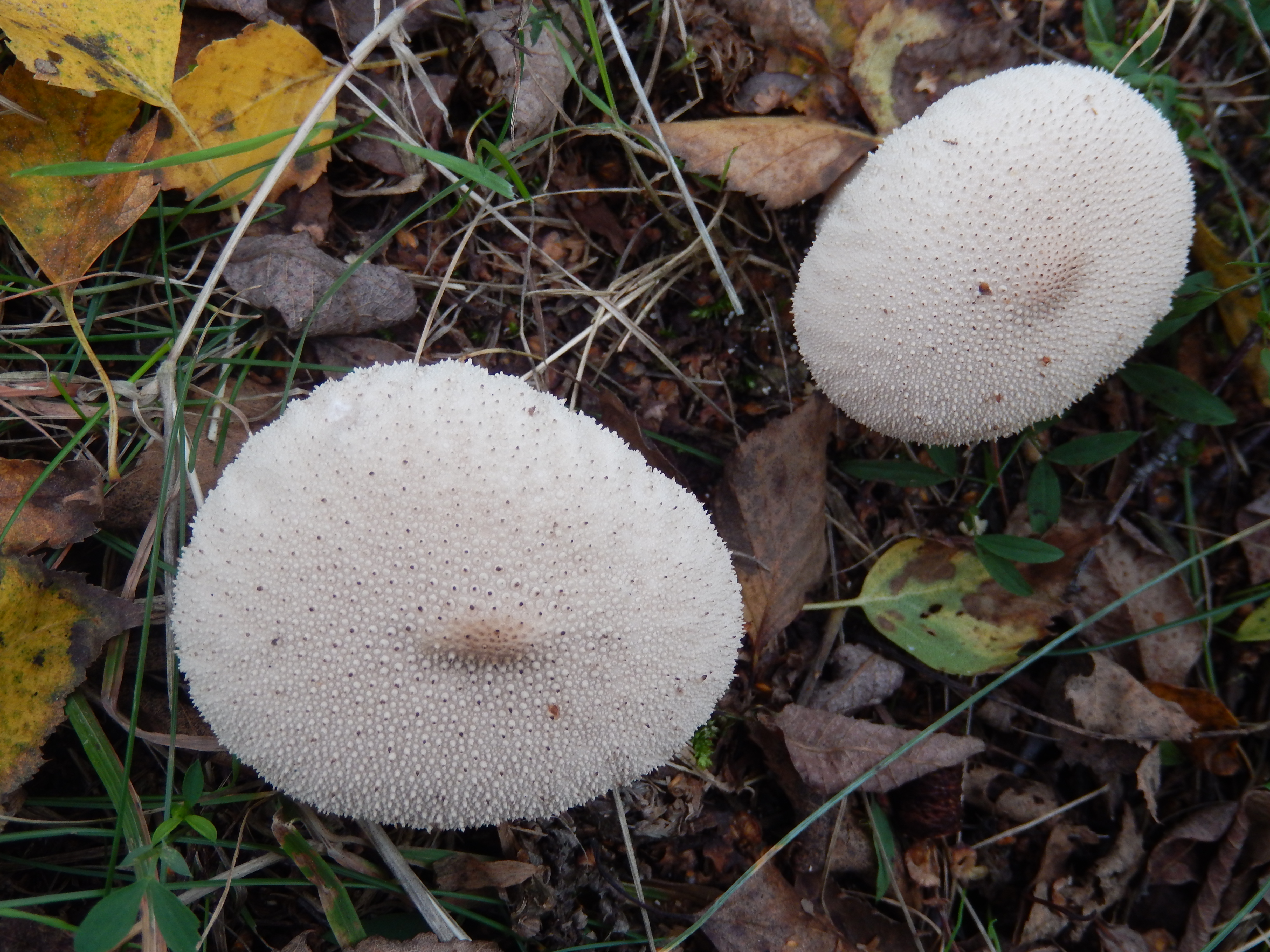
In the anthill meadow were plenty of puffballs, Lycoperdon perlatum. They certainly looked pearly, as their specific name suggests.
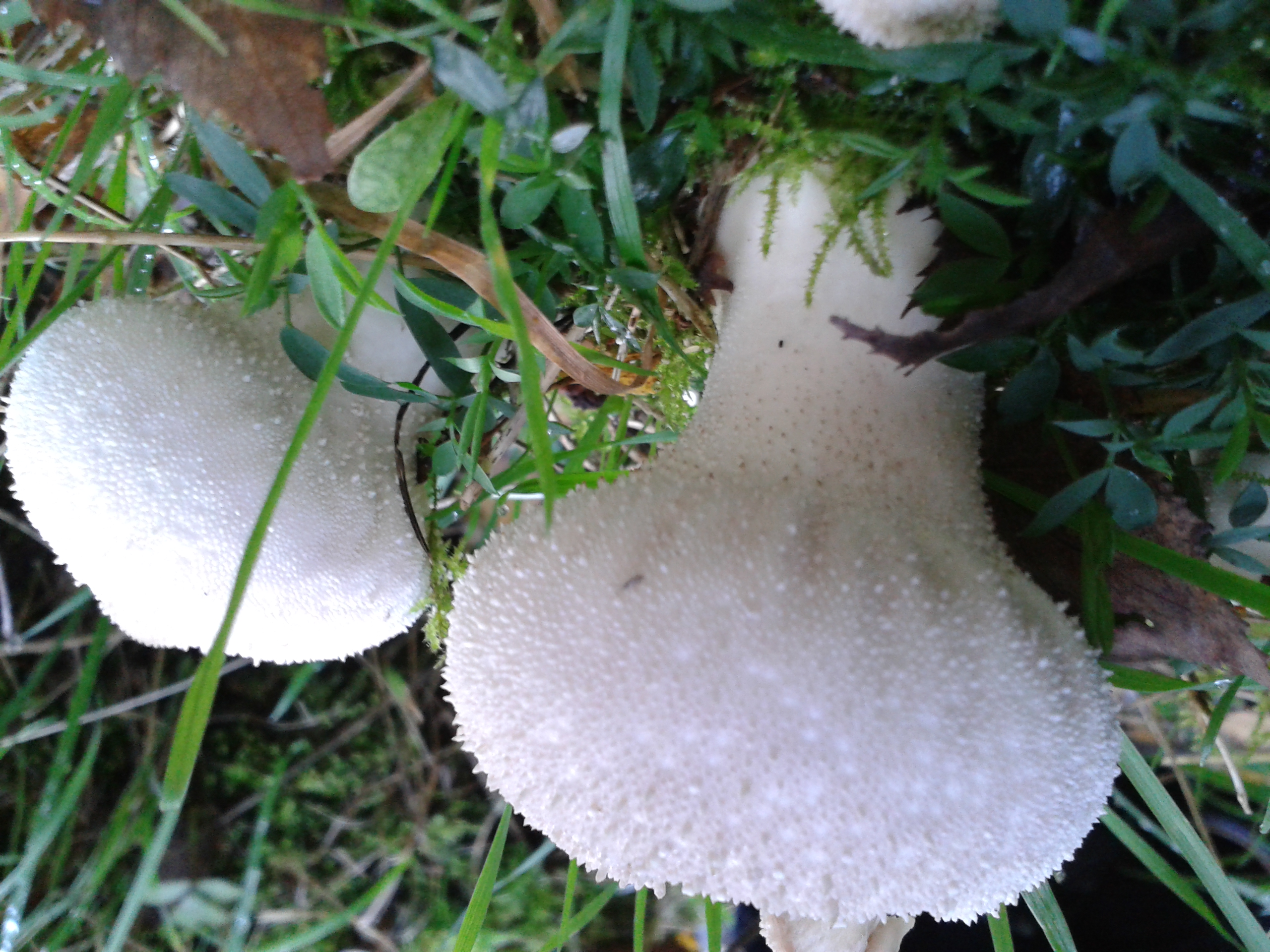
Handsome Common Puffballs, Lycoperdon perlatum
Good big Common Puffballs, Lycoperdon perlatum

In the picnic meadow was a tall slender yellow Inkcap, Coprinus auricomus.
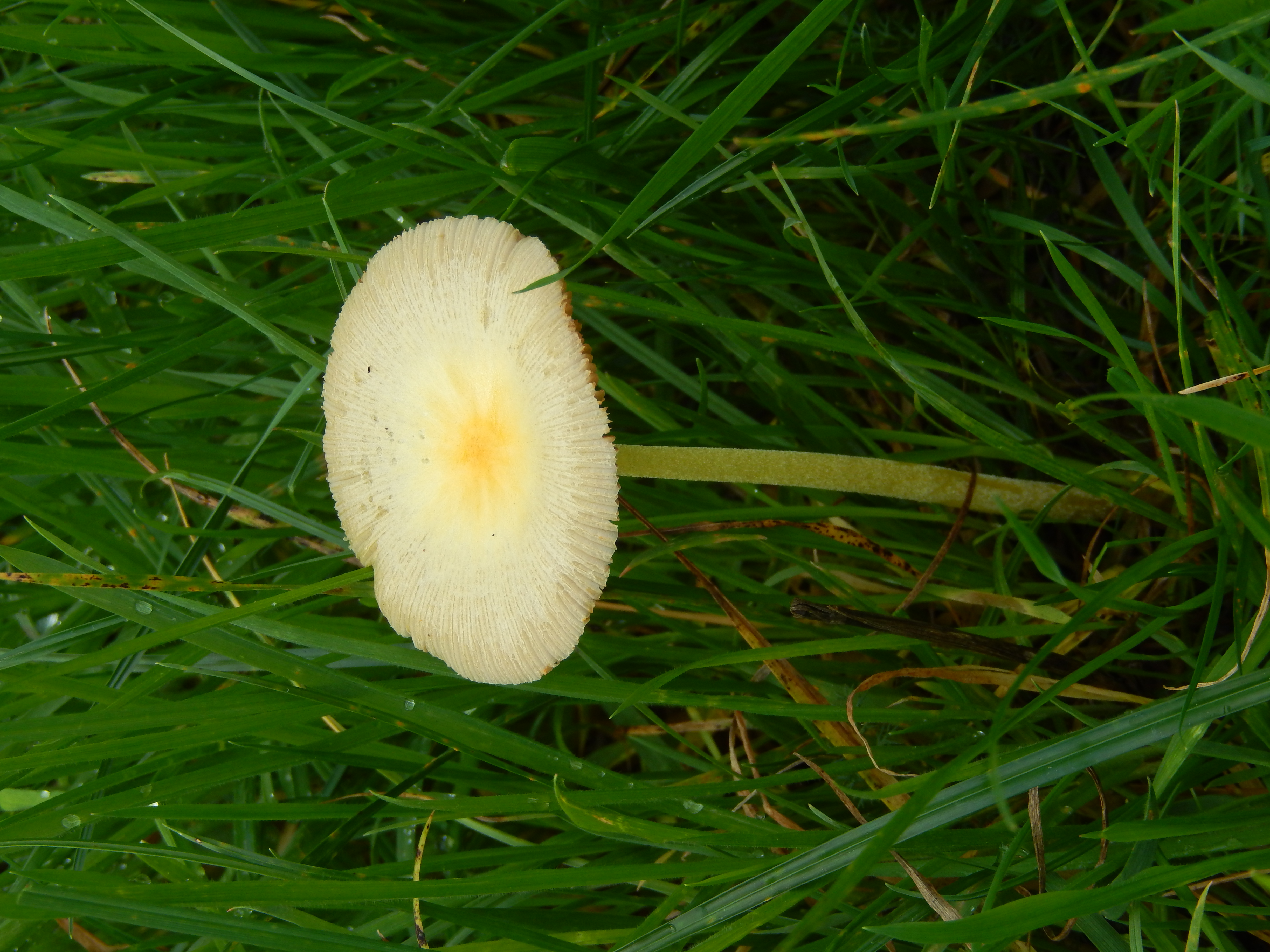
Coprinus auricomus
The delicate, lemon-yellow Coprinus auricomus

A long-bodied wasp, surely a queen, was trapped in the surface film of the pond by the parish boundary stones. We rescued her with a stick to get a closer look.
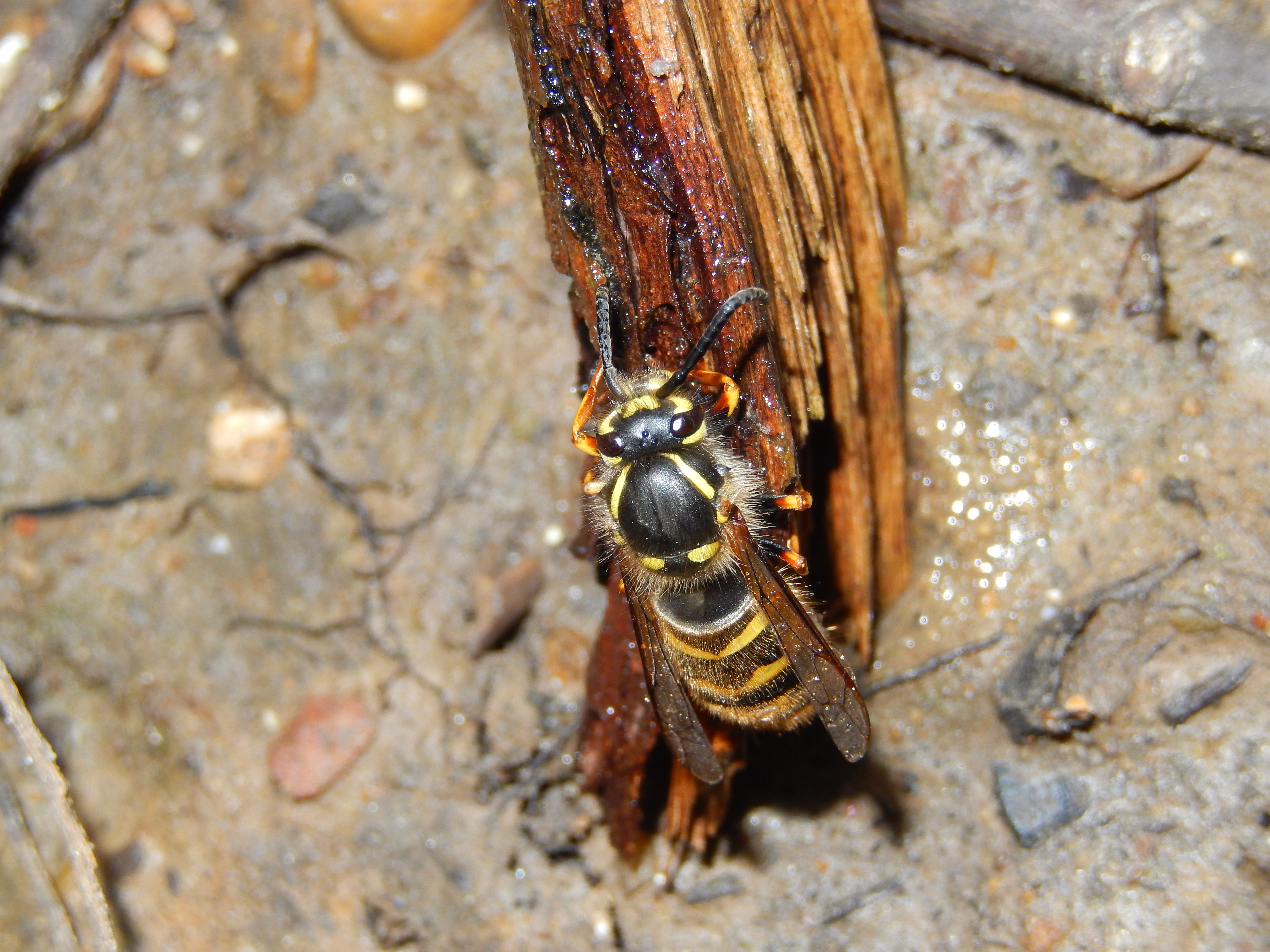
Queen Wasp
Queen Wasp

Two days later: the weather has turned more autumnal and showery. More fungi have popped up, including quite a few Clouded Funnels, Clitocybe nebularis, behind the anthill meadow. The display of Puffballs is fine, the large clean specimens having an obviously grainy, almost pearly surface.
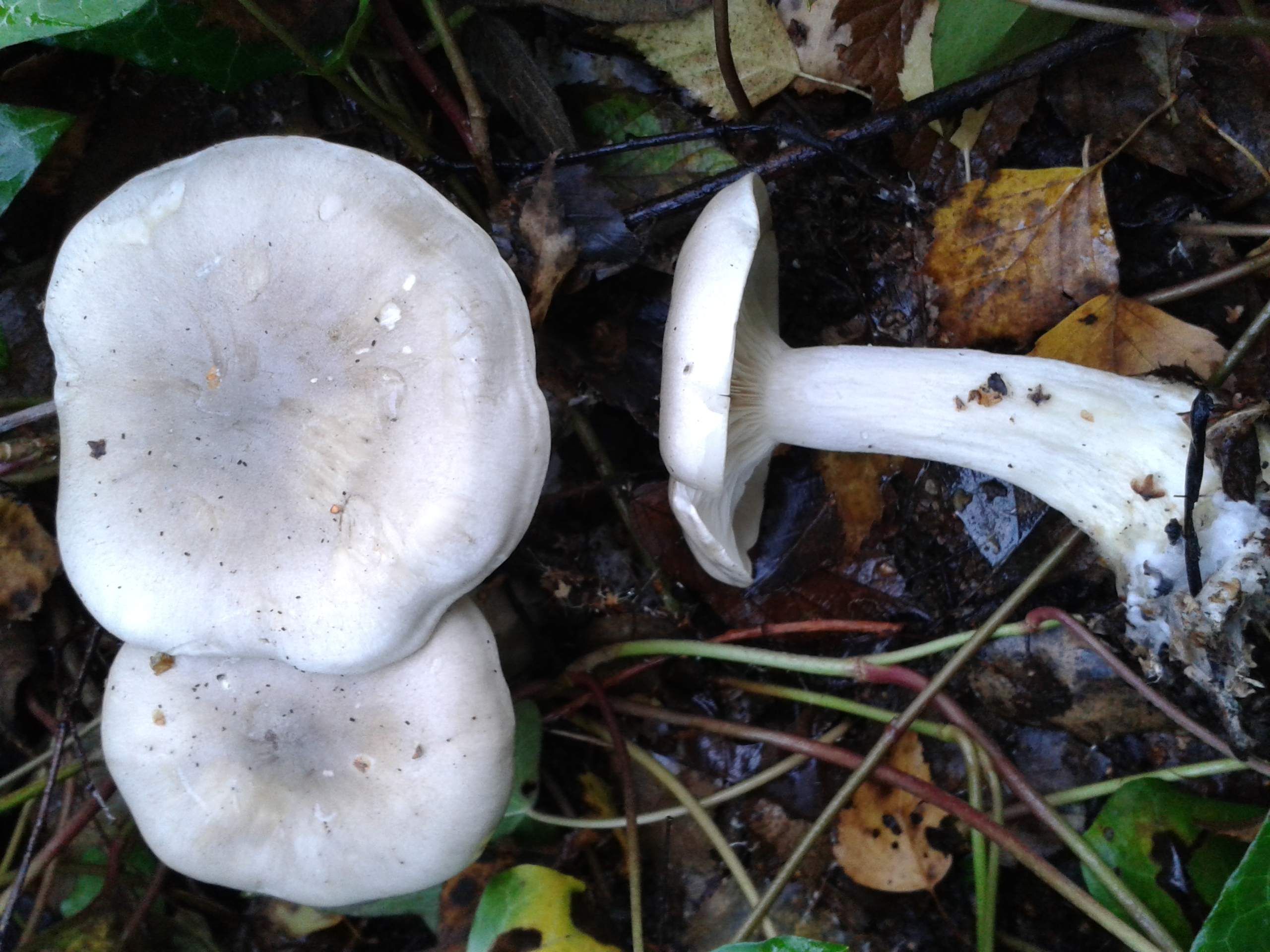
Clouded Funnel, Clitocybe nebularis

Some Sulphur Knights, Tricholoma sulphureum, have grown up behind the loggery at the base of the mound by the pond. They are deep orange-yellow,  quite thick-stemmed, with an flattened or dished cap and widely-spaced gills that barely touch the stem.
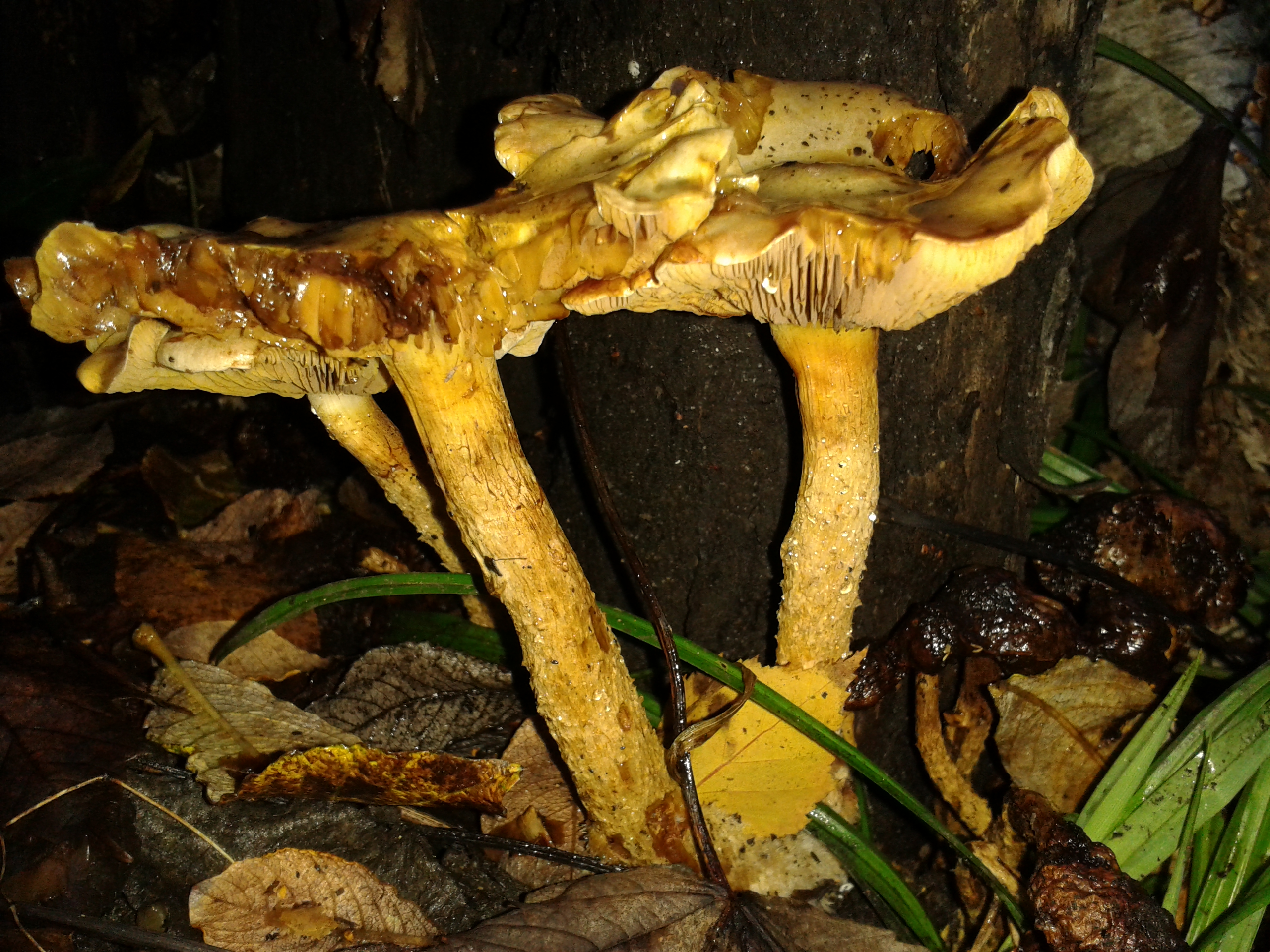
Sulphur Knight, Tricholoma sulphureum

I found a broken Blusher mushroom, Amanita rubescens, in the anthill meadow. In this family of poisonous fungi, some deadly, it is edible when properly cooked, though the water it is cooked in must be thrown away.
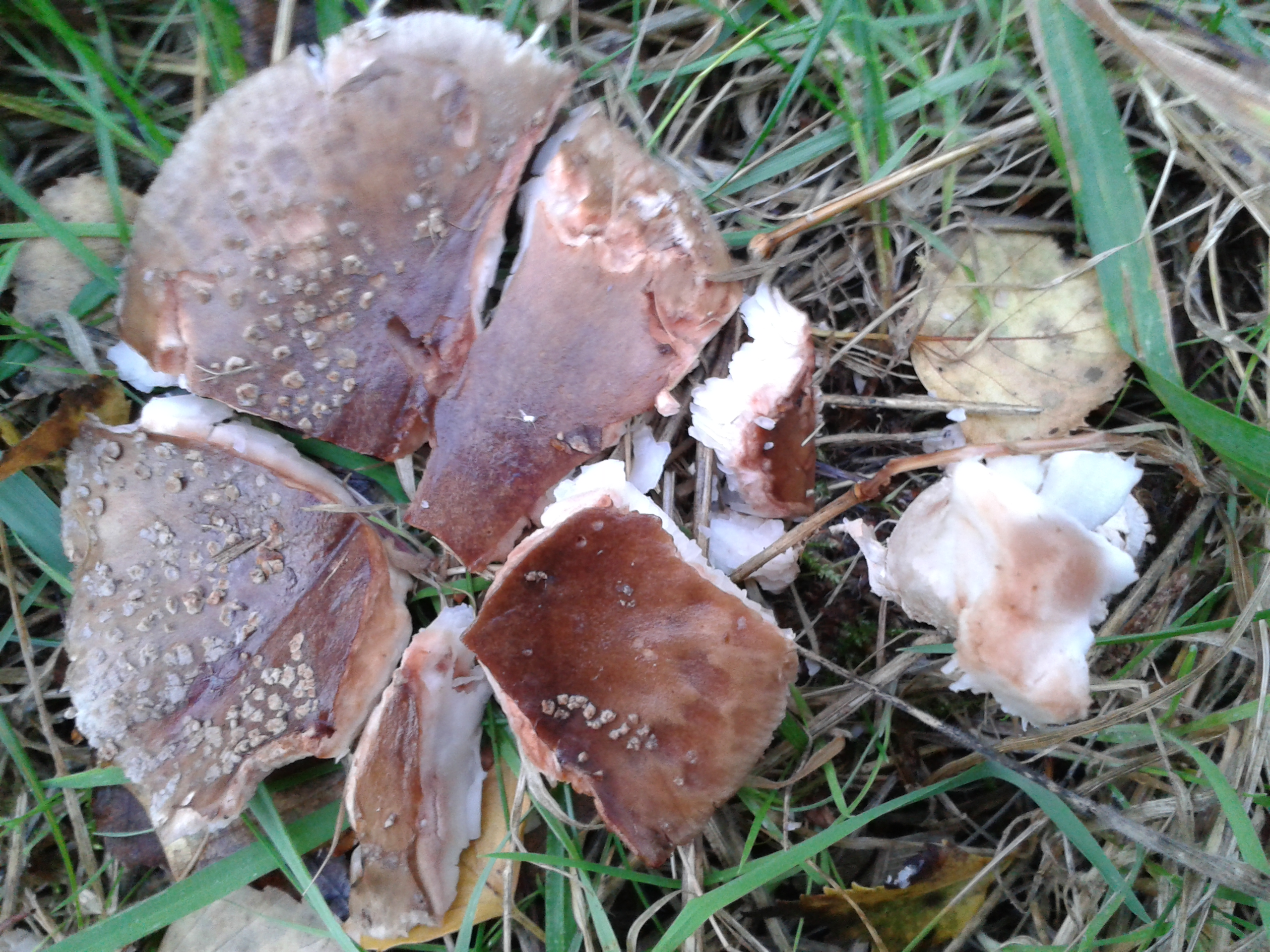
The Blusher, Amanita rubescens (broken)

And a single small Slippery Jack, a suitably slimy bolete. It was yellower than the photograph shows, the cap appearing a shining light brown, the pore surface underneath rather yellow.
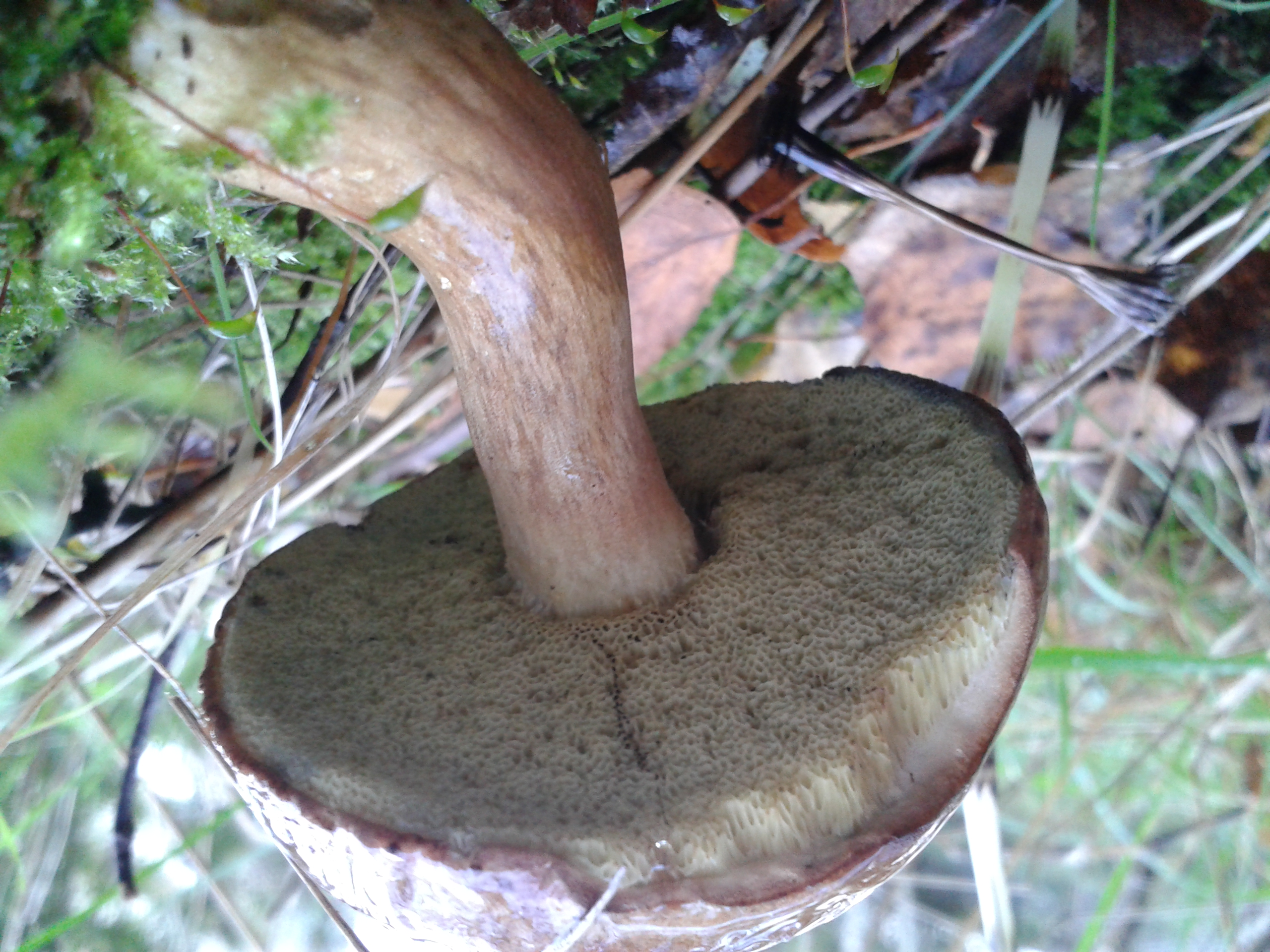
Slippery Jack, Suillus luteus

By the 6th of November it was far colder, and there were fewer species on show, with Fly Agaric, Clouded Funnel, quite a few Butter Caps, and this small gelatinous fungus on dead willow, Tremella mesenterica. I also found a small fragment of an brown Amanita with a white stem, probably A. pantherina, the poisonous Panther Cap.
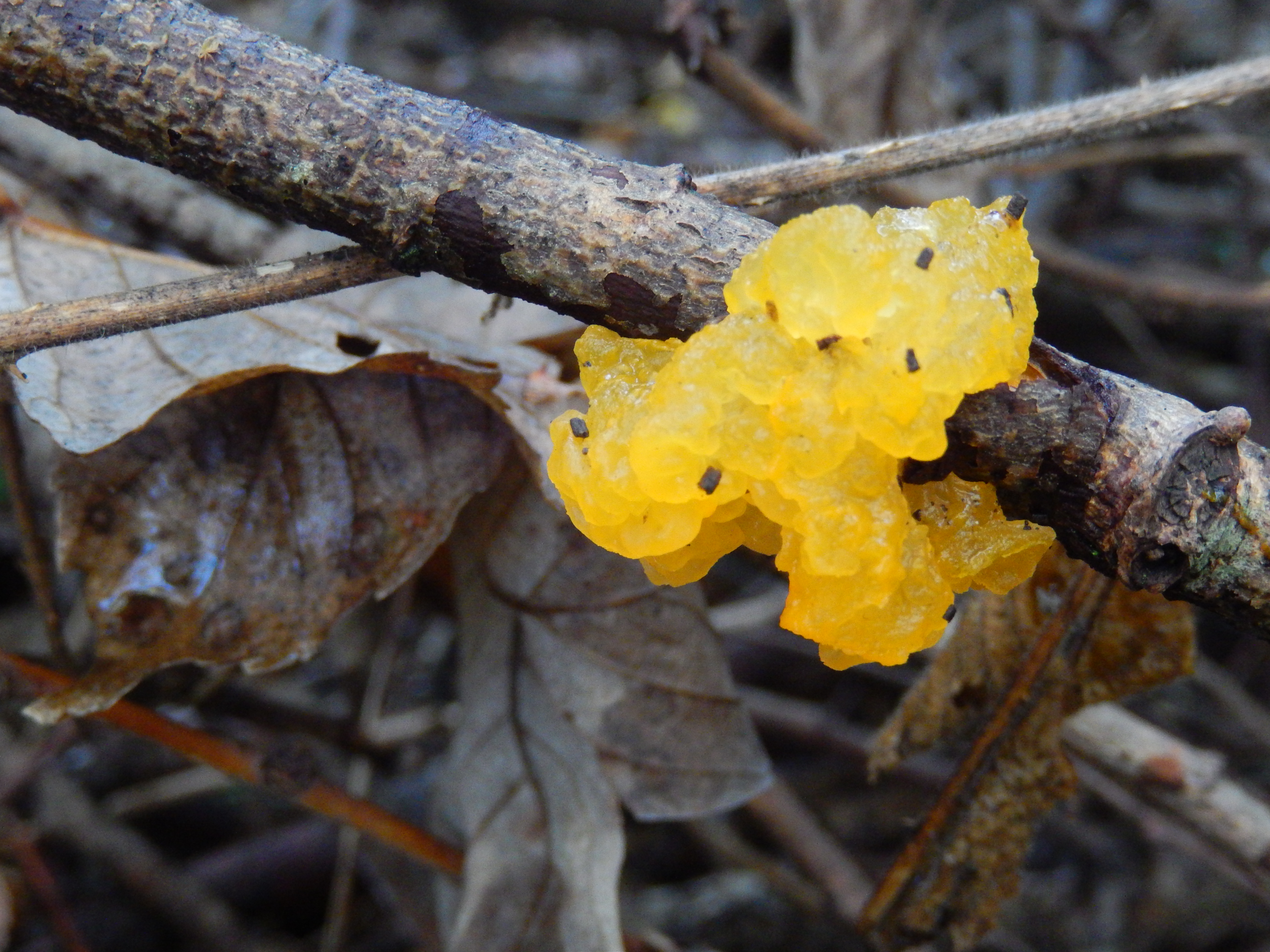
Yellow Brain, Tremella mesenterica
Butter Cap, Collybia butyracea

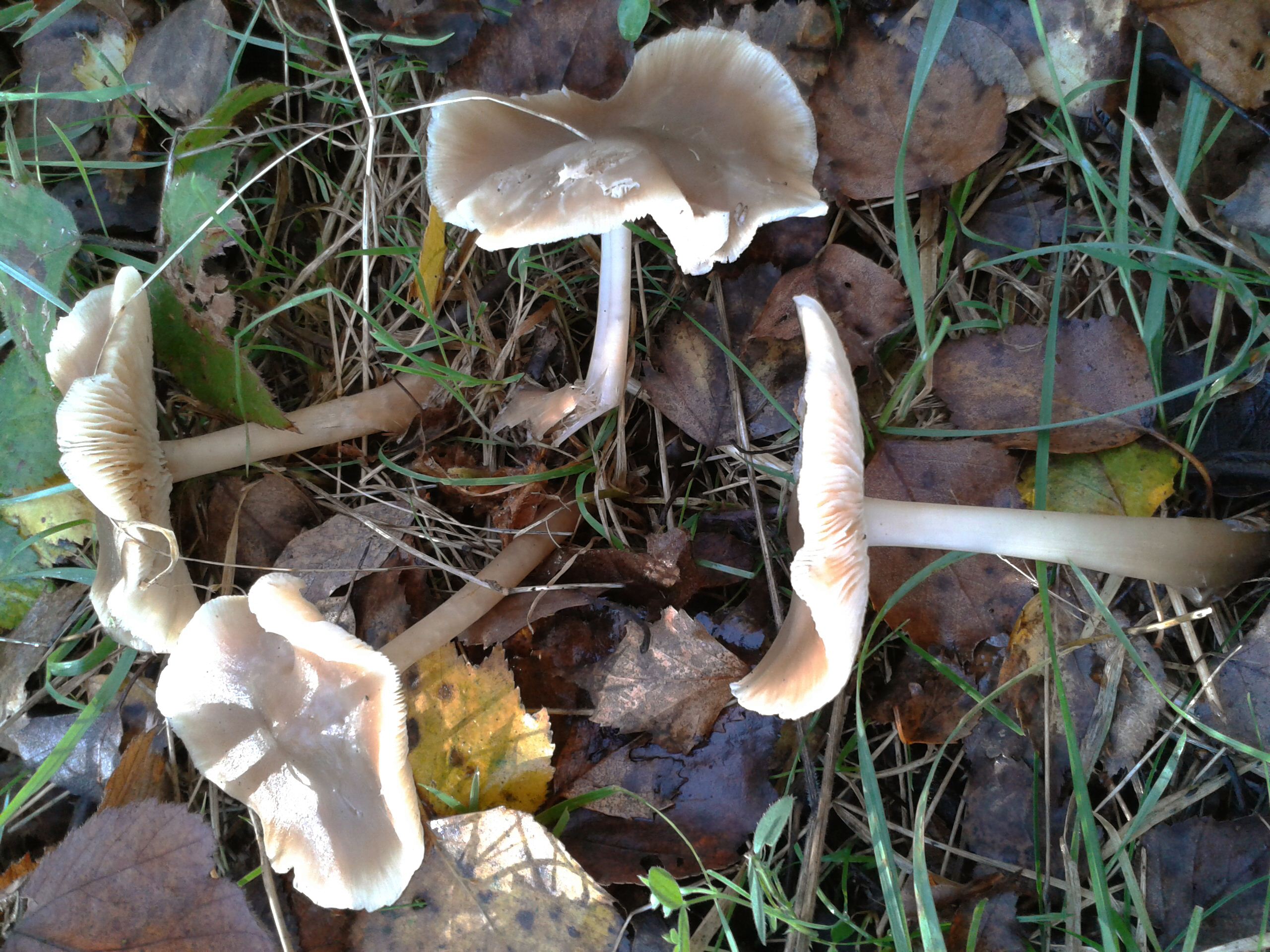
There were several Pale Brittlestem at the edge of the Anthill meadow under Birches, bordering the strip of acid grassland where the railway used to be.
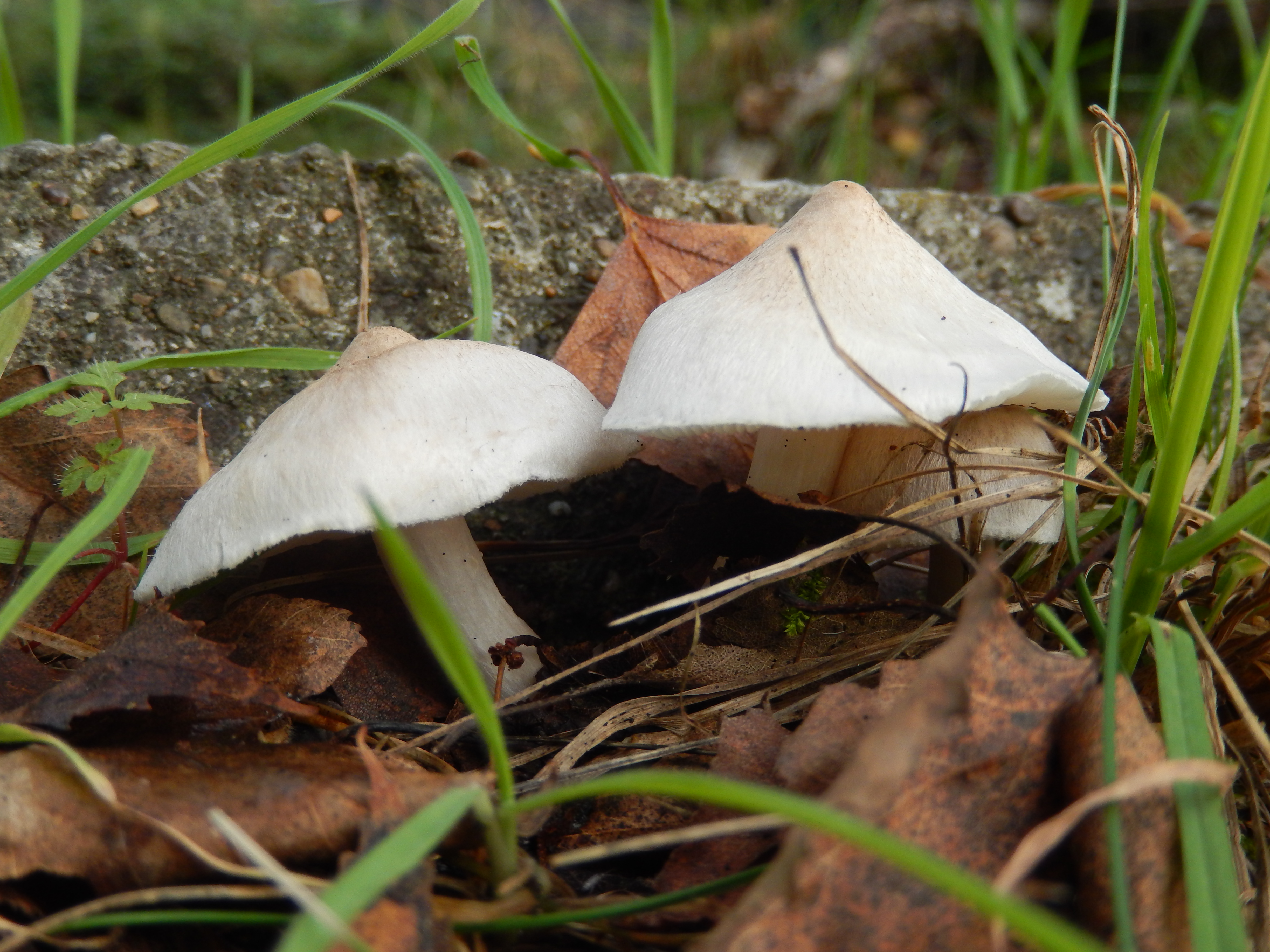
Pale Brittlestem, Psathyrella candolleana

By the 9th of November, things were visibly more autumnal; the Clouded Funnels were still about, now large and more clearly funnel-shaped; a few Butter Caps persisted, along with the Puffballs. The small fungus Phoma hedericola (‘hedera’=Ivy)was by now making large obvious spots on ivy leaves.
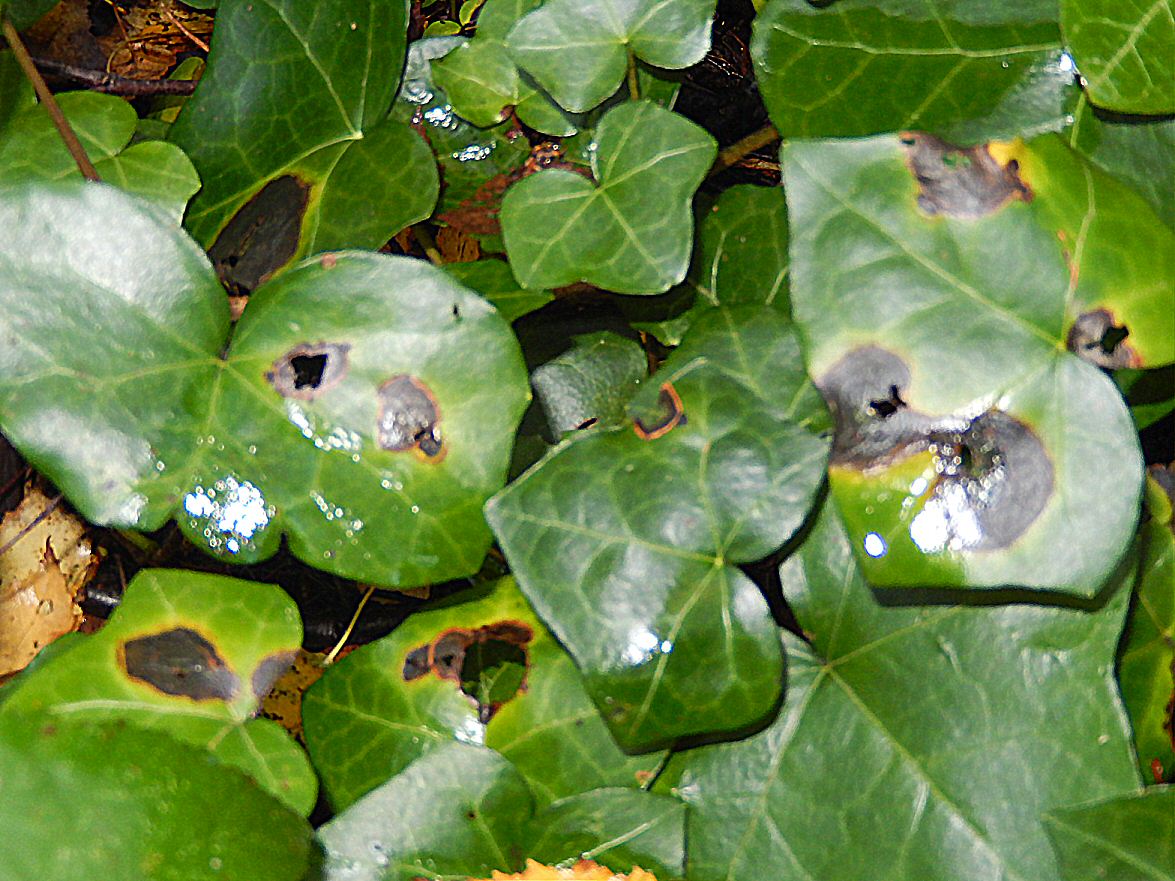
Phoma hedericola on ivy
The Ivy Spot fungus, Phoma hedericola

These little toadstools with a cream-coloured, slimy cap and whitish fleecy stems were growing out of a loggery, the dead wood half-buried in the soil. They may be the Sticky Scalycap, Pholiota gummosa.
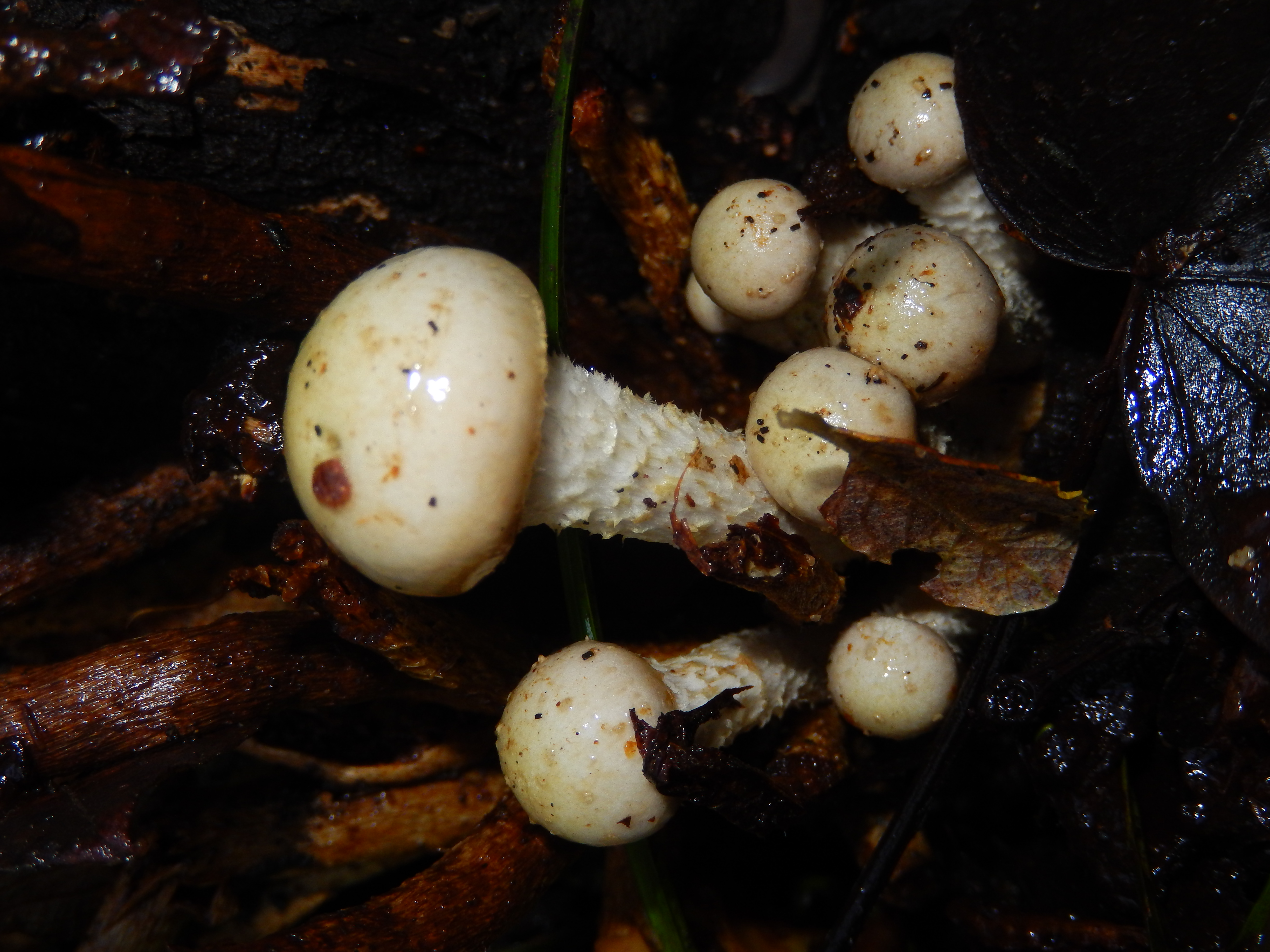
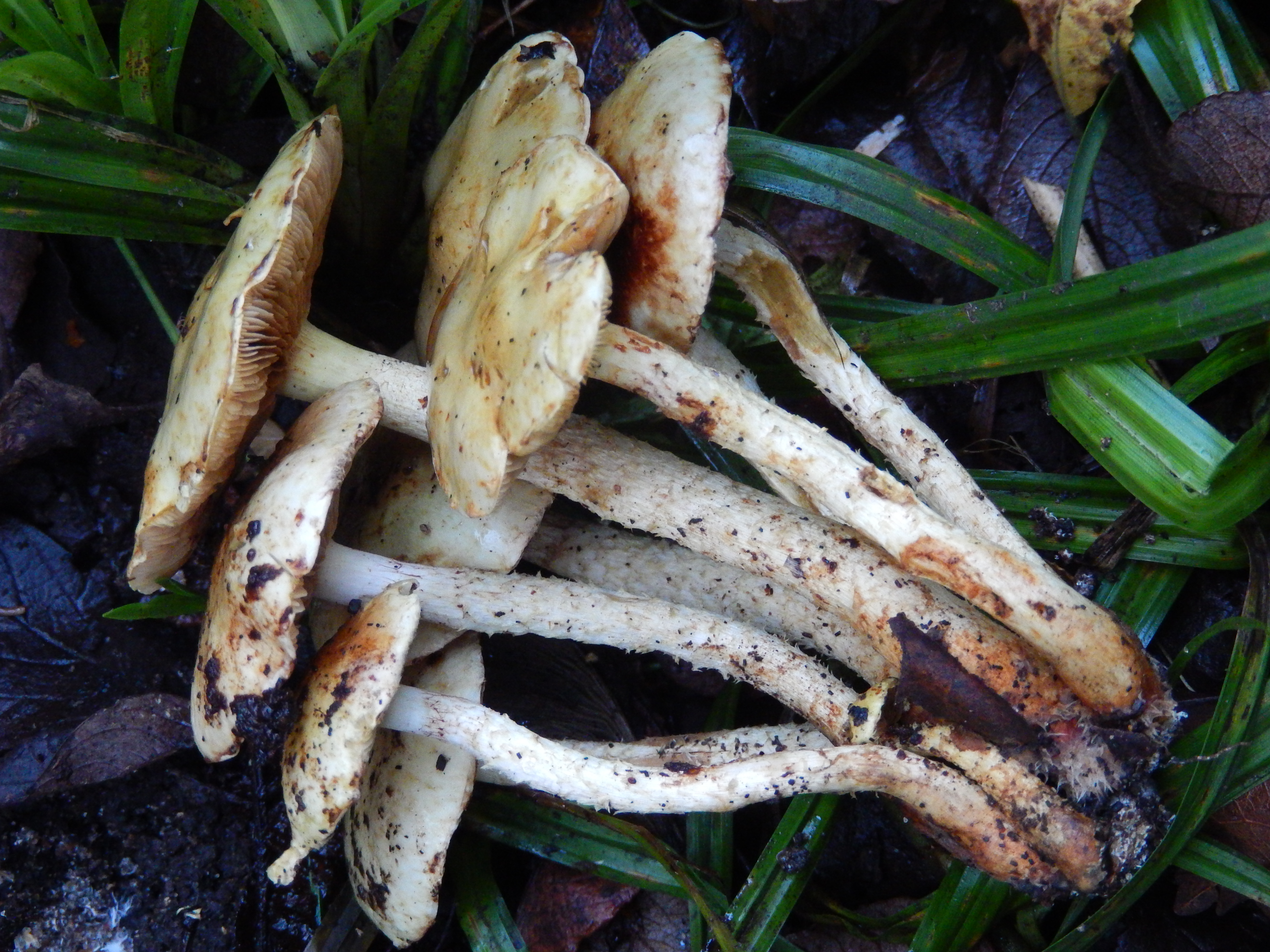
? Sticky Scalycap Pholiota gummosa on 9 November
Sticky Scalycap, Pholiota gummosa on 19 November
Same group of ? Sticky Scalycap, Pholiota gummosa on 19 November

Finally, no collection of fungi is complete without The Deceiver, Laccaria laccata, which comes in a variety of sizes, shapes and colours. It’s typically rather russet-brownish and the stem is quite thin, often a bit flattened and twisted. The cap can be round or wrinkled; it begins rather globular and flattens out. It’s rather well-named. Mind you there are several similar species: this could easily be L. fraterna, given its smooth brown stalk and rather rufous cap.
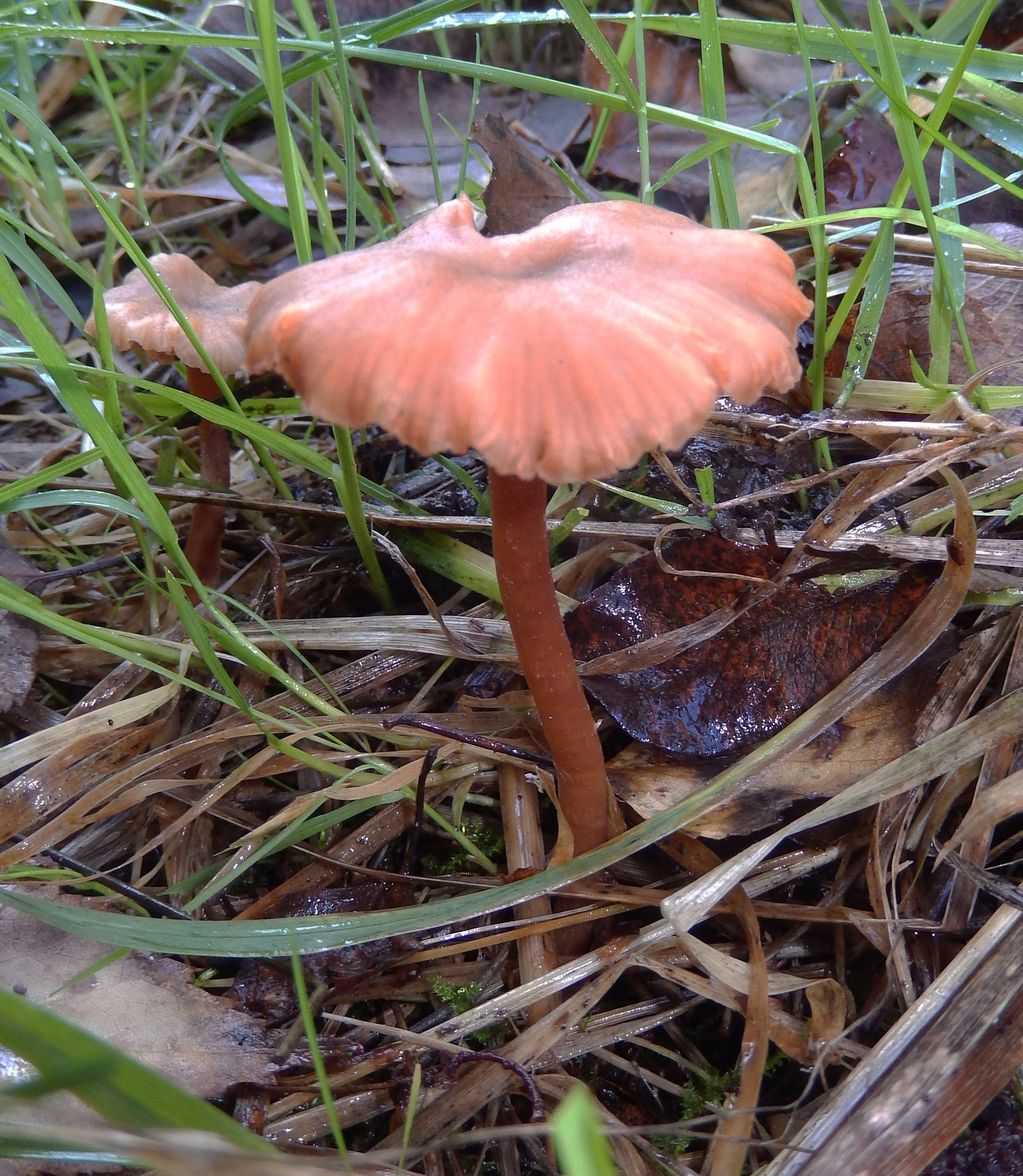
The Deceiver Laccaria laccata

Fungi are continuing to appear as late as the 11th of November. The magnificent Collared Earthstar, Geastrum triplex, was growing under birches, willows and oaks behind the anthill meadow.
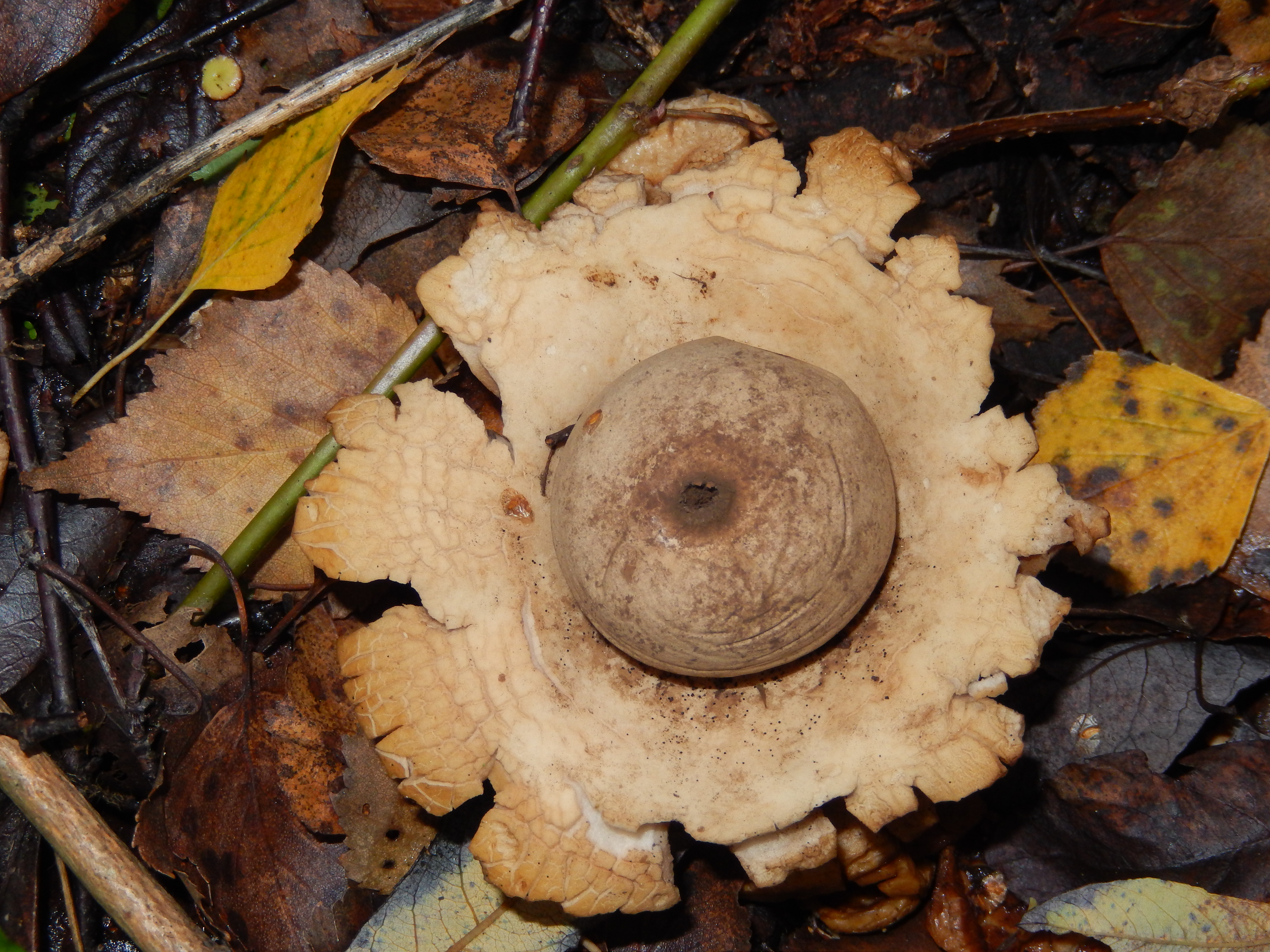
Collared Earthstar Geastrum triplex

On the 12th of November:

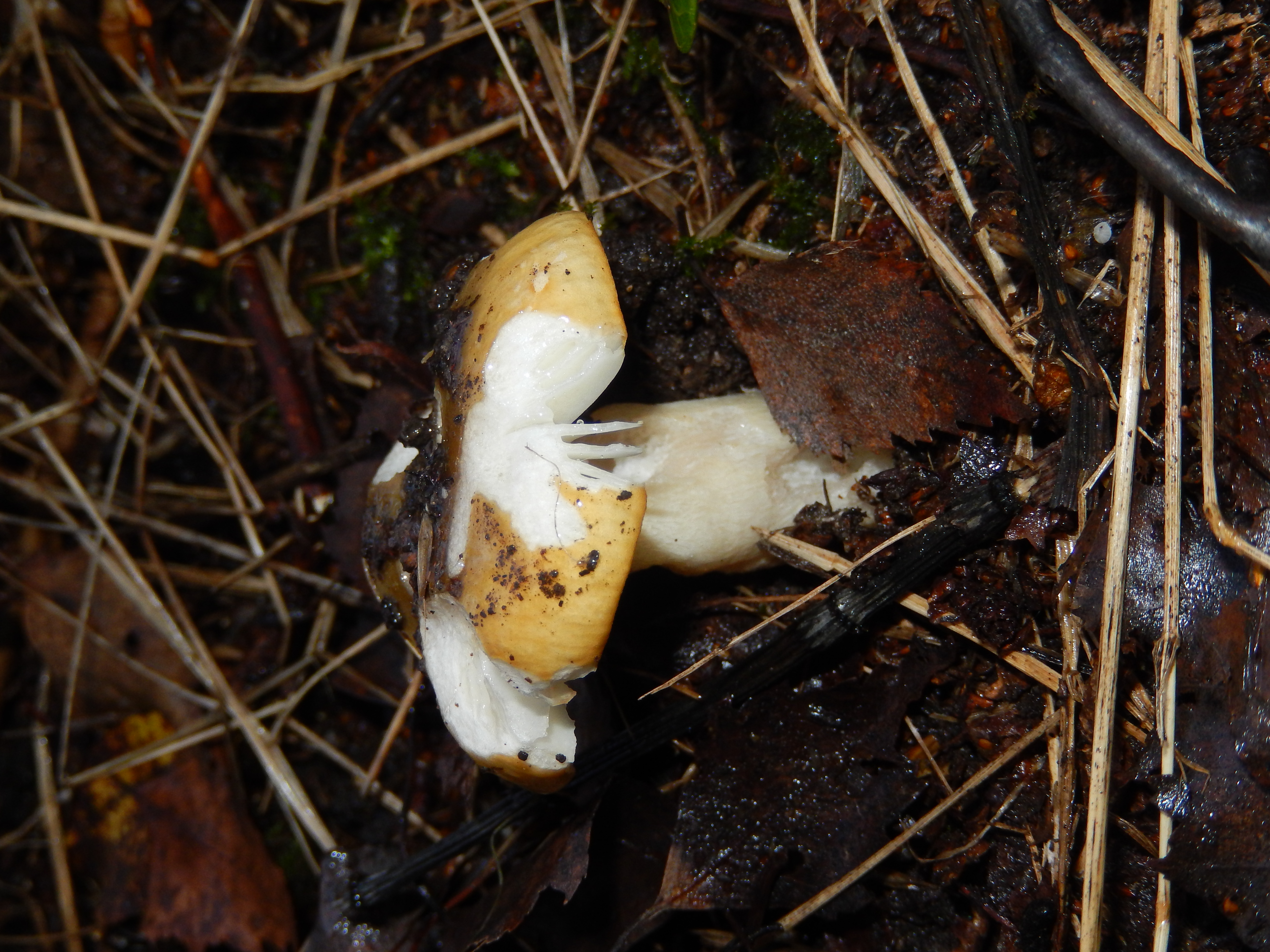
A yellow Russula, perhaps R. claroflava (Yellow Swamp Brittlegill)
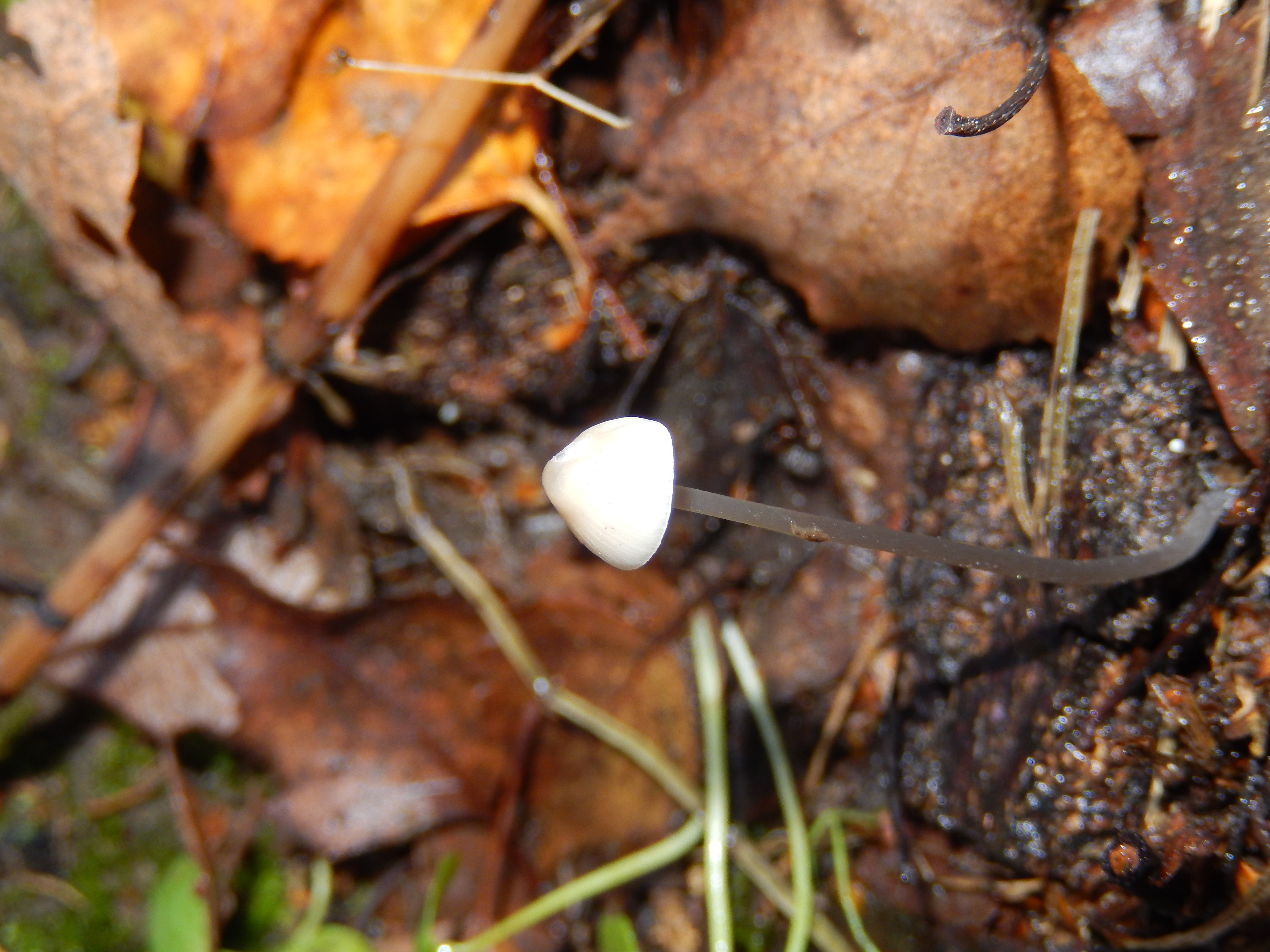
A Bonnet, Mycena sp.

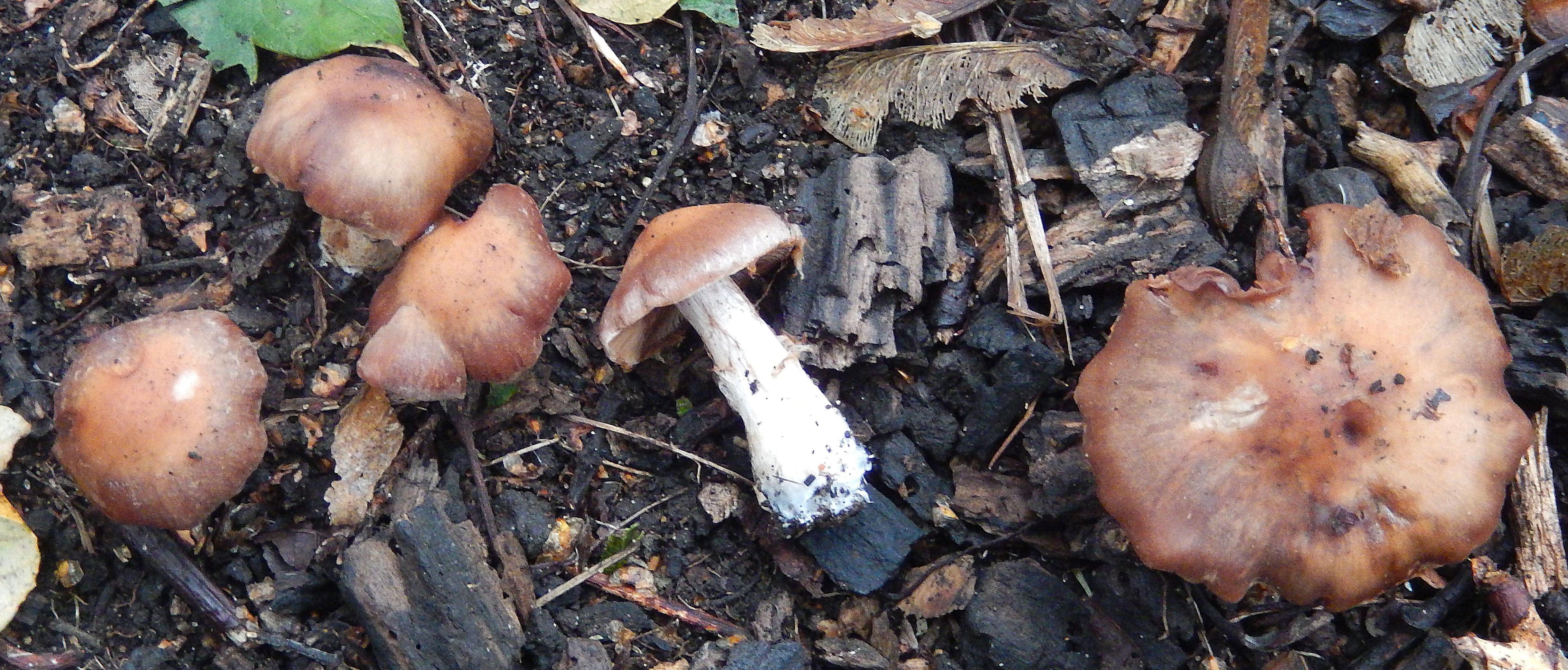
On 18th November, a troop of smallish, tall, pale Coprinus that don’t really turn to the usual black ink, growing on woodchip beside the path. Seems close to Coprinus impatiens.
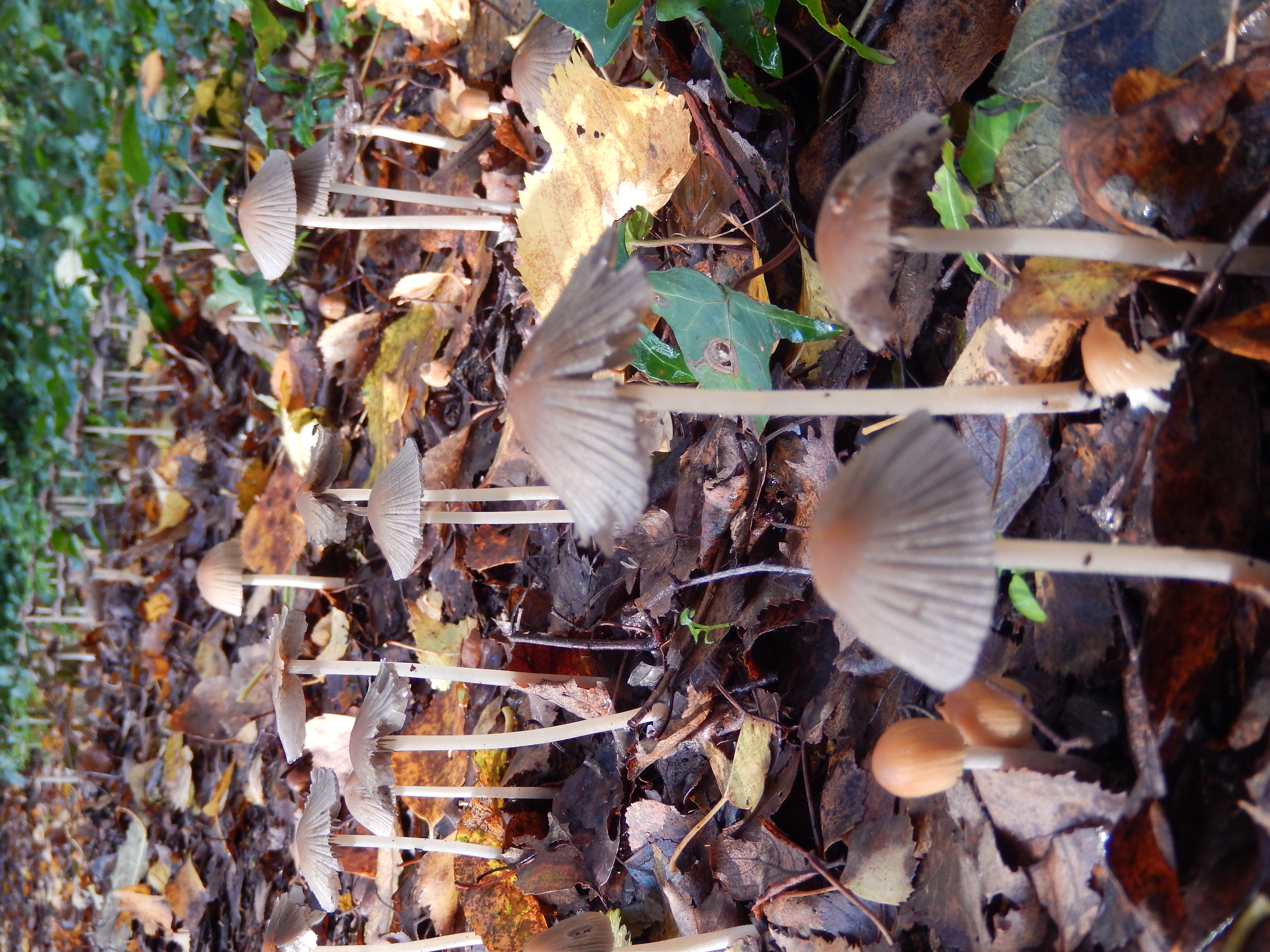
Coprinus cf impatiens on woodchip

Roses in the Snow? Global warming, maybe

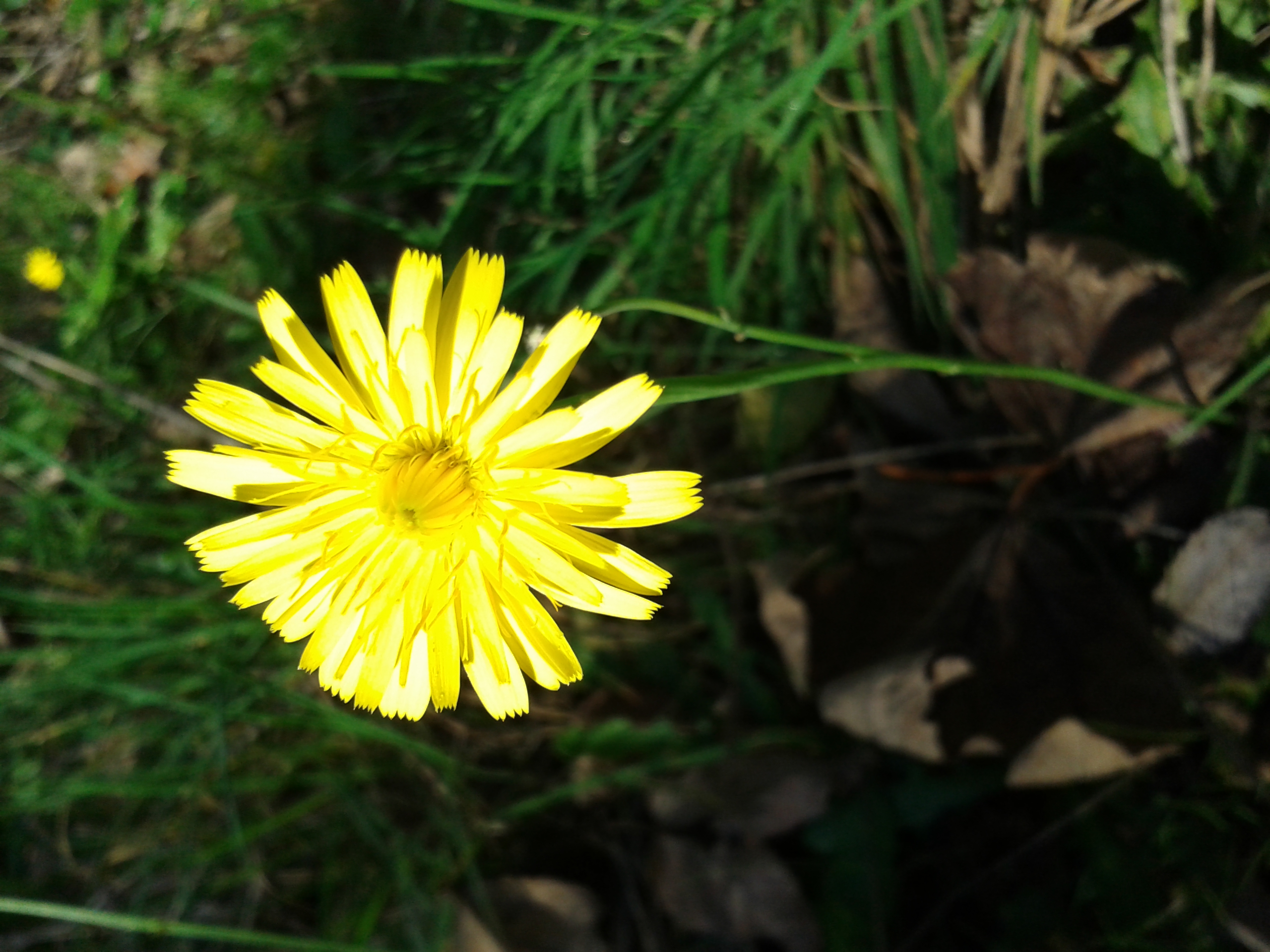
Crepis vesicaria - Beaked Hawk's-beard
Crepis vesicaria – Beaked Hawk’s-beard

Emmylou Harris sang of sunshine in December and roses in the snow. It’s only the 28th of October, so not that late in the year yet, but the mercury climbed to an improbable 18 Celsius – that’s T-shirts and sunhats for work down at the nature reserve – and there were indeed roses blooming in the garden.

For the record, also in flower today were Alpine Pink, Tayberry, Squash, Strawberry, Primula, Nasturtius, Hydrangea, the little New Zealand Sorrel that manages to grow between the paving stones, and Daisy.

Down at the reserve, Beaked Hawksbeard has come back into flower (for the second time this year) on the picnic meadow. It seems that the warm weather has coaxed the plants to try flowering. They’ll get a bit of a shock with the change coming in the weather tomorrow, probably. It certainly feels like an odd bit of Phenology, but of course we won’t know for many years whether this is part of a long-term trend to do with global warming, especially as the global average temperature has been taking a holiday from its inexorable rise for some years now. When the temperature does take off, it will be too late to stop, and very costly to mitigate.

Judging by the feeble global co-operation on the far more obvious and immediate threat of Ebola virus, it’s hard to be optimistic about our ability to collaborate as a species on anything as large as global warming. The Drake equation, the one that predicts the number of intelligent civilisations in our galaxy, has a term for the lifetime of a civilisation, as Prof. Brian Cox recently explained in his TV series Human Universe. If it’s only a few centuries, that would neatly explain why – despite the profusion of suitable-looking planets – we haven’t been contacted by any other civilisation. That would imply that “intelligent” life never lasts very long on any planet. However hard it tries to be sensible, selfishness – which must always be favoured by evolution for short-term gain – always takes over, and people use up the resources of their home planet until – pof! – they wipe themselves out. Just clever enough to be really stupid. What a cheerful thought.

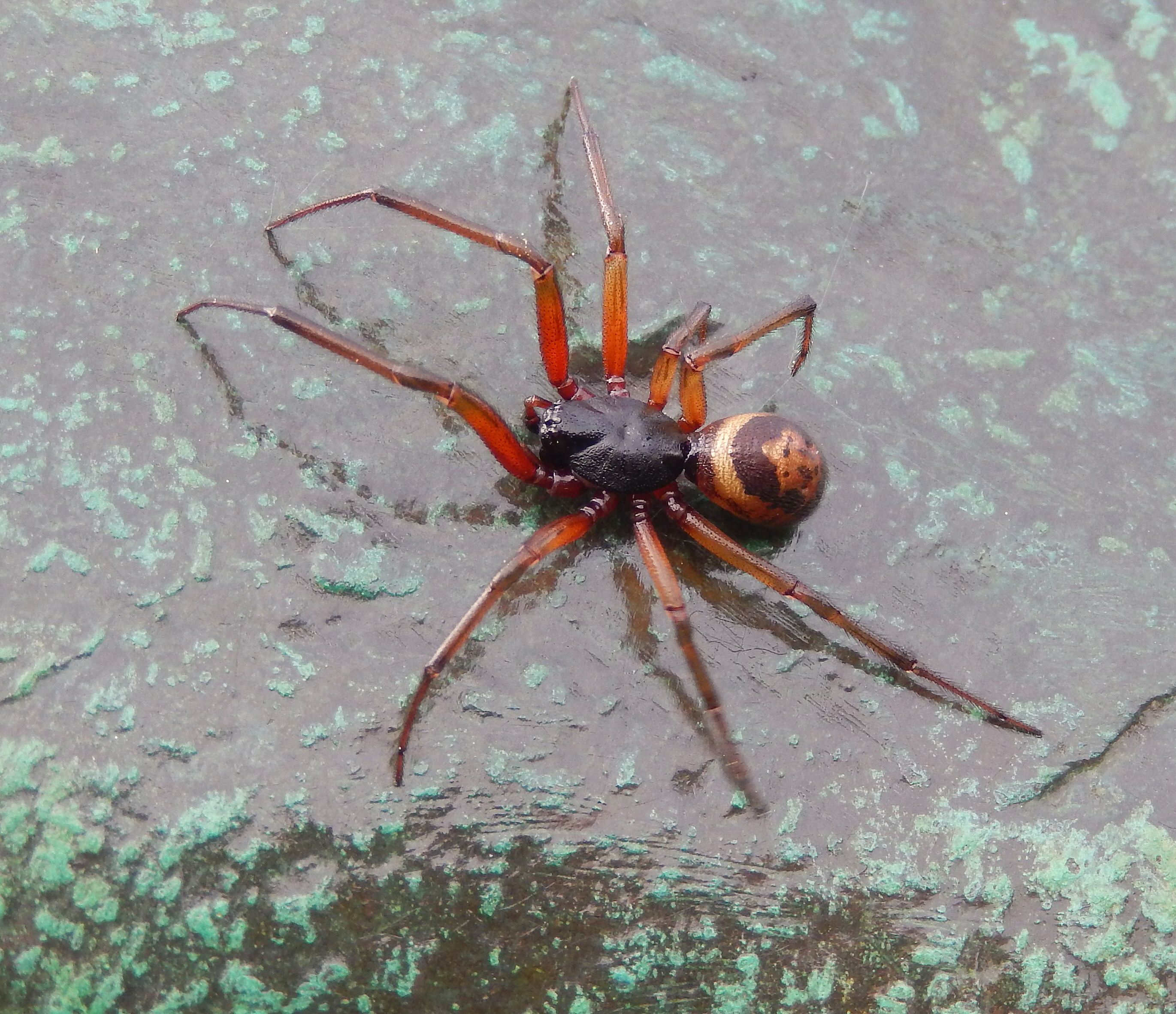
Is that a Noble False Widow spider, then?

perhaps Noble false widow spider, Steatoda nobilis on Henry Moore statue

Well, it was certainly a large and striking spider with a distinctive crescent mark on the forward slope of its abdomen, so “False Widow Spider?” sprang into my mind. It was, amusingly, making itself conspicuous on the noble bronze surface of the Henry Moore statue in Kew Gardens: there’s just one now, reminding old-timers of the ‘one behind every bush’ feeling we had in 2006 when the gardens were full of Henry Moores, and I confess I pretty much ‘understood’ what they were about for the first time, seeing them against a natural (well, you know what I mean) background as massive, handsomely curved figures. One was near a splendidly branchy conifer, its huge curved branches setting off the sculpture.

But I digress. The spider had a finely moulded cephalothorax and a large, nearly globular abdomen, marked with a sandy crescent and a dotted area. Its legs were distinctively reddish. Back at home, I looked up images of false widows. It certainly wasn’t the large native False Widow, Steatoda bipunctata. It looked much like the introduced Steatoda nobilis; perhaps the dotted area on the abdomen was not typical, but it seems close enough. The species, according to the Natural History Museum, arrived here in the 1870s — not quite such a new arrival as the ebola-panicky tabloid newspapers seem to think, then. It most likely arrived among bananas from Madeira and the Canary Islands, so it really is a subtropical scary. It can “live comfortably in our homes all year round”, says the museum cheerily, and is now common and widespread. And yes, it does bite; but the effect is not much worse than a wasp sting. I suspect a bit of hydrocortisone cream would sort it out nicely. Or a swift tap with a shoe, of course.

Destroying Angel and other Fungi at Gunnersbury Triangle

Destroying Angel
Destroying Angel

With the rain, mushrooms are suddenly pushing up.

Large, handsomely patterned Puffballs

The acid grassland is dotted with large handsome puffballs; under the birches are a lone destroying angel, a small spherically-capped fly agaric, a brown birch bolete, and many smaller fungi including the amethyst deceiver.

The tail end of Hurricane Gonzalo is blowing leaves off the trees; the reserve is quite sheltered, and it is pleasant to work in the passing showers and bursts of sunshine, pulling up ivy and brambles, making space for grassland to regenerate and for new saplings to sprout. But with the mushrooms and the wind, it is at last starting to feel like autumn.

Of Muntjac and Roosting Cormorants

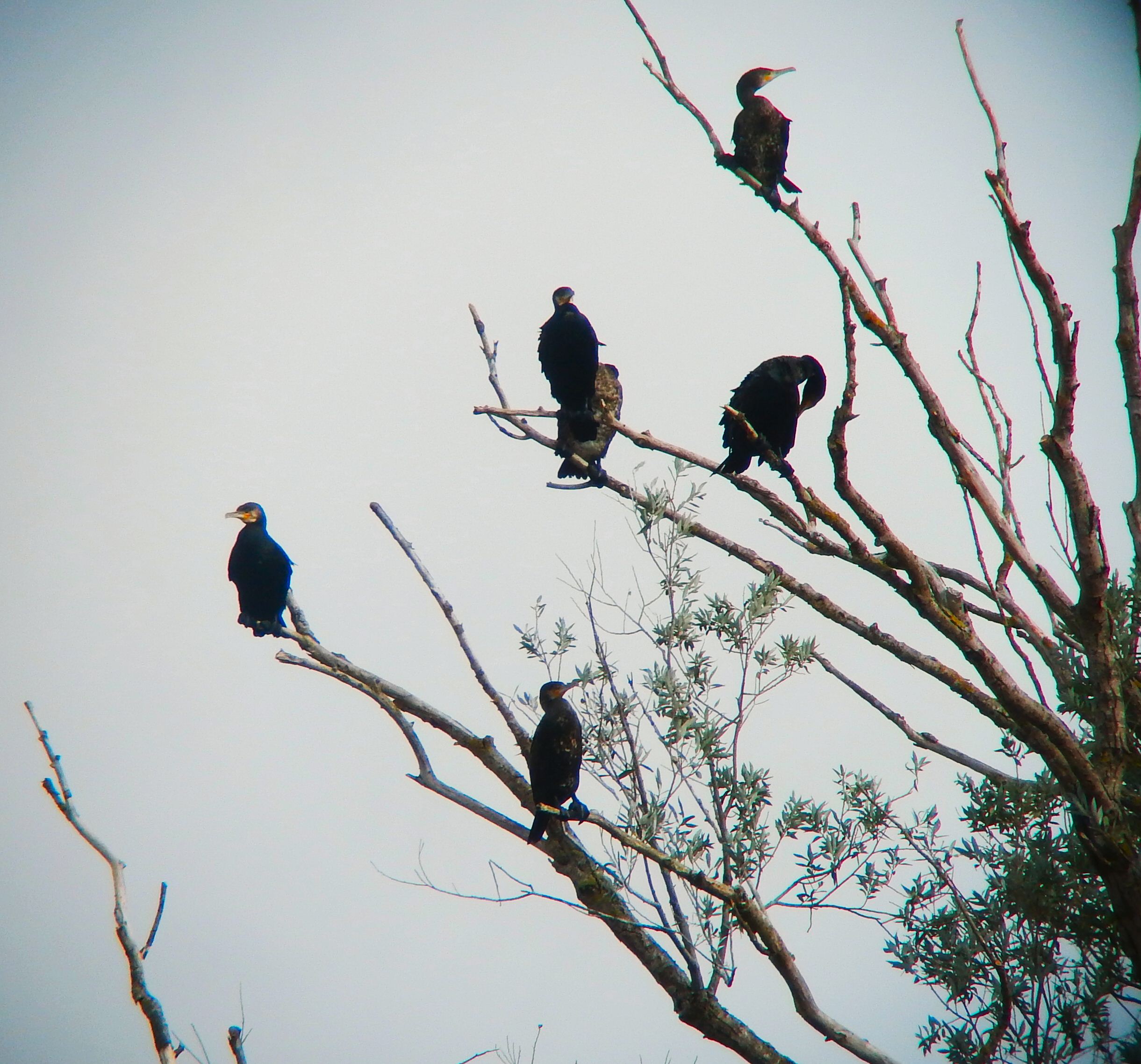
Cormorants roosting at Wraysbury Lakes

Yet another astonishingly warm day, not exactly Indian Summer now with a cloudy start, but too hot for more than a t-shirt by midday. The Wraysbury Lakes were quiet, the winter ducks represented only by a few shoveler and a couple of gadwall. The most impressive waterbirds were the cormorants roosting on the dead branches of a large willow.

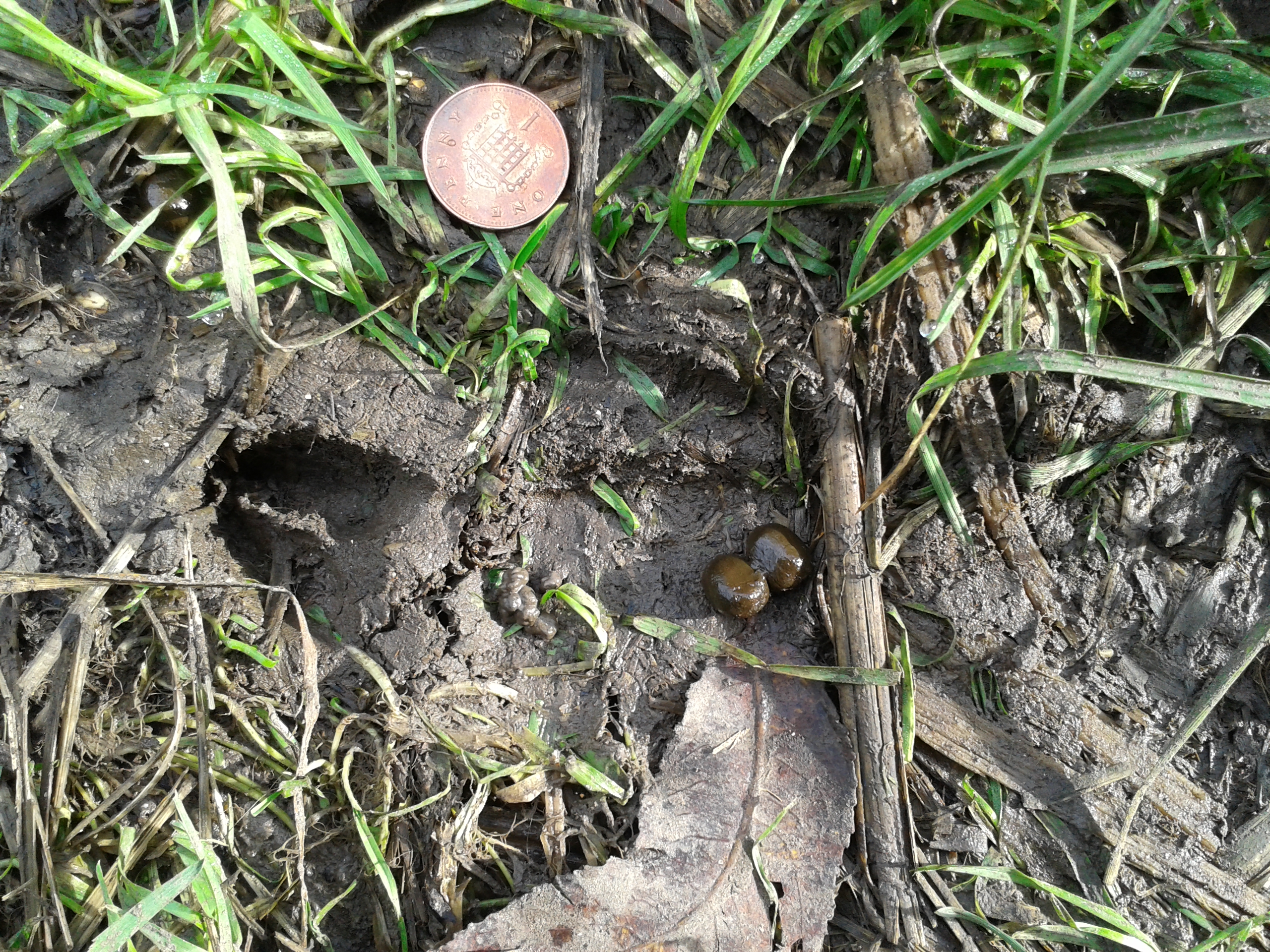
Muntjac footprint and pellets

On the path I found a single muntjac deer footprint, with its tiny pellets. A few goldfinches twittered in the bushes, and a linnet. A buzzard circled over the hills in the distance.

The Trouble with Sheep

The Trouble with Sheep

I have an unhealthy obsession with sheep. It occupies many of my waking hours and haunts my dreams. I hate them. Perhaps I should clarify that statement. I hate not the animals themselves, which cannot be blamed for what they do, but their impact on both our ecology and our social history. Sheep are the primary reason – closely followed by grouse shooting and deer stalking – for the sad state of the British uplands. Partly as a result of their assaults, Wales now possesses less than one-third of the average forest cover of Europe. Their husbandry is the greatest obstacle to the rewilding I would like to see.

— George Monbiot. Feral: Rewilding the Land, Sea and Human Life. Penguin, 2014. Pages 154-155.

Buy it from Amazon.com
Buy it from Amazon.co.uk

Autumn Migration, Fall Colours

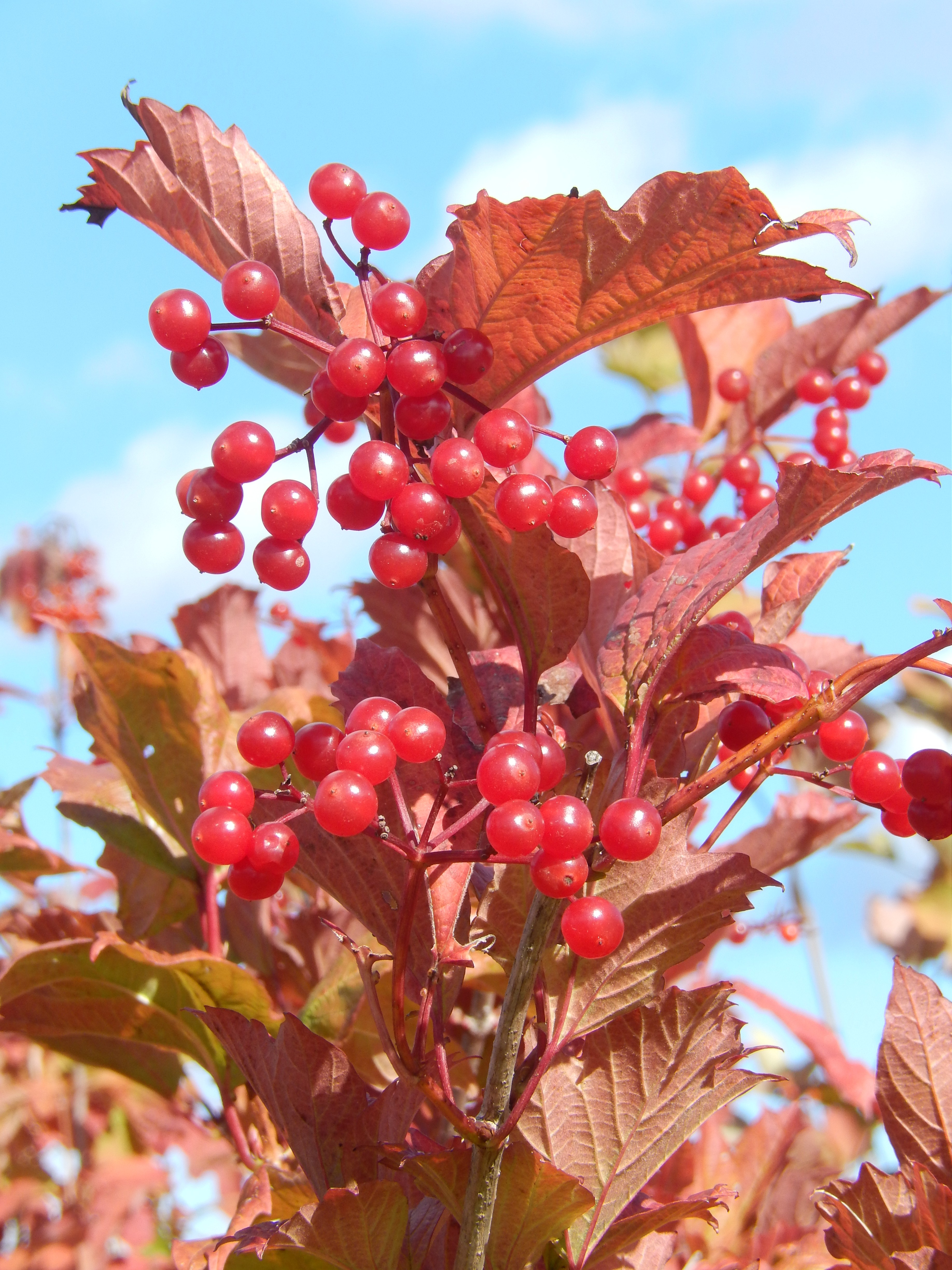
Autumn Reds: Guelder Rose at London Wetland Centre

Today a brisk southwesterly wind blew the ragged clouds away, and it suddenly felt very much like autumn. The willows have lost many of their leaves, while other trees are still fully clad in green. Down at the Wetland Centre, the Guelder Roses were resplendent in scarlet: the photo is exactly as taken.

Down on the grazing marsh, a few migrant birds were giving the resident birdwatchers a treat. The Peacock Tower echoed to excited calls as a Whinchat perched on a faraway reed to the left, a Jack Snipe bobbed obligingly among some dead reeds to the front, and a Stonechat perched momentarily on a reed to the right. To my own surprise I saw all of them, even confirming that the Jack Snipe was bobbing up and down and had a dark stripe down the centre of its head. When it sat still it was marvellously hard to see, even in a telescope zoomed in and centred on the bird, its disruptive patterning doing an excellent job of breaking up its shape and matching the light and shadow of the vegetation around it.

Round on the wildside of the reserve, a few (Migrant) Hawker dragonflies and some Common Darters were still flying; and overhead, five House Martins, presumably on their way down south from somewhere far to the north, were busy refuelling on the many small insects flying over the water.

Golden Spindles

I didn’t even bother to struggle round the Fungus Foray in the afternoon, as it was obvious from the dry weather of the last month that there wouldn’t be any mushrooms to speak of. So I wandered along to say hello to whoever came along, and perhaps see some other wildlife.

Sure enough I met Alick Henrici, the indefatigable mycologist; he leads fungal forays in every county, even the Grampian Fungus Group, so he gets about a bit away from his home patch in Surrey, especially Kew Gardens. He said there was nothing to see, barring a few certainties like Phoma hedericola (Hedera=Ivy) which forms small dried-out looking patches on “almost every Ivy leaf”.

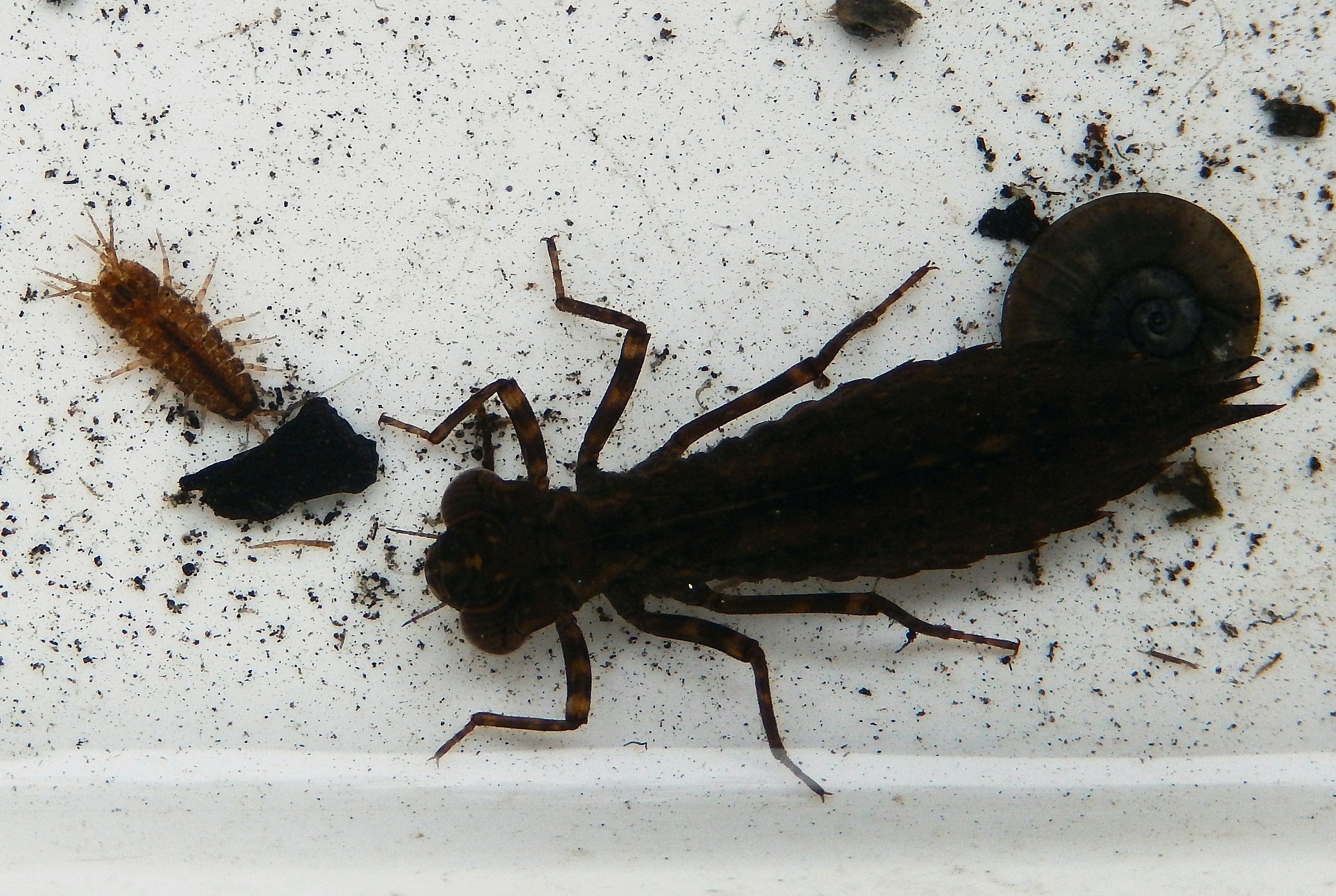
Around the corner, as he had said, some children and their mothers were thoroughly enjoying pond-dipping. Most of the summer animals were nowhere to be seen – not a newt anywhere, hardly a waterflea – but I saw some Pond Skaters, a Water Boatman, a few tiny damselfly nymphs, a Hoglouse or two, and a couple of plump dragonfly nymphs.

Hoglouse, Dragonfly nymph
Hoglouse, Dragonfly nymph, Ramshorn snail

A weird, soft screeching noise was coming from a small oak above the pond. It wasn’t quite the harsh screech of a jay, and if it was a crow it had a seriously odd high voice. I climbed up to have a look. A grey squirrel was the source. It was alone so it wasn’t clear why it was calling.

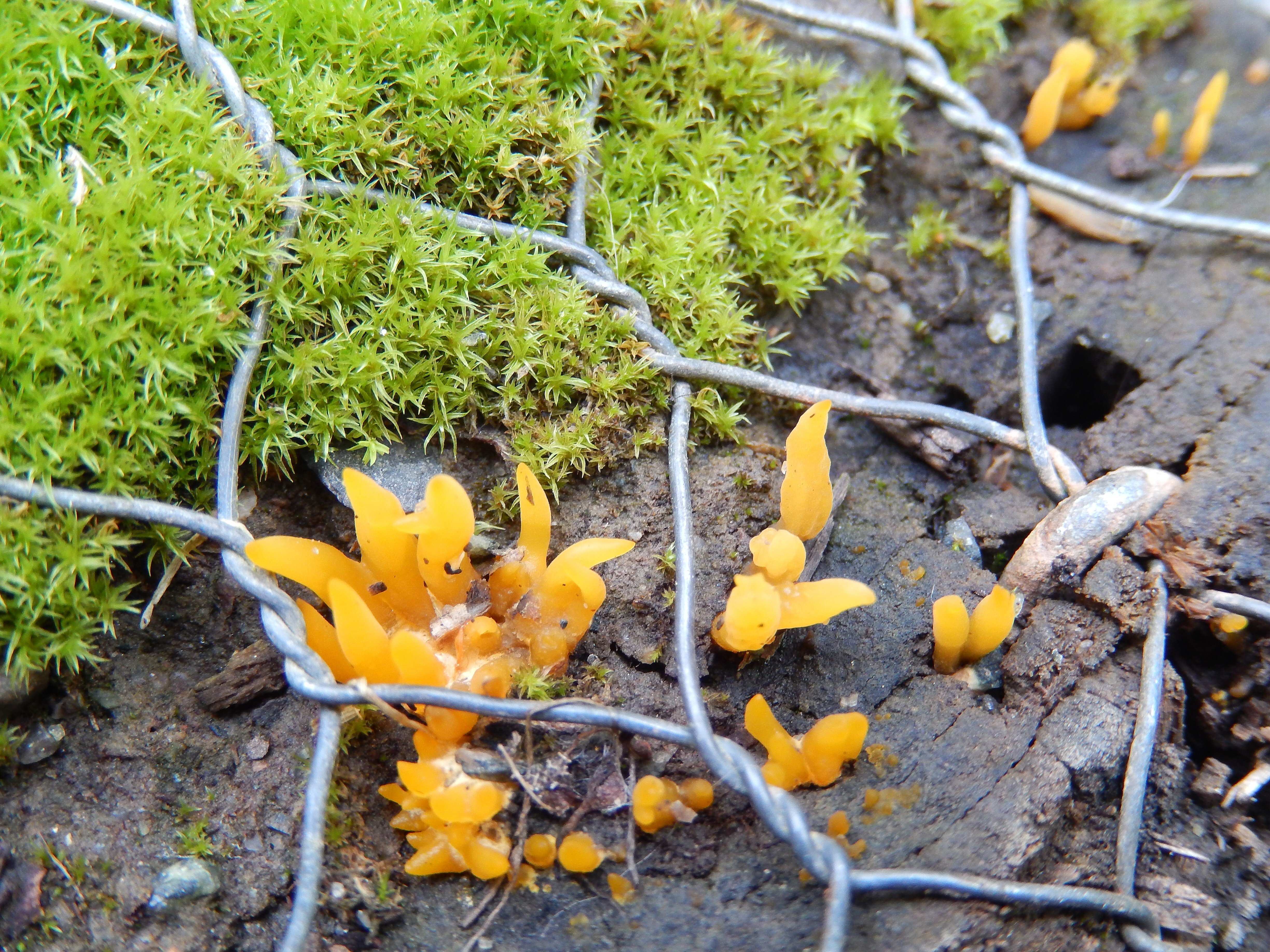
On the steps over the mound are some wooden posts to keep the uprights in place. And peeping through the wire netting on the mossy top of one of these posts was a teeny tiny clump of a yellow Ascomycete fungus, the ‘Golden Spindles’ toadstool, Clavulinopsis fusiformis. The holes in the netting are about a centimetre across.

Clavulinopsis fusiformis

Of Snails and Pipits

On an incredibly warm afternoon for the end of September (26° C), I went for a walk around Wraysbury Lakes, not expecting to find much: nearly all flowers should be over by now; it’s too warm for most birds to bother migrating south for the winter; insects and birds have mainly finished their showy summer breeding season; the winter ducks will not yet have arrived from the north. So I determined to relax and enjoy whatever might turn up, if anything.

There were not many ducks on the lake: mostly Tufted, a few Mallard, but 13 shy Gadwall under the far bank. A couple of Great Crested Grebes, a Heron, and a family group of cygnets made up the waterfowl, but for a party of a dozen Cormorants flying past. There were no gulls except a few Black-Headed. For the warblers, a couple of Cetti’s sang briefly; something churred once; and a few Chiffchaffs called.

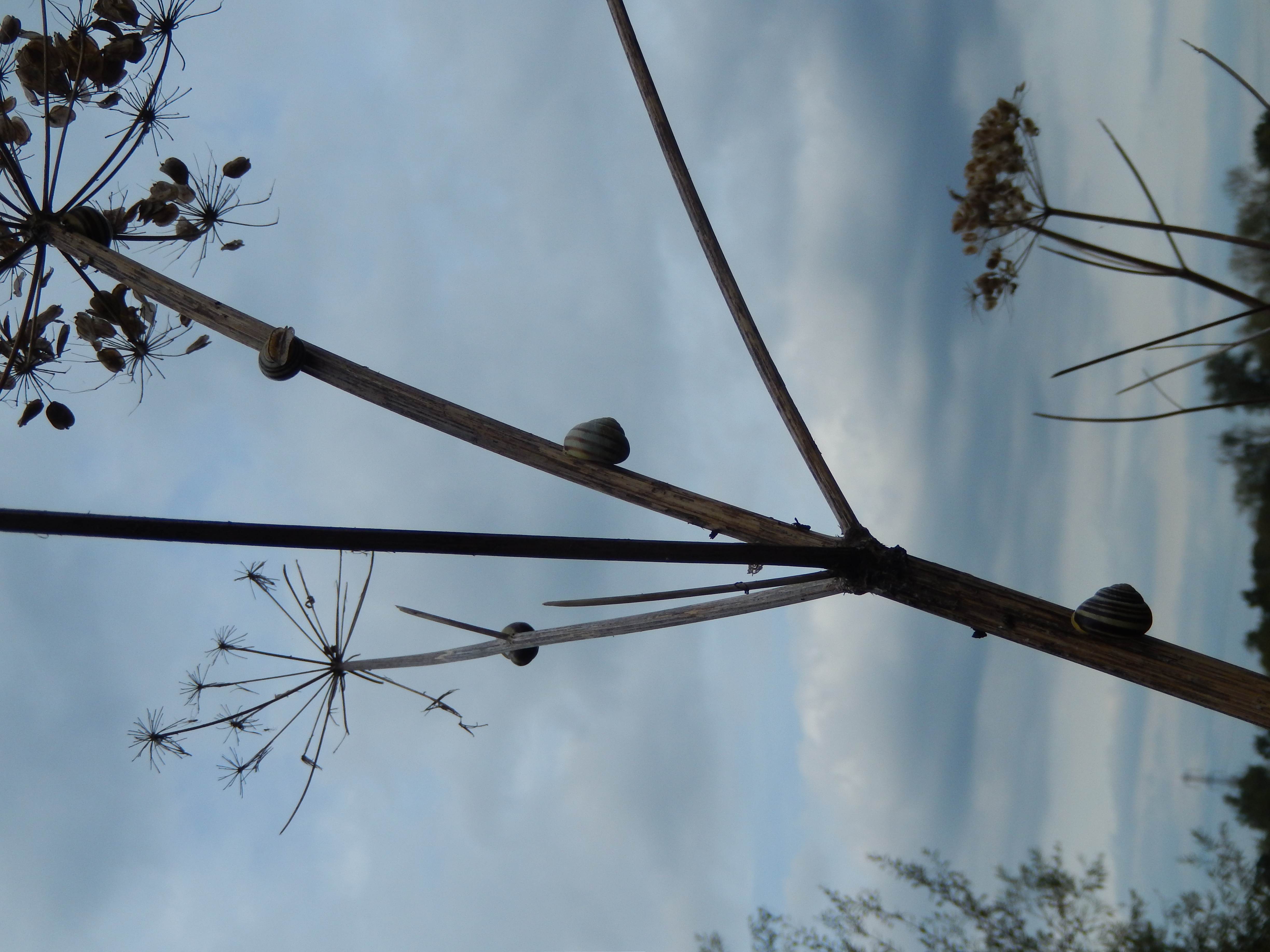
Banded Snails on dried Hogweed
Banded Snails on dried Hogweed: there are 5 in the photo

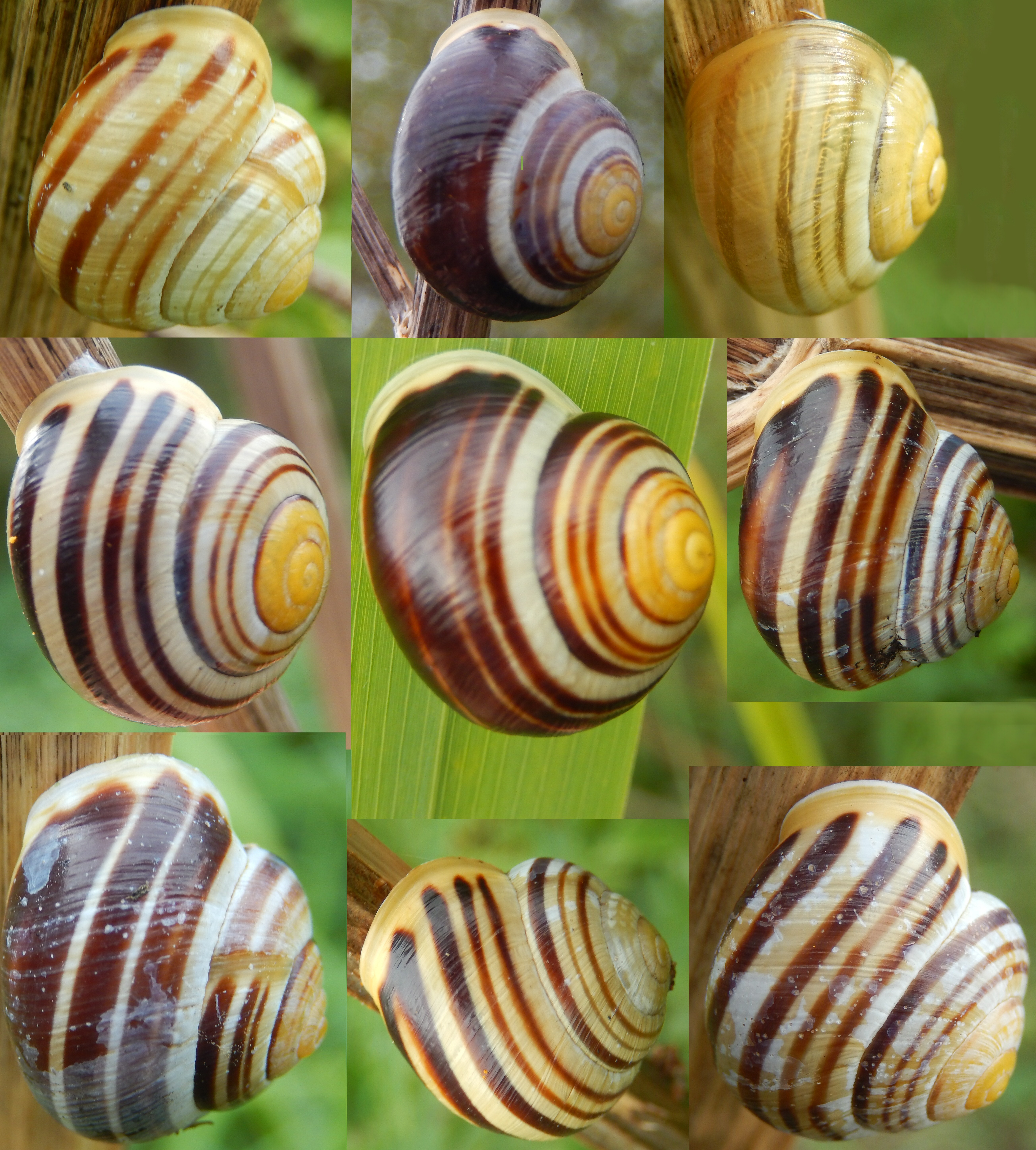
The hogweed had almost all formed its fruiting umbels and dried up, though one or two latecomers were still in full leaf. The dry stalks each had at least one banded snail parked up: some had 5 or more. So I thought I’d photograph each snail and, unusually for a nature blog, do a little rather random science and try to count the numbers in each colour variety. For the white-lipped banded land snail is rather delightfully polymorphic. I imaged 37 snails, all those I could reach, so they were probably a fair sample, unless you think there were some better-camouflaged ones I didn’t notice: I doubt that as all of them were high up on the stalks. Here are a few of them to illustrate some of the colour variation.

Polymorphism in White-Lipped Banded Land Snail

I counted:

  • 2 yellow ( unstriped), 5%
  • 16 yellow with brown stripes, 43%
  • 15 white with black stripes, 40%
  • 4 black, with an obvious broad fused stripe, 11%

Actually the stripes and background vary fairly continuously so a better way of dividing them up would be necessary. All the same, it’s fun to see just how convincing the polymorphism is. I didn’t see any dark-lipped snails (another species), by the way, and only a couple of snails of other species.

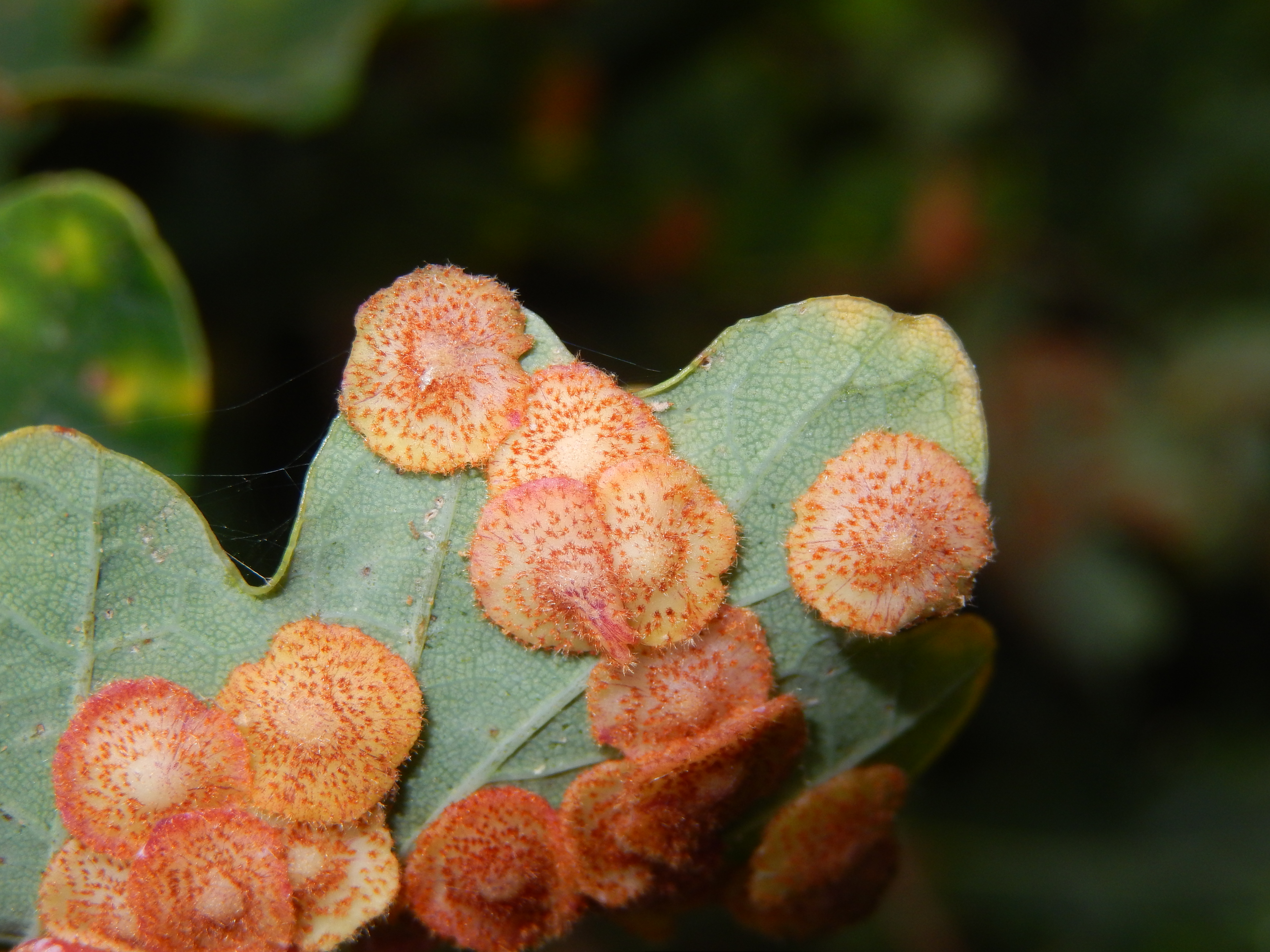
A small Pedunculate Oak had dozens of spangle galls under its leaves; these are caused by tiny wasps that live inside them.

Spangle Galls on Pedunculate Oak

A few dragonflies were still about: one Emperor; a few Hawkers, probably the Migrant Hawker; one smaller species, likely a Darter; and one Common Blue Damselfly.

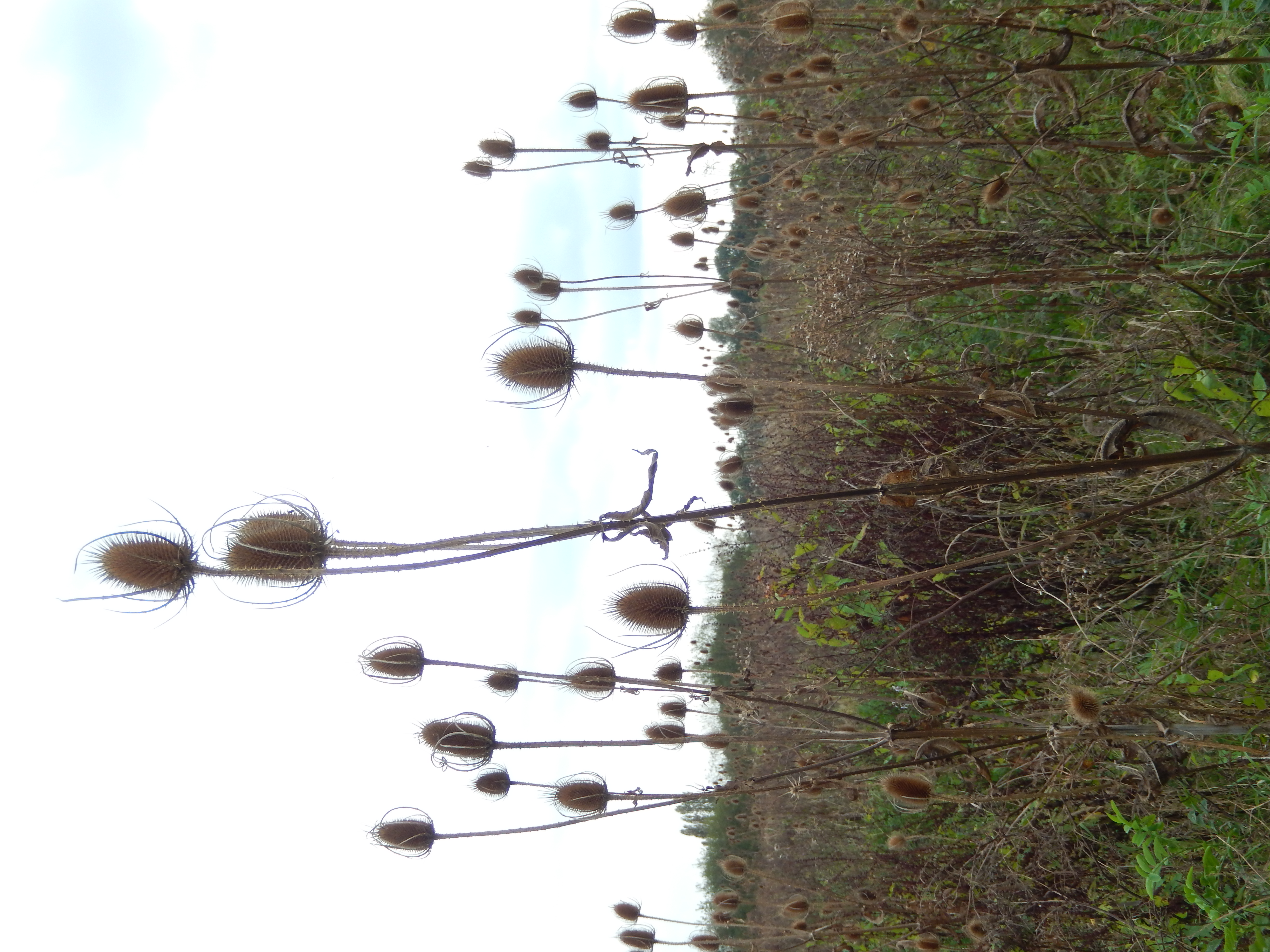
The teasels, like the hogweed, had all fruited and dried out, forming a handsome pattern against the sky with their bristly pineapples on spiky stalks.

Teasels
Teasels

Rose hips and hawthorn haws proclaimed Autumn, season of mists and mellow fruitfulness: contradicted by the humid heat of the day.

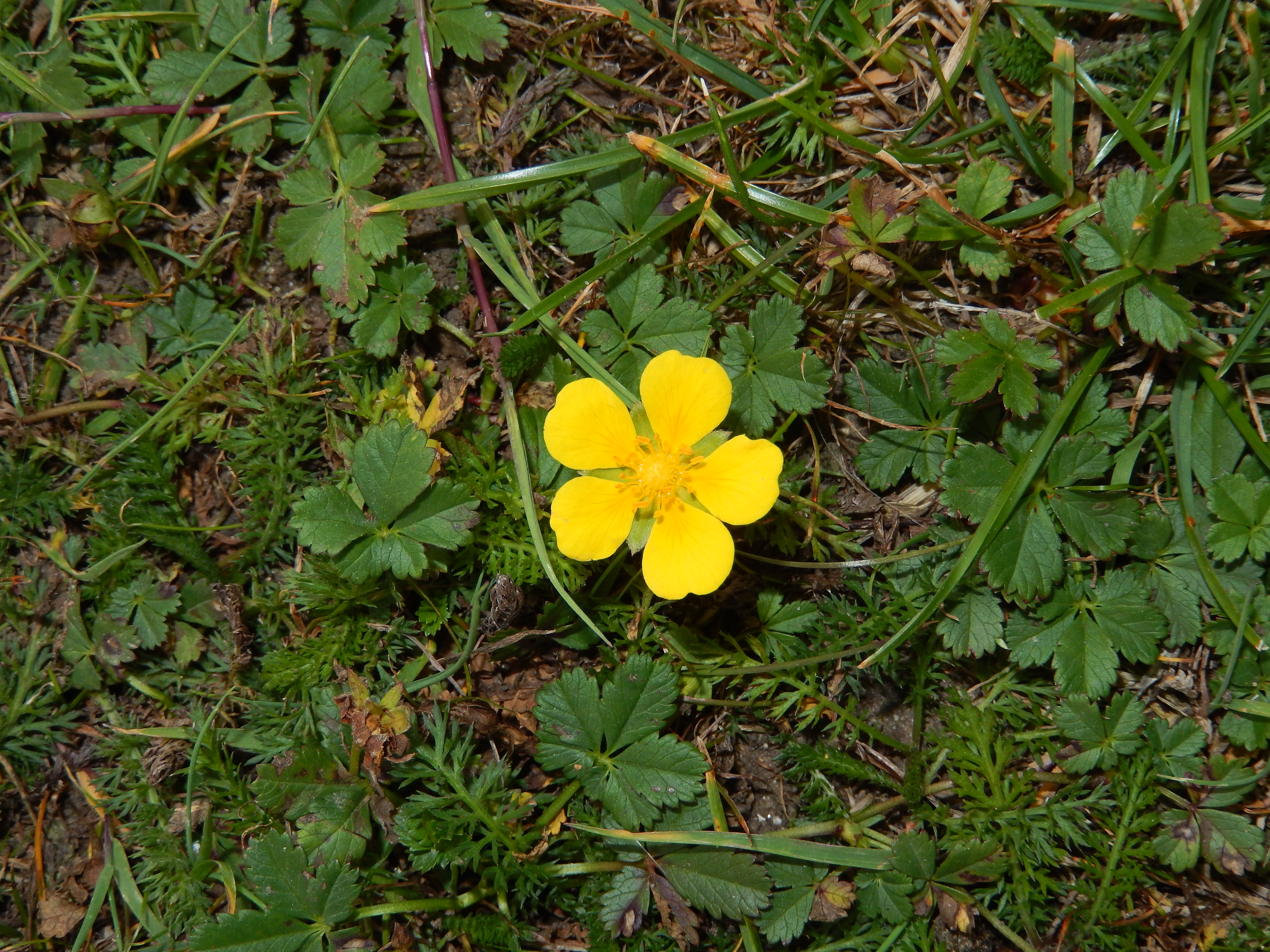
Round on the reclaimed landfill hill, it was a pleasure to see the low five-petalled cinquefoils in the horse-nibbled grass.

Potentilla
Potentilla (cinquefoil)

The surprise of the day came almost at the end of the walk: a party of perhaps fifty Meadow Pipits, shyly calling see-see-see as they swept up from the meadow, flashing their white outer tail feathers: the same species I had seen all over the moors of Badenoch and Strathspey, 500 miles to the north. It felt a little strange to see them passing by here.

For a day when I didn’t expect to see much, I think I did pretty well.