Woodland Grayling
Broad-Bordered Bee Hawk-Moth
Ichneumon Wasps
Potter Wasps
Asiatic Hornet
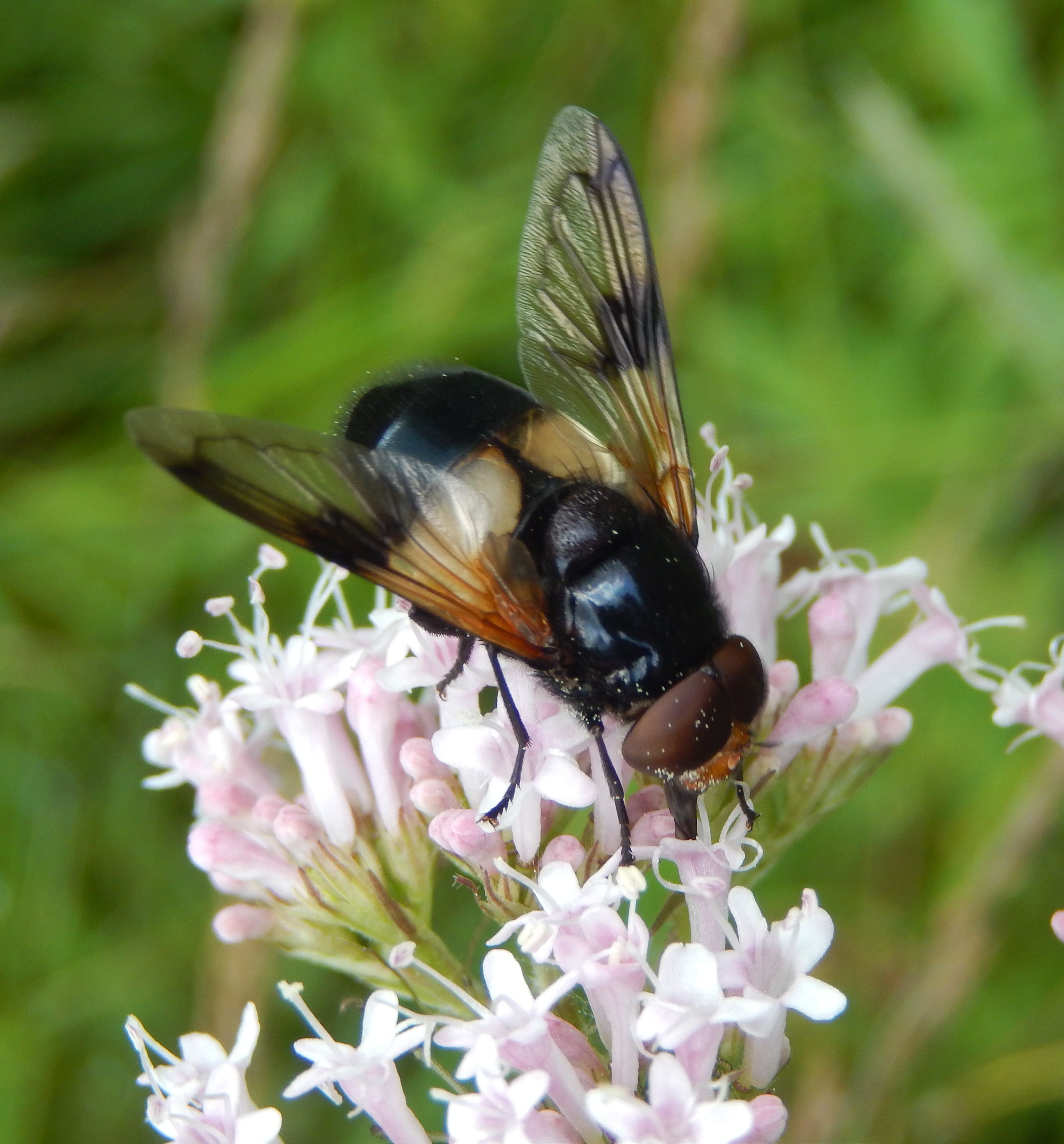
Cow-Fly
Longhorn Beetles
Banded Demoiselle
Woodland Grayling
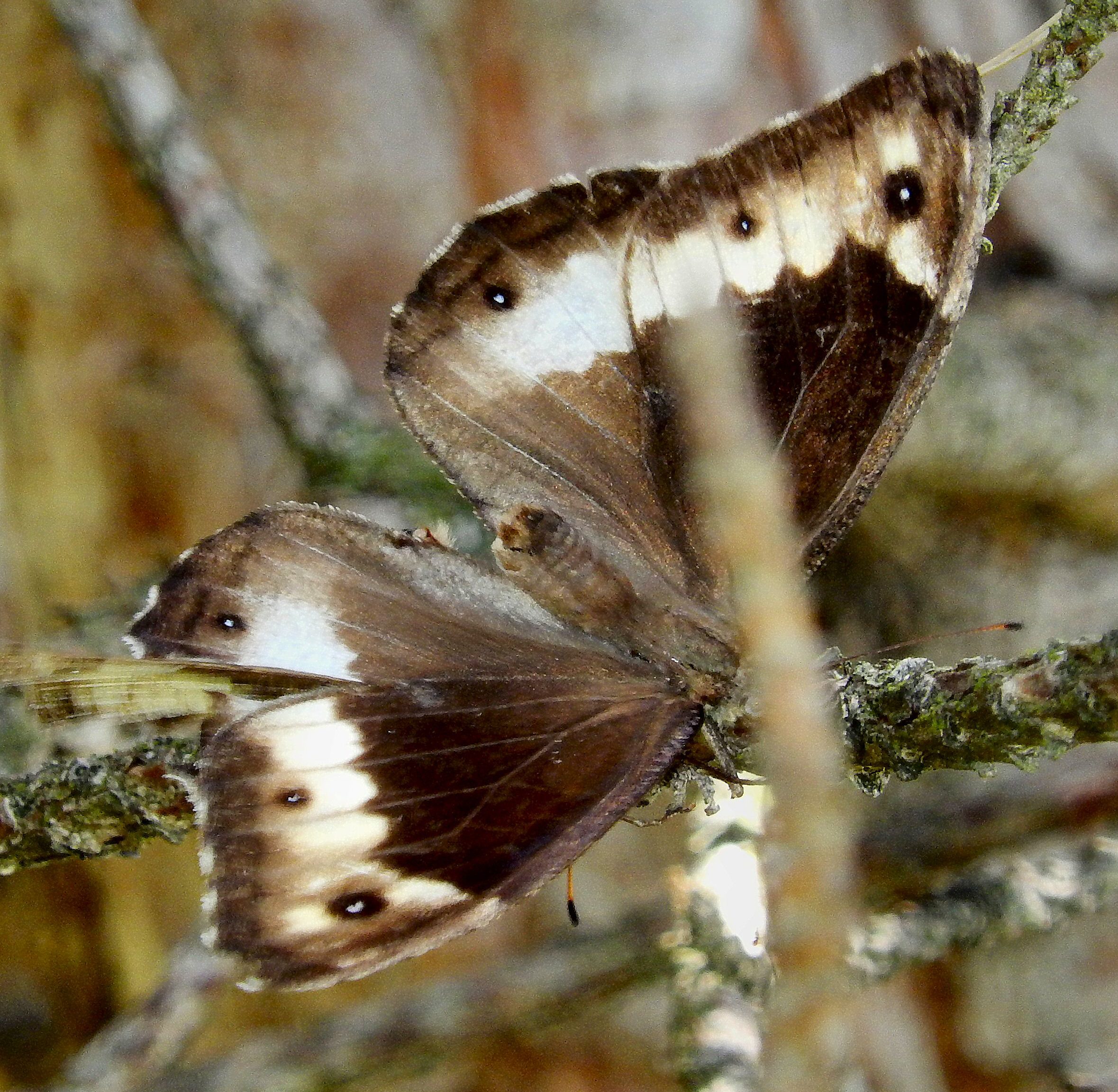
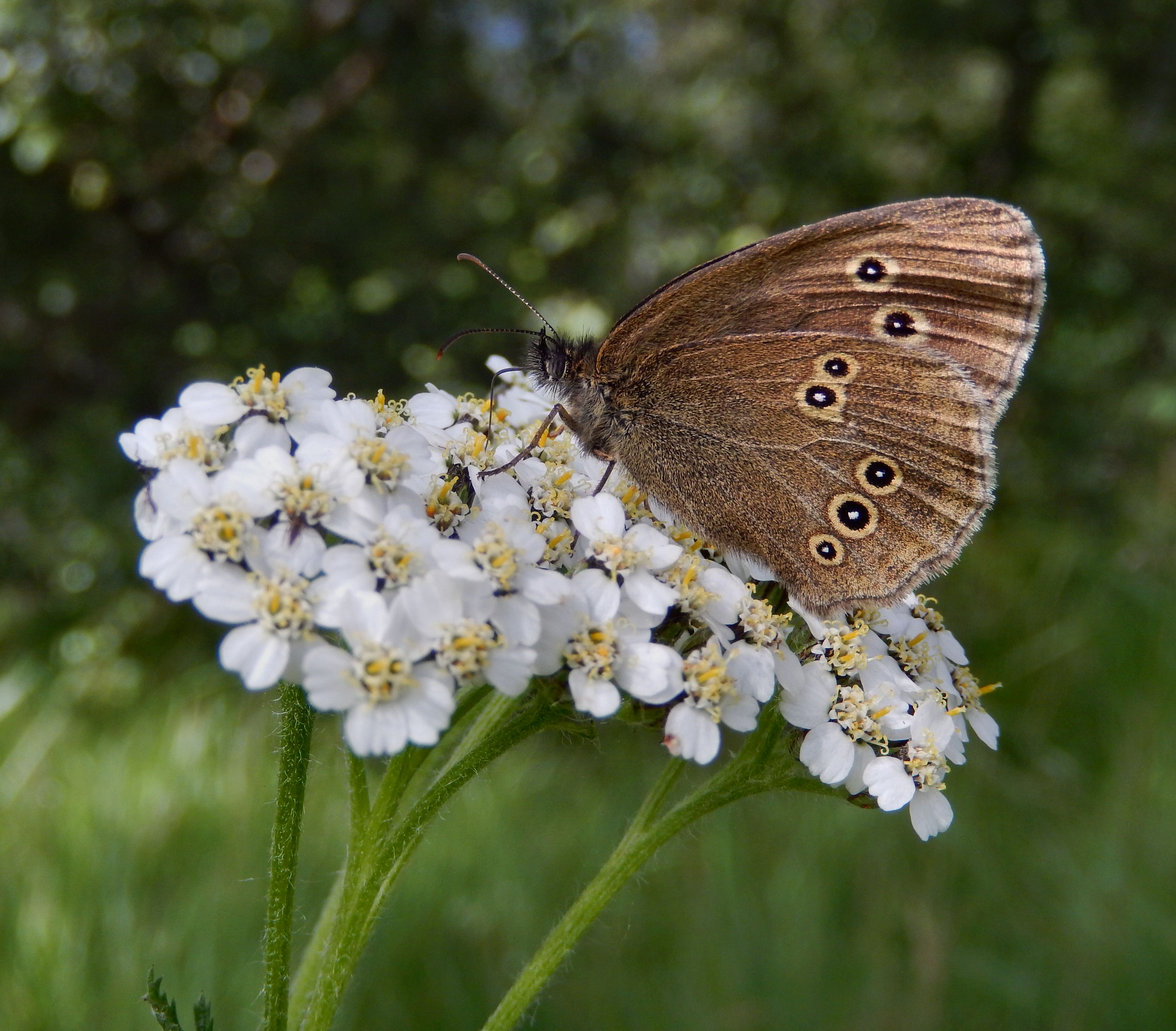
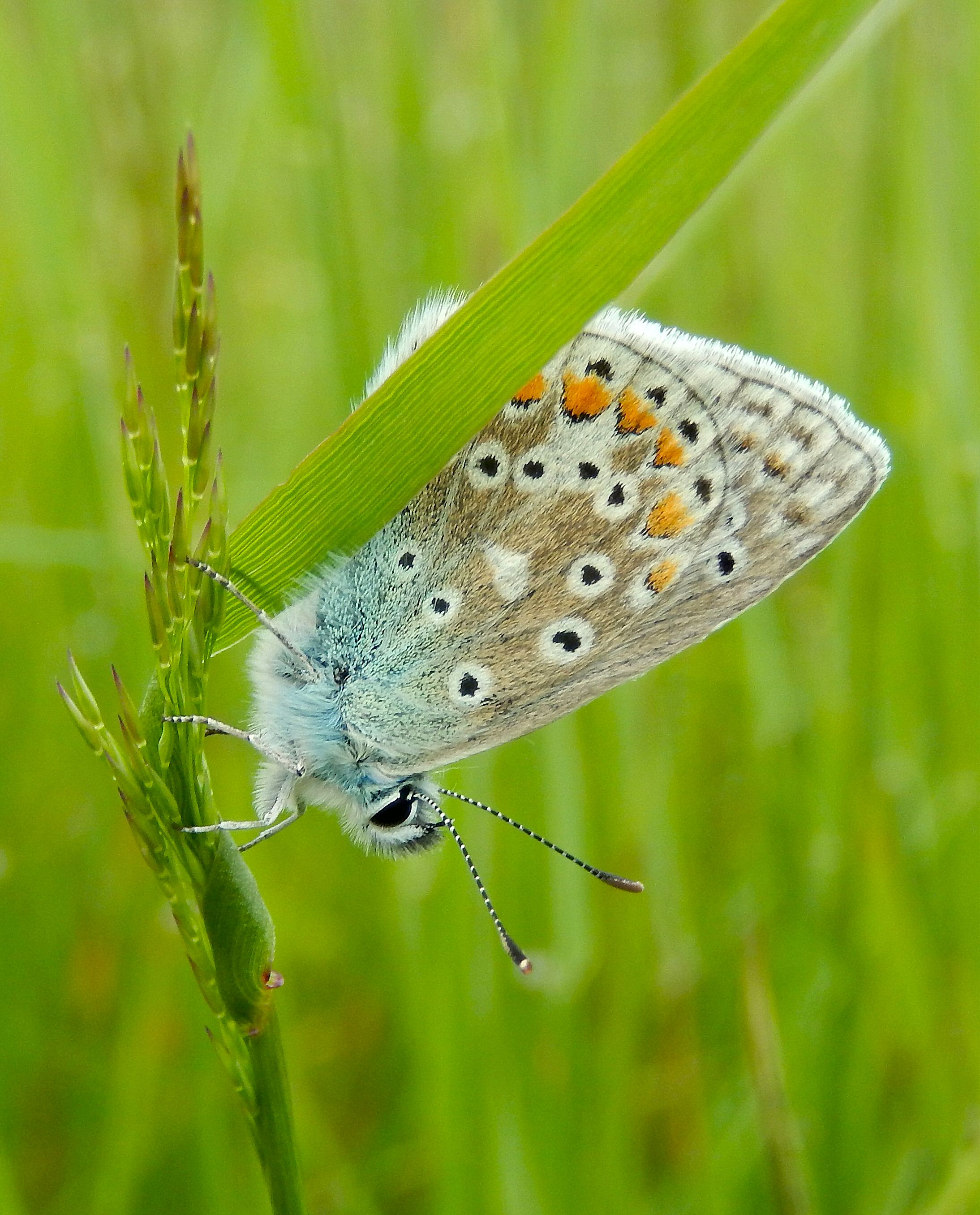
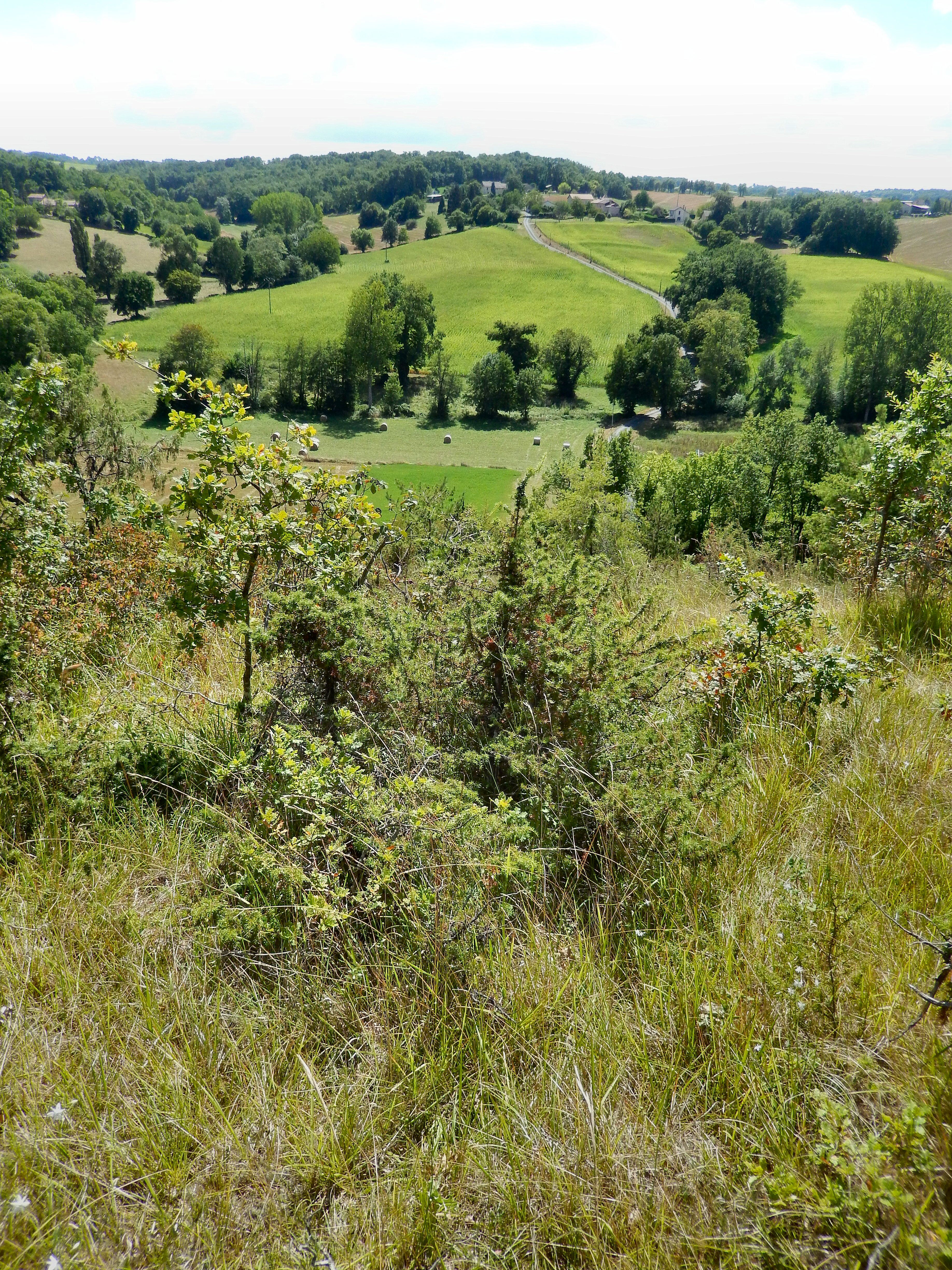
The Woodland Grayling might not sound exciting, and if your first glimpse of one is of a perched butterfly with folded wings, cryptically coloured in mottled browns and greys, it looks unremarkable, if rather large. But should a male fly boldly past you on a hot sunny afternoon, or come right up to you to take a look at what kind of beast you are, you will get quite another impression. The broad bold white band along the trailing edges of the wings contrasts strikingly with the rich, almost glittering, dark chocolate of the front of the wings. In flight, the Woodland Grayling is a strikingly large, beautiful butterfly, recalling the White Admiral or perhaps the Camberwell Beauty (though I know that species only from pictures in books). It flies deceptively fast, mostly at waist height, and is usually not easy to approach, though it perches often enough, selecting a twig that offers a wide view all around. The exception is when a pair are courting and mating, when they necessarily pay less attention to would-be photographers. The image above shows such a couple, half-perching, half-fluttering in a young Mediterranean Pine tree, with (as the saying goes) eyes only for each other. The feeling of a special moment seized me. Suddenly, for the first time in my life, on this particular hot, dry chalk hillside, with Juniper and Dogwood scrub invading the chalk grassland full of bush crickets and marvellously cryptic grasshoppers, I was witnessing the spectacular private courtship of this local and uncommon species. If entomology could be voyeuristic, this was just the moment for it: the passion, the dramatic synchronised display, the Flamenco fire, surrounded me and filled my camera and my memories.
Broad-Bordered Bee Hawk-Moth
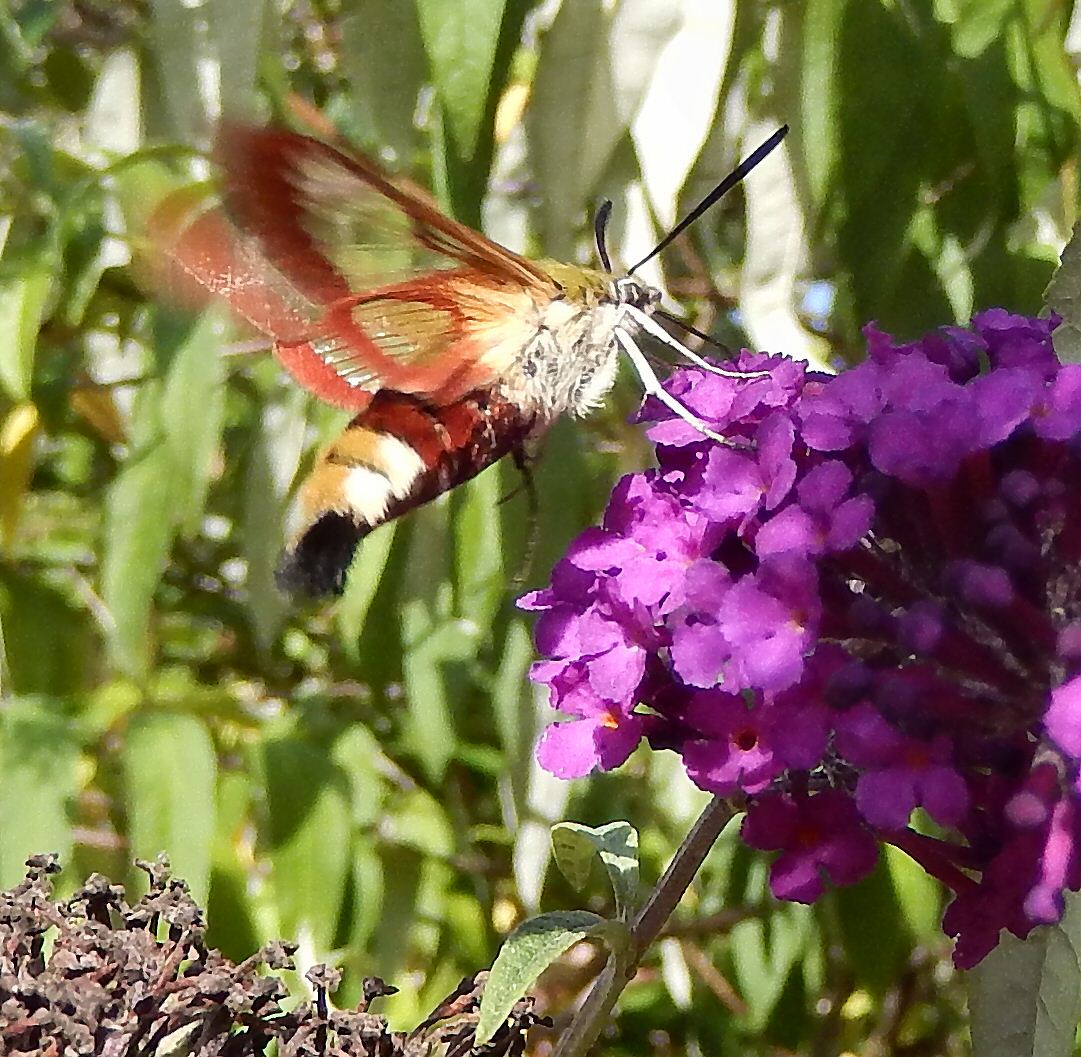
The Broad-Bordered Bee Hawk-Moth is the kind of insect that everybody notices, if they happen to be by a flowering Buddleia or Lavender bush at the right time. Like the far commoner Hummingbird Hawk-Moth, about the same size but without the Bee Hawk’s bright coloration, this lepidopteran conclusively proves (if proof were needed) that not all moths are dull and nocturnal.
The Bee Hawk loves the bright sunshine of hot summer afternoons. The buzzing drone of bees, hoverflies, and hawk-moths about rich sources of nectar evokes sleepy siesta-time, hammocks and deck-chairs, cool drinks and a good read in the shade. But for the insects this is not a holiday but a crucially busy time, time to gather sugar and pollen for energy, time to mate and to lay eggs.
The Bee Hawk hovers and feeds much like a bumble-bee, and its colours and flight are sufficiently bee-like to make it clear that this is a Batesian mimic of bees, signalling (untruthfully) to insect-eating birds that they will get a mouthful of painful sting if they try anything. But few birds get the chance: the Bee Hawk flies away much faster than any bee, its broad wings providing both speed and agility.
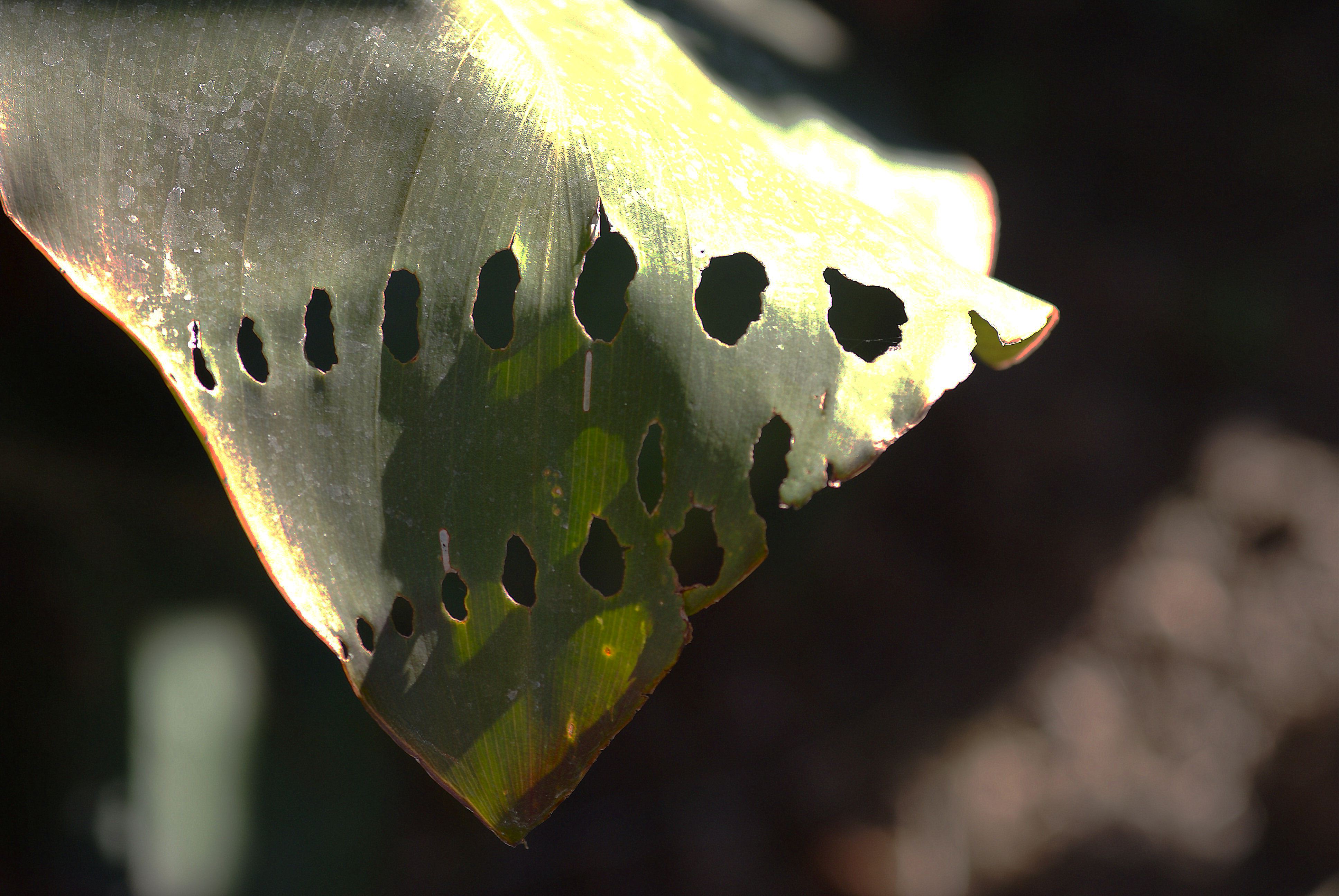
The eggs are laid on plants such as the impressively showy Canna Lily. The thumb-sized caterpillar munches a distinctive symmetrical row of holes across the broad, banana-like leaves of the Canna Lily, the holes growing with the larva’s appetite. After moulting several times to progressively larger versions of itself, it pupates and emerges as a beautiful adult. So if you see a Canna Lily leaf that looks as if a Bond villain has machine-gunned it, you know to watch out for a Bee Hawk, and to impress your friends with your knowledge when you casually remark on its presence.
Ichneumon Wasps
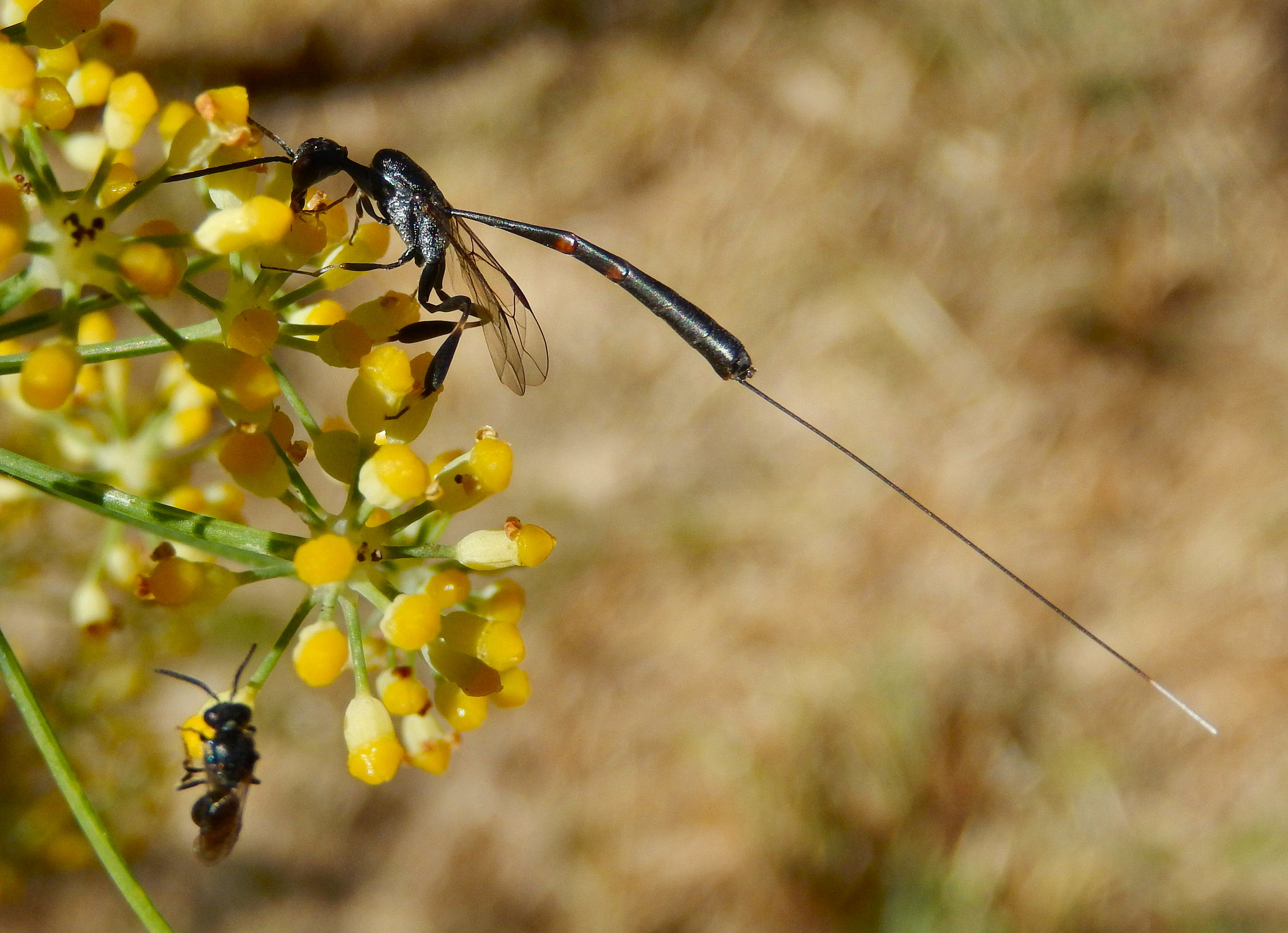
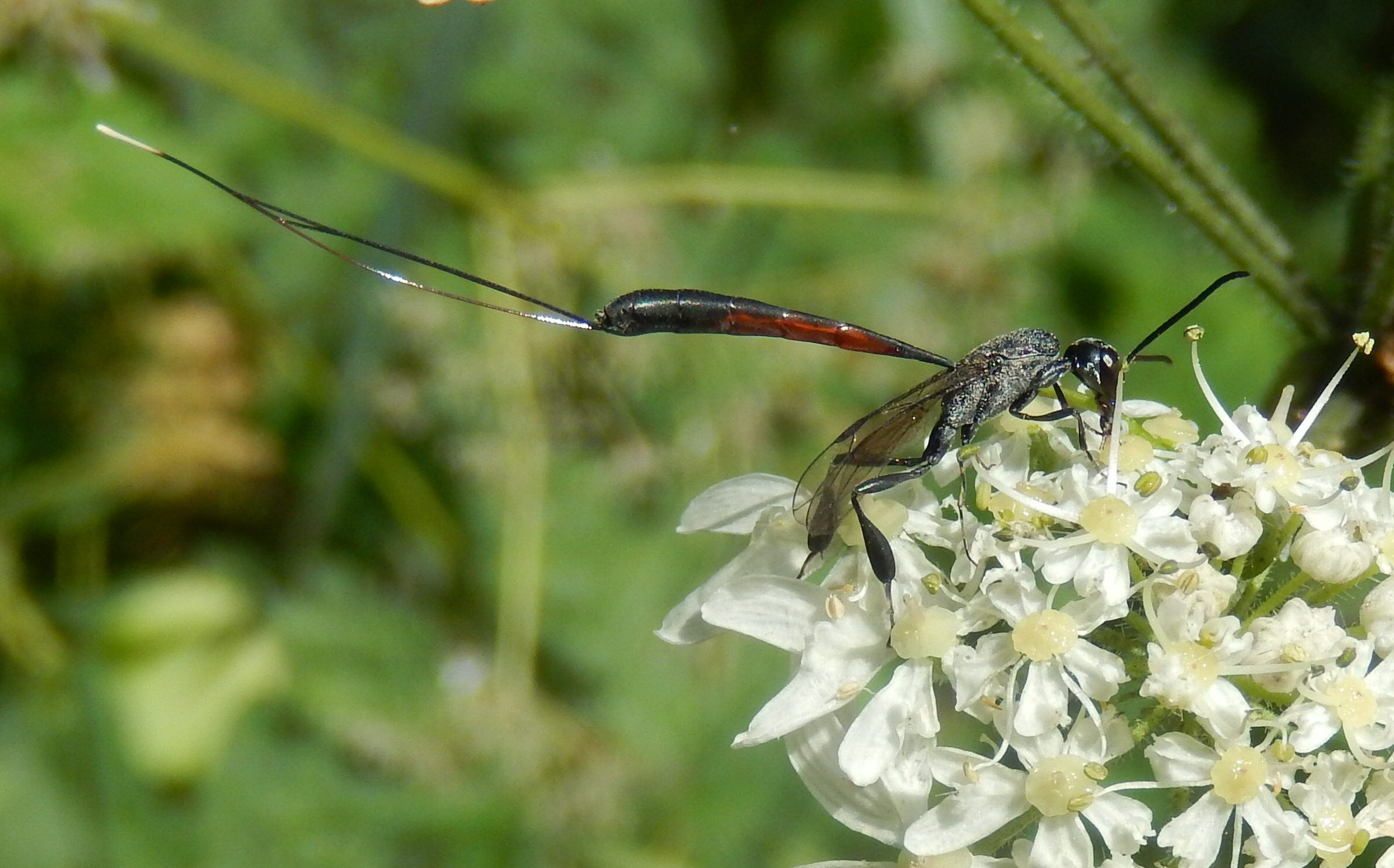
The long-tailed Ichneumon Wasps, of which there are quite a few species, are equipped with one of the most remarkable physical adaptations in the insect world. The female lays her eggs, not on the ground from a simple opening in her abdomen, but down an egg-laying tube, an ovipositor, that is about as long as the rest of her body put together — see the photograph. She is in other ways very much wasp-shaped, though with rather a long flexibly-jointed abdomen, which too is part of her adaptation to her extraordinary way of life. Like most wasps, she is a hunter-killer. But unlike many wasps, she does not bring the prey back to her nest. She sniffs out her prey, the grubs or caterpillar larvae of other insects, while they are deep inside a plant or in rotting wood. She locates them accurately enough by scent or vibration to guide her drill-like ovipositor down through the plant tissues to the unseen larva, flexing her abdomen sharply to push the ovipositor as necessary. When the tip of the ovipositor strikes the larva, she lays an egg in its body, and leaves. Her egg hatches, and her larva feasts on the still-living prey larva from the inside. Eventually her larva pupates, and an adult Ichneumon Wasp emerges from the prey’s emptied corpse. Charles Darwin found this to be an instance of such cruelty that he lost his Christian faith: he could not see how a loving Creator could deliberately form one species with a way of live that so brutally exploited the life of another. We may see, perhaps, something different: an example of the way that natural selection works with whatever materials are to hand, like a simple egg-laying tube and the standard jointed insect abdomen, reshaping them in small steps (there are plenty of shorter-tailed ichneumons), without any kind of foresight, until they are beautifully adapted to carry out radically modified functions.
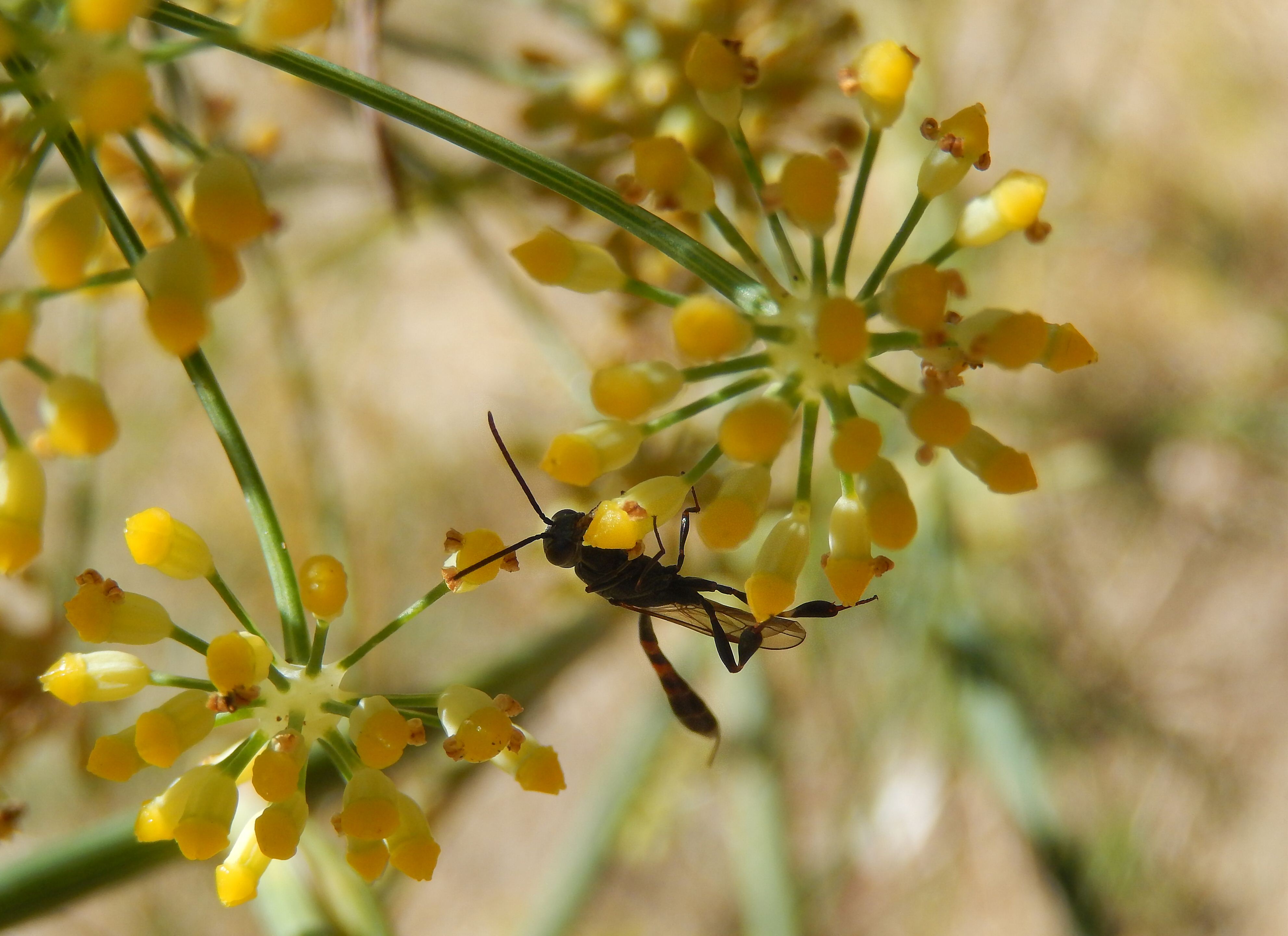
A far shorter-tailed Ichneumon Wasp illustrates how evolution may have proceeded in small steps to create the long-tailed varieties.
Potter Wasps
While we’re on the subject of beautifully adapted wasp structures, let us mention the Potter Wasp’s fabulous arts and crafts skill.
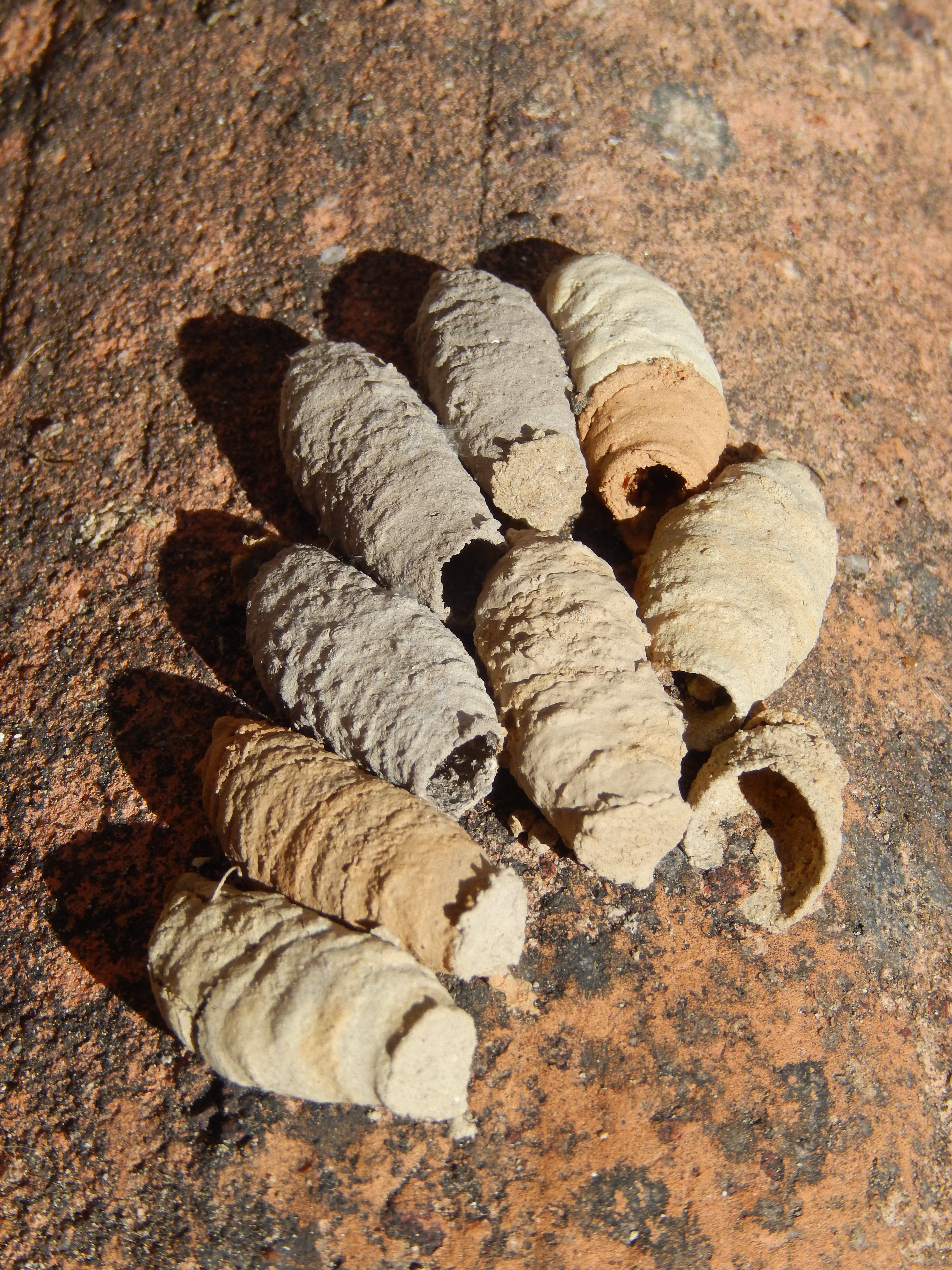
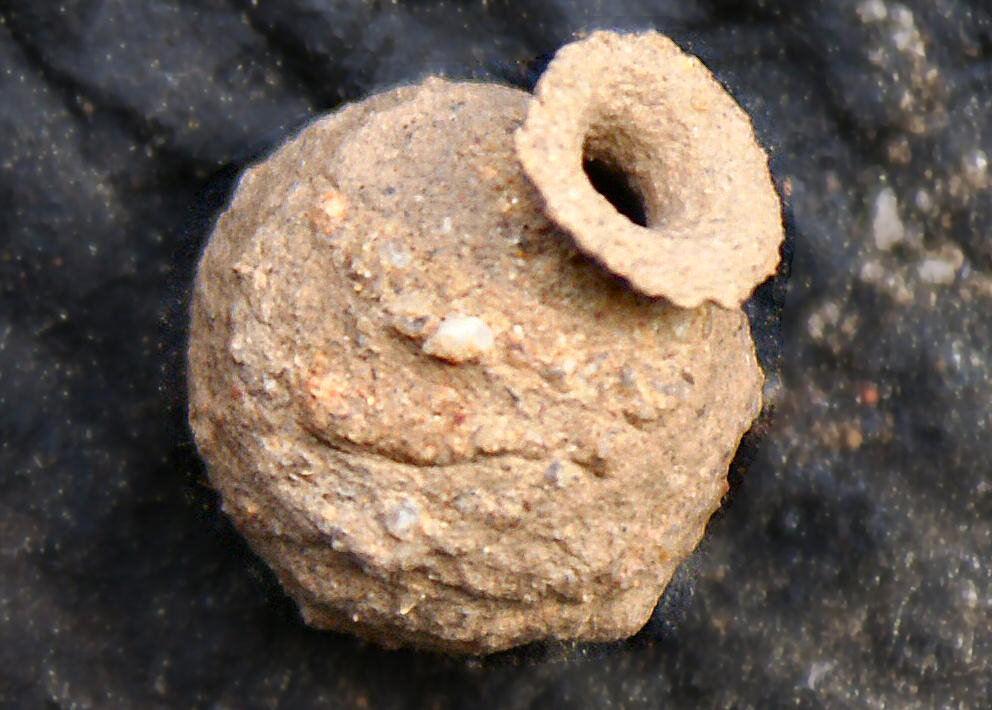
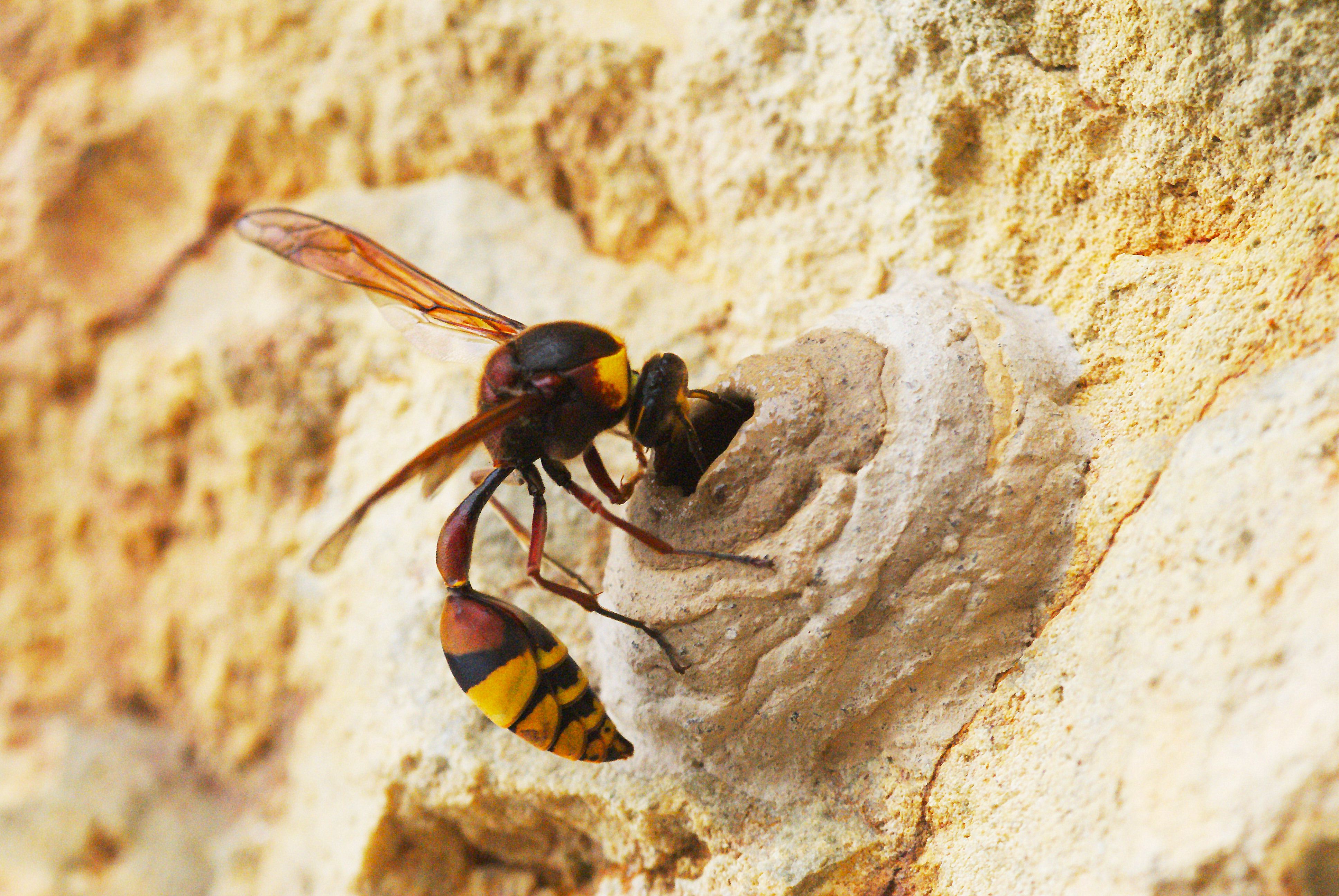
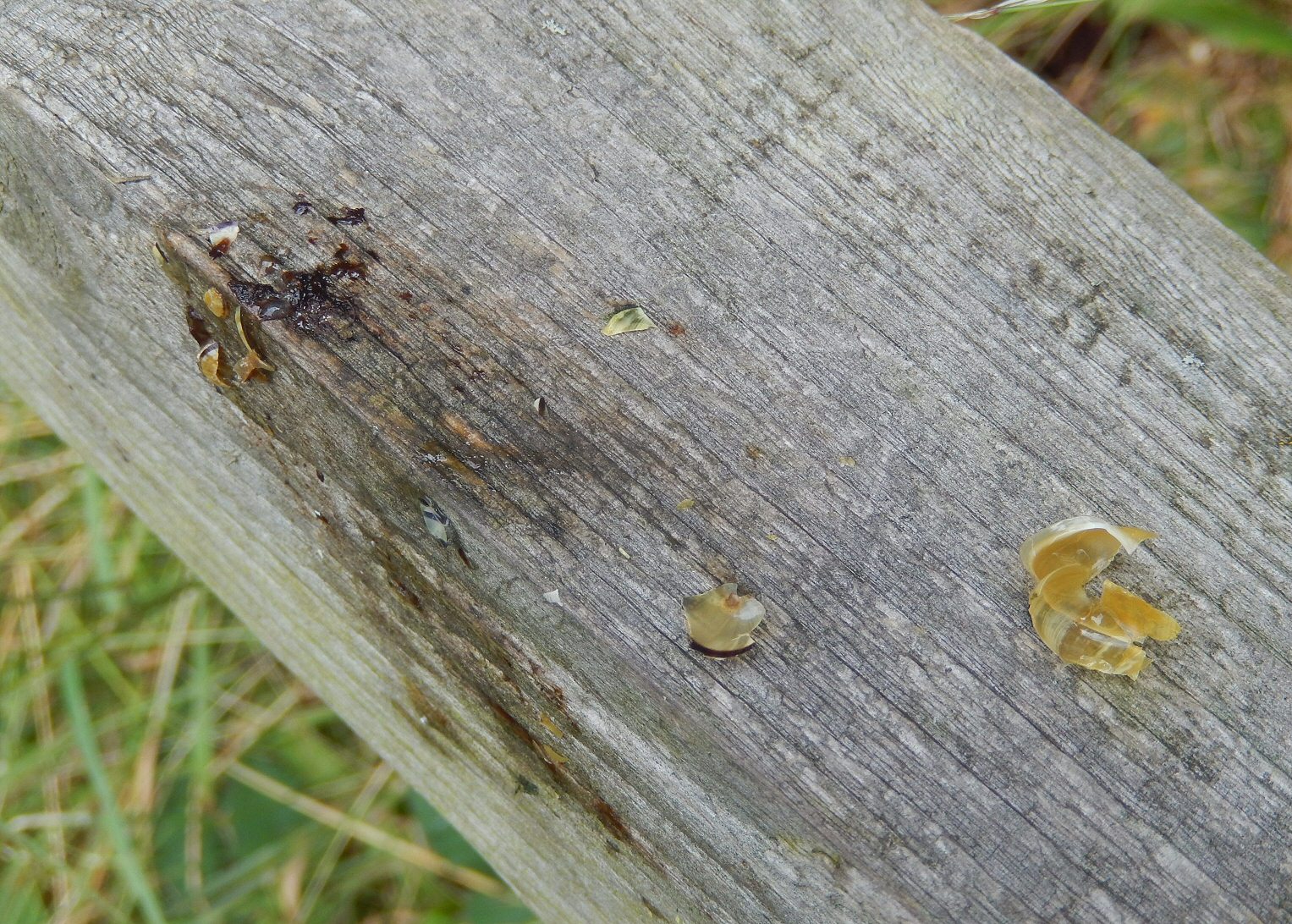
Like the Ichneumon Wasps, the Potter Wasp stings prey and lays her eggs on or in them. But unlike them, she carries them off, not to a burrow like many wasps, but to an elegant pot made of mud. She doesn’t seem to mind which colour of mud it is: here, a female Potter Wasp (it’s always a female, as the sting is part of the egg-laying apparatus) has used red, white, buff, and grey mud indifferently, once in two colours for the same pot. She puts one or if need be two or three larvae in each pot, lays an egg on one of them, and seals the pot with a lid. The young Potter Wasp lives on the paralysed prey, pupates, breaks its way out of the pot, and flies off. The mother provides no further parental care once the pot is sealed: she gets straight on with building and provisioning the next pot.
Spider-Hunting Wasps
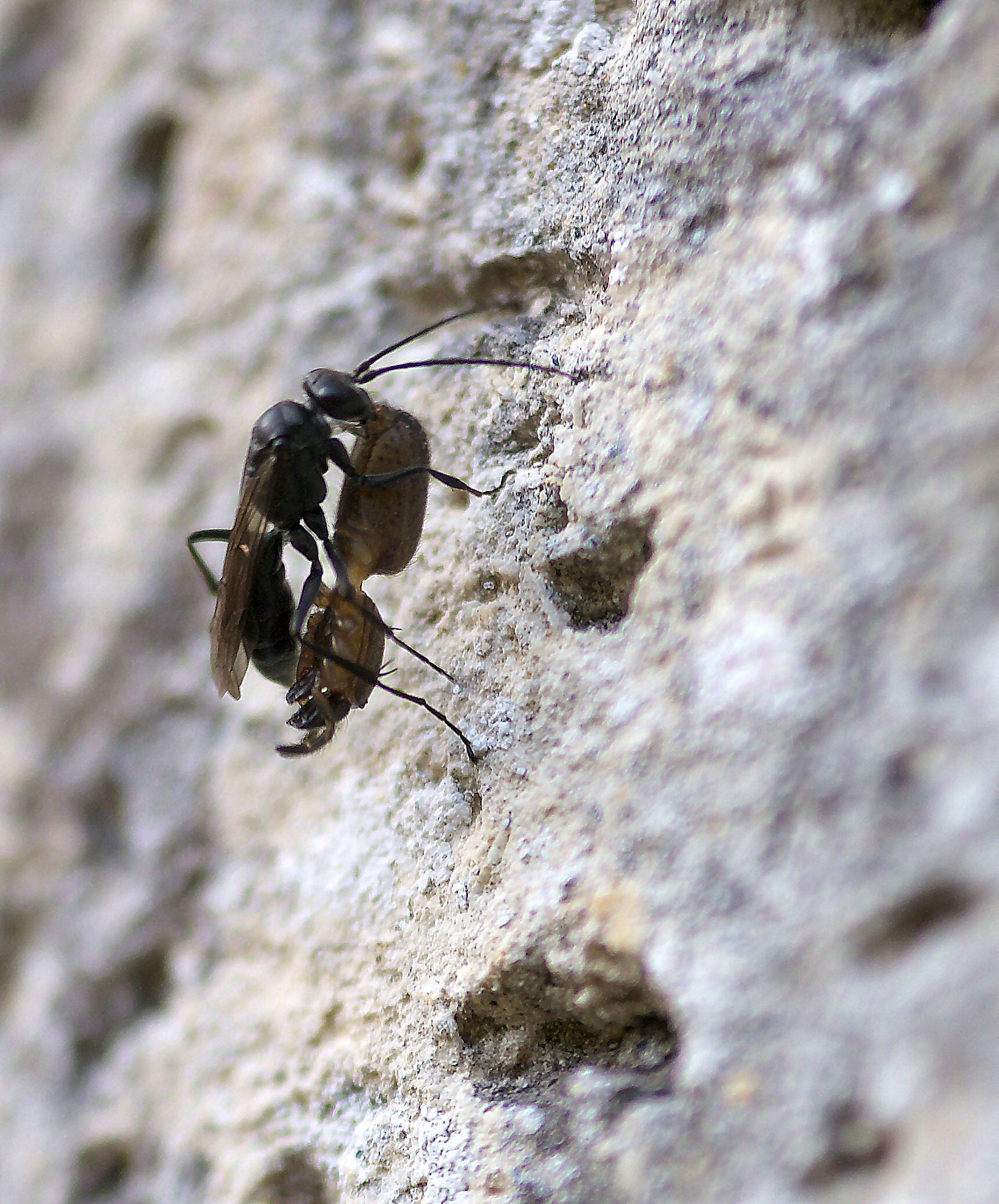
One family of solitary wasps has specialised in far more dangerous prey than caterpillars. The Pompilidae, the Spider-hunting Wasps, provision their nests exclusively with predators: insect-hunting spiders. This is a duel between two swift, agile warriors, each armed with deadly weapons, each intent on killing the other. But the Spider-hunting Wasp always wins.
Her method is to search vegetation for spiders. When she finds one, she leaps and flies towards it. The spider rears up to bite, but the wasp, with her long legs for rapid running and wings for flight, is quicker and more manoeuvrable, and in a Samurai-like movement that is too quick for the human eye, she stings the spider, paralysing it. She then grabs the limp spider in her jaws and runs swiftly backwards to her burrow. Once there, she lays an egg on it and you know the rest of the story.
Grasshoppers
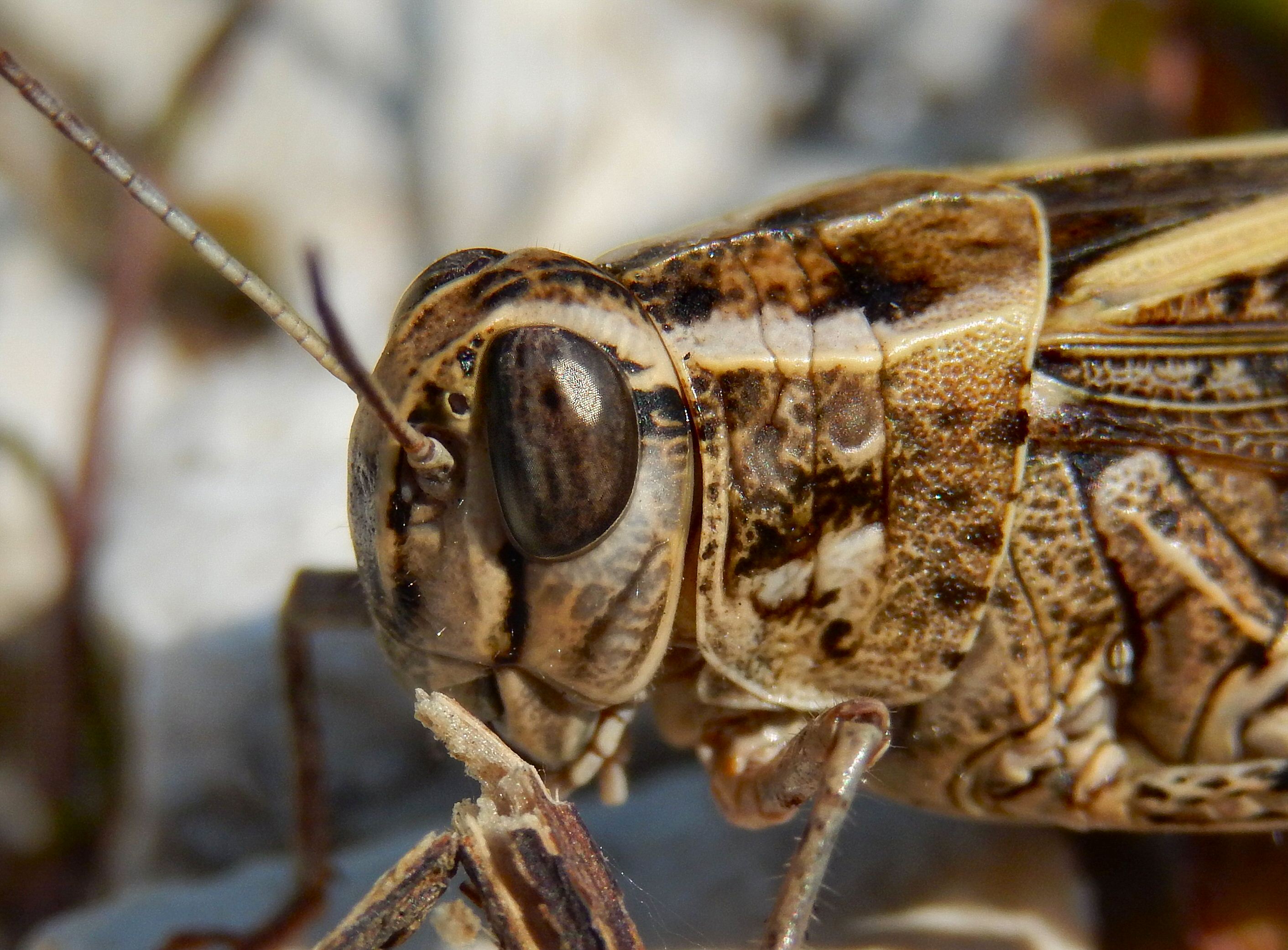
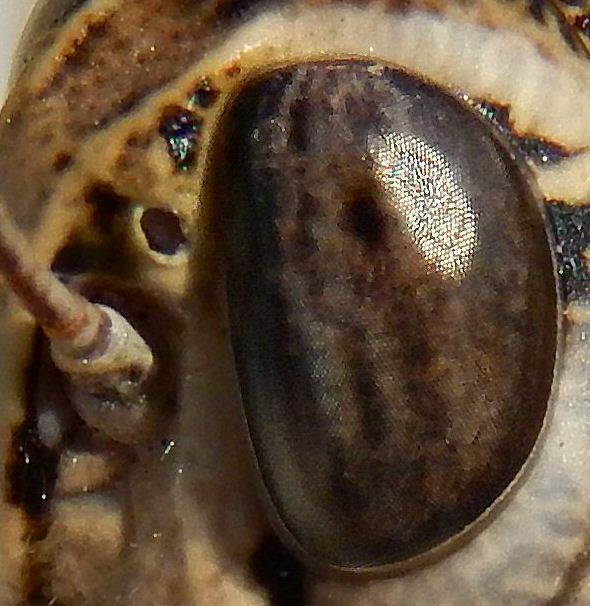
Away from the worst excesses of modern agriculture, with its marvellously clean fields devoid of ‘weeds’, mammals, birds, and insects (through a combination of good husbandry, thorough screening of seeds to remove weed seeds, and pesticides), the Dordogne remains home to many kinds of insect that were once common all over Europe, but are now scarce in large parts of the continent. On the chalk hillsides, roadsides and many areas of meadow and set-aside, Grasshoppers chirp and jump in the longer grass, seemingly as happy as the blithe take-no-thought-for-the-morrow protagonist in Aesop’s fable of The Ant and the Grasshopper. Seen close up, as in the photograph, a grasshopper is visibly wonderfully well-adapted for its lifestyle. Leaving aside its powerful hind legs for hopping hundreds of times its body length, let us look at its head and thorax. The head carries strong jaws capable of slicing through tough grasses, sensitive antennae warning of approaching predators, and large compound eyes made of many hundreds of tiny single-pixel eyelets called ommatidia. You can see how these are arranged as little hexagons in a detail of the same photograph.
But the grasshopper isn’t just good at detecting predators. It is also splendidly adapted for avoiding them. Its first line of defence is its disruptively patterned body, in other words its camouflage. The various browns, buffs, ochres and blacks are not softly smudged to “blend in” with the background. They are the opposite: brightly coloured, sharply patterned, to attract the eye to suppose the bold stripes are anything except grasshopper: bits of leaf, dry twig, stones, shadows, tiny shafts of sunlight. The result is to delay recognition: the grasshopper hides in plain sight, its surface fully visible to predators, but its presence unsuspected.
Should camouflage fail and a predator approach too close, the grasshopper has two more tricks up its sleeve. You know the first one: it suddenly springs into the air, flinging its body high and far. If it has wings, it goes further and faster. As it lands, it often quickly scuttles to one side or under some kind of cover, and freezes. It becomes almost as hard to locate as before, even if the predator was able to see where it landed and to follow close behind. This still-dangerous eventuality is made less likely by trick number two: the grasshopper flashes a brilliant patch of colour – red, yellow, or blue, for instance. This ‘deimatic behaviour’ may often startle the predator – perhaps it has disturbed something dangerous? – for long enough to enable the grasshopper to fly off and disappear in safety. Just a plain greeny-brown insect that chirrups in the grass? Not a bit of it.
Asiatic Hornet
My next insect has a distinctly bad reputation, and not a wholly undeserved one, but it actually spends very little of its life troubling humans. The Asiatic Hornet indeed has a formidable sting: I can vouch for the strongly deterrent effect of being charged by one of these hornets, and stung: my legs were unaccountably in rapid motion before I had consciously registered what was happening when I unfortunately walked up to a small hornets’ nest in a hazel trunk that had fallen across a path, so my instincts were working well that day, too.
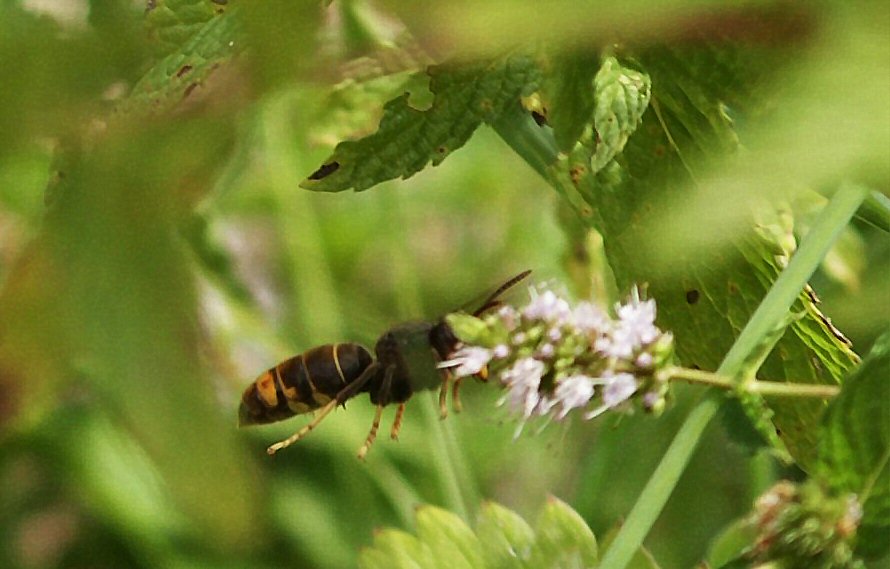
The photograph, taken at no great risk to the photographer for the reasons I’ll now explain, shows what Asiatic Hornet workers get up to on a normal working day. The hornet is hovering in a patch of garden mint, whose nectar-rich flowers have attracted a cloud of butterflies, hoverflies, bees and other insects. It is rather uninterested in nectar: it’s after meat, in other words other insects. It is such a powerful predator that it can take on pretty much any flying insect – I can’t vouch for its ability to kill large armoured beetles like the Tanner Beetle which is found in the Dordogne woods, but I wouldn’t be surprised. But first catch your hare, as they say (misquoting Hannah Glasse’s ‘First case your hare’, i.e. skin it before cooking, but I digress). The hornet is a fast flier, but somewhat heavy, like a big truck able to get up a frightening speed on the motorway, but not to steer too well around sharp corners at the same time. Among the mint, the hornet lurks until it spots a possible prey insect to its front. Then it puts on a rapid dash, often ending by bumping into something, whether the other insect or a plant stem. All the dashes I witnessed ended with a butterfly zipping smartly out of the way and escaping with a jinking, zigzagging flight. The hornet invariably reversed, and carried on hovering. When it bumps into a slower insect, it grabs it, and with a quick sting, powerful enough to subdue a small mammal let alone an insect, the game is over. The hornet then carries the prey back to the nest, where she, or her sisters, feed it to their queen’s larvae. In short, Asiatic Hornets are hardworking, co-operative, and generally perfectly peaceful citizens. Unless you happen to be another insect, of course, in which case hornets are ruthless predators, dacoits, thugs, assassins, muggers, footpads, highwaymen, professional killers, people who hang about where likely victims congregate and pick their targets at will: call them whatever you like, it’s all in a day’s work to a hornet.
Cow-Fly
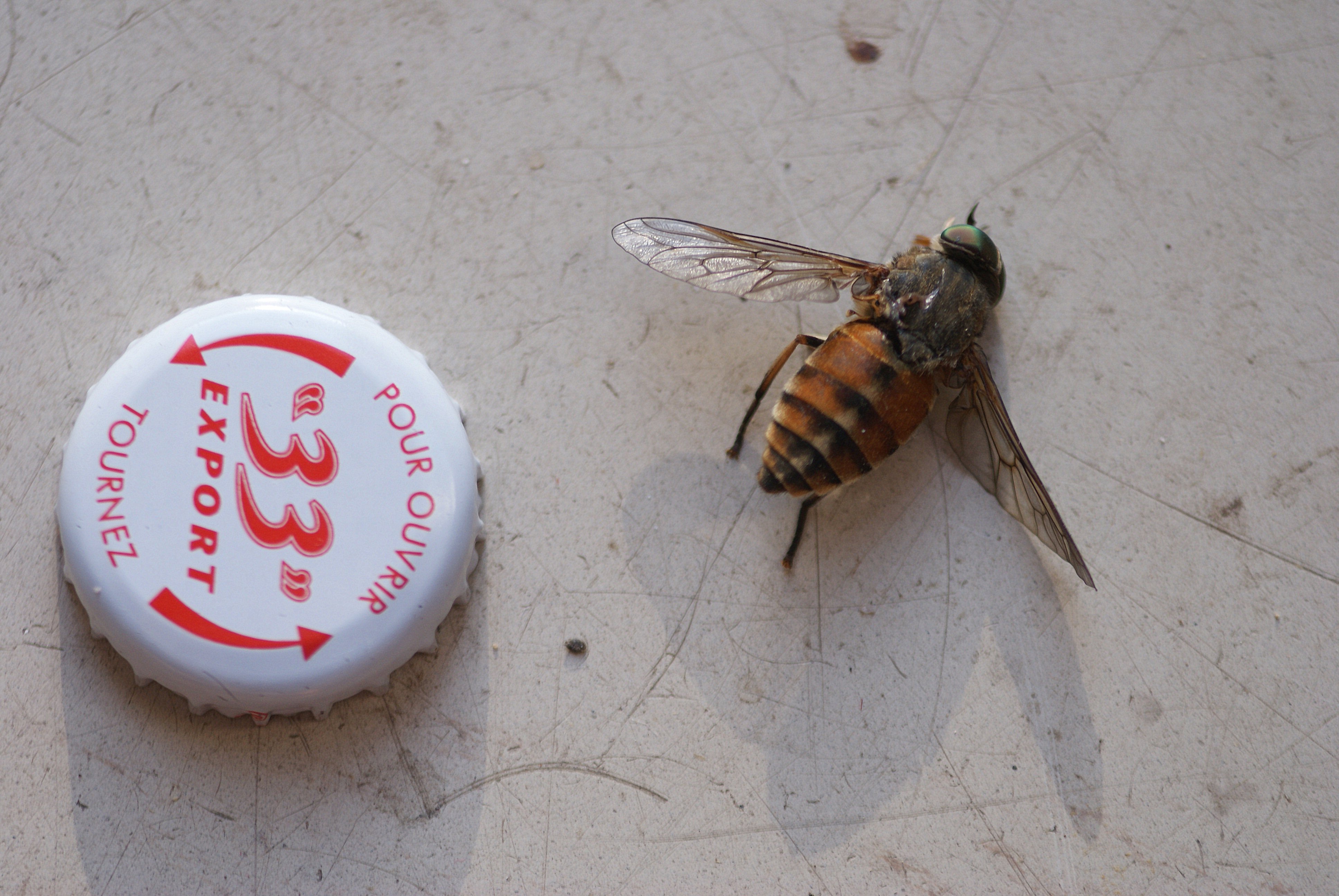
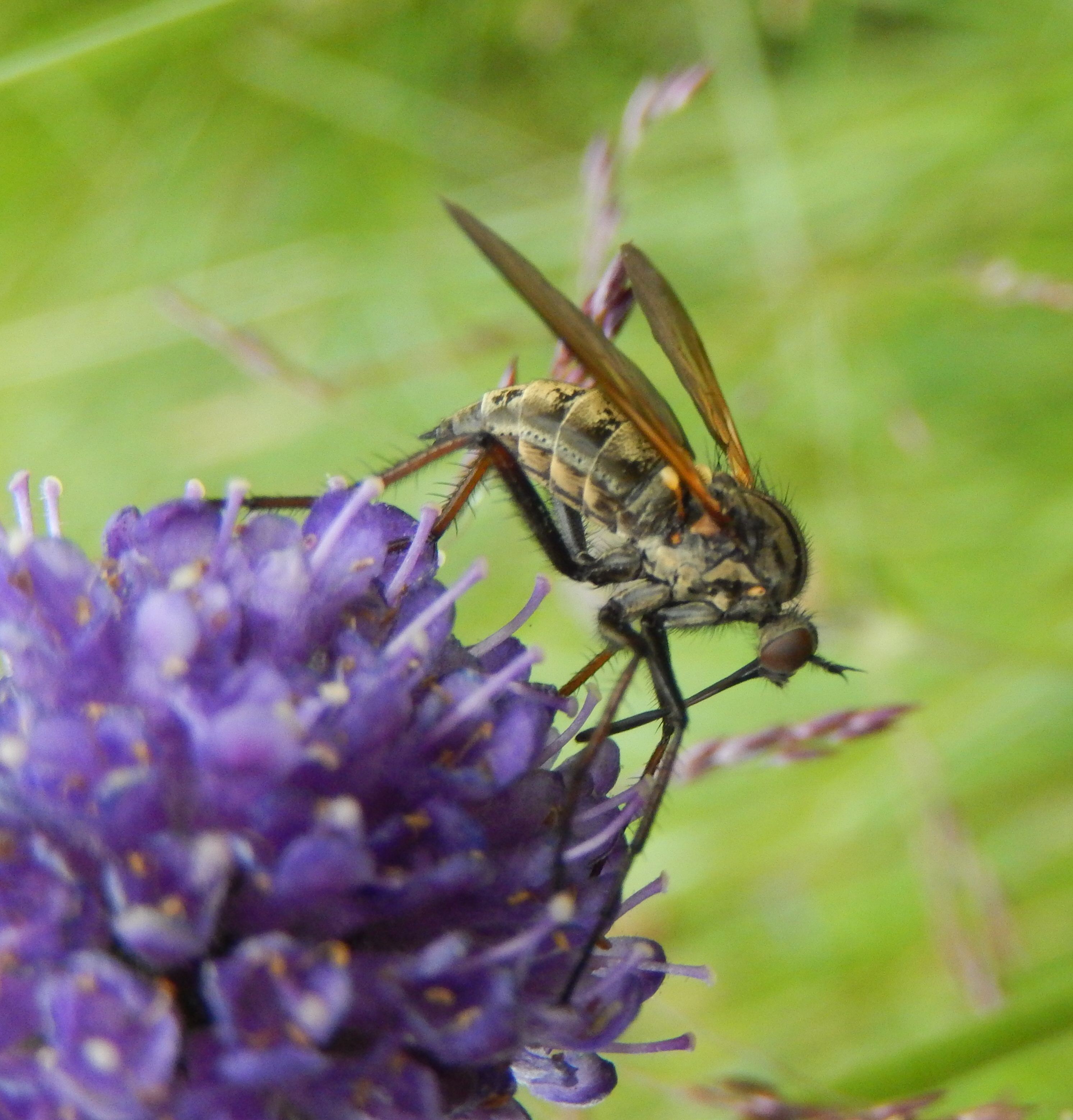
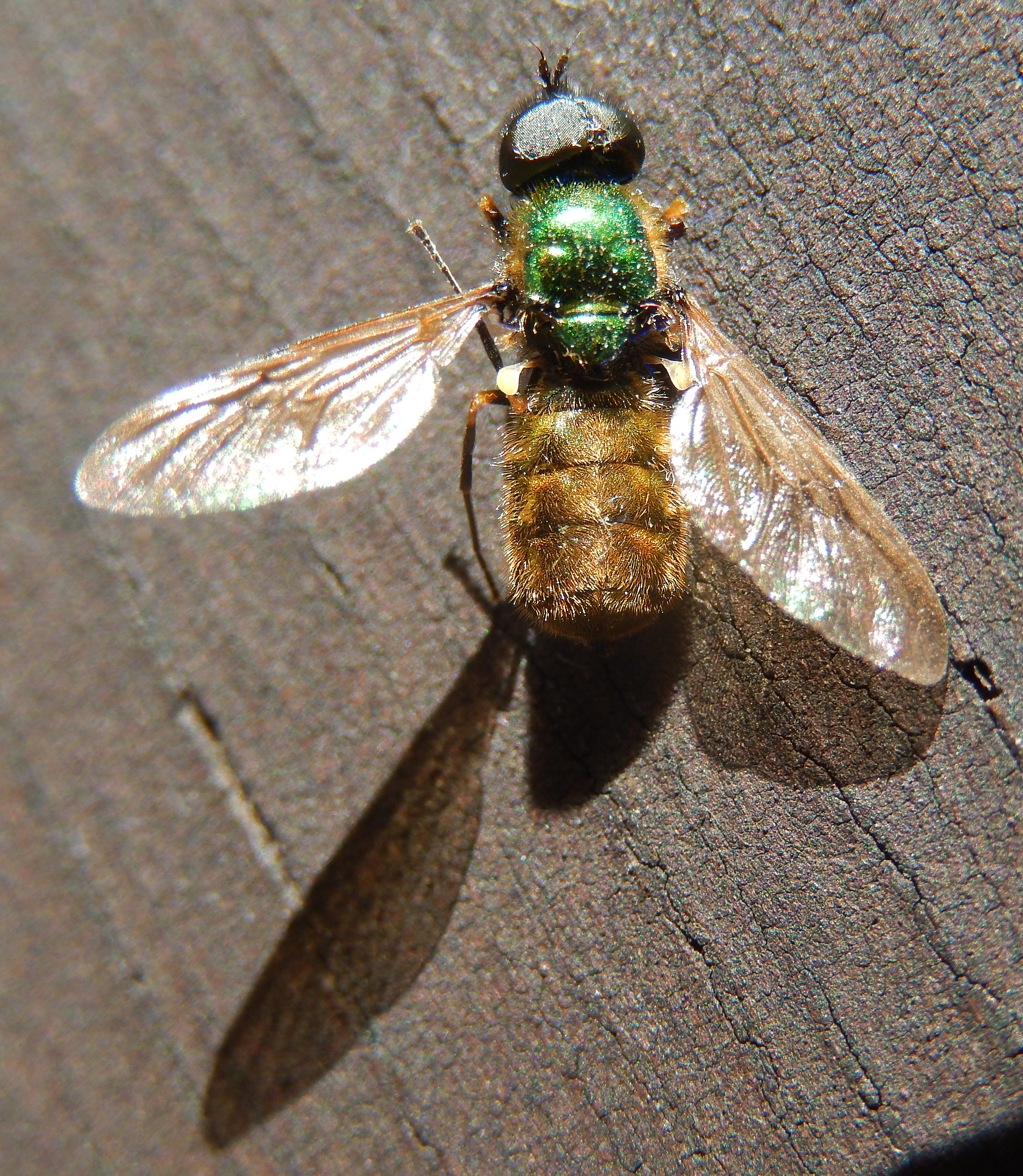
The other large Dordogne insect with a fearsome reputation is distinctly less glamorous than the exotic Asiatic Hornet. People often think it’s a loudly buzzing bee or hornet, but it is something very different. It’s a true fly, a dipteran, in the horse-fly family, Tabanidae. But it would be better to call it a Cow-fly, as its Latin name reveals: Tabanus bovinus, the bovine gadfly. Both Shakespeare and the Ancient Greeks record that it can drive cows mad as they try desperately to escape these efficient little predators.
Like all true flies, it has only a single pair of wings, its hind wings having been converted by evolution into small drumstick-shaped organs that whir like little gyroscopes (you can see one if you click on the photograph to enlarge it). These give the fly a continuous stream of data on its accelerations, whether roll, pitch, or yaw, and enable it to manoeuvre rapidly and accurately. The dragonflies do something similar with their large, heavy, but rather loosely attached heads, whose accelerations they sense as they fly, and for the same reason, to enable precise flight control.
The Cow-fly uses its senses and quick flight to zoom up to where cows or other large prey – such as humans – are standing. But it does not rush straight in to dangerous situations. It is cautious, if not (in human terms) downright cowardly.
Its method of attack is to land on a branch or wall near the chosen prey, and to wait, observing the prey’s behaviour. If the prey swishes its tail – or its fly-swat, hat, or badminton racquet – vigorously and near the Cow-fly, the insect often flies off. In particular, if the fly-whisk actually makes contact with the fly (an audible clonk with a hat works well), it promptly adopts the motto ‘He who fights and runs away / lives to fight another day’ and buzzes off as fast as it can. But if the prey stands languidly munching grass, or sits quietly reading its summer novel in its deck chair, the Cow-fly moves in for business. In a short, nearly silent leap, it lands on the prey, stabs its beak through the animal’s hide, and feeds on blood. On the far softer skin of a human, it forms a large swollen red wheal, which itches for days afterwards.
The Cow-fly’s splendid (from its point of view) adaptation to getting blood from its prey make it vulnerable to a simple human defence: sit inside. The fly is attracted into a room where people are moving, but then it is easily caught. Either it perches on a wall or ceiling, where it is readily swatted: or, if the lights are out and a window is bright, it flies to the light and bounces off the glass. It then buzzes about a few times, gives up, and lands on the glass, where it cannot escape the fly-swat – even if you miss the first time, you will get another shot, as it will soon land on the glass again, its instincts driving it towards the light. Such is the science of fly-swatting.
Longhorn Beetles
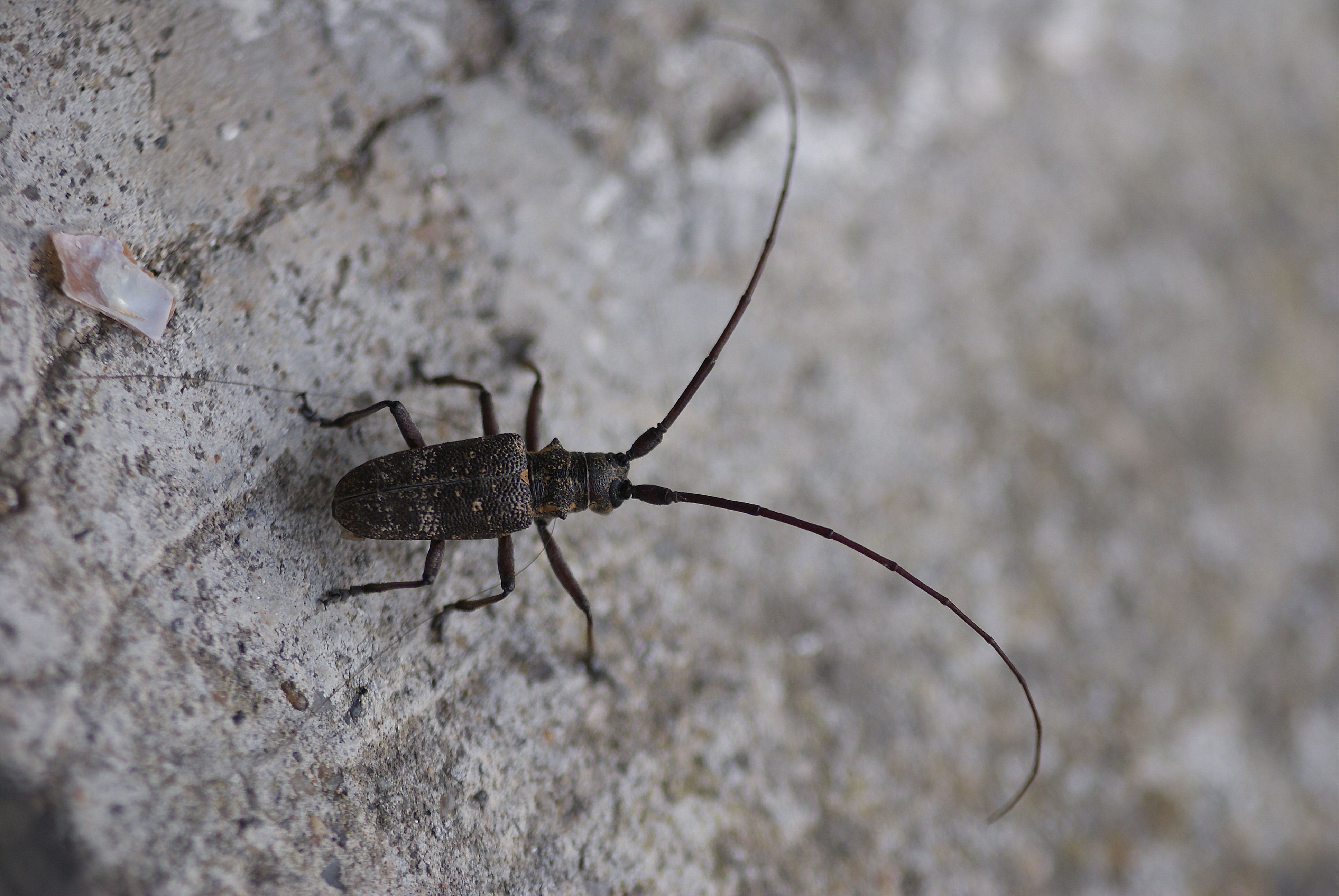
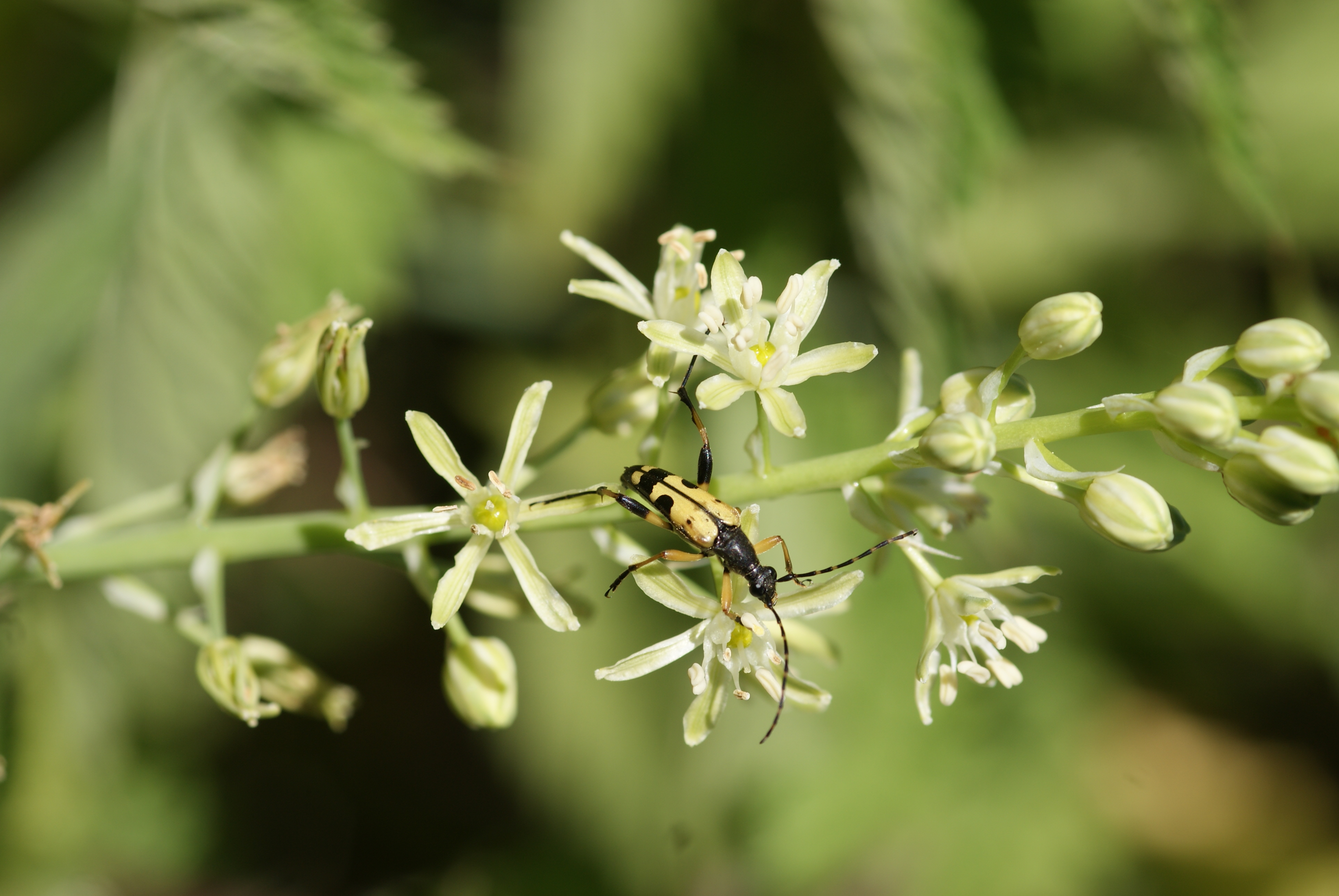
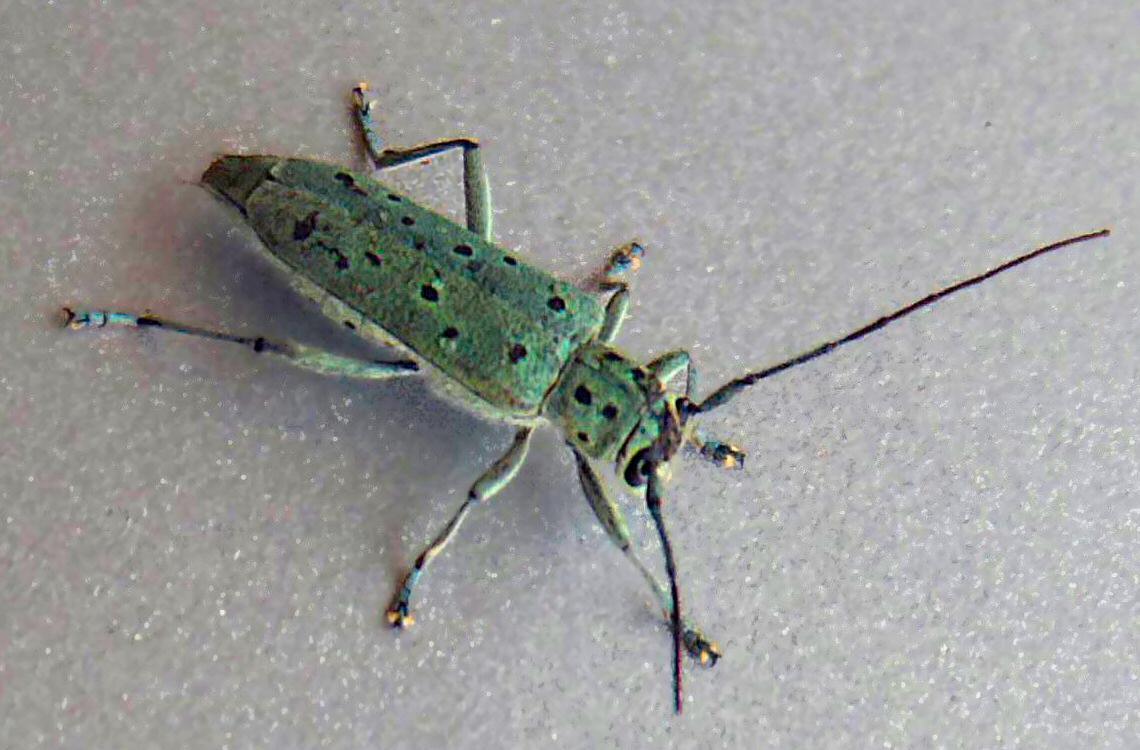
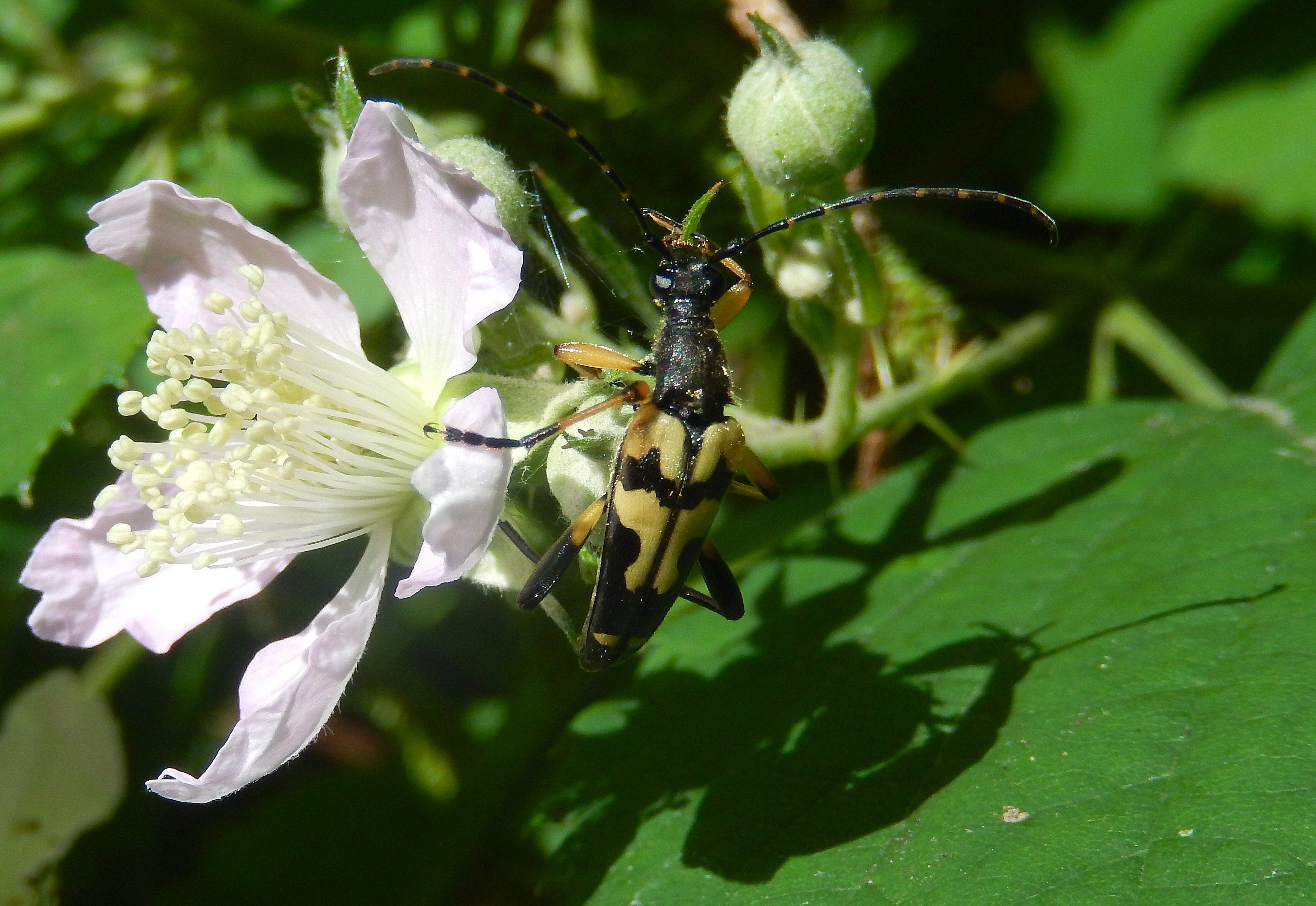
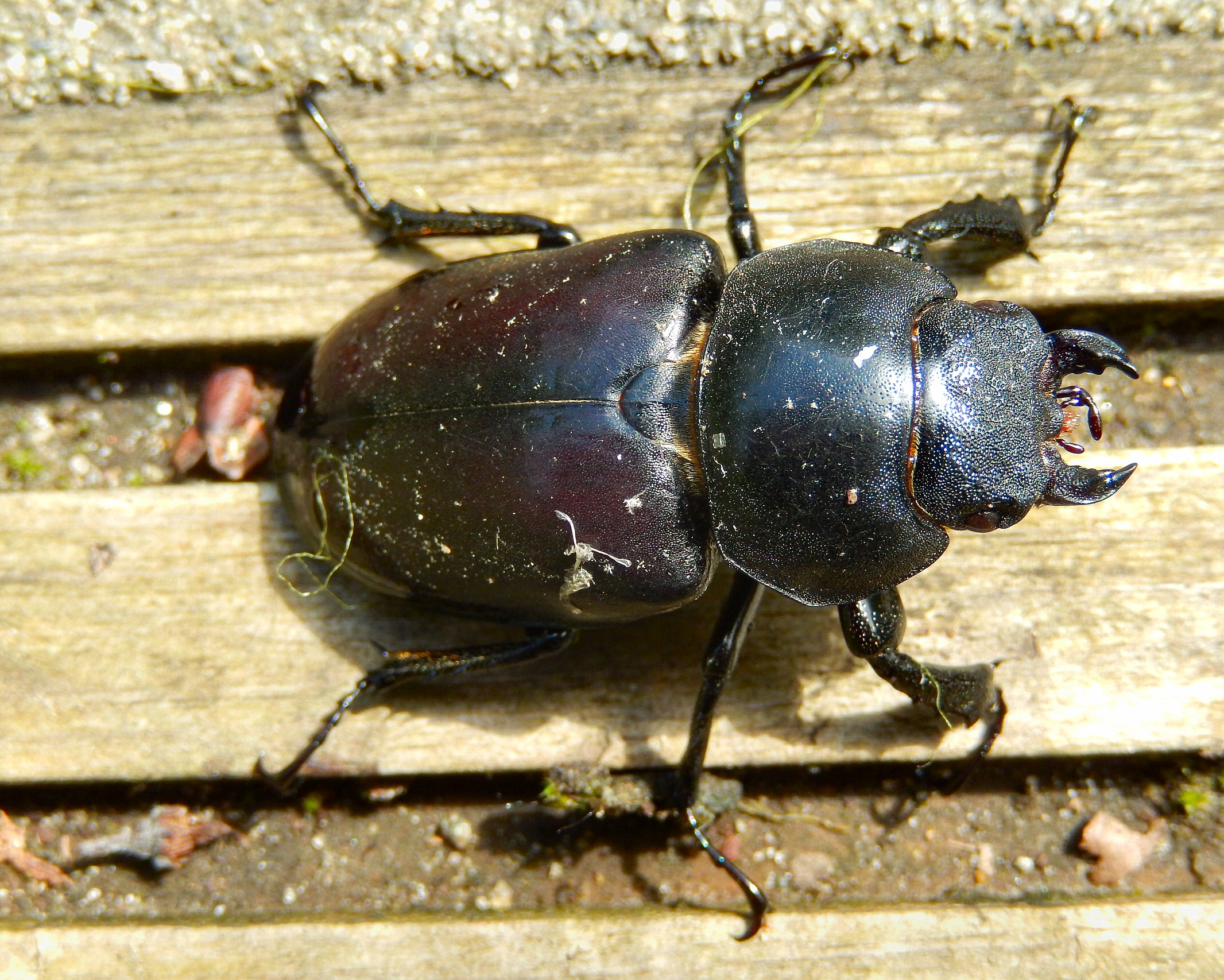
The Longhorn Beetles of the Cerambycidae family include many large and handsome species, including several of the largest insects found in Europe. They are found in forests, for a good reason. They lay their eggs in dead wood – fallen timber including tree trunks, different beetles preferring different tree species. The soft grublike larvae grow plump, safe (more or less, given what we know of Ichneumon Wasps, not to mention Badgers with strong sharp claws, sensitive noses, and a liking for fat insect larvae) deep inside the rotting wood, often for several years. Eventually, one summer, they reach full size and pupate, and the magnificent adults with their heavy armour, distinctive patterns and the improbably long antennae that give the family its name emerge, to mate, lay eggs and die.
Banded Demoiselle
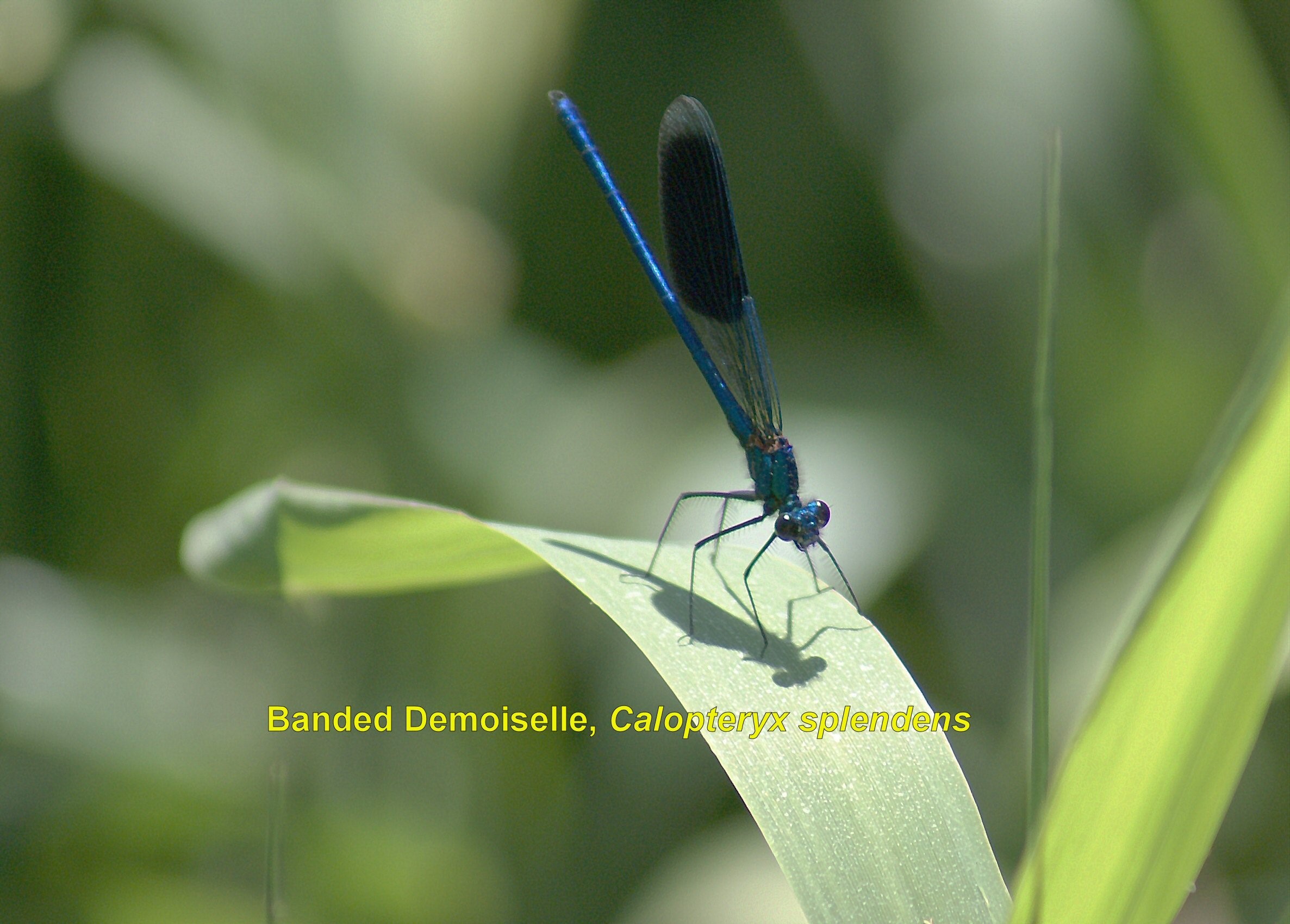
Of all the interesting and handsome insects the Dordogne has to offer, one of the most attractive, and most characteristic of its little rivers, is the Banded Demoiselle, Calopteryx splendens. Its Latin name means ‘The Shining Beautiful-Winged’, and that is no exaggeration. This large damselfly is sexually dimorphic – the male is blue, the female a clear green. It is the wings of the male that give the insect the name Banded, and make it so conspicuous to the people who go down to the river to picnic, fish, swim, or canoe.
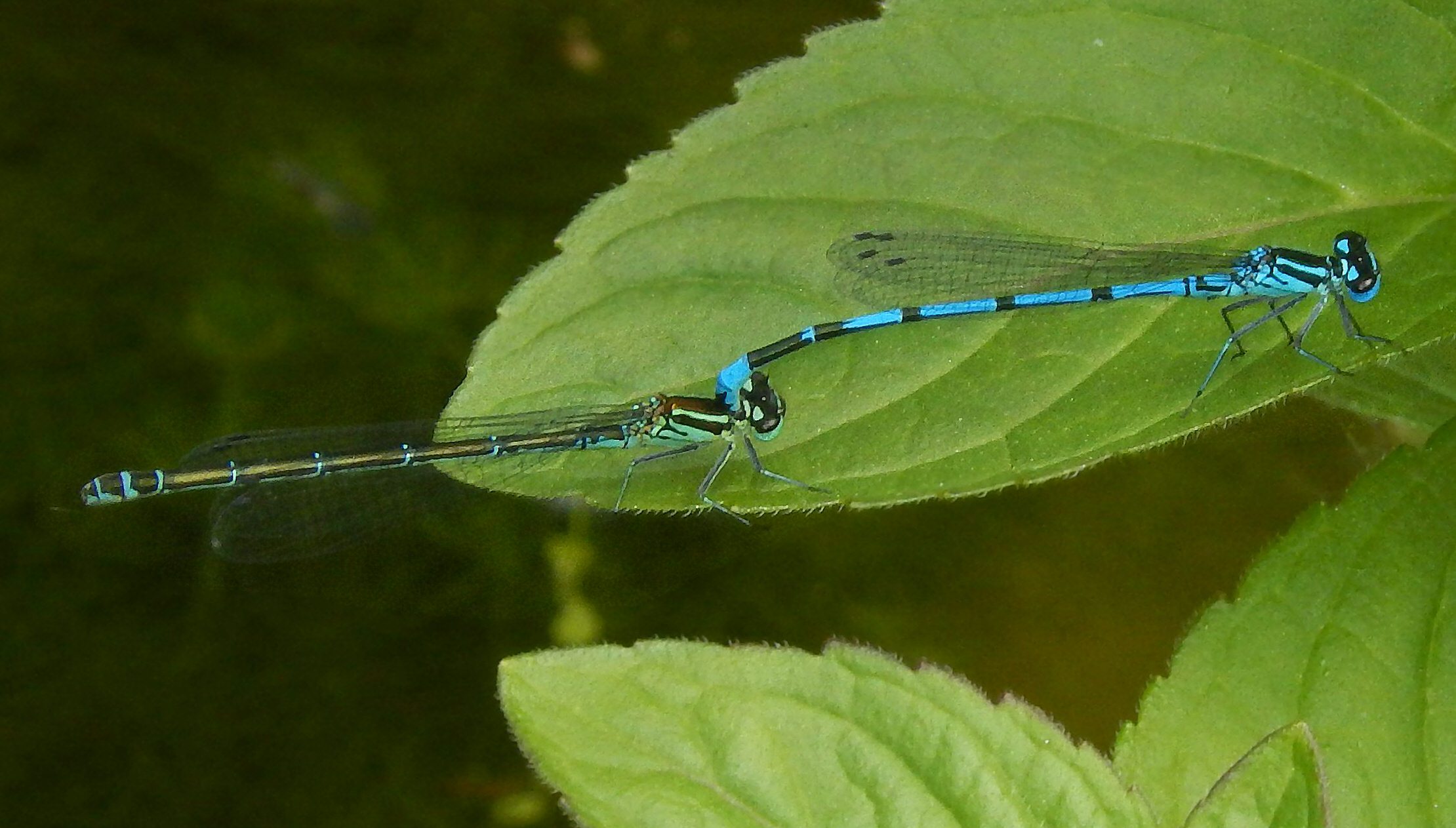
If you do that, your eye will be caught by the dancing, flickering wings of the male Banded Demoiselles as they patrol their stretch of water, on the lookout for females and for rival males. The dark blue patch on each of their four similar-sized clear wings creates a shimmering effect as the wings beat. When the sunlight strikes a group of such males, their bodies glint metallic, iridescent blue with hints of peacock, and their wings sparkle and flicker together over the cool, shifting water, creating an effect that seems to dazzle and enchant the eye, making their movements hard to follow, the number of wings difficult to count. If you are lucky, you will see a pair of Banded Demoiselles ‘in cop’, a blue and a green insect flying around together with eight wings in harmony, mating and then laying eggs, still clasped together. As a couple, they dart down to one little piece of floating or emergent pondweed after another that may provide a suitable place for their offspring to develop into the next generation of Banded Demoiselles, leaving an egg in each chosen spot.